Here’s What Won At The Golden Globes!


Film Awards

Best Film (Drama) — Boyhood

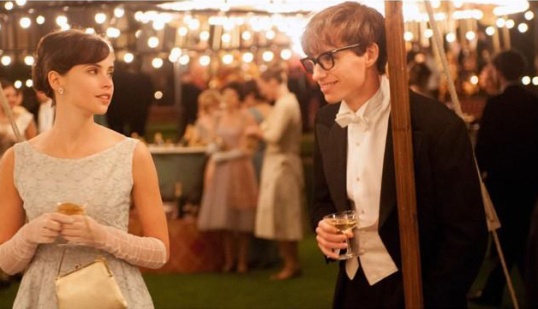
Best Drama Actor — Eddie Redmayne in The Theory of Everything

Best Drama Actress — Julianne Moore in Still Alice

Best Film (Comedy) — The Grand Budapest Hotel

Best Comedy Actor — Michael Keaton in Birdman

Best Comedy Actress — Amy Adams in Big Eyes

Best Supporting Actor — J.K. Simmons in Whiplash

Best Supporting Actress — Patricia Arquette in Boyhood

Best Director — Richard Linklater for Boyhood

Best Screenplay — Birdman

Best Animated Feature — How To Train Your Dragon 2

Best Score — The Theory of Everything

Best Original Song — “Glory” from Selma

TV Awards

Best Drama Series — The Affair

Best Drama Actor — Kevin Spacey in House of Cards

Best Drama Actress — Ruth Wilson in The Affair

Best Comedy Series — Transparent

Best Comedy Actor — Jeffrey Tambor in Transparent

Best Comedy Actress — Gina Rodriguez in Jane the Virgin

Best TV Movie/Limited Series — Fargo

Best TV Movie/Limited Series Actor — Billy Bob Thornton in Fargo

Best TV Movie/Limited Series Actress — Maggie Gyllenhaal in The Honourable Woman

Best TV Supporting Actor — Matt Bomer in The Normal Heart

Best TV Supporting Actress — Joanne Froggatt in Downton Abbey

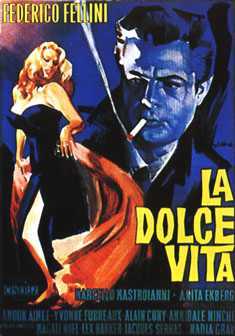
Scenes That I Love: Anita Ekberg and Marcello Mastroianni In The Trevi Fountain


La_Dolce_Vita_(1960_film)_coverart

Anita Ekberg, RIP

This famous and iconic scene is taken from Federico Fellini’s 1960 film, La Dolce Vita.  The film follows tabloid journalist Marcello (Marcello Mastroianni) over the course of 7 days and 7 nights.  He spends the 2nd day pursuing a famous actress named Sylvia (Anita Ekberg).  As the day comes to an end, he finds Anita wading into the Trevi Fountain.

As famous and celebrated as this scene is, it’s often forgotten that it ultimately ends with Sylvia being slapped by her loutish boyfriend, Robert (Lex Barker).  That slap is not included in the video below but that’s okay.  For today, at least, let’s allow Sylvia her happiness.

What Lisa Watched Last Night #109: Sugar Daddies (dir by Doug Campbell)


On Saturday night, I watched the latest Lifetime film, Sugar Daddies!

Sugar Daddies

Why Was I Watching It?

Because it was on Lifetime and it didn’t have a thing to do with football.

What Was It About?

College is expensive and law school even more so.  Can you blame Kara (Taylor Gildersleeve) for agreeing to become the mistress of the wealthy and considerably older Grant (Peter Strauss)?  Grant pays Kara $5,000 dollars a month, gives her a new car, and flies her around in a private jet.  All Kara has to do is be available whenever he demands her presence.

Except, of course, this is a Lifetime movie and nothing is ever that simple…

What Worked?

To be honest, Sugar Daddies is just a fun film.  Yes, it is dealing with a serious subject and, ultimately, it does come down on the side of being poor but honest.  But, before that, you get to look at all the nice clothes and all the well-decorated mansions and you get to enjoy all of the decadence that comes from being a rich man’s mistress.  Sugar Daddies may be a cautionary tale but it definitely knows how to enjoy itself.

This movie was directed by Doug Campbell, who has previously directed such Lifetime classics as Death Clique, The Cheating Pact, and Betrayed at 17.  As a director, Doug Campbell obviously knows how to make the perfect Lifetime film and how to strike just the right balance of melodrama and social commentary.  He knows exactly how far he can push things without going over-the-top and that skill is on full display in Sugar Daddies.

Plus, the film is really well cast.  Taylor Gildersleeve is a sympathetic and relatable as Kara.  Peter Strauss seems to be having a lot of fun playing his sleazy role.  Timothy Brennan is perfectly intimidating in the role of Peter, Grant’s bodyguard who is willing to do anything to protect his boss.  Ashley McCarthy and Samantha Robinson are also well-cast as Kara’s friends.

What Did Not Work?

Are you kidding?  This was Lifetime at its finest!  It all worked.

“Oh my God!  Just like me!” Moments

I know this where you’re probably expecting me to talk about how I used to have an old, rich boyfriend who helped to pay my way through college but instead, I’d rather point out that Kara and I both own the exact same white dress with black trim!  I was beyond excited when I saw that and plus, it really made me root for Kara because she was someone who I could go shopping with.

Lessons Learned

Private jets are the bomb and we could all use an extra $5,000 dollars a month but sometimes, it’s better to just stick with that demeaning waitressing job.

And, if you do get an old, rich boyfriend, don’t let him talk you into playing the choking game.

Because that never ends well!

Film Review: Inherent Vice (dir by Paul Thomas Anderson)


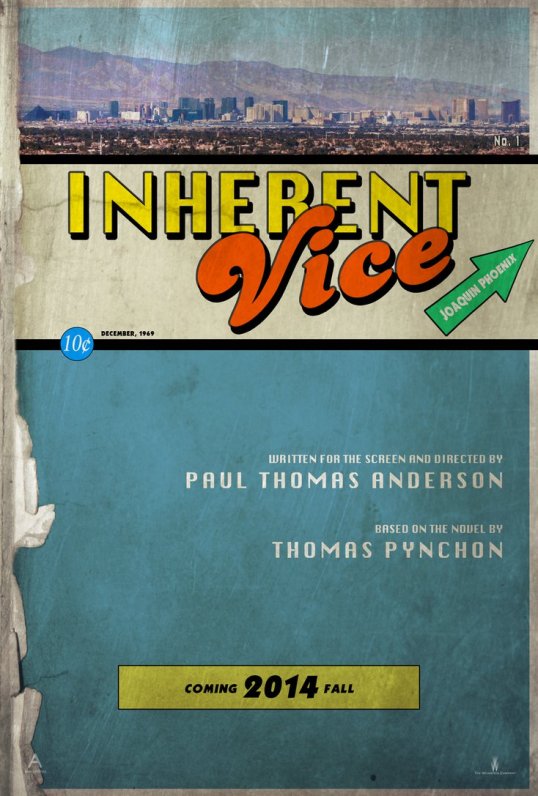
Inherent-Vice-poster

One of the best things about Paul Thomas Anderson’s latest film, Inherent Vice, is that Doc Sportello, the private detective played by Joaquin Phoenix, is a real stoner.  He’s not one of those weekend smokers, who gets high on Saturday, brags about it on Sunday, and then spends the rest of the week interning at Vox.  For the entire 2 hour and 20 minute running time of Inherent Vice, Doc is stoned.  From the minute we first meet him to the end of the film, there is never one moment where Doc is not stoned.  Most stoner comedies feature a scene where the main character shocks everyone by turning down a hit because he’s dealing with something so important that he has to “keep his mind straight.”

Not so with Doc!

And, in Doc’s case, it definitely helps him out.  Inherent Vice tells a story that is so full of paranoia, conspiracy, and random connections that only a true stoner could follow it.  Much like Doc, the film often seems to be moving in a haze but occasionally, out of nowhere, it will come up with a scene or a line of dialogue or a detail that is so sharp and precise that it will force you to reconsider everything that you had previously assumed.

To be honest, if you are one of the people who watched Inherent Vice this weekend and could actually follow the film’s plot, then you’ve got a leg up on me.  (That said, I’ve still got pretty good legs so it all evens out.)  But, that’s not necessarily a complaint.  As befits a film based on a novel by Thomas Pynchon and directed by one of the most idiosyncratic filmmakers around, the twists and turns of Inherent Vice are deliberately meant to be obscure and confusing.  Characters appear and then vanish.  Clues are discovered and then forgotten.  Connections are hinted at but then never confirmed.  Inherent Vice ultimately serves a tribute to stoner’s paranoia and, as a result, the plot’s incoherence leads to a certain contact high.

The film takes place in California in the 1970s.  Doc is both a hippie and a private detective. His current girlfriend (Reese Witherspoon) works for the district attorney’s office and doesn’t seem to like him much.  His ex-girlfriend, Shasta (Katherine Waterston), reenters his life and asks him to help protect her new boyfriend, real estate developer Mickey Wolfman (Eric Roberts).  Mickey has disappeared.  Shasta disappears.  As Doc investigates, he wanders through a psychedelic Los Angeles and deals with an ever growing collection of eccentrics.

For instance, there’s Hope Harlingen (Jena Malone), a former heroin addict who now runs a group that aims to promote “responsible drug use” among children.  She believes that her husband, Coy (Owen Wilson), is dead but actually Coy is a government informant who keeps popping up in the strangest places.

There’s Rudy Blatnoyd (Martin Short), a decadent dentist who may or may not be responsible for all of the heroin entering California.

There’s Sauncho Smilax (Benicio Del Toro), Doc’s lawyer who specializes in maritime law.

There are Nazi bikers, new age doctors, a formerly blacklisted actor turned right-wing spokesman, a black revolutionary whose best friend was a member of the Aryan brotherhood, three FBI agents who keep picking their noses, the decadent rich, and, of course, the endlessly clean-cut and bullying officers of the LAPD.

And then there’s Detective “Big Foot” Bjornsen (Josh Brolin), a celebrity cop and occasional television extra who seems to admire Doc, except for when he’s trying to frame Doc for everything from murder to drug smuggling.  Bjornsen is probably the most interesting character in the entire film and Brolin plays the character perfectly.  His scenes with Phoenix crackle with a comedic energy that bring the film to life.

As for the movie itself, it’s not for everyone.  A lot of very smart people are going to dislike it, much as many of them did with The Master.  In some ways, Inherent Vice truly is an endurance test.  Speaking as someone who enjoyed the film, even I occasionally found myself saying, “Okay, does everyone have to have a silly name?”  Inherent Vice is a long, rambling, and occasionally frustrating film but, for me, it still worked because of the strong cast and Anderson’s attention to detail.

Unbroken is a film that seems to take place in an entirely different world from Inherent Vice but these two films do have one big thing in common.  Both of them have been victims of the expectation game.  Many of the same people who thought Unbroken would be a surefire Oscar nominee also assumed, sight unseen, that Inherent Vice would be right there with it.  Much as how Unbroken has suffered for merely being good as opposed to great, Inherent Vice is also suffering for failing to live up to the expectations that were thrust upon it.  Inherent Vice is not an awards movie.  Instead, it’s a fascinatingly idiosyncratic film that was made by a director who has never shown much concern with playing up to the audience.  While Unbroken is enough of a crowd pleaser to still have a shot at some Oscar glory, Inherent Vice is the type of film that will probably never get nominated.  (I do have some hope that Brolin will get a supporting actor nomination but, even there, it appears likely that Brolin’s spot will be given to The Judge‘s Robert Duvall.)

Well, no matter!  Flaws and all, Inherent Vice will be a film that people will still be debating and watching years from now.

Trailer: Jurassic City


Now, I know that a lot of people are really excited about seeing Jurassic World later this year.  However, if you can’t wait until June to get your dinosaur action, why not check out Jurassic City, which is due to be released on February 3rd!

If nothing else, Jurassic City deserves credit for using “This ain’t no walk in the park…” as a tag line.


Trailer: Plan 9 and The Voices


PCAS

So the upcoming film Plan 9 is apparently meant to be a remake of Ed Wood’s Plan 9 From Outer Space.  That sounds like a terrible idea, doesn’t it?

Perhaps The Voices will be better.  This one features Ryan Reynolds, Anna Kendrick, and a talking cat!

The Things You Find On Netflix: The Scorpion King 4: Quest For Power (dir by Mike Elliott)


Believe it or not, The Scorpion King 4: Quest For Power is a historical footnote.  It is the first 2015 release to be available for viewing on Netflix streaming!  That’s because The Scorpion King 4 was a straight-to-video release and Universal Pictures doesn’t seem to have much faith in the film’s commercial prospects.  In fact, if not for my love of historical footnotes, I probably would never have even watched the film.

But I did watch it, mostly because I didn’t like the idea of The Woman In Black 2 being the only 2015 films that I had seen up to that point.

And you know what?

The Scorpion King 4 is cheap, silly, and often times impossible to follow.  But, when taken on its own terms, it’s also a lot of fun.  At the very least, it’s more entertaining than The Woman In Black 2.

Scorpion-King-4

As for what the film is about … well, that’s a good question.  To be honest, I’ve never seen any of the previous Scorpion King films.  I know from Wikipedia that the character was spun-off from Brendan Fraser’s old Mummy film and, while I’ve seen bits and pieces of it on cable over the years, I’ve never actually sat through that entire movie.  However, I do know that the Mummy was Egyptian and apparently, so was the Scorpion King.

So, you would assume that Scorpion King 4 would take place in ancient Egypt.  And indeed, the opening scene is set in the desert and involves the Scorpion King, also known as Mathayus (Victor Webster), and his partner Drazen (Will Kemp) storming a fortress that feels vaguely Egyptian.  After a lengthy battle, Mathayus and Drazen steal an urn that is covered with hieroglyphics.  However, Drazen double crosses Mathayus and takes the urn for himself.

Okay, I thought, we’re obviously in Egypt.

Except, of course, in the very next scene, Mathayus meets with his employer, King Zakour (Rutger Hauer).  King Zakour explains that Drazen is the son of a rival king (played by Michael Biehn, who makes little effort to hide his Southern accent).  Zakour also explains that the urn hides mystical secrets that, if deciphered, could allow Drazen to conquer the world.  Zakour sends Mathays to the rival kingdom, ordering him to deliver a peace treaty.

And, while Zakour delivers all of this exposition, it’s hard not to notice that he appears to live in an ancient Roman villa and he has a rather cheap-looking crown perched on his head.

Okay, I thought, the film has moved to the Roman Empire but at least I know we’re still in ancient times…

Except then Mathayus rides his camel into the rival kingdom and it turns out to look a like the set from a community theater production of Spamalot.  As soon as Mathayus arrives, he is captured by Drazen’s men and ends up in a jail cell next to Valina (Ellen Holman), a revolutionary who is wearing a green, prison bikini top.  After Mathays is framed for the king’s death, he and Valina escape from the prison and run into the wilderness, where Valina changes into a battle-worthy bikini top.

They reach the house of Valina’s father (Barry Bostwick) and it turns out to be a Dutch windmill!  So, within the first 30 minutes of the film, we’ve gone from ancient Egypt to the Roman Empire to a medieval village in England to Renaissance Netherlands.  Eventually, our characters will end up in another village, one that happens to feature a temple that looks a lot like a left over set from Hercules in the Haunted World…

What’s surprising is that the film’s refusal to settle on a definite setting or time period is actually oddly charming.  As soon as that windmill showed up and a feather-covered Barry Bostwick flew across screen (Bostwick is an inventor who has filled the windmill with blueprints for cars and airplanes), I knew that this was a film that was at peace with being a mess.  And you had to respect the film’s no apologies attitude towards being incoherent.

Trying to keep up with the plot is exhausting so I suggest that, if you should find yourself watching The Scorpion King 4, you ignore the plot.  The best thing about The Scorpion King 4 is that it doesn’t take itself all that seriously.  All of the dialogue is either intentionally melodramatic or anachronistically humorous and all of the actors seem to be having fun going over the top.  Some of the fight scenes are exciting, some of the scenery is pretty, and some parts of the film are better than others.

In the end, The Scorpion King 4 is pretty forgettable.  But it’s still better than The Woman In Black 2.

Scorpion King, The Lost Throne

Here’s The Latest In Precursor News: The USC Scripter and the Makeup and Hairstyling Guild Nominations!


Nightcrawler

Awards season continues!  The Makeup and Hairstyling Guild announced their nominees for the best of 2014 today!

FEATURE LENGTH MOTION PICTURE (FEATURE FILMS)
BEST CONTEMPORARY MAKE-UP

Captain America: The Winter Soldier

Gone Girl

Guardians of the Galaxy

Interstellar

Nightcrawler

FEATURE LENGTH MOTION PICTURE (FEATURE FILMS)
BEST PERIOD AND/OR CHARACTER MAKE-UP

Hunger Games: Mockingjay – Part 1

Into the Woods

The Grand Budapest Hotel

The Theory of Everything

Unbroken

FEATURE LENGTH MOTION PICTURE (FEATURE FILMS)
BEST SPECIAL MAKE-UP EFFECTS

Foxcatcher

Guardians of the Galaxy

Into the Woods

Maleficent

The Hobbit: The Battle of the Five Armies

FEATURE LENGTH MOTION PICTURE (FEATURE FILMS)
BEST CONTEMPORARY HAIR STYLING

Birdman

Guardians of the Galaxy

Interstellar

St. Vincent

Winter’s Tale

FEATURE LENGTH MOTION PICTURE (FEATURE FILMS)
BEST PERIOD AND/OR CHARACTER HAIR STYLING

Get on Up

Into the Woods

Selma

The Grand Budapest Hotel

The Theory of Everything

theory-of-everything-new

And here are the nominees for the 27th Annual USC Scripter Awards!  The Scripter Award specifically recognizes screenplays that were adapted from other works.

Gone Girl

The Imitation Game

Inherent Vice

The Theory of Everything

Wild

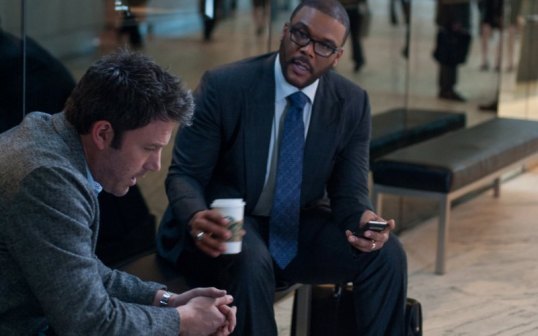
Tyler Perry in Gone Girl


A Few Very Late Thoughts On Wes Anderson’s The Grand Budapest Hotel


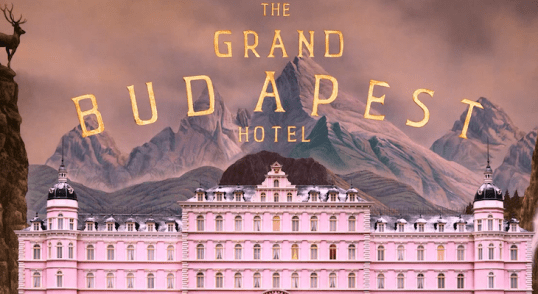
grand-budapest-hotel

It took me a while to come around to appreciating The Grand Budapest Hotel.

When I first saw Wes Anderson’s latest film, way back in March, I have to admit that I was somehow both impressed and disappointed.  The film’s virtues were obvious.  Ralph Fiennes gave a brilliant lead performance as Gustave, the courtly and womanizing concierge of the Grand Budapest Hotel.  As played by Fiennes, Gustave came to represent a certain type of old world elegance that, I’m assuming, died out long before I was born.  As is typical of Anderson’s film, The Grand Budapest Hotel was visual delight.  Even when the film’s convoluted storyline occasionally grew self-indulgent, The Grand Budapest Hotel was always interesting and fun to watch.

At the same time, I had some issues with The Grand Budapest Hotel.

One of the major ones — and I will admit right now that this will seem minor to some of you — is that halfway through the film, a cat is killed.  The evil Dimitri Desgoffe von Taxis (Adrien Brody) is attempting to intimidate a nervous lawyer, Kovacs (Jeff Goldblum).  Kovacs’s owns a cat and, at one point, Dimitri’s henchman, Jopling (Willem DaFoe), tosses the cat out of a window.  Kovacs runs to window and sees his dead cat splattered on the sidewalk below…

And this is when the audience in the theater laughed and I got very angry.

To me, there was nothing funny about killing that man’s cat.  But the more I’ve thought about it, the more that I’ve come to realize that my reaction had more to do with the audience than the film.  The film was not saying that the cat’s death was funny.  The film was saying that Dimitri and Jopling were evil and dangerous, as their actions throughout the film would demonstrate.  It was the audience that decided, since Grand Budapest Hotel is full of funny moments and has the off-center style that one has come to expect from Wes Anderson, that meant every scene in the film was meant to be played strictly for laughs.  The fact of the matter is that a typical Wes Anderson film will always attract a certain type of hipster douchebag.  They were the ones who loudly laughed, mostly because they had spent the entire movie laughing loudly in order to make sure that everyone around them understood that they were in on the joke.

But that’s not the fault of the film.  Despite what you may have heard and what the Golden Globes would have you believe, The Grand Budapest Hotel is not a comedy.  For all the deliberately funny and quirky moments, The Grand Budapest Hotel is actually a very serious film.  For all of the slapstick and for all of Ralph Fiennes’s snarky line readings, The Grand Budapest Hotel ultimately ends on a note of deep melancholy.

When I first saw The Grand Budapest Hotel, it seemed like it was almost too quirky for its own good.  And, to be honest, I could still have done without some of Anderson’s more self-indulgent touches.  The sequence at the end, where Gustave, who has been framed for murder, gets help from a series of his fellow hotel concierges started out funny but, as everyone from Bill Murray to Owen Wilson put in an appearance, it started to feel less like the story of Gustave and more like the story of all of Wes Anderson’s famous friends.

However, the more I’ve thought about it (and The Grand Budapest Hotel is a film that I’ve thought about a lot over the past year), the more I’ve realized that the quirkiness is only a problem if you made the mistake of thinking that the film is meant to be taken literally.

The more I thought about it, the more obvious it became that the most important scenes in The Grand Budapest Hotel were to be found at the beginning and the end of the film.

The film opens with a teenage girl sitting in front of the grave of a great author.  She opens a book and starts to read.

As soon as the girl starts to read, we flashback 29 years to 1985 where the author (Tom Wilkinson) sits behind his office desk and starts to talk about the time that he visited the Grand Budapest Hotel.  

We flashback again to 1969, where we see how the author (now played by Jude Law) met the owner of the Grand Budapest Hotel, a man named Zero (played by F. Murray Abraham).  Over dinner, Zero tells the author the story of how he first came to the Grand Budapest and how he eventually came to own the hotel.

And again, we go back in time, this time to 1932.  We see how the young Zero (Tony Revolori) first met and came to be the protegé of Gustave (Ralph Fiennes).  We see how Gustave taught Zero how to be the perfect concierge.  Eventually, Gustave would be framed for murdering a guest, Zero would meet and fall in love with Agatha (Saoirse Ronan), and then Zubrowska (the fictional Eastern European country in which this all takes place) would be taken over by fascists who would eventually claim the hotel as their own.

After the story of Gustave, Zero, and Agatha has been told, we suddenly flash forward to the author talking to Zero and then to the old author telling the story to his grandson and then finally back to the teenage reader sitting in the cemetery.

In other words, the Grand Budapest Hotel may be the story of Zero but we’re experiencing it through the memories of the author as visualized by the reader.  Gustave, Zero, and the entire Grand Budapest Hotel are not just parts of a story.  Instead, they become symbols of an old way of life that, though it may have been lost, still exists in the memories of old travelers like the author and the imaginations of young readers like the girl in the cemetery.

As I said at the start of this, I was vaguely disappointed with The Grand Budapest Hotel when I first saw it but, perhaps more than any other movie that I saw last year, this has been a film that I haven’t been able to get out of my mind.  Having recently rewatched the film on HBO, I can also attest that both The Grand Budapest Hotel and Ralph Fiennes’s performance not only hold up on a second viewing but improve as well.

I still stand by some of my original criticisms of The Grand Budapest Hotel.  I still wish that cat had not been thrown out the window, even though I now understand that Anderson’s main intent was to show the evil of Dimitri and Jopling.  And I still find some of the cameos to be jarring, precisely because they take us out of the world of the film.

But you know what?

Despite those flaws, The Grand Budapest Hotel is still a unique and intriguing film.  When I sat down tonight and made out my list of my top 26 films of 2014, I was not surprised that Grand Budapest Hotel made the list.  But I was a little bit surprised at how high I ended up ranking it.

But then I thought about it and it all made sense.
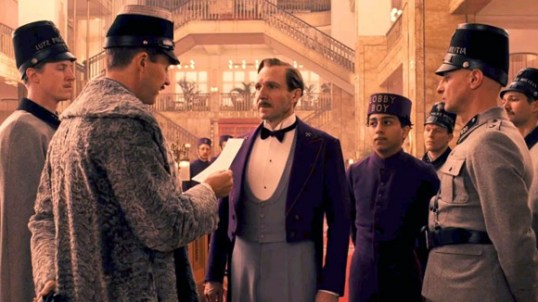
The-Grand-Budapest-Hotel-580


Film Review: The Woman In Black: The Angel of Death (dir by Tom Harper)


The-Woman-in-Black-poster-excerpt

Welcome to January!

This is the time of year the studios release the films that they don’t have much faith in, hoping to make a little money while all of the critics and more discriminating audiences are distracted by the Oscar race.  Typically, films are released in January that the studios are specifically hoping will be forgotten by June.

Case in point: the horror sequel The Woman In Black 2: The Angel of Death.

Now, as you all know, I love horror movies.  It’s rare that I can’t find something to enjoy about a horror movie, whether it’s the atmosphere or the suspense or just the chance to do some old-fashioned screamed.  Some of my favorite horror films have been the ones that — much like The Woman In Black 2 — were snarkily dismissed by most mainstream critics.  And, needless to say, I’m a natural born contrarian.  The lower a film’s score on Rotten Tomatoes, the more likely it is that I will find a reason to defend it.

Taking all of that into consideration, it’s hard for me to think of any film, horror or not, that has left me feeling as indifferent as The Woman In Black 2.  I would not say that I was terribly impressed by the film but, at the same time, I didn’t hate it either.  Instead, I felt it was an amazingly average film and I was just incredibly indifferent to the whole thing.

The Woman In Black 2: Angel of Death picks up 30 years after the end of the first Woman In Black.  It’s World War II and German bombs are falling on London.  A group of school children are evacuated to the countryside under the care and watch of two teachers, Eve (Phoebe Fox) and Jean (Helen McCrory).  Naturally enough, they end up taking refuge in the abandoned Eel March House.  The Woman in Black is still haunting the house and she’s determined to claim all of the children as her own.

While Jean refuses to accept that anything paranormal is happening at the house, Eve quickly comes to realize that they are not alone and that the Woman in Black seems to be particularly determined to claim young Edward (Oaklee Pendergast).  Working with Harry (Jeremy Irvine), a pilot who is deathly afraid of water, Eve tries to save the children…

The Woman in Black 2 goes through all the motions.  Floorboards creek.  Doors open and slam shut on their own.  The Woman in Black often appears standing in the background and occasionally jumps into the frame from out of nowhere while screaming.  The film is darkly lit and there’s a lot of atmospheric shots of the fog covered moors.

But, ultimately, the film never really establishes an identity of its own.  Instead, it feels like a collection of outtakes from every other haunted house film that has been released lately.  While I wasn’t a huge fan of the first Woman in Black, I did think that it benefited from having a sympathetic lead character but the cast here seems oddly detached from the story that they’re supposed to be telling.  You never believe in their characters and, as a result, you never really buy into any of the menace surrounding them.

And, the end result, is indifference.

the-woman-in-black-2