1985’s Revolution opens on July 4th, 1776. The Declaration of Independence has just been published. The streets are full of people celebrating. A statue of King George is pulled down. In her carriage, the wealthy Mrs. McConnahay (Joan Plowright) turns up her nose to the enthusiastic rebels, including the fanatical Liberty Woman (Annie Lennox). Mrs. McConnahay’s daughter, Daisy (Nastassja Kinski) is intrigued by this idea of freedom and equality.
Fur trader Tom Dobbs sails his boat into Hudson Harbor. Tom is Scottish, illiterate, and very much a man of the 18th Century. However, he’s played by Al Pacino, who was none of those things. After Revolution was released to desultory reviews, Pacino took four years off from the movies and watching this film, one can see why. Pacino is miscast as Dobbs and, as a result, he gives the type of truly bad performance that can only be given by a great actor. Unable to disguise the fact that he had the accent of a modern-day New Yorker, Pacino resorts to mumbling the majority of his lines. Tasked with playing a character who has no idea how to deal with the history-making events in which he finds himself, Pacino alternates between a blank look and with bulging his eyes like a madman, proving that it’s far more difficult to play an uneducated character than an educated one. Why cast Pacino, who can be one of our most exciting actors, as a character who can barely speak and who has neither the intensity of Michael Corleone or the subversive wit of Tony Montana? Due to Pacino and Kinski having zero chemistry, the scenes where Tom falls in love with Daisy are almost painful to watch.
The film follows Tom as he and his son, Ned (Simon Owen when the film begins, Dexter Fletcher by the time the action moves to Valley Forge), as they find themselves conscripted into the Revolutionary Army. Eventually, Ned is abducted into the British army and serves as a drummer boy under the sadistic watch of Sgt. Major Peasy (Donald Sutherland). The idea behind the film isn’t a bad one. It attempts to portray the American Revolution through the eyes of the average citizen. Instead of focusing on the Founding Fathers, Revolution tries to tell the story of the everyday people who found themselves in the middle of the war. Tom loses his boat and (temporarily) he loses his son. Fortunately, this is one of those films where people are constantly running into each other by chance, regardless of whether it makes any sense or not. Daisy goes from seeing Tom in New York to randomly coming across him in a field to eventually finding him in Valley Forge. It’s not because she’s specifically looking for him. Instead, he just happens to be there.
Why does Revolution fail? A lot of it comes down to Pacino’s performance, though Pacino certainly isn’t the only talented actor to give a not-quite good performance in Revolution. (Donald Sutherland has never been more wasted in a film.) The script is full of dialogue like, “My mouth belongs where I place it.” (Pacino gets stuck with that one.) Hugh Hudson directs in a leaden manner. Towards the end of the film, there is one brilliant sequence where Tom wanders through the streets of New York and, for a few minutes, the film comes to like with a spontaneity that was previously lacking. Unfortunately, it’s just one sequence in a very long movie,
To be honest, we could use some good films about the American Revolution and I’m not talking about elitist nonsense like Hamilton. No taxation without representation. It’s still a good message for us all.
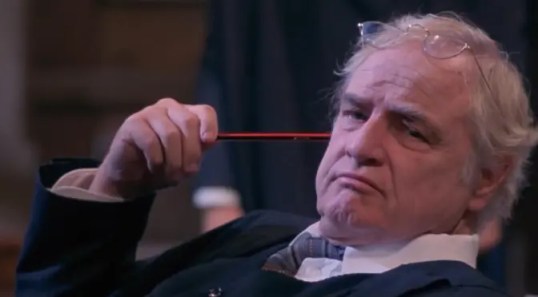
In 1990, Marlon Brando received his final Academy Award nomination when he was nominated for his supporting performance in 1989’s A Dry White Season.
Brando played Ian McKenzie, a human rights lawyer who lives and work in South Africa at the height of the Apartheid regime. When we first see McKenzie, he’s sitting in his office and complaining about how all the flowers surrounding him have given him a permanent allergy. When Ben Du Toit (Donald Sutherland) explains that he’s trying to learn the truth about why his gardener and his gardener’s son both died in the custody of South Africa’s “special branch,” McKenzie replies that bringing the case would be a waste of time. McKenzie makes several dismissive comments about the case and tells Du Toit that pursing the matter would lead to Du Toit becoming a pariah himself. Only when Du Toit says that he’ll just find another lawyer to pursue the manner does McKenzie agree to take the case. His comments may have seemed callous but they were McKenzie’s way of testing Du Toit’s commitment to actually getting to the truth.
Up until the death of his gardener, Ben Du Toit was someone who blindly believed in the system. A former rugby star and a teacher, Ben grew up in South Africa and is proud to call himself a “true African.” (In one of the film’s best scenes, Ben’s driver, Stanley — played by Zakes Mokae, — informs Ben that being an African in South Africa means not being allowed to vote and having to carry identification papers everywhere with him.) When the gardener’s son is first arrested, Ben repeatedly says, “He must have done something.” When Ben’s gardener is arrested, Ben believes that it’s all just a terrible mistake and that he’ll be released soon. Even after the gardener is killed, Ben initially believes the official story that the death was a suicide. It’s only after Stanley takes Ben to the funeral home and shows him the gardener’s tortured body that Ben finally comes to realize that he was tortured to death by Captain Stolz (Jurgen Prochow).
Still, Ben is naive enough to assume that McKenzie will be able to get some sort of justice. In court, McKenzie easily exposes the flaws in Stolz’s story. When Stolz claims that the dead man’s injuries were the result of the man throwing himself against the bars of his cell, McKenzie mentions that the man’s back was injured and then asks if he was throwing himself backwards. Stolz smirks and says that the man was “an animal.” McKenzie may be a brilliant lawyer but it’s a foregone conclusion that he’s going to lose the case. Stolz is exonerated and the expression on McKenzie’s face is one that indicate that he is not surprised at all.
It’s a small role. Brando gets less than ten minutes of screentime but he makes perfect use of them and shows that, even in the latter half of his career, Brando could still give a good performance when he cared about the material. Both Brando and Susan Sarandon took small roles in this anti-Apartheid drama because they believed in the message. Sarandon’s casting is a bit distracting. She never becomes the journalist she’s playing, instead she just seems like a movie star lending her name to a cause that she believes in. But Brando becomes Ian McKenzie and he expertly reveals the absurd lengths to which the Apartheid government will go to excuse its actions.
The majority of the film deals with Ben Du Toit and his slow-awakening about the truth of the country that he calls home. Upon realizing the truth about the country’s government and its actions, Du Toit declares that he can no longer go back to being who he once was and it costs him his family, his home, and ultimately his life. Donald Sutherland does a wonderful job, portraying Du Toit’s growing understanding of what’s actually happening in South Africa. Wisely, the film doesn’t portray Du Toit as being a saint. It fully understands that Du Toit only started to care about Apartheid when it effected somebody that he knew and fortunately, Stanley is always there to call Du Toit out whenever he starts to forget about his own role in supporting the system that he now opposes. It’s a powerful and heartfelt film, one that is well-known for Brando’s performance but works just as well when Brando is off-screen as well.
In The Art of War, Wesley Snipes plays Neil Shaw, an UN operative who is framed for the assassination of a Chinese diplomat and who must uncover the real conspiracy while also proving his innocence. Proving his innocence means engaging in a lot of conflict while using investigation techniques that were cribbed from the Mission Impossible films.
Featuring a lot of war but not much art, The Art of War has a few good action scenes and an overly convoluted storyline that sometimes makes the film feel like a retread of another film in which Snipes was framed for a crime he did not commit, U.S. Marshals. It’s hard to take seriously any action hero who works for the United Nations but Wesley Snipes is credible in the action scenes and he could deliver a one-liner with the best of them. (Of all the bad things you can say about the IRS, the worst is that it put one of our best action stars in prison. Unforgivable!) The supporting cast is good, featuring Donald Sutherland, Maury Chaykin, Anne Archer, and Michael Biehn. The final battle between Snipes and the person who is revealed to be the main villain is exciting but, overall, The Art of War is overlong and overcomplicated. Neil Shaw is cool but he’s no Blade.
The upcoming film, Miranda’s Victim, takes a look at the crime that was at heart of the Supreme Court’s once-infamous Miranda decision. Trish Weir (played by Abigail Breslin) was raped by Ernesto Miranda (Sebastian Quinn). Miranda confessed to the crime will being interrogated but his conviction was overturned by the Supreme Court, who decided that Miranda had not been fully informed of his rights. Ernesto Miranda is the reason why we still hear talk of whether or not a suspect had been properly “mirandized.” Told from the point of view of Trish, the film appears to be offering up a perspective that is far too often ignored when it comes to films about “miscarriages of justice.” That Ernesto Miranda become a cause célèbre for some does not make him any less guilty of the crime that he committed.
This is one of those films that seems like it was made specifically to appeal to me. Along with the story’s historical context, the cast is full of intriguing names. Along with Abigail Breslin and Sebastian Quinn, supporting roles are played by Luke Wilson, Kyle MacLachlan, Ryan Phillipe, Mireille Enos, Emily VanCamp, Andy Garcia, and Donald Sutherland. Personally, I’m looking forward to seeing Kyle MacLachlan’s performance as Earl Warren.
Today is Oliver Stone’s birthday so, for all conspiracy-loving readers, here is a key scene from Stone’s 1991 film, JFK! In this scene, Kevin Costner’s Jim Garrison meets the mysterious man known as X (played by Donald Sutherland). X explains the conspiracy to Garrison.
This scene certainly convinced a lot of people. Personally, I think Oswald acted alone but one cannot deny Stone’s talent as a filmmaker.
Though the Academy of Motion Picture Arts and Sciences claim that the Oscars honor the best of the year, we all know that there are always worthy films and performances that end up getting overlooked. Sometimes, it’s because the competition too fierce. Sometimes, it’s because the film itself was too controversial. Often, it’s just a case of a film’s quality not being fully recognized until years after its initial released. This series of reviews takes a look at the films and performances that should have been nominated but were, for whatever reason, overlooked. These are the Unnominated.
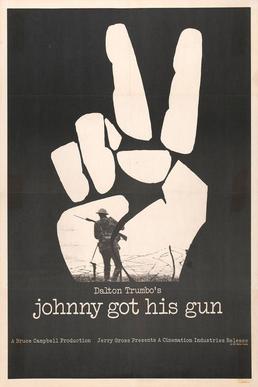
The 1971 anti-war film, Johnny Got His Gun, tells the story of Joe Bonham (played by Timothy Bottoms). When America enters World War I, Joe enlists in the Army. He leaves behind his small-town life. He leaves behind his patriotic father (Jason Robards) and his loving girlfriend (Kathy Fields). As he leaves, everyone tells him that he is doing the right thing to protect democracy. Joe’s a hero!
Joe expects war to be a glorious affair, one that will make a true man out of him. Instead, he’s hit by an artillery shell while huddled in a muddy trench. Though he survives the explosion, he loses his arms and his legs. He loses his face. He’s taken to a field hospital, where the doctors say that, though he’s alive, he’s incapable of feeling or thinking. He’s left alone in a room and is occasionally checked on by a sympathetic nurse (Diane Varsi).
The doctors are wrong. Joe can think. Even if he can’t see where he is now, he can still remember the life that he once had and the events that led him to the hospital. The film switches back and forth, from the black-and-white imagery of the hospital to the vivid color of Joe’s memories and fantasies. In his mind, Joe remembers his father, who encouraged him to go to war and perhaps was not the all-knowing figure that Joe originally assumed him to be. (The film makes good use of Jason Robards’s natural gravitas. Like Joe, the viewer initially assumes that Robards is correct about everything.) Joe also imagines several conversations with Jesus (a stoned-looking Donald Sutherland), who turns out to be surprisingly mellow and not always particularly helpful. Jesus suggest that Joe may just be naturally unlucky and he also suggests that Joe perhaps keep his distance from him because, sometimes, bad luck can rub off. Joe, meanwhile, wonders if he could be used as a traveling exhibit to portray the futility of war. When Joe finally realizes that a nurse has been checking on him, he tries to figure out a way to send a message to both her and the military that is keeping him alive in his captive state. S.O.S. …. help me….
Johnny Got His Gun is based on a novel by Dalton Trumbo. The novel was first published in 1939, at a time when the debate over whether the the U.S. should get involved in another war in Europe was running high. At the time, Trumbo was a Stalinist who opposed getting involved because Germany and Russia had signed a non-aggression pact. After the Germans invaded Russia in 1941, Trumbo and his publishers suspended reprinting of the book until the war was over with. Needless to say, this was all brought up in the 50s, when Trumbo was one of the more prominent writers to be blacklisted during the Red Scare. On the one hand, Dalton Trumbo does sound like he was more than a bit of a useful idiot for the Stalinists. On the other hand, if you’re going to suspend the printing of your anti-war polemic, it should definitely be because you want to help defeat the Nazis. In the end, what really matters is that Johnny Got His Gun is an undeniably well-written and effective book, one that works because it eschews the vapid sloganeering that one finds in so many works of left-wing literature and instead focuses on the emotions and thoughts of one human being.
The book was later rediscovered by the anti-war protestors of the 60s, which led to Dalton Trumbo directing a film adaptation. The film is a bit uneven. Dalton Trumbo was 65 years old when he directed the film and there are a few moments, especially in the scenes with Sutherland as Jesus, where he seems like he’s trying a bit too hard to duplicate the younger directors who were a part of the anti-war moment. However, the scenes in the military hospital are undeniably moving. The hospital scenes are shot in a noirish black-and-white and they effectively capture the stark horror of Joe’s situation. Left alone in his dark and shadowy room, Joe becomes the perfect symbol for all the war-related horrors that people choose to ignore. He becomes the embodiment of what war does to those who are scarred, both physically and mentally, by it. The scenes where Diane Varsi realizes that Joe is aware of what’s happened to him and that he can still feel are powerful and emotional. In fact, they work so well that it’s hard not to wish that the film could have done away with the fantasies and the flashbacks, despite the fact that Timothy Bottoms gives an appealing performance as the young and idealistic Joe.
Johnny Got His Gun didn’t receive any Oscar nominations. Should it have? The 1971 Best Picture line-up was a strong one, with the exception of Nicholas and Alexandra. Johnny Got His Gun was definitely superior to Nicholas and Alexandra. However, Dirty Harry is definitely superior to Johnny Got His Gun. (For that matter, Two-Lane Blacktop also came out in 1971 as well.) But, even if Johnny Got His Gun didn’t deserve to be one of the five Best Picture nominees, it did deserve some consideration for its cinematography and Diane Varsi’s performance. If the flashbacks and the fantasies were handled a bit more effectively, I would suggest that Jason Robards and Timothy Bottoms were worthy of consideration as well.
In conclusion, I should note that 1971 was a good year for Timothy Bottoms. Not only did he star in this film but he was also the star of The Last Picture Show.
What’s an Insomnia File? You know how some times you just can’t get any sleep and, at about three in the morning, you’ll find yourself watching whatever you can find on cable or Netflix? This feature is all about those insomnia-inspired discoveries!
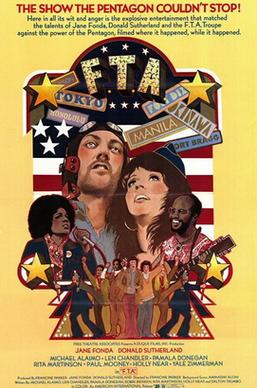
If you were having some trouble getting too sleep last night, you could have taken some sleeping pills and allowed them to knock you out for a day or two. Or you could have logged into Netflix and watched the 1972 anti-war documentary, F.T.A.
The year was 1971 and the United States was bogged down in a deeply unpopular war in Vietnam. While protests continued in North America, the soldiers who were actually serving in Asia started to become increasingly outspoken about their own doubts about whether there was any good reason for the U.S. to be in Vietnam. Often at the risk of being court-martialed, these soldiers started to make their voice heard through underground newspapers and by hanging out at coffeehouses that anti-war protestors had started near military bases. “F.T.A.” became a rallying cry for these anti-war soldiers. A play on the army’s then-slogan of “Fun, Travel, and Adventure,” F.T.A. was also said to stand for, “Fuck the Army.”
F.T.A. also stood for Free Theater Associates, an anti-war vaudeville-style troupe that spent 1971 performing at G.I. Coffeehouses. The show was specifically set up as a parody of Bob Hope’s USO Shows. Each performance featured music, skits, and a reading from Dalton Trumbo’s anti-war novel, Johnny Got His Gun. Headlining the FTA show were actors Donald Sutherland Jane Fonda, comedians Michael Alaimo and Paul Mooney, and musicians Swamp Dogg and Holly Near.
F.T.A. is really two documentaries in one. One documentary features the F.T.A. performances and follows the troupe as they travel to military bases in Hawaii, The Philippines, Okinawa, and Japan. The other documentary features interviews with the anti-war soldiers who came to see the show. They discuss how they feel about the prospect of dying in a war that none of them support and few of them understand. They discuss how clueless the officers are. Black G.I.s discuss the racism within the ranks and wonder why they should die for a country that discriminates against them.
For the most part, the celebrities come across as being dilettantes. With the exception of Swamp Dogg (who is obviously sincere in his concerns for the people that he’s performing for), the F.T.A. performers come across as being a bit too enamored with themselves and a lot of what we see of the F.T.A. Show seems to be more about impressing the activists back home than entertaining the G.I.s. (Many of the skits reminded me of the worst of the Freedom School scenes from Billy Jack.) However, the soldiers themselves are fascinating. The soldiers discuss their anger, fears, and experiences with an honesty and an authenticity that is never less than compelling. If nothing else, this documentary highlights the difference between people who are anti-war because they’ve experienced it firsthand and people who are anti-war because it’s the latest thing to be.
As I’ve mentioned in the past, I’m a history nerd. Seen today, F.T.A. is an interesting historical document, one that’s all the more fascinating because it’s a Vietnam documentary that was filmed while the war was still being fought. As such, there’s no hindsight or attempts to mold the material into something designed to appeal to those looking back with either nostalgia or disdain. Instead, it’s a time capsule, one that takes you back to a tumultuous time and allows you to experience it for yourself. On that level, it’s a history nerd’s dream.
With the Cannes Film Festival underway, I have been watching some of the past winners of the prestigious Palme d’Or. On Thursday night, Jeff and I watched the winner of the 1970 winner of the Grand Prix (as the Palme was known at the time), Robert Altman’s M*A*S*H.
There are, of course, three versions of M*A*S*H. All three of them deal with the same basic story of Dr. Hawkeye Pierce and his attempts to maintain his sanity while serving as a combat surgeon at the 4077th Mobile Army Surgical Hospital during the Korean war. All three of them mix comedy with the tragedy of war. However, each one of them takes their own unique approach to the material.
The one that everyone immediately thinks of is the old television series, which ran for 11 seasons and which can be found on Hulu and on several of the retro stations. The television series starred Alan Alda as Hawkeye. I’ve watched a handful of episodes and, while the episodes that I’ve seen were undeniably well-acted and well-written and they all had their heart in the right place, the show’s deification of Hawkeye can get to be a bit much. Not only is Hawkeye the best surgeon at the 4077th, he’s apparently the best surgeon in all of Korea. In fact, he may be the best surgeon on the entire planet. Not a single thing happens in the camp unless Hawkeye is somehow involved. When a nurse is killed by a landmine in one episode, the focus is not on the other nurses but instead on how Hawkeye feels about it. When bombs are falling too close to the camp, the focus is again only on Hawkeye and how much he hates the war. If you didn’t already know that he hated the war, Hawkeye will let you know. Wish Hawkeye a good morning and he’ll yell at you about how many people are going to be wounder by the end of the day. Even when one agrees with Hawkeye, the character’s self-righteousness can be a bit much.
Less well-known is the first version of M*A*S*H, a short and episodic novel that was published in 1968. The novel was written by Dr. Richard Hornberger, who actually had served in Korea at a M*A*S*H unit and who reportedly based Hawkeye on himself. The book is a rather breezy affair. Reading it, one can definitely tell that it was inspired by someone telling Hornberger, “Your stories about Korea are so funny and interesting, you should write them down!” The book avoids politics, reserving most of its ire for military red tape. Hornberger was a Republican who so disliked Alan Alda’s interpretation of Hawkeye that, when he wrote a sequel to M*A*S*H, he included a scene in which Hawkeye talked about how much he enjoyed beating up hippies.
And then there’s the version that came in between the book and the television series, the 1970 film from Robert Altman. The film retains the book’s episodic structure while also throwing in the anti-war politics that would define the television series. (Though the film was set in the 50s, Altman purposefully made no attempt to be historically accurate because he wanted it to be clear that this film was more about Vietnam than Korea.) From its opening, the film announces its outlook, with shots of helicopters carrying severely wounded (possibly dead) soldiers to the camp while a song called Suicide is Painless plays on the soundtrack. The song was written by director Robert Altman’s fourteen year-old son, Mike. Reportedly, it took Mike five minutes to come up with the lyrics. When the instrumental version of the song was later used as the theme song for the television series, Mike Altman made over a million dollars in royalties.
The film opens with Hawkeye Pierce (Donald Sutherland) and Duke Forrest (Tom Skerritt) arriving at the 4077th MASH in a stolen jeep and it ends with them getting sent home in the same jeep. Though Duke is set up to be a major character, he soon takes a backseat to another surgeon, the unfortunately nicknamed Trapper John (Elliott Gould). Much as with the television series, the movie centers around Hawkeye and Trapper John’s antics. When they’re not in the operating room, they’re drinking, carousing, and playing pranks that are far more mean-spirited than anything the television versions of the characters would have ever done. (Indeed, the book and movie versions of Hawkeye probably would have hated Alan Alda’s Hawkeye.) Unlike the television version of Hawkeye, the film’s Hawkeye is not the best surgeon in Korea. In fact, he’s not even the best surgeon at the 4077th. (That honor goes to Trapper.) Instead, he’s just one of many doctors on staff. They’re rotated in and then, at the end of their tour, they’re rotated out. Hawkeye loses as many patients as he saves. The film’s doctors are not miracle workers, nor are they crusaders. Instead, they are overworked, neurotic, often exhausted, and frequently bored whenever there aren’t any wounded to deal with. The film emphasizes that the doctors are as professional inside the Operating Room as they’re rambunctious outside of it. Unlike the television series, Hawkeye doesn’t joke while working. He’s usually too busy trying to stop his patients from bleeding to death to tell jokes or to complain about the war that brought them to the OR.
Indeed, the film version of M*A*S*H communicates its anti-war message not through indignant speeches but instead through bloody imagery. The operating room scenes don’t shy away from showing the ugliness of war and they are occasionally so visceral that they almost seem to shame the audience for have laughed just a few minutes earlier. One of the film’s more famous (and controversial) sequences features Hawkeye driving Frank Burns (Robert Duvall) to insanity by crudely taunting him about his affair with head nurse Margaret Houlihan (Sally Kellerman). Burns attacks Hawkeye, a response that actually seems rather justified even if it is played for laughs. A scene of Burns being driven out of the camp in straitjacket is followed by a close-up of a geyser of blood erupting from a wounded soldier’s throat. It’s a jarring transition but one that makes a stronger anti-war statement than any self-righteous monologue would have. While Hawkeye and Trapper are taunting Burns and Margaret, soldiers are still being sent off to die.
The humor in M*A*S*H is often brutally misogynistic. Margaret is described as being “a damn good nurse” but is continually humiliated because she believes in maintaining military discipline. One can disagree with her emphasis on following all of the proper regulations while also realizing the Hawkeye and Trapper’s treatment of her is unreasonably cruel. The scene where Trapper and Hawkeye expose her while she’s taking a shower is especially difficult to watch and there’s no way to justify their actions. It’s frat boy humor, the type of stuff that you would expect from a bunch of former college football players, which is what we’re told Hawkeye and Trapper are. (That, of course, is another huge difference between the film and television versions of the characters.) That said, it’s debatable whether or not were supposed to find either Hawkeye or Trapper to be heroic or even likable. As a director, Robert Altman shied away from making films with unambiguous heroes or villains. Just as Margaret could be a “damn good nurse” and a “regular army clown” at the same time, Hawkeye can be both a dedicated doctor and a bit of a jerk.
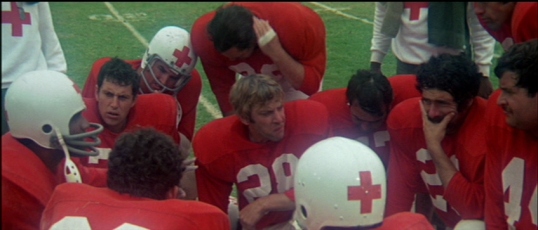
After 90 minutes of bloody operating room scenes and Trapper and Hawkeye making crude jokes, M*A*S*H suddenly becomes a sports film as the the 4077th plays a football game against their rivals, the 325th Evac Hospital. The change of tone can be a bit jarring but it’s perhaps the most important sequence in the film. For a few hours, the doctors bring “the American way of life” to Korea and the end result is a game that’s played for money and which is only won through cheating and deception. (Future blaxploitation star Fred Williamson made his film debut as the ringer who the 4077th recruits for the game.) For all of the broad comedy of the game, it’s followed by a shot of the doctors playing poker while a dead soldier is transported out of the camp, wrapped in a white sheet. Football may provided a distraction. The money may have provided an incentive. But the war continued and people still died.
Much of M*A*S*H‘s humor has aged terribly but the performances still hold up and the anti-war message is potent today. Though Sutherland and Gould are undeniably the stars of the film, M*A*S*H is a true ensemble film, full of the overlapping dialogue and the small character performances that Robert Altman’s films were known for. One reason why the film works is because it is an immersive experience, the viewer truly does feel as if they’ve been dropped in the middle of an operating field hospital. Though Hawkeye and Trapper may be at the center of the action, every character, from the camp’s colonel to the lowliest private, seems to have their own story playing out. This a film where paying attention to the little things happening in the background is often more rewarding than paying attention to the main action. I particularly liked the performances of David Arkin as the obsequies Staff Sergeant Vollmer and Bud Cort as Pvt. Warren Boone. Boone, especially, seems to have an interesting story going on in the background. The viewer just has to keep an eye out for him. Also be sure to keep an eye out for Rene Auberjonois, who reportedly improvised one of the film’s best-known lines when, after Margaret demands to know how Hawkeye reached a position of authority in the army medical corps, he deadpanned, “He was drafted.”
One of the first major studio films to be openly critical of the military and the war in Vietnam, M*A*S*H won the Palme d’Or, defeating films like Investigation of a Citizen Above Suspicion and The Strawberry Statement. Unlike many Palme winners, it was also a box office success in the United States. Though controversial, it received an Oscar nomination for Best Picture. However, unlike the Cannes jury, the Academy decided to honor a different film about war, Patton.
“Time is on my side….” sings an ancient Sumerian demon, who is apparently a huge fan of the Rolling Stones.
“Do you like cream?” asks a possibly crooked detective who is played by a slightly less heavy than usual James Gandolfini.
Donald Sutherland walks through a shadowy police station and flashes his big smile.
A detective played by John Goodman talks on the phone and makes cheery jokes while investigating a brutal murder.
A demon jumps from person to person, possessing everyone for a matter of seconds, just so he can freak out one specific person.
“Beware my wrath,” a white-haired businessman says to Denzel Washington.
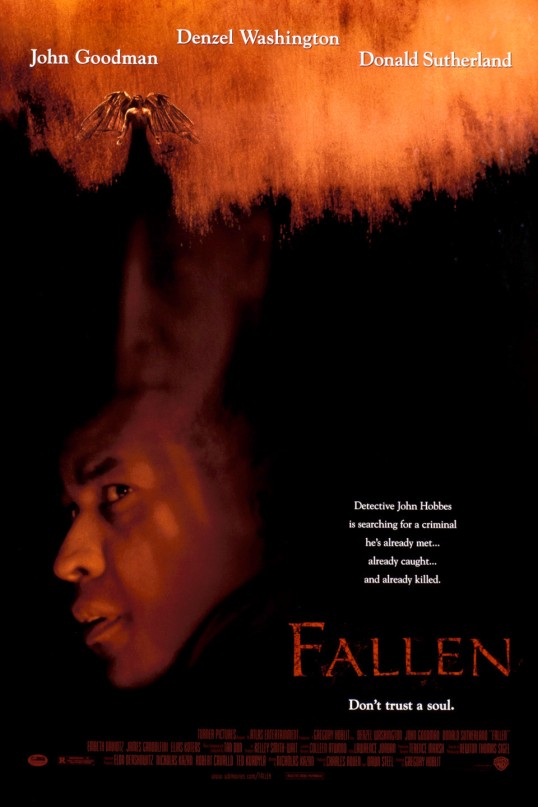
There’s no way to deny it. 1998’s Fallen is a film that’s full of strange moments. Some of it works and some of its doesn’t but it’s never boring. Denzel Washington plays John Hobbes, a Philadelphia detective who has achieved a small amount of fame as the result of capturing serial killer Edgar Reese (Elias Koteas). Reese asks to see Hobbes before he’s executed and it turns out that, for a man about to pay the ultimate price for his crimes, he’s in a surprisingly good mood. Before he goes in the gas chamber, Reese chants something in Aramaic.
Soon, new murders are being committed in Phladelphia. Hobbes and his partner, Jonesey (John Goodman at his most Goodmanesque), suspect that the killer is a copycat, trying to capture some of Reese’s notoriety for himself. Gretta Milano (Embeth Davidtz), the daughter of a detective who committed suicide after being accused of committing a series of murders, tells Hobbes that the new killings are actually being committed by a demon named Azazel. Azazel can jump from body to body and can compel people to do terrible things. Gretta asks Hobbes if he belives in God. Hobbes says it’s hard to have faith when you deal with murder every day, a somewhat clichéd line that Washington makes work through the absolute conviction of his delivery,
Denzel Washington is the key to this film’s success. Sure, there’s a lot of murders and a lot of twists and a lot of possessions and there’s a lot of scenes that are shot from the point of view of the demon but, in the end, Fallen works because Washington is absolutely convincing as a man who is facing an evil that is beyond human understanding. Washington gives a very naturalistic and grounded performance, one that keeps an element of reality in Fallen regardless of how messy the story may get. When it becomes apparent that the demon is going to try to harm his brother and his nephew, Washington’s fury feels real. When Hobbes discovers that the demon has gotten to one of them, Washington’s underplayed reaction makes the scene even more poignant and painful. It’s hard to imagine Fallen being anywhere near as effective with an actor other than Denzel Washington in the lead role.
Fallen is a twisty movie. The demon moves quickly and it always seems to have a backup plan. He manipulates Hobbes into doing some things that are so terrible that you’re not sure that Hobbes is every going to recover, even if he does somehow manage to defeat Azazel. Hobbes and Azazel are worthy adversaries and, as a result, the film gets away with a lot of stuff that wouldn’t otherwise work. Even the use of Time Is On My Side pays off, as the one character who you don’t want to hear sing the song suddenly starts doing a Mick Jagger impersonation and you’re just like, “Oh no, what’s going to happen now?” The film’s high point is a lengthy sequence where Hobbes stands on a busy street and watches as Azazel jumps from body to body. Everyone who passes Hobbe gives him a death glare. It’s a frightening moment, one in which Fallen captures the intensity of a nightmare.
I watched Fallen earlier today. I can’t really say that I was expecting much from it but I was surprised. It’s actually one of the better horror films that I’ve watched for the first time this month. It’s big and strange and creepy and it’s got Denzel Washington doing what he does best. What more could you ask for?