Lisa Marie Reviews An Oscar Nominee: Apocalypse Now (dir by Francis Ford Coppola)


1979’s Apocalypse Now reimagines the Vietnam War as pop art.

Jim Morrison sings The End in the background as slow-motion helicopters pass in front of a lush jungle.  The jungle erupts into flame while in a dingy hotel room, Captain Benjamin Willard (Martin Sheen) gets drunks, practices his karate moves, and smashes a mirror before collapsing to the floor in tears.  The next morning, the hung-over and bandaged Willard ends up at a U.S. military base where he has a nice lunch with Lt. General Corman (G.D. Spradlin) and Col. Lucas (Harrison Ford) and a nearly silent man wearing an undone tie.  Willard is asked if it’s true that he assassinated an enemy colonel.  Willard replies that he did not and that the operation was classified, proving that he can both lie and follow military protocol.  Willard is told that a Col. Walter Kurtz (Marlon Brando) has gone rogue and his mission is to go into Cambodia and terminate his command with “extreme” prejudice.  It’s a famous scene that features G.D. Spradlin delivering a brilliant monologue about good and evil and yet it’s often missed that Willard is getting his orders from Roger Corman and George Lucas.

(Roger Corman was the mentor of director Francis Ford Coppola while the pre-Star Wars George Lucas was Coppola’s business partner.  Indeed, Apocalypse Now was originally somewhat improbably planned to be a George Lucas film.)

Up the river, Willard heads on a patrol boat that is populated with characters who could have come out of an old World War II service drama.  Chief (Albert Hall) is tough and no-nonsense.  Lance (Sam Bottoms) is the goofy comic relief who likes to surf.  Clean (Laurence Fishburne) is the kid who is obviously doomed from the minute we first see him.  Chef (Fredric Forrest) is the overage, tightly-wound soldier who just wants to find mangoes in the jungle and who worries that, if he dies in a bad place, his soul won’t be able to find Heaven.  The Rolling Stones are heard on the boat’s radio.  Soldiers on the other patrol boats moon the boat and toss incendiary devices on the roof.  It’s like a frat prank war in the middle of a war.

Colonel Bill Kilgore (Robert Duvall) is a badass calvary officer whose helicopter raids are legendary amongst the enemy and a dedicated surfer who tries to turn every night into the equivalent of an AIP Beach Party film.  He’s a brilliant warrior who speaks with Malibu accent (“Charlie don’t surf!”) and who doesn’t flinch when a bomb goes off near him.  “I love the smell a napalm in the morning,” he says and, for a few moments, you really wish the film would just abandon Willard so we could spend more time with Kilgore.  “Some day this war is going to end,” he says with a reassuring nod, showing a non-neurotic attitude that is the opposite of Kurtz’s.  Willard says that he could tell Kilgore was going to get through the war without even a scratch and it’s true.  Kilgore doesn’t try to rationalize or understand things.  He just accepts the reality and adjusts.  He’s a true surfer.

The film grows progressively more surreal the closer the boat heads up the river and gets closer to Cambodia.  A USO show turns violent as soldiers go crazy at the sight of the Playboy Bunnies, dressed in denim outfits and cowboy hats and twirling cap guns like the love interest in a John Wayne western.  A visit to a bridge that is built every day and blown up every night is a neon-lit, beautiful nightmare.  Who’s the commanding officer?  No one knows and no one cares.

The closer Willard gets to Kurtz, the stranger the world gets.  Fog covers the jungles.  A tiger leaps out of nowhere.  Dennis Hopper shows up as a photojournalist who rambles as if Billy from Easy Rider headed over to Vietnam instead of going to Mardi Gras.  Scott Glenn stands silently in front of a temple, surrounded by dead bodies that feel as if they could have been brought over from an Italian cannibal film.  Kurtz, when he shows up, is an overweight, bald behemoth who talks in riddles and who hardly seem to be the fearsome warrior that he’s been described as being.  “The horror, the horror,” he says at one point in one of the few moments that links Apocalypse Now to its inspiration, Joseph Conrad’s Heart of Darkness.

Directed by near-communist Francis Ford Coppola and written by the unapologetically right-wing John Milius, Apocalypse Now is actually less about the reality of Vietnam and more about how the images of the war shaped pop culture the world over.  It’s a reminder that Vietnam was known for being the first television war and that counterculture was not just made up of dropouts but also of writers, actors, and directors.  Kurtz may say that Willard’s been sent by grocery store clerks but actually, he’s been sent by the B-movie producers who first employed and mentored the directors and the actors who would eventually become the mainstays of the New Hollywood.  The film subverts many classic war film cliches but, at the same time, it stays true to others.  Clean dying while listening to a tape recording of his mother telling him not to get shot and to come home safe is the type of manipulative, heart-tugging moment that could have appeared in any number of World War II-era films.  And while Coppola has always said the film was meant to be anti-war, Col. Kilgore remains the most compelling character.  Most viewers would probably happily ride along with Kilgore while he flies over Vietnam and plays Wagner.  The striking images of Vietnam — the jungle, the explosions, the helicopters flying through the air — stay in the mind far more than the piles of dead bodies that appear in the background.

It’s a big, messy, and ultimately overwhelming film and, while watching it, it’s hard not to get the feeling that Coppola wasn’t totally sure what he was really trying to say.  It’s a glorious mess, full of stunning visuals, haunting music, and perhaps the best performance of Robert Duvall’s legendary career.  The film is too touched with genius to not be watchable but how one reacts overall to the film will probably depend on which version you see.

The original version, which was released in 1979 and was nominated for Best Picture, is relentless with its emphasis on getting up the river and finding Kurtz.  Willard obsesses on Kurtz and really doesn’t have much to do with the other people on the boat.  It gives the story some much-needed narrative momentum but it also makes Kurtz into such a legendary badass that it’s hard not to be disappointed when Willard actually meets him.  You’re left to wonder how, if Kurtz has been living in the jungle and fighting a brutal and never-ending guerilla war against the communists, he’s managed to gain so much weight.  Brando, who reportedly showed up on set unprepared and spent days improvising dialogue, gives a bizarre performance and it’s hard to view the Kurtz we meet as being the Kurtz we’ve heard about.  As strong as the film is, it’s hard not to be let down by who Kurtz ultimately turns out to be.

In 2001 and 2019, Coppola released two more versions of the film, Redux and The Final Cut.  These versions re-inserted a good deal of footage that was edited out of the original cut.  Most of that footage deals with Willard dealing with the crew on the boat and it’s easy to see why it was cut.  The scenes of Willard bonding with the crew feel out of character for both Willard and the rest of the crew.  A scene where Willard arranges for Clean, Lance, and Chef to spend time with the Playboy bunnies seems to go on forever and features some truly unfortunate acting.  Worst of all, Redux totally ruins Kilgore’s “I love the smell of napalm in the morning” monologue by having Willard suddenly steal his surf board.  Again, it’s out of character for Willard and it actually feels a bit disrespectful to Duvall’s performance to suddenly turn Kilgore into a buffoon.

But then there are moments that do work.  I actually like the lengthy French Plantation scene.  By the time Willard, Lance, and Chef stumble into the plantation,  the journey upriver has gotten so surreal that it makes a strange sort of sense that they would run into a large French family arguing politics while a clown tries to keep everyone distracted.  The new versions of the film are undeniably disjointed but they also shift the focus off of finding Kurtz and place it more on Willard discovering how weird things are getting in Vietnam.  As such, it’s less of a disappointment when Kurtz actually shows up.  Much as with the French Plantation scene, the journey has become so weird that Kurtz being overweight and pretentious feels somehow appropriate.

What all the versions of the film have in common is that they’re all essentially a neon-lit dream of pop cultural horror.  Is Apocalypse Now a horror film?  Critic Kim Newman argued that it owed a lot to the genre.  Certainly, that’s the case when Willard reaches the temple and finds himself surrounded by corpses and and detached heads.  Even before that, though, there are elements of horror.  The enemy is always unseen in the jungle and, when they attack, they do so quickly and without mercy.  In a scene that could almost have come from a Herzog film, the boat is attacked with toy arrows until suddenly, out of nowhere, someone throws a very real spear.  Until he’s revealed, Kurtz is a ghostly figure and Willard is the witch hunter, sent to root him out of his lair and set his followers on fire.  If the post-60s American horror genre was shaped by the images coming out of Vietnam then Apocalypse Now definitely deserves to be considered, at the very least, horror-adjacent.

Apocalypse Now was controversial when it was released.  (It’s troubled production had been the talk of Hollywood for years before Coppola finally finished his film.)  It was nominated for Best Picture but lost to the far more conventional Kramer vs Kramer.  Robert Duvall was the film’s sole acting nominee but he lost the award to Melvyn Douglas’s turn in Being There.  Douglas was very good in Being There and I imagine giving him the Oscar was also seen as a way of honoring his entire career.  That said, Duvall’s performance was amazing.  In his relatively brief screen time, Duvall somehow managed to take over and ground one of the most unruly films ever made.  The Oscar definitely should have gone to him.

As for the film itself, all three versions, flaws and all, are classics.  It’s a film that proves that genius can be found in even the messiest of productions.

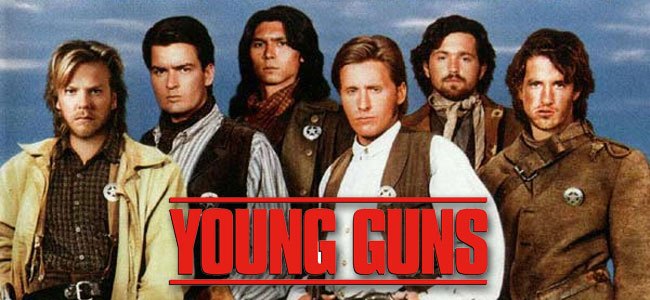
#MondayMuggers presents YOUNG GUNS (1988) starring Emilio Etevez, Kiefer Sutherland, Lou Diamond Phillips, and Charlie Sheen!


Every Monday night at 9:00 Central Time, my wife Sierra and I host a “Live Movie Tweet” event on X using the hashtag #MondayMuggers. We rotate movie picks each week, and our tastes are quite different. Tonight, Monday May 19th, we are showing YOUNG GUNS (1988) starring Emilio Estevez, Kiefer Sutherland, Lou Diamond Phillips, Charlie Sheen, Dermot Mulroney, Casey Siemaszko, Terence Stamp, Jack Palance, Terry O’Quinn, Brian Keith, and Patrick Wayne.

This movie focuses on a group of young gunmen, led by Billy the Kid (Emilio Estevez), who become deputies to avenge the murder of John Tunstall (Terence Stamp), the rancher who took them in, gave them jobs, and taught them how to read. But when Billy takes their authority too far, they soon find themselves to be the outlaws and the ones being hunted down.

Join us tonight for #MondayMuggers and watch the extremely fun YOUNG GUNS! It’s on Amazon Prime. The trailer is included below:

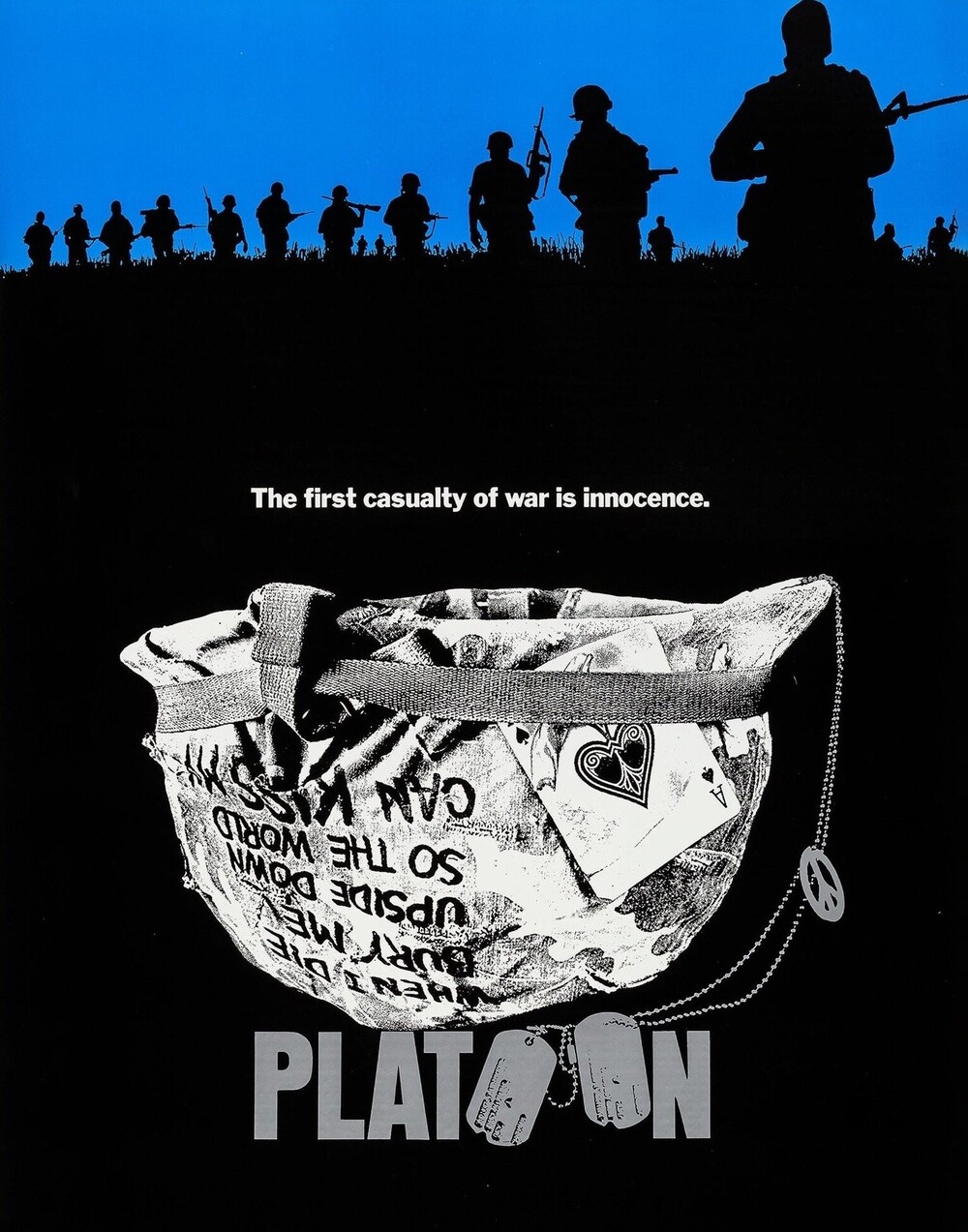
Lisa Marie Reviews An Oscar Winner: Platoon (dir by Oliver Stone)


One of my favorite scenes from TV’s King of the Hill occurs in an episode in which Hank and Peggy are celebrating their wedding anniversary.  They’ve sent Bobby and Luanne away for the weekend.  They have the house to themselves but, after their anniversary party, Peggy is feeling depressed.  She tells Hank that, for the first time ever, she feels old and she regrets all the dreams that she had that have yet to come true, like inventing and selling her own barbecue sauce.

Trying to cheer her up, Hank says, “C’mon, Peg.  We got the house to ourselves for weekend …. and I rented an R-rated movie!”

Peggy looks up, briefly hopeful that Hank did something romantic.  “What movie?” she asks.

Hank hesitates, glances down at the floor, and says, “Uhmm …. Platoon.”

It’s funny because it’s true.  Just about every man that I know loves Platoon.  First released in 1986 and reportedly based on Oliver Stone’s own experiences as an infantryman in Vietnam, Platoon is often cited as being one of the greatest war films ever made.  Oddly enough, the film has an anti-war and anti-military message but, in my experience, those who love it talk more about the battle scenes than any message that Stone may have been trying to impart about the futility of war.  Pauline Kael once wrote that Oliver Stone had left-wing politics but a right-wing sensibility and I think you can definitely see that in Platoon.  Despite all of the characters talking about how pointless the war is and how much they resent being forced to risk their lives for no apparent purpose, the film’s energy comes from the scenes of Chris Taylor (Charlie Sheen) stalking through the jungle and, towards the end, losing his mind and giving himself completely over to the adrenaline that comes from being trapped in the middle of a battle.  Throughout the film, we hear Taylor’s rather pedantic thoughts on the military and his fellow soldiers but it’s hard not to notice that his actions and his dialogue are usually far less eloquent.  Taylor may be a rich intellectual (and wow, is Charlie Sheen ever unconvincing when it comes to portraying that part of Taylor’s personality) but when he’s in the jungle, he’s just fighting for survival.

The film’s plot centers around the conflict between two sergeants, the peace-loving Elias (Willem DaFoe) and the war-loving Barnes (Tom Berenger).  Taylor has to decide which one of the two to follow.  The pot-smoking Elias loves his men and goes out of his way to protect them.  The beer-drinking Barnes has a much harsher view of the world but, at the same time, he’s the type of scarred warrior who seems immortal.  One gets the feeling that he’ll never be defeated.  The rest of the platoon is full of familiar faces, with everyone from John C. McGinley to Francesco Quinn to Tony Todd to Forest Whitaker to Johnny Depp to a baby-faced Kevin Dillon showing up.  (Dillon is especially frightening as a psycho who has, for some reason, been nicknamed Bunny.)  The majority of the platoon is dead by the end of the film.  Even with the leadership of Elias and Barnes, the soldiers are stuck in a winless situation.  As Taylor points out, the Americans aren’t just fighting the enemy.  They’re also fighting each other.

Platoon is certainly not my favorite of the film nominated in 1986.  I would have gone with A Room With A View.  (Blue Velvet, which is as influential a film as Platoon, was not even nominated.)  That said, I can’t deny the power of Platoon‘s combat scenes.  Though Stone’s script is didactic and Taylor’s narration is awkwardly deployed throughout the film, Stone’s direction definitely captures the fear and dread of being in a strange place with no idea of whether or not you’re going to survive.  Stone is critical of the military (at one point, an officer calls an air strike on his own men) but seems to love the soldiers, even the ones who have pushed over to the dark side.

Platoon was not the first Best Picture nominee to be made about the Vietnam War.  The Deer Hunter, Coming Home, and Apocalypse Now were all released first.  But both The Deer Hunter and Apocalypse Now are surreal epics that seem to take place in a dream world.  Coming Home, which has a script that somehow manages to be even more didactic than Platoon‘s, focuses on the war back home.  Platoon is far more gritty and personal film.  Watching Platoon, you can smell the gunpowder and the napalm and feel the humidity of the jungle.  I can understand why it won, even if I prefer to watch Helena Bonham Carter and Julian Sands fall in love.

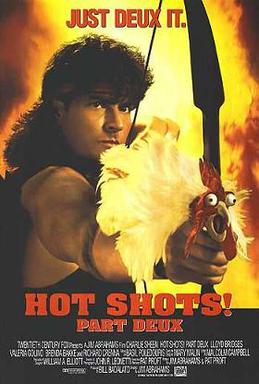
Hot Shots! Part Deux (1993, directed by Jim Abrahams)


Topper Harley (Charlie Sheen) is back but instead of being a knock-off of Tom Cruise, he’s now Sylvester Stallone.

When two separate teams of U.S. soldiers fail to rescue a group of hostages who are being held by Saddam Hussein (Jerry Haleva, who built an entire career out of his resemblance to the Iraqi dictator), it not only embarrasses America but threatens the reelection campaign of President Tug Benson (Lloyd Bridges).  President Benson can get away with throwing up on the Japanese ambassador and knocking over all the other Presidents with a shovel (though Gerald Ford falls on his own) but he can’t survive a hostage crisis.  Colonel Denton Waters (Richard Crenna) and Michelle Huddleston (Brenda Bakke) attempt to recruit Topper Harley from the Buddhist monastery, where he’s been living since the disappearance of Ramada (Valeria Golino).  Topper refuses to help with a third mission but, after Water is captured by Saddam, Topper does decide to lead the fourth mission.  Working with Ryan Stiles and Miguel Ferrer, Topper heads into the jungle to save Colonel Waters, reunite with Ramada, and discover his destiny.

The sequel to Hot Shots! is more of the same, a non-stop cavalcade of jokes, movie references, and deadpan one liners.  There are enough laugh out loud moments to make up for the jokes that don’t work.  I’ll always like the moment when Charlie Sheen sees Martin Sheen on another patrol boat.  (“Loved you in Wall Street!”)  It’s a movie made in the vein of Airplane! but the jokes aren’t as timeless as in that classic.  Everyone remembers Rambo enough to get the main joke and the interrogation scene in Basic Instinct has left enough of an impression that Topper’s “I know what to get your for Christmas,” comment to Michelle still draws a chuckle but do you remember Body of Evidence and the first President Bush vomiting at a state dinner?  Not all of the jokes have aged well but Charlie Sheen does a decent Rambo impersonation and Lloyd Bridges’s dim bulb President is one of the more relatable parts of the movie.  Fortunately, jokes about Saddam Hussein getting flattened by a piano will always be funny.

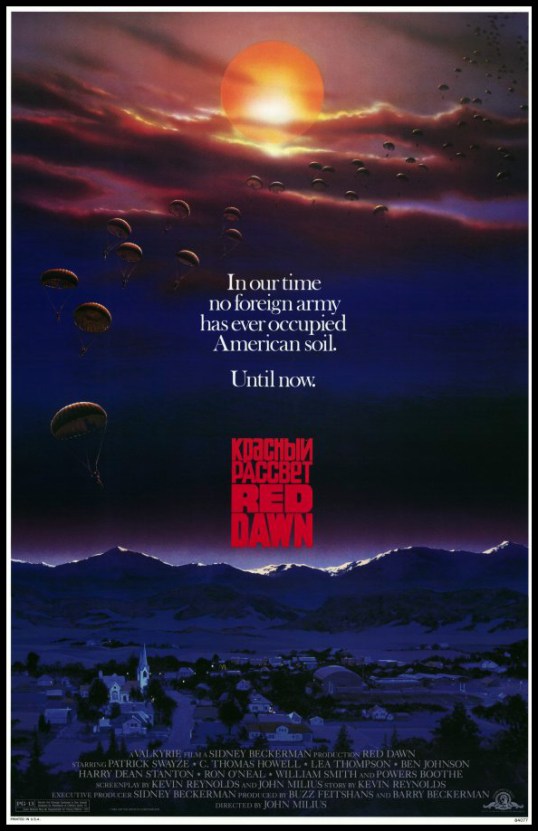
Scenes That I Love: The Traitor Scene From Red Dawn


The original Red Dawn doesn’t get as much credit as it deserves.

It’s often described as just being an anti-communist film but actually, it’s a lot more complex than that.  Yes, it’s about a group of teenagers who wage guerilla warfare against communist invaders.  But it’s also about how those teenagers lose their innocence as a result and how they all come to realize that war is not as simple as they thought it was.  The movie celebrates the Wolverines while also mourning that they were put in the position to have to risk and sacrifice their lives in the first place.

That’s what today’s scene that I love is all about.  After they are tracked down and attacked by a group of Russian soldiers, the Wolverines discover that one of the original members of the group visited his father in town and was forced to swallow a tracking device.  In this scene, the group is forced to deal with the reality of war.  The fact that the traitor was a friend to all of them and popular enough to be president of his class just adds to the difficulty of emotionally processing with his betrayal.  Patrick Swayze can’t bring himself to pull the trigger.  C. Thomas Howell, on the other hand, is so quick to shoot his former friend that you realize just how consumed by hate he has become.

Today’s scene was directed by the brilliant John Milius.

October True Crime: Out of the Darkness (dir by Jud Taylor)


The 1985 film, Out of the Darkness, takes place in New York City.

It begins in 1977 and it ends in 1978.  As the opening title card informs us, it’s a film about a city that was living in fear of the gunman known as the Son of Sam.  One of the first images that we see is an a handgun being fired at two people who are making out inside of a car.  We then cut to a police station where a homicide detective (played by Sam McMurray) reads aloud the letter that the Son of Sam sent to Jimmy Breslin.

That said, David Berkowitz, the killer who claimed that he was told to murder by a dog before later changing his story and claiming that he was a part of a Satanic conspiracy, spends most of the film in the shadows.  His name isn’t even mentioned until the film’s final third.  Instead, the majority of the film focuses on Ed Zigo (Martin Sheen), a New York City detective who tries to balance his desire to catch the Son of Sam with taking care of his wife (Jennifer Salt), who is due to have surgery for her heart condition.  Ed Zigo is dedicated and intelligent New York cop, the type who has no problem walking into a Mafia-controlled bar and asking the owner if his son has any connections to the family business.  He’s also a dedicated family man who freaks out when his daughter goes out on a date.  When his wife dies after surgery, Ed Zigo deals with his grief by throwing himself into his work but, as he tells his priest (Hector Elizondo), he no longer has his old confidence.  He fears that he’s going to make a mistake that’s either going to put his partner (Matt Clark) in harm’s way or allow the Son of Sam to continue to killing.

And really, it’s not a problem that the film focuses less on the killer and more on the people trying to track him down.  Martin Sheen gives a strong and sincere performance as the dedicated Ed Zigo, perfectly capturing not only his dedication but also his fear and his weariness.  (In many ways, his performance here feels like a forerunner to his performance in The Departed.)  The film captures the feel of living in a city where no one trusts anyone and it is also a good example of a “New Yorkers will be rude to anyone” film.  Even with a killer running around, no one wants to listen to a word the police have to say.  When David Berkowitz does show up, he’s played by an actor named Robert Trebor who gives an appropriately creepy performance.

Interestingly enough, Joe Spinell also appears in Out of the Darkness, playing the small but important role of an early Son of Sam suspect.  Though he only appears in two scenes, Spinell makes a memorably seedy impression.  Of course, today, Spinell is remembered for playing a character based on the Son of Sam in the infamous 1980 grindhouse shocker, Maniac.

(Trivia fans will also want to note that Charlie Sheen has a wordless cameo as a man who shuts his apartment door in the face of Martin Sheen and Matt Clark when they attempt to ask him if he witnessed the latest murder.  “Nice guy,” Martin says, in response.)

If you’re looking for a film in which Berkowitz is cursed out by a dog, Summer of Sam is probably the one to go for.  However, if you’re looking for a more low-key but realistic portrayal of Berkowitz’s reign of terror, Out of the Darkness is a good one to go with.

Guilty Pleasure No. 62: Backtrack (dir by Dennis Hopper)


Sometimes, you see a film that is just so weird and incoherent that you can’t help but love it.

Of course, it also helps if the film has a once-in-a-lifetime cast of actors who you would never expect to see acting opposite each other.

For me, that’s certainly the case with 1990’s Backtrack.  Directed by Dennis Hopper, Backtrack is a film about an artist (Jodie Foster, channeling Jenny Holzer) who witnesses a mob murder committed by Joe Pesci, Dean Stockwell, Tony Sirico, and John Turturro.  An FBI agent played by Fred Ward suggests that the artist should go into the witness protection program but she doesn’t want to give up her life as a New York sophisticate who creates challenging LED displays and who can eat Sno Balls whenever she gets the craving for one.  (Yes, this is a plot point.)  Turturro and Sirico break into the artist’s apartment and kill her boyfriend, who is played by a wide-eyed Charlie Sheen.  The artist puts on a blonde wig and goes on the run, eventually getting a job in advertising.

Realizing that his men can’t get the job done, mob boss Vincent Price decides to hire a legendary hitman played by Dennis Hopper (who also directed this film) to track down the artist.  However, the hitman becomes fascinating with the artist’s work, finds pictures of her posing in black lingerie, and immediately falls in love with her.  Not only does he wants to save her life but he wants her to wear the same lingerie exclusively for him.  (Yes, this is a pretty big plot point.)  At first, the artist refuses and views the hitman as being some sort of pathetic perv.  But then she discovers that he’s covered her bed with Sno Balls….

Meanwhile, a young Catherine Keener shows up as the girlfriend of a trucker who briefly considers giving the artist a ride to Canada.

And then Bob Dylan shows up, handling a chainsaw.

And there’s Helena Kallianiotes, the outspoken hitch-hiker from Five Easy Pieces, yelling at Joe Pesci!

And there’s Dennis Hopper’s The Last Movie co-star, Julie Adams!  And there’s Toni Basil!  And there’s director Alex Cox!

Dennis Hopper not only starred in Backtrack but he also directed and it’s obvious that he placed a call into just about everyone he knew.  In fact, one could argue that the only thing more shocking than Vincent Price showing up as a mob boss is that Peter Fonda, Karen Black, Elliott Gould, Robert Walker Jr., and Kris Kristofferson are nowhere to be found in the film.  Hopper’s first cut of Backtrack was reportedly 3 hours long but the studio cut it down to 90 minutes, renamed it Catchfire, and Hopper insisted on being credited as Alan Smithee.  Later, Hopper released a two-hour version with the Backtrack title and his directorial credit restored.

Regardless of which version you see, Backtrack is an odd film.  It’s hardly the first film to be made about a hit man falling for his target.  What distinguishes this film is just how bizarre a performance Dennis Hopper gives in the role of the hitman.  It’s as if Hopper gave into every method instinct that he had and the end result was a mix of Blue Velvet‘s Frank Booth and the crazed photojournalist from Apocalypse Now.  Jodie Foster’s cool intelligence makes her the ideal choice for a conceptual artist but it also makes it hard to believe that she would fall for a jittery hitman and, in her romantic scenes with Hopper, Foster often seems to be struggling to resist the temptation to roll her eyes.  Somehow, their total lack of romantic chemistry becomes rather fascinating to work.  They are two talented performers but each appears to be acting in a different movie.  What’s interesting is that I think a movie just about Hopper’s spacey hitman would be interesting (and, if you’ve ever seen The American Friend, it’s hard not to feel that such a movie already exists) but I think a movie about just about Foster’s artist and her life in New York would be just as fascinating.  Taken as individuals, the artist and the hitman are both compelling characters.  Taken as a couple, they don’t belong anywhere near each other.

But let’s be honest.  This is a film that most people will watch for the parade of character actors delivering quirky dialogue.  Even if one takes Hopper and Foster out of this mix, this is an amazingly talented cast.  One need only consider that John Turturro did Do The Right Thing before appearing in this film while Joe Pesci and Tony Sirico did Goodfellas immediately afterwards.  This film features a once-in-a-lifetime cast, made up of actors who were apparently told to do whatever they felt like doing.  Turturro plays up the comedy.  Sirico plays his role with cool menace.  Stockwell barely speaks above a whisper.  Fred Ward plays the one sane man in a world of lunatics. Vincent Price delivers his line as if he’s appearing in one of Roger Corman’s Poe films and somehow, it makes sense that, in the world of Backfire, an Italian gangster would have a snarky, mid-Atlantic accent.

It’s an odd little film, an example of 80s filmmaking with a 70s sensibility.  While it’s not touched with the lunatic genius that distinguished Hopper’s The Last Movie, Backtrack is still something that should be experienced at least once.

Previous Guilty Pleasures

  1. Half-Baked
  2. Save The Last Dance
  3. Every Rose Has Its Thorns
  4. The Jeremy Kyle Show
  5. Invasion USA
  6. The Golden Child
  7. Final Destination 2
  8. Paparazzi
  9. The Principal
  10. The Substitute
  11. Terror In The Family
  12. Pandorum
  13. Lambada
  14. Fear
  15. Cocktail
  16. Keep Off The Grass
  17. Girls, Girls, Girls
  18. Class
  19. Tart
  20. King Kong vs. Godzilla
  21. Hawk the Slayer
  22. Battle Beyond the Stars
  23. Meridian
  24. Walk of Shame
  25. From Justin To Kelly
  26. Project Greenlight
  27. Sex Decoy: Love Stings
  28. Swimfan
  29. On the Line
  30. Wolfen
  31. Hail Caesar!
  32. It’s So Cold In The D
  33. In the Mix
  34. Healed By Grace
  35. Valley of the Dolls
  36. The Legend of Billie Jean
  37. Death Wish
  38. Shipping Wars
  39. Ghost Whisperer
  40. Parking Wars
  41. The Dead Are After Me
  42. Harper’s Island
  43. The Resurrection of Gavin Stone
  44. Paranormal State
  45. Utopia
  46. Bar Rescue
  47. The Powers of Matthew Star
  48. Spiker
  49. Heavenly Bodies
  50. Maid in Manhattan
  51. Rage and Honor
  52. Saved By The Bell 3. 21 “No Hope With Dope”
  53. Happy Gilmore
  54. Solarbabies
  55. The Dawn of Correction
  56. Once You Understand
  57. The Voyeurs 
  58. Robot Jox
  59. Teen Wolf
  60. The Running Man
  61. Double Dragon

Live Tweet Alert: Join #FridayNightFlix for Backtrack!


As some of our regular readers undoubtedly know, I am involved in a few weekly live tweets on Twitter and Mastodon.  I host #FridayNightFlix every Friday, I co-host #ScarySocial on Saturday, and I am one of the five hosts of #MondayActionMovie!  Every week, we get together.  We watch a movie.  We tweet our way through it.

Tonight, at 10 pm et, #FridayNightFlix has got 1990’s Backtrack, an enigmatic thriller starring Jodie Foster, Dean Stockwell, Joe Pesci, John Turturro, Vincent Price, Fred Ward, Charlie Sheen, Tony Sirico, Bob Dylan, and Dennis Hopper (who also directed).


If you want to join us this Friday, just hop onto twitter, start the movie at 10 pm et, and use the #FridayNightFlix hashtag!  It’s a friendly group and welcoming of newcomers so don’t be shy.

Backtrack is available on Prime and Tubi!  See you there!


Live Tweet Alert: Join #FridayNightFlix for The Wraith!


As some of our regular readers undoubtedly know, I am involved in a few weekly live tweets on twitter and I hope to continue to be until the site finally becomes unusable.  (It’s going to happen eventually so enjoy it while you can!)  I host #FridayNightFlix every Friday, I co-host #ScarySocial on Saturday, and I am one of the five hosts of #MondayActionMovie!  Every week, we get together.  We watch a movie.  We tweet our way through it.

Tonight, at 10 pm et, #FridayNightFlix has got 1986’s The Wraith!  This film stars Charlie Sheen, Sherilyn Fenn, Nick Cassavetes, Randy Quaid, and Clint Howard!  Remember …. “if you lose the race, you lose your car!”

If you want to join us this Friday, just hop onto twitter, start the movie at 10 pm et, and use the #FridayNightFlix hashtag!  It’s a friendly group and welcoming of newcomers so don’t be shy.

The Wraith is available on Prime and Tubi!  See you there!

Scenes I Love: “Avenge Me!” from Red Dawn


Today, the Shattered Lens wishes a happy birthday to a true Hollywood iconoclast, John Milius!  In honor of Milius and his career and his legacy, today’s scene that I love comes from Milius’s 1984 film, Red Dawn.

After their small town is taken over by a combination of Cuban and Russian soldiers, a group of teenagers flee to the hills.  After a few months, they sneak back into town.  In this scene, two brothers (Patrick Swayze and Charlie Sheen) discover that their father (Harry Dean Stanton) is one of the many townspeople who have been sentenced to a reeducation camp.  Their dad says a few final words to them, knowing that he’ll probably never see them again.  He leaves them with one final instruction: “AVENGE ME!”  Not even the propaganda film playing in the background can cover the sound of their father demanding vengeance.

And, of course, they do get their revenge, sacrificing their lives so that America might once again be free.  It’s a classic John Milius moment and an appropriate scene with which to celebrate his birthday.