April True Crime: The Wizard of Lies (dir by Barry Levinson)


For many people, Bernie Madoff is a still a name that summons hate.

Madoff was the owner of Bernard L. Madoff Investment Securities, a firm that was a family business.  He ran it with his two sons, Mark and Andrew, and he gained a reputation for being a financial wizard, someone who never lost money and who always returned a profit for everyone who trusted him with their money.  He was someone who took money from the famous and the ordinary, the rich and the middle class, and he promised everyone that he would do wonderful things with that cash.  He lived in a fabulous home in New York City.  He had business and political connections.  His firm was, at one point, ranked as the sixth biggest on Wall Street but Madoff, himself, tried to keep a low-profile.

Of course, Madoff was a liar.  While his brokerage firm actually did make money, the asset management part of his business was actually a massive Ponzi scheme.  He took his clients’ money for himself and then kept everyone at bay by sending them fake documents that showed how well their investments were doing.  As long as the economy remained strong, Madoff had nothing to worry about.  People gave him their money, assumed it was safe, and then went away.  But when the stock market crashed in 2008, Madoff realized that his panicked clients would be coming for their money and he wouldn’t be able to give it to them.

Overnight, Madoff’s life collapsed.  He spent the rest of his days in prison, having been turned in by his own sons.  One son committed suicide, the other would die of cancer with his last words apparently being that his father was dead to him.  It was the biggest case of financial fraud in United State history and the majority of Madoff’s clients lost all of the money that they had given to him.  It was subsequently learned that many people had spotted red flags when it came to Madoff and his business.  (The fact that Madoff claimed to never lose money should have been a huge one.)  But Madoff invested his money in politicians and he never faced a real investigation until it was too late.  Madoff spend the rest of his days as a symbol of everything wrong with Wall Street.

Not surprisingly, quite a few movies were inspired by Bernie Madoff’s crimes, some of them featuring characters based on him and a few being about the case itself.  Produced by HBO, 2017’s The Wizard of Lies stars Robert De Niro as Madoff, Michelle Pfeiffer as his wife, and Alessandro Nivola as his son, Mark.  Directed by Barry Levinson, The Wizard of Lies follows Madoff as his Ponzi scheme collapses and it shows how the grand deception started.  Robert De Niro plays Madoff as being essentially soulless, a sociopath who knew he would eventually get caught but who just couldn’t bring himself to stop stealing people’s money.  Indeed, as played by De Niro, Madoff comes across as being one of the most joyless criminal masterminds in history.  He’s fooled everyone but he can’t enjoy it.  The impression that one gets is that Bernie Madoff was a pretty boring guy.  Perhaps that’s why people were willing to trust him with their money.  Someone that boring had to be trustworthy!  Many people have claimed that there’s no way that Mark and Andrew Madoff couldn’t have know what their father was doing.  In the film, one gets the feeling that Mark and Andrew knew something was going on but they decided to willfully blind themselves to what was happening around them.  The film hints that was Madoff’s secret power.  No one wanted to admit that his success was too good to be true.

The Wizard of Lies really doesn’t reveal anything new about the Madoff case.  Madoff’s crimes were actually pretty simple.  He wasn’t a criminal genius.  He was just someone who understood the importance of telling people what they wanted to hear.  Still, it’s a well-acted movie and, if you’re just looking for the facts of the case, The Wizard of Lies will give them to you.
4 Shots From 4 Films: Special Barry Levinson Edition


4 (or more) Shots From 4 (or more) Films is just what it says it is, 4 (or more) shots from 4 (or more) of our favorite films. As opposed to the reviews and recaps that we usually post, 4 (or more) Shots From 4 (or more) Films lets the visuals do the talking.

Happy birthday to Baltimore’s own Barry Levinson!

4 Shots From 4 Barry Levison Films

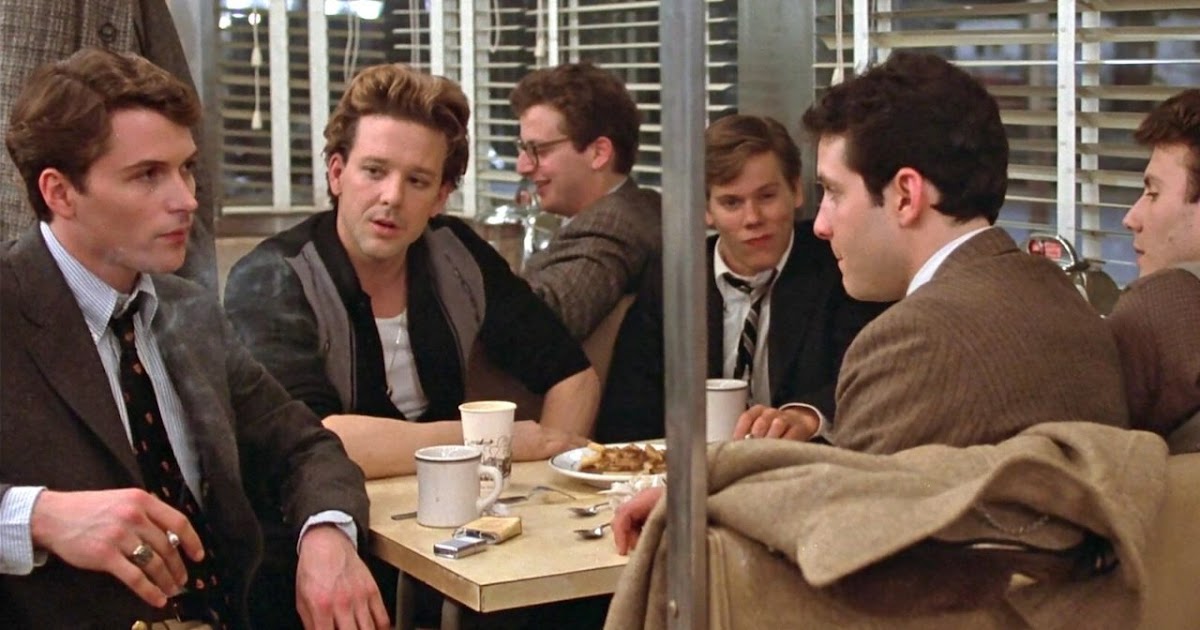
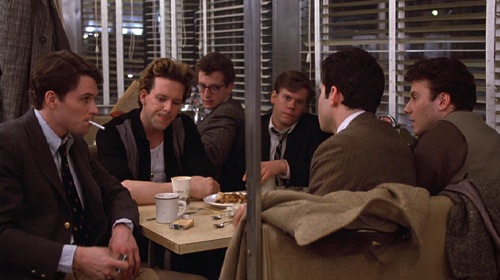
Diner (1982, directed by Barry Levison, DP: Peter Sova)

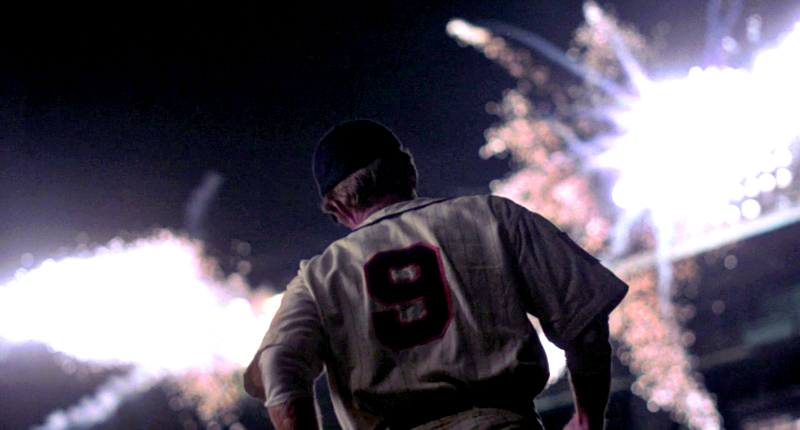
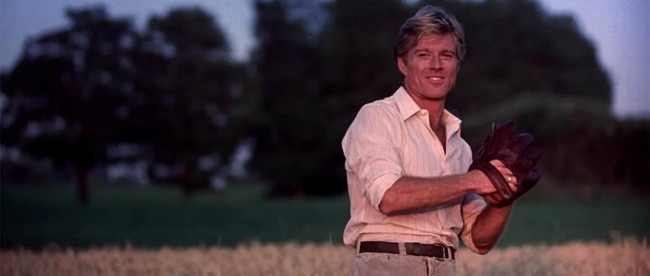
The Natural (1984, directed by Barry Levinson, DP: Caleb Deschanel)


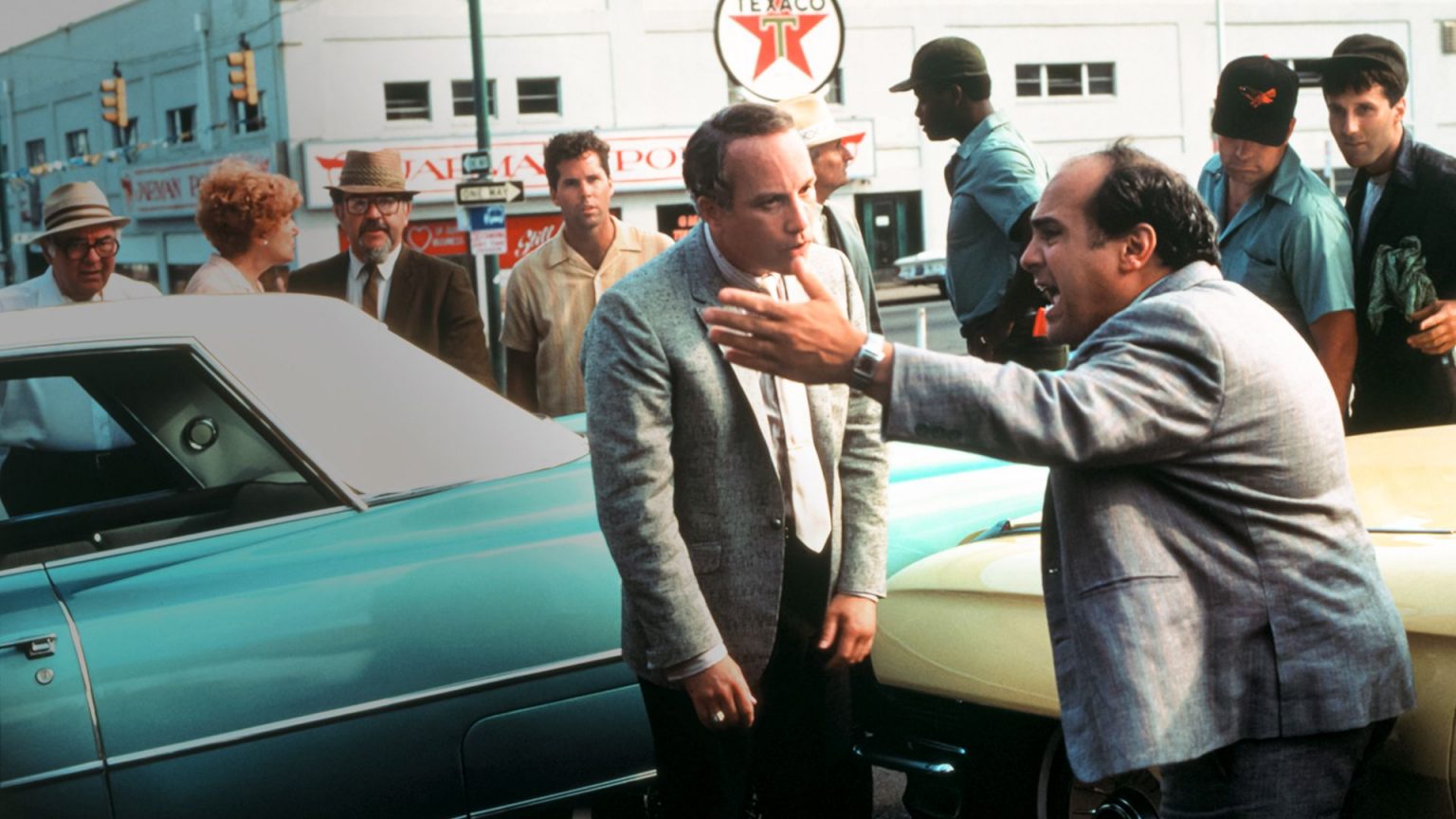
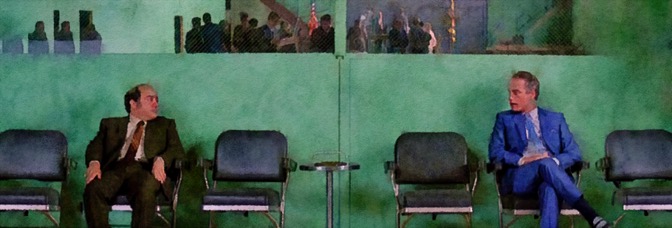
Tin Men (1987, directed by Barry Levinson, DP: Peter Sova)

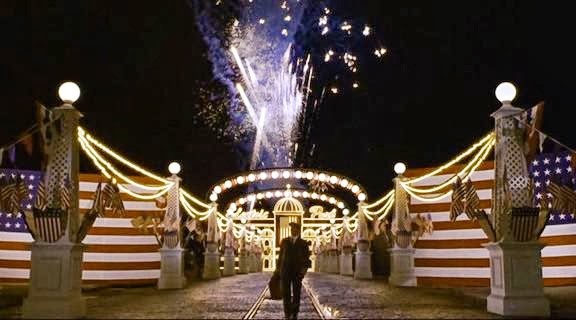
Avalon (1990, directed by Barry Levinson, DP: Allen Daviau)


Retro Television Review: Homicide: Life on the Street 1.1 “Gone For Goode”


Welcome to Retro Television Reviews, a feature where we review some of our favorite and least favorite shows of the past!  On Sundays, I will be reviewing Homicide: Life On The Street, which aired from 1993 to 1999, on NBC!  It  can be viewed on Peacock.

Today, I take a look at the pilot for a show that has been called one of the best of all time.

Episode 1.1 “Gone For Goode”

(Directed by Barry Levinson, originally aired on January 31st, 1993)

The opening credits for the first episode of Homicide: Life on the Street immediately announce that the show is not going to be a typical network cop show.  The music starts out as moody and low-key before eventually being dominated by a pulsating beat.  The images of dirty streets and crumbling rowhouses and of a dog running around behind a fence are all in black-and-white.  The faces of the cast appear, the majority of them in harsh close-up.  When viewed today, most of the faces are familiar.  Daniel Baldwin, Ned Beatty, Andre Braugher, Clark Johnson, Yaphet Kotto, Melissa Leo, Jon Polito, and Kyle Secor all flash by and the thing that the viewer will immediately notice is that it’s almost as if they’ve been filmed to remove any hint of glamour or attractiveness.  (Out of that impressive cast, only Baldwin, Johnson, Leo, and Secor are still with us.)

Gone for Goode tells several stories, introducing the detectives as they investigate various murders in Baltimore.  Meldrick Lewis (Clark Johnson) and Steve Crosetti (Jon Polito) are first seen searching for a bullet in a dark alleyway and arguing in only the way that two people who have worked with each other for a long time can argue.  Lewis continually refers to Crosetti as a “salami-head,” and Crosetti, who claims that he’s being kept up at night by his doubts about whether or not John Wilkes Booth was actually Lincoln’s assassin, repeatedly says that Lewis will regret that.  Later, Crosetti writes a complaint about the ethnic insults that he’s been forced to listen to but apparently, he never actually sends it.

When not arguing with each other, Crosetti and Lewis investigate “Aunt Calpurnia,” who has buried five husbands and whose niece has nearly been murdered three times.  Aunt Calpurnia has life insurance policies out on everyone.  While digging up Calpurnia’s former husband, Lewis comments that the body in the grave doesn’t look as large as the man in the picture that he’s been given.  The cemetery’s caretaker replies, “Nobody stays fat down there.”  Technically, that’s true but it also turns out that the wrong man was buried in the grave and the caretaker has no idea where anyone is actually buried.

Detective Felton (Daniel Baldwin) and Detective Howard (Melissa Leo) investigate the murder of a man who was found decaying in a basement.  Howard is the primary detective on the case because Felton, being a screw-up, has too many unsolved cases under his name on the dry-erase board that dominates the squad room.  Howard currently has a streak of solved homicides and that continues for her when the murderer just happens to call the crime scene and then agrees to come in for a talk.

Detective Stanley Bolander (Ned Beatty) guilts Detective John Munch (Richard Belzer, who would play the same character years later on Law & Order: SVU) into investigating a hit-and-run that happened months ago.  Munch, who earlier tells a suspect that he is not Montel Williams (“So don’t like to me like I’m Montel Williams”) and leaves both Bolander and the suspect confused as to who Montel Williams is, eventually discovers that the murder was committed by a brain-dread idiot who can only repeat, “I was drinking,” when he’s confronted with his guilt.

Finally, Lt. Al Giardello (Yaphet Kotto) assigns Felton to work with Frank Pembleton (Andre Braugher), a brilliant but arrogant detective who insists on working alone.  Pembleton and Felton’s partnership begins with Pembleton spending an hour in the station’s garage, searching for his squad car because Pembleton forgot to write down the parking space on the back of his keys.  (Of course the garage is full of identical white cars.)  When Felton says suggests just going upstairs and getting a new set of keys, Pembleton shouts that the next car he tries to unlock could be the right car.

Needless to say, the Pembleton/Felton partnership does not last and Pembleton instead ends up working with an eager newcomer to the squad, Tim Bayliss (Kyle Secor).  They two of them work surprisingly well together until Bayliss objects to Pembleton “fooling” a suspect into waving his right to an attorney.

As the episode comes to a close, Bayliss answers his first call in the squad room.  At the crime scene, in the middle of a torrential storm, he discovers the body of a small girl.

I have to say that the idea of trying to review Homicide: Life on The Street is a bit intimidating, just because the show has got an almost legendary reputation.  It’s often described as being the best cop show of the 90s, as well as being held up as a perfect example of a show that was too good to last.  It was never a hit in the ratings and came close to being canceled several times.  Because it was filmed in Baltimore, it was viewed as being an outsider amongst the New York and Hollywood-produced shows that dominated the airwaves.  Executive produced by Barry Levinson (who also directed Gone for Goode) and based on a non-fiction book by David Simon, Homicide is the show that is often cited as the precursor for The Wire, another show that was loved by the critics but not by its network or the Emmy voters.

The pilot is intriguing, largely because it seems determined to scare off its audience.  Unlike other television  detectives, who are inevitably portrayed as being crusaders who are obsessed with justice, the detectives in Homicide are a blue collar bunch who, for the most part, are just doing their job.  Sure, someone like Frank Pembleton might be brilliant.  And Stanley Bolander might truly mean it when he tells Munch that “we speak for the dead.”  And Bayliss does seem to be very enthusiastic about being a “thinking” policeman.  But the show suggests that most detectives are like Felton, Lewis, and Much.  They’re not particularly brilliant and their approach to the job can sometimes seem callous.  But occasionally, they get lucky and a murder is solved.  Indeed, if there is any real message to the pilot, it’s that criminals are stupid.  They get caught not because of brilliant police work but because they do stupid things, like calling the crime scene or failing to ditch the car that they sole.

That said, the pilot also does what a pilot is supposed to do.  It introduces the characters and gives them just enough space to make an impression, along with also leaving enough room for them to grow.  The characters may not all be instantly likeable but, fortunately, the strong cast holds your interest.  The pilot is very much a product of the 90s, with Munch ranting about Montel Williams and Crosetti mentioning Madonna at one point.  But, at the same time, it still feels relevant today.  Pop culture might change but murder remains the same.

Diner (1982, directed by Barry Levinson)


Which member of the Diner gang would you be?

I think that is the question that everyone, or at least every guy, asks themselves after watching Barry Levinson’s debut film.  Most would probably want to say that they’re Boogie (Mickey Rourke), because he’s cool, all the ladies love him, and he makes creative use of a popcorn box at the movies.  Some would probably say that they want to be Fenwick (Kevin Bacon) because he’s smart and sarcastic.  No one wants to be Billy (Tim Daly) or Eddie (Steve Guttenberg), even though we would all want to be their friend.

The truth is that most of us would probably be Shrevie (Daniel Stern), the just-married one who is discovering that being an adult means working an unglamorous job and discovering the rest of the world doesn’t care about your taste in music.  The luckiest of us might be Modell (Paul Reiser), the funny one who doesn’t get a story but who makes a lot of jokes.

Diner was one of the first great hang-out movies.  There is no plot, at least not in the traditional sense.  Instead, it’s about a group of long-time friends who live in Baltimore in 1959.  They grew up together.  They went to high school together.  They’ve been hanging out at the same diner for as long as they can all remember.  And now, they’re at the point in their lives where the world expects them to act like adults and accept all the responsibility that goes along with that.  It’s a film that celebrates their friendship while also acknowledging that some of them are using that friendship as an excuse to not grow up.  They escape into trivia and movies, with one minor character reciting Sweet Smell of Success by memory.  Fenwick drinks.  Boogie gambles.  Even Billy, who doesn’t even live in Baltimore anymore, reverts to his old ways as soon as he returns for Eddie’s wedding and ends up sucker punching someone because of an old high school incident.

The preparations for Eddie’s wedding gives the film what structure it has.  Eddie is marrying the unseen Elyse, assuming she can pass his demanding quiz about the Baltimore Colts.  (That may sound unfair but if you’re from Baltimore, you’ll understand.)  While Eddie gets ready for his wedding, Shrevie’s marriage to Beth (Ellen Barkin) seems to be falling apart and she finds herself tempted to cheat with Boogie, who has his own problems with a local bookie.  Meanwhile, Billy learns that his girlfriend (Kathryn Dowling) is pregnant.

The film is about friendship and the friendships between the men feel real.  Levinson held off on shooting the largely improvised diner scenes until the end of the film, by which time all of the actors had developed their own idiosyncratic relationships with each other.  The heart of Diner is to be found in scenes like the one where Modell tries to ask for someone else’s sandwich without actually coming out and asking for it.  The dialogue in that scene and so many others has the ring of age-old friendship.  Though the film makes it easy to see why Mickey Rourke and Kevin Bacon become movie stars while Tim Daly has spent most of his career on television, the entire cast is still perfect in their roles.  It’s about as strong as an ensemble as you could ever hope to see.  They become the characters and watching the movie, it’s impossible not to see yourself and your friends in their performances.

Barry Levinson has gone on to direct many more films but for me, Diner will always be the best.


4 Shots From 4 Films: Special Barry Levinson Edition


4 (or more) Shots From 4 (or more) Films is just what it says it is, 4 (or more) shots from 4 (or more) of our favorite films. As opposed to the reviews and recaps that we usually post, 4 (or more) Shots From 4 (or more) Films lets the visuals do the talking.

Happy birthday to Baltimore’s own Barry Levinson!

4 Shots From 4 Barry Levison Films

Diner (1982, directed by Barry Levison, DP: Peter Sova)

The Natural (1984, directed by Barry Levinson, DP: Caleb Deschanel)

Tin Men (1987, directed by Barry Levinson, DP: Peter Sova)

Avalon (1990, directed by Barry Levinson, DP: Allen Daviau)


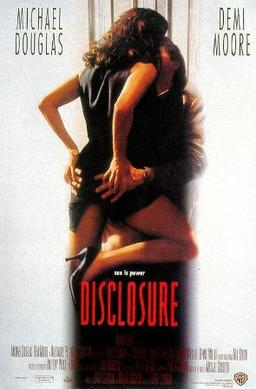
Insomnia File #39: Disclosure (dir by Barry Levinson)


What’s an Insomnia File? You know how some times you just can’t get any sleep and, at about three in the morning, you’ll find yourself watching whatever you can find on cable? This feature is all about those insomnia-inspired discoveries!

On Tuesday, if you were having trouble getting to sleep around one in the morning, you could have turned over to Cinemax and watched the 1994 film, Disclosure.

The majority of Disclosure takes place at DigiCorp, which is some sort of technology company that Bob Garvin (Donald Sutherland) founded because, as the movie explains it, he only has $100 million dollars but still dreams of being a billionaire someday.  With a huge merger approaching, Garvin announces that he will be promoting Meredith Johnson (Demi Moore) to run the new CD-ROM division.  This shocks a lot of people, as everyone was expecting the promotion to go to Tom Sanders (Michael Douglas).  However, Garvin explains that, ever since his daughter died, he’s wanted to promote a woman.

(Presumably, if a male relative had died, Tom would have gotten the promotion.  I have to admit that I kept waiting for the film to get back to the subject of Garvin’s dead daughter but, apparently, that was just an odd throw-away line.)

Tom and Meredith have a history.  They were once lovers, though Tom is now happily married to Susan (Caroline Goodall) and has a family.  Meredith takes one look at a picture of Susan and says that Tom must miss being able to take his lover from behind whenever he felt like it.  Tom says, “Mrs. Robinson,  you’re trying to seduce me.”  No, actually, he says, “No, no, no, no, no, no…..”  It all ends with Tom fleeing Meredith’s office while Meredith, in her bra, chases after him, shouting threats all the way.  The only witness to this is a cleaning lady who sadly shakes her head before returning to her dusting.

Tom is so traumatized by the experience that he has a bizarre nightmare in which Donald Sutherland says that he likes his suit and then attempts to lick his face.  Tom’s trauma continues when he goes to work the next day and discovers that Meredith has accused him of sexual harassment!  Tom responds by suing the company and it’s time for an epic courtroom battle, one that will deal with one of the most important issues of our time….

….except that never happens.  Here’s what is weird.  For all the talk about abuse of power and all the scenes of a remorseful Tom apologizing to both his wife and his secretary for his past behavior, the whole sexual harassment plot turns out to be a red herring.

Instead, the film turns into this weird techno thriller, one that involves Tom trying to figure out how to make a better CD-ROM.  That may have been a big deal back in 1994 but today, you watch the film and you think, “Who cares?”  (Even better is a scene where Garvin brags about how his company is on the cutting edge of fax technology.)  Once Tom realizes that Meredith only accused him of sexual harassment to keep him from building the perfect CD-ROM, we get a scene of him using a virtual reality headset to search through the companies files.  At one point, he spots a bot with Demi Moore’s face destroying files and he shouts out, “She’s in the system!”  It’s just strange.

The film’s plot is often incoherent but the cast keeps things amusing.  Michael Douglas spends the first half of the movie looking either annoyed or terrified.  Things pick up for him in the 2nd half of the movie.  Whenever he gets good news from his lawyer, he jumps up in the air and goes, “Yessssssss!” and it’s so dorky that it’s kind of endearing.  Meanwhile, Demi Moore doesn’t even try to make Meredith into a credible character, which is actually just the right approach to take to this material.  There’s no room for subtlety in a film as melodramatic as this.  Finally, Donald Sutherland is his usual avuncular self, smirking at all the right moments and suggesting that he finds the movie to be just as amusing as we do.  For all of its plot holes and problematic subtext, Disclosure is an entertainingly stupid film.  A lot of the credit for the entertaining part has to go to the cast.

As I said, Disclosure is just strange..  As with most films from the 90s, its sexual politics are all over the place.  On the one hand, Tom learns that even inadvertent sexism can make the women who wok with him feel unsafe.  On the other hand, the only woman with any hint of a personality is portrayed as being pure evil.  In no way, shape, or form is this a movie to be taken seriously.  Instead, this is just a weird film that cries out, “1994!”

Previous Insomnia Files:

  1. Story of Mankind
  2. Stag
  3. Love Is A Gun
  4. Nina Takes A Lover
  5. Black Ice
  6. Frogs For Snakes
  7. Fair Game
  8. From The Hip
  9. Born Killers
  10. Eye For An Eye
  11. Summer Catch
  12. Beyond the Law
  13. Spring Broke
  14. Promise
  15. George Wallace
  16. Kill The Messenger
  17. The Suburbans
  18. Only The Strong
  19. Great Expectations
  20. Casual Sex?
  21. Truth
  22. Insomina
  23. Death Do Us Part
  24. A Star is Born
  25. The Winning Season
  26. Rabbit Run
  27. Remember My Name
  28. The Arrangement
  29. Day of the Animals
  30. Still of The Night
  31. Arsenal
  32. Smooth Talk
  33. The Comedian
  34. The Minus Man
  35. Donnie Brasco
  36. Punchline
  37. Evita
  38. Six: The Mark Unleashed

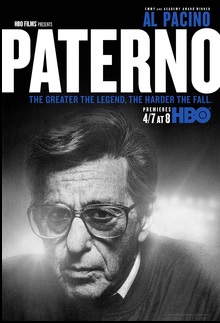
Film Review: Paterno (dir by Barry Levinson)


There’s a great scene that occurs about an hour into HBO’s latest original film, Paterno.

Joe Paterno (Al Pacino), the legendary and aging Penn State football coach, has been accused of knowing and failing to report that one of his former assistant coaches, Jerry Sandusky (Jim Johnson), was a pedophile.  With Paterno and his family plotting out strategy behind closed doors, a group of Penn State students gather outside of the Paterno home.  Instead of being angry that children were molested at their college, they’ve come to show their support for Paterno.

“JOE PATERNO!” they chant.

Scott Paterno (Greg Grunberg) hears the chants.  Scott is a lawyer and appears to be the only member of the Paterno family to truly understand the seriousness of the accusations.  Scott steps outside.

“JOE PATERNO!” the crowd continues to chant.

Scott thanks them for their support but then says that they also need to show the same support to all of Sandusky’s victims…

“JOE PATERNO!” the chant continues.

Struggling to be heard, Scott again asks them to remember that the children molested by Sandusky are the ones who need the most support…

Suddenly, the chant changes.  “SCOTT PATERNO!” the crowd starts to chant.  It’s not because they’ve heard anything that Scott’s said.  Instead, it’s because Scott’s a Paterno and, in the eyes of the crowd, that makes him royalty.  As the crowd continues to chant his name, Scott gives up and reenters the house.

Paterno could have used more scenes like that, scenes that explicitly showed the danger of blind hero worship as opposed to just telling us about it.  For the most part, Paterno feels like a well-written Wikipedia article.  You can’t deny the skill with which the film was made but, at the same time, it’s difficult not to get frustrated by Paterno‘s refusal to really dig too far underneath the surface of the story.

Some of the problem is with the film’s structure.  The film primarily takes place over the final six days of Paterno’s career.  Paterno spends the majority of the film locked away in his house, passive aggressively avoiding the question of what he knew and when he knew it.  His wife (Kathy Baker) and his other son, buffoonish Jay (Larry Mitchell), make excuses for him while Scott tries to get everyone to understand that the accusations aren’t just going to go away.  This is the part of the Paterno story that, in most films, would be summed up by an end credits title card.

As a result, Paterno never really deals with why Joe Paterno not only didn’t report Sandusky but also apparently protected him and that, to be honest, is the most important and troubling part of the story.  Since Sandusky is only briefly seen, we never get any insight into his relationship with Paterno and we never understand why Paterno would go to bat for an assistant who he, at one point, refers to as being “a pain in the ass.”  Was Paterno truly clueless about what was happening or did he just think he could sweep it under the rug and nobody would say anything because he was Joe Paterno?  Were Paterno’s actions the result of willful blindness or hubris?  It’s not so much a problem that the film leaves certain questions unanswered as much as it’s a problem that the film itself doesn’t seem to be all that concerned with the answers.

When the film isn’t concentrating on the Paternos, it’s concentrating on the reporter, Sara Ganim (Riley Keough), who originally broke the story.  However, these scenes are never quite as compelling as the film seems to think they are.  Riley Keough, who was so great in American Honey, seems miscast here.  For the most part. Sara seems to be there so that she can witness the Penn State students rioting and chanting, “Fuck the Media” after Paterno loses his job.

The best thing that Paterno has going for it is the lead performance of Al Pacino.  Pacino plays Paterno as a man who is very comfortable with the routine that he’s built up for himself.  His life revolves around Penn State, his team, and finally his own legend.  When the Sandusky story first breaks, Paterno can’t understand why he even has to be concerned about it.  He’s got a game against Nebraska coming up!  Awkward even around his adoring family, Paterno only seems to be truly comfortable when he’s coaching.  Pacino plays Paterno as a fragile and sickly man, a once ferocious lion brought down by a combination of cancer and scandal.  When we first see him, Paterno is coaching his team to a record-setting victory and he seems like a larger-than-life figure.  By the end of the movie, Paterno seems much smaller, a confused man who still can’t seem to bring himself to deal with why everyone is getting so upset.  It’s a great performance in an uneven film.


4 Shots From 4 Films: The Natural, Field of Dreams, Eight Men Out, 42


4 Shots From 4 Films is just what it says it is, 4 shots from 4 of our favorite films. As opposed to the reviews and recaps that we usually post, 4 Shots From 4 Films is all about letting the visuals do the talking.

Two months ago, Lisa reviewed The Pride of the Yankees.  Two days ago, Gary reviewed Take Me Out To The Ballgame.  Erin just explained to me why the Orioles are going to lose this season and the Rangers are going to win.  Opening Day is almost here.

These 4 shots from 4 films are dedicated to baseball lovers everywhere.

4 Shots From 4 Films

The Natural (1984, directed by Barry Levinson)

The Natural (1984, directed by Barry Levinson)

Field of Dreams (1989, directed by Phil Alden Robinson)

Field of Dreams (1989, directed by Phil Alden Robinson)

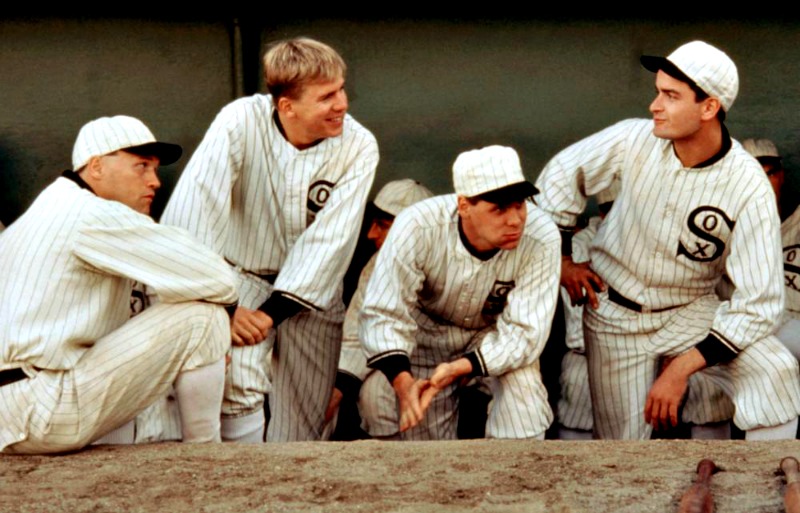
Eight Men Out (1989, directed by John Sayles)

Eight Men Out (1989, directed by John Sayles)

42 (2013, directed by Brian Hegeland)

42 (2013, directed by Brian Hegeland)

4 Shots From 4 Films: The Natural, Eight Men Out, Bull Durham, Field of Dreams


Today we celebrate the 4th of July, the United States’ Independence Day, and I mean the one from British rule and not from invading aliens.

This day has always been about the balance of one’s level of patriotism (or lackof), gathering with friends and family for barbecues and fireworks. I would also like to add that the 4th of July has also meant watching or listening to one’s favorite baseball team. Baseball, for me at least, will always remain America’s national past time.

So, here are four films that one should check out this day, or any day to understand why baseball remains such a major part for some people’s lives.

4 SHOTS FROM 4 FILMS

The Natural (dir. Barry Levinson)

The Natural (dir. Barry Levinson)

Eight Men Out (dir. by John Sayles)

Eight Men Out (dir. by John Sayles)

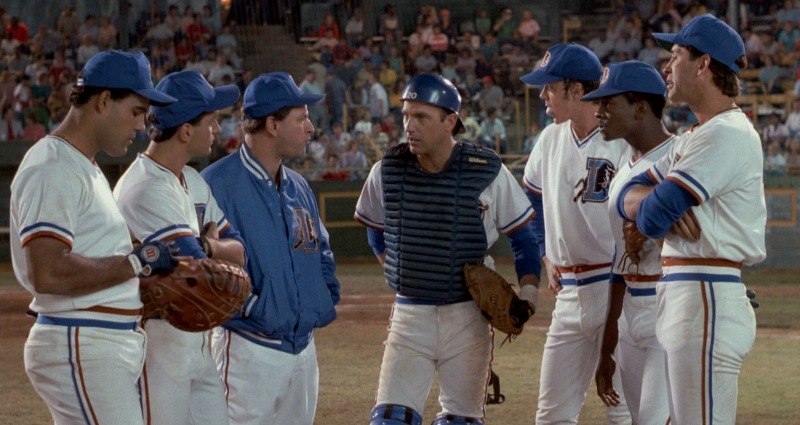
Bull Durham (dir. by Ron Shelton)

Bull Durham (dir. by Ron Shelton)

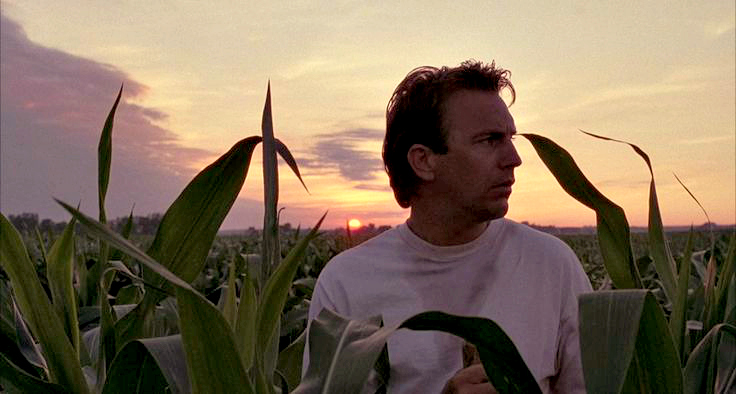
Field of Dreams (dir. by Phil Alden Robinson)

Field of Dreams (dir. by Phil Alden Robinson)

Embracing the Melodrama #40: Bugsy (dir by Barry Levinson)


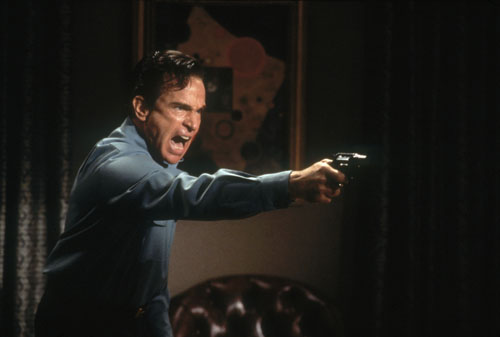
Bugsy5lrg

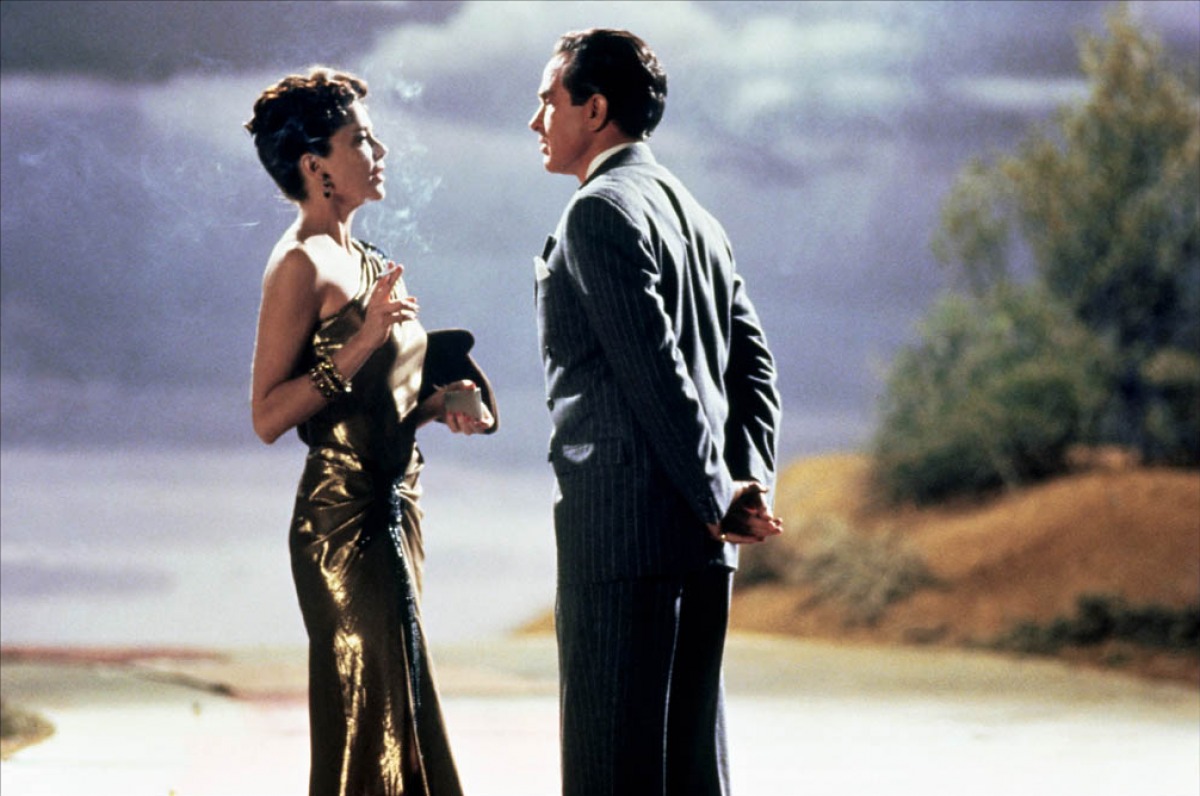
Let’s continue to embrace the melodrama with the 1991 best picture nominee Bugsy.

Gangster Benjamin Siegel (Warren Beatty) may be known as Bugsy but nobody dares call him that to his face.  Siegel may be best known for his quick temper and his willingness to murder anyone who gets in his way, but Ben insists that he’s not as crazy as everyone considers him to be.  Instead, Ben knows that he’s a very special person, a visionary businessman whose business just happens to be organized crime.  Along with his childhood friends Lucky Luciano (Bill Graham) and Meyer Lansky (Ben Kingsley), Siegel is one of the founders of the modern American crime syndicate.  Unlike his more practical-minded partners, Siegel revels in being a public figure.  Bugsy examines how Siegel became a celebrity gangster and how that celebrity eventually led to his downfall.

As the film opens, Luciano and Lansky send Siegel out to Los Angeles, specifically to look after their west coast business operations.  Before Siegel leaves, he is specifically told to keep a low profile.  So, of course, as soon as Siegel arrives in Los Angeles, he starts hanging out with actor George Raft (Joe Mantegna) and having a very public affair with actress Virginia Hill (Annette Bening).  Siegel quickly falls in love with the glamour and glitz of Hollywood and starts to think of himself as being a movie star.  When he’s not working with violent gangster Mickey Cohen (Harvey Keitel) to control the Los Angeles underworld, Siegel is attending film premieres and even shooting a Hollywood screen test.  Back in New York, Luciano and Lansky can only watch as their childhood friend goes out of his way to defy their instructions and become the most famous gangster in America.

Eventually, Siegel goes on a gambling trip to Nevada and comes up with an idea that is destined to change America forever.  With funding from Lansky and Luciano, Siegel begins construction on the Flamingo Hotel and Casino in Las Vegas, Nevada.  However, Siegel’s plans are so extravagant and, in many ways, impractical that the budget soon soars out of control.  Not helping matters is the fact that Virginia is embezzling money from the casino’s budget.  Even after Siegel finds out, he can’t bring himself to be angry at her.  He understand that he and Virginia are essentially cut from the same cloth.

However, back in New York, Luciano grows more and more frustrated with Siegel’s wasteful ways and Lansky comes to realize that he can only protect his friend for so long…

Bugsy is a big, extravagant movie that tries to be a few too many things at once.  Over the course of two and a half hours, it attempts to be a love story, a biopic, a classic gangster film, an allegory for the American dream, a history lesson, a period piece, and finally, a metaphor for the act of filmmaking itself.  (When Siegel complains that Luciano and Lansky don’t understand why the Flamingo has to be huge, it’s hard not to feel that he’s meant to be a stand in for every director who has ever had his budget cut by a meddling studio executive.)  When a film tries to be so many different things all at once, you can’t be surprised when the end result is a little uneven.  Bugsy starts out slowly but gradually picks up speed and the final part of the movie is everything that one could hope for from an epic gangster film.

The film works best as a character study of a man who, in the best American tradition, attempts to reinvent himself by moving out west.  Back in New York, Ben is known as a cold-blooded and dangerous killer.  However, once he arrives in Los Angeles, Ben attempts to recreate himself as a celebrity and then as a visionary.  For him, the Flamingo is about more than money.  The Flamingo is about being remembered for something other than his nickname.  The Flamingo is his way to escape from his past.  However, as Bugsy makes clear, the past can be ignored but it never goes away.

bugsy-1991-09-g