Guilty Pleasure No. 94: Revenge of the Nerds (dir. by Jeff Kanew)


Revenge of the Nerds captures the wild, unfiltered spirit of 1980s college comedies, blending underdog triumph with over-the-top raunchiness that feels both nostalgic and awkwardly dated today. Released in 1984, this Jeff Melman-directed flick stars Robert Carradine and Anthony Edwards as Lewis and Gilbert, two freshmen nerds who face relentless bullying from the jock-dominated Alpha Beta fraternity at Adams College. What starts as a straightforward tale of misfits fighting back evolves into a chaotic mix of pranks, parties, and questionable morals, making it a polarizing watch that still packs a punch for fans of the era’s humor.

The story kicks off with Lewis and Gilbert arriving full of optimism, only to have their dreams torched—literally—when the Alpha Betas accidentally burn down their dorm during a hazing gone wrong. Relocated to a rundown gym with other campus outcasts, the nerds band together under the banner of Tri-Lam, turning their rejection into fuel for clever retaliation. From panty raids to talent show showdowns, the film barrels through a series of escalating antics, peaking at the Greek Games where brains battle brawn in absurd competitions like tricycle races and tug-of-war twists. It’s pure 80s escapism, with a runtime under 100 minutes that keeps the energy high and the laughs coming in rapid-fire succession, even if not every gag is a home run.

The nerd ensemble steals the show, each character a walking stereotype brought to vivid life. Carradine’s Lewis is the slick-talking instigator with a knack for schemes, while Edwards’ Gilbert provides the earnest heart, delivering a pivotal speech about acceptance that gives the movie unexpected emotional depth. Curtis Armstrong as Booger delivers unforgettable gross-out moments, from belching symphonies to shameless flirtations, and Larry B. Scott’s Lamar brings flamboyant athletic flair that subverts expectations. The jocks, led by Ted McGinley’s smug Stan, serve as perfect foils—arrogant, muscle-bound villains who embody the era’s macho excess. Supporting turns, like Julia Montgomery’s Betty navigating boyfriend drama, John Goodman’s boorish Coach Harris, or Bernie Casey’s wise U.N. Jefferson, add layers to the campus power struggle.

Humor-wise, Revenge of the Nerds leans hard into juvenile territory: fart jokes, streaking, and wild panty raid sequences filmed with hidden cameras that push boundaries even for the time. The film’s climax involves Lewis impersonating Stan to woo Betty, a plot point that plays as triumphant revenge but lands as deeply problematic through today’s lens, highlighting consent issues amid the cheers. Similarly, the sorority spying and casual objectification reflect 80s attitudes toward women and minorities that feel crass now, contributing to its mixed modern reception. Yet, these elements are balanced by genuine camaraderie among the nerds, fostering a sense of belonging that resonates as a counter to real-world bullying.​

Technically, the movie holds up as a product of its time. The soundtrack, featuring the iconic title track by The Rubinoos and funky cues during party scenes, amps up the fun, while practical effects like the nerds’ gadget-filled house add quirky charm. Cinematography emphasizes the divide between polished frat row and the nerds’ scrappy turf, with wide shots of campus chaos underscoring the rebellion. Written by Tim Metcalfe, Steve Zacharias, and Jeff Buhai, the script zings with quotable lines—”We are the sons of the sons of bitches”—and smartly flips the slobs-vs-snobs formula by rooting for the geeks.

Culturally, Revenge of the Nerds helped define the “nerd pride” archetype, paving the way for films like PCU and influencing pop culture’s embrace of geek culture from The Big Bang Theory to Marvel dominance. It spawned three sequels, a musical adaptation, and endless references, cementing its place as a time capsule of Reagan-era college life—rowdy, rebellious, and unapologetically politically incorrect. For balance, its strengths lie in infectious energy, memorable characters, and a pro-outsider message, but weaknesses include uneven pacing in setup scenes and humor that too often punches down rather than up.

The film continues the trend of 80s raunchy teen comedies first popularized by Bob Clark’s Porky’s, ramping up the gross-out gags and frat-house antics while shifting the focus to nerd empowerment over sexual hijinks. The nerds’ talent show finale, uniting misfits in a joyous medley, delivers pure catharsis, proving brains and heart can topple bullies. It’s not flawless—some jokes bomb, and the ending rushes a bit—but its scrappy spirit endures for those who grew up quoting Booger’s lines or cheering Tri-Lam’s win. Fans of Animal House or Old School will find familiar thrills, while modern audiences might prefer the cleaner satire of The Good Place. Ultimately, Revenge of the Nerds earns a solid recommendation with caveats: a rowdy good time if you roll with the 80s vibe, but skip if consent gags are deal-breakers.

Previous Guilty Pleasures

  1. Half-Baked
  2. Save The Last Dance
  3. Every Rose Has Its Thorns
  4. The Jeremy Kyle Show
  5. Invasion USA
  6. The Golden Child
  7. Final Destination 2
  8. Paparazzi
  9. The Principal
  10. The Substitute
  11. Terror In The Family
  12. Pandorum
  13. Lambada
  14. Fear
  15. Cocktail
  16. Keep Off The Grass
  17. Girls, Girls, Girls
  18. Class
  19. Tart
  20. King Kong vs. Godzilla
  21. Hawk the Slayer
  22. Battle Beyond the Stars
  23. Meridian
  24. Walk of Shame
  25. From Justin To Kelly
  26. Project Greenlight
  27. Sex Decoy: Love Stings
  28. Swimfan
  29. On the Line
  30. Wolfen
  31. Hail Caesar!
  32. It’s So Cold In The D
  33. In the Mix
  34. Healed By Grace
  35. Valley of the Dolls
  36. The Legend of Billie Jean
  37. Death Wish
  38. Shipping Wars
  39. Ghost Whisperer
  40. Parking Wars
  41. The Dead Are After Me
  42. Harper’s Island
  43. The Resurrection of Gavin Stone
  44. Paranormal State
  45. Utopia
  46. Bar Rescue
  47. The Powers of Matthew Star
  48. Spiker
  49. Heavenly Bodies
  50. Maid in Manhattan
  51. Rage and Honor
  52. Saved By The Bell 3. 21 “No Hope With Dope”
  53. Happy Gilmore
  54. Solarbabies
  55. The Dawn of Correction
  56. Once You Understand
  57. The Voyeurs 
  58. Robot Jox
  59. Teen Wolf
  60. The Running Man
  61. Double Dragon
  62. Backtrack
  63. Julie and Jack
  64. Karate Warrior
  65. Invaders From Mars
  66. Cloverfield
  67. Aerobicide 
  68. Blood Harvest
  69. Shocking Dark
  70. Face The Truth
  71. Submerged
  72. The Canyons
  73. Days of Thunder
  74. Van Helsing
  75. The Night Comes for Us
  76. Code of Silence
  77. Captain Ron
  78. Armageddon
  79. Kate’s Secret
  80. Point Break
  81. The Replacements
  82. The Shadow
  83. Meteor
  84. Last Action Hero
  85. Attack of the Killer Tomatoes
  86. The Horror at 37,000 Feet
  87. The ‘Burbs
  88. Lifeforce
  89. Highschool of the Dead
  90. Ice Station Zebra
  91. No One Lives
  92. Brewster’s Millions
  93. Porky’s

Guilty Pleasure No. 93: Porky’s (dir. by Bob Clark)


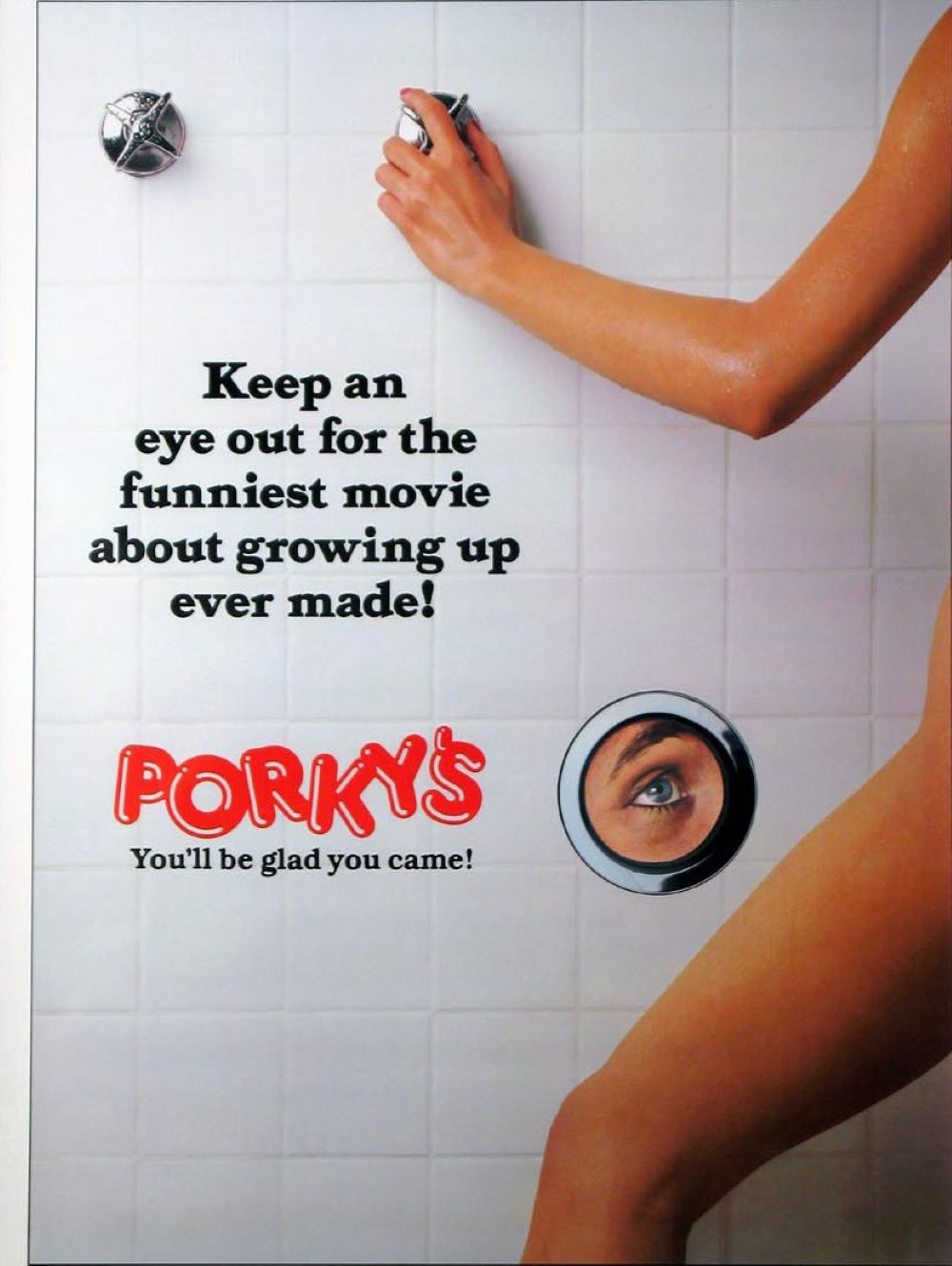
Porky’s is one of those movies that plays very differently depending on when you first see it. On the surface, it is a loud, lewd early‑’80s teen sex comedy about a bunch of high‑school boys in 1950s Florida trying to get laid and get even, but underneath the pranks and bare flesh there are streaks of surprisingly serious material about prejudice, masculinity, and power. That mix of dopey laughs and darker undercurrents is exactly what makes the film interesting to talk about, and also what makes it so divisive today.

Set in the 1950s and released in 1981, Porky’s follows a tight‑knit group of teenage boys whose main goals in life are sex, sports, and practical jokes. Their adventures eventually take them to Porky’s, a sleazy backwater strip club run by the hulking, corrupt Porky, who humiliates them and sets up the revenge plot that drives the back half of the film. Around that spine, the story wanders through locker‑room banter, elaborate pranks, and various attempts to sneak into the girls’ showers or otherwise spy on naked bodies. It is very much a “horny boys on the prowl” narrative, and the film never pretends to be anything else.

What keeps it from being just another disposable sex comedy is the way some of those side stories hit harder than expected. One of the kids is brutally abused by his father, and the film doesn’t treat it like a throwaway detail; those scenes have a rawness and anger that clash with the goofy tone elsewhere. There is also a thread about anti‑Semitism and racism in their community, with one character confronting his own bigoted upbringing as he befriends a Jewish classmate and pushes back against the prejudice around him. That material is handled in a pretty straightforward, earnest way, which is jarring given how crude the surrounding humor can be, but it does show that writer‑director Bob Clark had more on his mind than dirty jokes.

The humor, for better or worse, is what most people remember. Porky’s leans heavily on slapstick and sex‑obsessed gag setups: peeping through holes in shower walls, mistaken identities during sex, ridiculous anatomical bragging, prank phone calls, and elaborate schemes that escalate into full‑on chaos. Some of the set pieces are staged with real comic timing, and if you’re on its wavelength, these sequences can still land as big, cathartic laughs. Others feel juvenile in the worst way, stretching one joke way past its breaking point, or punching down at easy targets rather than punching up at the hypocritical adults the boys are constantly butting up against.

Viewed from today’s lens, a big chunk of that humor is undeniably uncomfortable. The movie is saturated with sexist, homophobic, and racist language, and a few of the “pranks” involving the girls are essentially sexual harassment played for laughs. At the time, it was sold as a gleefully politically incorrect romp; now, those same scenes read as mean‑spirited or creepy in a way that undercuts the supposed lighthearted tone. The film occasionally tries to complicate this by giving some of the female characters sharper edges or letting them turn the tables, but it never fully escapes the fact that the camera is mostly aligned with the boys and their fantasies.

That said, Porky’s is not entirely dismissive of its women. There are moments where adult women, in particular, are allowed to call out the boys’ behavior or assert their own sexuality in ways that undercut the usual “conquest” narrative. The movie also makes a point of ridiculing hypocritical authority figures—teachers, coaches, cops, and parents—whose prudish public morals don’t match their private behavior. When Porky’s is skewering bigotry, religious hypocrisy, and small‑town moral panics, it feels sharper and more progressive than its reputation as a dumb “tits‑and‑ass” comedy suggests. Those flashes of insight are part of why some viewers argue that, beneath the sleaze, the film is quietly critical of the very attitudes it seems to indulge.

Performance‑wise, the cast is made up largely of unknowns who sell the illusion that this is a real, scrappy group of friends rather than polished Hollywood teens. The camaraderie feels genuine; their constant ribbing, in‑jokes, and shifting alliances are believable enough that you can see why the movie became a touchstone for a certain generation of viewers. Bob Clark’s direction is surprisingly controlled for such an anarchic script. He keeps the story moving, balances multiple subplots, and stages the bigger comic payoffs in a way that feels almost like a live‑action cartoon. The downside is that this slickness can make the nastier gags pop more, for better and worse.

On a technical level, Porky’s is very much a product of its time, but not a cheap one. The period detail—cars, music, clothing, diners, and dingy roadside bars—helps sell the 1950s setting, giving the film a nostalgic sheen that softens some of its rougher edges. The soundtrack leans on era‑appropriate rock and roll, which adds energy to the locker‑room and party scenes. The film also doesn’t shy away from male nudity, which was less common in comedies of the time and adds to its reputation as equal‑opportunity when it comes to what it exposes, even if the gaze is still clearly tilted toward ogling women.

Where Porky’s can stumble is in tone. The shifts between broad farce and serious drama can be abrupt. One minute you are watching a drawn‑out gag about a teacher trying to identify a student by his anatomy; the next, you are plunged into a grim confrontation with an abusive parent. That whiplash can pull you out of the movie, because the emotional weight of the dramatic scenes doesn’t always get enough breathing room before the script lurches back to naughty antics. As a result, some viewers feel the darker elements trivialize real issues, while others think those same scenes give the film more substance than its imitators.

Even if someone has never seen Porky’s, they have probably felt its influence. The film was a massive box‑office hit relative to its budget and paved the way for a wave of raunchy teen comedies through the ’80s and ’90s, eventually echoing into movies like American Pie and beyond. Its success made it clear that there was a huge audience for R‑rated, adolescent sex comedies that mixed crude jokes with a veneer of coming‑of‑age sentiment. You can see its blueprint in later films: packs of horny friends, elaborate revenge schemes, school authority figures as comic foils, and a big, raucous set piece as the payoff.

Whether Porky’s “holds up” is going to depend a lot on your tolerance for outdated attitudes and offensive language. If you go in expecting a cozy nostalgia trip, you may be surprised by how sour some jokes taste now, and how casually the film treats behavior that would be framed very differently in a modern story. If you approach it as both a time capsule and the prototype of a genre, it becomes easier to see its strengths—the lively ensemble, the willingness to poke at racism and hypocrisy, the low‑budget ingenuity in its set pieces—alongside its very real flaws.

Porky’s is neither the hidden gem some defenders make it out to be nor the irredeemable trash its harshest critics describe. It is a messy, uneven, often funny, often cringeworthy movie that captures a particular moment in pop culture, both in what it laughs at and what it takes for granted. If you are curious about the roots of modern raunchy teen comedies and prepared for the rough, politically incorrect ride, it is still worth a look as a piece of film history and as an example of how comedy ages—for better and for worse.

Previous Guilty Pleasures

  1. Half-Baked
  2. Save The Last Dance
  3. Every Rose Has Its Thorns
  4. The Jeremy Kyle Show
  5. Invasion USA
  6. The Golden Child
  7. Final Destination 2
  8. Paparazzi
  9. The Principal
  10. The Substitute
  11. Terror In The Family
  12. Pandorum
  13. Lambada
  14. Fear
  15. Cocktail
  16. Keep Off The Grass
  17. Girls, Girls, Girls
  18. Class
  19. Tart
  20. King Kong vs. Godzilla
  21. Hawk the Slayer
  22. Battle Beyond the Stars
  23. Meridian
  24. Walk of Shame
  25. From Justin To Kelly
  26. Project Greenlight
  27. Sex Decoy: Love Stings
  28. Swimfan
  29. On the Line
  30. Wolfen
  31. Hail Caesar!
  32. It’s So Cold In The D
  33. In the Mix
  34. Healed By Grace
  35. Valley of the Dolls
  36. The Legend of Billie Jean
  37. Death Wish
  38. Shipping Wars
  39. Ghost Whisperer
  40. Parking Wars
  41. The Dead Are After Me
  42. Harper’s Island
  43. The Resurrection of Gavin Stone
  44. Paranormal State
  45. Utopia
  46. Bar Rescue
  47. The Powers of Matthew Star
  48. Spiker
  49. Heavenly Bodies
  50. Maid in Manhattan
  51. Rage and Honor
  52. Saved By The Bell 3. 21 “No Hope With Dope”
  53. Happy Gilmore
  54. Solarbabies
  55. The Dawn of Correction
  56. Once You Understand
  57. The Voyeurs 
  58. Robot Jox
  59. Teen Wolf
  60. The Running Man
  61. Double Dragon
  62. Backtrack
  63. Julie and Jack
  64. Karate Warrior
  65. Invaders From Mars
  66. Cloverfield
  67. Aerobicide 
  68. Blood Harvest
  69. Shocking Dark
  70. Face The Truth
  71. Submerged
  72. The Canyons
  73. Days of Thunder
  74. Van Helsing
  75. The Night Comes for Us
  76. Code of Silence
  77. Captain Ron
  78. Armageddon
  79. Kate’s Secret
  80. Point Break
  81. The Replacements
  82. The Shadow
  83. Meteor
  84. Last Action Hero
  85. Attack of the Killer Tomatoes
  86. The Horror at 37,000 Feet
  87. The ‘Burbs
  88. Lifeforce
  89. Highschool of the Dead
  90. Ice Station Zebra
  91. No One Lives
  92. Brewster’s Millions

Review: The Predator (dir. by Shane Black)


“Gentlemen, remember… they’re large, they’re fast, and fucking you up is their idea of tourism.” — Traeger

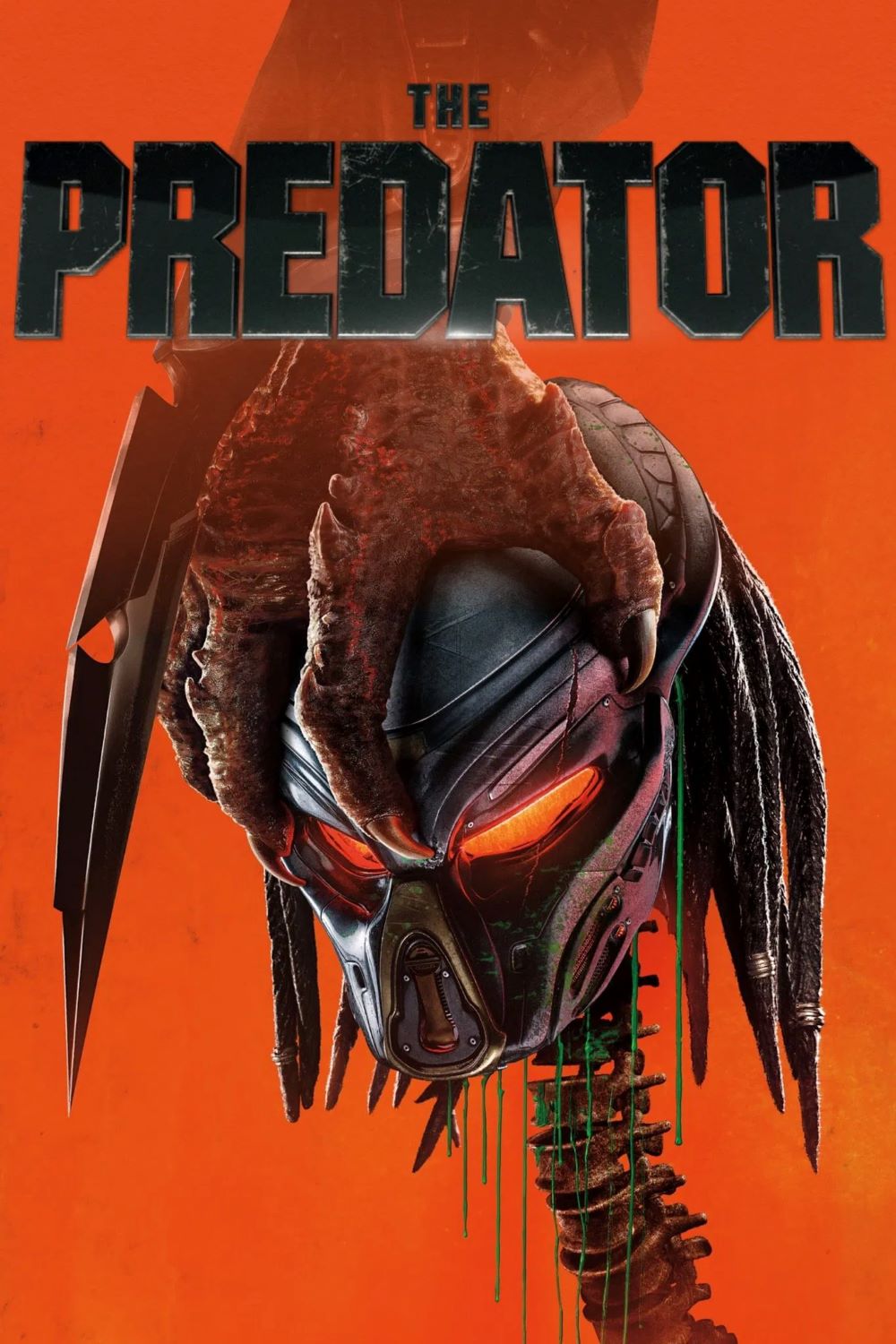
Shane Black’s The Predator (2018) lands with a bang, offering a spectacle heavy on action, gore, and the signature snarky humor Black is known for. If you come looking for a suspenseful, tightly wound survival story in the tradition of the original 1987 film, you’re in for something very different—a gonzo mashup of nostalgia, R-rated slapstick carnage, and creature-feature excess that leans gleefully into genre absurdity.

The plot barrels forward with almost reckless energy. Boyd Holbrook stars as Quinn McKenna, a sniper whose mission goes haywire when a Predator spaceship crashes to Earth. Through a sequence of provocatively silly events, McKenna’s autistic son, Rory (Jacob Tremblay), ends up with the alien’s high-tech gear, unwittingly drawing attention from both the government and the technologically advanced Predators themselves. McKenna teams up with a ragtag bunch of soldiers, each with their own collection of quirks and psychological scars, plus Olivia Munn’s biologist Casey Bracket. This time, the hunt spills out of the jungle and into suburbia, with the chaos quickly escalating as a souped-up, genetically upgraded Predator enters the mix.

Where the 1987 original thrived on tension and jungle-stalking suspense, Black’s take is more about velocity, bloody spectacle, and loud, rapid-fire banter. The tone is set early, never letting up: The jokes fly thick and fast, the action is relentless, and there’s barely a lull for actual character development. The chemistry among “the Loonies,” McKenna’s loose-cannon squad, is the highlight—Keegan-Michael Key and Thomas Jane, in particular, deliver a mix of comic relief and bruised pathos that provides Black with fertile ground for his trademark dialogue. Sterling K. Brown chews the scenery as Traeger, the government antagonist, with a kind of joyous villainy that’s hard not to enjoy, even when the narrative slides into pure chaos. Olivia Munn starts strong as a scientist thrown into the deep end but is ultimately brushed aside by the film’s mayhem-heavy set pieces.

The film’s comedic pulse is strong, sometimes to its own detriment. Shane Black fills out every moment with his specific brand of irreverence, which works best in the banter between the Loonies but can undercut the menace of the Predators themselves. The violence is over-the-top, with practical splatter and digital effects combining for set pieces that are more monstrous brawls than hunting sequences. The movie rarely worries about internal logic—kids instantly deciphering alien technology and scientists surviving actions that would doom most is par for the course here. For fans of the previous films, there are enthusiastic callbacks and plenty of Easter eggs, though these are delivered more as punchlines than as foundations for new franchise mythology.

One of the film’s major issues is its kitchen-sink approach: it tries to be a throwback action movie, a gory sci-fi thriller, and a self-aware parody all at once. The result is a film constantly threatening to come apart at the seams—some viewers will find the tonal whiplash exhausting, with jokes about mental illness and disability that are more dated than daring. The narrative bounces between subplots and characters so quickly that plot armor and convenient twists abound, while the stakes themselves grow ever more implausible. If you’re looking for slow-burn tension or the primal fear that powered John McTiernan’s or even Stephen Hopkins’ installments, you’ll find yourself unmoored by the gleeful chaos and genre self-parody that Black serves up.

Still, for all its messiness, The Predator is never boring. It’s an action movie that refuses to slow down, boldly swapping iconic mud-soaked hunting for suburban street battles, and musclebound brawn for damaged, wise-cracking outcasts. It is, in its own profane, ADD-addled way, a love letter to the kind of big, dumb, fun genre movies that Black himself helped define in the late ’80s and ’90s.

Ultimately, The Predator isn’t a triumphant reinvention of the franchise nor a true return to the original’s nerve-shredding simplicity. Fans looking to see a return to the franchise’s glory days will be sorely disappointed. However, taken on its own merits and not dragged down by the expectations brought by the franchise, the film does entertain with its wild, unruly, blood-spattered romp that wears its flaws on its sleeve and dares the audience to laugh along with the carnage. If you’re in it for straight-up monster mayhem, creative kills, and a barrage of one-liners, you’ll have a blast. If you’re looking for restraint, genre evolution, or old-school suspense, you’ll probably end up shaking your head—grinning, maybe, but shaking it all the same.

Horror Review: Ravenous (dir. by Antonia Bird)


“Morality… is the last bastion of a coward.” — Colonel Ives

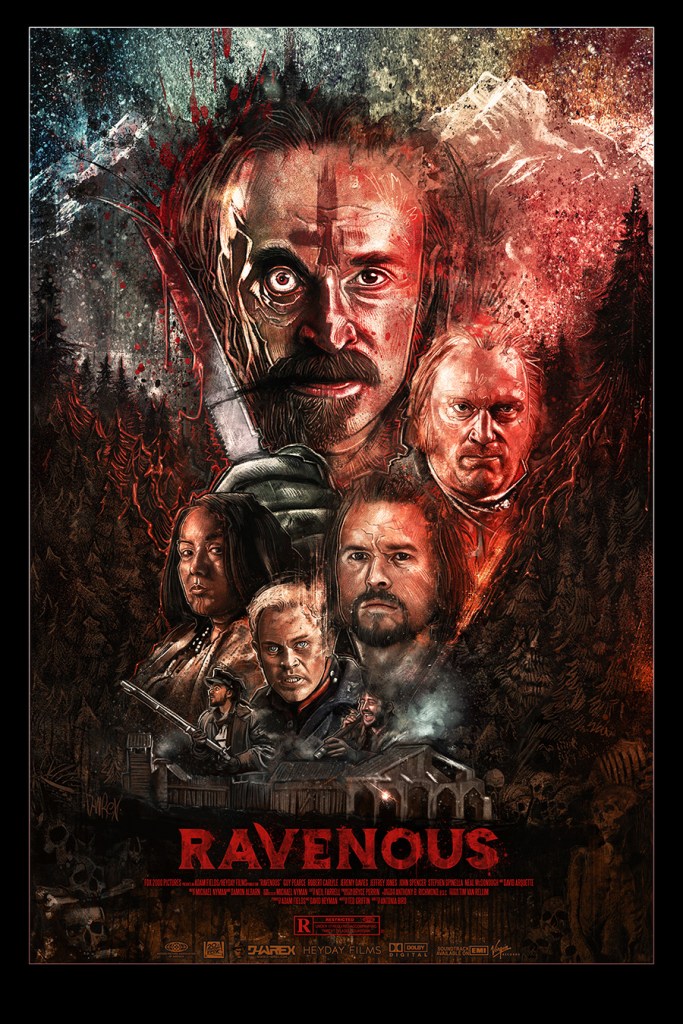
Ravenous remains one of the most fascinating and thematically daring horror films of the late 1990s—a layered meditation on hunger, morality, and the consuming appetite of empire disguised as a tale of survival. Set against the punishing winter backdrop of the Mexican-American War, the film centers on Lieutenant John Boyd, a soldier burdened by cowardice and guilt, sent to an isolated military outpost in the Sierra Nevadas. When a frostbitten stranger stumbles into camp with a horrifying tale of survival, the line between the living and the devoured—and between humanity and monstrosity—begins to blur.

At first glance, Ravenous is a dark horror film about cannibalism in a remote frontier fort. What distinguishes it is the way it transforms that premise into a meditation on civilization and consumption. The screenplay, written by Ted Griffin, draws inspiration from historical accounts such as the Donner Party and Alfred Packer—stories of pioneers who resorted to cannibalism to survive brutal winters. Griffin threads these historical horrors into a broader allegory about 19th-century American expansionism: a national hunger for land, power, and progress that consumes everything in its path, including its own humanity.

The mythological backbone of Ravenous lies in the inclusion of the wendigo, a spirit from Native American folklore. In Algonquin and Ojibwe tradition, the wendigo is born of greed and gluttony, a monstrous being that grows stronger and more grotesque with each act of consumption. The tale served as a warning against selfishness, warning that those who devour others—figuratively or literally—lose their humanity in return. Bird and Griffin seamlessly integrate this legend into the film’s themes, using the wendigo to mirror the psychological and cultural costs of empire. The story implies that the wendigo is not confined to mythic forests but lives in the blood of every nation that feeds on others to survive.

The fort where the story unfolds functions as both a stage and symbol: an outpost of civilization planted in the wilderness, claiming righteousness while sustained by exploitation. As starvation and moral decay take hold, the soldiers’ pretense of order crumbles. The isolated setting reflects the broader American project—civilization advancing through conquest yet losing its moral center in the process. The Native nations displaced and destroyed during expansion, reduced to resources or obstacles, become the unseen victims of this devouring drive. The film reframes cannibalism as a metaphor for Manifest Destiny itself—the act of consuming people, land, and spirit under the guise of progress.

That central metaphor gains power through the film’s performances. Guy Pearce delivers a subdued yet deeply expressive performance as Boyd, embodying the moral paralysis of a man trapped between guilt and survival. His silences, glances, and hesitations speak louder than any dialogue, conveying an internal conflict between virtue and instinct. Through him, the film explores how the will to endure can erode the boundaries of conscience.

Robert Carlyle, as Colonel Ives, stands in vivid contrast—charismatic, witty, and terrifyingly self-assured. He plays the role with the infectious energy of a man liberated by his own monstrosity, wearing sin as philosophy. For Ives, cannibalism is not horror but a revelation—a means to transcend weakness and embrace dominance. His eloquent justifications turn atrocity into ideology, echoing the rationalizations of expansionist politics. It is no coincidence that his confidence parallels Boyd’s doubt; the two men form mirror halves of a single corrupted ideal.

Director Antonia Bird’s touch elevates Ravenous from a historical thriller to a surreal moral fable. She handles violence and absurdity with equal precision, oscillating between grim horror and deadpan humor in a way that keeps viewers uneasy yet enthralled. Her direction never treats the horror as spectacle alone—every moment of gore carries weight, testing the limits of empathy and survival. Moments of unexpected humor punctuate the brutality, serving as a reminder that even atrocity can become ordinary when normalized by power.

While the fusion of dark comedy and horror lends the film its originality, it may also unsettle some viewers. The tonal shifts—helped by Michael Nyman and Damon Albarn’s strange, minimalist score—create an atmosphere that feels intentionally dissonant. This mix may challenge those expecting a traditional horror film, but it reinforces Bird’s vision of moral chaos. The unease generated by those shifts mirrors the absurdity of history itself: how horrors can coexist with banality, how laughter can accompany destruction.

The wendigo myth binds all these elements together. Bird portrays it less as a creature and more as a condition—one that spreads through ideology, greed, and the illusion of progress. The spirit of the wendigo thrives wherever ambition turns men into predators and justifies their violence as destiny. In this sense, every character becomes a reflection of national hunger, caught in a metaphorical cycle of consumption. The act of eating flesh becomes a stand-in for the broader devouring inherent in colonization: of land, of native culture, of moral identity.

By framing the frontier as an arena of both physical and spiritual starvation, Ravenous reimagines American history as a feast of self-destruction. It suggests that survival is often indistinguishable from conquest—both are rooted in the urge to consume. Even at its most surreal or ironic moments, the film refuses to let its viewers forget that the hunger at its center is not merely for sustenance but for dominion.

Though underappreciated upon release, Ravenous has since earned recognition as a rare film that wields gore and satire to expose deeper truths. Bird’s control of tone, Griffin’s allegorical writing, and the actors’ opposing energies fuse into something that transcends genre. The result is a story that both horrifies and compels, holding a cracked mirror to the myth of progress.

The wilderness of Ravenous is vast, beautiful, and pitiless—a perfect reflection of the American spirit it depicts. It is a land that promises renewal but demands devouring, a landscape haunted by the ghosts of all it has consumed. The film endures not simply as a parable of survival, but as a meditation on empire, appetite, and the fragile line separating civilization from savagery.

Both grotesque and profound, Ravenous gnaws not only at flesh but at the conscience, forcing us to confront what happens when hunger—whether for life, for power, or for victory—becomes the only morality left.

The Final Alien Romulus Trailer shows more than it should.


When I recommended AMC’s Interview With the Vampire to my cousin, she watched the final episode of Season 2 in reverse, despite having read the novels numerous times. She doesn’t handle anxiety when it comes to stories very well, and as such, she never reads a book or watches anything unless she can know the ending in advance. Watching her view a film for the first time is like tossing a person into a room with whatever they fear. She gets squirmy, and asks tons of questions. Whenever I watch a new movie, I tell her everything about it, scene for scene (which is partially how I got into writing about movies). On the one hand, you could argue that knowing ruins all the surprises. On the other, you’ve moviegoers that spoil movies online while they’re still in the theatre.

She’d be fine with the final trailer for Fede Alvarez’s Alien Romulus, which really does give too much of the story away. If you’re planning to go in blind this August, I wouldn’t recommend watching this. I love how they worked in Ripley’s “Lucky Star” song into this. It looks great, and anything’s a step up from Alien Covenant.

Enjoy!

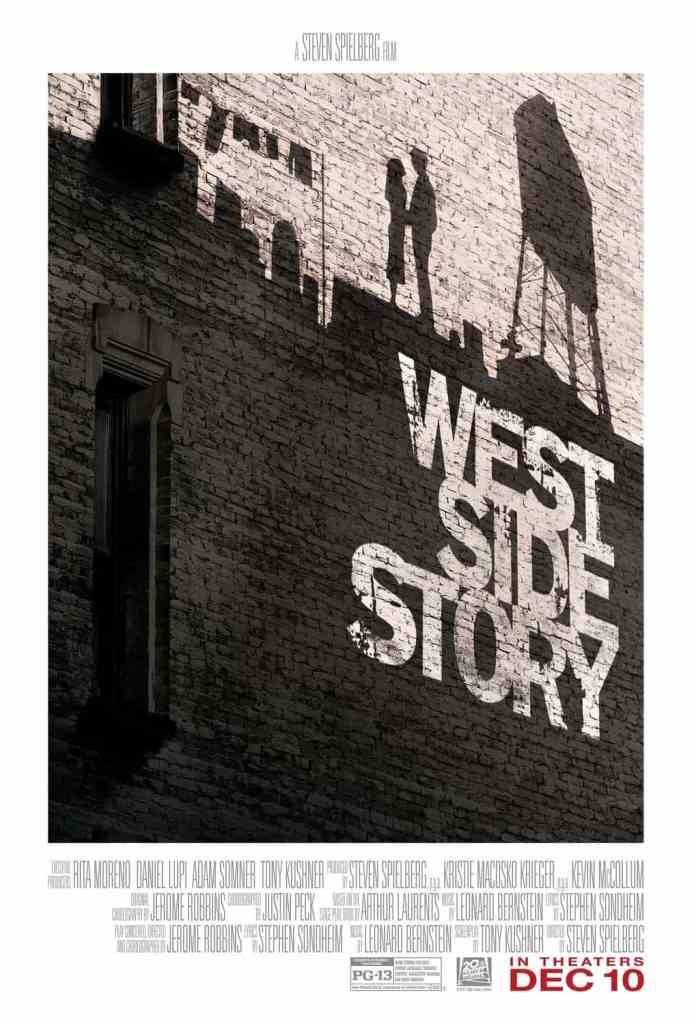
West Side Story (dir. by Steven Spielberg)


Although it lacks an Overture and an Intermission, Steven Spielberg’s rendition of 1961’s West Side Story flows well and does the story justice. Remakes are tricky things, you know. Stay too close to the source material and you end up with the line for line, shot for shot weirdness of Gus Van Zant’s Psycho. Stray too far from it and you discover something experimental and head scratching, like Luca Guadagnino’s Suspiria. West Side Story is in the middle of it all. It’s the same story you know and love, just taken from some new angles. I just wish the supporting cast hadn’t overshadowed the leads. My Aunt was a huge fan of the original, and I like to think she might have appreciated this one. It was worth catching it on the big screen back in December, and as of this writing, West Side Story is now available on Disney Plus and other streaming networks.

West Side Story is basically Romeo and Juliet, with two rival gangs (the Jets and the Sharks), fighting for territory in a battered New York City. When Tony (Ansel Elgort) meets Maria (Rachel Zegler), sparks fly between them, but it sets the stage for a dangerous confrontation between both gangs.

West Side Story marks another Spielberg production that doesn’t have John Williams at his side. While it saddens me that the two aren’t working together (and let’s face it, having just celebrated his 90th Birthday, Williams has easily earned a well deserved rest), the music for the film is in great hands. Originally composed by Leonard Bernstein and Stephen Sondheim, the music was handled by David Newman (Serenity) this time around, at Williams’ recommendation. One thing to learn here if you’re new to movies – David Newman is part of the Newman family of musicians that includes Thomas Newman (Wall-E, The Shawshank Redemption and just about any film Sam Mendes made), Randy Newman (Toy Story), and Alfred Newman, who created that 20th Century Fox fanfare you used to hear when watching Star Wars. Things remain mostly unchanged for the songs that were in the 1961 original, but there’s one additional piece (at least to me, anyway). “Somewhere” is sung by Rita Moreno’s character, rather than the leads. Not every song is exactly the same as the original (and it really shouldn’t be), but it’s very close. The only quirk I really had was for my favorite song, “Officer Krupke”, which changes things up just a little. It should be noted that everyone on screen is signing here, whereas in the original, it was mainly George Chakiris and Russ Tamblyn who sung their own parts (something I only learned just now in writing about this). I loved the whole element with Riff getting whacked over the head with the newspaper. Every other song has some magic to it, and with Janusz Kaminski as Spielberg’s Director of Photography, there are some fantastic uses of the camera in many shots. Guillermo Del Toro recently raved about the dance sequence, and it’s a great sequence. Sometimes, it’s also the subtle moments. My favorite comes in “A Boy Like That”. In the original, there was a glass door with a blue, yellow and red glass paneling. Spielberg still showcases the color pattern, but with the drapes instead. It was a cute homage to the original, I felt.

I also enjoyed what Tony Kushner did with the script. There’s a lot of Spanish in the film that’s given without any subtitles at all. I’m not sure if that was his decision or Spielberg’s, but for the most part, the feelings are clearly conveyed, whether you can understand what’s being said or not.

Writing is usually supposed to be without bias. I believe the sexual assault allegations against Ansel Elgort (Baby Driver) affected West Side Story’s success, somewhat. At my 7pm showing back in December, there weren’t many seats taken up for the film. That, or perhaps musicals aren’t as popular as they used to be (used to be being only a month prior with Lin-Manuel Miranda’s Tick Tock Boom!). Add to that a Pandemic we thought we were slowly breaking out of only to discover a return with renewed fervor and what could have been gigantic just didn’t seem so. My own biases were in part to blame for not writing about this movie sooner. I didn’t hate the film by any means – I really enjoyed it – I just didn’t want to throw in to the whole cancel culture that screamed “This person did bad things, smite him from our film and shun them from our memories.” (though I suppose by adding this, I am doing just that). Whatever the case, Elgort’s Tony isn’t terrible in any way. Based on his performance in Baby Driver, he would have been my go to pick as well. I just didn’t feel as much for the character as I thought I would, knowing that I found about the actor. Tony’s the only character in this one where I felt they could have swapped in a CGI Richard Beymer and it would have worked fine.

The opposite could be said of Zegler. She has an incredible voice and screen presence, and fits into Maria so well that you might forget you’re watching actors on screen. I hope to see her do more in the future (and while we’re on that topic, let her sit in at the Oscars. What’s one more seat, anyway?)

From top to bottom, West Side Story is stacked with a mix of veterans and young talent that we hope to see more of in the future. Rita Moreno, who played Anita in the original, returns a Doc, the owner of a store (which also makes a nice connection to the previous film). Brian D’Arcy James (Molly’s Game) is on hand as Officer Krupke. Corey Stoll (Ant-Man) plays Lt. Schrank, and that’s about the bulk of the adults you’ll run into other than teachers and the like. For the Jets and Sharks, we have Maddie Ziegler (who is Sia’s Muse) as Velma. We also have Mike Faist as Riff and David Alvarez as Bernardo, who were just fantastic. It is an absolute shame that either actor didn’t gain some kind of recognition during the award season. Thank goodness that at least Ariana DeBose (Hamilton) portrayal of Anita is getting some love. She lights up every scene she’s in, whether it’s dancing or showing grief. She’s my pick for Best Supporting Actress this year, though that position is stacked with some strong nominees.

Overall, West Side Story was a surprise for me. Spielberg hits the right marks, and I feel you can sit it next to Wise’s production. Whatever mood you happen to be in, you can pick one and enjoy. The supporting cast may overshadow the leads, but not so much that it ruins the film.

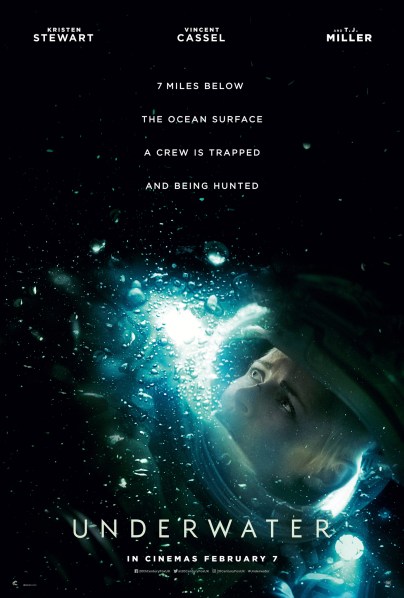
Quick Review: Underwater (Dir. by William Eubank)


Underwater-movie-poster

“There is no such thing as a new idea. It is impossible. We simply take a lot of old ideas and put them into a sort of mental kaleidoscope. We give them a turn and they make new and curious combinations.” – Mark Twain

I wasn’t entirely sold on William Eubank’s Underwater after leaving the theatre.

I’d seen that kind of film before in movies like Alien, Resident Evil, The Abyss, Leviathan, Deep Rising and Deep Star Six. It didn’t feel like it was giving me too much of anything new (especially when compared to last year’s genuinely jumpworthy Crawl), but I have to admit I did spent quite a bit of the film watching it from between my fingers. I’ll give it that. Additionally, I have to give the movie credit for taking no time to get things moving and staying pretty even throughout. Within 5 to 10 minutes of the movie’s start, you’re thrust right into a mix of terror from the unknown and claustrophobic environments. For someone with an attention span as short as mine, it’s impressive to see a film hit the ground running like that. It’s the kind of opening one would expect from one of the John Wick films. Longtime readers here on the Lens know that January really isn’t the month for the greatest films, though every once in a while, you’ll have one or two that dowell.

I think enjoying Underwater may be dependent how much comparing is done between it and older films. If you walk in blind, not expecting anything and are just looking to be entertained, you may enjoy the film more than I did. Do you absolutely have to rush to a movie theatre to see it? No, I don’t feel you do. Give it 3 months and you’ll have it on Digital/Blu-Ray. Would I run back to it in the theatre? Nah. If you’re a Kristen Stewart fan, or if the film’s something you’re genuinely interested in, have at it.

A group of miners find themselves struggling to survive after their rig suffers intense damage. Their goal is to reach a set of escape pods that can take them to the surface, but reaching it poses a set of challenges. The team comes to find that they may not be alone in the depths, which adds to their problems.

underwater-trailer

Kristen Stewart navigates the ocean depths in William Eubank’s Underwater.

The cast does well as can be expected, with Kristen Stewart (Charlie’s Angels) taking the lead as Norah, the team’s engineer. Joining her are Vincent Cassel (Eastern Promises) as the Captain, Jessica Henwick (Marvel’s Iron Fist) as  the biology scientist, John Gallagher, Jr. (Hush), Mamoudou Athie (The Get Down), and JT Miller (Deadpool) as the comic relief.  JT Miller in particular voices what would be the audience’s take as a fellow who just wants to get out of the situation. It’s Stewart and Henwick that carry the most weight with the film, and they handle it well. Their characters are smart and try their best to make it through the situations presented to them.

Visually, Underwater’s deep sea sequences have an interesting feel to them. Some of them feel more like the shaky cam shots from As Above So Below. There’s a bit of claustrophobia with watching certain scenes from behind the helmets. The monsters themselves are reminiscent of the ones you’d find in Cloverfield or The Mist with a number of jumpscares throughout. There’s very little in the way of blood and gore, since the film is PG-13.

I would have liked a larger body count. For the size of the rig, part of me expected to see more then just the 6 or 7 characters we have. Seeing more individuals face the creatures or the crumbling buildings could have added a bit of weight. That’s just a nitpick. The Nostromo was huge, yet only had a crew of seven.

Overall, I enjoyed Underwater more than I thought I would. It spends a lot of time doing things that other films already did, but does so in such a way where it’s not entirely wasted.


The New Mutants has a new date and trailer.


Marvel’s The New Mutants was a film that was supposed to come out in mid 2019, but was pushed back. The New Mutants focuses on a set of kids in a hospital and takes more of a horror/drama stance that’s similar to F/X’s Legion.  It’s a little different for Marvel, and fits for the Fox banner.

The New Mutants, starring Anya Taylor-Joy, Maisie Williams, Alice Braga, and Charlie Heaton, is set to premiere in cinemas on April 2020.

Ryan Reynolds improves his game in the Free Guy Trailer


You have to hand it to Ryan Reynolds, he knows how to market his projects. In the course of a few days, he made an advertisement for a TV that linked to a new film and his gin company, Aviation Gin. He also made a separate commercial for Aviation Gin starring Monica Ruiz, who everyone knows as the wife in the Peleton ads. Now, 20th Century Fox reunites Reynolds and his Green Lantern co-star, Taika Waititi in Free Guy.

Free Guy has Reynolds playing an NPC (Non-Playable Character) in a Video Game that is due to be shut down. Using classic video game items like power ups, guns and dance emotes, Reynolds’ character decides it’s time to level up. While we’re not sure of where this all goes, it’s good to see Ryan bring some of that Deadpool flair under the Disney umbrella.

Free Guy, Directed by Shawn Levy (Date Night), is set to release on July 3, 2020.

Cleaning Out the DVR #24: Crime Does Not Pay!


gary loggins's avatarcracked rear viewer

We’re way overdue for a Cleaning Out the DVR post – haven’t done one since back in April! – so let’s jump right in with 4 capsule reviews of 4 classic crime films:

SINNERS’ HOLIDAY (Warner Brothers 1930; D: John Adolfi) – Early talkie interesting as the screen debut of James Cagney , mixed up in “the booze racket”, who shoots bootlegger Warren Hymer, and who’s penny arcade owner maw Lucille LaVerne covers up by pinning the murder on daughter Evalyn Knapp’s ex-con boyfriend Grant Withers. Some pretty racy Pre-Code elements include Joan Blondell as Cagney’s “gutter floozie” main squeeze. Film’s 60 minute running time makes it speed by, aided by some fluid for the era camerawork. Fun Fact: Cagney and Blondell appeared in the original Broadway play “Penny Arcade”; when superstar entertainer Al Jolson bought the rights, he insisted Jimmy and Joan be cast in the film version, and…

View original post 549 more words