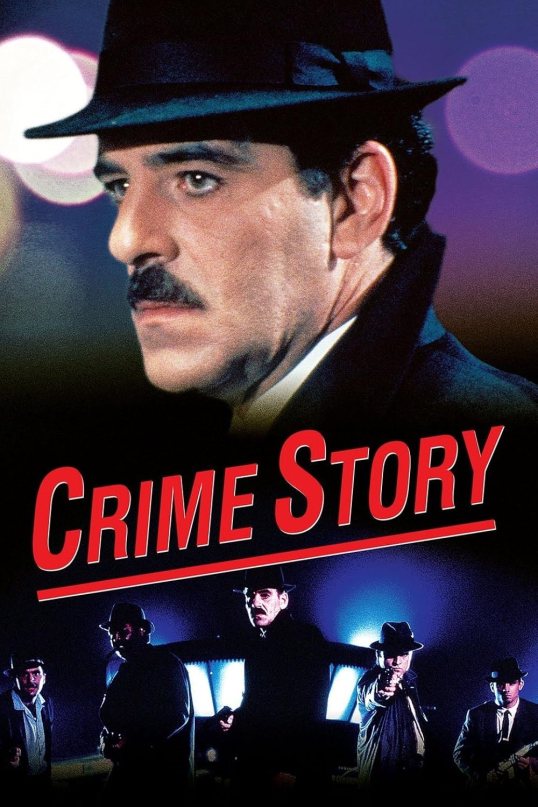
Welcome to Retro Television Reviews, a feature where we review some of our favorite and least favorite shows of the past! On Mondays, I will be reviewing Crime Story, which ran on NBC from 1986 to 1988. The entire show can be found on Tubi!
This week, Luca prepares for Vegas.
Episode 1.15 “Torello On Trial”
(Dir by Gary Sinise, originally aired on January 16th, 1987)
Buh-bye, Chicago!
Seriously, this is a huge episode.
It doesn’t start out as a huge episode. It starts out as just another courtroom drama. Mike Torello has been called by Ray Luca’s defense attorney to testify about the accusations that Frank Homan made against him. By defending himself against Homan’s false claim that Torello was on the take, Torello will also be destroying the credibility of the state’s case against Luca, Phil Bartoli, and Paulie. Torello’s not happy about it. He’s even less happy when U.S. Attorney Brietel’s aggressive cross-examination reveals that Torello actually does have several acquaintances who are connected to the mob. Of course, most of those acquaintances have been killed over the past few episodes. As Brietel puts it, violence tends to follow Torello around.
Fortunately, the next day, David Abrams requests to be allowed to cross-examine Torello. David reveals that Torello was a decorated soldier in Korea. He reveals the Torello has been given regular commendations by the Chicago Police Department. David makes Torello look like a saint.
As a result, the jury decides that Homan is not a credible witness. Luca, Paulie, and Bartoli are all acquitted. Brietel is told that the Justice Department has decided to drop the indictment against Torello. Torello tells Brietel that the blood of anyone killed by Luca will be on his hands. Brietel is not having a good day.
The first 35 minutes or so of this episode were solid but still felt like a standard and slightly predictable episode of Crime Story. It wasn’t until the last 10 minutes or so that this episode really took off.
At a conference held immediately after Luca and company are acquitted, Manny Weisbrod convinces Chicago gangster Dom Tranchita (Joseph Ragno) to agree to invest ten million dollars in Luca’s plan to take over Las Vegas. In return for the money, Manny agrees to allow Dom to continue to deal drugs in Chicago. Luca and Paulie make plans to immediately head to Las Vegas to start their new lives.
The night, before leaving town, Luca drops in on Tranchita and shoots him dead. Then, Luca goes over to Bartoli’s house and kills him as well. We’re reminded that Luca is someone who can kill without hesitation. It doesn’t matter that he and Bartoli worked together. Luca is cleaning up all of the loose ends before he leaves Chicago.
Meanwhile, Torello is invited to a meeting in a hotel. U.S. Deputy Attorney General Patrick Hallahan (Jann Wenner) tells him that the Justice Department is setting up a national task force to take down Luca and that it’s going to be headquartered in Chicago and Las Vegas. He asks Torello to be in charge of it. Torello says that he has no interest in working with the same Justice Department that tried to throw him in prison. Hallahan reveals that Brietel has been “reassigned to Anchorage” and that David Abrams will be working with Torello. The members of the Major Crimes Unit will be reassigned to the strike force.
There’s only one condition. As much as Torello wants to take Luca down, he’s going to have to wait until he has enough evidence to take down the entire organization with him.
Torello nods. He’s going to Vegas!
It makes sense really. Torello has nothing left in Chicago. He’s divorced, he has no real friends outside of the other members of the Major Crimes Unit. Torello’s only purpose in life is to stop Ray Luca. What choice does Torello have but to follow him to Vegas? Torello is obsessed and, if he had to stay in Chicago while Luca went to Vegas, he would have been miserable. It’s good for the government and good for the show that Torello agreed to take charge of the task force. But, as the episode ends, it’s hard not to feel that it won’t be good for Torello’s mental health.
This turned out to be a great episode, To be honest, I was starting to get a little bit bored with Crime Story. But now, with the story heading in a new direction, I can’t wait to see what happens!
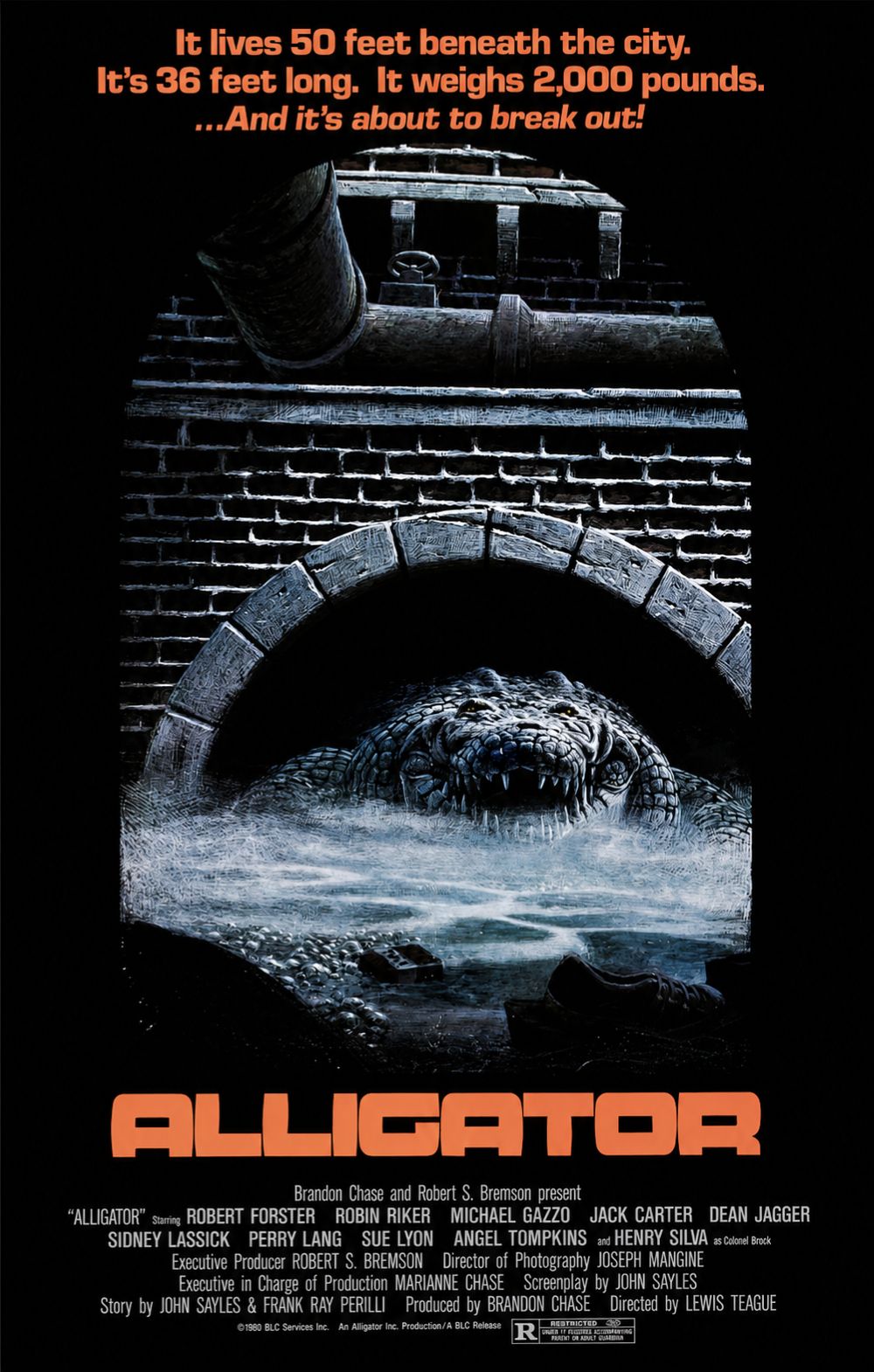
Lewis Teague’s Alligator is exactly the sort of movie that sounds like a bad joke until you sit down with it and realize it is having a much better time than most “serious” creature features. The premise is pure drive-in delirium: a baby alligator is flushed down a toilet, survives in the sewer system beneath St. Louis, Missouri, feeds on discarded laboratory animals pumped full of experimental growth hormones, and eventually becomes a gigantic, people-eating urban nightmare. It is absurd from the start, but that absurdity is the movie’s best asset. Alligator is not a good film in the polished, tightly controlled sense. It is too clunky, too broad, and too openly ridiculous for that. But it is never boring, and it understands that a movie about a giant alligator stalking the sewer tunnels under St. Louis should be grimy, nasty, funny, and just a little bit stupid.
The film arrives in that sweet spot between the straightforward animal-attack movies of the 1970s and the increasingly self-aware horror comedies of the 1980s. It has some of the structure of a Jaws knockoff, of course: authorities dismiss warnings, a difficult investigator takes the danger seriously, and a creature grows into an outsized public threat before the final confrontation. But Alligator does not have the resources, atmosphere, or aquatic terror of Spielberg’s film, and to its credit, it does not really pretend to. Instead, it leans into the cheapness of its materials. The alligator is mostly an oversized practical effect, sometimes convincing enough to be threatening and sometimes looking like the kind of thing that should be knocking over miniature buildings in a 1950s monster movie. The difference is that Teague knows how to frame the thing. He keeps the creature partly hidden when that helps, lets the sewer setting do much of the atmospheric heavy lifting, and saves the full ridiculousness of the monster for when ridiculousness is exactly what the audience wants.
There is an immediately appealing trashy logic to the story. The alligator is not simply an animal that wandered into the wrong place; it is a product of environmental carelessness, corporate experimentation, and the city’s tendency to throw its problems underground. The movie opens with a young girl’s pet alligator being flushed away after it bites someone, a cruelly comic act that functions as the film’s entire moral universe in miniature. Humans dispose of an inconvenient creature, neglect the consequences, and then act shocked when the creature becomes a gigantic murderous problem. The idea is broadly ecological and vaguely anti-corporate, but Alligator never becomes preachy. It keeps those elements in the background as an excuse for gore, sewer crawling, and a steadily escalating body count.
Robert Forster plays David Madison, a St. Louis cop with the permanently tired demeanor of someone who has been forced to listen to too many witnesses describe impossible things. Forster is a major reason the movie works as well as it does. He does not play the material like a joke, but he also does not strain to elevate it into prestige horror. His performance is dry, irritated, and completely appropriate for a man investigating missing-person cases that increasingly point toward a subterranean reptile large enough to eat a car. Madison is not a particularly complicated protagonist, but Forster gives him enough weary professionalism that the audience can follow him through the nonsense. His deadpan approach also makes the film funnier without turning it into outright parody.
The supporting cast is a strange, entertaining mixture of familiar character-actor energy and exploitation-movie weirdness. Robin Riker plays Marisa, a reptile expert and Madison’s eventual love interest, and she is better than the role strictly requires. She has a brisk, practical presence, which is useful in a movie where most characters either refuse to believe the obvious or exist to become alligator food. The romance between her and Madison is thin, but it is handled with enough low-key charm that it does not stop the movie cold. It feels like a necessary B-movie ingredient rather than a desperate attempt to convince viewers that they are watching something emotionally profound.
Then there is Henry Silva. Honestly, the presence of Henry Silva alone tells you what kind of movie Alligator is trying to be. Silva plays Colonel Brockman, a professional hunter hired by the evil pharmaceutical company to find and kill Ramon, the giant gator created by its illegal growth-hormone dumping. He is not the mastermind behind the scientific mess; he is the company’s hired cleanup crew, brought in once the whole operation has become too big and too toothy to bury. Silva approaches the role with exactly the degree of swaggering, oily menace it needs. He is here to be Henry Silva in a monster movie, which means glaring, sneering, and acting as though the chance to hunt a massive sewer reptile is simply another profitable afternoon at work. Every time he shows up, the movie gets a little more fun.
The screenplay comes from John Sayles, which is almost comically overqualified on paper, though it makes more sense once the dialogue starts landing. Sayles gives the movie flashes of wit and an edge of social satire that keep it from being totally disposable. There are jokes about cops, politicians, wealthy elites, and corporate corruption, and while none of them are especially subtle, they have the right bite for a film this grubby. The story’s best satirical impulse is its refusal to make the rich and powerful merely unlucky victims of the monster. The alligator’s rampage eventually collides with a wealthy social gathering, and the movie takes obvious pleasure in turning a fancy event into a feeding ground. It is not exactly The Texas Chain Saw Massacre in its class consciousness, but it does understand that watching an enormous reptile crash through the polished facade of upper-class respectability is satisfying.
Teague directs with the workmanlike confidence of someone who knows that the material only needs to get from one entertaining set piece to another. The sewer scenes are the film’s strongest visual material. They are damp, shadowy, cluttered, and full of the sort of industrial grime that exploitation cinema loves. The setting is inherently creepy because it is both unreal and plausible: everyone knows a city like St. Louis has tunnels, pipes, forgotten chambers, and places where things can disappear, even if nobody really believes a giant alligator lives down there. The movie uses that unease effectively. When characters descend into the darkness, the tension is simple but real. You know something huge is moving nearby, and you know the special effects are not going to hold up to close inspection, but the atmosphere carries you through.
The attacks are uneven, but that is part of the charm. Some are genuinely nasty, particularly when the movie lets the creature strike suddenly from the shadows. Others are so exaggerated that they become funny in ways the filmmakers likely anticipated. There is a particularly memorable moment involving a child and a swimming pool that has the gleefully tasteless punch of old-school grindhouse horror. Alligator is never as graphic as the nastier exploitation films of its era, but it has enough blood, torn bodies, and monstrous chomping to satisfy an audience looking for low-rent carnage. It knows the basic rule of this kind of movie: if you are going to ask viewers to accept a mutant sewer alligator, you had better let it eat some people.
What makes Alligator last beyond its premise is that it does not seem embarrassed by what it is. There are many creature features that feel apologetic, as if the filmmakers know they are making junk and are waiting for the audience to laugh at them. Teague’s film is junk, absolutely, but it is crafted junk. It has actual pacing, committed actors, useful atmosphere, and a screenplay that occasionally has more on its mind than the average monster-on-the-loose picture. It is bad enough that its flaws become part of the entertainment, especially whenever the huge reptile lumbers into view or the plot makes a leap that only makes sense if nobody involved pauses to think for ten seconds. Yet it is not so bad that it becomes a chore. That is the crucial distinction.
By the time Alligator reaches its climax, it has delivered nearly everything its title promises: sewers, corrupt businessmen, cops with guns, practical monster effects, socialites getting their comeuppance, and Henry Silva looking like he would gladly accept a corporate paycheck to hunt an enormous mutant reptile. It is the kind of film best watched with an appreciation for grime, excess, and the noble tradition of exploitation cinema turning a ridiculous idea into a perfectly decent Saturday-night monster movie. Alligator will not make anyone forget the great creature features, but it earns its place as a scrappy, trashy, oddly lovable B-movie. It is not awful. It is not even truly bad. It is just delightfully cheap, mean, and goofy enough to remind you why bad movies can sometimes be more fun than good ones.
Hi, everyone! Tonight, on twitter, I will be hosting one of my favorite films for #MondayMania! Join us for The Surrogate!
You can find the movie on Prime and then you can join us on twitter at 9 pm central time! (That’s 10 pm for you folks on the East Coast.) See you then!
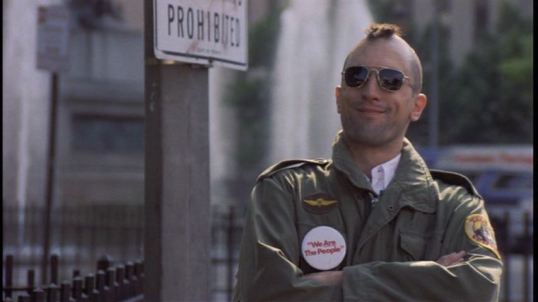
Taxi Driver is 50 years old but it’s still one of cinema’s most definitive portraits of urban paranoia and societal detachment. Travis (played by Robert De Niro) obsesses on the city that he harshly judges even though he’s as much a part of New York as those who he wishes will be washed away.
This scene features Robert De Niro, Martin Scorsese, and Paul Schrader at their definite best. I imagine that, for a lot of people, this is one of those scenes that solidified their opinions on New York City. For the record, the last time I was in New York, everyone was fairly pleasant. They weren’t exactly friendly but I also didn’t get my bag stolen. (Those of us who don’t live in New York tend to assume that we’ll get mugged as soon as we leave JFK.)
4 Or More Shots From 4 Or More Films is just what it says it is, 4 shots from 4 of our favorite films. As opposed to the reviews and recaps that we usually post, 4 Shots From 4 Films lets the visuals do the talking!
Today, the Shattered Lens wishes a happy birthday to actor Robert De Niro. It’s time for….
4 Shots From 4 Robert De Niro Films
Taxi Driver (1976, dir. Martin Scorsese, DP: Michael Chapman)
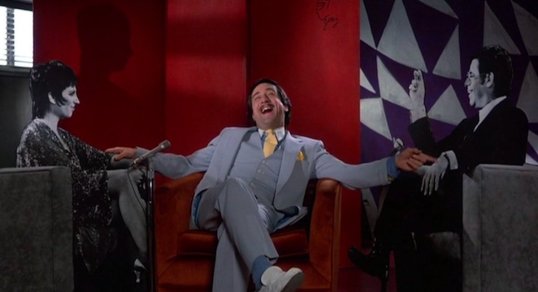
The King of Comedy (1982, dir by Martin Scorsese, DP; Fred Schuler)
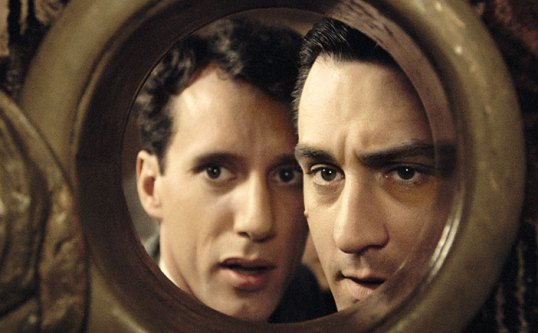
Once Upon A Time In America (1984, dir by Sergio Leone, DP: Tonino Delli Colli)
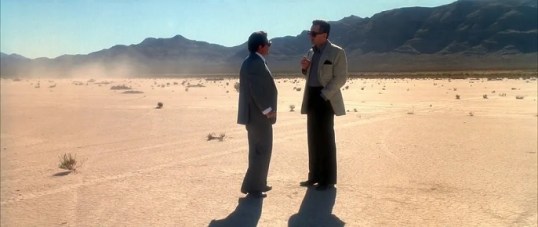
Casino (1995, dir by Martin Scorsese, DP: Robert Richardson)
As some of our regular readers undoubtedly know, I am involved in hosting a few weekly live tweets on twitter and occasionally Mastodon. I host #FridayNightFlix every Friday, I co-host #ScarySocial on Saturday, and I am one of the five hosts of Mastodon’s #MondayActionMovie! Every week, we get together. We watch a movie. We snark our way through it.
Tonight, for #MondayActionMovie, I will be hosting Zombie 5: Killing Birds!
If you want to join this watch party, just hop onto Mastodon, pull up Zombie 5: Killing Birds on YouTube, start the movie at 8 pm et, and use the #MondayActionMovie hashtag!
Today’s music video of the day comes to us from The Hooters, a Philadelphia-based band whose sound will always be identified with the mid-80s. And We Danced is their biggest hit to date. It’s certainly the one that most people think of if they think about The Hooters.
This music video, which was hugely popular back when MTV played music videos, was shot at a drive-in theater in Exton, Pennsylvania in the summer of 1985. Unfortunately, the theater has since been torn down but, in a sense, it will exist forever because of this music video. The video itself was nominated for a Best New Artist award at the MTV Music Video awards but it lost to Take Me On by a-ha.
“Don’t forget. Believe in yourself. Not in the you who believes in me. Not the me who believes in you. Believe in the you who believes in yourself.” — Kamina
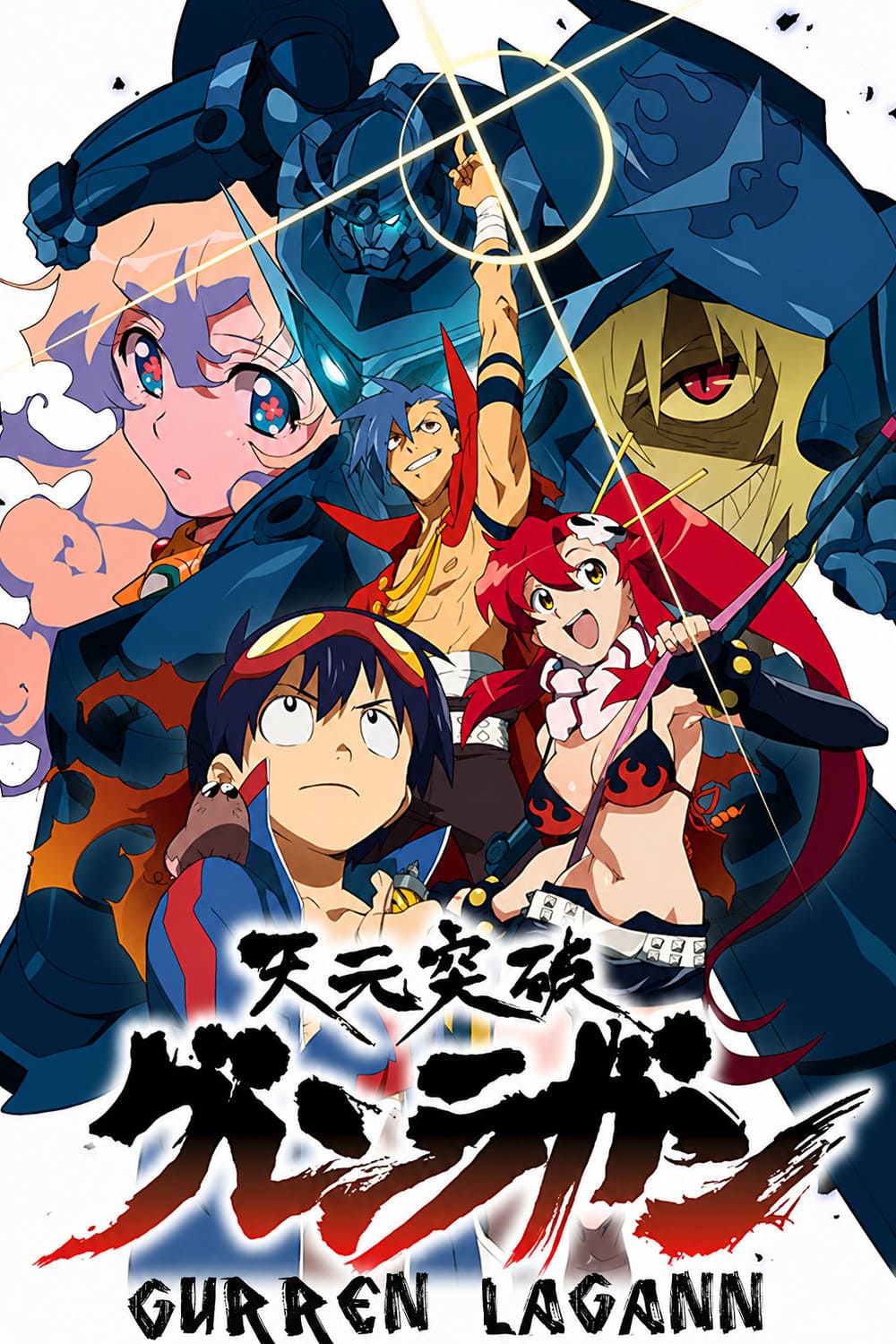
Gurren Lagann is one of those anime that seems to announce itself at maximum volume before the opening theme has even finished. It is loud, ridiculous, earnest, aggressively stylish, and so emotionally committed to its own escalation that it somehow transforms drills, sunglasses, tiny robots, and increasingly impossible acts of defiance into a genuinely moving epic. Produced by Gainax and originally broadcast in 2007, Tengen Toppa Gurren Lagann begins underground with a timid boy named Simon and ends in a place so cosmically huge that describing it risks making the show sound like parody. But that journey—from cramped tunnels beneath the earth to a battle for humanity’s future among the stars—is exactly why it still lands so hard.
The premise starts simply. Simon lives in an underground village where people have been conditioned to accept a small, confined existence beneath a hostile surface world. He spends his days digging tunnels, largely ignored by the others around him, until his life is upended by Kamina, a reckless older boy who insists that the surface exists and that humans belong there. Kamina’s conviction is less a coherent philosophy than a full-force personality trait: he believes in breaking through walls because walls are there to be broken. When Simon discovers a small drill-shaped device and a miniature mecha called Lagann, the pair’s ambitions become suddenly possible. Their escape to the surface introduces Yoko, the series’ sharp-shooting, level-headed third lead, and kicks off a war against the Beastmen and their towering Gunmen.
On paper, that sounds like a standard mecha adventure. In practice, Gurren Lagann uses that foundation as a launchpad for a story about grief, courage, self-definition, and the strange process of becoming the person you need to be after the person you depended on is gone. Its early episodes are especially effective because Simon is not immediately framed as a hidden hero. He is anxious, withdrawn, and clearly accustomed to having Kamina speak for him. Kamina may be the show’s loudest presence, but Simon is its emotional center. The series understands that confidence is not just something a character “gets” after a training montage. It has to be built through failure, fear, loss, responsibility, and the gradual realization that admiration is not the same thing as identity.
Kamina is still the character most people remember first, and it is easy to see why. His dialogue is endlessly quotable, his poses are absurdly theatrical, and his belief in Simon is powerful precisely because it is so unconditional. Kamina does not believe Simon is capable because Simon has proven himself; he believes Simon will prove himself because he already sees something in him. That relationship gives the early part of Gurren Lagann its heart. Kamina is not merely a mentor figure or a source of comic bravado. He is the force that makes Simon look upward. The show’s famous “believe in the me that believes in you” idea could have been corny in another context, but here it becomes a sincere expression of what it means to lend someone confidence until they can create their own.
The series’ willingness to change after its major emotional turning point is what elevates it beyond a very good action show. Gurren Lagann understands that inspirational speeches cannot erase trauma. Simon does not simply inherit Kamina’s confidence; he has to confront the fact that trying to imitate Kamina leaves him hollow. His eventual growth is about accepting Kamina’s influence without becoming trapped inside it. That distinction gives the show surprising maturity beneath all the bombast. Simon’s ultimate strength comes not from copying another person’s legend, but from finding a voice and resolve that belong to him alone.
Yoko is also more important than the usual “female lead in a shōnen-style action series” label would suggest. She has to serve as both a capable fighter and one of the few people who can puncture the boys’ more reckless impulses, but Gurren Lagann gives her a real emotional presence beyond that function. Her grief, her resilience, and her continued movement through a world that keeps changing around her make her feel essential to the story’s broader ideas about survival. The show’s presentation of Yoko can be very much of its mid-2000s anime era, and some of its fanservice has not aged particularly gracefully. Still, she is never reduced entirely to that material, and the series repeatedly reminds the audience that she is a veteran combatant and a person carrying losses of her own.
Visually, Gurren Lagann remains an absolute blast. Its art style is dynamic in a way that feels almost physically restless. The animation stretches bodies, machines, perspective, and scale for emotional effect rather than strict mechanical realism. Characters lean into poses so hard they feel like they might burst through the frame. Mecha do not merely move; they lunge, twist, slam, and spiral forward with a sense of weight and raw momentum. The show frequently uses exaggerated proportions, thick expressive linework, explosive color, and wild camera angles to make every confrontation feel bigger than the last. Even its stillness has energy, because the designs and compositions are always angled toward motion.
That visual approach has had a real influence on anime in the years since its release. You can see echoes of Gurren Lagann’s expressive exaggeration, bold color blocking, elastic action, and preference for emotional impact over restrained realism in much of the work associated with former Gainax talent and Studio Trigger, particularly Kill la Kill, Promare, Little Witch Academia, and Cyberpunk: Edgerunners. Its influence is broader than any one studio, though. The show helped solidify a modern appetite for animation that can be rough-edged, hyperactive, and knowingly excessive without sacrificing sincerity. A lot of later anime have chased its surface energy—the crazy transformations, the screaming declarations, the impossible scale—but fewer have replicated how carefully Gurren Lagann ties that escalation to character growth.
The mecha designs deserve special credit because they capture the show’s philosophy better than any speech could. Lagann starts as a small, almost toy-like machine, while Gurren is clunky, hot-blooded, and visually associated with Kamina’s swagger. When they combine into Gurren Lagann, the result is not sleek or conventionally elegant. It looks improvised, rebellious, and barely interested in obeying the normal rules of robotics. That is exactly the point. In Gurren Lagann, machines become expressions of willpower. They are not military hardware treated with sterile technical reverence; they are emotional extensions of the people piloting them. The more the characters believe they can surpass a limitation, the more absurdly grand their machines become.
The escalation is famously outrageous, but it is not random. The series moves from village-scale conflict to planetary stakes and eventually to something far beyond that, while preserving the same central question: what do people do when someone or something tells them that they have reached their limit? The antagonistic force behind the story, particularly through the Anti-Spiral, represents stagnation disguised as protection. The Anti-Spiral’s logic has a certain bleak rationality: humanity’s capacity to grow is dangerous, so it must be contained. Simon and the rest of Team Dai-Gurren respond with the series’ central rebuttal—that the risk of moving forward is inseparable from being alive. It is a simple message, but the show sells it with such conviction that it feels almost mythic.
This is also where Gurren Lagann separates itself from pure power fantasy. The characters win because they keep pushing forward, but the series does not pretend that forward movement makes pain disappear. People die. Dreams change. The ending, for all its spectacle, is not a cheap promise that determination guarantees a perfect reward. It recognizes that growing up often means accepting the cost of the choices that define you. Simon’s final arc is compelling because he becomes powerful enough to reshape the universe, yet the story still asks him to live with restraint, loss, and the knowledge that not every desire should be fulfilled simply because it can be.
The soundtrack is equally crucial to the experience. Taku Iwasaki’s score knows exactly when to go huge, mixing orchestral intensity, dramatic choral material, rock energy, and hip-hop-inflected momentum. “Libera Me From Hell” is the obvious standout, and it remains one of the most gloriously over-the-top climactic tracks in anime. It should not work as well as it does. The blend of opera and rap sounds like something invented as a joke, but in the context of Gurren Lagann, it feels completely natural. The song captures the entire show’s spirit: dramatic, strange, sincere, and unwilling to accept the idea that two seemingly incompatible things cannot be fused into something incredible.
There are flaws, of course. The first few episodes can feel especially frantic, and the humor occasionally leans into juvenile territory in ways that may test a new viewer’s patience. Some supporting characters get less development than they deserve, especially once the plot begins accelerating toward its larger conflicts. The fanservice is the element most likely to feel dated, since it can interrupt scenes that are otherwise focused on emotional gravity or visual spectacle. Yet even with those issues, Gurren Lagann never loses its sense of purpose. It is too alive, too earnest, and too committed to its own vision to feel disposable.
More than anything, Gurren Lagann endures because it understands the appeal of impossible optimism. It does not tell viewers that the world will always reward them, or that bravery means never being afraid. Instead, it argues that fear, grief, and uncertainty are not final states. You can carry them with you and still move forward. You can outgrow the person you used to be without betraying them. You can take inspiration from someone else without surrendering your own identity. And if the wall in front of you seems impossible to break, maybe the answer is not to wait for permission. Maybe you pick up a drill and start spinning.