4 Or More Shots From 4 Or More Films is just what it says it is, 4 shots from 4 of our favorite films. As opposed to the reviews and recaps that we usually post, 4 Shots From 4 Films lets the visuals do the talking!
Today, the Shattered Lens wishes a happy 78th birthday to the great German director, Wim Wenders! It’s time for….
4 Shots From 4 Wim Wenders Films
The American Friend (1976, dir by Wim Wenders, DP: Robby Muller)
Paris, Texas (1984, dir by Wim Wenders, DP: Robby Muller)
Wings of Desire (1987, dir by Wim Wenders, DP: Robby Muller)
Until the End of the World (1991, dir by Wim Wenders, DP: Robby Muller)
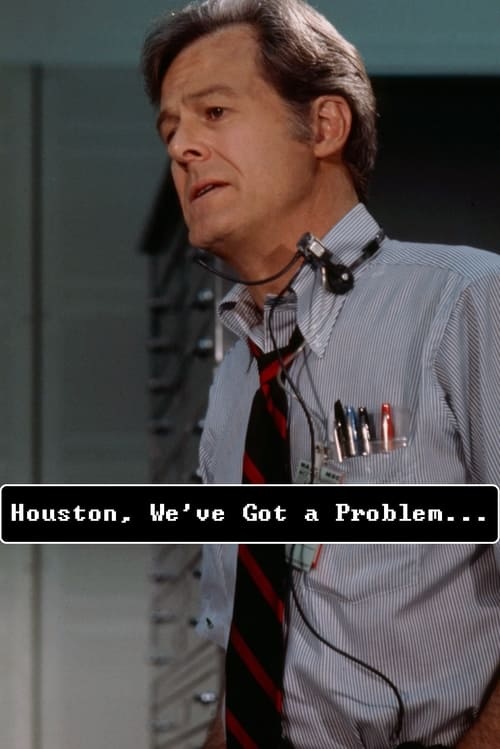
Welcome to Retro Television Reviews, a feature where we review some of our favorite and least favorite shows of the past! On Sundays, I will be reviewing the made-for-television movies that used to be a primetime mainstay. Today’s film is 1974’s Houston, We’ve Got A Problem! It can be viewed on YouTube!
The year is 1970 and Apollo 13 is the latest manned NASA mission into space. The head of the mission of Jim Lovell and the destination is the Moon. Unfortunately, the American public has gotten so used to the idea of men going to the Moon that hardly anyone is paying attention to Apollo 13. That changes when Lovell contacts mission control in Houston and utters those famous words, “Houston …. we’ve had a problem.” An oxygen tank has exploded, crippling the spacecraft and leaving the three men in danger. If Houston can’t figure out how to bring them home, Apollo 13 could turn into an orbiting tomb.
Yes, this film tells the story of the same crisis that Ron Howard recreated in Apollo 13. The difference between Houston, We’ve Got A Problem and Apollo 13 (beyond the fact that one was a big budget Hollywood production and the other a low-budget made-for-TV movie), is that Apollo 13 largely focused on the men trapped in space while Houston, We’ve Got A Problem is totally Earthbound. In fact, Jim Lovell does not even appear in the ’74 film, though his voice is heard. (The film features the actual communications between the crew and Mission Control.) Instead, the entire film follows the men on the ground as, under the leadership of Gene Kranz (Ed Nelson), they try to figure out how to bring the crew of Apollo 13 home. Houston, We’ve Got A Problem is a far more low-key film than Apollo 13, one that features narration from Eli Wallach to give it an effective documentary feel but one that also lacks the moments of wit and emotion that distinguished Apollo 13.
NASA cooperated with the making of the film and it works best when it focuses on the men brainstorming on how to solve the biggest crisis that the American space program had ever faced to that date. The film is less effective when it tries to portray the effects of the men’s work on their home lives. Sandra Dee is wasted as the wife who can’t understand why her engineer husband (reliably bland Gary Collins) can’t spend more time at home. Clu Gulager plays the guy who fears he’s missing out on time with his son. Robert Culp plays the man with a heart condition who places his hand over his chest whenever anything stressful happens. Steve Franken has to choose between his religious obligations and his obligation to NASA. The melodrama of those fictional moments are awkwardly mixed with the based-in-fact moments of everyone calmly and rationally discussing the best way to save the crew. Jim Lovell, as a matter of fact, complained that Houston, We’ve Got A Problem did a disservice to the flight controllers by presenting them all as being hopelessly inept in their lives outside of mission control. (Lovell was reportedly much happier with Apollo 13.)
Because it features the actual conversations between the crew and Mission Control, Houston, We’ve Got AProblem is interesting as a historical document but it never escapes the shadow of Ron Howard’s better-known film.
4 Or More Shots From 4 Or More Films is just what it says it is, 4 shots from 4 of our favorite films. As opposed to the reviews and recaps that we usually post, 4 Shots From 4 Films lets the visuals do the talking!
124 years ago, the master of suspense was born in England. Today, we honor the career and legacy of the great Alfred Hitchock with….
6 Shots From 6 Alfred Hitchcock Films
Rebecca (1940, dir by Alfred Hitchcock, DP: George Barnes)
Shadow of a Doubt (1943, directed by Alfred Hitchcock, DP: Joseph A. Valentine)
Notorious (1946, dir by Alfred Hitchcock, DP: Ted Tetzlaff)
Vertigo (1958, dir by Alfred Hitchcock, DP: Robert Burks)
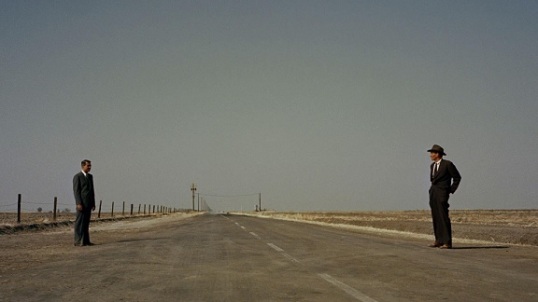
North by Northwest (1959, dir by Alfred Hitchcock, DP: Robert Burks)
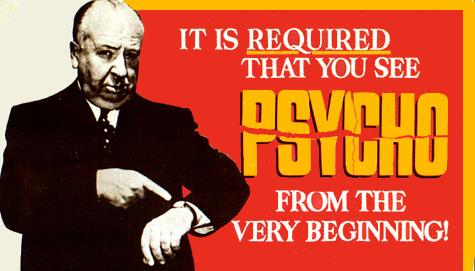
Psycho (1960, dir by Alfred Hitchcock, DP: John L. Russell)
As some of our regular readers undoubtedly know, I am involved in a few weekly live tweets on twitter. I host #FridayNightFlix every Friday, I co-host #ScarySocial on Saturday, and I am one of the five hosts of #MondayActionMovie! Every week, we get together. We watch a movie. We tweet our way through it.
Tonight, for #ScarySocial, Deanna Dawn will be hosting 1972’s Frogs, starring Sam Elliott and Ray Milland!
If you want to join us on Saturday night, just hop onto twitter, start the film at 9 pm et, and use the #ScarySocial hashtag! The film is available on Prime and YouTube. I’ll probably be there and I imagine some other members of the TSL Crew will be there as well. It’s a friendly group and welcoming of newcomers so don’t be shy.
142 years ago, on this date, director Cecil B. DeMille was born in Ashfield, Massachusetts. From the silent era until his death in 1959, DeMille was one of Hollywood’s superstar directors. His films, which were often over the top and effective at the same time, helped to build the modern film industry.
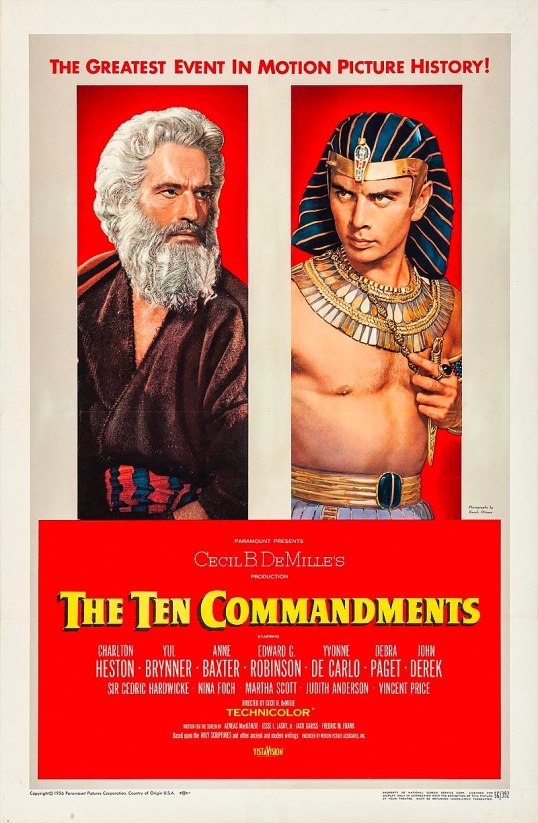
Today’s scene that I love comes from DeMille’s final film. From 1956’s The Ten Commandments, Moses parts the Red Sea.
(Please note, this video starts with a frozen image that lasts for about 12 seconds.)
4 Or More Shots From 4 Or More Films is just what it says it is, 4 shots from 4 of our favorite films. As opposed to the reviews and recaps that we usually post, 4 Shots From 4 Films lets the visuals do the talking!
On this date, 111 years ago, Samuel Fuller was born in Massachusetts. Before he became a filmmaker, Fuller was a crime reporter and a pulp novelist. His films were often melodramatic and unapologetically sordid. They were also often dismissed when they were initially released but almost all of them were subsequently rediscovered by audiences who appreciated Fuller’s striking visuals and the often subversive subtext to be found underneath the surface of his genre films.
Today, we celebrate Fuller’s legacy with….
4 Shots From 4 Sam Fuller Films
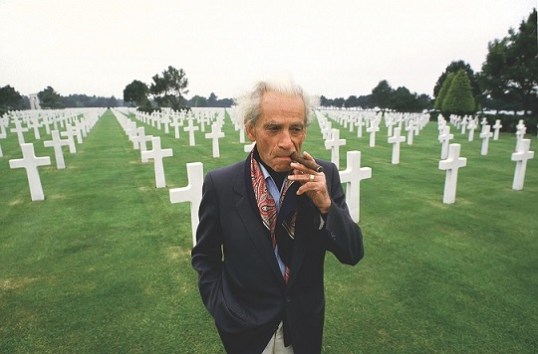
Forty Guns (1957, dir by Samuel Fuller, DP: Joseph Biroc)
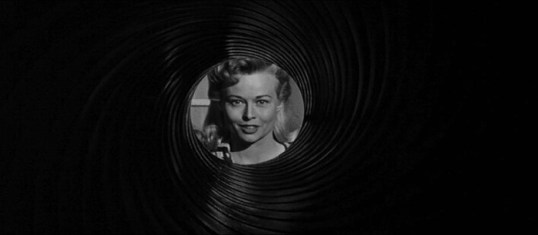
Shock Corridor (1963, dir by Samuel Fuller, DP: Stanley Cortez
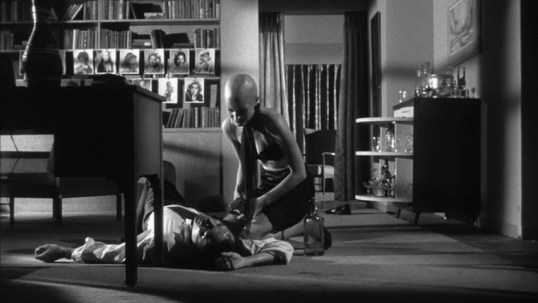
The Naked Kiss (1964, dir by Samuel Fuller, DP: Stanley Cortez)
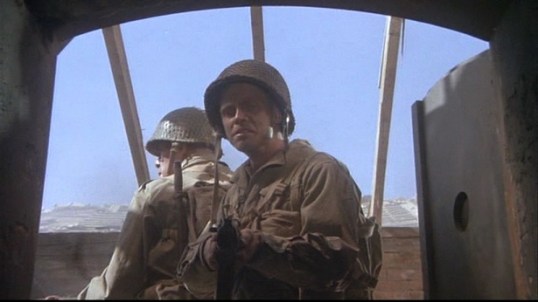
The Big Red One (1980, dir by Samuel Fuller, DP: Adam Greenberg)
As some of our regular readers undoubtedly know, I am involved in a few weekly live tweets on Twitter and Mastodon. I host #FridayNightFlix every Friday, I co-host #ScarySocial on Saturday, and I am one of the five hosts of #MondayActionMovie! Every week, we get together. We watch a movie. We tweet our way through it.
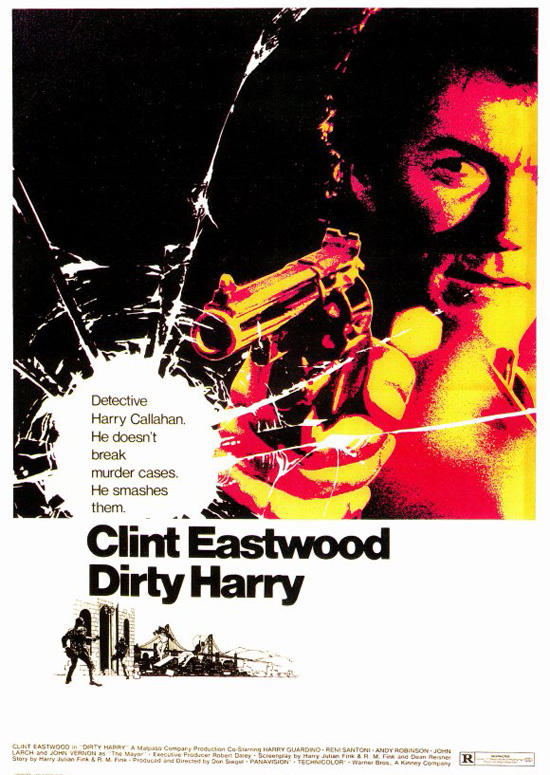
Tonight, at 10 pm et, #FridayNightFlix has got 1971’s Dirty Harry, starring Clint Eastwood!
If you want to join us this Friday, just hop onto twitter, start the movie at 10 pm et, and use the #FridayNightFlix hashtag! It’s a friendly group and welcoming of newcomers so don’t be shy.
4 Or More Shots From 4 Or More Films is just what it says it is, 4 shots from 4 of our favorite films. As opposed to the reviews and recaps that we usually post, 4 Shots From 4 Films lets the visuals do the talking!
76 years ago on this date, director Stuart Gordon was born in Chicago, Illinois. Gordon went from experimental theater to feature films and was responsible for some of the most visually memorable horror films of the past century. Perhaps no other American director was a strong interpreter of the work of H.P. Lovecraft than Stuart Gordon.
Today, we honor Stuart Gordon with….
4 Shots From 4 Stuart Gordon Films
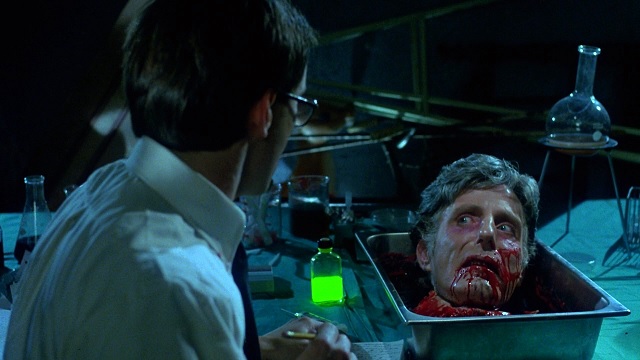
Re-Animator (1985, dir by Stuart Gordon, DP: Marc Ahlberg)
Dolls (1987, dir by Stuart Gordon, DP: Marc Ahlberg)
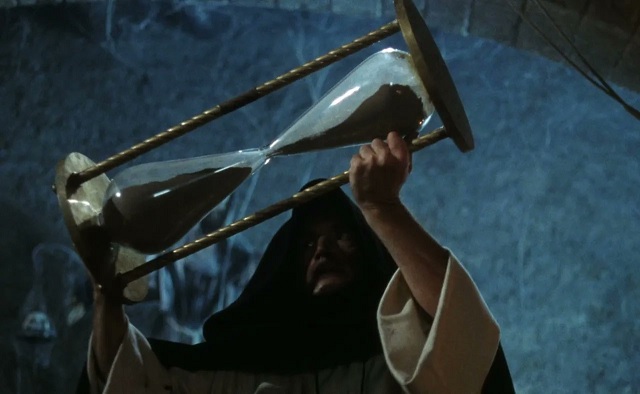
The Pit and the Pendulum (1991, dir by Stuart Gordon. DP: Adolfo Bartoli)
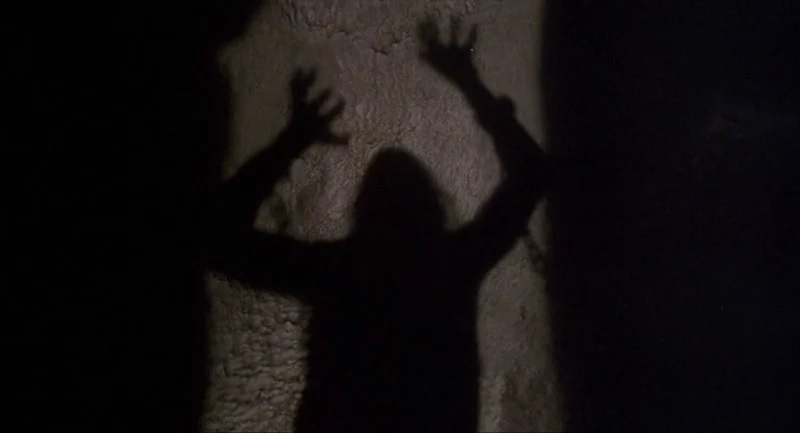
Castle Freak (1994, dir by Stuart Gordon, DP: Mario Vulpiani)
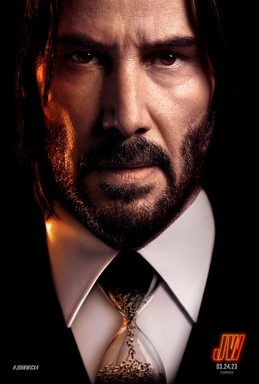
Yesterday, I finally watched the hit film of March 2023, John Wick: Chapter Four. It left me overwhelmed and I mean that in the best possible way.
The film picks up where the last film left off. John Wick (Keanu Reeves), the dog-loving, formerly retired professional hit man, is still traveling the world and killing the leaders of the High Table. As becomes apparent from the start of the film, it’s a bit of a fool’s errand as killing one leader only leads to another leader being installed. When John travels to Morocco to kill the leader known as “The Elder,” he discovers that the Elder he knew is gone and has been replaced with a new Elder. He still kills the new Elder because that’s what John Wick does. He kills people. He’s a literal killing machine, one who audiences like because he loves dogs, is still mourning for his dead wife, and he’s played by Keanu Reeves. On paper, the relentless and ruthless character of John Wick is horrifying. But, when he’s played by Keanu Reeves, he becomes the killing machine that audiences can’t help but love.
The arrogant and brilliantly named Marquis Vincent Bisset de Gramont (Bill Skarsgard, giving a wonderfully hissable performance) is currently in charge of the efforts to track down and kill John. The Marquis establishes himself as being evil by not only killing Charon (Lance Reddick) but also blowing up the Continental. Upset by the murder of Charon and the destruction of his business, Winston (Ian McShane, playing his role with the perfect amount of wounded dignity) tells John that he can end his entire war with the High Table by challenging the Marquis to a duel. Unfortunately, to do that, John has to convince another criminal organization to sponsor him and just about criminal organization on the planet wants John did. To make things even more difficult, the Marquis has brought the blind assassin, Caine (the incredible Donnie Yen), out of retirement to track down John. Caine and John are old friends but Caine knows that his daughter will be killed unless he kills John.
Clocking in at 169 minutes, John Wick: Chapter Four is a big, flamboyant, and at times overwhelming production. John Wick travels across the world and every country in which he finds himself is home to someone who wants him dead. And since everyone that John Wick knows seems to have a unlimited supply of guards and henchmen, the fights are nonstop and the violence is over the top but the film is so energetic and cheerfully excessive that it’s never boring. Each fight scene feels like it could be a separate film on its own, with each member of the cast getting a chance to show off what they can do. The water-filled fight in a Berlin night club is the film’s best moment but it’s closely followed by an extended combat sequence that’s set in a hotel in Japan. With its vivid cinematography and ornate production design and its spectacular stunts, John Wick Chapter 4 is a work of pure cinema, an thrill ride of glorious excess. Along with providing an ending to John Wick’s story, it also pays tribute to everything that audiences love about action cinema. It’s a film for people who love action and, even more importantly, it’s film that has as much love for its audience as it does for itself.
The film ends on a note of apparent finality, one that becomes more ambiguous the more that one examines it. This may be the last chapter of John Wick’s story or it may not. (Considering the film’s box office and critical success, I suspect that it will not be the last.) John Wick Chapter Four serves as a fitting (if perhaps temporary) end to the saga and also a tribute to both the action aesthetic and Keanu Reeves’s innate likability.