Brad takes on THE WHITE BUFFALO (1977), starring Charles Bronson and Will Sampson!


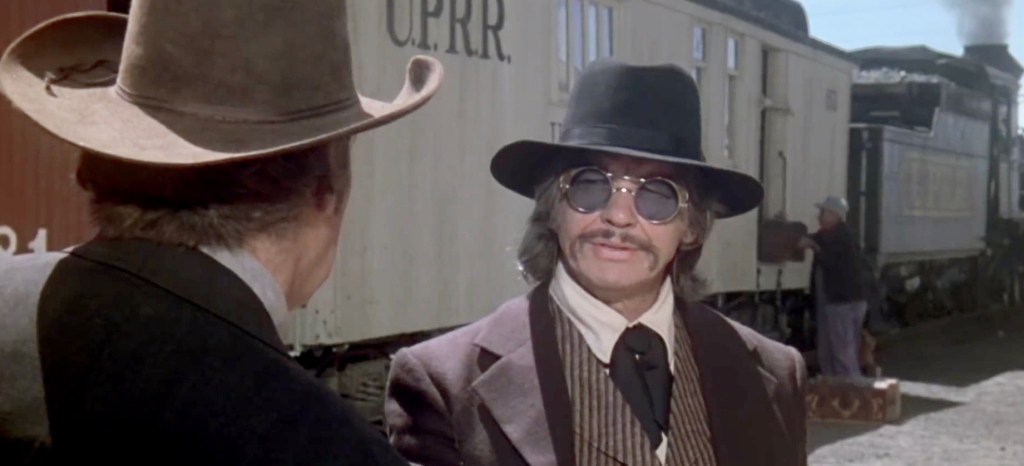
Charles Bronson as Wild Bill Hickok

Back in 2023, my family visited the Black Hills of South Dakota. The first thing we did was visit Mount Rushmore. The second thing we did was visit the Mount Moriah Cemetery and the final resting place of Wild Bill Hickok. Situated on the top of a hill overlooking the city of Deadwood, it’s a beautiful place that also includes the graves of Calamity Jane and Sheriff Seth Bullock. I insisted that we see the location for possibly the most superficial reason possible… because Charles Bronson played Hickok in THE WHITE BUFFALO.

Based on a novel by Richard Sale, the story opens with Hickok having a recurring nightmare of a snowy showdown with a giant white “spike.” And if he has pistols handy, he wakes up firing them uncontrollably and you’d better not be nearby. Determined to face his fear, he heads out into the hills with his friend Charlie Zane (Jack Warden), hoping to find the albino buffalo, so he can put him down and end the nightmares. Around the same time, the great beast has stampeded the camp of Crazy Horse (Will Sampson) killing his child in the process. Convinced that the child cannot have peace in the afterlife, Crazy Horse sets out to kill the buffalo so he can wrap his child in its white “robe” and free her spirit. With Hickok a prolific killer of Indians, and Crazy Horse a brave Lakota Oglala warrior, the two men seem to be on a deadly collision course in those snowy hills.

Charles Bronson’s final western, THE WHITE BUFFALO has a lot of the scenes you’d expect. With Bronson playing a famous gunman, we get to see several gunfights as he makes his way through various Wyoming towns, featuring well-known actors like Clint Walker and Ed Lauter. We also get to see him visit various saloons, as well as the widow Schermerhorn, played by Kim Novak. When he really “knew” her, she was a prostitute named Poker Jenny. Along with those I’ve already mentioned, it’s an all-star affair as we see such familiar faces as Stuart Whitman, John Carradine, Slim Pickens, and even a young Martin Kove sprinkled throughout the film. And of course, we get to see Bronson take on the gigantic white buffalo of the title, first in his dreams, and then later in reality! Directed by veteran filmmaker J. Lee Thompson, these scenes are staged and executed well, with Hickok’s nightmares given an especially eerie quality.
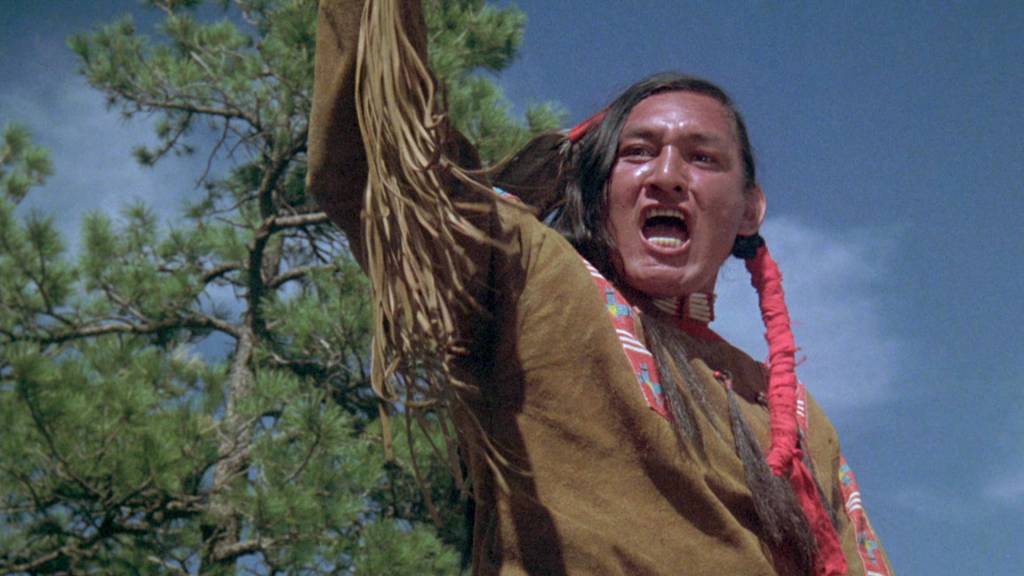
Will Sampson as Crazy Horse

While the movie has the expected scenes, it’s the unexpected character moments that sets THE WHITE BUFFALO apart as a uniquely strong entry in Bronson’s filmography. Hickok may be a man haunted by dreams of a monstrous white buffalo, but Bronson plays him in such a way that we can feel his exhaustion and literal sickness from too many years of a dangerous and difficult life. The buffalo is more than just an animal… it’s a symbol of guilt, fear and the coming of death itself. Bronson could always underplay a role better than just about anyone else, but here he’s reflective and haunted in way that I’ve not seen before, and he’s really good.

I also think the movie gets better every time Bronson shares a scene with Will Sampson. Sampson brings dignity and intelligence to Crazy Horse. His mission is more noble than Hickok’s, and an unexpected friendship develops between the two men, despite their vast differences. Ultimately, it’s this relationship that provides the film an emotional weight that sneaks up on you by the end, even if it’s not meant to last.

THE WHITE BUFFALO is not a perfect film. The animatronic buffalo may look a little hokey, and the film may seem a little slow at times for those expecting an action-packed western or monster movie. However, Bronson and Sampson are so good in their myth-making performances that the film eventually becomes something more. It’s the idea of watching two aging warriors, bound together through the bravery of confronting death, that I found to be more interesting and compelling than anything else on display.

THE WHITE BUFFALO is currently streaming on Amazon Prime, Tubi, PlutoTV, and The Roku Channel.
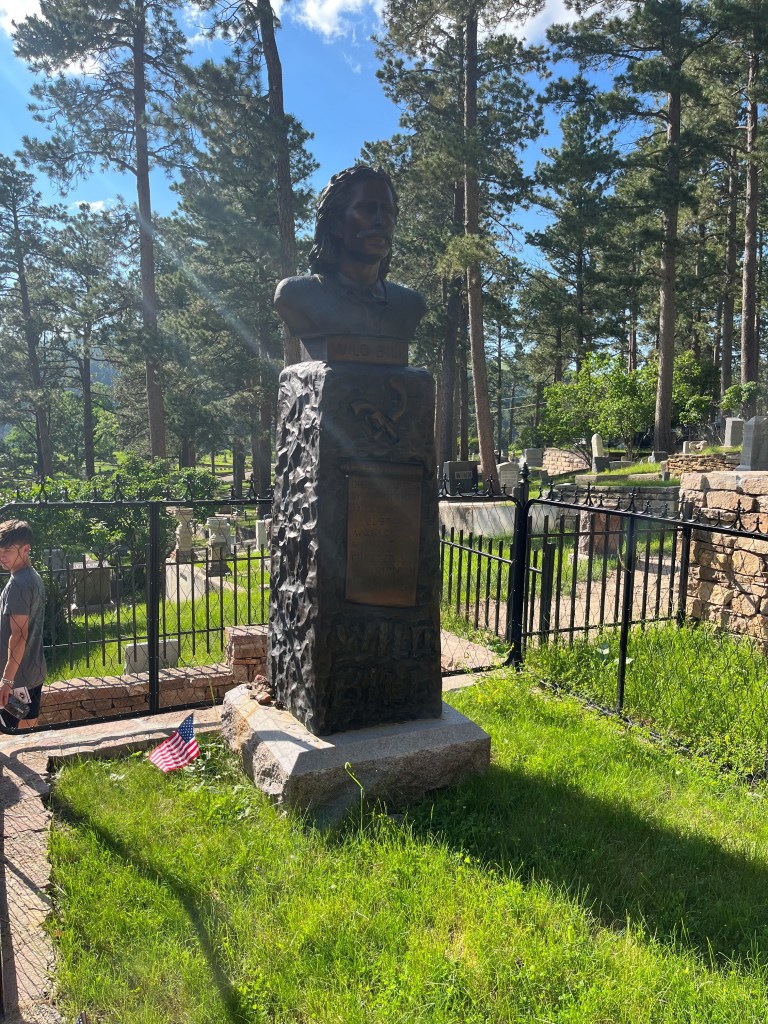
Wild Bill Hickok’s gravesite in Mount Moriah Cemetery in Deadwood, South Dakota

Film Review: High Plains Drifter (dir by Clint Eastwood)


In 1973’s High Plans Drifter, Clint Eastwood plays …. The Stranger.

No, not the Man With No Name.  The Stranger has a name but he chooses not to share it.  That said, when one person says that he doesn’t even know the Stranger’s real name, the Stranger replies, “Yes, you do.”  The Stranger appears to emerge from the heat of the desert, riding into the small mining town of Lago and gunning down the three bullies that the townspeople hired to protect them after the murder of their town marshal.  With no other option, the townspeople accept the Stranger as the town’s new protector.

The Stranger is drawn to the town and the townspeople but he doesn’t seem to particularly like any of them, with the exception of Mordecai (Billy Curtis), the dwarf that the Stranger appoints as the town’s new sheriff.  The townspeople, the majority of whom are cowardly and motivated by greed, aren’t particularly likable themselves.  The Stranger rules the town like a dictator, kicking everyone out of the hotel so that he can have it for himself and ordering that every building in the town be painted red.  Over the town’s welcome sign, he paints one word: “Hell.”  When the townspeople see how well the Stranger can shoot, they celebrate in the belief that they’ll always be safe.  The Stranger responds by leaving town just as three sadistic outlaws, led by Stacey Bridges (Geoffrey Lewis), approach.  The Stranger may be looking for revenge on Bridges but he also seems as if he wants to make the town suffer for its sins as well.

Much as with the case of The Man With No Name, the Stranger is not motivated by kindness or any sort of concern for the safety of the townspeople.  He often shows a cruel-streak when it comes to dealing with the cowardly townspeople.  He doesn’t attack unless he’s attacked first but once you’re on his bad side, he’ll gun you down without a hint of emotion.  When the Stranger sleeps, he is haunted by nightmares of the previous marshal (played by Buddy Van Horn, Clint Eastwood’s stunt double) being murdered by Bridges and his men while the townspeople stood by and did nothing.  We learn that the townspeople, worried that it might be bad for their business interests, didn’t even give the late marshal a decent headstone after his death.  One woman mentions that spirits can’t rest unless they have a proper marker….

Getting the idea?

High Plains Drifter is probably the closest that Eastwood has ever come to making a supernatural horror film.  The Stranger may or may not be a vengeful ghost (the movie leaves that for you to decide) but he turns the small town of Lago into his own personal version of Hell and, when he attacks the men who killed the marshal, he moves with the ruthless determination of a slasher villain.  The scene where Bridges and his men ride into the town is like a filmed nightmare.  This is a dark film, one in which Eastwood’s Stranger is not the hero because he’s particular heroic but just because everyone else in the film is so bad.

This was also Eastwood’s second film as a director (following Play Misty For Me) and also the first of many westerns that Eastwood would direct.  The imagery is often haunting, all the more so because some of the most violent scenes take place in broad daylight.  The scenes where the Stranger seems to materialize out of the desert’s heatwaves perfectly capture the mythology of the old west and its “heroes.”  Eastwood gets good performances out of his ensemble cast and, even more importantly, he shows that Eastwood the director had a perfect understanding of Eastwood the actor.  As the Stranger, Eastwood says more with a snarl or a half-smile than most actors could say with a multi-page monologue.

High Plains Drifter is violent, often disturbing, and ultimately unforgettable.

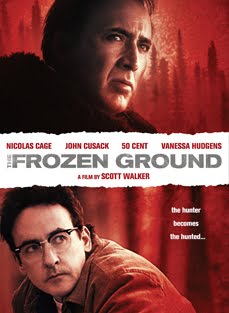
October True Crime: The Frozen Ground (dir by Scott Walker)


In the early 80s, Robert Hansen was a respected businessman in Anchorage, Alaska.  He owned a restaurant.  He was known for being a family man.  He held several local hunting records.  Almost everyone who met him described him as being friendly and good-natured.  In those days before the Internet, it wasn’t as if someone could do a Google search and discover that Hansen had a long criminal record in both Iowa and Alaska.  There was no way to know that Hansen had been a teenage arsonist and that had been arrested and charged with rape in the early 70s.  (The charges were ultimately plea bargained down to assault.)  Even those who did know about his background felt that Hansen had turned his life around and was now an upstanding member of society.

At the same time that Hansen was a respected member of the Anchorage community, he was abducting young women and, after holding them prisoner and raping him at his cabin, flying them into the Alaskan wilderness where he would then hunt them in his own version of The Most Dangerous Game.  It’s known, for sure, that Hansen murdered at least 18 women.  It’s felt that the number is much higher.  Along with his own good reputation, Hansen was protected by the fact that many of his victims were transients and sex workers.  Their disappearances were rarely reported to the police and, when they were, the police didn’t go out of their way to find them.  Much as happened with the Green River Killer in Washington State, Hansen was able to get away with his crimes for over 20 years not because he was particularly clever but because his victims were considered to be on the fringes of society.

The 2011 film, The Frozen Ground, is a fictionalized account of the investigation that led to Hansen’s arrest.  John Cusack plays Robert Hansen.  Nicolas Cage plays Jack Holcombe, a weary Alaskan state trooper who has to deal with uncooperative witnesses and beaurocratic indifference while investigating Hansen’s crimes.  Vanessa Hudgens plays Cindy Paulson, a 17 year-old sex worker who survives her encounter with Hansen but whose story is originally ignored by the police because of what Cindy does for a living.  Both Jack and Hansen comes to realize that Cindy is the only person who can positively identify the killer but Cindy has disappeared into the Anchorage underworld, working as a stripper and being manipulated by her pimp, Clate Johnson (50 Cent).

Taking full of advantage of the chilly atmosphere and the isolation of the Alaskan wilderness, The Frozen Ground is an effective journey into the heart of darkness, featuring excellent performances from Nicolas Cage and John Cusack.  Cusack smoothly alternates between being the arrogant hunter and the desperate prey while Cage’s weary expression captures the psychological toll of investigating the crimes of someone like Robert Hansen.  Of course, when the film came out, it received a lot of attention for featuring Vanessa Hudgens in a dramatic role.  Hudgens’s performance here continues the tradition of former Disney (and Nickelodeon) actresses trying to prove their range by playing an edgy role.  Though there’s a few scenes where she does seem to be trying too hard to make sure that we all know she’s capable of more than High School Musical, Hudgens is convincing for the most part.

As for the real-life Robert Hansen, he was sentenced to spend 461 years in prison for his crimes.  (Alaska has no death penalty.)  In 2014, three years after the release of this film, the 75 year-old Hansen died of natural causes while still incarcerated.

Music Video of the Day: Brando by Scott Walker + Sunn O))) (2014, dir by Gisele Vienne)


Today would have been Marlon Brando’s 94th birthday so it seems appropriate that today’s music video should be for a song that was, at least partially, inspired by Marlon Brando’s career!

In 2014 interview, Scott Walker explained the idea behind this song, saying that he found that there were several movies that features scenes of Marlon Brando being physically assaulted.  Along with detailing some of the assaults that Brando suffered on screen, the song serves as a tribute to sadomasochism in general.

In the third verse, there are several references to Brando’s films.  First there’s mention of Brando getting beat up by John Saxon in The Appaloosa.  “I took it from dad” is probably a reference to One-Eyed Jacks, the only film that Brando ever directed.  Fat Johnny Friendly was the racketeer played by Lee J. Cobb in On The Waterfront while the three vigilantes are a reference to Brando’s role in The Chase.  “I took it for The Wild One” is obviously a reference to the film of the same name.  As “Lizbeth,” that’s presumably a reference to Elizabeth Taylor, who beat Brando with a riding crop in Reflections in a Golden Eye.

Enjoy!