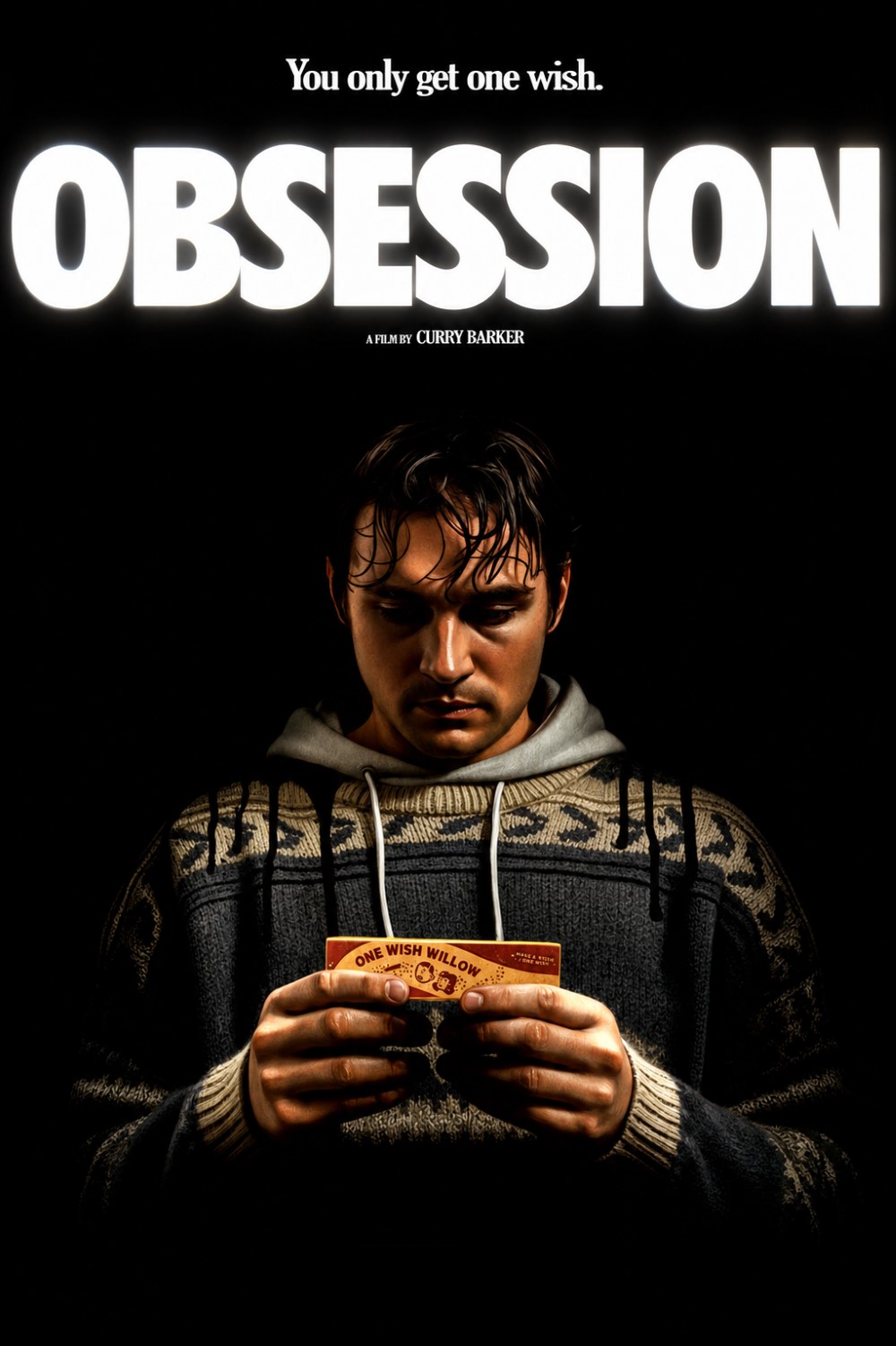
Review: Obsession (dir. by Curry Barker)


“Just because you chose this for her doesn’t make it less real.” — Phone Operator

There is something especially unsettling about horror films that begin with a simple emotional truth. Obsession, written and directed by Curry Barker, starts with a feeling most people understand: wanting someone to love you back. Barker takes that universal desire and twists it into something ugly, tragic, and terrifying. The result is a horror film that works both as a supernatural nightmare and as an uncomfortable examination of loneliness, entitlement, and emotional dependency.

The premise sounds deceptively simple. Bear, played by Michael Johnston, is a socially awkward young man hopelessly in love with his longtime friend Nikki, played by Inde Navarrette. Bear convinces himself that if circumstances were just slightly different, Nikki would finally realize he is the right person for her. When he discovers a supernatural object known as the “One Wish Willow,” he makes the disastrous decision to wish that Nikki would love him completely. Naturally, the wish mutates into something horrific, transforming Nikki’s affection into a violent and all-consuming obsession.

At its core, Obsession feels like an old-fashioned monkey’s paw story updated for the modern age. Barker takes the familiar “be careful what you wish for” premise and dials the nastiness up to 11. The film fully commits to the emotional ugliness of its concept, giving the well-worn trope a vicious bite that makes the movie far better than it has any reason to be. Instead of treating the supernatural element like a gimmick, Barker roots the horror in emotional selfishness and the terrifying consequences of trying to control another person’s feelings.

What makes the film work so well is that Barker avoids turning the story into a heavy-handed moral lecture. The script trusts the audience to understand the disturbing reality underneath Bear’s actions. Bear is not portrayed as a cartoon villain. He is insecure, lonely, emotionally immature, and quietly resentful. That complexity makes him far more unsettling because he feels recognizable. The film taps into a very modern type of “nice guy” entitlement, where affection is viewed less as mutual connection and more as something owed or deserved.

Michael Johnston gives an impressively layered performance as Bear. He never plays the character as openly monstrous right away. Instead, Johnston leans into Bear’s passivity and self-pity, making him seem like someone convinced life has unfairly denied him happiness. Even as events spiral out of control, Bear continues rationalizing his decisions instead of fully confronting the damage he has caused. Johnston manages to make the character pathetic, frustrating, and disturbing all at once.

Inde Navarrette delivers the film’s strongest performance as Nikki. Once the wish begins taking hold, Navarrette shifts between affection, emotional collapse, desperation, and outright menace with remarkable control. What makes her performance especially effective is that Nikki never stops feeling human beneath the horror. There is a lingering sadness to the character because the film makes it clear she is losing her autonomy piece by piece. That loss of agency becomes one of the movie’s most disturbing ideas.

More than anything, Obsession is about the horror of emotional suffocation. Barker exaggerates toxic relationship dynamics into supernatural horror, but the emotions underneath everything feel believable enough to sting. The film understands how frightening dependency can become when love starts turning into possession. In many ways, the supernatural curse almost feels secondary to the emotional damage unfolding between the characters.

One of the film’s biggest surprises is how confidently Barker handles tone. Considering his background in online comedy and internet content, it would have been easy for the movie to lean too heavily into irony or self-awareness. Instead, Obsession balances dark humor and psychological dread remarkably well. There are genuinely funny moments throughout the film, often rooted in painfully awkward social interactions, but the comedy never weakens the horror. If anything, it makes scenes more uncomfortable because the characters and situations feel recognizable.

Visually, the film punches far above its apparent budget. Barker and cinematographer Taylor Clemons create an atmosphere that feels claustrophobic and emotionally oppressive. The framing often leaves characters isolated within empty spaces, subtly reinforcing the loneliness and discomfort driving the story. The lighting also deserves praise, frequently bathing scenes in dim yellows, reds, and shadows that gradually make ordinary environments feel increasingly hostile.

The sound design is equally effective. Barker wisely avoids relying only on loud jump scares. Instead, the film builds tension through silence, distant noises, and subtle audio distortions that make scenes feel emotionally wrong before anything overtly frightening even happens. Combined with Rock Burwell’s unsettling score, the movie maintains a lingering sense of dread that hangs over nearly every scene.

When the horror finally erupts into violence, Barker shows admirable restraint. The graphic moments land hard because the emotional groundwork has already been carefully established. Some scenes are genuinely difficult to watch not simply because they are bloody, but because the violence feels directly tied to desperation, obsession, and loss of control. The film understands that emotional discomfort can often be more disturbing than gore itself.

If the movie has weaknesses, they mostly stem from Barker occasionally pushing the central metaphor a little too hard. Some later scenes become slightly obvious in their symbolism, and a few supporting characters feel underdeveloped compared to the leads. Still, those flaws never seriously damage the film because the central performances and atmosphere remain compelling throughout.

What ultimately makes Obsession stand out from many modern horror films is how emotionally specific it feels. Rather than chasing broad social commentary, Barker narrows his focus onto a very particular kind of emotional dysfunction. The film is less interested in making sweeping statements about relationships and more interested in examining the terrifying consequences of confusing love with ownership.

In that sense, the “One Wish Willow” works less as a magical object and more as a representation of selfish fantasy. Bear wants love without vulnerability, rejection, or reciprocity. He wants an easy shortcut to emotional fulfillment. The horror comes from realizing that genuine love cannot exist without freedom.

There are traces of earlier psychological horror films throughout Obsession. The movie occasionally recalls the obsessive fixation of Misery and the emotional body horror of Possession, though Barker filters those influences through a distinctly modern lens shaped by internet-age loneliness and social isolation. Yet despite those influences, the film never feels derivative. Barker’s voice as a filmmaker comes through clearly in both the emotional discomfort and escalating supernatural chaos.

Perhaps the most impressive thing about Obsession is how assured it feels for a filmmaker still early in his career. Barker directs with confidence, gradually tightening the emotional pressure until the movie becomes almost suffocating by its final act. By the end, the film reaches a level of tragic inevitability that feels earned rather than forced.

Obsession succeeds because it recognizes how frightening loneliness and emotional dependency can become when mixed with entitlement and fantasy. Beneath the supernatural premise is a painfully human story about people confusing obsession with love. Curry Barker turns that idea into a disturbing, darkly funny, emotionally bruising horror film that lingers long after the credits roll.

For a filmmaker making such an ambitious leap into feature-length horror, Barker delivers something remarkably confident and emotionally sharp. Obsession is creepy, uncomfortable, tragic, and surprisingly insightful. More importantly, it feels like the arrival of a filmmaker who understands how modern horror can reflect real emotional anxieties while still delivering an entertaining and deeply unsettling experience. In many ways, Barker joins the recent wave of younger horror filmmakers like Oz Perkins and Zach Cregger who have proven that horror, dread, and dark comedy do not have to work against each other. Like those directors, Barker understands how to blend discomfort, absurdity, and genuine emotional tension into a cohesive whole, creating a film that is as unsettling as it is unexpectedly funny.

Join #MondayMania For A Teacher’s Obsession


Hi, everyone!  Tonight, on twitter, I will be hosting one of my favorite films for #MondayMania!  Join us for 2015’s A Teacher’s Obsession!

You can find the movie on Prime and then you can join us on twitter at 9 pm central time!  (That’s 10 pm for you folks on the East Coast.)  See you then!

Scenes That I Love: Senator Smith Tells Off The Establishment In Frank Capra’s Mr. Smith Goes To Washington


Today is Frank Capra’s birthday!  Capra was born 126 years ago, on this date, in Sicily.

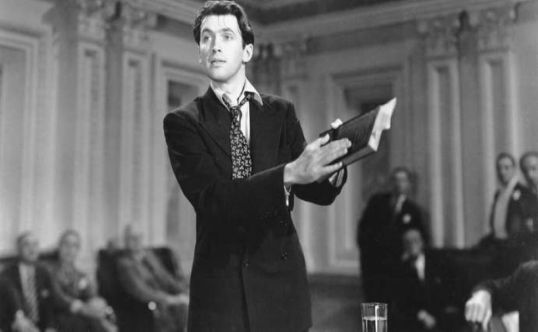
Now, if you’ve been reading this site for a while, you should know that my favorite Capra film is It’s A Wonderful Life.  However, a close second is 1939’s Mr. Smith Goes To Washington.  In today’s scene that I love, Sen. Jefferson Smith (Jimmy Stewart) holds the Senate floor as he denounces the corruption that he sees all around him in Washington.  There’s a reason why Senator Smith is still held up as the ideal public servant.  It’s just a shame that he was a fictional character.

4 Shots From 4 Films: Special Frank Capra Edition


4 Or More Shots From 4 Or More Films is just what it says it is, 4 shots from 4 of our favorite films. As opposed to the reviews and recaps that we usually post, 4 Shots From 4 Films lets the visuals do the talking!

129 years ago, on this date, Frank Capra was born in Sicily.  Capra was six years old when his family immigrated to the United States and, for the rest of his long life, he would often talk about seeing the Statue of Liberty from the deck of a boat sailing to Ellis Island.  Capra went on to become a director whose work celebrated the ideals and the promise of America.  He not only gave us the holiday classic, It’s A Wonderful Life, but he also directed one of the few political films that matteed, Mr. Smith Goes To Washington.  And let us not forget that the first two comedies to win the Oscar for Best Picture were directed by Capra, It Happened One Night and You Can’t Take It With You.

In honor of a great career and legacy, here are….

4 Shots From 4 Frank Capra Films

It Happened One Night (1934, dir by Frank Capra, DP: Joseph Walker)

You Can’t Take It With You (1938, dir by Frank Capra, DP: Joseph Walker)

Mr. Smith Goes To Washington (1939, dir by Frank Capra, DP: Joseph Walker)

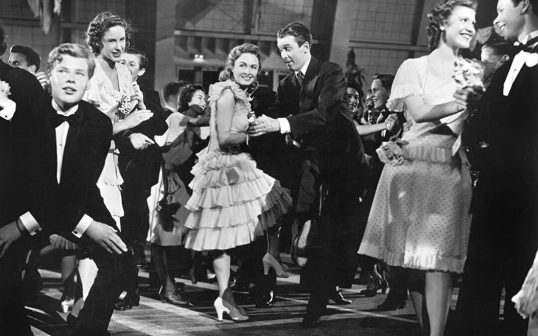
It’s A Wonderful Life (1946, dir by Frank Capra, DP: Joseph Walker and Joseph Biroc)

Monday Live Tweet Alert: Join Us For Assault On Dome 4!


As some of our regular readers undoubtedly know, I am involved in hosting a few weekly live tweets on twitter and occasionally Mastodon.  I host #FridayNightFlix every Friday, I co-host #ScarySocial on Saturday, and I am one of the five hosts of Mastodon’s #MondayActionMovie!  Every week, we get together.  We watch a movie.  We snark our way through it.

Tonight, for #MondayActionMovie, the film will be Assault on Dome 4!

It should make for a night of fun viewing and I invite all of you to join in.  If you want to join the live tweets, just hop onto Mastodon, find the movie on YouTube and hit play at 8 pm et, and use the #MondayActionMovie hashtag!  The  watch party community is a friendly group and welcoming of newcomers so don’t be shy.   

See you soon!

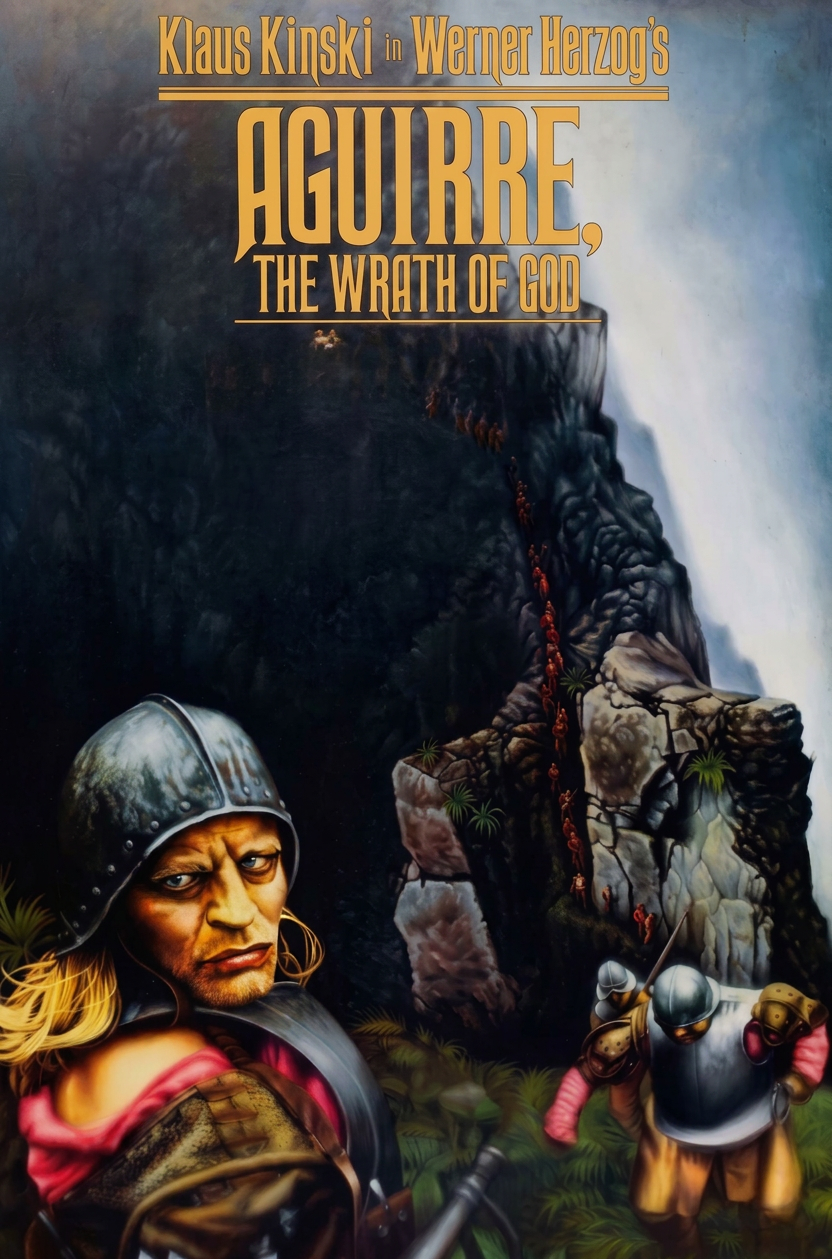
Review: Aguirre, The Wrath of God (dir. by Werner Herzog)


“For here on this river, God never finished his creation.” — Balthasar

Werner Herzog’s Aguirre, the Wrath of God opens with one of the most hypnotic sequences in cinema: a column of Spanish conquistadors and indigenous slaves snaking down a fog-shrouded Andean pass, cannon winched separately. From that first frame, you sense you’re watching not a historical adventure but a fever dream. The film is loosely based on the real-life Lope de Aguirre, a Basque mutineer who searched for El Dorado in the 1560s. But as Herzog later confirmed, historical accuracy was never the point. Aguirre is fiction—a myth sculpted from jungle heat, river currents, and one actor’s maniacal commitment. Remarkably, the production itself became a hellish mirror of the narrative: shot deep in the Peruvian rainforest under conditions so brutal that the line between making a movie and surviving an ordeal vanished.

The plot is simple. In 1560, a Spanish expedition descends into the Amazon basin, searching for the golden city of Manoa. When rapids prove too treacherous, a smaller party is sent ahead under the noble but hapless Don Pedro de Ursúa (Ruy Guerra). Among them is Aguirre (Klaus Kinski), a wiry, half-mad soldier who immediately undermines authority. After Ursúa is murdered, Aguirre seizes control, declaring himself “the Wrath of God” and proclaiming a new monarchy. What follows is not a rousing conquest but a slow hallucinatory unraveling: rafts stuck on looping rivers, starvation, arrows from invisible natives, and the collapse of every civilizing impulse. This is one man’s battle against nature and his personal crisis of faith—a crisis the production team would come to know intimately.

Herzog’s storytelling prioritizes mood over plot. The narrative drifts through long takes of jungle canopy, close-ups of Kinski’s hollow eyes, and Popol Vuh’s otherworldly score. But the film’s raw authenticity comes from its production: a near-literal trek through jungle hell. Herzog took a small cast and crew into the Peruvian rainforest with no insurance, no backup equipment, and no evacuation strategy. The Urubamba River was unpredictable, with hidden rocks and stretches local guides refused to navigate. Rafts capsized. Food spoiled. Actors began unraveling for real. When a soldier in the film announces, “We are walking in circles,” it is both scripted and a genuine observation from an extra who’d passed the same fallen tree three days running. Herzog left that take in. The boundary between fictional madness and documentary collapse dissolved completely.

And then there was Klaus Kinski. If the jungle was one monster, Kinski was another. The conflict between Herzog and his star is the stuff of legend. Kinski arrived volatile, prone to screaming fits, threatening to abandon the production. At one point, a native chief offered to kill Kinski for free. Herzog declined—he still needed the actor alive. On another occasion, Herzog reportedly held Kinski at gunpoint during an attempted walkout. Kinski stayed. That friction bleeds into every frame. Kinski’s rage and paranoid stillness aren’t simulated; they’re the genuine product of a man frayed by heat, isolation, and his own demons. That is not method acting in a safe studio. It’s a man on the edge, pointed at a director who refused to flinch.

What lifts Aguirre into high art is its philosophical dread, earned through real suffering. And at its heart is Aguirre himself, a character who feels less like a historical figure and more like a literary archetype. As played by the manic Kinski, Aguirre is a remarkable fusion: the tragic Miltonian rebel and the obsessive Melvillean monomaniac. Like Satan in Paradise Lost, Aguirre defies divine and imperial order, preferring to reign in hell than serve in heaven. His self-coronation and final soliloquy echo Milton’s antihero—magnificent in defiance, hollowed by pride. But Herzog drains the grandeur, leaving only the fall without the poetry. Simultaneously, Aguirre is pure Ahab from Moby-Dick: another obsessive dragging a reluctant crew into the void on a suicidal quest. El Dorado is his white whale, an obsession that obliterates loyalty, love, and sanity. Both are swallowed by their obsession—Ahab by the sea, Aguirre by the jungle. But where Melville gives Ahab a thunderous final confrontation, Herzog gives Aguirre a whimper: a circle of monkeys, a drifting raft, and a whispered promise of a dynasty that will never come. Kinski holds both archetypes in suspension—Satan’s pride and Ahab’s fixation—and grinds them into something unrecognizable, belonging only to Herzog’s fever dream.

In the film’s most famous scene, Aguirre stands alone on a raft littered with corpses, small monkeys crawling over his armor, and whispers, “I will be the Wrath of God. Who else is with me?” No one. The jungle has swallowed everyone. Herzog frames this as the logical end of both the Miltonian and Melvillean arcs: absolute power in absolute isolation. The scene was shot in one take—not for artistry but because the raft was about to be swept away. The monkeys were real, biting the crew and defecating on Kinski’s armor. He didn’t break character. He couldn’t afford to. That’s the difference between a film that describes madness and one that embodies it.

Visually, Aguirre is a masterclass in low-budget grandeur. Cinematographer Thomas Mauch’s handheld camera glides through the jungle like a ghost. The opening descent feels supernatural. Rivers fill the frame until you lose direction. A galleon stuck in high branches—a leftover from a previous flood—becomes the film’s central metaphor: even empire is helpless against nature’s chaos. That chaos was logistical as well as thematic.

If there’s a weakness, it’s that the pacing can feel punishing. This film doesn’t build to a climax; it decays. Characters die offscreen or vanish. There is no redemption, no final battle. Some viewers may find this anticlimactic, but that’s the point. Herzog isn’t telling a story about winning or losing. He’s documenting a psychic meltdown from the inside, and meltdowns don’t follow three-act structure. The production’s own meltdown—hunger, disease, screaming matches on muddy riverbanks—only reinforces that vision. Aguirre is not a film about a man battling nature and losing his faith. It’s a film that became that battle, in real time, with real stakes, and somehow survived.

Years after release, Herzog clarified that Aguirre bears only the loosest resemblance to the historical Lope de Aguirre. He claimed he dreamed the film during a hike in the Alps. That dream-logic explains why Aguirre feels less like a period piece than a prehistoric vision. History is just a costume; the real subject is the human capacity to mistake madness for destiny. And that destiny, filtered through Kinski, is neither strictly Miltonian nor Melvillean but a nightmare hybrid: a fallen angel who keeps hunting the whale long after the ship has sunk.

In the end, Aguirre, the Wrath of God remains a towering, unsettling achievement. It influenced everything from Apocalypse Now to Resident Evil 4, but no imitation has matched its specific, waterlogged power. Despite the leeches, dysentery, gun threats, and screaming, the film that emerged is haunting, mesmerizing—a surreal trip into one man’s battle against nature and his crisis of faith. Herzog wanted “ecstatic truth” rather than mere fact. Aguirre is ecstatic truth: a fiction that feels more real than reality, a portrait of a madman that makes you understand why sanity is fragile, and a warning about conquest that remains urgent half a century later. Watch it on the biggest screen you can find, late at night, alone. The monkeys will be waiting. And somewhere in the jungle, Herzog and Kinski are still arguing.

Scenes I Love: Bill Paxton and Helen Hunt In Twister


Bill Paxton would have been 71 years old today.  As a lover of both films and eccentric Texans, I still miss Bill Paxton.

Today’s scene that I love comes from Twister and it features Bill Paxton showing off some wonderful chemistry with Helen Hunt.  One of the great things about Bill Paxton is that he was equally at home in both big blockbusters like Twister and Titanic and low-budget indies like Near Dark.  He was an artist who also happened to be a star.

4 Shots From 4 Films: Special Dennis Hopper Edition


Dennis Hopper (1936–2010)

4 (or more) Shots From 4 (or more) Films is just what it says it is, 4 (or more) shots from 4 (or more) of our favorite films. As opposed to the reviews and recaps that we usually post, 4 (or more) Shots From 4 (or more) Films lets the visuals do the talking.

90 years ago, Dennis Hopper was born in Dodge City, Kansas.

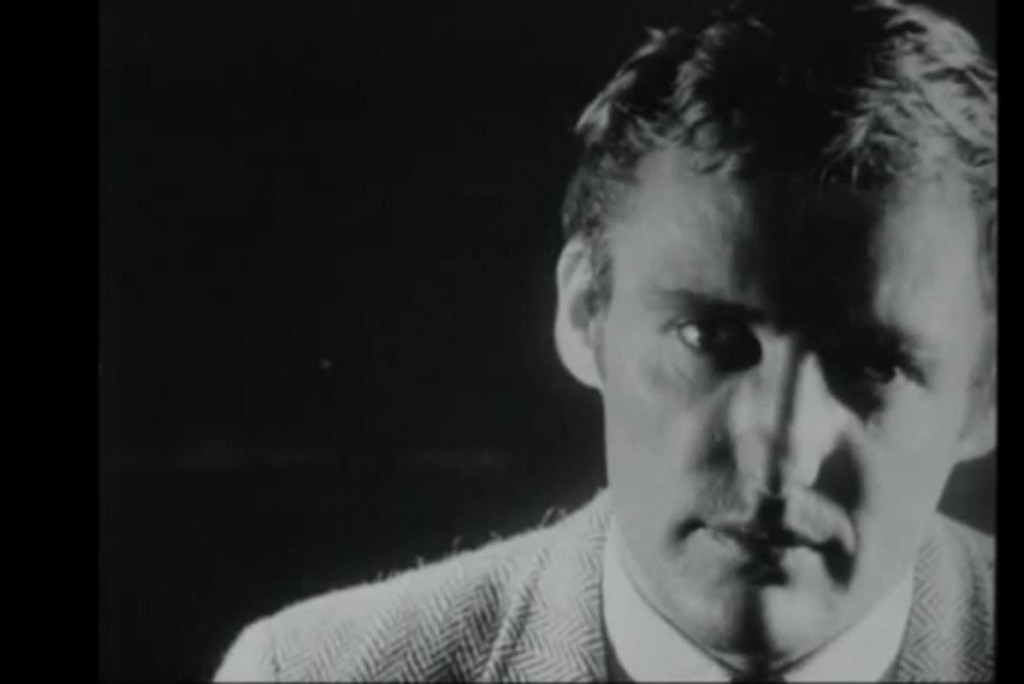
It seems rather appropriate that one of America’s greatest cinematic outlaws was born in a town that will be forever associated with the old west. Dennis Hopper was a rebel, back when there were actual consequences for being one. He started out acting in the 50s, appearing in films like Rebel Without A Cause and Giant and developing a reputation for being a disciple of James Dean. He also developed a reputation for eccentricity and for being difficult on set and he probably would have gotten completely kicked out of Hollywood if not for a somewhat improbable friendship with John Wayne. (Wayne thought Hopper was a communist but he liked him anyways. Interestingly enough, Hopper later became a Republican.) Somehow, Hopper managed to survive both a raging drug addiction and an obsession with guns and, after a mid-80s trip to rehab, he eventually became an almost universally beloved and busy character actor.

Hopper, however, always wanted to direct. He made his directorial debut with 1969’s Easy Rider, a film that became a huge success despite being an infamously chaotic shoot. The success of Easy Rider led to the Hollywood studios briefly trying to produce counter-culture films of their own. Hopper was given several million dollars and sent to Peru to make one of them, the somewhat dangerously titled The Last Movie. Unfortunately, The Last Movie, was such a bomb that it not only temporarily derailed Hopper’s career but it also turned Hollywood off of financing counter culture films. Hopper spent a decade in the Hollywood wilderness, giving acclaimed performances in independent films like Tracks and The American Friend, even while continuing to increase his reputation for drug-fueled instability. Hopper would eventually return to directing with his masterpiece, 1980’s Out of the Blue. (Out of the Blue was so controversial that, when it played at Cannes, Canada refused to acknowledge that it was a Canadian production. It played as a film without a country. Out of the Blue, however, is a film that has stood the test of time.) Unfortunately, even after a newly cleaned-up Hopper was re-embraced by the mainstream, his directorial career never really took off. He directed 7 films, of which only Easy Rider and Colors were financially successful. Contemporary critics often didn’t seem to know what to make of Dennis Hopper as a director. In recent years, however, Hopper’s directorial efforts have been reevaluated. Even The Last Movie has won over some new fans.

Today, on his birthday, we honor Dennis Hopper’s directorial career with….

4 Shots From 4 Dennis Hopper Films

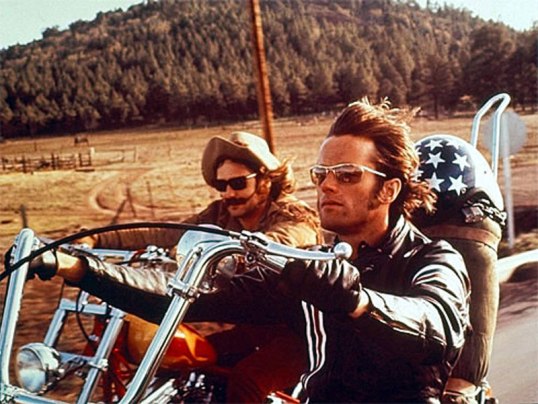
Easy Rider (1969, dir by Dennis Hopper, DP: Laszlo Kovacs)
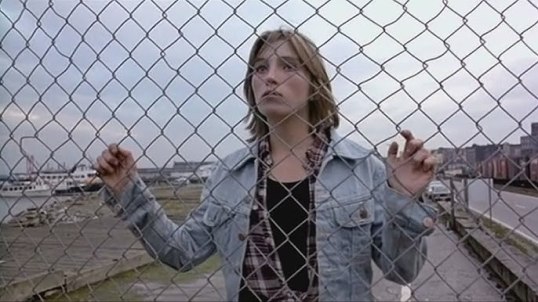
The Last Movie (1971, dir by Dennis Hopper, DP: Laszlo Kovacs)
Out of the Blue (1980, dir by Dennis Hopper, DP: Marc Champion)
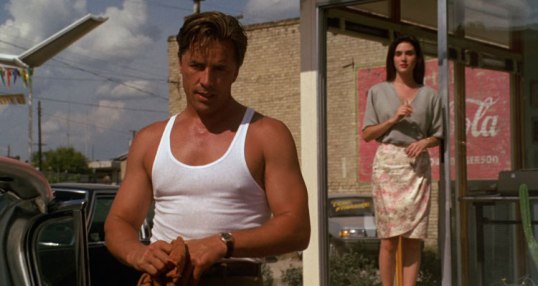
The Hot Spot (1990, dir by Dennis Hopper, DP: Ueli Steiger)

Brad’s “Hero of the Day” – Vince Majestyk (MR. MAJESTYK)!


“He didn’t want to be a hero…until they pushed him too far.”

One of the reasons that MR. MAJESTYK (1974) is such a great movie is the fact that Vince Majestyk couldn’t care less about being a hero. He has too much work to do. He just wants to get his melons in and be left alone. And when an arrogant gangster tries to bully him, his stubborn ass refuses to be pushed around. That’s all there is to it. This simple character and story results in Vince Majestyk becoming an incredible badass hero.

Charles Bronson plays Majestyk with complete confidence. He’s not scared of Al Lettieri’s hitman, Frank Renda, one bit. The man’s more of a nuisance to him than anything because he’s keeping him from getting his work done. Majestyk feels authentic as a blue-collar, capable, hardworking man. With Bronson’s weathered features, he fits the part perfectly and looks like a man who’s worked outdoors for decades. That gives the film a credibility many action movies lack. You realize almost immediately that Renda has made a big mistake by going after a guy who is a lot smarter and tougher than he seems. The entire story plays out with a feeling of experience and determination beating misplaced arrogance.

Vince Majestyk is a man who has morals that are proven by his actions, not his words. He treats people the way he wants to be treated. He doesn’t posture or scream and threaten people. He’s a man of his word, and when he’s threatened, he simply draws a line in the sand and refuses to budge. That stubbornness becomes heroic as the villains, and the local law enforcement always underestimates him. And when it’s all said and done, you get the feeling that Majestyk will just get back in his truck and go to work.

That’s ultimately why Vince Majestyk is a great movie hero. He’s tough without being cocky, moral but not preachy, and dangerous even though he’s not Superman. Bronson played a lot of heroic characters over the years, but Vince Majestyk is my personal favorite!

Hero of the Day

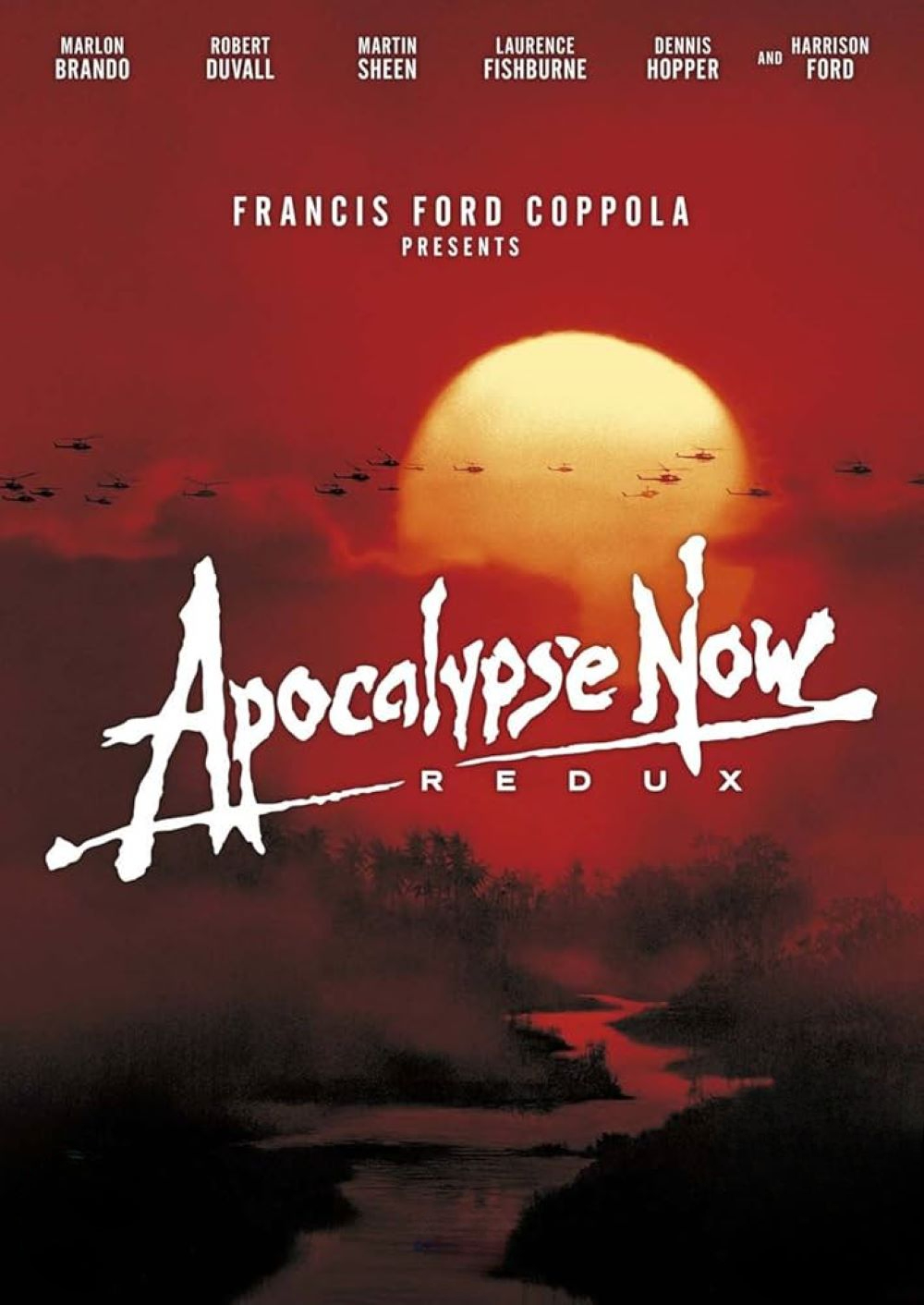
Review: Apocalypse Now Redux (dir. by Francis Ford Coppola)


“The horror… the horror…” — Col. Walter Kurtz

There is a specific kind of cinematic fever dream that only war, isolation, and a touch of madness can produce, and Francis Ford Coppola’s Apocalypse Now remains its gold standard. Co-written by Coppola and John Milius (the latter a colorful, larger-than-life figure in 1970s Hollywood), the film’s screenplay originally leaned harder into Milius’s romantic vision of martial will before Coppola reshaped it into something more hallucinatory and morally ambiguous. When we talk about the Redux version, released in 2001, twenty-two years after the original, we are not just revisiting that fever dream; we are plunging back into an even more hallucinatory, bloated, and revealing cut of the material.

At over three hours and twenty minutes, Apocalypse Now Redux is both a gift and a test of endurance. For those who only know the theatrical cut, this version feels less like a director’s tweak and more like unearthing a lost, more indulgent diary entry from Coppola’s own heart of darkness. The core remains the same: Captain Benjamin Willard (Martin Sheen), a morally hollowed-out assassin, is sent upriver during the Vietnam War to terminate Colonel Walter Kurtz (Marlon Brando), a once-brilliant Green Beret who has gone rogue and set himself up as a demi-god in the Cambodian jungle. The structure is a loose but unmistakable adaptation of Joseph Conrad’s classic 1899 novella Heart of Darkness, transposing Conrad’s grim critique of Belgian colonialism onto America’s own imperial overreach in Southeast Asia. Conrad’s journey up the Congo River becomes the Navy patrol boat’s crawl up the Nùng River, with each stop revealing a new layer of absurdity, violence, and spiritual decay.

The most immediate thing to address is what Redux adds, because those additions fundamentally alter the rhythm of the film. The theatrical cut is a lean, relentless descent. Redux is a meandering, hypnotic, and sometimes frustratingly pensive journey. Several major extended sequences distinguish this cut from the original. The first involves the Playboy Playmates. In the theatrical cut, we see them briefly at a chaotic USO show. In Redux, we get an extended sequence where Willard’s crew trades a canister of fuel for two hours with the stranded bunnies after their helicopter runs low on fuel. Later comes the brutal, psychedelic chaos of the Do Lung Bridge, which is extended in Redux to emphasize the utter breakdown of command and reality. And finally, deep in the journey, after surviving a tiger attack, Willard and the crew stumble upon the French rubber plantation, where a family of colonial planters refuses to leave their dying world. Each of these sequences grinds the forward momentum in different ways—the bunnies through desperate transaction, the bridge through absurd chaos, the plantation through nostalgic rot.

But to truly appreciate what Coppola is doing in Redux, you have to stop thinking of the Nùng River as a simple journey and start seeing it as a vertical descent—a layered, infernal funnel where each stop corresponds to a different circle of moral decay, much like the structure of Dante Alighieri’s Inferno, the first part of his epic narrative poem The Divine Comedy. The patrol boat is not just transport; it is a cramped, filthy ferry crossing the River Styx, and the further Willard and his crew go, the thinner the veil between civilization and savagery becomes. The Redux version, with its extended sequences, actually sharpens this Dantesque geometry rather than diluting it, because each added stop becomes another hellish layer, another specific flavor of corruption rotting under the jungle canopy. And importantly, the order of these stops tells a specific story of descent. Willard first encounters raw, commodified desire at the USO show, then plunges into the absurd mechanical chaos of the Do Lung Bridge, and finally drifts into the refined, decaying nostalgia of the French plantation—each circle deeper, stranger, and more spiritually corrosive than the last.

Consider the first major stop after leaving the relative order of the Delta: the extended Playboy Playmate sequence. In Dante’s Inferno, the early circles punish the lustful and the gluttonous—sins of appetite and passion that still acknowledge desire, however distorted. This stop is the hell of commodified desire, and it functions as the upper circle of Redux’s inferno. The bunnies are not seductresses; they are air-dropped promises of home, stranded and forced to barter their presence for fuel. The crew’s transaction—a canister of gas for two hours of the bunnies’ company—is transactional depravity laid bare. There is nothing refined here. The soldiers who swarm the boat are not conquering heroes; they are starving ghosts pawing at a mirage of femininity. The corruption is the commodification of intimacy, the way the war machine grinds up even fantasy into a trade good. In Dante’s Inferno, the lustful are eternally swept by winds, never at rest. Here, the winds are helicopter rotors, and no one finds peace. This stop still has energy, still has motion—it is desperate, ugly, and pathetic, but not yet defeated. It is the first circle: sin as transaction.

Further upriver, deeper into the jungle, you hit the second major stop in Redux’s order: the Do Lung Bridge. In Dante’s structure, the middle and lower circles punish the violent, the fraudulent, and the sowers of discord—those whose sins actively tear apart the fabric of order. The bridge is a sustained vision of the eighth circle—the Malebolge, the evil ditches of the fraudulent. This is the hell of absurd, endless combat, and it sits far below the bunnies’ desperate lust because it has abandoned desire altogether. The bridge is supposed to be a strategic point, but no one in command knows who is fighting whom or even which side holds which trench. Soldiers fire blindly into the dark; engineers build and rebuild sections of bridge that are destroyed every night by an invisible enemy. The wounded groan, a psychedelic light show of flares and tracers turns the sky into a flickering carnival of death, and a dazed soldier informs Willard that this place has been “crazy” for days. There is no front line, no objective, only endless, repetitive, pointless construction and destruction. The corruption here is systemic: the war has become an autopilot nightmare where violence generates nothing but more violence. Unlike the bunnies, who still want something, the soldiers at the bridge don’t even know what they are doing anymore. They simply perform the same broken task for eternity. Willard’s only reaction is a numb observation that he should inform his superiors, but he never will. The bridge is the point where any remaining belief in order or purpose dissolves into white noise. It is the second circle: sin as automation.

Then, after the bridge’s chaos, the crew drifts into the third major stop: the French rubber plantation. In Dante’s Inferno, the deepest circles before the frozen center punish heresy and treachery—sins of the intellect and will, where belief becomes a cage. The plantation functions exactly like this. It is the hell of nostalgia and colonial rot, a step deeper than the bridge’s chaos because it has calcified into ideology. After the raw transaction of the bunnies and the absurd violence of the bridge, the crew stumbles upon a walled pocket of denial. Here, the French family sips wine, argues geopolitics, and pretends the war is a tragic inconvenience rather than a total collapse. This is the hell of the static dead—people who refuse to acknowledge that their world has already ended. The rubber trees themselves, planted in neat, tyrannical rows, symbolize extractive cruelty made mundane. Willard sleeps with a widowed French woman, a moment of hollow lust that feels more like a funeral rite than passion. The corruption here is polite, intellectual, and almost seductive—but it is still decay wearing a starched shirt. Unlike the bunnies’ squalid desperation, the plantation has manners. Unlike the bridge’s chaotic noise, the plantation has quiet arguments. That makes it more insidious, and therefore deeper in the infernal funnel. This is the third circle: sin as denial.

By the time Willard finally reaches Kurtz’s compound, he has descended past all these preparatory circles into the ninth and final circle of Dante’s Inferno—Cocytus, the frozen lake of treachery, where Satan himself is trapped in ice. Kurtz is no longer a man but a fixed point of absolute darkness. His compound is a Cambodian nightmare of severed heads, pagan rituals, and whispered monologues. Unlike the bunnies’ desperate transaction, the bridge’s absurd chaos, or the plantation’s nostalgic denial, Kurtz’s hell is complete stillness. He has murdered and been worshipped for it. He has rejected every prior layer—commerce, command, colonialism—and arrived at a nihilistic truth: that horror is the only moral absolute. Willard’s task is not to understand Kurtz but to kill him, and in doing so, to become him. That is the final descent: not into fire, but into the ice of total moral withdrawal. The Redux version emphasizes this by making Kurtz more verbose but also more inert. He is trapped not by chains, but by his own unbearable clarity. The three stops before him—the bunnies, the bridge, the plantation—are all failed attempts to build meaning in the jungle. Kurtz is the place where meaning dies entirely.

What remains unchanged, across both cuts, is the technical majesty. Vittorio Storaro’s cinematography still haunts the soul. The opening shot—a napalm-blasted jungle dissolving into the slow rotation of a ceiling fan in a Saigon hotel room, with The Doors’ “The End” whispering over the soundtrack—is one of the great tone-setters in cinema history. The Redux cut luxuriates in these images even longer, letting the heat and humidity seep through the screen. The attack on a Vietnamese sampan, where an innocent family is slaughtered in a burst of trigger-happy panic, remains devastating. Laurence Fishburne’s young, wide-eyed Clean, Dennis Hopper’s jittery, sycophantic photojournalist (a role that feels like pure id), and Robert Duvall’s iconic Lieutenant Colonel Kilgore, who loves the smell of napalm in the morning, all deliver performances that feel less like acting and more like channeling. Duvall’s surf-obsessed madman is even more absurdly perfect in Redux because the added length makes his brief screentime feel like a welcome blast of cold air before the suffocating final act.

Which brings us back to Marlon Brando as Kurtz. Here is where Redux both helps and hurts. The theatrical cut gives Kurtz a mythic, almost abstract presence—shadowy, whispering, half-sculpted. Brando showed up overweight and unprepared, so Coppola shot him mostly in shadow. In Redux, those shadows remain, but the added material includes a longer, more discursive monologue where Kurtz reads from a Time magazine article about the war and rambles about the horror of administering lethal injections to polio-stricken villagers. It is more Brando, which is never nothing, but it also demystifies the monster. The terror of Kurtz in the original cut is that he is an idea, a reflection of Willard’s own potential. In Redux, he becomes a sweaty, slightly boring philosopher. The famous “the horror, the horror” death scene still lands, but getting there feels like you have already been swimming in his rhetoric for too long. The added footage makes Kurtz more human but less terrifying, which may or may not be an improvement depending on your tolerance for Brando’s mumbling.

The casual viewer might find Redux interminable. Let’s be honest: three and a half hours of madness, helicopters, and nihilism is a lot. There are stretches in the plantation sequence where you might check your phone. The pacing is deliberately, almost arrogantly slow. Coppola is not trying to entertain you; he is trying to drown you. And in those moments of slog—when the French family drones on about geopolitics, when the bunnies’ desperation overstays its welcome, when the bridge’s chaos becomes repetitive rather than shocking—you might be tempted to declare the whole Redux experiment a failure. But here is the uncomfortable truth that separates Apocalypse Now Redux from mere indulgent director’s cuts: the film’s occasional sluggishness, its bloated digressions, its refusal to maintain a clean narrative spine, are not flaws so much as they are the correct representation of the very thing the film’s themes and narrative ideas were trying to explore. This is a movie about a journey into moral rot, about the collapse of linear purpose into circular nightmare, about men who have stared too long into the abyss and lost the ability to tell a clean story. Why should the film itself be clean? The theatrical cut is a masterpiece of compression, yes—but compression is an act of control, and Apocalypse Now is ultimately about the loss of control. The Redux version, for all its unevenness, is the more honest artifact because it refuses to polish the madness into neat dramatic beats. The original film is a nightmare you cannot wake from; Redux is the insomnia that precedes it, the sweaty, bored, terrifying awareness that there is no ending, only more jungle.

This is why, despite its longer running time and the areas where the pacing sometimes slogs through, the film overall succeeds as not just a fever dream of the filmmaker, writers, and actors who survived its legendary production—the typhoons, the heart attacks, Brando’s chaos, Sheen’s breakdown—but as the correct representation of the very thing the film’s themes and narrative ideas were trying to explore. Apocalypse Now is about the impossibility of remaining sane in an insane environment. The Redux cut, by refusing to be efficiently sane, becomes a more immersive simulation of that condition. The theatrical cut tells you about the horror; the Redux cut makes you live inside its tedious, exhausting, occasionally boring reality. And boredom is part of horror, too—the long stretches between atrocities, the waiting, the pointless arguments, the nights that won’t end. Coppola, Milius, Sheen, Brando, and everyone else who survived the Philippines shoot did not emerge with a clean story. They emerged with scars, footage, and a kind of shell-shocked awe. The Redux version honors that survival by refusing to pretend the experience was anything other than a mess. It is the director’s cut as wound, not as polish.

For the obsessive, for those who want to see the entire messy, unfinished vision behind one of the great artistic catastrophes (the documentary Hearts of Darkness is essential companion viewing), Redux is invaluable. It reveals that the original 1979 cut was a miracle of editing—a salvage job that turned a troubled production into a masterpiece. Redux is the rough draft of that miracle. It has a bloated, novelistic quality, more concerned with atmosphere than narrative efficiency. As a loose adaptation of Heart of Darkness, it is oddly more faithful than the original cut—because Conrad’s novella is also meandering, digressive, and filled with colonial asides that do not advance the plot. But faithfulness is not the same as greatness.

The Redux version is a flawed, overstuffed, hypnotic masterpiece that sometimes trips over its own ambition. It earns its runtime not through tight storytelling, but through sheer, oppressive mood. And in the end, that is the point. You are not supposed to leave Apocalypse Now feeling satisfied. You are supposed to leave feeling like you have stared into something ancient and ugly. The Redux version just makes you stare longer, dragging you down through each Dantesque circle—from the desperate, transactional depravity of the Playboy bunnies, through the absurd, autopilot chaos of the Do Lung Bridge, past the polite, rotting nostalgia of the French plantation, and finally into the frozen stillness of Kurtz’s compound—until there is nothing left but the ice and the horror. And in those moments when the film slows to a crawl, when you check your watch and wonder why we are still at the plantation, that is not a failure of art. That is the art itself, reminding you that hell is not a nonstop carnival of screams. Hell is also a long, boring dinner with people who refuse to die. Whether that is luxury or punishment is for you to decide. But Apocalypse Now Redux succeeds precisely because it trusts you to sit with that discomfort and recognize it for what it is: the truth.