A Quickie With Lisa Marie: Sanctum (dir. by Alistir Grierson)


Earlier this year, I said that — based on the trailer alone — Sanctum appeared to be a terrible film.  At the time, a few people disagreed with me.  “Yes,” they said, “the trailer is a collection of clichés and the plot looks incredibly predictable and the selected dialogue is so tin-plated that it probably attracts radio waves but this is just an adventure film.  STOP BEING SO GODDAMN JUDGMENTAL, LISA MARIE!”

Well, needless to say, that made me shut my little ol’ mouth all nice and quick.

Anyway, Sanctum opened in theaters on Super Bowl weekend and, if I remember correctly, it didn’t even play for a full week.  It was such a box office bomb that it was yanked out and replaced by a Miley Cyrus film on Tuesday.  Again, that’s if my memory serves correctly.  As a result, I didn’t get a chance to see this film in the theaters.  Instead, I had to wait to see it OnDemand.  Was it as bad as I expected?  Well, it wasn’t quite the disaster I was expecting but, at the same time, I still find myself resenting having to admit that I actually “demanded” to see Sanctum.

There are two misconceptions that need to be cleared up about Sanctum.  One is that it’s a James Cameron film.  Cameron is credited as being executive producer because his 3-D cameras were used to film the movie.  (Also, I’ve read that he is a friend of Andrew Wright, who co-wrote the script.)  However, the film itself was directed by Alister Grierson who tries to give everything a Cameronesque feel.  In Grierson’s defense, he succeeds in that all of the characters are forgettable and that you’re never actually surprised by anything that happens on-screen. 

The other is that the film is, as we’re told during the opening credits, based on a true story.  Actually, it’s based on the fact that Andrew Wright apparently likes to swim around in caves and he once got trapped with a party he was leading and nearly drowned.  However, nobody in his party died and I’m guessing that, at some point, someone may have actually said something half-way witty.  As a result, that incident doesn’t really seem to have much to do with anything seen during Sanctum.  As a lover of grindhouse and exploitation films, the blatant falsehood of the “Based on a true story” credit doesn’t bug me.  In fact, it was my favorite part of the film.

Anyway, Sanctum is about a bunch of cave divers who get stuck in a flood and have to swim and dive their way to safety.  It actually starts out pretty well, with a lot of aerial footage of Papua New Guinea and the initial cave diving scenes are genuinely exciting.  But then, eventually, the story has to start up and everyone start to talk and the actors have to breathe some life into the cardboard characters and the whole film becomes so determined to be nothing special that it starts to get genuinely annoying. 

Eventually, the cave ends up flooding and I guess you’re supposed to wonder — who will survive?  Will it be model Victoria (Alison Parkinson), who keeps panicking because she’s a woman?  Or how about Victoria’s boyfriend (played by Ioan Gruffod), who is rich and unlikable?  How about George (Dan Wylde), who is getting older and serves as a mentor/sidekick to the group?  Or maybe it’ll be Luko (Cramer Crain), who is a native who specifically decides to stick around to save all the white foreigners.  Or how about the crusty, veteran diver (Richard Roxburgh, who has apparently never met a line he couldn’t shout into pointlessness) who has a strained relationship with his headstrong song (Rhys Wakefield) who just happens to be trapped down there with them all?

Seriously, who’s going to survive!?

Anyway, if it seems like I’m being really hard on this film, it’s because there’s enough hints of what the film could have been that it makes you resent, all the more, what the film eventually turned out to be.  As I said before, even at its worst, the film is beautiful to look at.  Admittedly, I’m both scared of water and intensely claustrophobic but, even taking that into account, the early scenes of the cave flooding and the characters fighting for survival are well-directed and genuinely frightening.  This is a film that is at it’s best when characters are drowning because it means they can’t speak and we don’t have to listen to anymore of that terrible dialogue.

In the end, Sanctum goes to show that sometimes, you should trust the trailer…
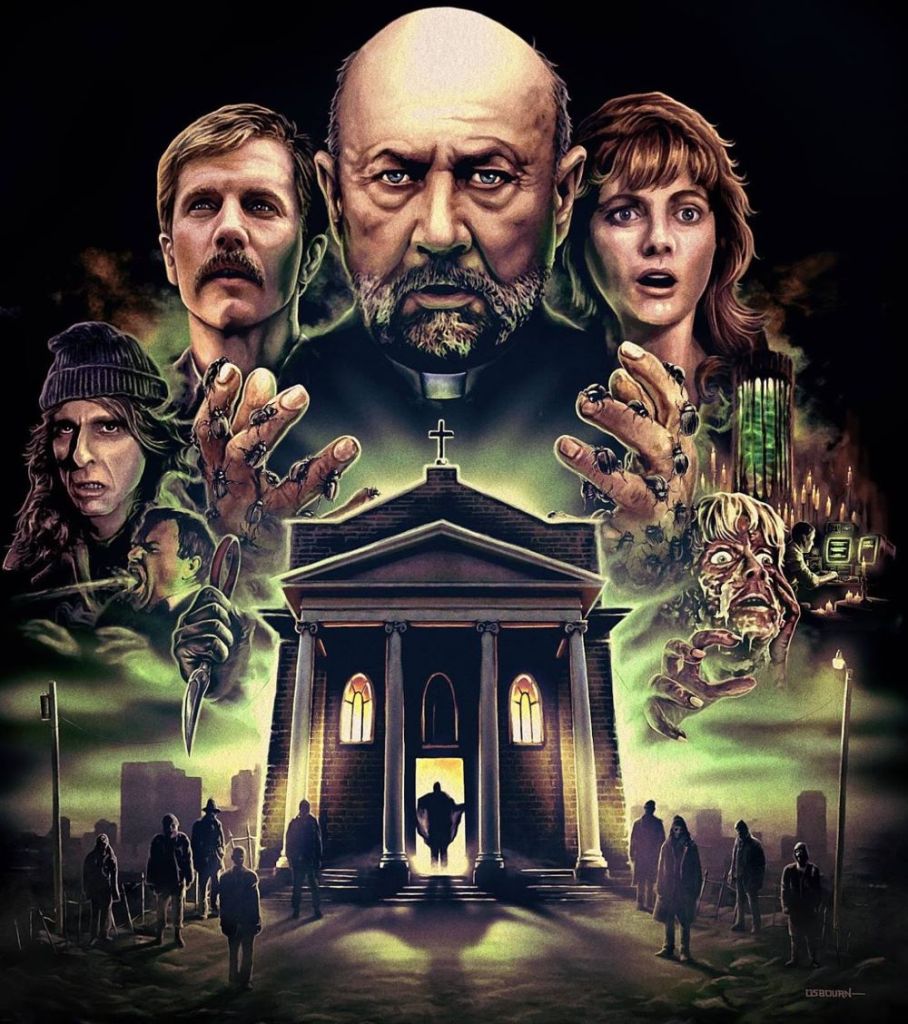
Horror Review: Prince of Darkness (dir. by John Carpenter)


“Say goodbye to classical reality, because our logic collapses on the subatomic level… into ghosts and shadows.”

John Carpenter’s Prince of Darkness is a criminally underrated entry in his canon—a blend of philosophical, apocalyptic horror and supernatural mystery that’s as unsettling as it is deliberately strange. Released in 1987, the film often gets eclipsed by Carpenter classics like The Thing and In the Mouth of Madness. Even so, it stands out as a unique organic link between science-driven paranoia and cosmic horror—the sort of film that grows on you as you unravel its layers.

The setup is simple but immediately offbeat: In a derelict Los Angeles church, Father Loomis (Donald Pleasence, always at his nervous best) stumbles on a swirling green cylinder hidden away in the basement. Loneliness and age hang over Loomis as he realizes this is no mere relic but possibly the essence of absolute evil—the literal embodiment of Satan. Sensing he’s in over his head, the priest reaches out to Professor Birack (Victor Wong), a physicist whose rational mindset is quickly tested by the uncanny. Birack arrives with a diverse team of grad students and lab techs, each bringing curiosity, skepticism, and just enough personality to keep things lively.

What starts as an academic investigation quickly goes off the rails. Strange, shared dreams trouble the researchers—fragmented transmissions from the future, warning of disaster in unsettling, VHS-glitch style. Meanwhile, the area outside the church transforms into a kind of urban wasteland: homeless people, gripped by an unseen force, stumble with zombie-like intent, trapping the group inside. Inside, members fall prey to unsettling phenomena, from unexplained possession to increasingly grotesque violence. There’s a sense that the evil in the cylinder isn’t content to simply stay put—and the combination of supernatural implication and scientific uncertainty gives everything a persistent, gnawing tension.

Carpenter directs the film with measured, stifling precision. His color palette—rotting yellows, bruised greens, washed-out sunlight—creates a perpetually uneasy mood. He uses slow tracking shots and carefully composed frames to ratchet up suspense, and the score (co-composed with Alan Howarth) pulses with ominous synths that buzz beneath all the dialogue, making even the film’s quieter moments feel restless and charged with threat. Compared to the gooey spectacle of The Thing, the terror in Prince of Darkness is more metaphysical—less visible monsters, more eroding reality.

Sound and image work together to keep the audience on edge: moments of unsettling silence are punctuated by visual oddities, like swarms of bugs or the warped geometry of the church’s shadows. The group’s scientific attempts to decode the evil—a jumble of quantum theory, apocalyptic Christian lore, and unsettling mathematics—do more to ramp up anxiety than offer answers. Carpenter seems to delight in ambiguity; the revelations never clarify so much as deepen the void, giving shape to a primordial kind of fear.

The film’s most iconic device is its recurring nightmare sequence, where the group—cut off from the world—witnesses a cryptic, shadowy figure emerging from the church, broadcast as a tachyon transmission from the future. It’s classic Carpenter: deeply unsettling, oddly hypnotic, and open to any number of interpretations. The blending of science fiction and theological horror feels fresh and ambitious, and it’s fair to say these sequences alone have ironically kept the film alive in horror culture discussions and remixes.

The cast, featuring Pleasence and Wong, manages the film’s shifts in tone—moving from banter about theoretical physics to genuine terror with surprising ease. The grad students are likable enough for you to root for, especially Lisa Blount and Jameson Parker, who carry the emotional brunt as things collapse. Alice Cooper’s cameo as a silent, menacing street dweller further anchors the film’s reputation for “unexpected creepy” in the best way possible.

While there are flashes of gore—possessions, injuries, even some memorable stabbings—Carpenter resists making violence the centerpiece. The real horror here is psychological: paranoia, loss of agency, and the collapse of foundational beliefs. Where The Thing was about trusting (or not trusting) your friends, Prince of Darkness is about grappling with a world where even faith and science seem powerless and interchangeable in the face of the unknown.

Thematically, this is Carpenter at his most cerebral and bleak. The notion that neither faith nor science can adequately tackle the unfathomable echoes Lovecraft, yet Carpenter grounds it all in urban decay and deadpan dialogue rather than Gothic flourish. The questions get bigger—what good is faith if truth is poisonous, and what does science matter against a force older than logic? Dialogue about quantum uncertainty and theological paradoxes isn’t there to solve anything, but to make everything less secure.

If the film has a flaw, it’s that its pacing feels deliberately patient—some might say slow. Tension accumulates gradually, and you’re invited to sit in the discomfort as the group loses sleep, loses one another, and loses touch with reality. As the stakes escalate, the line between dream and waking life shreds, leading to an ending that’s haunting, ambiguous, and deeply open-ended. There’s no neat wrap-up or cathartic victory—only trauma, unsolved terror, and a lingering sense that evil never really left, just waited.

It’s this refusal to explain or comfort that gives Prince of Darkness its lasting cult appeal. Carpenter puts cosmic pessimism front and center: knowledge itself stands as a kind of curse, and both faith and reason bend beneath the weight of mystery. Rather than offer solutions, the movie warns about the dangers of peeling back reality’s surface—a theme that’s only grown more unsettling in the years since it was made.

Watching Prince of Darkness now, the film may not fit everyone’s idea of a fun Friday-night scarefest. But if you want horror that’s slow, dense, and sticks with you, this is essential viewing. Carpenter delivers a bleak, hypnotic nightmare about what happens when explanations fail—when the universe itself seems ready to swallow us whole. Whether you’re a die-hard genre fan or someone looking for something different, Prince of Darkness is cult horror at its most unshakable—proof that the scariest stories are often those that leave their deepest secrets unexplained.

Film Review: Cars 2 (dir. by John Lasseter & Brad Lewis)


There was once a rumor that the major heads of Pixar – John Lasseter, Pete Docter, Andrew Stanton, and Lee Unkrich (I don’t count Brad Bird because he came later) were afraid to let any of their staff take on directing any of their films. With such an illustrious track record, it’s understandable. Pixar has picked up quite a reputation as being one of the few production companies one can count on to have Supposedly, they felt that the quality wouldn’t be as great.

So, I’m certain that the Pixar Heads are eating their own pie when they realize how Cars 2 turned out. It’s a fun film that the kids will adore, but it really lacks the heart that many of the other Pixar films are known for. Mind you, I’m not blasting the movie and saying it should be avoided. Not at all. It’s just that this is more of a movie for the kids and less of one for the adults. I feel that’s the problem everyone’s having with it. This is a good thing. It reminds Pixar of what they need to do to keep winning Oscars, while still being entertaining for the kids. Hopefully, because one of the head honchos made a mistake, maybe the company may consider letting some of the new kids try a hand at it.

In short, the Kid in me loved Cars 2. The Adult in me felt “Well, at least the Kid enjoyed it.” It suffers from two problems – a great story that would have been better set in the world of The Incredibles and a forced moral to the story. This may be the first Pixar film since A Bug’s Life where I haven’t teared up, this coming from someone who couldn’t make it out of the first 15 minutes of Up without tissues.

Previously on Cars, Lightning McQueen (Owen Wilson) won his very first Piston Cup after a pit stop in the small town of Radiator Springs, where he learned to slow down and relax. He also met up with Tow Mater (Larry the Cable Guy), who may not be the brightest spark plug in the engine, but means well and manages to help when he can. Now, we find that McQueen has earned a number of Piston Cups and is one of the best racers in the world. After returning to Radiator Springs, he finds himself greeted by Mater – who’s been anxiously waiting for his best friend. Mater, being who he is, can’t help but be a little overboard in his fun, which ends up getting McQueen involved in a brand new race that’s sponsored by a clean fuel magnate.

Finn McMissile (Michael Caine) and Holly Shiftwell (Emily Mortimer) are also investigating what could be a dangerous situation. While meeting with one of their American contacts (a great cameo by Bruce Campbell), the contact passes on some special information to Mater. Mater, not realizing what he’s been tagged with, is mistaken for a spy by the duo and brought into the investigation. That’s basically what Cars 2 is. It’s “Mater becomes a Spy”, and for the most part it works, but only if you really like the character. Mater is finally given his time to shine and he pulls it off well. I myself don’t mind Larry the Cable Guy, so it’s okay for me. For the grown ups, it could be a Mater overload. The kids will eat it up. The parents may actually get a little annoyed at how clueless Mater can be at times.

I have to admit that both Michael Caine and John Tuturro (Francesco Bernoulli) were two of the strongest character voices in the film. Owen Wilson’s okay, but the story really is only about him in terms of his relationship to Mater. I really didn’t care too much about Lightning this time around. We know his story, he’s grown about as much as he can in my eyes. More or less, he’s playing second or third fiddle. Seeing Caine in this made me want to watch Harry Brown again, or The Fourth Protocol. The fact that he’s also playing an Aston Martin DB5 type Vehicle is a sweet touch for me. He ’s smooth with his lines and pulls off the British Agent role pretty well. Mortimer is also relaxed in her role. Tuturro’s Bernoulli is as over the top as he was in The Big Lebowski, and he was a treat here as McQueen’s main rival. He may have had more fun than the others working on this, from the way he sounds.

Visually, Cars 2 is as beautiful as the other Pixar films, but doesn’t really seem to break that much new ground. Toyko looks nice, Paris is perfect (right down to the Ratatouille reference, if you catch it) and Italy looks sweet, but we know Pixar can do that. The 3D, however is downright magical, and I’m one who honestly believes the medium is best served with Animated films rather than filmed ones. It’s not exactly How to Train Your Dragon, but it’s still good in it’s own right.

I mentioned earlier that the story could have been better set in the world of The Incredibles. It’s an interesting spy story (the reasoning behind why what’s happening was funny in the sense of cars and the like), but the idea that cars are actually doing all of this action kind of pulls away from the story. At least, the adult in me comes off with this thought. For kids, it’s cars doing cool stuff, and I doubt it’ll come across as boring. The other problem is that the moral of the story – accepting your friends for who they are, despite their quirks (because we all have them) – feels a little forced. It’s like someone concentrated so hard on trying to do it that when it does occur, you go..”Okay, I get it.”, But I didn’t walk away feeling anything. Ratatouille’s Remy had a passion for cooking, one so great that he even made the most wicked food critic believe that “Anyone Can Cook”. In Up, Carl Fredricksen learned to let go of what he was holding on to and found new adventures. Mater undergoes a change, but it isn’t quite a big or a substantial. Actually it doesn’t even last long. It’s just clean fun.

Overall, looking at Cars 2, it’s not the greatest Pixar film they’ve done – far, far from it, but it’s a kid’s film. It’s quite enjoyable, but it sacrifices heart for action, something that Kung Fu Panda 2 managed to hold onto this year. Your kids will love it and you’ll enjoy that they’ll love it, but just don’t bring any tissues. They’re not necessary. You really wont find your heartstrings pulled here too much.

6 Trailers To Go On The Road With


This weekend, I’m busy getting ready to go on a road trip with Jeff.  I’ll be away from home for two whole weeks!  However, fear not!  With the help of WordPress and my wonderful, beautiful older sister Erin, I will still be updating and posting even while we’re on the road.  I might even be able to convince my fellow Shattered Lens writer to spend the next two weeks watching the Lifetime Movie Channel and posting “What Lisa Would Have Watched Last Night.”  How about it, guys? *wink wink*

Anyway, while I deal with shopping and packing, why not enjoy the latest entry of Lisa Marie’s Favorite Grindhouse And Exploitation Trailers.

(And by the way, just because I’m going to be out of town next weekend won’t stop me from posting six more trailers next Saturday.  Why?  Because I love you, silly!)

1) The Klansman (1974)

In this infamous little film from the 1970s, Richard Burton, Lee Marvin, and O.J. Simpson fight the Ku Klux Klan in Alabama.  Believe it or not, I’ve actually seen this movie though the copy I saw was one of those public domain DVDs that I think was actually a copy of the edited-for-TV version of this movie.  (I say that because every time someone cursed, there was an awkward silence on the soundtrack.)  Even more odd is the fact that I’ve actually read the old novel that this movie is based on.  Anyway, this movie is pretty bad but the book is okay.  The film was directed by the same guy who directed the first James Bond films.

2) Beyond the Door (1975)

Okay, so this is pretty obviously an Exorcist rip-off but wow, this trailer freaks me out.  Needless to say this is an Italian film.  My favorite part of the trailer, to be honest, is the use of the Ryder truck.  It’s a moment that epitomizes Italian exploitation in that you can tell that the filmmakers really thought that displaying the one word — “Ryder” — would convince viewers that they were watching an American-made film.

3) 2020 Texas Gladiators (1985)

Speaking of Italian exploitation cinema, here we have another example.  I pretty much had to include this trailer because I live in Dallas and 2020 is just 9 years away.  That said, I’m not sure what part of Texas this film is supposed to be taking place in.  I’m guessing by all the shots of boots marching through grass that this is supposed to be up in North Texas but if you can find mountains like that around here then you’ve got far better eyesight than I do.  Add to that, the sudden indian attack seems more like an Oklahoma thing.  Not surprisingly, according to Amazon, this film was not only directed by Joe D’Amato but features both George Eastman and Al Cliver.

4) 1990: The Bronx Warriors (1982)

Apparently, it didn’t start in Texas.  This is also an Italian film.  It was directed by Enzo Castellari and, not surprisingly, George Eastman is in this one as well.

5) Empire of the Ants (1977)

The is the trailer that  dares to ask — who are you going to listen to?  Common sense or H.G. Wells?  I’ll tell you, nothing freaks me out more than when I see  one of those ant lines carrying a dead cricket back to the anthill.  Ants are one thing that I will not allow in the house.  However, I kinda admire them.  They’re so neat and organized.  Plus, males in ant society know their place.

6) Mr. Billion (1977)

“20th Century Fox presents Mr. Billion …. starring Terence Hill, the 5th biggest star in the  world…”  I haven’t seen very many Terence Hill films but I always enjoy seeing him in trailers.  I can’t really say whether he’s a good actor or not because every time I’ve seen him, he’s been dubbed.  But he definitely had a very likable presence.  You wanted him to be a good actor whether he was or wasn’t.  That said, even if I had been alive at the height of Mr. Hill’s fame, it never would have worked out for us as I’m Southern Italian and Hill is quite clearly from the north.  That’s just the way it is.  Anyway, back to Mr. Billion — I’m including two trailers for this one.  The first is the “Prestige” trailer.  The second one is much shorter and features one of those odd little songs that gets stuck in your head.

A Quickie With Lisa Marie: Green Lantern (dir. by Martin Campbell)


So, earlier tonight, I was sitting in a dark theater watching the latest super hero film, Green Lantern.  Now, Green Lantern is getting some terrible reviews right now and having seen it, I can understand why.  That said, Green Lantern is not an offensively terrible movie in the way that Priest, The Beaver, or The Conspirator were terrible films.  Instead, Green Lantern’s main problem is that it’s just so freaking forgettable.  To be honest, I found myself forgetting about it while I was watching it.  So, this isn’t going to be an easy review to write.

(This is also why this is a quickie review.  I mean, I’ll make some noise for a few minutes and I’ll try to come up with something halfway neat for the end of it but don’t ask me if I really felt anything.)

Since I realized I was forgetting about the movie even as I was watching it, I decided to use social media to help me out.  Blatantly ignoring the rules (but that’s why you love me, baby), I spent most of the film texting and tweeting.  I’m pretty sure I heard the people sitting behind me whining about it but who cares?  I did what I had to do.

Anyway, checking my texts, I find the following conversation:

Text from LMB (that’s me) to ENB (that’s my sister, Erin): Hey bitch where you at?

ENB to LMB: WTF, bitch?  I’m sitting next to you in the theater.

LMB to ENB: Hi, Erin!  lol. : )

Okay, so that’s not much help but it does tell you just how engaging this film is.  I had the choice of either watching Green Lantern or sending text messages to my sister who was sitting right next to me and I chose to send text messages.

I also resorted to posting a few cryptic messages to twitter, with the hope that they would serve to remind  me of what I was watching.  Here they are:

Tweet #1: About to see Green Lantern. : ) — See, I didn’t start this film out with a bad attitude.  I was looking forward to it.

Tweet #2: Old ppl always take forever buying tickets — What’s up with that?  I would think they would be in a hurry seeing as how they’ve got less time to see a movie than I do.  Just saying.

Tweet #3: We need a super hero named Red Herring — I sent this tweet just 15 minutes into the film but it shows that I had already picked up on the main problem with this film.  There’s a lot going on but it all feels like it’s just been spit out by some script-o-matic sitting hidden behind the Hollywood sign.  It just doesn’t ever really add up to anything beyond a sinking feeling of been there, done that. 

Ryan Reynolds is haunted by flashbacks of his father dying.  Why?  Because Scriptwriting 101 says that the hero has to have some sort of self-doubt to overcome. 

When we first see Ryan Reynolds, he’s lying in bed with a naked blonde.  Who is she?  What happens to her?  Why does Reynolds, at no other point in the film, seem to be the type who would have a one night stand with some anonymous blonde?

Reynolds joins the Green Lantern Corp. when he gets a glowing green ring.  All the other members of the Corp. doubt him because he’s human but then they say that the ring never makes a mistake.  Okay, so if the ring is incapable of making a mistake and the ring chose Reynolds than why is everyone so convinced that Reynolds can’t cut it as the Green Lantern?

Seriously, it’s as if someone just wrote out a list of plot points and some anonymous script doctor just went down the list, checking off everything as he tossed it into the mix.

Plus, I think Red Herring would be a cool super hero.  He could have the power of creating mass distraction and he could be the sidekick of my super heroine alter ego, Lady Verbose.

Tweet #4: Lol, cockpit is a funny word — I believe the exact line that inspired this tweet was something like: “And I still get into a cockpit occasionally.”  It just made me laugh because cockpit is a funny word, largely because it’s a combination of cock and pit.  Anyway, that is honestly the only line of dialogue that I actually remember from the film.  As action and comic book movies tend to live and die on the basis of the quotable one-liner, that’s not a good sign.

Tweet #5: Green Lantern kinda bleh but Ryan Reynolds is mancandy — And you know what?  He is.  Green Lantern may have been forgettable but Ryan Reynolds made a likable hero and he brought some much-needed humor to the role.  To be honest, as I look back at the various Green super hero movies, I can’t help but wonder how much better Green Hornet would have been if it had starred Ryan Reynolds as opposed to Seth Rogen.  (I love you, Seth, but the super hero thing just isn’t for you.)

Also, Peter Sarsgaard did a pretty good job playing a surprisingly sympathetic villain.  Both he and Reynolds deserved a better film. 

Other than Sarsgaard and Reynolds, the cast was pretty forgettable but then again, it’s not like they really had much to work with.  I have to be honest, though, that I am now officially bored with Tim Robbins.  He shows up here playing yet another insensitive rich white guy.  As usual, you don’t really buy him as the character because he’s just too obviously Tim Robbins.

Tweet 6: Lets not go to Camelot. Its a silly place. — I think this was inspired by all the scenes that were set on the home planet of the Green Lantern Corps.  (That’s the group that Reynolds becomes a member of.)  These scenes were obviously meant to inspire awe but they just felt silly.  In the film’s defense, some of the special effects — particularly the evil entity known as Parallax — are impressive but, for almost every impressive special effect, there was another that just fell flat (which is never a good thing for a 3-D film).

Tweet #7: Sinestro is a silly name. — Sinestro, played by Mark Strong, is the leader of the Green Lantern Corp.  And Sinestro is a really silly name.

Tweet #8: Why not just call him Eviltro? — Well, why not?

Scenes I Love: The Montage from The Parallax View


In Alan J. Pakula’s 1974 film The Parallax View, Warren Beatty plays a seedy journalist who goes undercover to investigate the links between the mysterious Parallax Corporation and a series of recent political assassinations.  The film is a masterpiece of a paranoia, the type of film that makes you want to check under your bed for listening devices before you go to sleep in the morning.  In the film’s most famous sequence, Beatty — pretending to be a job applicant (read: potential assassin) for the Parallax Corporation — is shown an orientation film that has been designed to test whether or not he’s a suitable applicant.  This film turns out to be a nightmarish montage of rage, insecurity, fear, Oedipal psychosis, and — oddly enough — comic book super heroes.  The montage is shown in its entirety, without once cutting away to show us Beatty’s reaction.  The implication, of course, is that what’s important isn’t how Beatty reacts to the film but how the viewers sitting out in the audience react.

So, at the risk of furthering the conspiracy, here’s that montage.

(By the way, Oswald acted alone.)

Review: La Horde (dir. by Benjamin Rocher and Yannick Dahan)


“When the dead come for you, there’s no place left to run.”

Most zombie films tend to be average at best, often falling into outright mediocrity. Because this subgenre is relatively easy to create, many aspiring filmmakers believe they can produce the next standout hit with just an HD camera, a modest budget, and a cast drawn from friends and family. Naturally, this formula has led most zombie movies to occupy the low end of the horror genre in terms of quality. However, every so often, a truly exceptional film emerges. Edgar Wright’s Shaun of the Dead became an instant classic by blending horror with comedy, and Zack Snyder’s remake of Romero’s Dawn of the Dead delivered intense, action-packed thrills.

The 2009 French horror film La Horde—directed by Benjamin Rocher and Yannick Dahan—leans toward Snyder’s style. It strips away societal commentary, opting instead for raw action and relentless gore. This might suggest a mindless movie, but La Horde proves to be as engaging and nihilistic as Snyder’s film, perhaps even more so by its conclusion.

The directors spare no time on exposition, diving straight into the plot. The story follows a group of French police officers—most likely narcotics agents—who plan to take revenge on a Nigerian crime lord responsible for killing one of their own. Their chosen battlefield is a dilapidated high-rise apartment complex in a crime-infested district of Paris. However, their operation quickly unravels when the ambush goes disastrously wrong. What begins as a gritty crime thriller transforms abruptly into an apocalyptic battle for survival, as the police and rival gang members are forced to join forces against a sudden zombie outbreak sweeping through Paris and possibly beyond.

Once the zombies arrive, the film shifts into high gear. The action and gore come fast and furious, skillfully choreographed and unflinching. Secondary characters are swiftly dispatched, leaving only the most capable to fight their way through a tenement overrun by fast, aggressive zombies akin to those in Snyder’s Dawn of the Dead or Boyle’s 28 Days Later. Though some purists might balk at sprinting zombies, they fit perfectly with the film’s frantic pace. Notably, the film does not attempt to explain the outbreak’s origin, leaving audiences as disoriented as the characters, glimpsing only fragmented news reports for context.

The remainder of the film is an intense descent through the building, with the survivors battling floor by floor in search of an exit and safety at a nearby military base. Choosing characters familiar with violence—cops, criminals, and a hardened local survivor—grounds their fierce will to survive in realism. Even the lone resident they encounter brings useful skills born from a violent past.

While La Horde does not offer complex character development, its finely tuned action scenes keep the audience fully engaged, masking the story’s simplicity. By the film’s end, viewers are likely to forgive any flaws, having been thoroughly entertained. A few characters, such as the composed officer Oussme (Jean-Pierre Martins) and the crime lord Markudi (Eriq Ebouaney), achieve extra depth, but most are archetypes serving the survival narrative. Still, this works well given the film’s focus on high-stakes survival.

Though La Horde never secured a major U.S. release, it gained attention on the international genre festival circuit starting in 2010. While it may primarily appeal to zombie and horror aficionados, it also offers plenty for action fans. Its brutal, relentless energy earns it a strong recommendation as an exhilarating experience from start to finish.

A Spawn of 6 More Trailers


It’s Saturday and that can only mean that it’s time for 6 more deadly trailers in this latest edition of Lisa Marie’s Favorite Grindhouse and Exploitation Trailers.

1) Liz (197?)

Oh my God, I cannot begin to put into words how much I love this trailer.  It is just so shameless and obvious in its intentions and it typifies everything I love about grindhouse advertising.  I’ve never seen Liz or, to be honest, even heard of it before I came across this trailer.  However, just from watching the trailer, I get the feeling about a woman named Liz who has sex.

(By the way, did you know that the name Lisa originally started as a shortened version of the name Elizabeth?  So, this is yet another film that appears to be named after me.  I’m not saying that’s necessarily a good thing since it appears to be about a self-destructive nymphomaniac — yes, yes, I know — but I’m just saying.)

2) God Told Me To (1976)

Directed by Larry Cohen, God Told Me To is one of the best sci-fi/horror/urban thriller hybrids of all time.  Unfortunately, I don’t think this trailer quite does it justice but I’m including it here because this is a rare case where I love the movie more than the trailer.

3) Vigilante Force (1976)

“They were hired to clean up the town … instead, they cleaned it out!”  Actually, I take that back, my favorite line from this trailer is the one about “loving not wisely…but very well indeed.”

4) Mean Johnny Barrows (1976)

This is yet another 1970s Fred Williamson blaxploitation film.  This one not only features Williamson killing a lot of people but Roddy McDowall and Elliot Gould as well!

5) Blastfighter (1985)

From director Lamberto Bava comes this love story between a man and his gun.

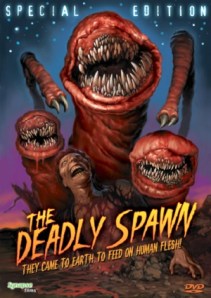
6) The Deadly Spawn (1983)

I actually really love this trailer.  It’s got this likable “We got together one weekend and made a cheap sci-fi film” sort of vibe to it.


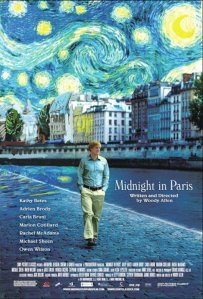
Film Review: Midnight in Paris (dir. by Woody Allen)


Woody Allen’s latest film, Midnight in Paris, has an appealing premise behind it. 

Gil (Owen Wilson) is a Hollywood screenwriter who has come to Paris with his shallow fiancée Inez (Rachel McAdams) and her stuffy Republican parents (played by Kurt Fuller and Mimi Kennedy).  Disillusioned with American culture, Gil idealizes the Paris of the 1920s, the Paris that was home to Ernest Hemingway, F. Scott Fitzgerald, and James Joyce.  However, Inez and her parents are far less impressed with Paris and, as quickly become clear, with Gil himself.  While Inez spends her time with self-important “intellectual” Paul (a bearded Michael Sheen), Gil takes to wandering the streets of Paris at night.

One night, as Gil wanders around Paris, a vintage car approaches out of the shadows and the two well-dressed passengers in the back seat invite Gil to join them.  Gil does so and discovers that he’s been transported back to 1920s Paris.  He meets everyone from Hemingway (Corey Stoll) to Salvador Dali (Adrien Brody) to F. Scott and Zelda Fitzgerald (Tom Hiddleston and Alison Pill).  At the end of the night, Gil finds himself transported back to modern-day Paris.  Soon, Gil finds himself sneaking out at midnight every night so he can escape to the past, where he eventually meets and starts to romance an idealistic model named Adrianna (Marion Cotillard).  While Gil finds himself torn between his modern life and the past that he loves, he also begins to discover that the inhabitants of the 20s feel the same way about their present as he does about his.

The premise of the film itself is likable and one that I think anyone can relate to.  Who doesn’t wish that they could go back in the past and live with all the amazing people who they’ve only read about?  Myself, there are many eras that I often fantasize about finding myself in.  1920s Paris is definitely one of them but I’ve also occasionally dreamed of being in 1950s New York, having a threesome with Kerouac and Cassady or maybe being in Paris during the early days of the French new wave, appearing in movies directed by Rollin, Truffaut and Godard.  Ever since I read Peter Biskind’s Easy Riders and Raging Bulls, there’s been a part of me that wishes so much I could have been out in Hollywood or New York in the 1970s, hanging out on the beach with directors like Martin Scorsese, William Freidkin, Jon Milius, and even Peter Bogdonavich.  (But especially Freidkin, his terrible charisma just radiates from the page.) 

Still, Allen is smart enough as a screenwriter to know that everyone tends to idealizes the past, even those who we now idealize in the present.  Perhaps my favorite part of the film came when Wilson, while in the 1920s, sees a character getting into a horse-drawn carriage so that she can go back to the time that she idealizes as fiercely as he idealizes the 20s.

Midnight in Paris has a lot to recommend it.  Cotillard, despite the fact that she’s played the same idealized French mystery woman about a thousand times, gives a likeable performance and Rachel McAdams is hilariously shallow.  Michael Sheen, as well, makes a perfect stand-in for every pompous, self-important jerk who has ever talked down to you.  On the basis of his cameo appearance here as Dali, Adrien Brody really needs to consider doing more comedy.  He’s a lot more appealing when he’s being funny than when he’s trying to be a leading man.

At the same time, I have to admit that I wanted to like Midnight in Paris more than I actually did.  I like Owen Wilson as both an actor and a writer but he’s a little bit miscast here and the end result is that he occasionally seems like he’s trying too hard.  You just never buy him and McAdams as a couple and, as such, there’s really not much at stake as far as his romance with Cotillard is concerned. 

As well, I found it hard not to be a little bit disappointed with the way Allen presented 1920s Paris.  Though they were all well-cast and acted, Hemingway, the Fitzgeralds, Gertrude Stein (Kathy Bates), and all the rest just fell flat as actual characters.  Gil gets a chance to go into the past and essentially, he discovers that Hemingway was macho, the Fitzgeralds were neurotic and self-destructive, and that Dali didn’t make much sense.  Personally, I would be a bit let down if I got a chance to meet these icons and I discovered that essentially they just acted the exact same way that they acted in various PBS educational programs.

Despite this, Midnight in Paris is still a likable, frequently engaging comedy that works best as a tribute to a legendary and beautiful city that Allen (not to mention myself) obviously loves.  Flaws and all, this movie made me want to visit Paris once again (though Florence and Venice remains my favorite cities of all time) and, for that reason alone, it makes Midnight in Paris a film worth seeing.

Review: Super 8 (dir. by J.J. Abrams)


The 1980’s was a special time in my life. It was another phase in my development in loving film. That decade saw many films starring kids and teens in coming-of-age tales both comedic, thrilling, dramatic and poignant. While there were many filmmakers who delved into this genre it was Steve Spielberg who mined it to great effect culminating in his classic boy-meets-alien film, E.T.: The Extra-Terrestrial. It’s been almost 30 years since the release of that film and now comes a filmmaker who seem to have grown up idolizing and loving Spielberg films of that era. The year is now 2011 and J.J. Abrams is that filmmaker who dared to pay homage to those very same coming-of-age Spielberg films of the 80’s with his very own simply titled Super 8.

From the very moment the film begins there’s a sense of wonderment as we, the audience, meet young kids who become the central characters of Super 8. The film takes place in the early days of 1979 in the town of Lillian, Ohio as Joe Lamb (Joel Courtney) tries to cope with the death of his mother. His friends keep him busy and dwelling on this tragedy through the Super 8 film they’re making in their spare time after school. These early scenes we begin to see the dynamics of the group as Joe acts as the calming influence on the group’s filmmaker, Charles (Riley Griffiths), the neurotic actor in Martin (Gabriel Basso) and the group’s stuntman/special effects tech in Carey (Ryan Lee). They all meet up at an old train depot where they plan to shoot scenes for their Super 8 zombie film. Into this eclectic group of kids comes in Alice (Elle Fanning) to play the wife to Martin’s detective character in their film.

It’s the scenes between the kids which lifts Super 8 from just being a nostalgic film to one that’s charming and magical. These scenes captures the creativity and youthful energy kids have always had no matter the era and place. These kids don’t act like stereotypes of what Hollywood thinks kids in films should act. There’s still little of the cynical teen dialogue that films nowadays give kids to say to make them seem more mature and worldly. There’s a sense of innocence in how these kids interact with each other. Some have called these scenes as being too on-the-nose nostalgic of Spielberg films of the 80’s. What some might call nostalgic I prefer to call as timeless. I still remember myself behaving with my childhood friends the way these kids did in this film

If Super 8 had just been about these group of kids trying to finish their Super 8 zombie film I conjunction with the dysfunction in the two main leads in Joe and Alice’s home life then Abrams film would’ve been the instant classic some have dubbed it. There’s only one problem with this and that’s the last half hour of the film and the scenes leading up to that involving the train derailment and the arrival of the U.S. Air Force to clean things up. The film begins to take on a split personality as these new elements get introduce to what has been a great coming-of-age story.

It’s these new elements and the final half hour which shows Abrams trying to combine a sweet story of kids and their lives growing up in small-town with an otherworldy and conspiracy tale that seem to come out of left field. By the time the final act of Super 8 arrives it becomes a different film altogether and the transition doesn’t work as well as the filmmakers might have hoped it would. Sure, this final reel has the thrills, explosions and danger, but the tonal shift in the story became so jarring that I had wished that Abrams just made two films instead of one. One film being the coming-of-age story and the other a thrilling sci-fi film.

Despite this I still enjoyed the film and I definitely loved the first two-thirds. The performances by Joel Courtney and Elle Fanning as Joe and Alice became the focal point for the story’s emotional foundation. Elle Fanning’s performance as Alice was one of the best things about Super 8. She nails every scene where she has to show extreme ranges of emotions but at the same time not try to oversell them. There’s a scene in the middle of the film where she begins to recount a personal detail as Joe sits behind her listening. Emotions begin to overwhelm her, but as kids moving towards teenhood are wont to do she tries to hold back the tears just waiting to flow freely and the sobs wanting to escapes. I wouldn’t be surprised if this scene alone had more than a couple people in the audience remembering similar events in their lives and just sobbing along with Alice.

Super 8 has been advertised as this mysterious film that may or may not have aliens but does pay homage to Spielberg and kid films of the 80’s. Abrams’ film definitely delivers on the thrills in the end, but it could’ve been so much more if it just stayed on course with just being about the kids and their magical time together making an amateur Super 8 zombie film in 1979. That would’ve been a film that deserved labels of instant classic.

All in all, Super 8 comes across as one of the more entertaining and magical films of the summer of 2011 if not the entire year. Make sure to stick around as the end credits roll to see the fruits of the kids labor titled simply as “The Case”.