Since I previously “presented” our readers with The Cabinet of Dr. Caligari, it’s only appropriate to now present another early horror film — F.W. Murnau’s classic silent vampire film, Nosferatu. Much like Dr. Caligari, Nosferatu requires a bit of patience from modern audiences that take intrusive sound and CGI as a given. And much like Dr. Caligari, Nosferatu rewards the patience. Everything from Murnau’s moody use of shadow to Max Schreck’s performance as Orlock adds up to create one of the most influential and iconic films of all time. And while the film itself might not feature the “jump out your seat scares” that modern audiences expect (and demand) from horror films, the image of Schreck’s creeping shadow remains effectively creepy and nightmarish. Like all great horror, this is a film full of images that stick with you after you view it.
I am also very aware of both Werner Herzog’s excellent 1980 remake and the Oscar-nominated Shadow of the Vampire. However, I’m kinda typing all this up at work so those two films will have to wait for a later date. For now, if you have 84 minutes to kill and seriously, who doesn’t?, please enjoy F.W. Murnau’s classic Nosferatu…
It’s late at night. A woman wakes up from a terrible nightmare and finds herself in a shadowy, white-walled hospital room. She gets out of bed and walks over to the window. Standing outside, staring up at her, is a lone figure in blood-stained surgical scrubs. The figure’s eyes glow red as he says, “Around here, I’m the head surgeon.”
And then he tosses some poor orderly’s decapitated head up at the window.
If you enjoy the type of silly but effective creepiness that is epitomized by this scene, than 1989’s The Dead Pitmight just be the film for you.
In The Dead Pit, Cheryl Lawson plays Jane Doe. As you might guess from her name, Jane isn’t quite sure who she really is or how she came to lose her memory. All she knows for sure is that she’s been checked into a disturbingly sterile hospital. At night, she’s haunted by nightmares in which she’s stalked by a menacing figure wearing a doctor’s mask and during the day, she has to deal with the occasional earthquake and the fact that she occasionally starts to speak in a vaguely possessed voice that freaks out the head psychiatrist (Jeremy Slate). Could it have anything to do with the fact that one of her fellow patients is an ex-nun who is obsessed with sprinkling holy water over everything? Or could it possibly be related to the fact that many years ago, her psychiatrist murdered Dr. Ramzi (Danny Gochnauer) when he discovered that Ramzi was actually a serial killer who murdered countless patients? Then again, it could just be related to the fact that there’s apparently a hundred freaking zombies just wandering around the hospital…
If The Dead Pit sounds like it’s kinda silly and a little bit campy … well, it is. However, it’s also a lot of fun, the type of unapologetically trashy horror film that makes for perfect Halloween viewing. Director Brett Leonard makes good use of what appears to be a very small budget. The film was apparently shot on the grounds of an actual mental hospital and, through the use of inventive lighting and a constantly tracking camera, Leonard makes good use of the locale’s inherent creepiness. This is yet another film that works far better than you might expect, simply because the director understood just how scary it can be to feel isolated.
Just from doing a quick google search, I can also say that apparently, this film — and, specifically, Cheryl Lawson’s lead performance in this film — has a lot of fans on the Internet. I can understand that because Lawson’s likable, she’s believable when she’s both scared and possessed, and she screams with panache. She makes this film effective because she takes the material seriously and has enough respect for the audience to actually give a good performance and that makes it impossible not to 1) identify with her and 2) hope that she makes it through the film in one piece. Even when Lawson is having to scream for her life, she never allows Jane Doe to come across as weak. Speaking as a girl who loves horror films but hates to always see women having to act like simple-minded victims, I found Lawson’s performance to be almost empowering and I’m sure that’s why so many of The Dead Pit’s fans love this movie.
Of course, Cheryl Lawson also spends almost the entire movie running around in her panties and a t-shirt. I guess that also could possibly have something to do with the film’s popularity…
Okay, I guess that is a more likely explanation. However, in all honesty, if I was in a horror movie, I would totally want to be the girl who spends the whole movie running around in her underwear. I mean, yes, I know that it’s the good girls who always survive until the end but seriously who wants to be a good girl in a horror movie? The good girls are boring and usually end up forgotten by the time the sequel comes out. The bad girls are the ones that everyone remembers.
But, regardless of the main reason why you personally might enjoy it, the Dead Pit is a fun movie that’s a great pick if you’re like me and you often find yourself simply looking for something to watch at 2 in the morning.
I’m currently working on several reviews for horror month here at the Shattered Lens but tonight, rather than just review a film, I want to share one with you. Released in 1920, the German film The Cabinet of Dr. Caligari is one of those films that we’ve all heard about but far too few of us have actually seen. Like most silent films, it requires some patience and a willingess to adapt to the narrative convictions of an earlier time. However, for those of us who love horror cinema, The Cabinet of Dr. Caligari remains required viewing. Not only did it introduce the concept of the twist ending (M. Night Shyamalan owes his career to this film) but it also helped to introduce German expressionism to the cinematic world.
My initial reaction to The Cabinet of Dr. Caligari was that it simply wasn’t that scary. It was certainly interesting to watch and I was happy that I was finally experiencing this film that I had previously only read about. However, the film itself was obviously primitive and it was difficult for my mind (which takes CGI for granted) to adjust to watching a silent film. I didn’t regret watching the film but I’d be lying (much like a first-year film student) if I said that I truly appreciated it after my first viewing.
But you know what? Despite my dismissive initial reaction, the film stayed with me. Whereas most modern films fade from the memory about 30 minutes after the end credits, The Cabinet of Dr. Caligari has stuck with me and the night after I watched it, I even had a nightmare in which Dr. Caligari was trying to break into my apartment. Yes, Dr. Caligari looked a little bit silly staring through my bedroom window but it still caused me to wake up with my heart about to explode out of my chest.
In short, The Cabinet of Dr. Caligari passes the most important test that a horror film can pass. It sticks with you even after it’s over.
For the curious who have 50 minutes to spare and an open mind to watch with, here is Robert Wiene’s The Cabinet of Dr. Caligari…
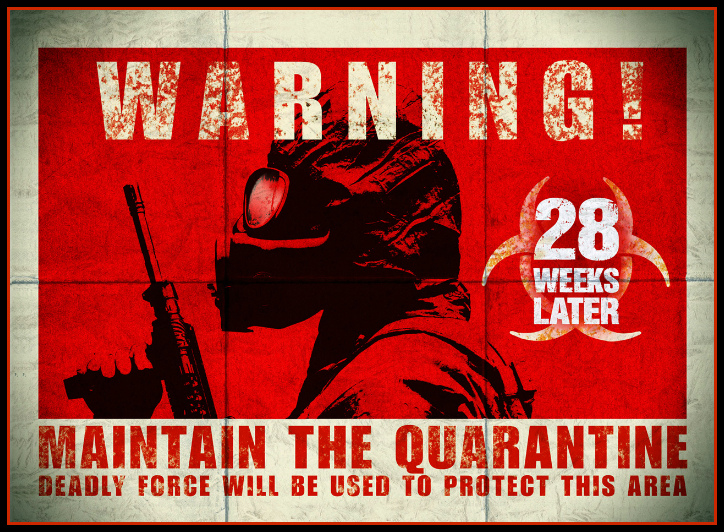
Danny Boyle and Alex Garland’s 28 Days Later was made in such a way that any sequel was almost destined to struggle in its shadow. Their film was not only one of the most influential horror films of the early 2000s, but also an exercise in experimental filmmaking and cinematic reinvention. It fused realism and terror through its digital photography, unconventional pacing, and minimalist score. Any follow-up would have to contend not just with its fresh twist on the zombie mythos (despite the infected not technically being zombies) but also its unique atmosphere, music, and stripped-down aesthetic. Against those odds, 28 Weeks Later manages to stand as an impressive and worthy successor—one that in some respects even surpasses the original.
Spanish director Juan Carlos Fresnadillo approaches the material with a clear reverence for Boyle and Garland’s vision while imprinting his own stylistic and emotional signature on the sequel. From the very first scene, Fresnadillo establishes a tone that blends despair and dread with human frailty. The film opens on a stunningly tense prologue in which Don (a gaunt and haunted Robert Carlyle) and Alice (Catherine McCormack) are living with several others in a rural cottage outside London during the first weeks of the Rage virus outbreak. In this sequence, Fresnadillo distills the central moral dilemma that runs through both films: whether to preserve one’s humanity through compassion or to surrender to pure survival instinct. When Don is forced to choose between rescuing his wife and saving himself, his decision—while horrifying to watch—feels horribly plausible. The following chase through open fields as he flees dozens of Rage-infected attackers captures the raw panic that made Boyle’s original so memorable, yet Fresnadillo shoots it with a sharper sense of chaos and movement. It sets the tone for a story that is both intimate in its human tragedy and apocalyptic in its reach.
Following this intense opening, the film transitions through an introductory credits montage that fills in the aftermath. Don’s escape was not the end of the story but the beginning of a grim reconstruction effort. The British Isles, we are told, were swiftly quarantined when it became clear the infection could not be contained. Twenty-eight weeks later, with the infected population presumed dead from starvation, a U.S.-led NATO force spearheads an ambitious effort to repopulate and rebuild. Led by General Stone (played with austere calm by Idris Elba), the military has converted London’s Isle of Dogs into a heavily fortified safe zone. This enclave represents both restoration and repression—a fragile bubble of civilization built atop the bones of horror.
Within this environment lives Don, now employed as a maintenance manager and struggling to suppress the guilt from his past. The arrival of his two children, Tammy (Imogen Poots) and Andy (Mackintosh Muggleton), who were abroad in Spain during the initial outbreak, reopens emotional wounds he had hoped were sealed. Their reunion, though heartfelt, carries an undercurrent of deception. Don’s explanation of their mother’s fate does not align with what the audience has already witnessed. This dishonesty propels the children into dangerous territory when they decide to sneak out of the Green Zone to retrieve personal belongings from their old cottage. While this act of recklessness fits with youthful impulses and emotional longing, it also feels like the film’s only contrived lapse in logic—an inevitable but frustrating horror trope that sets off the story’s next catastrophe.
What the children discover at the cottage reintroduces the virus in a shocking way. Without realizing it, they bring the Rage infection back into the supposedly secure refuge of London. As soon as containment is broken, the military response escalates with brutal efficiency. General Stone declares a “Code Red,” authorizing the use of extreme measures to eradicate the infected—including indiscriminate firebombing of civilian areas. These scenes echo not only classic apocalyptic tropes but also resonate as a grim reflection of post-9/11 militarism. Many viewers and critics interpreted this act of mass destruction as allegory for the United States’ War on Terror and the ethical corruption of occupation forces. Fresnadillo’s direction, while hinting at this reading, avoids heavy-handed political critique. His portrayal of military overreaction feels less ideological than tragic—a manifestation of fear, confusion, and the blunt-force nature of institutional power. The armed forces are not villains so much as desperate men trapped in an impossible moral quagmire. As in George A. Romero’s The Crazies, which 28 Weeks Later strongly recalls, the destructive consequences stem not from malice but from the futility of trying to maintain order amid chaos.
Where 28 Days Later focused on a small group of survivors and the intimate erosion of morality under crisis, 28 Weeks Later expands the scale dramatically. Fresnadillo transforms Boyle’s compact nightmare into a large-scale urban apocalypse. The sweeping aerial shots of a deserted London—bridges empty, streets silent—hammer home the desolation. When the city is engulfed in flames and gas clouds during the firebombing sequence, the imagery becomes both terrifying and grimly beautiful, a vision of civilization consuming itself. The sequel’s tone is darker and more nihilistic than Boyle’s film, which allowed a trace of optimism in its ending. Here, even innocence becomes a catalyst for doom: it is the children’s actions, driven by love and loss, that inadvertently reignite the infection and condemn the survivors to another wave of horror. This subversion of the “innocent child” trope underscores Fresnadillo’s bleak worldview—where sentiment and humanity, however noble, can still create destruction.
In several ways, 28 Weeks Later aligns more closely with Romero’s Living Dead films than with Boyle’s original. Though Boyle borrowed some of Romero’s thematic DNA, Fresnadillo fully embraces it. The infected may not be reanimated corpses, but the societal collapse, moral ambiguity, and recurring cycles of violence all trace back to Romero’s legacy. One of the sequel’s most striking qualities is its unflinching pessimism: even individuals acting out of love or duty become agents of devastation. The so-called survivors are reduced to primal instincts—running, hiding, killing—in a landscape where institutional power and human decency dissolve together. Fresnadillo makes the action kinetic without glamorizing it. His camera work, switching between chaotic handheld intensity and precise, panoramic destruction, keeps the viewer off balance, mirroring the unpredictability of the apocalypse itself.
The performances elevate the material beyond genre expectations. Robert Carlyle’s portrayal of Don is both gut-wrenching and terrifying. His character’s transformation—from remorseful father to infected embodiment of pure rage—serves as the film’s emotional and thematic anchor. Imogen Poots, in an early standout role, conveys resilience and vulnerability in equal measure, while Jeremy Renner delivers a strong supporting turn as Sergeant Doyle, the soldier torn between obedience and morality. Their performances, though sometimes confined within the film’s relentless pace, enrich its exploration of guilt, loyalty, and the futility of control.
Despite sacrificing some character depth for momentum, the film’s taut editing and grim atmosphere sustain tension throughout. Fresnadillo’s direction never loses sight of his central message: that humanity’s efforts to rebuild are perpetually haunted by its capacity for self-destruction. Even as the few surviving characters reach supposed safety, the final scenes undermine any hope of resolution. The closing image—infected sprinting through the streets of Paris—reminds viewers that, although the city itself appears intact and bustling in daylight, the Rage virus has now breached mainland Europe. This ending shifts the scale of threat from the quarantined British Isles to the broader continent, making containment and redemption feel like dangerous illusions.
As a sequel, 28 Weeks Later earns its place alongside 28 Days Later by honoring the original’s DNA while pushing its boundaries. It retains the visceral dread and societal commentary but broadens the lens to encompass collective failure rather than individual struggle. Fresnadillo’s approach feels colder and more apocalyptic, transforming the story into a study of fear’s infectious nature—social, political, and biological. While his film might not achieve the same creative purity as Boyle’s indie landmark, it succeeds in redefining the tone, expanding the mythology, and pushing the series toward a darker, more cinematic landscape.
In the end, 28 Weeks Later is both a continuation and an escalation—a relentless, despairing study of human fragility under crisis. Its pacing, performances, and imagery combine to create an experience that’s not only horrifying but profoundly unsettling in its realism. If 28 Days Later showed us the collapse of civilization, its sequel reveals the hopeless struggle to rebuild it. Few horror sequels accomplish that much, and fewer still end with such haunting inevitability.
George Clooney’s new political film The Ides of March opened last Friday and so far it appears to have mostly gotten positive reviews that are more respectful than enthusiastic. Well, I saw The Ides of March on Tuesday evening and all I can say is “Don’t believe everything you hear.” That should be a given but it’s always worth repeating. The Ides of March is a slow, ponderous, and at times completely annoying movie, a minor work dealing with major themes.
The film is based on the play Farragut North and it’s about Stephen (Ryan Gosling), a political consultant who is working on the presidential campaign of Gov. Mike Morris (George Clooney). Morris is a typical Hollywood Democratic politician in that he gives a lot of speeches attacking America’s dependence on foreign oil and he’s not ashamed to admit that he’s an atheist. Anyway, despite the fact that Morris comes across as being smug and something of a sexist, he’s the front runner for the Democratic Presidential nomination but only if he can win the Ohio primary. For all of his attempts to be as cynical as his mentor (Philip Seymour Hoffman, giving a typical Philip Seymour Hoffman performance), Stephen truly believes in Mike Morris. However, Stephen comes across some information that could potentially destroy Morris’ campaign and he soon finds himself a pawn in a game between Morris, the press (represented by Marisa Tomei, who looks terrible in this film), and the opposing campaign (managed by Paul Giamatti).
Yes, The Ides of March has a lot to say but it’s absolutely nothing you haven’t heard before and, quite frankly, it’s kind of annoying how the film seems to think that this is the first time that anyone’s ever suggested that maybe politics is a dirty business. The film’s not a total waste because there’s way too many talented people involved here for the film not to have the occasional good moment. Gosling and Clooney both give strong performances and play off each other well. They have a scene where they confront each other in a deserted kitchen and for a few brief seconds, the film actually gets interesting. Playing an emotionally unstable intern, Evan Rachel Wood shows once again that she’s one of the best actresses working today and it’s just a shame that the film treats her more like a plot device than an actual human being. At the same time, I have to say that this is the first time I’ve ever seen Paul Giamatti actually give a performance that can only be called bad. Seriously, how could the same actor who was so brilliant in Win Win be so terrible in this movie?
Ultimately though, the film fails because — once you get past all the glamour on-screen — what you have is a very predictable political film that, especially in these days of Tea Parties and Occupy Movements, feels rather quaint and forced. This is yet another one of those films where, apparently, the only way that the main character can learn a lesson is for a supporting character to commit suicide. There’s a lot of would-be cynical dialogue and Clooney manages to include references to Rush Limbaugh and the Drudge Report but ultimately, the whole film feels as false as the romantic short stories I used to write in the 8th grade.
The film’s name is obviously meant to carry hints of Shakespeare but perhaps a more honest title would have been Much Ado About Nothing.
The word zombies conjures up the flesh-eating variety popularized by George Romero’s horror films and the legion of films from others soon after. Prior to 1968’s Night of the Living Dead the word zombies was synonymous more with the gothic-like horror films which took the Haitian voodoo folklore about the recently dead being brought back to life by voodoo priests to act as mindless slaves. It’s this version of the word zombie which Wes Craven decided to explore with his 1988 film adaptation of the Wade Davis non-fiction book The Serpent and The Rainbow. Wes Craven’s film fictionalizes the ideas and treatises put forward in Davis’ book and creates a film which tries to put to light the true horror which lay behind the voodoo folklore regarding zombies.
The film introduces us to the ethnobotanist character of Dennis Alan (played by Bill Pullman) who’s approached by a major pharma-corporation about researching the scientific origins and cause of the voodoo “zombie”. He heads off to Haiti at a time when it’s going through a political upheaval that would lead to the subsequent revolution that topples the dictatorship of that country’s leader, Francois “Baby Doc” Duvalier. During his time in Haiti he investigates story of a patient named Christophe who was reported dead 8 years past but seen recently walking about in a dazed manner. It’s while trying to get a handle on how Christophe was declared dead by authorities but then “resurrected” years later which brings Alan in contact with the local witch doctors who question Alan’s motives but also ridicule him for his narrow viewpoint regarding things which science cannot answer. But through persistence he finally gets one local to assist him in procuring the so-called “zombie powder” used to bring the dead back to life.
The Serpent and The Rainbow shows the real horror about zombification when Alan’s investigations and persistence to acquire the “zombie powder” brings the attention of the country’s secret police (the Tonton Macoutes) and one of it’s leaders and reported voodoo priest in Captain Dargent Peytraud (played by Zakes Mokae in a chilling performance) who warns him repeatedly not to continue. Repeated verbal warning and threats soon become more direct and physical as Alan finds out first-hand why no one in the country dares to speak of “zombies” to an outsider and why Captain Peytraud and his Tonton Macoutes were feared as if they were agents of the evil spirits of their voodoo faith.
Craven does a very good job in taking Wade Davis’ non-fiction book and creating a thrilling and suspenseful piece of horror which suggests that the lead character of Dennis Alan has stepped into a world that was steeped not just in the realm of science but also in the supernatural. The film includes some great scenes which shows Alan experiencing some very horrific nightmares which seems indistinguishable from his waking moments and vice versa. Unlike Craven’s previous work in horror which were imbued with some dark humor but always brutal in it’s depiction of everyday horror, this film rarely goes the gory route though the scenes of torture should make even the most hardened and jaded horror aficionado to squirm in their seat.
The true horror revealed by Craven’s film is the very human figure of Captain Peytraud and his Tonton Macoutes who use the local populace’s fear of “zombification” and how Peytraud has taken advantage of these people’s voodoo beliefs to control the public and keep themselves in power. It’s horror that many recognize and understand yet heightened even more with the addition of a local religious practice that’s relatively unknown and misunderstood by outsiders (especially by those in the West). The film never truly answers the question raised in the beginning of the film of whether the practice of “zombification” is wholly scientific and pharmacological in origins and cause or does religion and the supernatural has a hand in making the process occur. Even after the climactic encounter between Alan and Captain Peytraud in the end of the film only brings more questions which Craven seems to relish in not letting his film answer on either side of the discussion.
The Serpent and The Rainbow is one of those films during the 1980’s which never really got a fair shake from critics and the audience but has since gained quite a following in the years since it’s release. It’s actually one of Craven’s more subtle works during that period of time where violence in the film was the exception instead of the rule as in his past films. It’s a film which continues to gain fans as more and more younger film fans discover the film. Sometimes the word zombies doesn’t conjure up the typical flesh-eating variety but instead one even more horrific since it’s one based on real-life. Sometimes reality can be scarier than what we can conjure up in our minds. The Serpent and The Rainbow is one film which does a great job in supporting that.
Brighton Rock is a British film noir that’s currently both playing in limited release and which is also available via video-on-demand. Based on a novel by Graham Greene, Brighton Rock is the story of Pinkie (Sam Riley), a sociopathic gangster who murders a gambler. The chase leading up to the murder is witnessed by a mousey waitress named Rose (Andrea Riseborough) who doesn’t realize what she’s actually seen. In order to keep her quiet, Pinkie marries Rose. Rose, however, works for Ida (Helen Mirren) and Ida just happens to have been friends with the murdered gangster. Realizing that Rose is in danger, Ida takes it upon herself to expose Pinkie for the murderer he is.
Brighton Rock is a visually striking film and it has a handful of good performances but it never quite comes together. Before making his feature film directing debut here, Rowan Joffe wrote the script for last year’s The American and, much like The American, Brighton Rock has an abundance of style and is full of references to the classic crime films of the 60s and 70s. Also, much like The American, the style — too often — seems to exist separately from any larger vision. As a result, the film ultimately feels like several disconnected — if pretty scenes — strung together by convenience. The film has an intriguing-enough plot but the narrative lacks any sort of forward momentum. Interestingly enough, Greene used the story of Pinkie, Rose, and Ida to examine larger theological issues within the Catholic church. With the exception of a scene where Pinkie prays, an over-the-top sequence featuring a judgmental nun, and a few inserts of crucifixes artfully hanging on grimy walls, Joffe pretty much jettisons the story’s religious angle but without it, Pinkie and Rose’s actions make a lot less sense.
Joffe’s decision to cast Sam Riley, whom I’ve had a crush on ever since I first saw Control, in the lead role of Pinkie is problematic. It’s not that Riley gives a bad performance because he doesn’t. He makes a convincing psychopath and if he’s never quite charming enough to be a true anti-hero, he’s still makes Pinkie into a compelling figure. Unfortunately, Riley is still totally miscast in the film. In Graham Greene’s original novel, Pinkie was only 17 years old. Sam Riley is 31 and looks even older. Unfortunately, all of the other characters in the film continually refer to him as “the kid.” John Hurt, at one point, gives a monologue in which he wonders how someone so young could be so evil. But Riley isn’t young and as a result, I found myself wondering just how old someone had to be before they were considered to be an adult in 1960s England.
Still, if nothing else, Joffe gets some good performances from his supporting cast. Andrea Riseborough manages to be both poignant and annoying as Rose while Andy Serkis appears to be having a lot of fun playing a slightly ludicrous gangster. Not surprisingly, Helen Mirren commands every scene she appears in and she and John Hurt have got a great chemistry. Regardless of how you might feel about the film as whole, it’s impossible not to enjoy their scenes together. They’re final scene together made me squeal with delight and, in the end, that has to count for something.
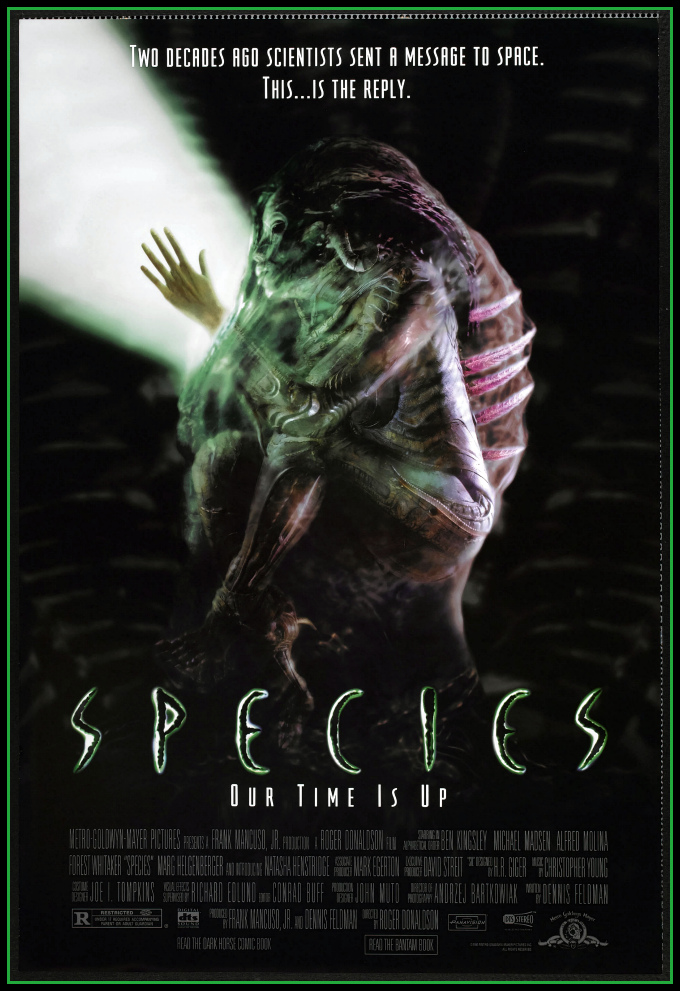
1995’s Species was a studio’s attempt to replicate the start of a new sci-fi/horror franchise like the one begun by Ridley Scott’s Alien. Roger Donaldson was tapped to direct this attempt with a cast that included Sir Ben Kingsley, Michael Madsen, Marge Helgenberger, Forrest Whitaker and Alfred Molina. The lucky gal who gets to play the role of Sil — the half-alien, half-human hybrid — fell on the stunning and gorgeous shoulders of Natasha Henstridge.
Species pulls from so many different sci-fi/horror films and shows from the past that it’s hard to find anything original in the story. There’s stuff from Alien, The Hidden, and even some episodes of The X-Files. The one original twist in this derivate film was the plot of an alien race sending over the genetic markers of its race and instructions on how to recombine it with human DNA to create a form of hybrid. Why the scientists decided to go through with such a seemingly dangerous task is known only to the writer who put pen to paper to create the screenplay. The bulk of the film’s story comes from one the creation of one such human-alien hybrid named Sil (the young version played by Michelle Williams in one of her very first roles) and how her creators and handlers begin to realize that she has an almost desperate need to procreate.
The acting by the select group of experts (Madsen, Helgenberger, Molina, Kingsley and Whitaker) were good enough and no one embarrassed themselves in the end. Henstridge does a fine job of being sexy and hot. It helped that she pretty much was naked through most of the film, or at least put herself in situations to be naked. In fact, Henstridge goes beyond just being the naked eye candy in the film, but does a great job playing the naive adult Sil who escapes her lab-prison as her instincts propel her to find the perfect mate. It’s during this search that much of the film’s gore make their appearance and there’s a bit of it.
The art design of Sil as the evolved alien hybrid came courtesy of the great Swiss surrealist, H.R. Giger who also did the design for the alien creature in Alien. Giger’s biomechanical designs have always been disturbing and beautiful at the same time and he didn’t disappoint with his design of Sil. If there was a quibble on Sil’s final design it was that it still resembled a bit too much of the alien design in Ridley Scott’s Alien. But it was still great to see H.R. Giger still creating such wonderful artwork and designs for people to see. His popularity has always been mostly composed of the elite circles of the artworld and those small, loyal art groups with a penchant for the surreal, weird and disturbing.
In the end, Species was a good sci-fi/horror that didn’t bore too much and for those who enjoy their gore this film had its equal share of the red stuff. Gratuitious nudity and sex from Natasha Henstridge as Sil the alien hybrid and the excellent designs from H.R. Giger gives this film enough good things to look at. It doesn’t bring anything new and pretty much reuses alot of other things from other movies, but Species was good enough albeit derivative of better past films and shows.
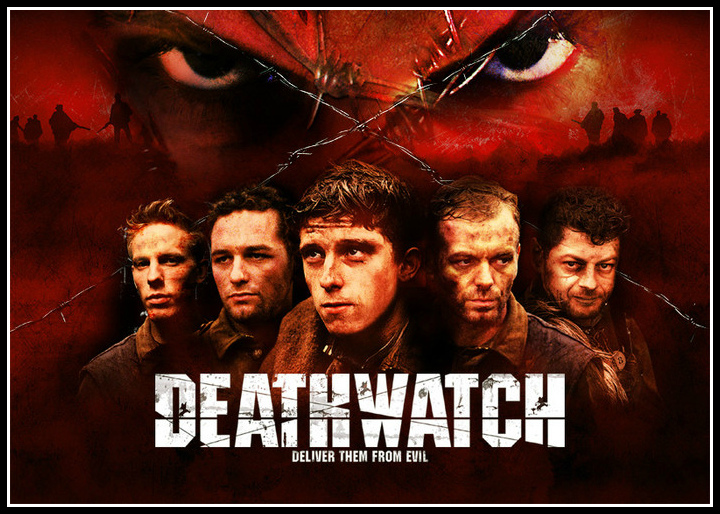
A horror film from Great Britain came out in 2002 starring Jamie Bell (from Billy Elliott) and Andy Serkis. This was a film which went under the radar of most people, but not horror fans who tend to pick up on little gems such as Michael J. Bassett’s Deathwatch.
Set during the height of the trench warfare in the Western Front during the First World War, the surviving remnants of a British Infantry company stumble upon a nearly deserted set of German trenches as they exit a fog-shrouded battlefield. Except for a couple of terrified German soldiers, the near-deserted trench only has dead German soldiers. As they spend their first night, it’s more than German soldiers they have to worry about, somewhere within the trenches something that’s hunting them down one by one.
Deathwatch does a good job in mixing in themes of horror and paranoia as the British soldiers and their lone German prisoner must try to figure out just who or what has been hunting them in the trenches since their arrival. Signs of this unknown enemy could be seen in the dead German soldiers piled on to of each other and wrapped in barbed wire. Blood flows freely from within the muddy walls of the trench system though no bodies could be seen within these walls. The film does a great job of creating such a claustrophobic atmosphere for the characters that it’s natural to see their progression from being battle-weary but alert to being paranoid to the point that they begin to hallucinate and, at times, turn on each other.
From the sound of it this film shares some similarity to Carpenter’s The Thing. As more and more of the survivors die, paranoia and suspicion grows amongst the rest as to who or what might be hunting them. The performances by the cast is good though nothing to write home about, but enough to convey the dread and paranoia sweeping through the trench. Jamie Belle as the teen British soldier with a conscience gives a understated performance while on the polar opposite is Andy Serkis scene-chewing his way through the bulk of the film as a soldier with sociopathic tendencies.
Deathwatch was a very good horror-suspense film that made great use of it’s World War I setting and borrowing themes and ideas from similar films. Michael J. Bassett’s direction kept the film moving and the film doesn’t skimp on the gore when it needed it to balance out the scenes of suspense throughout the film. It’s not a great film by any means, but it’s one of those little-known gems that one hears about and won’t be disappointed once they give it a try.
Since I previously reviewed two classic horror films from Mario Bava, it now seems like the perfect time to watch a film from Herb Wallerstein, called Snowbeast. Well, no, not really. In fact, to be honest, Snowbeast seems to exist on a totally different planet from either Black Sabbath or Planet of the Vampires. The two latter films are classics of cinema that should be seen by everyone, regardless of the season. Snowbeast, on the other hand, is the epitome of the perfect movie to turn on for background noise. Snowbeast is fun, unthreatening, likable, and ultimately rather forgettable. But sometimes, especially when it comes to finding something safe but appropriate to watch during the Halloween season, that is exactly what’s needed.
Snowbeast was originally made in 1977 and wow, does it show. According to Wikipedia (see, I do to research my claims occasionally), Snowbeast was originally a made-for-tv movie and it has retained a “cult following.” Well, I don’t know if I quite see the film’s cult appeal though it’s certainly better than any 82-minute tv show has any right to be. The film has also entered into the public domain, which, of course, means that it’s been released in a few thousand different Mill Creek box sets. Last time I counted, I actually had four different box sets that featured Snowbeast. So, if nothing else, I’ll always have Snowbeast.
Snowbeast takes place at a ski resort. An unseen monster is killing tourists. The sheriff (Clint Walker) thinks the monster is a yeti. Nobody believes him and the owner of the ski resort — Sylvia Sidney, who once starred in films directed by Josef Von Sternberg — is more interested in making money off of vacationers than in protecting the public safety. Now, if this happened today, I’d imagine there would be an OccupySnowBeast demonstration or something. However, since this film was made in the 70s, this instead just leads to Walker and Bo Svenson going off into the mountains to track down and kill the snowbeast.
Now, the plot of Snowbeast may sound a little familiar and that’s because it’s basically the exact same plot as Jaws except the water has been replaced with snow-capped mountains and the shark is now a Yeti. But otherwise, it’s pretty much the exact same story, right down to the greedy businesspeople going, “Shut down the mountain!? That’ll be bad for tourism!” and the film’s 3 heroes all giving each other knowing looks when the wrong bear is killed and paraded in front of the cheering townspeople. (That said, I have to say that if you love spotting overreacting extras in crowd scenes, this is the film for you.)
So, Snowbeast doesn’t win any points for originality but I’m willing to cut it some slack. Even though it’s a bit before my time, I’ll bet that Snowbeast wasn’t the only low-budget B-movie to rip off Jaws in the 70s and you don’t really watch a movie called Snowbeast for the plot anyway. You watch a movie called Snowbeast because you’re looking for something silly that won’t require too much thought. And that’s a perfect description of Snowbeast. It’s a film that’s done well enough that you won’t hate yourself for watching but, at the same time, is so predictable that you can do about a hundred other things while it’s playing without running the risk of missing anything important. It is literally a movie that you can start watching at any point after it’s started.
Ironically enough, Snowbeast is actually more effective because it was made for television. Yes, you don’t get the gore, sex, or profanity that you would typically expect from one of these films but it also means that you don’t get to see the killer Yeti except for one very brief shot. Otherwise, the Snowbeast of the title is represented by point-of-view shots of the monster about to attack some unsuspecting skier. As I’ve mentioned in other horror reviews, our imaginations will always come up with something scarier than even the most effective of special effects and Snowbeast‘s low budget origins force us to use our imagination more than the typical monster film would. As well, the snowy setting is beautiful to look at and if you’re a fan of watching people ski (and ski and ski and ski) this is the film for you. Seriously.