Shattered Politics #41: Billy Jack Goes To Washington (dir by Tom Laughlin)


39c7523029bb4c926a278a4a6a333ae5

The Happy Hooker wasn’t the only person to go to Washington in 1977!  Billy Jack may have started out killing bikers and then moved on to killing Bernard Posner and then finally ended up killing yet another Mr. Posner but, in 1977, Billy Jack was appointed to the U.S. Senate.

Now, it may seem strange to think of someone like Billy Jack being appointed to the U.S. Senate.  Over the course of the previous three films in the franchise, Billy had been shot in the back, shot in the leg, arrested for murder, convicted of manslaughter, and then shot by the National Guard.  In Billy Jack and The Trial of Billy Jack, Billy goes as far as to state that he does not feel the laws of the United States apply to him.

And then, when you consider that the three previous films all featured old, rich, white guys plotting to kill Billy, you would be justified in wondering how he would ever find himself appointed to serve in the senate.

But it happened!

And we’ve got a movie to prove it.

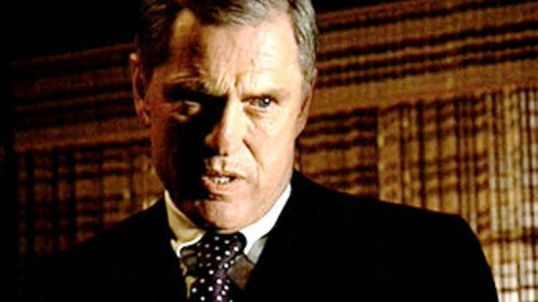
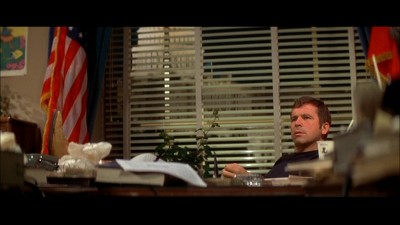
Directed by and starring Tom Laughlin, Billy Jack Goes To Washington is actually a remake of Mr. Smith Goes To Washington.  (To the film’s credit, it’s honest enough to actually give credit to Mr. Smith‘s screenwriters in the opening credits.)  What’s remarkable is just how faithful a remake Billy Jack Goes To Washington actually is.  All the scenes made famous by Jimmy Stewart — the scene where the newest member of the Senate attempts to introduce his first bill, the scene where he’s shocked to discover that Sen. Paine (played here by E.G. Marshall) takes orders from Boss Bailey (Sam Wanamaker), the scene where cynical Saunders (Lucie Arnaz) tells the senator that he should leave Washington, and, of course, that famous filibuster — are all faithfully recreated here.  The only difference, of course, is that it’s no longer idealistic Jimmy Stewart proving himself to be incredibly naive about politics.  Instead, it’s a former Green Beret, half-Indian, judo master named Billy Jack.

Tom Laughlin was a good actor, which is something that’s often overlooked by reviewers writing about the Billy Jack films.  As flawed as The Trial of Billy Jack may have been, Tom Laughlin was a compelling enough presence that the film itself remains a compulsively watchable 3-hour mess.  Laughlin had a very authoritative presence.  You looked at him and you knew that he knew what he was doing.  He was someone who you automatically wanted on your side, a natural born leader who knew how to get things done.  However, in Billy Jack Goes To Washington, Laughlin attempts to play Billy Jack as the type of naive neophyte who would be shocked to discover that politicians are corrupt.  But surely, after spending three films being harassed by every authority figure in America, Billy would have already realized that.  There’s nothing about Laughlin’s screen presence that suggests he could ever be that innocent.

And that’s the main problem with Billy Jack Goes To Washington.  For the film to have any chance of working, you have to forget everything that you’ve learned about Billy Jack over the previous three films.  However, if you haven’t seen any of the other Billy Jack films, then you probably wouldn’t be watching Billy Jack Goes To Washington in the first place.

Of course, since this is a Billy Jack film, there are a few scenes that were nowhere to be found in Mr. Smith Goes To Washington.  For instance, Saunders’s husband is murdered when he threatens to reveal the truth about Bailey’s operation.  Later, Billy, Jean (Delores Taylor), and Carol (Teresa Laughlin) are confronted by a gang of Bailey’s assassins and, for the only time in the entire movie, Billy goes through that whole routine where he takes off his boots while slowly speaking and then kicks everyone’s ass.  (Jean and Carol get to join in the ass-kicking as well and good for them!)

And, of course, there’s the scene where Billy, Jean, and the kids from the Freedom School (who are apparently now known as Billy’s Raiders) have a meeting with two liberal social activists.  It’s an interesting scene because it was clearly unscripted and it has a naturalistic feel to it that’s lacking from the rest of the film.  However, that does not mean that it’s a particularly good scene.  If I learned anything from Billy Jack Goes To Washington, it’s that self-righteous activists in 1977 were just as boring as self-righteous activists in 2015.

And yet, as I’ve said about all of the other Billy Jack films, I can’t bring myself to be too hard on Billy Jack Goes To Washington.  Again, it all comes down to sincerity.  It’s clear that Laughlin and Taylor felt they were making a difference with their films and that sincerity comes through in a way that makes Billy Jack Goes To Washington a likable, if rather inept, film.

Billy Jack Goes To Washington ran for a week in one theater in 1977 and was reportedly such a box office disaster that it couldn’t get a wider release.  (In a commentary track that he recorded for the film’s DVD release, Laughlin suggests the film was the victim of shadowy government forces.)*  While Laughlin and Taylor would later try to make The Return of Billy Jack, that film was left uncompleted at the time of Laughlin’s death.  So, the last time that filmgoers would see Billy Jack, he would still be U.S. Sen. Billy Jack.

And really, that’s the perfect ending for the saga of Billy Jack.  Starting out as a loner who protected a small California town from a biker gang to eventually becoming the protector of the Freedom School to finally embracing both non-violence and his love for Jean, Billy Jack earned himself a happy ending.

Having now watched and reviewed all four of the Billy Jack films, all I can do is say thank you to Delores Taylor and the spirit of Tom Laughlin.  It was great ride.
1251421109_1

—-

* To be honest, the commentaries that Laughlin and Taylor recorded for the Billy Jack films are actually very informative and interesting.  Laughlin actually had a far better sense of humor than you might guess from some of the movies he directed.
Shattered Politics #40: The Happy Hooker Goes To Washington (dir by William A. Levey)


happy-hooker-470-x-647

“God bless you, Ms. Hollander!  You have saved us from recession!”

— Dialogue from The Happy Hooker Goes To Washington (1977)

Le sigh.

The things that I do for this site!

If I wasn’t currently in the process of watching and reviewing 94 films about politicians and politics, I can guarantee that I would never have watched The Happy Hooker Goes To Washington.  However, while I was looking for films to review for this series, I went over to Netflix and did a search on “Washington.”

Guess which film came up first?

If you guessed The Happy Hooker Goes To Washington, you would be correct!  And you know what?  I watched this movie with an open mind.  As anyone who has read this site knows, I have never been shy about my love of old exploitation films.  The fact of the matter is that some of the most imaginative films ever made were low-budget grindhouse movies.  Nothing angers me more than elitist film bloggers who dismiss a film just because it originally played in grindhouse cinema.

But, honestly, The Happy Hooker Goes To Washington is just bad.  It’s boring.  The acting is terrible.  The jokes fall flat.  The attempts at political satire are about as clever as what you’d find on any site trying to read like the Onion without actually being the Onion.

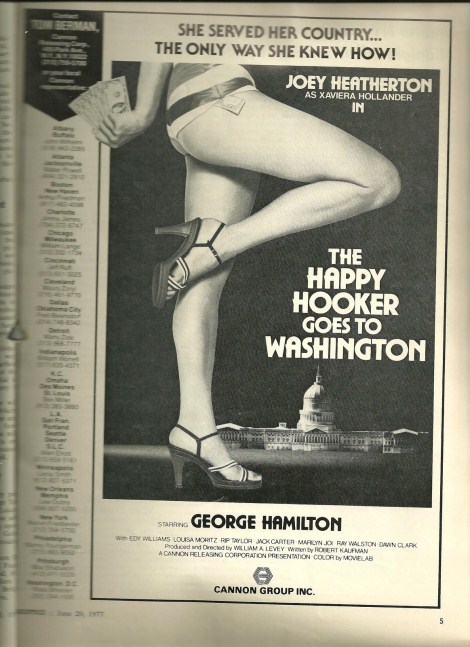
In the Happy Hooker Goes To Washington, Joey Heatherton plays Xaviera Hollander, a former madam who is now a businesswoman, magazine publisher, and sex advise columnist.  She is apparently the world’s leading authority on sex.  We know this because, when she first appears, she’s surrounded by reporters.  “When sex is news, you’re news!” one of them tells her.

Xaviera has been called to testify in front of the Senate Committee To Investigate Sexual Excess In America.  And goddamn, this movie is stupid.  But anyway, Xaviera goes to Washington to stand up for sexual freedom.  Accompanying her is an attorney named Ward Thompson (George Hamilton) and, quicker than you can say “Fifth place on Dancing With The Stars,” Ward is explaining to Xaviera why her testimony is so important.

“We’re heading right into the teeth of a new puritanism,” he tells her.  “Under the new puritanism, there won’t be any happy hookers!”

Anyway, Xaviera testifies in front of the committee and we get a few flashbacks to some of Xaviera’s past accomplishments.  And then she gets recruited by a dwarf (Billy Barty) and is sent to seduce an Middle Eastern ruler and … well, it just keep going and going.  This is one of the longest 84-minute films ever released.

Anyway, this movie sucks.  (And so does Xaviera!  That’s the level of humor that you can expect when you watch The Happy Hooker Goes To Washington.)  It’s still lurking around Netflix.  Avoid it at all costs.

Shattered Politics #39: Taxi Driver (dir by Martin Scorsese)


Taxi_Driver_poster

We’ve never had a President named Charles.  We’ve had several Presidents named John and a quite a few named James.  We’ve even had three named George.  But we’ve never had a Charles.  We’ve come close.  Charles Evans Hughes nearly beat evil old Woodrow Wilson in 1916.  Charles Cotesworth Pinckney was nominated two times in a row by the Federalists but lost to Thomas Jefferson and James Madison respectively.  We’ve had three Vice Presidents names Charles — Fairbanks, Dawes, and Curtis — but never a President.

And, if we ever do elect a President named Charles, he’s probably go by either Charlie or Chuck.  The United States has always liked to think of itself as being a country that has no official royal family and, as a name, Charles probably sounds far to aristocratic for most voters.

That’s why I’m sure that, once U.S. Sen. Charles Palatine won the Democratic presidential nomination back in 1976, he probably insisted that people start calling him Chuck.  Of course, Sen. Palatine probably had no idea how lucky he was to win that nomination.  If not for a few secret service agents, Sen. Palatine could very well have fallen victim to a psychotic taxi driver named Travis Bickle.

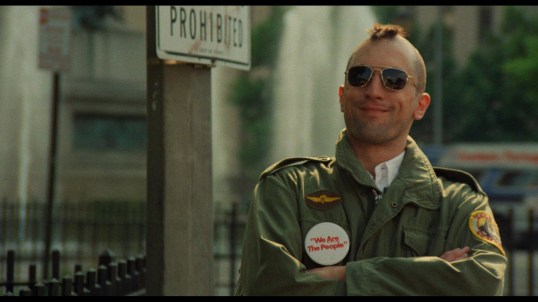
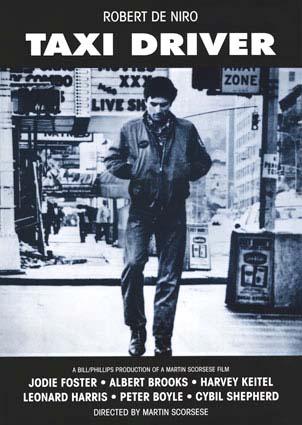
Sen. Palatine’s presidential campaign is a major subplot of Martin Scorsese’s 1976 masterpiece of paranoia, Taxi Driver.  As played by an actor named Leonard Harris, Sen. Palatine appears to be the epitome of a politician.  He may smile at the right moment but his eyes are always shifty.  Even his campaign slogan (“We Are The people!”) is vapid in an all too plausible way.  (How different is “We Are the People” from “We Are The People We’ve Been Waiting For?”)  For the most part, Palatine remains a remote figure, giving speeches and appearing in television commercials.  The only time that we get to know Palatine as a person is when he gets in a taxi being driven by Travis Bickle (Robert De Niro).

Travis recognizes him immediately and tells him that he tells everyone who gets in the cab that “they gotta vote for you.”  Palatine smirks a little as he asks Travis what he thinks the most important issue of the election is.  Travis goes on a bit about how someone needs to destroy all of the scum and filthy lowlifes who seem to populate Travis’s section of New York.  As Travis rambles, Palatine’s smile disappears and it becomes obvious that he’s realized that he is essentially being driven by a psycho.  Oh shit, Palatine is probably thinking, this guy is telling people that they gotta vote for me?  However, Palatine quickly regains his composure and assures Travis that the wisest people that he’s ever met have been taxi drivers.

Of course, what Palatine doesn’t realize is that Travis only knows about the campaign because he happens to be obsessed with a Palatine campaign worker named Betsy (Cybill Shepherd).  And Betsy even goes out with Travis a few times.  But then Travis, who spends the majority of the film showing how little skill he has when it comes to understanding and relating to other people, takes Betsy to an adult film.

With Betsy refusing to take his calls, Travis’s attention shifts to Iris (Jodie Foster), a teenage prostitute.  Obviously seeing himself as being a knight in shining armor, Travis tells Iris that she has to go back home to her parents.  As Travis talks, it becomes apparent that he’s simply repeating talking points that he’s heard on TV.  (If Taxi Driver was made today, Travis would be one of those people constantly sharing “inspirational” Facebook posts.)  Iris laughs at Travis and goes back to her pimp, Sport (Harvey Keitel).

And, of course, Travis goes even crazier than before.

38 years after it was first released, Taxi Driver remains a disturbing and powerful film.  However, what makes it effective is that, in many ways, it’s perhaps the darkest comedy ever made.  Throughout the entire film, Travis essentially tells everyone that he meets that he’s disturbed and potentially dangerous and, throughout the entire film, everyone seems to be determined to ignore all of the signs.

Critics always talks about the scene where Travis points a gun at his mirror and asks, “You talkin’ to me?”  And that’s a great scene.  It deserves to be famous, just as De Niro deserves all of the praise that he’s gotten for his iconic performance in Taxi Driver.

However, for me, there are two other scenes that are just as brilliant.  The first is where Travis attempts to get some advice from an older cabbie named Wizard (Peter Boyle).  Travis says he’s been having a lot bad thoughts.  Wizard shrugs and says that everyone has those.  What makes this scene particularly memorable are the lengths that Wizard goes to in order to avoid acknowledging that Travis is obviously disturbed.

And then, there’s the scene where Travis buys a gun from Easy Andy (Steven Prince).  Andy is such a salesman and is so nonchalant about all of his weaponry that, for a few brief minutes, Steven Prince actually manages to steal the spotlight from Robert De Niro.

Whenever one thinks about Taxi Driver, one automatically pictures Robert De Niro.  That’s why it’s all the more interesting that De Niro was not the first choice for Travis.  When Taxi Driver was in pre-production and a pre-Jaws Steven Spielberg (of all people) was thinking about directing it, Jeff Bridges as briefly attached to the role.  And while it’s always tempting to think about what a Spielberg/Bridges version of Taxi Driver would look like, I think we’re all right to be happy that the actual film was directed by Scorsese and starred De Niro.  They truly made Taxi Driver into one of the most memorable films ever made.

taxi-driver-mohawk

Shattered Politics #38: Nashville (dir by Robert Altman)


Nashville-Cover

“Oh we must be doin’ somethin right to last 200 years…”

— Haven Hamilton (Henry Gibson) in Nashville (1975)

The 1975 Best Picture nominee Nashville is the epitome of an ensemble film.  It follows 24 characters as they spend five days wandering around Nashville, Tennessee.  Some of them are country music superstars, some of them are groupies, some of them are singers looking for a first break, and at least one of them is an assassin.  The one thing that they all have in common is that they’re lost in America.  Released barely a year after the resignation of Richard Nixon and at a time when Americans were still struggling to come to terms with the turmoil of the 60s, Nashville is a film that asks whether or not America’s best days are behind it and seems to be saying that they may very well be.  (That’s a question that’s still being asked today in 2015.)  It’s appropriate, therefore, that Nashville both takes place in and is named after a city that everyone associates with perhaps the most stereotypically American genre of music that there is.

Nashville follows 24 characters, some of whom are more interesting than others.  For five days, these characters wander around town, occasionally noticing each other but far more often failing to make any sort of connection.

Haven Hamilton (Henry Gibson) is a veteran star, a somewhat comical character who sings vapid songs about home and family and who smiles for the public while privately revealing himself to be petty and vain.  His son, Bud (Dave Peel), is a Harvard graduate who acts as his father’s business manager.  Oddly enough, Haven is an unlikable character until the end of the film when he suddenly reveals himself to be one of the few characters strong enough to keep Nashville for descending into chaos.  Meanwhile, Bud seems to be a nice and modest guy until he takes part in humiliating another character.

Haven’s lover is Lady Pearl (Barbara Baxley), who owns a nightclub and spends most of the film drinking.  Much like Haven, she starts out as a vaguely comical character until she finally gets a chance to reveal her true self.  In Pearl’s case, it comes when she delivers a bitter monologue about volunteering for Bobby Kennedy’s presidential campaign.

Haven’s lawyer is Delbert Reece (Ned Beatty), an obsequies good old boy who is married to gospel singer Linnea (Lily Tomlin).  They have two deaf children.  Linnea has learned sign language.  Delbert has not.  Over the course of the film, both Delbert and Linnea will be tempted to cheat.  Only one of them actually will.

And then there’s Barbara Jean (Ronee Blakley), a mentally unstable singer who has come to Nashville with her manipulative husband/manager, Barnett (Allen Garfield).  Almost every character in the film wants something from Barbara Jean.  A mostly silent Vietnam veteran named Kelly (Scott Glenn) claims that his mother knows Barbara Jean.  A nerdy guy named Kenny (David Hayward) comes to Nashville just to see her perform.

Both Kelly and Kenny end up getting to know Mr. Green (Keenan Wynn), a rare Nashville resident who doesn’t seem to care about music.  However, Mr. Green’s spacey niece, L.A. Joan (Shelly Duvall), is obsessed with having sex with as many musicians as possible.

Among those being targeted by L.A. Joan is Tom Frank (Keith Carradine), one-third of the folk trio Bill, Mary, and Tom.  Unknown to Bill (Allan F. Nicholls), Tom is sleeping with Bill’s wife, Mary (Cristina Raines).  Unknown to Mary, Tom is sleeping with almost every other woman in Nashville as well.  When Tom takes to the stage at Pearl’s nightclub and sings a song called I’m Easy, the audience is full of women who think that he’s specifically singing to them.

Another one of Tom’s songs, the appropriately titled “It Don’t Worry Me,” is frequently sung by Albuquerque (Barbara Harris), who spend the entire film trying to get discovered while hiding out from her much older husband, Star (Bert Remsen).

Another aspiring star is Sulleen Grey (Gwen Welles), who is a tone deaf waitress who suffers the film’s greatest humiliation when she agrees to perform at a political fund raiser without understanding that she’s expected to strip while singing.  Trying to look after Sulleen is Wade (Robert DoQui), who has just been released from prison.

And then there’s the loners, the characters who tend to pop up almost randomly.  Norman (David Arkin) is a limo driver who, like everyone else in Nashville, wants to be a star.  The hilariously bitchy Connie White (Karen Black) and the bland Tommy Brown (Timothy Brown) already are stars.  (The character of Tommy Brown is one of Nashville’s oddities.  He’s listed, in the credits, as being a major character but he only appears in a few scenes and never really gets a storyline of his own.)  There’s the Tricycle Man (Jeff Goldblum), a silent magician who mysteriously appears and disappears throughout the film.

And, finally, there’s Opal (Geraldine Chaplin), an apparently crazed woman who is wandering around Nashville and pretending to be a reporter for the BBC.  (It’s never specifically stated that Opal is a fake but it’s fairly obvious that she is.)  How you feel about the character of Opal will probably determine how you feel about Nashville as a whole.  If you find Opal to be a heavy-handed caricature, you’ll probably feel the same way about the rest of the film.  If you find the character of Opal to be genuinely amusing with her increasingly pretentious musings, you’ll probably enjoy Nashville.

There is one more very important character in Nashville.  He’s the character who literally holds the film together.  He’s also the reason why I’m including Nashville in this series of reviews about political films.  That character is named Hal Phillip Walker and, though he’s never actually seen in the film, he’s still the driving force behind most of what happens.  Walker is a third-party presidential candidate, a man who seems to be universally admired despite the fact that his campaign appears to just be a collection of vapid platitudes.  Walker’s campaign manager, John Triplette (Michael Murphy), comes to Nashville and sets up the Walker For President rally.  That’s where Nashville reaches its violent and not-all-together optimistic climax.

Reportedly, Nashville is a favorite film of Paul Thomas Anderson’s and you can see the influence of Nashville in many of Anderson’s films, from the large ensemble to the moments of bizarre humor to the refusal to pass judgement on any of the characters to the inevitable violence that ends the film.  Also, much like Anderson’s films, Nashville seems to be a film that was specifically made to divide audiences.  You’re either going to think that Nashville is a brilliantly satirical piece of Americana or you’re going to think it’s a self-indulgent and self-important mess.

As for me, I think it’s great and I think that, after you watch it, you should track down and read Jan Stuart’s The Nashville Chronicles: The Making of Robert Altman’s Masterpiece.  It’s the perfect companion for a great film.


Shattered Politics #37: Rosebud (dir by Otto Preminger)


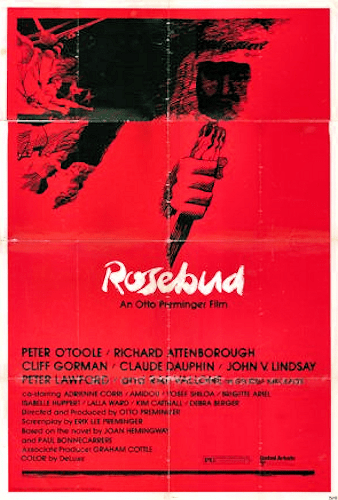
Rosebud_-_1975_-_Film_Poster

Before I review the 1975 film Rosebud, allow me to tell you about how I first discovered the existence of this particular film.

The greatest used bookstore in the world is located in Denton, Texas.  It’s called Recycled Books and it is three stories of pure literary goodness!  (Plus, there are apartments on the top floor where I attended some pretty interesting parties but that’s another story….)  When I was attending the University of North Texas, I used to stop by Recycled Books nearly every day.  One day, I happened to be searching the Film and TV section when I came across a beat-up paperback called Soon To Be A Major Motion Picture.

This book, which was written by Theodore Gershuny, told the story of how the previously acclaimed director Otto Preminger attempted to make a film about terrorism.  Starting with the attempts of Preminger’s son, Erik Lee Preminger, to come up with a workable script and then going on to detail how Peter O’Toole came to replace Robert Mitchum as the star of the film and ending with the film’s disastrous release, Soon To Be A Major Motion Picture proved to be a fascinating read.

After finishing the book, I simply had to see Rosebud for myself.  Unfortunately, at that time, Rosebud had not yet been released on Blu-ray or DVD.  So, I actually ended up ordering an old VHS copy of it.  The tape that I got was not in the best condition but it played well enough and I can now say that, unlike the majority of people in the world, I’ve actually seen Rosebud!

Which is not to say that Rosebud is any good.  It’s not the disaster that I had been led to expect.  In fact, it probably would have been more fun if it had been a disaster, as opposed to being just a forgettable film from a director who was probably capable of better.  Preminger started his career in the 30s and was considered, at one point, to be quite innovative.  He directed Laura and Anatomy of a Murder, two great films.  Unfortunately, there’s really nothing innovative about his direction of Rosebud.  In Gershuny’s book, Preminger comes across like an intelligent and thoughtful man who was too set in his ways to realize that what was shocking in 1959 was no longer that big of a deal in 1975.  (And, needless to say, it’s even less of a big deal in 2015.)

As for what Rosebud‘s about, it’s about a man named Sloat (Richard Attenborough), a former journalist who now lives in a cave in Israel and dreams of establishing a worldwide terrorist network.  Under Sloat’s direction, terrorists storm a yacht named the Rosebud and take the girls on board hostage.  The girls are wealthy and privileged.  Their fathers are judges, senators, and businessmen.  CIA agent Larry Martin (Peter O’Toole) is tasked with tracking down and rescuing the girls.  If it sounds like an action film — well, it’s not.  This is not a prequel to Taken.  Instead, it’s a very talky film that has a few isolated good moments and performances but otherwise, is fairly forgettable.

That said, the film does have an interesting cast.  Peter O’Toole seems bored by his role (and who can blame him?) but Attenborough briefly livens things up in the role of Sloat.  As for the girls being held hostage, they’re not given much to do.  One of them is played by a young Isabelle Huppert.  Long before she would play Samantha on Sex and the City, Kim Cattrall plays a hostage here.  The English hostage is played by Lalla Ward, who is now married to Richard Dawkins.

And then there’s the girl’s parents, who are played by an odd assortment of character actors.  Raf Vallone, an Italian, plays a Greek.  (His daughter, meanwhile, is played by the French Isabelle Huppert.)  Peter Lawford, looking somewhat dazed, shows up as Lalla Ward’s father.  (One of the sadder scenes in Gershuny’s book deals with Lawford’s attempts to remember his lines.)  And than, in the role of Cattrall’s father, we have a very distinguished looking man named John Lindsay.

John Lindsay was the former mayor of New York City, a man who ran for President in 1972 and, three years later, attempted to launch a new career as an actor.  Rosebud was his both his first and final film.  (Rumor has it that Martin Scorsese attempted to convince Lindsay to play Senator Palatine in Taxi Driver but Lindsay turned the role down.)  Lindsay is not particularly memorable in Rosebud.  It’s not so much that Lindsay gives a bad performance as much as it’s just the fact that he has a very bland screen presence.  That blandness probably served him well as a politician but, as an actor — well, let’s just say that John Lindsay was apparently no Fred Thompson.

And so that’s Rosebud.  It’s a film that, much like Maidstone, you can only appreciate if you know what went on behind the scenes.  I can’t really recommend Rosebud but, if you ever come across a battered old copy of Soon To Be A Major Motion Picture in a used bookstore, be sure to buy it!

Seriously, you will not be sorry.

Shattered Politics #36: The Godfather, Part II (dir by Francis Ford Coppola)


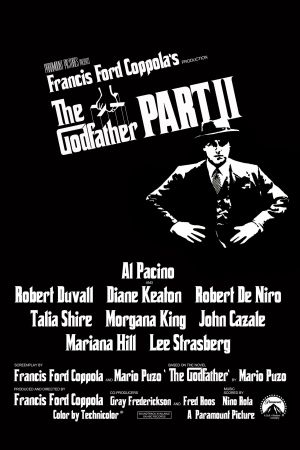
Godfather_part_ii

Believe it or not, The Trial of Billy Jack was not the only lengthy sequel to be released in 1974.  Francis Ford Coppola’s The Godfather Part II was released as well and it went on to become the first sequel to win an Oscar for best picture.  (It was also the first, and so far, only sequel to a best picture winner to also win best picture.)  Among the films that The Godfather, Part II beat: Chinatown, Coppola’s The Conversation, and The Towering Inferno.  1974 was a good year.

Whenever I think about The Godfather, Part II, I find myself wondering what the film would have been like if Richard Castellano hadn’t demanded too much money and had actually returned in the role of Clemenza, as was originally intended.  In the first Godfather, Clemenza and Tessio (Abe Vigoda) were Don Corleone’s two lieutenants.  Tessio was the one who betrayed Michael and was killed as a result.  Meanwhile, Clemenza was the one who taught Michael how to fire a gun and who got to say, “Leave the gun.  Take the cannoli.”

Though Castellano did not return to the role, Clemenza is present in The Godfather, Part II.  The Godfather, Part II tells two separate stories: during one half of the film, young Vito Corleone comes to America, grows up to be Robert De Niro and then eventually becomes the Godfather.  In the other half of the film, Vito’s successor, Michael (Al Pacino), tries to keep the family strong in the 1950s and ultimately either loses, alienates, or kills everyone that he loves.

During Vito’s half of the film, we learn how Vito first met Clemenza (played by Bruno Kirby) and Tessio (John Aprea).  However, during Michael’s half of the story, Clemenza is nowhere to be seen.  Instead, we’re told that Clemenza died off-screen and his successor is Frankie Pentangeli (Michael V. Gazzo).  All of the characters talk about Frankie as if he’s an old friend but, as a matter of fact, Frankie was nowhere to be seen during the first film.  Nor is he present in Vito’s flashbacks.  This is because originally, Frankie was going to be Clemenza.  But Richard Castellano demanded too much money and, as a result, he was written out of the script.

And really, it doesn’t matter.  Gazzo does fine as Frankie and it’s a great film.  But, once you know that Frankie was originally meant to be Clemenza, it’s impossible to watch The Godfather Part II without thinking about how perfectly it would have worked out.

If Clemenza had been around for Michael’s scenes, he would have provided a direct link between Vito’s story and Michael’s story.  When Clemenza (as opposed to Frankie) betrayed Michael and went into protective custody, it would have reminded us of how much things had changed for the Corleones (and, by extension, America itself).  When Tom Hagen (Robert Duvall) talked Clemenza (as opposed to Frankie) into committing suicide, it truly would have shown that the old, “honorable” Mafia no longer existed.  It’s also interesting to note that, before Tessio was taken away and killed, the last person he talked to was Tom Hagen.  If Castellano had returned, it once again would have fallen to Tom to let another one of his adopted father’s friends know that it was time to go.

Famously, the Godfather, Part II ends with a flashback to the day after Pearl Harbor.   We watch as a young and idealistic Michael tells his family that he’s joined the army.  With the exception of Michael and Tom Hagen, every character seen in the flashback has been killed over the course of the previous two films.  We see Sonny (James Caan), Carlo (Gianni Russo), Fredo (John Cazale), and even Tessio (Abe Vigoda).  Not present: Clemenza.  (Vito doesn’t appear in the flashback either but everyone’s talking about him so he might as well be there.  Poor Clemenza doesn’t even get mentioned.)

If only Richard Castellano had been willing to return.

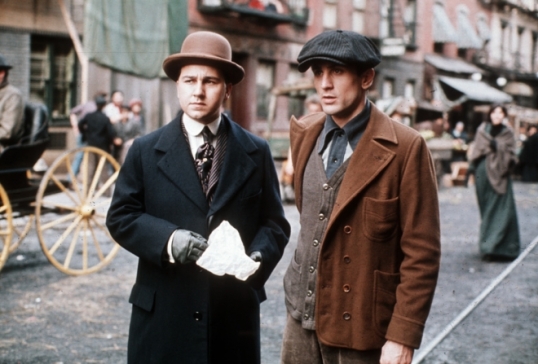
Clemenza_and_Vito

Clemenza and Vito


But he didn’t and you know what?  You really only miss him if you know that he was originally meant to be in the film.  With or without Richard Castellano, The Godfather, Part II is a great film, probably one of the greatest of all time.  When it comes to reviewing The Godfather, Part II, the only real question is whether it’s better than the first Godfather.

Which Godfather you prefer really depends on what you’re looking for from a movie.  Even with that door getting closed in Kay’s face, the first Godfather was and is a crowd pleaser.  In the first Godfather, the Corleones may have been bad but everyone else was worse.  You couldn’t help but cheer them on.

The Godfather Part II is far different.  In the “modern” scenes, we discover that the playful and idealistic Michael of part one is gone.  Micheal is now cold and ruthless, a man who willingly orders a hit on his older brother and who has no trouble threatening Tom Hagen.  If Michael spent the first film surrounded by family, he spends the second film talking to professional killers, like Al Neri (Richard Bright) and Rocco Lampone (Tom Rosqui).  Whereas the first film ended with someone else closing the door on Kay, the second film features Michael doing it himself.  By the end of the film, Michael Corleone is alone in his compound, a tyrant isolated in his castle.

Michael’s story provides a sharp contrast to Vito’s story.  Vito’s half of the film is vibrant and colorful and fun in a way that Michael’s half is not and could never be.  But every time that you’re tempted to cheer a bit too easily for Vito, the film moves forward in time and it reminds you of what the future holds for the Corleones.

So, which of the first two Godfathers do I prefer?  I love them both.  If I need to be entertained, I’ll watch The Godfather.  If I want to watch a movie that will truly make me think and make me question all of my beliefs about morality, I’ll watch Part Two.

Finally, I can’t end this review without talking about G.D. Spradlin, the actor who plays the role of U.S. Sen. Pat Geary.  The Godfather Part II is full of great acting.  De Niro won an Oscar.  Pacino, Gazzo, Lee Strasberg, and Talia Shire were all nominated.  Diane Keaton, Robert Duvall, and John Cazale all deserved nominations.  Even Joe Spinell shows up and brilliantly delivers the line, “Yeah, we had lots of buffers.”  But, with each viewing of Godfather, Part II, I find myself more and more impressed with G.D. Spradlin.

Sen. Pat Geary doesn’t have a lot of time on-screen.  He attends a birthday party at the Corleone Family compound, where he praises Michael in public and then condescendingly insults him in private.  Later, he shows up in Cuba, where he watches a sex show with obvious interest.  And, when Michael is called before a Senate committee, Geary gives a speech defending the honor of all Italian-Americans.

G.D. Spradlin as Sen. Pat Geary

G.D. Spradlin as Sen. Pat Geary

But the scene that we all remember is the one where Tom Hagen meets Sen. Geary in a brothel.  As Geary talks about how he passed out earlier, the camera briefly catches the sight of a dead prostitute lying on the bed behind him.  What’s especially disturbing about this scene is that neither Hagen nor Geary seem to acknowledge her presence.  She’s been reduced to a prop in the Corleone Family’s scheme to blackmail Sen. Geary.  His voice shaken, Geary says that he doesn’t know what happened and we see the weakness and the cowardice behind his almost all-American facade.

It’s a disturbing scene that’s well-acted by both Duvall and Spradlin.  Of course, what is obvious (even if it’s never explicitly stated) is that Sen. Geary has been set up and that nameless prostitute was killed by the Corleones.  It’s a scene that makes us reconsider everything that we previously believed about the heroes of the Godfather.

For forcing us to reconsider and shaking us out of our complacency, The Godfather, Part II is a great film.

(Yes, it’s even better than The Trial of Billy Jack.)


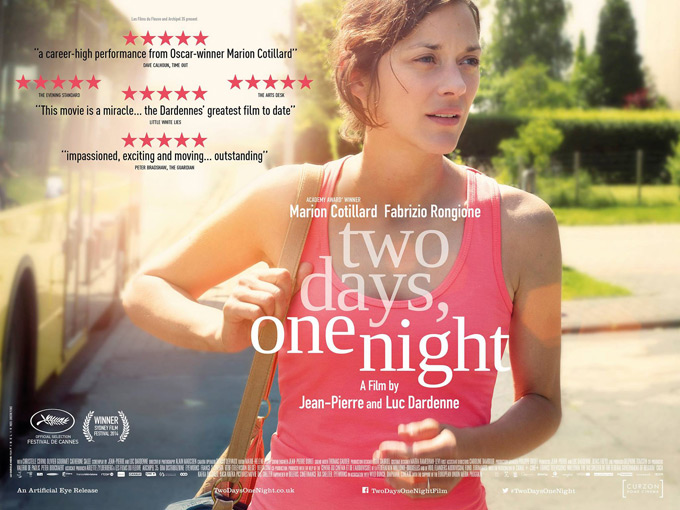
‘Two Days, One Night’ Review (dir. Jean-Pierre & Luc Dardenne)


two-days-one-night-poster

In a year full of truly great films of all sizes & shapes, only the Dardenne brothers could make such a subtle and slight film that still manages to make all other releases seem completely insignificant to me. Once again they tell a small, emotional and naturalistic story whose themes and situations manage to be as universal as they are singular. The effect the film has is slow but powerful. I walked out of the theater thoroughly loving what I had just seen – and a bit speechless – but on the ride home it hit me like a ton of bricks. I don’t want to get too personal – but I suffer from depression and the emotional weight on the shoulders of the film’s main character so perfectly mirrored those I have felt that to even think about some of her smaller personal moments takes my breath away, and leaves a pit in my stomach. And yet, I can’t help but look back on the film with a smile. It is beautiful and honest in ways very few are.

It stars Marion Cotillard as Sandra, a married mother or two who is on leave from work because of a battle with clinical depression. She was just beginning to recover but is on the verge of relapsing when she learns that her coworkers were forced to vote on whether they wanted to receive a year end bonus – but only if Sandra was fired. They chose the money – and so Sandra must spend the weekend visiting each of them to try to convince them to change their minds when they vote a second time on the upcoming Monday. Each end up having their own reasons for wanting the money – and the encounters often end in tears, rejection and in once instance violence. But Sandra must do it – for bother her family and herself.

The result is a portrait of a woman facing seemingly insurmountable emotional, moral and social odds – a humanistic view of all things good and bad about human nature; and an examination of the devastating affect of depression. Its structure covers greed, love, survival, regret, self worth – and a whole multitude of other themes. There is also a current of economic commentary on the wealth gap and struggles of the working class. In other words – it is the Dardenne brothers doing what they do best – in what is perhaps their best work.

The core of the film is Marion Cotillard who gives what I think is far and away the best performance of the year. She is a magnificent actress and brings great physicality to the role. Her head hangs. Her arms and shoulders are pulled in tight – closing herself off to the world – and her eyes are always on the verge of tears. She perfectly emulates the apathy, anxiety and sadness her illness inflicts – and it is equal parts mesmerizing and excruciating watching her have to face her family, co-workers and herself through it all; something that I know from experience is very hard to do.

The ending is incredibly beautiful and down right perfect in my eyes. After such a long journey that ran the gauntlet of emotions and themes, it all circles back and ends looking inwards – as it should. This isn’t just one woman’s struggle to save her job, but also one to save herself – an attempt to rediscover the person her depression has refused to allow her to be. It is hopeful in ways those who have not suffered from depression might not quite understand. It ultimately didn’t matter what the result of the vote was, the fact that she was able to keep fighting – that she was able to find moments of pure happiness amongst it all – was what touched me most. More importantly, the fact that she spends the whole film questioning her worth – whether she even deserves to exist – and was able to make the final decision her own meant so much to me. Depression doesn’t just go away and Sandra may never truly get “better”…but that she was able to walk away with a smile – instead of fighting back tears – was a glimmer of hope that she (we all) will, even if just a little bit.

Looking at the few films from 2014 I still want to see, I think I can safely say this is my favorite from last year. Why? Aside from everything I mentioned above, this is perhaps the only film in which after it settled in I didn’t sit there wondering where on my top ten list it would appear – I just knew. That is how much it meant to me.

———-

Twitter.

Shattered Politics #35: The Trial of Billy Jack (dir by Tom Laughlin)


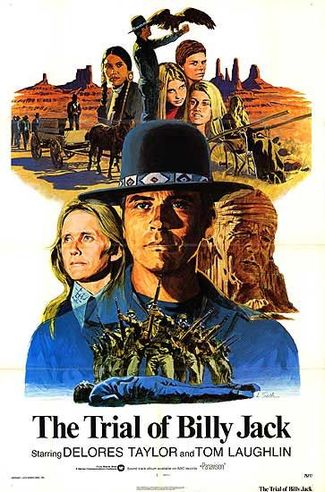
Trial_of_billy_jackFor the past week, I’ve been in the process of reviewing 94 films about politicians and, to a lesser extent, politics.  I’ve recently taken a look at Born Losers and Billy Jack, the first two segments in the cinematic life of future U.S. Sen. Billy Jack.  Today, I’m taking a look at the third part of the Billy Jack saga, 1974’s The Trial of Billy Jack!

I have to admit that, when you’re watching these first three films, it’s a little hard to see how Billy Jack is ever going to end up in the U.S. Senate.  After all, The Born Losers ended with Billy getting shot in the back by an overeager deputy sheriff.  Billy Jack ended with Billy shooting at the National Guard and then getting arrested for murder.  And then, in Trial of Billy Jack, Billy gets released from prison but promptly kills yet another member of the Posner family and then eventually, the National Guard shows up (again!) and ends up gunning down at least half of the students at the Freedom School.

If I didn’t already know that Trial would be followed up Billy Jack Goes To Washington, I think I’d be justified in being a little pessimistic about Billy’s future.

But anyway, let’s talk about The Trial of Billy Jack.  After the surprise box office success of Billy Jack, Tom Laughlin and Delores Taylor set about to make a sequel that would not only revisit the themes of Billy Jack but which would touch on literally every single other political issue of the day as well.  The result is a three-hour mess of a film that, despite the excessive length and a generally preachy tone, remains oddly watchable.

Despite the film’s title, the actual Trial of Billy Jack only takes up a few minutes of screen time.  The prosecution lays out its case, which is that Billy Jack killed Bernard Posner.  The defense calls Billy to the stand and, instead of asking him about the events that led to Bernard’s death (i.e., the fact that Bernard was a rapist and that Billy caught him with a 13 year-old girl), they instead allow Billy to give his opinions on the political issues of the day.  And, since this film was released in 1974, we get a lengthy flashback to the Vietnam War where we see Billy refusing to take part in a civilian massacre.

And then Billy Jack is sent to prison.  And it’s actually quite some time before he shows up in the film again.  This actually took me by surprise because, when it comes to people directing films starring themselves, I’m more used to the narcissistic style of Norman Mailer.  But, in Laughlin’s case, he was actually willing to stay off-screen for close to an hour and allow the film to focus on Jean (Delores Taylor) and the Freedom School.

And that is one reason why I can never be as critical of the Billy Jack films as maybe I should be.  They really are such sincere films.  Laughlin was willing to stay off-screen and allow the film to be about the issues and for that he should be commended.  However, at the same time, Laughlin was not only the best actor in most of the Billy Jack films.  He was also usually the only good actor in the films as well.  So, while you respect Laughlin for not being a narcissist, you also kind of wish that maybe the film could have been more about him and less about the students at the Freedom School (which, to judge from the performances in this film, did not have much of a drama department).

When I reviewed Billy Jack, I mentioned that, if anything could cause me to transform from being the politically moderate girl that you all know and love to being a right-wing extremist, it would be having to spend any amount of time with the smug and self-righteous students at the Freedom School.  Well, by the end of the first half of The Trial of Billy Jack, I had spent so much time with those students that I was on the verge of ordering a Sarah Palin bumper sticker to put on my boyfriend’s car.

(Fortunately, Billy Jack got out of jail before I went that far but seriously…)

Of course, they’re not just students at the Freedom School anymore.  No, in the Trial of Billy Jack, the Freedom School suddenly has the power and resources to launch its own independent television station.  The kids are now crusading journalists.  They’re first expose is on a local businessman who repossessed a woman’s furniture after she failed to make the payments and … well, wait a minute.  Is that really an expose?  When you’re paying something off, aren’t you supposed to keep up with the payments?  If the students were trying to raise money to help the woman pay off her bills, that would be one thing.  But, instead, their expose seems to be that if you break a contract, there will be consequences.  Uhmmm…

BUT ANYWAY!  Best not to think too much when the powers of crusading righteousness are on display!

We also discover that one of the students has invented a machine that will tell you whether or not someone on television is lying.  Which again … what?  I mean, that’s a pretty powerful machine but it’s just kind of mentioned and then never really brought up again….

And then, for some reason, the students hold a big carnival in town and demand to know why the national media isn’t down there covering it.

Listen, this film is occasionally confusing.  It’s not three hours long because it’s an epic or anything.  Instead, it’s three hours long because, apparently, Tom and Delores just stuck every thought they ever had into the script.  Some of those thoughts — like the TV lie detector — are abandoned as soon as they are brought up.  Other thoughts — like the National Guard showing up and shooting up the Freedom School — are returned to over and over again.

Fortunately, Billy does eventually get out of jail and returns to the Freedom School.  Again, he finds himself debating non-violence with Jean and he also finds himself being harassed by yet another evil Mr. Posner (Riley Hill).  However, during the film’s undeniable high point, Billy goes on a vision quest.  He sees a bearded professor type and smacks him.  Then he sees Jesus Christ and smacks him too.

No, I’m not making that up!

However, Jesus forgives Billy and Billy learns that nonviolence is the way to go.  But then the National Guard shows up and starts shooting up the Freedom School and…

(Actually, what’s funny is that one of the National Guardsmen is played by William Wellman, Jr., who also played an evil biker named Child in The Born Losers.  I like to think that, after the events of Born Losers, Child cleaned up his act, got married, had a baby, and then joined the Guard.  And then he ended up shooting up the Freedom School, little realizing that his old enemy Billy Jack was just a few miles away “gettin’ hassled by The Man.”*)

Like I said, The Trial of Billy Jack is a mess but I’m still going to recommend because it really is a one-of-a-kind mess.  It’s one of those films that everyone should sit through at least once.  Full of pretentious dialogue, half-baked political posturing, and some of the most preachy end titles ever seen, The Trial of Billy Jack ultimately stands as a tribute to the determination of Tom Laughlin to both preach to the already converted and to preserve his own unique vision.

And you know what?

Good for him!  The Trial of Billy Jack may not be a good film but at least it’s a film that refuses to compromise.

Both Tom Laughlin and Billy Jack would return three years later in Billy Jack Goes To Washington!

—-

* Copyright 1967 by Big Evil Corporation PR Department.

Shattered Politics #34: The Parallax View (dir by Alan J. Pakula)


Parallax_View_movie_poster

Judging from the films that the decade produced, the 1970s were truly a paranoid time.  (Of course, 2015 is a paranoid time as well, which is probably why so many of the classic films of the 70s still feel incredibly relevant.)  Some weekend, you should watch a marathon of 1970s films and I guarantee that, by the time Monday rolls around, you will be looking for lurkers in every shadow and automatically distrusting any and all authority figures.  The 1970s were a good time to be paranoid.

And it’s really not surprising at all.  The previous decade was a time of turmoil and upheavel, a time when some people feared protestors and some people feared the establishment but, ultimately, everyone was afraid of someone.  When you think of the 1960s, you think about all the leaders who were violently assassinated — John F. Kennedy, Malcolm X, Martin Luther King, Robert F. Kennedy, and more.  (And that’s just in America!)  And then the 70s came along, with Watergate and the revelations about the CIA partnering up with the Mafia to try to kill Fidel Castro.

The 70s were a good time to be paranoid and the films of the 70s reflected that fact.

Take for instance, 1974’s The Parallax View.  The Parallax View opens and ends with assassination.  In both cases, the victims are U.S. politicians who are running for President and whose ambitions have caused concern for the shadowy and rarely seen leaders of the established order.  In both cases, the official story is that the assassin was a lone gunman, a nut with a gun and absolutely no political or religious motivations.  Of course, both accused assassins were apparently involved with the shadowy Parallax Corporation and, over the course of the film, anyone who knows anything about Parallax ends up dying.  Reporter Joe Frady (Warren Beatty) goes undercover to investigate the group but, as he does so, he grows increasingly paranoid and unstable, until finally  it’s easy to mistake him for any other paranoid madman, ranting in the street and, in many ways, indistinguishable from the accused assassins that he’s been investigating.  In many ways, Joe becomes like a character in a H.P. Lovecraft short story who, upon laying eyes on Cthulhu, is driven mad as punishment.

It’s a good film, one that’s enhanced by Gordon Willis’s trademark shadowy cinematography and the convincing desperation of Warren Beatty’s performance.  In the film’s best scene, Frady applies for a job with the Parallax Corporation.  As a part of his job interview, he’s taken a dark room and he’s told to watch a short film.  His reactions will help to determine what role he could possibly play at Parallax.

Needless to say, The Parallax View feels just as relevant today as it did when it was first released.  We still live in paranoid times and hints of conspiracy are still everywhere to be seen.  Perhaps the only thing that has changed is that, back in 1974, conspiracies could still take people be surprise.

Now, we just take them for granted.

Shattered Politics #33: Detroit 9000 (dir by Arthur Marks)


Detroit9000

Pity poor Detroit!

For the past few years, it seems that, whenever someone has wanted to make the argument that America is heading in the wrong direction, Detroit gets mentioned.  The once thriving city and industrial center is now best known for high unemployment, high crime, and a declining population.  After years of civic mismanagement, Detroit went bankrupt.  Fairly or not, many people will always view Detroit as being the city that can’t afford to keep the lights on and where citizens can’t afford to pay their water bill.  It doesn’t matter how many “Detroit is making a comeback!” commercials run during the Super Bowl.

I have to admit that, for someone like me who lives on the other end of the country, Detroit might as well be on another planet.  (And that planet is called Michigan.)  I have no way of knowing what Detroit was like before the media started to bombard me with stories about the city’s decline.  And that’s one reason why I have to feel sorry for the city of Detroit.  Anything positive about Detroit will never be reported but you can rest assured that anything negative will be recorded, reported, and repeated until everyone in the country can recite the details by memory.

If I’ve got Detroit on the mind, it’s because I recently watched a fairly memorable crime film from 1973 that was set and filmed in Detroit.  It was a film that — long before Only Lovers Left Alive — attempted to use the city itself as a metaphor for the political issues and social concerns of the day.  In fact, the city was such an important part of the film that the film itself was even named Detroit 9000.

(Reportedly, the film was originally meant to be set in Chicago but, when the Chicago political establishment objected to the film’s violence, production was relocated to Detroit, where apparently the script’s violence was not a problem.)

Detroit 9000 opens with a fundraiser for Congressman Aubrey Hale Clayton (Rudy Challeneger), who is running for governor of Michigan.  A group of masked gunmen break into the hotel and rob the fundraiser.  (While the guests are forced to kneel on the floor while being robbed, a woman stands on stage and sings a gospel song, which just adds to the surreal feel of the scene.)  To investigate the case, the laid-back, casually corrupt Lt. Danny Basset (Alex Rocco) is partnered up with upright Sgt. Jesse Williams (Hari Rhodes).  Because Clayton is the first black man to ever have a real chance to be elected governor and because everyone robbed at the fundraiser was black, Williams believes that there had to be a racial motivation behind the robbery.  Danny, meanwhile, insists that it was just an ordinary robbery.

Detroit 9000 is a favorite film of Quentin Tarantino’s and, watching it, you can see why.  From the soundtrack to the hard-edged dialogue to the morally ambiguous heroes, Detroit 9000 is a masterpiece of 1970s exploitation.  The film ends with a genuinely exciting chase through the streets (and cemeteries) of Detroit that eventually gets so excessively violent that it takes on an oddly operatic beauty of its own.

And, in the underrated style of so many so-called grindhouse and exploitation films, Detroit 9000 has a lot more on its mind than most mainstream film.  Even today, I think you’d have a hard time finding a big-budget, studio production that would be willing to take as honest a view of race relations as Detroit 9000 does.  Beneath all of the exploitation trapping, there lies a film that was actually saying something about the way life was being lived in 1973 and which still has a lot to say about how life is being lived today in 2015.

And, much like Jim Jarmusch in Only Lovers Left Alive, director Arthur Marks finds a strange sort of life in Detroit’s abandoned buildings and dark alleys.  As odd as it may seem, this cynical and violent film will actually make you love Detroit more than a hundred “Detroit is making a comeback!” super bowl commercials ever could.