
So, here’s the thing.
Lately, I’ve been seeing way too many good movies. Seriously. In March, I saw Logan and I thought it was great. Then, roughly a month later, I saw Free Fire and, at first, I thought it was disappointing but, as the weeks have passed, I haven’t been able to get the film out of my mind. Free Fire is definitely flawed but, if nothing else, all of the 70s-era costuming choices have stuck with me. And then last week, I saw Guardians of the Galaxy Volume 2, which I really enjoyed.
However, when you’re serious about movies, you can’t just watch the good ones and pretend that the bad ones don’t exist. So, this weekend, I decided that I would devote myself to seeing some bad movies. Fortunately, it appears that every film that opened today is bad so that definitely makes my task a bit easier.
With that in mind, earlier tonight, my BFF Evelyn and I went to a showing of Snatched. Snatched is a comedy that stars Amy Schumer and Goldie Hawn as a daughter and a mother who go on vacation in South America and end up getting kidnapped and then lost in the Amazon rain forest. This was one of those movies that sounded terrible from the beginning. The plot sounded terrible. The trailer looked awful. For the most part, the reviews have been lacerating and the few good comments have largely been of the “It’s not a very good movie but I don’t want to be too critical lest anyone mistake me for a member of the Schumer-hating alt-right” variety.
In other words, I wasn’t expecting much when I saw Snatched and, for the most part, the film met my expectations. It’s not so much awful as it’s just forgettable and generic. Even the film’s “raunchy” moments feel rather bland, as if the filmmakers said, “Let’s just let Amy be Amy,” and then Amy showed up on the set with a bunch of sketches that were previously judged to be not quite good enough for Inside Amy Schumer. (Actually, in all fairness and as opposed to Trainwreck, Schumer did not write Snatched. Instead, the script for Snatched was written by Kate Dippold, who also wrote the script for Ghostbusters, another film that often struggled to maintain narrative momentum from scene to scene. Though the script was undoubtedly rewritten to accommodate her comic persona, a few reviews have been too quick to exclusively blame Amy Schumer for Snatched‘s flaws.)
The film actually starts with some promise. Emily Middleton (Amy Schumer) loses her job and her boyfriend, Micheal (Randall Park), in the same day. (The break-up scene, with Michael blithely dumping her and Emily desperately trying to convince both him and herself that she actually dumped him, is hilarious and briefly gave me hope for the rest of the movie.) Emily had been planning on going on a trip to Ecuador with Michael but now she’s stuck with two, nonrefundable tickets. Unfortunately, none of Emily’s friends are willing to go on a trip with her because, it turns out, they all kind of hate Emily.
In the end, Emily asks her mother, Linda (Goldie Hawn), to go to Ecuador with her. Linda, as evidenced by a scrapbook of all the trips that she took when she was younger, used to be adventurous but, after being abandoned by her husband, she now spends almost all of her time locked away in her house. She loves cats and her children, even if her son, Jeffrey (Ike Barinholtz) is kind of creepy. Linda is reluctant to go to Ecuador. She’s heard that it’s unsafe. But those tickets are non-refundable and soon, Emily and Linda are in South America.
And really, if Snatched had just been Linda and Emily hanging out at the resort and bonding, it probably would have been a better movie. Goldie Hawn and Amy Schumer are believable as mother and daughter and their relationship had a lot of potential. Unfortunately, the plot demands that Emily and Linda end up getting kidnapped and held for ransom. They escape fairly easily (and Emily kills a few people) but then they end up wandering through the rain forest, trying to make their way to the American embassy. Along the way, they meet a few people. Christopher Meloni is occasionally funny as a wannabe explorer but the film dispatches his character in a way that feels needlessly mean-spirited. There’s also a scene with a tapeworm, which would be funny if it was an isolated bit on a sketch comedy show but which feels out-of-place here. There’s even a poorly conceived scene, in which Emily helps a group of native villagers with their daily tasks and is complimented on it by Linda. At first, I thought the scene was supposed to be a parody of condescending white liberalism but then I realized that it actually was condescending white liberalism. (You can almost hear the story meeting where an executive said, “Since some people might find our portrayal of South America to be xenophobic and borderline racist, we need to have one scene where Goldie and Amy interact with some natives without having to kill any of them. One or two minutes will do. Don’t put too much effort into it, time is money…”) Snatched never seems to know what it’s trying to say or be.
That doesn’t mean that I didn’t chuckle sometimes. As I said, the first quarter of the movie was fairly enjoyable in its slapdash way. However, once the whole kidnapping plot kicked in and the film really got started, the only time I really laughed was when Linda reprimands her daughter with a sharp, “EMILY LOUISE!” I laughed because it reminded me of all the times that my mom would stop my bratty behavior by snapping, “LISA MARIE!” It was a moment that felt like an authentic and true mother-daughter moment and the fact that it happened while Emily and Linda were lost in the rain forest and being pursued by murderers is what made me laugh. At the same time, it’s also one of the few moments in Snatched that actually felt spontaneous. For a few seconds, the film actually felt alive.
Unfortunately, it’s very much an isolated moment. Snatched is not terrible but it is awfully forgettable. If you miss it in the theaters, don’t worry. It’ll probably be mainstay on TBS for years to come.
 The place is Chicago. The time is the era of Prohibition. The head of the Chicago Outfit, Rocca (Ted de Corsia), has arranged for a career criminal named Lester Gillis (Mickey Rooney) to be released from prison. A crack shot and all-around tough customer, Gillis has only two insecurities: his diminutive height and his youthful appearance. Rocca wants to use Gillis as a hit man but Gillis prefers to rob banks. When Rocca attempts to frame Gillis for a murder, Gillis first guns down his former benefactor and then goes on the run with his girlfriend, Sue Nelson (Carolyn Jones). Because they are both patients of the same underworld doctor (played by Sir Cedric Hardwicke), Gillis eventually meets public enemy number one, John Dillinger (Leo Gordon). Joining Dillinger’s gang, Gillis becomes a famous bank robber and is saddled with a nickname that he hates: Baby Face Nelson.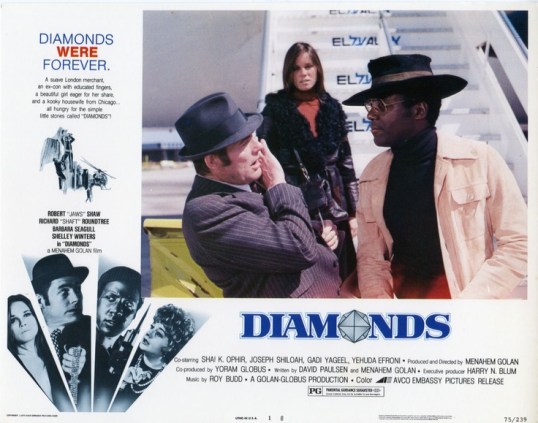
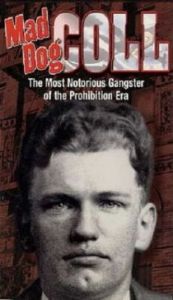 New York. The prohibition era. The Coll Brothers, Vincent (Christopher Bradley) and Peter (Jeff Griggs), are sick of working for the Irish gangster, O’Malley (William Anthony La Valle). They want to hang out at the Cotton Club with big time gangsters like Lucky Luciano (Matt Servitto), Legs Diamond (Will Kempe), and Dutch Schultz (Bruce Nozick). Vincent has fallen in love with Lotte (Rachel York), a singer at the club but the club’s owner, Owney Madden (Jack Conley), makes it clear that Lotte is too good for a low-rent thug. After killing O’Malley, Vincent and Peter go to work for Dutch Schultz but soon, they grew tired of the low wages that Schultz pays them. The Colls decide to strike out on their own, leading to all out war with New York’s organized crime establishment.
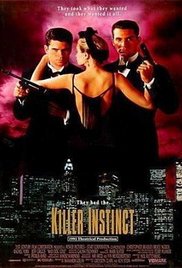 Mad Dog Coll was one of two gangster movies that Menaham Golan produced, back-to-back, in Russia. In fact, Mad Dog Coll may be the first American film in which Russia stood in for America instead of the other way around. Though this film was produced after Golan broke up with his longtime producing partner, Yoram Globus, Mad Dog Coll still has a definite Cannon feel to it. It is low-budget, fast-paced, unapologetically pulpy, and entertaining as Hell. For a Golan production, the performances are surprisingly good. Bruce Nozick steals the entire movie as crazy Dutch Schultz. None of it is subtle but it is enjoyable in the way that only a Greydon Clark-directed, Menahem Golan-produced gangster film can be. 1920s New York is recreated on Russian soundstages. The threadbare production design and cardboard cityscape brings a Jon Pertwee/Tom Baker-era Dr. Who feel to the movie. All that is missing is The Master brewing up moonshine and the Daleks exterminating the Chicago Outfit.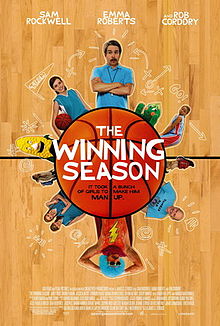
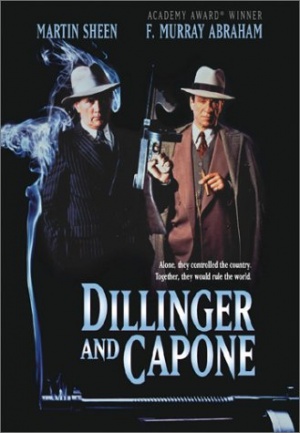 1934. Chicago. The FBI guns down a man outside of a movie theater and announces that they have finally killed John Dillinger. What the FBI doesn’t realize it that they didn’t get Dillinger. Instead they killed Dillinger’s look-alike brother. The real John Dillinger (played by Martin Sheen) has escaped. Over the next five years, under an assumed name, Dillinger goes straight, gets married, starts a farm, and lives an upstanding life. Only a few people know his secret and, unfortunately, one of them is Al Capone (F. Murray Abraham). Only recently released from prison and being driven mad by syphilis, Capone demands that Dillinger come out of retirement and pull one last job. Capone has millions of dollars stashed away in a hotel vault and he wants Dillinger to steal it for him. Just to make sure that Dillinger comes through for him, Capone is holding Dillinger’s family hostage.

 Chicago. 1915. Up-and-coming gangster Al Capone (Eric Roberts) berates his younger brother, Jimmy (Adrian Pasdar), for not being aggressive enough in a street fight. Not wanting to follow his brothers into a life of organized crime, Jimmy runs away from home and eventually finds himself in Harmony, Nebraska. Claiming to be a World War I vet named Richard Hart, Jimmy impresses everyone with both his marksmanship and his incorruptible nature. Soon, the new Richard Hart has been named town marshal. While Al Capone is taking over the Chicago rackets, Richard is keeping the town safe with his Native American deputy, Joseph Littlecloud (Jimmie F. Skaggs), and starting a family with the local school teacher, Kathleen (Ally Sheedy). When illegal liquor from Chicago starts to show up on a nearby Indian reservation, Richard Hart comes into conflict with the Chicago Outfit and his secret is finally revealed.
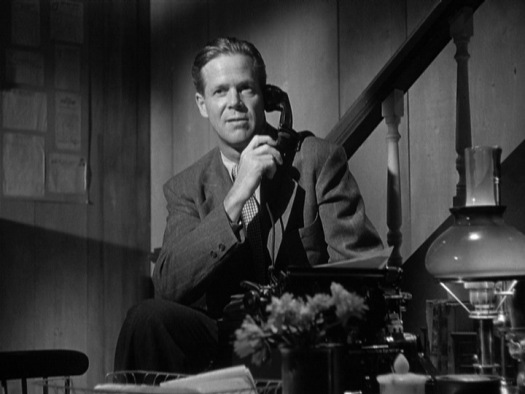
 Everyone knows who Al Capone was but few people remember Frank Nitti. Nicknamed “The Enforcer,” Nitti was Capone’s right-hand man. When Big Al was sent to federal prison for not paying his taxes, Nitti was the one who kept things going in Chicago. While Al was losing his mind in Florida, Nitti was the one who moved the Chicago Outfit away from prostitution and into the labor racket. Today, if anyone remembers Frank Nitti, it is probably because of the scene in Brian DePalma’s The Untouchables where Eliot Ness tosses him off of a building. In real life, Nitti survived the Untouchable era just to become one of the few crime bosses to die by his own hand. In 1943, With the feds closing in on him, Nitti shot himself in a Chicago rail yard.
 Through the Shattered Lens