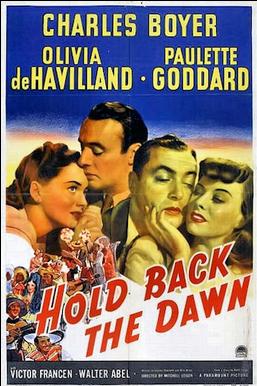
Lisa Reviews An Oscar Nominee: Hold Back the Dawn (dir by Mitchell Leisen)


(With the Oscars scheduled to be awarded on March 4th, I have decided to review at least one Oscar-nominated film a day.  These films could be nominees or they could be winners.  They could be from this year’s Oscars or they could be a previous year’s nominee!  We’ll see how things play out.  Today, I take a look at the 1941 best picture nominee, Hold Back the Dawn!)
Hold Back The Dawn is a historically important film for many reasons.

First off, this was the last film to be written by Billy Wilder before he launched his own legendary directorial career and, with its mix of sharp comedy and tearful melodrama, Hold Back The Dawn definitely feels like a Wilder film.  Wilder, himself, claimed that he was never happy with the way his script was adapted.  For instance, Wilder wrote a scene in which Charles Boyer, playing a Romanian who is stranded in a Mexican border town, was meant to deliver a monologue to a cockroach.  Boyer felt that the scene was ridiculous and the film’s director, Mitchell Leisen, never filmed it.  Wilder was so incensed that he declared that he would never again allow any of his scripts to be filmed by anyone other than himself.

Hold Back The Dawn also played a part in one of the most legendary feuds in Hollywood history, though there are some who claim that it was more the product of an overzealous pr agent’s imagination than anything else.  For her role as the shy school teacher with whom Boyer falls in love, Olivia de Havilland was nominated for Best Actress and was considered to be one of the front-runners for the reward.  (If nothing else, it was felt that giving her the Oscar would make up for not giving it to her when she was nominated for Gone With The Wind.)  However, that same year, Joan Fontaine was nominated for her role in Hitchock’s Suspicion and many felt that, after losing the previous year for her performance in Rebecca, Fontaine was owed an Oscar as well.  An Oscar night, Joan Fontaine beat Olivia de Havilland.  What complicated matters it that, beyond issues of professional jealousy, de Havilland and Fontaine were sisters.  For years, there were stories that de Havilland had never gotten over losing her Oscar to Fontaine and that, as a result, the two sisters had little to do with each other.  (The truth, as is always the case with siblings, appears to have been a lot more complicated.  de Havilland herself said it was less about the Oscars and more about just not having much in common with her sister.)

Beyond all that, however, Hold Back The Dawn is a charming dramedy that holds up remarkably well.  Boyer is Georges Iscoveu, a Romanian gigolo who has spent eight years living in a Mexican hotel, waiting to be allowed to enter the U.S.  Olivia de Havilland is Emmy Brown, an unmarried teacher who has nearly given up on ever finding love.  At first, Georges just wants to trick Emmy into marrying him so that he can legally enter the United States.  However, he soon finds himself truly falling in love with her.  Unfortunately, his partner-in-crime — Anita (Paulette Goddard) — is also in love with Georges and is not at all prepared to lose him to Emmy.  I know it all sounds very melodramatic but Wilder frames his story with a meeting between Georges and a Hollywood producer, a move the assures us that Hold Back The Dawn is content to be pure entertainment and we really should just sit back, not get too caught up on the specifics of the plot, and enjoy ourselves.  Charles Boyer is all befuddled charm as Georges while de Havilland is both poignantly likable as Emmy.  For me, as good as they are, the best performance came from Paulette Goddard, who is sharp-tongued and wonderfully cynical as Anita.  All three performers are helped by a wonderful script.  Even if Boyer never does talk to a cockroach, Wilder’s dialogue is still sharp and witty.  This is a film that is as much fun to listen to as it is to look at.

Hold Back The Dawn was nominated for best picture but lost to How Green Was My Valley.

This tribute Olivia de Havilland in Hold Back The Dawn was put together by Monique Classique for Olivia’s 100th birthday.

Pre Code Confidential #17: BED OF ROSES (RKO 1933)


gary loggins's avatarcracked rear viewer

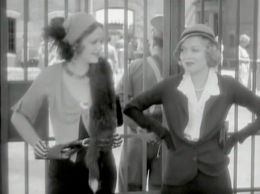
If someone you know is one of those film fans wondering what’s all the hubbub about “Pre-Code” films, may I make a suggestion? Watch BED OF ROSES with them, a totally amoral concoction from director Gregory LaCava , with Constance Bennett and Pert Kelton getting about as sinful as Stormy Daniels without actually performing onscreen sex! This one’ll have your eyes popping out seeing what they could get away with back in 1933, when the Great Depression was at its lowest and lust was riding high!

Lorry Evans (our gal Constance) and her pal Minnie Brown (the devilishly delightful Kelton) have just been released from a Louisiana slammer after serving time for hooking. You’d think they’d have learned their lesson, but no… soon as they get out, Minnie sweet talks a trucker for a ride, offering to pay by hopping in the back with him while Lorry drives! These two…

View original post 638 more words

Lisa Reviews An Oscar Nominee: The Dresser (dir by Peter Yates)


(With the Oscars scheduled to be awarded on March 4th, I have decided to review at least one Oscar-nominated film a day.  These films could be nominees or they could be winners.  They could be from this year’s Oscars or they could be a previous year’s nominee!  We’ll see how things play out.  Today, I take a look at the 1983 best picture nominee, The Dresser!)

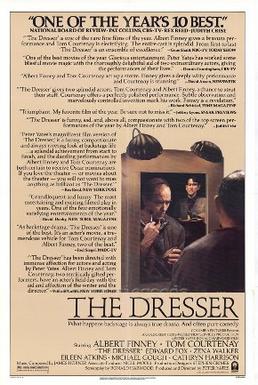
Taking place during World War II, The Dresser is a story of the theater.

Sir (played by Albert Finney) was once a great and famous Shakespearean actor but that was a long time ago.  Now, he is reduced to playing in regional theaters, traveling across Britain with a company made up of a motley collection of forgotten has-beens and never-weres.  He can still draw an audience, one made up of elderly theater goers who remember seeing him in London and people who are merely looking for a distraction from the war.  While bombs echo outside, Sir alternates between playing Othello and King Lear.  Backstage, Sir talks about the memoir he’s going to write and barks out orders to the members of his company.

Though Sir’s overly florid style of acting may seem old-fashioned, there’s no denying that his talent.  We don’t see much of his performance but, when we do see him, we never doubt his claim that he was once declared to the greatest King Lear to have ever appeared on the British stage.  Onstage, Sir is in complete control.  Offstage, he often struggles to remember where he is or what play he’s going to be performing.  At one point, when he’s meant to be getting ready to play Lear, he puts on his Othello makeup.

Fortunately, Sir has a dresser.  Norman (Tom Courtenay) doesn’t appear to have much of a life outside of taking care of Sir’s every whim.  Perpetually high-strung but blessed with a biting wit and an all-important bottle of Brandy that he takes a drink from whenever Sir gets too difficult to deal with, Norman is the one who holds the theatrical company together and who, most importantly, protects Sir.  When Sir can’t remember who he’s playing, Norman reminds him.  When Sir harasses a young actress, Norman is the one who hushes it up.  When Sir insults another actor (Edward Fox), Norman is the one who brokers a peace.  When it’s time for Sir to play King Lear, Norman is the one who helps Sir to transform into Shakespeare’s most tragic monarch.  Neither Sir nor the rest of the acting company seems to have much respect for Norman. The other actors consider Norman to be an ass-kisser and Sir … well, Sir doesn’t have much respect for anyone.  But for Norman, a gay man living at a time when homosexuality was illegal in Britain, Sir’s theatrical company provides him with the only safe place he’ll ever find.

The Dresser is an adaptation of a stage play.  (A few years ago, another version was produced for the BBC with Ian McKellen as Norman and Anthony Hopkins as Sir.)  It’s a good film, though I imagine that it’ll be best appreciated by people who have actually worked in theater.  Finney and Courtenay are both great and I also liked the performance of Edward Fox.  That said, it’s definitely a filmed play the feels more appropriate for PBS than for a movie screen.  As a result, it seems to be a bit of an odd pick for a Best Picture nomination.  I imagine that, much like Birdman, it benefitted from being a movie about actors and performing.

The Dresser lost Best Picture to Terms of Endearment.  It’s still worth seeing, if just for Courtenay’s final monologue.

Lisa Reviews An Oscar Nominee: How The West Was Won (dir by Henry Hathaway, George Marshall, John Ford, and Richard Thorpe)


(With the Oscars scheduled to be awarded on March 4th, I have decided to review at least one Oscar-nominated film a day.  These films could be nominees or they could be winners.  They could be from this year’s Oscars or they could be a previous year’s nominee!  We’ll see how things play out.  Today, I take a look at the 1963 best picture nominee, How The West Was Won!)

How was the west won?

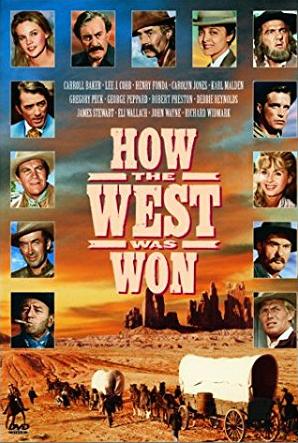
According to this film, the west was won by the brave men and women who set out in search of a better life.  Some of them were mountain men.  Some of them worked for the railroads.  Some of them rode in wagons.  Some of them gambled.  Some of them sang songs.  Some shot guns.  Some died in the Civil War.  The thing they all had in common was that they won the west and everyone had a familiar face.  How The West Was Won is the history of the west, told through the eyes of a collection of character actors and aging stars from Hollywood’s Golden Age.

In many ways, How The West Was Won was the Avatar of the early 60s.  It was a big, long, epic film that was designed to make viewers feel as if they were in the middle of the action.  Avatar used 3D while How The West Was Won used Cinerama.  Each scene was shot with three synchronized cameras and, when the film was projected onto a curved Cinerama screen, it was meant to create a truly immersive experience.  The film is full of tracking shots and, while watching it on TCM last night, I tried to imagine what it must have been like to see it in 1963 and to feel as if I was plunging straight into the world of the old west.  The film’s visuals were undoubtedly diminished by being viewed on a flat screen and yet, there were still a few breath-taking shots of the western landscape.

The other thing that How The West Was Won had in common with Avatar was a predictable storyline and some truly unfortunate dialogue.  I can understand why How The West Was Won was awarded two technical Oscars (for editing and sound) but, somehow, it also picked up the award for Best Writing, Screenplay or Story.  How The West Was Won is made up of five different parts, each one of which feels like a condensed version of a typical western B-movie.  There’s the mountain man helping the settlers get down the river story.  There’s the Civil War story.  There’s the railroad story and the outlaw story and, of course, the gold rush story.  None of it’s particularly original and the film is so poorly paced that some sections of the film feel rushed while others seem to go on forever.

Some of the film’s uneven consistency was undoubtedly due to the fact that it was directed by four different directors.  Henry Hathaway handled three sections while John Ford took care of the Civil War, George Marshall deal with the coming of the railroad, and an uncredited Richard Thorpe apparently shot a bunch of minor connecting scenes.

And yet, it’s hard not to like How The West Was Won.  Like a lot of the epic Hollywood films of the late 50s and early 60s, it has its own goofy charm.  The film is just so eager to please and remind the audience that they’re watching a story that could only be told on the big screen.  Every minute of the film feels like a raised middle finger to the threat of television.  “You’re not going to see this on your little idiot box!” the film seems to shout at every moment.  “Think you’re going to get Cinerama on NBC!?  THINK AGAIN!”

Then there’s the huge cast.  As opposed to Avatar, the cast of How The West Was Won is actually fun to watch.   Admittedly, a lot of them are either miscast or appear to simply be taking advantage of a quick payday but still, it’s interesting to see just how many iconic actors wander through this film.

For instance, the film starts and, within minutes, you’re like, “Hey!  That’s Jimmy Stewart playing a mountain man who is only supposed to be in his 20s!”

There’s Debbie Reynolds as a showgirl who inherits a gold claim!

Is that Gregory Peck as a cynical gambler?  And there’s Henry Fonda as a world-weary buffalo hunter!  And Richard Widmark as a tyrannical railroad employee and Lee J. Cobb as a town marshal and Eli Wallach as an outlaw!

See that stern-faced settler over there?  It’s Karl Malden!

What’s that?  The Civil War’s broken out?  Don’t worry, General John Wayne is here to save the day.  And there’s George Peppard fighting for the Union and Russ Tamblyn fighting for the Confederacy!  And there’s Agnes Moorehead and Thelma Ritter and Robert Preston and … wait a minute?  Is that Spencer Tracy providing narration?

When Eli Wallach’s gang shows up, keep an eye out for a 36 year-old Harry Dean Stanton.  And, earlier, when Walter Brennan’s family of river pirates menaces Karl Malden, be sure to look for an evil-looking pirate who, for about twenty seconds, stares straight at the camera.  When you see him, be sure to say, “Hey, it’s Lee Van Cleef!”

How The West Was Won is a big, long, thoroughly silly movie but, if you’re a fan of classic film stars, it’s worth watching.  It was a huge box office success and picked up 8 Oscar nominations.  It lost best picture to Tom Jones.

(By the way, in my ideal fantasy world, From Russia With Love secured a 1963 U.S. release, as opposed to having to wait until 1964, and became the first spy thriller to win the Oscar for Best Picture.)

Hiding in Plain Sight: THE FRONT (Columbia 1976)


gary loggins's avatarcracked rear viewer

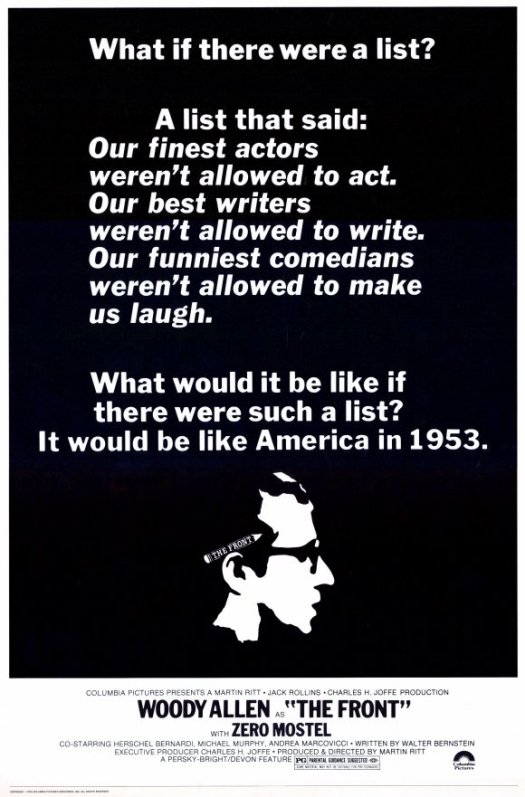
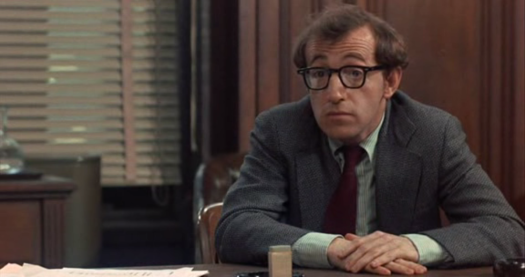
When a film gets labeled as a “comedy-drama”, chances are good you’re in for an uneven film. Such is the case with THE FRONT, Martin Ritt’s 1976 movie about the 1950’s blacklist. There are plenty of things to like about the movie, especially in the performances, but the somewhat heavy-handed script by Walter Bernstein results in an undeniably mixed bag.

Woody Allen  stars as Howard Prince, a lowly cashier perpetually up to his glasses in gambling debts, whose childhood friend Alfred Miller (Michael Murphy) is a blacklisted TV writer. Miller asks Howard to “front” for him, putting his name on Miller’s scripts so the networks will buy them, in return for a 10% commission. Soon the network clamors for more of Howard’s “work”, and he begins fronting for two other blacklisted writers. Although Woody didn’t write or direct THE FRONT, he’s still basically playing his nebbishy ‘Woody’ persona, but with…

View original post 491 more words

Lisa Reviews An Oscar Nominee: The Emigrants (dir by Jan Troell)


(With the Oscars scheduled to be awarded on March 4th, I have decided to review at least one Oscar-nominated film a day.  These films could be nominees or they could be winners.  They could be from this year’s Oscars or they could be a previous year’s nominee!  We’ll see how things play out.  Today, I take a look at the 1972 best picture nominee, The Emigrants!)

Since I’m currently dealing with either a really bad cold or the onset of the flu (let’s hope that it’s the former), I decided that Monday would be the perfect night to stay up extremely late and watch a 190-minute Swedish movie.

The Emigrants was released in Sweden in 1971 and it received an Oscar nomination for Best Foreign Language Film.  Then, it was released in the United States in 1972 and it managed to receive four more Oscar nominations, including one for Best Picture.  The Emigrants was the third foreign language film to be nominated for Best Picture, the first film to be nominated in multiple years, and also the first Swedish film to contend for the Academy’s top prize.  (The following year, Ingmar Bergman’s Cries and Whispers would also become the second Swedish film nominated for Best Picture.)  At the same time that The Emigrants was nominated for Best Picture, its sequel, The New Land, was nominated for Best Foreign Language Film.  1972 was an interesting year.

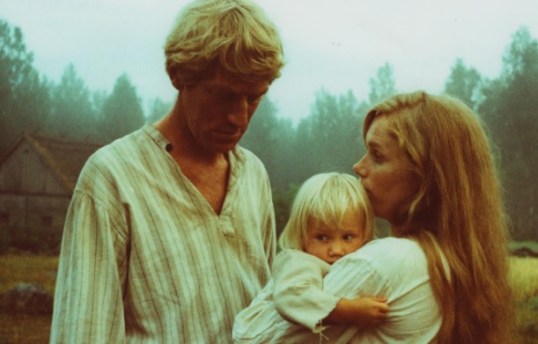
The Emigrants opens in 1844, in Sweden.  Karl Oskar (Max Von Sydow) has married Kristina (Liv Ullmann).  Like his father before him, Karl Oskar is a farmer.  It’s an exhausting life.  There is never enough food to eat.  The weather is perpetually gloomy.  The harvest is always disappointing.  As poor farmers, Karl Oskar and his family face constant prejudice.  In Sweden, the only thing more corrupt than the government is the church.  After one of his daughters starves to death, what choice does Karl Oskar and his family have other than to escape to America?

As Karl Oskar’s brother, Robert (Eddie Axberg), explains, the best rice comes from the Carolinas.  The best farmland is in America.  In America, anyone can become rich.  Anyone can walk up to the President and talk to him without running the risk of being imprisoned or executed.  (In 1844, ordinary citizens could stop by the White House and make an appointment to see the President.  This, of course, would change decades later, after a disgruntled office seeker shot President Garfield.)  In America, Robert says excitedly, no one works more than 14 hours a day!  Even slaves can own land and make their own money!

The Emigrants deals with their Karl Oskar and his family’s voyage to America.  Karl Oskar and Kristina do not travel alone.  Kristina’s uncle (Allan Edwall) is with them and hopes that, in America, he will be allowed to freely practice his religious beliefs.  A former prostitute, Ulrika (Monica Zetterlund), is also with them, hoping a new land will mean a better life for both herself and her daughter.  Even Robert’s best friend, Arvid (Pierre Lindstedt), going with them.  It’s not an easy journey.  Not everyone survives the voyage to North America but those that do soon find themselves in a young and untouched country where anything seems to be possible.

Swedish cinema has a reputation for being dark and brooding but those are two words that definitely do not apply to The Emigrants, which is about as positive a portrait of America as you could ever hope to see.  Regardless of whatever tragedy may occur during the journey, this movie leaves no doubt that the journey was more than worth it.  It unfolds at a pace that is perhaps a bit too leisurely but, at the same time, it’s also an achingly pretty movie with shots that bring to mind the best of Terrence Malick.  In fact, there are times when the film is almost too pretty.  It’s possible to get so caught up in looking at all the beauty around Karl Oskar and Kristina that you lose track of the story.  Max Von Sydow and Liv Ullmann are both achingly pretty as well and, even more importantly, they’re believable as a married couple who are often equally in love and equally annoyed with each other.

It was interesting to go from watching The Grapes of Wrath to watching The Emigrants.  If The Grapes of Wrath was an American nightmare, The Emigrants is about as pure a celebration of the American Dream as you’re going to find.  It lost the Oscar for Best Picture to a far different film about the immigrant experience in America, The Godfather.

Lisa Reviews An Oscar Nominee: The Grapes of Wrath (dir by John Ford)


(With the Oscars scheduled to be awarded on March 4th, I have decided to review at least one Oscar-nominated film a day.  These films could be nominees or they could be winners.  They could be from this year’s Oscars or they could be a previous year’s nominee!  We’ll see how things play out.  Today, I take a look at the 1940 best picture nominee, The Grapes of Wrath!)

How dark can one mainstream Hollywood film from 1940 possibly be?

Watch The Grapes of Wrath to find out.

Based on the novel by John Steinbeck and directed by John Ford, The Grapes of Wrath tells the story of the Joad family and their efforts to neither get sent to prison nor starve to death during the Great Depression.  When they lose their farm in Oklahoma, they head for California.  Pa Joad (Russell Simpson) has a flyer that says someone is looking for men and women to work as pickers out west.  The 12 members of the Joad Family load all of their possessions into a dilapidated old truck and they hit the road.  It quickly becomes apparent that they’re not the only family basing all of their hopes on the vague promises offered up by that flyer.  No matter how much Pa may claim different, it’s obvious that California is not going to be the promised land and that not all the members of the family are going to survive the trip.

Tom Joad (Henry Fonda) is the oldest of the Joad sons.  He’s just been released from prison and he’s killed in the past.  Having been in prison during the start of the Great Depression, Tom doesn’t realize how bad things truly are until he arrives home and sees someone he grew up with using a tractor to knock down a house.  (It’s just business, of course.  The owners of the house can’t pay their bills so the house gets destroyed.)  The film’s story is largely told through Tom’s eyes and Henry Fonda gives a sympathetic performance, one the gets the audience to empathize with and relate to a character who is a total outsider.

As for the rest of the Joad Family, Ma (Jane Darwell) is the glue who holds them together and who refuses to allow them to surrender to despair.  (And yet even Ma is forced to make some tough choices when the starving children of one work camp ask her to share her family’s meal with them.)  Rosasharan (Dorris Bowdon) is pregnant while Grandpa (Charley Grapewin) is too sickly for the trip but doesn’t have anywhere else to go.  And then there’s Casy (John Carradine), the former preacher turned labor organizer.  Casy is not blood-related but he soon becomes a member of the family.

The Joads have a healthy distrust of the police and other authority figures and that turns out to be a good thing because there aren’t many good cops to be found between Oklahoma and California.  Instead, the police merely serve to protect the rich from the poor.  Whenever the workers talk about forming a union and demanding more than 5 cents per box for their hard work, the police are there to break heads and arrest any troublemakers on trumped up charges.  Whenever a town decides that they don’t want any “Okies” entering the town and “stealing” jobs, the police are there to block the roads.

The Grapes of Wrath provides a portrait of the rough edges of America, the places and the people who were being ignored in 1940 and who are still too often ignored today.  John Ford may not be the first director that comes to mind when you think of “film noir” but that’s exactly what The Grapes of Wrath feels like.  During the night scenes, desperate faces emerge from the darkness while menacing figures lurk in the shadows.  When the sun does rise, the black-and-white images are so harsh that you almost wish the moon would return.  The same western landscape that Ford celebrated in his westerns emerges as a wasteland in The Grapes of Wrath.  The American frontier is full of distrust, anger, greed, and ultimately starvation.  (Reportedly, the film was often shown in the Soviet Union as a portrait of the failure of America and capitalism.  However, it was discovered that Soviet citizens were amazed that, in America, even a family as poor as the Joads could still afford a car.  The Grapes of Wrath was promptly banned after that.)  John Ford is often thought of as being a sentimental director but there’s little beauty or hope to be found in the images of The Grapes of Wrath.  (Just compare the way The Grapes of Wrath treats poverty to the way Ford portrayed it in How Green Was My Valley.)  Instead, the film’s only hint of optimism comes from the unbreakable familial bond that holds the Joads together.

As dark as it may be, the film is nowhere near as pessimistic as the original novel.  The novel ends with a stillborn baby and a stranger starving to death in a barn.  The film doesn’t go quite that far and, in fact, offers up some deus ex machina in the form of a sympathetic government bureaucrat.  (Apparently, authority figures weren’t bad as long as they worked for the federal government.)  That the book is darker than the movie is not surprising.  John Steinbeck was a socialist while John Ford was a Republican with a weakness for FDR.  That said, even though the film does end on a more hopeful note than the novel, you still never quite buy that things are ever going to get better for anyone in the movie.  You want things to get better but, deep down, you know it’s not going to happen.  Tom says that he’s going to fight for a better world and Fonda’s delivers the line with such passion that you want him to succeed even if you know he probably won’t.  Ma Joad says the people will never be defeated and, again, you briefly believe her even if there’s not much evidence to back her up.

Even when viewed today, The Grapes of Wrath is still a powerful film and I can only guess what it must have been like to see the film in 1940, when the Great Depression was still going on and people like the Joads were still making the journey to California.  Not surprisingly, it was nominated for best picture of 1940, though it lost to Alfred Hitchcock’s Rebecca.

The Cloverfield Paradox – *Great Spoilers*


tcp

It’s Superbowl Sunday!!! Better yet, it’s The Cloverfield Paradox on Netflix.

This movie is 1 part – Event Horizon, 1 Part – The Thing, and 1 Part – Boring.

We begin with a dying earth and pesky scientists have tried to create a free energy machine innnnnnnn spaaaaaaace.  Sounds Legit.

There’s British people talking in traffic and I need closed captioning.  The lady in traffic is apparently an astronaut and “Comm Officer”. However, I can’t understand anything she’s saying; so maybe, communications wasn’t the best fit?!

We’re on the space station and they’re trying to do some particle acceleratin’ …woohoo, but something is amiss. The story is really dragging.

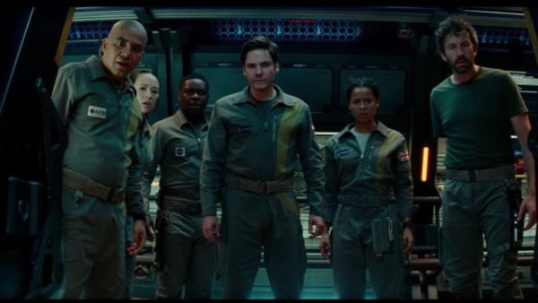
Now, there’s nerds, foozball playing, and awkward conversation.  Are we sure this is a Space Station and not the Google Campus?  I do like that all peoples are represented and they’re all boring.  It’s about time that we embraced that most people are boring and even some Netflix films.

They’re about to turn on their Shepherd Accelerator and …… they are making particles, energy, or s’mores?  Then, the Shepherd overloads.  I’m guessing they forgot to use a surge protector. They get control, but the earth is gone- must’ve left the Earth in their other solar system’s pants.  They’re hurtling into empty space.

The crew is starting to act weird.  The Russian- I’m going to call him Boris – is playing with his face a lot and we’re getting an Event Horizon vibe mostly because JJ Abrams decided to defile the memory of another one of my favorite films.  The steel walls have screaming and they decide to open it….because sure. They reveal a woman fused to wires and the bulkhead who knows the Comm Officer’s name.  It’s pretty gross.  They try to do some ER work on her and she lives.

Meanwhile….Back on Earth. There’s explosions!!!

Back on the station…

The foozball is playing itself and things are disappearing: gyroscopes, worms, and my time.   Boris has a worm creature in his head and it’s doing gross things to his eyeball.  Boris starts talking to himself and the voices in his head ask him to make a 3d printed gun.  Boris pulls the 3d printed gun on crewmates and dies with hundreds of worms shooting out of him.

The lady they found in the bulkhead – Mina – wakes up.  She thinks that she was on the station the whole time.  Mina accuses Schmidt of sabotage.  For scientists, they are unimpressive.  These dopes haven’t figured out that they’re in another dimension?! Did they get their PhDs from University of Phoenix?!  They lock Schmidt up for sabotage and proceed to make bad choices.

Back on earth…. More explosions, but now there are screaming kids.

Back on the station: The ship’s Irish janitor is doing repairs and his arm gets detached.  The ship let’s Schmidt out of the airlock and he’s being chased by the Irishman’s arm.  The arm writes them a letter….really. It tells them to cut Boris’ corpse open.  They find the gyroscope inside Boris.  The comms come back and their current reality is pretty bad.  They watch CNN and learn that they’ve traveled to Another Dimension …. Another Dimension … Don’t … you tell me to smile….Interplanetary.   In this dimension, there’s World War III going on and everybody has goatees.  They decide to turn on the Shepherd machine again and hopefully not attract a herd of sheep as well.

Back on earth, the Comm Officer’s husband has rescued a random kid and went to a bomb shelter.

Back on the Station:  Tam figures out that condensation was messing with their calculations, but then she drowns….somehow.  In the alternate dimension, Eva’s kids are alive.  In the “Good Dimension” Eva apparently installed some bad track lighting and killed everyone, but in this “Evil Dimension” – they’re fine because she used lamps I suppose.  Eva decides to go back to warn her twin not to use track lighting…..ever.  I’ve noticed that they do A LOT of caulking in this movie to exciting music, but it’s still a guy caulking. There’s another malfunction and half the ship explodes.

The crew decides that they need to de-couple the broken part of the station, engendering a long scene of attempted space station repair.  It was really slow AND they had this crazy 8-4pm window to do it.  Then, the captain sacrifices himself to do it because why not?

Eva orders that they turn on the shepherd.  All looks well, but Mina steals the gun and starts shooting.  She needs the “firing key” for some reason.  Presumably, the Shepherd will create energy, but that really makes no sense because it doesn’t create energy as much as derivative B-Movies.  Mina manages to kill Eva in the final scene Aliens style and it’s mildly entertaining.

Schmidt lives and they start the Shepherd again, but first she warns her evil twin not to use Track Lighting and to give the ball to Marshawn Lynch in the 2015 Super Bowl.  They see earth again- the good earth and they have a stable power beam.   Eva’s husband doesnt want them to come back because—-monsters.  Then, as the escape pod enters the atmosphere, we see a monster.  So, they unleashed monsters and NBC’s Whitney.

This was a great bad movie, which is what JJ Abrams can do in his sleep. I would watch this if I had the flu or was in a B-movie place.

The Lullaby: Preview, Review and trailer


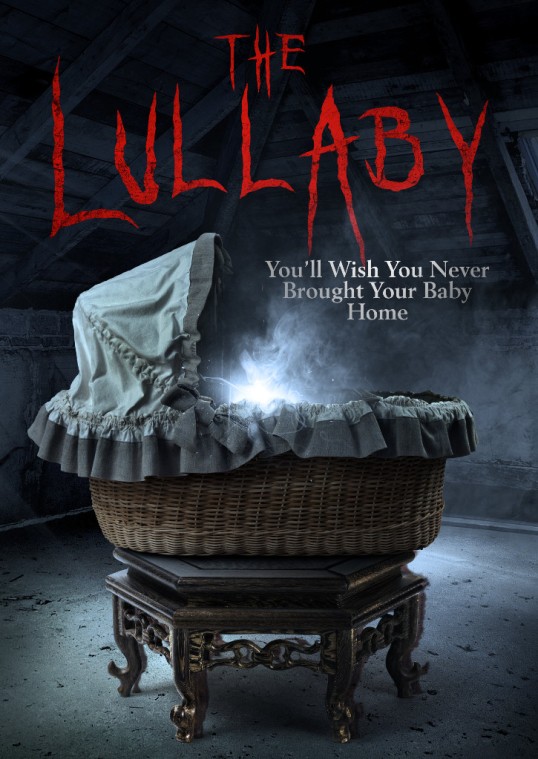
Remember that sweet song your Mother sang to you as a child?

Poster

Cast:

Reine Swart as Chloe van Heerdon

Brandon Aruret as Dr. Timothy Reed

Shayla-Rae McFarlane as young Chloe

Preview:

Chloe is overwhelmed by the birth of her first child. The incessant crying of her baby, the growing sense of guilt and paranoia sends her into depression. With a heightened urge to protect her son, Chloe sees danger in every situation. She starts to hear voices, the humming of a childhood lullaby and sees flashes of a strange entity around her child. Convinced that the entity is real, Chloe will do everything in her power to protect her son. Is she haunted by evil or is it just the baby blues?

Review:

index Oh, Child, we got so much to talk about! Your Mama is not crazy, you are! Or are you? Or was you just twisting my mind?


pic 2


Or is your Mom really crazy!


pic 3 Or your Grandma?


That sweet little song you Mom sang to you as a child… you know… that comforting song that always puts you into dream land… yeah, this movie might make you sleep different tonight!

Credits:

Uncork’d Entertainment presents a Phoenix Film with Valhalla Productions Directed by Darrell James Roodt


Trailer:


Would I recommend this movie:

Yep, absolutely! One of the best horror/thriller movies I have seen this year!

Where can you see it?

The Lullaby is opening in theaters and on VOD March 2, 2018

Oh, BTW:

No Spoilers, but Chloe is back….

pic 4

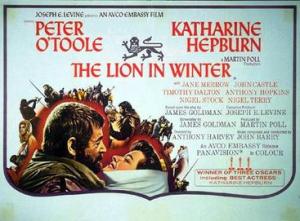
Lisa Reviews An Oscar Nominee: The Lion in Winter (dir by Anthony Harvey)


(With the Oscars scheduled to be awarded on March 4th, I have decided to review at least one Oscar-nominated film a day.  These films could be nominees or they could be winners.  They could be from this year’s Oscars or they could be a previous year’s nominee!  We’ll see how things play out.  Today, I take a look at the 1968 best picture nominee, The Lion in Winter!)

“I don’t much like our children.”

— Eleanor of Aquitaine (Katharine Hepburn)

“Oh God, but I do love being king.”

— King Henry II (Peter O’Toole)

“What family doesn’t have its up and down?”

— Eleanor of Aquitaine

To be honest, it’s tempting to just spend this entire review offering up quotes from this film.  Based on a play by James Goldman and featuring a cast of actors who all specialized in delivering the most snarky of lines with style, The Lion In Winter is a film that is in love with the English language.  As visually impressive as the film and its recreation of the 12th Century is, it’s tempting to close your eyes while watching The Lion In Winter and just listen to the dialogue.

The year is 1183.  England has a king.  His name is Henry II (Peter O’Toole) and he’s held power for a long time, through a combination of willpower and political manipulation.  He’s married to Eleanor of Aquitaine (Katharine Hepburn), though he long since had her imprisoned.  Before marrying Henry, Eleanor was the wife of Louis VII.  Now, Henry’s mistress is Alais (Jane Merrow), the daughter of Louis and his second wife.  In order to get Alais’s dowry, Henry has promised her half-brother, Philip II (Timothy Dalton), that she will be married to the next king of England.  Philip, incidentally, is the son of Louis’s third wife.  To be honest, it’s confusing as Hell to try to keep up with all of it but that’s medieval politics for you.

Of course, everyone knows that Henry II will not be king forever.  He’s already 50 years old, which is quite an advanced age for 1183.  Being king means that everyone, even his own family, is plotting against him.  It also means living in a remarkably dirty and drafty castle.  (If you’re looking for a film that celebrates the splendor of royalty, this is probably not the film to watch.)  Henry has three sons, all of whom feel that he should be the rightful heir.

For instance, there’s Richard (a young Anthony Hopkins).  Richard is Henry and Eleanor’s eldest son.  He is a fierce, outspoken, and judgemental man.  He describes himself as being a legend and a poet.  He looks and acts like a future king.  Of course, he’s also a bit of a pompous ass.  Richard is Eleanor’s pick to be king, though Richard is always quick to equally condemn both of his parents.

And then there’s John (Nigel Terry).  Early on, John is described as being “pimply and smelling of compost.”  For some reason, John is Henry’s favorite.  He’s also a sniveling weakling, the type who is never smart enough to know when his father is being honest or when his father is bluffing.  Halfway through the film, he comes close to accidentally starting a civil war.

And finally, there’s Geoffrey (John Castle).  Geoffrey is the smartest of the princes and the most manipulative.  Of the three princes, he’s the only one who is as smart as both Henry and Eleanor.  However, whereas Henry and Eleanor enjoy their complicated lives and manage to maintain a sense of (very dark) humor about it all, Geoffrey is bitter about his place as the middle child.

Christmas has arrived and Henry has temporarily released Eleanor from prison so that she can spend the holidays with him, his sons, and his mistress.  Also coming over for the holiday is King Phillip II, eager to either take back his sister’s dowry or to attend her wedding to the next King of England.  What follows is a holiday of politics, manipulation, and shouting.  In fact, there’s lots and lots of shouting.

It’s a thoroughly enjoyable film, one that expertly mixes British history with domestic drama and dark comedy.  Obviously, the film’s main appeal comes from watching two screen icons, Peter O’Toole and Katharine Hepburn, exchanging snappy dialogue.  Hepburn deservedly won an Oscar for her performance as Eleanor.  O’Toole should have won an Oscar as well but he lost to Cliff Robertson for Charly.  In fact, O’Toole and Hepburn are so good that they occasionally overshadow the rest of the very talented cast.  Anthony Hopkins and Nigel Terry both make indelible impressions as Richard and John but my favorite princely performance came from John Castle, who is a malicious wonder as Geoffrey.  As easy as it is to dislike Geoffrey, it’s hard not to feel that he does have a point.

(Of course, in real life, both Richard and John would eventually serve as king while Geoffrey would die, under mysterious circumstances, in France.  Reportedly, Philip II was so distraught over Geoffrey’s death that he attempted to jump on the coffin as it was being lowered into the ground.)

The Lion In Winter was nominated for seven Oscars and won three, for Best Actress (Katharine Hepburn), Best Adapted Screenplay (James Goldman), and Best Music Score (John Barry).  It lost best picture to Oliver!