Film Review: Cocaine and Blue Eyes (1983, directed by E.W. Swackhamer)


When San Francisco-based private investigator Michael Brennen (O.J. Simpson) gives a ride to Joey Crawford (John Spencer) on Christmas Eve, he doesn’t know that it’s going to lead to the biggest case of his career.  When Joey asks Michael to help him track down his ex-girlfriend, Michael assumes that Joey would never be able to pay for his investigative services.  But one week later, Michael gets something in the mail from Joey.  Inside the envelope, there’s a picture of both Joey’s ex and a thousand dollar bill.  Ever after he discovers that Joey was mysteriously killed the night before, Michael decides to take on the case.  His investigation will take him not only to Joey’s ex but it will also lead to him uncovering a drug ring that involves one of San Francisco’s most prominent families.

Simpson not only starred in this made-for-TV movie but he also served as executive producer.  Watching the movie, it’s obvious that it was meant to serve as a pilot for a Michael Brennen TV series and it’s also just as obvious why that series never happened.  O.J. Simpson was not a terrible actor but, ironically for someone who set records as an NFL player, there was nothing tough about him.  Simpson may be playing a two-fisted, cash-strapped P.I. but, in every scene, he comes across like he can’t wait to hit the golf course.  Simpson’s pleasant demeanor may have served him well in other areas of his life but it didn’t help him with this role.  Whenever Simpson has to share a scene with John Spencer, Candy Clark, Cliff Gorman, or any of the other members of this film’s surprisingly talented supporting cast, Simpson’s bland screen presence and lack of gravitas becomes all the more apparent.

Of course, when seen today, the main problem with Cocaine and Blue Eyes is that it’s impossible to watch without thinking, “Hey, didn’t the star of this movie get away with killing his wife and an innocent bystander?”  Even the most innocuous  of lines take on a double meaning when they’re uttered by O.J. Simpson.  It doesn’t help that the movie opens with Michael visiting his estranged wife and their children on Christmas Eve and getting chased around the neighborhood by a guard dog.  When the movie was made, this scene was probably included so that O.J. could show off some of the moves that made him a star at UCLA and with the Bills.  Seen today, the scene takes on a whole different meaning.

Without O.J. Simpson, Cocaine and Blue Eyes could easily pass for being an extended episode of Magnum P.I., Simon and Simon, or any other detective show from the 80s.  With Simpson, it becomes a pop cultural relic.  I don’t think it’s ever been released on DVD but it is available on YouTube, where it can be viewed by O.J. Simpson completists everywhere.
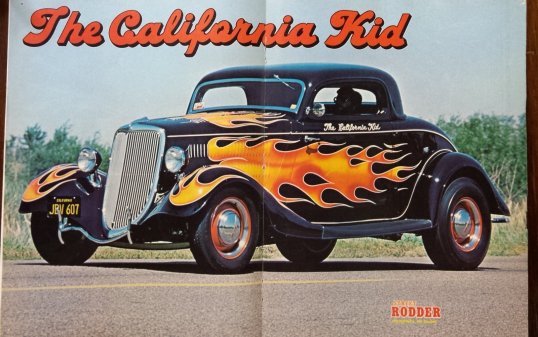
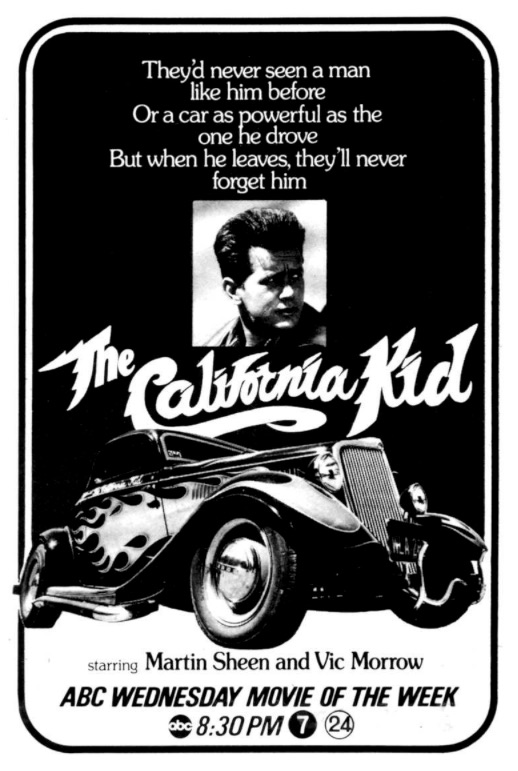
Automotive Stardom: The California Kid (1974, directed by Richard T. Heffron)


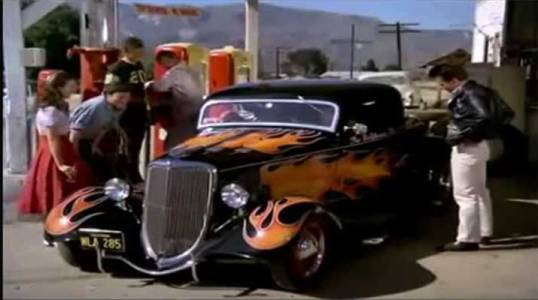
In 1973, a customized 1934 Ford three-window coup appeared on the cover of the November issue of Custom Rod.  The car had been created by legendary customizer Pete Chapouris and it was called The California Kid.  The cover caught the attention of television producer Howie Horowitz, who thought that maybe the car could become a star.

A year later, the car starred in it’s own made-for-TV movie.  Naturally, that movie was called The California Kid.

The California Kid takes place in 1958 in the small town of Clarksberg.  Clarksberg is known for being a town that does not tolerate speeders.  Sheriff Roy Childress (Vic Morrow) lost his wife and daughter to a speeder and, ever since, he’s become a fanatic about making sure that people respect the speed limits.  He’ll give a ticket to anyone who he sees going too fast.  He’ll even impound your car.  And if you don’t learn your lesson or if you try to outrun him, he’ll get behind your car, give it a push, and send both you and your vehicle plunging over the side of a mountain.

That’s what happens to Don McCord (Joe Estevez), a Marine who was just trying to get back to back to his base on time.  After Don and his car go over the side of a cliff, the official ruling is that it was an accident.  However, Don’s brother, Michael (Martin Sheen, real-life brother of Joe Estevez), doesn’t buy that.  Determined to prove that his brother was murdered, Micheal rolls into town, behind the wheel of the California Kid.

The California Kid is a typical 70s car chase movie.  There’s not much going on other than the sheriff chasing the Michael and the California Kid.  Martin Sheen coasts through the movie, doing the James Dean impersonation that he perfected in the previous year’s Badlands and Vic Morrow plays his thousandth sadistic authority figure.  The supporting cast is full of familiar names who don’t get to do much.  Michelle Phillips plays the waitress who falls in love with Martin Sheen.  (It’s always a waitress.)  Stuart Margolin is Morrow’s deputy and keep an eye out for Nick Nolte, playing a mechanic.  Interestingly, The California Kid was written by Richard Compton who, a year later, would direct Notle in his first starring role in the 1975 car chase film, Return to Macon County.  Of course, the real star of the movie is the car and the California Kid earns its star billing.  The movie might not be anything special but there’s no way you can watch it and not want to drive that car.

This is a made-for-TV movie so you won’t hear any profanity and the characters are all as simple can be.  However, there are enough shots of cars going over cliffs to keep chase enthusiasts entertained.

Ro-Man Holiday: ROBOT MONSTER (Astor Pictures 1953)


gary loggins's avatarcracked rear viewer

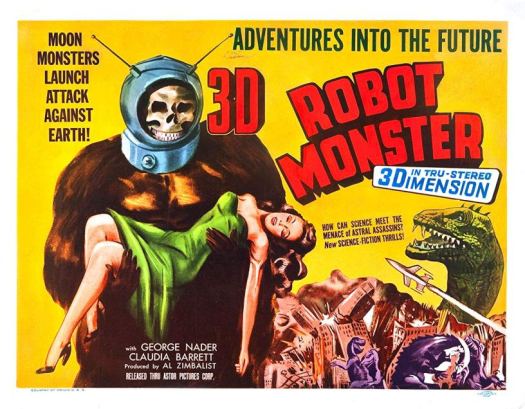
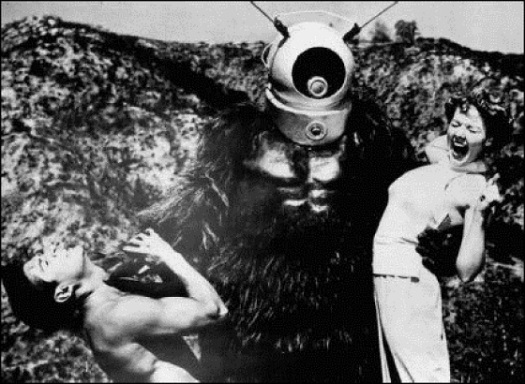
My friends at The Film Detective are hosting a Drive-In Monster Movie Party all this month, and asked me to join in on the fun! When I received the list of movies they’re showing, I jumped at the chance to watch and review ROBOT MONSTER, that infamous no-budget classic directed by Phil Tucker, featuring an alien called Ro-Man who looks like a gorilla wearing a diving helmet. And honestly, how can you not love that!!

ROBOT MONSTER consistently makes critics’ all-time worst movie lists, derided for its technical ineptitude, overwrought acting, absurd dialog, and flat-out senselessness. It’s all that, to be certain, but I look at things through a different (some would say “shattered”) lens. First, did I enjoy it? The answer: a resounding yes! The movie may not be on a par with CASABLANCA or THE SEARCHERS , but it didn’t bore me or make me want to shut…

View original post 372 more words

Film Review: Blood Red (1989, directed by Peter Masterson)


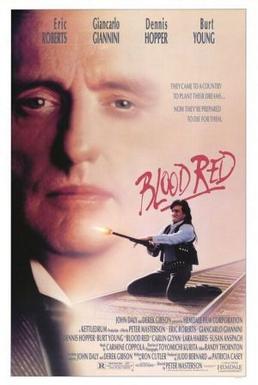
The time is the 1890s.  The place is California.  Sicilian immigrant Sebastian Collogero (Giancarlo Giannini) has just been sworn in as an American citizen and owns his own vineyard.  When Irish immigrant William Bradford Berrigan (Dennis Hopper) demands that Sebastian give up his land so Berrigan run a railroad through it, Sebastian refuses.  Berrigan hires a group of thugs led by Andrews (Burt Young) to make Sebastian see the error of his ways.  When Sebastian ends up dead, his wayward son, Marco (Eric Roberts), takes up arms and seeks revenge.
Have you ever wondered what would have happened if the famously self-indulgent directors Michael Cimino and Francis Ford Coppola teamed up to make a movie about the American Dream?  The end result would probably be something like Blood Red.  Like Cimino’s The Deer Hunter and Heaven’s Gate, Blood Red begins with a lengthy celebration (in this case, in honor of Sebastian’s naturalization ceremony) that doesn’t have much to do with the rest of the film but which is included just to make sure we know that what we’re about to see is more than just a mere genre piece.  Like many of Coppola’s films, Blood Red features a tight-knit family, flowing wine, and a score composed by Carmine Coppola.  The only difference between our hypothetical Cimino/Coppola collaboration and Blood Red is that the Cimino/Coppola film would probably be longer and more interesting than Blood Red.  Blood Red is only 80 minutes long and directed by Peter Masterson, who seems lost.  There’s a potentially interesting story here about two different immigrants fighting to determine the future of America but it gets lost in all of the shots of Eric Roberts flexing his muscles.

For an actor known for his demented energy, Eric Roberts is surprisingly dull as the lead but Blood Red is a film that even manages to make veteran scenery chewers like Dennis Hopper and Burt Young seem boring.  (Hopper’s bizarre attempt at an Irish brogue does occasionally liven things up.)  The cast is full of familiar faces like Michael Madsen, Aldo Ray, Marc Lawrence, and Elias Koteas but none of them get to do much.  Of course, the most familiar face of all belongs to Eric’s sister, Julia.  Julia Roberts made her film debut playing Marco’s sister, Maria.  (Because the film sat on the shelf for three years after production was completed, Blood Red wasn’t released until after Julia has subsequently appeared in Mystic Pizza and Satisfaction.)  She gets three lines and less than five minutes of screen time but she does get to briefly show off the smile that would later make her famous.  Today, of course, that smile is the only reason anyone remembers Blood Red.

I Watched Hero


Joe Finn (Burgess Jenkins) used to the best Little League coach in the state.  That was until he decided to leave his family to seek fame and fortune in the Big Leagues.  After his wife dies of cancer, Joe returns home to discover that his teenage son, David (Justin Miles), wants nothing to do with him.  Determined to stick around and repair his relationship with David, Joe tries to return to coaching Little League but he discovers that things have changed since he left.  Runners aren’t allowed to take a lead off base.  Pitchers can only pitch for one inning at a time.  Practice can only last an hour a day.

That’s not real baseball!

Joe decides to start his own league, one where pitchers can pitch multiple innings, bases can be stolen, there’s no such thing as a tied game, and everyone practices daily for three hours.  To be a part of the league, the players not only have to get their fathers to agree to come to every game but also to practice with them at home.  It’s not going to be easy.  One player’s father is always busy with his job as the warden of the local prison.  Another player’s father is an inmate in that same prison.  But Joe is determined to teach his players and their fathers about both baseball and life.

Hero‘s a sweet movie and it made a good point about the importance of not only allowing kids to truly compete but also about teaching them the importance of both winning and losing with dignity and sportmanship.  It shows why baseball is important but why it’s also just as important to play a real game instead of a toned down version.  Burgess Jenkins, who used to play Billy Abbott on The Young and The Restless, is convincing as a coach and Justin Miles does a good job as his son.  My only problem with the film is that it spent so much time emphasizing that the fathers needed to come to their son’s games that I felt like it shortchanged all of the moms who have been there for their children whenever a father couldn’t or wouldn’t be.  Anyone who has ever been to a real little league game (or just a soccer match) knows that a mom can get just as into the game as a father.

People who complain about “participation trophies” will probably respond best to this film’s message but there’s also enough action of the field that people who just like baseball movies might enjoy it as well.

Pre Code Confidential #28: Edward G. Robinson in LITTLE CAESAR (Warner Brothers 1931)


gary loggins's avatarcracked rear viewer

Gangster movies were nothing new in 1931. Josef von Sternberg’s UNDERWORLD (1927), Lewis Milestone’s THE RACKET (1928), and Bryan Foy’s LIGHTS OF NEW YORK (1929) had all dealt with urban organized crime onscreen (and Foy’s drama was the first “all-talking picture” to hit cinemas). But when Edward G. Robinson rat-a-tatted his way through Mervyn LeRoy’s LITTLE CAESAR, the gangster genre had finally arrived – with a vengeance! This highly influential flick opened the floodgates for a variety of films about mobsters, killers, and other assorted no-goodniks, and made an unlikely star out of the pugnacious Eddie G.

The film concerns the rise and fall of Rico “Little Caesar” Bandello, a small-time hood from the sticks who, along with partner in crime Joe Massara, moves to the big city and blasts his way up the ranks to become a gang boss. The diminutive Robinson exudes star power as the psychotic sociopath…

View original post 472 more words

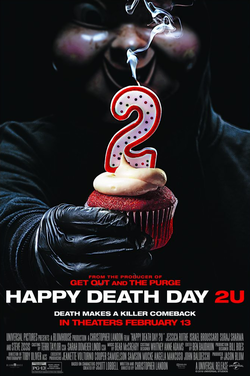
Film Review: Happy Death Day 2U (dir by Christopher B. Landon)


I have to admit that, when I first heard that Blumhouse was going to be producing a sequel to 2017’s Happy Death Day, I wasn’t surprised.  After all, every successful horror film gets a sequel.  That’s just the way the business work.  However, I will admit to being very skeptical.

I mean, the first film was a genuinely clever and witty mix of Groundhog Day and Scream.  It was often laugh-out-loud funny and, in a perfect world, Jessica Rothe’s lead performance as Tree Geldman would have been nominated for, at the very least, a Golden Globe.  It was also a surprisingly effective horror film.  The Baby Face Killer was as frightening as she was ludicrous.  Still, at the end of the film, it was hard not to feel that Tree’s story was finished.  When I heard there was a sequel, I was like, “What?  Is she going to start reliving a second day with a new killer over and over again?”

Well, it turns out that I was partially correct about the plot but I was pretty much wrong in my skepticism.  This is a sequel that works surprisingly well.

In Happy Death Day 2U, Tree once again finds herself having to live September 18th over and over again.  However, this time, it’s not just so Tree can become a better human being and discover who is targeting her.  This time, we actually find out why Tree ended up stuck in that time loop in the first place.  It turns out that Carter’s (Israel Broussard, returning from the first film) roommate, Ryan (Phil Vu), has built some sort of experimental quantum reactor and, whenever it’s turned on, it can create time loops and send people to alternate realities.  It’s all very science-y and director Christopher B. Landon is smart enough not to spend too much time lingering over all the details.  Everyone in the film agrees that quantum reactor does what they say that it does and that’s really all we need to know.

Anyway, Tree is once again reliving her birthday but now, she’s reliving it in an alternate reality.  That means that there’s a bunch of little difference to deal with.  For one thing, even though someone is still determined to kill her, it’s no longer her roommate, Lori (Ruby Modine).  For another thing, Carter is now dating the wonderfully shallow Danielle (Rachel Matthews).  Perhaps the biggest change of all is that Tree’s mother (played by Missy Yager) is still alive in this alternate reality.

Not wanting to lose her mother for a second time, Tree decides that she wants to stay in this new reality.  But, to do this, the time loop that was opened by the big science thing needs to be closed.  Otherwise, Tree is going to be doomed to keep reliving the same day over and over again….

And it get even more complicated from there.  Happy Death Day 2U is an extremely busy film, mixing Back To The Future-style science fiction with the Groundhog Day/slasher film plot of the first film.  And yet, surprisingly, the sequel actually works really well.  If the first film was a horror film with elements of comedy, this sequel is a straight-out comedy that cheerfully satirizes both the horror and the science fiction genres.

Jessica Rothe gives another wonderful performance in the lead role.  Her fury upon discovering that she’s going to have to relive September 18th all over again is both funny and relatable.  The film’s emotional heart is found in Tree’s relationship with her mother and the scene where Tree discovers that she now has pictures that document years of new memories with her mom is wonderfully played Rothe and is one of the best in the film.  That scene brought tears to my mismatched eyes.  I lost my mom a little over ten years ago so, in that moment, it didn’t matter that there was a Babyface Killer out there or that there was some sort of quantum reactor doing something.  At that moment, I knew exactly what Tree was feeling and the movie’s emotions became very real.

Happy Death Day 2U took me by surprise.  While it may not have the freshness of the first film (and really, that’s to be expected when it comes to sequels), it’s still a heartfelt and entertaining mix of comedy, horror, and science fiction.  Unfortunately, it did not duplicate the first film’s box office success so it may be the final Death Day film.

Then again, Tree’s earned a few days off….

Film Review: The Lego Movie 2: The Second Part (dir by Mike Mitchell)


Sometimes, it’s hard not to feel that the Lego movies are their own worst enemy.

I mean, they’re just so cute and fun and likable and cheerfully dorky that it’s easy to overlook just clever they often are.  Everything is Awesome may have been a cute song but it was also a pitch perfect parody of mindless conformity.  And yes, The Lego Batman Movie got a lot of laughs out of Will Arnett’s guttural growl but it was also the best Batman film since The Dark Knight and it also had a lot to say about how lonely it can be when you’re an extremely paranoid super hero.  As for The Lego Ninjago Movie …. well, give me a minute and I’ll think of something.  Uhmmmm …. it had that cute kitty!  Woo hoo!

Beyond all that, all of the Lego movies — from the best to the less-than-the-best — celebrate imagination.  They celebrate being an individual and the joy of creating your own world as opposed to just conforming to someone else’s rules.  As much as I loved Chris Pratt as Emmett and Elizabeth Banks as Wyldstyle, the heart of the first Lego Movie is to be found in the scene where Will Ferrell essentially realizes that he’s being a jerk when he won’t let his son build what he wants to build.

That said, the main appeal of the Lego movies is that they’re incredibly cute.  Just take The Lego Movie 2: The Second Part for instance.  Especially when compared to the first Lego Movie and The Lego Batman Movie, this sequel has its flaws.  Admittedly, some of those flaws are unavoidable.  Just the fact that we start the movie knowing that everyone is in Will Ferrell’s house means that the sequel can’t take us as much by surprise as the first Lego Movie did.  Though the film’s original directors, Christopher Miller and Phil Lord, wrote the script and contribute some genuinely witty dialogue, the sequel’s pacing occasionally seems a little bit off.  There’s a few slow spots, the majority of which are really only noticeable when you compare the sequel to the flawlessly paced first film.  And yet, in the end, it’s such a cute movie that it’s easy to overlook those flaws.

The sequel begins immediately where the first ended, with Will Ferrell decreeing that both his son and his daughter are now allowed to play with his Lego collection.  Jump forward five years and this has basically led to chaos.  The Lego Universe is now a Mad Max-style wasteland.  Not surprisingly, both Wylstyle and Batman have really gotten into their new dystopian lifestyle.  Meanwhile, Emmett remains just as blindly cheerful and optimistic as ever.  He still feels that everything is awesome.

Or, at least Emmet feels that way until all of his friends are kidnapped to the Systar System, where Queen Watevra Wa’Nabi (Tiffany Haddish) wants to marry Batman.  Determined to rescue his friends, Emmett decides to travel to the Systar System himself.  Helping him out is Rex Dangervest, who seems like the type of adventurer that Emmett has always dreamed of becoming.  Chris Pratt voices both Rex and Emmett and the film has a lot of fun playing with Pratt’s post-Guardians of the Galaxy stardom.  Rex is not just an intergalactic explorer.  No, he’s also a cowboy, a dinosaur trainer, an archaeologist, a first baseman, and — we’re told — a script doctor.  (Those, of course, are references to Pratt’s roles in The Magnificent Seven, Jurassic World, and Moneyball.  Interestingly enough, his work in Passengers goes unmentioned.)  Rex pressures Emmett to become more cynical and ruthless in his efforts to save his friends and destroy the Systar System and Chris Pratt does a great job voicing both roles.  Indeed, if nothing else, this film will always stand as a tribute to the incredible and unending charm of Chris Pratt.

If Lego Movie 2 never reaches the glorious heights of the first film, that’s because the element of surprise has been lost.  There’s no moment  in the sequel that’s as memorable as when a live action Will Ferrell suddenly showed up in the first movie.  (In the second movie, Ferrell appears in a flashback and has a brief voice cameo as President Business.  Maya Rudolph does show up as his wife but the sequel’s live action scenes just don’t have the emotional impact of the first film’s.)  But, with all that in mind, it’s still an undeniably cute and entertaining movie.  All of your old favorites back — everyone from Channing Tatum and Jonah Hill as Superman and Green Lantern to Alison Brie as Unikitty to Charlie Day as the astronaut. (Sadly, Liam Neeson did not return as the Good Cop/Bad Cop and his absence is felt.)  The film is full of clever parodies, my favorite being the references to Mad Max: Fury Road.  There’s more than enough witty lines, visual gags, and sweet moments that Lego Movie 2 will hold your interest and bring a smile to your face.

At the box office, Lego Movie 2 fell victim to the same Lego fatigue that took down the Lego Ninjago film and it did not become quite the phenomenon that the first movie did.  Regardless, it’s still a worthy sequel.  I wouldn’t quite say it’s awesome but it’s definitely a lot of fun.

Bang, You’re Dead!: Charles Bronson in DEATH WISH (Paramount 1974)


gary loggins's avatarcracked rear viewer

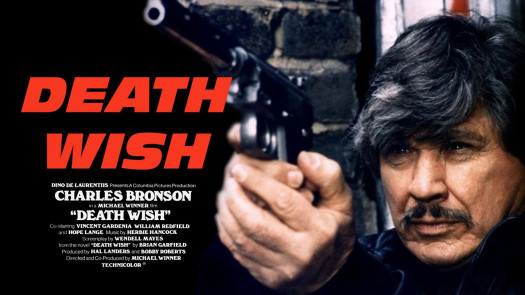
Most people think of DEATH WISH as just another 70’s revenge/exploitation flick, right? Nope. Far from it. Sure, there’s loads of graphic violence, but this gem of a movie contains just as much political commentary as ALL THE PRESIDENT’S MEN, with an added dose of black comedy to boot. The film had its finger firmly placed on the pulse of 1970’s America, with all its fear and paranoia about rampant urban crime, and is among the decade’s best.

Director Michael Winner and star Charles Bronson had made three films together up to that time: the revisionist Western CHATO’S LAND, the actioner THE MECHANIC , and the cops-vs-Mafia drama THE STONE KILLER . All were hits with the drive-in crowd, and helped Bronson go from supporting player to major star. Strangely enough, Bronson wasn’t the first actor considered for the part of Paul Kersey. Jack Lemmon was original choice, and that…

View original post 826 more words

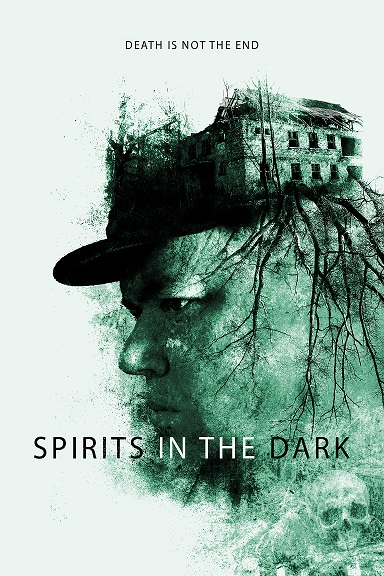
Film Review: Spirits In The Dark (dir by Jozsef Gallai)


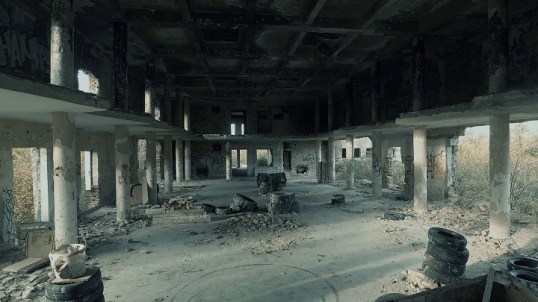
An abandoned building is just inherently creepy.

I mean, think about it.  Unlike a forest or a mountain or a canyon, a building is not something that forms naturally.  People actually have to build buildings.  Plans have to be drawn up.  Materials have to purchased.  Hours of backbreaking labor are required.  Creating a building requires work, resources, and time.  It’s not something that you do on a whim.  It’s something that’s done as a part of a larger plan.  With all of the effort that goes into creating the building, it’s always strange to come across one that has subsequently been abandoned.  You find yourself wondering what could have happened that made the inhabitants or the owners say, “We’d rather have all that hard work be for nothing than remain in this location?”

Walking through an abandoned building, it’s difficult not to think about the fact that, once upon a time, strangers that you’ll probably never meet moved through these now deserted hallways.  People worked in those empty rooms.  For a period of time, the building was probably the center of someone’s life.  Where are those people now?  Do they ever think about the past?  Do they still have memories of things that were said or thought while walking through those now-empty hallways?

Finally, there’s the constant reminders that even an abandoned building isn’t never truly abandoned.  There’s the animals that move in after the people leave.  There’s the plants the continue to grow around and, in some cases, consume the empty structure.  And, of course, there’s the reminders that you might not be the first person to have explored this empty building.  There’s the broken windows or the empty bottles or the crumpled cigarette pack, all of which remind you that others may even consider this building to be their home.  And, of course, there’s the graffiti.  Graffiti and abandoned buildings tend to go hand-in-hand.  For whatever reason, it’s often the graffiti that makes an abandoned building feel especially ominous.  Are those words on the wall a sign of ownership, an act of rebellion, or a warning?

Of course, the only thing more creepy than one abandoned building is when you come across an entire town of abandoned buildings….

And yet, as creepy as an empty building can be, it’s also hard not to be fascinated by them.  You look at them and you wonder why?  Why did everyone leave and how long will the building stand there deserted before it’s either torn down or destroyed by nature?  That’s one reason why ghost towns remains such a popular tourist destination.  They’re a reminder of just how short and fragile life can be.  You can build a home or an office but, once your time is up, it’s just going to be another abandoned building.

That’s something that Gil Spencer, the protagonist of Spirits in the Dark, understands.  Gil (played by the film’s director, Jozsef Gallai) used to love exploring abandoned buildings with his wife.  Ever since his wife’s death, Gil has struggled with being lonely and depressed.  But then, one day, something mysteriously appears on his laptop.  It appears to be a video shot by someone exploring an abandoned military complex.  The person shooting the video comes across a white pendant, one that looks exactly like the one that Gil’s wife used to wear.  While the person holds the pendant, we catch a glimpse of a ghostly figure standing a few feet away, watching.

Intrigued, Gil searches for and manages to track down the deserted complex.  As creepy as the abandoned and graffiti-covered buildings may be, Gil — who films his exploration — informs us that it’s nothing he hasn’t seen before.  Even when he spots blood on the wall, he figures that it was probably just someone shooting “an indie horror film.”  But then, he comes across a mask hanging in a corner.  And then his car’s horn starts honking for no reason.  And then, things start to get really creepy!

Spirits in the Dark is a haunting and moody exercise in atmosphere and genuine creepiness.  Wisely, instead of going for easy jump scares, the film takes its time to set up both the location and the situation.  We get to know Gil and, as he makes his way through them, we also get to know the abandoned building and the surrounding wilderness.  Like Gil, we find ourselves looking at every shadow, searching for some sort of explanation.  Just like Gil, we can feel the menacing atmosphere closing in on us and we become aware of every strange noise and every possible movement in the darkness.  When the scares do come, they’re all the more effective because the film has earned the right to frighten us.  It’s a wonderfully effective and creepy movie, one that has an intriguing plot and which is distinguished by the moody cinematography and the ominous score, both of which are credited to Gergo Elekes.

Wild Eye Releasing is going to be releasing Spirits in the Dark via DVD and VOD early in 2020 so keep an eye out for it!