Lifetime Film Review: Death of a Cheerleader (dir by Paul Shapiro)


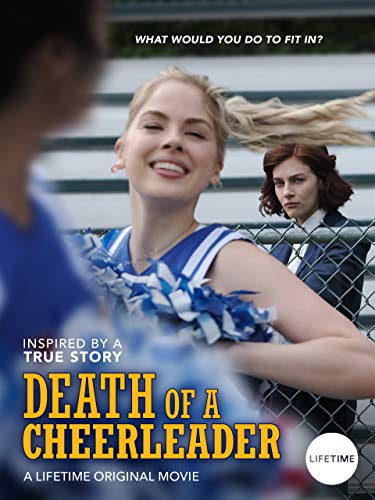
Kelly Locke (Sarah Dugdale) appears to have it all.  Even though everyone agrees that she can occasionally be a little bit mean with some of the things that she says, Kelly is still one of the most popular students at Hollybrook High.  She’s a cheerleader.  She’s the leader of the Bobbettes, the school’s most prestigious social group.  She gets good grades, she lives in a big house, and her family has a lot of money.

Bridget Moretti (Aubrey Peeples), on the other hand, wants to have everything.  She’s shy and desperate to fit in.  She wants to be a member of the Bobbettes.  She wants to be a cheerleader.  Even more importantly, she wants Kelly to be her best friend.  Kelly, however, thinks that Bridget’s a little bit strange.  In fact, when Bridget lies to Kelly about there being a party as an excuse to get Kelly to spend time with her, Kelly accuses Bridget of “wanting to be me.”  Kelly then says that she’s going to tell everyone at school about what a weirdo Bridget is so Bridget stabs her to death.

Now, you would think that Bridget would be the number one suspect.  After all, Bridget’s not that smart and it’s not easy to get away with murdering someone, especially when it’s an impulsive act.  However, no one suspects Bridget.  Bridget’s just too shy and nice for anyone to believe that she could possibly be a murderer.  Instead, everyone assumes that another student, Nina Miller (Morgan Taylor Campbell), is the killer.  After all, Nina used to be popular until she dyed her hair and started hanging out with the stoners.  Nina even threatened to kill Kelly once.  Nina says she was just mad and that she wasn’t being serious but that doesn’t stop strangers from calling her house and demanding that she confess….

Now, if this story sounds familiar, that’s because it’s a true story and it’s one that has been recreated on countless true crime shows, including Deadly Women, 1980s: The Deadliest Decade, and Killer Kids.  It was also turned into a made-for-TV movie in 1994, A Friend to Die For, starring Kellie Martin as the murderer and Tori Spelling as her victim.

Death of a Cheerleader is a remake of A Friend to Die For, telling the same basic story but attempting to give it a more modern spin, which in this case amounts to a lot of hand-held camerawork and a far less judgmental attitude towards casual drug use.  The remake also slightly differs in the way that it views its main characters.  If the first film was sympathetic to Bridget, the remake is a bit more ambiguous.  Bridget is portrayed as being slightly off from the beginning and far more openly bitter over Kelly’s success than in the original film.  At the same time, Kelly is portrayed a bit more sympathetically in the remake than in the original.  Tori Spelling played the role as being a straight-up bitch, whereas Sarah Dugdale instead plays her as someone who puts a lot of pressure on herself and who often doesn’t understand how cruel her comments can sometimes be.  The biggest difference between the two films is that the remake focuses for more on the wrongly accused Nina, even allowing her to narrate the story.  If anything, the film’s main message seems to be about how messed up it is that brave nonconformists like Nina are always going to be unfairly blamed for the mistakes of mousy conformists like Bridget.  That’s a good message and one that I certainly appreciated.

The remake of Death of a Cheerleader works well enough.  The hand-held camera work gets to be a bit much but Sara Dugdale, Morgan Taylor Campbell, and Aubrey Peeples all give great performances and the film actually does a better job than the original of capturing the strange culture of high school popularity.  While it may not feature any scenes as iconic as Tori Spelling melodramatically lighting up a joint, Death of a Cheerleader is still an effective Lifetime film.

Is LADY STREET FIGHTER The Worst Movie Ever Made? (American General 1981)


gary loggins's avatarcracked rear viewer

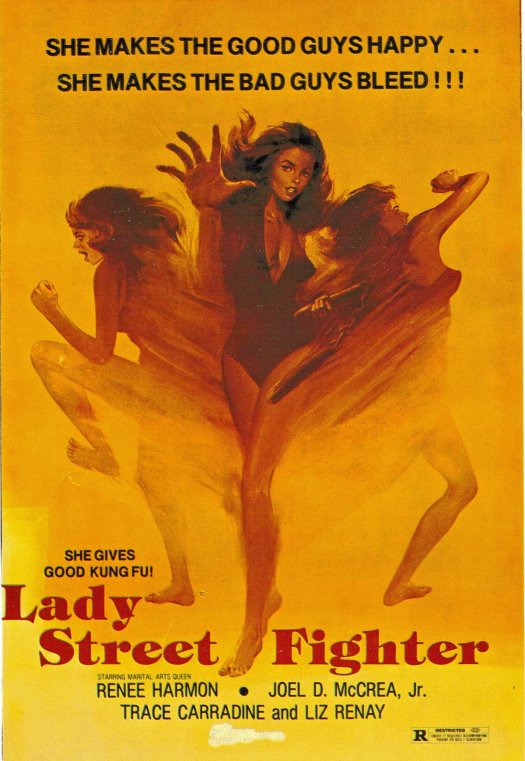
In all my years of watching movies, I’ve seen more than my share of stinkers. But nothing quite prepared me for the total ineptitude that is LADY STREET FIGHTER, starring the immortal Renee Harmon. This wretchedly made film features an incoherent script, horrific cinematography, murky sound, no direction, really bad acting, and an ersatz synth theme ripped off from Morricone’s THE GOOD, THE BAD, & THE UGLY . Let’s put it this way… when Jody McCrea (Bonehead of the Beach Party series) takes your film’s best acting honors, you KNOW you’re in for trouble!!

This senseless excuse for a movie finds Renee out to avenge the death of her sister at the hands of a gang called Assassins Incorporated, or something like that. I’m really not too sure, as the convoluted plot isn’t well defined. The movie starts off promising for Grindhouse fans with a gruesome torture scene (including a…

View original post 228 more words

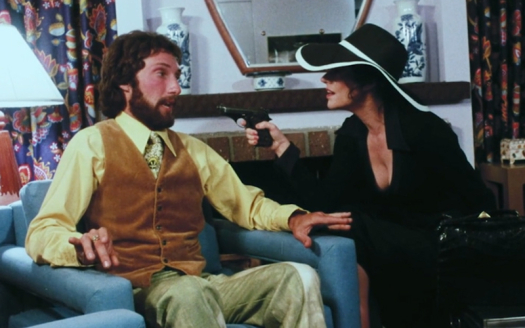
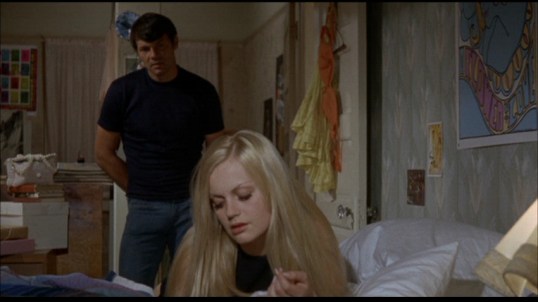
Film Review: Model Shop (dir by Jacques Demy)


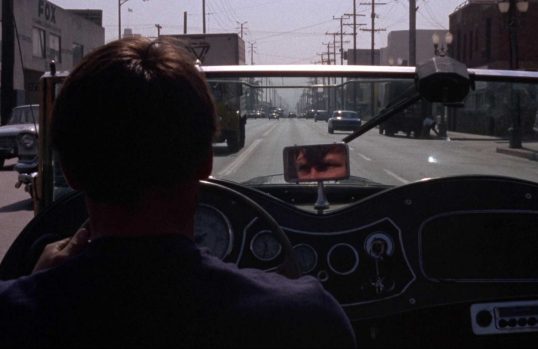
The 1969 film, Model Shop, plays out like a dream.

The film tells a simple enough story.  In fact, it’s tempting to say that Model Shop is plotless though it actually isn’t.  There’s a plot but, in many ways, the film is more about how the story is told than the story itself.  Gary Lockwood plays George Matthews, a former architectural student who is currently living in Los Angeles with his girlfriend, Gloria (Alexandra Hay).  Gloria is an actress while George …. well, George is just a drop out.  Throughout the film, we get clues that George might have once cared about things (for instance, some of his friends are putting out an underground newspaper while another is into creating protest music).  However, by the time we meet him, George seems to be rather detached from life.  Of course, some of that may be due to the fact that, because he’s no longer in college, George is now eligible to be drafted and sent to Vietnam.  (The film was made in 1969, after all.)  In fact, George has just received his induction notice.  He basically has a week left before joining the army.  At one point, in a flat tone of voice, he says, “It feels like a death sentence.”

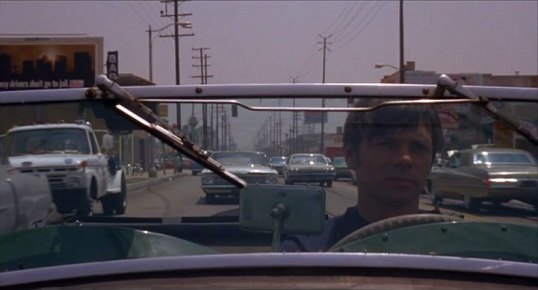
Getting drafted is not George’s only problem.  He’s also about to lose his beloved car!  George has a day to come up with a few hundred dollars so he can keep his beloved green roadster from being repossessed.  (In George’s defense, it is a pretty nice car.)  While Gloria goes off to shoot a soap commercial, George spends his day driving around Los Angeles and searching for money.  George has a lot of friends but most of them are too busy making music and setting up love-ins in Griffith Park to help him out.  George doesn’t want to call his mother for the money and when he tries to call his father, he gets a lecture about how his older brother served in Korea.  No one is willing to make any sacrifices to help out George.  That may have something to do with the fact that George is, at times, a tad whiny and a bit self-absorbed.

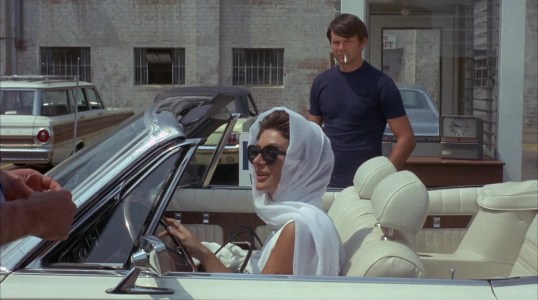
It’s while wandering around Los Angeles that George spots the beautiful Lola (Anouk Aimée).  The glamorous but sad Lola works at a model shop, a sleazy establishment where men pay to take her picture.  Lola has a tragic story of her own, one that finds her stranded in Los Angeles.  It all leads to a brief romance that’s as bittersweet as ennui in May.

(Ennui in May is also the title of a musical that I’ve been writing, off-and-on, since 2012.  Keep an eye out for more details!)

Model Shop was the first (and only) English-language film of French filmmaker Jacques Demy and one reason that the film seems so dream-like is because Demy wrote the dialogue-heavy script in French and then had it translated into English.  As such, this is an extremely talky film in which no one ever seems to have a real conversation.  (It should also be noted that what sounds beautiful and poetic in French can come across quite differently in the harsher tones of the English language.)  George, Gloria, and Lola all speak in pedantic, declarative sentences.  There’s none of the individual verbal quirks or changes in tone that would make it seem as if these were people having an actual conversation.  As well, nobody ever talks over anyone else.  No one ever attempts to interrupt anyone else’s train of thought.  At times, it seems like the cast is performing under the influence of hypnosis and they’ve been told, “Do nothing while anyone else is speaking.”  It creates a rather odd atmosphere.

Also adding to the film’s dream-like feel is Jacques Demy’s direction.  The pacing feels just a little bit off.  It’s not so far off as to harm the film.  In fact, the fact that everything seems to be moving just a little bit slower than expected is actually one of the film’s biggest strengths.  If nothing else, it reflects George’s own feelings of being on borrowed time.  Beyond that, though, Demy often seems less like a director than an anthropologist.  A good deal of the film is simply made up of shots of George driving around Los Angeles and one gets the feeling that Demy was more fascinated with capturing the unique style of America than with telling George’s story.  Demy directs the film like an outsider looking in and, as a result, he often seems to focus on the details of daily life — like the television and the billboards and the red Coke signs hanging over every store window — that Americans takes for granted.  At the start of the film, the camera lingers over an oil derrick, as if Demy is looking at this symbol of Americana and looking for clues to understand what makes America what it is.  Much as Michelangelo Antonioni did when he made Zabriskie Point, Demy seems to be trying to use this film to solve the riddle of America and how Americans — even with the country embroiled in an unpopular war — could remain so youthful and optimistic about the future.  Unlike Antonioni, Demy seems to be more bemused than angered by America’s contradictions.  Anonioni ended Zabriskie Point by blowing up a luxury, mountain-side home.  One gets the feeling that Demy would have found the same house to be rather charming.

Of course, the late 60s were a time when Hollywood studios felt that they were under attack, not just from television but from foreign films as well.  With all the critics talking about European films were superior to studio films in every way and young filmgoers flocking to foreign films, it would only make sense that the studios would would bring filmmakers over from Europe.  For the studios, it was a chance to try to convince people that they weren’t run by out-of-touch dinosaurs.  For the filmmakers, it was a chance to try to capture and explain America on film.  The end results were mixed, with many of the directors — like Fancois Traffuat and Michelangelo Antonioni — later testifying to the difficulty of trying to work with an American studio while having a European sensibility.  This was also true of Demy, who never did another English-language film after Model Shop.  Reportedly, Demy wanted to cast an unknown actor named Harrison Ford as George but Columbia Studios demanded that Demy use Gary Lockwood.  (Lockwood, of course, is best known for not showing a hint of emotion, even while hurtling to his death, in 2001: A Space Odyssey.)

Model Shop is definitely a film of it’s time, which is why I enjoyed watching it.  Yes, it’s pretentious and kind of silly.  But, at the same time, Demy is so fascinated with the Los Angeles of the late 60s that it’s hard not to share his fascination.  The film plays out like a dream of the past, like a time machine that puts you to sleep and then fills your head with images that you can see but you can’t quite reach.  It’s a time capsule, perfect for history nerds like you and me.

Someday, if films like Back to the Future and Happy Death Day 2U are any guide, we’ll have time machines and we’ll be able to personally experience the past.  Until then, we can watch films like Model Shop.

Film Review: An Innocent Man (1989, directed by Peter Yates)


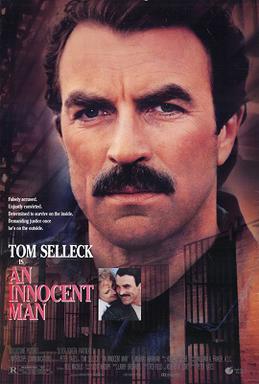
Jimmie Rainwood (Tom Selleck) is an aeronautics engineer who, with the exception of once getting arrested for marijuana possession in college, has lived a clean and productive life.  Mike Parnell (David Rasche) is a corrupt narcotics detective with a raging coke habit.  When Parnell and his partner, Scalise (Richard Young), get a tip about a house where drugs are hidden, Parnell is so coked up that he gets the address wrong.  They end up breaking into Jimmie’s house and, when Jimmie steps out of the bathroom holding a hair dryer, Saclise shoots him.
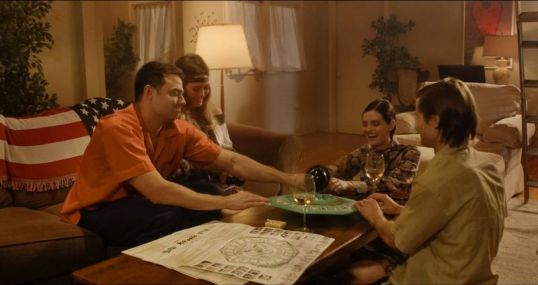
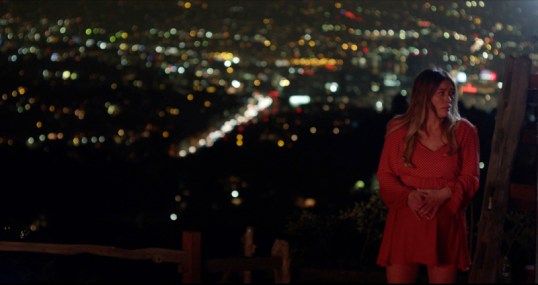
Jimmie survives getting shot but that’s the least of his problems.  In order to cover up their mistake, Parnell and Scalise frame Jimmie.  They replace the hair dryer with a gun.  They plant drugs in Jimmie’s house.  Because of his previous marijuana conviction, no one believes Jimmie when he says he was set up.  Convicted of a crime that he didn’t commit, Jimmie is sentenced to six years in prison.  While his wife (Laila Robins) does everything that she can to get him released, Jimmie is preyed upon by the other prisoners.  His only friend is Virgil (F. Murray Abraham), a veteran prisoner who shows Jimmie that he’s going to have to do some terrible things to survive being in prison.

As he showed when he directed Bullitt, the late Peter Yates was a director who could make even the most conventional genre material feel fresh and that is what he did with An Innocent Man.  Made at a time when American leaders bragged about their devotion to the war on drugs, An Innocent Man is critical of both the police and a legal system that cares more about punishment than rehabilitation.  Even if the plot is predictable, the film is gritty enough to make an impression.  Jimmie is so victimized and Parnell and Scalise are so smug that, by the time Jimmie finally has a chance to orchestrate his revenge, you can’t wait to see the cops get what’s coming to them.

Part of the appeal of An Innocent Man is that it features actors who you normally would not expect to appear in a film like this.  Tom Selleck, best-known for playing upright authority figures, plays a frightened man who is forced to sacrifice his humanity to survive.  When the movie started, I was skeptical that Selleck could pull off the role but, by the end of the film, he had the thousand-yard stare of a man who had been to Hell and back.  Meanwhile, David Rasche, best known for his work in sitcoms, is more than convincing as the most corrupt narc around.  Best of all is F. Murray Abraham, playing the seasoned convict who knows how to get things done in prison.  When he tells Jimmie that he has to “take of care of this,” even if it means committing a real crime, you believe him.  By the end of An Innocent Man, nobody’s innocent anymore.

The TSL’s Grindhouse: The Haunting of Sharon Tate (dir by Daniel Farrands)


The Haunting of Sharon Tate is a frustrating film to review.

On the one hand, it’s an undeniably well-made horror film.  It’s surprisingly well-paced.  It creates an atmosphere of nonstop dread.  It’s the type of movie that makes you keep an eye on the shadows in the room.  This is the type of movie that makes your heart race and leaves you uneasy about every unexpected noise that you hear.  It’s a dark and disturbing horror film and it features an excellent lead performance from Hillary Duff in the title role.  While watching the film, you care about her and you don’t want anything bad to happen to her.  That makes the film’s shocks and scares all the more frightening.

On the other hand, though, The Haunting of Sharon Tate features a premise that will leave even the most dedicated grindhouse horror fan feeling more than a bit icky.

The Haunting of Sharon Tate is hardly the first horror film to be based on the infamous Manson murders.  In fact, it’s not even the only one to be released this year.  We’re approaching the 50th anniversary of the Tate murders so last May saw the release of Charlie Says and Quentin Tarantino’s highly-anticipated Once Upon A Time In Hollywood is set to be released in July.  What sets The Haunting of Sharon Tate apart from the other Manson films is that it’s told totally from the point-of-view of Manson’s victims.  Manson is only seen briefly and the other members of his so-called “Family” wander through the movie like dead-eyed zombies.  This is the rare Manson film that doesn’t try to portray that grubby little racist hippie as being some sort of outlaw folk hero and, regardless of what you think of the rest of the film, that’s definitely a good thing.

Instead, this movie focuses on Sharon Tate.  The film opens with a black-and-white recreation of an interview that Sharon gave a year before her murder, in which she discusses whether or not dreams can tell the future.  We then jump forward to August of 1969.  Sharon is 8-months pregnant and staying at 10050 Cielo Drive.  Her husband, Roman Polanski (who is kept off-screen for the entire movie), is in Europe.  Staying with Sharon is her ex-boyfriend, Jay Sebring (Jonathan Bennett) and her friends, heiress Abigail Folger (played by real-life heiress Lydia Hearst) and Abigail’s boyfriend, Wojciech Frykowsky (Pawel Szajda).  Also on the property is caretaker Steve Parent (Ryan Cargill), who is staying in a trailer and enjoys working on electronics.

(For the most part, the film sticks to the generally established facts when it comes to depicting the friendship between Sharon, Jay, Abigail, and Fykowsky.  However, it takes a lot of liberties with its portrayal of Steve Parent.  As opposed to how he’s portrayed in the film, Parent was actually an 18 year-old friend of the property’s caretaker who, because he was in the wrong place at the wrong time, became the first victim of the Tate murders.  By most accounts, he never met Sharon or any of the other inhabitants of the main house.)

In the film, Sharon is haunted by premonitions.  She has dreams in which she sees her friends being murdered by feral human beings.  She gets disturbing phone calls and she hears weird voices talking about someone named Charlie.  Her friends keep telling her that the nightmares are just a result of the stress that she’s under but Sharon is convinced that they’re a warning.  (Oddly, some of the scenes in which her friends dismiss her concerns are reminiscent of Polanski’s Rosemary’s Baby.)  After an hour of build up, the Family finally arrives at Ceilo Drive and, because of her dreams, Sharon is ready for them and able to fight back.  Or is she?  Can history be changed? the film asks, Or has our fate already been determined?

So, here’s the good thing about The Haunting of Sharon Tate:  It’s clearly on Sharon’s side.  It doesn’t glorify Manson and his family.  Hilary Duff gives a touching and, at times, heart-breaking performance as Sharon Tate and the film holds her up as a symbol of hope, optimism, kindness, and everything else that was lost as a result of Manson’s crimes.  The film itself is well-directed and genuinely scary and the final shot is haunting.

Here’s the bad thing about The Haunting of Sharon Tate:  It may be well-made but it’s still exploiting a real-life tragedy, one in which six people lost their lives.  (That’s not counting all of the other murders that Manson ordered.)  To be honest, if the film was called The Haunting of Jessica Smith, I probably wouldn’t have any reservations about recommending it to horror fans.  Instead, it’s called The Haunting of Sharon Tate and that makes it very hard to watch the film with a clear conscience.  Do the film’s technical strengths make up for the film’s inherent ickiness?  That’s the question that every viewer will have to ask and answer for themselves.

I will say this: I do think that The Haunting of Sharon Tate is a thousand times better than something like Wolves At The Door, in which Sharon was portrayed with all the depth of a Friday the 13th summer camp counselor.  The Haunting of Sharon Tate left me feeling feeling frightened, disturbed, and, because of my struggle to reconcile the film’s technical strengths with its morally dubious premise, more than a little annoyed.  It also left me mourning for Sharon Tate and every other victim of Manson and his brainwashed gang of zombies.  Is the film a tribute to Sharon or a crass exploitation of her memory?  At times, it seems to be both which is one reason why it’s such a frustrating film.

Well-made and problematic to the extreme, The Haunting of Sharon Tate is as close to a modern grindhouse film as we’re going to get in today’s antiseptic age.  Whether or not that’s a good enough reason to sit through it is a question that each viewer will have to decide for themselves.

Goodnight, Vienna: THE THIRD MAN (British Lion 1949)


gary loggins's avatarcracked rear viewer

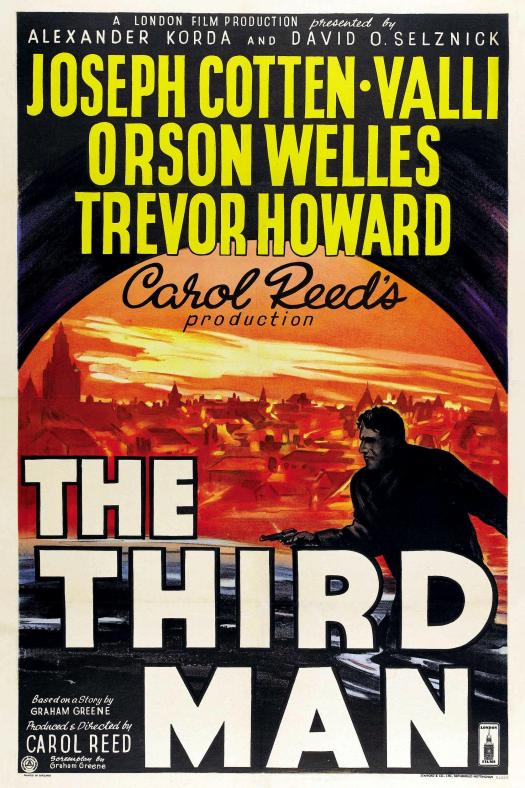
I’m just gonna come right out and say it: THE THIRD MAN is one of the greatest movies ever made. How could it not be, with all that talent, from producers Alexander Korda and David O. Selznick, director Carol Reed , screenwriter Graham Green, and cinematographer Robert Krasker, to actors Orson Welles, Joseph Cotten, Alida Valli , and Trevor Howard. It’s striking visuals, taut direction, and masterful acting transcend the film noir genre and make THE THIRD MAN one of the must-see films of 20th Century cinema.

The story starts simply enough, as American pulp novelist Holly Martins arrives in post-war Vienna to meet up with his old pal Harry Lime, only to learn that Harry was recently killed in a car accident. He attends the graveside service, meeting Harry’s mysterious actress girlfriend Anna Schmidt, and is quickly pulled down a rabbit hole of intrigue and deception involving the British…

View original post 363 more words

Film Review: Murder Mystery (dir by Kyle Newacheck)


There are actually two Adam Sandlers.

First, there’s the Adam Sandler that everyone knows.  This Adam Sandler is the comedian who has won multiple Razzie awards and who has produced and starred in some of the most critically derided comedies of all time.  This is the Adam Sandler who often seems to make movies specifically so he can either take a vacation or give some work to the less successful members of his entourage.  This is the Adam Sandler whose movies were cited as a tool of patriarchal oppression in the “cool girl” speech during Gone Girl.

And then there’s another Adam Sandler.  This Adam Sandler is a sad-eyed character actor who is probably one of modern cinema’s best portrayers of existential malaise.  This is the Adam Sandler who starred in movies like Punch-Drunk Love, Reign Over Me, Funny People, Spanglish, The Cobbler, Men, Women, and Children, and The Meyerowitz Stories.  Some of those films were very good and some of them, admittedly, were very bad but what they all had in common was that they featured Adam Sandler giving a surprisingly good dramatic performance.  In fact, if someone only saw Adam Sandler’s dramatic work (and not his work in films like Jack and Jill or Grown-Ups, to cite just two examples), they would be justified in assuming that Sandler was one of the most acclaimed actors around.  (One reason why we get so much more annoyed with Sandler’s bad comedies — as opposed to all the other equally bad comedies out there — is because we actually have evidence that Sandler’s capable of doing so much better.)

Unfortunately, almost all of Sandler’s dramatic films were box office disappointments.  Punch-Drunk Love is now widely viewed as being a classic but, when it was first released, it failed to even recoup its production budget at the box office.  Audiences consistently indicated they preferred silly Adam Sandler to dramatic Adam Sandler and so, Sandler continued to make silly theatrical films until even those started to bring in less money than they had before.

As of now, Sandler does most of his work for Netflix and the results have been mixed.  His performance in The Meyerowitz Stories was rightfully acclaimed while his comedies have been considerably less celebrated.  And then you have the just-released Murder Mystery, which seems to straddle the line between the two Sandlers.

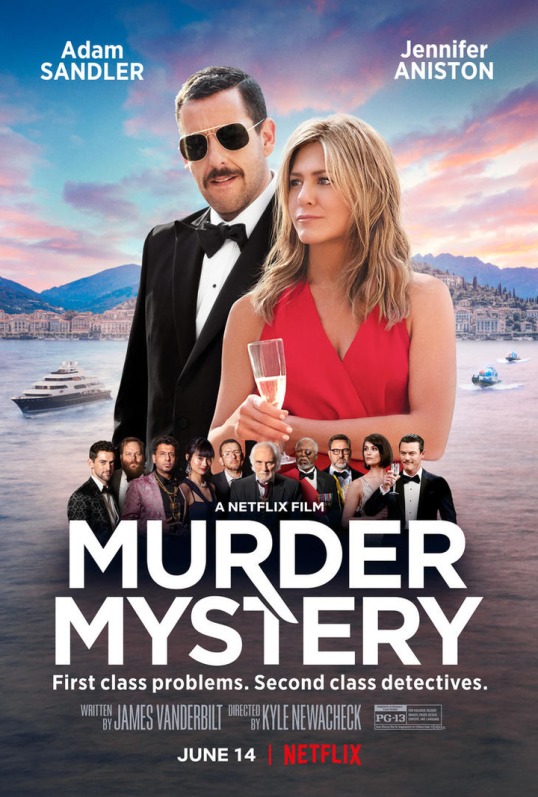
On the one hand, Murder Mystery is just as silly and implausible as a typical Adam Sandler comedy.  Sandler plays a New York police officer named Nick Spitz.  Nick has failed his detective’s exam three times but that still hasn’t stopped him from telling his wife, Audrey (Jennifer Aniston), that he’s been promoted.  Nick’s living a lie and he deals with his guilt by taking Audrey on a long-promised trip to Europe.  On the flight over, Audrey meets the charming and wealthy Charles Cavendish (Luke Evans) who invites Audrey and Nick to a party on his family’s yacht.  The yacht is owned by billionaire Malcolm Quince (Terrence Stamp) and, when Malcolm’s murdered during the party, it’s up to fake Detective Nick to figure out who is responsible!

Was it the glamorous actress, Grace (Gemma Arterton)?  Or the handsome race car driver, Juan Carlos (Luis Gerardo Mendez)?  Or how about the genocidal warlord, Colonel Ulenga (John Kani)?  Of course, the local Interpol detective (Dany Boon) thinks that it was Nick and Audrey and he even threatens to reveal that Nick’s been lying about his job!  Can Nick and Audrey solve the murder and rekindle the romance of their stalled marriage?

As I said, it’s all pretty silly.  Most of the film’s humor comes from just how out-of-place Nck and Audrey are in the world of high society.  Audrey is excited because the murder mystery is just like the plot of one of the paperback novels that she likes to read.  Nick spends most of the movie trying to keep his wife from discovering the truth about his job.  While everyone else is scheming and plotting and trying to kill one another, Nick and Audrey are literally searching Wikipedia for information on all the suspects.  It’s dumb and occasionally amusing and it’s also rather innocent.  If your grandmother ever wants to watch a comedy with you, Murder Mystery would probably be the one to go with.  There’s nothing to offend grandma but, at the same time, the shots of Monaco and Italy are nice to look at and the film is occasionally amusing enough to hold your attention.

Interestingly, even though the film’s a silly comedy, Sandler gives one of his more grounded performances.  There’s no silly voices or sudden yelling or any of the typical Sandler shtick.  Instead, he’s rather subdued and it works for the film.  He and Jennifer Aniston (another performer who often seems to settle for material that’s beneath what she’s capable of) make for a likable and believable couple and they both play off each other well.

Murder Mystery is a likable, lightweight comedy.  It’s not necessarily something that you’re going to remember much about after you watch it, of course.  It’s not that type of film.  Instead, it’s a perfect Netflix film.  It’s entertaining but you can do other stuff while you’re watching it without having to worry about accidentally missing a brilliant moment of cinematic history.

As for Adam Sandler, he’s following this up with Uncut Gems, a crime drama from the Safdie Brothers.  The Safdie Brothers worked wonders with Robert Pattinson in 2017’s Good Time.  So, who knows?  This time next year, Adam Sandler could be the new Superman….

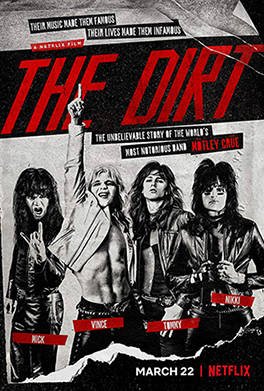
Better Drugs and Bigger Parties: The Dirt (2019, directed by Jeff Tremaine)


If you want to experience the sex, drugs, and rock and roll lifestyle, you could start a band, play some clubs, get signed to a record deal, go on tour, and eventually burn yourself out.  Of course, if that’s too much trouble or if you’re already older than 30, I guess you can just watch The Dirt on Netflix.
The Dirt is the latest band biopic.  This time the band is Mötley Crüe  and the film has all the usual VH1 Behind the Music style anecdotes.  Watch Nikki Sixx (Douglas Booth) nearly die of a heroin overdose!  Ponder how Tommy Lee (Chase “Machine Gun” Kelly) could have been stupid enough to cheat on Heather Locklear (Rebekah Graf)!  Listen as Mick Mars (Iwan Rhoen) refuses to tell how old he is!  Gasp as Vince Neil (Daniel Webber, giving the movie’s best performance) deals with tragedy after tragedy!  When you’re not watching Tommy Lee go down on a groupie or Nikki learning how to shoot dope, you can watch as Ozzy Osbourne (Tony Cavalero) snorts a line of ants and slurps up his own urine.  The movie is based on Mötley Crüe’s autobiography and the actors playing the members of the band take turns breaking the fourth wall and telling their story.  Nikki Sixx says, “We were a gang of fucking idiots!” and the movie seems to agree.  Nikki has always had a reputation for being the smartest member of Mötley Crüe.  Of course, when your main competition is Tommy Lee, that’s not too high of a bar to clear.

Especially when compared to other band biopics like Straight Outta Compton and Bohemian Rhapsody, The Dirt is shallow and overly episodic.  Nikki says that Mötley Crüe’s main concern was finding “better drugs and bigger parties,” and The Dirt is the same way.  It never digs too deep into the band’s music or the reasons why, for a period of time in the 80s, they were so popular.  The story is told by the members of the band so it often switches between being honest about the band’s history and making excuses for some of the members’s worst behavior, like when Tommy punches his first fiancee.  Fans of Mötley Crüe might enjoy seeing all of the stories about the band brought to life.  Meanwhile, those who didn’t care about Mötley Crüe before watching The Dirt will probably care even less after spending nearly two hours watching them act like self-destructive fools.  One thing that the movie gets undeniably correct: After all these years, Dr. Feelgood still rocks.


Film Review: Firehouse (1973, directed by Alex March)


Firefighter Shelly Forsythe (Richard Roundtree) has just been assigned to a new firehouse and, from the minute he shows up, it’s trouble.  Not only is he resented for taking the place of a popular (if now dead) firefighter but he’s also the first black to have ever been assigned to that firehouse.  Led by angry racist Skip Ryerson (Vince Edwards), the other firemen immediately distrust Forsythe and subject him to a grueling hazing.  However, Forsythe is determined to prove that he’s just as good as any white firefighter and refuses to be driven out.  While the firehouse simmers with racial tensions, a gang of arsonists is setting buildings on fire.

Firehouse does not have much of a plot but what little it does have, it deals with in a brisk 72 minutes.  Forsythe shows up for his first day.  Everyone hazes him.  Forsythe gets mad.  There’s a big fire.  And then the movie ends, without resolving much.  Ryerson is still a racist and Forsythe is still mad at almost everyone in the firehouse.  The characters are all paper thin and most of the fire fighting scenes are made up of grainy stock footage.  What does make the film interesting is the way that it handles the causal racism of almost every white character.  Ryerson, for instance, comes across as being an unrepentant racist but the film suggests that this is mostly due to him being too stubborn to change his ways and that Ryerson’s not that bad once you get to know him.  When Andrew Duggan’s fire chief instructs Forsythe not to take any of the constant racial remarks personally, Firehouse portrays it as if Duggan is giving good and reasonable advice.  The mentality was typical for 1973 but wouldn’t fly today.

One reason why Firehouse ends so abruptly is because it was a pilot for a television series.  At the time Firehouse aired, it had been only two years since Roundtree starred as John Shaft and NBC hoped that to recapture that magic on a weekly basis.  However, it would take another year before the Firehouse television series went into production and, by that time, Roundtree had left the project.  In fact, with the exception of Richard Jaeckel, no one who appeared in the pilot went on to appear in the short-lived TV series.

The DVD of Firehouse is infamous for featuring a picture of Fred Williamson on the cover, in which Williamson is smoking a cigar and wearing a fireman’s helmet.  Williamson does not appear anywhere in Firehouse and I can only imagine how many people have sat through Firehouse expecting to see a Fred Williamson blaxploitation film, just to discover that it was actually a Richard Roundtree television pilot.  Firehouse probably would have been better if it had starred Fred Williamson.  Roundtree’s good but sometimes, you just need The Hammer.

Off-Brand Spaghetti: MORE DEAD THAN ALIVE (United Artists 1969)


gary loggins's avatarcracked rear viewer

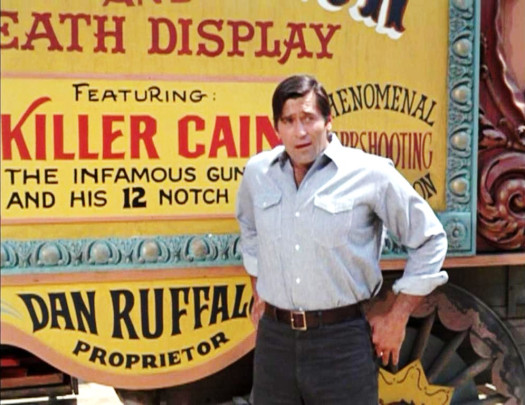
It’s hanging day at a remote Arizona prison outpost, and four men are scheduled to swing from the gallows. After they’re executed, the four pine boxes pop open, and outlaw Luke Santee and his gang commence firing, their six-guns blazing, as they try to free Luke’s baby brother. The escape attempt is an epic fail as ‘Killer’ Cain, a prisoner for 18 years now up for parole, stops the brother from leaving his cell and getting slaughtered, with Luke vowing revenge…

That opening scene, a violent, gory bloodbath, makes one think MORE DEAD THAN ALIVE is going to be a Sergio Leone-inspired American Spaghetti Western. It even stars a former TV Western hero named Clint – big Clint (CHEYENNE) Walker ! But the episodic nature of George Schenck’s script kills that idea, as the film doesn’t quite know what it wants to be. Spaghetti or Traditional Western? Character study, comedy…

View original post 323 more words