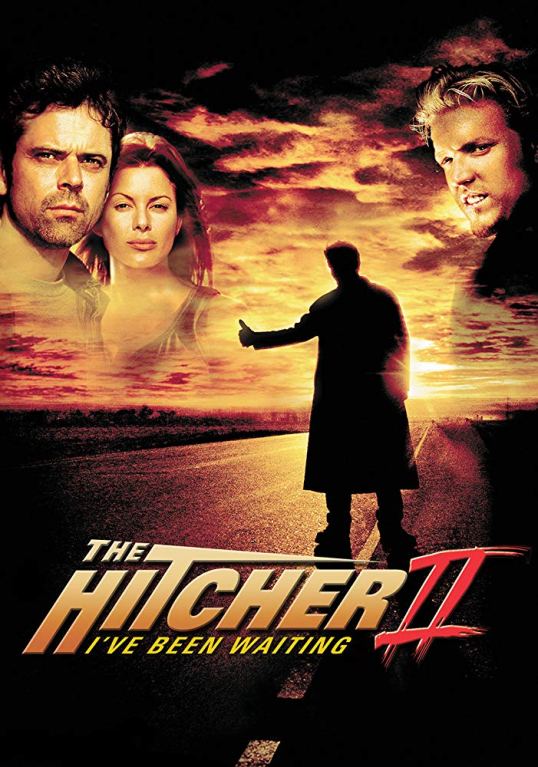
The TSL’s Horror Grindhouse: The Hitcher II: I’ve Been Waiting (dir by Louis Morneau)


What the sweet Hell is this crap!?

So, the 2003 film, The Hitcher II: I’ve Been Waiting, is a sequel to the original Hitcher.  That’s the film where C. Thomas Howell plays a dumbass who picks up a hitchhiker played by Rutger Hauer and then kicks him out after a few miles because Hauer’s like totally insane.  So, Hauer responds by murdering random people and framing Howell.  The Hitcher‘s a pretty good film, largely because of the terrifying performance of Rutger Hauer as the title character.

The Hitcher came out in 1986.  It got terrible reviews and didn’t do well at the box office but it found an audience when it was released on video.  In fact, The Hitcher became a bit of a cult favorite, which is what it deserved to be.  Then, 23 years later, a direct-to-video sequel was released and….

Seriously, this movie is so bad.

C. Thomas Howell returns, playing Jim, the same character that he played in the first movie.  Jim is still haunted by what happened in the first movie.  He’s a cop now but he fears that his encounter with the original Hitcher may have contributed to him using excessive force on a kidnapping suspect.  Seeking some time away from the stress of it all, Jim decides to visit a friend in Texas.  He and his girlfriend, Maggie (Kari Wuhrer) hit the road and, as they drive through the desert, they see a hitchhiker standing by the side of the road….

Now, I know what you’re saying.  “Oh, come on!” you’re yelling.  “There’s no way Jim would be make the same stupid decision twice!”

Well, you’re right.  Jim doesn’t stop to pick the guy up.  Instead, Maggie is the one who decides to pull over.  Apparently, Jim has never bothered to tell Maggie about any of the terrible stuff that happened during the first film.  Considering that Jim is apparently waking up constantly with nightmares and he’s on the verge of having a mental breakdown, you would think that all of this would be something that he would share with Maggie but no.  Maggie is totally shocked when Jim later tells her that he had a bad experience picking up a hitchhiker.

Anyway, in this case, the hitchhiker is named Jack (Jake Busey) and …. wow, shock of shocks!  He’s totally fucking crazy!  That’s right — it’s happening again!  So, Jack is chasing Jim and Maggie across the desert, murdering people and framing Jim and Maggie for the crimes.  Does this sound familiar?  Jim is eventually killed, giving C. Thomas Howell an excuse to never have to appear in another direct-to-video sequel.  Can Maggie beat the new Hitcher at his own game?

Oh, who cares?  This version of The Hitcher basically has none of the weird subtext of the first film.  Unlike Rutger Hauer’s Hitcher, who seemed to be almost erotically obsessed with Jim, Jake Busey’s Hitcher doesn’t have much on his mind beyond killing people.  If Rutger Hauer was all about quiet menace and charismatic intensity, Jake Busey is loud and in your face and so obviously crazy that it’s hard to have much sympathy for anyone stupid enough to pick him up.

The main problem with The Hitcher II is that it gets so damn repetitive.  I lost count of the number of times that a cop showed up, refused to listen as Maggie shouted, “STOP!  HE’S A KILLER,” and then got gunned down.  Seriously, this film featured the stupidest cops that I’ve ever seen.  The same thing keeps happening for 90 minutes or so, at which point we get a pithy one liner and then big explosion.  And then the movie’s over!

Yay!
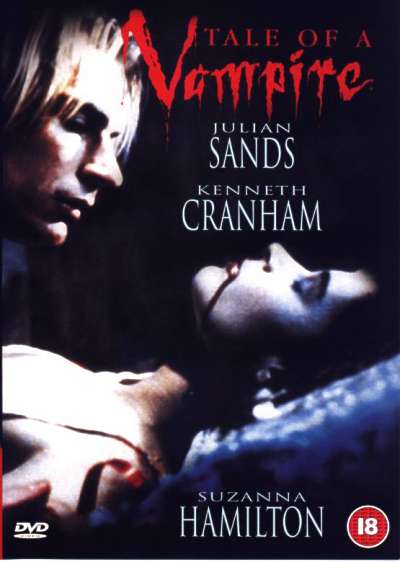
Bloody Art: Tale of the Vampire (1992, directed by Shimako Sato)


When Anne (Suzanna Hamilton) gets a job at the library, she is immediately attracted to the quiet and studious Alex (Julian Sands) and he to her.  Alex claims to be a scholar who is at the library to do research on “religious martyrs” but Anne cannot escape the feeling that she has known him before.  What Anne does not immediately realize is that Alex is a vampire and that she was set up with a job at the library through the machination of Edgar (Kenneth Cranham), another vampire who claims to be a doctor.  Once, Edgar and Alex were both in love with the same woman, the beautiful Virginia.  After circumstances led to Virginia being taken away from both men, Edgar dedicated the rest of his vampiric existence to making Alex miserable.  Anne, who looks exactly like Virginia and may even be the reincarnated version of her, is a pawn in Edgar’s latest scheme.  When Alex and Anne start to fall in love with each other, Edgar’s plan leads to tragedy.

Tale of the Vampire is an unjustly obscure vampire film from the early 90s.  It used to play frequently on late night Cinemax, where it was advertised as just being another sex-fueled horror film but actually, Tale of the Vampire is a moody and contemplative art film.  The focus is on Alex’s feelings of guilt and his fear of hurting Anne in the same way that Virginia was hurt while Anne has to decide how far she is willing to go to be with Alex.  All three of the main actors give good performances, with Cranham nearly stealing the show as someone whose actual identity will become obvious after repeat viewings.  Tale of the Vampire has never gotten the attention that it deserves and it’s not an easy film to find but I recommend it.

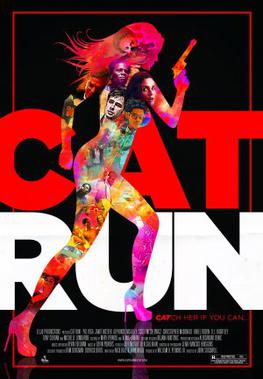
Insomnia File #44: Cat Run (dir by John Stockwell)


What’s an Insomnia File? You know how some times you just can’t get any sleep and, at about three in the morning, you’ll find yourself watching whatever you can find on cable? This feature is all about those insomnia-inspired discoveries!

If you were having trouble getting to sleep at 3 in the morning, you could have turned over to Showtime and watched the 2011 action film, Cat Run.

So, here’s what you get when you watch Cat Run.  You get:

  1. A few beach scenes
  2. Some stylish action sequences
  3. A nearly incoherent plot
  4. Lots of naked people
  5. Two bumbling heroes
  6. A prostitute with a heart of gold, a young child, and an encrypted hard drive
  7. A cold-as-ice female assassin played by a distinguished, Oscar-nominated performer
  8. Massive and sudden changes in tone as the film goes from comedy to action to comedy again
  9. Sex
  10. Violence

In other words, Cat Run is a John Stockwell film.  As a director, Stockwell specializes in making unpretentious films, ones that usually feature beautiful people doing stuff on the beach.  He makes the type of films that will probably never win an Academy Award (though Kirsten Dunst perhaps deserved a nomination for her performance in Stockwell’s Crazy/Beautiful) but which are still occasionally entertaining if you’re in the right mood for them.  (Seriously, just watch Stockwell’s In The Blood and then ask yourself why he could make the perfect Gina Carano film while Steven Soderbergh couldn’t.)

Cat Run takes place is Montenegro.  The prostitute is named Cat (Paz Vega).  The encrypted hard drive contains footage of a politician (Christopher McDonald) killing a woman at an orgy.  The two bumbling detectives who help her out are named Julian (Alphonso McAuley) and Anthony (Scott Mechlowicz) and they occasionally get a funny line or two.  The assassin who is sent to take care of Cat is Helen and she’s played by Janet McTeer.  Helen is coldly efficient and ruthless killer but she has a difficult time tracking down Cat.  That’s the way it always goes, isn’t it?  The bad guys are always super competent until the movie begins, at which point they suddenly can’t shoot straight.

Anyway, Cat Run is not a particularly memorable movie but it has its entertaining moments.  It’s hyper stylish and the cast seems to be having a good time.  At the very least, you get the feeling that everyone probably enjoyed spending their days off in Montenegro and good for them!  McTeer, not surprisingly, steals the film but Paz Vega has some good moments too.  All in all, this is an enjoyable film that doesn’t have a hint of ambition.  It is what it is and what’s wrong with that?

Previous Insomnia Files:

  1. Story of Mankind
  2. Stag
  3. Love Is A Gun
  4. Nina Takes A Lover
  5. Black Ice
  6. Frogs For Snakes
  7. Fair Game
  8. From The Hip
  9. Born Killers
  10. Eye For An Eye
  11. Summer Catch
  12. Beyond the Law
  13. Spring Broke
  14. Promise
  15. George Wallace
  16. Kill The Messenger
  17. The Suburbans
  18. Only The Strong
  19. Great Expectations
  20. Casual Sex?
  21. Truth
  22. Insomina
  23. Death Do Us Part
  24. A Star is Born
  25. The Winning Season
  26. Rabbit Run
  27. Remember My Name
  28. The Arrangement
  29. Day of the Animals
  30. Still of The Night
  31. Arsenal
  32. Smooth Talk
  33. The Comedian
  34. The Minus Man
  35. Donnie Brasco
  36. Punchline
  37. Evita
  38. Six: The Mark Unleashed
  39. Disclosure
  40. The Spanish Prisoner
  41. Elektra
  42. Revenge
  43. Legend

International Horror Film Review: The Living Skeleton (dir by Hiroshi Matsuno)


This 1968 Japanese horror film opens with a scene of shocking brutality.

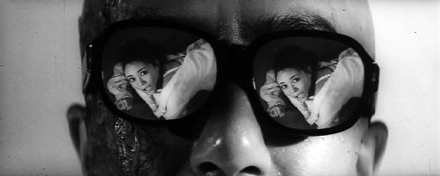
A group of pirates, led by a horribly scarred man wearing reflective glasses, have commandeered a ship.  While the crew and the passengers beg for mercy, the pirates ruthlessly and efficiently gun them down.  A newlywed (Kikko Matsuoka) is assaulted while her husband watches.  Afterwards, both of them are murdered.  The dead are dumped overboard and the pirates proceed to move on with their lives.

Three years later, neither the ship nor the dead have ever been recovered.  The sister of the murdered newlywed, Saeko (also played by Matsuoka), has been taken in by a friendly priest (Masumi Okada).  As we discover, the pirates have all returned to their day-to-day lives in the seaside village, with the only indication of their past evil being the violent flashbacks that appear whenever one of them shows up on screen.  Almost all of the pirates appear to have returned to the village, everyone but their scarred leader.  What has happened to him and how could a man with such an unforgettable face have simply vanished?  The pirates aren’t sure but then again, does it matter?  They’ve gotten away with their crime.  Everyone thinks that the ship was lost at sea.

However, one day, Saeko and her boyfriend go scuba diving.  As they explore the undersea world, they come across hundreds of skeleton, all chained together.  That night, a ghostly ship appears out on the ocean and Saeko hears a voice calling for her.  The priest counsels Saeko not to obsess over the skeletons and not to fall prey to the temptation of vengeance, but that’s far easier said than done.

Meanwhile, the pirates start to die, one-by-one….

The Living Skeleton is an austere and haunting ghost story.  Though the story may be a bit conventional (especially when compared to the other Japanese ghost story that I’ve reviewed this October), the film is so full of grim atmosphere and portents of ominous doom that it doesn’t matter.  Playing out at its own deliberate pace, this film is an effective horror story that asks whether the sins of the past can ever be forgiven.  (It turns out, not surprisingly, that they can not.)  The black-and-white cinematography adds to the film’s dream-like feel.  Long after the film ends, you’ll remember the images.  You’ll remember the suffering reflected in the lenses of the head pirate’s glasses.  You’ll remember the atmospheric shots of the lonely ocean.  You’ll remember the film’s ending, with the remaining pirates watching as their former victim descends down a flight of stair.  Unfortunately, you’ll probably also remember just how fake the underwater skeletons looked but even that, in its strange way, adds to the film’s effectiveness.  They’re such a strange sight, those pristine, clean, and neat skeletons that you can’t help but feel that they belong in the film, just as surely as the unforgettable shot of a pirate’s face being quickly dissolved by highly corrosive acid belongs in the film.

I saw this haunting ghost story on TCM.  Keep an eye out for future showings.


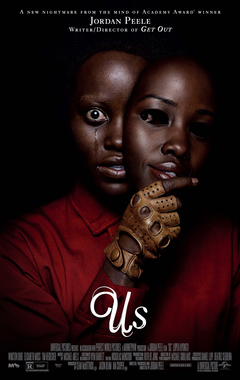
Horror Film Review: Us (dir by Jordan Peele)


“They’re us,” a child says in Jordan Peele’s second film, Us.

And indeed, they are.  Us suggests that everyone has at least one doppelganger, living underground in conditions of absolutely misery and awkwardly imitating the same lives as those above ground, just without any of the rewards that those of us above-ground take for granted.  Those underground are known as the Tethered, because they’re permanently tied to those of us above ground.  Of course, what’s easily overlooked is that we’red tied to them as well.  Or, at least, we are until someone picks up a knife or a pair of scissors and violently severs the connection.

It’s probably not a coincidence that the film’s title — Us — can just as easily be read as U.S, as in the United States.  Jordan Peele may have said that he wanted Us to be a full-on horror film, as opposed to Get Out‘s mix of comedy, horror, and social commentary, but Us definitely has its political subtext, with the Tethered meant to stand in for every marginalized group that has been pushed underground by American society.  Though the film may have been inspired by an episode of The Twilight Zone, it actually has more in common with the classic British shocker, Death Line (a.k.a. Raw Meat.)  There’s not a huge amount of difference between the largely mute Tethered and the pathetic cannibal in Death Line who, after growing up in the British Underground, is capable of only telling his victims to “Mind the doors.”

If nothing else, Us proves that Jordan Peele actually is a good filmmaker with a firm grasp on how to make an effective horror movie.  Get Out was good but also, I think, a bit overpraised by mainstream critics who often seemed to not realize just how much, in their attempts to make sure that we understood just how much they loved and understood the movie, they sounded like Bradley Whitford bragging about how he would have voted for Obama a third time.  When Us came out, a lot of viewers were waiting to see if Peele’s second film could possibly live up to all the hype surrounding its director and, for the most part, it does.

Political subtext aside, this is the all-out horror film that Peele promised, full of jump scares, disturbing imagery, and just enough humor to keep things from getting too unbearably nightmarish.  (As bad as you might feel for Elisabeth Moss’s character and her family, it’s hard not to appreciate the irony of the film’s Alexa-substitute misunderstanding a command to call the police.)  Interestingly enough, the Tethered are pretty much homicidal as soon as they come above ground.  This isn’t a case where a tragic misunderstanding leads to bloodshed that could have been avoided.  No, this is a case where the Tethered have spent decades trapped and out-of-sight and they’re pissed off about it.  Just because the Tethered may be us, that doesn’t mean that they’re going to have any sympathy for us when they finally do track us down.  In the style of Wes Craven’s The Hills Have Have Eyes, Us follows a perfect family as they eventually find themselves resorting to the same violence as the Tethered, in an attempt to save not only their lives but also the lifestyle that they’ve come to take for granted.  The Tethred are us indeed.

The film is well-acted, with Lupita Nyong’o standing out as both the mother of an imperiled family and her doppelganger, who has spent years underground and who is one of the few Tethered to be able to speak.  Of course, there’s a twist at the end of the movie and I won’t ruin it here, other than to say that it’s effectively done and will actually make you reconsider everything that you’ve just seen.

Us is another triumph from Jordan Peele.  Even more importantly, it’s an undeniably effective horror film.

Horror On The Lens: Attack of the Giant Leeches (dir. by Bernard Kowalski)


For today’s public domain horror film, I present to you 1959’s Attack of the Giant Leeches.  This 60-minute film is a classic Drive-in film.  While it has its slow spots, it also features an iconic performance from Yvette Vickers, who is like one of my favorites of the strong, confident, unapologetically sexy women who dominated the old B-movies.  (Plus, she was only 5’3 and it’s not easy being brave when you’re having to look up at everyone.  Trust me, I know.)   This short little film is steamier than Louisiana in August and is full of bayou atmosphere.

I have to admit that I’m kinda freaked out by the scenes of people floating underwater in this film.  And leeches … agck!  Don’t even get me started on leeches.  Especially giant leeches…

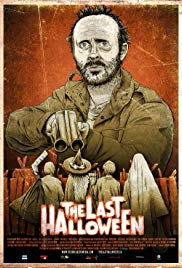
The Last Halloween, Short Film Review, by Case Wright


ALter2

Trick or Treaters in the post-apocalypse or is it just San Francisco?

Four kids in traditional costumes go out for candy and find a survivalist house with loads of guns, but hey candy is on the line! The home is occupied buy a very tired husband and wife.  The wife is getting sick, but it appears that the kids might be in the house!!!

The wife disappears and the husband is confronted by one of the kids in a ghost costume. These aren’t ordinary trick or treaters and those costumes aren’t store bought!!!!  It’s kind of cool figuring out what’s going on in the end.  It’s a very fun short!


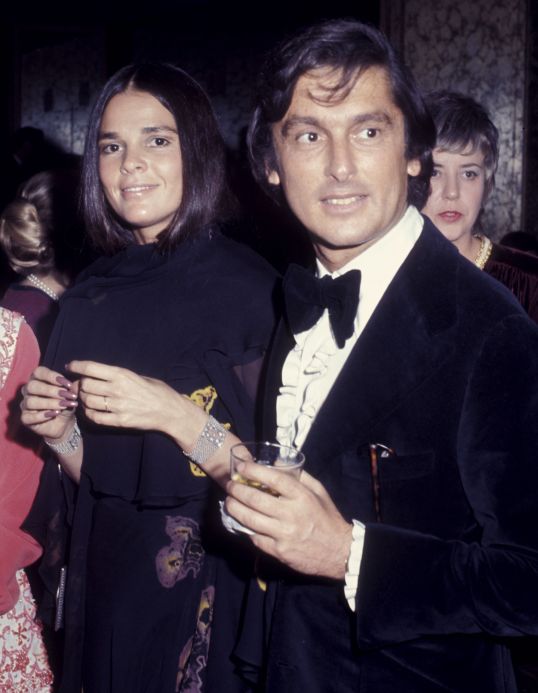
6 Trailers In Memory of Robert Evans


As Jeff reported earlier today, the famed Hollywood producer Robert Evans passed away this weekend.  As a student of both Hollywood and history, I have to say that I always found Evans to be a rather fascinating figure.  It seemed inevitable that his name would pop up whenever I read a book, an article, or even just an interview concerning the films of the 60s, 70s, and 80s.  Robert Evans was nice enough to follow me on twitter and we even exchanged tweets on occasion.

As a producer, Robert Evans is probably more associated with gangster movies like The Godfather and The Cotton Club than horror films.  But Evans was involved in a few “scary” and horror-adjacent films, both as an actor and a producer.  So, tonight’s edition of Lisa Marie’s Favorite Grindhouse Trailers is dedicated to Robert Evans.

  1. Man of a Thousand Face (1957)

As an actor, Evans began his career by playing Irving Thalberg in this biopic of Lon Chaney, Sr.  Evans was specifically chosen for the role by Thalberg’s widow, Norma Shearer.  Not surprisingly, the trailer below concentrates on James Cagney’s performance as legendary horror star, Lon Chaney, Sr.

2. The Fiend Who Walked The West (1958)

One of Evans’s rare starring roles was in this western-horror hybrid.  Yes, that’s Robert Evans as the “kooky killer.”

3. Rosemary’s Baby (1968)

As head of production at Paramount, Evans was responsible for greenlighting this classic horror film, starring Mia Farrow.  Reportedly, Evans arranged for his friend, Jack Nicholson, to screen test for the role of Rosemary’s husband.

4. Marathon Man (1976)

Evans produced this film.  Technically, Marathon Man was a thriller/spy movie.  But the scenes of Dustin Hoffman in the dentist chair definitely qualify as horror.

5. Sliver (1993)

After spending the 80s financially bereft and an almost forgotten figure, Evans made a comeback by producing this incredibly silly “erotic” thriller.

6. Jade (1995)

Sliver did well enough at the box office that Evans followed it up with another, similarly silly thriller.

Of course, while it’s tempting to laugh at films like Jade and Sliver, it should be remembered that Evans was also involved with some of the best and most important films of all time.  Next time you watch The Godfather, be sure to say a little thank you to Robert Evans.

R.I.P.

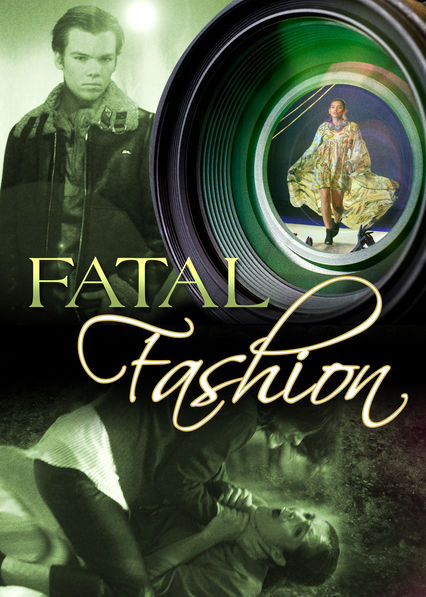
What Lisa Watched Last Night #203: Designed to Kill, a.k.a. Deadly Runway, a.k.a. Fatal Fashion (dir by Doug Campbell)


Last night, I turned over to the Lifetime Movie Channel and I watched a movie that has many names.  When it was originally released on Netflix last year, I believe it was called Deadly Runway.  According to the imdb, it’s also known as Fatal Fashion.  Lifetime aired it under the title Designed To Kill.

Well, no matter which title you want to go with, I watched it!

Why Was I Watching It?

How can I review it without watching it first?  This isn’t rocket science, people!  Beyond that, though, I was in the mood for a good Lifetime melodrama.  Of course, right now, Lifetime is currently only showing Christmas movies from here to eternity.  So, if you want to see the type of Lifetime film that we all know and love, you’re only place to turn is the Lifetime Movie Network.

What Was It About?

Basically, it’s a murderous remake of Pygmalion!

Oh, you doubt me?  Well, consider this — Jennifer Higgins (Linsey Godfrey) — is given a job at the local high school, teaching a class about fashion.  David (Joshua Hoffman) ends up in her class, hoping that he can practice his skills as a photographer.  David is awkward, shy, wears glasses, has no fashion sense, and his hair is almost always a mess.  Jennifer takes one look at him and decides to prove that she can turn anyone into a super model.  Next thing you know, David has new clothes, a new haircut, and a new career.  He almost gets a new girlfriend until Jennifer gets jealous and pushes her off a ledge.

See, there are a few differences between Jennifer and Henry Higgins.  Some of them are obvious.  Jennifer is a woman and is flirtatious.  Henry was a man and a bit of a prick.  But perhaps the biggest difference is that Jennifer Higgins has a tendency to get obsessed with her models and, as mentioned above, Jennifer’s willing to kill people.

Anyway, David is enjoying his new life as a model and Jennifer is enjoying being his mentor but then it turns out that David’s friend, Caitlyn (Ellen Michelle Monohan) has model potential as well!  How will Jennifer handle it when Caitlyn and David are soon appearing on covers together?

What Worked?

Oh Hell, it all worked.  This was so over the top and fun and melodramatic that there was no way not to love it.  Linsey Godfrey was wonderfully insane as Jennifer Higgins and Monhan and Hoffman made for a very adorable couple.  This movie was a lot of fun.

And before anyone starts nitpicking this film or debating whether or not the plot fully made sense, allow me to remind you that if you’re taking a film like this seriously, you’re doing it wrong.  This film was designed to deliver pure entertainment and that’s exactly what it does!

What Didn’t Work?

It all worked!

“Oh my God!  Just like me!” Moments

I related to Caitlyn, mostly because we both have red hair, bad eyesight, and a low tolerance for alcohol.

Lessons Learned

Henry Higgins could have been worse.

See You Next Thursday: Bloody Wednesday (1987, directed by Mark G. Gilhuis)


Harry (Raymond Elmendorf) is an auto mechanic with a problem.  He has lost his mind.  When he’s found staring at an engine that he’s taken apart and saying that he can’t put it all back together, he’s fired.  When he shows up in church naked, he’s institutionalized.  When his brother arranges for him to live in an abandoned and condemned Hollywood hotel (because that would be the perfect place for a man with deep mental issues to live), Harry loses it completely.  After playing Russian roulette with a street gang and interacting with a hotel staff that only exists in his mind, Harry goes crazy on one bloody Wednesday.

Bloody Wednesday is a prototypical mediocre white man with a gun movie.  Think of Taxi Driver, The Shining, The Joker, or even The King of Comedy, if all four of those films were terribly written, acted, and directed.  It starts out strong, with Elmendorf doing a convincing job of portraying Harry’s growing psychosis, but goes downhill once Harry moves into the hotel and starts to interact with the people in his head.  When he gets into argument and even fights with them, it doesn’t matter because we know that they don’t really exist outside of Harry’s imagination.  Even worse is the street gang that actually does exist but which decides that they’re going to spare Harry’s life because he challenges them to a game of Russian Roulette.  The gang leader, who looks like he’s trying to be Rambo for Halloween, is impressed by Harry’s self-destructive tendencies.  The film’s final scenes, with Harry going on a shooting rampage, are disturbing not because of anything that’s happened in the film leading up to that moment but instead, because it feels like even more of a reflection of America today than it probably did in 1987.

Interestingly, this film was written by Philip Yordan, who began his career as a writer in 1942, won multiple Oscars, and who was later revealed to have worked as a front for blacklisted screenwriters at the height of the McCarthy era.