A Quickie With Lisa Marie: Holocaust 2000 (dir. by Alberto De Martino)


Earlier this morning, while suffering from an annoyingly persistent case of insomnia, I decided to spend 2 hours watching a classic Italian exploitation film, Alberto De Martino’s oddly effective Omen rip-off, Holocaust 2000.

In Holocaust 2000, Kirk Douglas plays a businessman who wants to build a gigantic nuclear power plant in the Middle East.  There are a few problems with this plan.  First off, the site that Douglas selects just happens to be right next to a cave that is full of religious artifacts.  Secondly, there’s a handful of angry environmentalists picketing his London office.  And, perhaps the biggest problem, Douglas’ son happens to be the Antichrist.  This fact is obvious to the viewer because not only is his son named Angel (yes, we’re in the land of irony) but he also looks and acts nothing like Douglas.  Not only does Angel have a noticeably weak chin (no cleft to be seen at all) and speak with a rather posh accent but he’s also so extremely English that he’s even played by an actor named Simon Ward.

In other words, the viewer is pretty much in on the game from the beginning.  What makes the movie work is that director De Martino understands that everyone’s going to know that Angel’s the antichrist from the minute he first appears so, as opposed to the Omen films, he doesn’t waste a lot of time playing any “is-he-or-isn’t-he” games.  Instead, in the great tradition of Italian exploitation, De Martino jumps straight into the apocalypse without worrying about things like narrative cohesion and the end result is an enjoyably chaotic film that rarely makes sense but is never boring.  Whereas the Omen films are almost tedious in their attempts to provide theological justification for all the blood that’s spilled on-screen, Holocaust 2000 has a cheerful, let’s-make-it-up-as-we-go-along feel to it that, at times, almost makes the whole thing feel like some long lost Lucio Fulci film.

Holocaust 2000 is probably best known for two sequences.  The first features a helicopter blade very graphically chopping off the top of a man’s head.  If seeing the original Dawn of the Dead made me nervous around helicopters, seeing Holocaust 2000 has ensured that I will never ever step anywhere near one of those things.  Seriously, I’ve seen a lot of gore over the past few years but the decapitation scene in this movie …. well, perhaps it’s best to just shudder and move on.  (For the record, Holocaust 2000 came out before Dawn of the Dead so the helicopter decapitation scene here was not stolen from that film.  If anything, it was simply a more graphic version of David Warner losing his head in the Omen.)

The second sequence is a scene in which a very nude Kirk Douglas (who, it must be admitted, looked a lot better at 61 than most 20 year-olds do today) has a nightmare in which he watches the world literally come to an end.  Set to Ennio Morricone’s intense and memorable score, this sequence manages to be surreal, disturbing, and entertaining all at the same time.  It epitomizes everything that makes Holocaust 2000 such a surprisingly effective work of pure cinematic exploitation.

Like many of the great Italian exploitation films, Holocaust 2000 was released under several titles.  It is currently available on DVD under the title Rain of Fire and a big bleh to Lionsgate for choosing to go with such a boring name.  Admittedly, I can see their logic.  Though the movie was first released in theaters in 1977, it took 31 years for it to show up on DVD.  During that time, 2000 came and went and the world didn’t end (or maybe it did and the last 10 years have just been an extended hallucination, the choice is yours).  But still, Rain of Fire sounds like a substandard country song about a nasty divorce that ends in murder.  On the other hand, a title like Holocaust 2000 — nakedly exploitive and borderline offensive — represents everything that we’ve come to so love about Italian exploitation films.

Film Review: Salt (Directed by Phillip Noyce)


I have long come to accept that, when it comes to issues of gender equality, most movies are like Iron Man 2.  If you’ll remember, that’s the film in which Gwynneth Paltrow said she was better suited to be a secretary than a CEO, Scarlett Johansson beat up an army but only because she was given permission ahead of time by a very manly Samuel L. Jackson, Jr., and the world was saved because Robert Downey, Jr. made peace with the patriarchy.  While the inherent sexism of most movies has never ceased to bother me, I’ve come to accept it because I love film. 

(For the record, I enjoyed Iron Man 2 even if I did roll my eyes more than once.)

Still, hope continues to rest at the bottom of Pandora’s box.  With the year only a little more than a half over, American movie screens have played host to a handful of unusually strong and independent female characters.  (It’s the independence that sets them apart.)  From Jennifer Lawrence in Winter’s Bone to Katie Jarvis in Fish Tank to even Kristen Stewart and Dakota Fanning in the Runaways, they have challenged the standard movie stereotype of the weak, ultimately helpless female.  The best known of them is, of course, Noomi Rapace as Lisbeth in The Girl With The Dragon Tattoo and its sequels.  However, if the Girl With the Dragon Tattoo features the strongest woman to appear on American movie screen this year, the just-released Salt features the second strongest.

In Salt, Angelina Jolie plays Evelyn Salt, a CIA agent who is married to Mike (August Diehl), a nice guy who happens to be the world’s leading authority on spiders.  On the day of her wedding anniversary, Salt finds herself tasked with interrogating a Russian defector named Orlov.  As Salt listens (and her fellow agents watch), Orlov tells a story of how, decades earlier, hundreds of Russian children were secretly smuggled into the U.S. where they served as “sleeper” agents, working their way into American society until such time as they might be activated.  Orlov goes to explain that one of these sleeper agents is going to assassinate the President of Russia.  That agent, Orlov adds, is named “Evelyn Salt.”  While Salt’s co-workers react to this accusation by attempting to arrest her, Salt reacts by escaping from custody and fleeing in an attempt to both find her husband, who has mysteriously disappeared, and prove her innocence.

Or is she?  There’s a lot of twists and turns in Salt’s plot and while they don’t always make sense, they’re a lot of fun to watch.  Director Phillip Noyce keeps the action moving and, in the lead role, Angelina Jolie brings a wonderful sense of moral ambiguity to the character that you’re never quite sure whose side she is really on.  Jolie makes the character seem real even when she’s jumping off a bridge and landing on top of a speeding truck without so much as even a bruise as a result.

Admittedly, I enjoyed Salt for much the same reason that I enjoyed the far superior Girl With The Dragon Tattoo.  It was fun to not only see a woman in a movie do stuff that usually only a man is allowed to do but also manage to do all of it a lot more convincingly than most contemporary male action heroes.  With the exception of a very intense torture scene at the start of the film, Salt is never shown with tears in her eyes.  She is never shown begging for mercy.  Most importantly, she is never portrayed as being helpless.  Considering just how much importance society puts into the idea of all women being inherently helpless, movies like Salt are a refreshing change of pace.

Of course, that doesn’t change the fact that pretty much everything Salt did in the film was basically done to save her marriage.  As strong a character as Salt was, its unfortunate that the film had to make sure we understood that it was all due to the purifying love of one man.  It’s as if the filmmakers were worried that if they made Salt too independent, they’d lose the audience and they were probably right.

Still, 2010 may very well be remembered as the year that women in movies were finally allowed to kick some ass.  After an eternity of serving as decorations (with their every action governed by some male filmmaker’s infantile Whore/Madonna complex), women are finally being allowed to do something other than scream and wait to be rescued.  Will this trend continue?  Probably not.  It’s a bit much to ask of a country that can’t even bring itself elect a female President.  However, while it lasts, I’m enjoying the trend and I’ll miss it once it’s over.

2010: The Year In Film So Far


Everyone views history in their own individual way.  Some people remember past years by what they saw on the evening news (hence, 2004 becomes “the year Bush was reelected”) but I define them by what was playing at the nearest movie theater.  Ask me when I was born and I won’t tell you, “1985.”  Instead, I’ll tell you that I was born the same year that Terry Gilliam’s Brazil was butchered by Sid Shienberg.  For me, the quality of a year is determined by the quality of the movies that were released during those twelve months.  You may have hated 2009 because of the economy.  I hated it because it was the year of the overrated movie, the year in which otherwise sensible people ignored great films like An Education, A Serious Man, District 9, and Inglorious Basterds (which, praised as it was, deserved considerably more) in favor of Avatar and The Hurt Locker.

2010, however, is shaping up to be a far better year.  Though a final judgment can’t be passed on 2010 until 2011, here’s a few thoughts on the year so far.

Best Film (so far): Exit Through The Gift Shop, a quasi-documentary that might just be one of the most perfectly executed mindfucks in modern history.  Runners-up: The Girl With The Dragon Tattoo, Fish Tank, Please Give, Winter’s Bone, A Prophet, Toy Story 3, and Inception.

Best Male Performance of the year so far: John Hawkes, in Winter’s Bone.  Hawkes has been overshadowed by Jennifer Lawrence but he dominates every scene that he appears in.  Just consider the scene where he “talks” his way out of a traffic stop. Runners-ups: John C. Reilly in Cyrus, Ben Stiller in Greenberg, Leonardo DiCaprio in Inception and Shutter Island, and Sam Rockwell in Iron Man 2.

Best Female Performance of the year so far: Noomi Rapace as the Girl With The Dragon Tattoo and The Girl Who Played With Fire.  Rapace is my new role model, a Ms. 45 for the 21st century.  Runners-up: Jennifer Lawrence in Winter’s Bone, Katie Jarvis for Fish Tank, Rebecca Hall in Please Give, Greta Gerwig in Greenberg, and Chloe Grace Moretz in Kick-Ass.

Best Ending: The final shot of Inception.

Best Horror Film: The Wolf Man, which should have been oh so bad but instead turned out to be oh so good with Anthony Hopkins and Hugo Weaving both giving brilliant supporting performances. 

Best Bad Movie: Sex and the City 2.  Yes, if I’m going to be honest, it was a horrible movie.  But it was fun. the clothes were to die for, and the film managed to bring new depths of shallowness to the examination of the oppression of women in the Middle East.

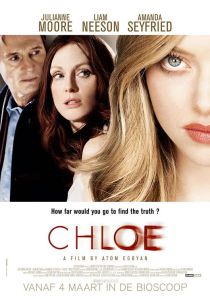
Worst Film Of The Year (so far): Chloe.  Oh, Atom Egoyan, poor baby, what have you done, sweetheart?  You made a trashy, campy softcore movie and then you forgot that these things are supposed to be fun!  Runner-up: Robin Hood, because the entire freaking movie was a lie.  However, it did feature Oscar Isaac screaming, “Outlawwwwww!” and that saves it from being named the worst.

Worst Horror Film So Far: The Black Waters On Echo’s Pond.  So.  Fucking.  Bad.

The Get-Over-It-Award For The First Half Of 2010: The makers of Prince of Persia, who just had to try to turn an otherwise entertainingly mindless action film into yet another half-assed cinematic allegory for the Invasion of Iraq.  Ben Kingsley will probably be playing thinly disguised versions of Dick Cheney for the rest of his life.  I was against the Invasion of Iraq from the start but seriously, I’m so bored with every movie released using it as a way to try to fool the audience into thinking that they’re seeing something more worthwhile than they are.

The Read-The-Freaking-Book-Instead Award: The Killer Inside Me.  A lot of viewers are disturbed by the violent way that the main character deals with the women in his life.  I’m more disturbed by the fact that all the women in his life are presented as being simpering idiots.  The original novel is by Jim Thompson and it is a classic.

The worst ending of 2010 so far: Splice with the Killer Inside Me as a strong runner-up.

Future Film I’m Not Looking Forward To: Roland Emmerich’s Gusher, an ecological thriller based on the BP oil spill, starring Will Smith as the President, Dev Patel as the governor of Louisiana, Paul Bettany as the head of the evil oil company, and Ben Kingsley as Dick Cheney who will be seen cackling as oil-drenched doves wash up on the shores of California.  (How did the oil get to California?  Emmerich magic.)  Of course, the nominal star of the movie will be Jake Gyllenhaal as the young engineer who says stuff like, “This well is going to blow!” and who is trying to reconcile with his estranged wife (played by — does it really matter?  Let’s just say Emily Blunt gets the role this time around).  And let’s not forget Robert Duvall, who will play a grizzled old-timer who says a lot of grizzled old-timer stuff.  Look for it in 2012.

My prediction for which film will be the most overrated of 2010: The Social Network, which has not opened yet but Sasha Stone at awardsdaily.com seems to think that it’s a slam dunk for greatness which is usually a pretty good indication that the end result is going to be a predictable, bourgeois crapfest.

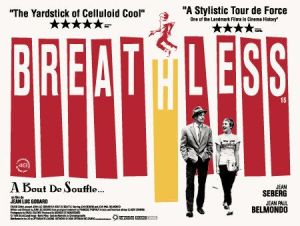
So, that’s 2010 so far.  It’s shaping up to be a good year.  I’m still looking forward to the release of Blue Valentine, Animal Kingdom, Get Low, The Disappearance of Alice Creed, The Last Exorcism, Wall Street, and the rerelease of Godard’s classic Breathless, which is one of my favorite movies and now I’m going to get a chance to see it in a theater!  Life is good.

A Quickie From Lisa Marie: Kiss Them For Me (by Siouxsie and the Banshees)


Last Monday, I made a change.  I moved from my small, cozy apartment (with its paper-thin walls and bedroom window that I could never quite get to shut all the way) to a big, two-story house that I’ll be sharing with my sister and BFF, Erin Nicole.  As excited and happy as I am having made this move, it also meant that, last week, I spent less time than usual obsessing over grindhouse exploitation and pop culture.

In other words, I’ve got to make up for some lost time.

I’d like to begin by highlighting one of my favorite songs, perhaps my favorite song of all time.  Siouxsie Sioux may have been first known as simply a groupie for the Sex Pistols (Way back when, Bill Grundy’s lame attempts to hit on her led to the televised profanity that inspired the infamous “Filth and the Fury” headline) but she later proved herself to be a brilliant and intriguing artist in her own right.  As the vocalist for Siouxsie and the Banshees, Siouxsie was (and is) one of the most important figures of the post-punk era.

Proving once again that I was simply born several years too late, I didn’t get a chance to appreciate the Banshees until they had already ceased to exist as an active group.  In 2004, having just recently seen 24 Hour Party People, I was obsessed with all things punk and all things new wave.  While everyone else was discovering the Black-Eyed Peas or trying to maintain a sense of ironic detachment while buying the latest from Ashlee Simpson, I was devoting my time to Joy Division, New Order, The Slits, the Talking Heads, Patti Smith, the New York Dolls, and Public Image, Ltd.  I haunted the used book and music stores of north Texas and, like an archeologist, I would chip away at all of the boring, modern sediment in hopes of discovering something wonderful hidden underneath it all.  Without a doubt, my greatest discovery was Siouxsie and the Banshees.

I discovered a CD entitled The Best of Siouxsie and the Banshees at Recycled Books in Denton, Texas and it quickly became one of my most prized possessions.  Over the years, my life has taken a lot of twists and turns but there has always been one constant — whenever I’ve needed them, Siouxsie and the Banshees have been playing on my CD player.

My favorite song off that CD is Kiss Them For Me, a song first released in 1991.  The song, which admittedly does have more of a “pop” feel to it than other Banshee songs, is Siouxsie’s tribute to another frequently misunderstood icon, Jayne Mansfield.  Like Mansfield, the song is unapologetically over-the-top and wonderfully self-aware.  It’s a song that pays tribute to a legend by being legendary itself. 

(It’s also the song that I had playing nonstop while my sister and I were unpacking our things this week.)

The song’s lyrics refer both obliquely and explicitly to Mansfield’s decapitation in a 1967 car accident.  (Mansfield’s daughter — Mariska Hargitay — survived the accident and is currently the star of Law and Order: SVU.)

It glittered and it gleamed
For the arriving beauty queen
A ring and a car
Now you’re the prettiest by far
No party she’d not attend
No invitation she wouldn’t send
Transfixed by the inner sound
Of your promise to be found

“nothing or no-one will ever
Make me let you down”

Kiss them for me — I may be delayed
Kiss them for me — if I am delayed

It’s divoon, oh it’s serene
In the fountains pink champagne
Someone carving their devotion
In the heart shaped pool of fame

“nothing or no-one will ever
Make me let you down”

Kiss them for me — I may be delayed
Kiss them for me — I may find myself delayed

On the road to new orleans
A spray of stars hit the screen
As the 10th impact shimmered
The forbidden candles beamed

Kiss them for me — I may be delayed
Kiss them for me — I may find myself delayed

Kiss them for me — kiss them for me

Kiss them for me — I may find myself delayed

Film Review: Drag Me To Hell (directed by Sam Raimi)


There are exactly two things that keep Sam Raimi’s otherwise entertaining 2009 horror romp Drag Me To Hell from being a classic.

The first is that, about halfway through the movie, Alison Lohman murders her pet kitten.  Admittedly, Lohman’s character is trying to thwart a gypsy curse at the time and the action does show just how terrified she’s become.  But that doesn’t change the fact that it’s a cute kitten and quite frankly, I’m getting sick of seeing cats being killed in horror films.  There’s something truly hypocritical about how far most filmmakers are willing to go to assure an audience that a dog has somehow survived the end of the world while cats are continually killed on-screen without a second thought.

Am I saying that the film would have been better is Lohman had murdered a cute puppy instead?  Yes, I am.  At least that would have been unexpected.  That would have let the audience know that all the rules no longer applied.  Quite frankly, whenever you see a cat in a horror film, you know that cat is going to end up either pinned to a door or hanging in the closet.  Dogs, however, always make it to the end.

I imagine this is because there’s more “dog people” than “cat people” in the world.  People — especially men of a certain age — just love dogs and I’ve never really understood why.  I guess there’s a charm to a loud, smelly, slobbering beast eating its own fecal matter that I’ve never been able to pick up on.

The second thing that keeps Drag Me To Hell from reaching classic status is the fact that Bruce Campbell is nowhere to be found, making this the 1st Raimi film not to feature Bruce in at least a cameo.  Regardless of how well-made or entertaining the movie may have been, I sat through the entire thing waiting for Bruce to show up and, when he didn’t, it was hard not to feel as if perhaps an era in filmmaking had come to an end.

However, despite these two issues, Drag Me To Hell is probably one of the best horror movies to have been released in the past few years.  If nothing else, it proves that, even after directing three Spiderman films, Raimi is still a B-movie director at heart and a brilliant one at that.

In Drag Me To Hell, Alison Lohman plays Christine, a young bank loan officer who, attempting to impress her boss and win a promotion, refuses to give a loan to a decrepit old gypsy woman (played, wonderfully, by Lorna Raver as the type of grotesque character who could only appear in a Raimi film).  The gypsy woman responds by promptly dying but before doing so, she puts a curse on Christine.  In three days, Christine will be dragged to Hell.

What makes this is so effective is that Raimi, as opposed to a less adventurous director, sets the film up to suggest that perhaps Christine deserves to be dragged to Hell.  As disgusting as the old woman is, she clearly doesn’t deserve to be treated as badly as she is by Christine and Christine herself (even before she kills that poor kitten) is a bit of a fake, a former “fat girl” who, when she lets her guard down, reverts back to a country hick accent that she’s obviously spent a lot of time trying to lose. 

Lohman does an excellent job in the lead role, giving a likeable performance as an unlikeable character.  Speaking as a former country girl who still occasionally feels a twinge of shame when I hear myself say “git” instead of “get,” one of my pet peeves is when an actor or actress trots out an unconvincing, patronizing attempt at a rural accent.  However, Lohman captures the accent perfectly and, unlike most actors who try to play country, never allows her performance to just be about doing dialect.  Instead, both she and Raimi show how Christine’s insecurities lead to her actions without ever suggesting that they excuse them.

Though absence of Bruce Campbell is painfully obvious, Raimi still surrounds Lohman with a very strong supporting cast who all bring just the right amount of B-movie seriousness to their roles.  As Raver’s daughter, Bojana Novakovic appears in one the film’s best scenes in which she tauntingly explains the cure to Lohman.  Dileep Rao (who would be wasted later that year in Avatar) steals almost every scene he’s in as a friendly psychic who tries to help Lohman.  Lohman’s boyfriend is played by Justin Long (of the “I’m a Mac” fame) and he’s perfect as a somewhat nerdy guy who, quite frankly, seems like he might be a little bit too nice for his own good.  Plus, the film’s final scene proves that Long can shed a tear with the best of them.  Bruce Campbell would have been ideally cast as Lohman’s boss but, in Campbell’s absence, David Paymer fills the role well enough.

When Drag Me To Hell was first released in 2009, the majority of reviews described it as being an entertaining throwback to the old school horror films of the 50s and 60s.  And, in many ways, this is a totally correct assessment.  What wasn’t often mentioned was that Drag Me To Hell is one of the very few Hollywood horror films to capture the chaotic spirit of H.P. Lovecraft.  Countless filmmakers have attempted to bring Lovecraft’s Cthulhu mythos to the screen and they’ve failed because they could never translate to the screen Lovecraft’s theme of mankind as a bunch of powerless pawns, existing and dying at the whims of a bunch of “demons” whose motivations could never be understood or questioned.  Though Drag Me To Hell is not based on Lovecraft’s work, it perfectly captures the feeling of helplessness in the face of metaphysical chaos that runs through Lovecraft’s best stories.  As the movie progresses, it becomes apparent that Christine isn’t going to be dragged to Hell so much because of the gypsy curse as much as just because the movie’s demon has decided to drag her to Hell.  It’s this theme (and the way that Raimi relentlessly develops it) that takes Drag Me To Hell to a whole other level and which makes its final scene so powerful and effective.

When first released, Drag Me To Hell’s special effects were criticized by some and it is true that the film’s demon, when he does show up, is an obvious CGI creation but who cares?  If anything, the obvious fakeness of the demon adds to the film’s exploitation charm (though the demon is probably another role that Bruce Campbell could have done wonders with).  If you want perfect CGI devoid of subtext or originality, Avatar’s out on DVD.  Me, I’ll take Drag Me To Hell any day.

A Quickie With Lisa Marie: Death Disco a.k.a. Swan Lake (by Public Image, Ltd.)


Recently, I’ve been reading Clinton Heylin’s history of punk rock, Babylon’s Burning: From Punk To Grunge.  Not surprisingly, one of the main characters in this book is John Lydon (a.k.a. Johnny Rotten).  Along with detailing Lydon’s time as the lead singer for the Sex Pistols, the book also examines Lydon’s subsequent career as the frontman for Public Image, Ltd.  The book also inspired me to track down and listen to one of PIL’s earliest efforts, a song that was originally called Death Disco (though it was also released under the name Swan Lake for reasons that become obvious once you listen to the song).

Death Disco was written after and in response to the death of Lydon’s mother.  Though the song is now over 30 years old, it remains a powerful and cathartic cry of pain and loss.

As an added bonus, here’s two interviews with Lydon, one from the late 70s that was recorded shortly before he formed Public Image, Ltd. (and in which he looks so incredibly young and, dare I say it, rather adorable in his bratty way) and one from 2007 in which he discusses the meaning of life.

Paranormal Activity 2: Too Scary For Texas


According to Variety, Cinemark has pulled the trailer for Paranormal Activity 2 from several theaters in my homestate of Texas because, apparently, filmgoers (the majority of whom were apparently in the theater to see Twilight: Eclipse) complained that it was too frightening.

Uhmmm….right.

I’ve seen the trailer for Paranormal Activity 2 online and, to be honest, the scariest thing about it is that it confirms that a sequel was actually made to Paranormal Activity One. 

(As a sidenote, the PA 2 trailer recycles the old footage of viewers supposedly jumping in fright while watching the first film.  I always wondered just who exactly these idiots were and whether or not they’d ever actually seen a movie before.)

This whole thing seems to be an old-fashioned publicity stunt designed to create word-of-mouth among the type of people who probably think that the obnoxious filmmakers in Cannibal Holocaust actually were eaten by cannibals at the end of the movie.

It’s especially interesting that these complaints supposedly came from Texas.  I suppose that’s going to be the new advertising angle — Paranormal Activity 2: The Movie So Scary That Even Texans Are Afraid To Watch.  I imagine that now filmgoers are supposed to say, “Wow, it’s got to be scary!  I mean, we expect that sort of cowardly behavior from those new age hippies in Vermont but these are cowboys here!”

(By the way, I’m from Texas and I’ve never worn a cowboy hat and I don’t own a horse.  I do say “y’all” on occasion.  Seriously though, FUCK VERMONT.  Sorry, I’ve always wanted to say that.)

I have to be honest, as much as I disliked the first Paranormal Activity, this publicity stunt has won the filmmakers a very small place in my heart.  This is the type of shameless, silly stunt that would make the grindhouse proud.  Hopefully, they’ll have a nurse present at all screenings of Paranormal Activity 3.

Anyway, if you think you can handle it, here’s the trailer that’s apparently too scary for Texas:

A Quickie From Lisa Marie: Hurt Feelings/Tears of A Rapper (by Flight of the Conchords)


As I sit here frustrated by my attempts to write about how great a movie Winter’s Bone is and feeling depressed for the usual sordid, personal reasons, I realize that I’m still in a Flight of the Conchords type of mood. 

Here’s Bret and Jermaine performing my all-time favorite Conchords song, Hurt Feelings.

A Quickie From Lisa Marie: Lollilove (dir. by Jenna Fischer)


In the role of Pam Beesley on the American version of The Office, Jenna Fischer has served as a role model for artistic, red-haired receptionists everywhere. (I write this, of course, as an artistic, red-haired receptionist.)  However, before she played Pam on a sitcom disguised as a documentary, she played herself in 2004’s Lollilove, a satire disguised as a documentary.

Lollilove tells the story of Jenna and James Gunn (played by Fischer and her then-husband, Slither director James Gunn), a young, idealistic Hollywood couple of decide that they want to do something good for humanity.  After giving it a lot of thought (at one point, we see that Jenna has written “Charity is hard!” in all caps in her diary), Jenna and James decide that their purpose in life is to pass out lollipops to the homeless.  Recruiting Hollywood friends like Judy Greer, Jason Segal, and Linda Cardellini (all playing themselves), they set out to make their dream of homeless people sucking on lollipops a reality.

Clocking in at a brisk 64 minutes, Lollilove is like the Office’s slightly more psychotic cousin.  In the best tradition of transgressive art, Lollilove is fully committed to its ludicrous story and, to its credit, it never wavers from pursuing its story to its ludicrous (if all too believable) ending.

A large reason why the movie works is because of the lead performances of Fischer and Gunn.  Lollilove probably features Fischer’s best work outside of the Office and Gunn proves himself to be as good an actor as a director.  Both of them bring a manic sincerity to their crazed alter egos.  Mention should also be made of the homeless of Los Angeles who play themselves in the film’s final scene.  Yes, when the “fictional” Gunns hand out their inspirational lollipops, they’re giving them to the real homeless. 

And, it must be said, some of the homeless do seem to appreciate the gesture.

(As an added bonus: Lloyd Kaufman has a cameo in which he plays a priest and it has to be seen to be believed.)