Film Review: Chandler (1971, directed by Paul Magwood)


C1971chandler1handler (Warren Oates) is a former private investigator who quits his job as a security guard and gets back into the detective game.  An old friend of his, Bernie Oakman (Charles McGraw), hires Chandler to follow and protect a woman named Katherine Creighton (Leslie Caron).  Katherine is scheduled to testify against gangster John Melchior (Gordon Pinset) and Oakman tells Chandler that he believes Melchior may be planning on murdering her.  What Chandler does not know is that Oakman is being manipulated by a corrupt federal agent, Ross Carmady (Alex Dreier), who is planning on duping Chandler into killing Melchior so that Carmady can take over Melchior’s racket.  Though Chandler tries not to get emotionally involved in his cases, he ends up falling for Katherine.

In case you are keeping count, Chandler is the sixth Warren Oates film that I’ve reviewed this week.  Some of that is because TCM devoted all of Monday to showing his films but it’s also because Warren Oates was a really cool actor who died too soon and never got as much credit as he deserved.  Warren Oates combined the talent of a leading man with the face of a character actor and, as a result, he played some of the most memorable supporting roles of the 60s and 70s.  He was the tough guy who could talk a mile a minute and his upturned grin always showed up at the most unexpected of times.  Warren Oates brought humanity to outcasts and sympathy to villains.

Chandler is one of Warren Oates’s few leading roles.  Unfortunately, it’s not much of a showcase.  Director Paul Magwood and producer Michael Laughlin felt that the then-head of MGM, James Thomas Aubrey, interfered with the production of the film.  After the film’s release, Magwood and Laughlin took out a full-page, black-bordered ad in Variety that read:

Regarding what was our film Chandler, let’s give credit where credit is due. We sadly acknowledge that all editing, post-production as well as additional scenes were executed by James T. Aubrey Jr. We are sorry.

Chandler is a strange film to watch.  The plot is complicated but nothing really happens until the downbeat ending.  Much like Robert Altman’s far more successful The Long GoodbyeChandler tries to contrast the title character’s old-fashioned 1940s style and moral code with the 70s.  Chandler, who always wears a suit and drives an old car, is meant to be a man out of time.  Warren Oates does a good job, giving a Humphrey Bogart-style performance.  But since Chandler doesn’t seem to be sure what it is trying to say about either the 40s or the 70s, it’s all for naught.

Chandler is a forgettable film, one that is only worth watching for the rare chance to see Warren Oates as a leading man.

Warren Oates in Chandler

Warren Oates as Chandler


Film Review: There Was a Crooked Man… (1970, directed by Joseph L. Mankiewicz)


Crooked_manI first saw There Was A Crooked Man as a part of TCM’s tribute to the great actor Warren Oates.  Warren Oates was rarely cast in the lead but, as a character actor, he appeared in supporting roles in several great films.  Unfortunately, There Was A Crooked Man is not one of them.

Directed by Joseph L. Mankiewicz and written by the screenwriting team of Robert Benton and David Newman (best known for writing Bonnie and Clyde), There Was A Crooked Man is meant to be a comedic western.  Outlaw Paris Pittman (Kirk Douglas) is arrested while visiting a bordello.  Paris is sent to an Arizona prison, where everyone tries to get him to reveal where he has hidden the stash from a $500,000 robbery.  Pittman uses everyone’s greed to manipulate them into helping him attempt to escape.  Standing in Pittman’s way is the new warden, a liberal reformer played by Henry Fonda.

There Was A Crooked Man is a long movie that features a lot of familiar faces.  Burgess Meredith plays The Missouri Kid, who has been in prison for so long that he is now an old man.  Hume Cronyn and John Randolph play a bickering gay couple who eventually become a part of Pittman’s scheme to escape.  Even Alan Hale, the skipper from Gilligan’s Island, shows up as a guard named Tobaccy!  There Was A Crooked Man is a big movie but it’s also not a very good one.  It’s not serious enough to be a good drama but it’s not funny enough to be a good comedy either.

At least the movie has Warren Oates going for it.  Oates plays Harry Moon, a prisoner who is drafted into Pittman’s escape plot.  It is a typical Warren Oates supporting role but he steals every scene that he appears in.  Even in the smallest of roles, Warren Oates was worth watching and he’s the best thing about There Was A Crooked Man.

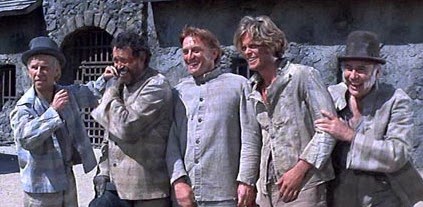
Hume Cronyn, Warren Oates, Kirk Douglas, Michael Blodgett, and John Randolph in There Was A Crooked Man

Hume Cronyn, Warren Oates, Kirk Douglas, Michael Blodgett, and John Randolph in There Was A Crooked Man

Film Review: Badlands (1973, directed by Terrence Malick)


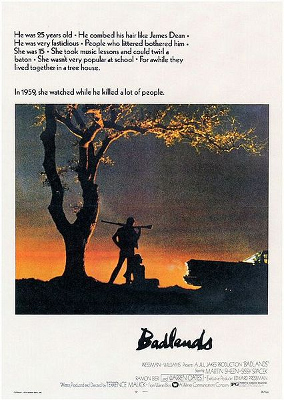
Badlands_movie_posterTerrence Malick is such an influential director that it is easy to forget that he has only directed nine films over the past 42 years.  (One of those ten, Knight of Cups, will be released later this year.  Two other are currently in postproduction.)  He has received Oscar nominations for The Thin Red Line and The Tree of Life but, for me, Malick’s best work remains his directorial debut, Badlands.

Badlands is based on the real-life murder spree of Charles Starkweather and his girlfriend, Caril Ann Fugate.  In 1958, 20 year-old Starkweather murdered 11 people in Nebraska and Wyoming.  14 year-old Fugate was with Starkweather at the time of the murders but has always claimed that she was Starkweather’s hostage.  After the two of them were captured, Starkweather was sent to the electric chair while Fugate served 17 years of a life sentence.

In Badlands, 25 year-old Kit (Martin Sheen) is a garbage man who has a huge chip on his shoulder.  One day, Kit spots 15 year-old Holly (Sissy Spacek) outside, twirling a baton.  Kit starts to talk to Holly, who thinks that he looks like her favorite actor, James Dean.  Kit and Holly start dating.  Holly’s father (Warren Oates), a sign painter who has never recovered emotionally from the death of his wife, tells Kit to stay away from his daughter.  After Kit murders her father, Holly joins him in fleeing from the scene of the crime.  With the police and bounty hunters chasing them, the two young lovers head across the midwest and leave a trail of bodies in their wake.

Badlands sticks pretty close to the facts of the real-life Starkweather/Fugate case but, at the same time, it is definitely the product of Terrence Malick’s artistic vision.  It is interesting to see how, even in his first film, Malick was already exploring the themes and using the techniques that would later distinguish both The Thin Red Line and The Tree Of Life.  Like those two films, Badlands is full of majestic scenery, contrasting the beauty of nature with the ugliness of humanity.  Like all Malick films, Badlands also features a narrator.  Holly tells us her story but, in contrast to the philosophical narrators from Malick’s later films, Holly speaks exclusively in romantic clichés and delivers her narration in a flat, unemotional style.

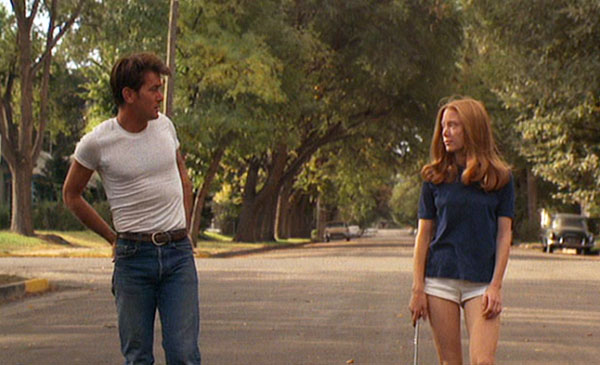
badlands-1973-starkweather-holly-kit-martin-sheen-sissy-spacek

When we first see Holly, her white shorts, blue shirt, and red hair add up to an all-American tableau.  When Holly falls in love with Kit because of his resemblance to James Dean and then either justifies or ignores every destructive thing that he does, she is predicting the rise of our current celebrity-dominated culture.  Meanwhile, Kit is so determined to be James Dean that he even imitates Dean’s performance from Rebel Without A Cause while talking to the police.

Badlands is one of Malick’s most accessible films.  Sissy Spacek is amazing as the childlike Holly and Martin Sheen has probably never been better than in his role here.  And, of course, you have the great Warren Oates in the small but crucial role of Holly’s harsh father.  Badlands is an American classic and still the best film of Terrence Malick’s legendary career.

The Sixth Annual Academy Awards: 1919


At the 1919 Academy Awards, Evelyn Preer makes history, Harry Houdini is rewarded for playing himself, and Bolshevism goes on trial!

Jedadiah Leland's avatarThrough the Shattered Lens Presents The Oscars

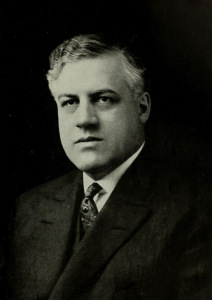
Attorney General A. Mitchell Palmer Attorney General A. Mitchell Palmer

In 1919, as the Spanish Flu continued to infect and kill millions, the world tried to recover from World War I.  After spending six months at the Paris Peace Conference, President Woodrow Wilson returned to the U.S. and launched an ultimately unsuccessful campaign to bring the United States into the newly formed League of Nations.  On September 25th, while barnstorming across the nation in support of the League, a physically exhausted Wilson collapsed and never truly recovered.  On October 2nd, a stroke left him partially paralyzed and blind in one eye.

Even before Wilson’s physical collapse, the U.S. population had reason to feel uncertain about the future.  On January 6th, the wildly popular Theodore Roosevelt died in his sleep.  Before his death, Roosevelt had been widely expected to run for President in 1920 and hopefully return the U.S. to the peace and prosperity…

View original post 1,108 more words

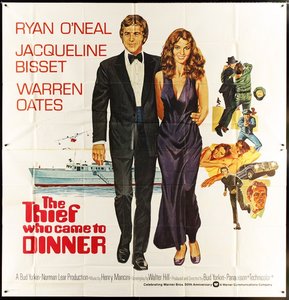
Film Review: The Thief Who Came To Dinner (1973, directed by Bud Yorkin)


0033bee5_mediumIn The Thief Who Came To Dinner, Ryan O’Neal plays Webster McGee, a Houston-based computer programmer.  After deciding that living in a capitalist society means that everyone steals from everyone else, Webster quits his boring job and decides to become a real thief.  Figuring that they can afford to lose a little wealth, Webster only targets the rich and powerful.  After he steals some incriminating documents from a crooked businessman (Charles Cioffi), Webster uses those documents to blackmail his way into high society.  Soon, Webster owns a mansion of his own and is living with a gorgeous heiress (Jacqueline Bisset, who played a lot of gorgeous heiresses back in the day).  Webster also has an insurance investigator after him.  Dave Reilly (Warren Oates) knows that Webster is a thief but he also can not prove it.  As Dave obsessively stalks him, Webster plots one final heist.

Until I saw it on TCM on Monday, I had never heard of The Thief Who Came To Dinner.  Directed in a breezy style by Bud Yorkin, The Thief Who Came To Dinner was an early script from Walter Hill.  Though the film is much more comedic than his best known work, it’s still easily recognizable as coming from Hill’s imagination.  The obsessive Dave and the coolly professional Webster are both prototypical Hill characters and their adversarial yet friendly rivalry would be duplicated in several subsequent Hill films.

The Thief Who Came To Dinner is an engaging movie that doesn’t add up to much.  The normally stiff Ryan O’Neal gives one of his better performances, though he struggles to hold his own whenever he has to act opposite the far more energetic Warren Oates.  Ned Beatty, Gregory Sierra, John Hillerman, Michael Murphy, and Austin Pendleton all appear in minor roles, making the film’s cast a veritable who’s who of 70s character actors.  And, of course, the film features Jacqueline Bisset at her loveliest.

The Thief Who Came To Dinner may not be well-known but it is an enjoyable and satisfying piece of 70s entertainment.

Film Review: The Split (1968, directed by Gordon Flemyng)


The Split2The Split is one of the many films to be based on one of Donald Westlake’s Parker novels.  A classic antihero, Parker was a ruthless professional criminal who was only partially redeemed by being so much better at his job than all the other lowlifes around him.  In the movies, Parker has been played by everyone from Lee Marvin to Robert Duvall to Mel Gibson to Jason Statham.  In The Split, Parker is renamed McClain and he is played by Jim Brown.

McClain and his partner, Gladys (Julie Harris), have a plan to rob the Los Angeles Coliseum during a football game.  (Actual footage of the Rams playing the Falcons was used.)  McClain personally recruits a crew of criminals to help him pull off the heist.  Harry Kifka (Jack Klugman) is the getaway driver.  Bert Clinger (Ernest Borgnine) is the muscle.  Marty Gough (Warren Oates) is the electronic expert.  Dave Negli (Donald Sutherland) is the sharpshooter.

After pulling off the robbery, McClain stashes the money with his ex-girlfriend, Ellie (Diahann Carroll).  When her landlord, Herb Sutro (James Whitmore), finds out that Ellie has the money, he murders her and steals it.  When homicide detective Walter Brill (Gene Hackman) solves Ellie’s murder, he kills Herb and takes the money for himself.  Meanwhile, Gladys and the crew are convinced that McClain knows where the money is.  With everyone out to kill him, McClain tries to find the money.

The Split is mostly interesting because of its cast.  For all of his physical presence, Jim Brown was never much of an actor but the large supporting cast more than makes up for his limitations.  It’s fun to watch Sutherland, Borgnine, Harris, and Klugman compete to see who can steal the most scenes.  Meanwhile, a youngish Gene Hackman is as cantankerous as ever.  Then there’s the great Warren Oates.  Warren Oates was one of the greatest actors of all time and he spent his far too brief career stealing movies like The Split.

(The Split was released a year after Jim Brown, Ernest Borgnine, and Donald Sutherland had all appeared in The Dirty Dozen.  A year after The Split, Warren Oates and Ernest Borgnine would both be members of The Wild Bunch while Hackman and Brown would costar in Riot.)

The Split has some historical significance as the first film to ever be given an R rating.  Though tame by today’s standards, at the time of its release, The Split was considered to be extremely violent and audiences were also shocked by a brief flash of nudity.  Seen today, The Split is a conventional heist movie but it still shows what a group of good actors can do with so-so material.

The Split

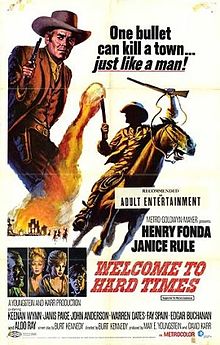
Film Review: Welcome to Hard Times (1967, directed by Burt Kennedy)


220px-WelcomehardtimesWelcome to Hard Times is a western that used to frequently turn up on TV when I was a kid.  I remembered that I had always enjoyed it but otherwise, I had largely forgotten about it when I saw that it was airing on TCM earlier today.  I rewatched it to see if I would still enjoy it.  Welcome To Hard Times has its flaws but it is still an above average addition to the genre.

Based on a novel by E.L. Doctorow, Welcome to Hard Times takes place in the small western settlement of Hard Times, Nevada.  When the mysterious Man From Bodie (Aldo Ray) shows up, he terrorizes everyone in the town.  When the town founder, Mr. Fee (Paul Birch), attempts to stand up to him, the Man from Bodie shoots him dead.  When the local undertaker, Mr. Hansen (Elisha Cook, Jr.) tries to stop the Man from stealing one of his horses, the Man silently guns him down.  As the town’s mayor, Will Blue (Henry Fonda), stands by and helplessly watches, The Man rapes and murders Fee’s girlfriend and also kills the local saloonkeeper, Avery (Lon Chaney, Jr.).  The Man burns down the town and finally leaves.

Thought most of the surviving townspeople abandon Hard Times, Will Blue stays behind and tries to rebuild.  He adopts Fee’s son, Jimmy (Michael Shea).  Also staying behind is Jimmy’s mother, Molly Riordan (Janice Rule), a former saloon girl who was also raped by the Man and who constantly taunts Will for not being able to stand up to him.  New settlers arrive and the town starts to rebuild.  Zar (Kennan Wynn) and his four girls reopen the saloon and serve the workers at a nearby mine.  Isaac Maple (John Anderson) reopens the general store.  Under Will’s leadership, Hard Times starts to thrive.

A drifter named Leo Jenks (the great Warren Oates) also moves in.  When Molly discovers that Leo is a crack shot, she gets him to teach Jimmy how to handle a shotgun.  Both she and Will know that the Man is going to return in the spring.  Molly is obsessed with vengeance and Will fears that Jimmy is going to be consumed by her hatred.

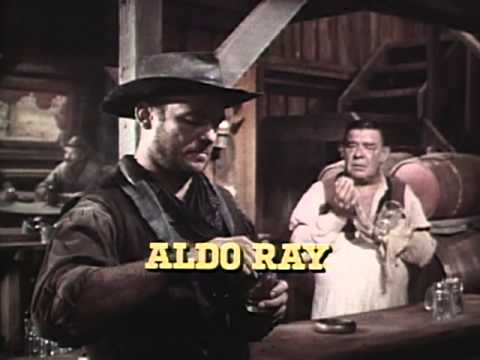
Aldo Ray  Welcome to Hard Times (1967)Of course, the Man does eventually return.

Welcome to Hard Times works best at the beginning and the end, when Aldo Ray is on-screen.  As the sadistic Man from Bodie, Ray gives a classic western bad guy performance.  He’s intimidating, he’s violent, and he guns down the citizens of Hard Times with even more casual arrogance than Lee Marvin, Jack Palance, and Lee Van Cleef combined!  The middle section of the film drags and it is hard to ignore Jane Rule’s shaky Irish accent.  It is obvious that Welcome to Hard Times is trying to say something about Will Blue’s humanistic approach but it does not seem to know what.

Director Burt Kennedy was best known for directing comedic westerns.  Welcome to Hard Times was a rare dramatic film for him.  It’s not a great western but, thanks to Aldo Ray’s performance and the excellent work of cinematography Harry Stradling, Jr., it’s still a worthy addition to the genre.


Aldo Ray

4 Shots From 4 Films: Fahrenheit 451, The Illustrated Man, The Martian Chronicles, Something Wicked This Way Comes


Happy birthday, Ray Bradbury.

4 Shots From 4 Films

Fahrenheit 451 (1966, directed by Francois Truffaut)

Fahrenheit 451 (1966, directed by Francois Truffaut)

The Illustrated Man (1968, directed by Jack Smight)

The Illustrated Man (1968, directed by Jack Smight)

The Martian Chronicles (1980, directed by Michael Anderson)

The Martian Chronicles (1980, directed by Michael Anderson)

Something Wicked This Way Comes (1983, directed by Jack Clayton)

Something Wicked This Way Comes (1983, directed by Jack Clayton)


The Fourth Annual Academy Awards: 1917


Lisa and I continue to reimagine the Oscar history, one year at a time. Today, we look at 1917. The U.S. enters World War I, the Pickfords take over Hollywood, and, for the first time, the entire membership of the Academy gets to vote.

Jedadiah Leland's avatarThrough the Shattered Lens Presents The Oscars

The host of the 4th Annual Academy Awards, Roscoe "Fatty" Arbuckle The host of the 4th Annual Academy Awards, Roscoe “Fatty” Arbuckle

On March 4th, 1917, President Woodrow Wilson took the oath of office and began his second term of President.  Just a few months earlier, he had run for reelection on a platform of maintaining American neutrality in the war that was ravaging Europe.  His slogan was “He Kept Us Out Of War,” and it was enough to allow him to survive one of the closest elections in U.S. History.

One month later, the U.S. declared war on Germany and entered into what would come to be called World War I.

Whereas the previous year had been dominated by films, like the Award-winning Civilization, that promoted neutrality and world peace, 1917 saw the release of several films that were designed to support the American war effort.  The pacifism of Civilization was forgotten as the box office embraced…

View original post 1,241 more words

4 Shots From 4 Films: Walkabout, Don’t Look Now, The Man Who Fell To Earth, Insignificance


Happy birthday, Nicolas Roeg.

4 Shots From 4 Films

Walkabout (1971, directed by Nicolas Roeg)

Walkabout (1971, directed by Nicolas Roeg)

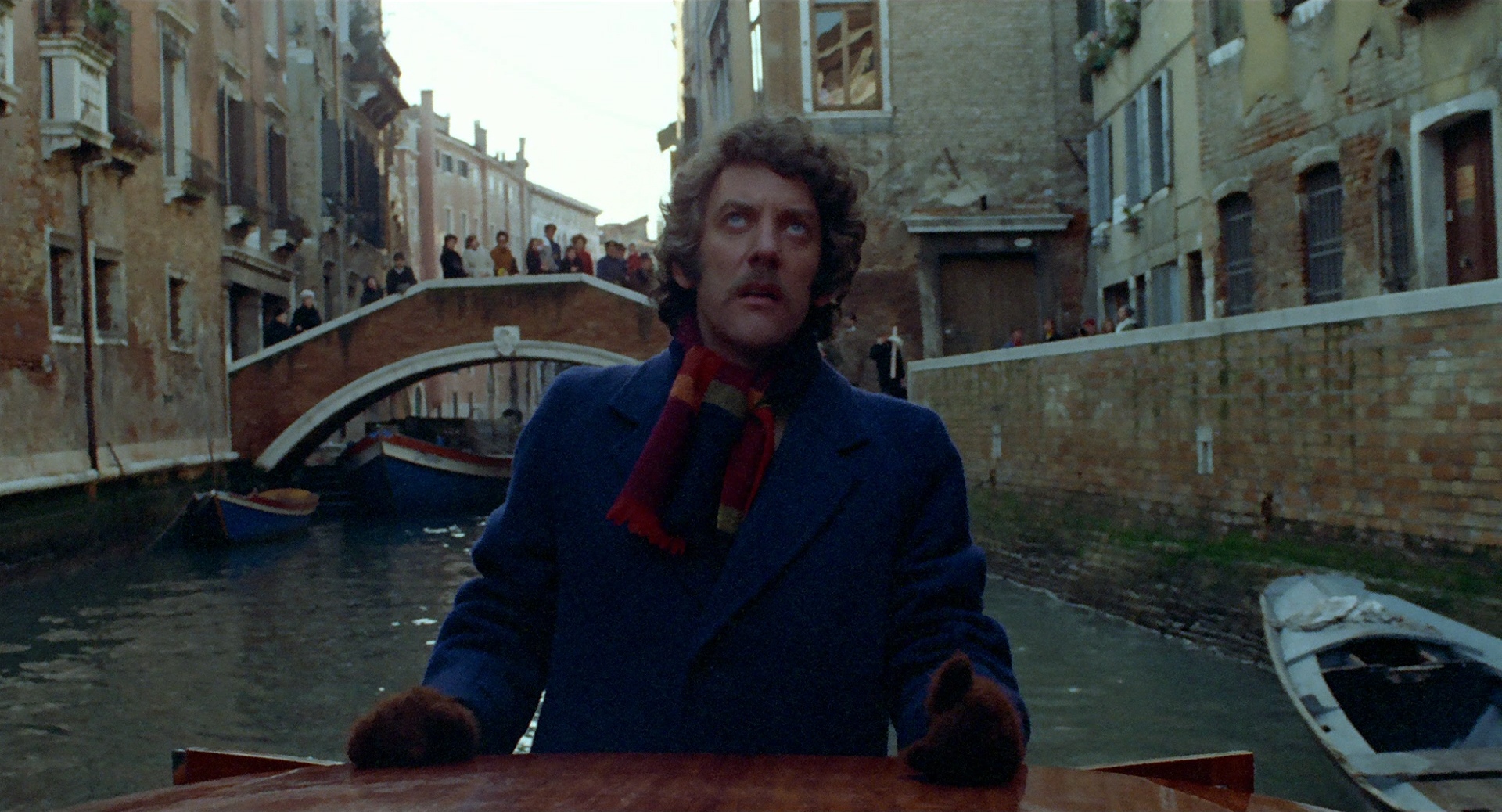
Don't Look Now (1973, directed by Nicolas Roeg)

Don’t Look Now (1973, directed by Nicolas Roeg)

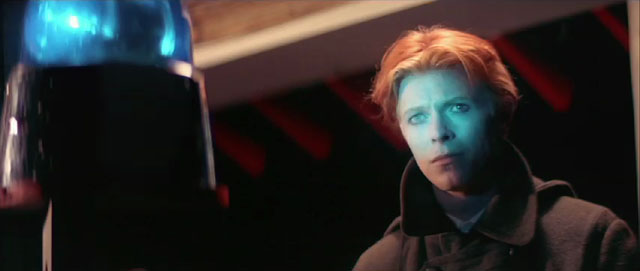
The Man Who Fell To Earth (1976, directed by Nicolas Roeg)

The Man Who Fell To Earth (1976, directed by Nicolas Roeg)

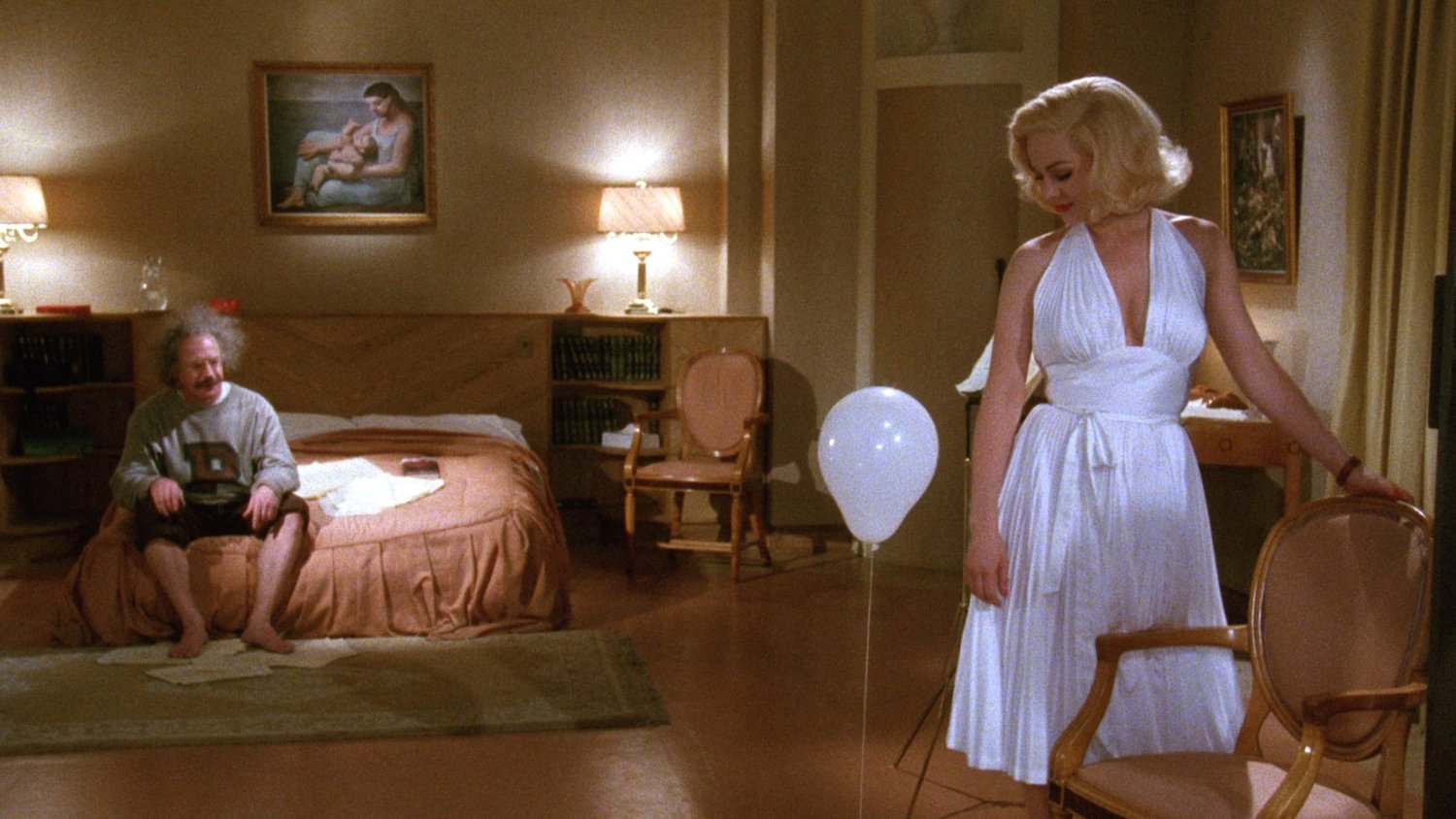
Insignificance (1985, directed by Nicolas Roeg)

Insignificance (1985, directed by Nicolas Roeg)