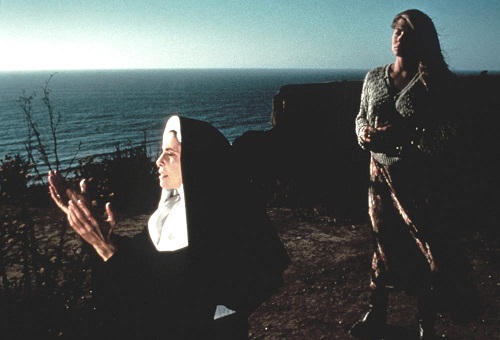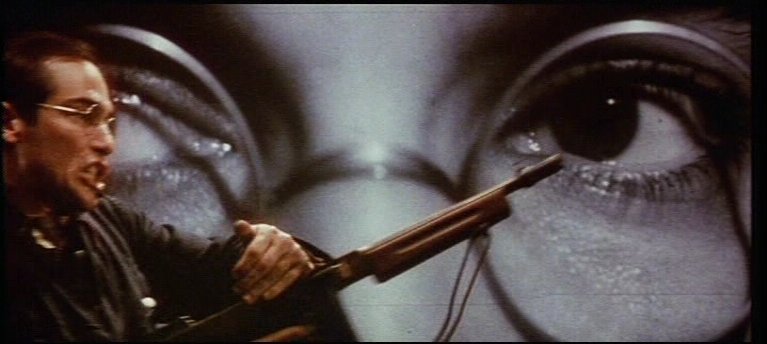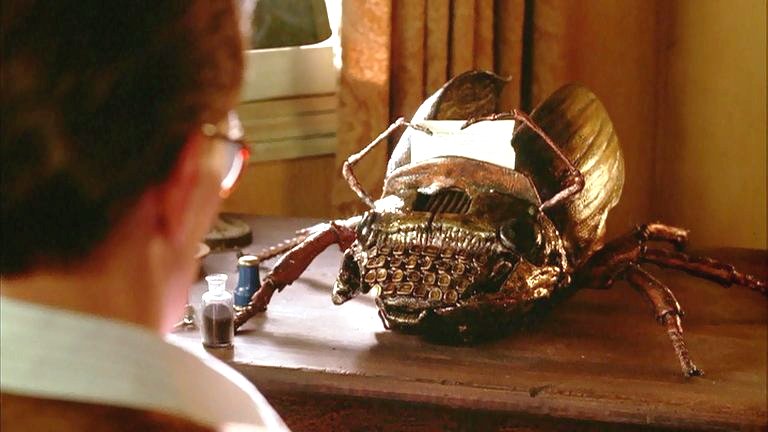
4 Shots From 4 Films: Dr. Crippen, Cul-de-sac, Wake In Fright, The Mutations


Yesterday would have been Donald Pleasence’s 96th birthday.  Pleasence is best remembered for playing Blofeld in You Only Live Twice and the obsessive Dr. Sam Loomis in the Halloween films but, over the course of his long career, he appeared in over a hundred other films.  These 4 shots come from 4 of them.

4 Shots From 4 Films

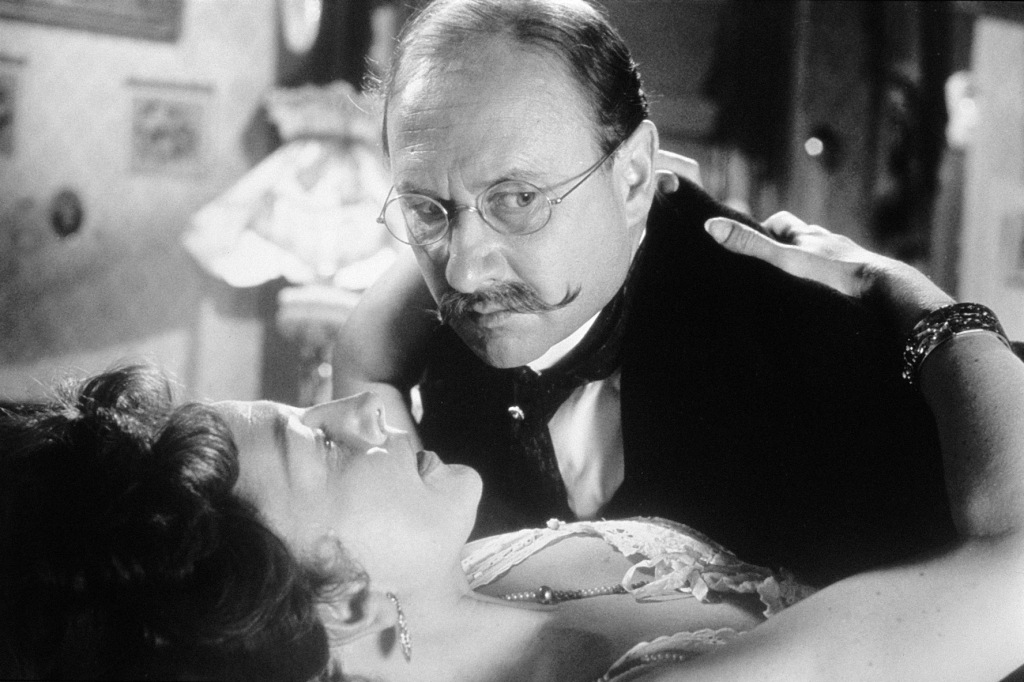
Dr. Crippen (1963, directed by Robert Lynn)

Dr. Crippen (1963, directed by Robert Lynn)

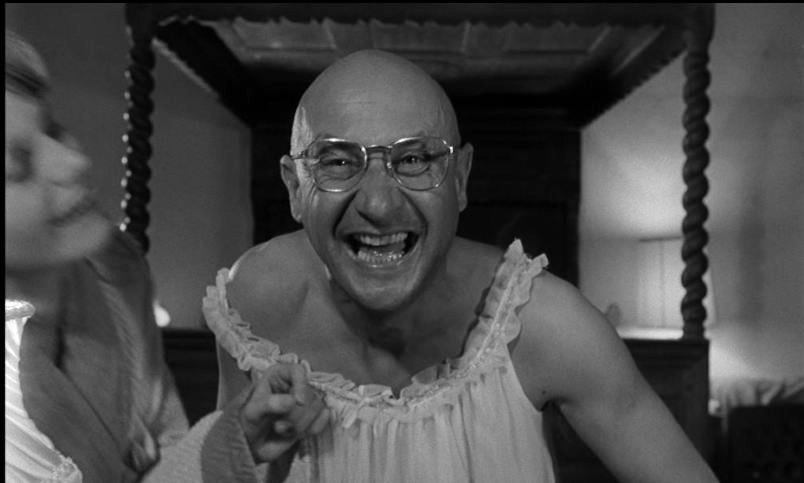
Cul-de-sac (1966, directed by Roman Polanski)

Cul-de-sac (1966, directed by Roman Polanski)

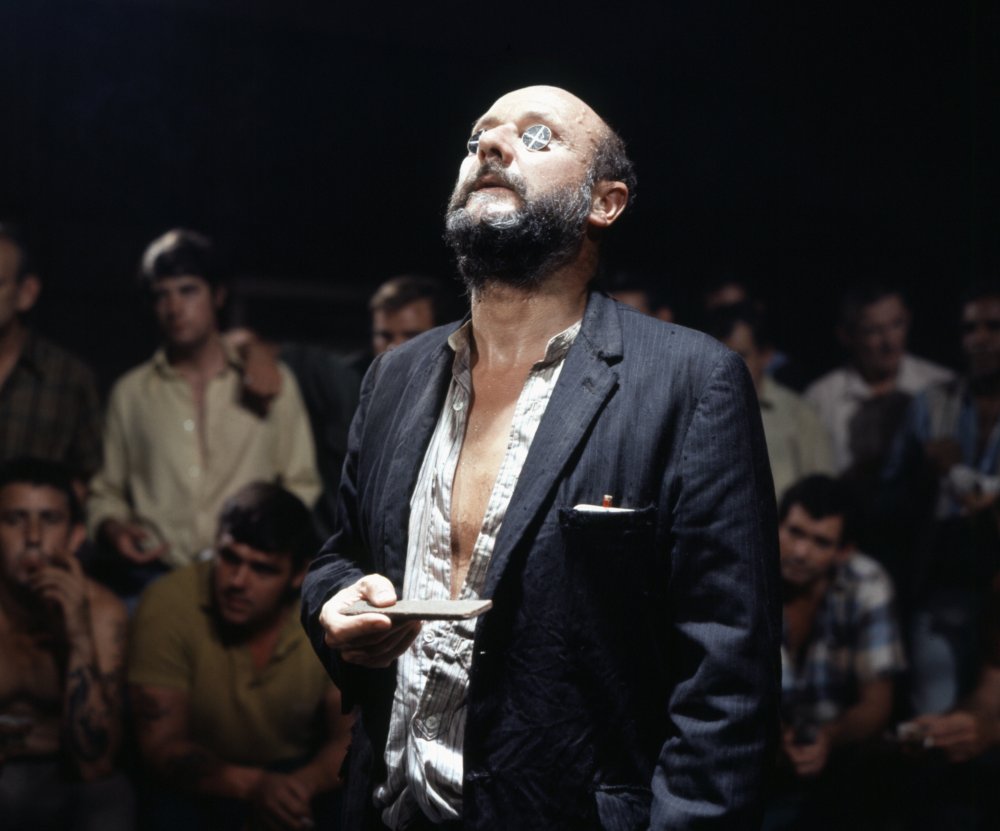
Wake in Fright (1971, directed by Ted Kotcheff)

Wake in Fright (1971, directed by Ted Kotcheff)

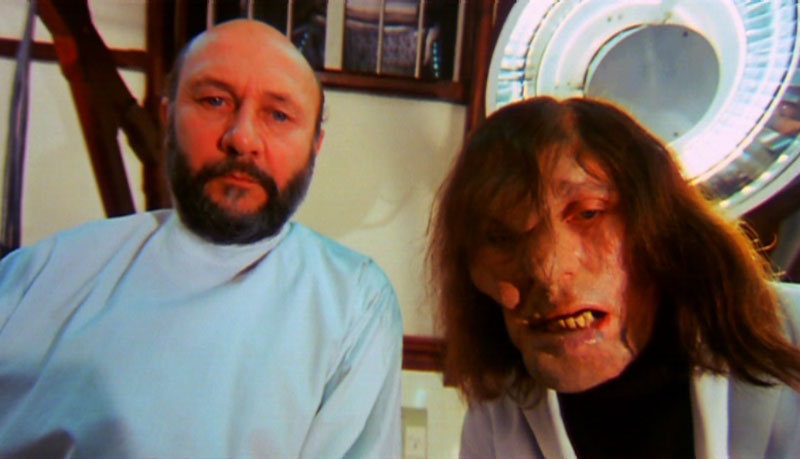
The Mutations (1974, directed by Jack Cardiff)

The Mutations (1974, directed by Jack Cardiff)

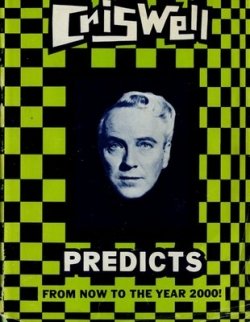
Criswell Predicts From Now To The Year 2000!


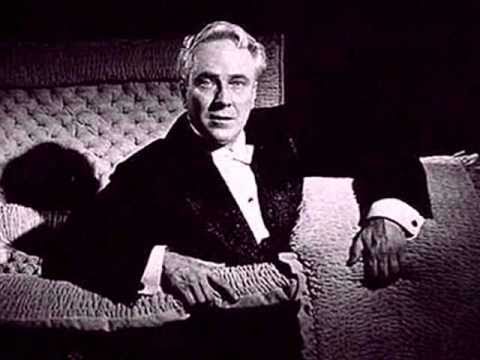
Criswell Predicts_From Now To Year 2000_1968Charles King was born in 1907 in the back of an Indiana mortuary.  He was born long ago in the past and he lived in, what for him, was the present.  But his mind saw only the future.  Charles King would become better known as the Amazing Criswell.  Along with writing a daily column entitled “Criswell Speaks,” Criswell also appeared in such films as Plan 9 From Outer Space and Orgy of the Dead.  Though death came to this great man exactly 32 years ago today, his words and his vision live on.  According to Criswell himself, his predictions were proven to be correct 87% of the time, a little less than always but a lot more than often.

In 1968, Criswell published his first book, Criswell Predicts From Now To The Year 2000!  You can still find copies of it in used bookstores and occasionally, you will find someone selling it on Ebay or Amazon.  For those of us in the year 2015, it makes for an interesting read.  Here are a few of Criswell’s predictions from 1968:

Criswell predicted that, by 1980, we would be able to perform our own home facelifts for just $5.00 a pop.

On page 115 of Criswell Predicts, Criswell wrote, “I predict an outburst of cannibalism that will terrorize the population of one of the industrial cites in the state of Pennsylvania—Pittsburgh. Mass mournings will be held for the victims. A smile will be unknown. The fate of this city of Pittsburgh will never be forgotten… Date: November 28 to December 21, 1980.”

Criswell predicted that, on August 9th, 1970, Fidel Castro would be assassinated by a woman.
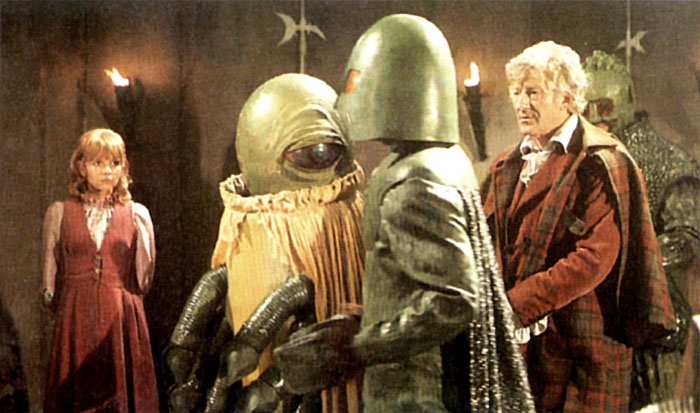
curse_of_peladon_7703

On page 57 of Criswell Predicts, Criswell wrote, “Las Vegas, Nevada, March 10, 1990: The very first Interplanetary Convention will be held in the new Convention Center on the famed Strip with colony citizens of Mars, Venus, Neptune and the Moon in full representation; Governor Sawyer will make the opening welcome address.”

Criswell predicted paste-on bikinis for girls and clamp-on bikinis for boys.

On page 79 of Criswell Predicts, Criswell wrote, “London, England, will be the target of this heartless killer from outer space. The meteor will strike in a heavily populated sector of London and will hit with unprecedented force, rocking the earth for hundreds of miles and slightly shifting the position of the earth. Shocks will be felt as far away as Paris, Lisbon, Denmark, Australia, India, China, South Africa, South America, and Washington, D.C. I predict that the once proud city of London will be a tomb of death. Entire slum areas will be completely wiped out. Date: October 18, 1988.”

Criswell predicted that nudism would become more popular in the United States and that, in 1971, the Supreme Court would legalize public nudity.

Dayafter1On page 107 of Criswell Predicts, Criswell wrote, “I predict that on February 11, 1981, there will be an abortive attempt by a foreign power to bomb the United States with atomic missiles. Most of the missiles will be destroyed by anti-missile missiles, but several will be only driven off course and will drop on the helpless state of Vermont. The death toll on that date will exceed 50,000 persons.”

(Lisa Marie asked me to note that this is her personal favorite of Criswell’s many predictions.)

Criswell predicted that the U.S. capital would be moved from Washington, D.C. to Wichita, Kansas.

On page 105 of Criswell Predicts, Criswell wrote, “I predict that South Dakota will become the first state to legalize prostitution and the sale of marijuana. I predict that a group of ruthless men will control the state government of South Dakota in the late 1970s and their open traffic in prostitution and drugs will cause repercussions throughout the country.”

Criswell predicted that the teeming metropolis of Denver, Colorado would be destroyed on June 9th, 1989 by a pressure from outer space that would cause all solids to turn into a jelly-like mass.

Let us take a few moments to pay respect for the dead of Denver.

And lastly, Criswell predicted that the last day of life on Earth would be August 18th, 1999, at which point a black rainbow would stretch across the sky and, through forces that we cannot begin to comprehend, suck away our precious oxygen.  Only 200 American and Russian space colonists will survive the final destruction of Earth.

As Criswell himself might say, “Can you prove it didn’t happen?”

Criswell, R.I.P.
criswell


Film Review: Big Bad Mama (1974, directed by Steve Carver)


Big_bad_mama_movie_posterToday is Angie Dickinson’s 84th birthday.  One of Angie’s best remembered films is Big Bad Mama, an entertaining and fast-paced gangster film that was produced by Roger Corman.

The year is 1932 and the setting is Texas.  Wilma McClatchie (Angie Dickinson) is a poor single mother with two teenage daughters (Susan Sennett and Robbie Lee) to support.  When Wilma’s bootlegger lover, Barney (Noble Willingham), is killed by the FBI, Wilma takes over his route.  Wilma wants her daughters to be rich like “Rockefeller and Capone” and soon, they graduate from bootlegging to bank robbery.  During one robbery, they meet and team up with Fred (Tom Skerritt).  Wilma and Fred are lovers until Wilma meets alcoholic con man, Baxter (William Shatner).  With Fred and Baxter competing for her affections and her youngest daughter pregnant, Wilma plans one final job, the kidnapping of a spoiled heiress (Joan Prather).

Big Bad Mama is one of the many Bonnie and Clyde rip-offs that Roger Corman produced in the 70s.  (Corman also gave us Bloody Mama and Crazy Mama.)  Big Bad Mama is a typical Corman gangster film, with fast cars, blazing tommy guns, Dick Miller, and plenty of nudity.  Angie was in her 40s at the time and, justifiably proud of her body, her full frontal nude scenes created a lot of publicity for the film.  William Shatner also strips down for the film and his sex scene with Angie is just as weird to watch as you would expect it to be.

The whole film changes as soon as William Shatner makes his first appearance.  He may be speaking with a Southern accent and he may be playing a sniveling coward but he is still William Shatner, with all that implies.  Watching Shatner, it is hard not to imagine that Big Bad Mama is actually a lost Star Trek episode where Kirk goes back in the past and meets special guest star Angie Dickinson.  Far more effective is Tom Skerritt, who is thoroughly believable as a Dillinger-style bank robber.

In the style of Bonnie and Clyde, Big Bad Mama presents its outlaws as being counter-culture rebels.  Every authority figure that Wilma meets — from a preacher played by Royal Dano to a corrupt sheriff to Dick Miller’s incompetent FBI agent — is presented as being hypocritical and arrogant.  Angie plays Wilma as a strong-willed and sexually liberated woman who refuses to allow anyone to tell her how to live her life or raise her daughters.  In the gang, both Fred and Baxter are subservient to her.  Big Bad Mama’s tag line was “Hot lead!  Hot legs!  Hot damn!” and that is a perfect description of Angie Dickinson’s performance.

Happy birthday, Angie Dickinson!

Angie and Shatner

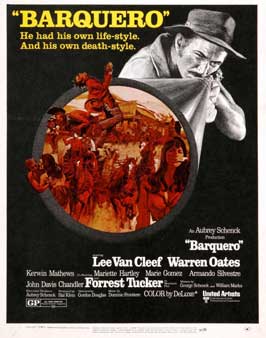
Film Review: Barquero (1970, directed by Gordon Douglas)


barquero-movie-poster-1970-1010695655Travis (Lee Van Cleef) is a former gunslinger who now makes his living taking settlers across a river on his small barge.  When we first meet him, he is telling a child to shut up and stop bothering him while he is guiding the barge.  He depends on the settlers on the other side of the river for his livelihood and they depend on him for transportation but he doesn’t like them and they don’t like him.  Travis only cares about two people, his Mexican lover, Nola (Maria Gomez) and an eccentric hunter named Mountain Phil (Forrest Tucker).

After stealing a shipment of silver, outlaw Jake Remy (Warren Oates) and his army of mercenaries need to cross the river to escape into Mexico.  To prevent anyone from following, they plan to destroy the barge afterward.  However, Travis and Phil find out that Remy is on the way and take the barge to the other side of the river.  When Jake and his gang arrive, a tense stand-off ensues, with the outlaws on one side of the river and Travis and the settlers trapped on the other.

Though Barquero was directed by the veteran American director Gordon Douglas (Douglas’s best known film is the 1950s giant ant film, Them!),  it was heavily influenced by contemporary Spaghetti Westerns and Sam Peckinpah’s The Wild Bunch.  This can be seen in both its graphic violence and in the casting of Lee Van Cleef and Warren Oates in the leading roles.

Travis was a perfect role for Van Cleef, a talented actor who was ignored by Hollywood until he found fame playing ruthless villains in European westerns.  Surly and unsmiling, Travis may seem like an unlikely hero but, like many of the best Spaghetti westerns, there are no traditional good guys in Barquero.  Travis is more interested in saving his boat than protecting the settlers.  He is a hero of circumstance.

As Jake, Warren Oates is a great villain.  In his very first scene, he and a prostitute watch as his gang massacre the citizens of a small town.  When the prostitute asks if she can come with them, Jake calmly replies, “I don’t think so” and shoots her dead.  Stuck on his side of the river, Jake smokes the local weed and starts to have violent hallucinations.  Soon, he is shooting bullets into the river.

Also doing good work are Forest Tucker as Mountain Phil and Kerwin Mathews.  Mathews, who is best remembered for starring in The 7th Voyage of Sinbad, plays the Marquette, a disgraced French nobleman who has started a second life as Jake Remy’s right-hand man.

Barquero starts with a bang but it struggles to keep up the momentum over its entire running time.  The opening shoot out is exciting but things slow down almost too much during the stand-off at the river.  It is an interesting but flawed western that deserves to be better known than it is and worth watching to see Lee Van Cleef and Warren Oates at their best.

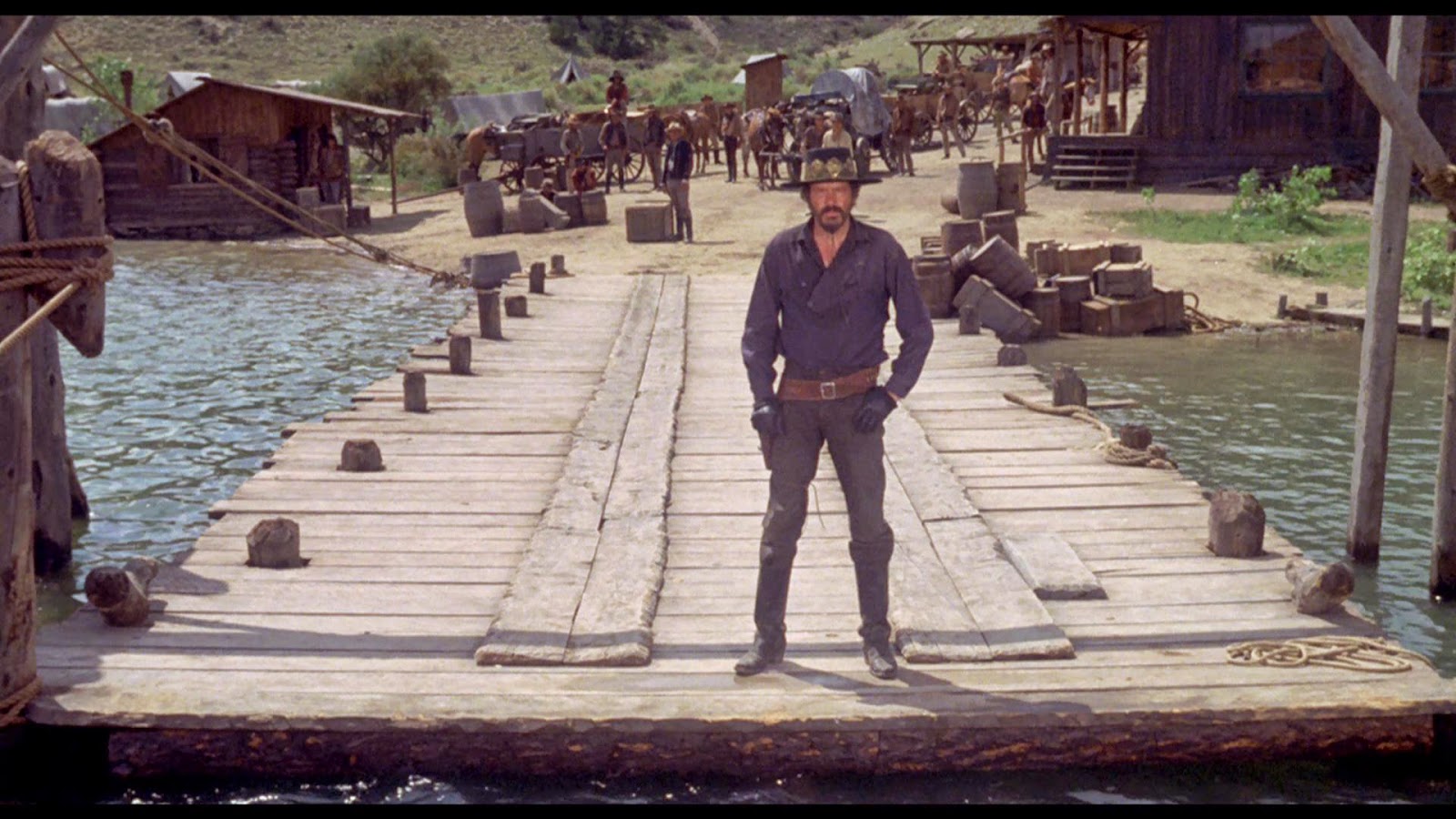
Barquero-Oates-on-dock

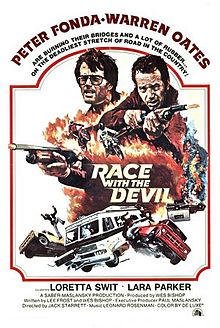
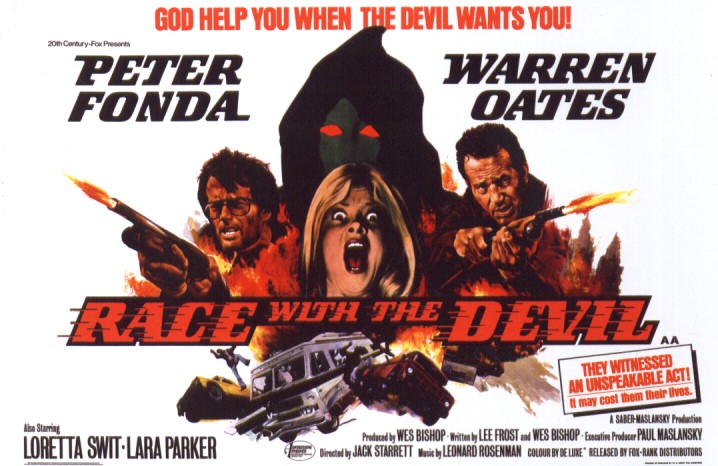
Film Review: Race With The Devil (1975, directed by Jack Starrett)


220px-RaceWithTheDevilWarren Oates and Peter Fonda versus …. SATAN!

Roger (Peter Fonda) and Frank (Warren Oates) are lifelong friends and business partners who, along with their wives Kelly (Lara Parker) and Alice (Loretts Swit), are planning on taking the “best damn vacation we ever had.”  Traveling to Colorado in Frank’s RV, they decide to camp for a night next to a river.  Not only do Frank and Roger witness what appears to be a human sacrifice but they also have to run for their lives when they are spotted.  The local sheriff (R.G. Armstrong) tells them that they probably just saw a bunch of hippies killing an animal but Peter Fonda knows hippies and those were not hippies.  Taking some blood-stained dirt so it can be analyzed by the authorities, Roger and Frank try to drive on but find themselves being pursued by Satanists.

A relentless and entertaining B-movie, Race With The Devil is a hybrid of Rosemary’s Baby, Smokey and the Bandit, and Easy Rider, with some Parallax View-style paranoia mixed in as well.  Eventually, it seems as if everyone in rural Texas — from the sheriff to the gas station attendant to the residents of an RV park where our heroes try to spend the night — is a Satanist.  (Even a wrecked school bus turns out to just be an excuse to get the RV to slow down so the Satanic rednecks can attack, leading to Warren Oates’s classic line, “I don’t believe in a school bus on Sunday.”)

A big part of the fun of Race With The Devil is getting to watch Peter Fonda and Warren Oates acting opposite each other.  (A lot of drive-in patrons probably left Race With The Devil with a crush on the lovely Lara Parker as well.)  Friends both on and off-screen (Oates previously co-starred in Fonda’s directorial debut, The Hired Hand), Fonda and Oates are a lot of fun to watch playing off of each other in Race With The Devil, with Warren Oates’s natural intensity providing a good contrast to Fonda’s laid back style.

It may not rank up there with the movies that he appeared in for Sam Peckinpah and Monte Hellman but Race With The Devil is still one of Warren Oates’s most entertaining films.

race-with-the-devil-1

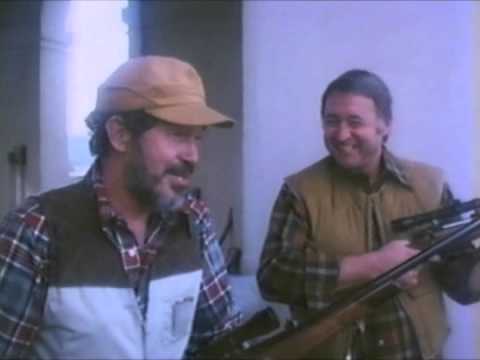
Film Review: Prime Time (1977, directed by Bradley R. Swirnoff)


Prime TimeThe great character actor Warren Oates appeared in a lot of fairly obscure movies but none are as obscure as Prime Time.

With a running time of barely 70 minutes, Prime Time is a comedic sketch film that was meant to capitalize on the then-recent success of The Groove Tube, Tunnelvision, The Kentucky Friend Movie, and the first season of Saturday Night Live.  According to the Unknown Movies Page, Prime Time was financed independently and was picked up for distribution by Warner Bros.  After the Warner execs saw the finished film, they decided it was unreleasable so the film’s production team sold the film to Cannon Pictures, who were famous for being willing to release anything.  The movie played in a few cities under the terrible title American Raspberry and then went straight to VHS obscurity.

Sketch comedies are usually hit-and-miss and Prime Time is definitely more miss than hit.  The majority of the film is made up of commercial parodies but, since most of the commercials being parodied are no longer on the air, the humor has aged terribly.  There is also a wrap-around story.  The President (George Furth) and a general (Dick O’Neill) try to figure out where the commercial parodies are coming from and stop them before the broadcast leads to a riot.   There are a few funny bits (including Harry Shearer as a stranded trucker looking for a ride and Kinky Friedman singing a song about “Ol’ Ben Lucas who has a lot of mucus”) but, for the most part, the film is epitomized by a skit where people literally get shit dumped on their head.  The film’s opens with an incredibly racist commercial for Trans Puerto Rican Airlines and it’s all downhill from there.

As for Warren Oates, he appears in an early skit.  He and Robert Ridgely (best known for playing Col. James in Boogie Nights) play hunters who take part in the Charles Whitman Celebrity Invitational, climbing to the top of the Tower on the University of Texas campus and shooting at the people below.  It’s even less funny now than it probably was in 1977.

How did Warren Oates end up in a movie like Prime Time?  Even great actors have bills to pay.  As for Prime Time, it is the one Warren Oates film that even the most dedicated Warren Oates fan won’t regret missing.

Warren Oates and Robert Ridgely in Prime Time

Warren Oates and Robert Ridgely in Prime Time

Film Review: Kid Blue (1973, directed by James Frawley)


KidBlueFor the past week and a half, I have been on a major Warren Oates kick.  The latest Oates film that I watched was Kid Blue, a quirky western comedy that features Warren in a small but key supporting role.

Bickford Warner (Dennis Hopper) is a long-haired and spaced-out train robber who, after one failed robbery too many, decides to go straight and live a conventional life.  He settles in the town of Dime Box, Texas.  He starts out sweeping the floor of a barber shop before getting a better job wringing the necks of chickens.  Eventually, he ends up working at the Great American Ceramic Novelty Company, where he helps to make ashtrays for tourists.

He also meets Molly and Reese Ford (Lee Purcell and Warren Oates), a married couple who both end up taking an interest in Bickford.  Reese, who ignores his beautiful wife, constantly praised Greek culture and insists that Bickford take a bath with him.  Meanwhile, Molly and Bickford end up having an affair.

Bickford also meets the local preacher, Bob (Peter Boyle).  Bob is enthusiastic about peyote and has built a primitive flying machine that he keeps in a field.  The town’s fascist sheriff, Mean John (Ben Johnson), comes across Bob performing a river baptism and angrily admonishes him for using “white man’s water” to baptize an Indian.

Bickford attempts to live a straight life but is constantly hassled by Mean John, who suspects that Bickford might actually be Kid Blue.  When Bickford’s former criminal partner (Janice Rule) shows up in town and Molly announces that she’s pregnant, Bickford has to decide whether or not to return to his old ways.

Kid Blue is one of a handful of counterculture westerns that were released in the early 70s.  The film’s biggest problem is that, at the time he was playing “Kid” Blue, Dennis Hopper was 37 and looked several years older.  It’s hard to buy him as a naïve naif when he looks older than everyone else in the cast.  As for Warren Oates, his role was small but he did great work as usual.  Gay characters were rarely presented sympathetically in the early 70s and counter-culture films were often the worst offenders.  As written, Reese is a one-note (and one-joke) character but Warren played him with a lot of empathy and gave him a wounded dignity that was probably not present in the film’s script.

Kid Blue plays out at its own stoned pace, an uneven mix of quirky comedy and dippy philosophy.  Still, the film is worth seeing for the only-in-the-70s cast and the curiosity factor of seeing Dennis Hopper in full counterculture mode, before he detoxed and became Hollywood’s favorite super villain.

o_kid-blue-dvd-dennis-hopper-warren-oates-5cdc

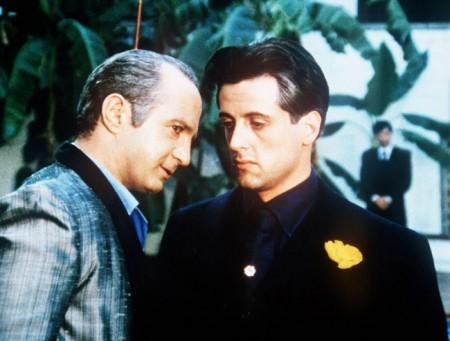
Film Review: Capone (1975, directed by Steve Carver)


capone-poster-1Over the course of his legendary career, filmmaker Roger Corman produced two films about the life of Al Capone.  The St. Valentine’s Day Massacre, which starred Jason Robards as the famous Chicago mobster and featured Jack Nicholson in a two-line role, is the one that everyone remembers.  The other one was simply titled Capone and starred Ben Gazzara.

Capone opens in 1918, with Al Capone as a cunning young criminal who cons his way into the trust of Chicago racketeers Johnny Torio (Harry Guardino) and Frankie Yale (John Cassavetes, appearing in two scenes and probably using his salary to produce The Killing of a Chinese Bookie).  The tough and streetwise Capone works his way up, becoming Torio’s right-hand man before eventually betraying his boss and taking over the Chicago rackets himself.  Al rules Chicago with an iron fist and has an affair with a flapper named Iris (Susan Blakely).  After killing nearly all of his enemies, Al is taken down on a tax evasion charge and, after contracting syphilis, he ends up a pathetic and lonely man, sitting by his pool and ranting about his enemies.

Despite being one of the few movies to depict Al’s final days, Capone makes little effort to be historically accurate.  Instead, it’s a gangster film in the tradition of Little Caesar, The Public Enemy, and both versions of Scarface, complete with nudity, tough talk, and plenty of tommy gun action.  (Since this is a Roger Corman film, Capone also features Dick Miller and footage that was lifted directly from St. Valentine’s Day Massacre.)  There is nothing surprising about Capone but it’s still entertaining.

Al Capone has been played by everyone from Rod Steiger to Robert De Niro to F. Murray Abraham.  Ben Gazzara may not have been the most subtle Capone but he was one of the most watchable.  Gazzara played Al Capone like a snarling animal, always ready to bite anyone who gets too close.  My favorite Gazzara moments come at the end of the film, when a syphilitic Capone bugs his eyes and starts to rave about Bolsheviks.

Today, Capone is best remembered for featuring Sylvester Stallone in the role of Frank Nitti, Al’s right-hand man and eventual successor.  One year later, Rocky would turn Stallone into a superstar and his days of working for Roger Corman would be over.

12839047-l


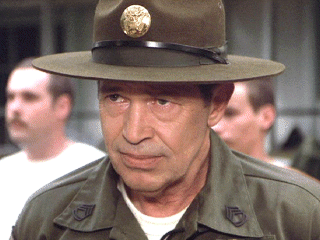
In Praise of Stripes’ Sergeant Hulka


HulkaIn the army comedy Stripes, we never learn Sgt. Hulka’s first name but we do learn to never call him “sir.”  As Hulka himself puts it, “You don’t say sir to me, I’m a sergeant, I work for a living!”

It’s true.  Sgt. Hulka never stops working.  He’s the toughest drill sergeant this side of R. Lee Ermey and he’s going to turn this latest raw batch of recruits into a worthy collection of soldiers.  When he tells you to move, you’ll move fast.  When he tells you to jump, you’re going to ask, “How high!?”  And make no mistake. He don’t care where you come from, he don’t care what color you are, he don’t care how smart you are, he don’t care how dumb you are, ’cause he’s gonna teach every last one of you how to eat, sleep, walk, talk, shoot, shit like a United States soldier. Understand!?

I have lost track of how many times I have watched Stripes.  It’s one of my favorite comedies, a movie that can be quoted in almost every situation.  (“Lighten up, Francis.”)  Not only does it star Bill Murray and Harold Ramis at their anarchistic best but it also features everyone from John Candy to Judge Reinhold to John Larroquette.  Sean Young and P.J. Soles make for two of the sexiest MPs in military history.  But, for me, the best thing about Stripes is Sgt. Hulka and the man who played him.

Ironically, considering that he was famous for being a pot-smoking wild man who hung out with fellow anti-establishment rebels like Peter Fonda, Dennis Hopper, and Sam Peckinpah, Warren Oates played his share of no-nonsense military men.  (Oates actually had experience, having served in the Marines before becoming an actor.)  Of all the army roles that Warren Oates played, Sgt. Hulka is the best remembered.

And why not?  His performance in Stripes is a master class of good film acting.  Watch him as he does a stone-faced double take at the latest bit of insubordination from Murray and Ramis.  Watch the way he grins as he barks out his tough drill sergeant dialogue, hinting that Sgt. Hulka understands and has come to accept the lunacy of army life.  Originally, Hulka was supposed to be killed halfway through Stripes but both Warren Oates and his performance proved to be so popular with the film’s cast and crew that Hulka was given a reprieve.

Warren Oates and Bill MurrayIn Stripes, Sgt. Hulka accomplishes something that few other film characters have done.  He gets one over on Bill Murray.  After spending almost all of basic training dealing with John Winger (Bill Murray) and his bad attitude, Hulka confronts Winger in the latrine.  Hulka tells Winger that he’s concerned with “discipline and duty and honor and courage” and that Winger “ain’t got none of it!”  Hulka dares Winger to take a swing at him.  When Winger does it, Hulka floors him with one punch.

This is the only dramatic scene in Stripes.  It was so dramatic that nervous Columbia studio execs asked director Ivan Reitman to cut it.  Wisely, Reitman did not listen to them and the latrine scene is one of the best in the film.  When John eventually emerges as enough of a leader that he is able to invade Czechoslovakia in an armor-plated RV, we all know that it goes back to getting punched in the latrine.

(This was also the first “serious” scene that Bill Murray ever appeared in.  His subsequent work in films like Rushmore, Lost in Translation, and St. Vincent can all be linked back to that tense confrontation he played with Warren Oates.)

At the end of Stripes, Sgt. Hulka retires from the army and opens up a chain a Hulkaburger restaurants.  Here’s hoping that Sgt. Hulka had a happy retirement.  He earned it.

2013-07-04-warren_oates_sgt_hulka-533x299


4 Shots From 4 Films: Cold Heaven, Europa, Naked Lunch, Until The End of the World


4 Shots From 4 Films

 Cold Heaven (1991, directed by Nicolas Roeg)

Cold Heaven (1991, directed by Nicolas Roeg)

Europa (1991, directed by Lars Von Trier, released as Zentropa in North America)

Europa (1991, directed by Lars Von Trier, released as Zentropa in North America)

Naked Lunch (1991, directed by David Cronenberg)

Naked Lunch (1991, directed by David Cronenberg)

Until the End of the World (1991, directed by Wim Wenders)

Until the End of the World (1991, directed by Wim Wenders)