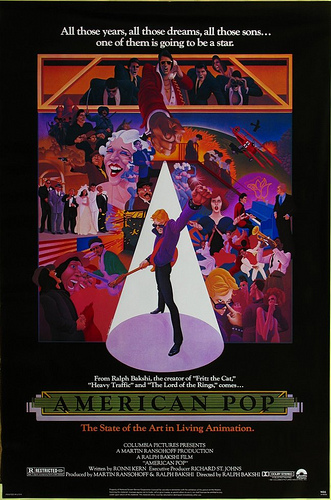
 Long before South Park, The Simpsons, and Pixar, there was Ralph Bakshi. At a time when animation was considered to only be good for children, Bakshi shocked audiences and critics with animated films that dealt with mature themes and were definitely meant for adults. His first two films, Fritz the Cat (1972) and Heavy Traffic (1973), was the also the first two animated films to receive an X-rating. Bakshi satirized racism in the controversial Coonskin (1975) and Bakshi’s adaptation of The Lord Of Rings (1978) beat Peter Jackson’s by 23 years. It was after the critical and commercial disappointment of the heavily flawed but interesting Lord of the Rings that Bakshi decided it was time to make a film that would be more personal to him. The end result was American Pop.
American Pop tells the story of four generations of a family of Jewish immigrants and how music affects their lives. In typical Bakshi fasion, this animated film deals with issues of violence, sexuality, drug abuse, and poverty. American Pop may be animated but it is definitely a film meant for adults.
In the 1890s, Zalmie (Jeffrey Lippa) and his mother escape from Russia after Zalmie’s father, a rabbi, is killed by the Cossacks. Zalmie grows up in New York and after his mother is killed in the Triangle Shirtwaist Factory fire, he is raised by a vaudeville comedian named Louie (Jerry Holland). Zalmie wants to be a singer but is shot in the throat during World War I. His voice ruined, Zalmie marries a stripper named Bella (Lisa Jane Persky) and manages her career. His partnership with the mobster Nicky Palumbo (Ben Frommer) leads to Bella dying and Zalmie going to prison.
Zalmie’s son, Benny (Richard Singer), is a jazz pianist who, as a favor to his father, marries Nicky’s daughter. Benny has a son named Tony and tries to pursue his career without using his father’s influence. Then World War II breaks out.
Benny enlists in the army, seeking redemption from the crimes of his father and father-in-law. Serving in Europe, he misses his piano and, when he finds one in a bombed-out house in Nazi Germany, he plays a few bars of As Time Goes By. When a Nazi walks in on Benny, Benny plays Lili Marleen. For a few seconds, Benny and the Nazi share the common bond of music. “Danke,” the Nazi says before shooting Benny dead.
Growing up without his father, Tony (Ron Thompson) becomes a beatnik and eventually runs away from home. He ends up in Kansas, where he has a one-night stand with a waitress and becomes a songwriter for Frankie Hart (Marya Small), a stand in for Janis Joplin. Both Tony and Frankie start using heroin and Frankie dies of an overdose right before she is supposed to open for Jimi Hendrix. Abandoned by Frankie’s band, Tony ends up as an addict and dealer in New York. Accompanying him is his son, Pete, the result of his hookup with the waitress.
After being abandoned by his father, Pete (also played by Ron Thompson), follows in his footsteps and becomes a successful drug dealer. He is dealing cocaine to all of the big rock bands but, after discovering punk rock, he realizes that he wants something more out of his life.
After announcing that he will no longer sell anyone cocaine unless he is given a chance to record a demo, Pete is given a band and a recording studio. With the drug-craving record company execs watching, this tough and cocky punk grabs the microphone and sings…
…BOB SEGER’S NIGHT MOVES!?
The use of Night Moves, which is one of the least punk songs ever written, is one of the few false notes in American Pop. Otherwise, this is one of Ralph Bakshi’s best films. The majority of the film’s animation was done through rotoscoping, a technique in which animation is traced over live action footage. (For the gang war scenes, scenes from The Public Enemy were rotoscoped, as was footage of the Nicholas Brothers used in the Sing Sing Sing With A Swing montage.) Seen today, the technique is crude but effective at showing the contrast between the fantasy of music and the grim reality of life. Though it has its flaws (*cough* Night Moves *cough*), American Pop is an engaging look at the history and development of American music.

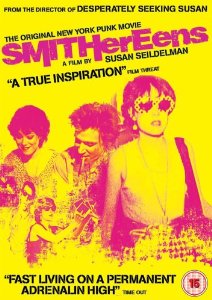 Shot guerilla-style during the waning days of New York City’s original punk scene, Smithereens tells the story of Wren (Susan Berman). Wren is a Jersey girl who, after being cut off by her family, comes to New York City. She moves into a run-down apartment, get a job making photocopies at a xerox store, and tries to break into the New York punk scene, despite having no talent or connections. The only thing that Wren does have is a lot of determination. When we first meet Wren, she is stealing another woman’s sunglasses and posting flyers of herself around New York City. Written under Wren’s picture: “Do you know me?”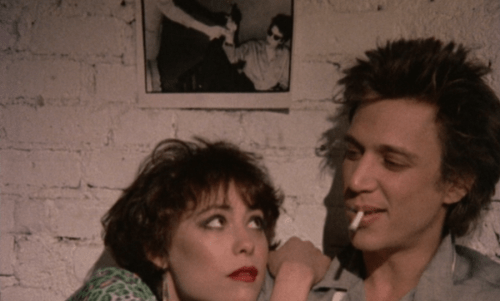
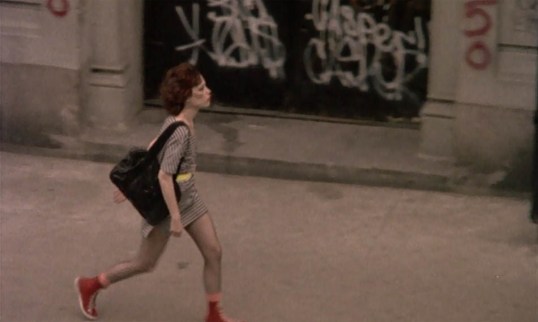
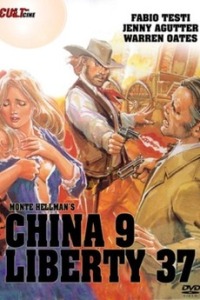 Directed by the legendary Monte Hellman, China 9, Liberty 37 is a revisionist take on the western genre. Fabio Testi plays Clayton Drumm, a legendary gunslinger who is about to be hung for murder. At the last minute, men from the railroad company show up and arrange for Clayton be released. They want him to kill a rancher who is refusing to sell his land. Clayton agrees but, before he leaves for his mission, he gives a brief interview to a writer from “out East.” Cleverly, the writer is played by director Sam Peckinpah, to whose films China 9, Liberty 37 clearly owes a huge debt.
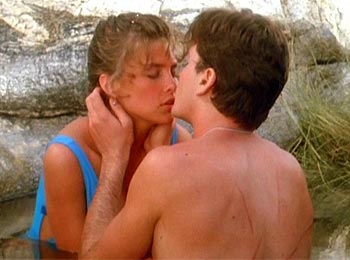
 Catherine loves Matthew but resents his rough ways and feels that he treats her like property. One night, she and Clayton go for a nude swim and then make love. When Matthew finds out, he strikes his wife and, in self-defense, she stabs him in the back. Believing Matthew to be dead, she and Clayton go on the run.
 As a western, China 9, Liberty 37 is more interested in its characters than in the usual gunfights. There are no traditional heroes or villains and Monte Hellman emphasizes characterization over action. Even while he is relentlessly pursuing Clayton and Catherine, Matthew admits that he does not blame Catherine for leaving him. As for Clayton and Catherine, they are both consumed by guilt over their affair. This is one of the few westerns where the main character often refuses to fire his gun.
 Director Monte Hellman is as well-known for the films he did not get to make as for the ones he actually did make. (Originally, Quentin Tarantino wanted Hellman to director Reservoir Dogs. When Tarantino changed his mind and decided to direct it himself, Hellman was relegated to serving as executive producer. A lot of recent film history would be very different if Tarantino and Hellman had stuck to the original plan.) Like a lot of the films that Hellman actually did get to make, China 9, Liberty 37 was only given a sparse theatrical release and was often shown in a heavily edited version. It has only been recently that the full version of China 9, Liberty 37 has started to show up on TCM. It is an interesting revisionist take on the western genre and must see for fans of Monte Hellman, Jenny Agutter, and Warren Oates.
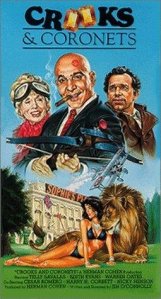 After taking off the month of October, I am now back on my Warren Oates kick. The latest Oates film that I watched was Crooks and Coronets, a heist comedy that stars Oates and Telly Savalas as two career criminals plotting a robbery in England.
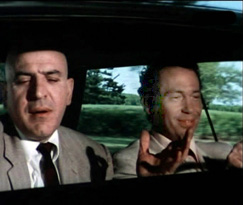 After arriving in the UK and meeting with Nick’s English counterpart, Frank Finley (Harry H. Corbett), Herbie and Marty infiltrate the Fitzmore estate. Marty pretends to be a security expect while Herbie says that he is a librarian who is interested in cataloguing the Fitzmore library. However, once they meet the kindly and eccentric Lady Sophie, neither one of them can bring themselves to rob her. Instead, Marty helps Sophie fly an old World War I airplane while Herbie turns Fitzmore mansion into a tourist attraction. When Nick and Frank show up and demand to know what the hold up is, Herbie and Marty have to find a way to stop the robbery.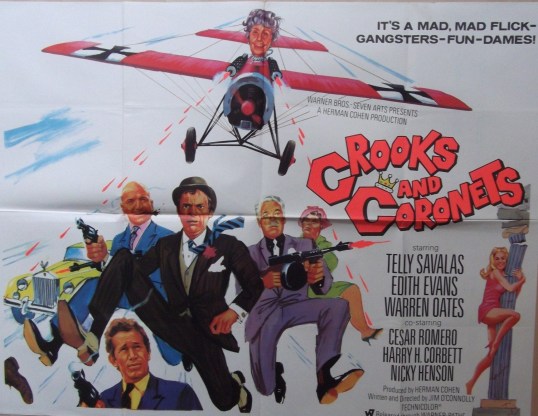












 Through the Shattered Lens