Welcome to Late Night Retro Television Reviews, a feature where we review some of our favorite and least favorite shows of the past! On Wednesdays, I will be reviewing 1st and Ten, which aired in syndication from 1984 to 1991. The entire series is streaming on Tubi.
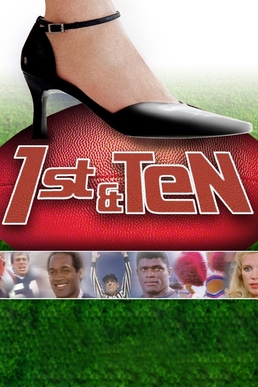
This week, OJ Simpson stands up to drugs.
Episode 5.12 “All’s Fair In Love And Football”
(Dir by Ethan Lathan, originally aired on January 10th, 1990)
This episode features the California Bulls and the Texas Shooters facing each other in a playoff game. Before the game, the two teams film a commercial for a soft drink. The joke is that all of the football players are terrible actors. As if to prove that point, this episode features real-life football player Lawrence Taylor as a Bull defensive player named Tombstone. At the insistence of Kristy, Tombstone goes on a national sports show and talks about how he’s going to severely injure the Shooters quarterback. Everyone talks about how much Tombstone cursed while saying it but, since this episode of 1st & Ten was edited for syndication, we don’t actually hear any of the cursing. Instead, we just hear Taylor awkwardly delivering his lines as if someone was standing directly off-camera and feeding them to him.
Anyway, it works. The Texas quarterback gets rattled. The Bulls win their playoff game. Yay, I guess. Seriously, we’re five seasons in and I’m still having trouble keeping track of who is who and what position they play. This show features some of the most forgettable characters that I’ve ever come across.
That said, I do know that OJ Simpson is playing TD Parker. In this episode, TD is upset to discover that his teenage son (Larry O. Williams Jr.) has gotten involved with drugs and gangs. TD feels that his son is putting his life in danger and if there’s anything that OJ Simpson knows, it’s danger. Did I say OJ Simpson? I meant to say TD Parker. Actually, I guess it doesn’t make any difference. OJ Simpson pretty much played an idealized, non-murdering version of himself on this show.
Coach Denardo tries to help out TD’s son and, for his trouble, his house gets robbed and he gets whacked on the back of his head. Denardo survives and goes on to coach the Bulls to their playoff victory. After the game, TD’s son is grabbed off the street and tossed into a van. Is he about to get shot over his outstanding drug debt? No, actually TD is kidnapping him and taking him to rehab.
Oh, this show. Every episode is so bizarrely insubstantial. TD’s son is a drug addict and I guess that could have been a powerful storyline if OJ Simpson was capable of showing emotion. Will TD’s son kick the habit? Here’s the thing. I already know we’re never going to find out. I’ve sat through enough episodes to know that this storyline will never be mentioned again. Nothing means anything. I had no doubt that the Bulls would win their playoff game and I’m sure they’ll probably win the Championship Game again and ultimately, it won’t mean a thing.
That’s 1st & Ten for you.