As I mentioned in my previous post, I’ve been watching Mike Flanagan’s Carrie on Prime. I’ve made it through four episodes and to say that I’m not enjoying it would be an understatement. The miniseries is spending 8 hours on a story that Stephen King handled in about 200 pages and which Brian De Palma was able to tell in a little over 90 minutes. Of course, De Palma was smart enough not to give Carrie an invisible friend. He also didn’t introduce a psychic cult. De Palma knew the story worked as it was.
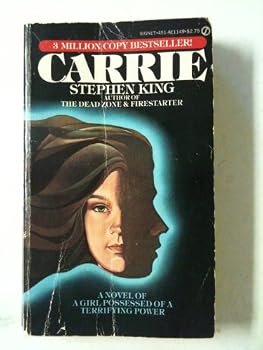
If you haven’t read Stephen King’s original novel, you really should. That’s especially true if you’re currently watching the Flanagan miniseries and you’re wondering what all of the complaints are about. Carrie was King’s first published novel and King himself has admitted that it’s a flawed work. It’s a mix of passages that are definitely the work of King and excerpts from government hearings, Carrie’s notebook, and Sue Snell’s autobiography. The split format shows that King still wasn’t totally sure how he wanted to tell the story. That said, when the book works, it really does work. King doesn’t shy away from Carrie’s anger and bitterness. He doesn’t try to make the story about anything more than what it is. And even the government hearings and Sue Snell’s autobiography show us that Carrie, the outcast with telekinetic powers, will never be forgotten.
For the record, I do know that King has endorsed Flanagan’s revisions. With the exception of Stanley Kubrick’s The Shining, Stephen King tends to endorse everything and one gets the feeling that, much as was the case with Frank Darabont, King enjoys the fact that Flanagan is such a fan. That’s just human nature. That said, the novel, flaws and all, is infinitely superior to Flanagan’s miniseries.
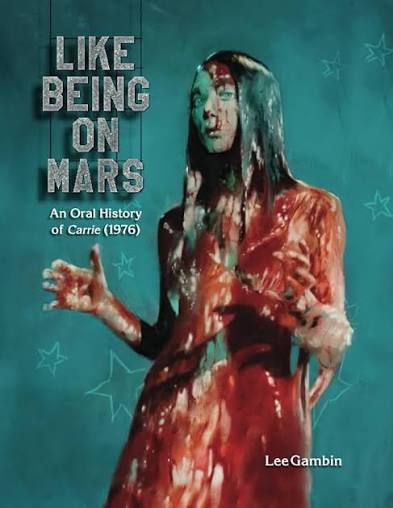
Again, as I mentioned in my previous post, if you’re watching Flanagan’s miniseries but haven’t seen Brian De Palma’s film, that’s something you need to rectify. After you watch Brian De Palma’s film, be sure to check out Like Being On Mars: An Oral History Of Carrie (1976) by Lee Gambin. This book is all about the production of the film that changed horror in much the same way that Star Wars, a year later, would later change science-fiction. Gambin interviews the key players: Sissy Spacek, Piper Laurie, Nancy Allen, Amy Irving, William Katt, P.J. Soles, De Palma, Stephen King, and even Bill Paxton! (Paxton worked on the crew.) It’s a great book for lovers of both movies and horror.

