The Films of 2020: Let Them All Talk (dir by Steven Soderbergh)


Let Them All Talk is the latest film from Steven Soderbergh.  Meryl Streep plays Alice Hughes, a novelist who is traveling to London on the Queen Mary so that she can accept a literary prize.  Accompanying her are two friends from college, Roberta (Candice Bergen) and Susan (Dianne Wiest), both of whom have far less glamorous lives than Alice’s.  Roberta is also still angry because she feels that Alice used details from Roberta’s life in one of her novels.

Also on board the Queen Mary are Alice’s nephew, Tyler (Lucas Hedges, who overacts to such an extent that it’s almost as if he’s daring the Academy to take back that nomination for Manchester By The Sea) and Karen (Gemma Chan), who is Alice’s new agent and who is trying to figure out what Alice’s next book is going to be about.  (Karen hopes that it’ll be a sequel to her first novel, the one that was full of details stolen from Roberta’s life.)  Though Alice keeps insisting that she wants Tyler to keep Roberta and Susan entertained while she works on her latest book, Tyler is far more interested in getting to know Karen.

The film was shot on the Queen Mary, while the ship was actually making the voyage across the Atlantic.  Though the actors had a story outline, the majority of the dialogue was improvised and Soderbergh essentially just sat in a wheelchair with his camera and followed the actors around.  In short, this is a film that you probably could have shot, the only difference being that you probably wouldn’t have been able to get Meryl Streep to agree to appear in it.  I’m tempted to say that the story of the production is actually more interesting than the film itself but, to be honest, Steven Soderbergh shooting an improvised film isn’t that interesting.  Soderbergh’s always had a weakness for gimmicks like improv.  You may remember that, decades ago, he and George Clooney insisted on trying to produce largely improvised television shows for HBO.  Though the shows got a lot of hype before they premiered, both K Street and Unscripted mostly served to prove that improv is often more interesting in theory than in practice.

That’s certainly the case with Let Them All Talk, which is one of the most mind-numbingly dull films that I’ve ever sat through.  I think the assumption was that Meryl Streep, Candice Bergen, and Dianne Wiest would automatically be interesting to watch no matter what they said but it doesn’t work out that way.  Meryl Streep, in particular, is so excessively mannered that she comes across like a retired drama teacher playing the lead in the community theater production of Mame.  Candice Bergen does a bit better but Dianne Wiest is stranded with a role and subplot that seems almost like an afterthought.  In the end, the film just isn’t that interesting.  The “just start filming and see what happens” approach has its limits.

To be honest, as I watched Let Them All Talk, I found myself wondering if maybe Steven Soderbergh was deliberately trolling everyone by seeing how bad of a film he can make before critics stop reflexively praising everything that he does.  Let Them All Talk currently has a score of 89% at Rotten Tomatoes so Soderbergh still has a ways to go.


Artwork of the Day: Nice Fillies Finish Last (by Robert McGinnis)


by Robert McGinnis

I’ve always loved horses.  When I was growing up, no matter where we were living, I always searched for the nearest horse farm.  Horses are wonderful creatures and I’ve always enjoyed riding them but I don’t think I would ever recommend trying to ride a horse while wearing a bikini and smoking a cigarette.  Regardless of how nice the filly is, it’s a bad idea.

This book was originally published in 1966 and it was one of the many, many books to deal with the adventures private investigator Mike Shayne.  Though the book is credited to Shayne’s creator, Brett Halliday, Halliday actually retired from writing in 1958.  All subsequent Shayne books, including this one, were authored by a ghost writer.

Like many of the Shayne books, the cover was done by the legendary Robert McGinnis.  We’ve featured many McGinnis covers in the past and we’ll feature many more in the future.

Music Video of the Day: Breakin’ … There’s No Stopping This by Ollie and Jerry (1984, directed by Joel Silberg)


Drummer Ollie Brown and bassist Jerry Knight were two Detroit-based sessions musicians who were also members of Raydio, along with Ray Parker, Jr.  In 1984, Brown and Knight were hired to provide songs for the soundtrack of the upcoming breakdancing movie Breakin’.  There’s No Stopping Us was named after a line that was spoken by one of the characters in the film and it was meant to not only reflect what was happening in the movie but also Ollie and Jerry’s own struggle and determination to make it in the music biz.

The video is made up entirely of clips from the movie.  (The video’s credited director Joel Silberg also directed Breakin’.  It seems if anyone deserve credit for the video, though, it’s the editor who put it together.)  Jean-Claude Van Damme was an extra in Breakin‘ and supposedly, he can be spotted dancing in this video.  I think I spotted him at the 2:32 mark, dancing in a crowd, but I could be wrong.

Enjoy!

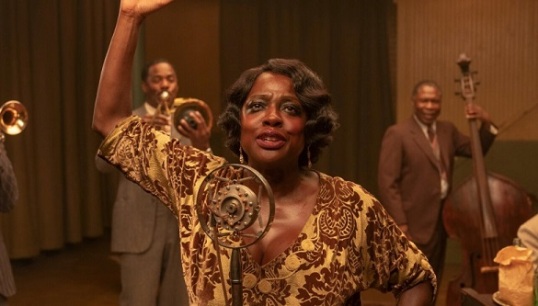
The Films of 2020: Ma Rainey’s Black Bottom (dir by George C. Wolfe)


The year is 1927 and the place is Chicago.  6 men are in a claustrophobic recording studio, waiting for the arrival of blues singer Ma Rainey (Viola Davis).  While Ma’s agent, Irv (Jeremy Shamos) and studio owner Mel Sturdyvant (Johnny Coyne) wait upstairs, the members of Ma’s band gather in the rehearsal room.  They’ve been given a list of songs to rehearse.  As is quickly made clear, the band doesn’t have much say about which songs they’re going to perform and record.  In fact, Irv and Mel pretty much go out of their way to have as little contact with the black musicians as possible.

The band is made up of Cutler (Colman Domingo), Slow Drag (Michael Potts), Toledo (Glynn Turman), and a trumpet player named Levee (Chadwick Boseman).  Cutler may be their unofficial leader but Levee is the most outspoken.  Levee is sick of playing what he calls “jug band music.”  He’s written his own songs and he’s shown them to Sturdyvant.  He’s convinced that he’s going to start his own band and that he’s going to become a bigger star than Ma Rainey ever was.  The rest of the band views Levee with a mix of humor and distrust.

As for Ma, she arrives an hour late, accompanied by her girlfriend Dussie (Taylor Paige) and her nephew, Sylvester (Dusan Brown).  She doesn’t apologize for being late and, as soon as she arrives, she starts to make her voice heard.  She wants Sylvester to perform a spoken word intro on the record, despite the fact that Sylvester stutters.  When Irv and Sturdyvant fail to bring her a coke, she brings recording to a halt until she gets one.  She argues about which songs she wants to record and she reprimands Levee for trying to change the arrangement of one of her songs.  Ma’s difficult but, as she explains it, she has to be difficult.  Irv and Sturdyvant don’t care about her, they don’t care about what her music is actually about, and they certainly don’t care about paying her what she deserves.  Irv may claim to care about her but, as Ma tells Cutler, he’s only invited her to his home once and that was so she could sing for his white friends.  When they’re in the recording studio, Ma has all of the power and she’s not going to let anyone forget it.

Meanwhile, the members of the band continue to talk among themselves with the conversation always coming back to what it takes to survive in a society run by white people.  The three older men seem to have accepted that the world is what it is and that’s it’s never going to change but Levee believes that he has a future.  When the other members of the band poke fun at him for the obsequious way that he talks to Sturdyvant, Levee discusses the horrifying trauma of his past.  As the recording sessions continues, tempers start to flare until finally, the film climaxes in an act of sudden violence.

Ma Rainey’s Black Bottom is based on a play by August Wilson and, despite a few efforts to open up the story by including a few scenes on the streets of Chicago, it’s an undeniably stagey film.  You never forget that you’re essentially watching a film version of a theatrical experience.  Fortunately, the performances are so powerful and the dialogue is so sharp that it’s easy to forgive both the film’s staginess and the occasional lapses in pace.

In his final performance before his tragic passing, Chadwick Boseman transforms Levee into a character who manages to be frustrating, sympathetic, and occasionally frightening.  From his powerful monologue about what he and his family experienced during his youth to the film’s final anguished moments, Boseman holds your attention every second that he’s on screen.  Boseman captures not only Levee’s anger and his ambition but also Levee’s fragile confidence.  At the start of the film, he may be bitter about having to play Ma’s music but he’s also perhaps the most hopeful musician in that recording studio and there’s something undeniably tragic about watching him come to realize the truth of his situation.  He’s a character about whom many viewers will have mixed feelings but Boseman is never less than compelling.  Viola Davis, as well, gives a powerful performance as Ma Rainey, playing her as someone who knows that she can’t afford to show a single moment of weakness.  Ma knows that the white men who are in charge of the studio need her more than she needs them and she’s not going to let them forget it.  Of the rest of the cast, Glynn Turman is a stand-out as a piano player who knows and understands history in a way that his bandmates don’t.

Ma Rainey’s Black Bottom is currently streaming on Netflix.


4 Shots From 4 Films: Special Radley Metzger Edition


4 (or more) Shots From 4 (or more) Films is just what it says it is, 4 (or more) shots from 4 (or more) of our favorite films. As opposed to the reviews and recaps that we usually post, 4 (or more) Shots From 4 (or more) Films lets the visuals do the talking.

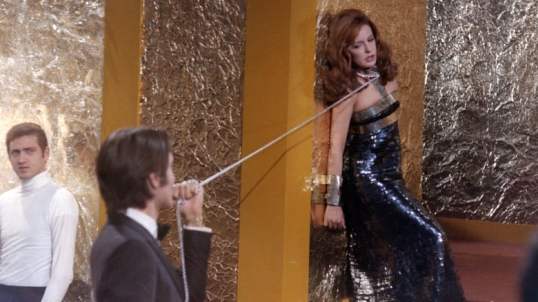
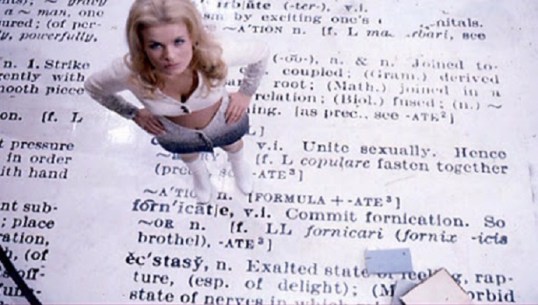
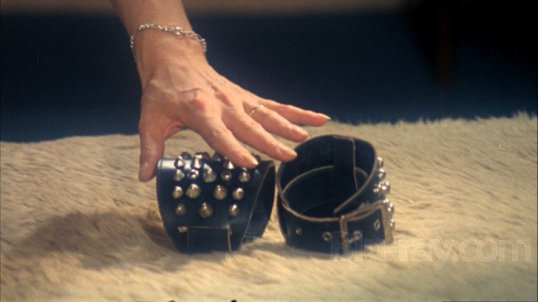
92 years ago today, Radley Metzger was born in New York, New York.  After serving as a photographer in the U.S. Air Force, Metzger went into film distribution.  He brought European “art” films to the United States and booked them in various grindhouse theaters.  Like so many film distributors and producers, Metzger eventually realized that he could make a lot more many by making his own films.  In the late 60s and the early 70s, Metzger was one of the pioneers of what would eventually become known as “porno chic.” He directed adult films that were distinguished by their strong sense of composition, intelligent storylines, and their sense of characterization.  Remember in Boogie Nights, when Burt Reynolds said that he wanted to make real films that just happened to feature graphic sex?  Well, Radley Metzger actually did that.

Unfortunately, Metzger’s films were a bit too arty for the adult crowd and too explicit for the mainstream critics. Still, over the years, Metzger’s work has been rediscovered and appreciated by open-minded film lovers and by people like me who just happen to like artistically-minded decadence.

Today, we honor Radley Metzger with….

4 Shots From 4 Films

Carmen, Baby (1967, dir by Radley Metzger, DP: Hans Jura)

Camille 2000 (1969, dir by Radley Metzger, DP: Ennio Guarnieri)

The Lickerish Quartet (1970, dir by Radley Metzger. DP: Hans Jura)

Score (1974, dir by Radley Metzger, DP: Frano Vodopivec)


Artwork of the Day: Startling Detective Adventures (by F.R. Glass)


by F. R. Glass

No one can deny that he certainly looks startled!

This cover was for the March 1930 issue of Startling Detective Adventures and I think it might be one of my favorite things ever.  Apparently, this issue featured Detective John P. Hoy explaining how he soled the Kent Murder Mystery.  Hopefully, that’s not Detective Hoy falling through the trapdoor.

Music Video of the Day: Heaven’s On Fire by KISS (1984, directed by David Lewis)


This is yet another KISS video from the era when the band was performing without their makeup because who needs a memorable gimmick when you can just be another overage hair metal band singing about banging groupies?

This video begins with Paul Stanley’s hands on fire.  Judging from the rest of the video, which features scenes of KISS performing mixed with scenes of KISS entertaining their fans, those hands probably weren’t the only thing that felt like it was on fire by the time filming on this video was completed.

Over on the imdb, director David Lewis has exactly two credits.  One is for this video.  The other is for directing a Linda Ronstadt television special.  Both of them came out in 1984 so it appears that Lewis went straight form Linda Ronstadt to KISS.  That was probably quite a journey.

Speaking of journeys, KISS eventually put the makeup back on.

Enjoy!

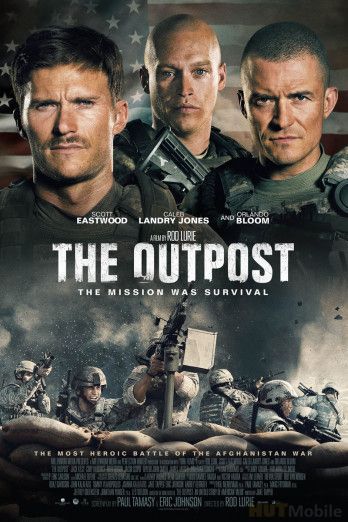
The Films of 2020: The Outpost (dir by Rod Lurie)


The Outpost, which is currently streaming on Netflix and which deserves far more attention than it’s been given, is a film that left me breathless.  Seriously, as the film came to its conclusion, I realized that I was so emotionally overwhelmed by what I had just seen that I actually had to stop for a few minutes and catch my breath.  Once I was breathing again, I started to cry.  I cried all the way through the end credits.  That’s the sign of a powerful film.

Based on a true story, The Outpost takes place in 2009.  PRT Kamdesh is an American military outpost in Northern Afghanistan.  The post is located in a valley.  The mountains, which rise high up into the sky, are not only beautiful but they also provide the perfect cover for the Taliban.  The outpost is attacked on a nearly daily basis.  At the start of the film, we’re told that one military strategist said that the base should have been named after George Custer because it was impossible to defend and that, should a big attack ever truly come, all 53 of the man on the base would essentially be sitting ducks.

The Outpost follows those 53 men as they go about their daily lives on the base.  Commanders die and are replaced.  The soldiers try to hold onto their sanity, even though they know that the “big attack” is inevitable.  Though more than a few of the men have families back home, they try not to think about them.  They can’t risk the distractions.  Even the act of adopting a dog is seen as being a potentially dangerous move.  The humor is dark, to the extent that the base’s theme song is “Everybody Dies.”  While dealing with daily attacks, the base’s commanders try to win the support of the local villagers.  One of the local elders asks if the Americans are the same invaders who have been in Afghanistan for the last 40 years.  “No,” the flummoxed commander tries to explain, “those were the Russians.”  It quickly becomes apparent that the soldiers and the villagers have at least one thing in common: no one is quite sure why the Americans are there or if they’ll ever able to leave.  Orders are sent down by faceless generals and the men of PRT Kamdesh wait for the attacks that they all know are coming,

When the attack does come, it leads to one of the most visceral battle scenes that I’ve ever seen.  There’s nothing glamorous about the way that The Outpost portrays war.  Instead, it’s a confusing, loud, and terrifying nightmare.  The Outpost establishes early on that anyone can die, an important lesson when you consider how many action movies have been made about heroes who are mythically impervious to even the slightest of injuries.

For roughly the final hour of the film, The Outpost puts us into the middle of the Battle of Kamdesh.  The film pays tribute to the soldiers who fought in the battle, showcasing their bravery and the quick thinking that kept the battle from being even more of a disaster than it was.  At the same time, it also reminds us that war is not fun and that the scars of combat are not just physical.  When a soldier breaks down into tears while trying to talk about the battle, the film treats his feelings with the respect that they deserve.  It’s been said that few people are as anti-war as the people who have actually experienced combat and The Outpost shows us why that is.

The Outpost is an important film.  It’s especially important now that we have a new president and the national media is probably going to go back to ignoring whatever happens in Afghanistan for at least the next four years.  For far too many people, it’s become the forgotten war, even though it’s still ongoing.  The Outpost is a film that reminds us that no war and no soldier should ever be forgotten.

I’ve been pretty critical of director Rod Lurie in the past but, with The Outpost, he’s given us one of the best films of 2020.

Here Are The Nominations of the Online Film Critics Society!


The Online Film Critics Society announced their nominations for the best of 2020 yesterday!  They pretty much nominated all the usual suspects, along with I’m Thinking of Ending Things.  Personally, I’m glad that they nominated I’m Thinking of Ending Things.  As films go, it’s probably going to be too weird for the Academy so I’m glad to see Charlie Kaufman’s surreal little masterpiece get some respect from the critics groups.

Otherwise, it’s pretty much the same old same old.  There’s Nomadland!  There’s First Cow!  There’s Da 5 Bloods!  There’s …. wait a minute, they didn’t nominate Ma Rainey’s Black Bottom for Best Picture?  Well, that’s a little bit different.  Personally, I’m just hoping that one of these critics groups will have the courage necessary to nominate Money Plane.  Seriously, that was a fun movie and it featured Kelsey Grammer saying things like, “I’m the Rumble!”  That is a moment that future film students will definitely study.

Anyway, the OFCS winners will be announced on January 25th!

(OFCS sounds like the acronym of some sort of secret government agency.  “We’re from the OFCS.  We need you to vacate the office immediately.”)

Best Picture
Da 5 Bloods
First Cow
I’m Thinking of Ending Things
Minari
Never Rarely Sometimes Always
Nomadland
Promising Young Woman
Soul
Sound of Metal
The Trial of the Chicago 7

Best Animated Feature
Onward
Over the Moon
Soul
The Wolf House
Wolfwalkers

Best Director
Emerald Fennell – Promising Young Woman
Eliza Hittman – Never Rarely Sometimes Always
Spike Lee – Da 5 Bloods
Kelly Reichardt – First Cow
Chloé Zhao – Nomadland

Best Actor
Riz Ahmed – Sound of Metal
Chadwick Boseman – Ma Rainey’s Black Bottom
Anthony Hopkins – The Father
Delroy Lindo – Da 5 Bloods
Steven Yeun – Minari

Best Actress
Jessie Buckley – I’m Thinking of Ending Things
Viola Davis – Ma Rainey’s Black Bottom
Sidney Flanigan – Never Rarely Sometimes Always
Frances McDormand – Nomadland
Carey Mulligan – Promising Young Woman

Best Supporting Actor
Sacha Baron Cohen – The Trial of the Chicago 7
Chadwick Boseman – Da 5 Bloods
Bill Murray – On the Rocks
Leslie Odom Jr. – One Night in Miami
Paul Raci – Sound of Metal

Best Supporting Actress
Maria Bakalova – Borat Subsequent Moviefilm
Olivia Colman – The Father
Talia Ryder – Never Rarely Sometimes Always
Amanda Seyfried – Mank
Youn Yuh-jung – Minari

Best Original Screenplay
Da 5 Bloods – Danny Bilson, Paul Demeo, Kevin Willmott & Spike Lee
Minari – Lee Isaac Chung
Never Rarely Sometimes Always – Eliza Hittman
Promising Young Woman – Emerald Fennell
The Trial of the Chicago 7 – Aaron Sorkin

Best Adapted Screenplay
First Cow – Jonathan Raymond, Kelly Reichardt
I’m Thinking of Ending Things – Charlie Kaufman
Ma Rainey’s Black Bottom – Ruben Santiago-Hudson
Nomadland – Chloé Zhao
One Night in Miami – Kemp Powers

Best Editing
Da 5 Bloods – Adam Gough
Mank – Kirk Baxter
Nomadland – Chloé Zhao
Tenet – Jennifer Lame
The Trial of the Chicago 7 – Alan Baumgarten

Best Cinematography
Da 5 Bloods – Newton Thomas Sigel
First Cow – Christopher Blauvelt
Mank – Erik Messerschmidt
Nomadland – Joshua James Richards
Tenet – Hoyte Van Hoytema

Best Original Score
Da 5 Bloods – Terence Blanchard
Mank – Trent Reznor & Atticus Ross
Minari – Emile Mosseri
Soul – Trent Reznor & Atticus Ross
Tenet – Ludwig Goransson

Best Debut Feature
Radha Blank – The Forty-Year-Old Version
Emerald Fennell – Promising Young Woman
Regina King – One Night in Miami
Darius Marder – Sound of Metal
Andrew Patterson – The Vast of Night

Best Film Not in the English Language
Another Round (Denmark)
Bacurau (Brazil)
Collective (Romania)
La Llorona (Guatemala)
Minari (United States)

Best Documentary
Boys State
Collective
Dick Johnson Is Dead
The Painter and the Thief
Time

14 Shots From 13 Films: Special David Lynch Edition


4 (or more) Shots From 4 (or more) Films is just what it says it is, 4 (or more) shots from 4 (or more) of our favorite films. As opposed to the reviews and recaps that we usually post, 4 (or more) Shots From 4 (or more) Films lets the visuals do the talking.

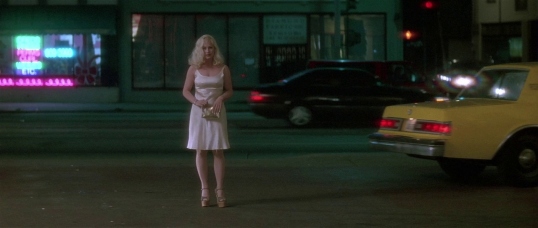
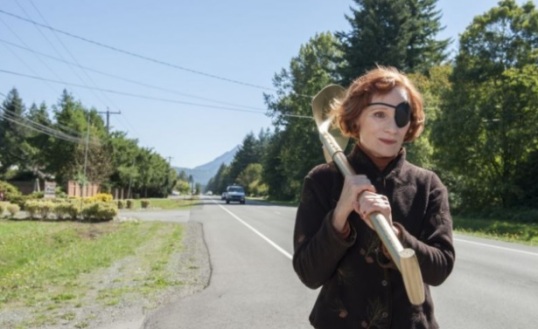
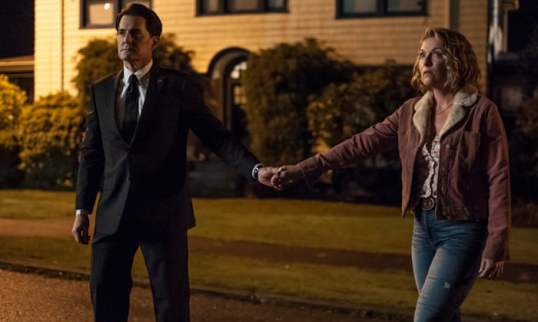
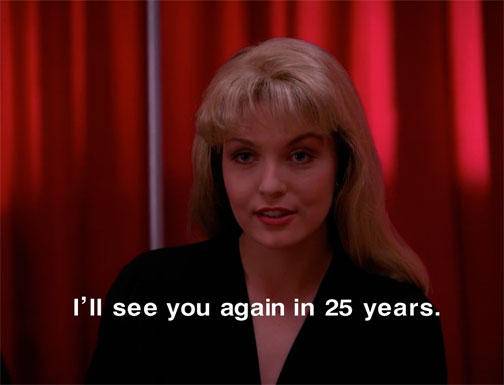
Today, the Shattered Lens wishes a very special 75th birthday to the one and only David Lynch.  As should be evident by now, we’re big fans of David Lynch around here.  Not only is he a wonderfully unique filmmaker but he’s also literally the only person who can do what he does.  Trust me — I’ve seen hundreds of films that were made by people who obviously thought they were going to be the next David Lynch and none of them even come close.  David Lynch is a filmmaker who can make the most surreal images seem like the most natural thing in the world.

Speaking of images, it’s time for….

14 Shots From 13 David Lynch Films

Eraserhead (1977, dir by David Lynch, DP: Frederick Elmes, Herbert Cardwell)

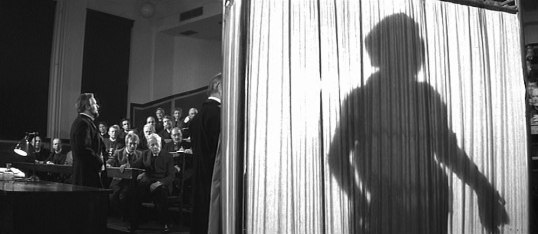
The Elephant Man (1980, dir by David Lynch, DP: Freddie Francis)

Dune (1984, dir by David Lynch, DP: Freddie Francis)

Blue Velvet (1986, dir by David Lynch, DP: Frederick Elmes)

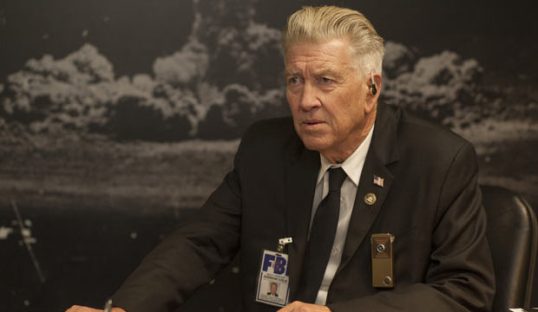
Twin Peaks 1.3 “Zen or the Skill To Catch a Killer” (1990, dir by David Lynch, DP: Frank Byers)

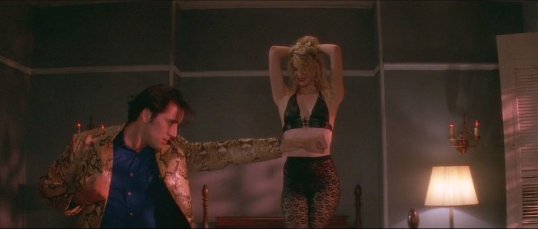
Wild At Heart (1990, dir by Frederick Elmes)

Twin Peaks 2.22 “Beyond Life and Death” (1991, dir by David Lynch, DP: Frank Byers)

Twin Peaks: Fire Walk With Me (1992, dir by David Lynch, DP: Ron Garcia)

Lost Highway (1997, dir by David Lynch, DP: Peter Deming)

The Straight Story (1999, dir by David Lynch, DP: Freddie Francis)

Mulholland Drive (2001, dir by David Lynch, DP: Peter Deming)

Inland Empire (2006, dir by David Lynch, DP: David Lynch)

Twin Peaks: The Return Part 15 (dir by David Lynch, DP: Peter Deming)

Twin Peaks: The Return Part 18 (2017, dir by David Lynch, DP: Peter Deming)

Happy birthday, David Lynch!