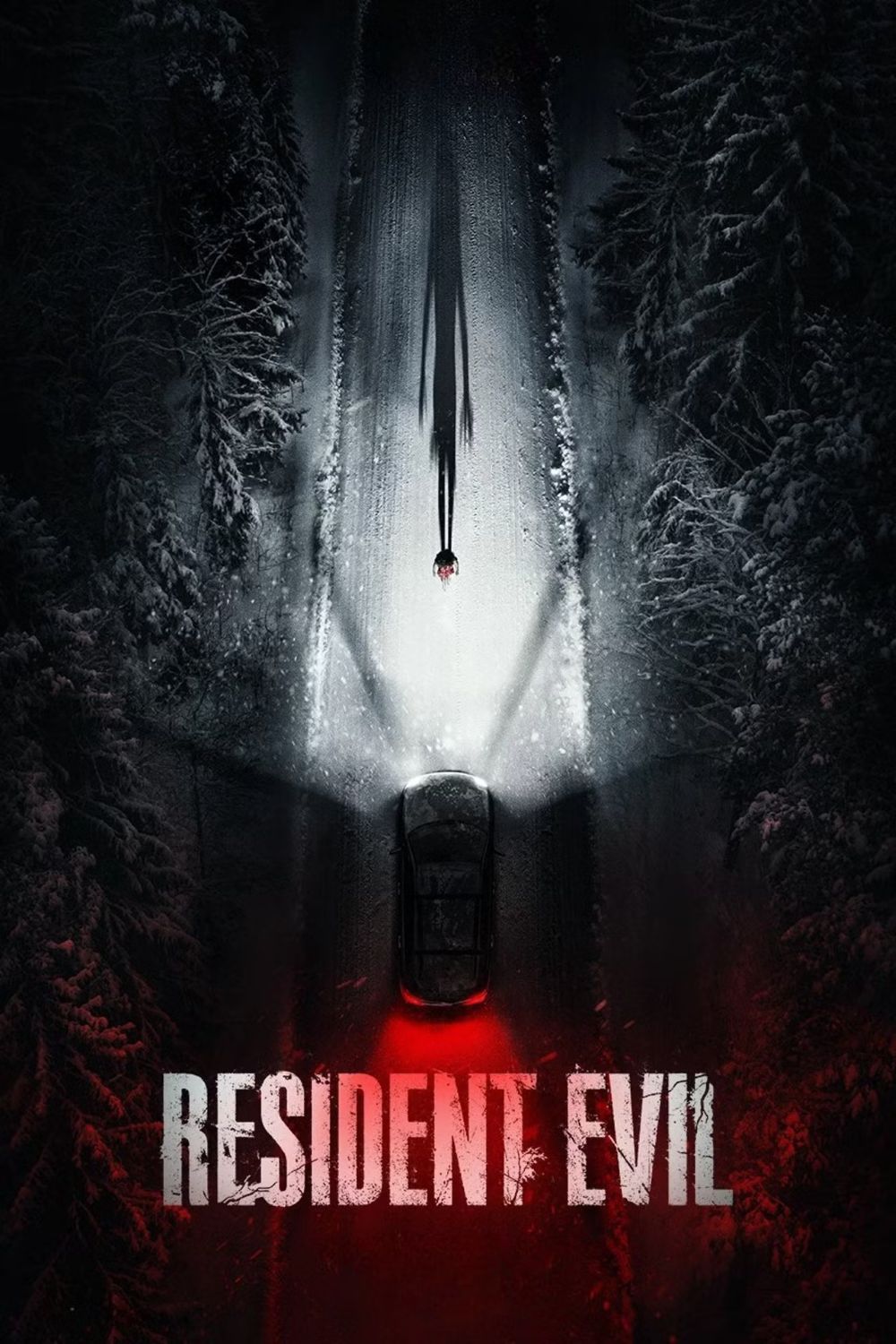
Review: Resident Evil (dir. by Zac Cregger)


“I’ve only used a gun in video games.” — Bryan

Resident Evil is a smart, tense, and surprisingly faithful reinvention of Capcom’s long-running survival-horror series—not because it tries to copy a single game beat for beat, but because it understands what makes the games unnerving in the first place. Written and directed by Zac Cregger, the film uses the world of Resident Evil as its foundation while telling a new story during the Raccoon City outbreak. Its main character is Bryan, played by Austin Abrams, an ordinary medical courier whose attempt to complete a delivery to Raccoon City General Hospital drops him into the early stages of a biological disaster. He is not a S.T.A.R.S. officer, a government agent, or a pre-established franchise hero. He is simply a guy trying to finish a job and survive a night that becomes more horrifying, chaotic, and impossible with every block he crosses.

That basic setup proves to be one of the movie’s smartest choices. Resident Evil has no shortage of iconic protagonists, from Chris Redfield and Jill Valentine to Leon S. Kennedy and Claire Redfield, but Bryan gives the film a fresh perspective on its apocalypse. He is not entering Raccoon City with a gun, years of training, or inside knowledge of Umbrella. He starts as someone who does not understand why parts of the city are suddenly locked down, why emergency rooms are overwhelmed, or why ordinary people are behaving with terrifying violence. That makes him a natural audience surrogate, but he is not just a blank stand-in. Austin Abrams gives Bryan a nervous, tightly wound energy that fits someone constantly trying to keep pace with a situation that has already moved beyond anyone’s control.

The decision to center an everyman is also a strong way of translating the vulnerability of the games. In a great Resident Evil game, the player might eventually find a shotgun, healing items, and enough ammunition to handle a dangerous enemy, but the first hours are defined by instability. There is never quite enough ammo. There is never a guarantee that the room ahead is safe. You learn the layout of a location because you have to, not because exploration is relaxed. Cregger’s movie cannot reproduce the exact tension of an inventory screen or the anxiety of deciding whether to use a green herb now or save it for later, but it captures the emotional logic behind those mechanics. Bryan makes choices with incomplete information, moves through increasingly hostile spaces, and keeps going even when every instinct tells him to turn around and run.

What makes the film especially interesting is that it does not adapt any one game in the series. This is not a straight retelling of the Spencer Mansion incident from Resident Evil, Leon and Claire’s first night in Resident Evil 2, or Jill’s escape from Nemesis in Resident Evil 3. Instead, Cregger uses the games as backdrop and inspiration for an original story set in the franchise’s universe. The film takes place alongside the Raccoon City outbreak associated with Resident Evil 2, but Bryan’s journey is separate from the established storylines that fans already know. That may disappoint viewers who want an exact cinematic recreation of every familiar character and location, but it is ultimately the movie’s greatest advantage.

A strict adaptation would have to navigate an almost impossible set of fan expectations. If the movie directly followed Resident Evil 2, viewers would be waiting for the exact arrival at the Raccoon City Police Department, the exact early meetings between Leon and Claire, the exact role of Ada Wong, the exact appearances of William Birkin and Mr. X, and the exact descent into Umbrella’s underground facilities. A direct version of the original Resident Evil would carry the same burden with the Spencer Mansion, the S.T.A.R.S. team, the laboratory, and the Tyrant. That approach can quickly make a movie feel less like a story and more like a checklist. Cregger avoids that trap by taking the series’ atmosphere, visual identity, rules, and mythology, then building a new nightmare around them.

That freedom restores a sense of uncertainty. Even viewers who know Resident Evil 2 inside and out cannot assume they know where Bryan’s route will take him, who can be trusted, or when the next threat will appear. The film can nod toward familiar Resident Evil concepts without making them feel like obligatory fan-service stops. A locked facility, an Umbrella insignia, a contaminated corridor, or the emergence of a more elaborate biological threat carries weight because it serves the story first. The pleasure comes from seeing the franchise’s DNA interpreted in a fresh way, not from watching the movie pause so the audience can recognize a collectible reference.

Umbrella is treated as much more than a logo or a few bits of background lore. The company remains the central force behind the horror, and that gives the film a more specific personality than a typical zombie outbreak story. Umbrella is terrifying because it represents private power with no moral limit: a corporation able to hide experiments, manipulate information, weaponize biology, and treat ordinary people as expendable collateral. Its infected victims and bio-organic weapons are not random monsters wandering into the story. They are products. Someone designed them, approved them, tested them, and determined that whatever potential value they offered was worth the risk. That is the darker edge of Resident Evil: the monsters are terrible, but the systems that created them are worse.

Cregger understands that this corporate horror needs to feel physical. A zombie is frightening because it is a person reduced to a violent, decaying shell. A more advanced creature is frightening because it reveals experimentation that has pushed life beyond recognizable limits. The body horror works best when it does not feel ornamental. It should make the audience imagine the research process behind the mutation, the human cost of the experimentation, and the awful combination of arrogance and indifference that allowed it to happen. Resident Evil does not need to constantly escalate into larger monsters merely for spectacle. Its creatures matter when they feel like increasingly disturbing evidence of what Umbrella has been building in secret.

Cregger’s background makes him an unusually strong fit for this material. Barbarian worked because it transformed a familiar location into a space of escalating dread. The house at the center of that film is not just a setting; it becomes a trap, a maze, and a place with its own buried history. Cregger knows how to make architecture feel dangerous. He understands that a corridor, a basement, an unlit stairwell, or a locked door can generate more tension than an explosion if the audience believes something might be waiting just outside the frame. That is basically the visual language of Resident Evil.

The games have always relied on locations that feel compromised. The Spencer Mansion in Resident Evil, the Raccoon City Police Department in Resident Evil 2, and the ruined streets in Resident Evil 3 turn places that should represent order, security, or civilization into traps. A police station becomes a fortress that cannot protect anyone. A hospital becomes a source of infection. A laboratory becomes proof that the disaster was not an accident. Cregger’s film channels that environmental fear well. Bryan’s path through Raccoon City is not just a string of monster encounters. It becomes a worsening descent through spaces that are failing one after another, with every new location offering a possible route forward while also revealing another level of the catastrophe.

The basic premise involving Bryan’s medical delivery gives the movie a focused sense of movement without spoiling the larger story. He has a practical objective, but each step toward completing it pushes him deeper into Raccoon City’s outbreak. The film lets the audience learn alongside him through half-understood warnings, panicked strangers, sealed-off areas, fragments of information, and signs that the official story does not add up. Cregger does not rush to explain every piece of Umbrella’s involvement immediately. He lets the mystery build around Bryan’s immediate need to survive, which is exactly how the strongest Resident Evil games turn scattered notes, hidden rooms, and locked pathways into part of their storytelling.

The influence of Weapons is especially clear in that willingness to let confusion and dread hang in the air. Cregger has shown an interest in narratives where the audience slowly pieces together a larger horror from incomplete perspectives and disturbing details. Resident Evil applies that instinct to a world built around secrecy. Umbrella does not announce itself with a complete explanation. Its presence is felt through the consequences: infected civilians, closed facilities, experiments that have slipped into the open, and the growing realization that Raccoon City’s crisis has roots much deeper than a random medical emergency. That approach turns exposition into suspense. The audience wants answers, but it also understands that every answer is likely to lead somewhere worse.

The film’s tone is another area where Cregger’s sensibility helps. Resident Evil should be scary, but it should not pretend that the series is grounded, ordinary horror. The franchise has always mixed genuine survival dread with B-movie science fiction, action-movie intensity, melodrama, and moments of pure, glorious weirdness. The same series that can make a player afraid of opening a narrow hallway door can also introduce giant mutant reptiles, insects, experimental super-soldiers, and outlandish biological mutations. Cregger seems comfortable operating in that space. Barbarian showed that he can move between dark humor, disgust, shock, and legitimate tension without flattening the experience into parody. That balance is crucial for Resident Evil, which should be intense without becoming embarrassed by its own pulp imagination.

The film is strongest when it lets the strange material land through the characters’ reactions rather than making a joke of it. Bryan does not become an instant action hero who dispatches monsters with effortless confidence. His fear, exhaustion, and disbelief help ground the increasingly bizarre developments around him. When the story introduces threats beyond the initial infected, those moments work because they feel like the next horrible stage of Umbrella’s hidden program rather than a required entry in a franchise encyclopedia. Cregger understands that a recognizable monster or concept only matters if it changes the stakes for the character in front of it.

There is also welcome restraint in the scale of the movie. Raccoon City’s outbreak is huge, but Resident Evil keeps the experience close to the ground. It is not mainly about elite military units, globe-spanning conspiracies, or invincible heroes fighting through armies of infected. It is about one man trying to get through a city that has become a death trap. A blocked street becomes a serious obstacle. A working car becomes a lifeline. A few infected people can be overwhelming when Bryan has limited ammunition, no clear escape route, and no way to know who has already turned. That survival focus lets the film preserve the essential question behind every good Resident Evil scenario: not “How can the hero kill everything?” but “How can the hero make it through the next room?”

Cregger’s narrative choices will probably alienate a certain segment of the fanbase, and that is understandable. Some viewers will want a movie built around Leon, Claire, Chris, Jill, or another established character. Others will want a cleaner adaptation of a specific game, with its canonical set pieces, key relationships, and familiar story beats intact. Those are reasonable desires, especially because Resident Evil has such an enormous cast of beloved characters and such a rich backlog of stories that have never been adapted faithfully. Cregger’s movie is taking a chance by prioritizing an original protagonist and a separate narrative over direct adaptation.

But that risk is also what makes the film work. Fans who go in with open expectations may be surprised by how naturally it fits inside the Resident Evil universe. It does not need to repeat every event from the games to understand their identity. The movie has the oppressive spaces, the escalating survival pressure, the corporate conspiracy, the infection-driven horror, and the feeling that any new revelation will only lead deeper into a nightmare. Bryan’s story feels like a side route through Raccoon City’s catastrophe—a story that could exist in the margins of the games without contradicting the dread, danger, and bizarre biohazard logic that define them. The film asks fans to accept that it is not trying to replace the games they love. It is trying to tell another story that could only happen in this universe.

Ultimately, Zac Cregger’s Resident Evil succeeds because it recognizes that the franchise’s appeal is not limited to familiar names, costumes, creatures, or Umbrella logos. It is about the sickening feeling of being trapped in a hostile place with too little information, too few resources, and no guarantee that the person beside you will still be alive—or human—by the next scene. By making Bryan an ordinary medical courier caught in an outbreak, Cregger gives the audience a vulnerable and compelling guide through Raccoon City. By using the games as inspiration instead of adapting a single title word for word, he gives the story space to surprise viewers who already know the series inside and out.

As a fan of the games, the film more than hits the mark of what a Resident Evil movie should feel like. It has the oppressive locations, slow-burn conspiracy, grotesque biological horror, corporate corruption, and sense of escalating hopelessness that define the series at its best. More importantly, it captures the survival-horror tension that has always been at the heart of the games: the dread of stepping into an unfamiliar room, the suspicion that supplies will not last, and the sinking realization that every answer leads deeper into Umbrella’s nightmare.

As a horror fan, Resident Evil also confirms that Zac Cregger is one of the best filmmakers currently working in the genre. After Barbarian and Weapons, this makes him three for three. Each film has its own identity, but all three display the same gifts: command of suspense, strikingly unsettling imagery, a feel for dark humor that never entirely breaks the danger, and the confidence to take an audience somewhere more disturbing than it expects. Resident Evil turns Raccoon City into a living maze of infection, secrecy, and panic, where every locked door feels like it might lead to an escape—or to the worst possible decision. It is not merely a strong video-game adaptation. It is another major win for Cregger, and a reminder that the right filmmaker can make even one of horror gaming’s most familiar worlds feel frighteningly new.
A chill in the air comes with Zach Cregger’s Resident Evil trailer!


Constantin Film really could use a win when it comes to the Resident Evil movies. Despite veering off the path of most Capcom’s video game franchise, their movies were both successful (to a degree) and enjoyable. Though I didn’t catch 2021’s Resident Evil: Welcome to Raccoon City, my cousin tells me it’s pretty awful. 

I woke up this morning to find Zach Cregger’s developed his own entry to the series, and his name alone is enough to spur a bit of excitement. As the director of 2022’s Barbarian and 2025’s Academy Award Winner (for Amy Madigan), Weapons, he has an idea of how to bring a bit of horror on the screen. Add to that, Darius Wolski (The Crow, Dark City, Alien: Covenant) is handling the cinematography. Maybe they’re on to something here? 

It looks like the film takes place in a snowy area, and I’m not entirely sure it has any real connection to the games (or prior films), but honestly, perhaps a fresh start is the way to go here. The film reunites Cregger with his Weapons star Austin Abrams (that tent fellow), along with Paul Walter Hauser (Fantastic Four: First Steps), Kali Reis (Mercy) and Zach Cherry (Amazon’s Fallout). We’ll find out when Resident Evil premieres in cinemas on September 18th. 

Review: Mercy (dir. by Timur Bekmambetov)


“You and I both know that this clock is bullshit. You make your decisions about the people in this courtroom before they’re even in this chair.” — Det. Chris Raven

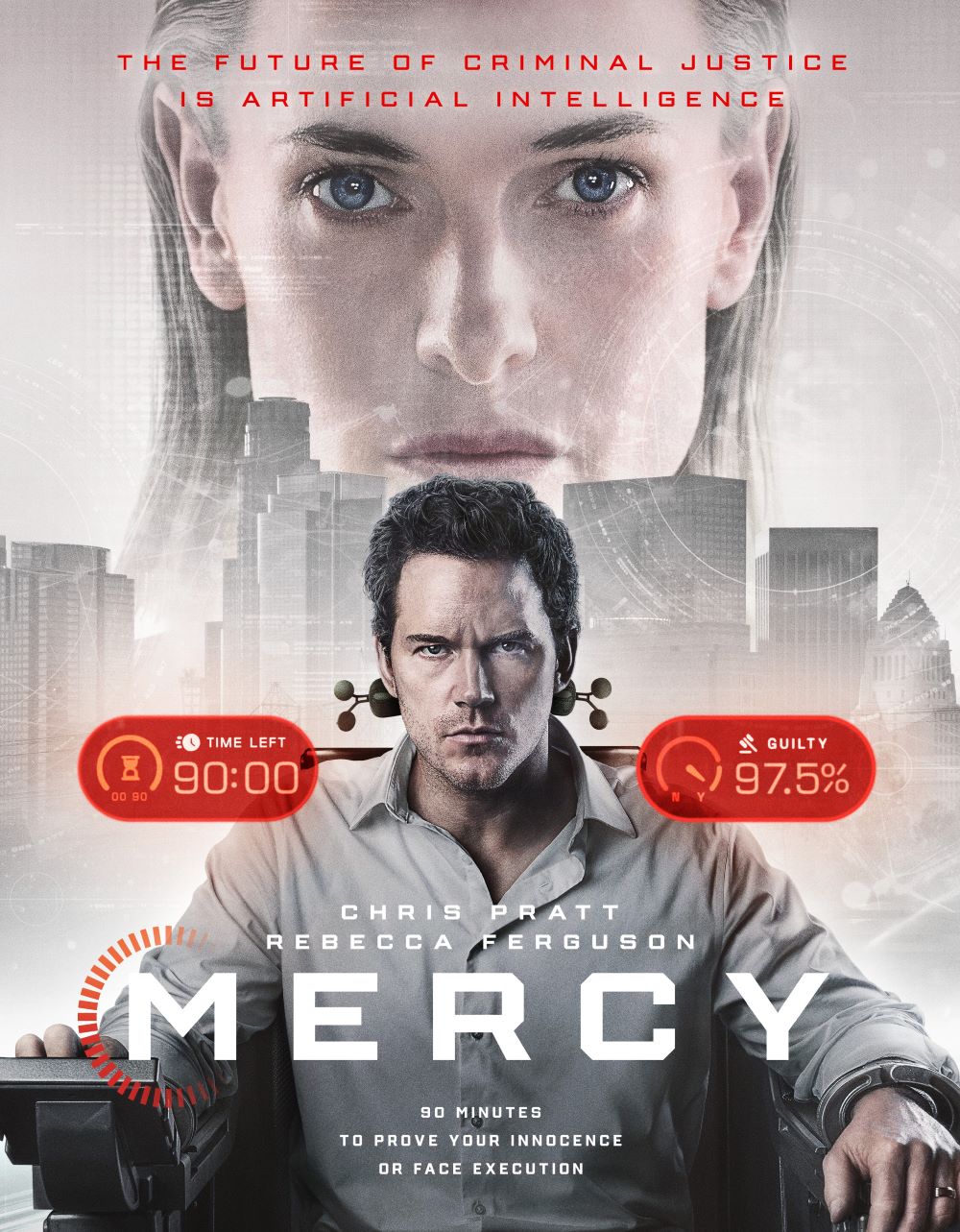
Mercy is the kind of movie that looks great in a trailer and promises a slick, high‑concept thriller, but then sputters once you sit through it. It’s set in a near‑future Los Angeles where the LAPD relies on a program called the “Mercy Court,” in which AI judges rapidly process violent crime cases, and the whole thing is framed as a techno‑noir twist on the courtroom thriller. The central gimmick is compelling on paper: detective Chris Raven wakes up strapped into a high‑tech chair, accused of brutally murdering his wife, and has 90 minutes to prove his innocence before being executed by a sonic blast. That setup alone should guarantee at least a tense, scrappy B‑movie; instead, the film keeps undercutting itself with lazy writing, cluttered subplots, and a surprising lack of nerve.

The biggest problem is the script, which feels like it’s trying to be three different movies at once and doesn’t really commit to any of them. On one level, Mercy wants to be a real‑time investigation, where Raven works with an AI judge to access security feeds, social media, emails, and police databases to piece together his wife’s murder. In practice, this becomes a series of exposition dumps—Raven talking out his thought process, the AI reciting rules, and side characters popping in just long enough to drop information before the movie rushes on. It’s not building tension; it’s building a checklist. The film’s pacing stays brisk, but that’s because so much of the middle act feels like procedural filler rather than a genuine mystery.

Tonally, Mercy swings wildly between modes. At times it’s going for something like a sleek, dystopian Minority Report–style narrative, then it veers into a revenge‑driven character drama about a cop who may be too reliant on an authoritarian justice system, and then it suddenly transforms into a generic bomb‑plot action movie. The initial setup—a world where people suspected of murder are strapped into a chair, presumed guilty, and given a brutally short window to prove themselves—feels genuinely unsettling. But the movie doesn’t really sit with those implications; it flirts with the moral and ethical questions and then rushes off to a more conventional, physical threat. What should be a caustic, uncomfortable critique of automated justice reduces to another last‑minute rescue mission.

The central mystery is another missed opportunity. The evidence stacked against Raven is substantial—blood on his clothes, footage from cameras, his drinking problem, and a history of violent outbursts—but the film telegraphs the real culprit so early that the final reveal feels less like a twist and more like a completion of prior signposting. The story tries to make the framing of Raven seem like a master‑plan‑level conspiracy, but the plan hinges on an almost impossible level of predictability on his part. The more the movie explains, the harder it becomes to buy into the logic of the setup. Instead of feeling like the net has tightened around him in a sophisticated way, it feels like the script is forcing contrivances to land on top of him.

Chris Pratt’s performance is an odd fit for the material. The movie seems determined to present him as a darker, more tortured version of himself, and there are a few moments where that dynamic works—Raven’s vulnerability, his self‑loathing, his conflicted belief in the system he helped create. But the script never really lets him live in the morally grey space it clearly wants him to inhabit. Instead, it keeps reassuring us that he’s essentially a good cop who’s been wronged, which undercuts any real tension about whether he might actually be guilty or at least dangerous. You get glimpses of a more interesting character, but they’re constantly being smoothed over by the need for a likable protagonist.

The AI judge, voiced and embodied by Rebecca Ferguson, is one of the few genuinely strong elements here. She plays the voice and presence of the system with a cool, clipped rationality that occasionally shades into dry wit, and her interactions with Raven hint at a more ambitious film lurking underneath. The idea of an AI judge slowly questioning its own assumptions—pushing back on emotional appeals, probing inconsistencies, and gradually developing something resembling curiosity—is inherently compelling. Ferguson gives the character enough personality and nuance to make that arc feel plausible, but the script mostly treats her as a glorified search engine and a moral referee for the final act, when she should be the co‑lead driving the film’s central conflict.

The supporting cast is fine, but underused. Raven’s partner mostly exists to run errands off‑screen—tracking suspects, raiding houses, reacting over the comms—so the movie can cut away from the courtroom whenever it gets bored. Raven’s AA sponsor is saddled with a mix of clumsy foreshadowing and heavy‑handed motivation, which only becomes relevant when the revenge angle kicks in. Raven’s daughter functions almost entirely as emotional leverage and a hostage, escalating the stakes in a way that feels mechanical rather than organic. You can tell the film wants these relationships to carry weight, especially when it leans on family flashbacks and guilt, but they play out like bullet points instead of lived‑in dynamics.

Visually, the film leans into its creator’s usual fondness for screens within screens, overlay graphics, and multimedia collage. The Mercy Court itself is a striking concept—an almost clinical chamber where Raven is strapped into a chair while the AI’s interface shifts around him—yet the movie keeps cutting away to external action once the premise might otherwise grow too tense or claustrophobic. The pacing is brisk, and there are a few set‑pieces—an intense raid on a suspect’s house, the final assault on the courthouse—that deliver a basic level of genre competence. The issue is that competence is about as high as Mercy ever aims; it never really experiments with the form or stakes of its own setup.

Where the film stumbles most is in its attempt at commentary. The world it presents is, on paper, horrifying: defendants are presumed guilty, strapped into a chair, surveilled across every aspect of their digital life, and given a brutally short window to clear their name before being executed. That’s fertile ground for a scathing critique of mass surveillance, algorithmic justice, and the erosion of due process. But the movie is oddly kind to the system itself; by the end, the AI judge is portrayed as more reasonable and “fair” than most humans, and the real villain is just an individual with a personal grudge. The film nods at privacy violations and the moral grey zones of automating justice, then quickly moves on to a more traditional, physical threat. For something that positions itself as a provocative AI courtroom thriller, it ends up feeling strangely apolitical and conflict‑averse.

To be fair, there are a few things Mercy gets right. The core structure—a detective investigating his own case against a clock—remains inherently watchable, even when handled clumsily. Ferguson’s performance gives the material a center of gravity whenever it threatens to spin out into nonsense. And there’s an occasionally interesting tension between Raven’s instinct‑driven, emotionally charged approach and the AI’s cold, probabilistic logic, suggesting a better film that really pits those worldviews against each other instead of letting them conveniently converge. If you go in with low expectations and a tolerance for generic sci‑fi thrillers, you might find it mildly diverting.

But for anyone hoping Mercy would be a sharp, nasty, high‑concept genre piece with something to say about AI, policing, and due process, it’s a disappointment. The movie leans on an admittedly strong premise, some slick production design, and a few scattered performances, yet it never commits to either being a full‑tilt B‑movie or a genuinely thoughtful techno‑thriller. It’s not unwatchable, just frustratingly timid—content to skim the surface of its own ideas and then blow something up when things get complicated. By the time the credits roll, you’re left with the sense that the AI judge wasn’t the only one operating on a strict time limit; somewhere along the way, the film seems to have run out of patience with itself, too.

Here Are The 2025 Spirit Nominations


The Independent Spirit Nominations were announced earlier today.  As always, one should take the Spirit Awards with a grain of salt as a lot of the current Oscar contenders — like One Battle After Another and Hamnet — are not eligible for the Spirit Awards.  That said, Train Dreams is an Oscar contender that is eligible for the Spirit Awards and it had a fairly nice showing today.  I should also note that Peter Hujar’s Day received the most film nominations, with five.

Film Categories

BEST FEATURE (Award given to the producer)

Peter Hujar’s Day
Producers: Jonah Disend, Jordan Drake

The Plague
Producers: Derek Dauchy, Joel Edgerton, Roy Lee, Lucy McKendrick, Steven Schneider, Lizzie Shapiro

Sorry, Baby
Producers: Mark Ceryak, Barry Jenkins, Adele Romanski

Train Dreams
Producers: Michael Heimler, Will Janowitz, Marissa McMahon, Ashley Schlaifer, Teddy Schwarzman

Twinless
Producers: David Permut, James Sweeney

BEST FIRST FEATURE (Award given to director and producer)

Blue Sun Palace
Director: Constance Tsang
Producers: Sally Sujin Oh, Eli Raskin, Tony Yang

Dust Bunny
Director/Producer: Bryan Fuller
Producers: Basil Iwanyk, Erica Lee

East of Wall
Director/Producer: Kate Beecroft
Producers: Shannon Moss, Melanie Ramsayer, Lila Yacoub

Lurker
Director: Alex Russell
Producers: Galen Core, Archie Madekwe, Marc Marrie, Charlie McDowell, Francesco Melzi D’Eril, Duncan Montgomery, Alex Orlovsky, Olmo Schnabel, Jack Selby

One of Them Days
Director: Lawrence Lamont
Producers: Deniese Davis, Poppy Hanks, James Lopez, Issa Rae, Sara Rastogi

JOHN CASSAVETES AWARD – Given to the best feature made for under $1,000,000 (Award given to the writer, director and producer)

The Baltimorons
Director/Writer/Producer: Jay Duplass
Writer/Producer: Michael Strassner
Producers: David Bonnett Jr., Drew Langer

Boys Go to Jupiter
Director/Writer: Julian Glander

Eephus
Director/Writer/Producer: Carson Lund
Writer/Producer: Michael Basta
Writer: Nate Fisher
Producers: David Entin, Tyler Taormina

Esta Isla (This Island)
Directors/Writers/Producers: Cristian Carretero, Lorraine Jones Molina
Writer: Kisha Tikina Burgos

Familiar Touch
Director/Writer/Producer: Sarah Friedland
Producers: Alexandra Byer, Matthew Thurm

BEST DIRECTOR

Clint Bentley
Train Dreams

Mary Bronstein
If I Had Legs I’d Kick You

Lloyd Lee Choi
Lucky Lu

Ira Sachs
Peter Hujar’s Day

Eva Victor
Sorry, Baby

BEST SCREENPLAY

Michael Angelo Covino, Kyle Marvin
Splitsville

Angus MacLachlan
A Little Prayer

James Sweeney
Twinless

Christian Swegal
Sovereign

Eva Victor
Sorry, Baby

BEST FIRST SCREENPLAY

Andrew DeYoung
Friendship

Elena Oxman
Outerlands

Alex Russell
Lurker

Syreeta Singleton
One of Them Days

Constance Tsang
Blue Sun Palace

BEST LEAD PERFORMANCE

Everett Blunck
The Plague

Rose Byrne
If I Had Legs I’d Kick You

Kathleen Chalfant
Familiar Touch

Chang Chen
Lucky Lu

Joel Edgerton
Train Dreams

Dylan O’Brien
Twinless

Keke Palmer
One of Them Days

Théodore Pellerin
Lurker

Tessa Thompson
Hedda

Ben Whishaw
Peter Hujar’s Day

BEST SUPPORTING PERFORMANCE

Naomi Ackie
Sorry, Baby

Zoey Deutch
Nouvelle Vague

Kirsten Dunst
Roofman

Rebecca Hall
Peter Hujar’s Day

Nina Hoss
Hedda

Jane Levy
A Little Prayer

Archie Madekwe
Lurker

Kali Reis
Rebuilding

Jacob Tremblay
Sovereign

Haipeng Xu
Blue Sun Palace

BEST BREAKTHROUGH PERFORMANCE

Liz Larsen
The Baltimorons

Misha Osherovich
She’s the He

Kayo Martin
The Plague

SZA
One of Them Days

Tabatha Zimiga
East of Wall

BEST CINEMATOGRAPHY

Alex Ashe
Peter Hujar’s Day

Norm Li
Blue Sun Palace

David J. Thompson
Warfare

Adolpho Veloso
Train Dreams

Nicole Hirsch Whitaker
Dust Bunny

BEST EDITING

Ben Leonberg
Good Boy

Carson Lund
Eephus

Fin Oates
Warfare

Sara Shaw
Splitsville

Sofía Subercaseaux
The Testament of Ann Lee

ROBERT ALTMAN AWARD – Given to one film’s director, casting director and ensemble cast

The Long Walk
Director: Francis Lawrence
Casting Director: Rich Delia
Ensemble Cast: Judy Greer, Mark Hamill, Cooper Hoffman, David Jonsson, Tut Nyuot, Joshua Odjick, Charlie Plummer, Ben Wang, Garrett Wareing

BEST DOCUMENTARY (Award given to the director and producer)

Come See Me in the Good Light
Director/Producer: Ryan White
Producers: Jessica Hargrave, Tig Notaro, Stef Willen

Endless Cookie
Director: Peter Scriver
Director/Producer: Seth Scriver
Producers: Dan Bekerman, Alex Ordanis, Jason Ryle, Chris Yurkovich

My Undesirable Friends: Part I – Last Air in Moscow
Director/Producer: Julia Loktev

The Perfect Neighbor
Director/Producer: Geeta Gandbhir
Producers: Sam Bisbee, Nikon Kwantu, Alisa Payne

The Tale of Silyan
Director/Producer: Tamara Kotevska
Producers: Jean Dakar, Anna Hashmi, Jordanco Petkovski

BEST INTERNATIONAL FILM (Award given to the director)

All That’s Left of You
Palestine, Jordan, Germany, Cyprus
Director: Cherien Dabis

On Becoming a Guinea Fowl
Zambia, UK, Ireland
Director: Rungano Nyoni

A Poet
Colombia
Director: Simón Mesa Soto

The Secret Agent
Brazil
Director: Kleber Mendonça Filho

Sirāt
Spain
Director: Oliver Laxe

Emerging Filmmaker Awards

PRODUCERS AWARD – The Producers Award, now in its 29th year, honors an emerging producer who, despite highly limited resources, demonstrates the creativity, tenacity and vision required to produce quality independent films. This award includes a $25,000 unrestricted grant.

Emma Hannaway

Luca Intili

Tony Yang

SOMEONE TO WATCH AWARD – The Someone to Watch Award, now in its 32nd year, recognizes a talented filmmaker of singular vision who has not yet received appropriate recognition. This award includes a $25,000 unrestricted grant.

Tatti Ribeiro
Director of Valentina

Neo Sora
Director of Happyend

Annapurna Sriram
Director of Fucktoys

TRUER THAN FICTION AWARD – The Truer Than Fiction Award, now in its 31st year, is presented to an emerging director of non-fiction features who has not yet received significant recognition. This award includes a $25,000 unrestricted grant.

Tony Benna
Director of André is an Idiot

Rajee Samarasinghe
Director of Your Touch Makes Others Invisible

Brittany Shyne
Director of Seeds

Here Are The 2022 Gotham Winners!


The Gotham Awards were handed out last night and Everything Everywhere All At Once took best picture.  Danielle Deadwyler may have been snubbed by the Spirit Awards but that didn’t prevent the Gothams from honoring her performance in Till.  While the Gothams may not be as strong an Oscar precursor as some of the other groups that will be handing out prizes over the next two months, every win helps.

Here are all the winners:

Breakthrough television under 40 minutes
“Abbott Elementary” (ABC)
“As We See It” (Amazon Prime Video)
“Mo” (Netflix)
“Rap Sh!t” (HBO Max)
“Somebody, Somewhere” (HBO)

Breakthrough television over 40 minutes
“Pachinko” (Apple+)
“Severance” (Apple+)
“Station Eleven” (HBO Max)
“This Is Going To Hurt” (AMC+)
“Yellowjackets” (Showtime)

Television performers:
Bilal Baig (“Sort Of”)
Ayo Edebiri (“The Bear”)
Janelle James (“Abbott Elementary”)
Matilda Lawler (“Station Eleven”)
Britt Lower (“Severance”)
Melanie Lynskey (“Yellowjackets”)
Sue Ann Pien (“As We See It”)
Minha Kim (“Pachinko”)
Zahn McClarnon (“Dark Winds”)
Ben Whishaw (“This Is Going To Hurt”)

Breakthrough nonfiction series
“The Andy Warhol Diaries”
“The Last Movie Stars”
“Mind Over Murder”
“The Rehearsal”
“We Need to Talk About Cosby”

Breakthrough director
Charlotte Wells (“Aftersun”)
Owen Kline (“Funny Pages”)
Elegance Bratton (“The Inspection”)
Antoneta Alamat Kusijanovic (“Murina”)
Beth De Araújo (“Soft & Quiet”)
Jane Schoenbrun (“We’re All Going to the World’s Fair”)

Best screenplay
Kogonada (“After Yang”)
James Gray (“Armageddon Time”)
Lena Dunham (“Catherine Called Birdy”)
Todd Field (“Tár”)
Sarah Polley (“Women Talking”)

Breakthrough performer
Frankie Corio (“Aftersun”)
Kali Reis (“Catch the Fair One”)
Gracija Flipovic (“Murina”)
Anna Diop (“Nanny”)
Anna Cobb (“We’re All Going to the World’s Fair”)

Outstanding supporting performance
Mark Rylance (“Bones and All”)
Brian Tyree Henry (“Causeway”)
Ke Huy Quan (“Everything Everywhere All at Once”)
Raúl Castillo (“The Inspection”)
Gabrielle Union (“The Inspection”)
Nina Hoss (“Tár”)
Noémie Merlant (“Tár”)
Hong Chau (“The Whale”)

Oustanding lead performance
Cate Blanchett (“Tár”)
Danielle Deadwyler (“Till”)
Dale Dickey (“A Love Song”)
Colin Farrell (“After Yang”)
Brendan Fraser (“The Whale”)
Paul Mescal (“Aftersun”)
Thandiwe Newton (“God’s Country”)
Aubrey Plaza “(Emily the Criminal)”
Taylor Russell (“Bones and All”)
Michelle Yeoh (“Everything Everywhere All At Once”)

Best international feature
“Athena”
“The Banshees of Inisherin”
“Corsage”
“Decision to Leave”
“Happening”
“Saint Omer”

Best documentary feature
“All That Breathes”
“All the Beauty and the Bloodshed”
“I Didn’t See You There”
“The Territory”
“What We Leave Behind”

Best feature
“Aftersun”
“The Cathedral”
“Dos Estaciones”
“Everything Everywhere All at Once”
“Tár”

Here Are The 2022 Gotham Nominations!


And just like that, the 2022 Awards Season began.

The 2022 Gotham Nominations were announced earlier today.  While the Gothams have recently started to get some attention as an Oscar precursor, it is important to remember that the Gothams are specifically designed to honor low-budget, independent films.  There’s some very strict rules about which films are eligible and which are not.  So, don’t be shocked at the lack of nominations for something like The Fabelmans.  Spielberg has never been eligible for a Gotham.

If any one film is really going to benefit from these nominations, it’s probably Everything Everywhere All At Once.  Seeing as how it’s been a while since Everything Everywhere came out, the Gotham nominations may (or may not) serve to remind the members of the Academy of the excitement that was generated by the film earlier in the year.

Here are the Gotham nominations for 2022.  The winners will be announced on November 28th.

Breakthrough television under 40 minutes
“Abbott Elementary” (ABC)
“As We See It” (Amazon Prime Video)
“Mo” (Netflix)
“Rap Sh!t” (HBO Max)
“Somebody, Somewhere” (HBO)

Breakthrough television over 40 minutes
“Pachinko” (Apple+)
“Severance” (Apple+)
“Station Eleven” (HBO Max)
“This Is Going To Hurt” (AMC+)
“Yellowjackets” (Showtime)

Television performers:
Bilal Baig (“Sort Of”)
Ayo Edebiri (“The Bear”)
Janelle James (“Abbott Elementary”)
Matilda Lawler (“Station Eleven”)
Britt Lower (“Severance”)
Melanie Lynskey (“Yellowjackets”)
Sue Ann Pien (“As We See It”)
Minha Kim (“Pachinko”)
Zahn McClarnon (“Dark Winds”)
Ben Whishaw (“This Is Going To Hurt”)

Breakthrough nonfiction series
“The Andy Warhol Diaries”
“The Last Movie Stars”
“Mind Over Murder”
“The Rehearsal”
“We Need to Talk About Cosby”

Breakthrough director
Charlotte Wells (“Aftersun”)
Owen Kline (“Funny Pages”)
Elegance Bratton (“The Inspection”)
Antoneta Alamat Kusijanovic (“Murina”)
Beth De Araújo (“Soft & Quiet”)
Jane Schoenbrun (“We’re All Going to the World’s Fair”)

Best screenplay
Kogonada (“After Yang”)
James Gray (“Armageddon Time”)
Lena Dunham (“Catherine Called Birdy”)
Todd Field (“Tár”)
Sarah Polley (“Women Talking”)

Breakthrough performer
Frankie Corio (“Aftersun”)
Kali Reis (“Catch the Fair One”)
Gracija Flipovic (“Murina”)
Anna Diop (“Nanny”)
Anna Cobb (“We’re All Going to the World’s Fair”)

Outstanding supporting performance
Mark Rylance (“Bones and All”)
Brian Tyree Henry (“Causeway”)
Ke Huy Quan (“Everything Everywhere All at Once”)
Raúl Castillo (“The Inspection”)
Gabrielle Union (“The Inspection”)
Nina Hoss (“Tár”)
Noémie Merlant (“Tár”)
Hong Chau (“The Whale”)

Oustanding lead performance
Cate Blanchett (“Tár”)
Danielle Deadwyler (“Till”)
Dale Dickey (“A Love Song”)
Colin Farrell (“After Yang”)
Brendan Fraser (“The Whale”)
Paul Mescal (“Aftersun”)
Thandiwe Newton (“God’s Country”)
Aubrey Plaza “(Emily the Criminal)”
Taylor Russell (“Bones and All”)
Michelle Yeoh (“Everything Everywhere All At Once”)

Best international feature
“Athena”
“The Banshees of Inisherin”
“Corsage”
“Decision to Leave”
“Happening”
“Saint Omer”

Best documentary feature
“All That Breathes”
“All the Beauty and the Bloodshed”
“I Didn’t See You There”
“The Territory”
“What We Leave Behind”

Best feature
“Aftersun”
“The Cathedral”
“Dos Estaciones”
“Everything Everywhere All at Once”
“Tár”