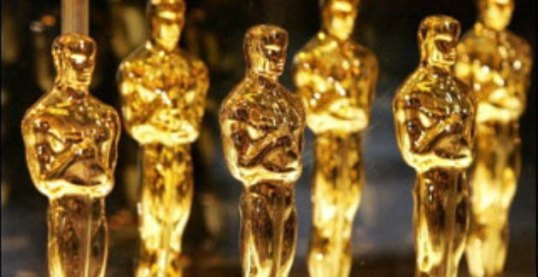
Lisa’s Way Too Early Oscar Predictions For January


2013 oscars

Why are these Oscar predictions “way too early?”

Well, unlike every other movie blogger right now, I am not attempting to predict who and what will be nominated on January 24th.  Instead, with this post, I am attempting to predict which 2017 releases will be nominated next year!  In short, I am attempting to predict what movies and which performers will emerge as Oscar contenders over the next 12 months.

Needless to say, this is more than a little bit foolish on my part.  I haven’t seen any of the films listed below.  Some of these films don’t have release dates and others are coming out so early in the year that, in order to be contenders, they’ll have to be so spectacular that neither the Academy nor the critics end up forgetting about them.  For the most part, the true picture of the Oscar race usually doesn’t start to emerge until the summer.

For now, these predictions are, for the most part, wild guesses and they should be taken with more than just a grain of salt.  Each month, I will revise my predictions.  At the very least, next year, we’ll probably be able to look back at this post and laugh.

(Whenever trying to make early Oscar predictions, one should remember all of the award bloggers who predicted Nicole Kidman would win an Oscar for Grace of Monaco, just to then see the movie make its long-delayed premiere on Lifetime.)

With all that in mind, here are my way too early Oscar predictions for January!

Best Picture

All Eyez on Me

Battle of the Sexes

The Beguiled

Blade Runner 2047

Crown Heights

Darkest Hour

Downsizing

Dunkirk

T2: Trainspotting

War Machine

Again, for the most part, these predictions are a combination of wild guesses, instinct, and wishful thinking.  It’s entirely possible that none of these films will actually be nominated for best picture.  (Some might even end up premiering on Lifetime, you never know.)  Here’s why I think that some of them might be remembered next year at this time:

All Eyez On Me is a biopic of Tupac Shakur.  Assuming the film is done correctly, Shakur’s life would seem to have all the elements that usually go into an Oscar-winning film.

Battle of the Sexes is a film based on a true incident, a 1970s tennis match between a feminist and a self-declared male chauvinist.  It’s directed by the team behind the Oscar-nominated Little Miss Sunshine and it stars two former nominees, Emma Stone and Steve Carell.

The Beguiled might be wishful thinking on my part but, at this point, wishful thinking is all I have to go on for most of these predictions.  The Beguiled is a remake of a Clint Eastwood film and it’s directed by one of my favorite directors, Sofia Coppola!  Much like Battle of the Sexes, its misogynist-gets-what’s-coming-to-him storyline might make it the perfect film for the first year of the Trump presidency.

Blade Runner 2047 is one of the most eagerly anticipated films of 2017 and it’s directed by Denis Villeneuve, who is hot off of Arrival.  The Oscar success of Mad Max: Fury Road proved that a sequel can be a contender.

Every year, at least one contender emerges out of Sundance and this year, it could very well be Crown Heights.  It tells a fact-based story, about a man trying to win his best friend’s release from prison after the latter is wrongly convicted.  That all sounds very Oscar baity.

Speaking of Oscar bait, Darkest Hour stars Gary Oldman as Winston Churchill.  If that doesn’t sound like Oscar bait, I don’t know what does.

Downsizing is Alexander Payne’s latest film.  It’s about a man (Matt Damon), who shrinks himself.  It may not sound like typical Oscar bait but Payne is definitely a favorite of the Academy’s.

Dunkirk is Christopher Nolan’s big epic for 2017.  Will it be another huge success or will it just be bombastic?  We’ll see.  The Academy has a weakness for World War II films and it could be argued that the very successful yet never nominated Nolan is overdue for some Academy recognition.  (It is true that Inception received a nomination for best picture but Nolan himself was snubbed.)

T2: Trainspotting is probably coming out too early in the year to be a legitimate contender but who knows?  The trailer was great.  Danny Boyle is directing it.  And, much as with Blade Runner 2047, Mad Max: Fury Road proved that a well-made and intelligent sequel can find favor with the Academy.

War Machine is described as being a satire about the war in Afghanistan.  Could it be another Big Short?  With Obama out of office, the Academy might be more open to political satire than they’ve been in the past.

Best Director

Danny Boyle for T2: Trainspotting

Sofia Coppola for The Beguiled

Christopher Nolan for Dunkirk

Alexander Payne for Downsizing

Denis Villeneuve for Blade Runner 2047

Again, there’s a lot of random guessing here.  Personally, I’d love to see Sofia Coppola receive a second nomination for best director.  Payne and Boyle are always possibilities and, if Villeneuve’s work on Arrival is ignored this year, nominating him for Blade Runner would be a good way to make up for it.  As for Nolan, he’s going to get nominated some day.   Why not for Dunkirk?

Best Actor

Tom Cruise in American Made

Sam Elliott in The Hero

Hugh Jackman in The Greatest Showman

Logan Lerman in Sidney Hall

Gary Oldman in Darkest Hour

In American Made, Tom Cruise plays a real-life drug runner.  It sounds like one of those change-of-pace roles that often results in an Oscar nomination.  Gary Oldman has never won an Oscar and has only been nominated once.  The Academy might want to rectify that situation by nominating him for playing Winston Churchill.  And finally, Hugh Jackman as P.T. Barnum in a big budget musical that’s scheduled to open on Christmas Day?  It sounds like either a total disaster or the formula for Oscar gold!

Logan Lerman is one of those actors who appears to be destined to eventually be nominated for an Oscar and, in Sidney Hall, he ages over thirty years.  Finally, Sam Elliott is a beloved veteran who has never been nominated.  If The Hero is a hit at Sundance, it’s easy to imagine the Oscar campaign that will follow.

Best Actress

Jessica Chastain in The Zookeeper’s Wife

Judi Dench in Victoria and Abdul

Nicole Kidman in The Beguiled

Emma Stone in Battle of the Sexes

Naomi Watts in The Book of Henry

As of this writing, Meryl Streep does not have a movie scheduled to be released in 2017, which means that another actress will get the sport usually reserved for her.  But who?  Jessica Chastain could be nominated because she’s Jessica Chastain and the Academy loves her.  Judi Dench plays Queen Victoria for a second time in Victoria and Abdul.  The Academy loves movies about British royalty and Dench has already been nominated once for bringing Victoria to life.  Naomi Watts plays a loving but possibly crazy mother in The Book of Henry, which again sounds like a very Oscar baity role.  If Emma Stone doesn’t win for La La Land, the Academy could make it up to her by nominating her for Battle of the Sexes.

As for Nicole Kidman in The Beguiled — well, let’s call that wishful thinking.  My hope is that Sofia Coppola will do great things with The Beguiled and she will get another great performance out of Nicole Kidman.  We’ll see if I’m right.


Best Supporting Actor

Robert Carlyle in T2: Trainspotting

Johnny Depp in Murder on The Orient Experss

James Franco in The Masterpiece

Bill Skarsgard in It

Kevin Spacey in Billionaire Boys Club

Admittedly, the guesses here are fairly random but there is a logic behind each nominee.  Robert Carlyle was great in Trainspotting so he might be just as great in T2.  In Billionaire Boys Club, Kevin Spacey plays a sleazy con artist and that sounds like the type of role with which he could do wonders.  If It is to be a success, Bill Skarsgard is going to have to be a terrifying Pennywise.  If Heath Ledger could win for playing the Joker, surely Skarsgard could be nominated for playing Pennywise.

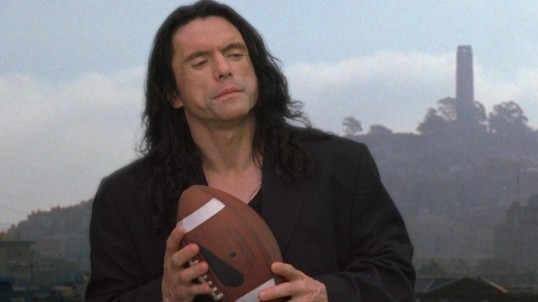
As for James Franco in The Masterpiece … yes, it’s more wishful thinking on my part.  Franco will be playing Tommy Wiseau, the director of the notorious The Room.  Wiseau is, needless to say, an eccentric figure.  Not only do I think James Franco could give an award-worthy performance in the role but I also just like the idea of someone getting an Oscar for playing Tommy Wiseau.

Finally, we have Johnny Depp in Murder on The Orient Express.  Why not?  It seems like someone from that film’s huge cast is destined to be nominated so why not Johnny Depp?


Best Supporting Actress

Jennifer Aniston in The Yellow Birds

Danai Guirra in All Eyez On Me

Kelly MacDonald in T2: Trainspotting

Kristin Scott Thomas in Darkest Hour

Tilda Swinton in War Machine

These guesses are even more random than my guesses for supporting actor.  Jennifer Aniston and Danai Guirra will both be playing mothers who lose their sons.  A lot of people were surprised when Aniston was not nominated for Cake so here’s a chance for the Academy to make it up to her.  As for Kristin Scott Thomas, she’ll be playing Winston Churchill’s wife and the Academy loves historical wives (i.e., Helena Bonham Carter in The King’s Speech and Felicity Jones in The Theory of Everything).

As for the last two predictions, Tilda Swinton is listed because she’s Tilda Swinton.  Kelly MacDonald is listed for the same reason that I put Robert Carlyle down for supporting actor.  She was just so good in the first film.

So, there you go!  Those are my too early Oscar predictions for January!  Will they prove to be accurate?  Probably not.

But we’ll see how things change over the next couple of months.  At the very least, you’ll be able to look back at this post and laugh at me for thinking that … oh, let’s say Battle of the Sexes … would ever be nominated for an Academy Award.

As for me, I’ll be revising my predictions in February.  At least by that point, maybe the Sundance Film Festival will have provided some guidance…
Tommy_Wiseau_in_The_Room

Cleaning Out The DVR Yet Again #25: Marie Antoinette (dir by Sofia Coppola)


(Lisa recently discovered that she only has about 8 hours of space left on her DVR!  It turns out that she’s been recording movies from July and she just hasn’t gotten around to watching and reviewing them yet.  So, once again, Lisa is cleaning out her DVR!  She is going to try to watch and review 52 movies by the end of Tuesday, December 6th!  Will she make it?  Keep checking the site to find out!)

marie-antoinette_poster

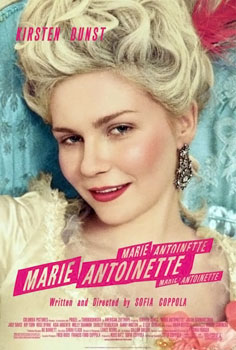
On November 12th, I recorded 2016’s Marie Antoinette off of Starz.

Before I review Marie Antoinette, I think it’s important that you know that I am an unapologetic Sofia Coppola fan.  I love every film that she’s made and I look forward to her upcoming remake of The Beguiled.  At the same time, I can also understand why some people feel differently.  Sofia Coppola’s films are not for everyone.  For one thing, almost all of her films deal with rich people.  The existential angst of the wealthy and/or famous is not a topic that’s going to fascinate everyone.  When you watch a Sofia Coppola film, you never forget that you’re watching a film that’s been directed by someone who largely grew up in the spotlight and who knows what it’s like to have money.  An ennui born out of having everything and yet still feeling empty permeates almost every scene that Sofia Coppola has ever directed.  (If you have to ask what ennui is, you’ve never experienced it.)  Many viewers look at Sofia Coppola’s filmography and they ask themselves, “Why should we care about all these materialistic people?”

However, while Sofia Coppola may not know what’s it’s like to be poor (or even middle class for that matter), she does understand what it’s like to feel lonely.  Her filmography could just as easily be called “the cinema of isolation.”  It doesn’t matter how much money you may have or how famous you may or may not be, loneliness is a universal condition.  A typical Sofia Coppola protagonist is someone who has everything and yet still cannot connect with the rest of the world.  More often that not, they turn to excessive consumption in order to fill the void in their life.  To me, the ultimate Sofia Coppola image is not, regardless of how much I may love them, Bill Murray and Scarlett Johansson in Lost in Translation.  Instead, it’s Stephen Dorff (playing a far less likable version of Bill Murray’s Translation character) standing alone in the desert at the end of Somewhere.

Marie Antoinette, which was Sofia’s follow-up to Lost in Translation, is technically a historical biopic, though it makes little effort to be historical or accurately biographical.  Kirsten Dunst plays Marie Antoinette, the final queen of France before the French Revolution.  It was Marie Antoinette was accused of dismissing starving French peasants by announcing, “Let them eat cake!”  (For the record, it’s probable that Marie Antoinette never said that.  It’s certainly never heard in Coppola’s film.)

Marie Antoinette opens with the title character arriving in France at the age of 14.  She’s an Austrian princess who has been sent to marry the future king of France, Louis XVI (Jason Schwartzman).  From the minute we meet her, Marie Antoinette is portrayed as being a pawn.  Her mother arranges the marriage as a way to seal an alliance with France.  The king of France (played by Rip Torn) expects Marie Antoinette to get produce an heir to the throne as quickly as possible.  Meanwhile, her new husband is an infantile and immature fool who doesn’t even know how to make love.  Marie Antoinette finds herself isolated in a strange country, expected to be all things to all people.

And so, Marie Antoinette does what I always do whenever I’m feeling unsure of myself.  She hangs out with her girlfriends.  She throws expensive parties.  She gambles.  She flirts.  She shops.  She has fun, regardless of whether it’s considered to be proper royal behavior or not.  Occasionally, she is warned that she is losing popularity with the French people but she’s not concerned.  Why should she be?  She doesn’t know anything about the French people.  All she knows about is the life that she was born into.  She didn’t choose to be born in to wealth and power but, since she was, why shouldn’t she have a good time?

The French Revolution doesn’t occur until near the end of Marie Antoinette and when it does happen, it happens quickly.  And yet, the shadow of the revolution hangs over the entire film.  We watch the knowledge that neither Marie Antoinette nor her husband possess: eventually, they are both going to be executed.  And knowing that, it’s hard not to cheer Marie Antionette on.  She may be destined for a tragic end but at least she’s having a little fun before destiny catches up with her.

Kirsten Dunst makes no attempt to come across as being French or Austrian but then again, neither does anyone else in the film.  After all, this is a movie where Rip Torn plays the King of France without once trying to disguise his famous Texas accent.  Coppola isn’t necessarily going for historical accuracy.  Instead, in this film, Marie Antoinette serves as a stand-in for countless modern celebrities.  In the end, Marie Antoinette is portrayed as not being much different from Paris Hilton or Kardashian.  Meanwhile, the people who eventually show up outside the palace, carrying torches and shouting threats, are the same as the viewers who loudly condemn reality television while obsessively watching every episode of it.

Coppola’s stylized direction results in a film that is both thought-provoking and gorgeous to look at and which is also features several deliberate anachronisms.  (In many ways, Marie Antoinette blatantly ridicules the very idea that history can be accurately recreated.)  Perhaps because it was following up the beloved Lost In Translation, Marie Antoinette has never got as much praise as it deserves but I think it’s a film that is totally deserving of a reevaluation.

(Sidenote: Fans of Italian horror should keep an eye out for Asia Argento, who has a small but very important supporting role.)

Music Video of the Day: Elektrobank by The Chemical Brothers (1997, dir by Spike Jonze)


Today’s music video is Elektrobank by The Chemical Brothers and it just happens to go along perfectly with my current series of Back To School reviews!

This video takes place at a high school gymnastics competition and it stars none other than one of my favorite directors, Sofia Coppola!  Well, actually, if you want to get technical, some of the video’s best moments features Sofia’s stunt double.  But still, she gives a great performance.

This video was directed by the great Spike Jonze, Sofia’s future (ex) husband.

Neon Dream #9: Air – Alone in Kyoto


Sofia Coppola’s Lost in Translation left a strange impression on me. In a way I can only really compare to Casablanca, it burrowed into my memory like an actual personal experience. I don’t review movies, and I am ill equipped to explain what made it such a special film for me, but the bond that Bob Harris (Bill Murray) and Charlotte (Scarlett Johansson) forge over a few days in Tokyo is something I’ll always carry with me and look back on fondly. That’s pretty weird, but I’m not complaining.

Music was essential to Lost in Translation, embedded into scenes as a part of what Bob and Charlotte actually experience. The hotel lounge has a live jazz band. “The State We’re In” by The Chemical Brothers plays in the club they visit. Phoenix’s “Too Young” pumps over the stereo when they go to a friend’s apartment. A woman dances to Peaches’ “Fuck the Pain Away” at the strip club. The actors aren’t just seen singing karaoke; they perform it at length. Coppola was pretty clever about extending this integration to the more traditionally situated background music. Happy End’s “Kaze wo Atsumete” enhances the feeling that Bob and Charlotte are winding down from an exhausting night, but it drifts faintly into the hallway, as if playing from the karaoke room. Charlotte is wearing headphones when we first hear Air’s “Alone in Kyoto”. The Jesus and Mary Chain’s “Just Like Honey” kicks off as Bob enters his cab. The encore of “Kaze wo Atsumete” in the credits could easily be playing in Bob’s head. Almost every song in the movie functions within the environment, not just as a peripheral enhancement.

Garden State tried something like this a year later, though I don’t recall the extent of it beyond the awkward Shins sequence. The effect was a sort of garish, in-your-face endorsement of director Zach Braff’s favorite tunes. It didn’t really cut it for me, in spite of the soundtrack’s impressive cast. In Lost in Translation, Coppola was a lot more attentive to creating continuity between songs and bringing musicians on board with the film’s atmosphere. She didn’t stop at using “Sometimes” by My Bloody Valentine; she dug founder Kevin Shields out of relative obscurity to compose four original pieces. A lot of the other artists formed a pre-existing community of sorts, suited to engage the project as art rather than a quick paycheck. Soundtrack supervisor Brian Reitzell performed drums for Air on their 2001 album 10 000 Hz Legend. Both Air and Roger Joseph Manning Jr, a fellow studio musician on that album, contribute original music to Lost in Translation. Phoenix previously performed with Air, and Sofia Coppola ultimately married their singer. While their contribution was recycled (“Too Young” appears in the context of young adults who would have been familiar with obscure but up and coming artists; using Phoenix’s first single made sense), the band was still involved in Coppola’s social sphere of musicians.

“Alone in Kyoto” plays as Charlotte travels through the classic side of Japan, visiting shrines and observing ancient customs. While that could possibly put it at odds with my theme, Air’s approach keeps the feeling modern, casting tradition as a subtle, delicate element of the present rather than as a form of escapism. It also occurs in a sequence without character interaction, permitting a pure sense of exploration. Within Lost in Translation‘s soundtrack, “Alone in Kyoto” reaches closest to that Japanese dream that still permeated a lot of American subcultures in 2003. The movie itself brought many of us the closest we would ever come to actually living that dream.

Shattered Politics #53: The Godfather Part III (dir by Francis Ford Coppola)


GodfatherIII2

Well, it’s come to this.

First released in 1990, The Godfather Part III was nominated for best picture (it lost to Goodfellas Dances With Wolves) but it’s got a terrible reputation.  Over the past two weeks, whenever I’ve mentioned that I was planning on reviewing The Godfather and The Godfather Part II for this series of reviews, everyone who I talked to mentioned that they loved the first two Godfather films and that they hated the third one.  Quite a few, in fact, suggested that I shouldn’t even bother reviewing the third one.  In their eyes, The Godfather Part III was like that one cousin who you know exists but, because he got caught cashing your grandma’s social security check, you never send a Christmas card.

But you know what?

It was never even an option for me to skip reviewing The Godfather, Part III.  First off, I’m a completist.  It’s long been my goal to review every single best picture nominee and, regardless of how much some people may dislike it, that’s exactly what The Godfather Part III is.

Plus, I love the Godfather movies.  I’m a fourth Italian (and, much like the Corleones, my Italian side comes from Southern Italy) and I was raised Catholic.  Let’s face it — The Godfather movies were made for me.  Even Part III.

So, with all that in mind, I recently sat down and rewatched The Godfather Part III.  And I’m not saying that it was an easy film to watch.  It’s a flawed film and those flaws are made even more obvious when you compare it to the previous two Godfathers.  It’s hard to follow up on perfection.  And I have to admit that, even though I had seen Part III before, I was still expecting it to be better than it actually was.  I had forgotten just how many slow spots there were.  I had forgotten how confusing the plot could get.  I had forgotten….

Okay, I’m really starting to sound negative here and I don’t want to sound negative.  Because I like The Godfather, Part III.  I think it’s a good but uneven film.  Some of my favorite films are good but uneven…

But this is a Godfather film that we’re talking about here!

The Godfather Part III opens in 1979, 20+ years since the end of the second film.  Tom Hagen has died off-screen (booo!) and Michael (Al Pacino) is nearly 60 and looking forward to retirement.  He’s handed the Corleone criminal empire over to the flamboyant Joey Zasa (Joe Mantegna).  Michael has finally become a legitimate businessman but he’s lost everyone that he loved.  Kay (Diane Keaton) has divorced him.  His son, Anthony (Franco D’Ambrosio), knows that Michael was responsible for killing Uncle Fredo and wants nothing to do with the family business.  Instead, Anthony wants to be an opera singer.  Meanwhile, his daughter Mary (Sofia Coppola) is headstrong and rebellious.  (Or, at least, she’s supposed to be.  That’s what the audience is told, anyway.  None of that really comes across on the screen.)

Now, the first two Godfather films featured their share of melodrama but neither one of them comes close to matching all of the schemes, betrayals, and plots that play out over the course of Godfather, Part III.  Let’s see if I can keep all of this straight:

As the film opens, Michael is receiving an award from the Vatican.  Kay, who is now married to a judge, shows up with Mary and Anthony.  Michael is obviously happy to see her.  Kay glares at him and says, “That ceremony was disgusting!”  (Damn, I thought, Kay’s suddenly being kind of a bitch.  Fortunately, later on in the movie, Kay’s dialogue was both better written and delivered.)

Then, Vincent (Andy Garcia) shows up!  Vincent is one of those handsome, sexy gangsters whose every action is followed by an exclamation point!  Vincent is Sonny’s illegitimate son!  He wears a cool leather jacket!  He openly flirts with his cousin Mary!  He has sex with Bridget Fonda!  He kills Joey Zasa’s thugs!  He convinces Michael to mentor him!

And, as soon as Vincent enters the film, suddenly every scene starts to end with an exclamation point!

And then, Michael goes to Sicily!  He gets swindled by the corrupt Archbishop Gilday (Donal Donnelly)!  He gets targeted by a corrupt Italian politician!  He confesses his sins to Cardinal Lamberto (Raf Vallone)!  Lamberto later becomes Pope!

Meanwhile, Don Altobello (Eli Wallach) is conspiring to kill Michael!  Because that’s what elderly Mafia dons do!  And then Kay, Anthony, and Mary all come to Sicily!  Anthony is going to be making his opera debut!  And soon Vincent is sleeping with Mary, even though they’re first cousins!

And even more people want Michael dead and I’m not really sure why!  Everyone goes to the opera!  We sit through the entire opera!  Meanwhile, enemies of the Corleones are killed!  And some Corleones are killed!  And it all ends tragically!

Okay, I’m starting to get snarky here and it’s probably getting a little bit hard to believe that I actually do like The Godfather, Part III.  And, as much as I hate to do it, there are a few more flaws that I do need to point out.  Sofia Coppola is one of my favorite directors and she has really pretty hair and we both have similar noses but …. well, let’s just say that it’s probably a good thing that Sofia pursued a career as a director and not as an actress.  Reportedly, Sofia was a last minute pick for the role, cast after Winona Ryder suddenly dropped out of the production.  It’s not so much that her performance is terrible as much as it’s not up to the level of the rest of the cast.  Watching this Godfather, you’re acutely aware of how much of what you’re seeing on screen was determined by Sofia’s inexperience as an actress.

And then there’s that opera.  Now, I know that I’m supposed to love opera because I’m a girl and I’m a fourth Italian.  And I do love big emotions and big drama and all the rest.  But oh my God, the opera at the end of the movie went on and on.  There’s only so much entertainment you can get out of watching actors watch other actors.

But, at the same time, for every flaw, there’s a part of the film that does work.  First off, the film itself is gorgeous to look at, with a lot of wonderfully baroque sets and scenes taking place against the beautiful Italian landscape.  Al Pacino brings a very real gravity to the role of Michael and it’s fun to watch him trying to win back Diane Keaton.  (In those brief scenes, The Godfather Part III almost becomes a romantic comedy.)  Talia Shire is obviously having a lot of fun playing Connie as being a Lady MacBeth-type of character.  (In fact, they needed to give Connie a film of her own where she could poison anyone who get on her nerves.)  And Andy Garcia does a great job as Vincent.  You watch him and you never have any doubt that he could be Sonny’s son.

The Godfather Part III may not live up to the first two Godfather films but what film could?

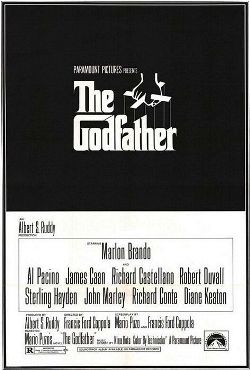
Shattered Politics #31: The Godfather (dir by Francis Ford Coppola)


Godfather_ver1

“I got something for your mother and Sonny and a tie for Freddy and Tom Hagen got the Reynolds Pen…” — Kay Adams (Diane Keaton) in The Godfather (1972)

It probably seems strange that when talking about The Godfather, a film that it is generally acknowledged as being one of the best and most influential of all time, I would start with an innocuous quote about getting Tom Hagen a pen.

(And it better have been a hell of a pen because, judging from the scene where Sollozzo stops him in the street, it looked like Tom was going all out as far as gifts were concerned…)

After all, The Godfather is a film that is full of memorable quotes.  “Leave the gun.  Take the cannoli.”  “I’m going to make him an offer he can’t refuse.”  “It’s strictly business.”  “I believe in America….”  “That’s my family, Kay.  That’s not me.”

But I went with the quote about the Reynolds pen because, quite frankly, I find an excuse to repeat it every Christmas.  Every holiday season, whenever I hear friends or family talking about presents, I remind them that Tom Hagen is getting the Reynolds pen.  Doubt me?  Check out these tweets from the past!

[tweet https://twitter.com/LisaMarieBowman/status/411891527837687810  ]

[tweet https://twitter.com/LisaMarieBowman/status/280387983444697088 ]

That’s how much I love The Godfather.  I love it so much that I even find myself quoting the lines that don’t really mean much in the grand scheme of things.  I love the film so much that I once even wrote an entire post about who could have been cast in The Godfather if, for whatever reason, Brando, Pacino, Duvall, et al. had been unavailable.  And I know that I’m not alone in that love.

But all that love also makes The Godfather a difficult film to review.  What do you say about a film that everyone already knows is great?

Do you praise it by saying that Al Pacino, Robert Duvall, James Caan, Diane Keaton, Marlon Brando, John Cazale, Richard Castellano, Abe Vigoda, Alex Rocco, and Talia Shire all gave excellent performances?  You can do that but everyone already knows that.

Do you talk about how well director Francis Ford Coppola told this operatic, sprawling story of crime, family, and politics?  You can do that but everyone already knows that.

Maybe you can talk about how beautiful Gordon Willis’s dark and shadowy cinematography looks, regardless of whether you’re seeing it in a theater or on TV.  Because it certainly does but everyone knows that.

Maybe you can mention the haunting beauty of Nina Rota’s score but again…

Well, you get the idea.

Now, if you somehow have never seen the film before, allow me to try to tell you what happens in The Godfather.  I say try because The Godfather is a true epic.  Because it’s also an intimate family drama and features such a dominating lead performance from Al Pacino, it’s sometimes to easy to forget just how much is actually going on in The Godfather.

The Godfather tells the story of the Corleone Family.  Patriarch Vito Corleone (Marlon Brando) has done very well for himself in America, making himself into a rich and influential man.  Of course, Vito is also known as both Don Corleone and the Godfather and he’s made his fortune through less-than-legal means.  He may be rich and he may be influential but when his daughter gets married, the FBI shows up outside the reception and takes pictures of all the cars in the parking lot.  Vito Corleone knows judges and congressmen but none of them are willing to be seen in public with him.  Vito is the establishment that nobody wants to acknowledge and sometimes, this very powerful man wonders if there will ever be a “Governor Corleone” or a “Senator Corleone.”

Vito is the proud father of three children and the adopted father of one more.  His oldest son, and probable successor, is Sonny (James Caan).  Sonny, however, has a temper and absolutely no impulse control.  While his wife is bragging about him to the other women at the wedding, Sonny is upstairs screwing a bridesmaid.  When the enemies of the Corleone Family declare war, Sonny declares war back and forgets the first rule of organized crime: “It’s not personal.  It’s strictly business.”

After Sonny, there’s Fredo (John Cazale).  Poor, pathetic Fredo.  In many ways, it’s impossible not to feel sorry for Fredo.  He’s the one who ends up getting exiled to Vegas, where he lives under the protection of the crude Moe Greene (Alex Rocco).  One of the film’s best moments is when a bejeweled Fredo shows up at a Vegas hotel with an entourage of prostitutes and other hangers-on.  In these scenes, Fred is trying so hard but when you take one look at his shifty eyes, it’s obvious that he’s still the same guy who we first saw stumbling around drunk at his sister’s wedding.

(And, of course, it’s impossible to watch Fredo in this film without thinking about both what will happen to the character in the Godfather, Part II and how John Cazale, who brought the character to such vibrant life, would die just 6 years later.)

As a female, daughter Connie (Talia Shire) is — for the first film, at least — excluded from the family business.  Instead, she marries Sonny’s friend Carlo Rizzi (Gianni Russo).  And, to put it gently, it’s not a match made in heaven.

And finally, there’s Michael (Al Pacino).  Michael is the son who, at the start of the film, declares that he wants nothing to do with the family business.  He’s the one who wants to break with family tradition by marrying Kay Adams (Diane Keaton), who is most definitely not Italian.  He’s the one who was decorated in World War II and who comes to his sister’s wedding still dressed in his uniform.  (In the second Godfather film, we learn that Vito thought Michael was foolish to join the army, which makes it all the more clear that, by wearing the uniform to the wedding, Michael is attempting to declare his own identity outside of the family.)  To paraphrase the third Godfather film, Michael is the one who says he wants to get out but who keeps getting dragged back in.

And finally, the adopted son is Tom Hagen (Robert Duvall).  Tom is the Don’s lawyer and one reason why Tom is one of my favorite characters is because, behind his usual stone-faced facade, Tom is actually very snarky.  He just hides it well.

Early on, we get a hint that Tom is more amused than he lets on when he has dinner with the crude Jack Woltz (John Marley), a film producer who doesn’t want to use Johnny Fontane (Al Martino) in a movie  When Woltz shouts insults at him, Tom calmly finishes his dinner and thanks him for a lovely evening.  And he does it with just the hint of a little smirk and you can practically see him thinking, “Somebody’s going to wake up with a horse tomorrow….”

However, my favorite Tom Hagen moment comes when Kay, who is searching for Michael, drops by the family compound.  Tom greets her at the gate.  When Kay spots a car that’s riddled with bullet holes, she asks what happened.  Tom smiles and says, “Oh, that was an accident.  But luckily no one was hurt!”  Duvall delivers the line with just the right attitude of “That’s my story and I’m sticking to it!”  How can you not kind of love Tom after that?

And, of course, the film is full of other memorable characters, all of whom are scheming and plotting.  There’s Clemenza (Richard S. Catellano) and Tessio (Abe Vigoda), the two Corleone lieutenants who may or may not be plotting to betray the Don.  There’s fearsome Luca Brasi (Lenny Montana), who spends an eternity practicing what he wants to say at Connie’s wedding and yet still manages to screw it up.  And, of course, there’s Sollozzo (Al Lettieri, playing a role originally offered to Franco Nero), the drug dealer who reacts angrily to Vito’s refusal to help him out.  Meanwhile, Capt. McCluskey (Sterling Hayden) is busy beating up young punks and Al Neri (Richard Bright) is gunning people down in front of the courthouse.  And, of course, there’s poor, innocent, ill-fated Appollonia (Simonetta Stefanelli)…

The Godfather is a great Italian-American epic, one that works as both a gangster film and a family drama.  Perhaps the genius of the Godfather trilogy is that the Corleone family serves as an ink blot in a cinematic rorschach test.  Audiences can look at them and see whatever they want.  If you want them and their crimes to serve as a metaphor for capitalism, you need only listen to Tom and Michael repeatedly state that it’s only business.  If you want to see them as heroic businessmen, just consider that their enemies essentially want to regulate the Corleones out of existence.  If you want the Corleones to serve as symbols of the patriarchy, you need only watch as the door to Michael’s office is shut in Kay’s face.  If you want to see the Corleones as heroes, you need only consider that they — and they alone — seem to operate with any sort of honorable criminal code.  (This, of course, would change over the course of the two sequels.)

And, if you’re trying to fit a review of The Godfather into a series about political films, you only have to consider that Vito is regularly spoken of as being a man who carries politicians around in his pocket.  We may not see any elected officials in the first Godfather film but their presence is felt.  Above all else, it’s Vito’s political influence that sets in motion all of the events that unfold over the course of the film.

The Godfather, of course, won the Oscar for best picture of 1972.  And while it’s rare that I openly agree with the Academy, I’m proud to say that this one time is a definite exception.

Back to School #76: The Bling Ring (dir by Sofia Coppola)


Bling-Ring-large

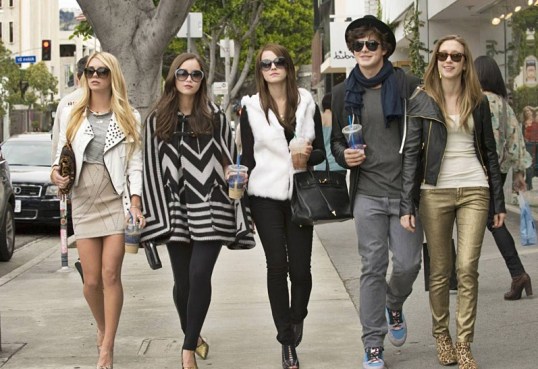
The Bling Ring was one of the more divisive films of 2013.  As often seems to happen with the work of Sofia Coppola, viewers either loved it as a stylish look at America’s self-destructive love affair with fame or else they felt that it was a shallow celebration of the very lifestyle that it claimed to be satirizing.  Personally, I felt it was both, which is one reason why I enjoyed The Bling Ring.

The Bling Ring is based on the true story of a bunch of California teenagers who made headlines by breaking into the mansions of their idols.  Over the course of several months, they burglarized everyone from Paris Hilton to Lindsay Lohan to Orlando Bloom.  While they may have been smart enough to use social media to discover when their targets would be out of town, they weren’t smart enough to not use social media to brag about their crimes.  Eventually, they were arrested and, for a brief period of time, they were as famous as the people they robbed.  One of them even got her own reality show out of the whole thing.  I watched an episode or two.  It wasn’t very good.

Though the names have been changed, Coppola pretty much tells the story as it happened.  New kid in school Marc (Israel Broussard) meets Rebecca (Kate Chang), who is obsessed with celebrities.  Rebecca is also something of an obsessive thief and soon, she and Marc are breaking into the houses of their rich neighbors and acquaintances, stealing money, and going on shopping sprees.  Their thievery allows them to leave a lifestyle where every day is just another makeover montage from a romantic comedy.  Eventually, they are joined by Nicki (Emma Watson), Sam (Taissa Farmiga), and Chloe (Claire Julien).

One thing that quickly becomes clear is that the members of the Bling Ring are not exactly the smartest group of thieves around.  Along with getting increasingly reckless while committing their crimes, they also make the mistake of showing off stolen jewelry at parties and posting pictures of Facebook.  When the police eventually do track them down, Marc is a convenient scapegoat, Rebecca is hiding out in Las Vegas with her father, and Nicki becomes a minor celebrity as she and her mother exploit her newfound notoriety for all the publicity that they can get.

I liked The Bling Ring.  It’s stylish, all of the actors look good and they’re all wearing beautiful outfits, and I loved seeing all of the houses that they broke into.  (Some of the film was shot in the actual residences that were burglarized.)  On the one hand, it doesn’t really dig too deeply into the nature of fame in America but, on the other hand, does it really need to?  We all know the culture that we live in and, at its best, The Bling Ring forces us to ask whether we would rather be one of the people on the outside looking in or if we would want to be one of the people who broke in by any means necessary.

Add to that, it has a great soundtrack!

(Now, as I said, not everyone agrees with me about The Bling Ring.  For an opposite reaction to The Bling Ring, check out Ryan The Trash Film Guru’s review.)

The-Bling-Ring-Wallpapers

Back to School #59: The Virgin Suicides (dir by Sofia Coppola)


the-virgin-suicides-the-virgin-suicides-189395_1020_576

For the past three and a half weeks, I’ve been taking a chronological look at some of the best, worst, most memorable, and most forgettable teen and high school films ever made.  We started with two films from 1946, I Accuse My Parents and Delinquent Daughters.  Therefore, it seems somewhat appropriate that we close out both the 90s and the 20th Century by taking a look at a film about both delinquent daughters and accusatory parents.  That film is Sofia Coppola’s 1999 directorial debut, The Virgin Suicides.

Much like Wes Anderson, Sofia Coppola seems to divide viewers and, in many ways, for the exact same reasons.  You either get her films about upper class ennui or you don’t.  Everyone seems to love Lost in Translation but viewers and critics seem to be far more polarized when it comes to rest of her films.  It seems the people either love them or hate them.  Well, you can count me among those who love her films.  (Yes, even Somewhere.)  To me, Sofia Coppola is one of the most consistently interesting filmmakers working today and the dismissive reaction that many (mostly male) critics have towards her films has little do with her talent and much more to do with her gender and her last name.

So there.

In The Virgin Suicides, Coppola tells the story of the five Lisbon sisters.  They live in an upper middle class suburbs in the 1970s.  Their parents — math teacher Ronald (James Woods) and his wife (Kathleen Turner) — are devoutly Catholic and very protective.  The Lisbon sisters are rarely allowed to leave the house and, as a result, the neighborhood boys are obsessed with them.  (Though the film centers on four unnamed boys, there’s only one narrator, voiced by Giovanni Ribisi,  who continually refers to himself as being “we,” as if all four boys are telling the story in the same voice.)  When the youngest Lisbon daughter commits suicide, Ronald and his wife become even more protective.

At the start of the school year, the oldest daughter, Lux (Kirsten Dunst), meets and starts to secretly date the wonderfully named Trip Fontaine (Josh Hartnett).  Lux is even allowed to attend the homecoming dance with Trip but, after she breaks curfew, Mrs. Lisbon reacts by pulling Lux and her sisters out of school and basically making them prisoners in their own home.

(In one of the film’s best moments, we flash forward to see present day Trip talking about his date with Lux. Needless to say, Trip did not age well.)

With the Lisbon sisters even more isolated, the neighborhood boys become even more obsessed with them.  One day, the boys get a note from the girls, asking for their help in escaping.  The boys go to meet the girls, leading the film to its haunting conclusion…

Full of themes of sin, sexuality, repression guilt, redemption, and martyrdom, The Virgin Suicides is one of those films that you don’t have to be Catholic to appreciate but it probably helps.  James Woods, Josh Hartnett, and Kirsten Dunst all give good performances while Sofia Coppola fills the movie with dream-like and sensual images, all designed to challenge the viewer’s perception of whether or not we’re watching reality or just the idealized memories of someone still struggling to comprehend a mystery from the past.

The Virgin Suicides is the perfect movie to end with the 90s on.

1

Lisa Marie Picks The 50 Best Films of The Past 3 Years


Black-Swan_400

As of this month, I have been reviewing films here at the Shattered Lens for 3 years.  In honor of that anniversary, I thought I’d post my picks for the 50 best films that have been released in the U.S. since 2010.

Without further ado, here’s the list!

  1. Black Swan (directed by Darren Aronofsky)
  2. Exit Through The Gift Shop (directed by Banksy)
  3. Hanna (directed by Joe Wright)
  4. Fish Tank (directed by Andrea Arnold)
  5. Higher Ground (directed by Vera Farmiga)
  6. Shame (directed by Steve McQueen)
  7. Anna Karenina (directed by Joe Wright)
  8. The Cabin In The Woods (directed by Drew Goddard)
  9. 127 Hours (directed by Danny Boyle)
  10. Somewhere (directed by Sofia Coppola)
  11. Life of Pi (directed by Ang Lee)
  12. Hugo (directed by Martin Scorsese)
  13. Inception (directed by Christopher Nolan)
  14. Animal Kingdom (directed by David Michod)
  15. Winter’s Bone (directed by Debra Granik)
  16. The Artist (directed by Michel Hazanavicius)
  17. The Guard (directed by John Michael McDonagh)
  18. Bernie (directed by Richard Linklater)
  19. The King’s Speech (directed by Tom Hooper)
  20. Bridesmaids (directed by Paul Feig)
  21. Tinker, Tailor, Soldier, Spy (directed by Thomas Alfredson)
  22. Django Unchained (directed by Quentin Tarantino)
  23. Never Let Me Go (directed by Mark Romanek)
  24. Toy Story 3 (directed by Lee Unkrich)
  25. The Girl With the Dragon Tattoo (directed by Niels Arden Oplev)
  26. Young Adult (directed by Jason Reitman)
  27. Sucker Punch (directed by Zack Snyder)
  28. The Master (directed by Paul Thomas Anderson)
  29. Incendies (directed by Denis Villeneuve)
  30. Melancholia (directed by Lars Von Trier)
  31. Super (directed by James Gunn)
  32. Silver Linings Playbook (directed by David O. Russell)
  33. Scott Pilgrim Vs. The World (directed by Edgar Wright)
  34. The Last Exorcism (directed by Daniel Stamm)
  35. Skyfall (directed by Sam Mendes)
  36. Easy A (directed by Will Gluck)
  37. Harry Potter and the Deathly Hallows Parts 1 and 2 (directed by David Yates)
  38. The Avengers (directed by Joss Whedon)
  39. How To Train Your Dragon (directed by Chris Sanders and Dean DeBois)
  40. Win Win (directed by Thomas McCarthy)
  41. Les Miserables (directed by Tom Hooper)
  42. Take This Waltz (directed by Sarah Polley)
  43. Cave of Forgotten Dreams (directed by Werner Herzog)
  44. Rust and Bone (directed by Jacques Audiard)
  45. Cosmopolis (directed by David Cronenberg)
  46. Ruby Sparks (directed by Jonathan Dayton and Valarie Faris)
  47. Brave (directed by Mark Andrews and Brenda Chapman)
  48. Martha Marcy May Marlene (directed by Sean Durkin)
  49. Jane Eyre (directed by Cary Fukunaga)
  50. Damsels in Distress (directed by Whit Stillman)