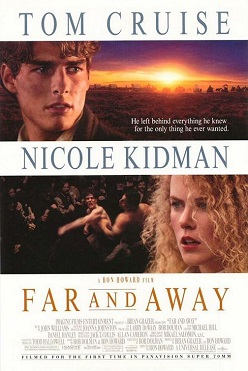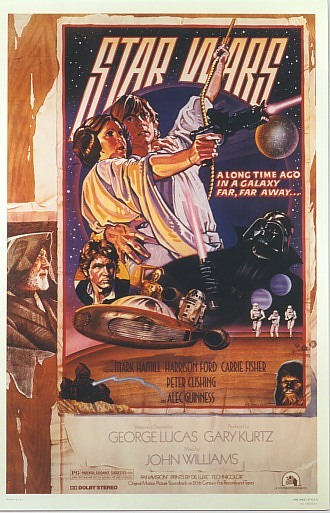
The year is 1892 and Joseph Donnelly (Tom Cruise) is a poor tenant famer in Ireland, used and exploited by the wealthy landowners. Joseph falls in love with Shannon Christie (Nicole Kidman), the rebellious daughter of his landlord. Shannon dreams of going to America, where rumor has it that land is being given away in the territory of Oklahoma on a first come/first serve basis. Shannon even has some valuable spoons that she can use to raise money once they arrive in America. Joseph, after being challenged to a duel by the Christies’ money manger, Stephen Chase (Thomas Gibson), also decides that heading to America might be a good idea.
Life in America is not as easy as Joseph and Shannon thought it would be. They first end up in the dirty town of Boston, where Shannon loses her spoons and Joseph works for a corrupt political boss (Colm Meaney) and makes money as a bare-knuckles boxer. They’ll reach Oklahoma eventually but not before Stephen and the Christies come to Boston and Joseph ends up working on the railroad and getting called “that crazy mick” multiple times.
Far and Away was Ron Howard’s attempt to make an American epic, in the style of John Ford. It doesn’t work because Tom Cruise is too contemporary to be believable as a 19th century Irish immigrant and Howard tries so hard to push everything to an epic scale that it just makes it even more obvious how slight and predictable the movie’s story is. Far and Away is full of big movie moments but it lacks the small human moments necessary to really engage its audience. I will always remembers Far and Away because it was one of those films that seemed to take up permanent residence on HBO when I was growing up. I didn’t really care about the film’s flaws back then. Nicole Kidman was attractive and tall and she had wild red hair and back then, that’s all a movie needed to hold my attention. Unlike Cruise, Nicole Kidman can effortlessly move between historical and contemporary films and, of the two leas, she comes off the best. The movie is really stolen, though, by Colm Meaney, playing a ruthless political boss who could have taught Boss Tweed a thing or two.
Tomorrow is St. Patrick’s Day, when we will be celebrating the legacy of immigrants like the Christies and the Donnellys. Far and Away tries to pay tribute to their courage and their refusal to give up, even when things were tough and deadly on the frontier. For me, though, Far and Away will always just make me think of HBO in the 90s.
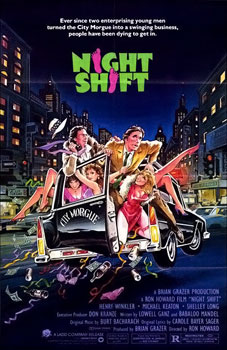
Chuck Lumley (Henry Winkler) was a Wall Street wizard until the stress of the job started to give him ulcers. He dropped out of the rat race, got a less stressful job as an attendant at a New York City morgue, and eventually met and became engaged to Charlotte (Gina Hecht). When Chuck’s supervisor decides to give Chuck’s day shift to his new guy, Chuck is promoted to the night shift. “He has the same last name as you,” Chuck says when he learns the about the new employee. “Yeah, I think he’s my nephew or something,” his supervisor replies.
Chuck finds himself working nights with “Billy Blaze” Blazejowski (Michael Keaton), a hyperactive “idea man,” who has so many brilliant plans that he has to carry around a tape recorder so he doesn’t forget them. A typical Billy Blaze idea is to battle litter by creating edible paper. Another one is to rent out the hearse as a limo and give rides to teenagers. Chuck may not be happy about his new shift or coworker but he is happy that he shares his new work schedule with his upstairs neighbor, Belinda Keaton (Shelley Long). Belinda is a high-class prostitute who first meets Chuck when she comes by the morgue to identify the body of her pimp. When Chuck discovers that Belinda needs a new pimp, he and Billy take on the job themselves, which brings them into conflict with not only the vice cops but also with Pig (Richard Belzer) and Mustafa (Grand L. Bush).
Raunchy but good-hearted, Night Shift has always been one of my favorite comedies. Along with being Ron Howard’s first movie for grown-ups, it also featured Michael Keaton in his first lead role. Keaton is both funny and surprisingly poignant as Billy. He’s hyperactive and impulsive and doesn’t think things through but his friendship with Chuck is real and later on in the movie, he reveals himself to have more depth than he lets on. Also giving good performances are Henry Winkler and Shelley Long, two performers better-known for their television work than their film roles. With his role here, Winkler proved that he was capable of playing more than just the Fonz. Shelley Long has probably never been better (or sexier) than she was in this film. The scene where she makes breakfast for Chuck is unforgettable. Even though she’s playing a stock character, the prostitute with a heart of gold, Shelley Long brings her own unique charm to the role and makes Belinda seem like a real person.
Night Shift starts out strong but falters slightly during its second hour, when Chuck and Billy seem to magically go from being nerdy morgue attendants to successful pimps overnight. Some of the violence feels out-of-place in what is essentially a buddy comedy with a dash of romance. It’s still a funny movie that is full of memorable one liners and good performances. As you might expect from Ron Howard, Night Shift is a surprisingly good-hearted look at the business of sex. Ron Howard has directed a lot of films since but few of them are as much fun as Night Shift.
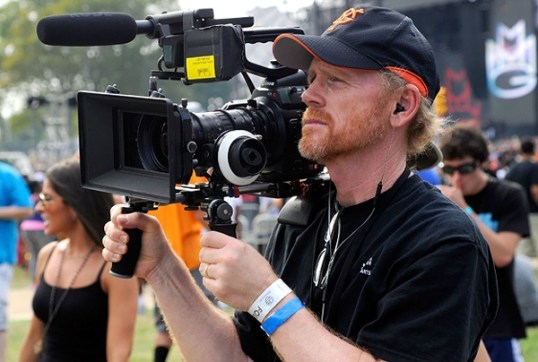
Today, the Shattered Lens wishes a happy birthday to director Ron Howard!
Ron Howard has been in the film business for his entire life, first as an actor and then as a director. He is perhaps the epitome of the mainstream, Hollywood film director and, as such, he doesn’t always get the credit that he deserves. He’ll never be considered an auteur but no matter! Ron Howard makes efficient and often entertaining films and, in this age of bloated budgets and self-indulgence, there’s something to be said for his professional approach.
Plus, he gave us this absolutely beautiful scene from 1995’s Apollo 13. In this scene, Jim Lovell (Tom Hanks) takes a look at the moon and, for a minute, thinks about what could have been. Though Lovell may dream of walking on the moon, he knows it won’t happen and that his only concern now is getting both himself and his crew back home. He’s a professional, much like Ron Howard himself.
This is a film that I think a lot of people expected to be an Oscar contender because it was directed by industry favorite Ron Howard, it was based on a genuinely moving best seller, and the cast included Amy Adams and Glenn Close, two actresses who are more than overdue for their first Academy Award. I don’t think anyone expected it to win much, largely because Ron Howard isn’t exactly the most groundbreaking director working in Hollywood, but it was still expected to be contender.
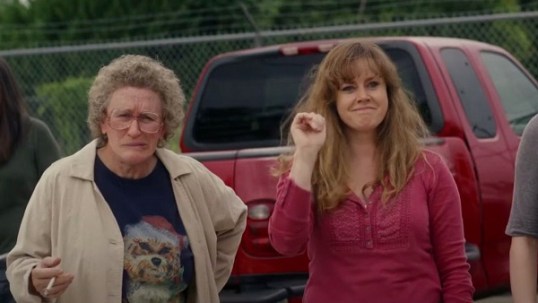
Even before it was released, there were a few signs that Hillbilly Elegy might not be the award-winning film that some were expecting. The first images from the film featured Glenn Close and Amy Adams looking like characters from some sort of ill-conceived SNL sketch. Then the trailer came out and it was so obviously Oscar bait-y and heavy handed that it was hard not to suspect that the film was trying just a bit too hard. By the time the film itself finally premiered in November, I think a lot of people were specifically waiting for their chance to skewer it.
Make no mistake about it, Hillbilly Elegy deserves a certain amount of skewering. Its a bit of a tonal mess and, far too often, it feels as if Ron Howard is inviting us to gawk at the film’s characters as opposed to showing them any sort of real empathy. Those critics who have claimed that the film occasionally feels like “poverty porn” have a point.
And yet, despite all of those legitimate complaints, I would argue that the film is partially redeemed by the performance of Glenn Close. Close plays Meemaw, who always seems to be carrying a lit cigarette and who has no hesitation about threating to beat the Hell out of her children and her grandchildren. Meemaw lives in a cluttered house that probably reeks of smoke. The TV is almost always on. Meemaw is a fan of Arnold Schwarzenegger. If you’ve ever wanted to hear Glenn Close say, “Hasta la vista, baby,” this is the film for you. Meemaw is a somewhat frightening character (during one flashback, she sets her drunk husband on fire) but she’s also the most caring character in the film. When it becomes obvious that her drug addict daughter, Bev (Amy Adams), is incapable of taking care of J.D. (played by Owen Aszatlos as a teen and Gabriel Basso as an adult), Meemaw essentially kidnaps J.D. and take him home with her. Close’s performance is undeniably theatrical but it works. She communicates that underneath all the bluster and the profanity and the anger and the cigarette smoke, Meemaw truly does love her family. Glenn Close transcends the film’s flaws and brings some real heart to the story.
Hillbilly Elegy opens with J.D. as a student at Yale Law School, hoping to get accepted for a prestigious summer internship. Meanwhile, all the other Ivy Leaguers treat J.D. like some sort of alien on display because he’s originally from Kentucky, he served in the army, and he went to a state school. Though ambitious and intelligent, J.D. still feels likes an outsider. When he goes to a banquet and discovers that he’ll be required to use different forks throughout the meal, he calls his girlfriend (Frieda Pinto) and gets a quick lesson on which fork to use when.
Unfortunately, before the meal even starts, J.D. gets a call from his sister, Lindsay (Haley Bennett), telling him that Bev has overdosed on heroin and is at the hospital. J.D. has to drive all the way to Ohio so that he can try to get his mother into a drug rehab. Because Bev doesn’t have medical insurance and would rather just stay with her good-for-nothing boyfriend, that turns out to be a bit more difficult than J.D. was anticipating. The film becomes a race against time to see if J.D. can get his mom taken care of and still make it back to Connecticut so that he can interview for a prestigious internship. Along the way, there are frequent flashbacks to Meemaw telling the young J.D. that he can be something better than just a hillbilly. All he has to do is try and not give up.
By structuring his film as a series of flashbacks, Ron Howard ensures that there’s really not any suspense about whether or not J.D. is going to be able to escape from Appalachia. Since we’ve already seen that the adult J.D. is going to be end up going to Yale, it’s hard to get worried when we see the teen J.D. smoking weed and hanging out with a bunch of losers. We know that J.D. is going to get over his adolescent rebellion and get his life straightened out. The film tries to create some tension about whether or not J.D. is going to be able to make his internship interview but, again, J.D. is going to Yale and living with Frieda Pinto. From the minute we see J.D., we know that he’s going to be just fine regardless of whether he gets that internship or not. In fact, his constant worrying about missing his interview starts to feel a bit icky. While Bev is dealing with her heroin addiction, Ron Howard is focusing on J.D. driving back to Connecticut as if the audience is supposed to be saying, “Oh my God, has he at least reached New Jersey yet!?” This is the type of storytelling choice that could only have been made by a very wealthy and very comfortable director. It reminded me a bit of The Post and Steve Spielberg’s conviction that, when it came to the decision to publish the Pentagon Papers, audiences would naturally be more interested in the owner of the newspaper than the people who actually did the work breaking the story. Here, Howard seems to be saying, “Yes, Bev might overdose and die having never reconciled with her son but the real tragedy is that J.D. might have to settle for his second choice as far as prestigious summer internships are concerned.”
Along with the story’s structural issues, the film also suffers because the usually wonderful Amy Adams is miscast as Bev. Adams acts up a storm as Bev but the performance itself a bit too obvious and on-the-surface. While Glenn Close disappears into the role of Meemaw, you never forget that you’re watching Amy Adams playing a character who is a bit more troubled than the usual Amy Adams role. You don’t think to yourself, “Oh my God, Bev is losing it.” Instead, you think, “Amy Adams sure is yelling a lot in this movie.” Somehow, Hillbilly Elegy makes Amy Adams feel inauthentic, which is something that, before I watched this film, I wouldn’t have believed to be be possible.
Aside from Glenn Close’s performance, Hillbilly Elegy doesn’t quite work and that’s a shame because I do think that a good film could have been made from Vance’s book. Unfortunately, Ron Howard doesn’t bring any sort of grittiness to the film’s depiction of what it’s like to be poor and forgotten in America. Instead, the film feels just a bit too slick. It attempts to be both a film about poverty and a crowd pleaser. When the movie should be showing empathy for its characters, it puts them on display. When it should be challenging the audience, it pats us on the back as if we should feel proud of ourselves merely because we spent two hours watching J.D. and his family. The film just doesn’t work. No wonder Meemaw prefers watching The Terminator.
The big news this month is that Respect will no longer be getting released in January. It’s been moved back so drop it from your Oscar predictions.
Here are my current predictions. Take them with grain of salt and all the rest. The more and more I think about it, the more annoyed I am with the Academy extending the eligibility window. With all of the biggest contenders delaying their opening for a year, that extension seems more and more silly.
To be honest, I’m starting to have my doubts whether the film industry, as we know it, will even exist in another year or so. I think eventually, we’ll just have a propaganda industry with the government subsidizing Hollywood on the condition that Hollywood only make certain types of films. It’s going to suck. The worst part is that most of the people who should speak out against that sort of thing won’t. So many critics have down the partisan rabbit hole that they’re now more concerned with keeping the politicians happy than with actually writing about movies.
Here’s the trailer for Ron Howard’s Hillbilly Elegy!
This film has been getting some Oscar buzz, which I guess you would expect from a film directed by Ron Howard and starring Glenn Close and Amy Adams. It’ll be released, by Netflix, on November 24th. I’m actually looking forward to it, just because I’ve got relatives who live a similar life to the people in this movie. To be honest, though, the trailer looks almost too Oscar bait-y. Sometimes, when it’s way too obvious that you’re going for the awards, it can backfire.
We’ll see. Amy Adams is one of my favorite actresses. I can’t believe she hasn’t already won an Oscar.
As of a few weeks ago, West Side Story is now officially out of this year’s Oscar race. Steven Spielberg’s musical was one of the many major studio productions to be moved all the way back to late 2021. So, scratch West Side Story from your lists, everyone. It’s gone for now.
The more I think about it, the more I think the Academy made a mistake extending the eligibility window. As you may remember, this year’s eligibility window now extends to February of 2021. When this was first announced, I felt that it was the Academy’s way of keeping the big studios happy. “You folks don’t want the Oscars to be dominated by streaming films,” the Academy seemed to be saying, “so we’ll just give you some extra time to get your movies out into the theaters.” Well, joke’s on the Academy because, even with the extended time period, it still looks like the Oscar race is going to be dominated by streaming titles.
Personally, I wish that the Academy would just admit they made a mistake and go back to the old eligibility window. Or, at the very least, just answer the question as to whether or not the 2021’s Oscar eligibility period is going to end at the end of December of that year or in February of 2022. I’m a big believer in having a set schedule so all this uncertainty is annoying the Hell out of me.
Anyway, with all that in mind, here are my updated predictions for September. After looking at these, feel free to check out my predictions for January, February, March, April, May, June, July, and August!
As this very strange year enters into the home stretch, it does seem like, almost despite itself, the Oscar picture is becoming a little bit clearer. The Venice and Toronto film festivals have announced their lineups. Theaters are tentatively reopening and, assuming that there isn’t a spike in moviegoers contracting the Coronavirus as a result, the majority of them could be reopen by December. For all the talk about how this year was going to be the Streaming Oscars, it’s totally possible that, with the eligibility window being extended to February and assuming theaters don’t have to close again, the Oscars could, once again, be dominating by traditional theatrical releases.
Anyway, here are my predictions for this month. Though the picture may have cleared a little, the year is still pretty uncertain so take these with a grain of salt. I imagine, over the next month, we’ll see a lot of movies scheduled for that January/February window of eligibility.
I’m making my monthly predictions on the assumption that most of these movies are even going to be released this year (and during the first two months of 2021). I may be making an even bigger assumption when I predict that they’ll even give out Oscars for 2020. Right now, it’s hard to know what’s going to happen.
But I am going to keep making these predictions because their fun to make and I believe that you do have to have some sort of normalcy in life. You can’t just say, “OH MY GOD, EVERYTHING’S SO NEGATIVE! I’M JUST GOING TO SIT IN FRONT OF TWITTER AND DRINK FOR THE REST OF MY LIFE!” I mean, don’t get me wrong. A lot of people are, in fact, saying and doing just that. It’s kind of sad to think about the number of people who I once liked but who I have still, over the past few months, muted because I’m just sick of all the drama. I suppose I could list them all here just to see if any of them are actually bothering to read my posts but …. no, no. This post is about the movies and the performers and the Oscars who make every year a special year.