Way back in 2004, both this music video and this song were favorites of mine. That said, even back then, I found myself wondering if I would still be attracted to a guy if he couldn’t stand up to his father. Lindsay and her boyfriend (Drew Fuller) have a lot of chemistry but, whenever his father shows up, the guy meekly leaves. Whenever I watch this video, I want the guy to punch out his father or, at the very least, for Lindsay to kick the old man in the groin. That’s probably not a very realistic expectation on my part, though. I mean, assault and battery? It really would be over!
Reportedly, this video was inspired by one of the worst films to ever win the Oscar for Best Picture, American Beauty. I’m holding on to hope that someday, Linsday will finally get her Oscar. Don’t scoff. Bigger comebacks have happened and, even in this somewhat overwrought video, Lindsay delivered a pretty good performance. Of course, someone’s going to have to take a chance and write a decent role for her. You’re not going to win an Oscar appearing in Netflix Christmas movies. Just ask Kurt Russell. He totally deserved the award for his performance as Santa Claus but he was snubbed not once but twice. Stupid Academy.
When this video came out, some of my friends thought Lindsay and her boyfriend were crazy for fooling around in a deserted trailer but I’m a country girl at heart so I thought it was sweet. Seriously, though, a deserted trailer can be the most romantic place on the planet under the right circumstances. I would caution everyone to just watch out for snakes because this one time, in Arkansas….
Welcome to Retro Television Reviews, a feature where we review some of our favorite and least favorite shows of the past! On Tuesdays, I will be reviewing the original Fantasy Island, which ran on ABC from 1977 to 1986. The entire show is currently streaming on Tubi!
This week, Robert Reed turns into a vampire!
Episode 2.13 “The Lady and the Longhorn/Vampire”
(Dir by Arnold Laven, originally aired on December 16th, 1978)
Tattoo is excited because Vera Templeton (Eva Gabor) is coming to the island. Vera is the glamorous owner of a cosmetics company and she is looking for a location to shoot a commercial for her makeup. Tattoo hopes that she’ll hire him to direct so he puts on a red beret to make him look more like a director. Mr. Roarke rolls his eyes, letting us know that he has no time for Tattoo’s foolishness. NOT THIS WEEK!
Actually, this turns out to be a very foolish week indeed. Vera Templeton is not just coming to the Island to shoot a commercial. She is on the verge of going bankrupt and needs to marry a rich man. She meets Hollis Buford, Jr. (Jack Elam), who wears a cowboy hat and picks his teeth and talks about the rodeo a lot but who is apparently a millionaire. He’s also supposed to be from Dallas. (I’m from Dallas and I can assure you that the cattle barons live in Fort Worth.) Vera flirts with Hollis by speaking in a painfully bad Southern accent. Vera and Hollis get engaged. Hollis seems to love Vera but Vera just wants his money and we are supposed to find this funny.
Vera’s bratty and annoying daughter (Tammy Lauren) doesn’t like Hollis, even though he seems like a perfectly well-meaning guy. So, she sells her stocks to Vera’s butler (Lloyd Bochner) and Vera marries her butler after telling Hollis that their marriage just won’t work out. “Dagnabbit,” Hollis says, “Now, I have to find another date to the rodeo.”
What an annoying fantasy. Not only did the humor fall flat but it was a bit mean-spirited as well.
Meanwhile, Leo Drake (Robert Reed) and his wife, Carmen (Julie Sommars) have come to the Island. Roarke explains that Leo is a method actor.
“That means he like to become the role that he plays,” Tattoo says, “Like Sylvester Stallone in Rocky.”
(And that is probably the only time in history that Robert Reed has even been compared to Sylvester Stallone.)
Leo has been cast in a remake of Dracula so he wants to live in an actual castle overlooking a village in Transylvania. Roarke obliges and soon, Leo is wandering the streets in the middle of the night and he’s developing fangs. Has he become a vampire or is the method getting the better of him? The villagers want to set him on fire but Roarke suggests that they just wait for the sun to rise. When the sun doesn’t destroy Leo, everyone realizes that he’s not a vampire and …. well, that’s that!
Yes, it’s painfully dumb but at least the episode features mild-mannered Robert Reed, with his gray perm and his aging porn star mustache, putting on a cape and wandering around a village at midnight. Reed is totally miscast but that gives this episode what little charm it has.
My fantasy is that next week’s episode will be better!
In 2014’s Road to the Open, Eric Roberts and John Schneider play, respectively, Tim and Rob Gollant.
The Gollant brothers are wealthy, smug, and athletic. At the local country club, they’re not only the best golf players but also the best tennis players. They’re the type who taunt their opponents while they’re losing. No one really likes the Gollant brothers but people put up with them because the Gollant brothers are extremely rich. When they tell you to get off of their bench at the club, it’s because it really is their bench. Their names are literally on the bench.
The Gollant Brothers aren’t exactly likeable but they are fun to watch, specifically because they’re played by John Schneider and Eric Roberts. Roberts and Schneider give perfect performances as two men who have never actually had to grow up. They’re the type of overage high school bullies who wouldn’t stand a chance in the real world but who, fortunately, can spend all of their time hiding out at their country club.
Of course, the Gollants are not the heroes of Road to the Open. Instead, they’re the obstacle standing in the way of Jerry McDonald (Troy McKay) and Miles Worth (Philip DeVova). Jerry and Miles are lifelong friends who enjoy playing tennis together. Overweight, balding, and mild-mannered, Jerry is not a typical athlete and he knows it. Haunted by the death of his wife and raising his daughter on his own, Jerry doesn’t so much fear losing as much as he fears letting everyone down. Miles, meanwhile, is a typical athlete, right down to the anger management issues. Fortunately, Miles has been seeing a somewhat eccentric therapist (Judd Nelson) and he may have finally learned how to control his temper.
There’s a lot of tennis in Road to the Open but, ultimately, it’s about Jerry and Miles’s friendship and Jerry trying to find the strength to move on with his life. Even though he meets and falls in love with Sam (Michelle Gunn), Jerry still feels as if he’s betraying the memory of his wife and, at times, he feels guilty for feeling any sort of happiness. There’s a lot of comedy to be found in Road to the Open but, ultimately, this film is a heartfelt and rather sweet testament to friendship and love. It’s also a well-acted film, with McKay, DeVova, and Gunn bringing a lot of likable energy to their roles.
I watched Road to the Open on Tubi. It turned out to be a nice surprise.
Previous Eric Roberts Films That We Have Reviewed:
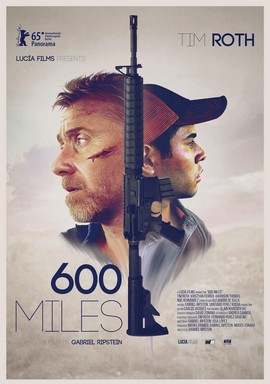
The 2015 film, 600 Miles, tells the story of two people, neither of whom is quite who he originally appears to be.
Arnulfo Rubio (Kristyan Ferrer) is the 18 year-old nephew of the head of one of Mexico’s drug cartels. Arnulfo’s job is to go across the border, purchases weapons in the United States, and then smuggle them back into Mexico. Arnulfo likes to think of himself as being an important member of his uncle’s cartel but it’s obvious that no one has much respect for Arnulfo. The other members of the cartel treat him like a errand boy. His uncle merely tolerates him, no matter how many times Arnulfo tries to impress him with his loyalty. His own mother doesn’t seem to want to have Arnulfo around the house. While Arnulfo takes the weapon smuggling very seriously, his American partner — who is himself just as trashy teenager — treats it all like a game. Arnulfo talks tough but whenever he’s confronted by the threat of real violence, Arnulfo starts to cry. Arnulfo may carry a gun and he may be committing crimes but he’s still the type of immature child who draws fake tattoos on his shoulders and who makes mean faces in front of a mirror.
When an ATF agent named Hank Harris (played by Tim Roth) attempts to arrest Arnulfo, Arnulfo’s American partner knocks Hank out and then takes off running. Not knowing what else to do, Arnulfo puts Hank in his truck and takes him into Mexico. After Hank mentions the names of the leaders of a rival cartel, Arnulfo decides that Hank could be a good intelligence asset to his uncle’s cartel. Arnulfo feels that kidnapping Hank will be the perfect way to win his uncle’s respect.
As for Hank, it’s hard not to notice that he doesn’t seem to be that upset about being tied up in Arnulfo’s truck. Whenever Arnulfo tries to order Hank to do something, Hank comes up with a perfect excuse for why he can’t to do it. When Arnulfo demands that Hank call his wife and lie about where he is, Hank replies that his wife is dead. Arnulfo believes Hank and, as they drive to his uncle’s house, the two of them even start to bond. Arnulfo never considers that his uncle might not want his nephew to give an ATF agent a guided tour of the cartel’s business. And, for his matter, Hank never tries to escape despite a number of obvious opportunities to do so.
It makes for a very tense film. The viewer knows that something bad is going to happen once Arnulfo finally reaches his uncle. The only question is what. For all of his tough talk, Arnulfo is way too trusting and the audience spends the movie waiting for the moment when it will be revealed whether Arnulfo’s bigger mistake was trusting his uncle or trusting Hank. Along the way, Arnulfo and Hank’s odd friendship becomes a fascinating metaphor for how the U.S. and Mexico view each other and themselves. The film was reportedly inspired by Operation Fast and Furious, the misbegotten government operation in which the United States gave guns to the cartels so that they could then prosecute the cartels for the deadly crimes committed with those same guns. Arnulfo cares about both the cartel and Hank but, in the end, one is left to wonder if any of them actually care about Arnulfo or if he’s just one of many pawns in their game.
Tim Roth and Kristyan Ferrer are both well-cast, with Roth bringing his trademark intensity to the role of Hank and Ferrer making Arnulfo into someone who secretly knows that he will never be the mastermind that he dreams of being. In the wrong hands, Arnulfo could have been a very annoying character but Ferrer plays him as being someone who knows that he’s in over his head and it’s hard not to feel sorry for him as his wishful thinking comes up against the harsh reality of his situation. The first 20 or so minutes of 600 Miles are dedicated to Arnulfo believing that he’s on top of the world. The remaining 60 follow him as he comes to realize that the opposite is true.
600 Miles is as timely today as when it was first released. It’s a film that I recommend to anyone trying to understand what’s happening down on the border.
For today’s music video of the day, Hilary Duff says that you’re so yesterday!
Personally, I’ve always liked Hilary Duff and I think she’s underrated as both a singer and an actress. For instance, The Haunting of Sharon Tate was a problematic film on several levels but Hilary Duff’s performance in the title role made the film several times better than it probably had any right to be. Add to that, Hilary Duff is a Texas girl, just like me! Texas girls support each other.
Texas plays a role in this video. Hilary breaks up with her boyfriend, who appears to be a Galveston surfer. When he leaves his Don’t Mess With Texas t-shirt on the beach, Hilary steals it and then takes it around the town and basically gets everyone to pose while wearing it. Good for her! This is a fun, revenge-filled video. Hilary Duff lets her ex know that he is “so yesterday,” and his t-shirt looks better on a random skater dude than it does on him. Take that!
I’ve been asked if Don’t Mess With Texas is something that is really said down here and the answer is that it is. Don’t Mess With Texas started out as an anti-littering slogan but it has since been transformed into a catch-all phrase that can be used for almost any situation. For instance, whenever we talk about all of the Yankees that have been moving down here, we always agree that they better live by the slogan. Remember why you left your old state and don’t mess with Texas.
Welcome to Retro Television Reviews, a feature where we review some of our favorite and least favorite shows of the past! On Mondays, I will be reviewing Hang Time, which ran on NBC from 1995 to 2000. The entire show is currently streaming on YouTube!
It’s time to start season 4!
Episode 4.1 “A Whole New Ballgame”
(Dir by Miguel Higuera and Patrick Maloney, originally aired on September 12th, 1998)
It’s a brand new school year! Teddy, Vince, and Danny have all graduated, with Teddy and Vince going to Southern Florida University and Danny going to NYU to pursue his stand-up career. Despite the fact that Julie and Mary Beth were in the same grade as Danny with the show began, they’re both still students at Deering High, along with Michael Manning and Kristy.
And, of course, Coach Fuller is gone. He’s now coaching at Southern Florida University. For the first three seasons of the show, Coach Fuller was played by Reggie Theus. Reggie Theus was a stiff actor but he was a former basketball player and he was believable whenever Fuller discussed the mechanics of the game with his players. As stiff as Theus was, it was still easy to believe him as an inspiring basketball coach. Replacing Coach Fuller is Mike Katowinski. Mike is played by Dick Butkus, a former football player who looks and sounds like a former football player. From the minute he appears, it’s hard to buy him as a basketball coach, despite the fact that Julie mentions that Coach Katowinski coached the Houston Rockets for 20 years. As I watched Coach K, I found myself wondering why Deering didn’t give the job to that assistant coach who appeared in two episodes during the third season.
(Add to that, what type of loser goes from coaching an NBA team to coaching a high school basketball team?)
Along with a new coach, this episode introduces some new players, all of whom are suspiciously familiar substitutes for the actors who have left the show. Nick Hammer (Mark Famiglietti) is cocky and confident and, despite the fact that she’s still dating Michael, it’s pretty obvious that he’s being set up as Julie’s next love interest. Rico Bosco (James Villani) is short and dumb, like Vince. Silk Hayes (Danso Gordon) is a thinner version of Teddy. Silk tells us that he’s called Silk because he’s “smooth on the court and off …. with the ladies!”
Things get off to a bad start between the new Coach and Julie when Julie starts to suspect that the Coach is going easy on her because she’s a girl. The main reason she thinks this is because the Coach tells her that he’s going easy on her because she’s a girl. Julie attempts to prove that she’s just as good as the boys by practicing super-aggressively and knocking everyone down. “Don’t worry,” the Coach tells Hammer, “it’s probably just a female thing.” Julie storms out of the gym, as she had every right to do. (Wow, is this the first time that I’ve liked Julie since this series began? I think it may be.) Later, Julie attempts to talk to the Coach about his attitude and he responds by sending her to the school nurse. Julie resents the Coach assuming that all of her behavior is period-related but she does appreciate the nurse sending her home early. As someone who used to fake cramps to get out of gym class on a daily basis, I related.
Julie then shows up at practice dressed in an apron and carrying a plate of cookies. In her words, she’s behaving acting the way coach expects her to act. This leads to Julie getting put on the B-team and not being listed as a starter. Coach explains that it’s not because Julie is a girl. It’s because “you’re a weird girl.” Fortunately, Julie does well-enough in practice that she’s promoted to starter. The audiences goes crazy.
While all of this is going on, Mary Beth tries to come to terms with no longer having a boyfriend. Come on, Mary Beth — it was just Vince!
With this episode, the fourth season got off to a rocky start, with a miscast Coach and a set of new players that just don’t seem to have as much personality as the players they replaced. Would things improve in the second episode of the season?
Let’s find out.
Episode 4.2 “Team Players”
(Dir by Patrick Maloney, originally aired on September 12th, 1998)
Uh-oh, the team’s just not coming together! Mostly it’s Michael and Julie’s fault, because they think that they’re too good for the new players. After Hammer overhears Michael telling Julie that the new team sucks, he tells all of the other players. During the first game of the season, the Tornadoes struggle during the first half but, after realizing they have to work together, they stage a comeback and win in the second half. Wow! JUST LIKE EVERY OTHER GAME THEY’VE EVER PLAYED! After the game, Julie says that this new team might even be better than last year’s team. Uhmm …. no. Sorry, Julie, no. Last year’s time had Danny. None of these new guys can compare to Danny.
In the B-plot, Mary Beth tries too hard to get the Coach to like her. Through a series of unlikely events, she knocks a hole in the wall of his office and she and Kristy has to fix it during the game. Megan Parlen and Amber Baretto are a good comedy team and it’s always a lot of fun when Mary Beth is flustered at the thought of having to do actual work. Unfortunately, the situation is not quite as funny without Reggie Theus’s looking stunned at whatever it is that Mary Beth has done. As played by Dick Butkus, Coach K. is just a bit too angry and gruff to be a good comedic foil. Whenever he gets annoyed with something, he looks like he’s about to tackle someone and break their ribs.
Season 4 is off to a rough start! Hopefully, things will get better next week.
Oosh and Doosh, the stars of Polk County Pot Plane
First released in 1977, Polk County Pot Plane tells the story of Oosh (Don Watson) and Doosh (Bobby Watson), two brothers who have the long hair, country accents, and full beards of two guys who made most of their life decisions at a Lynard Skynard concert and who haven’t looked back since.
Oosh and Doosh spend most of their time hanging out in the mountains of Northern Georgia. They pass the time drinking beer, smoking weed, and driving too fast. Oosh and Doosh do have a job, of course. The Dixie Mafia pays them to help unload all of the marijuana that is transported on a plane that regularly lands in the mountains. The plane is nicknamed Big Bird and it even gets its own credit at the start of the film.
The opening credits also inform us that the pilot of Big Bird was played by an actor named Big Jim.
At the start of the film, Oosh and Doosh are unloading the plane but, unbeknownst to them, the cops have followed them out to the landing area. When the cops finally make their presence known, Big Jim and the plane are able to escape but Oosh, Doosh, and two other hippies are arrested (and their RV practically destroyed) after a long chase.
With Oosh and Doosh in the county jail, the word goes out to all the drug kingpins, which is to say that there is a lengthy montage of people picking up the phone and explaining the situation over and over again. Eventually, a helicopter lands on top of the jail and Oosh and Doosh are able to make their escape. The helicopter flies over Georgia with Oosh and Doosh literally clinging onto the bottom of it.
This scene was filmed without stunt people. That really is Don and Bobby Watson hanging onto that helicopter and the scene is also makes it clear that the helicopter really was flying high above a small town with the two actors dangling underneath. If either Don and Bobby Watson had lost their grip, they would have basically plunged to their death. On the one hand, you might wonder how the Watsons were convinced to risk their lives for a film called Polk County Pot Plane. On the other hand, the scene is a hundred times more effective than one might expect precisely because the risk was real.
In fact, not a single professional stunt person was used in Polk Count Pot Plane. All of the stunts were done by the members of the cast, the majority of whom appear to have been amateurs. The sheriff who locks up Oosh and Doosh apparently was an actual sheriff. Big Jim actually was a pilot. While there isn’t much information available about the Watson brothers, their country stoner vibe feels authentic from the start. For almost the entire cast, this was their first and only film. What they lacked in experience, they made up for in authenticity.
There’s not much of a plot to Polk County Pot Plane, though it was reportedly based on a true story. Oosh and Doosh get out of jail and find themselves being ordered to transport more drugs. They also rip-off their bosses and, in the end, there’s an attempt to steal the plane itself. For the most part, the film exists so that the police can chase Oosh and Doosh and several cars can be destroyed in the process. The minute that we see a group of people trying to transport a house from one location to another, we know that someone’s going to end driving through it and destroying the whole thing. That’s the type of movie that Polk CountyPot Plane is. It’s low-budget, it doesn’t always make a lot of sense, and it’s definitely amateurish.
And yet, it’s also entertaining and rather likeable. The amateur vibe helps. Because the Watson brothers appears to have essentially been playing themselves, the film at times has a documentary vibe. For all of the silly comedy and the mumbled lines (with the Watsons especially sounding like King of the Hill‘s Boomhauer at times), it’s hard not to feel that this film probably gets close to the truth of what it was like to smuggle marijuana in the Deep South during the 1970s. The combination of car crashes and the film’ s stoner vibe becomes rather fascinating.
Polk County Pot Plane was also released under the title In Hot Pursuit. It can be found in several Mill Creek box sets and on YouTube!
That’s a question that’s been raised by a lot of different people over the past few years. Some people claim that MAGA is a cult. Others claim that Wokeism is a cult. One need only go on twitter to discover cults devoted to celebrities. There was a crazy woman named Emma who literally spent 8 years searching twitter for any critical reference to Garrett Hedlund so that she could personally attack whoever made the comment. I once made a rather mild joke about Jennifer Lawrence’s habit of falling at award shows and, almost immediately, I started getting angry replies from people who had J Law as their profile pick. Once upon a time, the Beliebers ruled the twitter wastelands. Then it was the One Direction stans. Now, people have to be very careful about what they say about Taylor Swift and Timothee Chalamet. What makes people devote their lives to blindly defending celebrities and politicians who don’t even know (or care) that they’re alive?
In the HBO docuseries, The Vow, Mark Vicente (a former leader of the NXIVM cult) declared that “Nobody joins a cult!” His point was that no one willingly joins a cult. Instead, they get involved because they’re looking for something that is missing in their lives and, sometimes, this leaves them vulnerable to being manipulated by whoever is in charge of the cult. Vicente’s argument was that it could happen to anyone. The subtext, of course, was that Vicente was saying, “It even happened to me and look how smart I am!”
(It’s the same thing that one tends to hear from former members of Scientology. “Sure, all of the stuff about Xenu didn’t make any sense and the average child would have seen through it but I fell for it so that means anyone could have fallen for it!”)
My own personal opinion is that most people join cults because they’re incredibly dumb and don’t have the confidence necessary to think for themselves. That may sound harsh but I really do think that this is a case where it’s helpful to remember the law of parsimony. It’s tempting to come up with all sorts of complex theories to try to explain why people join cults but the simplest answer is that people joins cult because they’re dumb. I think sometimes we spend so much time exploring the lives of those who join cults that we tend to forget that the majority of people are smart enough not to.
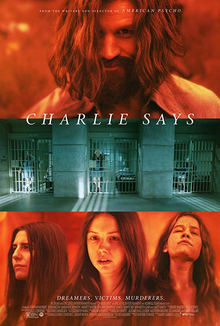
This was something that I found myself thinking about as I watched the 2018 film, Charlie Says. Charlie Says is one of the many recent films to explore how a grubby ex-con named Charles Manson (Matt Smith) was able to brainwash a group of hippies and turn them into his own personal army of murderers. Charlie Says opens with Leslie Van Houten (Hannah Murray), Patricia Krenwinkel (Sosie Bacon), and Susan Atkins (Marianne Rendon) already in prison for the Tate-LaBianca murders. A social worker named Karlene Faith (Merritt Weavers) is assigned to teach them college classes but Karlene is more concerned with trying to break the mental-hold that Manson continues to have over the three women.
The film is full of flashbacks to life at the Spahn Ranch with Charles Manson. All of the expected details are included. Charles Manson plays his guitar and talks about letting go of one’s ego. A dazed Tex Watson (Chace Crawford) wanders around in the background, eager to prove that he truly is a member of the Family. Blind George Spahn gets a handjob from Squeaky Fromme. The women search through dumpsters for food. The orgies give way to violence as Manson realizes that he’s never going to be a rock star. Everyone at Spahn Ranch is happy until they aren’t.
Both the film and Karlene speculate as to how Charles Manson managed to brainwash the women who lived at the Ranch. The film suggests that it was a combination of drugs, Manson’s own skills as a con man, and the fact that most of Manson’s followers were so eager to escape the patriarchal system under which they grew up that they didn’t realize that they had wandered right into another. Of course, it could also be that Manson’s followers were just extremely stupid. One thing that I have discovered from reading about Manson is that, while there was many people who decided to follow him, there were even more who took one look at him and Spahn ranch and who, much like Brad Pitt in Once Upon A Time In Hollywood, left as quickly as they could.
(One of the more interesting things about the online reaction to Once Upon A Time In Hollywood were the complaints that the film’s finale was misogynistic due to the violent deaths of the Manson followers. Personally, I’m against the death penalty. I view it as a classic example of putting too much trust in the government. However, knowing what was done to Sharon Tate, I had no problem with Leonardo DiCaprio setting Susan Atkins on fire with his flame thrower.)
Mary Harron has directed many good films, including I Shot Andy Warhol, American Psycho, The Notorious Bettie Page, and The Anna Nicole Story. Unfortunately, Charlie Says often feels like it’s meant to be a parody of all the other films about Charles Manson. Some of that may have been unavoidable. The horrific nature of their crimes has often overshadowed the fact that Manson and the Family were a ludicrous group of people. Take out the crimes and they were essentially the real-life version of those dumbass commune dwellers in Easy Rider, the one who were trying to grow food in the desert. Indeed, one of the smartest thing that Tarantino did with Once Upon A Time In Hollywood was that he used Manson and the Family sparingly. As CharlieSays shows, the more time that a film spends with Manson, the more difficult it is to feel that the members of the Family are worth much consideration. For the most part, the film follows Leslie Van Houten as she goes from being an insecure teenager to being a brainwashed murderer but, despite a strong performance from Hannah Murray, it doesn’t offer up much insight (beyond her own stupidity) as to how and why Leslie was so easily seduced into life at the ranch.
On the plus side, Matt Smith does a good job as Charles Manson, playing him as being a natural born con man. As played by Smith, Manson is someone who knows how to use his hippie image to his advantage and who also knows how to read people. The question about Manson has always been whether he believed all of his Helter Skelter nonsense or if he was just a criminal mercenary. (The author Ed Sanders, who wrote The Family and spent years researching Manson, was of the opinion that Manson was far more well-connected with the leaders of Los Angeles’s organized crime scene that his hippie image might have suggested.) Charlie Says suggests that Manson was a con man who ultimately made the mistake of believing his own con.
As far as Manson films go, Charlie Says doesn’t add much that hasn’t already been said. Personally, I could do without anymore Manson films. There’s nothing left to be learned from his horrific crimes. Allow Once Upon A Time In Hollywood to be the last word on what the Family was and how they deserved to go out.
First released in 1971, Drive, He Said tells the story of two college roommates.
Hector (William Tepper) is a star basketball player who everyone expects to turn pro. His intense coach (Bruce Dern) is always yelling at him to stop fooling around on the court but Hector is more interested in fooling around elsewhere as he’s having an affair with Olive (Karen Black), the wife of a self-styled “hip” philosophy professor named Richard (Robert Towne).
Gabriel (Michael Margotta) is Hector’s best friend. They live together, even though Hector’s coach thinks that Gabriel is a bad influence. Gabriel is a self-styled campus radical. He has a devoted group of followers who will do just about anything that he tells them to do. Gabriel is big into guerilla theater and symbolic protests. Nothing he does seems to add up too much but, unlike Hector, he’s good at giving speeches.
Together, they worry about the draft!
Of course, they’re both worrying about two different types of drafts. Hector is worried about the NBA draft and whether he should enter it. He’s been playing basketball for as long as he can remember. The only thing that he’s really good at is playing basketball. And yet, Hector isn’t sure if he wants to spend the rest of his life taking orders from his coaches and devoting every minute to playing the game. However, Hector’s worked himself into a corner. When one NBA official asks him what he’s going to do if he’s not drafted, Hector admits that he doesn’t know. When asked what his major is, Hector replies, “Greek.”
Gabriel, on the other hand, is worried about being drafted into the military and being sent to Vietnam. Gabriel considers himself to be a revolutionary but it soon becomes clear that he really doesn’t have much of a plan for how to start his revolution. Indeed, the film suggests that his activism is more about his own insecurity over his own sexuality than anything else. Gabriel particularly seems to be obsessed with Hector’s affair with Olive. While Hector reaches new highs on the court, Gabriel comes closer and closer to having a psychotic break.
Director Jack Nicholson found a way to work in shout out to his friend, Harry Dean Stanton
Drive, He Said was one of the many “campus rebellion” films that were released in the early 70s and, much like Getting Straight, it’s definitely a product of its time. Today, it it’s known for anything, it’s for being the directorial debut of actor Jack Nicholson. (Nicholson has said that, before he was cast in Easy Rider, he was actually planning on abandoning acting and pursuing a career as a director.) The film features many of the flaws the are typically present in directorial debuts. The pacing is terrible, with some scenes ending too quickly while others seem to go on forever. At times, the film feels a bit overstylized as Nicholson mixes jump cuts, odd camera angles, and slow motion to little effect. It’s very much a film about men, so much so that the film’s ultra-masculinity almost verges on self-parody.
And yet, there are moments of isolated brilliance to be found in Drive, He Said. Some of the shots are genuinely impressive and the army induction scene shows that Nicholson could direct comedy, even if he does let the scene drag on for a bit too long. Though Nicholson doesn’t appear in the film, his approach to the story features his trademark cynicism and sense of fatalism. Though he was often associated with the counterculture, Nicholson was more a member of the Beat generation than of the hippies. As such, Drive, He Said has more in common with Jack Kerouac than Abbie Hoffman. Drive, He Said is definitely an anti-establishment film but, at the same time, it doesn’t make the mistake of glorifying Gabriel or his followers. Gabriel, with his constant demand that everyone join him in his ill-defined revolution, is almost as overbearing as basketball coach and, towards the end of the film, he commits an act of violence that leaves no doubt that his “revolution” is all about his own self-gratification. The film is less a polemic and more a portrait of people trying to find their identity during a time of political and cultural upheaval.
The film’s biggest flaw is that neither William Tepper or Michael Margotta really have the charisma necessary to carry a movie, especially one in which even the main characters often do unlikable things. Tepper is dull while Margotta overacts and, at times, comes across as if he’s trying too hard to imitate his director. It falls to the film’s supporting cast to provide the energy that Tepper and Margotta lack. Fortunately, Bruce Dern and Karen Black are both perfectly cast. Bruce Dern seems to be having a blast as the fanatical basketball coach while Karen Black brings a fierce intelligence to the role of Oliva, an intelligence that one gets the feeling wasn’t really in the original script. Considering how misogynistic every other character in the film is, it’s impossible not to cheer when Olive announces, “I’m not going with anybody, anywhere.”
(For whatever reason, there was a definite strain of misogyny that seemed to run through the majority of the late 60s and early 70s counterculture films. Just consider the amount of time Getting Straight devoted to Elliott Gould shouting at Candice Bergen.)
Drive, He Said is flawed but interesting. As a director, Nicholson understood how to frame a shot but he wasn’t quite sure how to tell a cohesive story. That said, the film itself is a definite time capsule of a very specific cultural moment.
In today’s music video of the day, Britney Spears gets to live every film lover’s dream!
Before I selected this video for today’s music video of the day, it had been a while since I had watched it and I have to admit that I had forgotten that this song was actually written for The Smurfs. When the video started, I thought Britney and her children were watching a deliberately cheesy send-up of Harry Potter and I was like, “Well, that’s clever!”
But then Britney got transported into the movie and that’s when I saw all of the little blue people around her feet. Imagine how different this video would have been if Britney had accidentally stepped on the Smurfs and left a trail of blue gore in her wake. Some in the audience would have cheered but I imagine others would have been traumatized. Myself, I don’t know how I would have reacted as I find the Smurfs to be kind of creepy but, at the same time, I wouldn’t want Britney to have a Smurf massacre on her conscience. In the end, we should just be happy that things worked out for the best.