10 Oscar Snubs From the 1940s


Ah, the 40s! For most of the decade, the world was at war and the Academy’s nominations reflected that fact. The best picture lineups alternated between patriotic films that encouraged the battle against evil and darker films that contemplated both the mistakes of the past and what threats might be waiting in the future.  With the Academy being even more aware than usual that films and awards could be used to send a message, the snubs continued.

1940: John Carradine Is Not Nominated For The Grapes of Wrath

John Carradine’s first credited film appearance was in 1930 but Carradine himself claimed that he had appeared as an uncredited extra in over 70 films before getting that first credit.  Carradine would continue to work until his death 58 years later.  John Carradine did so many films that he was still appearing in new releases in the 90s, years after his death.  He appeared in over 234 films and in countless television shows.  He was a favorite of not only Fred Olen Ray’s but also John Ford’s.

Unfortunately, Carradine was never nominated for an Oscar, despite the fact that he did appear in some classic films.  (He also appeared in a lot of B-movies, which is perhaps one reason why the Academy was hesitant to honor him.)  Personally, I think Carradine most deserved a nomination for playing “Pastor” Jim Casy in John Ford’s The Grapes of Wrath.  Carradine is ideally cast as the former preacher turned labor activist.  When he’s alive, he gives the Joads hope.  When he dies, both the Joads and the audience start to realize how difficult things are truly going to be.

1942: Ronald Reagan Is Not Nominated For Best Supporting Actor For Kings Row

Kings Row is an enjoyably over-the-top small town melodrama and future President Ronald Reagan is fantastic in the film, with his natural optimism providing a nice contrast to the truly terrible things that happen to him and his loved ones over the course of the film.  Reagan was not nominated for this performance, the one that both he and the most of the critics agreed was his best, but he should have been.

1943: Hangmen Also Die Is Not Nominated For Best Picture

Fritz Lang’s anti-Nazi classic was not nominated for Best Picture and only received two nominations (for Sound and Score).  That year, the Best Picture winner was another anti-Nazi classic, Casablanca.

1943: Shadow Of A Doubt Is Ignored

Today, it is recognized as one of Hitchcock’s best but, in 1943, Shadow of a Doubt couldn’t even score a nomination for Joseph Cotten’s wonderfully diabolical turn as Uncle Charlie.  One gets the feeling that the film’s satirical jibes at small town America and its theme of evil hiding behind a normal façade were not what the Academy was looking for at the height of World War II.  It’s a shame because, in many ways, Cotten’s Uncle Charlie was the perfect symbol of the enemy that the Allies were fighting.

1944: Tallulah Bankhead In Not Nominated For Best Actress For Lifeboat

Unlike Shadow of a Doubt, Hitchcock’s Lifeboat received several Oscar nominations.  However, Tallulah Bankhead was not nominated for Best Actress.  Perhaps the Academy was scared of what she might say if she won.

1944: Fred MacMurray and Edward G. Robinson Are Not Nominated For Double Indemnity

For all the nominations that this classic noir received, somehow neither Fred MacMurray nor Edward G. Robinson were nominated for their roles.  Both actors are brilliantly cast against type in this film.  MacMurray uses his trademark casual glibness to portray Walter Neff as being an arrogant man who is hardly as clever as he thinks that he is.  Meanwhile, Robinson’s more introspective performance leaves you with little doubt that, if anyone can solve this case, it’s him.  While Barbara Stanwyck was (rightfully) nominated, it’s had to believe that both MacMurray and Robinson were snubbed.

1946: Thomas Mitchell and Lionel Barrymore Are Not Nominated For Best Supporting Actor For It’s A Wonderful Life

As wonderful as James Stewart and Donna Reed are, it just wouldn’t be Bedford Falls without Uncle Billy and Mr. Potter!  Thomas Mitchell breaks your heart in the scene where he tries to remember what he did with the lost money.  And, for audiences who had just lived through the Great Depression, Lionel Barrymore represented every businessman who cared more about money than people.  It’s impossible to imagine the film without them …. or without Henry Travers, for that matter!  Seriously, very few films have received three best supporting actor nominations but It’s A Wonderful Life deserved to be one of them.

1948: Humphrey Bogart Is Not Nominated For Best Actor For The Treasure of the Sierra Madre

The Treasure of the Sierra Madre received four Oscar nominations.  Somehow, not one of those nominations was not for Humphrey Bogart.

1948 and 1949: Red River, Fort Apache, and She Wore A Yellow Ribbon Are Not Nominated For Best Picture

The public may have loved Westerns but the Academy largely shied away from them, with a few notable exceptions.  Howard Hawks’s Red River and John Ford’s Fort Apache and She Wore A Yellow Ribbon are today all recognized as being classic Hollywood films.  However, the Academy, then at the height of its bias towards “genre” films, didn’t honor any of them.

1949: James Cagney Is Not Nominated For Best Actor For White Heat

“Top of the world, ma!”  Maybe so, but not top of the Oscars.  The Academy was always more interested in honoring Cagney for being a song-and-dance man than for honoring him for his iconic gangster roles.

Agree?  Disagree?  Do you have an Oscar snub that you think is even worse than the 10 listed here?  Let us know in the comments!

Up next: Get ready to hate the commies and to love Ike because the 50s are coming!

10 Oscar Snubs From The 1930s


Ah, the 1930s. America was mired in the Great Depression. FDR was plotting to pack the courts.  The American public, sick of playing by the rules and getting little in return, began to admire gangsters and outlaws.  The horror genre became the new way to vent about societal insecurity. In Europe, leaders were trying to ignore what was happening in Italy, Spain, and Germany. As for the Academy, it was still growing and developing and finding itself. With people flocking to the movies and the promise of an escape from reality, the Academy Awards went from being an afterthought to a major cultural event.

And, of course, the snubs continued.

1930 — 1931: Crime Doesn’t Pay For Little Caesar and The Public Enemy 

When people think about the 1930s, gangsters are probably one of the first things that come to mind.  In the 30s, audiences flocked to movies about tough and streetwise criminals who did what they had to do in order to survive during the Depression.  Unfortunately, the Academy was not always as quick to embrace the gangster genre.  Though The Public Enemy did pick up a nomination for its screenplay, both it and Little Caesar were largely ignored by the Academy.  Not only did the films fail to score nominations for Best Picture but neither James Cagney nor Edward G. Robinson would be nominated for bringing their title characters to life.  It’s a crime, I tells ya.

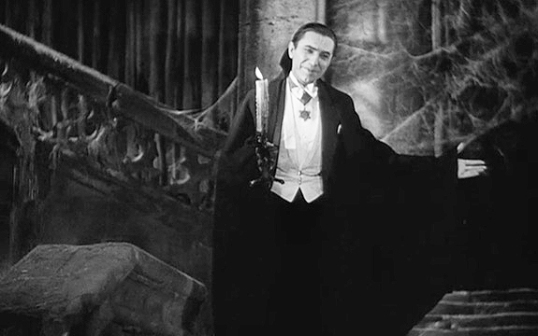
1930 — 1931: Bela Lugosi Is Not Nominated For Best Actor For Dracula

Admittedly, the 1931 version of Dracula is a bit of a creaky affair, one that feels quite stagey to modern audiences.  But Bela Lugosi’s performance in the title role holds up well, despite the number of times that it has been parodied.  Unfortunately, from the start, the Academy was hesitant about honoring the horror genre.

Frankenstein (1931, dir by James Whale)

1931 — 1932: Boris Karloff Is Not Nominated For Best Actor For Frankenstein

Again, the Academy snubbed an iconic horror star.  Not only was Boris Karloff not nominated for Frankenstein but the film itself was not nominated for Best Picture, despite being infinitely better than at least one of the 8 films that were nominated.  (That film, by the way, was Bad Girl.  When is the last time that anyone watched that one?)  In fairness to the Academy, they did honor one horror film at that year’s awards.  Fredric March won Best Actor for Dr. Jekyll and Mr. Hyde.  Of course, he also tied with Wallace Beery, who was nominated for The Champ.  Obviously, the Academy still had to work out its feelings towards the horror genre, a process that continues to this very day.

1932 — 1933: King Kong Is Not Nominated For Best Picture

Oh, poor King Kong.  Film audiences loved him but the Academy totally ignored both him and his film.  Unfortunately, back in 1933, the Academy had yet to introduce a category for special effects.

1932 — 1933: Duck Soup Is Ignored By The Academy

King Kong was not the only worthy film to be ignored at the 1932-1933 Oscars.  The Marx Brothers’s greatest film also went unnominated.

1934: The Scarlet Empress Is Not Nominated For Best Picture

Josef von Sternberg’s surreal historical epic was totally ignored by the Academy.  Not only did it miss out on being nominated for Best Picture but the sterling work of Marlene Dietrich and Sam Jaffe was ignored as well.  How was the opulent set design ignored?  How did it not even pick up a nomination for costume design?  My guess is that Paramount chose to promote Cleopatra at expense of The Scarlet Empress.  Either the way, the Best Picture Oscar was won by one of my favorite films, It Happened One Night.

1935: Fred Astaire and Ginger Rogers Are Not Nominated For Top Hat

Top Hat scored a best picture nomination but the film’s two stars went unnominated.

1936: My Man Godfrey Is Nominated For Everything But Best Picture

My Man Godfrey, a classic screwball comedy, was nominated for Best Actor, Best Actress, Best Supporting Actor, Best Supporting Actress, Best Director, and Best Screenplay but somehow, it was not nominated for Best Picture.  It’s a shame because My Man Godfrey, along being a very funny movie, is also a film that epitomizes an era.  Certainly, it’s far more entertaining today than the film that won Best Picture that year, The Great Ziegfeld.  (Interestingly enough, William Powell played the title role in both Godfrey and Ziegfeld.)

1937: Humphrey Bogart Is Not Nominated For Best Supporting Actor in Dead End

Dead End featured one of Bogart’s best gangster roles.  As a gangster who returns to his old neighborhood and is rejected by his own mother, Bogart was both menacing and, at times, sympathetic.  Like Cagney and Robinson, Bogart definitely deserved a nomination for his portrayal of what it was like to live a life of crime.  Unfortunately, Bogart was an actor who was taken for granted for much of his career.  It wasn’t until he played Rick Blaine in Casablanca that the Academy would finally nominate him.

The Adventures of Robin Hood (1938, dir by Michael Curtiz)

1938: Errol Flynn Is Not Nominated For Best Actor In The Adventures of Robin Hood

This is truly one of the more shocking snubs in Academy history.  Errol Flynn’s performance as Robin Hood pretty much set the standard for every actor who followed him.  Russell Crowe is undoubtedly a better actor than Flynn was but Crowe’s dour interpretation of Robin could in no way compete with the joie de vivre that Flynn brought to the role.

Agree?  Disagree?  Do you have an Oscar snub that you think is even worse than the 10 listed here?  Let us know in the comments!

Up next: 1940s, in which Hollywood joins the war effort and the snubs continue!

Dead End (1937, dir by William Wyler)

4 Oscar Snubs From the 1920s


The Oscars started out as an afterthought.

When Louis B. Mayer first proposed setting up what would become the Academy of Motion Picture Arts and Sciences in 1927, he wasn’t really that interested in giving out awards. Instead, he saw the Academy as an organization that would mediate labor disputes between the studios and the unions. He also felt that the Academy could basically be used to improve the film industry’s image, which had taken a hit from the rape trial of Fatty Arbuckle, the overdose of Wallace Reid, and the murder of William Desmond Taylor. When he and the other 35 founders of the Academy met to draw up the organization’s charter, the idea of giving out awards was mentioned only in passing. A committee would be set up to give out yearly awards to honor the best that Hollywood had to offer.

The first Academy Awards ceremony was held in a hotel ballroom in 1928. It occurred at the end of a private dinner and the awards were handed out in 15 minutes. The 2nd ceremony was the first to be broadcast on the radio. It was only when the Academy got around to the third ceremony that the Oscars started to transform into the spectacle that we know today. It was only then that people started to really pay attention to what was and was not nominated for Best Picture.  And, as people started to pay attention, they also started to notice and talk about which films and performers were snubbed by the Academy.

Today, for Oscar Sunday, we’re taking a a decade-by-decade look at some notable Oscar snubs. We will start with those first three ceremonies.

1927 — 1928: The General Receives Zero Nominations

For the very first Oscar ceremony, two Best Picture awards were handed out.  Wings won the Oscar for Best Production.  Sunrise, meanwhile, won the Oscar for Unique and Artistic Production.  Today, Sunrise is better remembered than Wings.  Personally, I like both films.  Thought it’s nearly a hundred years old, Sunrise remains visually stunning.  Wings, meanwhile, features some thrilling aerial footage and a performance from the wonderful Clara Bow.

That said, it’s still a bit unfortunate that Buster Keaton’s The General received not a single nomination, despite being eligible for the Oscars.  Today, The General is recognized as being a comedic masterpiece.  However, when it was initially released, it struggled at the box office and many in Hollywood resented Keaton’s independent streak.  As a result, The General became one of the first films to be snubbed by the Academy.

Metropolis (1927, dir by Fritz Lang, DP: Karl Freund and Gunther Rittau)

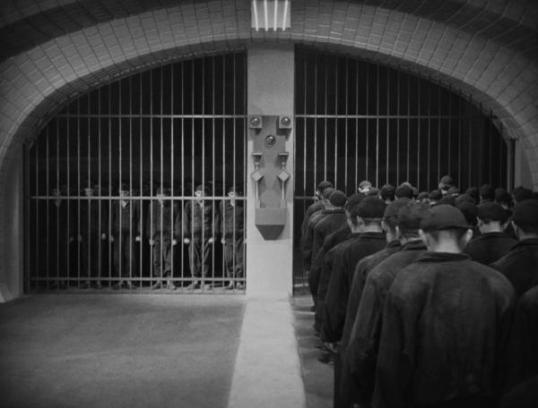
1927 — 1928: The Academy Ignores Metropolis

The very first Best Actor winner was Emil Jannings.  Jannings was German and struggled with English but, during the Silent Era, that wasn’t a problem.  However, the coming of sound petty much ended Jannings’s Hollywood career.  He returned to Germany, where he remained a star.  He would go on to star in several Nazi propaganda films and was reportedly one of Hitler’s favorite actors.  When the war came to an end, Jannings took to carrying his Oscar statuette around with him in the hopes that it would win him favor with the Allies and allow him to avoid having to go through the denazification process.  It didn’t work and Jannings retired from acting.  He died in Austria in 1950.

Personally, I think it would have been nice if the first Oscars hadn’t honored someone who would later star in Nazi propaganda films.  And the Academy had the option to do just that, as Fritz Lang’s Metropolis was released in the United States in 1927.  Metropolis was not only one of the first great science fiction films but Lang was one of the many German directors who would come to Hollywood after the Nazis came to power,  Honoring Metropolis would have allowed the Academy to honor someone who refused to compromise with the Ministry of Propaganda.  Unfortunately, neither Metropolis nor Lang were nominated.

1927 — 1928 and 1928 — 1929: Lon Chaney Is Not Nominated For Best Actor

Poor Lon Chaney.  Widely considered to be one of the best actors of the silent era, Lon Chaney, Sr. was never nominated for an Oscar.  London After Midnight is a lost film and West of Zanzibar is only partially complete but, speaking as a horror fan, I would have loved it if the Academy could have nominated him for either one of those films.  If nothing else, it would have opened the door for the horror genre.

1929 — 1930: The Cocoanuts Is Ignored

Imagine how different Oscar history would have been if the Academy had early on started a tradition of honoring comedy?  The Marx Brothers were not fans of their first released film but audiences loved The Cocoanuts.  Unfortunately, the Academy was not quite ready to embrace comedy and, as such, this became the first (but not the last) Marx Brothers film to be snubbed.

Agree?  Disagree?  Do you have an Oscar snub that you think is even worse than the 4 listed here?  Let us know in the comments!

Up next: The 1930s brings a depression and a lot more snubs!

The Shattered Lens Live Tweets Oscar Sunday


Oscar Sunday started like any other Sunday.

Some members of the TSL Team were less concerned with the Oscars than others:

That said, when the ceremony did start, we had some opinions:

6 Actresses Who I Hope Will Win An Oscar In The Next Ten Years


Continuing the theme from my previous post, here are 6 actresses who I sincerely hope will have won their first competitive Oscar by the time that the 2033 ceremony rolls around.

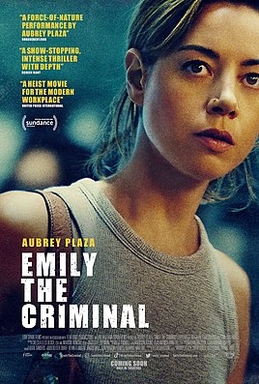
  1. Aubrey Plaza

With her recent performances in Emily the Criminal, Black Bear, and Ingrid Goes West, Plaza has established herself as one of the most interesting actresses working today.  She’s willing to take risks that other performers are not and, in a perfect world, she would have been rewarded with several nominations to her name.

2. Anna Kendrick

I guarantee that Anna Kendrick would give one of the best acceptance speeches ever.  Add to that, we already know that Anna Kendrick deserved to win for Pitch Perfect so, at this point, the Academy owes her an Oscar.  Get with it, Academy!

3. Thomasin McKenzie

Thomasin McKeznie deserved to be nominated for her poignant performance in Leave No Trace and she seems destined to win an Oscar someday, perhaps for one of her two upcoming films, Eileen and Perfect.  Because of her role in Leave No Trace, a lot of critics have compared McKenzie to Jennifer Lawrence.  Personally, I think she has more in common with Saoirse Ronan.  Like Ronan, McKenzie is one of those performers who seems to disappear into each role she plays and who brings a lot of conviction to each part, even when she’s appearing in something as silly as M. Night Shyamalan’s Old.  When you can give an award-worthy performance in something like Old, that means they’re going to have to give you an Oscar at some point.

4. Kirsten Dunst

Kirsten received her first Oscar nomination for Power of the Dog and, if the film had been a bit stronger, I imagine she probably would have won.  Hopefully, both she and Jesse Plemons will get a second chance to take home an Oscar.  It’s hard to think of another actress who plays depression with as much honesty as Kirsten Dunst.

5. Emily Blunt

Every year, I put Emily Blunt on this list.  I’m kind of amazed that she has yet to even be nominated, not even for Looper or A Quiet Place.  (Okay, neither one of those films were traditional Oscar films but she was brilliant in both of them.) She seems destined to be recognized eventually.  It’s just a question of when.

6. Lindsay Lohan

I hear you laughing but listen, everyone loves a good comeback story.  That’s especially true when it come to bloggers who spend all of their time trying to figure out a way to make the Oscars seem more exciting than they are.  Obviously, Lindsay’s not going to win an Oscar for appearing in a Netflix Christmas film but who knows?  Maybe someone will take a chance on her like the Safdies did when they cast Robert Pattison in Good Time and Adam Sandler in Uncut Gems.  Add to that, with Rachel McAdams and Amanda Seyfried having been recently nominated, it’s time for the Academy to show some love to the rest of the cast of Mean Girls.  

6 Actors Who I Hope Will Win An Oscar In The Next Ten Years


We talk a lot about which performers and directors have been snubbed at Oscar time.

For movie lovers, that’s an important subject. We all know that great actors like Peter O’Toole, Cary Grant, Albert Finney, and far too many others all went to their graves with several nominations but not a single competitive Oscar to their name. Just a few years ago, Kirk Douglas died at the age of 103 without having ever won a competitive Oscar.  We always talk about how certain actors are overdue for their first Oscar but sometimes we forget that being overdue doesn’t always translate into an eventual win. Sometimes, it translates into people watching a movie on TCM and saying, “How did that person never win an Oscar in their lifetime?”

With that in mind, here are 6 actors who I sincerely hope will have won their first Oscar by the time that 2033 rolls around:

  1. Caleb Landry Jones

Caleb Landry Jones is one of the masters of playing the type of eccentric characters who can be both dangerous and yet oddly sympathetic.  (One always get the feeling that Jonses’s characters are haunted by demons that they simply cannot control.)  He’s like a Texas-version of Ben Foster.  This year, he deserved a nomination for his devastating work in Nitram.  Hopefully, he’ll get that first nomination and his first Oscar in the years to come.

2. Steve Carell

Steve Carell was nominated for Best Actor for playing against type in Foxcatcher.  I’m always a little bit surprised to be reminded that Foxcatcher is, to date, Carell’s only Oscar nomination.  Part of the problem for Carell is that he’s so well-known for being a comedic actor that it’s easy to forget that he can handle dramatic roles as well.  (The Academy still has a bias against comedy.)  Another part of the problem is that some of Carell’s best performances have been in films that were otherwise underwhelming, like Beautiful Boy.  Here’s hoping that Carell finally finds the right role and the Academy takes notice.  By most accounts, he is one of the nicest guys in the business and I’m sure his acceptance speech would bring us all to tears.

3. Jesse Plemons

The heir to Philip Seymour Hoffman received his first Oscar nomination for The Power of the Dog.  He didn’t win but at least the Academy acknowledged that Plemons is one of the best character actors around.  This year, he has a starring role in Martin Scorsese’s Killers of the Flower Moon.  Though most of the early publicity has focused on Leonardo DiCaprio and Robert De Niro, it’s said that Plemons is actually the film’s main character so it will be interesting to see if the Academy again takes notice.

4. Matt Damon

Matt Damon actually does have an Oscar, for co-writing Good Will Hunting.  Still, it seems odd that Damon has yet to pick up an Oscar for acting.  It seems even stranger that he’s only been nominated three times, for Good Will Hunting, Invictus, and The Martian.  (I will still always be amazed that Damon wasn’t even nominated for Steven Soderbergh’s last truly good film, The Informant.)   There’s strong buzz around Air, though the film’s April release might mean that it’ll be out of the awards conversation by the time the precursor season starts in December.

5. Paul Dano

Paul Dano’s another really good actor who has somehow never been nominated, not even for The Fabelmans!  That said, it’s hard not to believe that Dano will be honored more sooner than later.

6. Brendan Gleeson

Gleeson actually could be an Oscar winner by the end of tonight.  If not, I hope he gets another chance soon.  He’s one of the best character actors around and it’s somewhat amazing that his nomination for The Banshees of Inisherin, while being very deserved, was also the first of his career.

6 Directors Who I Hope Will Win An Oscar In The Next 10 Years


6. Todd Field

Todd Field has only directed three films over the past 23 years but all three of them have been outstanding.  In The Bedroom is a film that grows in power with each subsequent viewing.  Unfairly overlooked when it was originally released, Little Children is the film that movies like American Beauty and Revolutionary Road can only pretend to be.  And finally, TAR is a film that will probably still be remembered after most of the other best picture nominees have been forgotten.

Todd Field received an Oscar nomination for his work on TAR so, technically, he could be an Oscar winner by the end of tonight.  Realistically, though, it appears that The Daniels have got the award sewn up and Field will have to wait for another opportunity.  I just hope that it doesn’t take Field another 16 years to film a follow-up to TAR.

Here are 5 other directors who I hope win an Oscar over the next ten years!

5. Joseph Kosinski

This year, Kosinski deserved a nomination for his work on Top Gun: Maverick.  He didn’t receive one, largely because Top Gun Maverick was viewed as being more of a Tom Cruise movie than a Joseph Koskinski movie.  While Cruise undoubtedly played a huge role in Maverick’s production, I think it’s a mistake to overlook the fact that Kosinski did a great job directing the film, respectfully paying homage to the visual style of the first film while also adding his own little quirks.  With the wrong director, Maverick could have come across like a vanity project for an aging star.  Under Kosinski’s direction, it was a terrific crowd-pleaser and one of the best of the year.

4. Robert Eggers

Robert Eggers seems destined to someday win an Oscar.  The Witch, The Lighthouse, and The Northman were all films that could have fallen apart with the wrong director at the helm.  Instead, Eggers was able to turn each one into a succes d’estime.  Eggers will undoubtedly get his chance to add Oscar winner to his resume, probably sooner than later.

3. Paul Schrader

The acceptance speech would be legendary.

2. Michael Bay

Ambulance was good!  I’m slowly coming around to Michael Bay.  Movies have become so self-important lately that it’s kind of hard not to appreciate Michael Bay’s refusal to treat them as being anything other than an excuse to blow stuff up and have a good time.  Plus, Michael Bay winning an Oscar would lead to an epic meltdown on the part of Film Twitter and who doesn’t want to witness that?

  1. Debra Granik

Granik is responsible for two of the best films of the last 15 years, Winter’s Bone and Leave No Trace.  Both of these films took a sympathetic look at life on the fringes of conventional society and both of them introduced an exciting new talent to viewers, Jennifer Lawrence in Winter’s Bone and Thomasin McKenzie in Leave No Trace.  Granik is one of those directors who tends to take her time between feature film projects but I still can’t wait to see what she does next!

Welcome to Oscar Sunday!


oscar trailer kitties

Happy Oscar Sunday!

Today is an unofficial holiday among the humans.  Today is the day that rich people give awards to other rich people and a few other people watch on TV, hoping that someone will slap someone else!

Have a wonderful Oscar Sunday and be sure to remember: awards don’t make a film great.  Greatness makes a film great!

Plus, how can you take any awards show seriously when there’s no category for Best Animal Performance?  This year’s winner?  Jenny the Donkey of The Banshees of Inisherin!

The Cat has spoken.

Enjoy the Oscars on ABC at 7 eastern/4 pacific!  And check back on the Shattered Lens for a whole day of Oscar-related stuff (and maybe some non-Oscar related stuff as well!)

Music Video of the Day: Is Everybody Happy by David Hasselhoff (1989, dir by ????)


Seriously, we are so lucky to have the Hoff.

Is everybody happy?  Well, it is Oscar Sunday so some people will be very happy but even more people are going to be bitterly disappointed that they are not going to get to go home with an Oscar.  I’m not particularly enthused about sitting through the Jimmy Kimmel-hosted ceremony but I am happy that, after all the build-up, we have finally reached the Big Day!

This is going to be a big day here at TSL.  I’m looking forward to it!

Set the mood, Hoff!

Enjoy!