4 (or more) Shots From 4 (or more) Films is just what it says it is, 4 (or more) shots from 4 (or more) of our favorite films. As opposed to the reviews and recaps that we usually post, 4 (or more) Shots From 4 (or more) Films lets the visuals do the talking.
Today, we wish a happy 97th birthday to the legendary filmmaker, Roger Corman! And that means that it’s time for….
4 Shots From 4 Roger Corman Films
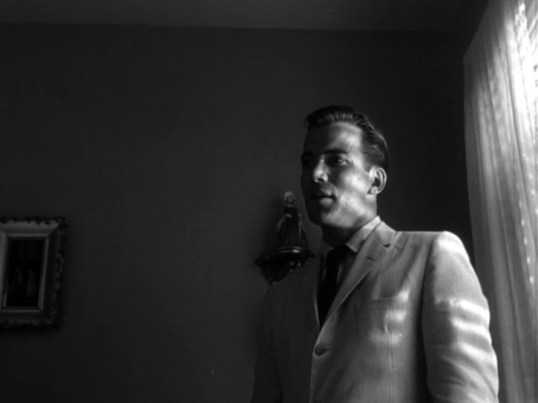
It Conquered The World (1956, dir by Roger Corman, DP: Fred E. West)
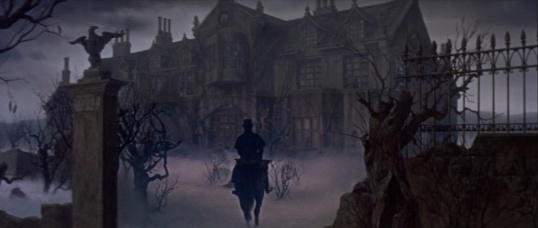
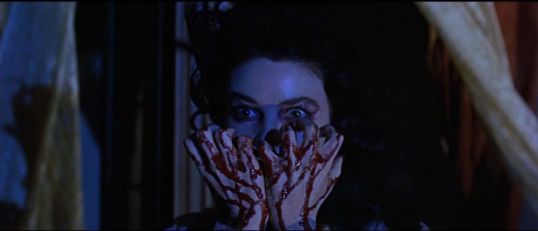
House of Usher (1960, dir by Roger Corman, DP: Floyd Crosby)
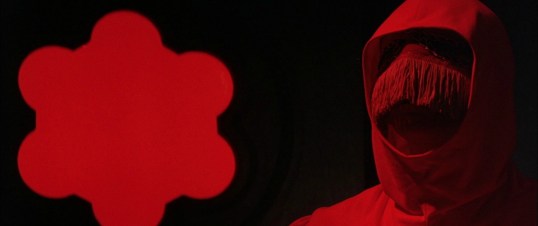
The Masque of the Red Death (1964, dir by Roger Corman, DP: Nicolas Roeg)
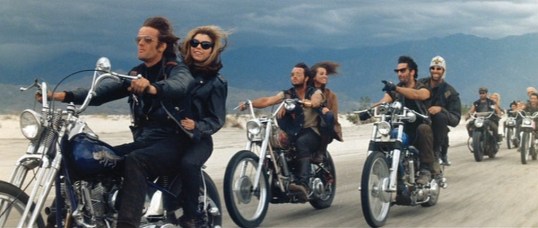
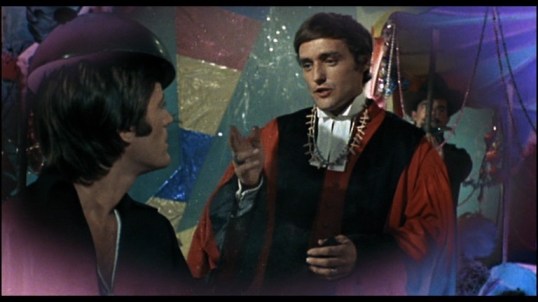
The Wild Angels (1966, dir by Roger Corman, DP: Richard Moore)
The Texas Chainsaw Massacre (1974, dir by Tobe Hooper, DP: Daniel Pearl)
4 Or More Shots From 4 Or More Films is just what it says it is, 4 shots from 4 of our favorite films. As opposed to the reviews and recaps that we usually post, 4 Shots From 4 Films lets the visuals do the talking!
This October, I’m going to be doing something a little bit different with my contribution to 4 (or more) Shots From 4 (or more) Films. I’m going to be taking a little chronological tour of the history of horror cinema, moving from decade to decade.
Today, we take a look at two very important years: 1973 and 1974!
10 Shots From 10 Horror Films: 1973 and 1974
Female Vampire (1973, dir by Jess Franco, DP: Jess Franco)
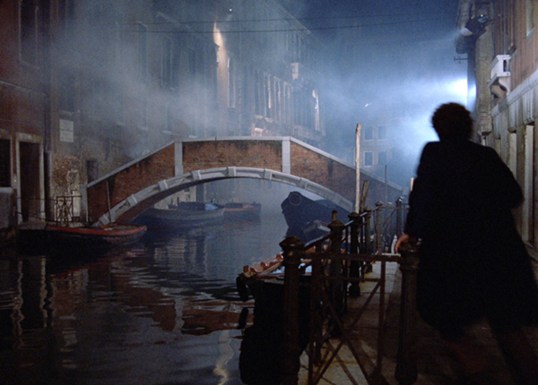
Don’t Look Now (1973, dir by Nicolas Roeg, DP: Anthony Richmond)
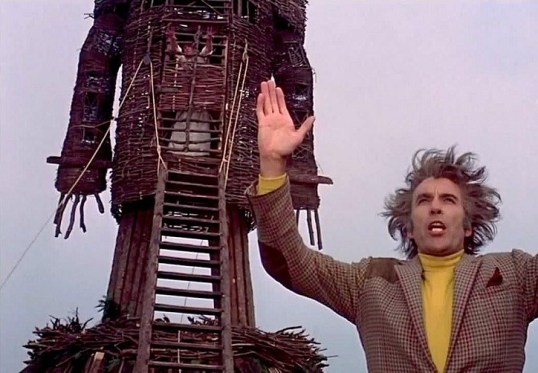
The Wicker Man (1973, dir by Robin Hardy. DP: Harry Waxman)
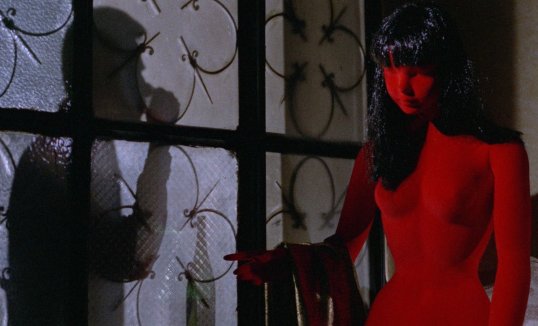
Lisa and the Devil (1973, dir by Mario Bava, DP: Cecilio Paniagua)
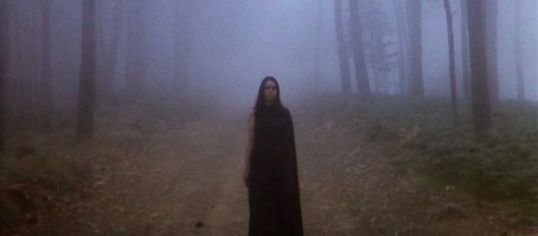
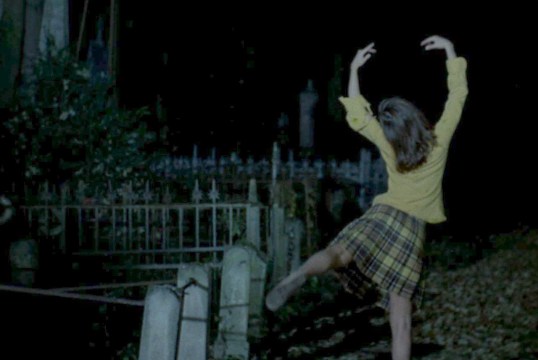
The Iron Rose (1973, dir by Jean Rollin)
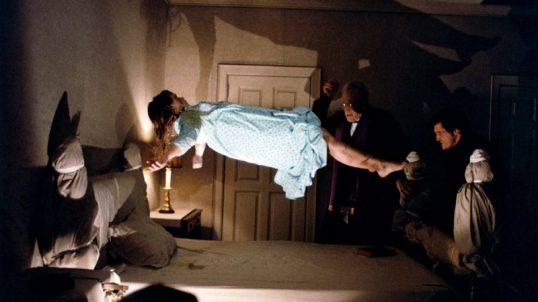
The Exorcist (1973, dir by William Friedkin, DP: Owen Roizman)
Black Christmas (1974, dir by Bob Clark, DP: Reginald H. Morris)
Deathdream (1974, dir by Bob Clark, DP: Jack McGowan)
The Ghost Galleon (1974, dir by Armando de Ossorio, DP: Raul Artigut)
The Texas Chainsaw Massacre (dir by Tobe Hooper, DP: Daniel Pearl)
4 Or More Shots From 4 Or More Films is just what it says it is, 4 shots from 4 of our favorite films. As opposed to the reviews and recaps that we usually post, 4 Shots From 4 Films lets the visuals do the talking!
This October, I’m going to be doing something a little bit different with my contribution to 4 (or more) Shots From 4 (or more) Films. I’m going to be taking a little chronological tour of the history of horror cinema, moving from decade to decade.
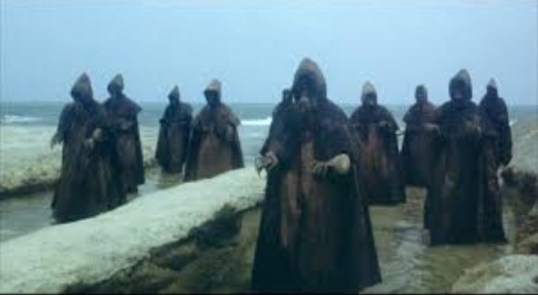
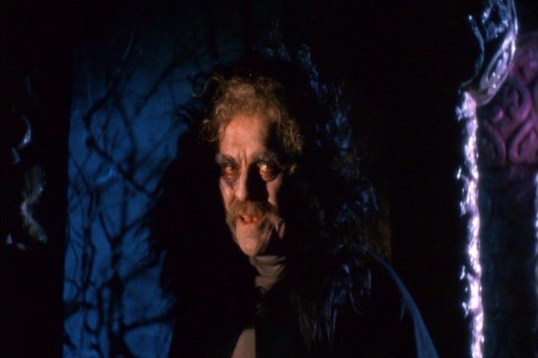
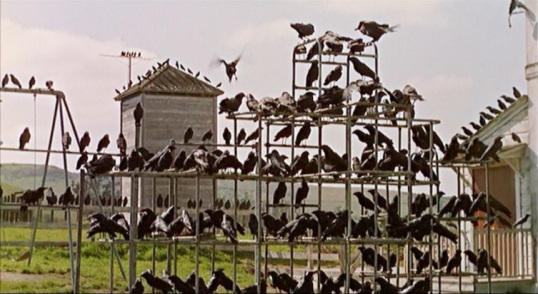
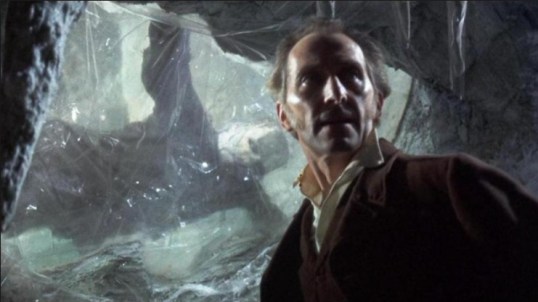
Today, we take a look at the mid-60s!
8 Shots From 8 Horror Films: The Mid 60s
Black Sabbath (1963, dir by Mario Bava DP: Mario Bava)
The Birds (1963, dir by Alfred Hitchcock, DP: Robert Burks)
The Raven (1963, dir by Roger Corman, DP: Floyd Crosby)
The Evil of Frankenstein (1963, dir by Freddie Francis, DP: John Wilcox)
The Masque of the Red Death (1964, dir by Roger Corman, DP: Nicolas Roeg)
Blood and Black Lace (1964, dir by Mario Bava, DP: Mario Bava)
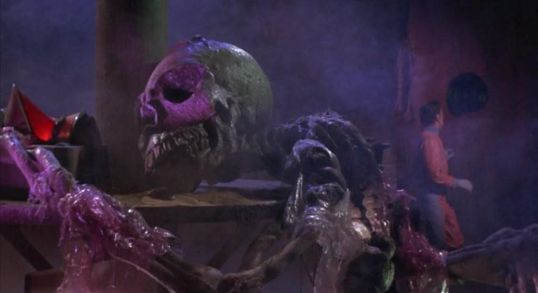
Planet of the Vampires (1965, dir by Mario Bava, DP: Antonio Rinaldi)
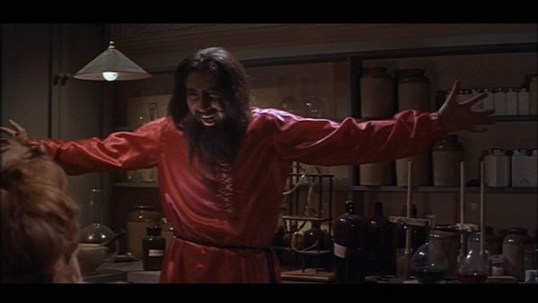
Rasputin The Mad Monk (1966, dir by Don Sharp, DP: Michael Reed)
4 Or More Shots From 4 Or More Films is just what it says it is, 4 shots from 4 of our favorite films. As opposed to the reviews and recaps that we usually post, 4 Shots From 4 Films lets the visuals do the talking!
Today would have been the 94th birthday of the great and enigmatic director, Nicolas Roeg. As both a cinematographer and a director, Roeg was responsible for some of the most visually striking films ever made. Today, we honor his legacy with….
4 Shots From 4 Nicolas Roeg Films
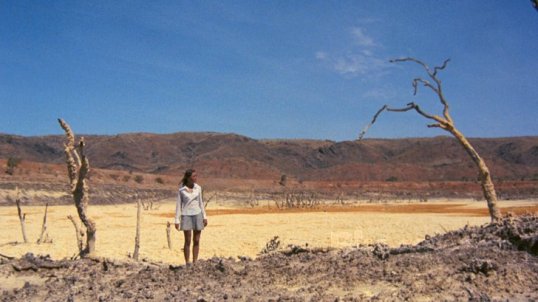
Walkabout (1971, dir by Nicolas Roeg, DP: Nicolas Roeg)
Don’t Look Now (1973, dir by Nicolas Roeg, DP: Anthony Richmond)
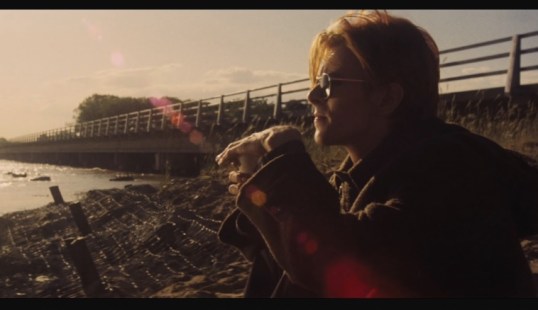
The Man Who Fell To Earth (1976, dir by Nicholas Roeg, DP: Anthony Richmond)
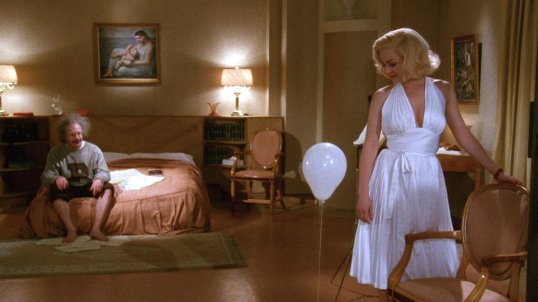
Insignificance (1985, dir by Nicolas Roeg, DP: Peter Hannan)
4 Or More Shots From 4 Or More Films is just what it says it is, 4 shots from 4 of our favorite films. As opposed to the reviews and recaps that we usually post, 4 Shots From 4 Films lets the visuals do the talking!
Today, we pay tribute to the legendary director and producer, Roger Corman! It’s time for….
4 Shots From 4 Roger Corman Films
It Conquered The World (1956, dir by Roger Corman, DP: Fred E. West)
Not Of This Earth (1957, dir by Roger Corman, DP: John J. Mescall)
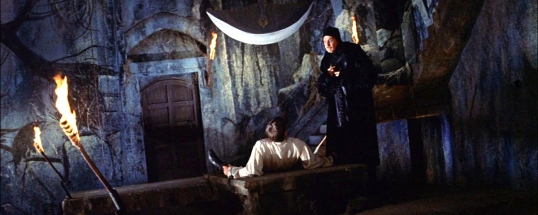
Pit and the Pendulum (1961, dir by Roger Corman, DP: Floyd Crosby)
The Masque of the Red Death (1964, dir by Roger Corman, DP: Nicolas Roeg)
4 (or more) Shots From 4 (or more) Films is just what it says it is, 4 (or more) shots from 4 (or more) of our favorite films. As opposed to the reviews and recaps that we usually post, 4 (or more) Shots From 4 (or more) Films lets the visuals do the talking.
Today, we wish a happy 95th birthday to the legendary filmmaker, Roger Corman! And that means that it’s time for….
6 Shots From 6 Roger Corman Films
Not of this Earth (1957, dir by Roger Corman DP: John J. Mescall)
The Fall of the House of Usher (1960, dir by Roger Corman, DP: Floyd Crosby)
The Intruder (1962, dir by Roger Corman DP: Taylor Byars)
The Masque of the Red Death (1964, dir by Roger Corman, DP: Nicolas Roeg)
The Wild Angels (1966, dir by Roger Corman, DP: Richard Moore)
The Trip (1967, dir by Roger Corman, DP: Arch Dalzell)
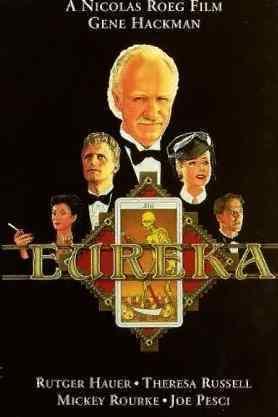
In this 1983 film, Gene Hackman plays Jack McCann, a prospector who is determined to either get rich or freeze to death as he wanders around Alaska in the 1920s. When he’s not having sex and philosophical discussions with the local witch, Freida (Helena Kallianiotes), Jack desperately searches for gold. Jack is convinced that gold is all that he needs to be happy, though Freida counsels him that it’s also important to pursue more Earthly delights. Everywhere Jack looks, he sees people dying in the snow. In fact, Jack nearly dies himself until he stumbles across a mountain full of gold. As gold dust pours down on him, he celebrates while having flashbacks to Freida writhing in ecstasy. It’s just that type of film. When Jack tells Freida about his claim, he asks what’s going to happen next. Freida tells him that it’s both the end and the beginning. Once again, it’s just that type of film.
At this point, Eureka jumps ahead 20 years. The year is 1945. World War II is coming to an end. Jack is no longer freezing and starving to death in Alaska. Now, he is one of the world’s richest men. He even owns his own island in the Caribbean. Jack has a huge house, a beautiful view of the ocean, and all the money in the world. One could even say that his life has become an exclusive beach vacation, an eternal Spring Break, if you will. And yet, even with all of his money, Jack has fallen victim to ennui. He was happier when he was poor and starving and seeking warmth from Freida. Now, he’s got an alcoholic wife (Jane LaPotaire) and his daughter, Tracy (Theresa Russell), is in love with a dissolute aristocrat named Claude (Rutger Hauer), to whom Jack takes an instant dislike. Claude claims that Jack has stolen his wealth from the Earth. Claude is the type who eats gold and then promises to return it to Jack as soon as he can. That’s something that actually happens. It’s kind of silly but Rutger Hauer is such a charmer that he nearly pulls it off.
Claude and Tracy aren’t the only thing that Jack has to worry about. An American gangster named Mayakofsky (Joe Pesci) wants to take over Jack’s island so that he can build a casino on it. However, despite the best efforts of Mayakofsky’s attorney (Mickey Rourke), Jack is still not willing to sell. When hitman Joe Spinell shows up outside the estate, are Jack’s days of ennui numbered?
Of course, they are! That’s not really a spoiler. Eureka is (loosely) based on the real-life murder of Sir Harry Oakes, an American-born prospector who was thought to be one of the world’s richest men when he was brutally murdered in the 40s. Jack is, of course, a stand-in for Oakes while Mayakofsky is based on Meyer Lansky, the mobster who many people suspect ordered Oakes’s murder. Lansky was never charged with the crime. Instead, Oakes’s son-in-law, Count Alfred de Marigny, was arrested and charged with the crime. After a trial that made international news and was described as being “the trial of the century,” de Marigny was acquitted and the murder of Harry Oakes remains officially unsolved.
It’s an interesting story and it seems like one that should perfectly translate to film. Surprisingly though, Eureka doesn’t really do it justice. The film was directed by one of the masters of cinematic surrealism, Nicolas Roeg. Roeg, of course, is probably best remembered for films like Performance, Don’t Look Now, Walkabout, and The Man Who Fell To Earth. As one might expect from a Roeg film, Eureka is visually stunning but, as a director, Roeg can’t seem to decide whether he’s more interested in Jack’s ennui or in all the soapy melodrama surrounding Jack’s murder. As such, neither element of the film gets explored with any particular depth and the resulting film, while always watchable, still feels rather shallow and disjointed. (After taking forever to reach the end of Jack’s story, Eureka then turns into a rather conventional courtroom drama. Theresa Russell does get to utter the immortal line, “Did you cut off my father’s head?” but otherwise, it’s kind of dry.) The film is at its strongest when Jack is just a prospector in Alaska. The harsh landscape and the crazed dialogue is perfect for Roeg’s dream-like style. Once the film moves to the Caribbean, it suffers the same fate that befell Jack when he become rich. It loses its spark.
That said, Eureka has its moments. Any film that features Gene Hackman, Mickey Rourke, Joe Pesci, Rutger Hauer, and Joe Spinell all acting opposite of each other is going to have at least a few scenes worth watching. I particularly liked Pesci’s surprisingly subdued performance as Mayakofsky. With everyone else in the film chewing every piece of scenery on the island, Pesci wisely underplays and is all the more menacing for it. While Eureka ultimately doesn’t add up too much, it’s worth watching at least once for the cast.
Finally, my personal theory is that Harry Oakes’s murder had more to do with the Duke and Duchess of Windsor (formerly King Edward VIII and Wallis Simpson) than it did with Meyer Lansky. (The Duke was the governor of the Bahamas at the time of Oakes’s murder.) But that’s just my opinion.
4 (or more) Shots From 4 (or more) Films is just what it says it is, 4 (or more) shots from 4 (or more) of our favorite films. As opposed to the reviews and recaps that we usually post, 4 (or more) Shots From 4 (or more) Films lets the visuals do the talking.
The great François Truffaut was born 89 years ago today, in Paris, France. This French director would go on to prove that cinema is a universal language and it’s hard not to think about what type of films Truffaut would have gone on to make, if not for his tragically early death at the age of 52. As far as I am concerned, today is a holiday dedicated to one of the most important cinematic voices of all time.
In honor of the life and legacy of François Truffaut, here are:
6 Shots From 6 François Truffaut Films
The 400 Blows (1959, dir by François Truffaut, DP: Henri Decae)
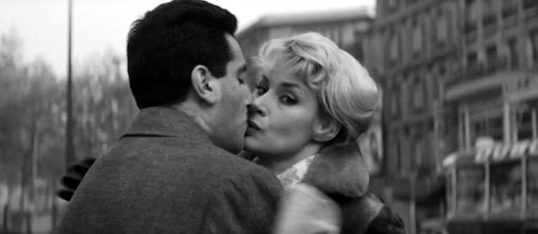
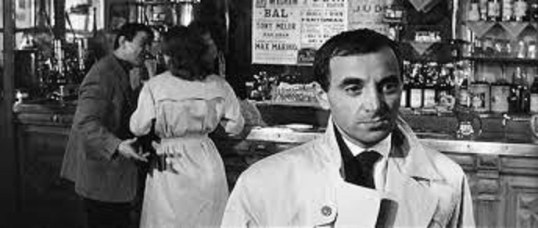
Shoot the Piano Player (1960, dir by François Truffaut, DP: Raoul Coutard)
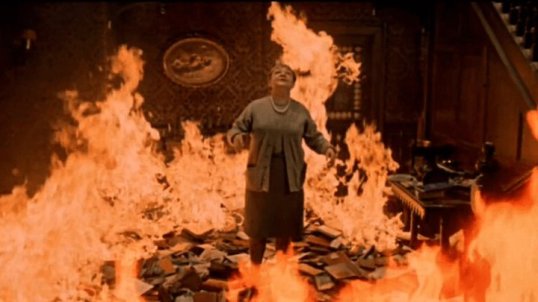
Fahrenheit 451 (1966, dir by François Truffaut, DP: Nicolas Roeg)
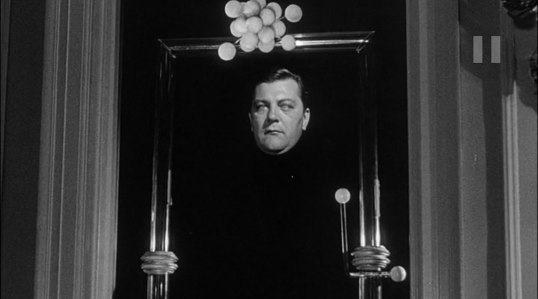
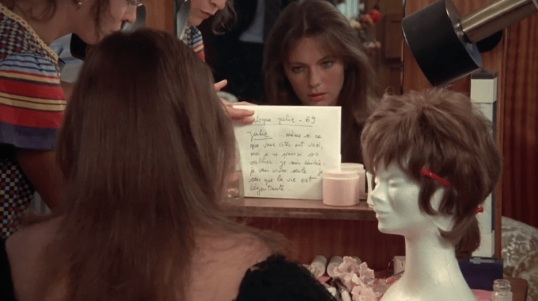
Day For Night (1973, dir by François Truffaut, DP: Pierre-William Glenn)
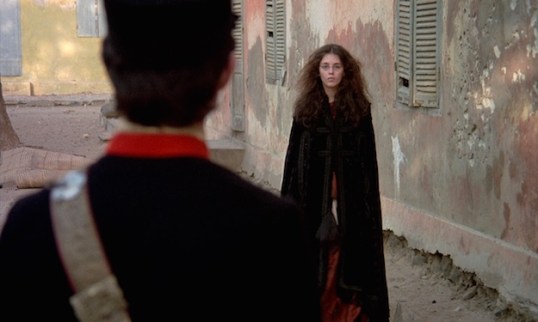
The Story of Adele H. (1975, dir by François Truffaut, DP: Nestor Almendros)
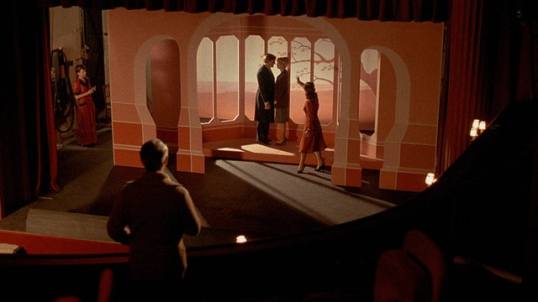
The Last Metro (1980, dir by François Truffaut, DP: Nestor Alemndros)
4 (or more) Shots From 4 (or more) Films is just what it says it is, 4 (or more) shots from 4 (or more) of our favorite films. As opposed to the reviews and recaps that we usually post, 4 (or more) Shots From 4 (or more) Films lets the visuals do the talking.
212 years ago today, Edgar Allan Poe was born in Boston, Massachusetts. From his humble beginnings as the son of two struggling actors, Poe would go on to become one of the first great American writers. (It’s been said that, when Charles Dickens first traveled to the United States in 1842, he specifically wanted to meet Edgar Allan Poe. Unfortunately, it appears that popular story my not be true but it’s still a good story.) Poe was controversial in life and even his death generated more questions than answers but no one can deny his strength as a poet and as a prose writer. Both the detective and the horror genres owe a huge debt to Edgar Allan Poe.
Today, in honor of Edgar Allan Poe’s legacy, TSL presents 4 shots from 4 films that were inspired by the work of Edgar Allan Poe!
4 Shots From 4 Films
House of Usher (1960, dir by Roger Corman, DP: Floyd Crosby)
The Pit and the Pendulum (1961, dir by Roger Corman, DP: Floyd Crosby)
The Raven (1963, dir by Roger Corman, DP: Floyd Crosby)
The Masque of the Red Death (1964, dir by Roger Corman, DP: Nicolas Roeg)
This scene, from 1964’s Masque of the Red Death, was directed by Roger Corman, performed by Vincent Price, and shot by Nicolas Roeg. It was based on a short story by Edgar Allan Poe. That’s a lot of talent on display.