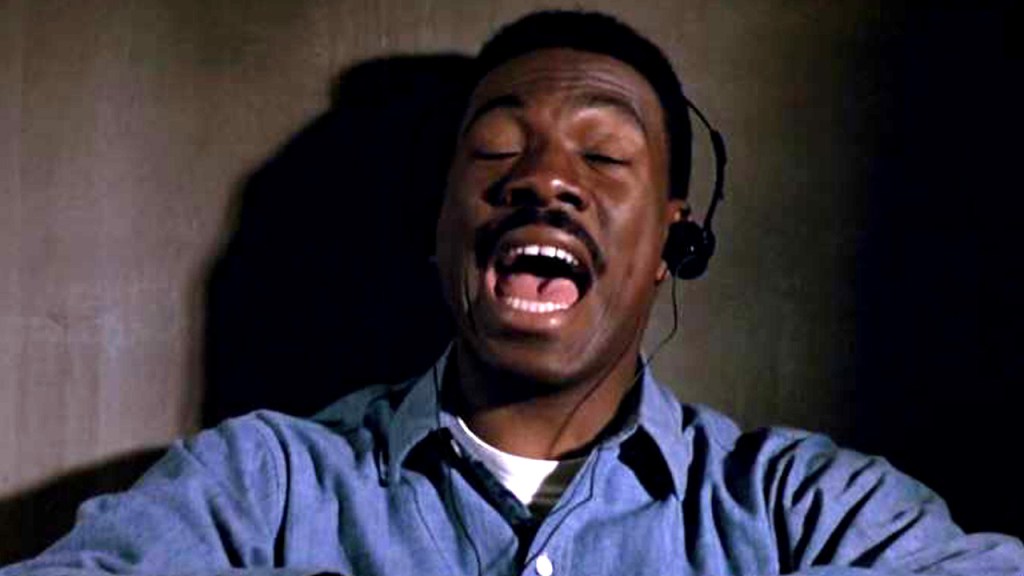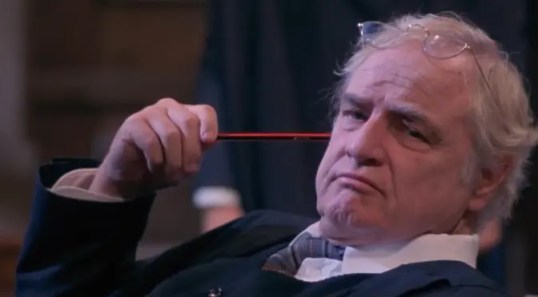
HARD TIMES (1975) and the One-Punch knockout! One of my favorite scenes!


My personal favorite Charles Bronson movie is HARD TIMES, and this is one of my favorite scenes.

As an appreciation gift for helping him all summer with his many projects, my dad took me to Wal-Mart sometime back in the 80’s and told me I could pick out a movie. Wal-Mart just happened to have a big stack of HARD TIMES videocassettes. I was about 13 years old at the time, and I was already obsessed with Bronson, but I had never seen this movie before. So, dad bought the movie for me and did something he didn’t often do, he sat down and watched it with me when we got back home. This one-punch knockout scene takes place at the very beginning of the movie, and I vividly remember my dad having a nice laugh when the scene occurred. That made me happy, as I was always wanting my family members to watch and enjoy my movies with me. It’s a special memory for me of a great time with my dad and of the very first time I saw HARD TIMES!  

Enjoy! 

#MondayMuggers presents THE DOUBLE (2011) starring Richard Gere!


Every Monday night at 9:00 Central Time, my wife Sierra and I host a “Live Movie Tweet” event on X using the hashtag #MondayMuggers. We rotate movie picks each week, and our tastes are quite different. Tonight, Monday February 3rd, we’re watching THE DOUBLE starring Richard Gere, Topher Grace, and Martin Sheen.

Sierra had a day off from work last week and she watched this movie 3 times. Then she told me it would be her choice for the week! I’d say she really likes the movie!

THE DOUBLE is the story of a retired CIA operative (Gere), who’s paired with a young FBI agent (Grace), trying to solve the mystery of a senator’s murder. All of the signs are pointing towards an assassin from the Soviet Union!

Here is some interesting trivia about the film:

  1. THE DOUBLE is directed and written by Michael Brandt. After directing this film, Brandt would be the driving force behind the various Chicago based TV series’ CHICAGO FIRE, CHICAGO P.D., and CHICAGO MED. He also wrote the screenplays to 3:10 TO YUMA (2007) and WANTED (2008). This is a talented man!
  2. Filming was halted for six weeks after Richard Gere dislocated his shoulder during a fight sequence with actor Tamer Hassan.
  3. If you enjoyed the TV show CASTLE, the beautiful Stana Katic is in this movie. She’s billed 5th, but she only has about 5 minutes of screen time. That shows you how popular that show was at the time of this films release in 2011. 

So join us tonight to for #MondayMuggers and watch THE DOUBLE! It’s on Amazon Prime.

I’ve included the trailer for THE DOUBLE below:

Monday Live Tweet Alert: Join Us For Speedtrap!


As some of our regular readers undoubtedly know, I am involved in hosting a few weekly live tweets on twitter and occasionally Mastodon.  I host #FridayNightFlix every Friday, I co-host #ScarySocial on Saturday, and I am one of the five hosts of Mastodon’s #MondayActionMovie!  Every week, we get together.  We watch a movie.  We snark our way through it.

Tonight, for #MondayActionMovie, the film will be 1977’s Speedtrap, starring Joe Don Baker! I picked it so you know it’ll be good.

It should make for a night of fun viewing and I invite all of you to join in.  If you want to join the live tweets, just hop onto Mastodon, find the movie on YouTube or Tubi, hit play at 8 pm et, and use the #MondayActionMovie hashtag!  The live tweet community is a friendly group and welcoming of newcomers so don’t be shy.   

See you soon for some Joe Don Baker excitement!

Scenes That I Love: The Skating Fiddler from Michael Cimino’s Heaven’s Gate


Today’s scene that I love comes from Michael Cimino’s Heaven’s Gate.

You know what?  I’ve read that some people consider this scene with the skating fiddler to be an example of Cimino’s tendency towards self-indulgence.  The oft-made claim is that it’s a scene where Cimino is more interested in showing off than moving the story forward.  That may be true but still, I don’t care what anyone says, I like this scene.  It captures the communal joy of the settlers before the arrival of the mercenaries who have been hired to force them out of their homes.  To understand why the settlers fight, you also have to understand what they’re being expected to give up.

4 Shots From 4 Films: Special Michael Cimino Edition


4 Shots From 4 Films is just what it says it is, 4 shots from 4 of our favorite films. As opposed to the reviews and recaps that we usually post, 4 Shots From 4 Films lets the visuals do the talking!

Today, it is time to celebrate the birth of one of the most intriguing (if uneven) filmmakers of the 20th Century, Michael Cimino!  It’s time for….

 4 Shots From 4 Michael Cimino Films

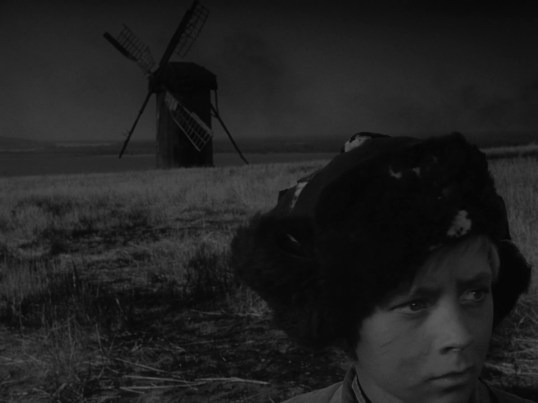
Thunderbolt and Lightfoot (1974, dir by Michael Cimino, DP: Frank Stanley)

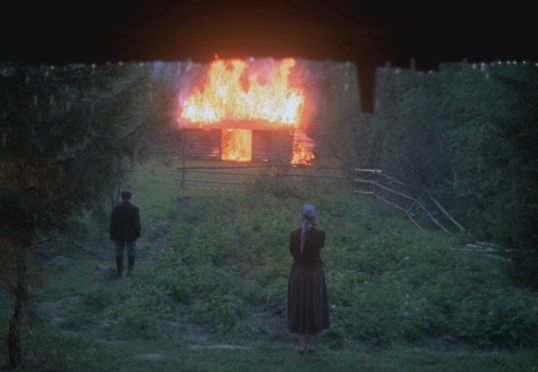
The Deer Hunter (1978, dir by Michael Cimino, DP: Vilmos Zsigmond)

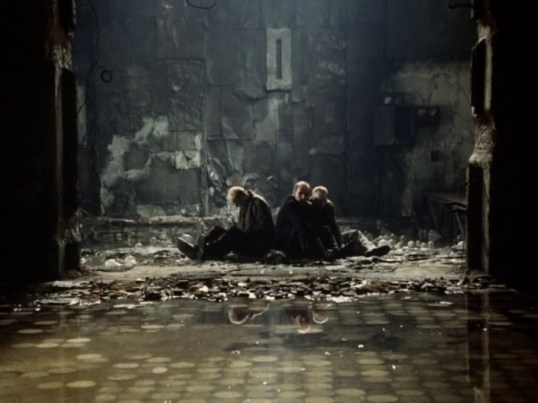
Heaven’s Gate (1980, dir by Michael Cimino, DP: Vilmos Zsigmond)

The Year of the Dragon (1985, dir by Michael Cimino, DP: Alex Thomson)

Love On The Shattered Lens: Hot Saturday (dir by William A. Seiter)


First released in 1932 and featuring Cary Grant in his first leading role, Hot Saturday is a film about gossip and love.

Ruth Brock (Nancy Carroll) is a young bank teller living in a small town.  It’s the type of town where everyone knows everyone else.  For instance, everyone knows that every man in town wants to date Ruth but that Ruth, for her part, is not in any hurry to settle down and get married.  She’s having too much fun going to dances, drinking with her friends, and enjoying life.  Everyone knows that playboy Romer Sheffield (Cary Grant) is interested in Ruth but then again, Romer appears to be interested in everyone.  Romer has scandalized the town by allowing a woman named Camille (Rita LaRoy) to live at his mansion.

Ruth has a date with one of her coworkers, Conny Billop (Edward Woods), but, when Conny refuses to take no for an answer, she gets away from him and ends up at Romer’s estate.  Ruth and Romer spend the night together, just talking.  Still, thanks to Conny and Eva (Lillian Bond), the daughter of Ruth’s boss, the whole town is soon convinced that Ruth is Romer’s lover.  The town is so scandalized that Ruth even loses her job.

Fortunately, Bill Fadden (Randolph Scott) has returned to town.  Bill is a geologist.  He grew up in town, with Ruth.  He’s spent the last seven years on a surveying expedition but now he’s back and he wants to marry Ruth.  How lucky is Ruth?  She not only has two good men in love with her but one of them looks like Cary Grant and the other one looks like Randolph Scott!  However, when Bill hears the rumors, will he continue to love her or will he be yet another person who gives in to the curse of small town gossip?

Hot Saturday is a film that truly took me by surprise.  It’s a pre-code film and it’s one that has all of the usual tropes that one usually associates with the pre-code era.  Everyone’s obsessed with sex.  There’s a lot of kissing.  There’s a lot of drinking.  There’s an emphasis on legs and lingerie.  There’s even a scene where Ruth gets into a wrestling match with her younger sister when she discovers that her sister has taken her new panties.  I’m one of four sisters so I could certainly relate but it’s still not the sort of thing that one necessarily expects to find in a film from the 1930s.  But that’s one reason why I love the Pre-Code era.  Allowed to police itself, pre-code Hollywood made films that were more realistic and open about their subject matter than the films made under the production code but which also still had their own unique innocence to them.  Hot Saturday has an ending that would have never been allowed during the Code era, one that is, dare I say it, rather empowering.

But, beyond all that, Hot Saturday is an intelligently written film that strikes a good balance between drama and character-driven comedy.  Nancy Carroll is beautiful and likable in the lead role.  Cary Grant and Randolph Scott are both as handsome and charming as can be.  Hot Saturday is both a look at the reality and dangers of small town gossip and a touching love story.  I enjoyed it.

4 Shots From 4 Films: Special Time Travel Edition


4 (or more) Shots From 4 (or more) Films is just what it says it is, 4 (or more) shots from 4 (or more) of our favorite films. As opposed to the reviews and recaps that we usually post, 4 (or more) Shots From 4 (or more) Films lets the visuals do the talking.

*tick tick tick*  TIME!

4 Shots From 4 Time Travel Films

Beyond The Time Barrier (1960, dir by Edgar G. Ulmer, DP: Meredith Nicholson)

Back to the Future (1986, dir by Robert Zemeckis, DP: Dean Cundey)

12 Monkeys (1995, dir by Terry Gilliam, DP: Roger Pratt)

Primer (2004, dir by Shane Carruth)

Scenes I Love: Rod Taylor Travels Through Time in The Time Machine


Today’s scene — or really, I should say scenes — that I love comes from 1960’s The Time Machine.

Watch as Rod Taylor travels from 1900, all the way to the very far future.  As you’ll notice, this upload is just of the scenes of Taylor watching the years fly by while sitting in his machine.  Taylor does leave the machine twice — once to see Britain in 1917 and a second time to experience 1966 but those scenes aren’t included here.  That said, the time travel effects are simple but hold up well and Taylor’s disillusioned feelings about witnessing “a new war,” were ones that were undoubtedly very relatable to audiences in 1960.

This is one of my favorite science fiction movies and one that I plan to rewatch very soon!  (One could say that the time has come again.)


EUREKA (1983) – Gene Hackman strikes gold and tries to strike Rutger Hauer with a meat cleaver in the same move!


I’ve been thinking a lot about Gene Hackman as he recently celebrated his 95th birthday. He’s an incredible actor who has been a part of my life since I first really discovered my love of movies beginning in the mid-80’s. I’ve also been writing about Rutger Hauer every Sunday here on the Shattered Lens. Hackman and Hauer made a movie together back in 1983 called EUREKA, and to be honest, I almost forgot about it. It’s a movie I watched a long time ago and hadn’t watched again until today. It seemed like the perfect time for a revisit.

EUREKA opens with a stunning aerial shot that descends upon obsessed gold prospector Jack McCann (Gene Hackman) who’s fighting with a man on a snow-covered mountain in the Yukon territory. The man has asked Jack to partner with him in their search for gold, and Jack makes it clear that he will never “make a nickel on another man’s sweat.” Next, we see Jack as he’s walking through a nearly deserted town. In another unforgettable shot, Jack watches a man, who’s clearly gone mad, commit suicide just outside of the local “Claims office.” Before watching again today, that was the only scene that I could remember from my initial viewings of the film so many years ago. Next, we see Jack lying down below a tree at night, in windy, frigid temperatures, just about to freeze to death. Three hungry wolves have even approached ready for dinner. And this is where things get strange. Out of the blue, this clairvoyant madam (Helena Kallianiotes) from a local brothel sees him in her crystal ball, as a mysterious stone falls right next to him, starting a fire that warms him and drives away the wolves. He goes to see the madam at the brothel where she tells him that he will strike gold, but he “will be alone now.” Jack leaves the next morning and finds gold, rivers of gold. It’s another stunning sequence showing the obsessed man, who’s been searching for gold for 15 long and hard years, finally finding the object of his obsession. 

Cut to 20 years in the future, where Jack is now the richest man on earth, living on his own Caribbean island. It also appears he may also be the unhappiest man on earth. He has all the money in the world, but there is no peace in his heart or soul. His wife Helen (Jane Lapotaire), who he was once deeply in love with, is now detached and addicted to alcohol. His daughter Tracy (Theresa Russell) has fallen in love and married Claude Maillot Van Horn (Rutger Hauer). Jack cannot stand Claude as he suspects that he seduced and married Tracy so he could get to his money. His best friend Charles (Ed Lauter) has somehow gotten mixed in with Miami mobsters, led by a guy named Mayakofsky (Joe Pesci) and his lawyer Aurelio D’Amato (Mickey Rourke), who want to force Jack to sell them land on his island so they can build a casino. Jack feels like everybody just wants a piece of him and his money. He has lost the joy in his life. The rest of the film plays out against this backdrop as Jack tries to separate Tracy from Claude, and as the mobsters try to force Jack to sell to them by any means necessary.

EUREKA is not a film that everyone will love, but I enjoyed watching it again after so many years. Director Nicolas Roeg, who also directed PERFORMANCE (1970), DON’T LOOK NOW (1973) and FULL BODY MASSAGE (1995), creates some truly amazing and brutal images that once seen are not easily forgotten. The scene where Jack McCann finds his huge vein of gold is so beautiful, but there are alternatively horrific scenes of brutal violence that play out almost to the point of overkill. The movie also takes some surprising twists and turns in the third act that you may not see coming. I always like it when a movie surprises me. It’s a melodramatic film that doesn’t have a lot of likable characters, but with a cast this good, I’m willing to go along with the filmmakers. In addition to the excellent work of Gene Hackman and Rutger Hauer, Theresa Russell has the important role as the daughter stuck between the man she loves and the dad who adores her. Her acting style exemplifies the melodrama of Roeg’s vision, so it works well in the context of this film. Jane Lapotaire has a couple of strong moments as Hackman’s alcoholic wife who yearns for days long gone when they were so in love. We were quite spoiled in the early 80’s when a movie could round out its already impressive cast with actors like Joe Pesci, Mickey Rourke, Ed Lauter, Corin Redgrave and Joe Spinell.

Nicolas Roeg appears to be trying to make deep statements about the meaning of life in EUREKA. I’m not a person who generally consumes films for deep meaning, but I thought it might be fun to at least take a surface-level view of some of the items I noticed while watching the movie. Jack spouts a lot of profound things throughout the movie, things that he feels describe him as a person. I mentioned one earlier when Jack tells the competing prospector prior to finding gold that, “I’ll never make a nickel off of another man’s sweat.” He will continue to use this saying throughout the film, even after he’s a rich, jaded, older man. The truth is that he would not have found the gold without the help of the clairvoyant madam, with her even passing away right after he hits the jackpot. In another scene at an extremely awkward dinner party, Jack tells his guests that the only rule that matters is the Golden Rule, “Do unto others as you would have them do unto you.” While I agree with the importance of this rule, Jack does not seem to follow the Golden Rule in any way that helps others or gives him any sense of peace or connection. Jack does not seem to understand the contradictions in his use of these phrases as played out in his own life, but I also think that his lack of understanding helps to illustrate a truth that plays out at times in many of our own lives. So often we’ll claim certain beliefs and values, but our lives as lived will be much more complex and often hypocritical. We can see them in Jack, but can we always see them in ourselves?

EUREKA also seems to be a movie that’s open to different interpretations based on who’s viewing the movie and where they are in life at that specific time. In a moment of clarity with his wife, Jack seems to recognize the hypocrisy in his life when he tells her “I once had it all… now I just have everything.” Jack is finally reflecting on the important things in his life, rather than dwelling on his current distrust of everyone around him. This final quote got me to thinking about my own life and just how different I am as a man in my early 50’s compared that naïve 20-year-old who first watched this film. I didn’t know what it was like to chase my dreams, catch them, and then try to figure out how to keep striving with a purpose. I didn’t know what it was like to be married with the responsibility of loving my wife and genuinely caring about her needs, through both the good times and the bad times. I didn’t know what it was like to be a dad who wanted nothing but true happiness for his children. Jack has lived through these specific opportunities in life, and we can see how he’s dealt with them. Each of these things have now played out in my own life. There have been times that I’ve failed, and there have been times that I’ve succeeded. I just keep reminding myself to try to focus on the things that matter and not get distracted by the things that don’t. Even now, it’s not always easy to do.    

I’ve included the trailer for EUREKA below:

Film Review: Groundhog Day (dir by Harold Ramis)


Happy Groundhog Day!  For the record, Punxsutawney Phil saw his shadow today so get ready for six more weeks of winter!

Oh, how I love Groundhog Day.  I really do.  It’s perhaps the silliest holiday that we have in America and I absolutely adore the whole thing.  I love the fact that people get dressed up for it.  I love that there are people who plan their entire weekend around seeing what the groundhog predicts.  I love that we all know there’s no way a groundhog can reasonably predict the weather but, for one day, we pretend like it can.  And while Groundhog Day itself had its beginning in Germany, the holiday really has become pure Americana.  It’s such an innocent holiday, or at least it is now that Bill de Blasio is no longer in a position to kill the magic groundhog.

(Boo de Blasio!  Boo!)

Of course, no Groundhog Day is complete without watching the 1993 comedy of the same name.  The film has become such a major part of American culture that even people who haven’t watched it know what it’s about.  (It’s a bit like It’s A Wonderful Life in that way.)  Bill Murray plays Phil Connors, a cynical weatherman who is sent to cover Groundhog Day in Punxsutawney and finds himself reliving the same day over and over again.  Every morning, it’s once again February 2nd.  Sonny and Cher’s I Got You Babe plays on the radio.  Phil is approached by Ned Ryerson (Stephen Tobolowsky), an annoying former classmate turned insurance salesman.  Phil steps in the same puddle.  He finds himself covering the same story and, again and again, he’s stranded by the same blizzard.  At first, Phil is angry.  Even multiple suicides can’t stop the cycle.  Kidnapping the groundhog can’t stop the cycle.  Then, he decides to take advantage of living the same day over and over again.  He gets to know the people in the town and realizes that they’re not so bad.  He saves the mayor (Brian Doyle-Murray) from choking at dinner but, in the film’s most poignant moment, realizes that an old homeless man is going to die regardless of how many times he tries to save him.  Phil learns how to learn the piano.  He learns how to speak French.  And, most importantly, he falls in love with Rita (Andie MacDowell).  Of course, when he tells Rita this, she assumes he’s just trying to take advantage of her.  Rita says that they barely know each other but what she doesn’t realize is that Phil has been spending day-after-day with her.

As you might have guessed I relate to Rita.  She loves the silliness of the holiday and so do I.  I also relate to Nancy Taylor (Marita Geraghty), just because of her determination to enjoy the day no matter what.  That said, this is totally Bill Murray’s film and this is one of his best performances, one in which he expertly mixes his trademark comedy with some very poignant drama.  One thing I like about this film is that Phil becomes a better man as a result of living the same day over and over again but it doesn’t totally change his personality.  At the end, he’s still the same sarcastic smartass that he was at the start of the film but he’s no longer a cynic.  He’s learned how to appreciate other people.  He’s fallen in love.  Much like George Bailey, he’s become the richest man in town.  This is a rare film where the main character is as interesting after he’s reformed as before.

It always breaks my heart a little to read that Bill Murray and director Harold Ramis had a difficult time working together while making this film.  It’s truly a perfect film and that’s due to both Murray’s performance and Ramis’s heartfelt direction.  I’m also glad that Ramis and Murray made up before Ramis passed away.  Life’s too short and sadly, unlike in the movies, we don’t always get a chance to go back and correct the past.

Groundhog Day is a holiday classic and may it continue to be watched for decades to come.