A new horror film called Insidious is due to open on the 1st of April and, as a result, I’ve been inundated with the trailer lately.
This trailer leaves me curious. I have a feeling that the movie’s going to be a big disappointment (for one thing, it’s rated PG-13 which is usually not a good sign when it comes to horror films) but the trailer has its moments. So, unless Insidious is just an elaborate April Fool’s joke, I’ll be there to see it when it opens.
Last year, I gave up control to the reader of the site and you know what? I kinda liked it in a sneaky, dirty little way. So I figured, why not do it again?
Here’s how it works. Earlier today, I put on a blindfold and then I randomly groped through my DVD collection until I had managed to pull out ten movies. I then promptly stubbed my big toe on the coffee table, fell down to the floor, and spent about 15 minutes cursing and crying. Because, seriously, it hurt! Anyway, I then took off the blindfold and looked over the 10 movies I had randomly selected. Two of them — Dracula A.D. 1972 and A Blade in the Dark — were movies that I had already reviewed on this site. So I put them back and I replaced them with two movies of my own choosing — in this case, Eternal Sunshine of the Spotless Mind and The Unbearable Lightness of Being.
Between now and next Sunday (March 27th), people will hopefully vote in this poll. On Sunday, I will watch and review whichever movie has received the most votes. Even if that movie turns out to be Incubus. *shudder* (Have I mentioned how much I love Eternal Sunshine of the Spotless Mind?)
Now, of course, there’s always the possibility that no one will vote in this poll and I’ll end up looking silly. Those are the risks you take when you set up an online poll. However, I have a backup plan. If nobody votes, I will just spend every day next week shopping for purses at Northpark Mall and then blogging about it. And by that, I mean blogging every single little detail. So, it’s a win-win for me.
Anyway, here’s the list of the 10 films:
1) Barbarella— From 1968, Jane Fonda plays Barbarella who flies around space while getting molested by …. well, everyone. Directed by Roger Vadim.
2) Barry Lyndon — From 1975, this best picture nominee is director Stanley Kubrick’s legendary recreation of 18th-century Europe and the rogues who live there.
3) Caligula — Yes, that Caligula. From 1979, it’s time for decadence, blood, and nudity in the Roman Empire. Starring Malcolm McDowell, Helen Mirren, Peter O’Toole, John Gielgud, John Steiner, and Theresa Ann Savoy.
4) Eternal Sunshine of the Spotless Mind — Oh my God, I love this movie. Jim Carrey breaks up with Kate Winslet and deals with the pain by getting his mind erased by Tom Wilkinson, Mark Ruffalo, Kirsten Dunst, and an amazingly creepy Elijah Wood.
5) Incubus — From 1969, this low-budget supernatural thriller not only stars a young William Shatner but it also features the entire cast speaking in Esperanto. For. The. Entire. Movie.
6) Inland Empire — If you want to give Lisa nightmares, you can vote for David Lynch’s disturbing 3-hour film about lost identity, sexual repression, human trafficking, and talking rabbits.
7) Kiss Me Deadly — From 1955, this Robert Aldrich-directed cult classic features hard-boiled P.I. Mike Hammer and a host of others chasing after a mysterious glowing box and accidentally destroying the world in the process.
8 ) Mandingo — From 1975, this infamous little film is a look at slavery, incest, and rheumatism in the pre-Civil War South. Starring James Mason, Ken Norton, Perry King, and Susan George. Supposedly a really offensive movie, one I haven’t sat down and watched yet.
9) Sunset Boulevard — From 1950, hack screenwriter William Holden ends up the kept man of psychotic former screen goddess Gloria Swanson. Directed by Billy Wilder.
10) The Unbearable Lightness of Being — From 1988, Philip L. Kaufman’s adaptation of Milan Kundera’s classic novel (one of my favorite books, by the way) features Daniel Day-Lewis, Juliette Binoche, and Lena Olin having sex and dealing with ennui. After I first saw this movie, I insisted on wearing a hat just like Lena Olin did.
Everyone, except for me, is eligible to vote. Vote as often as you want. The poll is now open until Sunday, March 27th.
(Edit: Voting is now closed but check below for the results! — Lisa)
I’m not, by any stretch of the imagination, a comic book reader and there’s really only been four comics that I’ve ever actively made it a point to track down and/or read. One was Strangers in Paradise, which I was introduced to by my first college roommate, who told me that she was my Katchoo. Secondly, there was an old comic book series from the 70s called Tomb of Dracula that Jeff loves. The entire series has been collected in four trade paperbacks and, last Christmas, I ordered all four of them. Of course, since I ordered them all in August (patience and impulse-control not being my strong suit), I had a lot of time to read through them before wrapping them up and giving them away. (And, to my surprise, I enjoyed them in all of their platform shoed glory.) Third, there’s The Walking Dead which Arleigh introduced me to. And finally, there’s Dylan Dog.
I haven’t read a lot of Dylan Dog, largely because it’s an Italian comic and English translations aren’t easy to come across. (And apparently, when an American company did try to reprint the series in English, they ended up getting sued by the estate of Groucho Marx.) So, I can’t claim to be an expert on Dylan Dog because almost all of my information about this series comes second-hand. Honestly, if you asked me to tell you about Dylan Dog, I could probably give you the Wikipedia equivalent of an answer (i.e., that Dylan Dog is a private investigator in London who deals with super natural cases.)
Why does Dylan Dog fascinate me? Well, some of it is because of what I’ve heard about it from sources that I trust. I hate that answer because it sounds so flakey and simple-minded but luckily, that’s not the only reason. There’s also the fact that Dylan Dog’s investigative partner is a guy named Groucho who looks (and apparently acts) just like Groucho Marx. The other is that Dylan Dog was created by the same author — Tiziano Scalvi — who is responsible for inspiring one of the greatest movies ever made, Michele Soavi’s Dellamorte Dellamore. In fact, Dellamorte Dellamore started off as an attempt to make a Dylan Dog film and the film’s main character had appeared — in a supporting role — in Dylan Dog. From what I’ve heard, Dellamorte Dellamore — with its use of the paranormal as a metaphor for alienation and other deeper philosophical concerns — captured the sensibility of Dylan Dog.
Finally, one of my favorite authors — Umberto Ecco — is on record as saying, “I can read the Bible, Homer, or Dylan Dog for several days without being bored.”
So, that’s why I raised an eyebrow when I came across the trailer for Dylan Dog: Dead of Night while looking up grindhouse movie trailers on youtube.
And then I watched the trailer and that eyebrow quickly went down.
Number one, no Groucho. That already indicates that this is a compromised film. Number two, I may not be able to “read” Dylan Dog but I can look at it well enough to know that Dylan Dog is not a firing-two-guns-at-once type of hero. Number three — New Orleans? Bleh. I’m officially bored with movies that try to be “colorful” by filming in New Orleans. Number four, Taye Diggs? I’m sorry but any series that could inspire Dellamorte Dellamore deserves better than New Orleans and Taye Diggs.
Dylan Dog: Dead of Night is scheduled to be released in the U.S. on April 29th, 2011.
It’s St. Patrick Day! Now, I can’t speak for everyone but for me, this is the only holiday that matters. For one thing, it gives me a convenient excuse to show off some of my Irish Folk Dance moves. For another, it gives me an excuse to say things like, “I’m just a good Irish girl,” in the closest I can come to an Irish accent. (Admittedly, that’s not very close. My own accent tends to be kinda twangy and country.)
Oh! And there’s another great thing about St. Patrick’s Day. It gives me an excuse to wear green and I look really good in green. Today, I’m green from my eyeshadow to my underwear.
Anyway, with all that mind, it was pretty easy to pick today’s song of the day. One of my favorite films of 2007 was a wonderfully romantic and charmingly low-key Irish film called Once. The film’s soundtrack, which I’ve been listening to all day today, is one of my all-time favorites.
One of my favorite songs on that soundtrack — and my pick for song of the day — is When Your Mind’s Made Up, performed by the film’s stars Glen Hansard and Marketa Irglova. As actors, performers, and as a real-life couple (awwwwwww!)*, Hansard and Irglova have this amazing chemistry and it’s on display in the video posted below.
(By the way, can I be like really, really sappy here without everyone rolling their eyes and getting all “Gaggggggg!” on me? Sometimes, if I’m feeling really sentimental and silly, I think about how Jeff is like Glen Hansard and I’m like Marketa Irglova. And then I start singing another song from the movie — the Oscar-winning Falling Slowly. Or at least I sing a version of it because I have a hard time remembering lyrics.)
Happy St. Patrick’s Day!
——————-
*According to Wikipedia, Hansard and Irglova are apparently no longer a couple. 😦
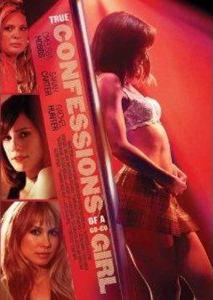
So, late, late last night, I was laying in bed, trying to get to sleep when I suddenly remembered that I had earlier recorded a movie called Confessions of a Go-Go Girl off of the Lifetime Movie Network. So I turned on the TV and I started watching, hoping that the movie would simply calm my racing mind and help me get to sleep. Instead, I found myself sitting up in bed for the next two hours, totally enraptured with this film.
After the first few minutes, I started to scream until my sister Erin woke up and rushed into my room. “What’s going on!?” she asked. “Erin,” I replied, “you have to watch this movie with me!” Erin stared at me for a few minutes before replying, “Oh my God, Lisa,” and then walking out of the room. So, after that, I started to call random friends, telling them about this movie. Unfortunately, most of them were already asleep since it was like 3 in the morning.
Anyway, long story short — I am really, really tired today! But enough about me. Let’s talk about Confessions of a Go-Go Girl.
Why Was I Watching It?
Okay, my friend Evelyn asked me this same question when I called her up last night at 3 in the morning and tried to convince her to come over and watch this with me. So, as I told her, “Oh. My. God. Are you like kidding me!? Confessions of a Go-Go Girl? How can you not watch it!?”
If I’ve learned anything, it’s that if “Confessions” appears in the title of a movie, there’s about a 75% chance that it’s going to be a lot of fun. And if that “Confessions” movie happens to be a Lifetime movie, than those chances increase to 99%.
Add to that, these aren’t just the confessions of a go-go dancer. No, they are the confessions of a go-go girl. In other words, the whole go-go thing isn’t just a job in this movie. It’s a lifestyle.
What’s It About?
It’s yet another Canadian film that’s found a home on the Lifetime Movie Network. In this one, Jane McCoy (played by Chelsea Hobbs) is a sweet and innocent aspiring actress who, in order to make some extra money, secretly takes a job as a “go-go dancer” at a sleazy bar. Under the influence of an older, cocaine-addicted dancer (played by Sarah Carter), Janet quickly starts a downward spiral of drugs, decadence, and alienation. As her new identity as a go-go girl starts to dominate her life, Jane soon finds herself growing distant from her wealthy family, her boring boyfriend, and her stridently scary drama teacher.
What Worked?
Oh my God, this is like the ultimate Lifetime movie. Over-the-top, melodramatic, awkwardly moralistic, and amazingly silly, Confessions of a Go-Go Girl is a camp masterpiece that simply has to be seen to be believed.
Nothing happens in this movie that you couldn’t predict within the first few minutes. The film’s genius is not that it does anything unexpected. Instead, it’s that it takes the expected to such an extreme. Listen, we all know, from the minute that Jane first dances, that she’s going to eventually end up becoming jaded and cynical. What we could never guess is that it’s pretty much going to happen right after the first dance. It’s kinda like one of those old anti-drug films where all it took was one puff off of a “marijuana cigarette.” One puff and you’re a giggling psycho. One dance and suddenly, your soul fades away. This is the type of film where we know that Jane has become a bad girl because she starts to part her hair down the middle and grow out her bangs.
Plus, as I’ve mentioned so many times before, I love to dance, I love to watch others dance, and if nothing else, this movie had a lot of dancing. Watching this movie, I was surprised to discover that sordid, Canadian go-go clubs apparently are capable of providing Broadway-style dance shows. I mean, I’m not big into strip clubs but, from my experience, most of them just seem to involve a runway, a pole, and a lot of plastic. I mean, it’s fun to grab onto that pole and spin around and go, “Wheeee!” but it’s not exactly exciting to watch (or, at least, it’s not for me). But in Canadian go-go clubs, the dance routines have elaborate costumes, ironic themes, and really impressive lighting. After watching this film, I realized that I really want to move up to Canada and become a go-go dancer. Seriously.
Eventually, Jane is approached by a rival go-go club promoter who tells her that he’s seen her perform and, “I remember you dancing in white panties.” This line highlights the fact that this film is obsessed with underwear. And that’s okay because, honestly, who isn’t? Watching this film reminded me of an ongoing debate that I have going with Erin concerning whether or not fancy, pretty, colorful lingerie more sexy than boring, blah, cotton, white underwear. This movie seemed, ultimately, to side with my sister in favor of the boring undies. Obviously, I disagree but the film still gave me a lot to think about. I don’t know, maybe I should start a poll or something. Do any of our male readers have an opinion on the underwear question? Please, use the comments section to let your voice be heard.
What Did Not Work?
When taken on its own terms, the entire film worked. If I’m secretly a kitty cat in human disguise than the Lifetime Movie Network is my catnip and that’s largely because of silly, over-the-top movies like this.
Actually, I do have one or two complaints. First off, the lead character is named Jane McCoy and oh my God, is that not just one of the most bleh names in history? Seriously, she should have been named Lisa Marie McCoy or something. Secondly, Jane’s boyfriend (played by Travis Milne) was soooo boring. I believe the character was named Eric but they might as have just named him “Plastic Man” because seriously, he had all the personality of one of the mannequins from those Old Navy commercials. To me, Eric’s character was defined by the moment when, as Jane went down on him, he said, “I don’t think I know you anymore.” Double bleh on him.
“OMG! Just like me!” Moments
Oh. My. God. There were so many of these moments that I don’t even know where to begin. I love dancing and I love having fun while I’m dancing so watching this film was kinda like peering in to my life in an alternative, Lifetime-based universe.
Lessons Learned
Apparently, I’m incapable of not relating everything I see to my own life. Also, I have absolutely no impulse control because I just ordered the 11 x 17 Confessions of a Go Go Girl movie poster off of Amazon.
As part of my mission to see every film ever nominated for best picture, I watched George Stevens’ A Place In The Sun this weekend. A Place in the Sun was released in 1951. It was a front-runner for best picture but in an upset, it lost to An American In Paris. (Another best picture loser that year: A Streetcar Named Desire.)
Montgomery Clift plays George Eastman, a poor man with a religious fanatic mother and a wealthy uncle. Looking to make his fortune (i.e., to find his “place in the sun), George gets a job working in his uncle’s factory and quickly starts a romance with one of his co-workers, the shy and insecure Alice (Shelley Winters). However, even as he and Alice settle down to a life of dreary romantic bliss, George discovers that the Eastman name also allows him to mingle with (if never truly belong to) high society. He meets the rich (and shallow) Angela Vickers (played by Elizabeth Taylor) and soon, he’s also romancing her. Neither Angela or Alice is aware of the other’s existence and for a while, George has the best of both the world he desires and the world in which he actually belongs. Eventually, George decides that he wants to marry Angela and become a part of her world. However, there’s a problem. Alice is pregnant and demanding that George marry her or else. The increasingly desperate George quickly decides that there’s only one way to get Alice out of his life…
A Place in the Sun was based very loosely on Theodore Dreiser’s 1925 novel, An American Tragedy. While the movie remains (more or less) faithful to the novel’s plot, director Stevens jettisons most of Dreiser’s heavy-handed Marxism and instead concentrates on the more melodramatic elements of the story. The end result is a glorious soap opera that is occasionally a bit tacky and heavy-handed but always watchable and entertaining.
Stevens is helped by the three lead performances. As Angela, a stunningly beautiful Elizabeth Taylor manages to be both calculating and clueless, seductive and innocent. As her counterpart, Shelley Winters gives a really brave performance as Alice. The film is structured that its impossible not to feel sorry for Alice. The genius of Winters performance is that she (and director Stevens) allowed Alice to become a real, flawed human being as opposed to just a symbol of victimization. However, the film is truly dominated by Montgomery Clift. Clift is in just about every scene and his own rather fragile persona translates wonderfully in the role of George. Was Montgomery Clift ever as handsome as he was in A Place In The Sun? He gives a perfect performance as the type of guy that every girl has known, the guy that we fell in love with not because of who he was but who we thought he could be. These are the guys who always end up breaking our hearts, they’re the ones who we still can’t help but think about years later, always wondering “why?”
Unlike a lot of older films, A Place in the Sun remains remarkably watchable and relevent today. Perhaps its most famous scene involves a capsized rowboat and oh my God, that scene freaked me out so much. Admittedly, a lot of that had to do with the fact that I have this morbid fear of drowning (and, like one of the characters in this film, I can’t swim) but director Stevens also does a great job building up the scene’s suspense. He makes brilliant use of sound especially, in much the same way that Francis Ford Coppola would later use that roaring train in The Godfather. Seriously, I watched that scene with my hands literally over my eyes, just taking an occasional peek until it was all over.
One last note — there’s an actor in this film who plays a detective. You’ll see him if you play the trailer at the top of the post. His big line is “You’re under arrest.” I have no idea who this actor was but he had one of the most authentic and memorable faces that I’ve ever seen in a movie, regardless of when the movie was made. He had the type of presence that reminded me why I love character actors.
It’s been a while since I did a “scene that I love,” so let’s remedy that situation with this short but memorable scene from Shark Attack 3, starring John Barrowman.
(By the way, boys — in real life, unlike in this particular movie, this approach only work if you’re James Franco.)
Last night, as part of my continuing mission to see every film ever nominated for best picture, I watched Sidney Lumet’s Dog Day Afternoon. Dog Day Afternoon was released in 1975. Though nominated for best picture, it lost to One Flew Over the Cuckoo’s Nest.
In Dog Day Afternoon, Al Pacino plays Sonny, a nervous Viet Nam vet who, along with the dim-witted and possibly crazy Sal (John Cazale), attempts to rob a bank. Unfortunately for him, Sonny doesn’t really know what he’s doing and literally within minutes of him first drawing his gun, the bank is surrounded by cops. The robbery quickly descends into a hostage situation. As Pacino negotiates with a NYC police detective (Charles Durning), a crowd of onlookers gathers around the bank and starts to cheer with every defiant word that comes out of Sonny’s mouth. Sonny discovers he likes his new-found fame. In the film’s most famous scene, he stands outside the bank and leads the crowd in a chant of “Attica! Attica!” Eventually, Durning learns that Pacino’s motive for robbing the bank was to steal enough money for his suicidal lover (Chris Sarandon) to get a sex change operation. However, now that the robbery has failed, Pacino has a new plan. He demands a flight out of the country. Meanwhile, the hostages inside the bank start to form their own odd kinship with the two bank robbers and Durning finds himself being challenged by the F.B.I., who have a much more drastic plan for how to end the situation.
Dog Day Afternoon is a remarkable film, a dark comedy of desperation and human nature that, by the final scene, reaches a certain tragic grandeur. Sidney Lumet (who made his directorial debut in 1957 with 12 Angry Men and whose most recent film, Before the Devil Knows Your Dead, was released 51 years later) was one of the most important (if underrated) filmmakers of the 1970s and he proves it here. From the opening montage of New York City looking so wonderfully sordid at the height of the grindhouse era to Pacino’s bumbling initial attempt to rob the bank to the film’s violent and abrupt conclusion, Lumet captures your attention and, much like Al Pacino in this movie, he holds it hostage until the movie ends.
Dog Day Afternoon is probably one of the best acted films that I’ve ever seen. This is one of those films where every role — regardless of how large or how small — fills like an actual human being. By the end of the film, you feel as if you know the bank managers and the tellers almost as well as you know Pacino, Durning, Sarandon, and Cazale. Pacino is simply amazing here, giving a nervous, jittery performance as a character who manages to be both selfish and selfless at the same time. Durning, meanwhile, is hilarious as the frazzled detective who finds himself steadily overwhelmed by the circus around him. Much as you can’t help but root for Pacino no matter how self-absorbed he might act, you can’t help but sympathize with During, even if he is a member of the establishment. As Pacino’s transsexual lover, Sarandon plays his role with a fragile dignity that prevents the role from becoming a stereotype. However, for me, the film truly belongs to John Cazale who is both scary and oddly child-like as Sal. As seen below, Cazale improvised one of the best lines in the movie when he replies to Pacino’s question regarding to which country Cazale wants to make his escape.
Now, this is going to be difficult for me to admit but, as thrilling as it was to watch Pacino shout, “Attica! Attica!,” I honestly had no idea why that phrase was the one he chose to use to work up the crowd. In fact, if I had written this review right after seeing (or while watching) the film last night, I probably would have doubled embarrassed myself by claiming that Pacino was shouting “Ateka.” However, for once, I decided to be a responsible reviewer and I actually did some research as opposed to just going with my first conclusion. So, as a result of this film, I can now say that I know about the Attica Prison Riots of 1971.
But what’s truly significant about that “Attica” chant is that it’s the only part of this film (beyond a few fashion choices) that feels dated. As I watched the movie, it was easy for me to imagine myself jumping on twitter and seeing “#Attica” as a trending topic. We’ve all seen the famous “Attica!” scene in countless compilations but what’s often forgotten is how that sequence ends. When Pacino, obviously a bit star struck by all the attention, goes outside and start chanting a second time, he is suddenly tackled from behind by one of the bystanders who has decided to play hero. And as Pacino goes down to the ground, the same crowd that was previously cheering him now cheers for the new object of their affection. If nothing else, Dog Day Afternoon showed why sometimes we all need to escape to Wyoming.
This weekend, I saw The Adjustment Bureau, a film that I’ve been looking forward to ever since I first saw the trailer back in November.
In The Adjustment Bureau, Matt Damon plays a New York politician who loses a race for the U.S. Senate and falls in love with Emily Blunt on the same night. Inspired by some advice from Blunt, Damon gives a concession speech which, to me, sounds kinda whiney but apparently, the voters of New York find it to be amazingly compelling. You should understand, of course, that this is a mainstream Hollywood version of the American political system. What that means is that Damon’s character, of course, is a Democrat who would have won that election if not for the fact that apparently, a newspaper ran a photo of him mooning some people in college. Now, seriously, consider that. Not only does this movie start out by asking us to believe that a Democrat could lose a statewide election in New York but it also asks us to believe that he would lose for that reason. Meanwhile, in the real world, Massachusetts (one of the few states more Democratic than New York) is electing a Republican who used to be a Playgirl centerfold to the Senate. Anyway, the film continues to show its political sophistication by having Damon give a speech in which he says that political consultants have too much influence in the American political system and apparently, every voter in New York goes, “Oh my God! He’s right!” I don’t claim to be an expert on politics but seriously, all of the “political” scenes in this film just ring so amazingly false.
Anyway, Damon’s speech is apparently so amazing that his career is revived and soon, he’s being spoken of as a front-runner for the other senate seat (apparently, this film takes place in a world where New York would not only elect one Republican to the Senate but two). In fact, some people are apparently talking him up as a future President. But Damon doesn’t care about that. All he cares about is winning the heart of Emily Blunt.
The Adjustment Bureau, however, has other ideas. What is the Adjustment Bureau? Well, the movie tries to keep it all ambiguous and mysterious but essentially, the members of the Adjustment Bureau are angels and the Chairman they answer to is God. And God has already mapped out Matt Damon’s destiny and Emily Blunt is not meant to be a part of it. (How Calvinistic.) However, Damon insists on pursuing her until eventually, he finds himself being continually pursued by three members of the Adjustment Bureau — the blandly corporate John Slattery, sympathetic Anthony Mackie, and finally the cold and intimidating Terrence Stamp. The whole thing finally culminates in an Inception-like chase through the streets of New York City with Damon insisting that he has free will and the Adjustment Bureau insisting that no, he does not.
What a frustrating film! The plot is intriguing and potentially thought-provoking but the film doesn’t bother with following any of its themes to any sort of real conclusion. In the end, all of the questions raised simply turn out to be an excuse to film Matt Damon being chased across various New York landmarks. Don’t get me wrong. I’m always more than happy to spend money to watch Matt Damon get chased. He looks good running for his life. But still, it’s hard not to look back at the movie and think, “After all that set-up, that’s it?” The Adjustment Bureau is like Inception without that spinning dreidel.
Still, I enjoyed The Adjustment Bureau despite myself and I can’t exactly say that I’m proud of that. With each of its vaguely New Agey themes and its rather simplistic emotional content, this is the type of film that invites me to be cynical. However, I enjoyed the movie even if I did find myself rolling my eyes during some of the more “sincere” moments. A lot of this had to do with the chemistry between Matt Damon and Emily Blunt. They made a likable and cute couple. As well, Mackie, Stamp, and especially Slattery were well-cast as members of the Adjustment Bureau. Director George Nolfi comes up with a few striking images and, if nothing else, he knows how to film people being chased. Then again, it may have just been the fact that I saw this film with a special someone and therefore, I didn’t feel like I had to be cynical. I could just embrace all the emotional silliness in all of its simple-minded glory and as a result, I had a good time.
That said, I don’t think I’ll be seeing The Adjustment Bureau a second time or buying it on DVD. Unlike 0ther guilty pleasures, I don’t imagine this is a film that’s going to hold up well on repeat viewings.
This afternoon, as part of my mission to see every single film ever nominated for best picture, I watched Alexander Korda’s 1933 biopic The Private Life of Henry VIII.
Now, I have to admit that I’ve never been a big fan of the historical King Henry VIII as I have a hard time finding much sympathy for a man who beheads one wife, not to mention two of them. I like to imagine that he met his end in much the same way that Joe Spinell meets his end at the end of Maniac, with all of his dead wives suddenly showing up and ripping off his head. But, Henry is one of those larger-than-life historical figures that always seems to end up as the subject of movies, speculative fiction, and, of course, Showtime television series.
The Private Life of Henry VIII is one of the better known recreation of Henry’s life on-screen. For the most part, the film ignores Henry’s policies as king and instead is a darkly humorous recreation of his relationships with five of his six wives. (His first marriage, to Catherine of Aragon, is ignored.) The episodic film opens with the execution of Anne Boyelen (Merle Oberon). This sequence establishes the film’s tone early and it’s actually a lot more cynical than we usually expect a film from 1933 to be. In between shots of Boyelen waiting to meet her fate, we get extended scenes of two executioners — one French and one English — arguing about which nationality is better when it comes to chopping off heads. Meanwhile, the members of Henry’s court spend their time whispering innuendo about Henry’s new wife, Jane Seymour (Wendy Barrie). When Henry (played by Charles Laughton) finally shows up on the scene, he turns out to be a buffoon, a childish man who happens to control the destiny of England. After Jane dies in childbirth, Henry marries Anne of Cleves (played by Laughton’s wife, Elsa Lanchester). Anne, however, finds Henry to be repulsive and, in the film’s most obviously comedic segment, she goes out of her way to make herself as sexually unappealing as possible in order to convince Henry to give her a divorce. (This, of course, led to the split between England and the Catholic Church but the film doesn’t dwell on that. This is a comedy, not Man For All Seasons.) After the divorce, Henry finally marries Catherine Howard (Binnie Barnes) who has spent the whole movie pursuing Henry. For the first time in the movie, Henry is portrayed as being truly in love, unaware (at first) that Catherine only married him for his crown and is actually having an affair with Thomas Culpepper (Robert Donat).
The Private Life of Henry VIII was not the first movie to be made about Henry VIII but it’s probably the most influential because of Charles Laughton’s Oscar-winning performance in the title role. Laughton’s performance pretty much set the standard as far as future Henry’s were concerned. His Henry is buffoonish womanizer who does everything to excess. (This is the film that pretty much created the whole image of monarchs as men who don’t use forks, knives, or spoons.) However, as over-the-top as Laughton’s performance may seem, it’s actually full of very subtle moments that suggest the actual human being lurking underneath all of the bluster. It’s hard not to sympathize with Laughton’s Henry as he struggles to explain what sex is to Anne of Cleves or with his obvious pain when he discovers that he’s been betrayed by the only one of his wives that he actually loved.
(Of course, any similarity between Laughton’s Henry and the real-life Henry is probably a coincidence.)
The Private Life of Henry VIII was the first British film ever nominated for best picture and, perhaps because it wasn’t made by the Hollywood establishment, it hasn’t aged as terribly as most films from the 30s. While the film does have its slow spots, the performances of Laughton, Oberon, and Lanchester still hold up well and some of the film’s dark comedy almost feel contemporary. Oddly enough, this British film about English history lost to an American film about English history, Cavalcade.
(I should mention that I haven’t seen Cavalcade so I can’t say whether it was a better film. I’m going to have to see Cavalcade eventually but it’ll be later than sooner as the movie is only available as part of a DVD boxed set that costs close to 300 dollars. Agck!)