Today, if Cecil B. DeMille is known at all, it’s for directing Biblical epics like The Ten Commandments. However, there was much more to DeMille’s career than just that one film. DeMille got his start during the early silent era and he quickly established himself as one of Hollywood’s first superstar directors. Unlike many of his contemporaries, he survived the transition to sound and he remained a force in Hollywood at a time when many of the other silent directors were fading into obscurity. DeMille played a key role in the founding of what would become the American film industry. He began his career in 1914 and he made his last film in 1958. That’s quite a legacy.
In 1950, when filming Sunset Boulevard, Billy Wilder needed someone to play the key role of one of Norma Desmond’s former directors. Who better to represent the old style of Hollywood than Cecil B. DeMille? In the scene below, DeMille plays himself. Norma Desmond is, of course, played by Gloria Swanson, an actress whom DeMille had directed in the past.
From Sunset Boulevard, here’s a scene that I love.
4 (or more) Shots From 4 (or more) Films is just what it says it is, 4 (or more) shots from 4 (or more) of our favorite films. As opposed to the reviews and recaps that we usually post, 4 (or more) Shots From 4 (or more) Films lets the visuals do the talking.
June 22nd would have been the the 120th birthday of Billy Wilder.
Billy Wilder was born in what was-then Austria-Hungary and what is today Poland. Having started his film career as a screenwriter in Germany, Wilder fled to the United States after the rise of Hitler. (Many members of Wilder’s family would subsequently die in the Holocaust.) He went on to establish himself as one of the great studio directors, a filmmaker who could seemingly master any genre and whose films were often distinguished by an irreverent wit and a welcome skepticism when it came to accepting any sort of conventional wisdom. He made the type of films that could only be made by someone who had seen humanity at its worst but who also understood what people were capable of at their best. Wilder made dramas that could make you laugh and comedies that could make you cry. He was a master filmmaker, one whose work continues to influence directors to this day.
Belatedly, in honor of Billy Wilder’s legacy, the Shattered Lens presents….
4 Shots From 4 Billy Wilder Films
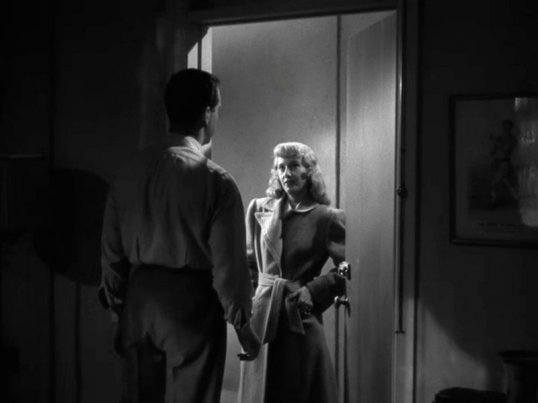
Double Indemnity (1944, dir by Billy Wilder, DP: John Seitz)
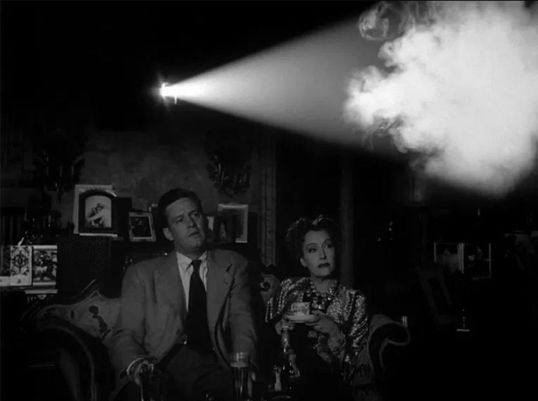
Sunset Boulevard (1950, dir by Billy Wilder, DP; John F. Seitz)
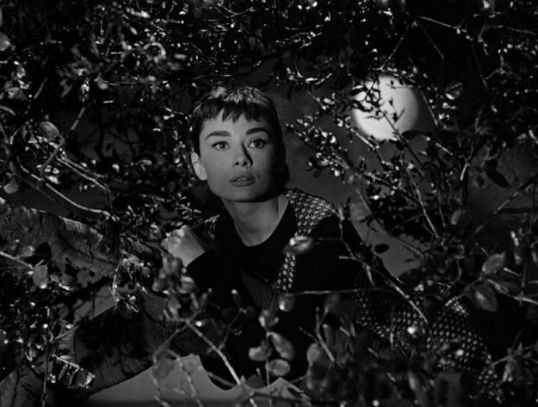
Sabrina (1954, dir by Billy Wilder, DP: Charles Lang)
The Apartment (1960, dir by Billy Wilder, DP: Ernest Laszlo)
4 Or More Shots From 4 Or More Films is just what it says it is, 4 shots from 4 of our favorite films. As opposed to the reviews and recaps that we usually post, 4 Shots From 4 Films lets the visuals do the talking!
4 Or More Shots From 4 Or More Films is just what it says it is, 4 shots from 4 of our favorite films. As opposed to the reviews and recaps that we usually post, 4 Shots From 4 Films lets the visuals do the talking!
Today, we pay tribute to a classic year in film. It’s time for….
4 Shots From 4 1950 Films
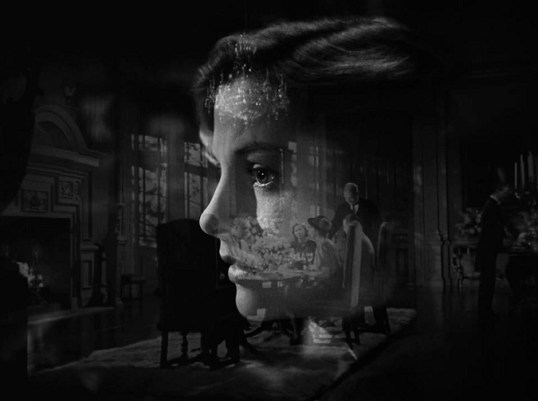
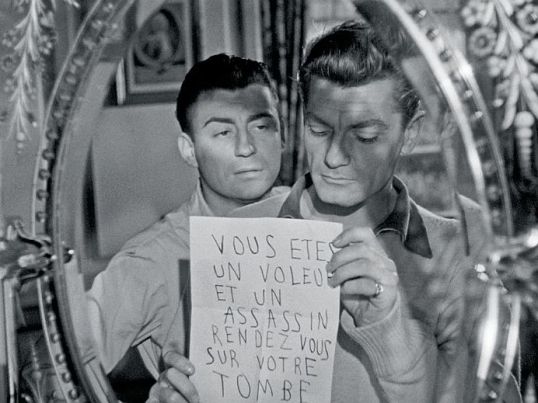
Orpheus (1950, dir by Jean Cocteau, DP: Nicolas Hayer)
Sunset Boulevard (1950, dir by Billy Wilder, DP; John F. Seitz)
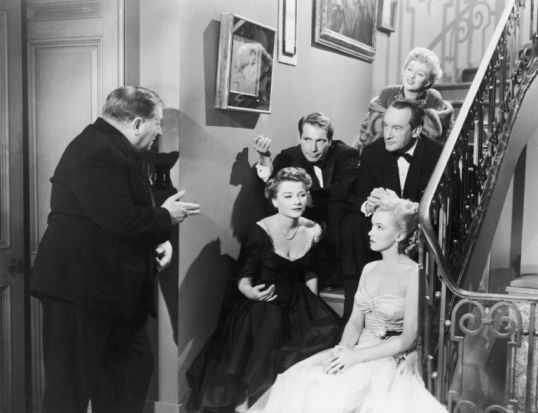
All About Eve (1950, dir by Joseph L. Mankiewicz, DP: Milton R. Krassner)
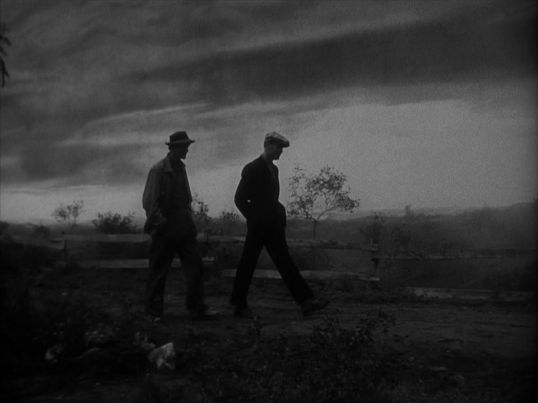
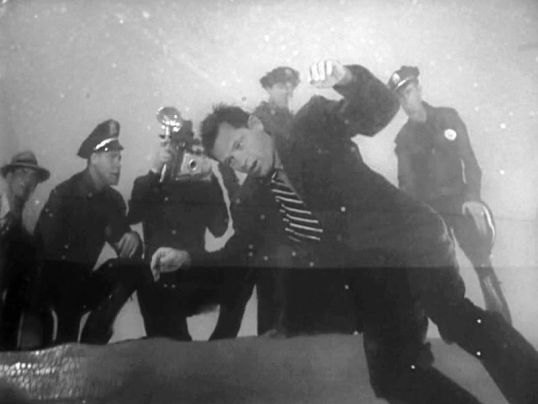
In A Lonely Place (1950, dir by Nicholas Ray, DP: Burnett Guffey)
4 (or more) Shots From 4 (or more) Films is just what it says it is, 4 (or more) shots from 4 (or more) of our favorite films. As opposed to the reviews and recaps that we usually post, 4 (or more) Shots From 4 (or more) Films lets the visuals do the talking.
117 years ago today, Billy Wilder was born in what was-then Austria-Hungary and what is today Poland. Having started his film career as a screenwriter in Germany, Wilder fled to the United States after the rise of Hitler. (Many members of Wilder’s family would subsequently die in the Holocaust.) He went on to establish himself as one of the great studio directors, a filmmaker who could seemingly master any genre and whose films were often distinguished by an irreverent wit and a welcome skepticism when it came to accepting any sort of conventional wisdom. He made the type of films that could only be made by someone who had seen humanity at its worst but who also understood what people were capable of at their best. Wilder made dramas that could make you laugh and comedies that could make you cry. He was a master filmmaker, one whose work continues to influence directors to this day.
Today, in honor of Billy Wilder’s legacy, the Shattered Lens presents….
4 Shots From 4 Billy Wilder Films
Double Indemnity (1944, dir by Billy Wilder, DP: John Seitz)
Sunset Boulevard (1950, dir by Billy Wilder, DP: John F. Seitz)
The Apartment (1960, dir by Billy Wilder, DP: Ernest Laszlo)
The Private Life of Sherlock Holmes (1970, dir by Billy Wilder, DP: Christopher Challis)
Today, the Shattered Lens observes the 141st birthday of filmmaker Cecil B. DeMille.
Today, if Cecil B. DeMille is known at all, it’s for directing Biblical epics like The Ten Commandments. However, there was much more to DeMille’s career than just that one film. DeMille got his start during the early silent era and he quickly established himself as one of Hollywood’s first superstar directors. Unlike many of his contemporaries, he survived the transition to sound and he remained a force in Hollywood at a time when many of the other silent directors were fading into obscurity. DeMille played a key role in the founding of what would become the American film industry. He began his career in 1914 and he made his last film in 1958. That’s quite a legacy.
In 1950, when filming Sunset Boulevard, Billy Wilder needed someone to play the key role of one of Norma Desmond’s former directors. Who better to represent the old style of Hollywood than Cecil B. DeMille? In the scene below, DeMille plays himself. Norma Desmond is, of course, played by Gloria Swanson, an actress whom DeMille had directed in the past.
From Sunset Boulevard, here’s a scene that I love.
4 (or more) Shots From 4 (or more) Films is just what it says it is, 4 (or more) shots from 4 (or more) of our favorite films. As opposed to the reviews and recaps that we usually post, 4 (or more) Shots From 4 (or more) Films lets the visuals do the talking.
115 years ago today, Billy Wilder was born in what was-then Austria-Hungary and what is today Poland. Having started his film career as a screenwriter in Germany, Wilder fled to the United States after the rise of Hitler. (Many members of Wilder’s family would subsequently die in the Holocaust.) He went on to establish himself as one of the great studio directors, a filmmaker who could seemingly master any genre and whose films were often distinguished by an irreverent wit and a welcome skepticism when it came to accepting any sort of conventional wisdom. He made the type of films that could only be made by someone who had seen humanity at its worst but who also understood what people were capable of at their best. Wilder made dramas that could make you laugh and comedies that could make you cry. He was a master filmmaker, one whose work continues to influence directors to this day.
Today, in honor of Billy Wilder’s legacy, the Shattered Lens presents….
4 Shots From 4 Billy Wilder Films
Double Indemnity (1944, dir by Billy Wilder, DP: John Seitz)
Sunset Boulevard (1950, dir by Billy Wilder, DP; John F. Seitz)
The Apartment (1960, dir by Billy Wilder, DP: Ernest Laszlo)
The Private Life of Sherlock Holmes (1970, dir by Billy Wilder, DP: Christopher Challis)
-Gloria Swanson as Norma Desmond in SUNSET BOULEVARD
I hadn’t seen Billy Wilder’s SUNSET BOULEVARD for quite some time until a recent rewatching. I’ve told you before how much I love a good Hollywood behind-the-scenes movie, and this one is no exception. But as I watched the tale unfold, I began to see the film in a different light. SUNSET BOULEVARD is always called a film noir classic, but this go-round found me viewing it through a lens of horror.
It’s certainly got all the elements of film noir. There’s protagonist William Holden, trapped in a bottomless downward spiral. Gloria Swanson is the femme fatale who ensnares Holden and pulls him into her dark web. The cinematography of John F. Seitz portrays a shadow-world of despair. And we’ve got Billy Wilder directing, the man behind noir masterpiece DOUBLE INDEMNITY, working…
“All right, Mr. De Mille, I’m ready for my close-up!”
— Norma Desmond (Gloria Swanson) in Sunset Boulevard (1950)
First released in 1950 and nominated for Best Picture, Billy Wilder’s Sunset Boulevard is one of the greatest and most influential films of all time. It’s also something of a difficult film to review because, in order for one to truly understand its greatness, it needs to be seen. A description simply will not do. You have to experience, first hand, the performances of Gloria Swanson, William Holden, and Eric Von Stroheim. You have to see, with your own eyes, the way that Billy Wilder perfectly balances drama, satire, and horror. I can tell you about how cinematographer John F. Seitz perfectly contrasts the empty glossiness of Hollywood with the dark shadows that fill the ruined mansion of Norma Desmond but, again, it’s something that you owe it to yourself to see. You need to hear the perfectly quotable dialogue with your own ears. You need to experience Sunset Boulevard for yourself.
And, while you’re watching it, think about how easily one bad decision could have screwed up the entire film. Sunset Boulevard is famous for being narrated by a dead man, a screenwriter named Joe (William Holden). When we first see Joe, he’s floating in a pool. Originally, however, the film was to open with the dead Joe sitting up in the morgue and telling us his story. Reportedly, preview audiences laughed at the scene and it was cut out of the film. And Wilder made the right decision to remove that scene. Sunset Boulevard may be famous for being a strange film but, when you actually watch it, you realize just how controlled and disciplined Wilder’s direction actually is. Sunset Boulevard may be weird but it’s never less than plausible.
Joe Gillis is a former newspaper reporter-turned-screenwriter. He may have started out as an idealist but, as the film begins, he’s now just another Hollywood opportunist. While trying to hide from a man looking to repossess his car, Joe stumbles upon a dilapidated old mansion. The owner of the mansion is none other than Norma Desmond (Gloria Swanson), a silent film star who has sent been forgotten but who still dreams of making a comeback. (When Joe tells her that she used to be big, Norma famously responds that she’s still big and it’s the pictures that have gotten small.) Norma has written a script and the opportunistic Joe convinces her to hire him as a script doctor.
Joe moves into the mansion and discovers a world that has never moved past the 1920s. Norma’s butler and former director, Max (played by Gloria Swanson’s former director Erich Von Stroheim) writes letters that he claims were sent by Norma’s fans. Norma spends her time watching her old movies. Occasionally, other forgotten silent screen stars (including Buster Keaton) drop by to play cards.
Encouraged by Joe’s vapid flattery and a mysterious phone call from a Paramount exec, Norma has Max drive her down to the studio. Greeted by the older employees and ignored by the younger, Norma visits with director Cecil B. DeMille (who plays himself). In a rather sweet scene, she and DeMille remember their shared past. DeMille obviously understands that she’s unstable but he treats her with real respect, in contrast to the manipulative Joe.
As for Joe, he’s fallen for a script reader named Betty (Nancy Olson) and wants to escape from being dependent on Norma. However, Norma has invested too much in her “comeback” to just allow Joe to leave…
Sunset Boulevard is a wonderful mix of film noir and Hollywood satire. And, though the film may be narrated by Joe and told from his point of view, it’s firmly on Norma’s side. As easy as it is to be dismissive of Norma’s delusions, she’s right in the end. It is the pictures that have gotten small and, as she proves towards the end of the film, she is still as capable of making a grand entrance as she ever was.
Joe may have been too stupid to realize it but Norma Desmond never stopped being a star.
Last year, I gave up control to the reader of the site and you know what? I kinda liked it in a sneaky, dirty little way. So I figured, why not do it again?
Here’s how it works. Earlier today, I put on a blindfold and then I randomly groped through my DVD collection until I had managed to pull out ten movies. I then promptly stubbed my big toe on the coffee table, fell down to the floor, and spent about 15 minutes cursing and crying. Because, seriously, it hurt! Anyway, I then took off the blindfold and looked over the 10 movies I had randomly selected. Two of them — Dracula A.D. 1972 and A Blade in the Dark — were movies that I had already reviewed on this site. So I put them back and I replaced them with two movies of my own choosing — in this case, Eternal Sunshine of the Spotless Mind and The Unbearable Lightness of Being.
Between now and next Sunday (March 27th), people will hopefully vote in this poll. On Sunday, I will watch and review whichever movie has received the most votes. Even if that movie turns out to be Incubus. *shudder* (Have I mentioned how much I love Eternal Sunshine of the Spotless Mind?)
Now, of course, there’s always the possibility that no one will vote in this poll and I’ll end up looking silly. Those are the risks you take when you set up an online poll. However, I have a backup plan. If nobody votes, I will just spend every day next week shopping for purses at Northpark Mall and then blogging about it. And by that, I mean blogging every single little detail. So, it’s a win-win for me.
Anyway, here’s the list of the 10 films:
1) Barbarella— From 1968, Jane Fonda plays Barbarella who flies around space while getting molested by …. well, everyone. Directed by Roger Vadim.
2) Barry Lyndon — From 1975, this best picture nominee is director Stanley Kubrick’s legendary recreation of 18th-century Europe and the rogues who live there.
3) Caligula — Yes, that Caligula. From 1979, it’s time for decadence, blood, and nudity in the Roman Empire. Starring Malcolm McDowell, Helen Mirren, Peter O’Toole, John Gielgud, John Steiner, and Theresa Ann Savoy.
4) Eternal Sunshine of the Spotless Mind — Oh my God, I love this movie. Jim Carrey breaks up with Kate Winslet and deals with the pain by getting his mind erased by Tom Wilkinson, Mark Ruffalo, Kirsten Dunst, and an amazingly creepy Elijah Wood.
5) Incubus — From 1969, this low-budget supernatural thriller not only stars a young William Shatner but it also features the entire cast speaking in Esperanto. For. The. Entire. Movie.
6) Inland Empire — If you want to give Lisa nightmares, you can vote for David Lynch’s disturbing 3-hour film about lost identity, sexual repression, human trafficking, and talking rabbits.
7) Kiss Me Deadly — From 1955, this Robert Aldrich-directed cult classic features hard-boiled P.I. Mike Hammer and a host of others chasing after a mysterious glowing box and accidentally destroying the world in the process.
8 ) Mandingo — From 1975, this infamous little film is a look at slavery, incest, and rheumatism in the pre-Civil War South. Starring James Mason, Ken Norton, Perry King, and Susan George. Supposedly a really offensive movie, one I haven’t sat down and watched yet.
9) Sunset Boulevard — From 1950, hack screenwriter William Holden ends up the kept man of psychotic former screen goddess Gloria Swanson. Directed by Billy Wilder.
10) The Unbearable Lightness of Being — From 1988, Philip L. Kaufman’s adaptation of Milan Kundera’s classic novel (one of my favorite books, by the way) features Daniel Day-Lewis, Juliette Binoche, and Lena Olin having sex and dealing with ennui. After I first saw this movie, I insisted on wearing a hat just like Lena Olin did.
Everyone, except for me, is eligible to vote. Vote as often as you want. The poll is now open until Sunday, March 27th.
(Edit: Voting is now closed but check below for the results! — Lisa)