Vacation Shows That Chris Hemsworth Is Quite Mighty (Red Band)


Vacation2015

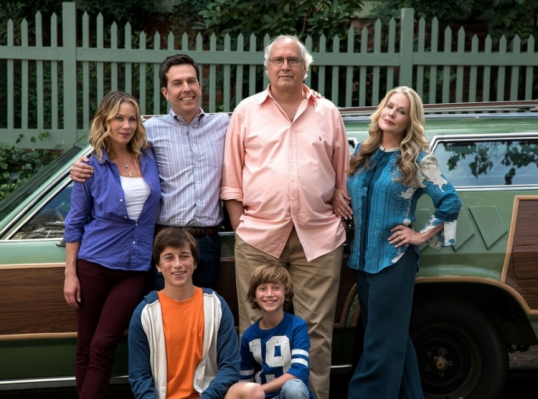
Any kid growing up during the 1980’s remembers having seen the original Chevy Chase comedy classic National Lampoon’s Vacation. While subsequent sequels weren’t as memorable as the first film it didn’t diminish just how fun that original one was.

It’s been many, many years since the last Vacation film but now it looks like we have a new one set to release this year. Chevy Chase returns, though it would seem it might be more of a cameo. This latest film in the series looks to focus on Clark Griswold’s oldest son, Rusty, who now yearns to relive the happiest time of his life as a child: the road trip to Wally World,

The trailer looks to up return the raunch in the series with some help from Thor himself, Chris Hemsworth. From looking at the trailer’s payoff it looks like Hemsworth is quite mighty indeed.

Vacation is set to release this July, 31, 2015.

Ant-Man Keeps the Marvel Train Moving Along


Ant-Man

Will Marvel Studios have it’s first misstep when Ant-Man arrives in theaters this July? Or will it surpass many people’s expectations the way Guardians of the Galaxy did when it came out late summer of 2014? These are questions that fans and critics alike have been pondering since the rather underwhelming teaser trailer which was released earlier this year.

Now, with Avengers: Age of Ultron just weeks away from bulldozing over everything in it’s way it looks like Marvel and Disney have turned their attention to getting the Ant-Man hype train up to speed. If any film needs some fueling up it would be this one which has had a more than contentious production. It loses it’s original director in Edgar Wright after he and the heads at Marvel Studios (Kevin Feige) disagreed on how to proceed with the film. The search for a director to replace Wright became a game of which comedic filmmaker would pass on the project next (Peyton Reed finally was the last man standing).

When the teaser finally came out the tone it gave seemed too serious for a film that was being billed as a sort of action-comedy or, at the very least, an action film that included more than the usual comedic beats than past films in the MCU.

Today we see the first official trailer for Ant-Man and gone is the super serious tone of the teaser and in comes a mixture of action and comedy. It’s a trailer that actually gives us an idea of the sort of powers the title character has outside of being just being tiny. Then we get more than just a glimpse of Scott Lang’s main antagonist with Corey Stoll in the role of Darren Cross aka Yellowjacket.

Maybe this film will still end up giving Marvel Studio it’s very first black-eye, but this trailer goes a major way in making sure it doesn’t happen.

Ant-Man is set for a July 17, 2015 release date.

Shattered Politics #93: American Hustle (dir by David O. Russell)


American_Hustle_2013_poster

“Some of this actually happened.”

— Opening Title of American Hustle (2013)

I have always been surprised by how much some people hate the 2013 best picture nominee, American Hustle.  Even two years after the film was first released, you’ll still find people whining that the film felt like David O. Russell’s attempt to remake Goodfellas (yes, I have actually seen more than a few people online making this idiotic claim) or claiming that the movie was overrated or that there wasn’t anyone in the film that they could root for.  While every film has its detractors, I’m always a little bit taken aback by just how passionately some people dislike this film.

Some of it, of course, is because the film that beat American Hustle for best picture was the universally acclaimed 12 Years A Slave.  As hard as it may seem to believe now, there were a lot of people who thought that American Hustle might actually beat 12 Years A Slave.  Strangely enough, a lot of online film bloggers tend to take a Manichaen approach to the Oscars, viewing each year’s race in terms of good and evil. The film that they want to win represents good and, therefore, every competing film must represent evil.  It’s a pretty stupid and immature way of looking at things but, then again, the stupid and immature approach has worked pretty well for Sasha Stone and Ryan Adams over at AwardsDaily.com so who am I to criticize?

Of course, I don’t think it’s a coincidence that the majority of American Hustle‘s most strident online critics have been male.  I imagine that they watched the film and, in Amy Adams and Jennifer Lawrence, they saw every unresolved crush of their adolescence.  When Amy Adams successfully fooled Christian Bale and Bradley Cooper, these critics saw themselves being fooled.  When Jennifer Lawrence called Bale a “sick son of a bitch,” these critics felt that they were being called a sick son of a bitch.  American Hustle is a film about men who don’t know how to talk to women and that probably struck a little too close to home for a lot of those online critics.

(I imagine that the majority of online American Hustle haters probably preferred Rooney Mara’s version of the Girl with the Dragon Tattoo to Noomi Rapace’s.)

Of course, the truth of the matter is that American Hustle was one of the best films of a very good year.  Of all the films nominated for best picture of 2013, American Hustle was my personal favorite.

Based, very loosely, on true story, American Hustle is a period piece.  It takes place in the late 70s, which of course means that we get a lot of great music, a scene in a disco, and clothes that are both somehow ludicrous and to die for at the same time.  It’s a glamorous film about glamorous people doing glamorous and not-so-glamorous things and how can you not love that?

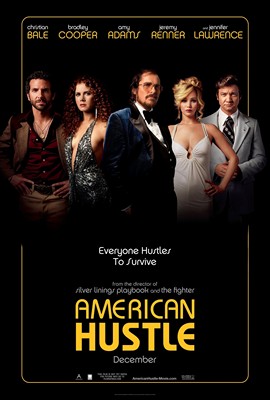
Irving (Christian Bale, giving a brave performance) is a generally nice guy who also happens to be a con artist.  His unlikely partner is Sydney (Amy Adams), a former stripper turned Cosmo intern.  When Sydney is working with Irving, she takes on a totally different identity and tells people that she’s Lady Edith Greensly, a British aristocrat who has international banking connections.  When Sydney plays Edith, she speaks in a posh British accent and what’s interesting is that her accent is often (deliberately) inconsistent.  However, as Irving points out, it doesn’t matter whether her accent is a 100% convincing or not.  What’s important is that people want her to be Lady Edith Greensly and people will make excuses for almost anything as long as it confirms what they want to believe.

Eventually, Irving and Sydney are arrested by ambitious and highly strung FBI Agent Richie DiMaso (Bradley Cooper).  Richie, who spends a good deal of the film with curlers in his hair, lives with his mother and has a boring fiancée who he doesn’t seem to like very much.  (Richie is also briefly seen sniffing coke, which might explain a lot of his more extreme behavior.)  Richie wants to make a name for himself and he views Irving and Sydney as his way to do so.  He blackmails them into helping him set up and arrest crooked politicians and businessmen.  Richie also finds himself growing obsessed with Sydney, who he believes to be English even after she tells him that she isn’t.

All of this eventually leads to Irving and Richie setting up the Mayor of Camden, New Jersey, Carmine Polito (Jeremy Renner).  Polito, who may be corrupt but who also seems to sincerely care about helping the citizens of his town, wants to revitalize gambling in Atlantic City.  Irving and Richie introduce him to FBI agent Paco Hernandez (Michael Pena), who is disguised as Sheik Abdullah and who they claim is interested in investing in Carmine’s plans.  This, of course, leads to a meeting both with a local Mafia don (Robert De Niro) and with several politicians who agree to help out the Sheik out in exchange for money.

(And no, the film did not lie.  This is based on a true story, believe it or not.)

Complicating things is the fact that Irving himself comes to truly like the generous and big-hearted Carmine and how can you not?  When the film was first released, Jeremy Renner was a bit overshadowed by Bale, Cooper, Adams, and Jennifer Lawrence.  However, Renner gives the best performance in the film, playing Carmine with a disarming mix of innocence and shrewdness.  He’s the type of guy who is smart enough to walk out on the first meeting with the fake sheik’s associates but who is still naive enough that he can be charmed by Irving.  When the fake sheik gives Carmine an equally fake knife as a gift, the look of genuine honor on Carmine’s face is heart-breaking.

The other big complication is Irving’s wife, Rosalyn (Jennifer Lawrence).  Rosalyn is jealous, unstable, unpredictable, and, in her own way, one of the smarter people in the film.  She’s also a bit of pyromaniac and, when she accidentally blows up a new microwave, you’re really not surprised.  (And, when Rosalyn starts to obsessively clean the house while singing Live and Let Die at the top of her lungs, I felt like I was watching a blonde version of myself.)  When Rosalyn starts to have an affair of her own, it leads to American Hustle‘s satisfying and twisty conclusion.

(Again, a lot of the same online toadsuckers who irrationally hate American Hustle seem to hold a particular contempt to Jennifer Lawrence’s performance in this film, as if to acknowledge that Lawrence — as always — kicks ass would somehow be a betrayal of Lupita Nyong’o’s award-winning performance in 12 Years A Slave.)

Don’t listen to the haters.  American Hustle is a great film, a stylish and frequently funny look at politics, corruption, and the ways that people con themselves into believing what they want and need to be true.

Trailer: Ant-Man


B6rqrIAIIAELhx3.jpg large

First they said that Guardians of the Galaxy will be the first misstep in the rolling juggernaut train that is the Marvel Cinematic Universe. How could a film adaptation of a comic book that even hardcore readers barely know ever hit it big with the general public. Yet, it more than shot down detractors and nyasayers to become the biggest hit of 2014 and help usher in a major change in how people will now look at the MCU.

So, Guardians of the Galaxy wasn’t the first mistake. Then it has to be 2015’s Ant-Man starring Paul Rudd and a film already known for being the one where Edgar Wright was forced to leave as director. Yes, this will be Marvel Studios first misstep and it will show that Kevin Feige’s producer-driven plan will never trump the creative-driven director tradition.

So, during the season premiere of Agent Carter, we finally have the first official trailer for Ant-Man. Time will tell if this does become Marvel’s first bump in their road to world domination or will it surprise everyone the way Guardians of the Galaxy did this part summer of 2014.

Ant-Man is set for a July 17, 2015 release date.

Review: Fury (dir. by David Ayer)


“Ideals are peaceful. History is violent.”

You know that feeling when a war movie tries so hard to be gritty that it forgets to be anything else? Fury, directed by David Ayer, flirts with that problem but mostly stays on the right side of the line. Released in 2014, this WWII drama follows a five-man American tank crew as they push deeper into Nazi Germany in April 1945. The war is almost over, but as the film constantly reminds us, that only makes the fighting more desperate and meaningless. Ayer, who wrote Training Day and directed End of Watch, clearly wanted to make a grimy, claustrophobic, and visceral experience—not a clean, heroic adventure. And for the most part, he succeeds. But the movie is also uneven, sometimes brilliant, and occasionally frustrating. One thing becomes clear early on: Ayer is not just making a war movie. He is trying to out-war the war movie that changed everything. Saving Private Ryan raised the bar for realistic combat violence in 1998, and ever since, directors have been chasing that opening Omaha Beach sequence. Fury spends its entire runtime trying to shove that bar even higher, especially in its final act, where the violence tips over from realistic into something almost performative—as if Ayer is daring you to look away.

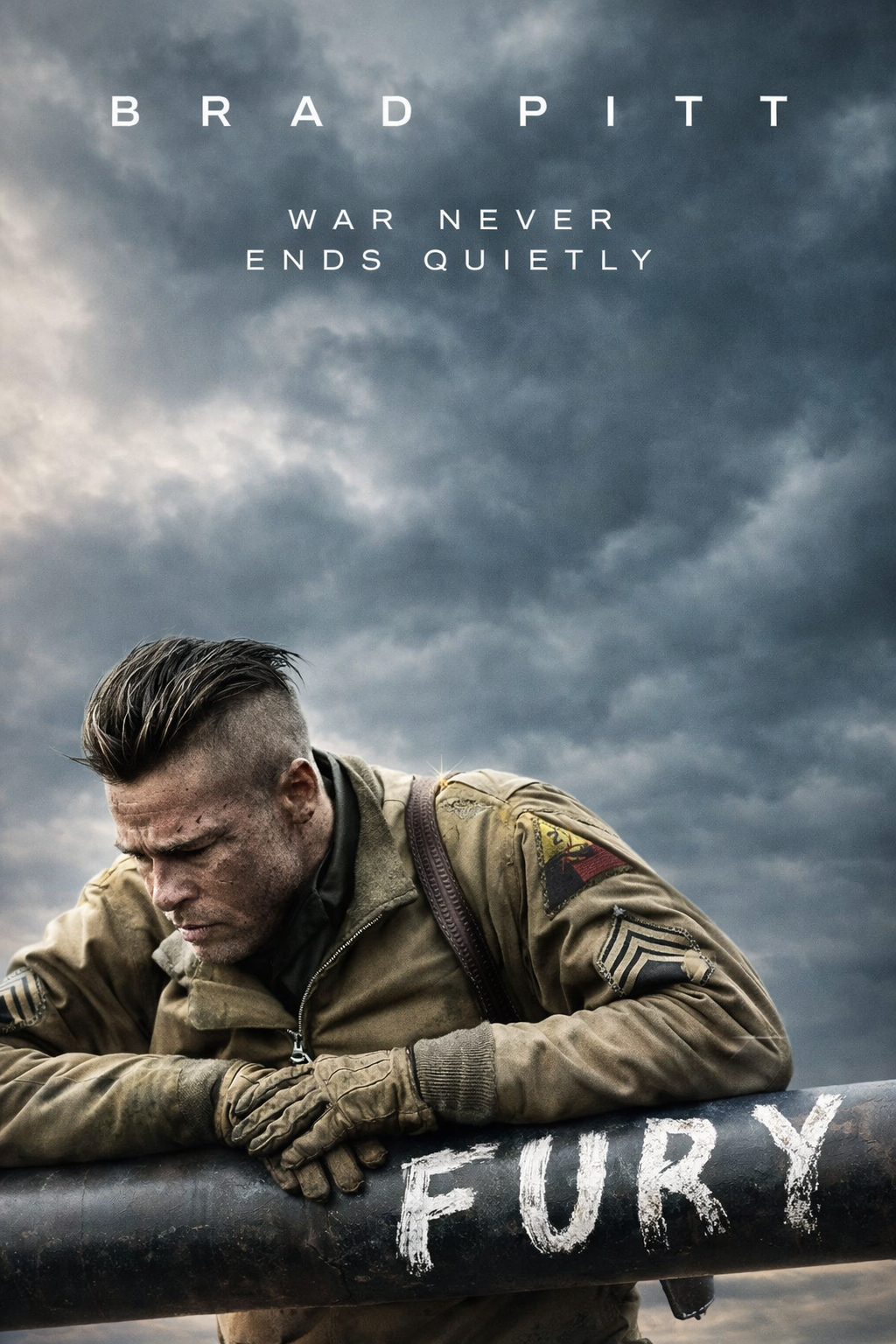
The plot is simple. We meet Don “Wardaddy” Collier, played by Brad Pitt, as the seasoned commander of a Sherman tank nicknamed “Fury.” His crew includes Boyd “Bible” Swan (Shia LaBeouf), the religious gunner; Coon-Ass (Jon Bernthal), the volatile loader; and Grady (also Bernthal, though the character is actually Grady “Coon-Ass” Travis; the movie gives everyone a nickname). The crew loses their assistant driver in the opening scene, and they get a replacement: Norman Ellison (Logan Lerman), a young typist who has never fired a gun and has no intention of killing anyone. The rest of the film is basically a crash course in how war turns gentle men into monsters—or at least into effective killers.

What works best in Fury is the sense of being trapped inside a steel coffin. Ayer films almost everything from inside the tank or right next to it. You hear every shell clank, every engine strain, every bullet ping off the hull. The sound design is incredible—it’s the kind of movie where you feel the bass in your chest during combat scenes. And the tank battles are brutally realistic. There’s no slick choreography here. When a German Tiger tank shows up, the fight becomes static, clumsy, and terrifying. The Sherman isn’t some superhero; it’s outgunned and out-armored, and the crew wins only because they’re desperate and lucky. That sequence alone is worth the price of admission. You can feel Ayer’s respect for Saving Private Ryan in those moments—the same handheld cameras, the same sudden death, the same sense that no one is safe. But then the film goes further.

Brad Pitt gives one of his tougher, quieter performances. Wardaddy isn’t a philosopher or a hero. He’s a tired man who has seen too much and made too many compromises. He forces Norman to execute a German prisoner, not out of cruelty but out of a cold, broken logic: if Norman can’t kill, he’ll get the whole crew killed. Pitt sells the weight of that decision without grand speeches. Shia LaBeouf is surprisingly restrained as Bible, a character who prays before each battle but never preaches. The real surprise is Logan Lerman. He starts as a scared kid who vomits at the sight of corpses and ends the film doing things that would ruin anyone’s soul. His transformation is uncomfortable to watch, but that’s the point.

However, the movie has some clunky moments. One extended scene has Wardaddy and Norman sharing a meal with two German women in an abandoned apartment. It’s supposed to show a brief flash of normal life—eggs, music, a soft bed—but it feels oddly staged. The women are just props. They have no real personality except to be gentle and then get killed offscreen. It’s a rare moment where Ayer’s macho instincts flatten the story instead of deepening it. But the real problem is the final act. The crew holds a crossroads against an entire SS battalion of about 200 men, doing it with a broken-down tank that cannot move. Realistically, they’d be dead in minutes. But Ayer turns it into a grim last stand that feels more like a Western than a WWII movie. The Germans attack in waves like idiots, running straight into machine-gun fire. And here is where you sense Ayer’s real intention: he is not trying to be realistic anymore. He is trying to one-up Saving Private Ryan by making the violence not just brutal but excessive, almost numbing. Limbs fly. Faces get torn open. The camera lingers on wounds long past the point of necessary storytelling. It feels like Ayer is saying, “You thought Spielberg was intense? Watch this.” But instead of adding emotional weight, the violence starts to feel like a dare. The movie becomes less about these five men and more about proving it can stomach more than any other war film.

Thematically, Fury is about how institutions crush individuality. Norman was a decent person who typed letters and likely never hurt anyone. By the end, he is sitting in the commander’s seat, pulling triggers without hesitation. The movie doesn’t celebrate this—it presents it as a tragedy. But the final act undercuts that tragedy because it becomes so cartoonishly violent that you stop feeling for the characters and just wait for the bloodshed to end. Unlike Saving Private Ryan, which uses its famous opening sequence to establish horror and then pulls back for character moments, Fury seems to think that more gore equals more truth. It doesn’t. It just equals more gore.

If you’re looking for a clean story with clear good guys and bad guys, this isn’t it. The Germans are offscreen most of the time, and the real enemy is the war itself. Wardaddy even says, “The only thing that separates us from them is this uniform.” That’s a heavy line, and the film never really resolves it. It just lets it hang there. Some critics called Fury shallow because it raises moral questions without answering them. I’d argue that’s the point. War doesn’t come with footnotes. You just survive or you don’t. But the film’s desperate need to prove it is tougher than its predecessors does make it feel, at times, like a younger brother showing off.

On a technical level, the cinematography by Roman Vasyanov is beautiful in a grim way. Colors are desaturated—browns, grays, washed-out greens. Mud and blood look the same. The camera shakes when it needs to, but it’s not the hyperactive Bourne style. It’s controlled chaos. And the final shot, where the camera slowly pulls back from the dead tank, is haunting. It stays with you.

So, final verdict? Fury is a solid, often great war film that trips over its own ambitions in the last thirty minutes. It wants to be a small, character-driven horror show, then pivots to a heroic last stand that feels like it belongs in a different movie—one that cares more about shocking you than moving you. The comparison to Saving Private Ryan is unavoidable, and Fury clearly wants to be mentioned in the same breath. But where Spielberg used violence as a doorway into human cost, Ayer sometimes uses it as a blunt instrument. The performances are strong, the tank combat is second to none, and the atmosphere is suffocating in the best way. It’s not Come and See, but it’s also not Pearl Harbor. If you can handle the tonal whiplash and the occasional macho posturing, you’ll find a movie that respects its audience enough to leave them feeling dirty. Just don’t expect a clean exit—and don’t expect it to earn every drop of blood it spills.

Trailer: Fury (International)


Fury-2014-Movie-Banner-Poster

I must admit that World War II films are a favorite of mine. Even bad ones I tend to enjoy. Whether it’s alternate fantasy fares like Tarantino’s Inglourious Basterds or something that combines historical accuracy with dramatic license like Spielberg’s Saving Private Ryan, the World War II genre always manage to hit straight and true to my film wheelhouse.

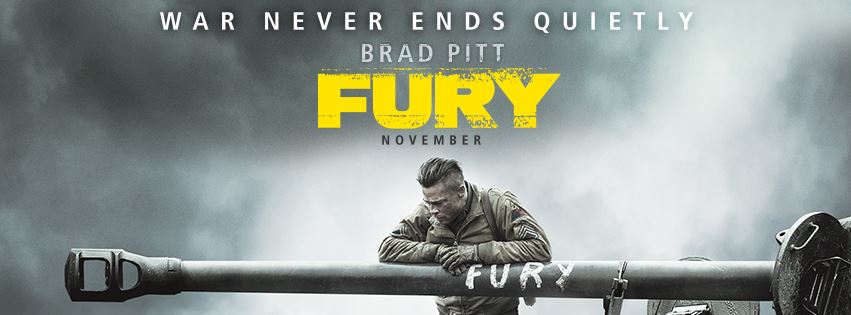
This October there looks to be another World War II film that seems almost tailor-fit for me. I’m talking about David Ayer’s follow-up to his underappreciated film End of Watch. This follow-up is Fury and tells the story of an American tank crew in the waning days of World War II in Europe. Just from the two trailer released I already know that I’m seeing this. Ayer looks to be exploring the bond of a tank crew that has seen war from the deserts of Africa and now to the urban and forested landscapes of Germany.

The film is already getting major buzz as a major contender for the upcoming awards season and I, for one, hope that it’s a well-deserved buzz. Even with Shia LaBeouf being part of the cast is not dampening my excitement for this film. Even if it doesn’t live up to the hype I know that I’ll probably still end up enjoying it.

This trailer looks to be selling the utter brutality and carnage of World War II’s final days in Europe when German forces were literally fighting for their homeland and that makes for a desperate enemy (who still had weapons and soldiers that were still hands down better than what the Allies had one-on-one).

On a side note, I like the fact that the tracers in the film actually look like tracers which means they look like freakin’ laser blasts. That’s how tracers behave.

Fury is set to hit theaters on October 17, 2014 in the United States and October 22, 2014 internationally.

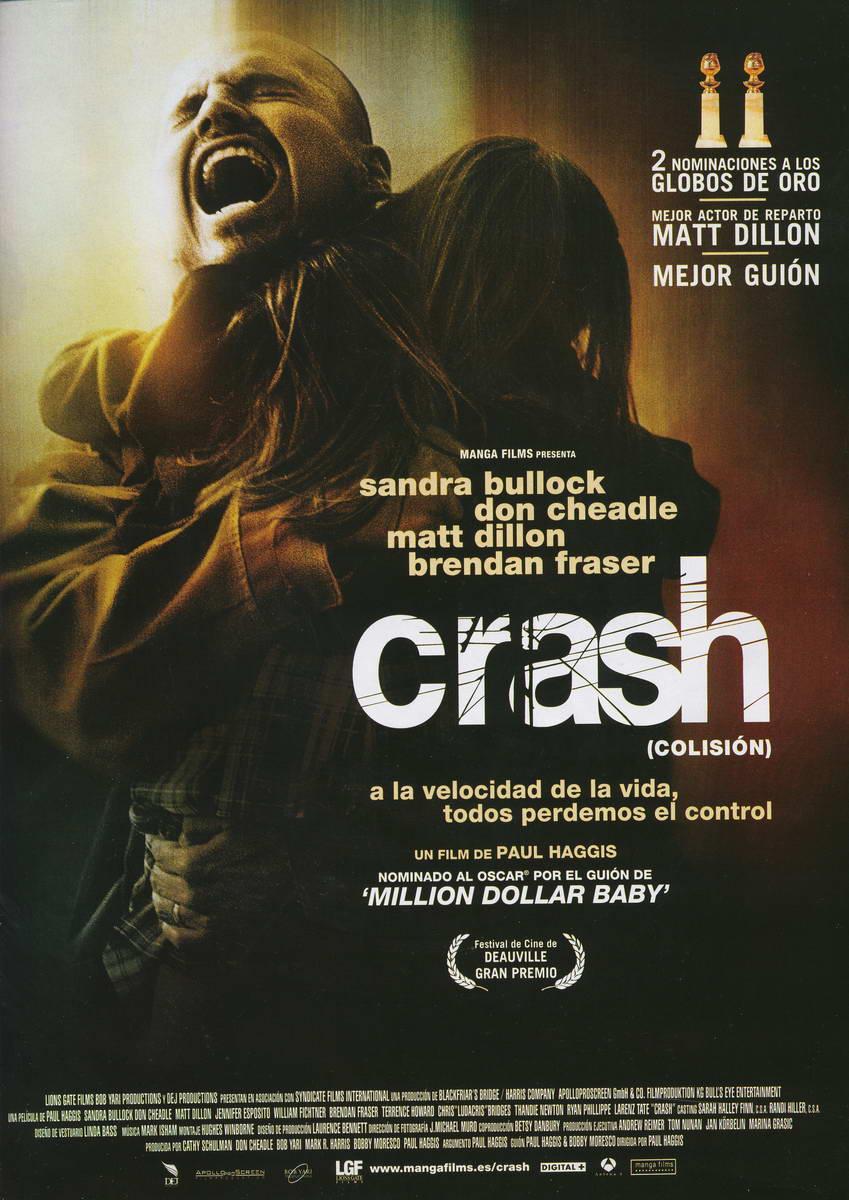
Embracing the Melodrama #53: Crash (dir by Paul Haggis)


crash-2004-poster

For the past two weeks, I’ve been reviewing, in chronological order, some of the most and least memorable melodramas ever filmed.   We started way back in 1916 and now, after 52 reviews, we’ve finally reached the year 2004.  And that can only mean that it is time to review the worst film to ever win an Oscar for best picture of the year.  I am, of course, talking about Crash.

Crash is an ensemble piece that follows a multi-racial cast of characters as they deal with issues of race, crime, and — well, that’s about it.  In Crash, everyone’s life revolves around race and crime.  Well, I take that back,  There is at least one character whose life revolves around being a good maid to the white woman who employs her.  But otherwise, it’s all about race and crime.  The film is set in Los Angeles which, from what I’ve read, is actually a pretty big city but you really wouldn’t know that from watching Crash.  All of the characters in Crash are constantly and randomly running into each other.  I think director/screenwriter Paul Haggis is trying to make a statement about the power that coincidence plays in the world but, often times, it just feels like lazy plotting.

Anyway, here are the characters who are meant to bring Los Angeles to vivid cinematic life:

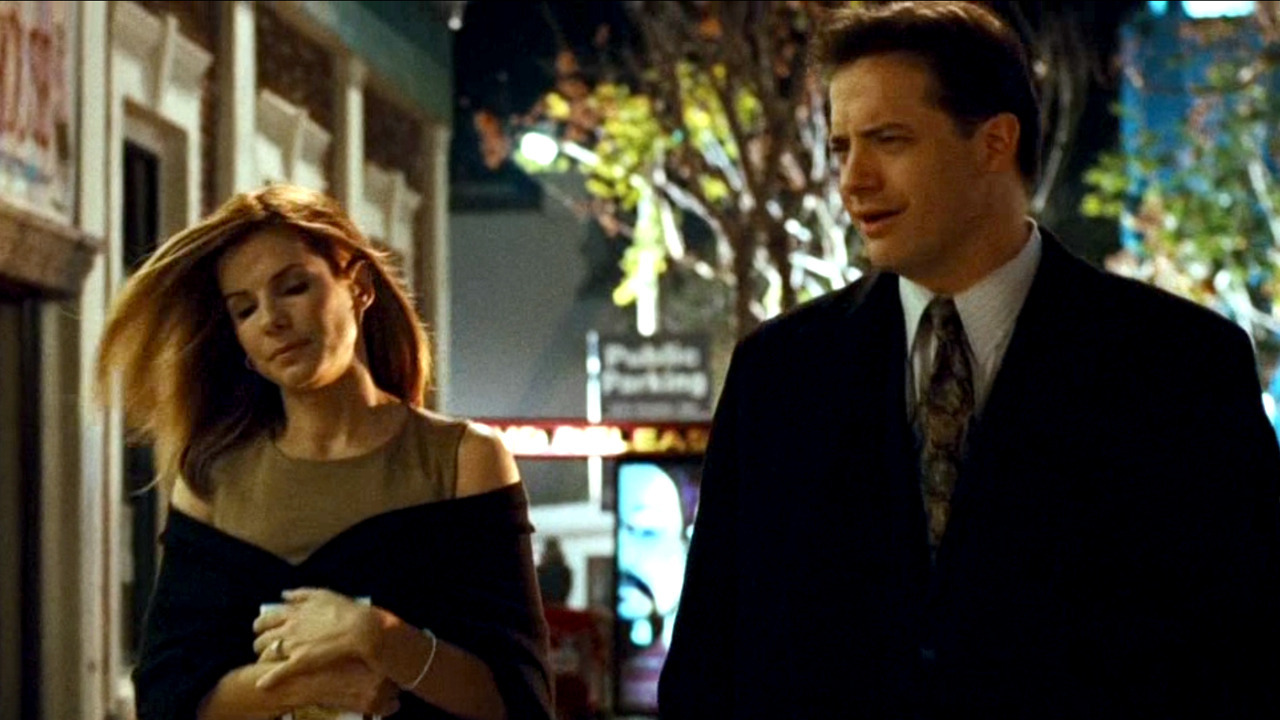
Brendan Fraser and Sandra Bullock play rich white people Rick and Jean Cabot.  Rick Cabot has just been elected District Attorney of Los Angeles County.  (Because when I think of a successful urban politician, I automatically think of Brendan Fraser…)  Jean is his materialistic wife.  At the start of the film, they’re carjacked by two young black men, which leads to Jean suspecting that every non-white she sees is secretly a gang member.  Later, Jean falls down a flight of stairs but she’s helped by her maid, who happens to be — surprise, surprise — not white!  Apparently, this teaches Jean an important lesson about tolerance.  The message, I guess, is that white people can be redeemed by interacting with their minority servants.

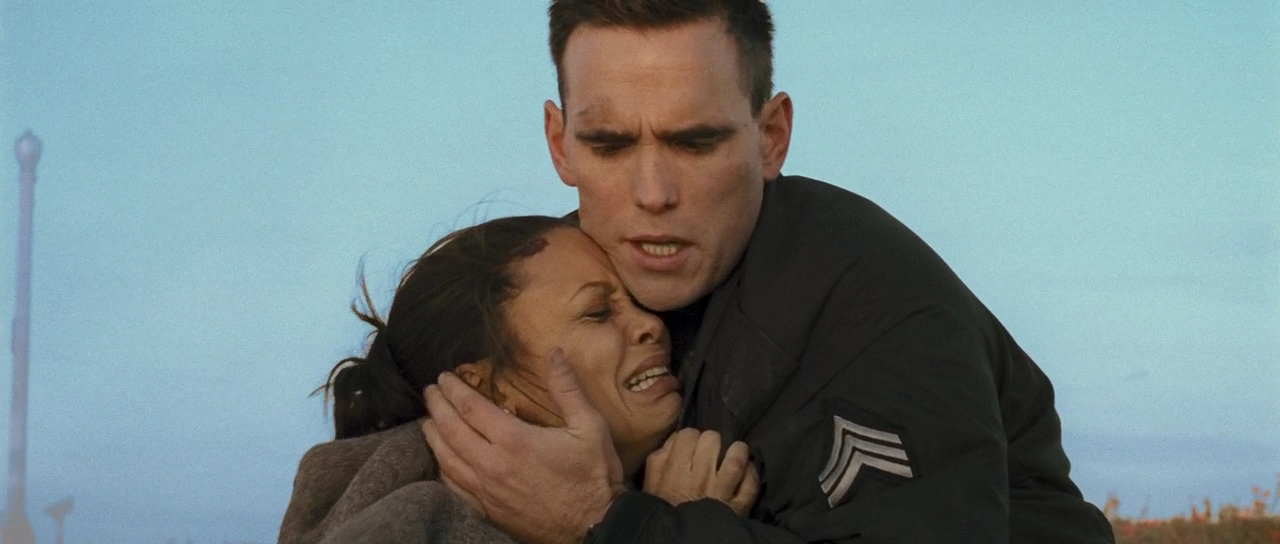
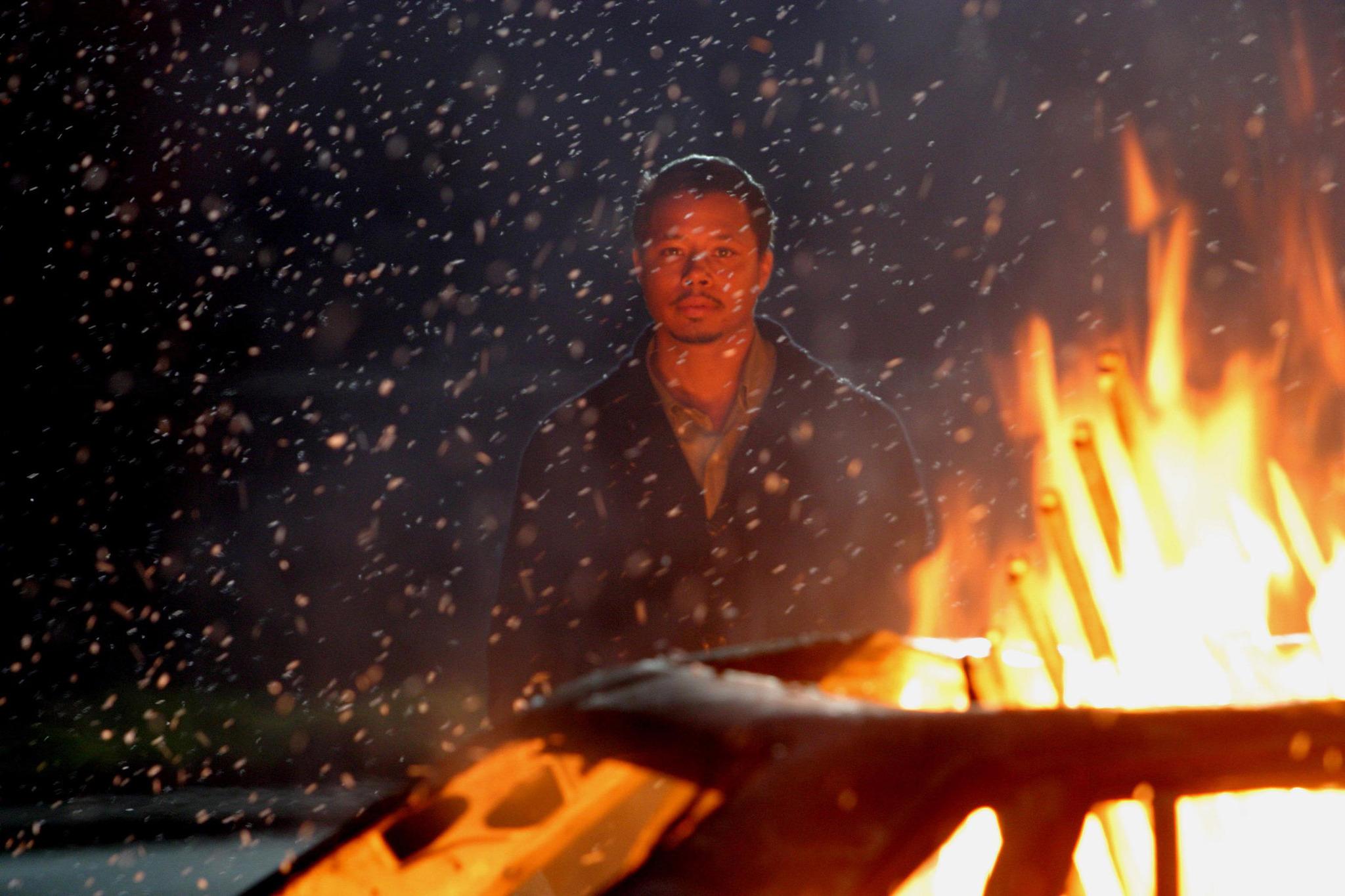
And then there’s Cameron (Terrence Howard) and his wife Christine (Thandie Newton) who are upper class and black.  Cameron directs sitcoms for a living and, at work, he has to deal with Fred (Tony Danza) constantly double guessing him and demanding that he reshoot scenes.  One night, as they leave an awards ceremony, Cameron and Christine are pulled over by two white cops — the racist Ryan (Matt Dillon) and his idealistic partner Hansen (Ryan Phillippe).  Ryan proceeds to molest Christine while giving her a pat down.  The next day, Christine is involved in a car accident on the freeway and is pulled from the burning car by none other than Officer Ryan.  The point here, I suppose, is that the same pervert who finger rapes you one night is just as likely to be the same guy who comes across your overturned car on the freeway.  For that scene alone, Crash deserves the title of worst best picture winner ever.

crash-2004 4

But that’s not all!

There’s also Detective Graham Waters (Don Cheadle), who has been assigned to investigate a police corruption case that would not be out of place in an episode of … well, just insert your own generic cop show title here.  Graham also visits his mentally unstable mother who demands that Graham find his younger brother.  Now, of course, as soon as we hear this, we know that Graham’s brother is going to have to turn out to be one of the other characters in the film.  Since there are only three other black males in this film (and since Cameron appears to be the same age as Graham), it’s not difficult to figure out who it’s going to be.

It’s either going to be Anthony (Ludacris) or Peter (Larenz Tate), who also happen to be the same two men who carjacked the Cabots’ car at the start of the film.  Larenz Tate probably gives the best performance in this whole sorry mess of a film, even if his role is ultimately a thankless one.

There’s also a locksmith named Daniel (Michael Pena), who finds himself being stalked by an angry Middle Eastern man.  Daniel’s story contains a hint of magic realism, presumably because Paul Haggis was reading something by Gabriel Garcia Marquez while writing the script.

Crash

You can fault Crash for many things but you also can’t deny that it’s far more ambitious than the typical bad film.  In the space of 112 minutes, Paul Haggis attempts to say everything that needs to be said about race and class in America.  Unfortunately, while watching the film, it quickly becomes obvious that Haggis really doesn’t know much about race and class in America.  Hence, the film becomes a collection of scenes that think they mean something while actually meaning nothing.  Crash is less about race in America and more about how other movies have traditionally portrayed race in America.  Unfortunately, director Haggis does not have the self-awareness to truly bring the subtext of screenwriter Haggis’s script to life.

The main theme of Crash seems to be that everyone has a good side and a bad side and that you can the hero of one story while being the villain of another.  That’s not a bad theme, it’s just an incredibly mundane one.  The film illustrates this theme by continually having a character say something racially offensive just to then have him do something heroic in the very next scene.  As a result, the characters don’t come across as being so much complex as just incredibly inconsistent.  Crash is never as deep as it thinks it is.

Reportedly, Crash was inspired by Paul Haggis’s own experience of getting carjacked.  Haggis has said that being a victim of crime led to some intense soul searching on his part.  Hopefully, Haggis got something better than just Crash out of the whole experience.

still-of-terrence-howard-in-crash-(2004)-large-picture

Film Review: Gangster Squad (dir by Ruben Fleischer)


Gangster Squad

Do you remember Gangster Squad?

This film, which tells the story of hard-boiled cops and psychotic gangsters in 1940s Los Angeles, was originally meant to be released in September of 2012 but the release date was moved back because the film originally featured a gun battle in a movie theater.  After the real-life movie theater shooting in Aurora, Colorado, that scene was reshot and the release of Gangster Squad was delayed until January of this year.  The critics absolutely hated it, audiences stayed away, and Gangster Squad was the first high-profile flop of 2013.

I was among those who ignored the film when it was first playing at theaters.  After all, it was January and I was more interested in following the Oscar race than going to see a film that, by all accounts, was somewhat terrible.  However, now that Gangster Squad is showing up on a nearly nightly basis on Cinemax, I recently got a chance to see the movie and you know what?

The critics were wrong.

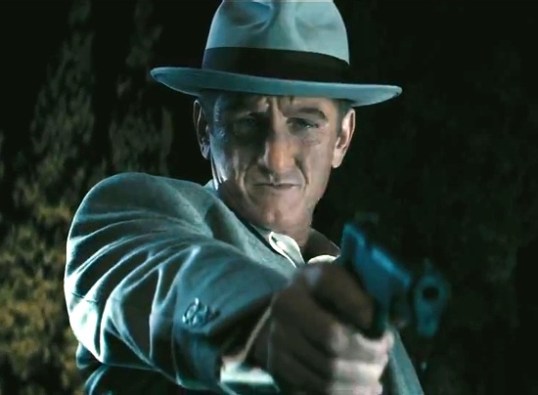
Gangster Squad tells a familiar story.  In fact, the film features not a single character or plot twist that hasn’t shown up in another movie.  The setting is Los Angeles in the 1940s.  Ruthless gangster Mickey Cohen (a totally over-the-top Sean Penn) is the king of the city’s underworld.  How crazy is Mickey Cohen?  He’s so crazy that, when we first see him, he’s watching as another gangster is literally ripped in half.  He’s so crazy that, in the middle of a gun battle, he yells, “Here comes Santy Claus!” as he fires his machine gun.  That’s how crazy Mickey Cohen is.

Sean Penn in Gangster Squad

Seriously crazy.

Fortunately, righteous police chief William H. Parker (Nick Nolte) refuses to allow a little thing like due process to keep him from pursuing Mickey.  Parker calls Sgt. John O’Mara (Josh Brolin) to his office and, after delivering a long and flowery monologue that verges on incoherence, he finally explains that O’Mara’s mission is to put together an elite squad of cops and to take Mickey out by any means necessary!  (Usually, I try to exercise some restraint when it comes to punctuation but Gangster Squad is one of those films that demands exclamation points.)

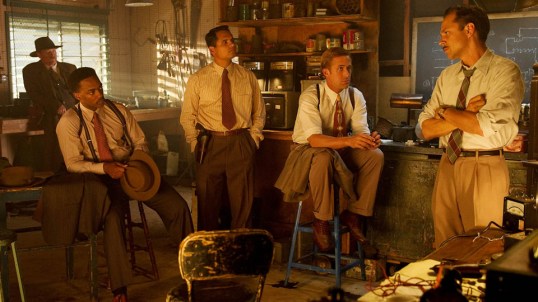
This is followed by a series of properly colorful scenes in which O’Mara recruits his gangster squad.

Jerry Wooters (Ryan Gosling) is a cynical World War II veteran who is, at first, skeptical of O’Mara and his squad.  Wooters, however, changes his mind after a saintly shoeshine boy is gunned down in front of him.  Wooters is also having an affair with Grace Faraday (Emma Stone), who happens to also be Cohen’s girlfriend.

Coleman Harris (Anthony Mackie) is a black cop who is good with a knife and who lost his cousin to the heroin distributed by Cohen’s mob.  Watching the friendly and playful interaction between Harris and all of the film’s white characters provides us with one of our first clues that Gangster Squad is not necessarily aiming to be a historically accurate portrait of America in the 1940s.

Conway Keeler (Giovanni Ribisi) is a wiretapper and a family man.  Keeler’s fate is pretty much sealed the minute that he tells O’Mara that he’s willing to risk death just to make the world a better place for his son.

Max Kennard (Robert Patrick) is a former old west gunslinger who now spends his time killing gangsters.  Max, we’re told, may be old but he’s also personally shot over a 100 gangsters.  Max also has a younger partner, an honest cop named Navidad Ramirez (Michael Pena).

GANGSTER SQUAD

The Gangster Squad

As you can probably guess at this point, there’s not a single cliché that is not employed by Gangster Squad.  However, and this is what I think several critics missed, the film deliberately takes its clichés to such an extreme that they go from being flaws to being strengths.  By so enthusiastically going overboard in its embrace of the conventions of the gangster film genre and, at the same time, acknowledging the fact that the audience is also familiar with those clichés, Gangster Squad creates its own vibrant and compulsively watchable fantasy world.  The world of Gangster Squad has little to do with any sort of historical reality.  Instead, it’s a  world constructed solely out of other gangster movies.

Taking all of this (and the fact that the film is directed by Ruben Fleischer of Zomieland and 30 Minutes or Less fame) into consideration, it’s pretty obvious that Gangster Squad is not a film that’s meant to be taken seriously.  And yet, that’s what so many critics did when the film was first released in January.  Instead of appreciating the film for paying over-the-top homage to the gangster films of the past, critics attacked it for being an example of style over substance.

And, to give the critics their due, they were exactly right.  There is no substance to Gangster Squad.  Instead, the film is a total celebration of style.

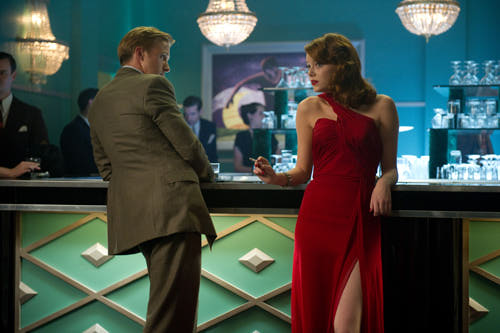
And what style!  In Fleischer’s hands, 1940s Los Angeles is a colorful wonderland of pure excess, a vibrant landscape of dark alleys and swanky nightclubs that literally glow on-screen and are populated by tough men and sultry women in clothing that might not have been found hanging in every closet in the 40s but should have been.  (Seriously, when Emma Stone first appears on-screen, she’s wearing a red gown that is simply to die for.)

This Christmas, I want both Ryan Gosling and the dress.

This Christmas, I want both Ryan Gosling and the dress.

For the viewer who is willing to give themselves over to the film’s over-the-top aesthetic and are willing to appreciate it for what it is (as opposed to condemning it for what it isn’t), Gangster Squad is a watchable, entertaining, and fun movie.  And what’s so bad about that?

I’m glad that I finally got a chance to see Gangster Squad.  Is it one of the great gangster films?  No.  The great gangster films have both style and substance but, quite frankly, if I can only have one than I would prefer something stylish and fun like Gangster Squad to something like Killing Them Softly.

(Then again, I would prefer just about anything to sitting through Killing Them Softly for a second time.)

So, enjoy Gangster Squad.  Watch it for the style.  Have fun.  And most importantly, remember that critics are as often wrong as they are right.

Emma Stone in Gangster Squad

And here are The Independent Spirit Nominations


The Gotham Awards aren’t the only awards regularly given to films that the majority of filmgoers will never get to see.  The Independent Spirit Nominations are also dedicated to recognizing the best of independent film and they tend to get a bit more attention than the Gothams.  With the early Oscar talk being dominated by mainstream studio films like Argo, Lincoln and Les Miserables, indie films like Bernie and Moonrise Kingdom are going to need all of the help that they can get.

BEST PICTURE

Bernie

Beasts of the Southern Wild

Keep The Lights On

Moonrise Kingdom

Silver Linings Playbook

BEST DIRECTOR

Wes Anderson, Moonrise Kingdom

Julia Loktev, The Loneliest Planet

David O. Russell, Silver Linings Playbook

Ira Sachs, Keep the Lights On

Benh Zeitlin, Beasts of the Southern Wild

BEST SCREENPLAY

Wes Anderson & Roman Coppola, Moonrise Kingdom

Zoe Kazan, Ruby Sparks

Martin McDonagh, Seven Psychopaths

David O. Russell, Silver Linings Playbook

Ira Sachs, Keep the Lights On

BEST FIRST FEATURE

Fill the Void

Gimme the Loot

Safety Not Guaranteed

Sound of My Voice

The Perks of Being a Wallflower

BEST FIRST SCREENPLAY

Rama Burshtein, Fill the Void

Derek Connolly, Safety Not Guaranteed

Christopher Ford, Robot & Frank

Rashida Jones & Will McCormack, Celeste and Jesse Forever

Jonathan Lisecki, Gayby

JOHN CASSAVETES AWARD – (for features under $500,000)

Breakfast with Curtis

Middle of Nowhere

Mosquita y Mari

Starlet

The Color Wheel

BEST FEMALE LEAD

Linda Cardellini, Return

Emayatzy Corinealdi, Middle of Nowhere

Jennifer Lawrence, Silver Linings Playbook

Quvenzhané Wallis, Beasts of the Southern Wild

Mary Elizabeth Winstead, Smashed

BEST MALE LEAD

Jack Black, Bernie

Bradley Cooper, Silver Linings Playbook

John Hawkes, The Sessions

Thure Lindhardt, Keep the Lights On

Matthew McConaughey, Killer Joe

Wendell Pierce, Four

BEST SUPPORTING FEMALE

Rosemarie DeWitt, Your Sister’s Sister

Ann Dowd, Compliance

Helen Hunt, The Sessions

Brit Marling, Sound of My Voice

Lorraine Toussaint, Middle of Nowhere

BEST SUPPORTING MALE

Matthew McConaughey, Magic Mike

David Oyelowo, Middle of Nowhere

Michael Péna, End of Watch

Sam Rockwell, Seven Psychopaths

Bruce Willis, Moonrise Kingdom

BEST CINEMATOGRAPHY

Yoni Brook, Valley of Saints

Lol Crawley, Here

Ben Richardson, Beasts of the Southern Wild

Roman Vasyanov, End of Watch

Robert Yeoman, Moonrise Kingdom

BEST DOCUMENTARY

How to Survive a Plague

Marina Abramović: The Artist is Present

The Central Park Five

The Invisible War

The Waiting Room

BEST INTERNATIONAL FILM

Amour (France)

Once Upon A Time in Anatolia (Turkey)

Rust And Bone (France/Belgium)

Sister (Switzerland)

War Witch (Democratic Republic of Congo)

PIAGET PRODUCERS AWARD

Nobody Walks, Alicia Van Couvering

Prince Avalanche, Derrick Tseng

Stones in the Sun, Mynette Louie

SOMEONE TO WATCH AWARD

Pincus, director David Fenster

Gimme the Loot, director Adam Leon

Electrick Children, director Rebecca Thomas

TRUER THAN FICTION AWARD (given to emerging documentary filmmaker)

Leviathan, directors Lucien Castaing-Taylor and Véréna Paravel

The Waiting Room, director Peter Nicks

Only the Young, directors Jason Tippet & Elizabeth Mims

ROBERT ALTMAN AWARD (for ensemble cast)

Starlet Director: Sean Baker Casting Director: Julia Kim Cast: Dree Hemingway, Besedka Johnson, Karren Karagulian, Stella Maeve, James Ransone

A Quickie Review: 30 Minutes or Less (dir. by Ruben Fleischer)


Earlier tonight, I went and saw the new comedy 30 Minutes or Less.  The film has, so far, gotten mixed reviews and the theater we saw it in was half-deserted.  The audience laughed quite a bit during the 1st half of the movie and a little less so during the second.  As soon as the credits started, everyone stood up and left.  This is not the type of film that inspires you to sit around and wait to see if there’s any extras at the end.  Still, despite that, it’s an enjoyable comedy that has enough laughs in it to justify the 83 minutes it takes to watch the entire film.

Danny McBride plays an aimless loser who, despite being in his mid-3os, still lives at home with his wealthy but hateful father (well-played by Fred Ward).  McBride spends his time blowing stuff up with his well-meaning but stupid best friend (Nick Swardson) and fantasizing about the day that his father will die and leave him his inheritance.  However, then McBride finds out about a hitman (Michael Pena) who is willing to kill Ward as long as McBride can pay him several thousand dollars.  So, McBride and Swardson kidnap a pizza deliveryman (Jesse Eisenberg) and strap a bomb to his chest.  They tell him that is he doesn’t rob a bank in the next 10 hours, the bomb will go off.  With the help of his best friend (Aziz Ansari), Eisenberg attempts to do just that.

The film’s humor comes not from the plot (which is based very loosely on a true story — more about that in a minute) but instead from the way these very ordinary characters attempt to deal with the situation they find themselves in.  All four of the major characters have little grasp on reality beyond what they’ve seen in other movies.  When Eisenberg and Aziz plot their bank robbery, it has less to do with logistics and everything to do with Point Break.  The film is perfectly cast and all of the actors have a real chemistry with each other.  You believe that McBride and Swardson are lifelong friends just as you buy that Aziz would go out of his way to help out Eisenberg. 

Much as he did with Zombieland, director Fleischer manages to maintain a nice balance between the comedic and the grotesque.  Unfortunately, also much like Zombieland, the film starts to run out of steam during the second half as the storyline becomes more centered on action than on comedy.  These characters who were previously only talking about being in an action film are suddenly thrust into an action film and everything starts to seem a little bit too familiar.  Still, 30 Minutes or Less is an enjoyable enough movie.  I just wish the end result had been a little less uneven.

Now, 30 Minutes or Less is based on a true story and this story wasn’t a comedy.  In 2003, a pizza deliveryman named Brian Douglas Wells robbed a bank in Erie, Pennsylvania.  He had a bomb around his neck.  Unlike the characters in this film, Wells was killed when the bomb went off and blew a softball-sized hole in his chest.  The police — who, in the moments before the fatal blast, basically just stood around with their tasers drawn while Wells begged for help — later accused Wells of being a part of the whole plot.  Which makes absolutely no sense but who am I to question Big Brother? 

Regardless of whether Wells was a victim or participant, that doesn’t change the fact that pizza delivery men are easy targets.  Just last year in Dallas, two kids with guns ordered a pizza and gave the address of a deserted warehouse.  They had to call many different pizza places before they found someone willing to deliver to that area of town.  When the pizza arrived, the kids gunned down the deliveryman.  When they were arrested, they said they had simply wanted to kill someone and they knew a pizza deliveryman was the only potential victim they’d be able to lure out to the middle of nowhere.  That’s hardly an isolated incident. 

Also, as is mentioned in this movie, whenever the pizza person takes 34 minutes to get to your house and then you go, “Duuuuuuude, the pizza’s free!” that means that the cost of your pizza is going to be taken out of the paycheck of a man who puts his life in danger every time he goes to work. 

So, what am I saying?  I’m saying don’t be an asshole and pay for your damn pizza!

And leave a good tip.