Lisa Marie’s Too Early Oscar Predictions For June


oscar trailer kitties

It’s time for our monthly edition of Lisa’s Too Early Oscar predictions!

This is our first entry since the Cannes Film Festival.  As a result of Cannes, former contenders like The Sea of Trees have been dropped from the predictions.  Meanwhile, new contenders like Michael Caine and Sicario have emerged.  I have also added Pixar’s Inside Out to my list of predictions because a 98% rating on Rotten Tomatoes demands the consideration.

(Unfortunately, adding Inside Out meant dropping The Good Dinosaur.  Though it could happen, I find it hard to imagine two animated films receiving best picture nominations.)

If you want to see how my feelings on the race have developed, be sure to check out my predictions for January, February, March, April, and May!

And without further ado, here are Lisa’s Too Early Oscar Predictions for June!

Best Picture

Black Mass

Brooklyn

Carol

The Danish Girl

In the Heart of the Sea

Inside Out

MacBeth

Sicario

Suffragette

The Walk

Best Actor

Johnny Depp in Black Mass

Michael Caine in Youth

Michael Fassebender in Steve Jobs

Eddie Redmanye in The Danish Girl

Jason Segel in The End of the Tour

Best Actress

Cate Blanchett in Carol

Marion Cotillard in MacBeth

Jennifer Lawrence in Joy

Saoirse Ronan in Brooklyn

Lily Tomlin in Grandma

Best Supporting Actor

Albert Brooks in Concussion

Benicio Del Toro in Sicario

Joel Edgerton in Black Mass

Idris Elba in Beasts of No Nation

Kurt Russell in The Hateful Eight

Best Supporting Actress

Joan Allen in Room

Jennifer Jason Leigh in The Hateful Eight

Rooney Mara in Carol

Meryl Streep in Suffragette

Julie Walters in Brooklyn

Best Director

John Crowley for Brooklyn

Todd Haynes for Carol

Ron Howard for In The Heart of the Sea

Denis Villeneuve for Sicario

Robert Zemeckis for The Walk

The Winners At Cannes And What It Means For This Year’s Oscar Race


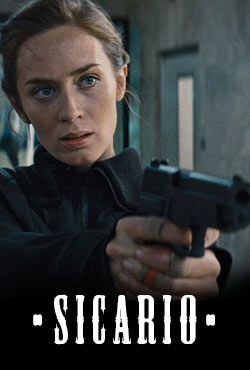
poster_tn_sicario

Well, that shows you how much I know.

The 68th Annual Cannes Film Festival came to a close earlier today.  If you’ve been following news from the festival over the past two weeks then you’ve heard that Gus Van Sant’s Sea of Trees is no longer considered to be an Oscar contender.  (That’s putting it gently.)  You’ve heard a lot of acclaim given to Todd Haynes’s Carol.  You have also seen Denis Villeneuve’s Sicario and the Hungarian film Son of Saul emerge as a potential Oscar contenders.  Michael Caine’s performance in Youth was acclaimed, as was the work of Tim Roth in Chronic and Marion Cotillard in MacBeth.

One film that you probably did not hear about was Jacques Audiard’s Dheepan.  As far as coverage of Cannes over here in the states is concerned, Dheepan was ignored.  And yet — once again proving that nobody can predict Cannes — Dheepan is the film that ended up winning the Palme d’Or.  The acting prizes also went to actors who have been under the radar, with the possible exception of Rooney Mara.

(Some day, I will be able to forgive Rooney Mara for playing Lisbeth Salander is David Fincher’s insulting interpretation of Girl With The Dragon Tattoo.  But not today…)

As far as what the past two weeks have meant for the upcoming Oscar race: Well, I think it’s safe to say that we can forget about Sea of Trees.  As for my insistence that Sea of Trees would be nominated … well, we’ll all have a good laugh about it someday.  Carol appears to have emerged as an early front-runner and I think that Sicario could come on strong as well, especially if one of the nominal front runners — like Bridge of Spies, for instance — doesn’t live up to expectations.  It wouldn’t surprise me to see Caine and Cotillard nominated as well.  Everyone loves Michael Caine and, as he gets older, we are more and more aware that a day is going to come that he won’t be around to appear in any more movies.  As for Cotillard, she is everything that Meryl Streep is supposed to be and more.

Anyway, here are the winners!

68th Cannes Film Festival top awards:

Palme D’Or: Dheepan

Grand Prix: Son of Saul

Jury Prize: The Lobster

Best Director: Hou Hsiao-hsien for The Assassin

Best Actor: Vincent Lindon for The Measure of a Man

Best Actress: Rooney Mara for Carol and Emmanuelle Bercot for My King

Best Screenplay: Michel Franco (Chronic)

Camera d’Or (Best first feature): La Tierra Y la Sombra

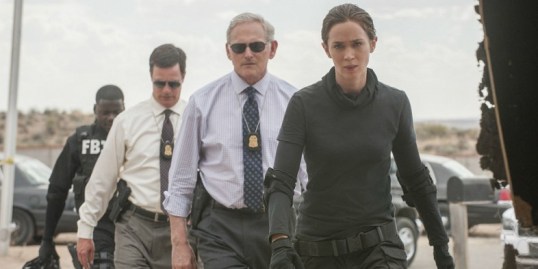
Emily Blunt in Sicario

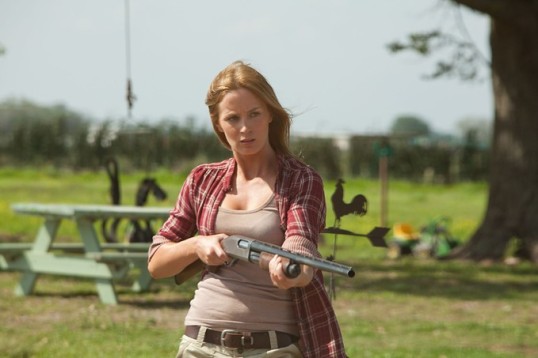
Emily Blunt in Sicario (No, actually, that is Emily Blunt in Looper.  My mistake…)

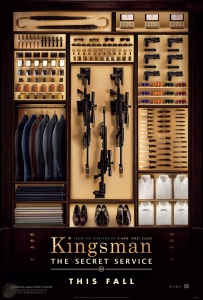
Quick Review: Kingsman – The Secret Service (dir. by Matthew Vaughn)


file_118522_1_kingsmanposterlargeKingsman: The Secret Service was a no brainer for me. I’ve been following Matthew Vaughn since Stardust, and a friend pointed me towards Layer Cake, which I love. Most audiences know Vaughn from his work on X-Men: First  Class and Kick-Ass. That’s the main reason I ran towards this movie. I also found out writer Mark Millar (Wanted, Kick-Ass, Marvel’s Civil War) was involved and the story was originally a comic, so the flow of the film makes perfect sense. Overall, Kingsman is a triumph for everyone involved, easily a film I could see myself returning to see again, but it’s not without it’s quirks. If the movie were cut into four acts, the first three were great, but the last act comes close to falling into the clichés it tries so hard to avoid.

Short and Sweet:

If you liked Wanted’s and Kick-Ass’ action sequences and copious amounts of violence mixed with bloodletting, Kingsman has your name written all over it. Throats are cut, people are shot, and bones are broken. It doesn’t happen often throughout the film, but when it does, it can get messy. The movie may have you considering wanting to get yourself some good business attire. It isn’t for kids by a long shot, it’s rated R for a reason.

The Slightly Long Version:

Kingsman is the tale of Gary “Eggsy” Unwin (Taron Egerton), a young man who ends up being recruited for The Kingsman after a run in with the law. The Kingsman are a secret society of spies that at one time were tailors to great people. When a threat to the world rises in the form of a rich tech wiz named Valentine (Samuel L. Jackson), the Kingsmen must find a way to stop him.

Eggsy’s recruiter is Harry Hart, played by Colin Firth, who does the best job out of all of the actors involved (in my opinion). Being the one who has to explain what all this is about, Firth manages to play the mentor role well. When it comes to fighting, he shows everyone who’s boss. Who knew Mark Darcy could fight (well, other than Daniel Cleaver, I guess)?

The casting for Kingsman really couldn’t offer any more surprises than it did. You have Jack Davenport (Pirates of the Caribbean), Mark Hamill (channeling his inner Joker here), Michael Caine, Mark Strong (a Vaughn favorite), Sofia Boutella (whose dance techniques work well for her blade wielding character) and Sophie Cookson. There’s really no one out of place here, save for maybe Jackson, who’s villain hates violence yet sees when it needs to be done. I do like that the movie kept me guessing about the Valentine’s intentions.As for Egerton, though I’ve never seen Egerton in anything before this, he’s good enough to warrant seeing him in a sequel. I can see him becoming a Vaughn regular in another film – maybe as an X-Men member?

As if the crew spent some time watching John Wick, the action in Kingsman moves pretty fast and fierce at times, and there’ll undoubtedly be a few scenes that will have you abusing the slo-mo feature when it arrives on digital download. The film moves through scenes with few cuts involved. You’ll have someone staring into a monitor at a fight that travels to the fight itself, and then flow into another moment. It’s Vaughn at his best, and at times, it’s all beautiful. I guarantee you that at least one scene in particular will probably have people talking. By far, one of the most unique uses of a Lynyrd Skynyrd track since The Devil’s Rejects. On a side note, it’s wonderful to see every advertised gadget get some use.

So, with all that praise, what’s the problem? Well, the last part of the film felt a little flat for me. If you’ve ever watched Batman Begins and it’s repetitious “stop the train before it hits the Wayne Tower” sequence, Kingsman feels similar. What bothered me was how some of the events were kind of caught in a bubble. Given the stakes involved (especially near the end), you’re never really told or shown the outcome of the actions. It’s really hard to explain without giving anything away, but I could put it like this. If you fired a gun in the middle of a street in broad daylight, someone would react and call the cops, no? So, if you escalate that action, shouldn’t the reaction / after effects be big? Between this and an annoying bit of product placement, I suppose it couldn’t be avoided. Still, it may be something that stands out for some audiences. It’s by no means a deal breaker, though.

I’d happily see it again at the cinema.

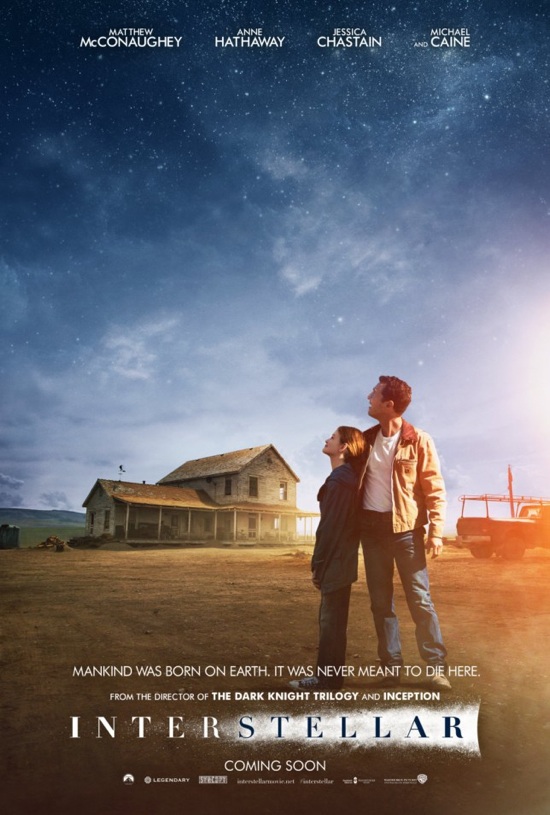
‘Interstellar’ Review (dir. Christopher Nolan)


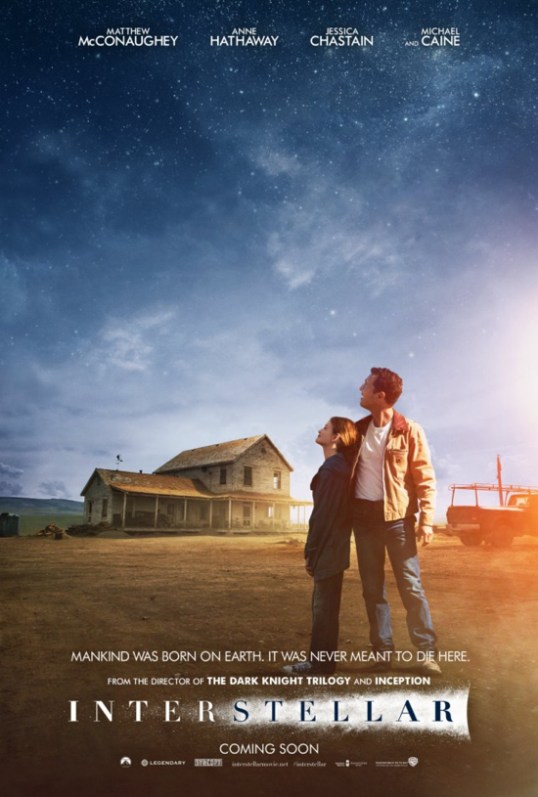
interstellar2

It would be disingenuous of me to not start this review by saying that I went into ‘Interstellar’ with a clear and present bias. Not towards Nolan – though I think he is a wonderful director who has not yet made a truly bad film. But a bias towards the scientific theories and potential themes I expected – based on trailers and the concept of the film – that it would explore. I have always been very interested in astronomy and astrophysics – and have a soft spot for science fiction films with a strong emotional core (‘Close Encounters of the Third Kind’, ‘Contact’). So when I headed to the theater I knew I was walking a very fine line (one that many reviewers walk but won’t admit to). If the film met (even marginally) my high expectations then it would in no doubt lead to high praise that bordered on hyperbole – and if it didn’t – if it disappointed – then it would cause a reaction a lot more negative than it really needed to be.

Where did ‘Interstellar’ ultimately fall? Hyperbole…or disappointment? Well luckily for me it was the former…to a fairly strong degree. I’ll say it now – this is not just probably  my favorite film of the year so far, but like with ‘Gravity’ and ‘The Tree of Life’ (yes, more on that later) in recent years, this may  fall within my favorite films of all time. It is a dazzling, visually stunning, emotionally resonant and incredibly well made sci-fi space epic – one with the power to keep you on the edge of your seat one minute and in tears the next. It explores big ideas about the cosmos while also staying incredibly grounding with an intimate story about family, regret, sacrifice and love. Like I said…hyperbole.
coop2

The film takes place in a not so distant future in which the world is becoming unlivable. After population growth, climate shifts and diseases ravishing crops, the world is struggling to produce enough of what little food sources they have left – which means a heavy reliance on corn farms. It is very bleak future where dust from dust storms covers everything, and the only focus of mankind is struggling to survive with what they know and have. Innovation, free thinking and exploration are at a standstill – and unless schools deem you smart enough to go on to a university, your only career prospective is farming.

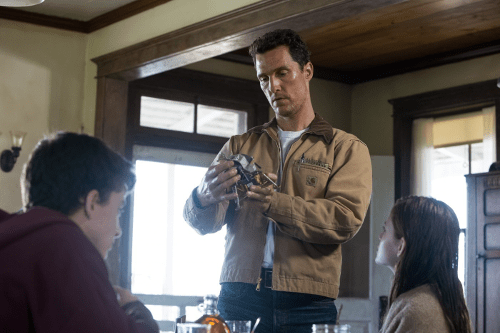
Matthew McConaughey stars as Cooper, a widower and former pilot who now owns a farm where he lives with his two young children. He does his best to provide for his family but clearly wants more for them than what the current world can provide. After finding a mysterious message in his daughter Murph’s room, Cooper finds himself being recruited by what is left of NASA. They are secretly putting together a mission to journey through a wormhole that has appeared near Saturn. They do not know how it got there but they do know that beyond it is a solar system with some potentially habitable planets. They want Cooper to pilot an expedition through the wormhole to explore these planets and see if one is suitable to set up a new human colony. Cooper reluctantly agrees, even though it means leaving his children behind. He knows that the journey could kill him or – due to the laws of relatively – that by the time he does return his children may be much older than he is or already dead. But the fate of the human race – including his son and daughter – relies on finding a new home. So he sets out with a team of astronauts – and one pretty funny robot – on a journey that will take them farther than any humans have ever gone. The decision devastates his young daughter Murph – who he had a close relationship with – and it sets her out on a journey of her own to save humanity in a way she believes her father couldn’t.

To go into much more detail of the plot would ruin much of the experience. But I will say it becomes a fast paced and exciting journey. It does sometimes fall back on the usual genre tropes but there is never a dull moment; and it all builds up to an emotional and rewarding conclusion.
murph

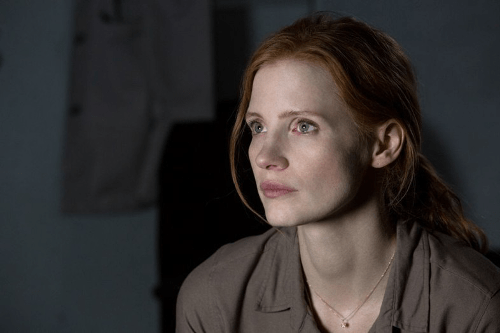
The performances are truly superb. For all his technical mastery, Nolan is also an actors’ director and he gets the most out of his casts. McConaughey is at his best here – which is saying a lot considering his work in recent years. The emotion he brings is on a whole different level than anything he has done before. Jessica Chastain, who plays the adult Murph, also has a strong presence. Both actors wear the burden of their decisions and regrets on their shoulders, and you can see it in every scene. They are the heart and soul of the film. Hathaway also did a wonderful job – as did Wes Bently, Michael Caine, and David Gyasi.

The score from Hans Zimmer is loud and heart pounding. He always manages to perfectly convey the intensity of some truly exciting set pieces – while also slowing down to capture the emotions of the more intimate moments, and this score is no different.

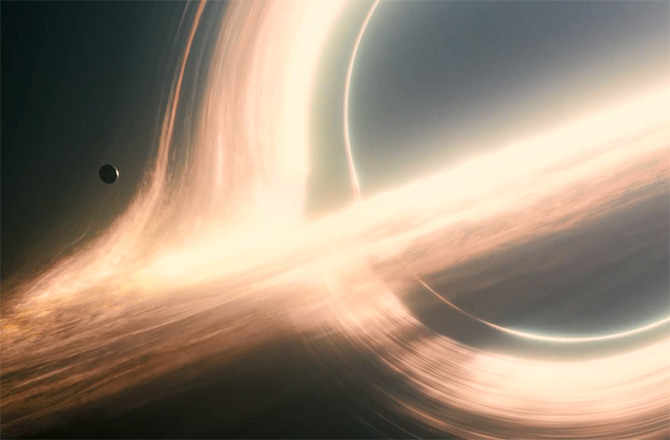
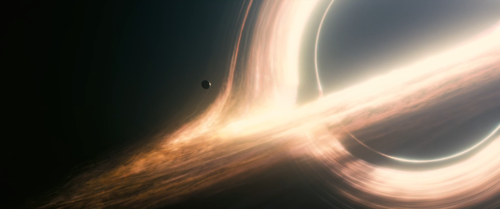
The visuals are absolutely stunning. The effects (most of them created through practical means) were influenced by physicist Kip Throne – who also oversaw a lot of the science in the film – and the result is dream-worthy space imagery. Interestingly, the depictions of the wormhole and black hole in ‘Interstellar’ are considered to be the most accurate ever created. The results are gorgeous, especially on a big screen – with one scene with Saturn making me all teary eyed.

tumblr_nel0c0Oncj1qd479ro1_1280

Below the spectacle and hard science is an emotionally resonant tale of exploration and human ambition that puts its faith not only in science but also the human soul.  Does it become heavy handed at times? Of course! This is a space opera – a science fiction epic – with a big budget, big ideas, big name actors, big visuals and so the emotions at times match that. The first 40 minutes or so do a fantastic job setting up the bond between Cooper and his daughter. It is a wonderful relationship – but a complex one filled with love, anger and regret. It is also the backbone of the story and Nolan builds the emotion from there.

Like with ‘The Tree of Life’ (I told you I was going here), the juxtaposition of dazzling space images and the exploration of the cosmos with this grounded and intimate family story about love and nature make for a challenging but truly rewarding experience. One that asks big questions about our relationship with each other and the universe we inhabit; and examines how the flow and clash of such things as love and instinct with nature can change and inspire us for better or worse. Nolan does seem to want to show how love has the ability to conquer and transcend even the harshest things nature and its laws can throw at us. It is almost fitting then that Chastain stars in each, and has a roll in both stories that could be almost viewed as similar – as the focal point of love that guides the main character and the audience. And like with ‘The Tree of Life’ I can totally understand why people would not like ‘Interstellar’. Neither are films for everyone. I believe most reviews I have seen are so mixed because ultimately ‘Interstellar’ relies so heavily on the emotions at the core of the story that it was inevitable that it wouldn’t connect with some people. You have to be open to some extreme sentimentalism, which just isn’t the case for everybody.

coop mur

I won’t go into much detail over the film’s final act, but I think it makes perfect sense within the logical and emotional progression of the story – though some critics disagree. They seem to think that Nolan’s often straight forward hard science approach is too stern and takes the wonder and ambiguity out of his stories and I found that to not be the case with ‘Interstellar’. Mainly because the ending does in fact have some level of ambiguity – but what it does explain adds a level of wonder and hope that would be lost had it been open ended. I will also say that I find it absolutely absurd that some critics who praise and accept the ending to’2001: A Space Odyssey’ have dismissed this one for being too convoluted or even nonsensical…as if those couldn’t also be said of the ending of Kubrick’s film.

But again maybe this is all just me. As I warned you, hyperbole was expected and I think this review lived up to that. I truly loved the film. It generated in me the same feeling of wonder, excitement and curiosity I got from the spectacle and emotions of ‘Close Encounters of the Third Kind’ and ‘Contact’ –the realism of ‘Gravity’ – and the complexity and mind bending theories of ‘2001: A Space Odyssey’. Throw in with that the connections I felt it had with such films as ‘The Tree of Life’ and there was no way I wasn’t going to love it. This is cinema at its finest. Whatever flaws it might have I can easily overlook due to not only how moving and entertaining of an experience it all is – but also because it is just so damn ambitious. Whether you see it on a large IMAX screen or not, you’ll be moved in one way or another.

tumblr_nejbrwgYQs1qanm80o3_500

Now, I don’t usually do this but I would like to end by quickly addressing the small group of people who have been crying sexism before the film even got its wide release. Apparently, because the lead is a scruffy male and the film is about the will power of mankind to journey off and explore the unknown, that it is somehow a male centric film that is about masculinity above all else. If the idea of human endeavor, innovation, the struggle to survive, and the pursuit of knowledge brings to your mind nothing but masculinity and male dominance then blame society – not the film – because it was clearly not its intentions  and really is just not even remotely the case here. You could easily replace McConaughey’s character with a female lead (like in ‘Contact’) and the narrative, emotional and thematic results would be EXACTLY the same. This all seems even more ridiculous given the fact that the female characters play a much more important role than any of the men. Their work, decisions and perspective essentially save the day. It isn’t until the men view the situations and universe through them that they are able to succeed.

I have also been thrown off by the complaints of Nolan’s reliance on “daddy issues” or the “dead wife/spouse” tropes, and fail to see how these (which I admit are often present in his films) should at all matter when they fit so well into the story and are so emotionally effective. Not to mention Cooper being a widower has nothing to do with any decision he makes; and the relationship Murph has with him is far more complex than simply being “daddy issues”. It is actually a wonderfully realized one, with Nolan drawing experience from the relationship he has with his own daughter.

But why are these even being brought up by people, so early and with such vigor? Do not get me wrong, I understand and appreciate the opinions of those who simply did not like it…but for the few who have criticized it for the aforementioned reasons I just cannot wrap my head around where they are coming from. Sexism is often an issue in cinema and film making as a whole and something that could clearly be worked on…but it just does not apply to ‘Interstellar’ in any way. And I say this as someone who isn’t a Nolan fan boy. Yes, I appreciate his work – he has made some truly great films – but I am not one of those who think he is the best director working right now. But it is hard to not be disappointed and confused by the fact that every time he releases a film there are tons of articles that pop up to critique what would otherwise be completely ignored in other films – or in some case they critique things they didn’t even care about in his other films. Maybe this is just the price a director like him faces. His work tends to be so popular that critics seem to try extra hard to make their voices heard – an attempt to quell the masses of fans excited to see it – by overreaching in their criticism. This is made all the more disheartening when you consider he is one of a very few filmmakers willing to take such big risks to make smart and ambitious films. But maybe I am wrong. Please, let me know your thoughts!

———

Twitter.

Trailer: Interstellar (3rd Official)


Interstellar

Will Interstellar be as  much a game changer as Kubrick’s own 2001: A Space Odyssey? Some are already hyping that it may just be on that very level.

Now, let’s not crown Christopher Nolan upcoming film (his first since concluding his Dark Knight trilogy) as an instant classic when we haven’t seen anything outside of the trailers released. Yet, the teases and brief explanation of the film’s plot hints at something that may just turn out to be incredible.

I know at least one person here at Through the Shattered Lens who is bursting at the seams at trying not to overhype the film for himself. It may just be a losing battle if his reactions to this latest Interstellar trailer is any indication.

Interstellar is set for a limited release on November 5, 2014 (70mm and 35mm film formats) then wide on November 7, 2014 on digital format.

Review: A Bridge Too Far (dir. by Sir Richard Attenborough)


1977 a bridge too far

“Well, as you know, I always felt we tried to go a bridge too far” — Lt. Gen. Frederick Browning

With the recent passing of Sir Richard Attenborough I decided to bring up one of the films which first brought his name to my attention. I was quite the young lad when I first saw Attenborough’s epic war film A Bridge Too Far. I would say that it was one of my earlier memories of watching a film with my father who was a major fan of war films. One could say that I got my appreciation and love for the genre from him.

A Bridge Too Far was adapted from the Cornelius Ryan book of the same name which depicted from start to finish the disastrous World War II battle known as Operation Market Garden. The film states that the Allied landings at Normandy, France in the summer of 1944 had the German forces reeling and on the verge of collapse. With Eisenhower having to choose between competing plans to chase Hitler’s forces right into Berlin from his two best generals in George S. Patton and Bernard Montgomery, the film already lays down something that’s become synonymous with military disasters throughout history. Political expediency and pressure on Eisenhower led to an operation that was never attempted in military history and one which required every aspect of the operation to go according to plan for it to work. As the film would show this was not meant to be.

The film begins with the operation’s early days as Allied commanders rush to put Montgomery’s plan to drop 35,000 paratroopers behind German lines in occupied-Netherlands in order to capture and hold key bridges until Allied armored forces arrived to reinforce them. It’s a daring plan that the Attenborough films with a obvious confidence and enthusiasm, but also one that already showed some nagging doubts from field commanders who would be in the thick of the fighting if intelligence reports were inaccurate. One could almost say that Attenborough was making the film a sort of anti-war message which was a rarity when it came to Hollywood and and film industry depicting the events of World War II at the time.

While the film does explore that very anti-war theme throughout it’s really a by-product of how the battle itself unfolds and shown to the viewers that might give one such an idea. Yet, in the end A Bridge Too Far was a much more complicated film to just be labeled as an anti-war film. Yes, the battle itself was a disaster for the Allied forces of American, British and Polish soldiers involved, but despite the political bumbling and military arrogance of those who command from behind a desk, the film actually does a great job of showing that bond soldiers earn when confronted with the horrors of battle.

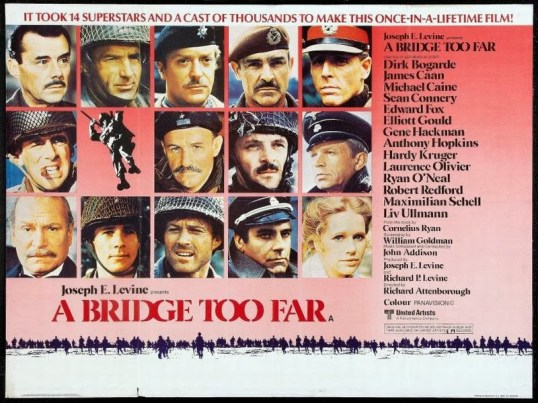
Attenborough and producer Joseph E. Levine pulls together an all-star cast for the film with names such as Sean Connery, Edward Fox, Robert Redford, Michael Caine and Laurence Olivier just to name a few. Films such as A Bridge Too Far rarely get made anymore in this day and age. The cast itself is part of the reason why the film still holds up to scrutiny decades after it’s release. While all-star casts such as this seemed to have been common place before the 1980’s it still looked like a daunting task for Attenborough to manage so many Hollywood stars and veteran British actors. Every character from Hopkin’s Col. Frost, Connery’s Gen. Urquhart and Redford’s Maj. Cook get to shine in their sections of the film as their individual stories about the battle all tie-in together to show just how complicated the events that they were filming truly turned out to be.

At times, one almost could feel overwhelmed by the amount of recognizable names and faces that come across the screen, yet Attenborough and producer Levine were able to juggle not just the logistics of the film’s screenplay, but the egos and reputation of the very stars who would become the backbone of the film.I think in a lesser filmmaker A Bridge Too Far could easily have turned into the very Operation Market Garden it was trying to depict.

It’s a film that never celebrates the concept of war itself, but actually shows that war remains a bloody and chaotic affair that relies not just on planning and execution but on the whims of lady luck. While Attenborough’s film never reached the sort of iconic status that another Cornelius Ryan adapted film has attained in The Longest Day, it does remain the more powerful of the two as it doesn’t just explore the historical event as a sort of academic exercise, but as an exploration of that old military adage of “No plan survives contact with the enemy”.

So, in the end I recommend that those looking to watch and experience the earlier directorial works of Sir Richard Attenborough should check out A Bridge Too Far. It remains to this day one of his more underappreciated films especially when compared to his later more acclaimed films like Gandhi, Chaplin and Shadowlands.

‘Interstellar’ Trailer #3


tumblr_n5og0iDbkk1rhmne4o2_500

(Trailer pulled from the official website where it can also be accessed with code: 7201969)

‘Interstellar’, directed by Christopher Nolan (‘Inception’, ‘The Dark Knight’), stars Matthew McConaughey, Jessica Chastain, Anne Hathaway, Casey Affleck, Michael Caine and many others. It is set in a not so distant future in which resources on earth are running low and a group of astronauts/explorers blast off to utilize “wormholes” to find habitable and resource rich planets outside of our solar system. The music is by Nolan’s go-to composer Hans Zimmer, and the cinematography by Hoyte Van Hoytema (‘Her’, ‘Let The Right One In’).

tumblr_n9jgn01DWX1sjygc4o1_500

tumblr_n9jgn01DWX1sjygc4o3_500

tumblr_n9jgn01DWX1sjygc4o5_500

I personally love astronomy and astrophysics. I love space, and have a mild obsession with Saturn. So when I say I am excited for ‘Interstellar’ it isn’t just because I am a fan of Nolan, or I am wrapped up in the wave of hype that tends to surround his films. I have a genuine personal interest in the science and themes involved here and so my expectations for this, even with all the confidence I have in its (amazing) cast and crew, are probably higher than any other release in 2014. Luckily the first full length trailer was beautifully made and was exactly what I wanted to see; and now this new trailer (which showed at Comic-Con) expands on the first, offering us even more of a glimpse as to what we are to expect…and boy oh boy does it look amazing. It has a genuine ‘Inception’ meets ‘2001: A Space Odyssey’ tone and look to it; and I can not wait to see those visuals in IMAX. Sadly it doesn’t hit theaters until November 6th…but until then I’ll be sitting here, with the trailer on loop *cries*.

tumblr_n5og0iDbkk1rhmne4o3_500


Were the critics right? A Review of Otto Preminger’s Hurry Sundown


It seems like whenever film bloggers and reviewers are making out a list of the worst films of all time, somebody always mentions Hurry Sundown.

Now, don’t get me wrong.  It doesn’t get mentioned as often as Battlefield Earth or Adam Sandler’s latest comedy.  And, when it does get mentioned, it’s done with little of the warmth that’s given to Troll 2, The Room, or Birdemic.  Instead, one gets the impression that Hurry Sundown is a film so bad that even those of us who appreciate bad films would find little to love about it.

But y’all know me.  I’m the type that prefers to judge for herself and I’m also someone who rather enjoys being a contrarian.  There’s a reason why one of my most read posts on this site is entitled 10 Reasons Why I Hated Avatar.  Add to that, Hurry Sundown was directed by Otto Preminger who also directed one of my favorite films of all time, Anatomy of a Murder.  How, I asked myself, could the man who made Anatomy of a Murder possibly also direct one of the worst films of all time?  As a result, every time that I saw someone claiming that Hurry Sundown was one of the worst films of all time, I grew more and more determined to someday see the film and judge for myself.

Well, I finally got my chance this weekend.  Hurry Sundown was on one of my newest favorite channels, The MOVIES! TV Network.  And I proceeded to watch it.  I sat through all four hours of this film (that’s including commercials and, oh my God, was I thankful for the distraction that those commercials provided).  I watched Hurry Sundown and …. wow.  Was it ever bad.

Hurry SundownReleased in 1967, Hurry Sundown was Otto Preminger’s attempt to take a look at race relations in the deep south.  It’s a film full of good, liberal intentions and an apparent lack of knowledge about — well, about everything.  As I watched this slow, almost formless blob of a film, I found myself wondering how the director who gave us Laura and Anatomy of a Murder could have possibly directed a film with a gigantic cast but absolutely no interesting characters.  I wondered how the director who had been willing to challenge the racist assumptions of 1950s Hollywood by directing Carmen Jones could have been responsible for the corny and subtly condescending look at race relations that was Hurry Sundown.

Hurry Sundown takes place in 1946 and is set in rural Georgia.  The war is over, the soldiers are coming home, and nobody in the film can maintain a convincing Southern accent for more than a line or two.  (Seriously — I’ve heard a lot of really bad Southern accents in a lot of really bad films but none of those accents were as bad as what I heard in Hurry Sundown.)  It’s a brand new world but the South is clinging to the old ways of racism and classism.

Preminger slowly (and clumsily) introduces us to the huge cast of characters who populate the slice of Hollywood Georgia.

There’s the sheriff (George Kennedy) who is so stupid that he can be distracted by an offer of fried chicken.  Kennedy actually gives a good comedic performance but his character seems like he belongs in another movie and you have to wonder how civil rights activists in 1967 — many of whom had undoubtedly been arrested and harassed by Southern sheriffs much like this one — reacted to Kenendy’s character being presented as harmless comic relief.

There’s the racist judge (Burgess Meredith) who, much like the sheriff, is presented as being a comedic buffoon as opposed to an actual threat.  The judge uses the n-word in every other sentence, which should be shocking and infuriating but, as a result of Meredith’s over-the-top delivery, instead simply comes across as being gratuitous and tasteless.

Then there’s Henry.  Henry is a businessman who dodged the draft, cheats on his wife, and who has a son who literally spends the entire movie screaming at the top of his lungs.  (Whenever that kid was on-screen, I imagined Preminger standing behind the camera and going, “More!  More!  Scream more!”)  Henry is also a racist, though for some reason he loves jazz and often plays the saxophone.  I kept waiting for someone in the movie to point out to him that jazz was created by black musicians but nobody did.  (If Henry had appeared in Anatomy of a Murder, someone would have.)

Did I mention that Henry is played by Michael Caine?  And did I also mention that Caine is the most cockney-sounding Southerner that I’ve ever heard?  Because he totally is.

Henry’s wife is named Julie and is played by Jane Fonda.  At one point, she suggestively blows on Henry’s saxophone.  One can only imagine how audiences in the 60s reacted to that.  (Actually, they probably didn’t.  They probably just said, “Good thing she’s pretty because she ain’t no musician…”)

Michael Caine and Jane FondaAnyway, Harry wants to buy up some farmland but half of that land is owned by Henry’s poor cousin Rad (John Phillip Law) and Rad doesn’t want to move.  Rad has just returned from fighting in the war and he views Harry as being a cowardly draft dodger.  Rad is married to Lou (Faye Dunaway) and wow, are they ever a boring couple!  Dunaway was under a five-picture contract to Preminger when she made this film and apparently, she had such a terrible time on the set of Hurry Sundown that she sued to get out of ever having to make another movie with Otto.  Dunaway’s misery comes through in every scene.

The other half of the farmland is owned by Reeve (Robert Hooks), a black farmer whose mother (played by Beah Richards) is Julie’s former mammy.  Julie goes down to the farmhouse to convince Reeve to sell and Reeve’s mother responds by having the most (over)dramatic heart attack in the history of cinema.  Saddened by death of his mother, Reeve is definitely not going to sell.  When he’s not chastely romancing the local teacher (played by Diahann Carroll, who appears to have wandered over from a different, far more glamorous movie), Reeve is singing sprituals and working out in the fields.

One of the things that Reeve does not do — no matter how many times he gets called the n-word or is treated unfairly — is get mad.  Rad gets mad.  Julie gets mad.  A liberal white preacher (Frank Converse) gets mad.  But Reeve and the other black characters in the film are never really allowed to get mad or do anything that might make the film’s white audience feel nervous.  Watching a film like Hurry Sundown, you can understand why — in just a few more years — Blaxploitation films would suddenly become so popular.  It was probably the first time that black film characters were actually allowed to not only get angry over the way they were being treated but to fight back, as opposed to reacting in the Hurry Sundown-way of passive acceptance.

Anyway, Rad and Reeve come together to protect their land and Henry and the evil judge conspire to cheat them out of their land and — well, let’s just say that Hurry Sundown is one of those films that has a lot of plot and very little action.  Preminger directs with a stunning lack of pace or grace, the actors deal with a poorly written script by either engaging in histrionics or going catatonic, and Michael Caine’s attempt at a Southern accent will amuse anyone who has ever been south of the Mason-Dixon.

I have to admit that I was really hoping that Hurry Sundown would turn out to be a sordid and tawdry little masterpiece, the type of overheated misfire that you love despite your better instincts.  But, no.  Hurry Sundown is just boring.  The film is such a misfire that it doesn’t even work as a piece of history.  The critics were right.  Hurry Sundown sucks.

Hurry_sundown_moviep


Trash Film Guru Vs. The Summer Blockbusters : “Now You See Me”


now_you_see_me_xlg

Maybe it’s unfair to saddle director Louis (Transporter) Leterrier’s new-ish “caper” drama Now You See Me with the “blockbuster” label, since it obviously doesn’t have the budget (or hype machine surrounding it) of an Iron Man 3 or a  Man Of Steel, but its surprisingly healthy take at the box office in recent weeks has it hedging into “blockbuster” territory in terms of its gross ticket receipts, it’s got a “blockbuster”-caliber cast, and it definitely falls into the category of lightweight, fun, summer entertainment, so — let’s just roll with it.

And let’s not take that “lightweight, fun, summer entertainment” statement as a jab, either, please, because Now You See Me is a solid little piece of film-making that anyone associated with it can (and should) be damn proud of. It’s just not particularly “deep” in any thematic sense.

But so what? It’s been awhile since Hollywood served us up a good “caper”-style thriller — the last genuinely superb one that comes to mind is Roger Donaldson’s criminally-underappreciated The Bank Job, and that’s getting to be a good few years ago now — and even though this is a film that doesn’t aim for the same level of “ooh”s and “aah”s of the latest Marvel or DC celluloid comic-book adaptation, it’s got more genuine heroics than most of them, and is every bit as finely-calculated a crowd-pleaser as anything they’ve sent down the pipeline in recent years, as well.

The all-star cast definitely helps to elevate a script that at times belabors its points with admittedly necessary but occasionally clumsy “info-dump” scenes and features a smattering of dialogue that can best be described as “clunky,” and while none of the actors involved are exactly stretching their abilities into new and unexplored territory, there’s something to be said for knowing what the folks you hire are best at doing and then getting out of the way and letting them do it.

To that end, Jesse Eisenberg tackles his role as fast-talking, arrogant illusionist J. Daniel Atlas with aplomb; Woody Harrelson delivers a solid, workman-like piece of acting as mentalist Merritt McKinney; Isla Fisher gives us a nice turn as former-magician’s-assistant-turned-headliner Henley Reeves; Dave Franco projects cool confidence as safe-cracker/lock-picker/con artist extraordinaire Jack Wilder; Mark Ruffalo gives another “believable everyman” performance as Special Agent Dylan Rhodes, the man tasked with somehow getting some charges to stick on our intrepid foursome, who have come together and billed themselves as “The Four Horsemen,” after they apparently rob a bank in front of a Las Vegas show audience (or do they?); Michael Caine gives it his usual grade-A “go” as the group’s  multi-millionaire benefactor/promoter/future victim; Morgan Freeman essentially plays himself in his guise as Through The Wormhole host, albeit with quantum physics being replaced with magic trick “debunking” as his gig; Melanie Laurent cuts a satisfying European-woman-of-mystery figure as Alma Dray, Ruffalo’s reluctant Interpol partner/potential love interest — heck, there are even notable minor performances here from Michael Kelly and Common as two of the cops who are down a few rungs on the investigative totem pole.

It’s not like the film doesn’t have any sort of statement to make about the general state of the world, either — to the contrary, “The Four Horsemen” take great pride in ripping off those who have ripped off society, and represent the kind of folk heroes the world could surely use in the wake of the mortgage crisis and the atrocious Wall Street bailout it gave birth to. Think of them as modern-day Robin Hoods with a flair for the dramatic and plenty of  flat-out amazing tricks up their sleeves.

Still, the art of deception being the constant theme here, don’t be shocked if the reasons for our protagonists’ “crimes” turn out to be a lot more personal than they first appear to be (hey, I did say this movie wasn’t particularly “deep,” remember? Not even when it looks like it might be.) . I think I’ll just leave it at that, which might even be saying a little too much already.

Leterrier, as we’ve come to expect, keeps things moving at a fairly expert clip, throws in some nifty little visual tricks along the way, and most definitely delivers the goods in the film’s more action-heavy scenes, and while he handles the script’s quasi-trippy/metaphysical conclusion quite nicely in my view, I think a lot of folks will still find it a bridge too far, and frankly, for a movie that’s all about sleight of hand, you’ll still most likely see the “surprise character revelation” at the end coming from a mile off.

But ya know what?  This is such an expertly-crafted piece of populist entertainment that I don’t think you’ll mind its admittedly-glaring weaknesses, simply because you’ll be too busy smiling from ear to ear. And that, perhaps, is its greatest trick of all.

There will surely be better films than Now You See Me released in 2013. Heck, there already have been. But I doubt there will be any that are more fun.