#MondayMuggers present BLOOD FATHER (2016), starring Mel Gibson!


Every Monday night at 9:00 Central Time, my wife Sierra and I host a “Live Movie Tweet” event on X using the hashtag #MondayMuggers. We rotate movie picks each week, and our tastes are quite different. Tonight, Monday March 10th, we’re watching BLOOD FATHER starring Mel Gibson, Erin Moriarty, Diego Luna, Michael Parks, William H. Macy, and Miguel Sandoval.

BLOOD FATHER is the story of an ex-con (Mel Gibson) who reunites with his estranged 17-year old daughter (Erin Moriarty) to protect her from drug dealers hell bent on killing her.

I remember being very excited about BLOOD FATHER when it was released back in 2016. I’ve always been a big fan of Mel Gibson’s work, and this movie looked like it would be right down my alley. I was visiting the Tampa area on a business trip and decided to take in the film at a theater in Pinellas Park during some downtime. I remember enjoying the film very much and thinking Gibson was especially badass in the title role. I’m looking forward to watching it again with the #MondayMuggers crew.

Here are a few interesting tidbits about BLOOD FATHER:

  1. Raoul Max Trujillo plays a badass Sicario trying to kill Mel Gibson and his on-screen daughter in this film. 10 years earlier he had played the chief warrior in APOCALYPTO (2006), which was directed by Gibson.
  2. The movie Lydia (Erin Moriarty) is watching in the theater is the remake of ASSAULT ON PRECINCT 13 (2005). Jean-François Richet directed that film and BLOOD FATHER.
  3. In 2008, Sylvester Stallone was planning to direct and star in an adaptation of Peter Craig’s novel “Blood Father.” Stallone and Mel Gibson would work together in 2014 on THE EXPENDABLES 3. 
  4. Director Jean-Francois Richet’s most recent film is PLANE (2023), starring Gerard Butler. It’s a damn good action film as well. 
  5. BLOOD FATHER was written by Peter Craig. His other credits include THE TOWN (2010), THE HUNGER GAMES: MOCKINGJAY 1 & 2 (2014-2015), THE BATMAN (2022) and TOP GUN: MAVERICK (2022). 

So, join us tonight for #MondayMuggers and watch BLOOD FATHER! It’s on Amazon Prime. 

The TSL Grindhouse: Mad Max (dir by George Miller)


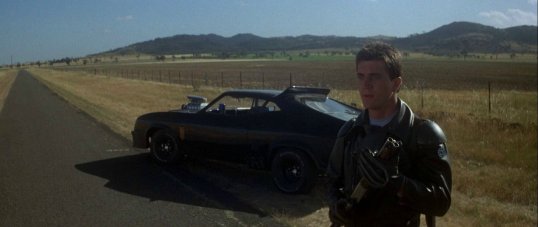
I was a bit shocked to discover that I’ve neve actually sat down and written up a real review of 1979’s Mad Max for this site.  Considering how much I like this film and all the scenes and shots that I’ve share from Mad Max, you would think that I would have at least written about why I like this violent but intriguing film so much.  Today is George Miller’s birthday so let’s talk about the film that launched his career.

Mad Max is often described as being a post-apocalypse film but that’s not quite true.  It does take place in a “near future,” one in which there seems to be noticeably less people around.  The roads of Australia are dominated by crazed punks who have taken their obsession with their cars and motorcycles to the extreme.  (Director George Miller trained as a doctor and has said that this film was partially inspired by the auto crash victims who were brought into the emergency room on a nightly basis.)  Civilization is on the verge of collapsing but it is still hanging on by a thread.  For every Night Rider (Vincent Gil), ranting as he crashes into people, and for every psycho gang leader like Toecutter (Hugh Keays-Byrne), there are people just trying to survive day-to-day.  The nightly news is still televised though the news is always so bad that no one seems to pay it much mind anymore.  There are still cops, like Max Rockatansky (Mel Gibson) and Goose Rains (Steve Bisley), who patrol the roads in their cars and who do whatever is necessary to chase down the people who appear to be destined to inherit a world that they very much want to destroy.  Society still exists but it’s obviously on its last legs and the attempts to maintain some sort of normalcy — laws, news, vacation homes, sexy saxophone playing — can’t hide the fact that the world is coming to a violent end.  Max tries to deny that reality until, finally, he has no choice but to accept both the new world and his place in it.

Whenever I watch Mad Max, I’m always surprised by the fact that Mel Gibson almost seems like a supporting character for the majority of the movie.  When the movie starts, Max is tightly wound and in control and he doesn’t show much emotion while he’s on the job.  The flamboyant and always joking Goose seems like a much more likable protagonist.  He’s the guy that the viewer wants to spend time with and, when he ends up getting burned nearly to death by Toecutter and Toecutter’s protegee, Johnny the Boy (Tim Burns, cast as one of the most loathsome characters ever to appear in a film), it’s a shocking moment.  Goose had so much life to him.  The attention then shifts to Max’s wife, Jessie (Joanne Samuel).  When she finds herself being menaced by Toecutter and his gang, it’s alarming because she’s both a mother and she’s eventually isolated from both her family and from Max.  We don’t want to see anything bad happen to Jessie.  When something bad does happen, we’re more than ready for Max to step up and get some vengeance.  And that’s exactly what Max does.  One of the film’s most iconic images features Max not even flinching at the sound of an explosion in the distance.  He’s gotten his vengeance but at the price of his soul.  And, even as the film comes to an end, it’s obvious that nothing can be done to stop society’s collapse.  Max has accepted what neither Goose nor Jessie could.  There is no safety or society in the new world.  There is only the road and the battle to control the remains of the world.

What makes Mad Max such a thrilling film?  A lot of it has to do with the stuntwork, which remains truly spectacular to this day.  Made in the era before CGI, Mad Max features real cars that are being driven by real people who put themselves into real danger to capture some of the most stunning crashes captured on film.  As well, the cast truly brings their characters to life.  Tim Burns makes Johnny the Boy into a truly hateful character, one who manages to somehow be both whiny and dangerous at the same time.  Joanne Samuel and Steve Bisley are sympathetic as Jessie and Goose.  And then you’ve got Mel Gibson, young and on the verge of the superstardom that people now tend to pretend never happened, showing the intensity that would become his trademark as the increasingly unhinged Max.  (I love Tom Hardy but, as good as he was in Mad Max: Fury Road, he never came close to capturing the soul-shattering intensity of Gibson’s thousand-yard stare,)

That said, I think the main reason why Mad Max continues to resonate is because it all feels so plausible.  One looks at the world of Mad Max and it’s very easy to imagine finding yourself there.  Unlike other apocalypse films that often seem to be taking place in an entirely different universe, Mad Max feels like it could be playing out just a few miles away from the closet motorway.  For all of the spectacular stunts and flamboyant characters, Mad Max is a film that continues to feel very real.  For that, George Miller deserves a lot of credit.  Mad Max is a true classic of grindhouse filmmaking, featuring a story that feels more powerful with each passing year.

Scene That I Love: Mad Max Meets The Night Rider


Today’s scene of the day comes from the original Mad Max, directed by George Miller and starring Mel Gibson as Australia’s favorite apocalypse survivor.  In this scene, Max — who is still trying to be a servant of law and order — chases The Night Rider!

The Night Rider has become a bit of a fan favorite, which is saying something for someone who really isn’t in the film for that long.  As Mad Max takes place before the total collapse of civilization, it’s temping to see The Night Rider as a harbinger, letting Max and his other police colleagues know what the future for holds all of them.

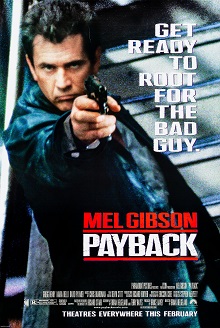
14 Days of Paranoia #5: Payback (dir by Brian Hegeland)


The 1999 film, Payback, opens with Porter (Mel Gibson) lying on a kitchen table while a grubby-looking doctor digs two bullets out of his back.  The scene takes place in almost nauseating close-up, with the emphasis being put on the amount of pain that Porter endures to get rid of those bullets.  Immediately, we know that Porter is not someone who can safely go to a regular hospital.  Porter is someone who exists in the shadows of mainstream society.

He’s also someone who spends a lot of time getting beaten up.  Even back when he was still a big star, Mel Gibson always seemed to spend a good deal of his films getting beaten up and tortured in various ways and that’s certainly the case with Payback.  Porter gets punched.  Porter gets shot.  Porter has a encounter with an over-the-top dominatrix (played by Lucy Liu).  At one point, Porter allows two of his toes to be smashed by a hammer, just so he can trick the his enemies into doing something dumb.  As played by Gibson, Porter stumbles through the film and often looks like he’s coming down from a week-long bender.  It’s interesting to think that Payback is a remake of 1967’s Point Blank, which starred Lee Marvin as Walker, an unflappable career criminal who never showed a hint of emotion or weakness.  Porter, on the other hand, is visibly unstable and spends the entire film on the verge of a complete mental collapse.  A lot of people try to kill Porter and Porter kills almost all of them without a moment’s hesitation.

(Of course, both Porter and Point Blank‘s Walker are versions of Parker, a career criminal who was at the center of several crime novels written by Donald “Richard Stark” Westlake.)

After helping to pull off a $140,000 heist from a Chinese triad, Porter was betrayed and left for dead by his former friend Val Resnick (Gregg Henry) and his wife, Lynn (Deborah Kara Unger).  Porter, who just wants the $70,000 cut that he was promised, starts his quest for the money by tracking down Val and Lynn, and then continues it by going after the three bosses (played by William Devane, James Coburn, and Kris Kristofferson) of “The Outfit,” a shadowy organization that Val had gotten involved with.  Along the way, Porter deals with a motely crew of corrupt cops, violent criminals, and sleazy middlemen.  (David Paymer has a memorable bit as a low-level functionary with atrocious taste in suits.)  Porter also hooks up with a prostitute named Rosie (Maria Bello), who might be the only person that he can actually trust.

I have mixed feelings about Payback.  (So did director Brian Hegeland, who was reportedly fired towards the end of shooting and later released a far different director’s cut.)  Though the film does a good job of capturing the visual style of a good neo-noir, the story itself is so violent and grim that it actually gets a little bit boring.  The film’s advertising encouraged audiences to “Get ready to root for the bad guy,” but there’s really no reason to root for Porter.  He’s an inarticulate and ruthless killer with no sense of humor.  If anything, the people that he kills seem to be far more reasonable and likable than he does.  In Point Blank, Lee Marvin may have been a bastard but he was good at what he did and you at least got the feeling that he wouldn’t go after any innocent bystanders.  In Payback, Porter is such a mess that his continued survival is largely due to dumb luck.  It’s hard to root for an idiot.

That said, the film does do a good job of capturing the feeling of people living on the fringes of society.  The Outfit is not a typical Mafia family but instead, a collection of businessmen who work out of nice offices and, in the case of William Devane’s Carter, come across as being more of a senior executive than a crime boss.  (James Coburn and Kris Kristofferson, meanwhile, come across as being two former hippies who made it rich on Wall Street.  They’re elderly versions of Abbie Hoffman and Jerry Rubin.)  The film does a good job of creating a world where no one trusts anyone and everyone is being watched by someone.  In one memorable scene, the three men sent to watch for Porter discover that he’s been watching them the entire time.  Never forget to look over your shoulder to see who might be following.

Flaws and all, this 1999 film does a good job of capturing the atmosphere of paranoia that, for many, would come to define the early part of the 21st Century.

14 Days of Paranoia:

  1. Fast Money (1996)
  2. Deep Throat II (1974)
  3. The Passover Plot (1976)
  4. The Believers (1987)

Scenes That I Love: The End of Mad Max


Mad Max (1979, dir by George Miller, DP: Dave Eggby)

Today the Shattered Lens wishes a happy birthday to one of our favorite people, George Miller!  The doctor-turned-director began his cinematic career with 1979’s Mad Max and he’s gone on to become one of the most influential and important filmmakers out there.  In honor of George Miller’s birthday, today’s scene that I love is from his debut film.

In this scene, the once upstanding policeman, Max Rockatansky (Mel Gibson), get his revenge on the last surviving member of Toecutter’s gang.  Instead of merely running Johnny the Boy over, he handcuffs Johnny to a car, uses the leaking gasoline and Johnny’s lighter to create a crude timebomb, and gives Johnny a hacksaw.  Johnny can either spend ten minutes cutting through the cuffs or five minutes cutting through his ankle.  Max drives off and barely notices the explosion behind him.  (It seems like it wouldn’t have made difference what Johnny cut through because that explosion came pretty quickly.)  Max’s cold expression and the dark road in front of him indicates that Max knows what the future holds for both himself and the rest of humanity.  In the scene, Max surrenders whatever traces of mercy that he had left within him.  Fortunately, he gets some of his humanity back in the next movie.

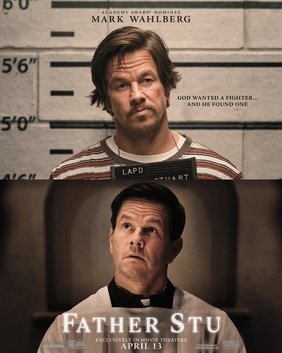
Film Review: Father Stu (dir by Rosalind Ross)


I don’t care what all the other critics said when Father Stu was first released in April.  It’s not that bad.

Now, of course, I should be upfront and mention that I come from a Catholic background.  My father’s side of the family is Irish.  My mother’s side is Italian/Spanish.  Am I saying that you have to have been raised Catholic to appreciate Father Stu?  Not at all.  But it does help.

And when I say that Father Stu is not that bad, what I mean is that’s actually pretty good.

Based on a true story, Father Stu stars Mark Wahlberg as Stuart Long.  When the movie opens, Stu is in a boxing ring, beating up his opponents while taking a lot of punishment himself.  From that opening scene, we learn a few things about Stu.  He’s a fighter.  He’s determined.  He’s willing to take a beating.  And he really doesn’t know when to quit.  We then meet his no-nonsense mother, Kathleen (Jacki Weaver), and his father, Bill (Mel Gibson).  Bill is an alcoholic truck driver, the type who shouts at other drivers and who gets into an argument with a random child about who is the worse driver.

When Stu is informed that he could very well die if he continues to box, he decides that it’s time to pursue another profession.  The 30-something Stu announces to his mother that he’s going to be an actor.  He may not have any training but he has a lot of personality.  Stu’s mother suggests that it might be a little late in life for Stu to pursue a career as a film star but Stu packs up and leaves for Montana for California.

He does manage to land one gig, a commercial for a mop.  But Stu’s acting career never really takes off.  Instead, he gets a job working in a deli.  It’s there that he first spots Carmen (Teresa Ruiz), a Sunday school teacher.  When Carmen tells Stu that she wouldn’t even consider dating a man who was not baptized, Stu begins RCIA at the local parish.  Eventually, he’s baptized into the parish but it’s not until he’s nearly killed in a motorcycle accident and has a vision of Mary that he truly starts to believe.  He also comes to feel that he’s been called to the priesthood, despite the fact that it means ending his relationship with Carmen.  Stu enters the seminary, under the watchful eye of the initially skeptical but eventually supportive Monsignor Kelly (Malcolm McDowell).  However, Stu soon finds himself facing his greatest challenge when he’s diagnosed with inclusion body myositis, a disease that will eventually rob him of his ability to care for himself.

When Father Stu was first released in April, it received a lot of attention for being an R-rated film about faith.  But the fact that the characters frequently (and colorfully) curse is actually one of the best things about Father Stu.  People curse.  Both the religious and the non-religious curse.  Catholics especially curse.  When you find out that you have an incurable disease that’s going to kill you by the time you turn 50, you’re going to curse regardless of how much faith you may or may not have.  Far too many films about religion seem to take place in some strange world where the 50s never ended and people still say, “Darn,” when faced with the world’s problems.  To its credit, Father Stu‘s characters never lose their edge.

Father Stu also received a lot of negative attention for the involvement of Mel Gibson.  That’s understandable but, at the same time, there’s probably no contemporary actor who is more convincing as a self-destructive alcoholic than Mel Gibson.  For better or worse, Gibson brings a certain authenticity to the role and that authenticity is what a film like Father Stu needs.

In the lead role, Mark Wahlberg brings a lot of sincerity to the role of Stu.  When we’re first introduced to Stu, he’s earnest but he’s not particularly smart.  He doesn’t think things through.  He’s the type of guy who will work hard in his job without understanding that it’s still not a good idea to show up at work looking like you’ve spent the weekend fighting people in an alley for loose change.  As a result of Wahlberg’s performance, it’s easy to see why everyone in Stu’s life is skeptical when he announces that he’s going to become a priest.  However, it’s also due to his performance that Stu’s eventual transformation is undeniably moving.  Wahlberg’s rough-edged sincerity keeps the film from becoming overly mawkish after Stu discovers that he’s ill.  He remains a fighter from beginning to end and it’s hard not to want to see him win.

Father Stu is probably the epitome of the type of film that audiences love but critics hate.  But you know what?  Sometimes, the audiences are right and sometimes, critics try way too hard to be cynical.  Father Stu is a touching movie, one that serves as an antidote to the God’s Not Dead-style of movies about religion.  It’s a good movie that, like its protagonist, never stops fighting.

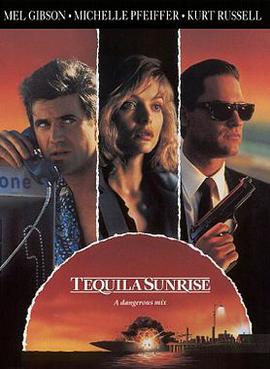
Tequila Sunrise (1988, directed by Robert Towne)


Mac (Mel Gibson) and Nick (Kurt Russell) are old friends who are on opposite sides of the law.  Mac was once a legendary drug dealer though he says that he’s now retired.  Nick is a narcotics detective with the Los Angeles County Sheriff’s Department.  Early on, Nick warns Mac that, if he is dealing again, he’s going to have to arrest him.  Mac says that he has no interest in getting back into the business but no one believes him.

Mac is actually more interested in Jo Ann Valleneri, who owns his favorite restaurant.  Since Jo Ann is played by Michelle Pfeiffer, who can blame him?.  After tracks Mac to the restaurant, he becomes attracted to Jo Ann too and again, it’s impossible to blame him.  Soon, Jo Ann and Nick are a couple but is Nick just using her to find out about Mac’s relationship with a mysterious drug lord named Carlos?  And when Mac moves in and starts his own relationship with Jo Ann, does he really love her or is he using her to throw Nick off of his trail?

Tequila Sunrise should be a great film but instead, it’s only a good one.  It has all the elements of greatness — Michelle Pfeiffer at her sultriest, Kurt Russell at his coolest, and Mel Gibson before he lost his mind.  It also has a good supporting cast, including Raul Julia, J.T. Walsh, and Arliss Howard.  Ultimately, it doesn’t really come together because the film’s director and screenwriter, Robert Towne, doesn’t seem to be sure what type of story he wants to tell.  Tequila Sunrise could have either been a great crime thriller or a steamy love story but, by trying to be both, it gets bogged down in its own convoluted plot.  That probably won’t matter to most viewers, though.  Not when Russell, Gibson, and Pfeiffer are all on screen together at the same time.  Tequila Sunrise tries to be many things but it works best as a celebration of movie star charisma.

One final note: The film looks great.  Visually, this is one of the ultimate California films.  Cinematographer Conrad Hall received an Oscar nomination for his work on this film and it was more than deserved.

Here’s The Trailer For Dragged Across Concrete!


For everyone who is looking forward to following Oscar season with some good B-movie action , here’s the trailer for Dragged Across Concrete!

In this film, Mel Gibson and Vince Vaughn play two cops who get suspended from the force and decide to support themselves by ripping off some criminals.  It’s a bit of an homage to the over-the-top grindhouse films of the 70s and 80s and, believe it or not, a source that I trust has not only seen the film but also told me that it’s actually a really good, surprisingly intelligent film.  Considering that the film has a 2 hour and 30 minute running time, it better be!

Dragged Across Concrete is the latest film from S. Craig Zahler, who previously directed Vaughn in the acclaimed Brawl in Cell Block 99.  Dragged Across Concrete will be released on March 22nd.

Weekly Trailer Round-Up: Bad Times At The El Royale, First Man, Air Strike, E-Demon


This week, Lisa and Arleigh already shared the latest trailers for:

The Predator

The Other Side of the Wind

The Front Runner

Here’s the best of the rest.

Six years after making his directorial debut with The Cabin In The Wood, Drew Goddard returns to the director’s chair with Bad Times at the El Royale.  Featuring Jeff Bridges, Jon Hamm, Dakota Johnson, and Chris Hemsworth, Bad Times at the El Royale will be released on October 12th.

From Universal Pictures, here is the second trailer to First Man.  Damien Chazelle’s upcoming film stars Ryan Gosling as the first man on the Moon, Neil Armstrong, and Claire Foy as his first wife.  First Man will be released on October 12th, putting it in head-to-head competition with Bad Times At the El Royale.

If you have ever wondered what you would get if you combined Bruce Willis, Adrien Brody, and unconvincing CGI, Air Strike is here to answer your question.  Air Strike will be released on October 26th.  Mel Gibson (yes, that Mel Gibson) was the production designer.

Finally, if you missed the first two Unfriended movies, E-Demon is here to shock you.  E-Demon will be released on September 14th.


Film Review: The Bounty (dir by Roger Donaldson)


Oh, poor Captain Bligh.

For those who recognize the name, it’s probably because they’ve either read a book or seen a film that portrayed him as being the tyrannical captain of the HMS Bounty.  In 1787, William Bligh and the Bounty set off on a mission to Tahiti.  When, after ten months at sea, the Bounty arrived in Tahiti, the crew immediately fell in love with the relaxed pleasures of island life.  When Bligh ordered them to leave Tahiti and continue with their mission, his own second-in-command led a mutiny.  Bligh and the few men who remained loyal to him were set adrift in a lifeboat while Christian and the mutineers eventually ended up settling on Pitcairn Island.  Against impossible odds, Bligh managed to make it back to civilization, where he faced both a court-martial and a future of being portrayed as a villain.

Though most historians agree that Bligh was a knowledgeable and talented (if strict) captain and that the mutiny had more to do with Christian’s desire to remain in Tahiti than Bligh’s treatment of the crew, most adaptations of what happened on the Bounty have laid the blame for the mutiny squarely at Bligh’s feet.  Personally, I think it has to do with the names of the people involved.  William Bligh just sounds evil, in much the same way that the name Fletcher Christian immediately brings to mind images of heroism.  In 1935’s Mutiny On The Bounty, Charles Laughton portrayed Bligh as being a viscous sadist.  In 1962’s Mutiny in the Bounty, Trevor Howard portrayed Bligh as being an overly ambitious martinet, though ultimately Howard was overshadowed by Marlon Brando, who gave a bizarrely mannered performance in the role Christian.

In fact, it would seem that there’s only one film that’s willing to give William Bligh the benefit of the doubt.  That film is 1984’s The Bounty.

The Bounty opens with Bligh (played by Anthony Hopkins) facing a court-martial for losing the Bounty.  That the admiral presiding over Bligh’s court-martial is played by Laurence Olivier is significant for two reasons.  Olivier’s stately and distinguished presence lets us know that the mutiny was viewed as being an affront to British society but it also reminds us that Hopkins began his career as Olivier’s protegé.  Much as how William Bligh was a star of the British navy, Hopkins was (and is) a star of British stage and screen.  One gets the feeling the scene isn’t just about the admiral judging Bligh.  It was also about Olivier judging Hopkins as the latter played a role that had already been made famous by two other great British thespians, Charles Laughton and Trevor Howard.

By opening with Bligh on trial, The Bounty allows itself to be told largely through Bligh’s point of view.  We watch familiar events play out from a new perspective.  Once again, it takes longer than expected for Bligh and the Bounty to reach Tahiti and, once again, Bligh’s by-the-book leadership style alienates a good deal of the crew.  However, this time, Bligh is not portrayed as being a villain.  Instead, he’s just a rather neurotic man who is trying to do his duty under the most difficult of circumstances.  Bligh knows that the crew blames him for everything that goes wrong during the voyage but he also knows that the only way their going to survive the journey is through maintaining order.

In fact, the film suggests that Bligh’s biggest mistake was promoting Fletcher Christian (Mel Gibson) to second-in-command.  Christian is portrayed as being good friends with Bligh and one gets the feeling that Bligh promoted him largely so he would have someone to talk to.

The film does a good job contrasting the dank claustrophobia of the Bounty with the vibrant beauty of Tahiti.  When the crew first lands, Bligh proves his diplomatic skills upon meeting with the native king.  However, it quickly becomes apparent that, while Bligh views the stop in Tahiti as just being a part of the mission, the majority of the crew view it as being an escape from the dreariness of their lives in Britain.  For the first time in nearly a year, the crew is allowed to enjoy life.  When Bligh eventually orders the crew to leave Tahti, many of the men — including Christian — are forced to abandon their native wives.

Unfortunately for Bligh, he doesn’t understand that his crew has no desire to return to the dreariness of their old life, either on the Bounty or in the United Kingdom.  Bligh’s solution to the crew’s disgruntlement is to become an even harsher disciplinarian.  (Bligh is the type of captain who will order the crew to clean the ship, just to keep them busy.)  However, Bligh no longer has Christian backing him.  When the inevitable mutiny does occur, Bligh seems to be the only one caught by surprise.

Anthony Hopkins gives a performance that turns Bligh into a character who is, in equal amounts, both sympathetic and frustrating.  Bligh means well but he’s so rigid and obsessed with his duty that he can’t even being to comprehend why his crew is so annoyed about having to leave Tahiti.  Since Bligh can’t imagine ever loving anything more than sailing, it’s beyond his abilities to understand why his men are so obsessed with returning to Tahiti.  Hopkins portrays Bligh as being not evil but instead, rather isolated.  He knows everything about sailing but little about emotion or desire.  Ironically, the same personality traits that led to him losing the Bounty are also key to his survival afterward.  By enforcing discipline and emphasizing self-sacrifice, Bligh keeps both himself and the men who stayed loyal to him alive until their eventual rescue.

Interestingly, Mel Gibson portrayed Christian as being just as neurotic as Bligh.  In fact, if Bligh and Christian have anything in common, it would appear to be they’re both obsessed with what the crew thinks of them.  Whereas Bligh is obsessed with being respected, Christian wants to be viewed as their savior.  When the mutiny finally occurs, Christian gets an almost messianic gleam in his eyes.  While Christian is not portrayed as being a villain (and, indeed, The Bounty is unique in not having any cut-and-dried villains and heroes), Gibson’s portrayal is certainly far different from the heroic interpretation offered up by Clark Gable.

(The rest of the cast is full of familiar British character actors, along with a few future stars making early appearances.  Both Daniel Day-Lewis and Liam Neeson appear as members of the Bounty’s crew.  One remains loyal to Bligh while the other goes with Christian.  Watch the movie to find out who does what!)

The Bounty is best viewed as being a character study of two men trying to survive under the most trying of conditions.  Just as Bligh’s personality made both the mutiny and his survival inevitable, the film suggests that everything that made Christian a successful mutineer will also make it impossible for him to survive for long afterward.  Whereas Bligh may have been a poor leader but a good diplomat, Christian proves to be just the opposite and the king of Tahiti makes clear that he has no room on his island for a bunch of mutineers who will soon have the entire British navy looking for them.  Whereas Bligh makes it back to Britain, Christian and the mutineers are forced to leave Tahiti a second time and end up settling on the previously uncharted Pitcairn Island.  (Of course, no one knows for sure what happened to Christian after the mutineers reached Pitcairn Island.  The last surviving mutineer claimed that Christian was murdered by the natives who were already living on the island.)

The Bounty has its flaws.  There are some pacing issues that keep the film from working as an adventure film and a few of the actors playing the crew aren’t quite as convincing as you might hope.  (If you only saw him in this film, you would never believe that Daniel Day-Lewis is a three-time Oscar winner.)  But it’s still an interesting retelling of a familiar story and it’s worth watching for the chance to see one of Anthony Hopkins’s best performances.