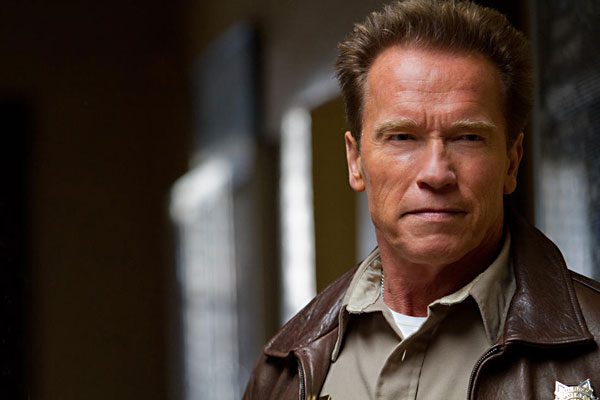
Brad reviews THE LAST STAND (2013), starring Arnold Schwarzenegger!


After eight years of serving as Governor of California, Arnold Schwarzenegger made his big comeback as an action movie star in director Kim Jee-woon’s THE LAST STAND (2013). Sure, he put in a little work on the first two EXPENDABLES movies, but those were really just glorified cameos. Here, Arnold was front and center for the film’s 107 minute running time. This was an exciting time for me, because like most action movie fans, I loved him and had truly missed seeing him consistently kicking butt and taking names on the big screen. I gladly made my way to the movie theater in January of 2013  for a large tub of ‘corn, a big Mr. Pibb, and the true return of an action megastar!!

In THE LAST STAND, Schwarzenegger plays Ray Owens, a former LAPD narcotics officer who chose to leave the big city and take a job as the sheriff of the quiet, southern border town of Sommerton, Arizona. It won’t be quiet for long after notorious drug kingpin Gabriel Cortez (Eduardo Noriega) makes a daring escape from FBI custody. Cortez immediately heads towards the border in a souped up Corvette where an advanced group of highly trained gunmen, led by Burrell (Peter Stormare), are waiting to help him cross. Cortez and his small army of mercenaries appear to be on a collision course with Sheriff Owens and his ragtag group of deputies, including Mike (Luis Guzman), Jerry (Zach Gilford), and Sarah (Jaimie Alexander). Knowing they’re outgunned and outmanned, Sheriff Owens asks for additional help from ex-military man and current drunk Frank Martinez (Rodrigo Santoro), as well as the crazy local gun nut Lewis Dinkum (Johnny Knoxville). Add to this mixture, FBI agent John Bannister (Forest Whitaker) and his team’s attempts to try to stop Cortez before he gets to Sommerton, and the stage is set for lots of action! 

I really liked THE LAST STAND when I saw it at the movie theater in 2013, and I really liked it again when I revisited the film this week. I made it a habit many years ago to not read reviews of a film before I go see it at the theater. I had found that reading potential negative comments could affect my viewing of a film, so I cut that out. As such, after totally enjoying myself with THE LAST STAND, I was surprised that the film wasn’t received very strongly by the audience or critical community, and I was even more surprised that it completely flopped at the box office, only bringing in a total of $12 million in the United States during its run. For me, the film delivered what I was looking for… Arnold Schwarzenegger kicking ass, spouting off some good one-liners, and outsmarting and outmuscling his much younger adversaries! No critic or keyboard warrior can take that away from me, as THE LAST STAND is an entertaining movie with a good cast. Heck, even the great Harry Dean Stanton pops in for a surprise cameo at the beginning of the action. 

I also appreciate the fact that THE LAST STAND is the American directorial debut of the great South Korean director Kim Jee-woon, who has directed some of my favorite South Korean films, including A BITTERSWEET LIFE (2005) and I SAW THE DEVIL (2010). His direction brings some Asian flair that results in stronger, more graphic violence, as well a penchant for jarring changes in tone between humorous character interplay and sometimes violent tragedy. In a movie designed primarily as a piece of entertainment, I appreciate those more over-the-top touches that lift it above the norm. 

Overall, I easily recommend THE LAST STAND to fans of Arnold Schwarzenegger and old-school action movies. It’s not a Schwarzenegger classic in the same way as movies like PREDATOR (1987), TERMINATOR 2 (1991), and TRUE LIES (1994), but it’s still a fun ride! 

Late Night Retro Television Review: Monsters 3.18 “Desirable Alien”


Welcome to Late Night Retro Television Reviews, a feature where we review some of our favorite and least favorite shows of the past! On Wednesdays, I will be reviewing Monsters, which aired in syndication from 1988 to 1991. The entire series is streaming on YouTube.

This week, an immigrant wants to stay in America.

Episode 3.18 “Desirable Alien”

(Dir by Bette Gordon, originally aired on January 27th, 1991)

Hercules (Tony Spiridakis) is a Greek immigrant who claims that he cannot return to his home country because of a mysterious birth defect.  Hercules wants to be an American citizen but, for some reason, he is hesitant to take the physical exam necessary for citizenship and he always finds a way to put it off.  As he waits to become a citizen, Hercules works in a restaurant with his friend, Luis (Luis Guzman).  Hercules has had several case workers, all of whom have mysteriously stopped working for the Immigration agency after meeting with Hercules.  It turns out that almost every woman that Hercules meets ends up becoming one of his lovers.  Luis is impressed.  Hercules says that he can’t help it.  And, as caseworker Maggie (Wendy Makkena) discovers, he’s not lying.  It turns out that Hercules is actually a satyr.  Debbie Harry, of Blondie fame, has a brief cameo as a doctor who shows up to give Hercules his physical and who quickly becomes one of his lovers.

This episode was well-acted but it didn’t really add up to much.  It’s tempting to try to connect the episode’s story to modern politics and the current debate about immigration but …. nah.  That would be giving this episode a bit too much credit.  As much as I complain about programs that are too long for the often simple stories that they tell, this episode is a case where I wouldn’t have minded a bit more time to explore the story.  With a 21-minute runtime, this episode felt rushed and rather incomplete.

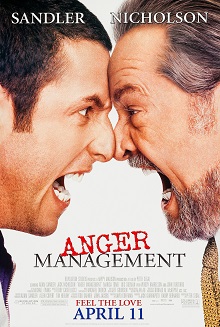
Anger Management (2003, directed by Peter Segal)


Dave (Adam Sandler), a timid man who has never gotten over being humiliated when he was a teenager, is sentenced to anger management after a slight argument on a plane is blown out of proportion by a taser-wielding shy marshal.  His therapist is Dr. Buddy Rydell (Jack Nicholson), whose techniques only seem to exacerbate Dave’s growing anger.  Among Dr. Rydell’s methods are giving Dave an unstable “anger buddy” named Chuck (John Turturro), ordering Dave to get revenge on the guy (John C. Reilly) who humiliated on his as a teenager, and also encouraging Dave to cheat on his girlfriend Linda (Maria Tomei) with a woman (Heather Graham) that they meet at bar.  Dave goes from timid to angry, Dr. Rydell starts dating Linda, and the whole thing is wrapped up with a totally implausible ending.

The idea of the star of Chinatown and Five Easy Pieces co-starring in an Adam Sandler comedy sounds like it should be exhibit #1 when it comes to talking about the decline of American cinema but I’ve always liked Anger Management.  Casting Jack Nicholson as the seemingly insane Dr. Rydell was an inspired choice and Nicholson gives a real performance in the film as opposed to just coasting on his already-established persona.  Anger Management came out a year after Adam Sandler’s first dramatic film, Punch-Drunk Love, and, even though Anger Management is a raunchy comedy from the start to finish, Sandler’s performance actually finds the reality in Dave’s situation.  Sandler plays Dave as being someone who is sincerely trying his best to get through his court-mandated anger management without losing control.  Nicholson and Sandler make for a surprisingly good team.

Of course, it’s an Adam Sandler comedy so it’s not for everyone.  The humor is often crude and the film’s final twist is so ridiculous that it can actually leave you feeling like you might need anger management.  But Anger Management does show how Jack Nicholson improves anything that he’s involved with and it also shows that Adam Sandler can act when he feels like it.  Anger Management also gave us the meme of Jack Nicholson nodding his approval, meaning the film and the performance will live forever.

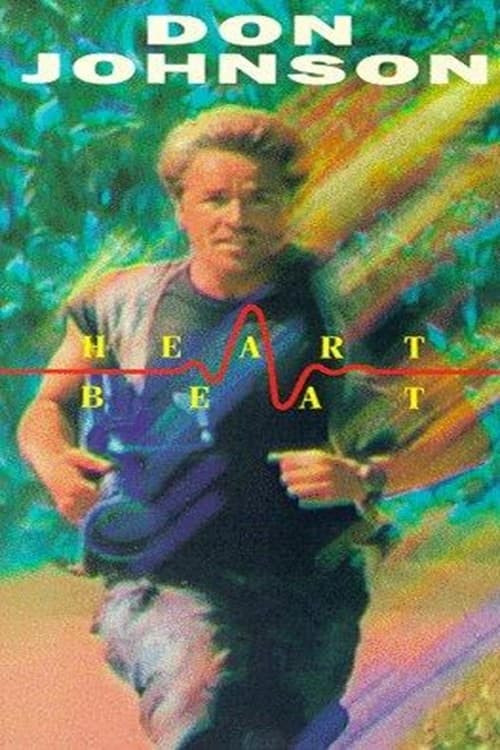
Musical Film Review: Heartbeat (dir by John Nicolella)


1987’s Heartbeat opens with Don Johnson in an unidentified Central American country.

Rebels are moving through the jungles.  Helicopters are flying over villages and firing off missiles.  In the middle of it all is Don Johnson, playing a character identified as being “The Documentary Filmmaker.”  Johnson carries a large movie camera with him, recording all of the violence and the carnage.  Is Johnson trying to expose the evils of the government?  Is he trying to expose the rebels?  Is he just an adrenaline junkie who can’t help but go to the most dangerous places in the world?  I have no idea and I’m not sure that the film does either.

A bomb explodes.  Johnson is thrown back.  Soon, Don Johnson is being carried into a dark room on a stretcher.  It appears that he might be dying but, even as his heartbeat is slowing down, his spirit is still hanging around and having flashbacks to the attack on the village, which we just saw less than a minute ago.  Eventually, Johnson’s spirit has other flashbacks.  He remembers talking to Paul Shaffer.  He remembers his strained marriage to an unnamed woman played by Lori Singer.  He remembers his youth as the son of a Las Vegas showgirl who is played by Sandahl Bergman.  (Bergman also played a showgirl in Bob Fosse’s All That Jazz and her scenes in this film often feel as if they’ve been directly lifted from Fosse’s classic film.)  David Carradine shows up as someone who might be Johnson’s father or who might just be some random guy rolling dice in the backroom of a strip club.  Johnson remembers his friendship with a graffiti artist (Giancarlo Esposito), who has a sister (Angela Alvarado) who was a prostitute.  The main message seems to be that the Documentary Filmmaker recorded the dangers of the world while also trying to remain emotionally detached, much like Robert Forster in Medium Cool.  Now that he’s dying, he’s left to wonder whether he made the right choice in refusing to get personally involved.

Oh, and did I mention that this film is basically a 65-minute music video?  Don Johnson sings through the entire movie, in a style that does its best to imitate the tough growl and soulful yearning of Southern rock and roll but which ultimately only serves to show that Johnson made the right decision in focusing on acting instead of singing?

After I came across this film on Lettrboxd and then watched it on YouTube, I did a bit of research (which is a fancy way of saying that I spent a minute reading a Wikipedia entry) and I discovered that, at the height of his Miami Vice success, Johnson released his debut country rock album, Heartbeat.  Heartbeat the film was something that Johnson made in order to promote Heartbeat the album.  Directed by frequent Miami Vice director John Nicollela, Heartbeat the film is so self-indulgent and determined to prove that Don Johnson is a soulful artist that it becomes oddly fascinating to watch.  Johnson’s Documentary Filmmaker is a bit of a cad but the film seems to argue that 1) it’s not really his fault because women find him to be irresistible, 2) it’s really his mom’s fault for getting a job, and 3) it ultimately doesn’t matter because the Filmmaker is a great artist whose work will live on even after he dies.  It’s a vanity film for a vanity album and it’s all so vain that it becomes hard to look away from.

In the end, both the music from the album and the promotional film leave one feeling that, in 1987, Don Johnson might have had an unreasonably high opinion of his musical abilities.  That said, as anyone who has seen Cold In July can tell you, Don Johnson eventually did become a very good actor.

I Watched Dreamer (2005, Dir. by John Gatins)


Dreamer is based on the true story of a horse that did something that few horses have managed to do.  It broke a bone but it still managed to make a comeback as a racehorse.

I love horses, which is why I’m not a fan of horseracing.  I find horseracing to be cruel.  The horses, which have an innate need to follow the orders of whoever is riding it, will literally run themselves to death to try to keep their jockeys happy.  When you add that many racehorses are kept in deplorable conditions and that, with insurance, they are often worth more dead than alive, you have a sport that brings out the worst in a lot of people.  Horses are wonderful animals because they are so loyal.  That loyalty deserves better than being shot because they broke a leg due to their trainer’s negligence.

Given how I feel about horseracing, I’m amazed that I liked Dreamer when I saw it in the theaters and I was surprised that I still liked it when I watched it this weekend.  I guess it’s because the horse in Dreamer is not euthanized.  She would have been euthanized if not for the fact that her trainer (Kurt Russell) brought his daughter (Dakota Fanning) to work with him that day.  Russell loses his job but he does gain a horse.  After the horse recovers from its injury, Russell hopes to breed the horse.  It turn out that the horse cannot have a foal but it can still race.  With Russell and Fanning’s help, the horse returns to competition and shows up everyone who gave up on her.  Russell and Fanning refuse to give up on the horse and the horse doesn’t give up on herself.  Along the way, Russell and Fanning finally spend time together as father and daughter and Russell reconnects with his wife, Elisabeth Shue, and his father, Kris Kristofferson.  Everyone involved gives a good job.  The movie may be predictable but there aren’t any false notes in any of the performances.  I not only wanted the horse to get better but I wanted the family to grow closer and I was happy when both those things happened.

Dreamer is a good family movie.  If only every trainer was as kind and willing to admit his mistakes as Kurt Russell is in this film.  There’s nothing surprising about Dreamer but it’s still a movie that makes me cheer.  It makes me cheer in a way that a real horse race never would.


TRUE BELIEVER -James Woods & Robert Downey, Jr. take on the system!


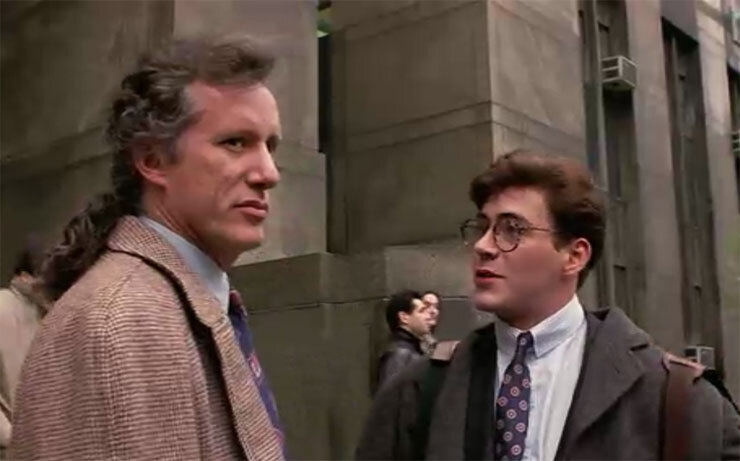
I’ve been going through my movies and re-watching some of my favorites. A movie that clearly falls into that category is TRUE BELIEVER starring James Woods and Robert Downey, Jr. I became a fan of James Woods around 1988 primarily based on the strength of two action films that he worked on around that time, those being BEST SELLER (1987) and COP (1988). I spent hours combing through the rental selections at our local Hastings Entertainment store and I remember both of these movies being in the “New Release” section at the same time. They’re both hard hitting, violent films, and Woods is especially good in both. Being an obsessive completist, I found myself searching out the prior work of the star for some more good movies. It was during this time that TRUE BELIEVER was released to the theaters in February of 1989. I enjoy courtroom dramas, and knowing the intensity that Woods brings to his films, I had no doubt I would like it.

The story revolves around Eddie Dodd (Woods), an attorney who used to fight for the cause of the little guy, but now mostly finds himself protecting drug dealers from the law. Enter Roger Baron (Downey Jr.), a recent law school graduate who idolizes Dodd, and is now disappointed to see his legal hero reduced to his current cynical state. When a Korean mother comes into the law offices one day and says her son, Shu Kai Kim, has spent 8 years in prison for a crime he didn’t commit, cynical Dodd doesn’t want to take the case. Young Baron shames him into it though, and soon the two men find themselves taking on the New York District Attorney himself Robert Reynard (Kurtwood Smith) as they try to prove Shu Kai Kim’s innocence and help him taste freedom once more!

Often when people ask me to name my favorite James Woods film, I’ll quickly answer TRUE BELIEVER even though there are many good films to choose from. There are a few reasons for that. First, even though the film is a serious legal thriller with many dark undertones, director Joseph Ruben has given his movie a dark sense of humor. Woods and Downey, Jr. are able to find the humorous elements inherent in their characters and that brings some fun to the otherwise serious proceedings. Second, I really enjoy the story of underdogs taking on the big, bad system. Shu Kai Kim is an underdog who maintains his innocence when all the evidence appears flawlessly stacked against him. Eddie Dodd, the once feared civil rights lawyer who is now a hopeless burnout, is an underdog who appears to be out of his league as he goes up against the most powerful attorney in New York. These underdog story lines give us something to really root for as the story plays out. And finally, the performances are phenomenal from top to bottom. James Woods, an actor known for his electric intensity, is at the top of his game and Kurtwood Smith is a great adversary. Robert Downey, Jr. brings a bright-eyed enthusiasm to the role that compliments the cynical Woods nicely. And Yuji Okumoto as Shu Kai Kim shows us quite a transformation from a man who goes from almost being dead inside as a result of his eight years in prison, to a man who allows a glimmer of hope to seep in for a second chance. I think Okumoto is great in the role. The story takes many twists and turns and I enjoy every moment as it plays out.

TRUE BELIEVER is definitely one of my favorites!

Retro Television Review: Homicide: Life on the Street 1.4 “Son of a Gun”


Welcome to Retro Television Reviews, a feature where we review some of our favorite and least favorite shows of the past!  On Sundays, I will be reviewing Homicide: Life On The Street, which aired from 1993 to 1999, on NBC!  It  can be viewed on Peacock.

This week, things get emotional on Homicide!

Episode 1.4 “Son of a Gun”

(Dir by Nick Gomez, originally aired on February 10th, 1993)

Officer Chris Thormann (Lee Tergesen), a patrol officer who is friendly with the Homicide detectives and who is a bit of protegee to Steve Crosetti, has been shot.  While Thormann lies in surgery with a bullet in his brain, his wife (Edie Falco, in one of her first television appearances) waits for news from the doctors and tries to avoid the members of the callous press.  Crosetti demands to be put in charge of the investigation into Thormann’s shooting and when Giardello points out, quite correctly, that Crosetti is too close to the victim to be objective, Crosetti strips down to his boxers and shows Giardello the scars left behind by every time that he’s been shot.

It’s an odd scene, one that seems to come out of nowhere in an episode that, up until that moment, had been pretty serious.  Kotto does a great job of capturing Giardello’s horror as Crosetti drops his pants.  It’s obvious that this is not the first time that Crosetti has shown off his scars to get assigned to a certain case.  It’s a scene that shouldn’t work but it does work because not only is it well-acted by Yaphet Kotto and Jon Polito but it also captures the insanity of being a homicide detective.  Just four episodes in, Homicide has already shown that it can be a funny show but the humor is rooted in the darkest corners of the human experience.  To survive as a homicide detective, you have to harden yourself to the point of being callous and you have to be able to see the humor in just about everything.  Crosetti, with his constant analysis of the Lincoln assassination and his inventory of bullet scars, may seem crazy but actually, he’s doing what he has to do to survive.

The episode ends with Thormann alive but in a coma and possibly brain-damaged.  And it ends with the shooter still at large.  Crosetti has received an anonymous tip from someone saying that the killer was a man named Alfred Smith.  But who knows if that’s true.

The Adeena Watson case remains open, as well.  Bayliss and Pembleton are still struggling to figure out how to work together.  Bayliss is too obsessed with the case.  Pembleton is too determined to show up the new guy.  A raid on the apartment where it’s believed Adeena was murdered turns up nothing but more evidence of human misery.  That said, a cheerful guy (played by Paul Schulze) who claims to be an agent for hitmen does give up several of his clients, allowing Howard and Felton to close even more cases.  Even Calpurnia Church (Mary Jefferson), the “black widow” from the pilot, is finally arrested due to the agent’s testimony.

Finally, Stanley Bolander goes on his first date with Dr. Blythe.  Before going on his date, he meets his neighbor, Larry Molera (Luis Guzman).  Larry is a carpenter.  He’s built a coffin that is currently sitting in living room.  Bolander’s date goes well but the nervous Bolander turns down Blythe’s offer to go back to her place with her.  Bolander returns to his apartment, where he discovers that Larry is dead and lying in his coffin.  (Much, who was called when Larry’s body was discovered, is shocked to see Bolander.  Bolander is not happy that Much now knows where he lives.)  Larry’s death inspires Boland to return to Dr. Blythe’s apartment.

This was an emotional episode.  Thormann is clinging to his life while his wife and Crosetti wait for him to wake up.  The recently divorced Bolander finally found the courage to go out with Dr. Blythe.  Bayliss appears to be so obsessed with the Adeena Watson case that he’s struggling to think straight.  This episode takes a look at the mental strain that comes from dealing with crime and death on a daily basis.  It’s well-done, even if it’s not quite as memorable as Night of the Dead Living.  (The stuff with Larry and his coffin was a bit too self-consciously quirky to be as emotionally devastating as the show obviously meant for it to be.)  If I took anything away from this episode, it’s that fate is random.  Officer Thormann has been shot in the head but he survived hours of surgery.  Larry seemed to be healthy but he suddenly died while Bolander was on his date.  Adeena’s killer may never be caught while Calpurnia Church was caught because of an initially unrelated investigation.  Some of the detectives are skilled.  Some of them are not.  But, in the end, they’re all at the random mercy of fate.

Retro Television Review: Miami Vice 2.21 “Free Verse”


Welcome to Retro Television Reviews, a feature where we review some of our favorite and least favorite shows of the past!  On Mondays, I will be reviewing Miami Vice, which ran on NBC from 1984 to 1989.  The entire show can be purchased on Prime!

This week, the Vice Squad gets a big assignment.

Episode 2.21 “Free Verse”

(Dir by John Nicollela, originally aired on April 4th, 1986)

The wheelchair-bound poet, Hector Sandoval (played by Byrne Piven), is coming to Miami so that he can testify before a Congressional committee about the human rights abuses that are occurring in his home country, abuses that Hector claims have been partially funded by American interests.  Hector is a world-famous poet but his history as an outspoken political dissident has made him politically important as well.  He’s been nominated for a Nobel Peace Prize.  Meanwhile, the right-wing death squads from his own country want him dead.  Because Sandoval is equally critical of his country’s rebels, the left wants him dead as well.  They feel he has more value as a martyr than as a living dissident.

With so many people trying to kill this important, world-famous person, his safety in America is the government’s top-most concern.  So, naturally, the task of protecting Sandoval is assigned not to the FBI, the CIA, or the Secret Service.  Instead, it’s given to the Miami Vice Squad.  You read that correctly.  A bunch of undercover cops are assigned to protect one of the most important men in the world.  They meet him when he lands in the airport and their pictures are immediately taken by the horde of reporters waiting for Sandoval’s arrival.  I guess everyone’s cover is blown now.

This is not a particularly interesting episode.  Obviously, the show was looking to make a point about not only the political situation in Central America but also the role of the U.S. government in propping up various dictators and turning a blind eye to human rights abuses.  That’s fine.  Indeed, watching an episode like this today serves as a good reminder that Chavez and Maduro were hardly the first dictators to take power in South and Central America.  But this episode gets so caught up in making its political points that it forgets to be interesting.

A huge part of the problem is that the members of the Vice Squad spend a lot of this episode in the background.  The emphasis is on Hector Sandoval and his daughter, Bianca (Yamil Borges).  Unfortunately, Byrne Piven goes so over-the-top as Sandoval that it’s impossible to take the character seriously.  It’s a genuinely bad performance and it makes the episode a bit of a chore to sit through.  (Admittedly, it is entertaining watching Edward James Olmos refuse to show a hint of emotion while Sandoval devours all of the scenery in their scenes together.)

For celebrity watchers, Bianca Jagger shows up as an assassin but she doesn’t really get to do much.  Luis Guzman and future director Michael Bay play the imaginatively named “Goon #1” and “Goon #3.”  Otherwise — and especially when compared to the episodes that came before it — this is a surprisingly forgettable episode of Miami Vice.

Retro Television Reviews: Miami Vice 2.1 and 2.2 “The Prodigal Son”


Welcome to Retro Television Reviews, a feature where we review some of our favorite and least favorite shows of the past!  On Mondays, I will be reviewing Miami Vice, which ran on NBC from 1984 to 1989.  The entire show is currently streaming on Tubi!

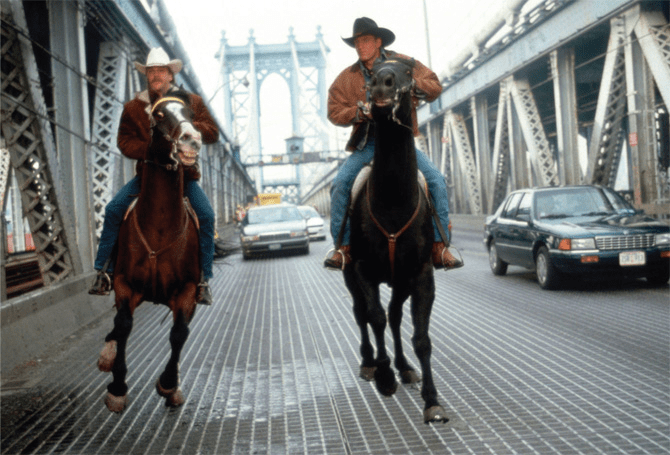
This week, the second season with a two-hour long premiere!  Crockett and Tubbs are going to New York!

Episode 2.1 and 2.2 “The Prodigal Son”

(Dir by Paul Michael Glaser, originally aired on September 27th, 1985)

The second season premiere of Miami Vice opens with a series of set pieces.

In Panama, Crockett and Tubbs visit a secret military base in the jungle and are disgusted to learn how the Panamanian military gets information about drug smugglers.  Tubbs and Crockett find one horribly tortured man in a tent.  Tubbs gives him a drink of water and gets what information he can from the man.  Crockett and Tubbs leave the tent.  A gunshot rings out as the involuntary informant is executed.  When the shot rings out, both Crockett and Tubbs turn back to the tent in slow motion, stunned by the brutality of their allies in the Drug War.  Indeed, it’s hard not to compare the scene to the famous photograph of a South Vietnamese general executing a communist during the Vietnam War.

The Vietnam analogy continues with the next scene.  In the Everglades, Crockett, Tubbs, and the entire Vice Squad work with the DEA to ambush the Revilla cousins as they bring drugs into the U.S.  Sitting in the swamp, Crockett compares the experience to Vietnam, suggesting that the war on the drugs is just as futile and as costly.  And indeed, it’s hard not to notice that every drug dealer that Crockett and Tubbs has taken down over the course of this show has immediately been replaced by another.  The Revillas are just another in a long line of people getting rich off of other people’s addictions.

After the bust goes down, Crockett and Tubbs arrives at a celebratory party, just to discover that almost of all of the undercover DEA agents have been murdered and Gina has been seriously wounded.  There is something very haunting about this scene, with Crockett and Tubbs rushing through a penthouse and seeing a dead body in almost every room.

At a meeting in a stark office, the head DEA agent explains that his agency has been compromised and all of his undercover agents have been unmasked.  Someone has to go to New York and work undercover to take down the Revillas but it can’t be any of his people.  Since the Revillas are smuggling their stuff in through Miami, Miami Vice has jurisdiction.  Paging Crockett and Tubbs!

Working undercover as Burnett and Cooper, Crockett and Tubbs visit a low-level drug dealer (played by Gene Simmons) who lives on a yacht and who gives them the name of a connection in New York City.

From there, Miami Vice moves to New York City, where Crockett and Tubbs meet a low-level criminal named Jimmy Borges (played by an almost impossibly young Penn Jillette) and they try to infiltrate the Revilla organization.  Along the way, Tubbs meets up with Valerie (Pam Grier) and discovers that she has apparently lost herself working undercover.  Meanwhile, Crockett has a brief — and kind of weird — romance with a photographer named Margaret (Susan Hess).

(“I like guns,” she says when Crockett demands to know why she stole his.)

With Crockett and Tubbs leaving Miami for New York in order to get revenge for a colleague who was wounded during an operation, The Prodigal Son almost feels like the pilot in reverse.  Also, much like the pilot, the exact details of The Prodigal Son‘s story are often less important than how the story is told.  This episode is full of moody shots of our heroes walking through New York while songs like You Belong To The City play on the soundtrack.  (There’s also a song from Phil Collins, undoubtedly included to bring back memories of the In The Air Tonight scene from the pilot.)  It’s all very entertaining to watch, even if the story itself doesn’t always make total sense.  Indeed, you really do have to wonder how all of these criminals keep falling for Sonny’s undercover identity as Sonny Burnett.  You would think that someone would eventually notice that anyone who buys from Sonny Burnett seems to get busted the very next day.

Stylish as the storytelling may be, this episode actually does have something on its mind.  Those lines comparing the War on Drugs to the Vietnam Conflict was not just throwaways.  Towards the end of the episode, Crockett and Tubbs follow a lead to the offices of J.J. Johnston (Julian Beck, the ghost preacher from Poltergeist II).  The skeletal Johnston is an investor of some sort.  He has no problem admitting that he’s involved in the drug trade, presumably because he knows that there’s nothing Crockett and Tubbs can do to touch him.  Upon meeting the two cops, he immediately tells them exactly how much money they have in their checking accounts.  He points out that they’re poor and they’re fighting a losing war whereas he’s rich and he’s making money off of a losing war.  Beck gives a wonderfully smug performance as Johnston and it should be noted that, of all of the episode’s villains, he’s the only one who is not brought to any sort of justice.  Val almost loses herself.  Tubbs and Crockett don’t even get a thank you for their hard work.  The somewhat sympathetic Jimmy Borges ends up dead while the Revillas were undoubtedly been replaced by even more viscous dealers.  Meanwhile, J.J. Johnston relaxes in his office and counts his money.  This is the No Country For Old Men of Miami Vice episodes.

This episode is also full of familiar faces.  Charles S. Dutton, Kevin Anderson, Anthony Heald, Miguel Pinero, James Russo, Bill Smtirovich, Zoe Tamerlis, Paul Calderon, and Louis Guzman, they all show up in small roles and add to show’s rather surreal atmosphere.  This is Miami Vice at its most dream-like, full of people you think you might know despite the fact that they’re doing things of which you don’t want to be a part.

As for the title, The Prodigal Son is Tubbs and he is tempted to stay in New York City.  But, in the end, he joins Crockett on that flight back to Miami.  It’s his home.

Film Review: You Are So Not Invited To My Bat Mitzvah (dir by Sammi Cohen)


You Are So Not Invite To My Bat Mitzvah is a well-acted, well-written, and sweet-natured coming-of-age film, featuring Sunny Sandler as Stacey Friedman, a Hebrew school student who is eagerly looking forward to both her Bat Mitzvah and the party after while also dreading the prospect of that party being ruined by her well-meaning but kind of embarrassing parents (Adam Sandler and Idina Menzel).

Stacey believes that the party, the first major event of her adulthood, will determine the rest of her life and therefore, it’s important that it be a huge party with a wonderful entrance video and at least one celebrity guest.  Her older sister (a wonderfully deadpan Sadie Sandler) tells her not to get her hopes up.  Her father tells her to stop obsessing on her party and concentrate on what it means to be Jewish.  Stacey can only watch in horror as her parents invite their dry cleaner to the ceremony and her mother insists on buying her a dress that Stacy says makes her look like the woman who takes sick kids out of the classroom.

Still, Stacey knows that no matter what happens, she’ll always have her BFF, Lydia Rodriguez Katz (Samantha Lorraine), at her side.  Except that, in the weeks leading up to her Bat Mitzvah, Stacey discovers that Lydia is dating Andy Goldfarb (Dylan Hoffman), the inarticulate soccer player that Stacey has had a crush on for years.  Of course, as Lydia points out, every girl at the school has had a crush on Andy for years.  In a moment of anger, Stacey announces, “You are so not invited to my bat mitzvah!”

As I said, it’s a sweet and very sincere movie, one that celebrates friendship and family.  It’s not particularly shocking that Andy turns out to be a middle school jerk but everyone’s had a crush like Andy Goldfarb and, if they’re lucky, everyone had had friends like Stacey and Lydia.  In the end, the message here is that friendship is more important than some boy who can barely speak in complete sentences and that being adult means thinking about more than just your own concerns.  It’s a good message.  This film acknowledges its debt to John Hughes by having Stacey’s father take her to a festival of Hughes’s film and, like the best of those films, You Are So Not Invited To My Bat Mitzvah is a teen comedy with heart.

Also, like the best of John Hughes’s films, it’s full of memorable characters.  It’s tempting to roll your eyes when you see just how many people involved in this film are named Sandler but everyone gives such a good performance that you quickly forget about any charges of nepotism.  We all know that Adam Sandler has made a lot of bad films over the years but he seems to finally be at a point in his career where he’s no longer embarrassed by the fact that he can actually be a good actor.  Sunny Sandler is likable and relatable as Stacey and easily carries the film’s emotional moments while Sadie Sandler’s deadpan delivery is one of the movie’s highlights.  Idina Menzel, who also played Adam Sandler’s wife in the far different Uncut Gems, is perfectly cast as Stacey’s overbearing but loving mother and Sandler’s real-life wife, Jackie Sandler, is well-cast as Lydia’s mother.  Samantha Lorraine makes both her friendship with and her anger at Stacey feel real and poignant.  Sarah Sherman is great as the quirky but ultimately quite wise rabbi.  Even Luis Guzman shows up and is responsible for some of the film’s funniest moments.

If I had seen this film two months ago, I probably would have said that it was a simply a well-made and very likable coming-of-age film.  Seeing it today, at a time when Jews are being told not to enter certain neighborhoods and to hide any external signs of their religion and their cultural background, You Are So Not Invited To My Bat Mitzvah feels very relevant.  At a time when anti-Semitism is being mainstreamed and posters of abducted Jewish children are being ripped off walls and people are openly chanting the most vile of words, You Are So Not Invited To My Bat Mitzvah feels almost defiant.  It is a film about people who proudly and unapologetically Jewish and, when Stacey reads from the Torah at her Bat Mitzvah, it’s not just the prelude to a party or a chance for her to realize that her friendships are more important than the Andy Goldfarbs of the world.  It’s a religious ceremony, it’s a cultural tradition, and it’s a proud and triumphant declaration of identity, one that defies all of the hateful bigots.  In these troubled times, You Are So Not Invited To My Bat Mitzvah is a film that takes on an entirely new importance.