Review: Conspiracy (dir. by Frank Pierson)


“We will not sterilize every Jew and wait for them to die. We will not sterilize every Jew and then exterminate the race. That’s farcical.” — Reinhardt Heydrich

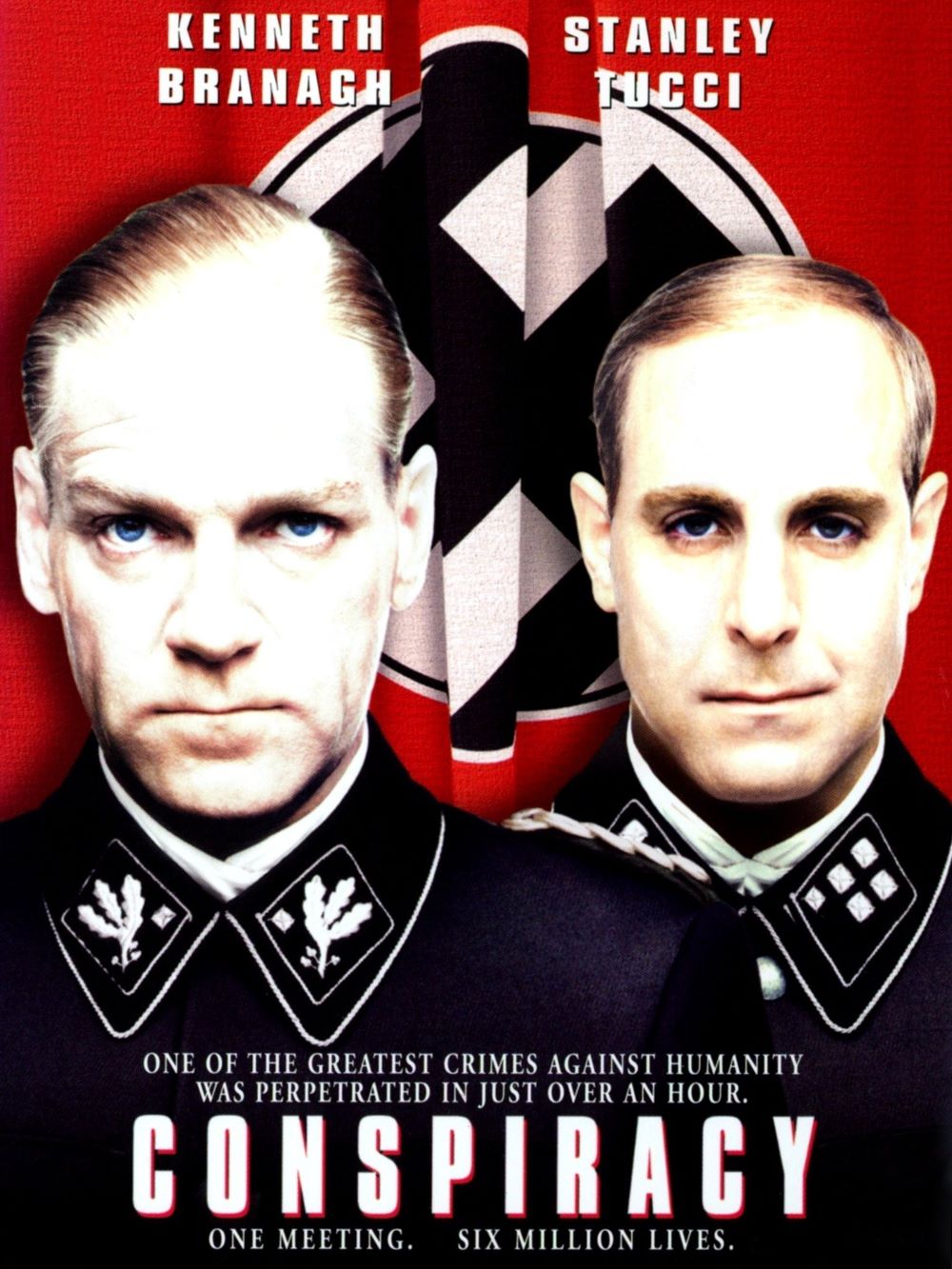
HBO’s Conspiracy (2001) masterfully dramatizes the infamous Wannsee Conference, held on January 20, 1942, where high-ranking Nazi officials orchestrated the Final Solution. The film’s running time mirrors the historical meeting itself, distilling one of the darkest moments in history into a single, chilling sitting that balances historical fidelity, psychological insight, and dramatic restraint. The premise is stark and deceptively simple: a group of men, most of whom had never previously met, gather in a sun-drenched villa outside Berlin to discuss systematic mass murder while enjoying fine food and polite conversation. This contrasting setting, rendered with careful attention to period detail, powerfully underscores what Hannah Arendt called the “banality of evil.” In Conspiracy, evil is not the property of villainous caricatures, but of functionaries and technocrats—chillingly rational and disturbingly mundane.

Much of the film unfolds in real time, utilizing dialogue taken from the sole surviving minutes of the Wannsee Conference. Screenwriter Loring Mandel and director Frank Pierson avoid unnecessary embellishments, allowing the facts and the conversations themselves to carry the full, horrifying weight. Kenneth Branagh gives an Emmy-winning performance as Reinhard Heydrich, the orchestrator and presiding presence at the conference. Branagh’s portrayal is both urbane and authoritative, presenting Heydrich as a figure whose affable composure thinly veils his unwavering commitment to genocide. There is no soaring rhetoric or overt menace; Heydrich’s evil is presented with administrative casualness, making it all the more chilling.

Stanley Tucci is equally compelling as Adolf Eichmann, Heydrich’s logistical right hand and the architect of the machinery of death. Tucci infuses Eichmann with a quiet efficiency and bureaucratic pride—a portrait of a man more attached to process than morality, disturbingly bland in his demeanor. The supporting cast is no less impressive. Colin Firth, as Dr. Wilhelm Stuckart, portrays a legal architect of Nazi race law who appears increasingly unsettled as the agenda shifts from disenfranchisement to extermination. Each attendee is rendered with psychological nuance. Some are disturbingly enthusiastic about their roles, while others are quietly apprehensive, yet ultimately complicit. These subtle gradations of doubt, ambition, and opportunism animate the film’s psychological landscape.

The dialogue, rooted in the actual transcript and skillful dramatic writing, eschews melodrama. The horror emerges not through spectacle, but in analytic exchanges about logistics, quotas, and definitions—the cold calculus of genocide. The men’s debates around how to classify mixed-race Jews, whether sterilization is preferable to extermination, and who should be spared create a bureaucratic puzzle as vile as its intent. Their discussions are delivered in a neutral, even mundane tone, which heightens the chilling reality of what they are planning. Pierson’s direction is restrained; the film never leaves its confined setting, emphasizing the claustrophobic mood of collective complicity. The camera lingers on faces rather than violence, building tension through small gestures—a glance, a pause, the clinking of glassware. The impact of what is said is matched only by the weight of what goes unsaid, until Heydrich, in a quietly devastating moment, makes the true purpose explicit.

More than a simple history lesson, Conspiracy meditates on themes of collective guilt, moral responsibility, and the terrifying ease with which ordinary people become accessories to atrocity. The film is haunted by bureaucracy; if everyone is “just following orders” or “simply doing their job,” the boundaries of blame blur and diffuse. The characters’ debates skillfully skirt the language of murder, favoring euphemisms such as “evacuation” or “resettlement.” This allows viewers to witness, in real time, the kind of moral erosion that enables atrocity on a massive scale. The dry, matter-of-fact tone of the film deepens its emotional impact, forcing the audience to comprehend that such horrors were conjured not in a frenzy, but in calm administrative exchanges over lunch.

For both historians and general audiences, Conspiracy earns praise for its meticulous adherence to historical detail. The screenplay closely follows the Wannsee minutes, and the film’s design choices—muted score, period-accurate costumes, and careful pacing—all serve to render bureaucratic evil as mundane and unremarkable. This unwavering restraint, however, does impose certain limits. The film’s dramatic arc is inherently subdued; the absence of conventional action or narrative tension makes it unfold like an extended negotiation rather than a traditional drama. Some viewers may find this lack of overt conflict stifling or static, resulting in a work that feels more “important” than “entertaining,” but this is clearly by design.

Conspiracy received widespread acclaim for both its historical gravity and psychological depth. Branagh and Tucci, in particular, were celebrated for their nuanced performances. The film is often cited as a model example of how the “banality of evil” operates—not through monsters, but through functionaries in tailored uniforms, sipping wine and rationalizing extermination. For those unfamiliar with the events, the manner in which these men discuss matters of life and death with casual detachment is shocking. As one critic noted, “Most people believe they know what evil looks like… But in Conspiracy, men of true evil met in pristine, gorgeous surroundings… and go about their business leisurely… with a smile and barely a hint of remorse.”

Within the canon of Holocaust cinema, Conspiracy stands apart from films like Schindler’s List or The Pianist, which focus on the suffering and survival of victims. Instead, it occupies a space similar to Downfall and the earlier Die Wannseekonferenz, dramatizing not the machinery of genocide but the mindsets of its architects. By confining itself to dialogue and implication, the film compels viewers to reflect on how civilization’s facades both enable and obscure horror.

The film’s lingering effect is not found in dramatic catharsis or tears, but in an enduring sense of discomfort. Conspiracy dramatizes not just a choice among evil options, but the ease with which those choices become rote procedure and social negotiation. The silence in the final act, as the men calmly disperse after codifying genocide, lands with a cold, almost procedural finality. The closing captions, briefly summarizing the fates of those present, deliver a sobering message: accountability was sporadic, often delayed, and never guaranteed.

Conspiracy is not casual entertainment, nor is it meant to be. Instead, it is essential viewing for anyone interested in the psychology of atrocity, the peril of bureaucratic amorality, and the enduring question of how ordinary people become complicit in extraordinary evil. With a screenplay of surgical precision, outstanding ensemble cast (especially Branagh and Tucci), and a director committed to understatement, HBO’s film demonstrates how history’s darkest decisions are forged not in chaos, but in chilling consensus. To those seeking to understand not only what happened at Wannsee, but how, Conspiracy offers an unblinking and quietly devastating answer.
Lisa Marie Reviews An Oscar Winner: Belfast (dir by Kenneth Branagh)


When it comes to the Oscar race, there will often be a film that is anointed at the front runner just to falter once it’s actually released.   It may be hard to believe now but, way back in 2013, almost every Oscar pundit spent the early part of the year predicting that George Clooney’s The Monuments Men would be a major contender.  Martin Scorsese’s Silence suffered a similar fate in 2016.  Sometimes, it’s because the films in question are truly flawed.  The Monuments Men pretty much confirmed that Clooney’s directorial instincts were aggressively middlebrow.  Sometimes, it’s because the film itself turns out to appeal to a very narrow audience.  That was the case with Silence, one of the most Catholic films ever released by a major studio.  Unfortunately, when these front runners falter, they tend to get hit by a backlash, with some critics and audience members seeming to take it personally that the film was not as much of a triumph as they were expecting.

That was certainly the case with Kenneth Branagh’s Belfast.  Released in 2021, Belfast spent much of the year being touted as the obvious front runner for Best Picture.  Seriously, how could the Academy resist it?  Not only was the film in black-and-white but it was said to be Branagh’s most personal film.  One of the best actors in the Western World, the man who had revived cinematic interest in Shakespeare, had now written and directed a film about his youth in Belfast.  The film would deal with growing up as a protestant during the early days of the  Troubles.  Jamie Dornan and Caitriona Balfe where playing Branagh’s parents.  The great Judi Dench and Ciaran Hinds were playing his grandparents.  For all the acclaim that he had received over the years, Kenneth Branagh had yet to actually win an Oscar.  Indeed, some felt that, pre-Belfast, it was a bit embarrassing that he had only been nominated for twice for his acting and once for his direction.

However, when Belfast came out, critics were complimentary but, at the same time, there was a slight undercurrent of disappointment in most of the reviews.  Belfast was good, they seemed to be saying, but it wasn’t as good as they were expecting.  Some members of Film Twitter was practically savage towards the film, as if Branagh had personally insulted them by making a nostalgic film about his childhood.  Belfast received seven Oscar nominations but it was no longer the Oscar front runner.  That role had been assumed by the technically impressive but emotionally remote The Power of the Dog.

Belfast has its flaws.  Some scene works better than others, the ending is a bit overdone, and, for a film that was sold as being a memoir, some of the scenes do feel a bit familiar as if Branagh spent his childhood imitating moments from other coming-of-age films.  That said, I liked Belfast and I don’t think it deserved all of the criticism that it received.  Young Jude Hill did a wonderful job as Buddy, the Kenneth Branagh stand-in.  Jamie Dornan proved that he was capable of more than one might have suspected based on his work in the Fifty Shades of Grey films.  He and Caitriona Balfe were a compelling couple and the actors had such a strong chemistry that I found myself wishing that the film had been even more about their marriage.  At this point, we take actresses like Judi Dench and actors like Ciaran Hinds for granted but both of them are truly wonderful in this film.  At its best, Belfast captures the feeling of being young and not realizing that the world is basically collapsing around you.  Buddy may be growing up in the shadow of The Troubles but, until the unrest literally comes into his home, he just wants to enjoy movies and have fun with his friends. Belfast is nostalgic and sometimes a bit predictable in its storytelling but it’s gorgeous to look at and the acting won me over.

In then end, the Academy honored neither Belfast nor The Power of the Dog for Best Picture but instead another film about family, the far more straight-forward CODA.  Branagh, however, did win his first Oscar for Best Original Screenplay.

Film Review: Conspiracy (dir by Frank Pierson)


The 2001 film, Conspiracy, takes place at a villa on the outskirts of Berlin.  It’s a lovely villa and, as we can see during the film’s opening moments, it’s about to play host to a meeting of very important people.

The date is January 20th and the year is 1942.  Having conquered much of Europe, Nazi Germany is now at war with the Allies.  Reinhard Heydrich (Kenneth Branagh), the young chief of the Reich Security Main Office and the man who many feel will eventually succeed Adolf Hitler as the leader of the Third Reich, has been directed to call a conference so that he and his deputy, Adolf Eichmann (Stanley Tucci), can “discuss” ways to solve “the Jewish question.”  One-by-one, representatives of the Reich’s bureaucracy show up at the villa.

At the start of the meeting, the men discuss various ways to force the Jews out of Germany and all of the occupied territories.  The men chose their words carefully, speaking in euphemisms and doing their best to sound like concerned government officials.  The men know what they’re talking about but they still seem to feel the need to avoid coming right and saying it.  As they talk, it becomes clear that everyone is trying to stay in Heydrich’s good graces while, at the same time, avoiding the fact that they understand the truth about what Germany is doing.  It’s not until halfway through the meeting that Heydrich and Eichmann reveal that Germany’s policy has already been determined and that concentration camps with gas chambers have already been designed and built.  The meeting is less about discussing the policy and more about getting each man at the meeting to sign off on it.  The unspoken subtext is that each man is being tested to determine who will support (and, if need be, help to cover up) the Final Solution and who will have to be otherwise dealt with.

Based on the actual minutes of the meeting, Conspiracy is film that is perhaps even more important now than when it was first released.  It’s a film that explores not only the banality of evil but also seeks to answer the question of why no one in Hitler’s government forcefully objected to the Final Solution.  (Many, of course, claimed not to know what was going on.  This film reveals just how little credibility that claim had.)  Some of the men go along because they understand not going along would mean the end of their careers and maybe their lives.  Some of the men agree because, as members of the military, they believe in supporting their country’s leadership, regardless of what that leadership represents.  Some of the men agree because they want to stay in Heydrich’s good graces.  These men represent a society where anti-Semitism is so normalized that it is accepted as a given and, while some of the men are not as outspoken in their prejudice as the others, it’s clear that all of them view the Jewish people as being a unique problem.  Those who do raise concerns do so only out of worry of what will happen to them if the rest of the world discovers what Germany is planning.  Heydrich insists that there is no need to worry because Germany will win the war.  Some of the men at the Conference are clearly not convinced of Germany’s pre-destined victory but not a single one has either the morality or the courage to refuse to endorse the Final Solution.  The film ends with a series of title cards, letting us know what became of the men who attended the Wannsee Conference.  Heydrich was assassinated during the war.  Eichmann fled to South America and hid there until he was captured by Israel in 1960.  Many of the men were executed for war crimes but a surprising number of them were either acquitted or never put on trial and went to live peacefully after the war.

Well-directed by Frank Pierson, Conspiracy has a distinguished cast who brings the historical characters to terrible life.  It’s one thing to read about what was said and planned at the Conference.  It’s another thing to actually hear those words spoken aloud and it’s a reminder that the evil of the Holocaust was not an accident nor was it something that took its perpetrators by surprise.  It was something that meticulously planned by human beings who were fully aware of what they were doing.  Kenneth Branagh makes for an arrogant and intimidating Heydrich while Stanley Tucci plays Eichmann as being the type of bureaucratic robot who is incapable of seeing human beings as anything more than just dwindling numbers on a report.  Colin Firth and David Threlfall make strong impressions as two of the more weary members of the Conference, as does Ian McNeice in the role of the type of crude, career-driven government functionary who has survived by pretending to be dumb.

At a time when anti-Semitism is on the upswing and Holocaust denialism is being mainstreamed, Conspiracy is an important film.  When others say that the Holocaust didn’t happen or that it doesn’t matter, Conspiracy defiantly says, “Yes, it did and yes, it does.”

Here’s The Trailer For A Haunting in Venice


Somehow, I missed this trailer when it dropped last week.  Well, no matter!  The movie’s not being released until September 15th so I still have time to share the trailer for A Haunting in Venice, the latest Agatha Christie adaptation from Kenneth Branagh!  This film finds Poirot retired and living in self-imposed exile in Venice.  When he attends a séance, he is dragged back into the world of mystery solving.

The cast of suspects includes: Kyle Allen, Camille Cottin, Jamie Dornan, Tina Fey, Jude Hill, Ali Khan, Emma Laird, Kelly Reilly, Riccardo Scamarico, and Michelle Yeoh!  Not having read Christie’s Hallowe’en Party, I can’t tell you who the murderer is or even who the victim is.  But, personally, I suspect Tina Fey did it.

Here’s the trailer!

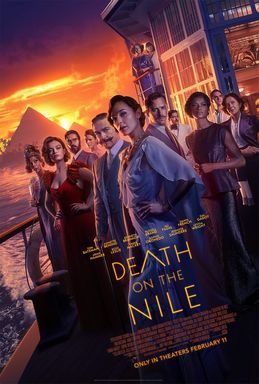
Film Review: Death on the Nile (dir by Kenneth Branagh)


The main mystery at the heart of Kenneth Branagh’s adaption of Agatha Christie’s Death on the Nile is not who committed the film’s murders but just how seriously we, the audience, are meant to take what we’re watching.

In this much-delayed (by COVID and a cast full of actors who could not escape personal scandal) follow-up to 2017’s Murder on the Orient Express, Kenneth Branagh again plays the eccentric detective Hercule Poirot.  Poirot is again in an exotic land, this time Egypt.  And again, circumstances have conspired to isolate him and a group of wealthy and glamorous suspects from the rest of the world.  In Murder on the Orient Express, everyone was stuck on a train.  Here, they are stuck on a boat.  Admittedly, the boat provides a nice view of the pyramids but, eventually, even those testaments to engineering seem to be mocking the people stuck on the boat.  The pyramids, after all, have survived for centuries.  The same cannot be said for the people who have come to see them.  Over the course of the film, there are several murders.  (Indeed, Death on the Nile is significantly bloodier than Murder on the Orient Express and, unlike what happened on the Orient Express, the majority of the victims have done nothing to deserve their grisly fate.)  Like Murder on the Orient Express, Death on the Nile is based on a novel by Agatha Christie.  Branagh changes a few details from Christie’s novel, which is understandable since it’s important to keep the audience guessing.  For instance, Bouc (Tom Bateman), who was Poirot’s assistant in Murder on the Orient Express, returns in Branagh’s film version and provides some continuity between the two films.  It also provides a nice side-mystery as the audience tries to figure out how Poirot and Bouc could just happen to run into each other in Egypt.  Fear not, the film offers up a solution.

As is to be expected, the victims and the suspects are brought to life by a cast of stars and familiar character actors, all of whom act up a storm.  Some, of course, do a better job of embracing the melodrama than others.  Armie Hammer and Gal Gadot play a glamorous couple and, regardless of how we feel about Hammer as a human being, it works because Gadot and Hammer both look they could have stepped out of a sophisticated, 1930s RKO comedy.  (Hammer’s stiff line readings, which are totally appropriate for his character, would actually be a highlight of the film if he wasn’t Armie Hammer.)  Russell Brand is oddly subdued as the doctor with the secret while Dawn French and Jennifer Saunders show up to keep all of the British comedy fanatics happy.  Sophie Okonedo plays a jazz singer and how you react to her character will depend on how much patience you have for anachronistic musical numbers.  (There’s a surprisingly large amount of them.)  Annettte Bening plays Bouc’s mother and there’s really not a subtle moment to be found in her performance but again, it works because Death on the Nile is not a particularly subtle film.  It’s a film that demands a certain amount of calculated overacting and Bening is enough of a veteran performer to deliver exactly what the film needs.

No, there’s nothing particularly subtle about Death on the Nile but then again, that’s always been a part of Kenneth Branagh’s appeal.  Branagh’s endless (and often justified) faith in his own abilities as a director and an actor means that Branagh is willing to do things that others would avoid, whether that means making a 4-hour version of Hamlet or a black-and-white film about growing up in Belfast or, for that matter, a gaudy Agatha Christie adaptation in which he plays the lead detective.  Death on the Nile is a celebration of melodrama, beautiful people, and nice clothes.  Even the fact that the Egyptian backdrops are obviously phony works to the film’s advantage, giving the proceedings a bit of a retro, Hollywood studio system feel.  At its best, Death on the Nile is an homage to old-fashioned camp..

And yet, there are hints that Branagh means for the film to be something more.  The films opens with a prologue, one that is not included in Christie’s book or in anything else that Christie wrote about Poirot.  The prologue, which is filmed in black-and-white, features Poirot getting terribly wounded during World War I and growing his famous mustache to cover his scars.  We also discover that the great love of Poirot’s life was a nurse who died during the war.  Later, while solving the murder, Poirot often talks about how he has shut himself away from the world, never wanting to risk falling in love again.  There’s even a hint that Poirot has fallen for one of the suspects.  Branagh’s a good actor and can obviously pull off Poirot’s inner turmoil but those little serious asides still feel out of place in a film that features Armie Hammer and Russell Brand as romantic rivals.  It’s hard not to wonder if Branagh is in on the joke or if he’s seriously attempting to use Poirot as a symbol for an alienated and traumatized society.

One could argue that Poirot uses his mustache to hide from the world in much the same way that many people have spent the past two years using their masks to hide from COVID.  Except, of course, Death on the Nile was actually filmed three years ago, before anyone had even heard of COVID-19.  The film was first delayed by the theaters shutting down.  It was delayed a second time by the scandals surrounded Armie Hammer.  (Indeed, this film will probably be the last major studio release to feature Armie Hammer.)  It was finally released in February of this year and, within a month, it was on Hulu and HBOMax.  It didn’t exactly kill at the box office but I think Death on the Nile will be rediscovered over the years.  It’s a minor entry in Branagh’s filmography but it’s still enjoyably silly, regardless of whether that was Branagh’s intention or not.

Lisa Marie’s Oscar Predictions for December


Well, the year’s nearly over and that means that it is time for me to post my final Oscar predictions for 2021.  The race has gotten much clearer with the start of the precursor season.  The critics love The Power of the Dog.  However, it’s perhaps a bit too early to declare it the front runner.  I want to see how things go with the Guilds in January before I bestow that title on any film.

A few thoughts:

There are ten Best Picture nominees this year so we won’t have any of that, “Here’s a random number of nominees” crap.  In theory, that should open the door for some unconventional nominees that might have missed the cut-off in previous years.  Again, I said, “In theory.”  They tried this 10 nominee thing before and it didn’t really lead to the results that a lot of people were expecting.

Still, I’m going to swing out on a web and predict a Best Picture nomination for Spider-Man: No Way Home.  It’s got Disney and Sony behind it.  It’s making a ton of money despite not playing in China.  It’ the film that’s currently giving the industry hope that there’s a future outside of the streaming sites.  Plus, after the nominations of Black Panther and Joker, it might be time to give the whole “They’ll never nominate a comic book movie!” argument a rest.  

I’m also going to predict a Best Picture nomination for Drive My Car, which has been getting a lot of attention from the critics.  

The critics also loved West Side Story but now, it’s probably best known for being a bust at the box office.  I still think the movie will be nominated but I don’t think it’ll win.  And I think it’s a lot less likely that Rita Moreno will pick up a nomination.  People seem to have moved on from the movie.  Again, this could all change once the Guilds start announcing their nominations.

The critics are split on Don’t Look Up.  I personally think it’s one of the worst films of 2021.  But the film will be nominated for much the same reason that The Big Short and Vice were nominated.  There’s a lot of Academy members who agree with McKay’s politics.  And the people who do like Don’t Look Up really, really like it.  And I also think there’s probably enough people annoyed with Elon Musk that Mark Rylance will sneak into the supporting actor race.

Belfast has not been dominating the early part of awards season but I think it will come on strong once the Guilds start announce their nominations.

Anywya, these are just my guesses, for better or worse.  To see how my thinking has evolved,  check out my predictions for March and April and May and June and July and August and September and October and November!

Best Picture

Belfast

CODA

Don’t Look Up

Drive My Car

Dune

King Richard

Licorice Pizza

The Power of the Dog

Spider-Man: No Way Home

West Side Story

Best Director

Paul Thomas Anderson for Licorice Pizza

Kenneth Branagh for Belfast

Jane Campion for The Power of the Dog

Ryusuke Hamaguchi for Drive My Car

Denis Villeneueve for Dune

Best Actor

Benedict Cumberbatch in The Power of the Dog

Peter Dinklage in Cyrano

Andrew Gardield for tick….tick….BOOM!

Will Smith in King Richard

Denzel Washington in The Tragedy of MacBeth

Best Actress

Jessica Chastain in The Eyes of Tammy Faye

Lady Gaga in House of Gucci

Alana Haim in Licorice Pizza

Kristen Stewart in Spencer

Rachel Zegler in West Side Story

Best Supporting Actor

Bradley Cooper in Licorice Pizza

Ciaran Hinds in Belfast

Troy Kostur in CODA

Mark Rylance in Don’t Look Up

Kodi Smit-McPhee in The Power of the Dog

Best Supporting Actress

Ariana DeBose in West Side Story

Ann Dowd in Mass

Kirsten Dunst in The Power of the Dog

Aunjanue Ellis in King Richard

Marlee Matlin in CODA


Here Are the 2021 Nominations of the Washington D.C. Area Film Critics!


The Washington D.C. Area Film Critics have announced their nominees for the best of 2021!  The winners will be announced tomorrow so that means you have exactly one day to see all the nominees.  GET TO IT!

Best Film
Belfast
The Green Knight
The Power of the Dog
tick, tick…BOOM!
West Side Story

Best Director
Kenneth Branagh – Belfast
Jane Campion – The Power of the Dog
David Lowery – The Green Knight
Steven Spielberg – West Side Story
Denis Villeneuve – Dune

Best Actor
Nicolas Cage – Pig
Benedict Cumberbatch – The Power of the Dog
Andrew Garfield – tick, tick…BOOM!
Will Smith – King Richard
Denzel Washington – The Tragedy of Macbeth

Best Actress
Olivia Colman – The Lost Daughter
Nicole Kidman – Being the Ricardos
Lady Gaga – House of Gucci
Kristen Stewart – Spencer
Tessa Thompson – Passing

Best Supporting Actor
Jamie Dornan – Belfast
Ciarán Hinds – Belfast
Troy Kotsur – CODA
Jesse Plemons – The Power of the Dog
Kodi Smit-McPhee – The Power of the Dog

Best Supporting Actress
Caitríona Balfe – Belfast
Ariana DeBose – West Side Story
Ann Dowd – Mass
Kirsten Dunst – The Power of the Dog
Aunjanue Ellis – King Richard

Best Acting Ensemble
Belfast
The French Dispatch
The Harder They Fall
Mass
The Power of the Dog

Best Youth Performance
Jude Hill – Belfast
Emilia Jones – CODA
Woody Norman – C’mon, C’mon
Saniyya Sidney – King Richard
Rachel Zegler – West Side Story

Best Voice Performance
Awkwafina – Raya and the Last Dragon
Stephanie Beatriz – Encanto
Abbi Jacobson – The Mitchells vs. the Machines
Kelly Marie Tran – Raya and the Last Dragon
Jacob Tremblay – Luca

Best Original Screenplay
Kenneth Branagh – Belfast
Mike Mills – C’mon, C’mon
Zach Baylin – King Richard
Paul Thomas Anderson – Licorice Pizza
Fran Kranz – Mass

Best Adapted Screenplay
Siân Heder – CODA
Jon Spaihts and Denis Villeneuve and Eric Roth – Dune
Jane Campion – The Power of the Dog
Steven Levenson – tick, tick…BOOM!
Tony Kushner – West Side Story

Best Animated Feature
Encanto
Flee
Luca
The Mitchells vs. the Machines
Raya and the Last Dragon

Best Documentary
The First Wave
Flee
The Rescue
Summer of Soul (…Or, When the Revolution Could Not Be Televised)
Val

Best International/Foreign Language Film
Drive My Car
A Hero
Lamb
Titane
The Worst Person in the World

Best Production Design
Jim Clay, Production Designer; Claire Nia Richards, Set Decorator – Belfast
Patrice Vermette, Production Designer; Richard Roberts and Zsuzsanna Sipos, Set Decorators – Dune
Adam Stockhausen, Production Designer; Rena DeAngelo, Set Decorator – The French Dispatch
Tamara Deverell, Production Designer; Shane Vieau, Set Decorator – Nightmare Alley
Adam Stockhausen, Production Designer; Rena DeAngelo, Set Decorator – West Side Story

Best Cinematography
Haris Zambarloukos – Belfast
Greig Fraser – Dune
Andrew Droz Palermo – The Green Knight
Ari Wegner – The Power of the Dog
Bruno Delbonnel – The Tragedy of Macbeth

Best Editing
Úna Ní Dhonghaíle – Belfast
Joe Walker – Dune
Andrew Weisblum – The French Dispatch
Peter Sciberras – The Power of the Dog
Myron Kerstein & Andrew Weisblum – tick, tick…BOOM!

Best Original Score
Bryce Dessner & Aaron Dessner – Cyrano
Hans Zimmer – Dune
Alexandre Desplat – The French Dispatch
Jonny Greenwood – The Power of the Dog
Jonny Greenwood – Spencer

Here Are The Nominations From The Detroit Film Critics Society


The Detroit Film Critics Society announced their nominations for the best of 2021 earlier today.  It’s an interesting group of nomination, though I would point out that Detroit is usually one of the quirkier of the critics groups.  Every awards season, they nominate something or someone unexpected, there’s a brief flurry of excitement, and then everyone moves on.

I guess that’s one reason why I love them.

Anyway, here’s their nominations:

BEST PICTURE
Belfast
CODA
Cyrano
Don’t Look Up
King Richard

BEST DIRECTOR
Sean Baker – Red Rocket
Kenneth Branagh – Belfast
David Lowery – The Green Knight
Adam McKay – Don’t Look Up
Lan-Manuel Miranda – Tick, Tick…Boom!

BEST ACTOR
Nicolas Cage – Pig
Peter Dinklage – Cyrano
Andrew Garfield – Tick, Tick…Boom!
Oscar Isaac – The Card Counter
Will Smith – King Richard

BEST ACTRESS
Jessica Chastain – The Eyes Of Tammy Faye
Alana Haim – Licorice Pizza
Jennifer Hudson – Respect
Nicole Kidman – Being The Ricardos
​Kristen Stewart – Spencer

BEST SUPPORTING ACTOR
Jon Bernthal – King Richard
Troy Kotsur – CODA
Jared Leto – House Of Gucci
Ray Liotta – The Many Saints Of Newark
Kodi Smit-McPhee – The Power Of The Dog

BEST SUPPORTING ACTRESS
Ariana DeBose – West Side Story
Kirsten Dunst – The Power Of The Dog
Aunjanue Ellis – King Richard
Rita Moreno – West Side Story
Diana Rigg – Last Night In Soho

BEST ENSEMBLE
CODA
Don’t Look Up
The French Dispatch
The Harder They Fall
House Of Gucci

BREAKTHROUGH
Alana Haim – Actress – Licorice Pizza
Emilia Jones – Actress – CODA
Woody Norman – Actor – C’mon C’mon
Agathe Rousselle – Actress – Titane
Emma Seligman – Writer/Director – Shiva Baby

BEST USE OF MUSIC/SOUND
Cyrano
In The Heights
Last Night In Soho
Tick, Tick…Boom!
West Side Story

BEST ORIGINAL SCREENPLAY
Don’t Look Up
The French Dispatch
The Harder They Fall
Licorice Pizza
Parallel Mothers

BEST ADAPTED SCREENPLAY
CODA
The Green Knight
In The Heights
The Power Of The Dog
Tick, Tick…Boom!

BEST ANIMATED FEATURE
Belle
Cryptozoo
Encanto
Flee
Luca
The Mitchells vs. The Machines

BEST DOCUMENTARY
Flee
Roadrunner: A Film About Anthony Bourdain
The Sparks Brothers
Street Gang: How We Got To Sesame Street
Summer Of Soul

Lisa Marie’s Oscar Predictions for November


It’s time for my monthly Oscar predictions!  Awards Season is going to begin in just another two days and the Oscar picture has become a lot more clearer.  

Last month, I was ready to write off West Side Story as a contender.  However, following both the film’s recent screening and the death of Stephen Sondheim, it’s now once again very much a contender.  If nothing else, Rita Moreno seems like the clear front runner for Supporting Actress.  This would be her first nomination since she won an Oscar for appearing in the original West Side Story.  Who can resist that narrative?

I’ve also added Licorice Pizza back to my list of nominees.  At first, I thought it sounded too slight to be a contender but the enthusiasm that I’m seeing for the film would seem to indicate that I was incorrect.

As always, keep in mind that I don’t claim to be an expert.  The picture is a bit clearer but I don’t claim to have any inside information or anything like that.  These are just my guesses, for better or worse.  To see how my thinking has evolved,  check out my predictions for March and April and May and June and July and August and September and October!

Best Picture

Being the Ricardos

Belfast

Dune

House of Gucci

King Richard

Licorice Pizza

The Lost Daughter

Nightmare Alley

The Power of the Dog

West Side Story

Best Director

Paul Thomas Anderson for Licorice Pizza

Kenneth Branagh for Belfast

Jane Campion for The Power of the Dog

Guillermo del Toro for Nightmare Alley

Steven Spielberg for West Side Story

Best Actor

Benedict Cumberbatch in The Power of the Dog

Peter Dinklage in Cyrano

Jude Hill in Belfast

Will Smith in King Richard

Denzel Washington in The Tragedy of MacBeth

Best Actress

Lady Gaga in House of Gucci

Jennifer Hudson in Respect

Nicole Kidman in Being the Ricardos

Kristen Stewart in Spencer

Rachel Zegler in West Side Story

Best Supporting Actor

Ben Affleck in The Tender Bar

Bradley Cooper in Licorice Pizza

Ciaran Hinds in Belfast

Jared Leto in House of Gucci

Kodi Smit-McPhee in The Power of the Dog

Best Supporting Actress

Ann Dowd in Mass

Kirsten Dunst in The Power of the Dog

Aunjanue Ellis in King Richard

Marlee Matlin in CODA

Rita Moreno in West Side Story


Lisa Marie’s Oscar Predictions for October


It’s time to take a little break from horror so that I may once against do my list of my monthly Oscar predictions!  I guess some people would consider predicting the Oscars to be a scary thing.  Personally, I have fun doing it, even if my predictions often seem to be for naught.  That said, I did manage to predict that Thomas Vinterberg would be nominated for Best Director last year so take that, haters.

Probably the biggest development this month is that I’ve lost all faith in Spielberg’s West Side Story.  It’s just not getting the type of hype that I would expect from a Spielberg Oscar movie.  In fact, it seems like everyone involved is in kind of a hurry to move on.  So, for now, I’m dropping it from my predictions.  While West Side Story goes, Dune has definitely established itself as a probable nominee.  I think the only problem that Dune will have is the possibility of people saying, “We’ll just nominate the sequel instead.”

I’ve also added C’mon C’mon and Passing to my list of Best Picture nominees.  This is almost totally due to their popularity with the Gothams.  If the other critics groups don’t duplicate the love, they’ll probably get dropped from my predictions come January.

As always, keep in mind that I don’t claim to be an expert.  The picture is a bit clearer but I don’t claim to have any inside information or anything like that.  These are just my guesses, for better or worse.  To see how my thinking has evolved,  check out my predictions for March and April and May and June and July and August and September!

Best Picture

Belfast

C’mon C’mon

CODA

Dune

The Lost Daughter

Nightmare Alley

Passing

The Power of the Dog

Spencer

The Tragedy of MacBeth

Best Director

Kenneth Branagh for Belfast

Jane Campion for The Power of the Dog

Maggie Gyllenhaal for The Lost Daughter

Guillermo del Toro for Nightmare Alley

Denis Villeneuve for Dune

Best Actor

Benedict Cumberbatch in The Power of the Dog

Peter Dinklage in Cyrano

Jude Hill in Belfast

Will Smith in King Richard

Denzel Washington in The Tragedy of MacBeth

Best Actress

Jessica Chastain in The Eyes of Tammy Faye

Olivia Colman in The Lost Daughter

Penelope Cruz in Parallel Lives

Frances McDormand in The Tragedy of MacBeth

Kristen Stewart in Spencer

Best Supporting Actor

Willem DaFoe in Nightmare Alley

Jamie Dornan in Belfast

Ciaran Hinds in Belfast

Jason Isaacs in Mass

Kodi Smit-McPhee in The Power of the Dog

Best Supporting Actress

Jessie Buckley in The Lost Daughter

Dame Judi Dench in Belfast

Ann Dowd in Mass

Kirsten Dunst in The Power of the Dog

Marlee Matlin in CODA