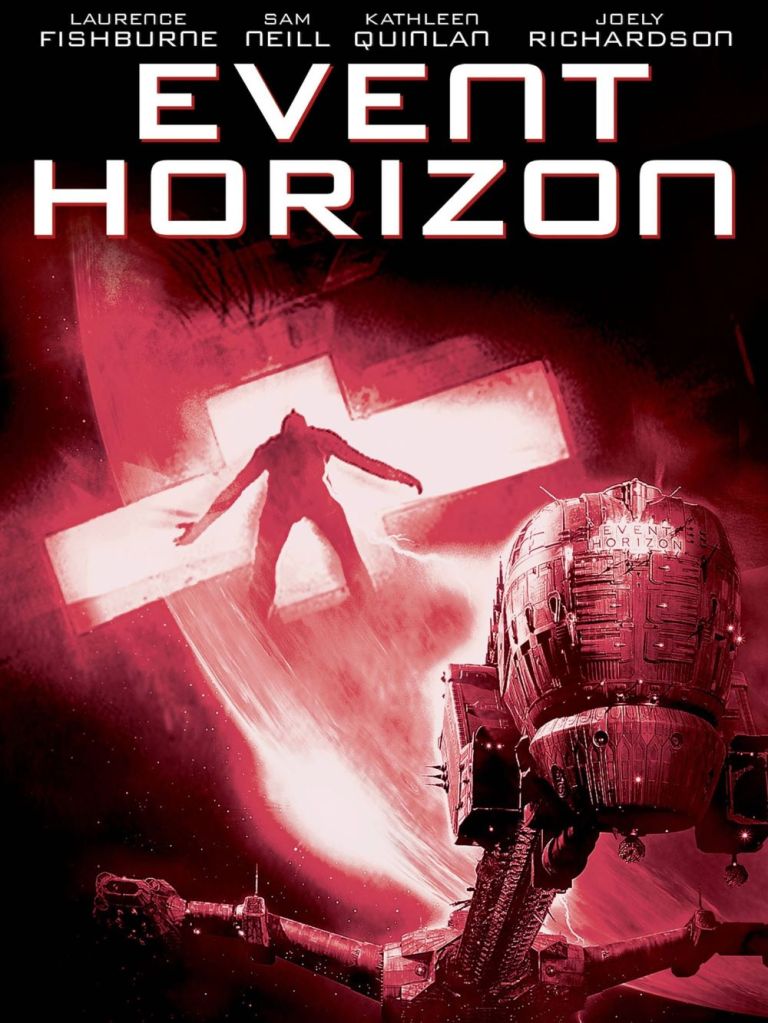
Horror Review: Event Horizon (dir. by Paul W. S. Anderson)


“You know nothing. Hell is only a word. The reality is much, much worse.” — Dr. Weir

Paul W.S. Anderson’s 1997 film Event Horizon stands out as a memorable mix of science fiction and horror, remembered for its gripping atmosphere and disturbing visuals. The story is set in 2047: a rescue crew aboard the Lewis and Clark is sent out to recover the long-missing spaceship Event Horizon, a vessel built to test a new kind of faster-than-light travel. Onboard with them is Dr. William Weir, the Event Horizon’s creator, who explains that the ship vanished after first activating its “gravity drive,” which can fold space to allow for instant travel across vast cosmic distances.

Soon after reaching the drifting Event Horizon, the crew discovers signs of mass violence and horror. They recover a disturbing audio message and realize something traumatic happened to the original crew. As they search for survivors, they experience intense and personal hallucinations—memories and fears brought to life by the ship. It becomes clear that the Event Horizon didn’t just jump through space; it traveled to a place outside reality, a nightmarish interdimensional realm resembling hell.

What makes Event Horizon particularly unique is its concept of hell as an alternate dimension that can infect and corrupt whatever or whoever crosses into it. The ship’s gravity drive doesn’t simply facilitate faster travel—it accidentally opens a gateway to this chaotic, malevolent place. This portrayal of hell as a dangerous interdimensional reality that preys on minds and bodies echoes the idea found in the massive gaming property Warhammer 40K, where hell is depicted as the Warp, a dimension of chaos that corrupts and drives people insane. Like the Warp, the film’s hell is an unpredictable, hostile realm where sanity and physical form break down, infecting and warping everything that comes into contact.

Visually, the film relies on claustrophobic corridors, flickering lights, and unsettling sounds to keep the audience off-balance. The design of the ship itself—part gothic cathedral, part industrial nightmare—adds to the sense of unease and dread throughout. The use of practical effects and detailed sets grounds the sci-fi terror in something tangible, making it all feel more immediate and believable.

Event Horizon also hints at bigger philosophical questions: how far should science go, and what happens when the drive for knowledge is unchecked by ethics or humility? The gravity drive is a technological wonder, but it’s treated with little caution by its inventor, and the catastrophic results suggest that some discoveries may be better left unexplored. The ship becomes both a literal and figurative vehicle for exploring the limits of human ambition and the dangers of pushing beyond them.

As the movie builds toward its climax, the rescue crew faces increasingly desperate odds. The possessed Dr. Weir, now an outright villain, sees the hellish dimension the gravity drive visited as the next step for humanity—a place of chaos and suffering. Multiple characters die in gruesome ways, and the survivors have to fight their own fears and the haunted ship itself. The ending is chilling and ambiguous, leaving open the possibility that the ship’s evil has not been fully contained.

At release, Event Horizon divided critics and audiences. Some found the violence and nightmare imagery too intense or the story too messy to follow. Others praised its ambition and the way it blends psychological horror with cosmic sci-fi. Over the years, the film has developed a cult reputation, frequently cited as one of the more effective and original space horror movies. Its legacy can be seen in later media, especially in video games that tackle similar haunted spaceship scenarios.

However, the film is not without flaws. Many viewers and critics point out uneven pacing, especially in the second half where tension sometimes drains away. The characters often act inconsistently or make choices that feel unrealistic for trained astronauts, which undermines the suspense. The script’s tonal shifts—from serious psychological drama to moments that unintentionally verge on camp—can jolt the viewer out of the experience. The use of jump scares is sometimes predictable, and the film’s heavy reliance on loud, chaotic sequences instead of quiet suspense can feel overwhelming. Some CGI effects haven’t aged well, contrasting with the otherwise impressive practical effects and set design. Acting performances are mixed too; while Sam Neill and Laurence Fishburne are strong, some supporting cast members lack conviction, making emotional engagement uneven.

Importantly, Event Horizon represents Paul W.S. Anderson at his most subtle and effective in directing. Compared to many of his later films, where his style often becomes frenetic and unchecked—possibly due to a lack of producer control—Event Horizon is more controlled, atmospheric, and haunting. This balance between style and substance makes it one of Anderson’s better directorial works, if not his best to date. The film showcases his interest in spatial geography, the use of negative space, and claustrophobic production design, all elements he would expand on in his later work but never as effectively deployed as here. The haunting visual touches, combined with his ability to direct actors and maintain tension, set Event Horizon apart from his more bombastic, less focused later entries.

Despite its flaws, Event Horizon remains gripping and memorable. Its strengths lie in combining deeply personal psychological horror with the vast, terrifying unknown of space and alternate realities. The film explores not just external threats, but also how guilt, fear, and trauma can be weaponized by forces beyond human understanding. For viewers seeking more than a standard haunted spaceship story, Event Horizon offers a disturbing, thought-provoking glimpse into the dark frontier of science, faith, and madness. It stands as a cult classic of sci-fi horror that continues to inspire discussion about the dangers of pushing too far into the unknown.

Horror On The Lens: Where Have All The People Gone? (dir by John Llewellyn Moxey)


In the creepy 1974 film, Peter Graves plays a father who goes on a camping trip with his two teenage children (one of whom is played by Kathleen Quinlan).  A sudden earthquake and a solar flare causes the trio to try to return to civilization, where they discover that almost everyone has been reduced to a powdery substance and there are only a few crazed survivors.  They try to make their way back to their home in Malibu, facing danger at every leg of their journey.

(It’s almost a low-budget and far more dramatic version of Night of the Comet.)

Effective despite its made-for-TV origins, Where Have All The People Gone? was obviously mean to serve as a pilot for a television series.  The series didn’t happen but, even with a somewhat open-ended conclusion, the movie still works.


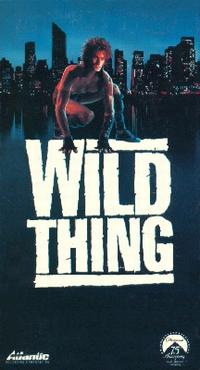
Wild Thing (1987, directed by Max Reid)


After his hippie parents are murdered by a drug dealer named Cutter (Robert Davi!), a young boy is taken in and raised by a homeless woman (Betty Buckley).  The boy eventually grows up to be Wild Thing (Robert Knepper), an urban Tarzan who jumps from rooftop to rooftop at night and who protects the neighborhood for evil doers (like Cutter).  A social worker (Kathleen Quinlan) hears the legend of Wild Thing and eventually finds him.  She continues his education, explaining to him why people do the “body bump.”  Carrying a bow and arrow and accompanied by a surprisingly loyal cat, Wild Thing fights the bad guys and seeks revenge for his parents.

Wild Thing is one of those movies that should be incredibly bad but somehow it isn’t.  John Sayles was one of three writers to work on the script (Sayles was the only one to get credit) and the film has a self-aware sense of humor similar to the scripts that Sayles wrote for films like Alligator, Battle Beyond The Stars, and Piranha.  A young Robert Knepper is probably about as convincing as anyone could be as an urban Tarzan who speaks broken English and who carries a bow and arrow as he makes his way across the rooftops of his neighborhood.  As always, Robert Davi is a good villain.  Davi knows that he’s appearing in a live action comic book and he gives an appropriate performance.

Wild Thing is a surprisingly enjoyable movie and yes, the song Wild Thing is heard in the movie but not as much as you might think.  There’s a few scenes where the song starts to play and is then cut off, as if the movie is teasing our expectations.  I just wish Sam Kinison had been invited to perform his version.


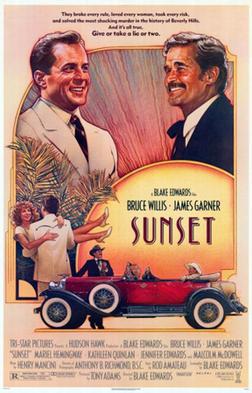
Sunset (1988, directed by Blake Edwards)


In 1920s Hollywood, famed comedian Alfie Alperin (Malcolm McDowell) has made the transition from screen stardom to working behind the scenes as a producer and studio head.  With the coming of the talkies and the death of silent cinema, Alfie plans to make his mark with an epic western starring Tom Mix (Bruce Willis) as Wyatt Earp.  The real Wyatt (James Garner) is hired to act as an on-set consultant.  Wyatt’s former girlfriend, Christina (Patricia Hodge), is now married to Alfie.

What Mix and Earp discover is that, despite his beloved public image, Alfie is actually a monster who is involved with organized crime and sex trafficking and who has the police on his payroll.  While searching for Christina’s missing son (Dermot Mulroney), Mix and Earp get caught up in a murder involving Alife’s sister (Jennifer Edwards) and a gangster named Dutch (Joe Dallesandro).  At the first Academy Awards are handed out in Beverly Hills, Tom Mix and Wyatt Earp prepare for the final showdown with their producer.

The idea behind Sunset was promising.  Wyatt Earp, a real cowboy who survived the end of the West, teams up with Tom Mix, a movie cowboy who is trying to survive the end of the silent era.  (Earp and Mix were friend in real life, as well.)  Bruce Willis comes across as being too contemporary in the role of Tom Mix but James Garner plays Wyatt Earp with a weary dignity and Malcolm McDowell does a convincing Charlie Chaplin impersonation.  Unfortunately, Blake Edwards’s direction allows the story to meander and the mystery itself is so full of red herrings that it’s impossible to follow.  Edwards didn’t seem to know if he wanted this movie to be a buddy comedy, an elegiac tribute to the end of the silent era, or a satire of Hollywood.  He tried to include elements of all three but the movie itself just doesn’t come together.  Only Garner and McDowell emerge from the film relatively unscathed.

Fortunately, for Bruce Willis, Die Hard was released just two months after Sunset.

Film Review: The Doors (dir by Oliver Stone)


I like The Doors.

That can be a dangerous thing to admit, about both the band and Oliver Stone’s 1991 film.  Yes, both the band and the film could be a bit pretentious.  They both tended to go on for a bit longer than necessary.  They were both centered around a guy who wrote the type of poetry that I used to love back in my emo days.  It’s all true.

But, with The Doors as a band, I find that I can’t stop listening to them once I start.  Even if I might roll my eyes at some of the lyrics or if I might privately question whether any blues song really needs an organ solo, I can’t help but love the band.  They had a sound that was uniquely their own, a psychedelic carnival that brought to mind images of people dancing joyfully while the world burned around them.  And say what you will about Jim Morrison as a poet or even a thinker, he had a good voice.  He had the perfect voice for The Doors and their rather portentous style.  From the clips that I’ve seen of him performing, Morrison definitely had a stage presence.  Morrison died young.  He was only 27 and, in the popular imagination, he will always look like he’s 27.  Unlike his contemporaries who managed to survive the 60s, Morrison will always eternally be long-haired and full of life.

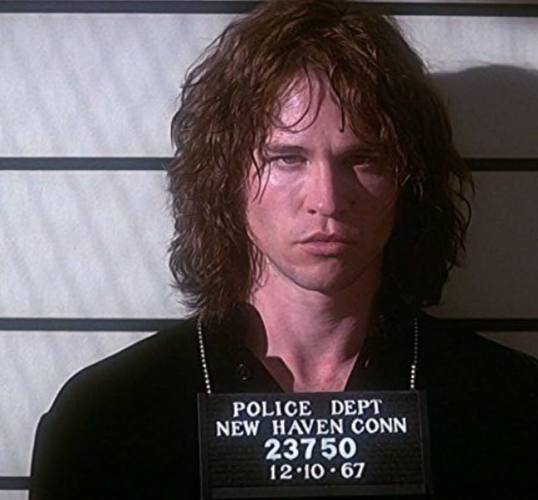
As for The Doors as a movie, it’s definitely an Oliver Stone film.  It’s big.  It’s colorful.  It’s deliberately messy.  Moments of genuinely clever filmmaking and breath-taking visuals are mixed with scenes that are so heavy-handed that you’ll be inspired to roll your eyes as dramatically as you’ve ever rolled them.  Stone loved the music and that love comes through in every performance scene.  Stone also loves using Native Americans as symbols and that can feel a bit cringey at times.  Why would Jim Morrison, whose was of Scottish and Irish ancestry, even have a Native American spirit guide?  At its best The Doors captures the chaos of a world that it’s the middle of being rebuilt.  The 60s were a turbulent time and The Doors is a turbulent movie.  I’ve read many reviews that criticized The Doors for the scene in which Morrison gets involved in a black magic ceremony with a journalist played by Kathleen Quinlan.  I have no idea whether or not that scene happened in real life but the movie is so full of energy and wild imagery that the scene feels like it belongs, regardless of whether it’s true or not.  Stone turns Jim Morrison into the warrior-artist-priest that Morrison apparently believed himself to be and the fact that the film actually succeeds has far more to do with Oliver Stone’s  enthusiastic, no-holds-barred direction and Val Kilmer’s charismatic lead performance than it does with Jim Morrison himself.

The Doors spent several years in development and there were several actors who, at one time or another, wanted to play Morrison.  Everyone from Tom Cruise to John Travolta to Richard Gere to Bono was considered for the role.  (Bono as Jim Morrison, what fresh Hell would that have been?)  Ultimately, Oliver Stone went with Val Kilmer for the role and Kilmer gives a larger-than-life performance as Morrison, capturing the charisma of a rock star but also the troubled and self-destructive soul of someone convinced that he was destined to die young.  Kilmer has so much charisma that you’re willing to put up with all the talk about opening the doors of perception and achieving a higher consciousness.  Kilmer was also smart enough to find the little moments to let the viewer know that Morrison, for all of his flamboyance, was ultimately a human being.  When Kilmer-as-Morrison winks while singing one particularly portentous lyric, it’s a moment of self-awareness that the film very much needs.

(When the news of Kilmer’s death was announced last night, many people online immediately started talking about Tombstone, Top Gun, and Top Secret.  For his part, Kilmer often said he was proudest of his performance as Jim Morrison.)

In the end, The Doors is less about the reality of the 60s and Jim Morrison and more about the way that we like to imagine the 60s and Jim Morrison as being.  It’s a nonstop carnival, full of familiar faces like Kyle MacLachlan, Michael Madsen, Crispin Glover (as Andy Warhol), Frank Whaley, Kevin Dillon, and a seriously miscast Meg Ryan.  It’s a big and sprawling film, one that is sometimes a bit too big for its own good but which is held together by both Stone’s shameless visuals and Val Kilmer’s charisma.  If you didn’t like the band before you watched this movie, you probably still won’t like them.  But, much like the band itself, The Doors is hard to ignore.

Retro Television Reviews: Can Ellen Be Saved (dir by Harvey Hart)


Welcome to Retro Television Reviews, a feature where we review some of our favorite and least favorite shows of the past!  On Sundays, I will be reviewing the made-for-television movies that used to be a primetime mainstay.  Today’s film is 1974’s Can Ellen Be Saved!  It  can be viewed on YouTube!

Ellen Lindsey (Katharine Cannon) is an intelligent but depressed teenager who feels that she just doesn’t belong anywhere in the world.  She’s not interested in the money and class-obsessed lifestyle of her parents, Arnold (Leslie Nielsen, back in his serious actor days) and Bea (Louise Fletcher).  At the same time, she’s also not interested in the silly lives of her friends, who spend all of their time chasing boys and talking about celebrities.  Ellen is looking for something deeper and she thinks that she may have found it when she attends a religious retreat led by a charismatic man named Joseph (Michaele Parks).

Everyone at the retreat is very friendly and very dedicated and very concerned with finding more to life than just surface pleasures.  They spend hours listening to sermons.  They spend even longer singing hymns.  The leaders of the retreat emphasize that anyone can leave whenever they want but, if they do, they’ll still be making the biggest mistake of their life.  Ellen is happy because she’s finally found a group of friends who seem to feel the same way that she does about society and materialism.  Joseph is happy because he’s brainwashed another member of his cult who he can now send out to panhandle for him and the compound.

Arnold and Bea are not happy when Ellen runs away to join Joseph’s commune.  When Arnold visits the commune, he discovers a secretive world where outsiders are not welcome.  He also discover that Ellen no longer seems to be capable of thinking for herself.  With the police unwilling to help, Arnold and Bea turn to an enigmatic deprogrammer named James Hallbeck (John Saxon).  Hallbeck specializes in grabbing kids that have joined cults and bringing them back to their parents.  Of course, it’s hard not to notice that neither Joseph nor Arnold seems to be giving much thought to what Ellen actually wants from her life.

Can Ellen Be Saved? is a well-made TV movie that has a lot in common with later films like Split Image and Ticket To Heaven.  As in both those movies, the first half of the film details how cults initially brainwash their members while the second half deals with the sometimes harsh process of reversing that brainwashing.  And, just as in those two later films, Can Ellen Be Saved? features parents who mistakenly assume that their child can be returned to them exactly as she was before.  Though all three of the films feature cults that are definitely sinister, they also feature main characters who were lost before they joined the cult and all three of them end on an ambiguous note, leaving us to wonder if the characters have regained their free will or if they’ve just traded one brainwashing for another.

Along with being a well-written and well-acted film, Can Ellen Be Saved features one of those once-in-a-lifetime casts.  Popping up in small roles are familiar faces like William Katt, Rutanya Alda, and Kathleen Quinlan.  Michael Parks and John Saxon are both convincing as two morally ambiguous characters whose own motives are left enigmatic.  Katherine Cannon is sympathetic as Ellen, whose need to be a part of something leaves her vulnerable to manipulation.  Finally, it must be said that Leslie Nielsen — despite his reputation for having been a dull dramatic actor — is actually very effective as Ellen’s confused but well-meaning father.  Usually, when I watch Neilsen in a dramatic film, I find myself expecting him to wink at the camera or deliver a silly line in a deliberately flat and unemotional tone.  But, in this film, I actually forgot I was watching Leslie Nielsen.  Instead, he just become a suburban dad, trying to understand why his daughter was so dissatisfied with the life that he had worked so hard to give her.

I wasn’t expecting much from Can Ellen Be Saved? but it turned out to be surprisingly effective.

Programming Change: Join Us For Breakdown!


Earlier today, it was announced that White Lightning would be tonight’s #MondayMuggers live tweet! 

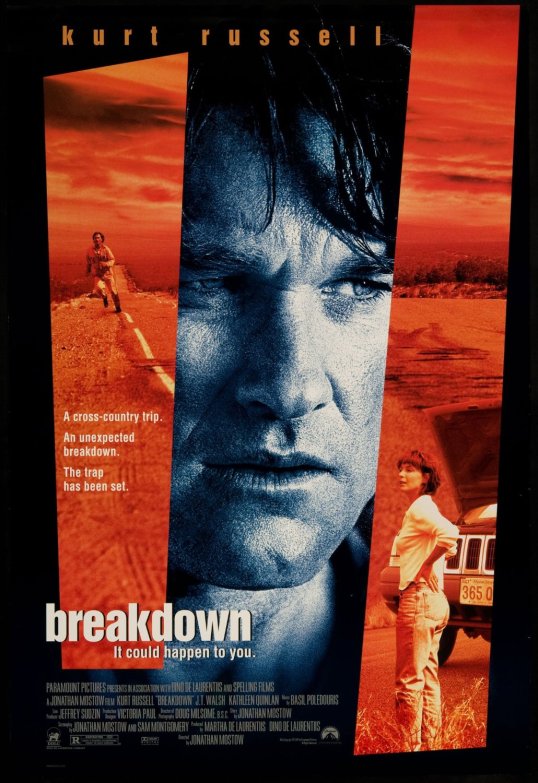
Well, it’s time for a quick programming change!  Because tonight is co-host Sierra’s birthday, White Lightning is going to be postponed until next week.  Instead, tonight at 10 pm et, I will be hosting 1997’s Breakdown for #MondayMuggers!  This Kurt Russell film features J.T. Walsh as one of the scariest evil truckers ever!  It’s a classic and it’s on Prime!

So, tonight, if you’re free, join #MondayMuggers on twitter for Breakdown!  I’d love to see you there.

Cleaning Out The DVR: Lifeguard (dir by Daniel Petrie)


I had a long day on Wednesday so I unwound the only way that seemed appropriate.  I watched Road House, the classic film in which Patrick Swayze plays Dalton.  Dalton is the second-greatest bouncer of all time.  Who is the greatest?  None other than Dalton’s mentor, Wade Garrett!

Now, there’s a lot of reasons to love Road House but the performance of Sam Elliott in the role of Wade Garrett is definitely one of them.  If you don’t cry a little when Ben Gazzara’s goons murder old Wade, you just don’t have a heart.  In the end, of course, Wade’s bloody corpse gets left on top of the bar and, honestly, I think that’s the way Wade would want to go.

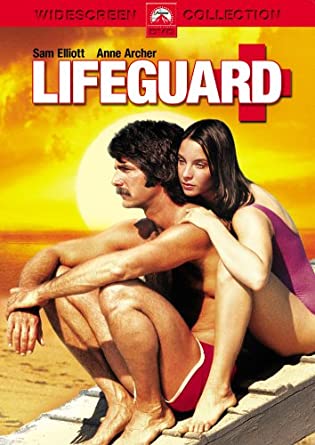
Anyway, watching Road House reminded me of just how awesome Sam Elliott is so I decided to follow it up by watching another Sam Elliott film, one that I had previously DVR’d off of TMC last week.  Filmed in 1975 and released in ’76, Lifeguard features a youngish Sam Elliott as the title character.  Even though the lifeguard in question might be named Rick Carlson, it’s hard not to think of this film as essentially being Wade Garrett: The Early Years.

When Lifeguardopens, Rick Carlson is 32 years old.  He’s been a lifeguard since he graduated high school.  In his youth, he was a championship-winning surfer.  Now, he’s an aging beach bum who is content to spend both the summer and the winter sitting in his lifeguard tower, watching life on the beach and occasionally saving someone from drowning.  Rick has a small apartment, several girlfriends, and a legion of adoring fans.  Younger lifeguards like Chris (Parker Stevenson, who would later co-star on Baywatch) view him as being a mentor.  Beachgoers view him as being an authority figure, the type that can go to if the surfers are being obnoxious or if some old perv is wandering around exposing himself.  17 year-old Wendy (Kathleen Quinlan) flirts with him and, against his better instincts and common sense, Rick often flirts back.  Despite a bit of gray in his hair and the fact that he gets winded a bit easier, Rick is still living the same life that he was living when he first graduated high school and he’s happy with that.

Or, at least, he is until he gets an invitation to his 15 year high school reunion and he discovers that everyone else is actually living a real life with real responsibilities.  When he discovers that his former girlfriend, Cathy (Anne Archer), is now divorced, Rick starts to think about what could have been.  When another former high school friend, Larry (Stephen Young), offers Rick a high-paying job selling cars, Rick finds himself wondering if it’s time to leave the beach and finally get a “real” job.

Lifeguard is an episodic film, a mix of comedy and drama that has an unexpectedly melancholy feel to it.  For the most part, the film asks us to sympathize with Rick’s desire to spend the rest of his life on the beach but, at the same time, it also doesn’t deny that there are drawbacks to Rick’s lifestyle.  Rick’s living the life he wants but he’s largely doing so alone, unable to build up any sort of personal connection with anyone who isn’t 16 years younger than him.  Interestingly enough, for a film called Lifeguard, we really don’t see Rick rescuing many people or doing anything else that you might expect to see a lifeguard doing.  Modern viewers will probably spend the entire movie waiting for Rick to give a speech about why being a lifeguard is a holy calling but that moment never happens.  Instead, it’s pretty clear that Rick mostly just enjoys hanging out at the beach and being a lifeguard allows him to get paid to do just that.  Watching the film, I could not help but compare Rick’s laid back attitude to the overly earnest lifeguards who populated Baywatch.  Mitch Buchannon would have kicked Rick off the beach for not taking the job seriously enough.  As well, as opposed to the vibrant cinematography that we’ve come to expect from beach movies, the visual style of Lifeguard is often moody and underlit.  At times, the beach itself looks like it’s suffering from an existential crisis.  The sand looks dull.  The skies above the water often appear to be gray and full of clouds.  Rick has apparently decided to spend the rest of his life on the ugliest beach in California.

It’s a flawed film, to be sure.  The attempts to mix drama and comedy often lead to uneven results and Anne Archer, Parker Stevenson, and Stephen Young are stuck with underwritten characters.  (The film’s script especially lets Young down, making Larry such an obnoxious character that it’s hard to believe that he and Rick would have ever been friends in the firs place.)  When the film does work, it’s due to the performances of Kathleen Quinlan and Sam Elliot.  Though her character is a cliché (the rebellious teenager who isn’t as worldly as she thinks she is), Quinlan does a good job of giving the character a personality that makes her more than just a stock temptation.  

The film belongs, of course, to Sam Elliott and he is perfectly cast.  As he would do decades later in The Hero, Elliott does a wonderful job of suggesting the little doubts that lurk underneath the laid back surface of his character.  His strongest moment occurs not on the beach but when Rick goes to his high school reunion and realizes that he no longer fits in with his former classmates, all of whom have careers and families.  Rick goes from being cocky to insecure in a matter of minutes and Elliott captures Rick’s emotions beautifully.  At that moment, it’s hard not to feel sorry for Rick.  One can understand why he’s tempted to leave the beach for the real world but, at the same time, one can also see that Rick understands that it might be too late for him to do so.  He’s spent the last 15 years in a perpetual adolescence and the rest of the world has moved on.  Elliott perfectly captures the moment when Rick realizes that his happiness has come with a price.  Rick is a flawed (if ultimately good) person but Sam Elliott gives a flawless performance in the role.  Just as surely was Wade Garrett rescued Dalton when Wesley’s men tried to stop the beer delivery, Sam Elliott saves Lifeguard.

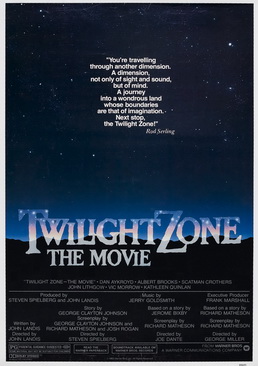
Horror Film Review: Twilight Zone: The Movie (dir by John Landis, Steven Spielberg, Joe Dante, and George Miller)


1983’s Twilight Zone: The Movie is meant to be a tribute to the classic original anthology series.  It features four “episodes” and two wrap-around segments, with Burgess Meredith providing opening and closing narration.  Each segment is directed by a different director, which probably seemed like a good idea at the time.

Unfortunately, Twilight Zone: The Movie is a bit of a mess.  One of the episodes is brilliant.  Another one is good up until the final few minutes.  Another one is forgettable.  And then finally, one of them is next too impossible to objectively watch because of a real-life tragedy.

With a film that varies as wildly in tone and quality as Twilight Zone: The Movie, the only way to really review it is to take a segment at a time:

Something Scary (dir by John Landis)

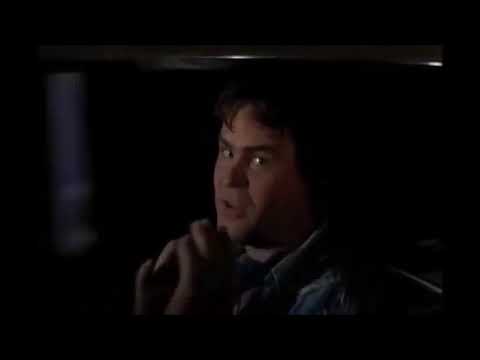
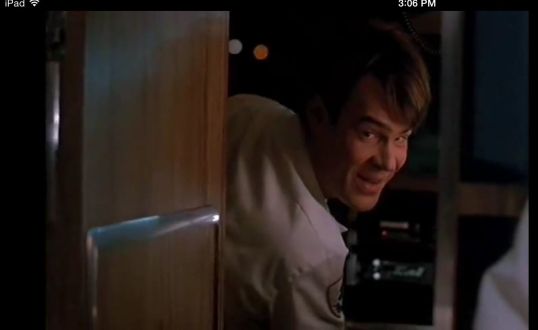
Albert Brooks and Dan Aykroyd drive through the desert and discuss the old Twilight Zone TV series.  Brooks claims that the show was scary.  Aykoyd asks if Brooks wants to see something really scary.  This is short but fun.  It’s tone doesn’t really go along with the rest of the movie but …. oh well.  It made me jump.

Time Out (dir by John Landis)

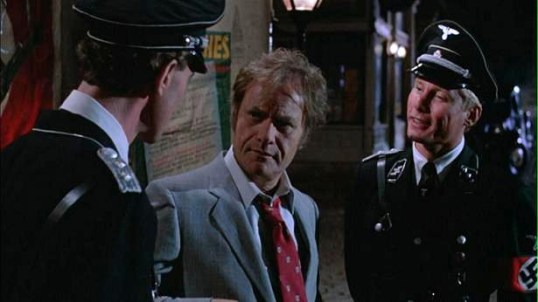
Vic Morrow plays a racist named Bill Connor who, upon leaving his local bar, finds himself transported to Nazi-occupied France, the deep South, and eventually Vietnam.

How you react to this story will probably depend on how much you know about its backstory.  If you don’t know anything about the filming of this sequence, you’ll probably just think it’s a bit heavy-handed and, at times, unintentionally offensive.  Twilight Zone often explored themes of prejudice but Time Out just seems to be using racism as a gimmick.

If you do know the story of what happened while this segment was being filmed, it’s difficult to watch.  Actor Vic Morrow was killed during filming.  His death was the result of a preventable accident that occurred during a scene that was to involve Morrow saving two Vietnamese children from a helicopter attack.  The helicopter crashed, killing not only Morrow but the children as well.  It was later determined that not only were safety protocols ignored but that Landis had hired the children illegally and was paying them under the table so that he could get around the regulations governing how many hours child actors could work.  It’s a tragic story and one that will not leave you as a fan of John Landis’s, regardless of how much you like An American Werewolf in London and Animal House.

Nothing about the segment feels as if it was worth anyone dying for and, to be honest, I’m kind of amazed that it was even included in the finished film.

Kick The Can (dir by Steven Spielberg)

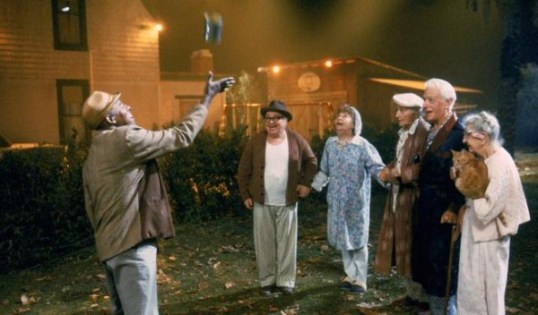
An old man named Mr. Bloom (Scatman Crothers) shows up at Sunnyvale Retirement Home and encourages the residents to play a game of kick the can.  Everyone except for Mr. Conroy (Bill Quinn) eventually agrees to take part and, just as in the episode of the Twilight Zone that this segment is based on, everyone becomes young.

However, while the television show ended with the newly young residents all running off and leaving behind the one person who refused to play the game, the movie ends with everyone, with the exception of one man who apparently became a teenager istead of a kid, deciding that they would rather be old and just think young.  That really doesn’t make any damn sense but okay.

This segment is unabashedly sentimental and clearly calculated to brings tears to the eyes to the viewers.  The problem is that it’s so calculated that you end up resenting both Mr. Bloom and all the old people.  One gets the feeling that this segment is more about how we wish old people than how they actually are.  It’s very earnest and very Spielbergian but it doesn’t feel much like an episode of The Twilight Zone.

It’s A Good Life (dir by Joe Dante)

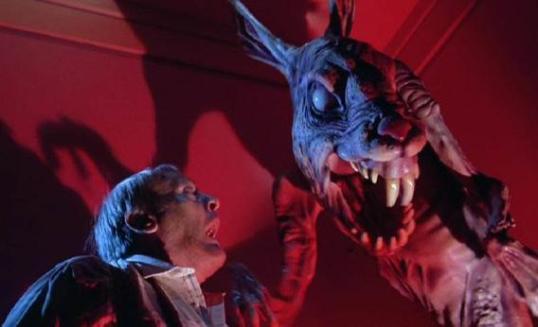
A teacher (Kathleen Quinlan) meets a young boy (Jeremy Licht) who has tremendous and frightening powers.

This is a remake of the classic Twilight Zone episode, It’s A Good Life, with the difference being that young Anthony is not holding an entire town hostage but instead just his family.  This segment was directed by Joe Dante, who turns the segment into a cartoon, both figuratively and, at one point, literally.  That’s not necessarily a complaint.  It’s certainly improvement over Spielberg’s sentimental approach to the material.  Dante also finds roles for genre vets like Kevin McCarthy, William Schallert, and Dick Miller and he provides some memorably over-the-top visuals.

The main problem with this segment is the ending, in which Anthony suddenly reveals that he’s not really that bad and just wants to be treated normally, which doesn’t make much sense.  I mean, if you want to be treated normally, maybe don’t zap your sister in a cartoon.  The teacher agrees to teach Anthony how to be a normal boy and again, what the Hell?  The original It’s A Good Life worked because, like any child, Anthony had no conception of how adults felt about him.  In the movie version, he’s suddenly wracked with guilt and it’s far less effective.  It feels like a cop out.

Still, up until that ending, It’s A Good Life worked well as a satire of the perfect American family.

Nightmare at 20,000 Feet (dir by George Miller)

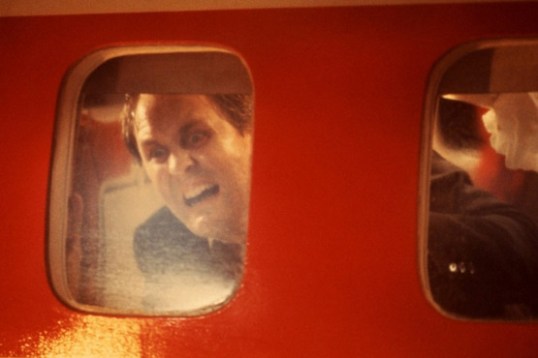
In this remake of Nightmare at 20,000 Feet, John Lithgow steps into the role that was originally played by William Shatner.  He plays a man who, while attempting to conquer his fear of flying, sees a gremlin on the wing of his airplane.  Unfortunately, he can’t get anyone else on the plane to believe him.

Nightmare at 20,000 Feet is the best of the four main segments.  It’s also the one that sticks closest to its source material.  Director George Miller (yes, of Mad Max fame) doesn’t try to improve on the material because he seems to understand that it works perfectly the way it is.  John Lithgow is also perfectly cast in the lead role, perfectly capturing his increasing desperation.  The one change that Miller does make is that, as opposed in the TV show, the gremlin actually seems to be taunting John Lithgow at time and it works wonderfully.  Not only is Lithgow trying to save the plane, he’s also trying to defeat a bully.

Something Scarier (dir by John Landis)

Dan Aykroyd’s back as an ambulance driver, still asking his passenger if he wants to see something really scary.  It’s an okay ending but it does kind of lessen the impact of Nightmare at 20,000 Feet.


Horror on The Lens: Where Have All The People Gone? (dir by John Llewellyn Moxey)


For today’s horror on the lens, we have a 1974 made-for-TV movie about what happens when a family comes down from the mountains and discovers that everyone’s disappeared.

“Where have all the people gone!?” is the obvious question and it’s also the title of this film.  Our own Jedadiah Leland reviewed this movie back in March and he described it as being “effectively creepy.”  I watched it with my friends in the Late Night Movie Gang a few months later and we described as being perhaps the best Peter Graves film we had seen since we watched that one where everyone was a clone.

So, after those recommendations, how can you not watch Where Have All The People Gone?

Enjoy!

https://www.youtube.com/watch?v=39GjSbiMzXY&t=1s