Retro Television Review: Fantasy Island 5.14 “Daddy’s Little Girl/The Whistle”


Welcome to Retro Television Reviews, a feature where we review some of our favorite and least favorite shows of the past!  On Tuesdays, I will be reviewing the original Fantasy Island, which ran on ABC from 1977 to 1984.  Unfortunately, the show has been removed from most streaming sites.  Fortunately, I’ve got nearly every episode on my DVR.
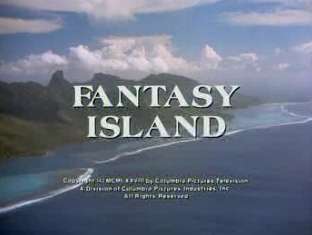
This week, the stars align and John Carradine shows up on Fantasy Island.

Episode 5.14 “Daddy’s Little Girl/The Whistle”

(Dir by Don Chaffey and Don Weis, originally aired on January 30th, 1982)

The plane is landing and Mr. Roarke and Julie are getting ready to meet their guests for the weekend.  But wait a minute — where’s Tattoo!?  Roarke explains that Tattoo has volunteered to spend the weekend learning how to do CPR.  When a voluptuous nurse walks by, Julie rolls her eyes and says that Tattoo only cares about learning “mouth-to-mouth.”

“Julie!” Mr. Roarke snaps, even though Julie is probably correct.

Anyway, any episode without Tattoo feels strange and that’s certainly true of this episode.  There are two fantasies, one of which was dramatically better than the other.  The lesser of the two fantasies involves Christa Ackland (Genie Francis) and her efforts to find out the identity of her father.  All she knows is that her mother (Carolyn Jones) knew her father in the Philippines during World War II.  Christa is going to be married on Fantasy Island and she wants her real father to give her away.

Three men, all of whom served in the Air Force together, step forward and claim, one after the other, to be Christa’s father.  When Christa finally confronts her mother, she learns that her father is not Gene (John Ericson), Al (Alan Hale, Jr.), or Bert (Gene Nelson).  Instead, he was a guy named …. well, Guy.  Guy was shot down while on a mission.  Gene, Al, and Bert all explain that the stepped forward and claimed to be her father out of loyalty to Guy and because they didn’t want Christa to learn on her wedding say that her father was dead.  (Apparently, they felt that information would be better received after the honeymoon.)  Christa is surprisingly forgiving.  She realizes that her stepfather (William Windom) has more than earned the right to give her away.  Christa marries George Stickney (James Daughton, the head of the evil frat in Animal House) and Julie cries at the wedding.  Awwww!

The main problem with this storyline was that Genie Francis gave a surprisingly bad performance as Christa.  Instead of coming across as someone who truly wanted to know about her real father, she instead came across as being petulant and more than a little self-righteous.  Carolyn Jones, William Windom, and the three potential fathers were all likable but none could make up for the unsympathetic lead character.

The other fantasy was a bit more fun, even if was impossible to follow the story.  Iconologist Adrian Brilles (Edward Winters) dreams of making a great discovery that will bring him fame and prove his theories about ancient hieroglyphics to be correct.  Mr. Roarke sends him to a ghost town that is also the home of a museum of ancient artifacts.  Working with curator Leila Proctor (Ann Turkel), Adrian discovers what he describes as being “the Rosetta Stone of hieroglyphics.”  He also discovers an ancient whistle that will grant him three wishes.

There are a few townspeople, all of whom take a lot of interest in Adrian’s work.  Their leader is the town’s mortician and he’s played by — YES! — JOHN CARRADINE!  And though Carradine doesn’t get to do much and was obviously physically frail when he filmed this episode, his famous voice and his piercing stare combine to make the Mortician a memorable character.  There’s also a fairly ridiculous scene where the townspeople reveal their true selves, which means dancing around while wearing rubber demon masks.  It’s silly but it’s effective.

It’s never quite clear what’s happening at the ghost town, beyond the three wishes being a set up to bring the demonic townspeople into the world and to cost Adrian his soul.  Fortunately, Mr. Roarke pops up and gives Adrian some cryptic advice about the third wish being the most important.  For his first wish, Adrian wishes for the townspeople to be their true selves.  (Cue the demon dance.)  For his second wish, he goes for fame and adulation.  For his third wish, he cancels the first two wishes and this somehow set free not only his soul but Leila’s as well.

Yep, it doesn’t make much sense but it’s got John Carradine and a bunch of horror imagery so it’s fun.  That’s all I really ask for when it comes to Fantasy Island.  The whistle fantasy makes up for the wedding fantasy and the lack of Tattoo.  This was a worthwhile trip to the Island.

The TSL Horror Grindhouse: Boogeyman II (dir by Ulli Lommel)


Filmed in 1982 but not released until 1984, Boogeyman II is — as the name implies — the sequel to 1980’s The Boogeyman.

What’s that, you say?  You don’t remember anything about The Boogeyman and you don’t want to take the time to read my review of it?  Well, don’t worry.  It’s not necessary to have seen the original Boogeyman to follow the sequel, largely because the sequel is full of flashbacks to the first film.  Boogeyman II is only 79 minutes long and 30 minutes of that running time is taken up with footage from the first Boogeyman.  Indeed, if you want to see the good parts of Boogeyman without having to deal with any of the filler, I would recommend just watching the first 30 minutes of Boogeyman II.

There is a plot to Boogeyman II, kind of.  Having survived the massacre of her family at the farm, the now-divorced Lacey (played by Suzanna Love, the then-wife of director Ulli Lommel) goes out to California to visit her friends, actress Bonnie (Shannah Hall) and her husband, director Mickey (Lommel).  How is it that Lacey, who was portrayed as being a simple and not particularly worldly farm wife in the first film, happens to be friends with a wealthy actress and director?  It’s never really explained.

Bonnie and Mickey ask Lacey whether or not the people who killed her family were ever caught.  Lacey replies that they can’t be caught because they’re spirits.  Over dinner, Lacey tells Bonnie and Mickey the story of the shattered mirror and the killer whose spirit was trapped in the broken glass.  Bonnie and Mickey listen sympathetically, though they both think that Lacey’s crazy.  (Perhaps they noticed that Lacey’s flashbacks include scenes in which she wasn’t even present.  Or maybe they’re wondering why Lacey would take the time to apparently describe a lengthy, bondage-themed nightmare that she had during the first film.  Or maybe they’re just amazed by the presence of John Carradine in the flashbacks.)  Bonnie and Mickey also think that Lacey’s story would make a great movie!

For some reason, Lacey is still carrying around a piece of the haunted mirror.  This is the mirror that contains the spirit that possessed her during the first film and which killed the majority of her family.  I would throw that piece of the mirror away but I guess Lacey’s more sentimental than I am.  A creepy butler named Joseph (Sholto von Douglas, a rather stiff actor who still had a fascinatingly menacing screen presence) steals the piece of the mirror and soon, Hollywood phonies are dying.

Boogeyman II was directed by the late Ulli Lommel, a German director who got his start as an associate of Rainer Werner Fassbinder’s and who eventually came to America, where he hung out with Andy Warhol, directed some documentaries about the American punk scene, and married heiress Suzanna Love.  Love bankrolled Lommel’s early films, including The Boogeyman.  With Lommel, it was always a challenge to figure out how seriously he took any of his films.  In interviews, he would joke about being an exploitation filmmaker while, at the same time, claiming that his films were designed to expose the hypocrisy of American society.  Boogeyman II is full of phony Hollywood types and there’s a scene where Mickey comments that, in America, “exploitation is a genre.”  It’s probably not a coincidence that it’s the servant, Joseph, who uses the mirror to take out the film’s wealthy victims.  The opening credits of Boogeyman II appear to literally be written in magic marker.  Is Lommel mocking expensive Hollywood productions or could Lommel only afford a box of magic markers?  I suppose both could be true.

The best parts of Boogeyman II are the flashback to the first film, which was a genuinely atmospheric horror film with some serious pacing issues.  The rest of Boogeyman II is dull, though you do have to appreciate the sense of ennui that Lommel brings to the proceedings.  Was the ennui intentional?  That’s the mystery of Ulli Lommel.

As for Lommel, he and Love eventually divorced and Lommel ended his career making trashy true crime films that went direct-to-video.  As usual, Lommel claimed that his crime films were meant to be a serious critique of everything that was wrong with America.  Lommel’s true crime films have none of the atmosphere or occasional flashes of wit that distinguished Lommel’s earlier films.  Was Lommel an incompetent director or was he a subversive artist?  Again, both could be true.  Lommel died in 2017, bringing to close an enigmatic career.

Billy The Kid Versus Dracula (1966, directed by William Beaudine)


Dracula comes to the old west!

The count (John Carradine) has been traveling across the frontier, feasting on settlers and stagecoach riders.  When he comes to a town in the middle of nowhere, he poses as the uncle of saloon owner Betty Bentley (Melinda Plowman).  Using the name Mr. Underhill, Dracula hopes to make Betty into his latest bride.  Everything about Mr. Underhill indicates that he is a vampire but Betty refuses to believe it.  Even when she’s told that Mr. Underhill doesn’t cast a reflection, Betty dismisses it as just being “the old vampire test.”  Two German servants recognize her uncle as being a vampire and Betty again refuses to believe them.  Betty’s fiancé, Billy the Kid (Chuck Courtney), realizes that there is something wrong with Mr. Underhill but can he save his future wife?

The idea of vampires in the old west is one that has inspired a surprising number of movies, most of which are considerably better than Billy The Kid Versus Dracula.  In this movie, Chuck Courtney plays one of the old west’s most notorious outlaws but he’s portrayed as being one of the most upstanding members of his community.  John Carradine plays the world’s most notorious vampire but just comes across as being a grouchy old man.  Chuck Courtney is a convincing westerner but not a very interesting actor.  John Carradine sleepwalks through the role and later said Billy The Kid Versus Dracula was the only one of his many films that he actively disliked.  The movie was shot in 8 days and it looks like it.

This was also the final film of director William Beaudine, who had directed his first film 51 years earlier.  The film was released on a double feature with Beaudine’s Jesse James Meets Frankenstein’s Daughter.  Everyone ended up in the old west eventually.

Horror Film Review: The Howling (dir by Joe Dante)


The 1981 film, The Howling, takes place at The Colony.

The Colony is a lovely place, a nice resort out in the middle of the countryside.  It’s a place that celebrity therapist George Waggener (Patrick Macnee) sends his clients so that they can recover from trauma.  It’s a bit of a grown-up version of the ranch to which Dr. Phil used to send juvenile delinquents.  Of course, the Colony is full of adults and they’re an eccentric bunch.  I mean, one of them — named Erle Kenton — is actually played by John Carradine!  That’s just how eccentric the place is.  Sheriff Sam Newfield (Slim Pickens) keeps an eye on the place but everyone knows that there’s nothing to worry about when it comes to The Colony.  Dr. Waggner does good work.

Karen White (Dee Wallace) is a Los Angeles news anchor who was held hostage by a serial killer named Eddie Quist (Robert Picardo).  While she was with Eddie, she was forced to not only watch videos of Eddie’s crimes but she also saw something happen with Eddie that terrified her to such an extent that she has blocked it from her mind.  Karen was rescued by the police but she is haunted by nightmares.  Dr. Waggner arranges for Karen and her husband, Bill Neill (Christopher Stone, who was married to Dee Wallace when they co-starred in this film), to spend some time at the Colony.

Bill loves the Colony, especially after he attracts the eye of Marsha (Elisabeth Brooks), the resort’s resident seductress.  Karen, however, is less enamored of the place.  The Colony feels off to her and she’s not happy about the howling in the distance or the fact that Bill has suddenly started to grow distant from her.  Could it be that The Colony is actually crawling with werewolves and that Bill has become one of them?  (It’s totally possible and, to The Howling‘s credit, it doesn’t waste any time letting us know that.)  Karen’s friend, Terry Fisher (Belinda Balanski), and her boyfriend, Chris Halloran (Dennis Dugan), do some research of their own into Eddie Quist, The Colony, and whether or not werewolves exists and they meet a helpful bookstore owner named Walter Paisley (Dick Miller).

To understand the approach that director Joe Dante and screenwriter John Sayles take to The Howling, one needs to only consider the names of some of the characters.  George Waggner.  Bill Neill. Terry (which can be short for Terence) Fisher.  Fred (or is that Freddie) Francis.  Erle Kenton.  Sam Newfield.  Jerry Warren.  All of these characters are named after horror film directors.  This is the type of werewolf film where Chris Halloran has a copy of The Three Little Pigs sitting on his desk.  Veteran actors like Kevin McCarthy, John Carradine, Slim Pickens, and Kenneth Tobey show up in small roles.  Roger Corman mainstay Dick Miller plays yet another character named Walter Paisley and he kicks Forrest J. Ackerman out of his bookstore.  Roger Corman himself plays a man making a phone call.  After a werewolf is shot on live TV, the program immediately cuts to a dog food commercial and we see a blank-faced child telling his unconcerned parents that someone just turned into a wolf.  The Howling was made by people who obviously love B-horror and that love is present in every frame of the film.

Like Dante’s Piranha, The Howling is a film with a sense of humor but it’s not a comedy.  The werewolves are still impressive, even forty-two years after the film was first released.  The character of Eddie Quist (“I’m going to give you a piece of my mind”) is a terrifying monster and the sight of his signature smiley face will fill you with dread, especially when it shows up in a place where it really shouldn’t be.  The film cynically ends on a note of noble sacrifice that will apparently not make much difference, with the suggestion being that human beings are either too distracted or too jaded to realize that there are monsters among them.  The Howling is a fast-paced and well-directed homage to B-horror and it’s still terrifically entertaining.

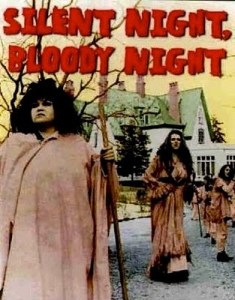
Horror On The Lens: Silent Night, Bloody Night (dir by Theodore Gershuny)


The 1974 film Silent Night, Bloody Night is an oddity.

On the one hand, it’s pretty much a standard slasher film, complete with a menacing mansion, a horrible secret, a twist ending, and John Carradine playing a mute newspaper editor.

On the other hand, director Ted Gershuny directs like he’s making an underground art film and several of the supporting roles are played by actors who were best known for their association with Andy Warhol.

Personally, I like Silent Night, Bloody Night.  It has a terrible reputation and the film’s star, Mary Woronov, has gone on record calling it a “terrible movie” but I like the surreal touches the Gershuny brought to the material and the sepia-toned flashbacks have a nightmarish intensity to them.  The film makes no logical sense, which actually makes it all the more appealing to me.  As the saying goes, your mileage may vary.

Watch and decide for yourself!

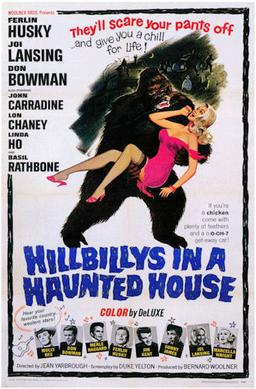
Horrific Insomnia File #63: Hillbillys in a Haunted House (dir by Jean Yarbrough)


What’s an Insomnia File? You know how some times you just can’t get any sleep and, at about three in the morning, you’ll find yourself watching whatever you can find on cable or streaming? This feature is all about those insomnia-inspired discoveries!

If you were having trouble getting to sleep last night, you could have jumped on Tubi and watched a film from 1967 called Hillbillys In A Haunted House and it would have put you right to sleep.

Hillbillys In A Haunted House has some big names in the cast but, unfortunately, none of them get to do much.  Instead, the main characters are country singer Woody Wetherby (Ferlin Husky), his partner Boots Malone (a very pointy Joi Lansing), and their road manager, Jeepers (Don Bowman).  When we first see them, they’re driving to Nashville and even worse, they’re singing about the fact that they’re driving to Nashville.  They’re scheduled to perform in “the Jamboree.”  However, after they’re delayed by a bunch of cops having a shoot out with two spies, Boots announces that Jeepers is a nervous wreck and that they really need to stop and rest for the night.

Unfortunately, they’re in the town of Sleepy Junction and there’s not much to Sleepy Junction because everyone in town recently moved to Acme City.  As a result, there are no hotels or motels in Sleepy Junction.  But there is a big, deserted mansion that is rumored to be haunted.  With a storm approaching and Jeepers’s nerves even more on edge then before, they head to the mansion.  At the mansion Woody sings a song and then some neighbors stop by and they all sing another song.  Are you getting the feeling that there’s a lot of singing in this movie?  You’re right, there is.  It’s all studio-perfect singing too.  Woody lip-syncs like a pro.

Anyway, the mansion is also being used by four spies, played by Basil Rathbone, John Carradine, a hulking Lon Chaney, Jr., and Linda Ho.  The four of them live in the surprisingly clean basement of the mansion.  Living with them is a gorilla.  The spies planning on stealing a formula for rocket fuel from Acme City but first they need to do something about the hillbillys that are currently in the haunted house.  Carradine and Rathbone try to scare them out with some remote control ghost action.  Jeepers may be a coward and Woody may be a redneck and Boots may have atrocious taste in clothes but all three of them are Americans and they’re not going to stand for any spy nonsense!

If you think it sounds like this was stupid, you’re right.  Carradine and Rathbone both struggle to maintain a straight face.  Poor Lon Chaney Jr. often appears to be out of breath.  There’s way too much singing.  Seriously, couldn’t the hillbillies have just driven another few miles to Acme City and found a hotel?

The film will put you to sleep, though.  It has its uses.

Previous Insomnia Files:

  1. Story of Mankind
  2. Stag
  3. Love Is A Gun
  4. Nina Takes A Lover
  5. Black Ice
  6. Frogs For Snakes
  7. Fair Game
  8. From The Hip
  9. Born Killers
  10. Eye For An Eye
  11. Summer Catch
  12. Beyond the Law
  13. Spring Broke
  14. Promise
  15. George Wallace
  16. Kill The Messenger
  17. The Suburbans
  18. Only The Strong
  19. Great Expectations
  20. Casual Sex?
  21. Truth
  22. Insomina
  23. Death Do Us Part
  24. A Star is Born
  25. The Winning Season
  26. Rabbit Run
  27. Remember My Name
  28. The Arrangement
  29. Day of the Animals
  30. Still of The Night
  31. Arsenal
  32. Smooth Talk
  33. The Comedian
  34. The Minus Man
  35. Donnie Brasco
  36. Punchline
  37. Evita
  38. Six: The Mark Unleashed
  39. Disclosure
  40. The Spanish Prisoner
  41. Elektra
  42. Revenge
  43. Legend
  44. Cat Run
  45. The Pyramid
  46. Enter the Ninja
  47. Downhill
  48. Malice
  49. Mystery Date
  50. Zola
  51. Ira & Abby
  52. The Next Karate Kid
  53. A Nightmare on Drug Street
  54. Jud
  55. FTA
  56. Exterminators of the Year 3000
  57. Boris Karloff: The Man Behind The Monster
  58. The Haunting of Helen Walker
  59. True Spirit
  60. Project Kill
  61. Replica
  62. Rollergator

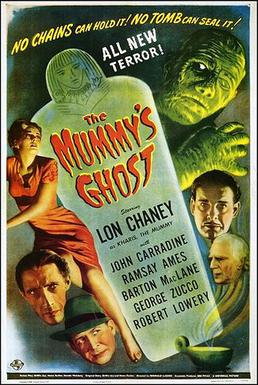
Horror Film Review: The Mummy’s Ghost (dir by Reginald Le Borg)


When we last checked in with Kharis the Mummy, he was trapped in the middle of an inferno in Massachusetts.  Having come to America to kill the members of the expedition that discovered the Tomb of Ananka and who brought Princess Ananka’s body to the United States, Kharis (Lon Chaney, Jr.) was trapped by the citizens of the town of Mapleton who, in the best tradition of Universal horror, cornered Kharis in a house and then set the place on fire.

1944’s The Mummy’s Ghost begins with the revelation that Kharis did not die in that inferno.  Somehow, he managed to escape and, rather improbably, he’s spent the last few years wandering around town without anyone ever noticing him.  The film presents Kharis as being largely a nocturnal creature but, even if he is only coming out at night, it still seems strange that no one would notice a mummy wandering around, especially since the entire town was traumatized by Kharis’s previous reign of terror.  As well, it’s also been established that Kharis owes his eternal life to an ancient Egyptian plant.  One reason why Kharis has always needed a “minder” is because Kharis needed someone who could keep him supplied with the plant.  So, if Kharis has been wandering around Massachusetts for the past few years, from where has he been getting the plant?

The Mummy’s Ghost also established that, in Egypt, High Priest Andoheb (Georg Zucco) is still alive.  This is somewhat surprising, considering that Andoheb died in both The Mummy’s Hand and The Mummy’s Tomb.  But no matter!  Andoheb is apparently still alive.  He’s really old and his hands shake but he’s still alive and he’s still determined to bring both Kharis and Princess Ananka back to Egypt.  This time, he sends Yousef Bey (John Carradine) to Massachusetts.

Yusef Bey takes over managing Kharis and he’s even able to supply Kharis with more of the special plant the keeps him alive.  However, Kharis grows upset when it discovers that Bey has tracked down the reincarnation of Ananka in the person of Amina (Ramsay Ames) and that, rather than return her safely to Egypt, Bey wants to give her eternal life with the help of the plant and then marry her.  This leads to Kharis going on a rampage and carrying Amina into a nearby swamp while Amina’s boyfriend, Tom Hervey (Robert Lowery), chases after them.

Full of plot holes and inconsistencies, The Mummy’s Ghost is about as silly as a mummy film can be.  If the previous films about Kharis managed to create a feeling of tragic inevitability as Kharis tracked down all of the people who had entered Ananka’s tomb, The Mummy’s Ghost presents Kharis as being something more akin to Frankenstein’s Monster, an inarticulate and easily frustrated creature who does things with little rhyme or reason.  That said, the film does make good use of Lon Chaney Jr’s hulking physicality as Kharis.  He’s still an intimidating figure when he goes after someone.  And John Carradine’s pained expression as Yousef Bey is memorable as a reminder of how much Carradine disliked most of the Universal monster films in which he found himself.  Otherwise, The Mummy’s Ghost is fairly forgettable.

Previous Universal Horror Reviews:

  1. Dracula (1931)
  2. Dracula (Spanish Language Version) (1931)
  3. Frankenstein (1931)
  4. Island of Lost Souls (1932)
  5. The Mummy (1932)
  6. The Invisible Man (1933)
  7. The Bride of Frankenstein (1935)
  8. Dracula’s Daughter (1936)
  9. Son of Frankenstein (1939)
  10. Black Friday (1940)
  11. The Invisible Man Returns (1940)
  12. The Mummy’s Hand (1940)
  13. The Wolf Man (1941)
  14. Ghost of Frankenstein (1942)
  15. Invisible Agent (1942)
  16. The Mummy’s Tomb (1942)
  17. Frankenstein Meets The Wolf Man (1943)
  18. Son of Dracula (1943)
  19. House of Frankenstein (1944)
  20. The Invisible Man’s Revenge (1944)
  21. House of Dracula (1945) 
  22. Creature From The Black Lagoon (1954)

Horror Scenes I Love: John Carradine in Vampire Hookers


It’s been said that John Carradine didn’t really like movies that much.

This, despite the fact that Carradine appeared in over 300 movies over the course of a career that spanned nearly a century.  Born in 1906, Carradine made his film debut in 1930 and worked steadily until his death in 1988.  He was so prolific that films featuring him were still being released for years after his passing.  Carradine was a favorite of directors like Cecil B. DeMille and John Ford.  He played key roles in such Ford films as Stagecoach, The Grapes of Wrath and The Man Who Shot Liberty Valance.

And yet, for many people, John Carradine’s career has been defined by the astounding number of low-budget horror and sci-fi films in which he appeared.  Sometimes, he was the star.  More often, he would just make a quick cameo appearance.  But whatever the size of the role, he always made an impression.  Carradine, however, always said that his true loves were Shakespeare and the theater and that the films were just something he did so he could afford to work on stage.

1978’s Vampire Hookers features Carradine in a role that was typical of some of his later horror roles.  In this scene, he plays a courtly vampire who wonders if anyone understands poetry anymore.

Horror Film Review: The Invisible Man’s Revenge (dir by Ford Beebe)


1944’s The Invisible Man’s Revenge opens with Robert Griffin (Jon Hall) arriving in England.

Despite his last name and the fact that he’s played by the star of Invisible Agent, this Robert Griffin would not appear to be in any way related to the previous invisible men.  Instead, he is someone who has just escaped from a mental institution in South Africa.  He has already murdered two orderlies and now, he’s come to England to take vengeance on Sir Jasper Herrick (Lester Matthews) and his wife, Lady Irene (Gale Sondergaard), two old friends who the paranoid Robert thinks tried to kill him in Africa so that they could steal his money.  When Robert sees Sir Jasper and Lady Irene, he informs them that they can either give him half of their fortune or they can allow him to marry their daughter, Julie (Evelyn Ankers).  Lady Irene responds by drugging Robert and having him kicked out of the house.

Dejected, Robert eventually comes across the cottage of Dr. Peter Drury (John Carradine, giving a surprisingly low-key performance in the mad scientist role).  Dr. Drury reveals to Robert that he has developed a serum that can turn living things invisible.  Drury goes on to “show” Robert all of the invisible pets that he has hanging out around the cottage, from an invisible dog to an invisible parrot.  When Robert asks how long the invisibility lasts, Drury says that it will last until the invisible person dies.  That sounds pretty good to Robert so he volunteers to be Drury’s latest test subject.

Soon, Robert is invisible and going out of his way to haunt that Herrick family.  Some of Robert’s antics are merely playful.  He helps a cobbler (Leon Errol) win a game of darts and later turns the man into his personal servant.  Robert’s other actions are a bit more destructive.  Robert, after all, was a murderer to begin with and using a serum that cause additional insanity is definitely not helping him with his temper.  When Robert decides that he wants to be visible again, he discovers that there’s only one temporary way to do it and it involves a lot of blood.

After being portrayed as being a hero in Invisible Agent, The Invisible Man is once again a villain in The Invisible Man’s Revenge and it just feels right.  There’s just something inherently sinister about the idea of someone being invisible.  Jon Hall, who was so boring in Invisible Agent, is far more compelling here, playing Robert as a paranoid megalomaniac who has so convinced himself of his own cleverness that he can’t even understand that he’s writing the script for his own downfall.  This is a good, solid Universal horror movie.  The true hero of the movie is Drury’s dog, played by a talented canine actor named Grey Shadow.  It takes more than invisibility to fool that dog!

Previous Universal Horror Reviews:

  1. Dracula (1931)
  2. Dracula (Spanish Language Version) (1931)
  3. Frankenstein (1931)
  4. Island of Lost Souls (1932)
  5. The Mummy (1932)
  6. The Invisible Man (1933)
  7. The Bride of Frankenstein (1935)
  8. Dracula’s Daughter (1936)
  9. Son of Frankenstein (1939)
  10. The Invisible Man Returns (1940)
  11. The Wolf Man (1941)
  12. Ghost of Frankenstein (1942)
  13. Invisible Agent (1942)
  14. Frankenstein Meets The Wolf Man (1943)
  15. Son of Dracula (1943)
  16. House of Frankenstein (1944)
  17. House of Dracula (1945) 
  18. Creature From The Black Lagoon (1954)

Horror Film Review: House of Dracula (dir by Erle C. Kenton)


When last we saw Dracula, the Wolf Man, and Frankenstein’s Monster, they were all coming to an untimely end in House of Frankenstein.

Dracula (John Carradine) was caught out in the sun by a group of angry villagers and ended up turning back into a skeleton while desperately trying to climb into his coffin.  The Wolf Man, also known as Larry Talbot (Lon Chaney, Jr.), was shot, presumably with a silver bullet, and finally, the world was free of having to listen to Larry whine about his unfortunate condition.  The Monster (Glenn Strange) was last seen drowning in quicksand.

Despite all of that, all three of them return in 1945’s House of Dracula.  The Monster is at least found in an underground lair, preserved in a state of suspended animation by the quicksand.  Dracula and Larry Talbot, however, just show up with neither looking the worst for wear.  I supposed that Larry could have survived being shot but Dracula’s return is bizarre because he was literally exposed to sunlight.  In the past, reviving Dracula has always required the stake to be removed from his heart.  Did someone remove the sunlight from Dracula’s skeleton?

All three of the cursed beings show up at the castle of Dr. Franz Edelmann (Onslow Stevens).  Working with two nurses, the beautiful and religious Milizia (Martha O’Driscoll) and a compassionate hunchback named Nina (Janes Adams), Edlemann is researching blood transfusions.  He believes that blood transfusions can cure just about anything.  Edelmann is so convinced that he can cure Dracula of his vampirism that he allows Dracula to move his coffin into the castle’s cellar.  Edelmann is also convinced that he use the spores of a special plant to cure Larry of his lyncanthropy.  As usual, Larry Talbot is skeptical and spends the entire movie boring everyone with the details of how much it sucks to be a werewolf.  As for Frankenstein’s Monster, he’s in the castle because Edelmann happend to come across him in an underground chamber.  Quite a coincidence, that.

Unfortunately, all of the blood transfusions in the world can’t stop Dracula from being Dracula and soon, the Lord of the Vampires is trying to turn Milizia into his queen.  Larry is also in love with Milizia, to the extent that he doesn’t realize that Nina is falling in love with him.  Meanwhile, Edelman ends up infecting himself with some of Dracula’s blood and soon, his reflection is no longer showing up in mirrors and he’s feeling the temptation to revive Frankenstein’s Monster.  A violent murder upsets the villagers, who refuse to listen to Inspect Holz (Lionel Atwill) when he begs them to let the police take care of things as opposed to laying siege on the castle with a bunch of torches.  That’s what happens when you allow your house to become the House of Dracula.

House of Dracula is a clear and marked improvement on House of Frankenstein.  While Larry Talbot is just as whiny as ever (and Lon Chaney, Jr.’s sad sack performance is a bit dull) and Frankenstein’s Monster is a bit underused, John Carradine makes for a perfect Dracula, mixing old world charm with cunning cruelty.  Director Erle C. Kenton directs the film as if it were a film noir, filling the castle with ominous shadows and giving us a cast of morally conflicted characters.  Though I think most modern viewers are a bit too jaded to be truly scared by the old horror films, the scene where Edelmann watches as his reflection disappears from the mirror is effectively creepy.  I can only imagine how audiences in 1945 reacted to it.

When first released, House of Dracula was not a hit and, as a result it was one of the final “serious” films to feature the Universal monsters.  (Chaney and Strange would reprise their signature roles in a few comedies while Carradine would play Dracula in several other non-Universal productions.)  Seen today, it seems like the perfect final chapter for the monsters that, for 20 years, defined Universal.

Previous Universal Horror Reviews:

  1. Dracula (1931)
  2. Dracula (Spanish Language Version) (1931)
  3. Frankenstein (1931)
  4. Island of Lost Souls (1932)
  5. The Mummy (1932)
  6. The Invisible Man (1933)
  7. The Bride of Frankenstein (1935)
  8. Dracula’s Daughter (1936)
  9. Son of Frankenstein (1939)
  10. The Wolf Man (1941)
  11. Ghost of Frankenstein (1942)
  12. Frankenstein Meets The Wolf Man (1943)
  13. Son of Dracula (1943)
  14. House of Frankenstein (1944)
  15. Creature From The Black Lagoon (1954)