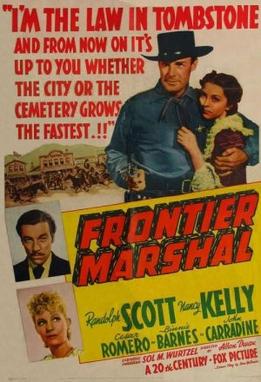
Horror Film Review: House of Frankenstein (dir by Erle C. Kenton)


House of Frankenstein opens in a prison.  Dr. Gustav Neimann (Boris Karloff), the bother of one of Baron Frankenstein’s assistants, has been convicted of robbing graves and attempting to carry on the Baron’s work.  Dr. Neimann’s faithful assistant is the hunchback, Daniel (J. Carroll Naish).  Daniel is loyal to Neimann because Neimann has promised to someday place Daniel’s brain in a stronger body.

When a sudden earthquake allows Neimann and Daniel to escape, they waste no time in getting revenge on Neimann’s enemies.  First, they murder a traveling showman named Prof. Lampini (George Zucco) and steal both his identity and his mobile horror exhibit.  Included in the exhibit is a coffin that Lampini claimed held the skeleton of Dracula.  (There’s even a stake sticking out of the skeleton’s chest.)  When Neimann returns to his original hometown, he removes the stake from the skeleton so that he might use it on the Burgomaster, Hussman (Sig Ruman).  The skeleton transforms into Dracula (John Carradine).  Because he is relieved to have been brought back to life, Dracula does not attack Neimann but instead agrees to help Neimann get revenge on Hussman in return for Neimann looking after his coffin.  Dracula soon learns that he should have thought twice before trusting either Neimann or Daniel.

Neimann moves on, stopping off at Frankenstein’s village and recovering the bodies of both Frankenstein’s Monster (Glenn Strange) and Larry Talbot (Lon Chaney, Jr.) from the frozen chamber in which they were trapped at the end of Frankenstein Meets The Wolf Man.  Revived from suspended animation, Larry immediately starts whining about how much his life sucks.  (I love The Wolf Man but subsequent films turned Larry into the whiniest of the Universal monsters.)  Neimann promises to put Larry’s brain in a new body if he helps to revive the Monster.  Larry agrees.  Meanwhile, Daniel falls in love with a gypsy girl named Ilonka (Elena Verdugo) while Ilonka falls in love with Larry.  Daniel wants Neimann to put his brain in Larry’s body, Larry won’t stop whining about the approaching full moon, and the villagers are getting suspicious!

House of Frankenstein has never been a favorite of critics or horror historians and the film does have its share of flaws.  For instance, though it would have been fun to see Bela Lugosi return to his signature role, John Carradine seems like ideal casting for Dracula.  Unfortunately, Dracula is only in the film for about ten minutes and he comes to an end that really doesn’t feel worthy of a character of his stature.  The film reduces Larry Talbot to just being a dumb lug who won’t stop feeling sorry for himself.  Finally, Glenn Strange has the right physique for the Monster but, much as with John Carradine, he is underused.

That said, I still enjoyed House of Frankenstein.  A lot of that is because of Boris Karloff, who brings a lot of sly humor to his performance as the mad scientist.  (That said, Karloff himself later said that he did the role solely for the money and was bored with the whole thing.)  J. Carroll Naish turns Daniel into a rather sympathetic henchman, one who is so desperate to be “normal” that he’s willfully blinded himself to the fact that Neiman really doesn’t care about anyone other than himself.  (In many ways, he’s the equivalent of the hapless characters that Michael Ripper later played for Hammer Films.)  Finally, Elena Verdugo brings a lot of life to the stock role of the dancing gypsy girl who falls in love with Larry Talbot despite the fact that Larry is kind of a dumb lug.

For a modern viewer, the main appeal of House of Frankenstein is that it is one of the original Universal horror films, even if it came out long after the first Dracula and Frankenstein films.  As such, it has all the things that we associate with and love about those films.  There’s a ruined castle.  There’s angry villagers.  The cast is full of Universal horror mainstays, including Lionel Atwell and Anne Gwynne.  And, yes, the film features a mob descending on the castle with torches.  Flaws and all, House of Frankenstein is an enjoyable time capsule.  It’s a horror film from a far more innocent age and it’s one that remains a fun watch.

Previous Universal Horror Reviews:

  1. Dracula (1931)
  2. Dracula (Spanish Language Version) (1931)
  3. Frankenstein (1931)
  4. Island of Lost Souls (1932)
  5. The Mummy (1932)
  6. The Invisible Man (1933)
  7. The Bride of Frankenstein (1935)
  8. Dracula’s Daughter (1936)
  9. Son of Frankenstein (1939)
  10. The Wolf Man (1941)
  11. Ghost of Frankenstein (1942)
  12. Frankenstein Meets The Wolf Man (1943)
  13. Son of Dracula (1943)
  14. Creature From The Black Lagoon (1954)
Missile X: The Tehran Incident (1979, directed by Leslie H. Martinson)


The international terrorist and casino owner known as The Baron (Curd Jurgens) has stolen a Soviet-made nuclear warhead.  With the help of Prof. Nikolaeff (John Carradine), the Baron is planning on dropping the warhead on an international peace conference that is being held off the coast of Iran.  American Alec Franklin (Peter Graves) and Russians Konstanine Senyonov (Michael Dante) and Galina Fedorovna (Karin Schubert) want to prevent the Baron from doing that but, in order to stop the Baron, they’re going to need the help of Leila (Pouri Baneai), a member of the Shah’s secret police.

Missile X was a German-Italian-Spanish co-production that was shot on location in Tehran with the full cooperation of the Shah of Iran.  The film goes out of its way to attempt to present the Shah-era Tehran as being a modern and welcoming city, the type of place that anyone would by a fool not to choose for a vacation.  The Shah’s secret police are portrayed as being friendly and heroic and the only time the name “Ayatollah Khomeini” is mentioned is when Alex and Leila are listening to a radio and a news report mentions that Khomeini is far away in Paris.  Leila turns off the radio in the middle of the report, as if to say, “There’s someone will never have to think about again.”  Unfortunately, for both the film and the world at large, that was the case.  In an example of truly bad timing, Missile X was not released in the United States until December 10th, 1979, six days after Khomeini officially took control of Iran and a month into the Iran hostage crisis.  By the time the film was released, the Shah had long-since fled Iran and was seeking asylum and medical care in the United States.

As for the film itself, imagine a Bond film with no car chases, no exciting action sequences, no creative gadgets, and no one-liners.  Imagine also that the main Russian was played by an American who don’t even attempt to speak with any sort of accent.  On top of that, imagine if James Bond himself came across less like a ruthless super spy and more like an insurance executive trying not to overspend on the company account while on a business trip.  Curd Jurgens actually did play a memorable Bond villain in The Spy Who Loved Me but he sleepwalks his way through Missile X.  Not even giving him a mute henchman with a knife-hand can make the Baron seems dangerous.  Even if you can overlook all of that, the Baron’s plan never makes sense.  What does he have to gain from blowing up a peace conference?  Alec and Konstantine both agree that the Baron’s actions will probably start World War III and lead to the end of the world but it’s never explained why the Baron would want that.  Presumably, the Baron would end up getting blown up with everyone else.

Of course, you don’t have to imagine any of this.  You can just watch Missile X — The Tehran Incident.

10 Oscar Snubs From the 1940s


Ah, the 40s! For most of the decade, the world was at war and the Academy’s nominations reflected that fact. The best picture lineups alternated between patriotic films that encouraged the battle against evil and darker films that contemplated both the mistakes of the past and what threats might be waiting in the future.  With the Academy being even more aware than usual that films and awards could be used to send a message, the snubs continued.

1940: John Carradine Is Not Nominated For The Grapes of Wrath

John Carradine’s first credited film appearance was in 1930 but Carradine himself claimed that he had appeared as an uncredited extra in over 70 films before getting that first credit.  Carradine would continue to work until his death 58 years later.  John Carradine did so many films that he was still appearing in new releases in the 90s, years after his death.  He appeared in over 234 films and in countless television shows.  He was a favorite of not only Fred Olen Ray’s but also John Ford’s.

Unfortunately, Carradine was never nominated for an Oscar, despite the fact that he did appear in some classic films.  (He also appeared in a lot of B-movies, which is perhaps one reason why the Academy was hesitant to honor him.)  Personally, I think Carradine most deserved a nomination for playing “Pastor” Jim Casy in John Ford’s The Grapes of Wrath.  Carradine is ideally cast as the former preacher turned labor activist.  When he’s alive, he gives the Joads hope.  When he dies, both the Joads and the audience start to realize how difficult things are truly going to be.

1942: Ronald Reagan Is Not Nominated For Best Supporting Actor For Kings Row

Kings Row is an enjoyably over-the-top small town melodrama and future President Ronald Reagan is fantastic in the film, with his natural optimism providing a nice contrast to the truly terrible things that happen to him and his loved ones over the course of the film.  Reagan was not nominated for this performance, the one that both he and the most of the critics agreed was his best, but he should have been.

1943: Hangmen Also Die Is Not Nominated For Best Picture

Fritz Lang’s anti-Nazi classic was not nominated for Best Picture and only received two nominations (for Sound and Score).  That year, the Best Picture winner was another anti-Nazi classic, Casablanca.

1943: Shadow Of A Doubt Is Ignored

Today, it is recognized as one of Hitchcock’s best but, in 1943, Shadow of a Doubt couldn’t even score a nomination for Joseph Cotten’s wonderfully diabolical turn as Uncle Charlie.  One gets the feeling that the film’s satirical jibes at small town America and its theme of evil hiding behind a normal façade were not what the Academy was looking for at the height of World War II.  It’s a shame because, in many ways, Cotten’s Uncle Charlie was the perfect symbol of the enemy that the Allies were fighting.

1944: Tallulah Bankhead In Not Nominated For Best Actress For Lifeboat

Unlike Shadow of a Doubt, Hitchcock’s Lifeboat received several Oscar nominations.  However, Tallulah Bankhead was not nominated for Best Actress.  Perhaps the Academy was scared of what she might say if she won.

1944: Fred MacMurray and Edward G. Robinson Are Not Nominated For Double Indemnity

For all the nominations that this classic noir received, somehow neither Fred MacMurray nor Edward G. Robinson were nominated for their roles.  Both actors are brilliantly cast against type in this film.  MacMurray uses his trademark casual glibness to portray Walter Neff as being an arrogant man who is hardly as clever as he thinks that he is.  Meanwhile, Robinson’s more introspective performance leaves you with little doubt that, if anyone can solve this case, it’s him.  While Barbara Stanwyck was (rightfully) nominated, it’s had to believe that both MacMurray and Robinson were snubbed.

1946: Thomas Mitchell and Lionel Barrymore Are Not Nominated For Best Supporting Actor For It’s A Wonderful Life

As wonderful as James Stewart and Donna Reed are, it just wouldn’t be Bedford Falls without Uncle Billy and Mr. Potter!  Thomas Mitchell breaks your heart in the scene where he tries to remember what he did with the lost money.  And, for audiences who had just lived through the Great Depression, Lionel Barrymore represented every businessman who cared more about money than people.  It’s impossible to imagine the film without them …. or without Henry Travers, for that matter!  Seriously, very few films have received three best supporting actor nominations but It’s A Wonderful Life deserved to be one of them.

1948: Humphrey Bogart Is Not Nominated For Best Actor For The Treasure of the Sierra Madre

The Treasure of the Sierra Madre received four Oscar nominations.  Somehow, not one of those nominations was not for Humphrey Bogart.

1948 and 1949: Red River, Fort Apache, and She Wore A Yellow Ribbon Are Not Nominated For Best Picture

The public may have loved Westerns but the Academy largely shied away from them, with a few notable exceptions.  Howard Hawks’s Red River and John Ford’s Fort Apache and She Wore A Yellow Ribbon are today all recognized as being classic Hollywood films.  However, the Academy, then at the height of its bias towards “genre” films, didn’t honor any of them.

1949: James Cagney Is Not Nominated For Best Actor For White Heat

“Top of the world, ma!”  Maybe so, but not top of the Oscars.  The Academy was always more interested in honoring Cagney for being a song-and-dance man than for honoring him for his iconic gangster roles.

Agree?  Disagree?  Do you have an Oscar snub that you think is even worse than the 10 listed here?  Let us know in the comments!

Up next: Get ready to hate the commies and to love Ike because the 50s are coming!

Live Tweet Alert: Watch Shock Waves with #ScarySocial


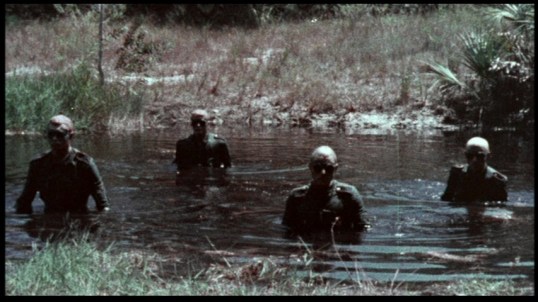
Shock Waves (1977, dir by Ken Wiederhorn)


As some of our regular readers undoubtedly know, I am involved in a few weekly live tweets on twitter.  I host #FridayNightFlix every Friday, I co-host #ScarySocial on Saturday, and I am one of the five hosts of #MondayActionMovie!  Every week, we get together.  We watch a movie.  We tweet our way through it.

Tonight, for #ScarySocial, I will be hosting 1977’s Shock Waves!

That’s right!  It’s John Carradine, Peter Cushing, and Brooke Adams in the best underwater zombie film ever made!

If you want to join us on Saturday night, just hop onto twitter, start the film at 9 pm et, and use the #ScarySocial hashtag!  The film is available on Prime, YouTube, and a few other streaming sites.  I’ll be there co-hosting and I imagine some other members of the TSL Crew will be there as well.  It’s a friendly group and welcoming of newcomers so don’t be shy.

Jack-O (1995, directed by Steve Latshaw)


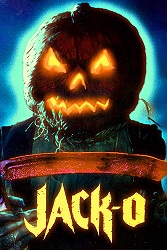
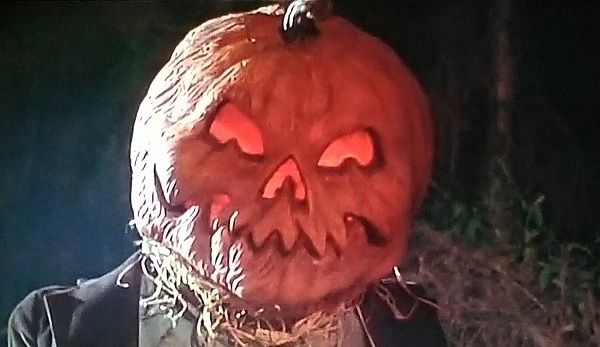
Back in frontier times, a warlock named Walter Machden (John Carradine) terrorized the citizens of the town of Oakmoor Crossing so they tracked him down and lynched him.  Before he was hung, Machden cursed the town.  A demon with a jack-o-lantern for a head terrorized the town until the Kelly Family defeated him and buried him underneath a cross.

Jump forward one hundred years.  It is Halloween night and some drunk teenagers knock over the cross.  Jack-O comes back to life and kills the teenagers.  Jack-O sets out to get revenge on the Kelly family but, for some reason, he decides to kill their neighbors, some more teenagers, and a TV cable guy before going after his targets.  It’s up to young Sean Kelly (Ryan Latshaw) to figure out how to defeat Jack-O for a second time.

The most interesting thing about Jack-O is that it features John Carradine, even though he died a full seven years before the movie was released.  That either means that Jack-O had an unusually long post-production period or the Carradine scenes were shot for another movie and were clumsily inserted into Jack-O.  Carradine was not the only deceased star to make an appearance in Jack-O.  Cameron Mitchell, who passed away in 1994, also makes an appearance as a horror movie host.  Because you can’t have a movie with Carradine and Cameron Mitchell without including Linnea Quigley, she appears as a babysitter who takes a lengthy shower.  Fortunately, Linnea Quigley is still with us.

Overall, Jack-O is regrettable.  The demon, with his Jack-O-Lantern head, is more likely to inspire laughs than screams and it never makes sense that Jack-O would take so much time to kill everyone except for the people that he is actually looking to kill.  The best death involves a toaster but Jack-O doesn’t do anything with the toaster.  Instead, someone just slips and sticks a utensil in the toaster, leading to a shocking death.  Combine the poor acting with the poor special effects with notably ragged editing that often makes it unclear how much time has passed between scenes and you have a Halloween film that is no holiday.

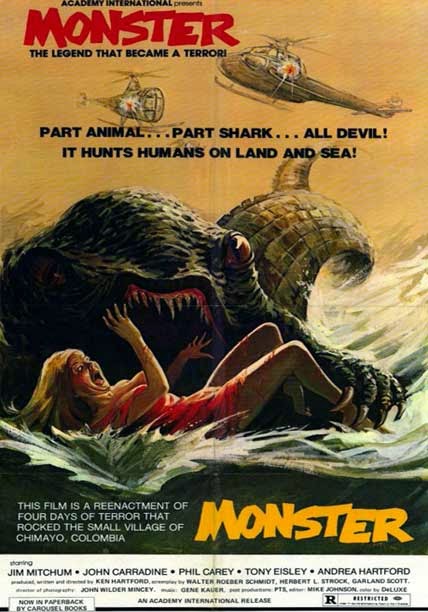
Horror On The Lens: Monstroid: It Came From The Lake (dir by Kenneth Hartford)


Monster_aka_-Monstroid,_It_Came_from_the_Lake-_poster_1980

Today, we have a little indie film from 1980.  This film was released under several names, including Monster.  However, I prefer the title under which it has been included in several Mill Creek box sets: Monstroid: It Came From The Lake!

Monstroid tells the story of what happens when a monster emerges from a lake and starts killing people in Columbia.  Superstitious villagers blame a local woman whom they believe to be a witch.  Even though the town priest (and no horror fan should be surprised to discover that the priest is played by John Carradine) claims that he can exorcise the evil spirits that have possessed her, the villagers would rather burn her at the stake.  Meanwhile, the local Big Evil Corporation has sent in Travis (James Mitchum) to take care of the monster!

And what a monster!  Listen, there’s a lot of negative things that I could say about this low-budget film but the monster is simply adorable and must be seen by anyone who appreciates the rubber monsters that populated horror films in the days before CGI.

Plus, how can you resist a film that features not only Robert Mitchum’s son but John Carradine as well?

Enjoy Monstroid: It Came From The Lake!

Horror on the Lens: The Night Strangler (dir by Dan Curtis)


For today’s horror on the lens, we have 1973’s The Night Strangler.

This is the sequel to The Night Stalker and it features journalist Carl Kolchak (Darren McGavin) in Seattle.  (After all the stuff that happened during the previous movie, Kolchak was kicked out of Las Vegas.)  When Kolchak investigates yet another series of murders, he discovers that paranormal murders don’t just occur in Las Vegas and aren’t just committed by vampires.

I actually prefer this movie to The Night Stalker.  The Night Strangler features a truly creepy villain, as well as a trip down to an “underground city.”  It’s full of ominous atmosphere and, as always, Darren McGavin is a lot of fun to watch in the role in Kolchak.

Enjoy!

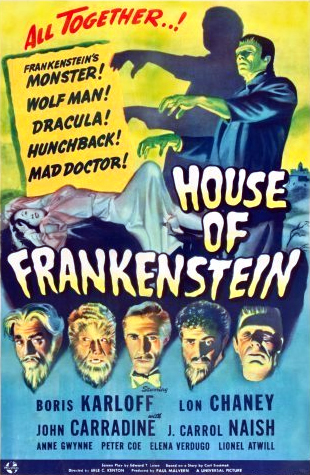
Frontier Marshal (1939, directed by Allan Dwan)


When Wyatt Earp (Randolph Scott) arrives in the town of Tombstone, he takes the law in his own hands by preventing a local outlaw named Indian Charlie (Charles Stevens) from destroying the saloon owned by Ben Carter (John Carradine).  For his trouble, Earp is beaten up by Carter’s men.  Earp, however, does get a  job as the town’s new marshal.

After some initial weariness, Wyatt befriends an alcoholic dentist and gunfighter named Doc Holliday (Cesar Romero).  While Earp keeps the peace in Tombstone, Doc is torn between two women, dancehall girl Jerry (Binnie Barnes) and his ex-girlfriend, Sarah (Nancy Kelly).

With Carter and his man planning on robbing a payroll train and also kidnapping frontier performer, Eddie Foy (played by the real Foy’s son, Eddie Foy, Jr.), it is only a matter of time before Earp takes on Carter at the legendary O.K. Corral.

Frontier Marshal was only the second sound film to be made about Wyatt Earp’s time in Tombstone and it was the first to use Earp’s name.  (In the first film version of the story, also called Frontier Marshal, Earp’s name was changed to Michael Wyatt.)  This was because Wyatt’s widow was offended by some of the material that was included in the biography that served as the basis for Frontier Marshal and threatened to sue anyone who wanted to make a movie out of it.  In order to get her permission to make the film, 20th Century Fox agreed that no reference would be made to Wyatt’s marriage in the film.  Mrs. Earp ended up suing anyways.  20th Century Fox settled.

As for the film, it’s in no way historically accurate and it pales in comparison to My Darling Clementine, Gunfight at the O.K. Corral, Tombstone, and the Star Trek episode where Kirk, Spock, and McCoy thought they were in the old west.  It is, however, better than The Gunfighters episode of Dr. Who.  Randolph Scott is convincing as an upright and law-abiding Wyatt Earp, quite a contrast to the real Wyatt.  The movie though is stolen by Cesar Romero, who plays Doc Holliday as being pathologically self-destructive.  Cesar Romero is not necessarily the first name that comes to mind when you think of a great western actor but he’s very convincing here.  John Carradine is a perfect villain and keep an eye out for Lon Chaney, Jr. as one of his henchmen.  Unfortunately, the final gunfight feels rushed and, for all the build up, it isn’t as exciting as it should be.  Frontier Marshal will mostly be of interest to those curious to see how Doc Holliday, Wyatt Earp, Tombstone and the Gunfight at the O.K. Corral were portrayed in films before they became a sacrosanct part of the mythology of the Old West.

Frontier Marshal was later remade, as My Darling Clementine, by John Ford.  Ward Bond, who played Morgan Earp in Ford’s film, plays the original town marshal in Frontier Marshal.  Charles Stevens, who plays Indian Charlie in Frontier Marshal, was often falsely described by the Hollywood publicity mill as being the real-life grandson of Geronimo.  He also appeared in My Darling Clementine, once again playing the role of Indian Charlie.  It was one of the nearly 200 films he made before he died in 1964.

The Gatling Gun (1971, directed by Robert Gordon)


In the post-civil war west, two Calvary troopers steal a Gatling Gun, the weapon that was invented to be such a powerful instrument of death that people would stop fighting wars just to avoid finding themselves in front of its barrel.  (It didn’t work out that way, of course.)  With the help of a pacifist reverend named Harper (John Carradine), they smuggle the gun into Apache territory.  Rev. Harper thinks that the gun is going to be destroyed and, thus, another instrument death will be eliminated. from the world  Instead, the greedy troopers are planning on selling the gun to Apache Chief Two Knife (Carlos Rivas).  Two Knife has promised a fortune’s worth of gold to anyone who can deliver to him the deadliest weapon in the west.

Before the gun can be exchanged, the reverend, his daughter, and the two deserters are intercepted by a group of Calvary troops led by Lt. Wayne Malcolm (Guy Stockwell).  One of the deserters is killed while the other, Pvt. Sneed (Robert Fuller) is captured.

However, Chief Two Knife still wants what he calls “the king gun.”  Malcolm and his troops find themselves pinned down by the Apaches.  Can Malcolm, with the help of a rancher (Phil Harris), a scout (Woody Strode), and a cook (Pat Buttram), keep both the gun and the all important firing pin from falling into the hands of Two Knife?

The Gatling Gun is a low-budget western that would probably be today forgotten except that it has fallen into the public domain and has been included in several DVD box sets.  It has the flat, generic look of a Western television show and Guy Stockwell’s stiff performance may be believable for a 19th century Calvary captain but it’s still doesn’t exactly make for compelling viewing.  The main problem is that the most exciting and interesting part of the story, the two deserters stealing the gun and tricking the Reverend into helping them, occurs off-screen and the movie instead begins with Malcolm capturing Sneed.

Western fans will mostly want to watch this one to see John Carradine and Woody Strode, two very different actors who were both favorites of John Ford’s and who appeared in several other, better westerns.  (Strode and Carradine had both previously appeared in The Man Who Shot Liberty Valance, to name just one example.)  Carradine is typically theatrical, delivering his lines like the old Shakespearean that he was.  Strode, as usual, is stoic but his imposing screen presence makes him the most memorable of the film’s heroes.  Also keep an eye out for Patrick “son of John” Wayne, playing the rancher’s son.

Though The Gatling Gun has the look of a film that was shot on a studio backlot in Hollywood, it was actually filmed, on location, in New Mexico.  The state’s then-governor, David Cargo, has a small role as Corporal Benton and is listed in the credits as “Honorable Governor David Cargo.”  A look at his imdb page reveals that David Cargo appeared in four films while he was governor.  All of them were filmed in New Mexico so I guess casting the governor was a requirement for filming in that state.  When Cargo left office in 1971, his movie career ended.

Scenes that I Love: Tor Johnson In The Unearthly


We continue to honor the memory of Tor Johnson with today’s scene of the day.

Even though Tor Johnson is playing a character named Lobo, today’s scene that I love isn’t from Ed Wood’s 1955 film, Bride of the Monster. Instead, it’s from 1957’s The Unearthly. In this film, Lobo is now John Carradine’s servant. (Lobo made quite a career out of working for mad scientists.) The Unearthly was directed by Boris Peftroff, a friend of Wood’s, so it’s not improbable that this film’s Lobo was meant to be the same Lobo as the one who appeared in Bride of the Monster and Night of the Ghouls.

Anyway, in this scene, Tor does his usual Lobo stuff while John Carradine plays the piano. “Time for go to bed,” Lobo says at one point, a much-mocked line but one that is delivered with a bit of gentleness by Tor Johnson. My point is that Tor did the best that he could and bless him for it.