Horror Film Review: Evils of the Night (dir by Mardi Rustam)


How dumb can one movie be without becoming unwatchable?

1985’s Evils of the Night is here to answer that question!

Three space alien vampires (John Carradine, Julie Newmar, and Tina Louise) have led an expedition to Earth.  They’ve taken over a hospital and they’re stealing the blood of their patients so that it can be sent back to their dying planet.  They especially want young blood, which is why they specifically came to a college town.  Unfortunately, their intelligence was faulty and they arrived during the summer, when the campus was closed.  (I guess this is one of those rare colleges that don’t offer a summer term.)  There’s actually a very lengthy scene in which Carradine explains the faulty intelligence to Newmar and Louise and then Newmar complains about how the alien intelligence service just isn’t that good.  What makes this scene so special is that Carradine delivers his lines with a straight face and Newmar actually seems to be sincerely annoyed.  Aliens — they’re just like us!

Just because college is out of session, that doesn’t mean that there aren’t any young people hanging out down at the lake.  There’s actually quite a few, though all of them look to be a little bit too old for high school or college or whatever they’re supposed to be attending.  Several of them are played by veterans of the adult film industry, including Amber Lynn and Jerry Butler.  Everyone wants to get laid down at the lake, which is probably the most realistic thing about Evils of the Night.  However, John Carradine needs their blood so he has Julie Newmar hire two slovenly mechanics, Kurt (Neville Brand) and Fred (Aldo Ray), and sends them out to kidnap any young people that they find.  Kurt and Fred are very good at their job.  Newman pays them and mocks them for caring so much about coins.  Little do the mechanics realize that the aliens are planning on shooting them with their space laser as soon as they leave the planet.

Evils of the Night is a good example of a bad movie that is oddly watchable just because the viewer finds themselves curious as to just how stupid things can get.  The answer here is very stupid and very nonsensical  It never seems to occur to anyone just go to a different lake or maybe just do their skinny dipping in a pool somewhere.  The plot has a “make it up as you along” feel to it and that, at the very least, keeps things vaguely interesting.  The actors playing the “teen” victims are enthusiastic without being particularly good while most of the veterans in the cast are all obviously just there for the paycheck.

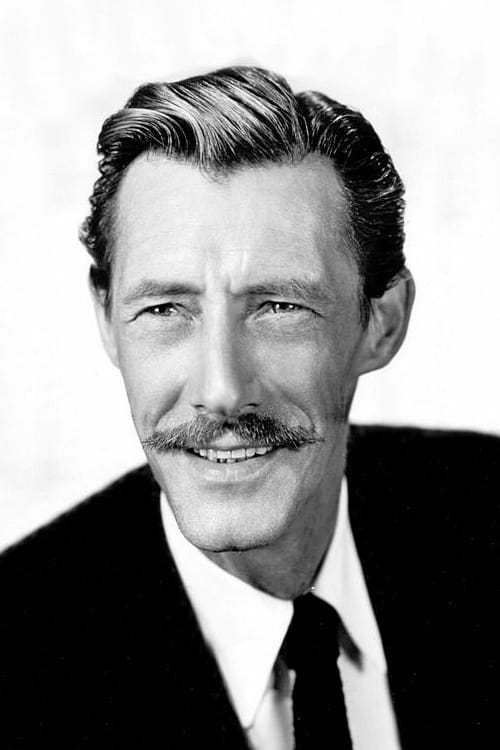
That said, John Carradine.  Wow.  What a career.  A trained Shakespearean actor who made his stage debut in 1925 and went on to appear in a countless number of movie, Carradine was a favorite of both John Ford and Fred Olen Ray.  Carradine appeared in hundreds of a theatrical films.  In fact, his final film was released seven years after Carradine’s death.  Carradine was one of the great actors, with that deep voice and that commanding stare.  But he was also one of those actors who was apparently willing to appear in just about anything and that’s one reason why he’s still such a beloved icon.  Playing an outer space vampire-turned-doctor was definitely not the strangest role that Carradine ever played.  Carradine handles his scenes like a pro!

Evils of the Night is dumb but I dare you to look away.

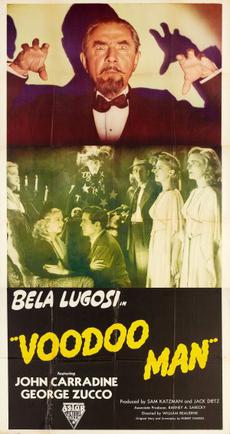
Horror Film Review: Voodoo Man (dir by William Beaudine)


In 1944’s Voodoo Man, Michael Ames stars as Ralph, a screenwriter who has been asked to write a treatment based on the real case of several “girl motorists” who have disappeared in the surrounding area.  Ralph turns down the assignment because he’s busy planning his wedding to Betty (Wanda McKay).  However, when Betty’s maid of honor, Stella (Louise Currie), vanishes, Ralph and Betty set out to investigate.  As Ralph puts it, he’s become a part of the story that he earlier rejected.

What has happened to Stella and all of the other women?  They’ve been abducted by Toby (John Carradine) and Grego (Pat McKee), two lunkheads who work for Dr. Marlowe (Bela Lugosi).  Dr. Marlowe lives in an isolated mansion where he is cared for by his loyal housekeeper (Mici Goty).  Twenty-two years ago, Dr. Marlowe’s wife, Evelyn (Ellen Hall), died but Marlowe has been able to keep her body in a sort of suspended animation ever since.  Marlowe is kidnapping women because, through the use of voodoo and mad science, he hopes to take their “will to live” and transfers it into Evelyn.  Helping Marlowe out is a voodoo priest named Nicholas (George Zucco).

Lugosi, Carradine, and Zucco!  Obviously, the main appeal of Voodoo Man is that it brings together three great names in horror. Even if the story doesn’t really make much sense (and it doesn’t), the film gets a lot of mileage out of the combination of Lugosi, Carradine, and Zucco.  While Lugosi does seem to be a bit bored with his role, Carradine and Zucco really throw themselves into their characters.  John Carradine, in particular, seems to be having the time of his life as he shuffles around the mansion and replies, “Yes, master,” to every command from Dr. Marlowe.  It’s the type of entertaining performance that could only be delivered by a trained Shakespearean slumming in a low-budget, B-grade horror film.  As for Zucco, he plays Nicholas with a certain amount of ruthless erudition.  Zucco is playing the Boris Karloff role here and he definitely seems to understand what that means.

As for the film itself, it has its moments.  Legend has it that director William Beaudine’s nickname was “One Shot” because he was usually only willing to do one take of each scene.  As a result, he filmed quickly and he didn’t spend a lot of money and that was probably a good thing for a production like Voodoo Man.  It also meant that if someone flubbed a line or bumped into a piece of furniture, that take would still be the one that showed up in the film.  My favorite moment of Voodoo Man was when the local sheriff (Henry Hall) referred to Dr. Marlowe as being “Dr. Martin,” and Bela Lugosi, who appeared to be struggling not to laugh, quickly said, “It’s Marlowe.”  The sheriff corrected himself.  That’s the type of fun you don’t get in movies made by people who do more than one take.

Voodoo Man has a quick 61-minute running time.  To enjoy it, it probably helps to already be a fan of low-budget, B-horror films from the 40s.  Lugosi, Carradine, and Zucco are combination that deserves to be seen.

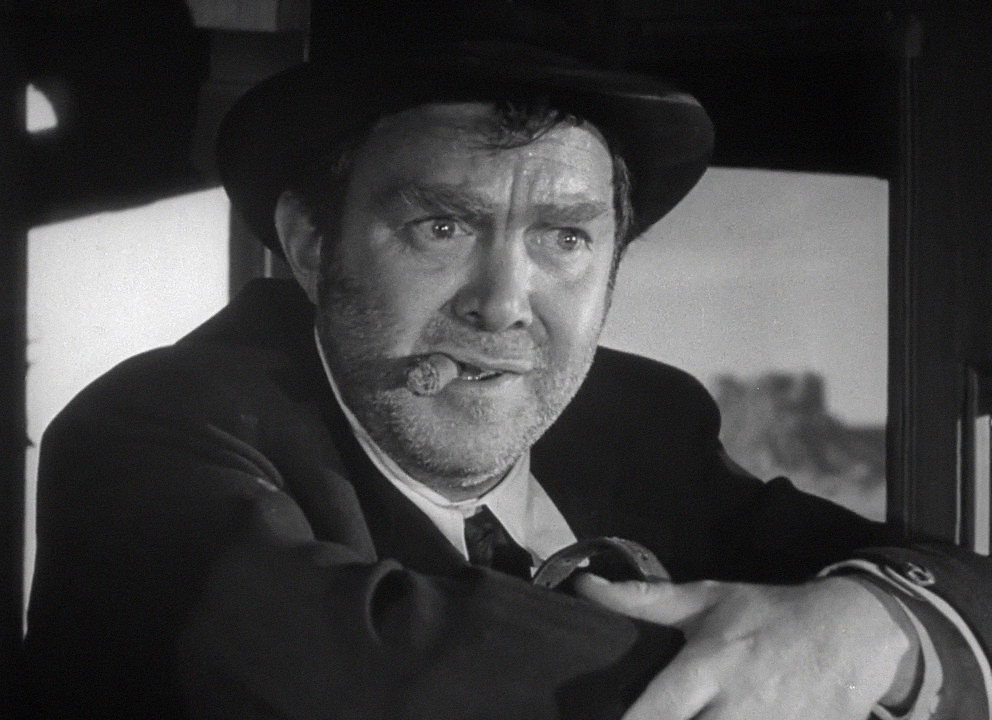
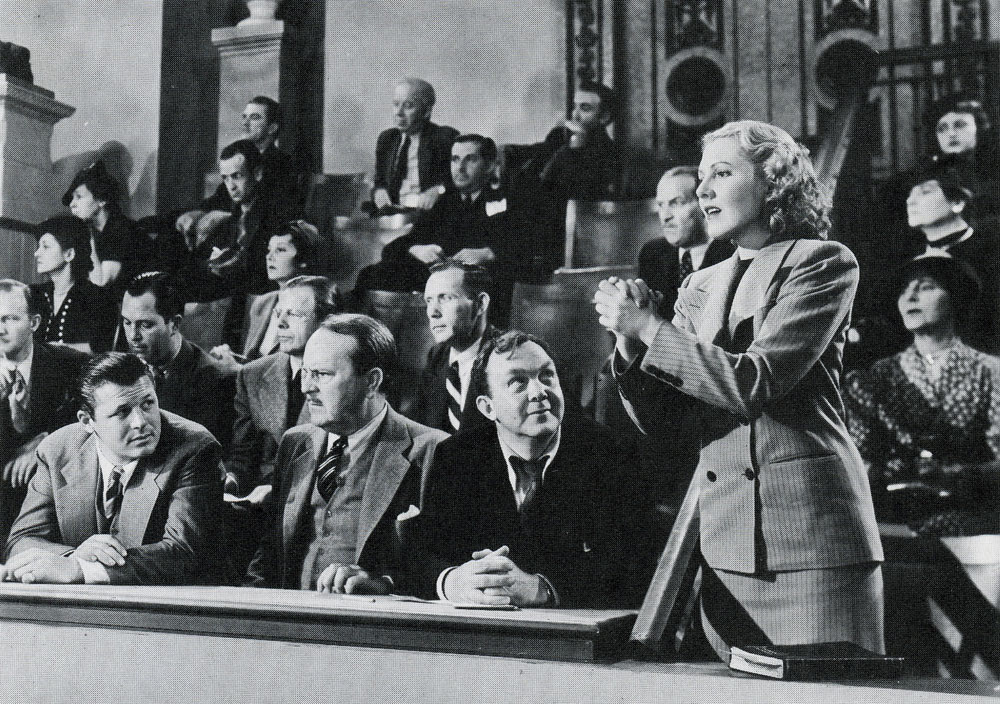
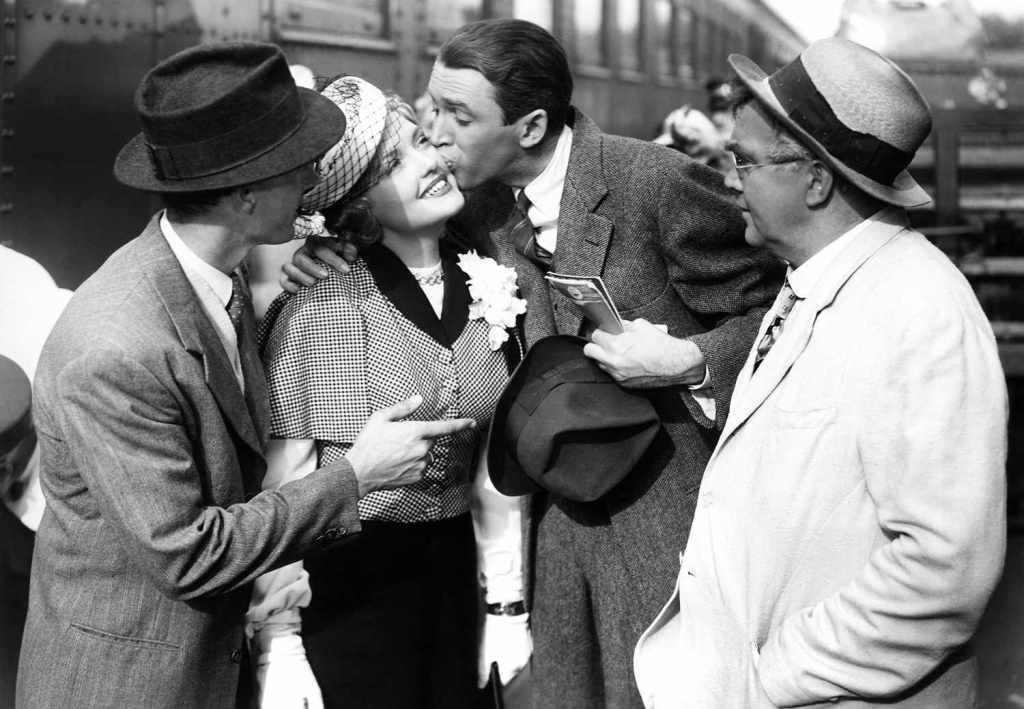
4 Shots From 4 Films – Thomas Mitchell Edition!


4 Shots From 4 Films is just what it says it is, 4 shots from 4 of our favorite films. As opposed to the reviews and recaps that we usually post, 4 Shots From 4 Films lets the visuals do the talking.

I noticed that today, July 11th, 2025, is actor Thomas Mitchell’s 133rd birthday in cinema heaven! I can guarantee that I, along with most of you, watch him every year around Christmas time. I also found out today that he worked with my movie hero Charles Bronson on THE O. HENRY PLAYHOUSE TV series back in 1957. That combination of appearances makes Mitchell about as close to a cinematic immortal as a person can get!

Enjoy 4 shots from 4 films, with Thomas Mitchell!

Stagecoach (1939)
Mr. Smith Goes to Washington (1939)
It’s a Wonderful Life (1946)
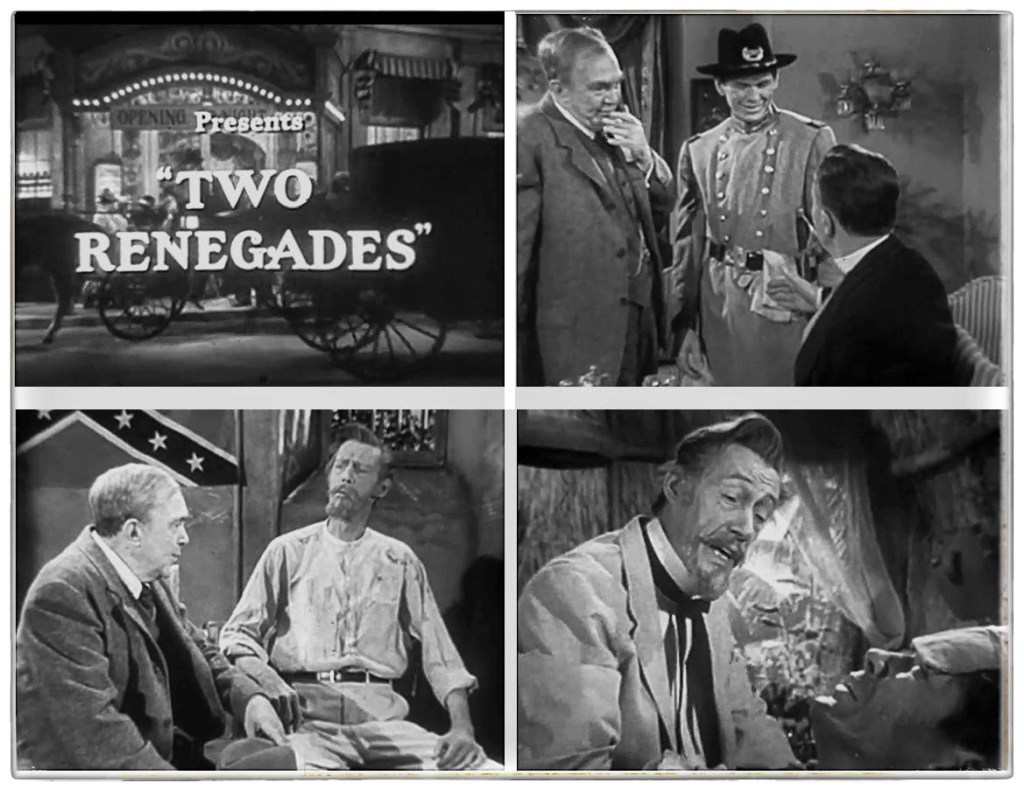
The O. Henry Playhouse: Two Renegades (1957)

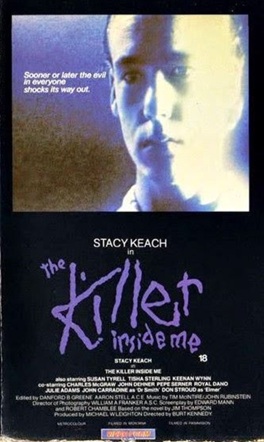
The Killer Inside Me (1976, directed by Burt Kennedy)


Today is Stacy Keach’s 84th birthday.

Stacy Keach has always been an underappreciated actor.  Despite his obvious talent and his ability to play both heroes and villains, he’s never really gotten the film roles that he’s deserved and he’s mostly made his mark on stage and on television.  There have been a few good films that made use of Keach’s talents.  I’ve always appreciated his performance as Frank James in Walter Hill’s The Long Riders.  He was a morally ambiguous Doc Holliday in Doc.  He played a boxer in John Huston’s Fat City.  Horror fans will always remember him for Road Games. The Ninth Configuration featured a rare starring role for Keach but it was treated poorly by its studio.  He was chilling as a white supremacist in American History X.  For the most part, though, Keach’s film career has been made up of stuff like Class of 1999.  For all of his talent, he seems destined to be remembered mostly for playing Mike Hammer in a television series and a few made-for-TV movies.  It’s too bad because Keach had the talent to bring certain character to life in a way that few other actors can.

The Killer Inside Me features one of Keach’s best performances.  Based on a pulp novel by Jim Thompson, The Killer Inside Me stars Stacy Keach as Lou Ford.  Lou is a small town deputy.  Everyone thinks that he’s a good, decent man.  He’s dating the local school teacher (Tisha Sterling).  The sheriff (John Dehner) trusts him.  Lou seems to be an expert at settling conflicts between neighbors.  What everyone doesn’t know is that Lou is actually a psycho killer who is having a sado-masochistic affair with a local prostitute (Susan Tyrrell) and who has zero qualms about punching the life out of someone.  When Lou finds out that Tyrrell is also involved with the son of a local businessman, it sets Lou on a crime and killing spree.  Lou thinks he’s a genius but his main strength is that no one can imagine Lou Ford doing the terrible things that he does.

Burt Kennedy was an outstanding director of westerns and straight-forward action movies but he appears to have struggled with The Killer Inside Me’s morally ambiguous tone.  The end result is not a great film but it does feature a great performance from Stacy Keach.  In both his performance and his narration, Keach captures both the arrogance and the detachment from normal society that defines Lou Ford’s character.  He also shows how Ford coolly manipulates the people around him.  Keach is believable and compelling whether he’s playing the fool or if he’s committing cold-blooded murder and he also subtly shows that Lou is not as smart as he thinks he is.  Though Keach dominates the film, The Killer Inside Me also features good performances from a gallery of 70s character actors, including John Carradine, Keenan Wynn, Don Stroud, Charles McGraw, and Royal Dano.

This version of The Killer Inside Me didn’t do much at the box office.  The movie was remade in 2010, with Casey Affleck miscast as Lou Ford.  That version didn’t do much at the box office either.  The secret to recreating the book’s mix of social satire and pulp action has proven elusive to filmmakers but at least we’ve got Stacy Keach’s performance as Lou Ford to appreciate.

An Offer You Can’t Refuse: The Last Gangster (dir by Edward Ludwig)


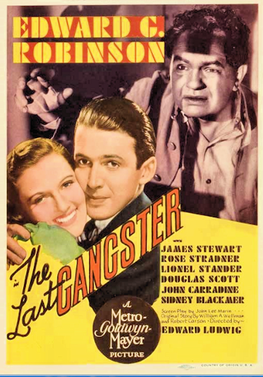
In 1937’s The Last Gangster, Edward G. Robinson plays Al Capone.

Well, actually, that’s not technically true.  The character he’s playing is named Joe Krozac.  However, Joe is a ruthless killer and gangster.  He’s made his fortune through smuggling alcohol during prohibition.  Despite his fearsome reputation, Joe is a family man who loves his wife Tayla (Rose Stradner) and who is overjoyed when he learns that she’s pregnant.  To top it all off, Joe is eventually arrested for and convicted of tax evasion.  He gets sent to Alcatraz, where he finds himself being bullied by another inmate (John Carradine) and waiting for his chance to regain his freedom.

In other words, Edward G. Robinson is playing Al Capone.

Krozac does eventually get out of prison but, by that point, Tayla has moved on.  She’s married Paul North (James Stewart), a former tabloid reporter who was so outraged by how his newspaper exploited Tayla’s grief that he resigned his position.  Joe Krozac’s son has grown up with the name Paul North, Jr. and he has no idea that his father is actually a notorious gangster.

Krozac wants to get his son back but his gang, now led by Curly (Lionel Stander), has other ideas.  They want Krozac to reveal where he hid the money that he made during his gangster days.  As well, an old rival (Alan Bazter) not only wants to get revenge on Krovac but also on Krovac’s son.  Joe Krovac, fresh out of prison, finds himself torn between getting his revenge on his wife and protecting his son.  This being a 30s gangster film, it leads to shoot-outs, car chases, and plenty of hardboiled dialogue.

Edward G. Robinson and Jimmy Stewart in the same movie, how could I n0t watch this!?  I was actually a bit disappointed to discover that, even though both Robinson and Stewart give their customarily fine performances, they don’t spend much time acting opposite each other.  Indeed, it sometimes seem like the two men are appearing in different pictures.

Robinson is appearing in one of the gangster films that made him famous.  (Indeed, the film’s opening credits feature footage that was lifted from some of Robinson’s previous films.)  He gives a tough and snarling performance but also one that suggests that, as bad as he is, he’s nowhere near as bad as the other gangsters that are working against him.  His gangster is ultimately redeemed by his love for his son, though the Production Code still insists that Joe Krozac has to pay for his life of crime.

Stewart, meanwhile, plays his typical romantic part, portraying Paul as being an incurable optimist, a happy go-getter who still has a sense of right-and-wrong and a conscience.  Stewart isn’t in much of the film.  This is definitely Robinson’s movie.  But still, there’s a genuine charm to the scenes in which Paul romances the distrustful Tayla.  Not even being forced to wear a silly mustache (which is the film’s way of letting us know that time has passed) can diminish Stewart’s natural charm.

If you like 30s gangster films, like I do, you should enjoy The Last Gangster.  I would have liked it a bit more if Robinson and Stewart had shared more scenes but regardless, this film features these two men doing what they did best.  This is an offer that you can’t refuse.

Icarus File No. 23: The Last Tycoon (dir by Elia Kazan)


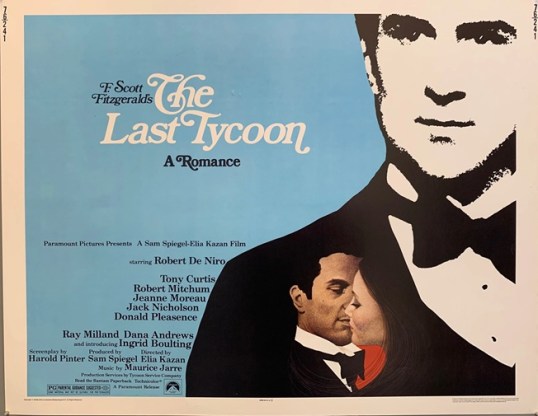
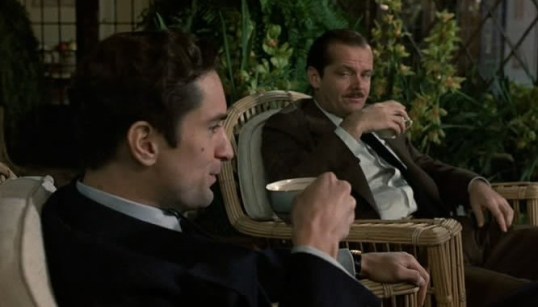
Based on the final (and unfinished) novel by F. Scott Fitzgerald, 1976’s The Last Tycoon tells the story of Monroe Stahr (Robert De Niro).

Monroe Stahr is the head of production at a film studio during the early days of Hollywood.  Stahr is an unemotional and seemingly repressed man who only shows enthusiasm when he’s talking about movies.  He may not be able to deal with real people but he instinctively knows what they want to see on the big screen.  Stahr is a genius but he’s working himself to death, ignoring his health concerns while trying to create the perfect world through film.  He’s haunted by a lost love and when he meets Kathleen Moore (Ingrid Boulting, giving a remarkably dull performance), he tries to find love with her but, naturally, he doesn’t succeed.  Meanwhile, he has to deal with his boss (Robert Mitchum), his boss’s daughter (Theresa Russell), a neurotic screenwriter (Donald Pleasence), an impotent actor (Tony Curtis), and a lowdown dirty communist labor organizer (Jack Nicholson)!  Sadly, for Stahr, McCarthyism is still a few decades away.

There’s a lot of talented people in The Last Tycoon and it’s undeniably interesting to see old school stars — like Mitchum, Curtis, Dana Andrews, Ray Milland — acting opposite a Method-driven, 30-something Robert De Niro.  This is one of those films where even the minor roles are filled with name actors.  John Carradine plays a tour guide.  Jeff Corey plays a doctor.  This is a film about Golden Age Hollywood that is full of Golden Age survivors.  It’s a shame that most of them don’t get much to do.  The Last Tycoon is a very episodic film as Stahr goes from one crisis to another.  Characters show up and then just kind of disappear and we’re never quite sure how Stahr feels about any of them or how their existence really shapes Stahr’s worldview.  Robert De Niro may be a great actor but, as portrayed in this film, Monroe Stahr is a boring character and De Niro’s trademark tight-lipped intensity just makes Stahr seem like someone who doesn’t have much to offer beyond employment.  This is one of De Niro’s least interesting performances, mostly because he’s playing a not-particularly interesting person.  Mitchum, Pleasence, and the old guard all make an impression because they’re willing to coast by on their bigger-than-life personalities.  De Niro is trapped by the Method and a total lack of chemistry with co-star Ingrid Boulting.

Still, this is the only film to feature both De Niro and Jack Nicholson.  (The Departed was originally conceived as a chance to bring De Niro and Nicholson together, with De Niro being the original choice for the role eventually played by Martin Sheen.)  Nicholson’s role is small and he doesn’t show up until the film is nearly over.  He and De Niro have an intense table tennis match.  Nicholson doesn’t really dig deep into Brimmer’s character.  Instead, he flashes his grin and let’s the natural sarcasm of his voice carry the scene.  It’s nowhere close to being as emotionally satisfying as the De Niro/Pacino meeting in Heat.  That said, Jack Nicholson at least appears to be enjoying himself.  His natural charisma makes his role seem bigger than it actually is.

Why was The Last Tycoon such a disappointment?  Though unfinished, the book still featured some of Fitzgerald’s best work and there’s a huge amount of talent involved in this film.  The blame mostly falls on Elia Kazan, who came out of retirement to direct the film after original director Mike Nichols left the project.  (Nichols reportedly objected to casting De Niro as Stahr.  While it’s tempting to think that Nichols realized that De Niro’s intense style wouldn’t be right for the role, it actually appears that Nichols and De Niro sincerely disliked each other as Nichols also abandoned the next film he was hired to direct when he was told that De Niro wanted the lead role.  Nichols choice for Monroe Stahr was Dustin Hoffman, which actually would have worked.  If nothing else, it would have provided a Graduate reunion.)  Kazan later said that he did the film solely for the money and it’s obvious that he didn’t really care much about the film’s story.  The film has some good scenes but, overall, it feels disjointed and uneven.  Kazan doesn’t really seem to care about Monroe Stahr and, as a result, the entire film falls flat.

Previous Icarus Files:

  1. Cloud Atlas
  2. Maximum Overdrive
  3. Glass
  4. Captive State
  5. Mother!
  6. The Man Who Killed Don Quixote
  7. Last Days
  8. Plan 9 From Outer Space
  9. The Last Movie
  10. 88
  11. The Bonfire of the Vanities
  12. Birdemic
  13. Birdemic 2: The Resurrection 
  14. Last Exit To Brooklyn
  15. Glen or Glenda
  16. The Assassination of Trotsky
  17. Che!
  18. Brewster McCloud
  19. American Traitor: The Trial of Axis Sally
  20. Tough Guys Don’t Dance
  21. Reach Me
  22. Revolution

Song of the Day: Night Train to Mundo Fine by John Carradine


On this date, 119 years ago, the great actor John Carradine was born in New York City.

Over the course of his career, Carradine worked for just about everyone.  He appeared on stage.  He appeared in film and television.  He played the great roles of Shakespeare and he also played Dracula.  He was a part of both the John Ford and the Fred Olen Ray stock companies.  He had a reputation for taking almost any role offered to him and, as a result, his huge filmography offers up a wonderful amount of variety.

He was also a singer!  Here he is performing today’s song of the day, Night Train to Mundo Fine!  This song was featured Coleman Francis’s Red Zone Cuba.  Say what you may about the song or the film, how can you not love Carrdine’s dramatic (and perhaps slightly mocking) delivery of the lyrics?

SHOWDOWN AT BOOT HILL (1958) – Charles Bronson headlines a classic Hollywood western for the first time in his career!


1958 was an interesting year for 36-year-old Charles Bronson. After mostly playing character parts on movies and TV for the first part of the decade, Bronson would star in four movies in 1958 and also headline his own TV show. On first glance, the western SHOWDOWN AT BOOT HILL would appear to fit nicely into the image that Bronson would project during the heights of his popularity in the 70’s and 80’s. But upon further inspection, this little gem shows us a side of Bronson we rarely would get to see in his heyday.

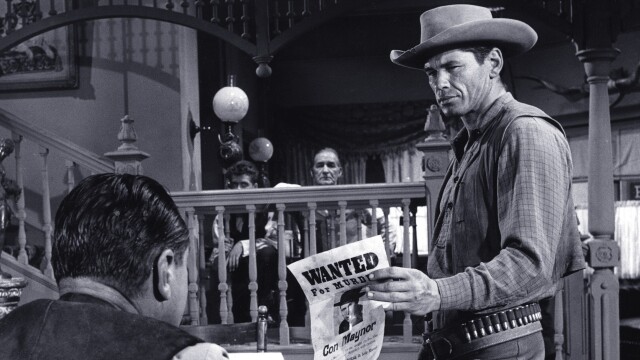
The story opens with Luke Welsh, played by Bronson, riding into a dusty western town. After dropping his horse off at the livery stable, Welsh strolls into the local restaurant and immediately confronts town citizen Con Maynor. It’s here that we learn that Welsh is a bounty hunter and Maynor is a wanted man. A gunfight ensues and Maynor is gunned down. All Welsh needs is the local authorities to confirm the identity of Maynor so Welsh can collect his bounty. Unfortunately for Welsh, it seems the townsfolk like Con Maynor so they refuse to confirm his identity. This leads to Welsh having to stay in town until he can get someone, anyone, to agree to the name of the dead man. 

All of this sounds pretty normal for a western headlined by Charles Bronson. He is a tough guy of action for sure, but there are several things in the film that are quite unique in the Bronson filmography. Let me explain. First, Bronson’s character, Luke Welsh, is extremely insecure about his height, and this turns out to be an ongoing plot device in the film. In the gunfight with Maynor that opens the film, the wanted man refers to Welsh as “pint-sized,” and after gunning him down, Welsh responds with “how tall are you now, big man?” Later in the film, the local storekeeper, Mrs. Bonaventura, notices Welsh looking up at a mannequin in the store that he is standing by. Being a wise lady, she immediately recognizes his insecurity and offers him kind words and encouragement multiple times throughout the film. Many people who have followed Bronson’s career know that the actor was, in fact, insecure about his height and would often insist that his co-stars be no taller than him. I think Bronson’s ability to sympathize with this element of the character would result in a very strong performance. When you think of the characters he played after he hit it big, this type of insecurity would not be featured again in his work.

Another thing that makes SHOWDOWN AT BOOT HILL unique is the fact that Charles Bronson’s character Luke Welsh shows more vulnerability in his relationships than what we would see later in his career. I’ll use his relationship with the lonely young woman, Sally Crane, to illustrate this point. After recognizing how rough her hands are from her work at the restaurant, Welsh goes out of his way to purchase her some hand cream at Mrs. Bonaventura’s shop. When he’s giving her the hand cream in her room, he notices just how plain the room is and begins to see that Sally is doing everything in her power to not be noticed and has shut herself off from the world. He recognizes that they’re both just a couple of misfits, with him hiding behind a gun and her hiding behind her apron. Welsh speaks so softly and sweetly to her at different times in the film. I think Bronson does a fine job with this side of his character and shows he could have played more roles with romantic overtones. Even in his films with his wife Jill Ireland, Bronson would rarely show such vulnerability with his female co-stars in future films. 

Finally, the actual showdown at Boot Hill that takes place at the end of the film plays out nothing like you would expect in later films like THE MECHANIC, MR. MAJESTYK or DEATH WISH 3. After getting to know many of the local people like Sally & Mrs. Bonaventura, and after having grown tired of never having a place to call home, Welsh makes the only decision that will allow him to stay. I won’t spoil it for you, but in my opinion, it’s an unexpected and wonderful ending for these characters who I had really grown to like throughout the course of this compact, 71 minute film. I highly recommend SHOWDOWN AT BOOT HILL!

We dedicated an episode of the THIS WEEK IN CHARLES BRONSON podcast to this solid western. I’ve attached the link below if you want to know even more about SHOWDOWN AT BOOT HILL.

Horror On The Lens: Silent Night, Bloody Night (dir by Theodore Gershuny)


The 1974 film Silent Night, Bloody Night is an oddity.

On the one hand, it’s pretty much a standard slasher film, complete with a menacing mansion, a horrible secret, a twist ending, and John Carradine playing a mute newspaper editor.

On the other hand, director Ted Gershuny directs like he’s making an underground art film and several of the supporting roles are played by actors who were best known for their association with Andy Warhol.

Personally, I like Silent Night, Bloody Night.  It has a terrible reputation and the film’s star, Mary Woronov, has gone on record calling it a “terrible movie” but I like the surreal touches the Gershuny brought to the material and the sepia-toned flashbacks have a nightmarish intensity to them.  The film makes no logical sense, which actually makes it all the more appealing to me.  As the saying goes, your mileage may vary.

Watch and decide for yourself!

Horror on the Lens: The Night Strangler (dir by Dan Curtis)


For today’s horror on the lens, we have 1973’s The Night Strangler.

This is the sequel to The Night Stalker and it features journalist Carl Kolchak (Darren McGavin) in Seattle.  (After all the stuff that happened during the previous movie, Kolchak was kicked out of Las Vegas.)  When Kolchak investigates yet another series of murders, he discovers that paranormal murders don’t just occur in Las Vegas and aren’t just committed by vampires.

I actually prefer this movie to The Night Stalker.  The Night Strangler features a truly creepy villain, as well as a trip down to an “underground city.”  It’s full of ominous atmosphere and, as always, Darren McGavin is a lot of fun to watch in the role in Kolchak.

Enjoy!