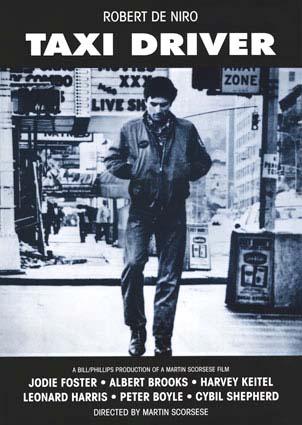
Shattered Politics #39: Taxi Driver (dir by Martin Scorsese)


Taxi_Driver_poster

We’ve never had a President named Charles.  We’ve had several Presidents named John and a quite a few named James.  We’ve even had three named George.  But we’ve never had a Charles.  We’ve come close.  Charles Evans Hughes nearly beat evil old Woodrow Wilson in 1916.  Charles Cotesworth Pinckney was nominated two times in a row by the Federalists but lost to Thomas Jefferson and James Madison respectively.  We’ve had three Vice Presidents names Charles — Fairbanks, Dawes, and Curtis — but never a President.

And, if we ever do elect a President named Charles, he’s probably go by either Charlie or Chuck.  The United States has always liked to think of itself as being a country that has no official royal family and, as a name, Charles probably sounds far to aristocratic for most voters.

That’s why I’m sure that, once U.S. Sen. Charles Palatine won the Democratic presidential nomination back in 1976, he probably insisted that people start calling him Chuck.  Of course, Sen. Palatine probably had no idea how lucky he was to win that nomination.  If not for a few secret service agents, Sen. Palatine could very well have fallen victim to a psychotic taxi driver named Travis Bickle.

Sen. Palatine’s presidential campaign is a major subplot of Martin Scorsese’s 1976 masterpiece of paranoia, Taxi Driver.  As played by an actor named Leonard Harris, Sen. Palatine appears to be the epitome of a politician.  He may smile at the right moment but his eyes are always shifty.  Even his campaign slogan (“We Are The people!”) is vapid in an all too plausible way.  (How different is “We Are the People” from “We Are The People We’ve Been Waiting For?”)  For the most part, Palatine remains a remote figure, giving speeches and appearing in television commercials.  The only time that we get to know Palatine as a person is when he gets in a taxi being driven by Travis Bickle (Robert De Niro).

Travis recognizes him immediately and tells him that he tells everyone who gets in the cab that “they gotta vote for you.”  Palatine smirks a little as he asks Travis what he thinks the most important issue of the election is.  Travis goes on a bit about how someone needs to destroy all of the scum and filthy lowlifes who seem to populate Travis’s section of New York.  As Travis rambles, Palatine’s smile disappears and it becomes obvious that he’s realized that he is essentially being driven by a psycho.  Oh shit, Palatine is probably thinking, this guy is telling people that they gotta vote for me?  However, Palatine quickly regains his composure and assures Travis that the wisest people that he’s ever met have been taxi drivers.

Of course, what Palatine doesn’t realize is that Travis only knows about the campaign because he happens to be obsessed with a Palatine campaign worker named Betsy (Cybill Shepherd).  And Betsy even goes out with Travis a few times.  But then Travis, who spends the majority of the film showing how little skill he has when it comes to understanding and relating to other people, takes Betsy to an adult film.

With Betsy refusing to take his calls, Travis’s attention shifts to Iris (Jodie Foster), a teenage prostitute.  Obviously seeing himself as being a knight in shining armor, Travis tells Iris that she has to go back home to her parents.  As Travis talks, it becomes apparent that he’s simply repeating talking points that he’s heard on TV.  (If Taxi Driver was made today, Travis would be one of those people constantly sharing “inspirational” Facebook posts.)  Iris laughs at Travis and goes back to her pimp, Sport (Harvey Keitel).

And, of course, Travis goes even crazier than before.

38 years after it was first released, Taxi Driver remains a disturbing and powerful film.  However, what makes it effective is that, in many ways, it’s perhaps the darkest comedy ever made.  Throughout the entire film, Travis essentially tells everyone that he meets that he’s disturbed and potentially dangerous and, throughout the entire film, everyone seems to be determined to ignore all of the signs.

Critics always talks about the scene where Travis points a gun at his mirror and asks, “You talkin’ to me?”  And that’s a great scene.  It deserves to be famous, just as De Niro deserves all of the praise that he’s gotten for his iconic performance in Taxi Driver.

However, for me, there are two other scenes that are just as brilliant.  The first is where Travis attempts to get some advice from an older cabbie named Wizard (Peter Boyle).  Travis says he’s been having a lot bad thoughts.  Wizard shrugs and says that everyone has those.  What makes this scene particularly memorable are the lengths that Wizard goes to in order to avoid acknowledging that Travis is obviously disturbed.

And then, there’s the scene where Travis buys a gun from Easy Andy (Steven Prince).  Andy is such a salesman and is so nonchalant about all of his weaponry that, for a few brief minutes, Steven Prince actually manages to steal the spotlight from Robert De Niro.

Whenever one thinks about Taxi Driver, one automatically pictures Robert De Niro.  That’s why it’s all the more interesting that De Niro was not the first choice for Travis.  When Taxi Driver was in pre-production and a pre-Jaws Steven Spielberg (of all people) was thinking about directing it, Jeff Bridges as briefly attached to the role.  And while it’s always tempting to think about what a Spielberg/Bridges version of Taxi Driver would look like, I think we’re all right to be happy that the actual film was directed by Scorsese and starred De Niro.  They truly made Taxi Driver into one of the most memorable films ever made.
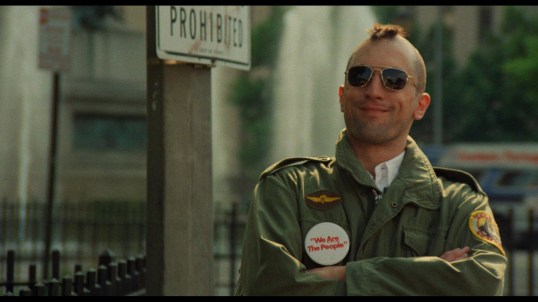
taxi-driver-mohawk

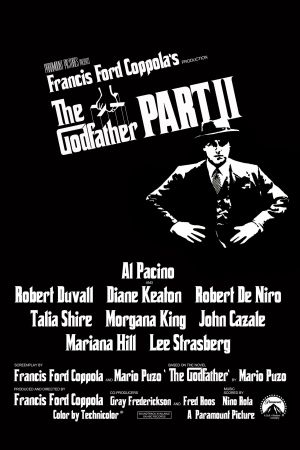
Shattered Politics #36: The Godfather, Part II (dir by Francis Ford Coppola)


Godfather_part_ii

Believe it or not, The Trial of Billy Jack was not the only lengthy sequel to be released in 1974.  Francis Ford Coppola’s The Godfather Part II was released as well and it went on to become the first sequel to win an Oscar for best picture.  (It was also the first, and so far, only sequel to a best picture winner to also win best picture.)  Among the films that The Godfather, Part II beat: Chinatown, Coppola’s The Conversation, and The Towering Inferno.  1974 was a good year.

Whenever I think about The Godfather, Part II, I find myself wondering what the film would have been like if Richard Castellano hadn’t demanded too much money and had actually returned in the role of Clemenza, as was originally intended.  In the first Godfather, Clemenza and Tessio (Abe Vigoda) were Don Corleone’s two lieutenants.  Tessio was the one who betrayed Michael and was killed as a result.  Meanwhile, Clemenza was the one who taught Michael how to fire a gun and who got to say, “Leave the gun.  Take the cannoli.”

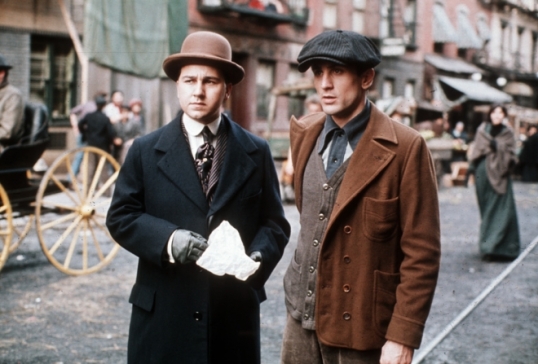
Though Castellano did not return to the role, Clemenza is present in The Godfather, Part II.  The Godfather, Part II tells two separate stories: during one half of the film, young Vito Corleone comes to America, grows up to be Robert De Niro and then eventually becomes the Godfather.  In the other half of the film, Vito’s successor, Michael (Al Pacino), tries to keep the family strong in the 1950s and ultimately either loses, alienates, or kills everyone that he loves.

During Vito’s half of the film, we learn how Vito first met Clemenza (played by Bruno Kirby) and Tessio (John Aprea).  However, during Michael’s half of the story, Clemenza is nowhere to be seen.  Instead, we’re told that Clemenza died off-screen and his successor is Frankie Pentangeli (Michael V. Gazzo).  All of the characters talk about Frankie as if he’s an old friend but, as a matter of fact, Frankie was nowhere to be seen during the first film.  Nor is he present in Vito’s flashbacks.  This is because originally, Frankie was going to be Clemenza.  But Richard Castellano demanded too much money and, as a result, he was written out of the script.

And really, it doesn’t matter.  Gazzo does fine as Frankie and it’s a great film.  But, once you know that Frankie was originally meant to be Clemenza, it’s impossible to watch The Godfather Part II without thinking about how perfectly it would have worked out.

If Clemenza had been around for Michael’s scenes, he would have provided a direct link between Vito’s story and Michael’s story.  When Clemenza (as opposed to Frankie) betrayed Michael and went into protective custody, it would have reminded us of how much things had changed for the Corleones (and, by extension, America itself).  When Tom Hagen (Robert Duvall) talked Clemenza (as opposed to Frankie) into committing suicide, it truly would have shown that the old, “honorable” Mafia no longer existed.  It’s also interesting to note that, before Tessio was taken away and killed, the last person he talked to was Tom Hagen.  If Castellano had returned, it once again would have fallen to Tom to let another one of his adopted father’s friends know that it was time to go.

Famously, the Godfather, Part II ends with a flashback to the day after Pearl Harbor.   We watch as a young and idealistic Michael tells his family that he’s joined the army.  With the exception of Michael and Tom Hagen, every character seen in the flashback has been killed over the course of the previous two films.  We see Sonny (James Caan), Carlo (Gianni Russo), Fredo (John Cazale), and even Tessio (Abe Vigoda).  Not present: Clemenza.  (Vito doesn’t appear in the flashback either but everyone’s talking about him so he might as well be there.  Poor Clemenza doesn’t even get mentioned.)

If only Richard Castellano had been willing to return.

Clemenza_and_Vito

Clemenza and Vito


But he didn’t and you know what?  You really only miss him if you know that he was originally meant to be in the film.  With or without Richard Castellano, The Godfather, Part II is a great film, probably one of the greatest of all time.  When it comes to reviewing The Godfather, Part II, the only real question is whether it’s better than the first Godfather.

Which Godfather you prefer really depends on what you’re looking for from a movie.  Even with that door getting closed in Kay’s face, the first Godfather was and is a crowd pleaser.  In the first Godfather, the Corleones may have been bad but everyone else was worse.  You couldn’t help but cheer them on.

The Godfather Part II is far different.  In the “modern” scenes, we discover that the playful and idealistic Michael of part one is gone.  Micheal is now cold and ruthless, a man who willingly orders a hit on his older brother and who has no trouble threatening Tom Hagen.  If Michael spent the first film surrounded by family, he spends the second film talking to professional killers, like Al Neri (Richard Bright) and Rocco Lampone (Tom Rosqui).  Whereas the first film ended with someone else closing the door on Kay, the second film features Michael doing it himself.  By the end of the film, Michael Corleone is alone in his compound, a tyrant isolated in his castle.

Michael’s story provides a sharp contrast to Vito’s story.  Vito’s half of the film is vibrant and colorful and fun in a way that Michael’s half is not and could never be.  But every time that you’re tempted to cheer a bit too easily for Vito, the film moves forward in time and it reminds you of what the future holds for the Corleones.

So, which of the first two Godfathers do I prefer?  I love them both.  If I need to be entertained, I’ll watch The Godfather.  If I want to watch a movie that will truly make me think and make me question all of my beliefs about morality, I’ll watch Part Two.

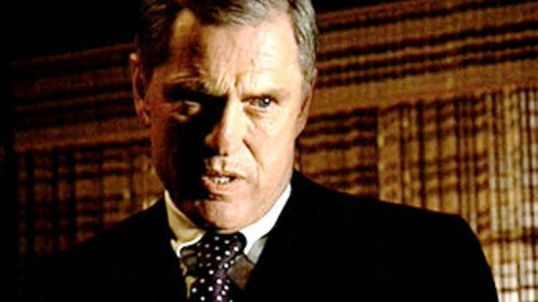
Finally, I can’t end this review without talking about G.D. Spradlin, the actor who plays the role of U.S. Sen. Pat Geary.  The Godfather Part II is full of great acting.  De Niro won an Oscar.  Pacino, Gazzo, Lee Strasberg, and Talia Shire were all nominated.  Diane Keaton, Robert Duvall, and John Cazale all deserved nominations.  Even Joe Spinell shows up and brilliantly delivers the line, “Yeah, we had lots of buffers.”  But, with each viewing of Godfather, Part II, I find myself more and more impressed with G.D. Spradlin.

Sen. Pat Geary doesn’t have a lot of time on-screen.  He attends a birthday party at the Corleone Family compound, where he praises Michael in public and then condescendingly insults him in private.  Later, he shows up in Cuba, where he watches a sex show with obvious interest.  And, when Michael is called before a Senate committee, Geary gives a speech defending the honor of all Italian-Americans.

G.D. Spradlin as Sen. Pat Geary

G.D. Spradlin as Sen. Pat Geary

But the scene that we all remember is the one where Tom Hagen meets Sen. Geary in a brothel.  As Geary talks about how he passed out earlier, the camera briefly catches the sight of a dead prostitute lying on the bed behind him.  What’s especially disturbing about this scene is that neither Hagen nor Geary seem to acknowledge her presence.  She’s been reduced to a prop in the Corleone Family’s scheme to blackmail Sen. Geary.  His voice shaken, Geary says that he doesn’t know what happened and we see the weakness and the cowardice behind his almost all-American facade.

It’s a disturbing scene that’s well-acted by both Duvall and Spradlin.  Of course, what is obvious (even if it’s never explicitly stated) is that Sen. Geary has been set up and that nameless prostitute was killed by the Corleones.  It’s a scene that makes us reconsider everything that we previously believed about the heroes of the Godfather.

For forcing us to reconsider and shaking us out of our complacency, The Godfather, Part II is a great film.

(Yes, it’s even better than The Trial of Billy Jack.)


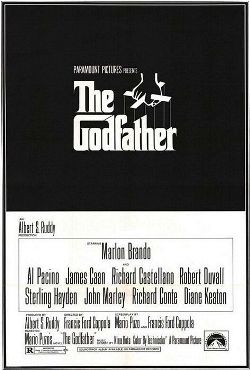
Shattered Politics #31: The Godfather (dir by Francis Ford Coppola)


Godfather_ver1

“I got something for your mother and Sonny and a tie for Freddy and Tom Hagen got the Reynolds Pen…” — Kay Adams (Diane Keaton) in The Godfather (1972)

It probably seems strange that when talking about The Godfather, a film that it is generally acknowledged as being one of the best and most influential of all time, I would start with an innocuous quote about getting Tom Hagen a pen.

(And it better have been a hell of a pen because, judging from the scene where Sollozzo stops him in the street, it looked like Tom was going all out as far as gifts were concerned…)

After all, The Godfather is a film that is full of memorable quotes.  “Leave the gun.  Take the cannoli.”  “I’m going to make him an offer he can’t refuse.”  “It’s strictly business.”  “I believe in America….”  “That’s my family, Kay.  That’s not me.”

But I went with the quote about the Reynolds pen because, quite frankly, I find an excuse to repeat it every Christmas.  Every holiday season, whenever I hear friends or family talking about presents, I remind them that Tom Hagen is getting the Reynolds pen.  Doubt me?  Check out these tweets from the past!

[tweet https://twitter.com/LisaMarieBowman/status/411891527837687810  ]

[tweet https://twitter.com/LisaMarieBowman/status/280387983444697088 ]

That’s how much I love The Godfather.  I love it so much that I even find myself quoting the lines that don’t really mean much in the grand scheme of things.  I love the film so much that I once even wrote an entire post about who could have been cast in The Godfather if, for whatever reason, Brando, Pacino, Duvall, et al. had been unavailable.  And I know that I’m not alone in that love.

But all that love also makes The Godfather a difficult film to review.  What do you say about a film that everyone already knows is great?

Do you praise it by saying that Al Pacino, Robert Duvall, James Caan, Diane Keaton, Marlon Brando, John Cazale, Richard Castellano, Abe Vigoda, Alex Rocco, and Talia Shire all gave excellent performances?  You can do that but everyone already knows that.

Do you talk about how well director Francis Ford Coppola told this operatic, sprawling story of crime, family, and politics?  You can do that but everyone already knows that.

Maybe you can talk about how beautiful Gordon Willis’s dark and shadowy cinematography looks, regardless of whether you’re seeing it in a theater or on TV.  Because it certainly does but everyone knows that.

Maybe you can mention the haunting beauty of Nina Rota’s score but again…

Well, you get the idea.

Now, if you somehow have never seen the film before, allow me to try to tell you what happens in The Godfather.  I say try because The Godfather is a true epic.  Because it’s also an intimate family drama and features such a dominating lead performance from Al Pacino, it’s sometimes to easy to forget just how much is actually going on in The Godfather.

The Godfather tells the story of the Corleone Family.  Patriarch Vito Corleone (Marlon Brando) has done very well for himself in America, making himself into a rich and influential man.  Of course, Vito is also known as both Don Corleone and the Godfather and he’s made his fortune through less-than-legal means.  He may be rich and he may be influential but when his daughter gets married, the FBI shows up outside the reception and takes pictures of all the cars in the parking lot.  Vito Corleone knows judges and congressmen but none of them are willing to be seen in public with him.  Vito is the establishment that nobody wants to acknowledge and sometimes, this very powerful man wonders if there will ever be a “Governor Corleone” or a “Senator Corleone.”

Vito is the proud father of three children and the adopted father of one more.  His oldest son, and probable successor, is Sonny (James Caan).  Sonny, however, has a temper and absolutely no impulse control.  While his wife is bragging about him to the other women at the wedding, Sonny is upstairs screwing a bridesmaid.  When the enemies of the Corleone Family declare war, Sonny declares war back and forgets the first rule of organized crime: “It’s not personal.  It’s strictly business.”

After Sonny, there’s Fredo (John Cazale).  Poor, pathetic Fredo.  In many ways, it’s impossible not to feel sorry for Fredo.  He’s the one who ends up getting exiled to Vegas, where he lives under the protection of the crude Moe Greene (Alex Rocco).  One of the film’s best moments is when a bejeweled Fredo shows up at a Vegas hotel with an entourage of prostitutes and other hangers-on.  In these scenes, Fred is trying so hard but when you take one look at his shifty eyes, it’s obvious that he’s still the same guy who we first saw stumbling around drunk at his sister’s wedding.

(And, of course, it’s impossible to watch Fredo in this film without thinking about both what will happen to the character in the Godfather, Part II and how John Cazale, who brought the character to such vibrant life, would die just 6 years later.)

As a female, daughter Connie (Talia Shire) is — for the first film, at least — excluded from the family business.  Instead, she marries Sonny’s friend Carlo Rizzi (Gianni Russo).  And, to put it gently, it’s not a match made in heaven.

And finally, there’s Michael (Al Pacino).  Michael is the son who, at the start of the film, declares that he wants nothing to do with the family business.  He’s the one who wants to break with family tradition by marrying Kay Adams (Diane Keaton), who is most definitely not Italian.  He’s the one who was decorated in World War II and who comes to his sister’s wedding still dressed in his uniform.  (In the second Godfather film, we learn that Vito thought Michael was foolish to join the army, which makes it all the more clear that, by wearing the uniform to the wedding, Michael is attempting to declare his own identity outside of the family.)  To paraphrase the third Godfather film, Michael is the one who says he wants to get out but who keeps getting dragged back in.

And finally, the adopted son is Tom Hagen (Robert Duvall).  Tom is the Don’s lawyer and one reason why Tom is one of my favorite characters is because, behind his usual stone-faced facade, Tom is actually very snarky.  He just hides it well.

Early on, we get a hint that Tom is more amused than he lets on when he has dinner with the crude Jack Woltz (John Marley), a film producer who doesn’t want to use Johnny Fontane (Al Martino) in a movie  When Woltz shouts insults at him, Tom calmly finishes his dinner and thanks him for a lovely evening.  And he does it with just the hint of a little smirk and you can practically see him thinking, “Somebody’s going to wake up with a horse tomorrow….”

However, my favorite Tom Hagen moment comes when Kay, who is searching for Michael, drops by the family compound.  Tom greets her at the gate.  When Kay spots a car that’s riddled with bullet holes, she asks what happened.  Tom smiles and says, “Oh, that was an accident.  But luckily no one was hurt!”  Duvall delivers the line with just the right attitude of “That’s my story and I’m sticking to it!”  How can you not kind of love Tom after that?

And, of course, the film is full of other memorable characters, all of whom are scheming and plotting.  There’s Clemenza (Richard S. Catellano) and Tessio (Abe Vigoda), the two Corleone lieutenants who may or may not be plotting to betray the Don.  There’s fearsome Luca Brasi (Lenny Montana), who spends an eternity practicing what he wants to say at Connie’s wedding and yet still manages to screw it up.  And, of course, there’s Sollozzo (Al Lettieri, playing a role originally offered to Franco Nero), the drug dealer who reacts angrily to Vito’s refusal to help him out.  Meanwhile, Capt. McCluskey (Sterling Hayden) is busy beating up young punks and Al Neri (Richard Bright) is gunning people down in front of the courthouse.  And, of course, there’s poor, innocent, ill-fated Appollonia (Simonetta Stefanelli)…

The Godfather is a great Italian-American epic, one that works as both a gangster film and a family drama.  Perhaps the genius of the Godfather trilogy is that the Corleone family serves as an ink blot in a cinematic rorschach test.  Audiences can look at them and see whatever they want.  If you want them and their crimes to serve as a metaphor for capitalism, you need only listen to Tom and Michael repeatedly state that it’s only business.  If you want to see them as heroic businessmen, just consider that their enemies essentially want to regulate the Corleones out of existence.  If you want the Corleones to serve as symbols of the patriarchy, you need only watch as the door to Michael’s office is shut in Kay’s face.  If you want to see the Corleones as heroes, you need only consider that they — and they alone — seem to operate with any sort of honorable criminal code.  (This, of course, would change over the course of the two sequels.)

And, if you’re trying to fit a review of The Godfather into a series about political films, you only have to consider that Vito is regularly spoken of as being a man who carries politicians around in his pocket.  We may not see any elected officials in the first Godfather film but their presence is felt.  Above all else, it’s Vito’s political influence that sets in motion all of the events that unfold over the course of the film.

The Godfather, of course, won the Oscar for best picture of 1972.  And while it’s rare that I openly agree with the Academy, I’m proud to say that this one time is a definite exception.

44 Days of Paranoia #3: Winter Kills (dir by William Richert)


MPW-39279Yesterday, I took a look at Executive Action, a 1973 docudrama about the assassination of John F. Kennedy.  Today, I want to take a look at another film inspired by the Kennedys, the 1979 satire Winter Kills.

As the film opens, it’s been 16 years since a popular and dynamic President named Tim Kegan was assassinated in Philadelphia.  Despite constant rumors of conspiracy, the official story is that Kegan was killed by a lone gunman and that gunman was subsequently killed by another lone assassin.  The President’s half-brother, Nick (played by Jeff Bridges, who looks so impossibly young and handsome in this film), has disappointed his father (John Huston) by declining to follow his brother into politics.  Instead, he spends most of his time sailing on corporate oil tankers and dating fashion editor Yvette (Belinda Bauer).  This all changes when a dying man named Fletcher (and played, underneath a lot of bandages, by Joe Spinell) asks for a chance to speak to Nick.  Fletcher reveals that he was the 2nd gunman and that he was hired by to kill President Kegan.  Before dying, Fletcher tells Nick where he can find the rifle that was used to kill the President.

Following Fletcher’s directions, Nick finds both the rifle and proof that his brother’s death was the result of a conspiracy.  Determined to find out who was truly behind the conspiracy, Nick goes to see his father, the flamboyant tycoon Pa Kegan (John Huston) who, we discover, is only alive because he frequently gets blood transfusions from young women.  With Pa’s encouragement, Nick is sent on an increasingly bizarre odyssey into the darkest shadows of America, a world that is populated by militaristic businessmen, sinister gangsters, and an unemotional man named John Cerutti (Anthony Perkins) who very well may be the most powerful man in the world.

The martyred President might be named Tim Kegan, his accused assassin might be named Willie Abbott, and the man who shot Abbott might be named Joe Diamond (and might be played by Eli Wallach) but make no mistake about it — Winter Kills is a thinly disguised look at both the Kennedy assassination and the Kennedy family.  Based on a novel by Richard Condon (who also wrote the conspiracy classic, The Manchurian Candidate), Winter Kills takes all of the various Kennedy conspiracy theories and intentionally pushes them to their most ludicrous extremes.  The end result is a film that tries (and occasionally manages) to be both absurd and sincere, a portrait of a world where paranoia is the only logical reaction.

As I discovered from listening to director William Richert’s commentary on the Anchor Bay DVD, Winter Kills had a long and complicated production history.  The film was produced by two marijuana dealers, one of whom was murdered by the Mafia shortly after the film premiered while the other would later be sentenced to 40 years in prison on federal drug charges.  The production actually went bankrupt more than a few times, which led to Richert, Bridges, and Bauer making and releasing another film specifically so they could raise the money to finish Winter Kills.

When Winter Kills was finally released, it got a good deal of attention because of its spectacular cast.  Along with Bridges, Huston, Perkins, and Wallach, the film also features cameo appearances by Tomas Milian, Elizabeth Taylor, Ralph Meeker, Richard Boone, Sterling Hayden, Dorothy Malone, Toshiro Mifune, and a host of other actors who will be familiar to those of us who enjoy watching old movies on TCM.  And yet, according to Richert, the film itself was barely released in to theaters, the implication being that Winter Kills was a film about conspiracies that fell victim to a conspiracy itself.

Given the film’s history and the subject matter, I was really hoping that Winter Kills would turn out to be a great movie.  Unfortunately, it really doesn’t work.  The film struggles to maintain a balance between suspense and satire and, as a result, the suspense is never convincing and the satire is ultimately so obvious that it ends up being more annoying than thought-provoking.  The cast may be impressive but they’re used in such a way that film ultimately feels like it’s just a collection of showy celebrity cameos as opposed to being an actual story.

That said, Winter Kills remains an interesting misfire.  Jeff Bridges is a likable and compelling lead (and he gives the film much-needed focus) and, playing a role that has a lot in common with his better known work in Chinatown, John Huston is a always watchable if not necessaily likable.  Best of all is Anthony Perkins, who plays a role that, in light of what we now know about the NSA, seems oddly prophetic.

Finally, best of all, Winter Kills remains an interesting time capsule.  If nothing else, it reminds us that mistrust and paranoia are not unique to this century.

3260389_l1

6 Trailers In The Basket


Hi there and welcome to the Easter edition of Lisa Marie’s Favorite Grindhouse and Exploitation Trailers!

1) Bunnyman (2009)

Just in time for Easter, it’s Bunnyman!

2) Deathmaster (1972)

Much like Twilight, Deathmaster combines the true life crimes of Charles Manson with vampires.  In this one, the Manson character is played by Robert Quarry.  Speaking of which, did anyone see those pictures of the modern-day, incarcerated Manson that were released last week?  I took one look at those and I went, “Santa Claus is really letting himself go.”

3) The Last Horror Film (1984)

Speaking of maniacs, this film reunited the two stars of the infamous movie of the same name, Caroline Munro and Joe Spinell.

4)  Hercules (1983)

For the past month and a half, I’ve been watching Lou Ferrigno on The Celebrity Apprentice and, even though I’m rooting for Aubrey O’Day, it’s impossible not to like Lou.  Here’s Lou starring as Hercules in a film from the infamous Luigi Cozzi.  (I wanted to also include the trailer for Hercules In New York, the 1970 debut of Arnold Schwarzenegger but every single Hercules in New York YouTube video is embedding disabled.  Bleh!)

5) Ironmaster (1983)

Yes, it’s yet another history lesson from the Joel Schumacher of Italian exploitation, Umberto Lenzi.

6) The Phantom of the Opera (1998)

Since it’s the holidays, let’s end with some Argento.

What Lisa Watched Last Night: Rocky (dir. by John G. Avildsen)


A few days ago, I set the DVR to record the 1976 Best Picture winner Rocky off of TCM.  Last night, I finally got a chance to sit down and actually watch it.

Why Was I Watching It?

I’ll be honest here and admit that I wasn’t watching it because I’ve ever had any great desire to see this movie or, for that matter, any other Sylvester Stallone film.  (Though, for the record, I thought the Expendables was vaguely entertaining.)  However, this being Oscar season, my mind right now is pretty much dominated by 1) a mental list of all 493 best picture nominees and 2) an obsessive need to see every single one of those films. 

And since we’re focusing on reviewing best picture nominees this month, I figured why not take this opportunity to watch Rocky.  After all, I thought, this is the film that managed to win best picture over Network, Taxi Driver, and All The President’s Men.  How bad can it be?

What’s It About?

So, there’s this guy named Rocky Balboa (Sylvester Stallone) and he’s got to be the nicest Mafia goon alive.  He spends his time collecting debts for the local loan shark (played by the Maniac himself, Joe Spinell) but he refuses to break anyone’s thumbs while doing so and even offers up helpful advice like, “Yo, you got to start thinking.”  Spinell’s all like, “Rocky, why aren’t you breaking anyone’s thumbs?” and Rocky says he doesn’t want to and Spinell’s all like, “That’s okay,” because oddly enough, Joe Spinell is the only guy in the Mafia who is nicer than Rocky.

Anyway. Rocky is also a boxer who fights “bums” (as his trainer Burgess Meredith is fond of bellowing) and who is sweetly courting Adrian (Talia Shire), a shy girl who works in the local pet store.  Adrian’s brother (played by Burt Young) is named Paul but since everyone in the film is Italian, he’s called “Paulie” instead.  (I can say this because I’m a fourth Italian and if your name is Paul, I’m going to call you “Paulie” whether you like it or not.) 

Anyway, there’s another boxer (played by Carl Weathers) and he’s named Apollo Creed.  Apollo is the champ because when you’ve got a name like Apollo Creed, you better be the best or else you’re just going to look silly.  For publicity reasons, Apollo gives the unknown Rocky the chance to fight him for the championship.  Apollo is expecting an easy fight but he hasn’t taken into consideration that Rocky is not only willing to run every morning but he’s willing to run up steps as well!

What Worked?

(WARNING: SPOILERS BELOW.)

The love story between Rocky and Adrian was kinda sweet, largely because Talia Shire and Sylvester Stallone both had a very genuine chemistry and Shire gave such a good performance that Stallone (who spends most of the film coming across like a parody of a method actor) gives a better performance when he’s sharing the screen with her.  I spent a lot of this movie rolling my eyes at just how shamelessly manipulative it was but I have to admit that the final scene — with Adrian going “I love you, Rocky,” and a bloody and kinda gross-looking Rocky replying with a heartfelt, “I love you!” — brought tears to my multi-colored eyes.

What Didn’t Work?

Rocky has got to be one of the most shamelessly manipulative films ever made.  Director John G. Avildsen (who won best director while Martin Scorsese wasn’t even nominated for Taxi Driver) pushed every obvious button and used every technique at his disposal to force the audience to root for Rocky.  Hence, we get the famous training montage set to soaring music and the subtle appeals to racism that are inherent in the portrayals of Apollo Creed and his entourage.  Admittedly, one reason that a lot of these scenes fell flat is because I’ve seen them duplicated in thousands of other sports films.  I know its possible that the reason I’ve seen them duplicated is because of Rocky’s success but still, it doesn’t make those scenes feel any less obvious and vaguely silly.

Do you know how sometimes you just watch a movie and you go, “There is absolutely nothing in this movie for me to relate to and I really should be watching the Real Housewives of Beverly Hills right now?”  Well, my reaction to Rocky wasn’t that extreme but it was pretty close.  I watched this film — which I’ve seen described as one of the most emotional films ever made — feeling oddly detached from everything I was seeing on-screen, my attention only being held by a clinical fascination concerning just how shamelessly manipulative this film was.  Try as I might, I simply could not get emotionally invested in what I was watching.  Some of that, undoubtedly, has to do with the fact that I’m not into sports films in general.  However, I think most of it comes down to the fact that I have a vagina and, quite frankly, the appeal of Sylvester Stallone is lost on me.

Speaking of the appeal of Sylvester Stallone…

“Oh my God!  Just like me!” Moments:

None.  It’s rare that I say that because I can usually find a way to relate any movie I see to my life but Rocky was just too alien to me.

Lessons Learned:

Best is a subjective term.

Scenes I Love: Maniac


With news that the remake of Maniac has finally gotten it’s Frank Zito in the form of Elijah Wood I thought it was high time that I shared my favorite scene from the original film by William Lustig. it’s this scene that I hope will make it intact and with little to no CGI to make it happen in as glorious a fashion as the original scene.

The latest “Scenes I Love” comes courtesy of the make-up FX magic by Tom Savini. In fact, this scene actually has him doing double-duty roles as not just the make-up FX artist but as an actor in the scene. This particular scene has been dubbed the “Disco Boy” scene and Savini ably stands in for the role of Disco Boy. We have him and his Disco Girl making out in their car when suddenly we see Frank Zito peeping in like some sort of Son of Sam copycat. Well, Disco Girl freaks out and Disco Boy attempts to act cool and protective. Little does Disco Boy know that he will soon be immortalized in a few seconds of blood and gore that goes down as one of the best “kills” ever put on film.

News: “Maniac” Remake Gets A Killer Wood


If there was ever a film that many people who hate grindhouse and exploitation films always like to point out as a perfect example of films that should never have been made it would be William Lustig’s classic 80’s splatter film, Maniac. This film has been called depraved, misogynistic, obscene and those are just the tame labels heaped on this horror film.

There had been talks down the years to make a direct sequel to the film, but the many plans to do so always never got past the development stage. In late 2010, the remake rights to Maniac was obtained by a French company and it looks like the world will soon be seeing a new take on this controversial film hitting the theaters in a year or so.

The film will be produced by the kings of horror remakes, Alexandre Aja and Grégory Levasseur, with Franck Khalfoun (director of the underrated P2) set to helm the project. It’s the role of the serial killer Frank which has been much discussed by fans of the film who either hate or love that a remake was being of it. While names such as Tom Sizemore has been discussed the role finally landed on the lap of a very unexpected choice: Elijah Wood.

Elijah Wood would be the last pick many fans of the original film would make, but I think this pick is interesting in many ways. For one thing, Wood can definitely pull off the serial killer look, just not the beefy way Joe Spinell did. Wood already has done the serial killer role as the mute and creepy Kevin in Sin City. Wood’s casting as Frank can also go a long way in making sure this remake puts it’s own stamp on the character and story. Finally, Wood has the boy next door look that goes against the stereotypical film serial killer.

While I’m still hoping that Aja would do more original film projects instead of remaking past horror films, I am impressed at how he has done with past horror remakes like The Hills Have Eyes and Piranha. Even though he’s producing and not directing I hope he still brings the sort of manic glee to the production that the two previously mentioned films seemed to have which translated to the screen.

My opinion is that if this remake recreates the Disco Boy scene in all its glory then the remake will be the greatest ever.

So, grindhouse fans what do you think of this remake and the casting?

Source: Bloody Disgusting

Poll: Which Movie Should Lisa Marie Review?


Last night, with the help of my friend Jeff, I conducted an experiment. 

First, I took out my contacts which basically left me blind.  Then, just to make sure I was totally without sight, I had Jeff blindfold me.  He then took me by the hand and led me over to my DVD collection.  Clumsily, I grabbed 10 DVDs at random and handed them back to Jeff.  I then proceeded to walk into a wall, at which point I tried to take off the blindfold and ended up losing my balance and falling down flat on my ass. 

Why was I risking life and limb to randomly select 10 DVDs?

I did it so you could have the chance to tell me what to do.  At the bottom of this article, you will find a poll listing the 10 DVDs I randomly selected.  Come next Saturday (June 19th to be exact), I will watch and review whichever movie receives the most votes in the poll.  In short, I’m giving you all the power.

Now, to be honest, I’m feeling just a little trepidation about doing this.  Whenever you set up a poll, you’re running the risk of absolutely no one voting.  Fortunately, I have a plan B in that I recently got the 1st season of Gossip Girl on DVD.  If nobody votes in the poll, I’ll just spend next Saturday watching Gossip Girl and writing several long — very long —  essays on how different Chuck is in the books as compared to the TV show.

The choice, as they say, is yours.

The 10 movies I blindly selected are listed below in alphabetical order.

1) Anatomy of a Murder (1959) — Jimmy Stewart asks Lee Remick a lot of questions about her panties.

2) Darling (1965) — Julie Christie claws her way to the top of the modeling industry and discovers ennui.

3) Emanuelle in America (1978) — Emanuelle investigates decadence in America.  Some people think that this movie contains footage taken from an actual snuff film.  We call those people “idiots.”

4) Hatchet For The Honeymoon (1969) — Mario Bava directs this film about a man driven to murder by the sight of an unflattering bridal gown.

5) Lost in Translation (2003) — I will admit that I squealed with joy when I discovered that I had randomly selected one of my favorite movies of all time.

6) Primer (2004) — Engineers play with time and space.  Oddly enough, this movie was filmed a few miles away from where I live.

7) The Sidewalks of Bangkok (1986) — Like most of Jean Rollin’s film, this is something of a misunderstood masterpiece.

8 ) Sole Survivor (1982) — An atmospheric little horror film with a sadly generic title.

9) Starcrash (1978) — Strange sci-fi movie in which Christopher Plummer recruits space pirate Caroline Munro to battle a pre-Maniac Joe Spinell.  This film also marks the screen debut of David Hasselhoff.

10) The Sweet House of Horrors (1989) — One of Lucio Fulci’s last films.

So, those are our ten options.  On Saturday, July 19th, I will sit down, watch, and review whichever movie receives the most votes.  On that day, for four to six hours, I will give up my independence and submit to the wishes of the majority.