Review: Yurusarezaru Mono (dir. by Lee Sang-il)


“Wait for me in hell.” — Jubei Kamata

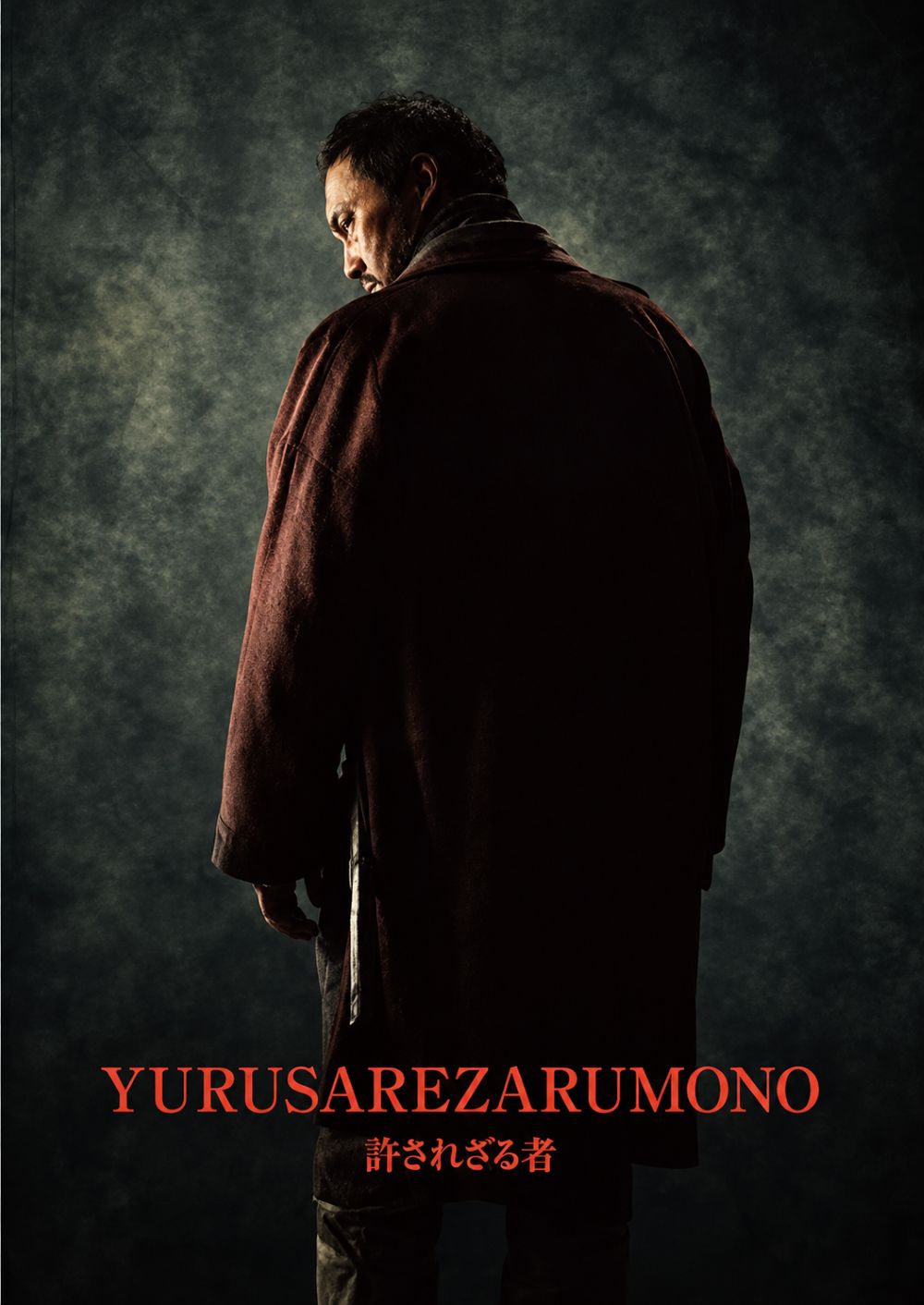
Unforgiven, released in Japan as Yurusarezaru Mono—literally “The Unforgiven” or “Unforgivable”—is the 2013 Japanese remake of Clint Eastwood’s 1992 revisionist Western. Rather than treating the original as a sacred object that cannot be touched, director Lee Sang-il and star Ken Watanabe prove that its central ideas can travel surprisingly well. The story moves from the fading American frontier to Hokkaido in the early Meiji era, when Japan was modernizing quickly and the samurai class was becoming a relic of a vanishing order. In that sense, the film finds the perfect Japanese equivalent to Eastwood’s aging gunslingers. Just as William Munny belongs to an Old West that is dying around him, Jubei Kamata belongs to a Japan that no longer has a clear place for men like him.

It also belongs to a much longer tradition in which samurai and Western gunslingers have become closely intertwined character types. Both are often portrayed as isolated men shaped by violence, reputation, personal codes, and the decline of the worlds that made them useful. Both can drift into a troubled town, become involved in someone else’s conflict, and turn into a larger-than-life figure whether they want to or not. The exchange between the genres has gone on for decades, most famously when Akira Kurosawa’s Yojimbo became the basis for Sergio Leone’s A Fistful of Dollars. Yurusarezaru Mono feels like an especially appropriate continuation of that conversation: a Japanese filmmaker takes an American Western that was itself deeply interested in dismantling the gunslinger myth and uses it to confront the equally romanticized myth of the samurai.

The original Unforgiven was already a film about stripping the glamour away from violence. Eastwood took the familiar image of the weathered gunfighter coming back for one final job and showed the ugliness underneath it. Violence is not clean, heroic, or especially skillful when it happens for real. It is frightening, clumsy, painful, and impossible to undo. Lee Sang-il keeps that moral core but finds a distinct cultural target. The Japanese version examines the idealized samurai image: the disciplined swordsman, the honorable warrior, the proud survivor of a more noble age. It asks whether any of those myths can survive when the man behind them has killed people, carries terrible memories, and no longer knows who he is without violence.

Ken Watanabe plays Jubei Kamata, a former samurai once feared as “Jubei the Killer.” He is the film’s William Munny equivalent, but Watanabe does not simply imitate Eastwood’s performance. Jubei is introduced as an exhausted farmer and widower raising two children in hard conditions. He is poor, physically worn down, and clearly ashamed of the person he used to be. Watanabe gives him an almost painful heaviness. Jubei is not merely an old warrior who wants peace; he is a man who has spent years trying to become someone else because he knows exactly what “Jubei the Killer” was capable of.

The early-Meiji setting gives that character arc a stronger historical charge. Jubei is not just retired from a bloody life. He is part of a fading warrior caste in a country remaking itself through new laws, new institutions, modernization, and expanding state power. The samurai may still exist in memory and in popular myth, but their old social role is slipping away. That mirrors the original film’s dying Old West perfectly. The gunslinger and the samurai are both figures from a violent past who have become obsolete, yet neither can completely escape the reputation that past gave them.

The plot begins after a prostitute is viciously assaulted and scarred by two men in a northern settlement. The town’s authorities treat the crime as an economic issue instead of an act of cruelty against a human being, so the women of the brothel raise a bounty for the attackers’ deaths. Kingo Baba, Jubei’s old companion, approaches him about the bounty and offers him a share of the reward. Jubei refuses at first because he has children, a failing farm, and a life he is trying to preserve. But poverty, desperation, and the lingering pull of his former identity eventually drag him back into violence.

The film’s real power is that it never turns this decision into a simple revenge fantasy. The men being hunted deserve condemnation for what they did, and the film does not soften that. Still, it never suggests that killing them will restore the woman they harmed or somehow balance the moral scale. Murder does not solve the original injustice; it only broadens the cycle of pain. Like Eastwood’s film, Yurusarezaru Mono constantly pushes against the audience’s instinct to treat revenge as satisfying or cleansing.

Jubei teams up with Kingo Baba, played by Akira Emoto, an old companion who fills the role of Ned Logan from the original. Their relationship is one of the remake’s best qualities. Emoto gives Kingo a tired, approachable decency, but he also makes clear that the man has lived long enough to understand the price of violence. He and Jubei do not need to explain their history in long speeches. Their shared past comes through in their guarded conversations, familiar irritation, and unspoken awareness that they are both far too old to be pretending this job will end cleanly.

Goro Sawada, played by Yuya Yagira, is just as important because he represents the fantasy of violence before reality destroys it. He wants a name. He wants to be feared. He wants stories about himself that will make him sound larger than life. But the film dismantles him in the same way Unforgiven dismantled the Schofield Kid. The first time he confronts the real consequences of killing, there is no rush of glory. There is only confusion, panic, and guilt. A legend is always easier to believe in when someone else has done the killing.

One of the Japanese remake’s most meaningful additions is its inclusion of the Ainu people, the Indigenous people of Hokkaido. The original film largely avoided directly engaging with the history of Native Americans in the American frontier, but Yurusarezaru Mono brings Indigenous displacement and discrimination into the story in a major way. Jubei’s late wife was Ainu, and his children therefore carry that heritage. Goro is also connected to the Ainu community and can speak the language. The film takes place during a period in which the Japanese state was expanding its control over Hokkaido, dispossessing and assimilating Ainu people while suppressing their culture and language.

That addition does not merely provide a local equivalent for the Western’s Native American history. It changes the emotional stakes of the entire story. Jubei is not only a former samurai made obsolete by Japan’s new order; he is tied by family to people being actively marginalized by that order. His farm, his children, and his dead wife become part of a larger historical wound. The film’s frontier is not empty land waiting for settlement. It is land already inhabited by people whose rights, identities, and futures are being threatened. By including the Ainu, the remake adds racial and colonial dimensions that the original’s story did not fully explore.

It also reframes Goro’s desire to prove himself. His hunger for reputation is not just youthful swagger. It comes from living in a society that treats people connected to the Ainu as inferior or disposable. He wants to be seen as somebody in a world eager to reduce him to less than that. Jubei understands this more deeply than he initially lets on. His eventual concern for Goro is shaped not only by friendship but by a recognition that the authorities could use Goro’s participation in the killings as an excuse to punish or target Ainu people more broadly.

Koichi Sato plays the local lawman, the Japanese counterpart to Gene Hackman’s Little Bill. He does not copy Hackman’s performance, which is a smart choice. Hackman’s Little Bill had a bluff, talkative confidence and an almost absurdly casual capacity for brutality. Sato’s version is colder and more calculating, with a distinctly bureaucratic edge. He sees himself as the defender of law and social order, but his version of order is built on intimidation, humiliation, and selective cruelty. He treats the abused woman as a problem, the prostitutes as a nuisance, and anyone outside his preferred hierarchy as someone to be controlled.

The emerging Meiji state may promise progress, but the film refuses to portray it as automatically enlightened. The samurai system’s decline does not erase injustice; it simply gives power a newer, more bureaucratic face. The lawman claims to hate disorder, yet he creates the kind of world where people can only pursue justice through murder because the law refuses to recognize their suffering. That makes him more than a simple villain. He is the embodiment of a new authority that insists it is civilized while using the same old cruelty to keep vulnerable people in their place.

The snowbound Hokkaido landscape gives the movie a visual identity that sets it apart from the dusty Wyoming imagery of the original. The cold, mud, wind, and vast stretches of white make the characters look even more vulnerable and lost. This is not the kind of samurai story built around beautiful duels and graceful swordplay. Lee Sang-il keeps the violence ugly and exhausting. When Jubei finally falls back into the terrifying persona of “Jubei the Killer,” it does not feel like he has rediscovered his true heroic self. It feels like a man surrendering to the worst part of himself because grief, anger, and desperation have burned away his restraint.

The ending closely follows the original in the way it brings Jubei’s buried reputation and frightening capacity for violence back to the surface. The climactic confrontation itself remains broadly faithful to Eastwood’s version, so the remake’s biggest distinction is not really in the setting or moment-to-moment mechanics of the final fight. The more meaningful change comes afterward, in what the film suggests about Jubei’s future once he has once again become “Jubei the Killer.”

Yurusarezaru Mono gives this question more weight through its focus on shame, guilt, and the possibility that some actions cannot be left behind simply because a man has spent years living differently. Jubei built a quieter life with his wife and children in the hope of becoming more than the killer he once was. But revisiting that past, even for reasons the audience can understand, forces him to confront whether he has truly escaped it—or whether he was only temporarily pretending it was gone. The remake’s final variation gives the story a sadder and more personally haunted edge, making Jubei’s past feel less like a legend he can reluctantly put back on and more like a moral burden that may have permanently separated him from the life he tried to build.

Those changes are important because they give Yurusarezaru Mono a distinct identity beyond simply being a Japanese version of a famous American film. The original Unforgiven ends with its own deliberately uneasy ambiguity. This remake reaches a similarly tragic, morally unsettled place, but it does so through the specific burdens of early-Meiji Hokkaido: the decline of the samurai, the oppression of the Ainu, and the false promise that modernization automatically means justice. The result is an ending that honors the emotional power of Eastwood’s film while still finding its own voice.

Ultimately, Yurusarezaru Mono works because it understands that Unforgiven was never only about the American West. It was about the myths societies build around violent men, the damage hidden by those myths, and the painful impossibility of separating a person from what he has done. By placing that story in early-Meiji Hokkaido, adding the history and oppression of the Ainu people, and revising key elements of the final act, Lee Sang-il’s film becomes more than a competent remake. It is a serious reinterpretation of a great Western through the lens of Japan’s own fading warrior mythology, colonial violence, and troubled modern identity.
Review: Unforgiven (dir. by Clint Eastwood)


“It’s a hell of a thing, killing a man. You take away all he’s got and all he’s ever gonna have.” — William Munny

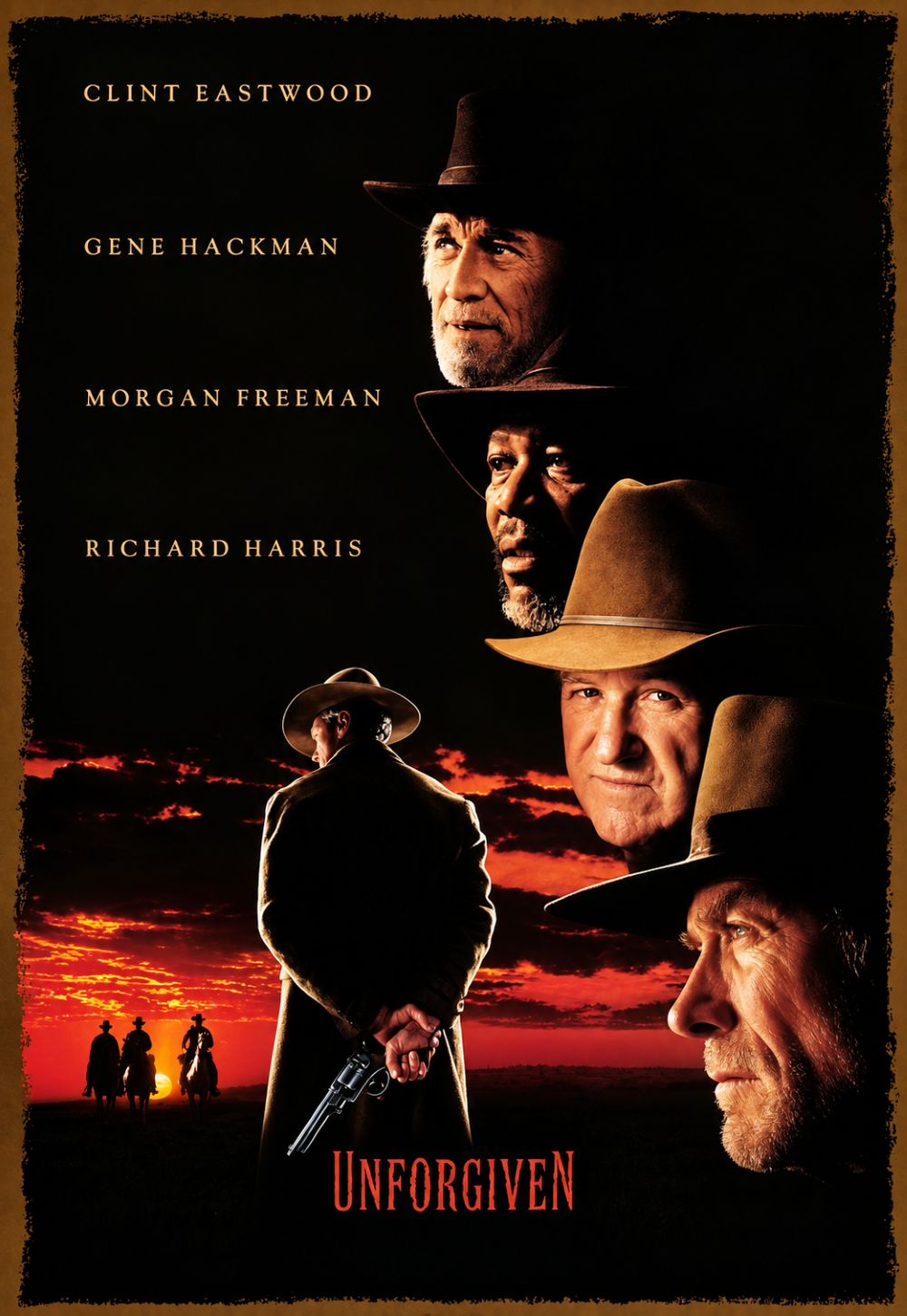
There is a point in Unforgiven when the familiar fantasy of the Western gunfighter finally collapses under the weight of what killing actually means. Clint Eastwood’s 1992 masterpiece is a revenge story, a character study, and an unusually merciless critique of the myths that turned killers into folk heroes. It takes nearly every image associated with the classic Western—the lone rider, the righteous bounty, the corrupt frontier town, the feared gunslinger, the climactic saloon showdown—and asks what those images would look like if the people involved had to suffer the consequences afterward. The answer is bleak, often grimly funny, and far more powerful than a simple “anti-Western” label suggests.

Eastwood stars as William Munny, a former outlaw and murderer trying to survive as a widowed pig farmer in Kansas. He has two young children, a failing farm, and little talent for the peaceful life he has supposedly embraced. At the beginning of the film, Munny is practically the opposite of the cool, razor-sharp gunfighters Eastwood played in his younger years. He falls into mud, cannot shoot straight, and looks exhausted before the real journey even begins. That physical decline matters because Eastwood wants the audience to see the distance between a Western legend and the actual, aging human being beneath it.

Munny’s chance to return to violence arrives when the Schofield Kid, an arrogant young would-be gunslinger, offers him a share of a bounty. In the town of Big Whiskey, Wyoming, two cowboys have viciously cut up a prostitute named Delilah Fitzgerald. The town’s sheriff, Little Bill Daggett, punishes them with a fine paid to the brothel owner rather than giving Delilah anything resembling justice. Furious, the other prostitutes gather money and put out a reward for the men responsible. Munny initially hesitates, but the bounty is enough to draw him out of retirement. He convinces his old partner Ned Logan to ride with him, and the three men head toward Big Whiskey.

On paper, that setup sounds like the start of a traditional revenge Western. The crime is vicious, the local law is corrupt, and armed men set out to punish the guilty. Unforgiven, though, immediately complicates every part of that formula. The women have every reason to be furious, but their bounty does not turn the mission into a clean act of justice. Munny and Ned may be targeting cruel men, but they are still going to kill them for money. The Schofield Kid talks about the bounty like it is an adventure, but he has no real idea what killing another person does to someone. The film keeps refusing the easy emotional release that a more conventional Western would offer.

Eastwood’s direction is particularly sharp whenever violence finally breaks out. There are no elegant shootouts designed to make the viewer cheer. Guns misfire, men miss, people panic, and the victims do not fall over conveniently after being hit. When Munny and Ned shoot one of the cowboys, the sequence is awkward, tense, and almost miserable to watch. The wounded man suffers for a long time, calling out for water while his companions are too frightened to help him. Munny does not suddenly look like an unbeatable hero. He looks like a man who has made a terrible choice and now has to stand there listening to the result.

That approach makes Unforgiven feel much harsher than most Westerns, but it also gives the film its emotional weight. It is not saying that violence is never understandable. The cowboys who attacked Delilah are not treated as innocent victims, and Little Bill’s indifference to her suffering is infuriating. What the movie understands is that a justified act can still be ugly, frightening, and spiritually damaging. Killing someone may solve a practical problem, but it does not automatically restore dignity or erase pain. The movie’s view of revenge is not that it never works; it is that it always costs more than the stories promise.

Eastwood’s performance is one of the reasons the film lands so hard. William Munny is clearly connected to the Eastwood screen persona audiences knew from earlier Westerns, but he is a far sadder and more frightening version of it. Munny’s past is revealed gradually through other characters’ stories. Before he married Claudia, he was drunk, violent, and seemingly capable of killing anyone who got in his way. Claudia helped turn him toward a better life, and after her death he has tried to honor that change. Yet the movie never suggests that redemption has erased who he was. It only suggests that he has managed to keep that part of himself under control.

As the story moves forward, Munny becomes increasingly sick, angry, and emotionally stripped down. His old skills come back, but the return is not triumphant. It is more like watching someone relapse into a destructive part of themselves. Eastwood plays this change with remarkable restraint. He does not overdo the anger or announce the transformation with long speeches. Instead, Munny’s face gets harder, his voice becomes flatter, and his decisions become more final. By the end, he has become the frightening killer people said he was, and the movie makes that feel tragic rather than exhilarating.

Gene Hackman gives one of the film’s best performances as Little Bill Daggett, the sheriff of Big Whiskey. Little Bill is cruel, blunt, and completely convinced that he is the only person keeping the town from falling apart. He sees himself as a realist. In his mind, the cowboys have paid for their crime, the prostitutes are causing unnecessary trouble, and every outside gunman is a threat to the peace he has built. But his “peace” depends on denying Delilah justice and beating anyone who challenges his authority. He is not a noble lawman protecting civilization from barbarism. He is a violent man with a badge who has decided that his version of order matters more than anyone else’s pain.

Hackman makes Little Bill compelling because he never plays him as a cartoon villain. The character can be funny, conversational, and even oddly charming when he is talking about building his house or explaining how a gunfight really works. Those ordinary details make his cruelty more believable. Little Bill is not a monster because he twirls his mustache or enjoys evil for its own sake. He is a monster because he has made violence routine. He can beat a man nearly to death, then return to discussing carpentry as if nothing meaningful has happened.

The movie’s fascination with mythmaking is another reason it remains so great. Unforgiven constantly contrasts what people say about gunfighters with what gunfighters are actually like. Richard Harris appears as English Bob, an aging outlaw who has turned himself into a storybook figure. He travels with W. W. Beauchamp, a writer who records exaggerated tales of duels, bravery, and glamorous frontier violence. English Bob wants to be remembered as the sort of man old Westerns love: a polished, fearless killer who can outdraw anyone in a fair fight.

Little Bill quickly destroys that image, humiliating English Bob and explaining that most gunfights are not won by the fastest hand or the bravest heart. They are won by whoever gets lucky, whoever fires first, or whoever is less scared at the right moment. That speech is one of the clearest examples of what Unforgiven is doing with the genre. It does not merely say that the old stories were exaggerated. It shows why people prefer exaggeration. The truth is messy, cowardly, and often too ugly to make a satisfying legend.

The Schofield Kid represents the danger of believing those legends too completely. He talks big about killing men, insists he is a famous gunfighter, and assumes the bounty will make him rich and important. But when the moment comes, he cannot handle the reality of what he has done. After taking a life, he drinks heavily and admits that he has never killed anyone before. His fantasy collapses almost instantly. Munny’s response is one of the film’s coldest and most honest moments: when you kill a man, you take away everything he has and everything he is ever going to have. There is no speech about courage, justice, or glory. There is only the permanent fact of death.

Morgan Freeman is excellent as Ned Logan, Munny’s old partner and closest friend. Ned has a quiet decency that does not erase his violent past but makes clear that he wants no part of it anymore. His scenes with Munny feel lived-in, as if the two men understand each other without needing to explain their history. Ned knows exactly what Munny used to be, and that knowledge makes him nervous about what his friend may become again. Freeman brings warmth and humor to the movie, which makes the eventual loss of that warmth feel devastating.

Ned is especially important because he shows that a person can decide not to keep living by old violent rules. He has a life with Sally Two Trees, and when the killing becomes real, he chooses to leave rather than continue. That choice separates him from Munny. Both men have done terrible things, but Ned recognizes that he has reached the point where he cannot go back. Munny, on the other hand, is eventually pulled all the way back into the identity he thought he had escaped.

Visually, Unforgiven is one of Eastwood’s most beautiful films, although “beautiful” may not be the first word that comes to mind while watching it. The landscapes are often gray, rainy, muddy, and lonely. Big Whiskey is not a romantic frontier town full of colorful saloons and grand main streets. It is wet, cramped, and miserable. The open country does not feel liberating either. It feels empty and dangerous, a place where a wounded man can die slowly because help is too far away. Cinematographer Jack N. Green gives the film a somber, dusk-like look that fits its mood perfectly.

The final confrontation in the saloon is one of the most famous scenes in Eastwood’s career because it briefly gives viewers the kind of gunfighter moment they have been waiting for. Munny walks into Big Whiskey through the rain, enters the saloon, and becomes the nightmare Little Bill and the others have feared. He kills with shocking speed and delivers lines that sound immediately iconic. For a few minutes, the old Eastwood myth appears to return in full. The silent killer is back, the bad men are terrified, and the audience can feel the raw force of the scene.

But Unforgiven refuses to turn that climax into a victory lap. Munny’s rampage is not heroic liberation. It is grief, rage, alcohol, and guilt exploding through a man who has lost the fragile stability he built after leaving violence behind. He is not reclaiming some glorious identity. He is becoming the worst version of himself again. The scene is undeniably thrilling in a purely cinematic sense, but Eastwood makes sure the thrill feels contaminated. We are watching a legend come alive, but the movie has spent two hours teaching us that legends are usually built on suffering.

That is why Unforgiven became Eastwood’s Western magnum opus. It is not just a great Western made by a star who knew the genre inside out; it is the film where he fully confronted the meaning of his own Western image. Eastwood began deconstructing that image with High Plains Drifter, where the mysterious stranger was less a traditional hero than a ghostly, cruel force of revenge. He continued the process in The Outlaw Josey Wales, a more expansive and emotional film that questioned authority and showed an outlaw finding a kind of community, even while preserving much of the old gunslinger charisma. With Unforgiven, Eastwood completes that deconstruction of the Western film genre.

In Unforgiven, there is no clean heroism left behind the gunfighter’s reputation. The lone rider is exhausted and morally compromised. The sheriff is a bully. The bounty is not justice in any simple sense. The famous gunfighter is often a fraud, a coward, or simply lucky. And the man who really is capable of becoming a legend is also capable of committing horrifying acts. Eastwood does not dismiss the Western’s power; if anything, he understands that power better than almost anyone. He knows why audiences respond to the image of a lone man walking into a saloon to face impossible odds.

What makes the film so enduring is that it asks viewers to look beyond that image. Who dies so the hero can become a legend? Who gets turned into a footnote in someone else’s story? What does the survivor carry afterward? Those questions give Unforgiven a moral weight that few Westerns, revisionist or otherwise, can match. It is a film about violence, but it is also about memory, regret, masculinity, and the lies people tell to make brutality seem noble. By its final fade-out, Unforgiven leaves the Western standing not as a celebration of violence, but as a haunted reckoning with everything violence destroys.

THE BLOOD OF HEROES (1989) – Rutger Hauer and Joan Chen play in the Jugger Super Bowl! 


As an obsessed Rutger Hauer fan of the early 90’s, I was working my way through the man’s back catalogue of films when I came across THE BLOOD OF HEROES (1989) on the shelves at my local video store. With its post-apocalyptic setting and its strange sport of jugger, I’ll admit that it was not the kind of film that I’m most drawn to. I generally preferred watching Hauer taking down the bad guys in movies like WANTED DEAD OR ALIVE (1986) and BLIND FURY (1989), which was released the very same year. However, it was a relatively recent Hauer film, so I rented it, cautiously optimistic that it would be entertaining. At the time, it was not my favorite Hauer film, but I remember an 18-year-old version of myself thinking it was okay. I’ve watched it a couple of times over the last 30 years, and even own the DVD, but it’s not one that I pull off the shelf very often. I decided it was time for a fresh viewing. 

In the bleak, desolate, futuristic world of THE BLOOD OF HEROES, Rutger Hauer plays Sallow, the leader of a team of juggers. They go from town to town challenging the local team in a sport where you win by placing a dog skull securely on a stake. It’s an extremely violent game consisting of two teams with five players. Four players basically beat the crap out of the opposition with clubs and chains, in hopes that they can provide protection to their one player, the “quick,” who can get the skull on the stake. We meet Sallow’s team who consists of Dog Boy (Justin Monjo), Mbulu (Delroy Lindo), Big Cimber (Anna Katarina), and Young Gar (Vincent D’Onofrio) as they enter a town ready for a match. They win, but Dog Boy, their quick, has his leg broken in the process. Luckily for them, the opponent’s quick Kidda (Joan Chen), who was at least partially responsible for Dog Boy’s gruesome injury, is available to head towards the next town with the ragtag crew! She turns out to be a hell of a player, who’s willing to do whatever it takes to win, including biting an ear off when it’s required. This is what I call dedication. During the course of the story, we find out that Sallow used to be a professional jugger who played in “The League” in the underground cities where the rich, aristocratic people live and treat their champion juggers “almost” like one of them. He got banished when he engaged in a forbidden relationship with one of the overlord’s daughters. With his team of juggers, especially the super talented Kidda and Gar, Sallow leads them to the big city where they will challenge the professionals. For Sallow, it’s a shot at redemption. For the others, it’s a chance to be noticed by the League, which will lead to a much more luxurious life, when they’re not bashing their opponents brains in of course. I may have exaggerated a bit in my headline when I referred to this challenge as the “Jugger Super Bowl,” but it’s still kind of a big deal! 

After rewatching THE BLOOD OF HEROES again, while it’s still not my favorite kind of film, I can confidently say that I enjoyed it very much this time around. Most of that joy stems from watching Rutger Hauer in his prime. He’s such a charismatic actor and that even comes across in such a grim setting. I also like his character type, that of the disgraced former hero searching for redemption against a system that had previously discarded him. There’s usually much satisfaction to be had with this type of character, and this movie delivers on that premise. Joan Chen is very good as the new addition to the team who dreams of escaping her town and becoming a jugger star! She and Hauer really carry the film. The rest of the cast also added to my enjoyment of the movie. For me, It’s a lot of fun watching actors like Vincent D’Onofrio and Delroy Lindo in relatively early roles in their long and distinguished careers. I really enjoyed seeing Australian actors Hugh Keays-Byrne and Max Fairchild, both veterans of the MAD MAX series, appear near the end of the film when they make it to the city. Max Fairchild is especially impressive as one of the League juggers and former friend to Hauer. I wanted to give one more shout out, and this one goes out to actor Gandhi MacIntyre, who plays the team manager and doctor in the film. He has a very likable presence and made me smile on multiple occasions. The movie’s pretty serious and dark, and Gandhi’s sense of humor is a welcome presence. 

THE BLOOD OF HEROES is written and directed by David Webb Peoples. To date, it’s the only feature length film that Peoples has directed. In my opinion, he does a fine job. He certainly creates an interesting world, with huge contrasts between the barren, rocky outside landscapes and the overcrowded, underground cities. This is not a world I want to live in, but Peoples brought his vision to the screen, albeit within clear budget limitations. Considering it’s from the same guy who wrote BLADE RUNNER (1982) and UNFORGIVEN (1992), the story is pretty simple. And this is fine by me. The story of redemption for some, and of the dream of newfound glory for others, is a story that all of us can relate to at some point in our lives. At this point in my own life, I can relate to both! The movie features some ugly and violent images, but I found myself emotionally pulling for the ragtag group of underdogs in the big game at the end. It’s also pretty cool that Peoples made up his own game when writing the screenplay, albeit a game I would never want to play. The game Jugger, a less violent version of the game introduced in the film, is currently played all over the world. 

One final thing I wanted to point out about THE BLOOD OF HEROES is the fact that an author named Danny Stewart has written a book called “Saluting the Blood of Heroes – Behind the Apocalyptic Film.” I just learned of this book while researching the film today for this review. It was published in July of 2024. I just love a world where a person is able to get a book published about the making of an obscure, low budget film from the late 80’s. I won’t be surprised if this ends up in my Amazon cart really soon. 

I’ve included the trailer for THE BLOOD OF HEROES (AKA – THE SALUTE OF THE JUGGER) below: