Review: Saving Private Ryan (dir. by Steven Spielberg)


“Someday we might look back on this and decide that Saving Private Ryan was the one decent thing we were able to pull out of this whole godawful, shitty mess.” — Sergeant Horvath

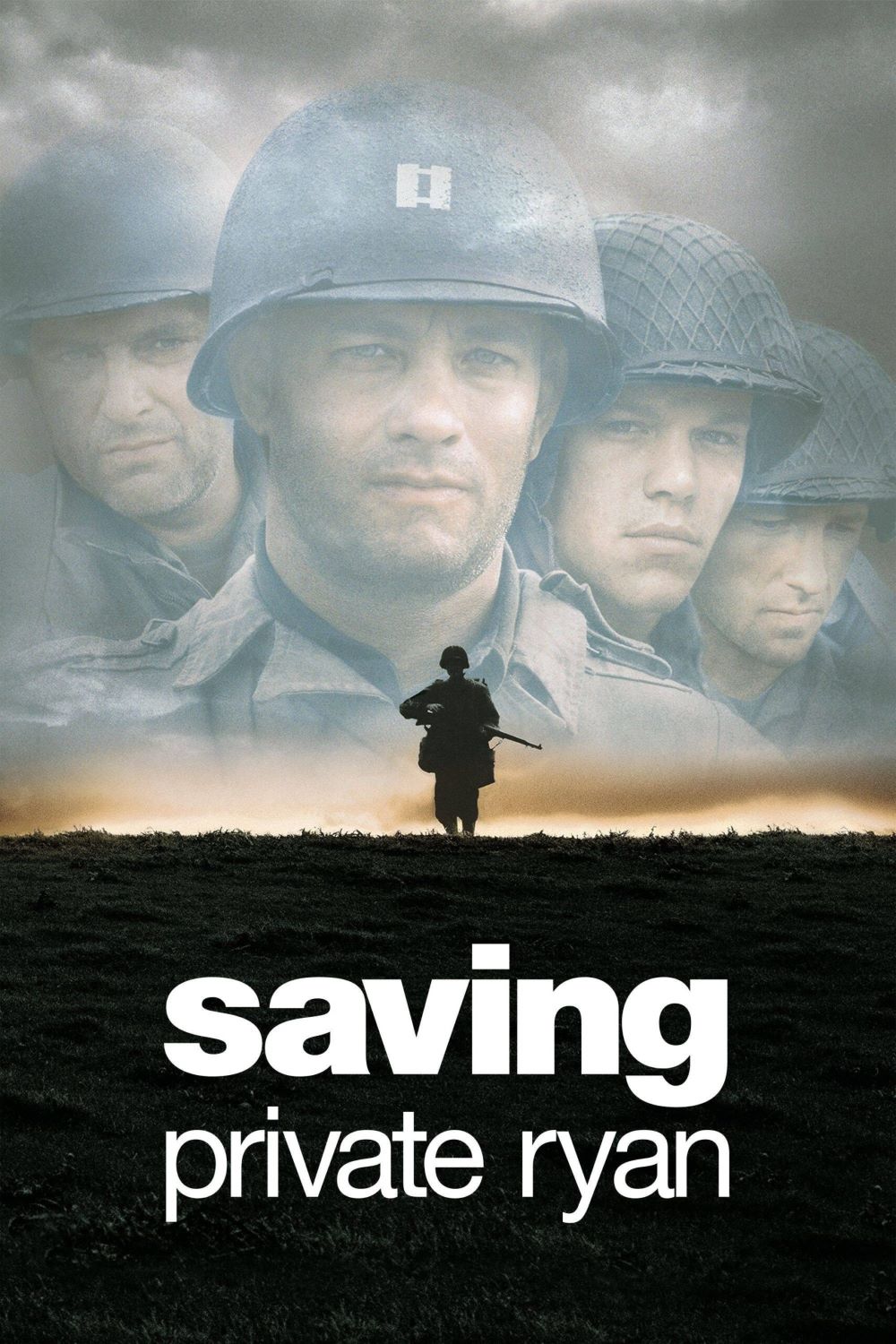
Saving Private Ryan stands as a landmark achievement in war cinema, intricately weaving immersive battle scenes, rich character dynamics, and profound moral themes into a nearly three-hour exploration of World War II’s human cost. One of its most remarkable features is the opening Omaha Beach landing sequence, a meticulously crafted, over 24-minute depiction of warfare’s brutal reality. Spielberg deploys a cinema verité style with handheld cameras capturing disorientation and chaos through the soldiers’ eyes. The sound design envelops the viewer in a sensory onslaught—gunfire, shouting, explosions—creating a visceral experience that immerses audiences directly in the terror and confusion of D-Day.

The filming process drew heavily on historical accuracy, with the production shot on the coast of County Wexford, Ireland, employing amputee actors and practical effects over computer graphics to simulate violent injuries and battlefield horrors. Muted tones evoke wartime photographs, and rapid, shaky editing conveys the disorganized, frantic environment soldiers endured. Consulting WWII veterans and historians, Spielberg created a sequence that reshaped cinematic portrayals of war, influencing how future films would approach the genre’s raw immediacy and emotional weight.

The film’s narrative follows a squad led by Captain Miller on a mission to locate and bring home Private James Ryan, whose three brothers have been killed in combat. The mission is steeped in the real-life tragedy of the five Sullivan brothers who died together aboard the USS Juneau in the Pacific, prompting military policies to prevent similar familial devastation. This historical context frames the story’s ethical heart: risking several men’s lives to save one, raising enduring questions about the value of individual sacrifice within the broader war.

In Saving Private Ryan, sacrifice is portrayed ambiguously—not as the sacrifice of a single hero but as the collective cost borne by the men tasked with rescuing one individual under perilous conditions. As the squad journeys through the war-torn French countryside, the deaths, injuries, and tensions they face underscore war’s randomness and the difficulty of weighing one life against many. The narrative refuses to romanticize or simplify, instead confronting the audience with the tragic truth that countless soldiers lose their lives without recognition or purpose, while some survive against staggering odds.

Duty and camaraderie thread throughout the film, portrayed through the soldiers’ evolving relationships and personal struggles. Each grapples with loyalty not only to their mission but to their fellow men and their own moral codes.

Integral to the film’s power is Tom Hanks’s layered performance as Captain John Miller. Hanks breathes life and emotional depth into Miller, portraying him as a man shaped by civilian life—revealed poignantly when he discloses his pre-war profession as a schoolteacher—now transformed by the relentless demands of war. He embodies an officer who is both composed and vulnerable, carrying the heavy burden of leadership with quiet dignity. Hanks’s portrayal reveals the internal struggles beneath Miller’s stoic exterior: moments of doubt, moral conflict, and fatigue subtly expressed through a trembling hand or a weary gaze. This humanity makes Miller relatable, as a man trying to maintain order and purpose amid chaos.

Hanks skillfully balances Miller’s authoritative presence with warmth and empathy, particularly evident in his paternal interactions with younger soldiers, reinforcing Miller’s role as both a leader and protector. His nuanced acting delivers the complexity of a man constantly negotiating duty and compassion. In scenes of high tension or moral quandaries, Hanks conveys the weight of command while allowing glimpses into Miller’s psychological strain, deepening the film’s emotional resonance.

Following Hanks’s Miller, a standout amongst the supporting cast is Tom Sizemore’s portrayal of Technical Sergeant Mike Horvath, Miller’s steady second-in-command. Sizemore embodies the pragmatic, battle-hardened soldier whose loyalty and experience provide emotional grounding for the squad. Sizemore portrays Horvath’s weariness and quiet commitment, adding layers of realism that deepen the exploration of how war reshapes individuals. The chemistry and shared history between Miller and Horvath are palpable, illustrating the bonds that sustain soldiers through hardship and lending emotional weight to the narrative.

The film wrestles with intense moral ambiguity throughout. The mission’s premise—to risk many lives to save one—compels both characters and viewers to confront complex questions about justice, value, and the cost of war. Scenes presenting difficult choices, such as the decision to spare or execute prisoners, dramatize these ethical dilemmas and highlight the emotional burdens borne by soldiers.

Technically, the film excels, with Janusz Kaminski’s dynamic cinematography capturing both the chaos of battle and intimate moments with evocative clarity. The immersive sound design reinforces the brutal reality, stripping warfare of glamor and confronting audiences with its daunting human costs.

Despite the overwhelming destruction and loss, Saving Private Ryan offers moments of humanity and hope. The rescue mission serves as a fragile symbol of compassion in the midst of devastation, while the film’s closing reflections on memory and legacy emphasize the lasting significance of sacrifice and survival.

Saving Private Ryan stands as a monumental achievement in the war genre, combining visceral combat realism, compelling characters, and moral complexity. Through Hanks’s deeply human Captain Miller and the nuanced supporting performances, especially Sizemore’s grounded Horvath, the film explores themes of sacrifice, duty, and brotherhood with unflinching honesty. Its enduring legacy lies in its unvarnished yet empathetic portrayal of war’s cost and the profound sacrifices made by those who lived it.

Mind Ripper (1995, directed by Joe Gayton)


In a base hidden away in the desert, a group of government scientists reanimate the corpse of a recent suicide victim with radiation.  They bring Thor (Dan Blom) back to life but it turns out that Thor just wants to kill all of them.

Mind-numbingly dull, Mind Ripper is the same as a hundred other horror films with the same plot.  Lance Henriksen plays the lead scientist and it’s always a pleasure to see him in even the worst movies but Mind Ripper underutilizes him in favor of Giovanni Ribisi, of all people.

Mind Ripper was executive produced by Wes Craven and sold in some markets as Wes Craven Presents Mind Ripper.  Wes’s son, Jonathan Craven, did write the script and the movie was originally planned as being the third Hills Have Eyes movie.  Wes Craven’s name undoubtedly helped this film get into production but the thing to remember is that Craven may have been the executive producer and his son may have written but Wes Craven did not direct the movie and that makes all the difference.  Maybe Wes Craven could have done something with the limp story and the uninteresting characters.  My guess is that Wes Craven was smart enough not to even try.

Don’t let this movie rip your mind.  It’s not worth it.

That Thing You Do! (1996, directed by Tom Hanks)


That Thing You Do! is the story of a one-hit wonder.

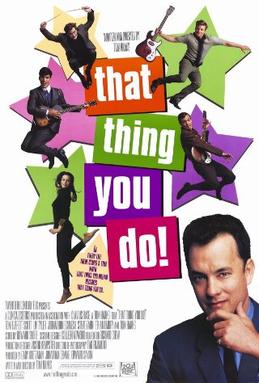
In 1964, an aspiring Jazz drummer named Guy (Tom Everett Scott) is a last minute addition to the a local band called the Oneders.  (It’s meant to sound like Wonders but almost everyone mispronounces it as O-Needers.)  The band’s egotistical leader, James (Jonathon Schaech) has written a slow ballad called That Thing You Do! but when Guy’s drumming causes the band to perform the song at a faster tempo, they end up with a local hit on their hands.  That local hit becomes a national hit when The Oneders are signed by Play-Tone Records.  First, Mr. White (Tom Hanks), their new manager, officially changes the name to The Wonders.  Secondly, he makes sure that every teen in America is dancing to That Thing You Do!  Third, he tells Guy to always wear sunglasses.  Fourth, he tells James that he will record and perform what Play-Tone tells him to.  Guitarist Lenny (Steven Zahn) and the unnamed Bass Player (Ethan Embry) are happy to be along for the ride but James chafes at his lack of artistic freedom.  Guy, meanwhile, falls for James’s girlfriend (Liv Tyler, at her loveliest) and dreams of meeting his idol, jazzman Del Paxton (Bill Cobbs).

That Thing You Do! was Tom Hanks’s directorial debut and, with its careful recreation of a bygone era and its collection of authentic sounding early 60s rock on the soundtrack, it was obviously a labor of love.  Considering the number of times that the song is played in the movie, it helps that it is a very good song.  That Thing You Do! is a catchy tune, one that you can’t help but tap your feet to.  At the same time, it also sounds like a one hit wonder.  It’s good but not so great as to make you expect much else from The Wonders.

Not surprisingly, Tom Hanks gets great performances from the entire ensemble cast.  Johnathon Schaech and Tom Everett Scott have never been better.  Liv Tyler is lovely and vulnerable as James’s unappreciated girlfriend.  Familiar faces like Peter Scolari, Kevin Pollak, Chris Isaak, and Clint Howard make welcome appearances.  Hanks himself is surprisingly intimidating as Mr. White.  When he says that the band will cover something the Play-Tone catalogue, it’s obvious that he’s not making a request.

The film is a tribute to being young and to loving music bit it’s also a study in the disillusionment of discovering that everything is ultimately a business.  James is frequently an arrogant jerk and he treats his girlfriend terribly but it’s hard not to sympathize with him when he says that he wants to do more than just cover songs from the Play-Tone catalogue.  To James and Guy, the Wonders are about self-expression and their love of music.  To Mr. White, the Wonders are just another band that came up with one catchy tune and who probably aren’t ever going to be heard from again.   That Thing You Do! pays tribute to all of the one-hit wonders out there, the bands who you forget about until you just happen to hear that one song on the radio or in a movie and suddenly, all the memories come flooding back.


Film Review: Boiler Room (dir by Ben Younger)


Released in 2000, Boiler Room tells the story of Seth Davis (Giovanni Ribisi).

Seth is only 19 years old.  He’s the son of a federal judge and he’s also a college dropout.  Seth is making a pretty good living for himself, running a casino out of a house near the campus.  One night, a handsome 20something named Greg Weinstein (Nicky Katt) stops by and tells Seth that he could be making an even better living for himself as a broker at J.T. Marlin.

Located somewhere in Long Island, J.T. Marlin is a brokerage firm that is dominated by loud and young men.  Overseen by the ruthless Jim Young (Ben Affleck, doing the glorified cameo thing), J.T. Marlin is a place where everyone owns an expensive car, an expensive watch, and where everyone brags about how much money they’ve made.  The insults and slurs fly from desk to desk, as they tend to do whenever a bunch of wealthy, highly competitive guys get together.  J.T. is seduced by the atmosphere, even as he watches some broker breaks down due to the pressure.  He becomes friends with Chris Varick (Vin Diesel) and falls for receptionist Abbie Halpert (Nia Long), who just happens to be Greg’s ex-girlfriend.  Eventually, Seth gets good at his job.  Unfortunately, it turns out that his job is centered around tricking people into investing in a pyramid scheme and eventually, one of Seth’s clients, Harry (Taylor Nichols), ends up broke and without his family.  The guilt-stricken Seth realizes that he has a conscience.

Like a lot of these type of movies, Boiler Room is at its best when it starts, when it’s all about tough talk, rude jokes, and obsessive competition amongst a bunch of well-dressed good-looking guys.  Nicky Katt and Vin Diesel are so much fun to listen to that it’s hard not to regret that the entire film wasn’t just about them.  Things become significantly less interesting once the FBI shows up and Seth decides to become a snitch.  For the most part, no one like a snitch, even if they’re motivated by the purest of intentions.  To make a snitch likable, he has to be a truly compelling character, like Henry Hill in Goodfellas.  For the most part, audiences prefer anti-heroes who go down with the ship as opposed to the rats who jump into the first lifeboat they see.  In The Wolf of Wall Street, Jordan Belfort agrees to wear a wire but then slips his business partner a note, warning him.  That’s one of the reasons why The Wolf of Wall Street is still a classic while Boiler Room has been largely forgotten.  As a character, Seth just isn’t compelling enough to pull off the snitch act.  Nor does he really seem clever enough to pull off what he does at the end of the film.

That said, I do enjoy Boiler Room.  It’s largely due to the cast.  Nicky Katt, Vin Diesel, Scott Caan, Giovanni Ribisi, they were all young, energetic, and eager to show off what they could do.  While their characters competed to see who could make the most money, the actors competed to see who could steal the most scenes.  The film is ultimately only so-so but that cast is unforgettable.

Film Review: Public Enemies (dir by Michael Mann)


2009’s Public Enemies is a portrait of the battle for the soul and imagination of America.

The films take place during the Great Depression.  With Americans struggling to pay their bills and many citizens out-of-work and feeling desperate, a new breed of folk hero has emerged.  Men like my distant relative Pretty Boy Floyd (Channing Tatum) and Alvin Karpis (Giovanni Ribisi) may be criminals who make their living by robbing banks but, to a nation of angry people who feel like they’ve been forgotten by the government and betrayed by the wealthy, they’re rebels who are challenging the system.  They are viewed as being modern-day Robin Hoods, even though very few of them actually bother to give the money that they steal back to the poor.

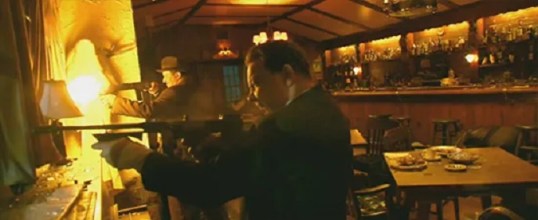
John Dillinger (Johnny Depp) is perhaps the most famous of the criminals who have been declared a “public enemy” by the FBI.  The handsome and charismatic Dillinger becomes almost a living legend, the man who cannot be captured by law enforcement.  He becomes a folk hero but with the twist that his own death seems inevitable.  Dillinger lives by his own set of rules and the press loves him even as they hungrily anticipate his violent end.

Pursuing Dillinger and the other so-called public enemies is a young FBI agent named Melvin Purvis (Christian Bale).  Purvis’s job is not only to capture or eliminate men like Dillinger.  It’s also to somehow figure out a way to replace them in the public’s imagination.  Through the use of what was then-considered to be revolutionary techniques (like fingerprinting and phone taps), Purvis tracks down one public enemy after another and soon, he’s becoming as much of a folk hero as the people that he’s pursuing.  If Dillinger and his cohorts represent the ultimate rebellion against an ineffectual system, Purvis and his success suggest that maybe the system actually can get something accomplished.  Unfortunately, for Purvis, he not only has to deal with the challenge of capturing Dillinger but also with the growing jealousy of his publicity-hungry boss, J. Edgar Hoover (Billy Crudup).  As is typical of the heroes of Michael Mann’s film, Dillinger and Purvis may be on different sides of the law but they have more in common than they realize.  Neither one can trust the people that they’re working with.

I remember that I was really excited about Public Enemies when it was first released in 2009.  I’m fascinated by the Depression-era outlaws and Dillinger’s story is certainly an interesting one.  (I’ve always enjoyed the theory that Dillinger faked his death, even though I don’t believe it for a second.)  Michael Mann seemed like the perfect director for the material and Johnny Depp seemed like ideal casting.  I have to admit that I was a little bit disappointed in the film itself, which was poorly paced and stuck so closely to the facts of the case that it led me to realize that Dillinger will always be more interesting as a legend than an actual person.  (I’ll concede that was probably the film’s point.)  There were moments of brilliance in the film.  The scene where Dillinger escaped from custody was wonderfully done.  Stephen Graham’s unhinged performance as Baby Face Nelson was excellent.  Johnny Depp had the right look for Dillinger but I have to admit that I found myself a little bit bored with Christian Bale’s Melvin Purvis.

Looking back today, though, the film feels almost prophetic.  That may seem like an odd thing to say about a film set in the past but Public Enemies portrait of an America caught between celebrating the rule of law and the excitement of rebellion feels very relevant to what’s happening today.  In retrospect, Public Enemies is a portrait of the contradiction at the heart of America, a country with a culture of both rebellion and loyal patriotism.  Public Enemies portrays a battle the continues to this day.

Public Enemies (2009, dir by Michael Mann, DP: Dante Spinotti)

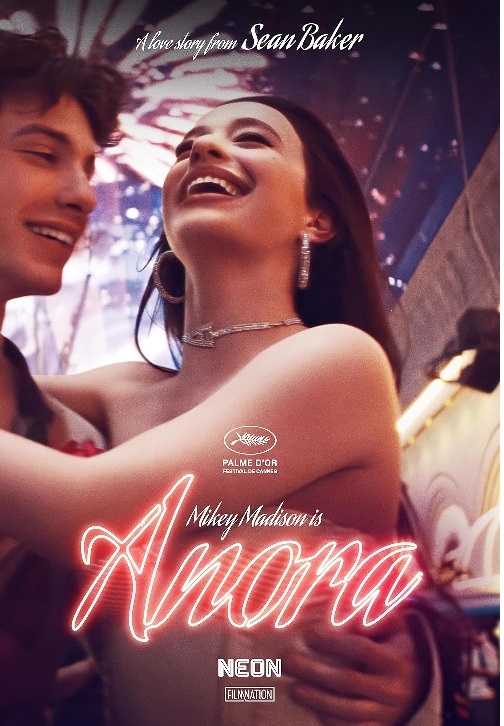
Anora Wins In Michigan


The Michigan Movie Critics Guild have announced their picks for the best of 2024!

(The winners are listed in bold.)

Best Picture
Anora
The Brutalist
Dune: Part Two
The Substance
Wicked

Best Director
Sean Baker – Anora
Jon M. Chu – Wicked
Brady Corbet – The Brutalist
Robert Eggers – Nosferatu
Coralie Fargeat – The Substance

Best Actress
Amy Adams – Nightbitch
Cynthia Erivo – Wicked
Nicole Kidman – Babygirl
Mikey Madison – Anora
Demi Moore – The Substance

Best Actor
Adrien Brody – The Brutalist
Timothée Chalamet – A Complete Unknown
Daniel Craig – Queer
Colman Domingo – Sing Sing
Hugh Grant – Heretic

Best Supporting Actress
Ariana Grande-Butera – Wicked
Felicity Jones – The Brutalist
Natasha Lyonne – His Three Daughters
Margaret Qualley – The Substance
Zoe Saldaña – Emilia Pérez

Best Supporting Actor
Yura Burisov – Anora
Kieran Culkin – A Real Pain
Clarence Maclin – Sing Sing
Guy Pearce – The Brutalist
Adam Pearson – A Different Man
Denzel Washington – Gladiator II

Best Animated Film
Flow
Inside Out 2
Piece By Piece
Transformers One
The Wild Robot

Best Documentary
Daughters
Music By John Williams
No Other Land
Piece By Piece
Super/Man: The Christopher Reeve Story
Will & Harper

Best Ensemble
Conclave
Dune: Part Two
Nosferatu
Saturday Night
Wicked

Best Screenplay (Adapted or Original)
Anora
The Brutalist
Challengers
Nosferatu
The Substance
Wicked

Breakthrough Award
Mikey Madison – Actress for Anora
Giovanni Ribisi – Cinematographer for Strange Darling
Jane Schoenbrun – Director for I Saw the TV Glow
Maisy Stella – Actress for My Old Ass
Zelda Williams – Director for Lisa Frankenstein

Stunts
Deadpool & Wolverine
The Fall Guy
Furiosa: A Mad Max Saga
Kill
Monkey Man
Road House

The MMCG Award for Film Excellence (presented to a filmmaker, writer, actor, crew member, etc., who has Michigan ties or to a film made or set in Michigan)
The Fire Inside (Set in Flint, and lead actress Ryan Destiny is a Detroit native)
Francis Ford Coppola (Writer/Director of Megalopolis)
Hundreds of Beavers (Partially filmed in Michigan)
Keegan-Michael Key (Actor in IF, Transformers One & Dear Santa)
J.K. Simmons (Actor in Saturday Night, Red One and Juror #2)

Here Are The 2024 Nominations of the Michigan Movie Critics Guild!


The Michigan Movie Critics Guild have announced their nominations for the best of 2024.  The winners will be announced on December 9th!

Best Picture
Anora
The Brutalist
Dune: Part Two
The Substance
Wicked

Best Director
Sean Baker – Anora
Jon M. Chu – Wicked
Brady Corbet – The Brutalist
Robert Eggers – Nosferatu
Coralie Fargeat – The Substance

Best Actress
Amy Adams – Nightbitch
Cynthia Erivo – Wicked
Nicole Kidman – Babygirl
Mikey Madison – Anora
Demi Moore – The Substance

Best Actor
Adrien Brody – The Brutalist
Timothée Chalamet – A Complete Unknown
Daniel Craig – Queer
Colman Domingo – Sing Sing
Hugh Grant – Heretic

Best Supporting Actress
Ariana Grande-Butera – Wicked
Felicity Jones – The Brutalist
Natasha Lyonne – His Three Daughters
Margaret Qualley – The Substance
Zoe Saldaña – Emilia Pérez

Best Supporting Actor
Yura Burisov – Anora
Kieran Culkin – A Real Pain
Clarence Maclin – Sing Sing
Guy Pearce – The Brutalist
Adam Pearson – A Different Man
Denzel Washington – Gladiator II

Best Animated Film
Flow
Inside Out 2
Piece By Piece
Transformers One
The Wild Robot

Best Documentary
Daughters
Music By John Williams
No Other Land
Piece By Piece
Super/Man: The Christopher Reeve Story
Will & Harper

Best Ensemble
Conclave
Dune: Part Two
Nosferatu
Saturday Night
Wicked

Best Screenplay (Adapted or Original)
Anora
The Brutalist
Challengers
Nosferatu
The Substance
Wicked

Breakthrough Award
Mikey Madison – Actress for Anora
Giovanni Ribisi – Cinematographer for Strange Darling
Jane Schoenbrun – Director for I Saw the TV Glow
Maisy Stella – Actress for My Old Ass
Zelda Williams – Director for Lisa Frankenstein

Stunts
Deadpool & Wolverine
The Fall Guy
Furiosa: A Mad Max Saga
Kill
Monkey Man
Road House

The MMCG Award for Film Excellence (presented to a filmmaker, writer, actor, crew member, etc., who has Michigan ties or to a film made or set in Michigan)
The Fire Inside (Set in Flint, and lead actress Ryan Destiny is a Detroit native)
Francis Ford Coppola (Writer/Director of Megalopolis)
Hundreds of Beavers (Partially filmed in Michigan)
Keegan-Michael Key (Actor in IF, Transformers One & Dear Santa)
J.K. Simmons (Actor in Saturday Night, Red One and Juror #2)

The Films of 2024: Horizon: An American Saga: Chapter One (dir by Kevin Costner)


Horizon: An American Saga: Chapter One is the rather unwieldy title of the first part of what Kevin Costner has said will be an epic four-part movie about the settling of the American frontier.

It’s very, very long.

It has a running time of three hours, during which time a lot of characters are introduced and a lot of plotlines are initiated but, because this is the only first chapter, none of them come to a close.  In fact, as the film ends, it’s still a mystery as to how some of the characters are even related.  I watched all three hours and I took my ADD meds this morning so you can be assured that I was actually paying attention.  That said, I still struggled to keep track of who everyone was or even where they were in proximity to each other.  Indeed, it was only towards the end of the film that I realized that several years were supposed to have passed over the course of the first chapter’s running time.

That’s not to say that the film is a disaster.  While it’s not quite the nation-defining epic that Costner obviously envisioned it as being, it’s also not quite the cinematic atrocity that several critics made it out to be.  It’s a throwback of sorts, to the epic westerns of old.  As such, the film features taciturn gunslingers, a woman with a past, dangerous outlaw families, fierce Indian warriors, and a wise Indian chief who has dreamed of the coming of the white man.  The film is full of actors — like Michael Rooker, Sienna Miller, Sam Worthington, Danny Huston, Will Patton, James Russo, Dale Dickey, and Kevin Costner himself — who feel as if they belong to a different era of filmmaking.  Just about everyone in the film is heading to the settlement of Horizon, which sits in Apache territory.  Despite the efforts of the Indians to kill every settler who shows up, they keep coming.  As one army officer explains it, the Indians have made the mistake of thinking that the settlers will come to believe the land is cursed while the settlers, all of whom are full of American optimism, instead chose to believe that the previous settlers were unlucky but that the next wave of settlers will make it work.  Costner has the right visual sensibility for a western.  The film reveals a director who is obviously in love with the Western landscape and the film is at its best when it simply frames the characters against the beauty of the frontier.  But when it comes to actually telling a compelling story, he struggles.  There are a lot of moving parts to the first chapter of Horizon and the problem is not that they don’t automatically connect but instead that Costner never gives us any reason to believe that they’ll ever connect.  There are no visual clues or bits of dialogue to assure the viewer that everything they’re watching is going to eventually pay off.  Costner asks his audience to have faith in him and remember that he directed Open Range and Dances With Wolves while forgetting about The Postman.

The first hour, which features a brutal raid on the settlement by a group of Indians, is the strongest.  It really drives home the brutality of what we now call the old west.  In the style of Michael Cimino’s The Deer Hunter, Costner closely observes the individual customs of the film’s settlers and carefully introduces several appealing characters who leave the viewer feeling as if they’ve met a very special and very unique community of people.  That makes it all the more devastating when the majority of those characters are subsequently wiped out with casual cruelty in a raid led by the Indian warrior Pionsenay (Owen Crow Shoe).  (Later — much later — a tracker played by Jeff Fahey will show similar brutality while wiping out a group of Apaches.)  The first hour establishes the frontier as being beautiful but also dangerous and it also drives home the mix of determination, desperation, and even madness that led so many to follow Horace Greeley’s advice and “Go west!”  Though the film was shot in early 2023, the brutality of the raid brought to mind the terrible images of the October 7th attacks on Israel.  The subsequent scenes in which Pionesenay and his followers ridiculed those in the tribe who wanted peace mirrored the current schism that’s driving apart the worldwide Left.  The U.S. Army, for their part, arrives a day late and can only offer up not-so subtle condescension.  The surviving settlers, however, remain determined to make a home for themselves.

The second hour focuses on Hayes (played by Costner), who rides into a mining town and gets involved with a family of outlaws who are looking for the woman who shot their father.  The second hour is a bit more of a traditional western than the first hour, though some of the violence is still shockingly brutal.  (Even being comedic relief won’t save you in this film.)  Abbey Lee gives a good performance as the woman with a past and a baby and Kevin Costner is  …. well, he’s Costner.  He could play this type of role in his sleep.

The third hour is a mess, introducing a wagon train and featuring a miscast Luke Wilson as the leader of the settlers and Jeff Fahey giving a strong performance as a ruthless tracker.  The third hour meandered as a whole new set of characters were introduced and I was left to wonder why the film needed new characters when the characters from the first two hours were perfectly adequate.  It was during the third hour that I started to really get impatient with the film and its leisurely approach to storytelling.

The film ends with a montage of what we can expect from the next few chapters of Horizon and I will say that the montage actually looked pretty cool.  That’s because the montage was almost totally made up of action scenes, with none of the padding that caused Chapter One to last an unwieldy three hours despite only having 90 minutes worth of story.  Still, one has to wonder if we’ll actually get to see the next three chapters.  The first chapter bombed at the box office and didn’t exactly excite critics.  Costner is producing and financing the films himself and I doubt he’ll give up on them.  The Horizon saga will be completed but will it made it to theaters or will it just end up on streaming?  Personally, I think the whole thing would work best as a miniseries but who knows?  (If Horizon was airing on Paramount, it would probably be a Yellowstone-style hit.)  All I really do know is that Chapter Two has yet to be released.  And that’s a shame because, for all of Chapter One‘s flaws, I’d still like to see how the story turns out.

Late Night Retro Television Review: Highway to Heaven 2.1 and 2.2 “A Song For Jason”


Welcome to Late Night Retro Television Reviews, a feature where we review some of our favorite and least favorite shows of the past!  On Thursdays, I will be reviewing Highway to Heaven, which aired on NBC from 1984 to 1989.  The entire show is currently streaming on Freevee and several other services!

This week, Highway to Heaven begins its second season with a two-part episode.

Episodes 2.1 and 2.2 “A Song For Jason”

(Dir by Michael Landon, originally aired on September 18th and September 25th, 1985)

Well, this is certainly a tear jerker.

The two-part second season opener of Highway to Heaven finds Jonathan and Mark assigned to work at Camp Good Times, an actual summer camp for children who have cancer.  And while Jonathan is, as usual, enthusiastic about the assignment, Mark responds by begging to be allowed to sit this one out.  Jonathan’s response is to tell Mark to stop feeling sorry for himself and to help the kids.  Mark starts to walk away from his friendship with Jonathan until he runs into one of the kids, Jason (Joshua John Miller, whose best-known work as an actor might be as the scary child vampire in Near Dark).  Jason basically repeats the same thing that Jonathan said, telling Mark that he needs to stop feeling sorry for himself.  Mark realizes that if a kid like Jason can be brave in the face of cancer then the least Mark can do is spend a summer as a camp counselor.

(Adding a bit of poignance to all this is that both Victor French and Michael Landon would die of cancer five years after this episode aired.)

Jason is the son of rock star Miki Winner (Barry Williams — yes, Greg Brady).  Miki is always finding excuse not to spend any time with his sick son.  Maybe Jonathan can change his mind.

But that’s not all!

Curtis (played by a ten year-old Giovanni Ribisi in his acting debut) is scared to death to go outside, a result of his overprotective mother (Robin Riker) constantly harping on the fact that he could die at any minute.  Can Jonathan help Curtis have fun while encouraging his mom to let Curtis be a kid?

Teenage jock Gary (Brian Lane Green) has bone cancer and might lose his leg.  Can he got over his bitterness and get a date with camp counselor Trish (Jill Carroll)?

And will Mark finally realize that there is hope to be found in even the most dire of situations?

(The answer to all of that is yes but you probably already guessed that.)

Even by the standards of Highway to Heaven, this episode was a bit heavy-handed, without a subtle moment to be found.  Barry Williams is as unconvincing a rock star here as he was on The Brady Bunch Variety Hour.  Some of the kids were better actors than others.  It’s also hard not to feel that the story could have been told in just one episode.  The first part, especially, feels a bit padded.  That said, it all still brought tears to my mismatched eyes because, seriously, how couldn’t it?  This is one of those episodes where the show’s earnestness and sincerity really worked to its advantage.  The episode is so heartfelt that it feels rather churlish to be too nit-picky about it.  In the end, flaws and all, the episode works.

Add to that, if you can’t enjoy the scene where Jonathan disguises himself as a barber and shaves a bully’s head, I don’t know what to tell you.

Ted 2 Sucks!


Ted_2_posterWell, I think the title of this review pretty succinctly sums up my reaction to Seth McFarlane’s latest film, Ted 2.  Thanks for reading and have a good…

Oh, really?

Okay, I’ve been told that I have to try to think up at least 300 words to say about Ted 2.  Otherwise, in the eyes of Rotten Tomatoes, we’re not a legitimate film blog.

*sigh*

Okay.

Anyway, Ted 2 is the story of a talking teddy bear (voice by Seth McFarlane) who likes to smoke weed and … well, that’s about it.  He’s just gotten married to Tami-Lynn (Jessica Barth) and they’re having trouble because Tami-Lynn wants a baby but Ted, being a teddy bear, doesn’t have any reproductive organs.  So, he and his friend John (Mark Wahlberg) decide to give Tom Brady a handjob so they can still his sperm.  But, it turns out, none of that was important because the state of Massachusetts claims that Ted is not even a person.  Instead, he’s just “property.”  So, now, John and Ted and their lawyer, Sam (Amanda Seyfried), are fighting the courts to win Ted his civil rights.  And then Giovanni Ribisi wants to kidnap Ted and Morgan Freeman shows up and says a few words.  And the film is narrated by Patrick Stewart because it’s funny to hear Patrick Stewart curse and…

Oh!  And Liam Neeson shows up.  He’s a customer at the store where Ted works as a cashier.  Liam wants to know if Trix are only for kids.  The joke here is that it’s Liam Neeson and he’s asking about cereal.  Ha ha.

Oh!  And there’s two guys who shows up at New York Comic Con so that they can beat up “nerds.”  During every scene set at Comic Con, they’re in the background beating people up and insulting them.  And the two guys are gay!  See, they’re bullies and they’re gay!  And they’re beating up random people at Comic Con, just because they can!  Hilarious, right?

Ted 2 spends a lot of time trying to convince us that Ted’s struggle to be recognized as a person is actually meant to be a metaphor for the American civil rights movement.  But, honestly, I get the feeling that McFarlane relates more to the bullies than he does to any oppressed minority.  As he previously proved with his TV shows and A Million Ways To Die In The West, McFarlane is only interested in going after easy targets.  He’s your typical white male hipster who thinks that, because he voted for Obama, he can get away with telling racist jokes.

And, before anyone misunderstands, I wouldn’t mind McFarlane’s humor if it was at least funny or original.  But instead, it’s the same stupid jokes that he always tells.  Seth McFarlane’s comedic technique is to basically drag things out until viewers laugh from pure exhaustion.  Is it effective?  Well, there are people who continue to praise and defend him and Seth certainly has made a lot of money off of his act.  So, obviously, there are people who respond to this.  But to me, Seth McFarlane’s humor just feels lazy.

Ted 2 lasts 128 minutes.  That’s over two hours devoted to a concept that feels more appropriate for a five-minute skit.  Interesting enough, the first Ted was tolerable because it focused on Mark Wahlberg’s Johnny.  Ted was just a supporting character and he worked as a metaphor for Johnny’s struggle to choose between growing up or being a happy slacker.  (The first Ted was all about Johnny falling in love with Mila Kunis, whose character is rather cruelly dismissed at the start of Ted 2.)  In Ted 2, Ted is the central character and once you get over the fact that he’s a teddy bear who drops multiple F bombs, there’s really not much to the character.  It helps, of course, that we only have to listen to McFarlane.  We don’t have to look at his imminently punchable, oddly lineless face.  But, to be honest, even McFarlane’s voice has become grating.  It’s just so self-satisfied and smug.

I saw Ted 2 with the blogger also known as Jedadiah Leland.  Over the course of 128 hours minutes (it just felt like hours), we each laughed once.  Not surprisingly, both laughs were inspired by Wahlberg’s dumb-but-sweet performance.  Now, I will admit that the rest of the audience laughed a bit more than we did.  But still, there was a definite atmosphere of resignation in the theater.  You could literally hear the people thinking, “Oh, Ted just made a joke about black people.  Better laugh now so everyone knows that I get whatever the Hell this is supposed to be.  After all, those tickets weren’t free…”

What’s the word count now?

758?

Cool.

That’s enough words for me to say, “Ted 2 sucks!”