Belatedly, Here’s The First Trailer For The Snowman!


I have to admit that I kind of forgot about The Snowman.  Based on a best-selling novel and directed by Tomas Alfredson, The Snowman was one of those films that I was excited about in January but then, somehow, it continually slipped my mind that it would be coming out later this year.

Luckily, on July 19th, this trailer was released and it reminded me of The Snowman‘s existence!  Thank you, trailer!

A serial killer drama, The Snowman stars an appropriately haunted-looking Michael Fassbender.  It is scheduled to be released on October 20th, just in time to freak everyone out for Halloween!

Belatedly, Here’s The First Teaser For The Disaster Artist!


Hi, everyone!

Well, look, I’m just going to admit it.  I failed you last month.  Usually, I try to keep this site up to date with all the best trailers.  However, last month, I got very busy with another one of my summer projects and, unfortunately, I ended up running behind on keeping up with all the latest trailers and teasers.

So, if you’ll indulge me a little, I’m going to try to get caught up.  Admittedly, some of the trailers that I’m going to share today are going to be old news.  But I still want to share them because they’re films that we’re excited about here at the Shattered Lens.

And who knows?  Maybe I’m not the only one who had a busy July.  Maybe you missed some of these trailers as well.

For instance, check out this teaser for James Franco’s latest film, The Disaster Artist.  Now, if you’re like me and you love getting together with friends and tossing around plastic spoons while watching Tommy Wiseau’s The Room, then you can’t wait for the chance to see The Disaster Artist.  Telling the true story of Greg Sestero’s friendship with Wiseau and his involvement in the production of The Room, The Disaster Artist was one of the best books of 2014.  Rumor has it that The Disaster Artist is also one of the best films of 2017.

If nothing else, James Franco is getting Oscar buzz.  If James Franco wins an Oscar for playing Tommy Wiseau, my life will be complete.  If it happens, I might even take a year off so that I can bask in the glories of fate.

The teaser below features the filming of one of The Room‘s best-known scenes:

Lisa’s Early Oscar Predictions for August!


To see how my thinking has progressed, be sure to check out my predictions for January, February, March, April, May, June, and July!


Best Picture

Call Me By Your Name

Darkest Hour

Detroit

The Disaster Artist

Dunkirk

The Florida Project

Goodbye Christopher Robin

The Greatest Showman

Logan

Wonderstruck


Best Director

Sean Baker for The Florida Project

Kathryn Bigelow for Detroit

Michael Gracey for The Greatest Showman

Christopher Nolan for Dunkirk

Joe Wright for Darkest Hour


Best Actor

Chadwick Boseman in Marshall

Willem DaFoe in The Florida Project

Hugh Jackman in The Greatest Showman

Gary Oldman in Darkest Hour

Donald Sutherland in The Leisure Seeker


Best Actress

Judi Dench in Victoria and Abdul

Kirsten Dunst in Woodshock

Frances McDormand in Three Billboards Outside of Ebbing Missouri

Emma Stone in Battle of the Sexes

Meryl Streep in The Papers


Best Supporting Actor

Steve Carell in Battle of the Sexes

James Franco in The Disaster Artist

Armie Hammer in Call Me By Your Name

Will Poulter in Detroit

Patrick Stewart in Logan


Best Supporting Actress

Penelope Cruz in Murder on the Orient Express

Holly Hunter in The Big Sick

Melissa Leo in The Novitiate

Julianne Moore in Wonderstuck

Margot Robbie in Goodbye Christopher Robin


Late Night Cable Horror Review: Paranormal Sexperiments (2016, dir. Terrance Ryker)


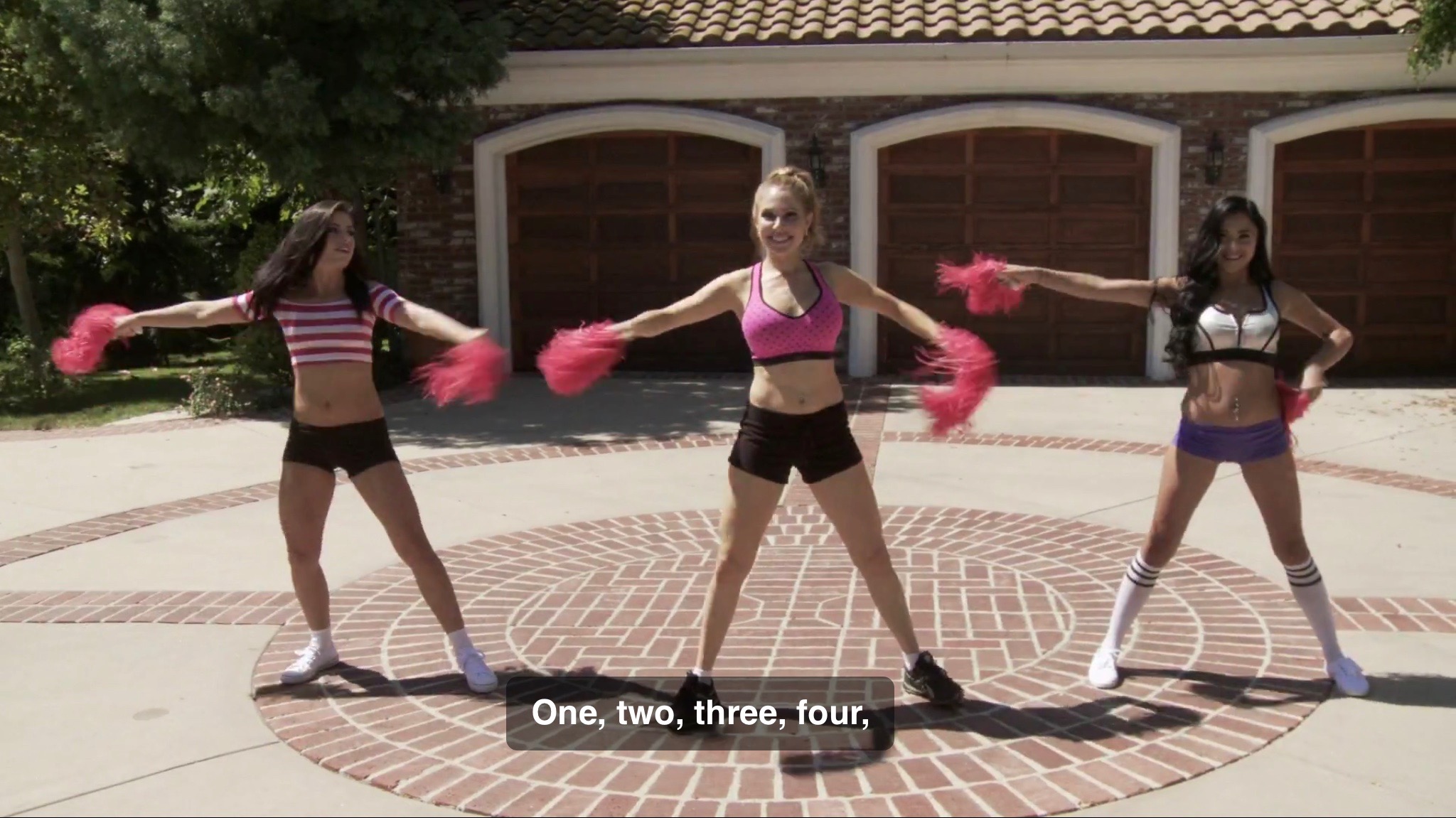
The movie opens up with a shot of a house from Erotic Vampires Of Beverly Hills (2015) and College Coeds vs. Zombie Housewives (2015).
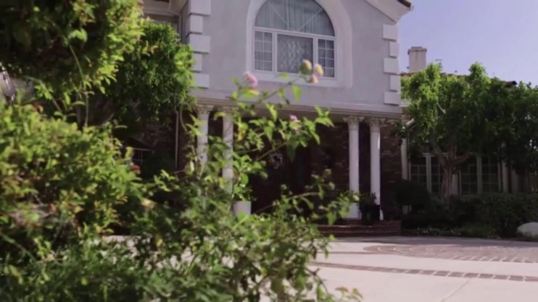
Erotic Vampires Of Beverly Hills (2015, dir. Dean McKendrick)

College Coeds vs. Zombie Housewives (2015, dir. Dean McKendrick)

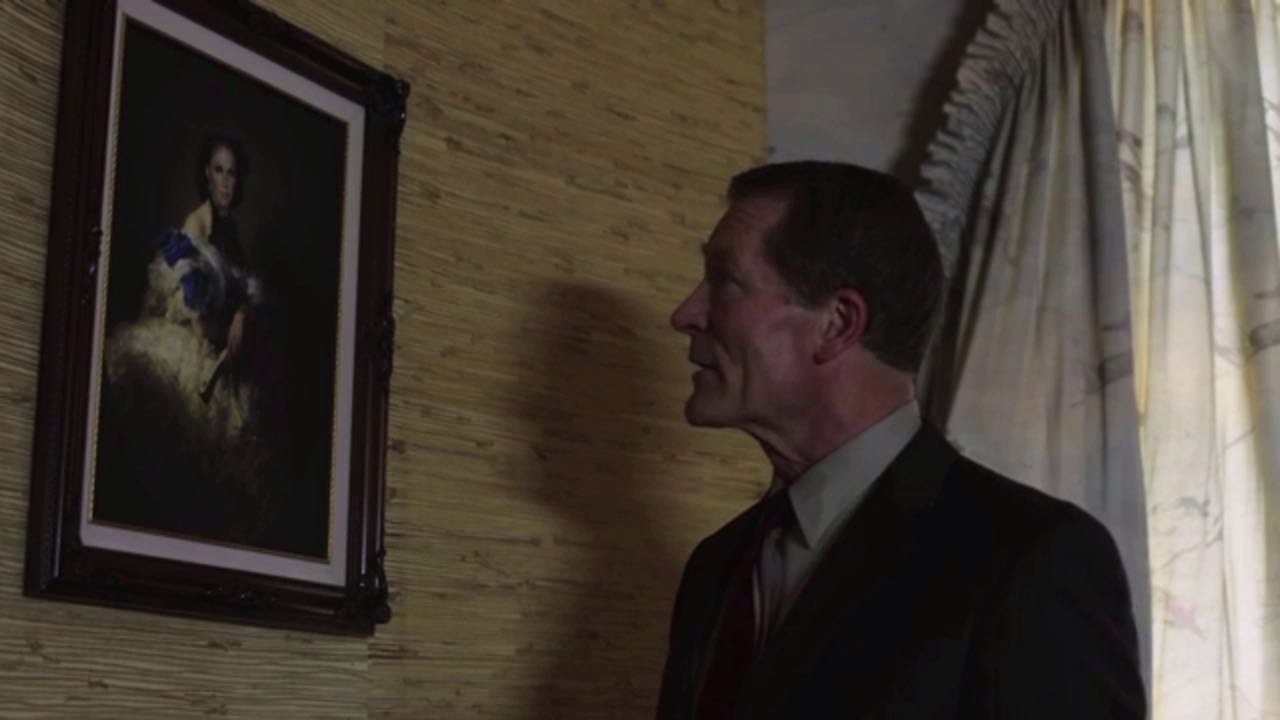
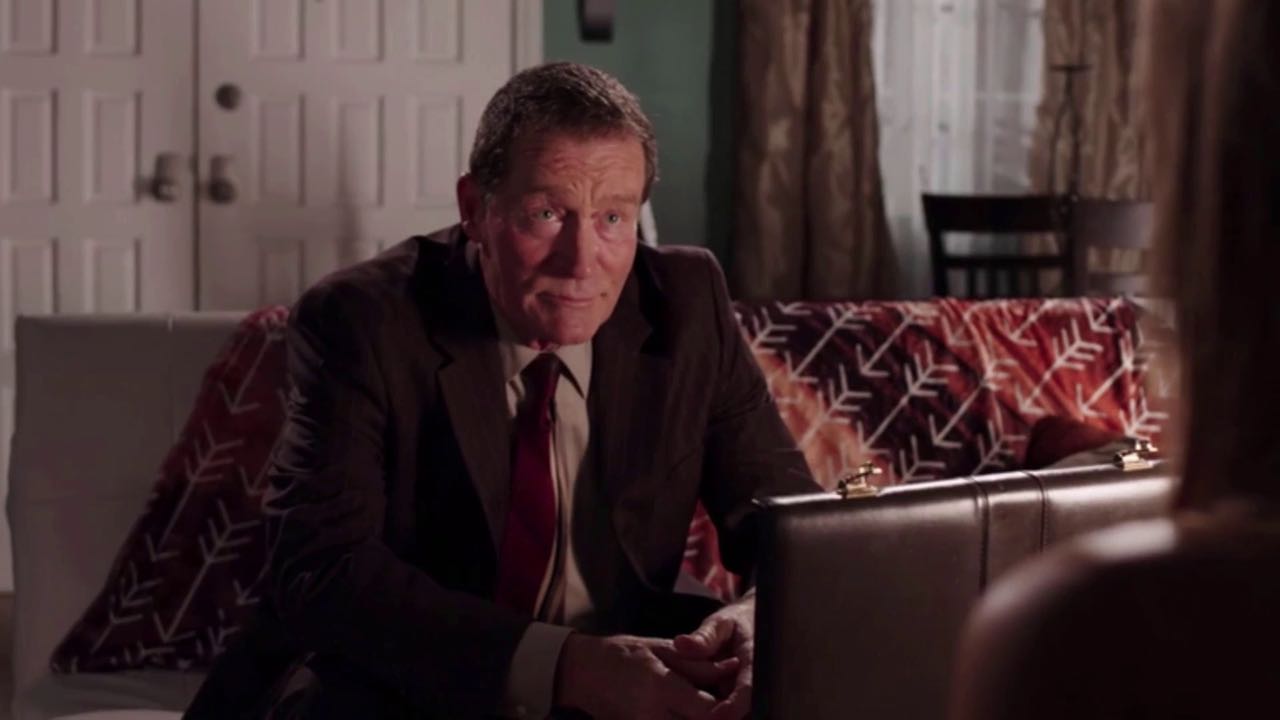
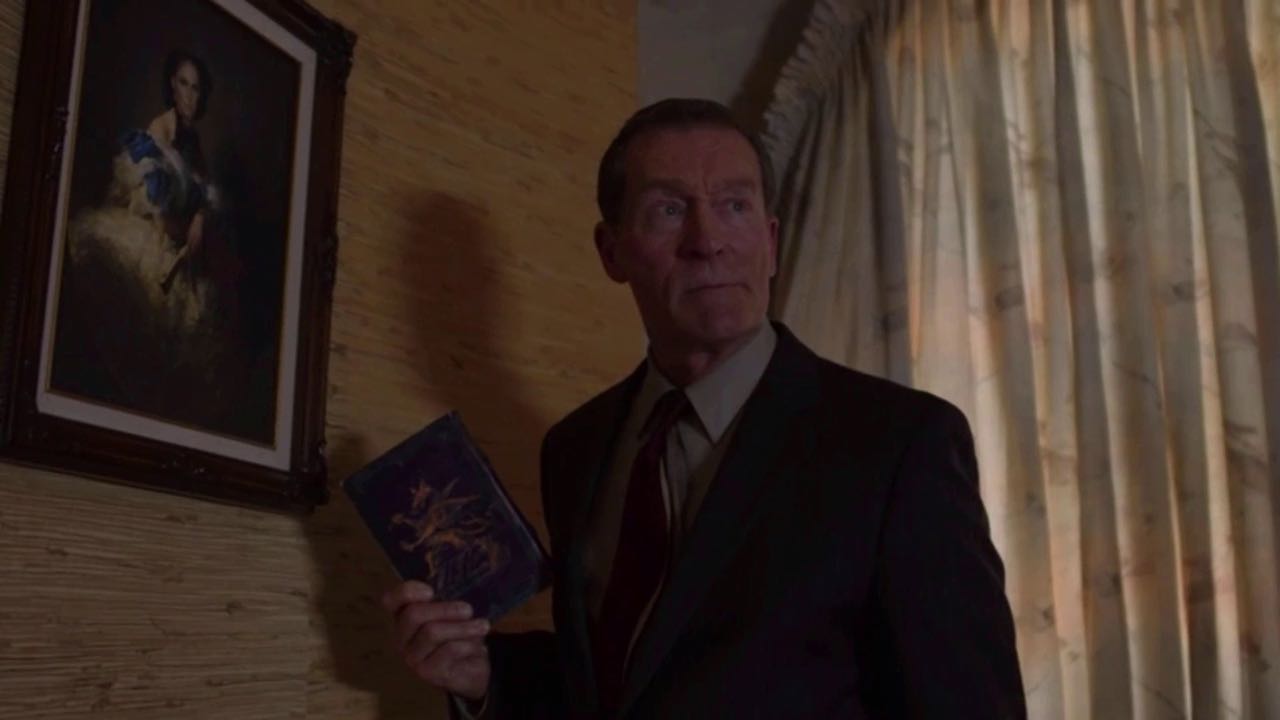
Inside, we meet Cosgrove (Robert Donavan). He starts off the film talking to a painting of Erika Jordan who plays Lady Dracovich. He tells her that she thought she would live forever, but that death got her anyways. He seems to imply that he had something to do with her death.
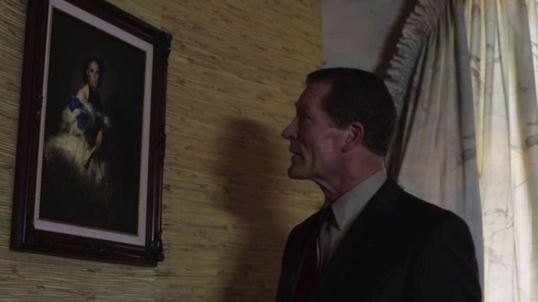
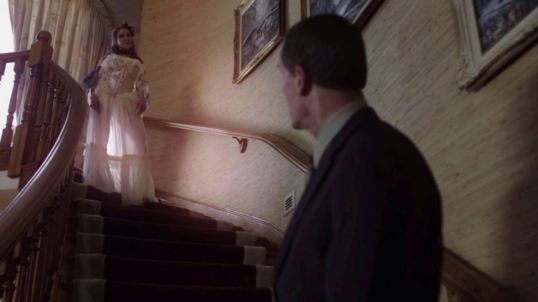
Of course within seconds of him walking away, she appears on the stairs to make a threat, and start the opening credits.
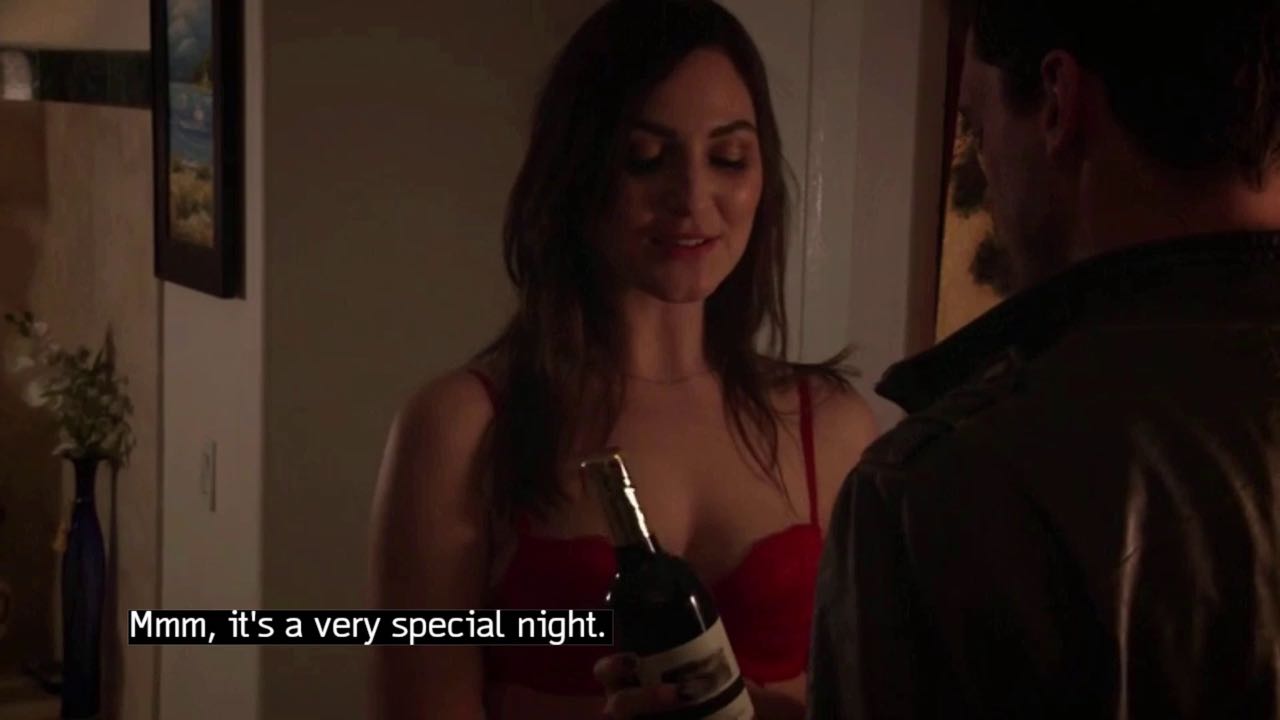
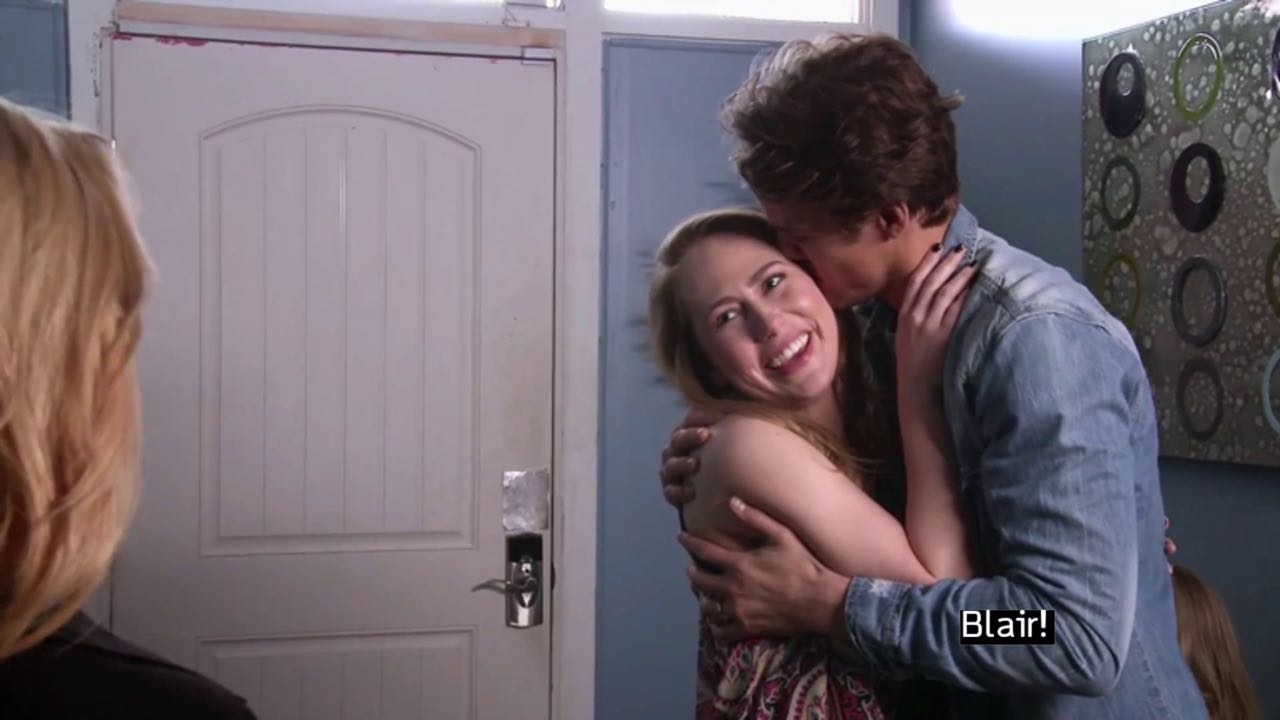
Now it’s time to meet our main character. That would be Cindy, played by Blair Williams. She’s visiting Madame Zola, played Kira Noir.

After saying some stuff, Zola presses a remote control, and releases some special effects.
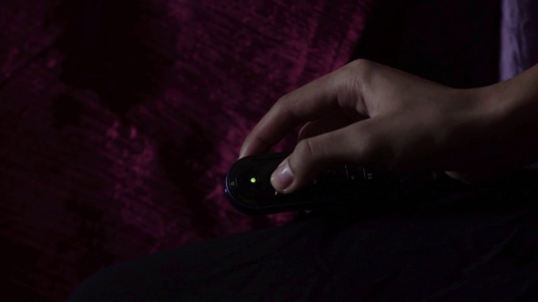
I think the ghosts are at the bottom of the screen, and not on the ceiling, Cindy.

It’s pretty funny. She will look almost every direction except where we see the ghosts.

Cindy wants to know her future. Zola lays it on pretty thick. All you need to know is that she has a glowing ball, a remote control for effects, and she recently “repossessed” the powers of the psychic world that allow her to know all.

In order to help Cindy, Zola needs to know what Cindy’s fears are. Those would be the following:

  1. Enclosed spaces
  2. Open spaces
  3. Hot food
  4. Cold food
  5. Gluten-free food
  6. Children
  7. Vampires
  8. Birds
  9. Cornucopias

I’d like to think that’s Kira Noir wondering why they couldn’t get Jacqui Holland to play this role. Holland appears to have gone back to making B-movie horror films.

So, let me get this straight about Cindy’s fears.

  1. She’s afraid of where almost every scene in this movie will take place.
  2. She’s afraid of the very few times she will be outside.
  3. She can’t eat…
  4. She can’t eat the cakes that show up later.
  5. I’m assuming the cake is gluten-free.
  6. So are the filmmakers, which is why there is always legal info at the end of the credits concerning the age of the actors.
  7. Vampires don’t live here anymore. McKendrick made sure to clean them out after Erotic Vampires Of Beverly Hills.
  8. Who isn’t afraid that the placeholder on IMDb for a remake of The Birds is going to turn into a real movie?
  9. I guess she’s afraid of the ending of the movie then.

I’m being harsh on Blair. She isn’t the best at the bimbo routine, nor the evil one, but she pulls off both well-enough for this movie. I don’t have any real complaints about her performance.

After a few more lines of dialog, they have sex. It makes sense because…I have no idea.

Now we follow Blair home to find out that rent is due.

And by home, I of course mean the room from The Love Machine (2016) and Model For Murder (2015).

The Love Machine (2016, dir. Dean McKendrick)

Model For Murder (2016, dir. Dean McKendrick)

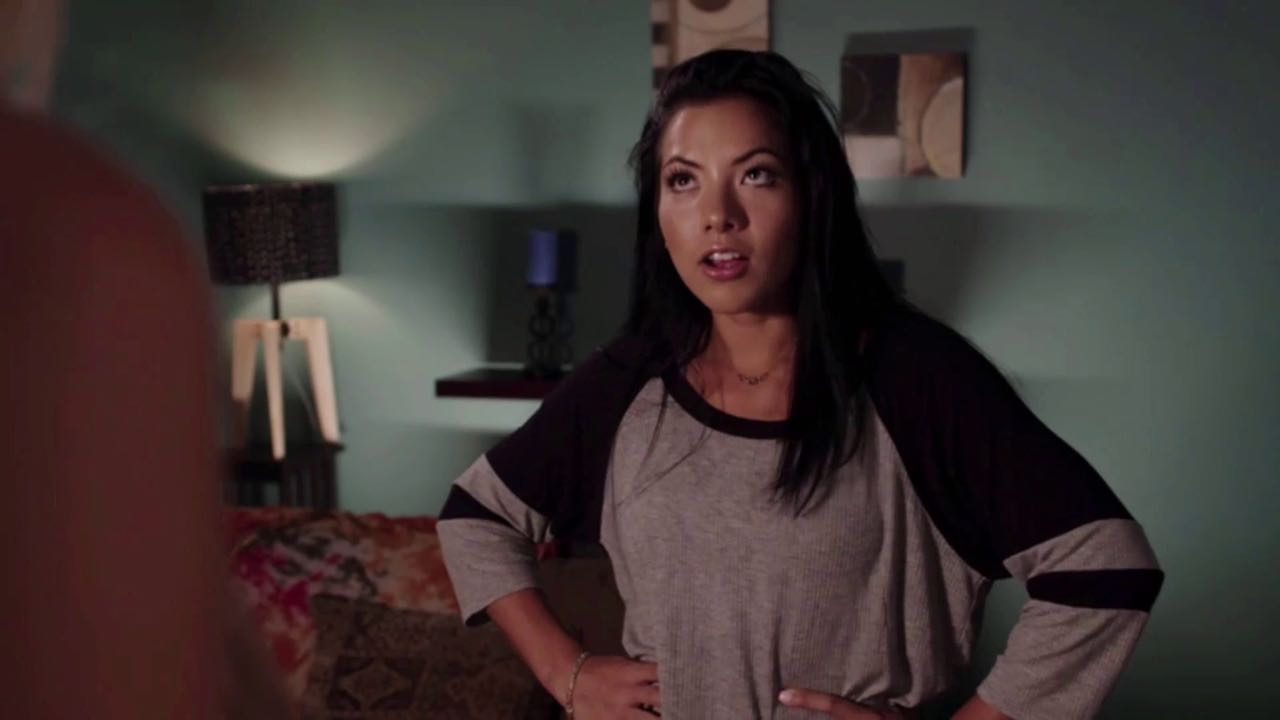
We also meet Cindy’s roommate Sara (Morgan Lee). The last time I saw her was in a small role in the movie Carnal Wishes (2015).
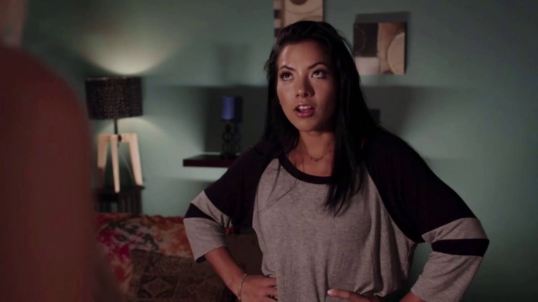
Carnal Wishes (2015, dir. Jon Taylor)

As you can see, she finds it a bit ridiculous that with rent due, Blair went and saw Madame Zola, regardless of Cindy’s assurances that she got her money’s worth. Oh, and their landlord’s name is Mr. Catwhistle. I just thought I’d mention that.

They get a knock on the door. It’s Cosgrove. He’s here to deliver nonsense.

Dracovich wasn’t liked in life, so she left instructions that the first person who pushed the “like” button on her My Spacebook page would inherit her estate. Yes, they really say “My Spacebook.” It’s no dumber than Degrassi’s Facerange. The news causes them to make a stupid joke.

As you might have already guessed because you’ve seen this plot in a million other movies before, there is a catch. They need to protect a book, or they lose the estate.

They aren’t allowed to read it either.

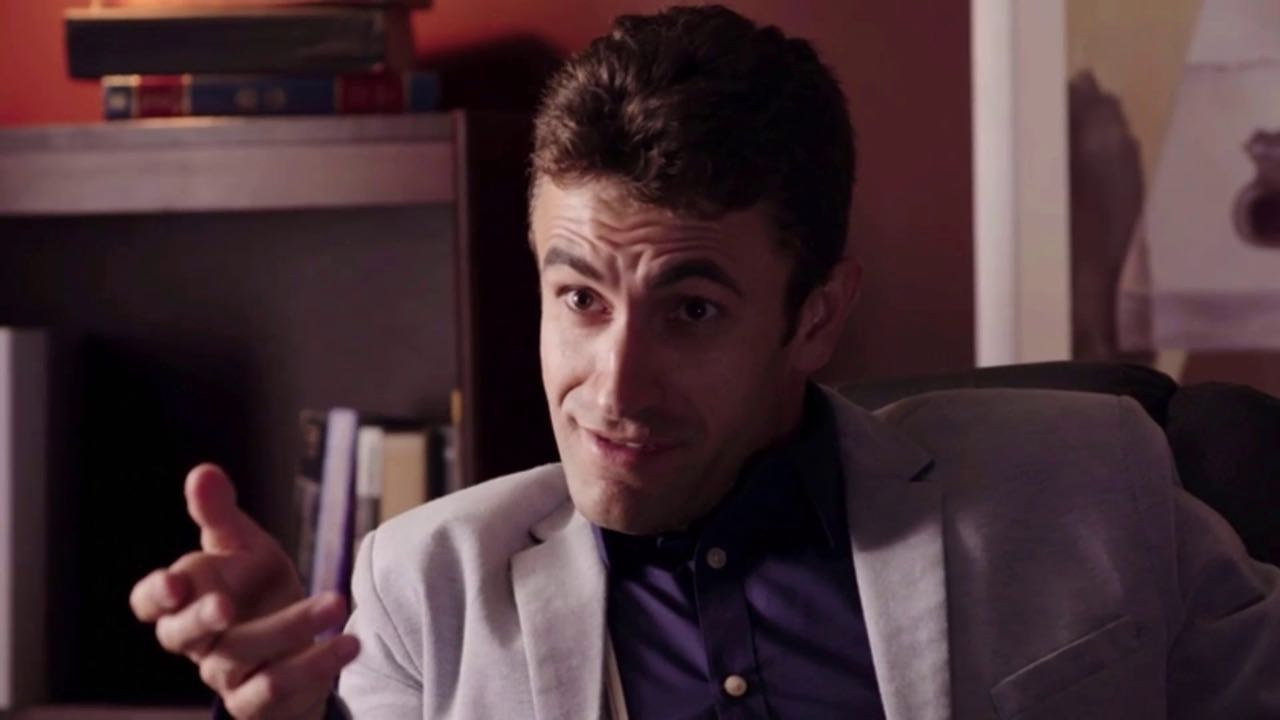
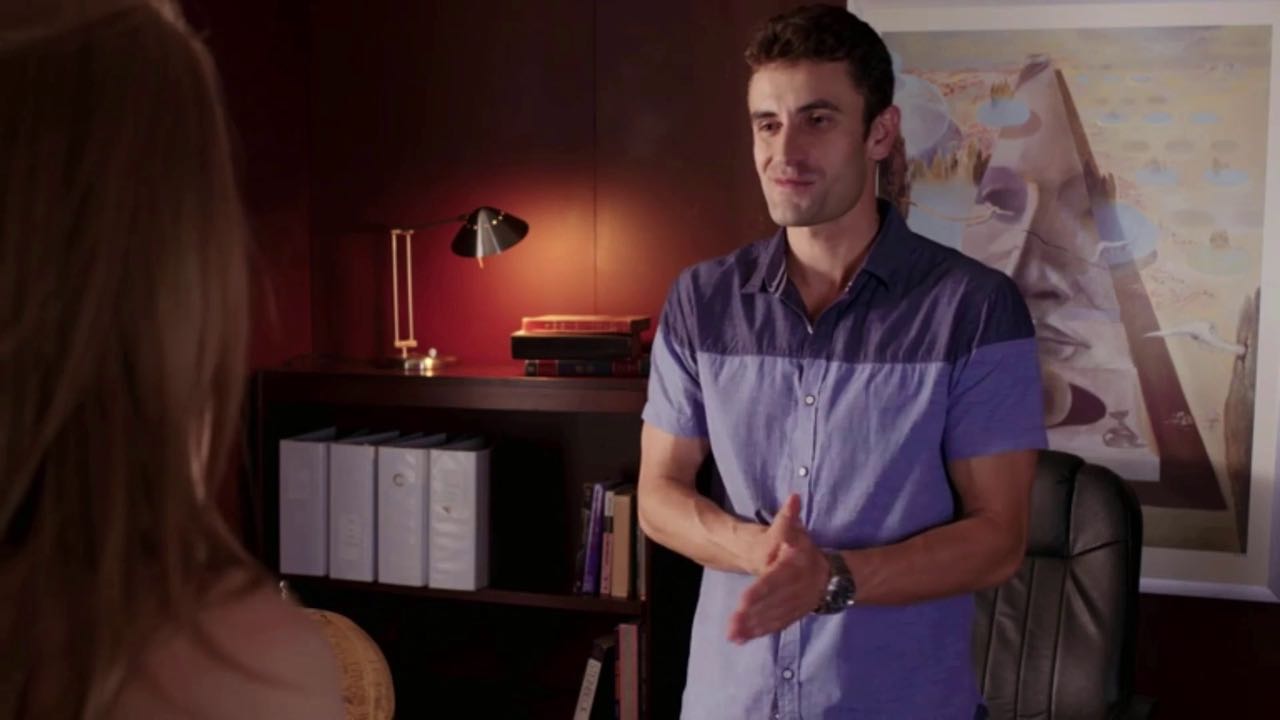
Now it’s time to meet Professor Gordon. He’s played by Andrew Espinoza Long.
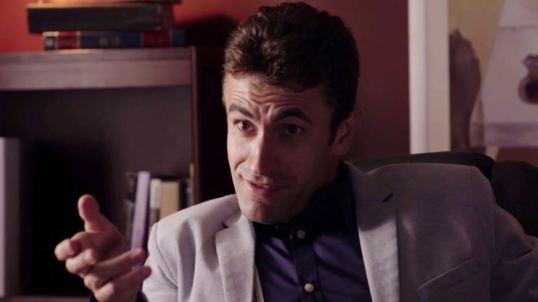
Cindy wants some leave from her class to deal with this estate business, which is fine by him. During this, he is having some trouble with Carter Cruise under the desk. I’m just going to assume she dropped a pencil down there, and was to embarrassed to popup while Cindy was still there.

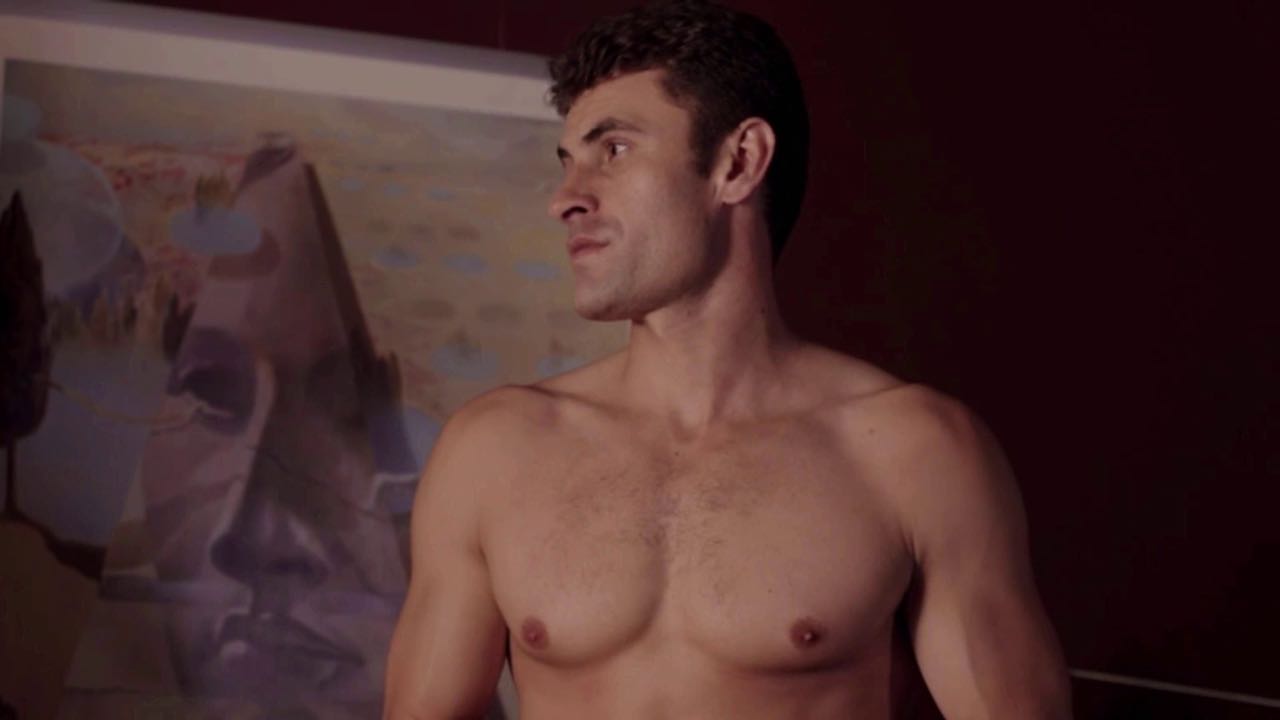
Why is she wearing a graduation cap and gown? I don’t know. Here’s a shot of Long’s chest to distract you.

It’s like I caught him in the middle of posing for a perfume ad. They had sex of course in case you were confused as to why he is half-naked.

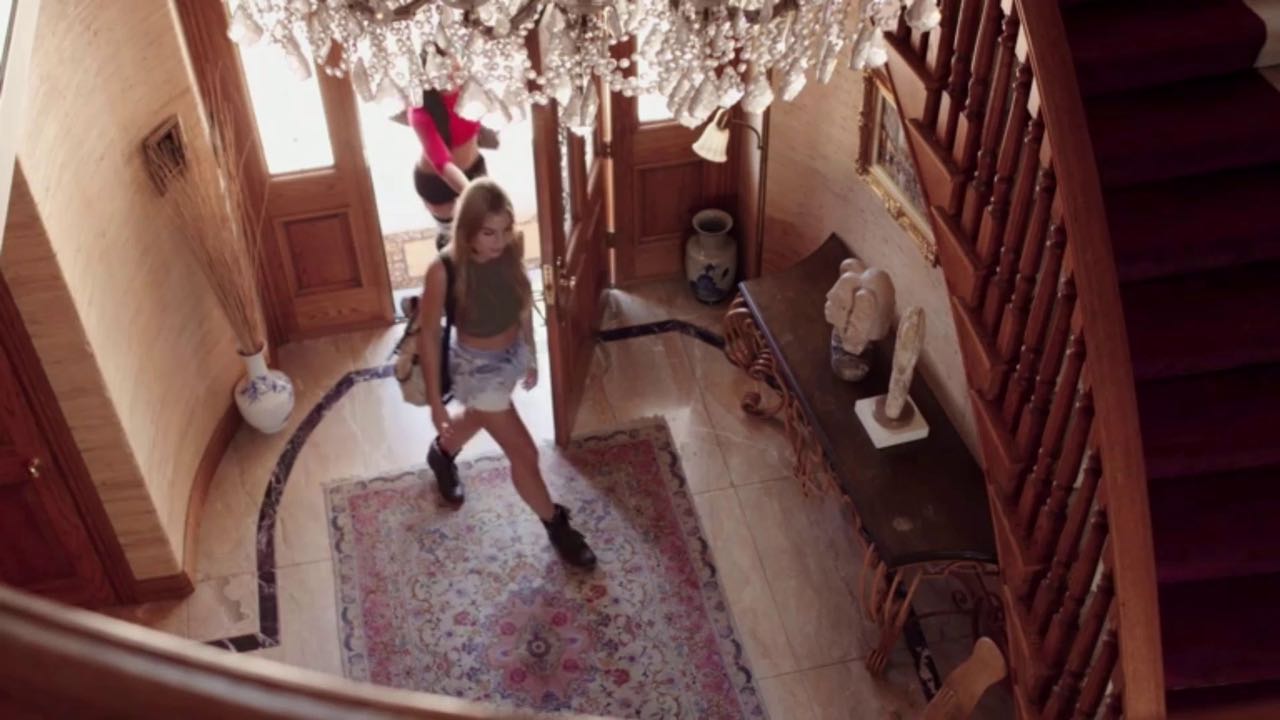
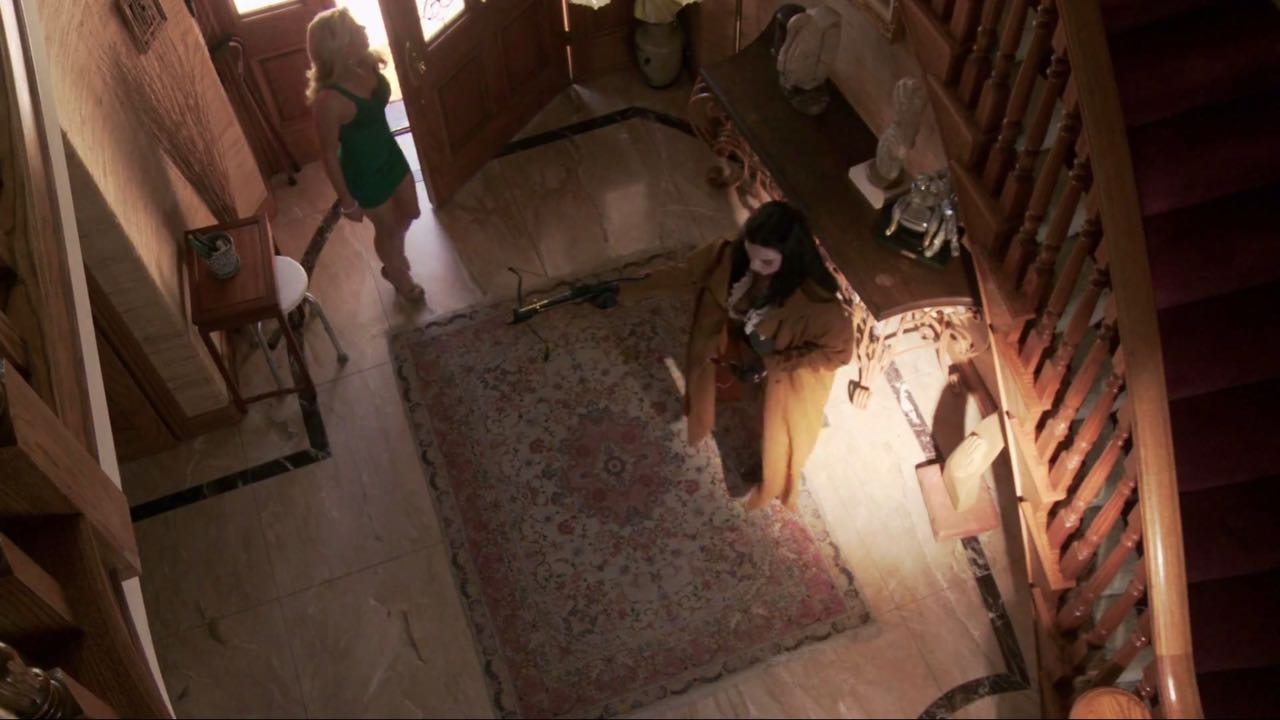
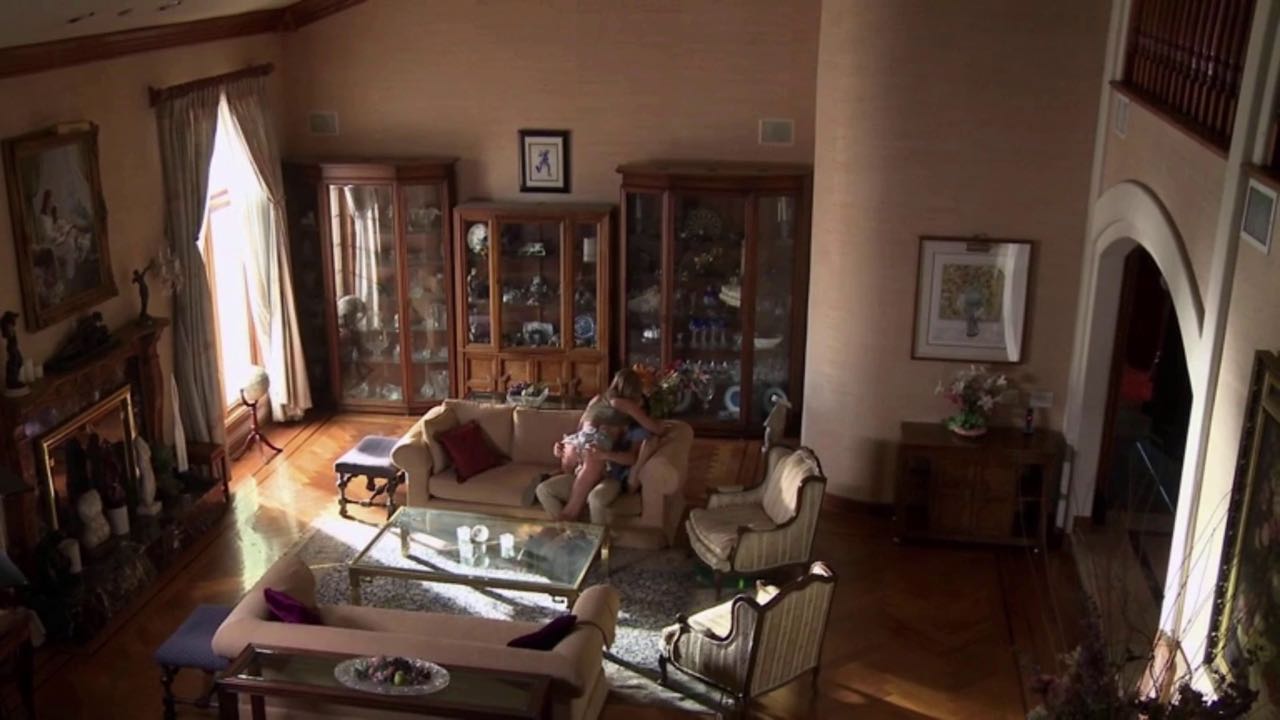
Blair pays a visit to Madame Zola so she can give her an ominous warning, which is ignored, and followed by Blair and Sara going to the Dracovich estate. We see that same overhead shot from Erotic Vampires Of Beverly Hills as they enter the house.
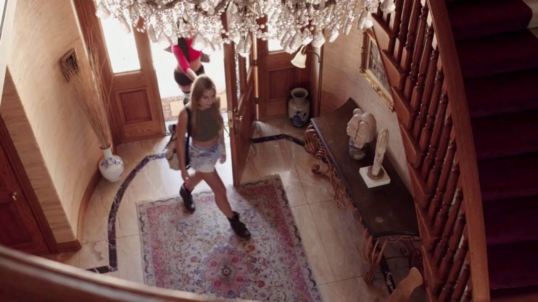
Erotic Vampires Of Beverly Hills (2015, dir. Dean McKendrick)

They head upstairs. On their way up, Sara looks at the portrait, and we find out that she would have sex with Dracovich if she were alive. Naturally, Cindy touches the painting, becomes possessed by Dracovich…

and they have sex. Some people smash a champagne bottle to christen something new. Others have a sex scene, so that they can poke fun at the woman always keeping her heels on by having Cindy barefoot while Sara leaves her sneakers on.

If you’re thinking this seems like a lot of sex so far, then you’d be right. This is only a half-hour into the movie, and there’s already been three scenes. There’s a lot in this one.

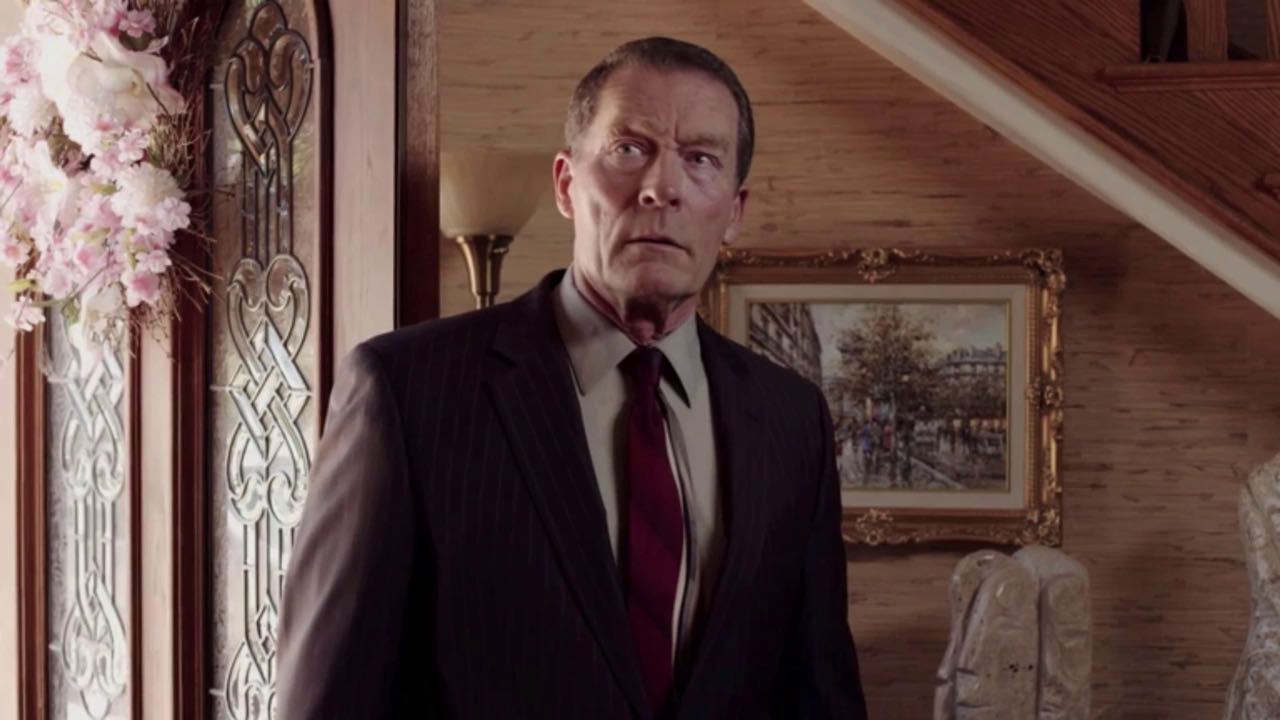
Cosgrove shows up at the house. His Dracovich sense must have been tingling.

This is as good a time as any to bring up that the best scenes in this movie are with Donavan. He does a good job. I like it when they get in an established actor to be in these. Even if by “established”, I mean he was in Trancers 6 (2002).

Trancers 6 (2002, dir. Jay Woelfel)

Trancers 6 (2002, dir. Jay Woelfel)

The actual reason he is at the house is because he needs Cindy–who is still possessed–to sign some papers.

We find out that Dracovich was a sexual predator. If you were a man, then she’d turn you into her servant. If you were a woman, then she’d turn you into her slave. And I’m sure if you were gender-fluid, then she’d turn you into a synonym for servant or slave.

Talking, talking, Cosgrove probably pushed her off the stairs to kill her, Dracovich leaves Cindy’s body, Cindy is wondering why she thinks she’s been licked all over, and we are back at professor Gordon’s office.

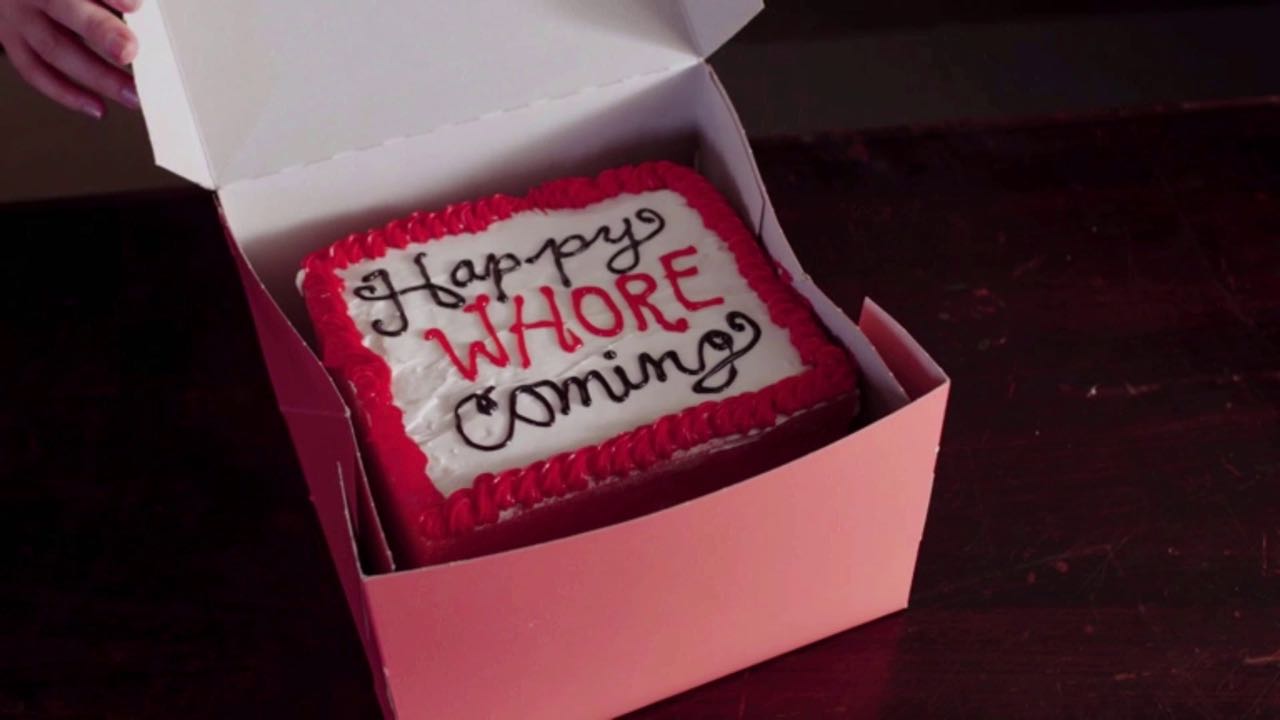
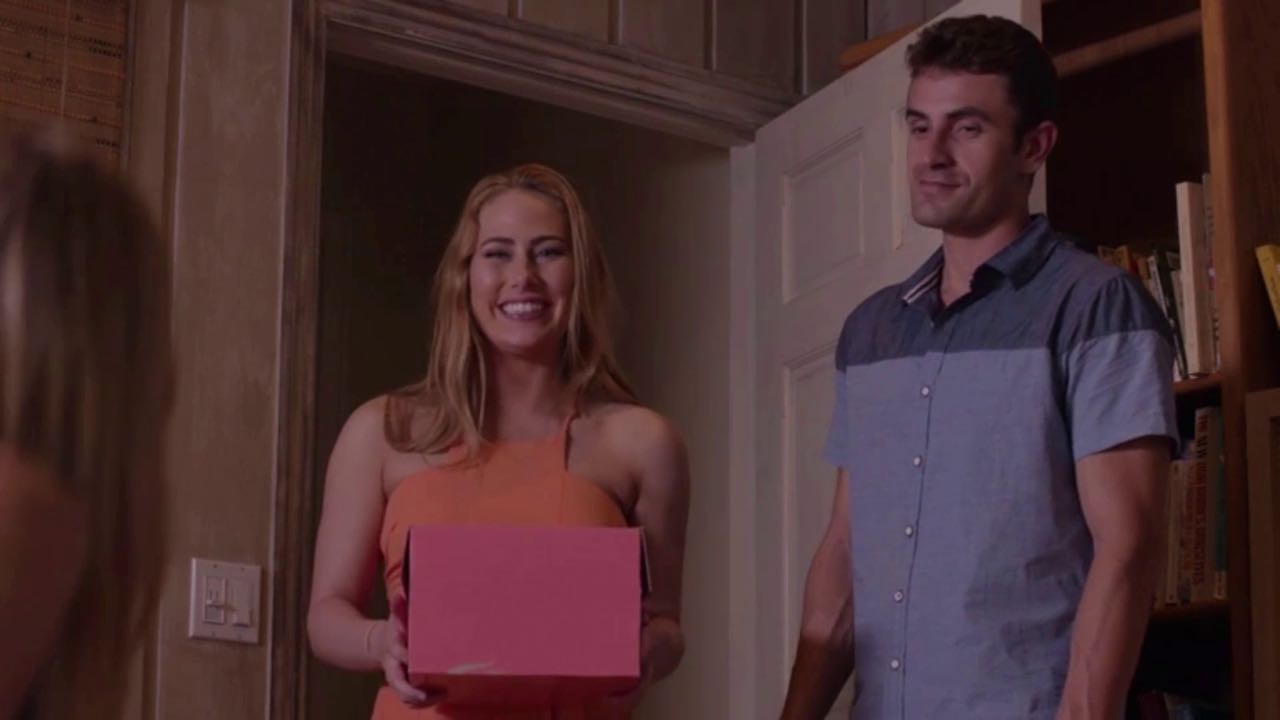
Cathy (Carter Cruise) brings in a cake.

Close enough to “Happy homecoming.”

These two plan to go over to the Dracovich house because they don’t have any other sets to loot.

Kira Noir takes a shower so that we know that while Blair will never change clothes during this movie, at least Madame Zola is clean.

She gets a threatening call from Dracovich telling her to stay away. She knows that it’s Lady Dracovich because she hung up on her. I’m not kidding.

Back home, it’s time for a Ouija board to make a cameo appearance.
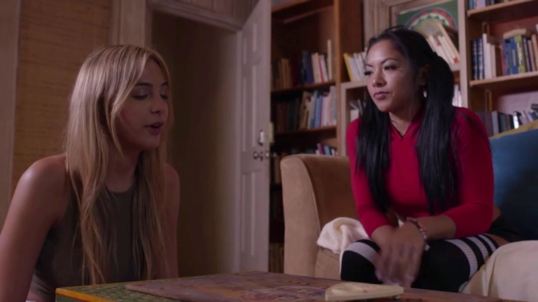
I’m sorry. I mean a Witchboard, as they call it. I haven’t seen the Witchboard movies yet, but the third one has the subtitle of “The Possession”, so it fits.

The letter thing moves, and that’s the cue for Gordon and Cathy to come in to present them with the cake.

Gordon goes off with Blair to talk about the mystery surrounding when exactly during this scene Dracovich possessed her again. All that I saw was the camera angle change. This turns on Gordon, and they proceed to have sex.

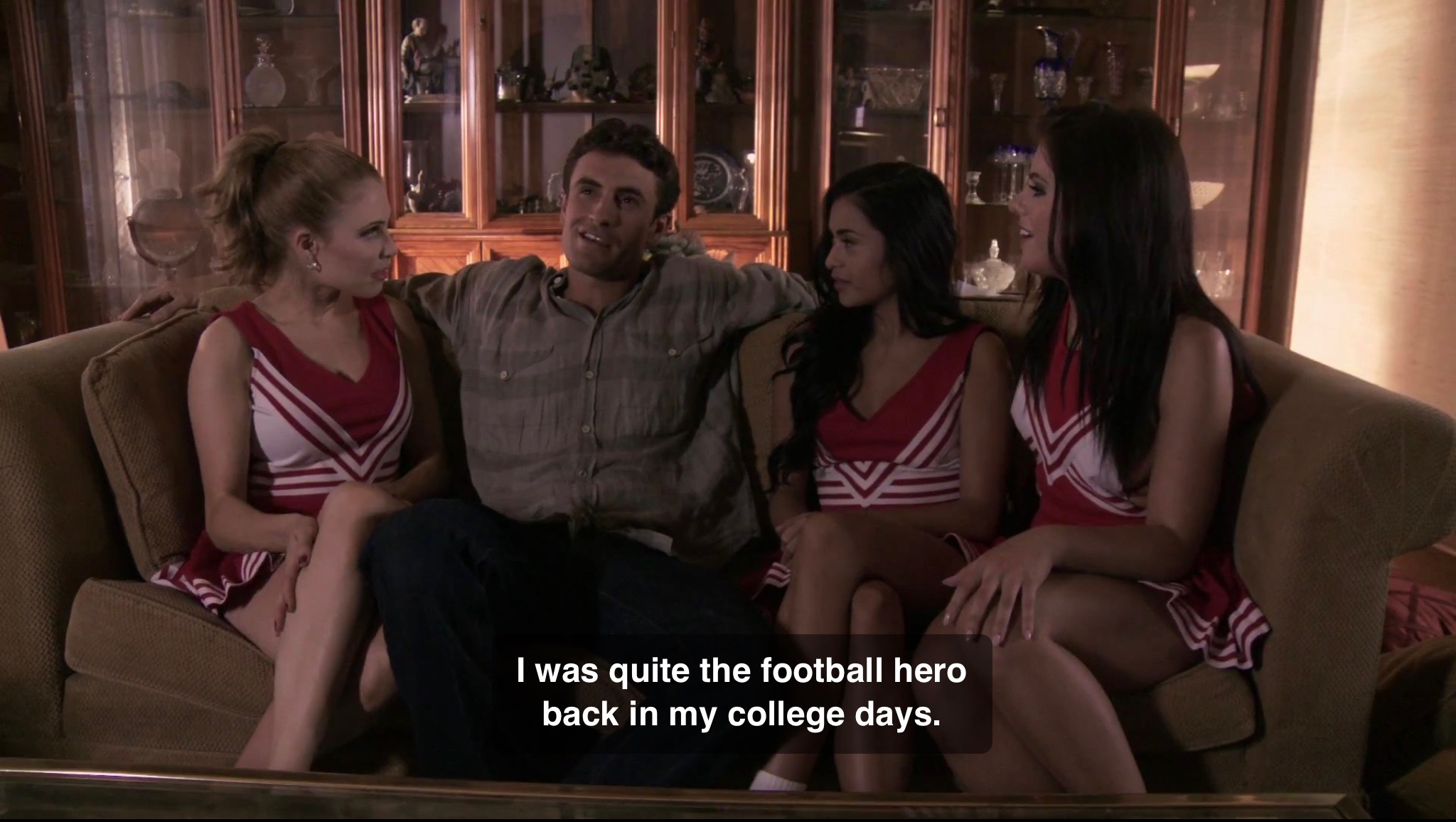
I couldn’t be less interested in this scene. Yes, the sex scenes do little for me except to allow me to not have to take as many screenshots since I can’t show those parts. But the reason this scene is particularly uninteresting to me is that once you’ve seen Long go at it with three cheerleaders in this same room, than this is really boring.

College Coeds vs. Zombie Housewives (2015, dir. Dean McKendrick)

If there’s only one sex scene I remember from any of these movies that I’ve reviewed, it’s that one.

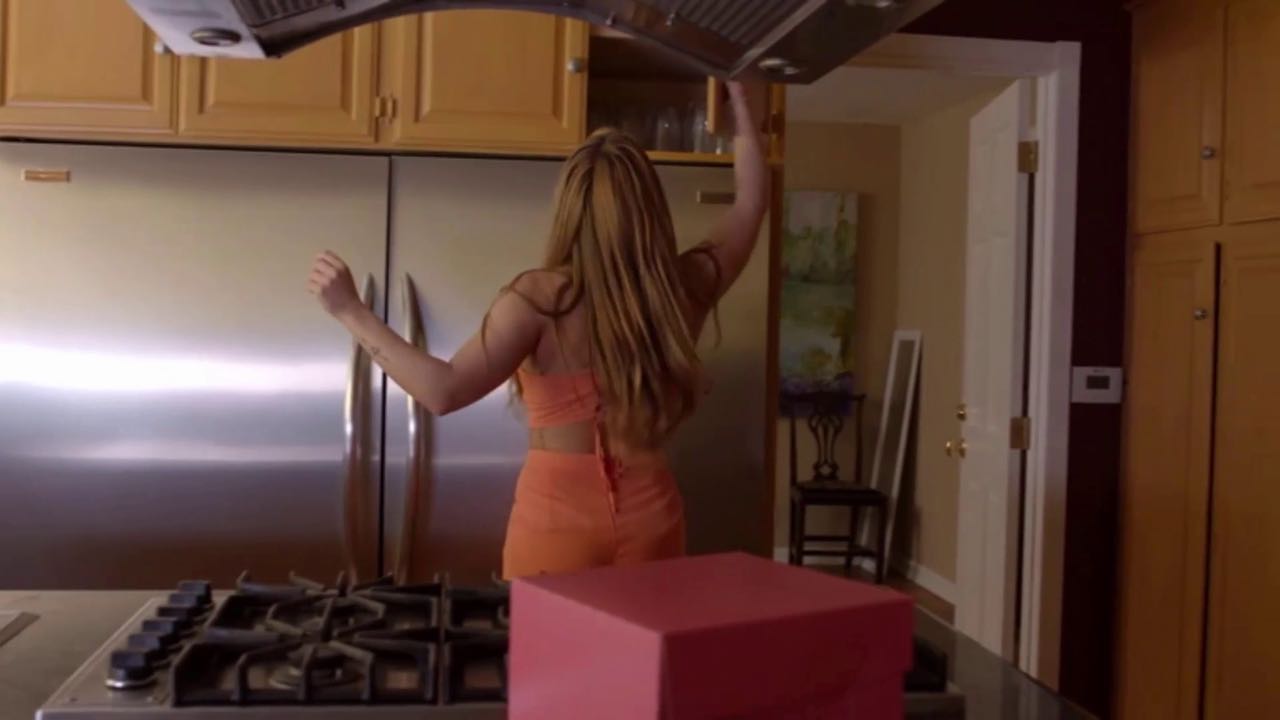
Cathy is looking exactly where anyone would for valuables–the kitchen cabinets.
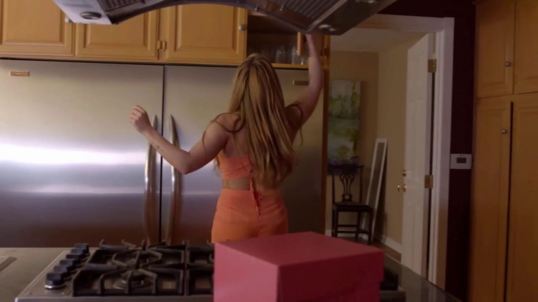
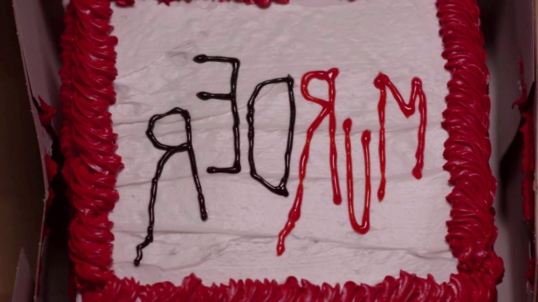
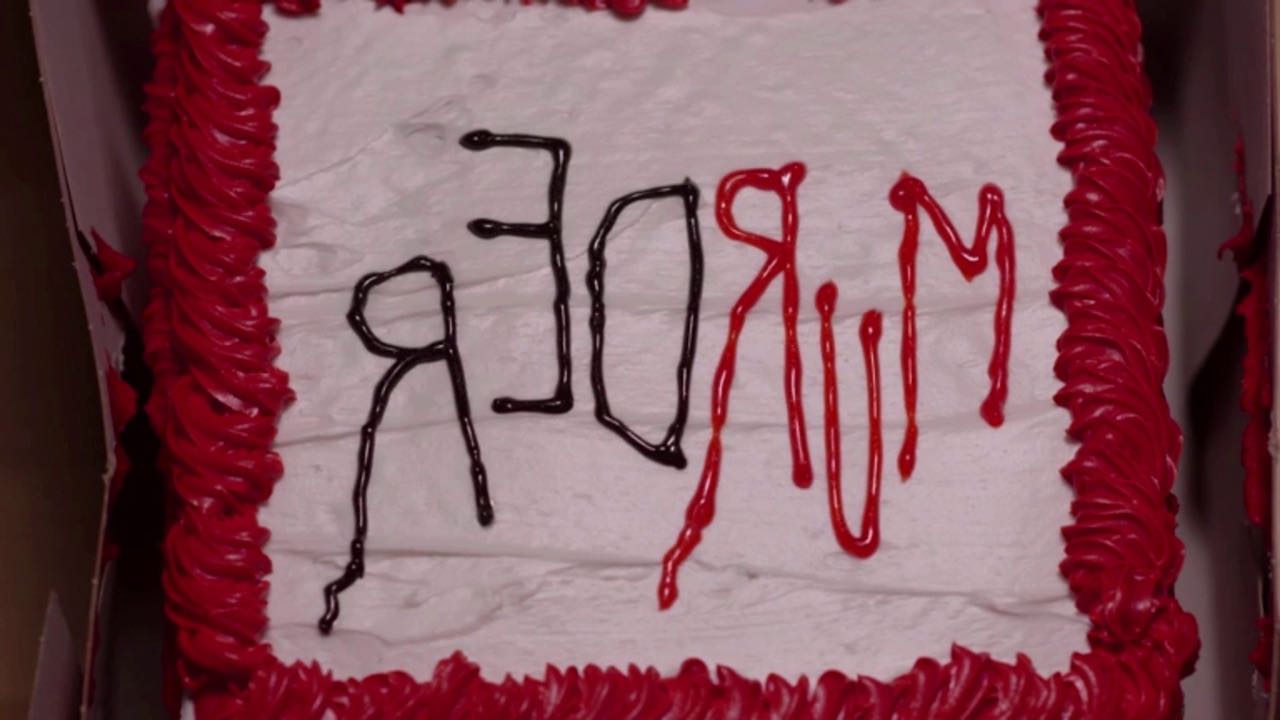
The cake opens up on her to reveal a reference to the Art PA’s pseudonym.
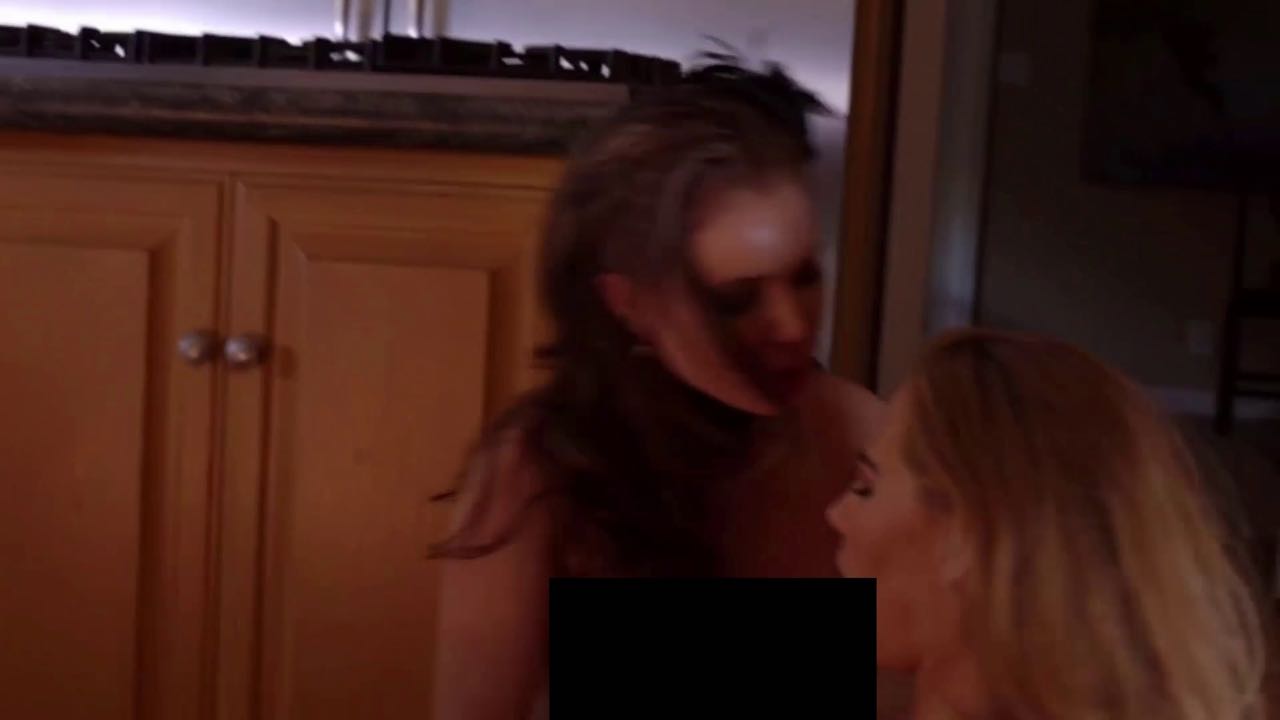
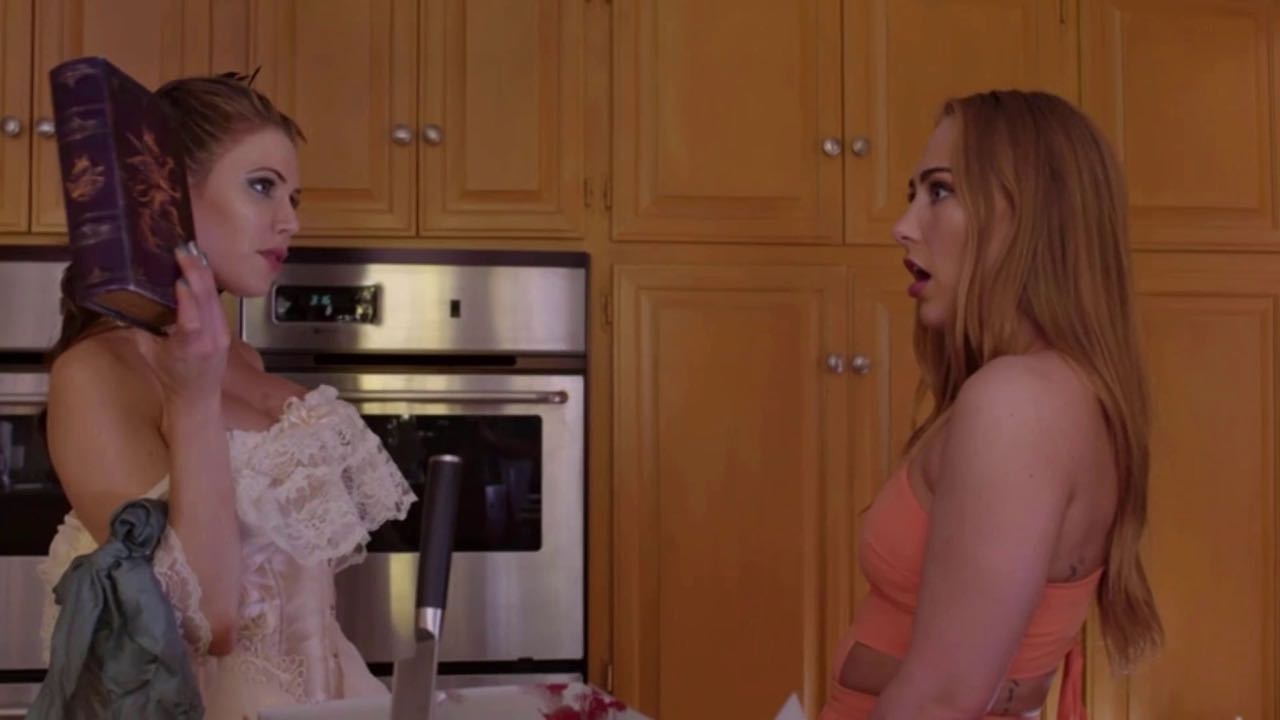
Now Dracovich decides to make a personal appearance. She tells Cathy that she can’t have the book unless Cathy distracts her.

Notice that the clock says it is 3:16 in the afternoon. Part way into the distraction, it will be 4:17. Is that how long they were actually going at it?

You can also see someone reflected in the oven.

I hope Erika Jordan got hazard pay. It looks like at any moment she could have hit the back of her head on the corner of the countertop.

Sara now goes around the house looking for people, and Cosgrove shows up.
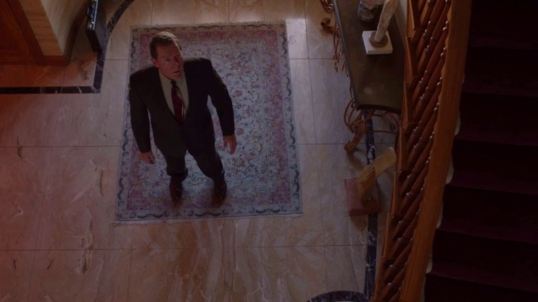
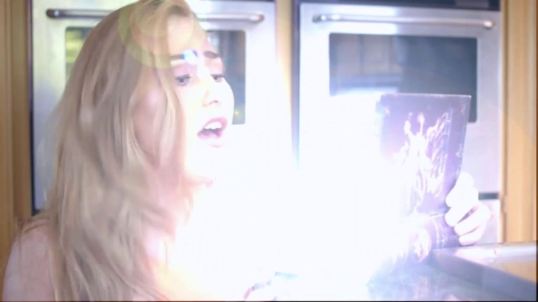
At the same time, Cathy wakes up on the floor. She finds the book on the counter. She opens it so that she can become possessed.
Cosgrove comes in and takes the book before going to chew out the painting of Dracovich. We find out here that he did kill her. According to him, Dracovich can come back to life if she has a male sacrifice. He thinks there are only women here, so it won’t be an issue. He hears a woman moan, which tells him Dracovich is up to something. I’m not sure why. In this movie, that could mean some of the girls are celebrating the opening of a door.

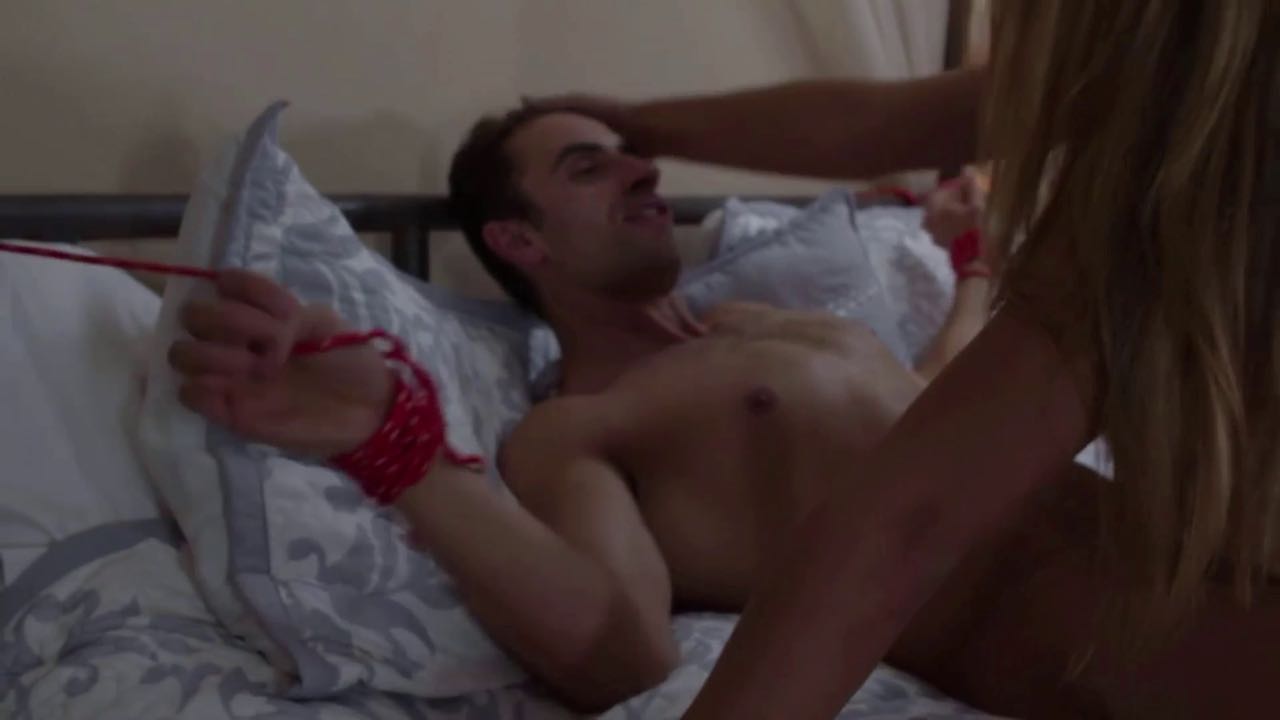
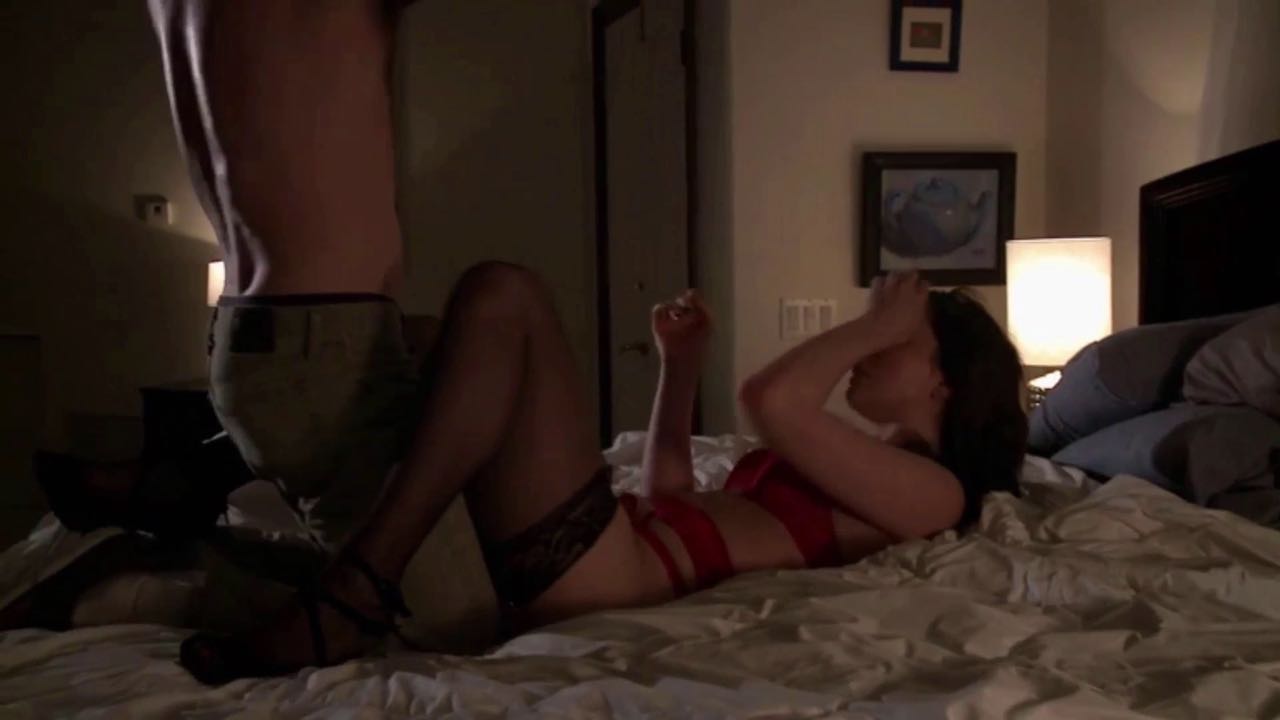
Since there is very little time left in the movie, he is right, and finds Professor Gordon tied up on a bed having an orgy. Madame Zola shows up seemingly just to join the party. Sara jumps in too.
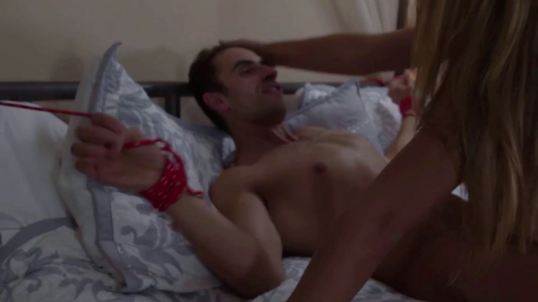
Off to the side of the bed, we can see Dracovich appearing to orchestrate the action.

This place really reminds me of one of the rooms in David DeCoteau’s house.

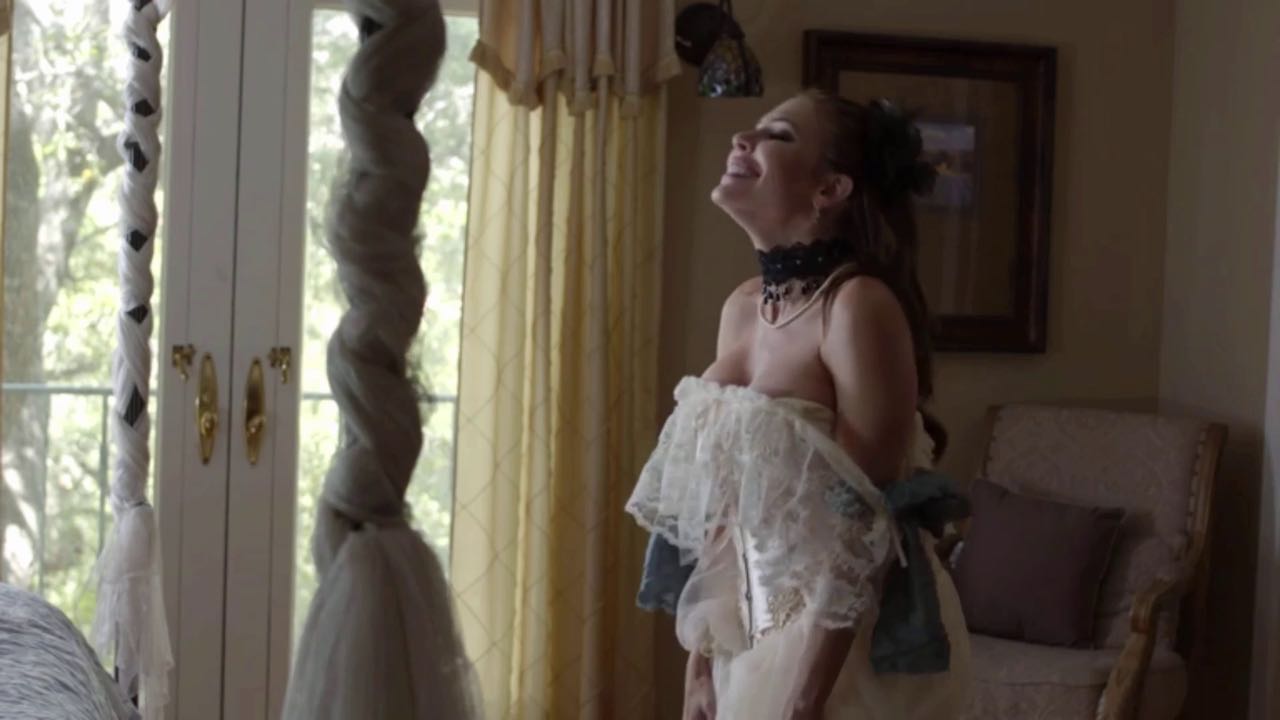
Cosgrove waits around for awhile so that we can watch before he ends the scene by opening the book. They all get zapped, but I can only show you Dracovich.

Cindy tells him he did a good job stopping Dracovich. But she wonders why he felt the need to do it so fast considering how quickly he was able to dispatch her.

It makes perfect sense, Cindy. He set the house on fire.
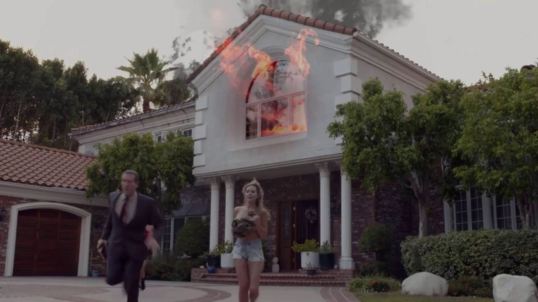
End of movie.

This isn’t a bad one of these movies. There is too much sex and the plot is barely existent. However, Donavan is good. It was nice to see Carter Cruise again in a role that wasn’t a complete ditz. Long was funny as usual. There were some humorous lines that I couldn’t show you because I forgot to turn on subtitles. They kept having Blair Williams say words that are almost what she means to say. There’s a little bit between her and Morgan Lee about Dracovich and Malkovich–vich is vich?

Ultimately, this one is only worth it if you are just looking for sex. There isn’t a whole lot more to it.

Late Night Cable Movie Review: The Love Machine (2016, dir. Dean McKendrick)


It’s been awhile since I wrote a review of a feature film. Let’s see if I can still get through one of these. How hard can it be? It’s a Dean McKendrick movie.

If you’re gonna watch this, then I hope you have seen McKendrick’s The Deadly Pickup (2016) and Model For Murder (2016) since this is basically a third film in what could be an unofficial trilogy.

The movie begins, and we see what looks like an amplifier with two voltage gauges, a pressure gauge stuck on top, and something that shoots a beam out of it, which I’m sure comes from another one of McKendrick’s films.

Much like this set, which is where Sarah Hunter’s character from Model For Murder was killed.

Model For Murder (2016, dir. Dean McKendrick)

Model For Murder (2016, dir. Dean McKendrick)

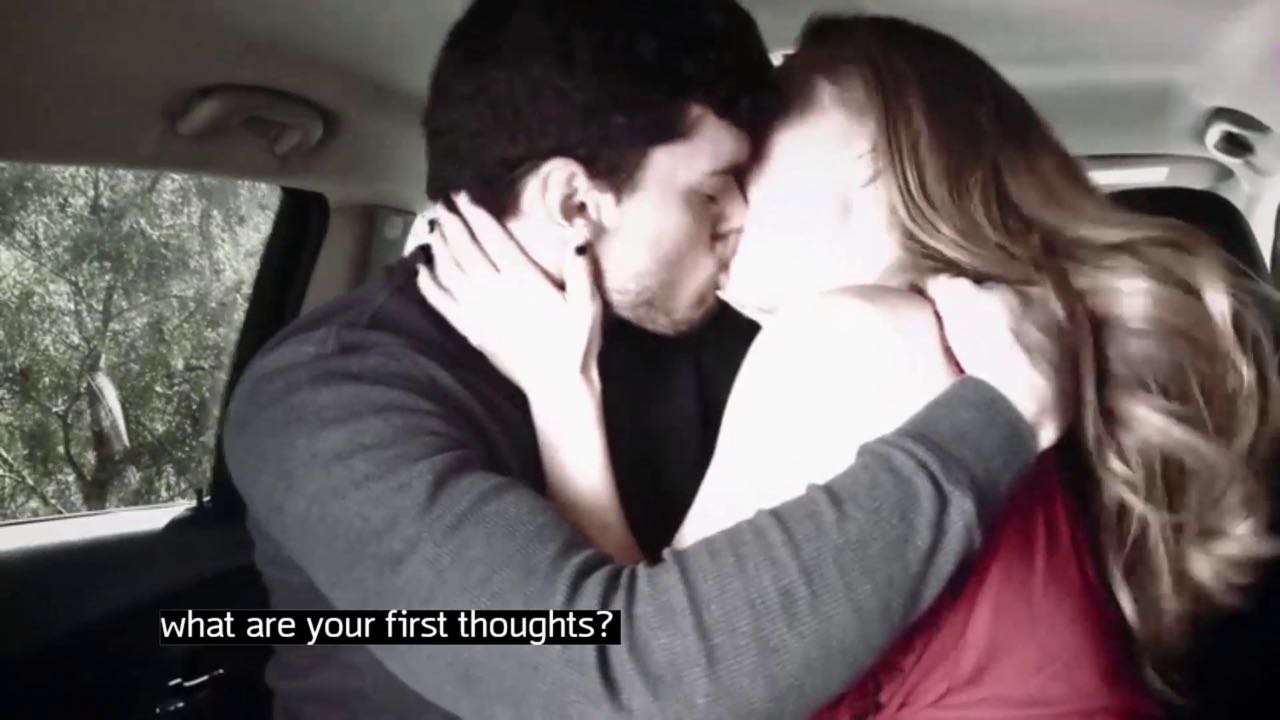
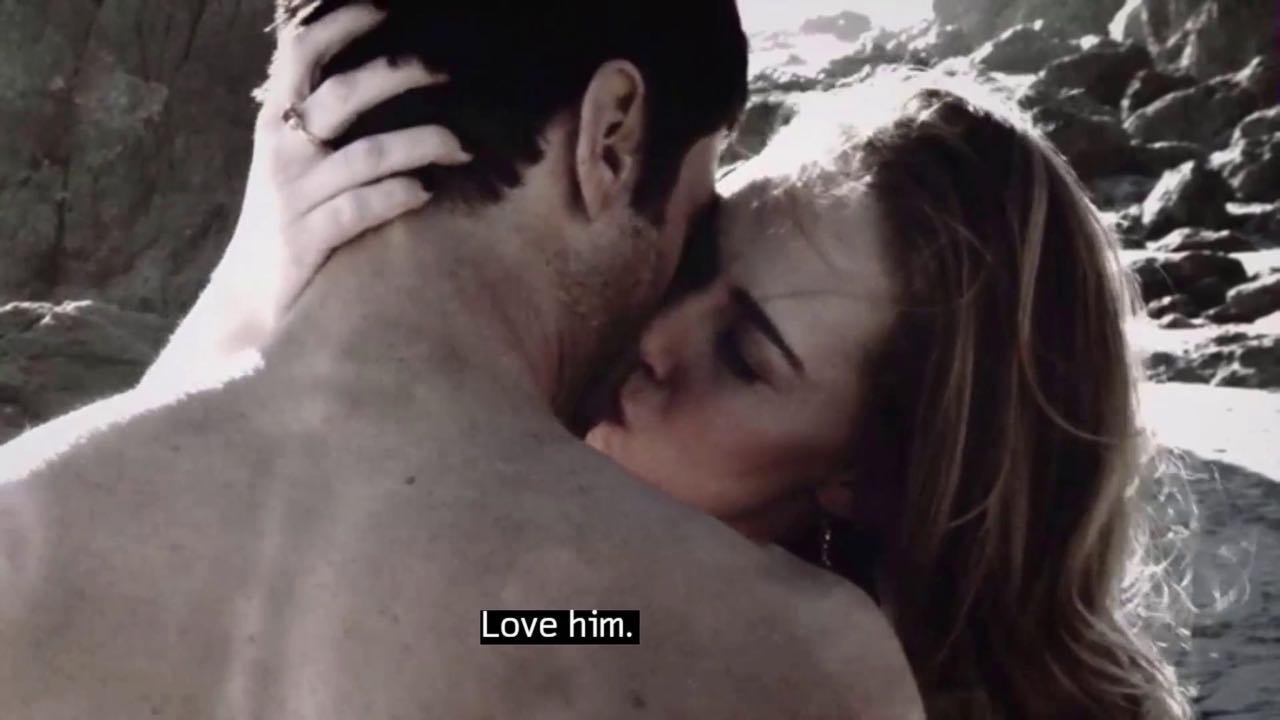
In this film, Carter Cruise is playing Bair. She is in a session with psychologist, Dr. Stephanie Bradshaw (Jennifer Korbin). Bradshaw asks her what she does when she sees an attractive man. She wants to know what her first thoughts are. Those first thoughts are of stock footage from The Deadly Pickup.

The opening kill.

And Rick!

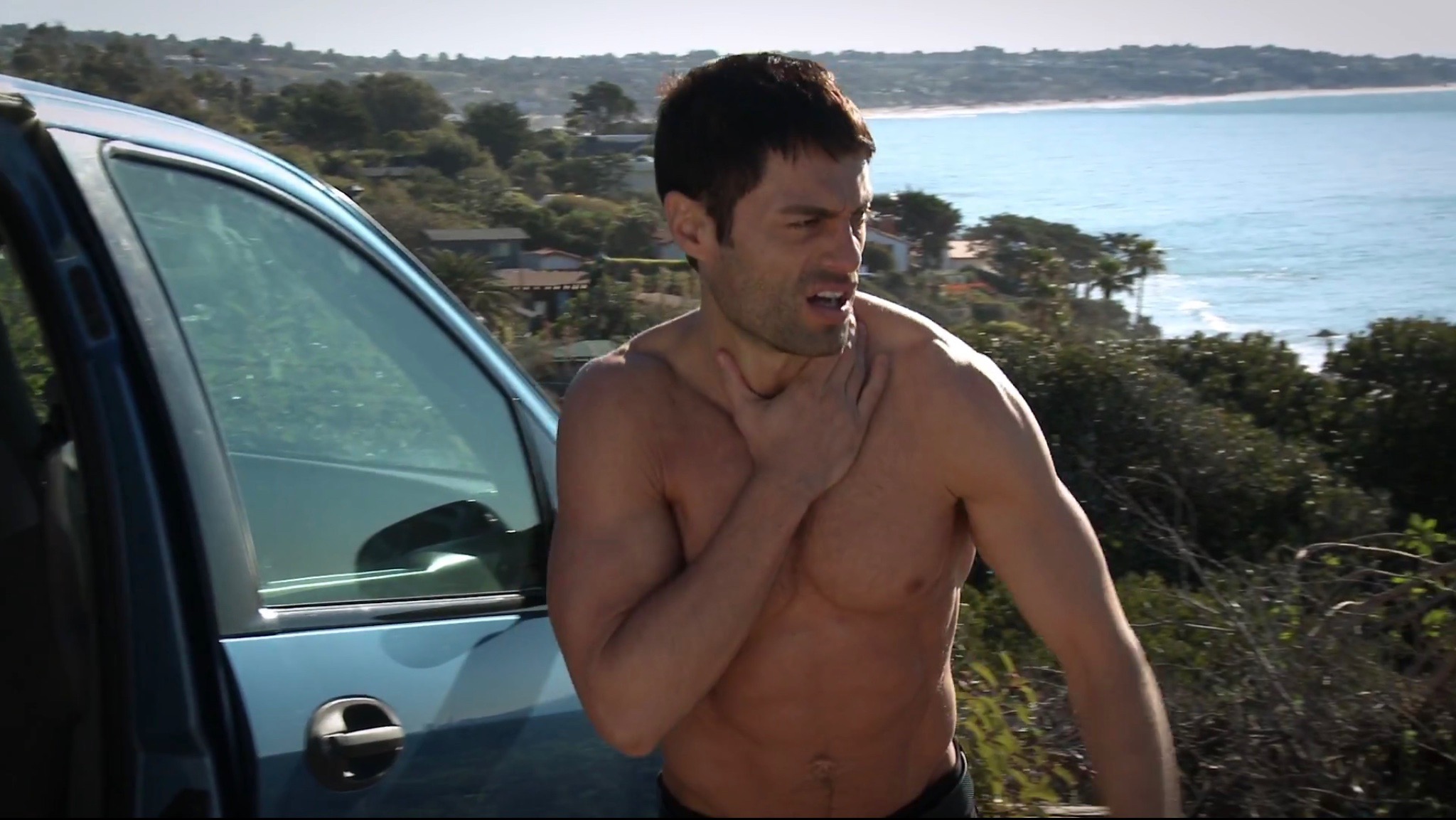
You remember Rick, right? He’s the guy who got pricked with her poisonousness ring, yet still managed to stumble from the car where they had sex…

The Deadly Pickup (2016, dir. Dean McKendrick)

The Deadly Pickup (2016, dir. Dean McKendrick)

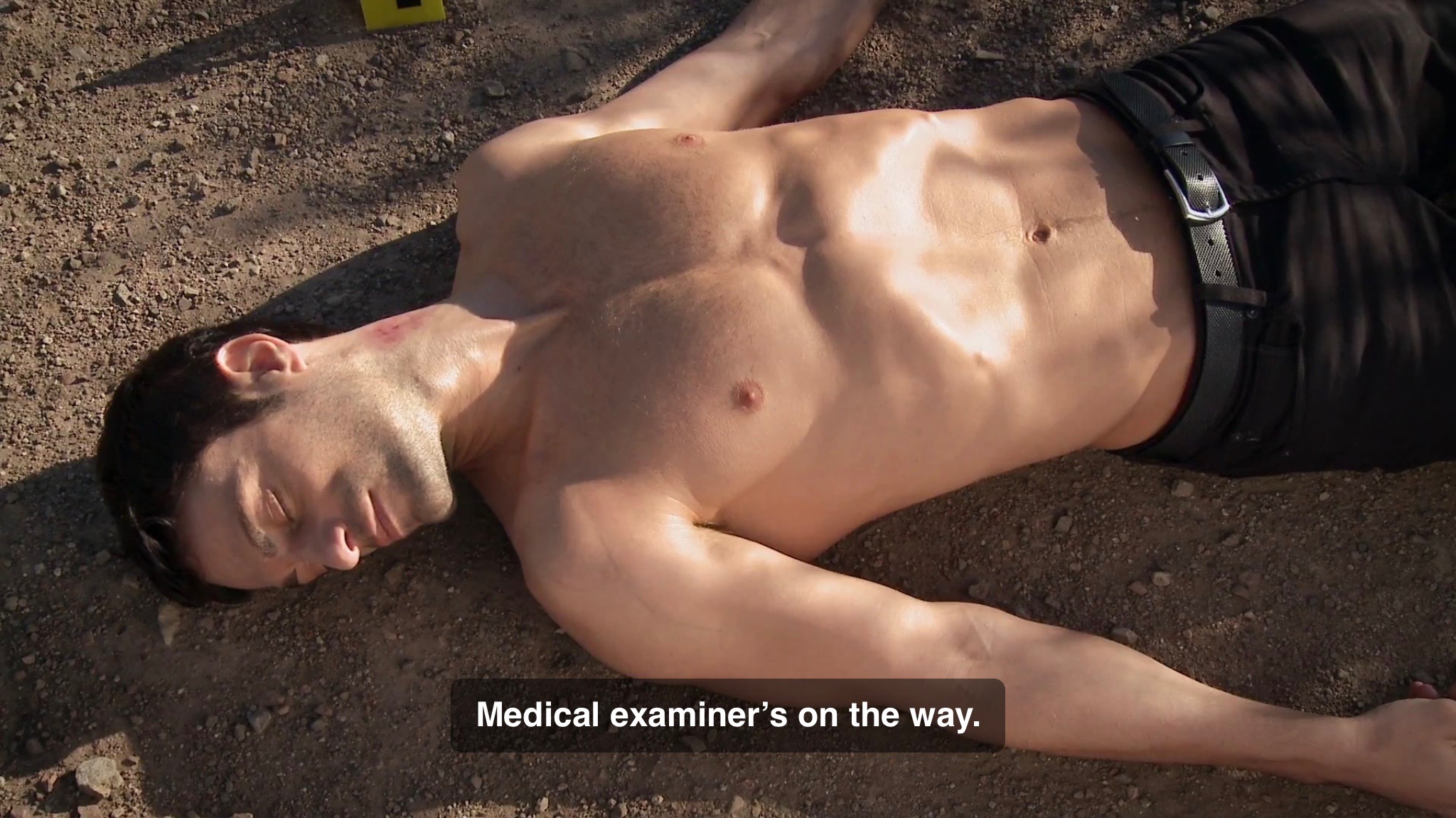
so that he could die somewhere else.

The Deadly Pickup (2016, dir. Dean McKendrick)

The Deadly Pickup (2016, dir. Dean McKendrick)

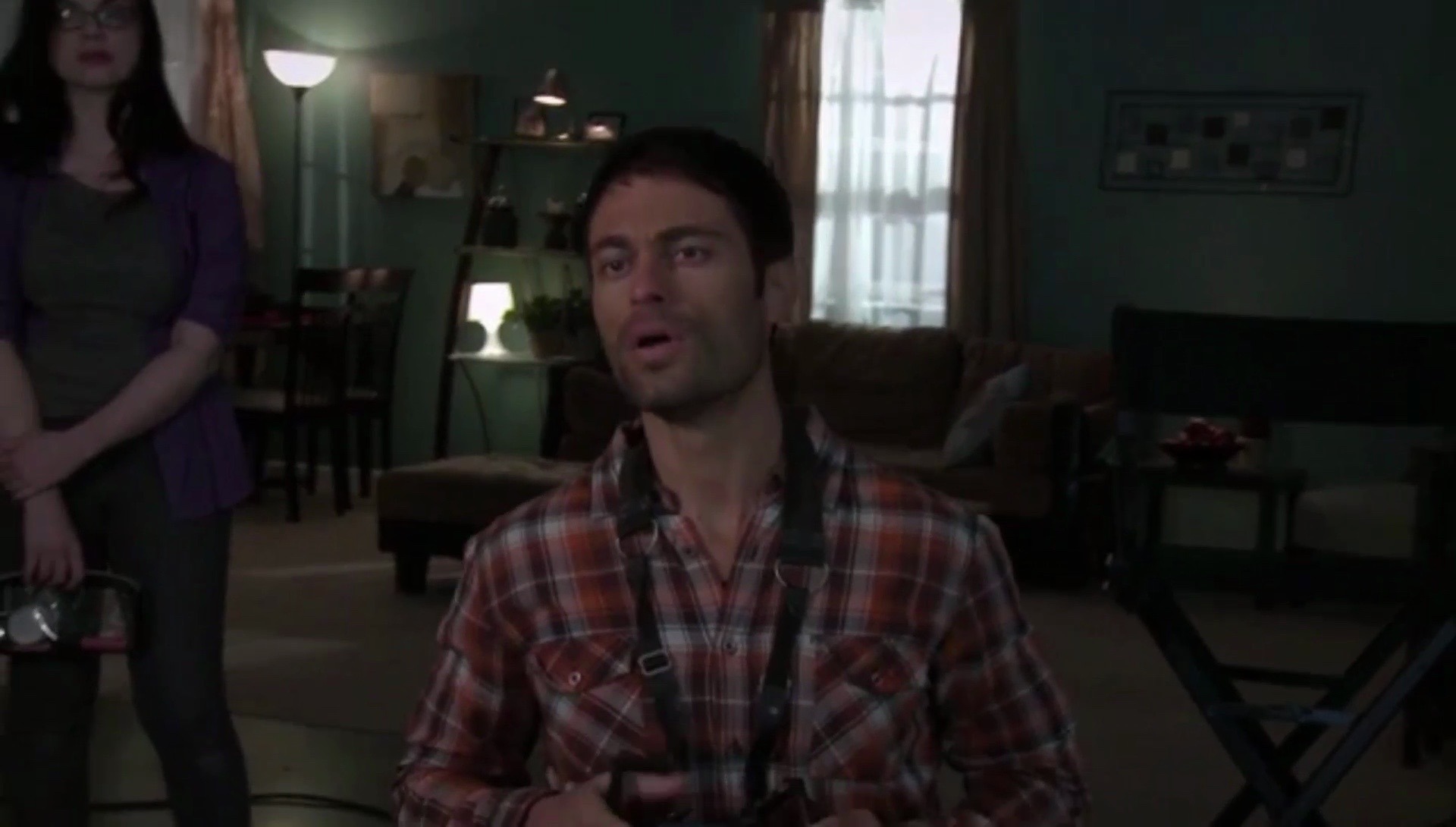
Then he came back in Model For Murder as a photographer.

Model For Murder (2016, dir. Dean McKendrick)

Model For Murder (2016, dir. Dean McKendrick)

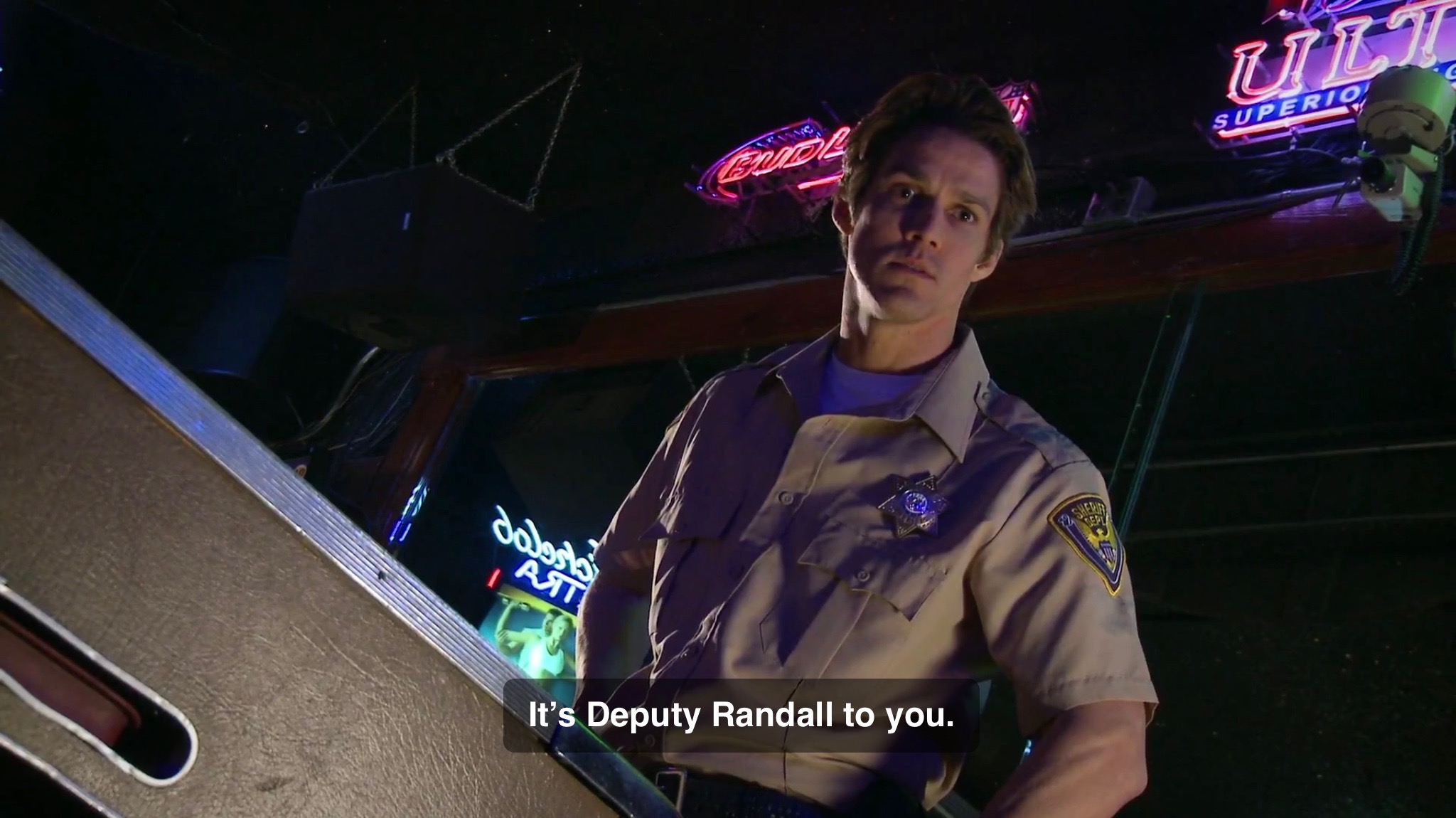
There’s also a flashback to Charlie who had to be rescued from Cruise by Deputy Randall.

The Deadly Pickup (2016, dir. Dean McKendrick)

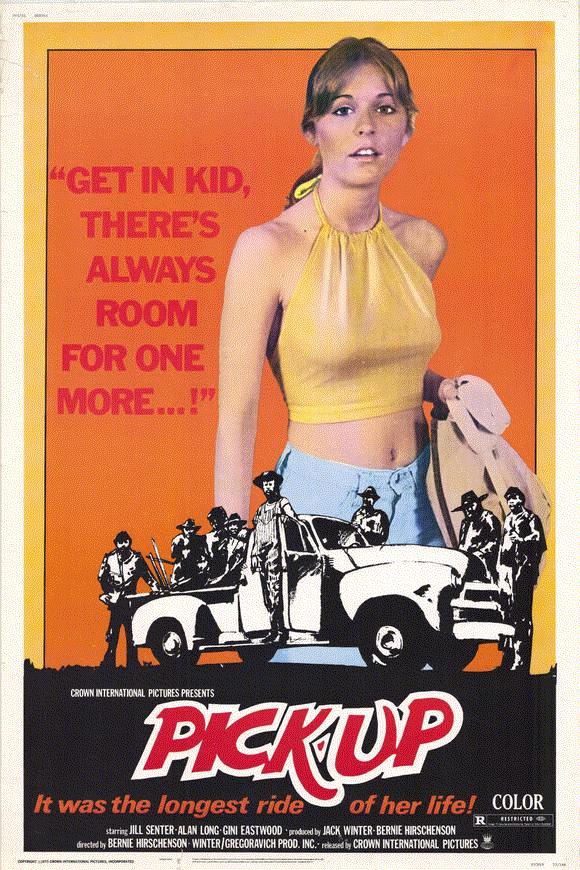
Don’t worry, Deputy Randall, who was promoted to detective in Model For Murder, makes a return in this film. Like Cruise, he is playing a different character. However, unlike Cruise, he is played by Billy Snow via the pseudonym of Alan Long. Makes sense to use the name of an actor from 1975’s Pick-up.

After the reused footage, the doctor turns up the dial on the machine, then asks her again what she wants to do with the attractive man.

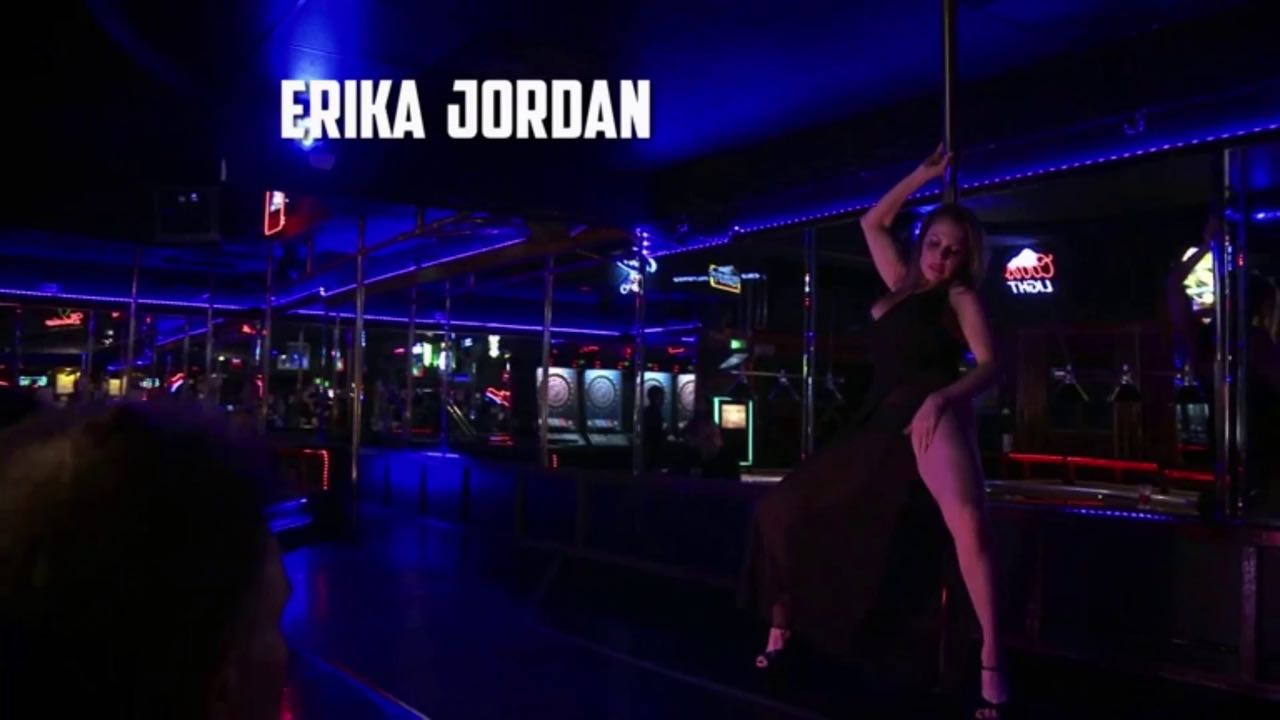
Perfect! I can’t say the same about these opening credits though. This dance number with Erika Jordan goes on just short of forever.

It only exists so she can give a lap dance to one of our main characters, Don (Justin Berti), in order to introduce us to him.

It also gives me an excuse to wonder what led her from working as a detective to dancing at this club.

Model For Murder (2016, dir. Dean McKendrick)

Also, Don has gone from managing models to sadly having to visit this strip club.

The Deadly Pickup (2016, dir. Dean McKendrick)

The Deadly Pickup (2016, dir. Dean McKendrick)

After a shot of a street somewhere, we cut to the bedroom where Erika Jordan and Billy Snow had sex in Model For Murder.

Model For Murder (2016, dir. Dean McKendrick)

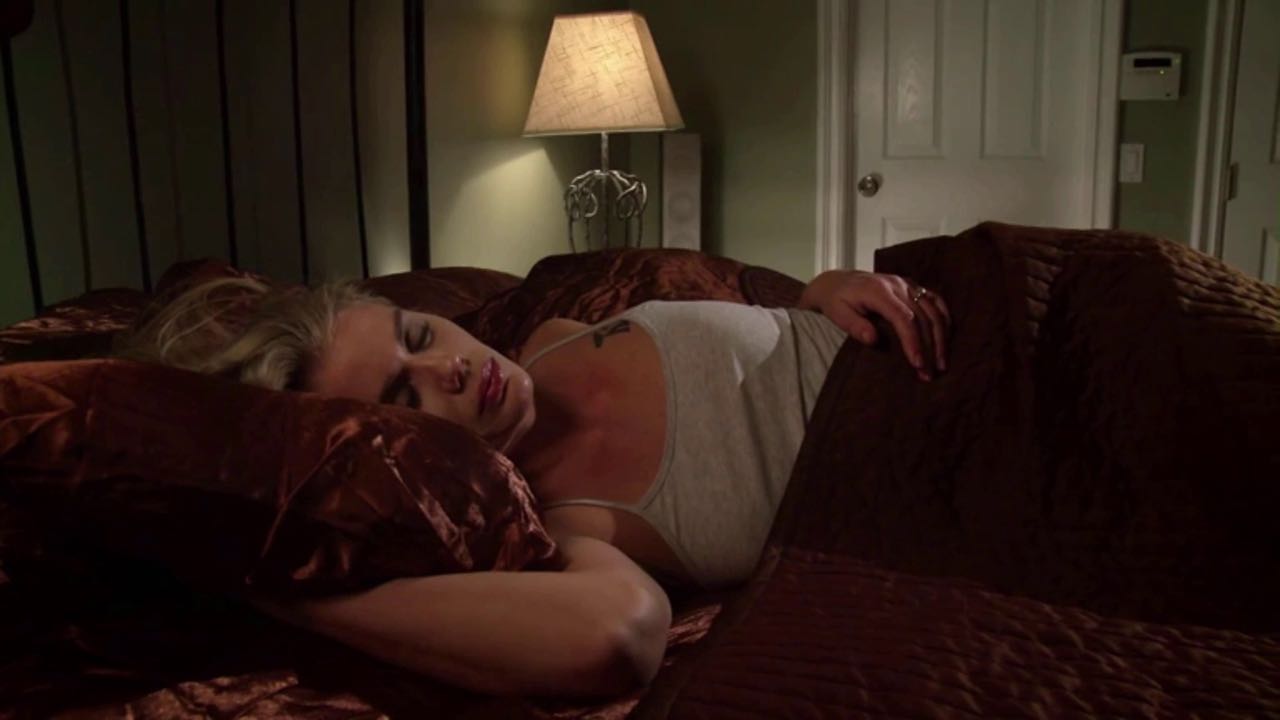
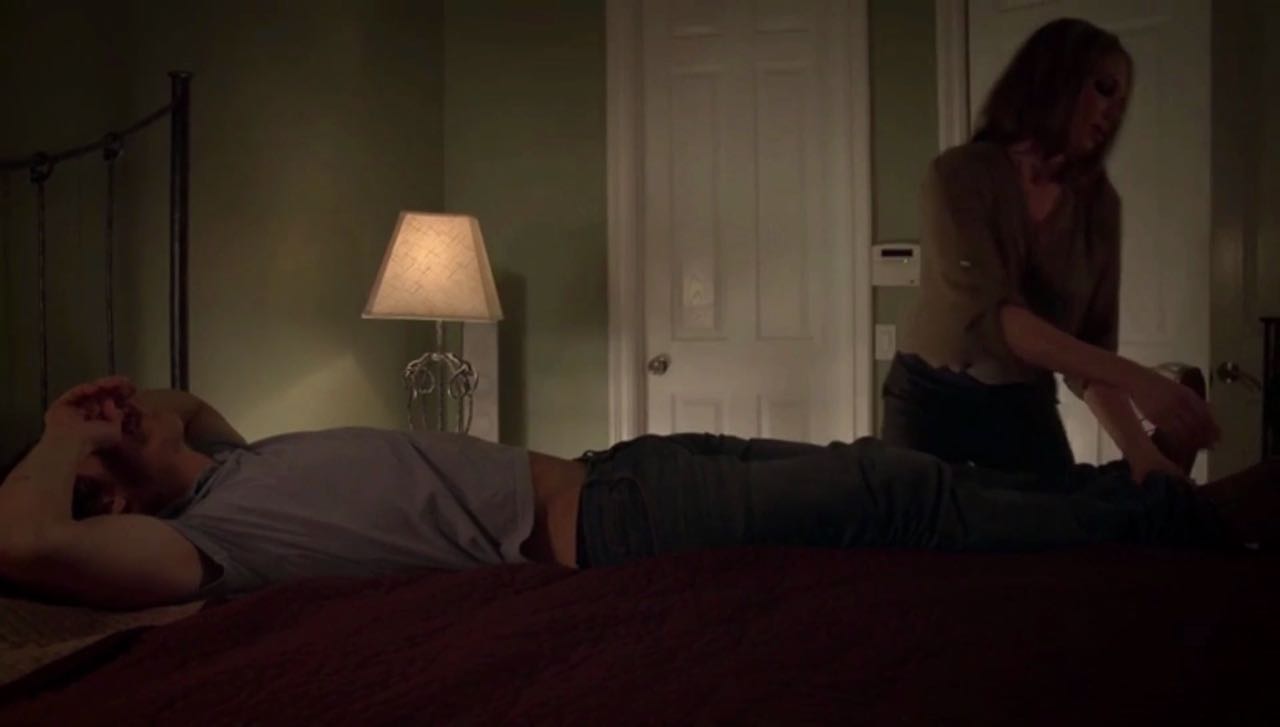
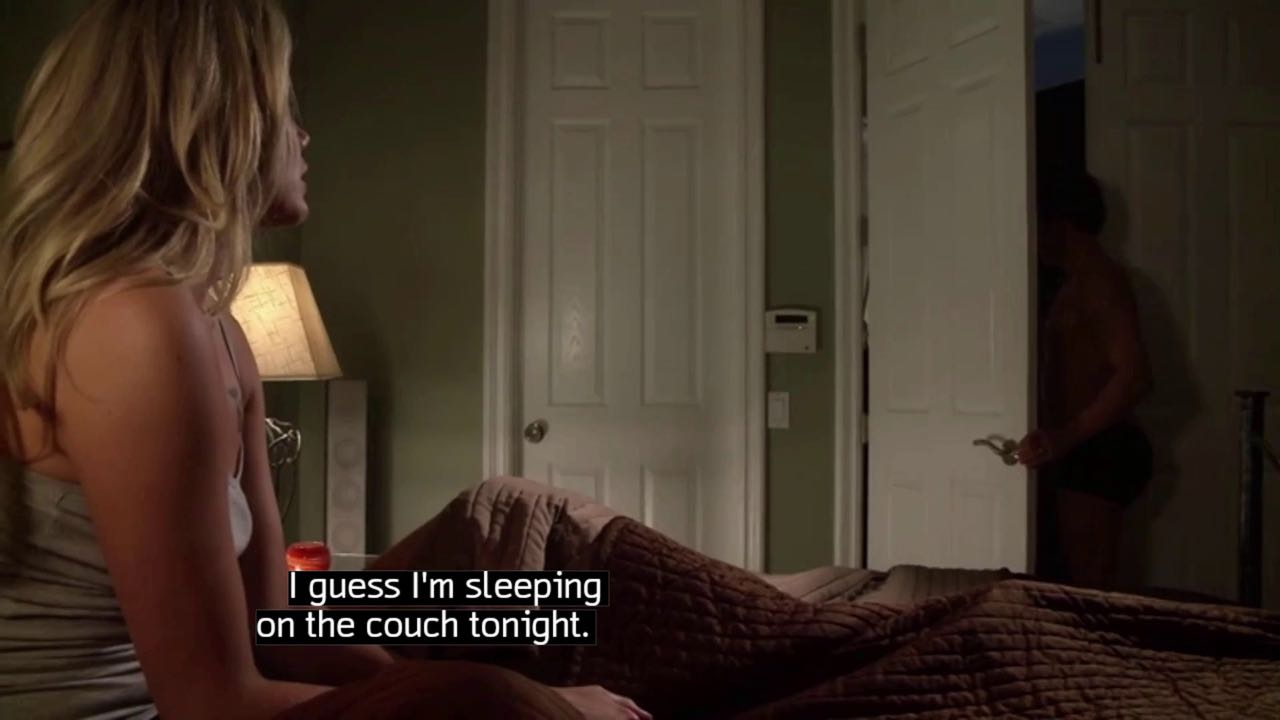
This is where we meet Don’s wife, Jane (Alice Haig). They are having trouble with their marriage. He wants to try couples therapy, but she is reluctant, so he leaves to sleep on the couch, which judging by the paint on the walls, is probably in the same building as the room from earlier.

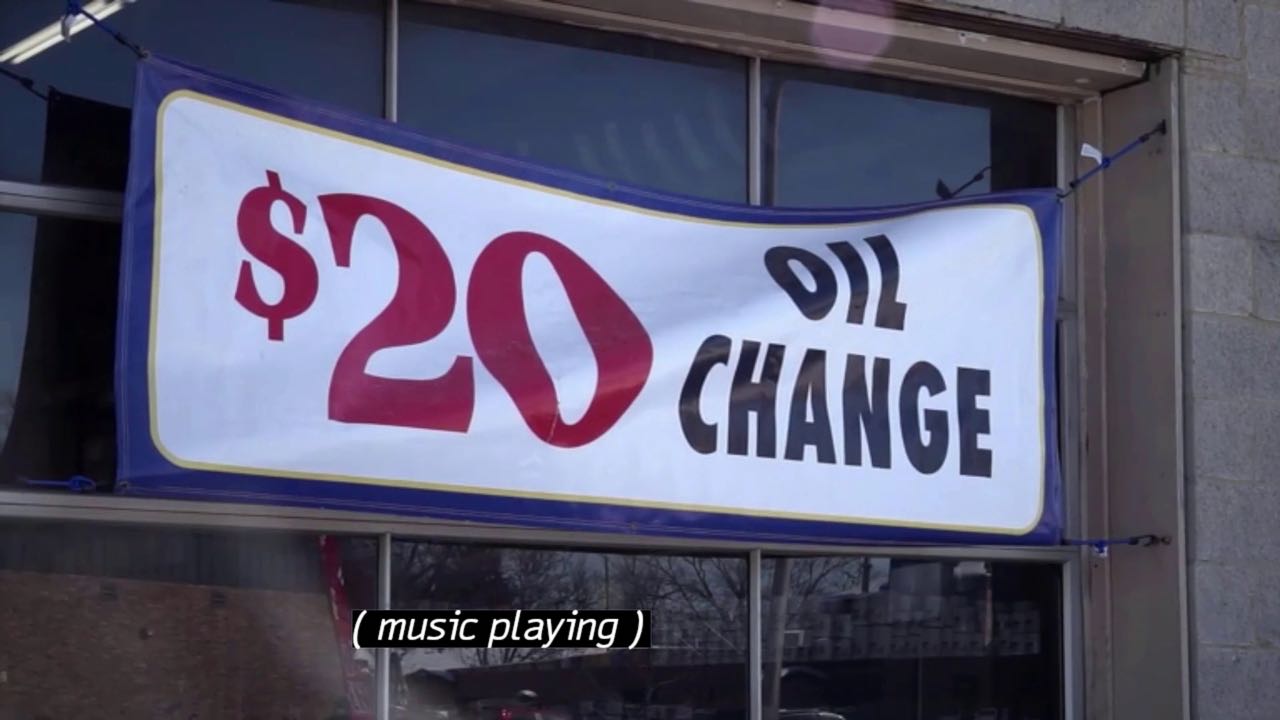
Meanwhile, at the $20 Oil Change…

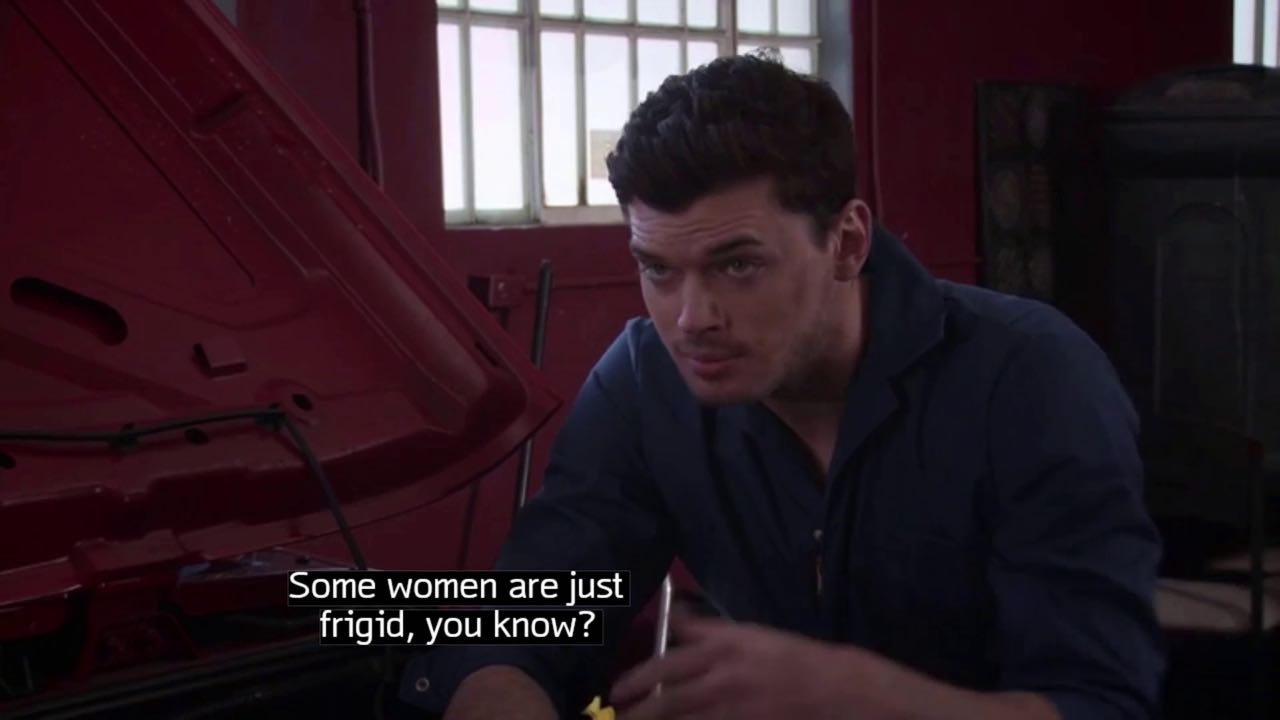
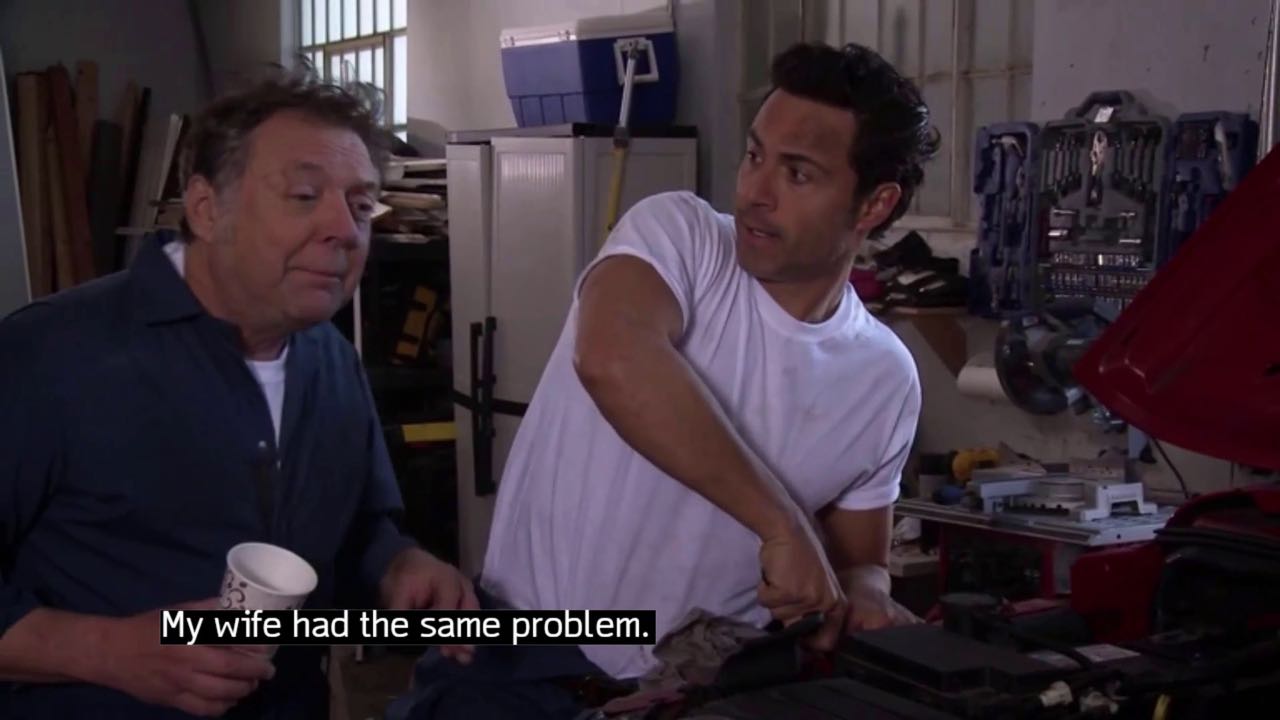
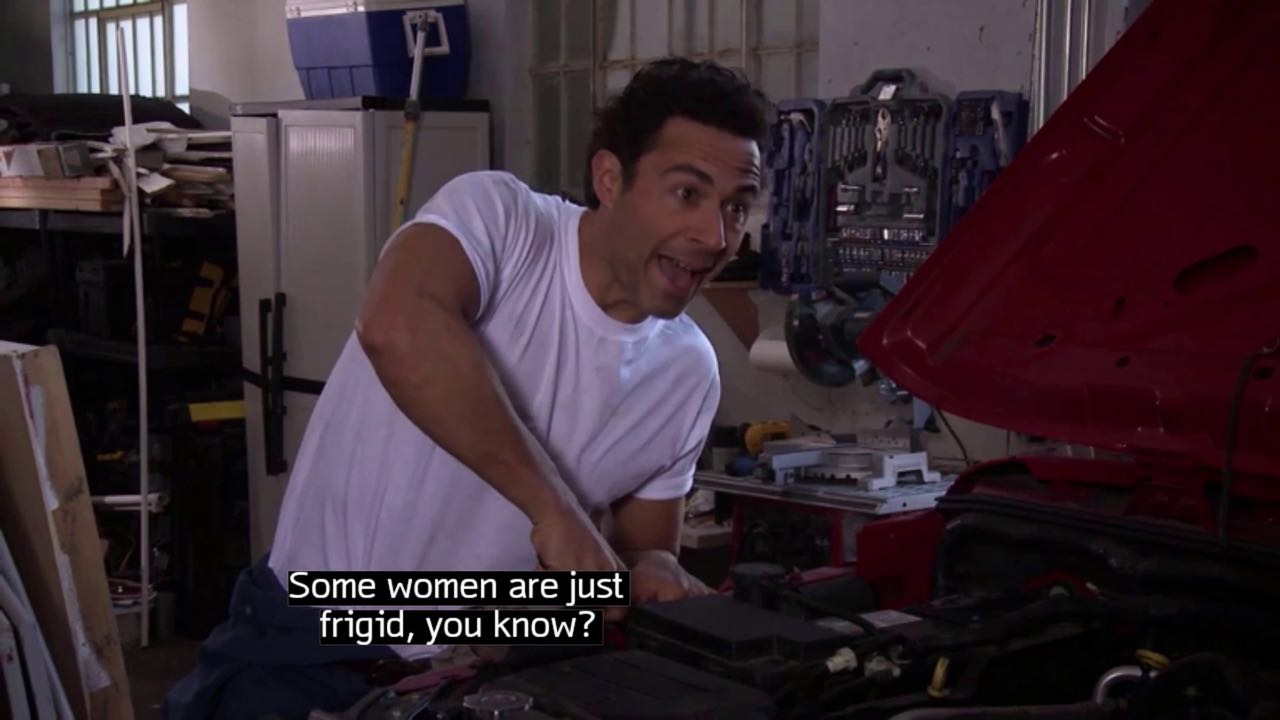
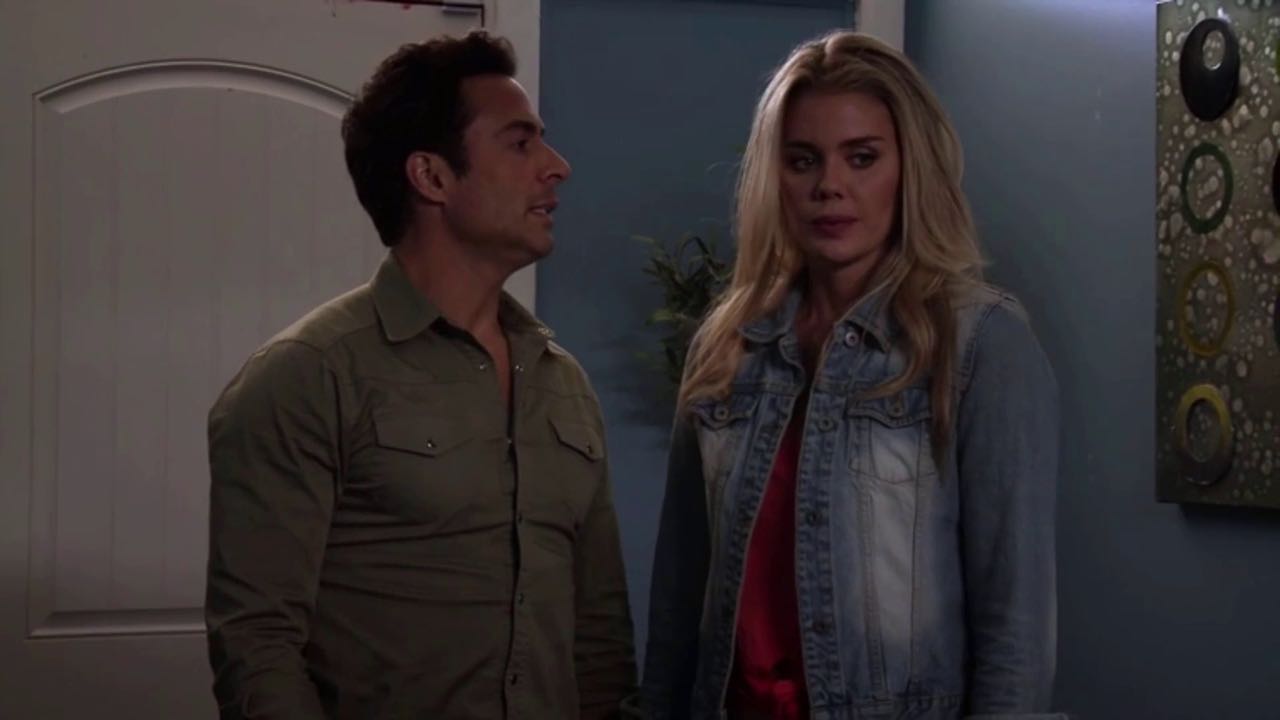
Don strikes up a conversation with his friend John (Michael Hopkins) concerning his marriage problems.

I know I said something similar when I talked about Model For Murder, but welcome back to the world of the living, Josh. You might remember Michael Hopkins as Carter Cruise’s first victim in The Deadly Pickup. Or you don’t, because you have a life, haven’t seen all three movies, and certainly haven’t paid this much attention to them.

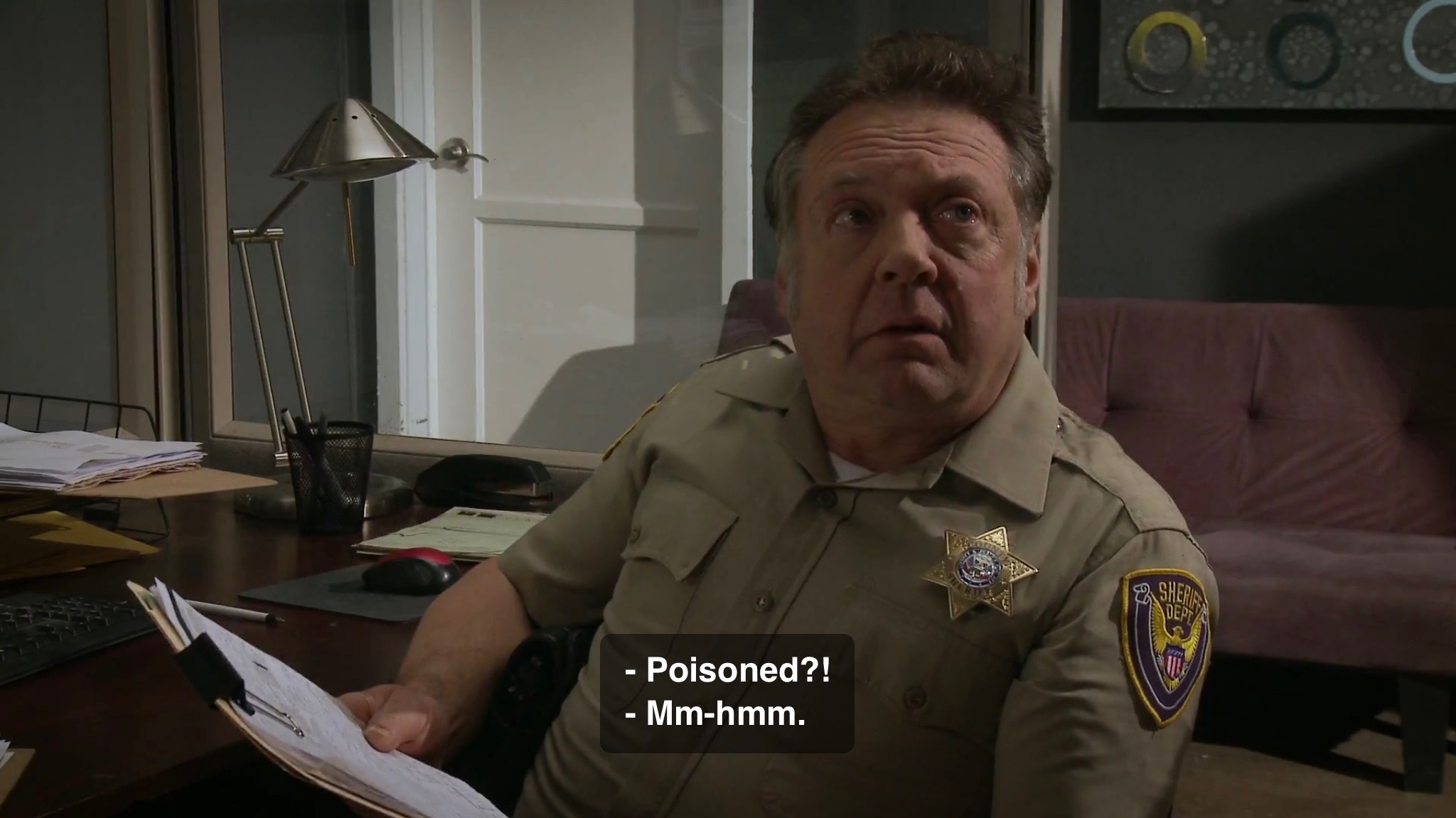
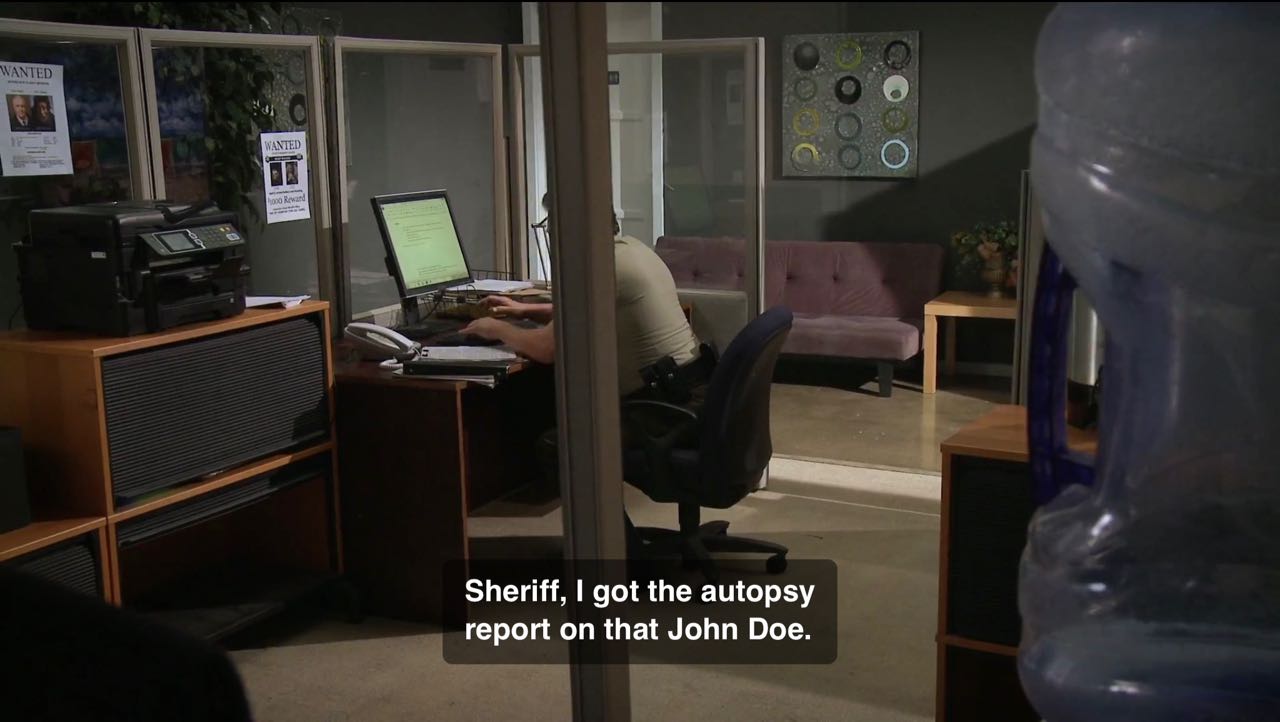
We also get the return of Sheriff Bates…

The Deadly Pickup (2016, dir. Dean McKendrick)

The Deadly Pickup (2016, dir. Dean McKendrick)

except this time Michael Gaglio owns this $20 Oil Change.

And I got this humorous shot of Justin Berti.

It doesn’t have to do with anything. I just thought I’d share it with you.

John suggests a therapist that worked for him and his wife, Angie.

Then we get what looks like a new set.

Sure, it appears to have been decorated by the same people who did the police station in The Deadly Pickup, but I couldn’t find it anywhere else.

The Deadly Pickup (2016, dir. Dean McKendrick)

The Deadly Pickup (2016, dir. Dean McKendrick)

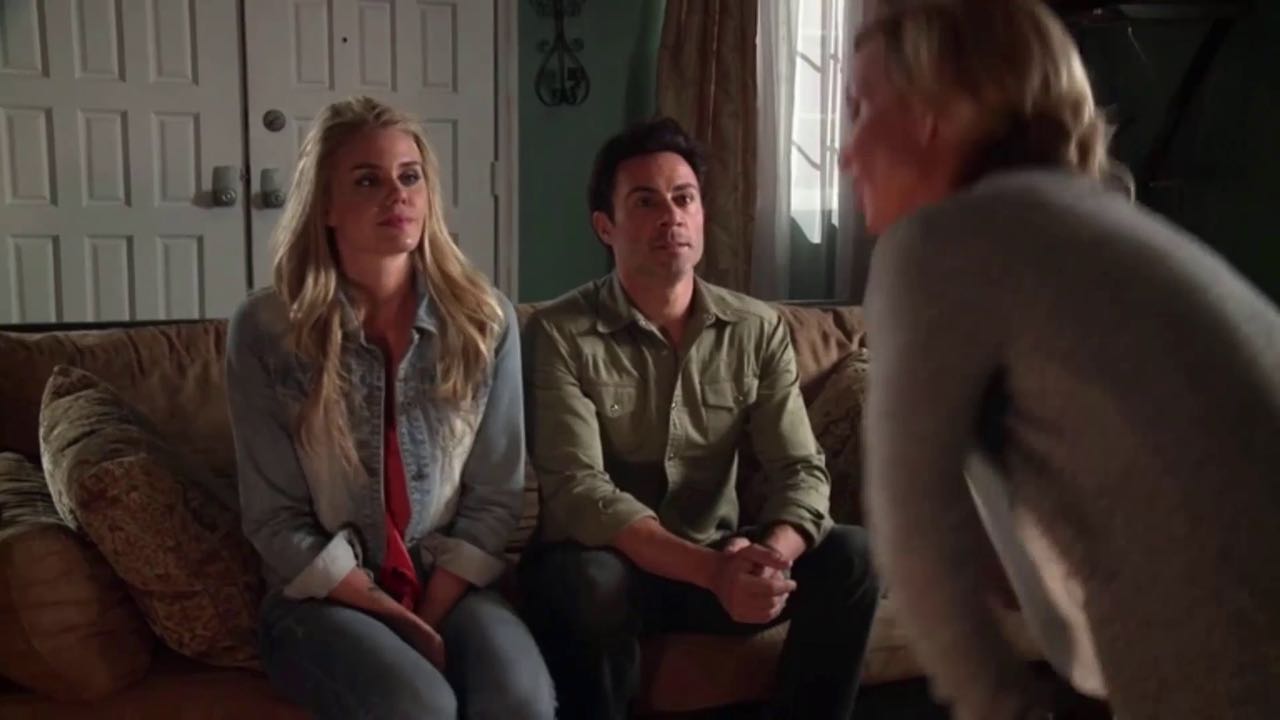
Inside, the doctor gets the story from Don and Jane about their troubles while they sit on the couch that Rick had sex on in Model For Murder.

Model For Murder (2016, dir. Dean McKendrick)

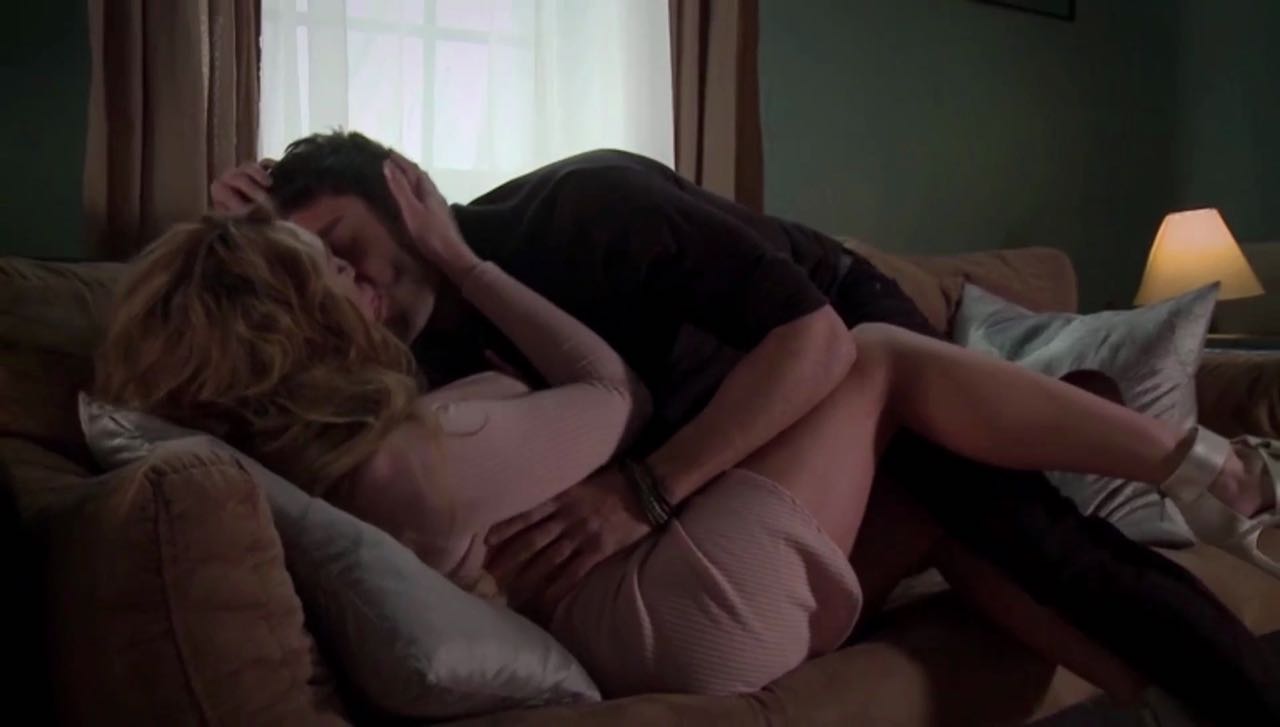
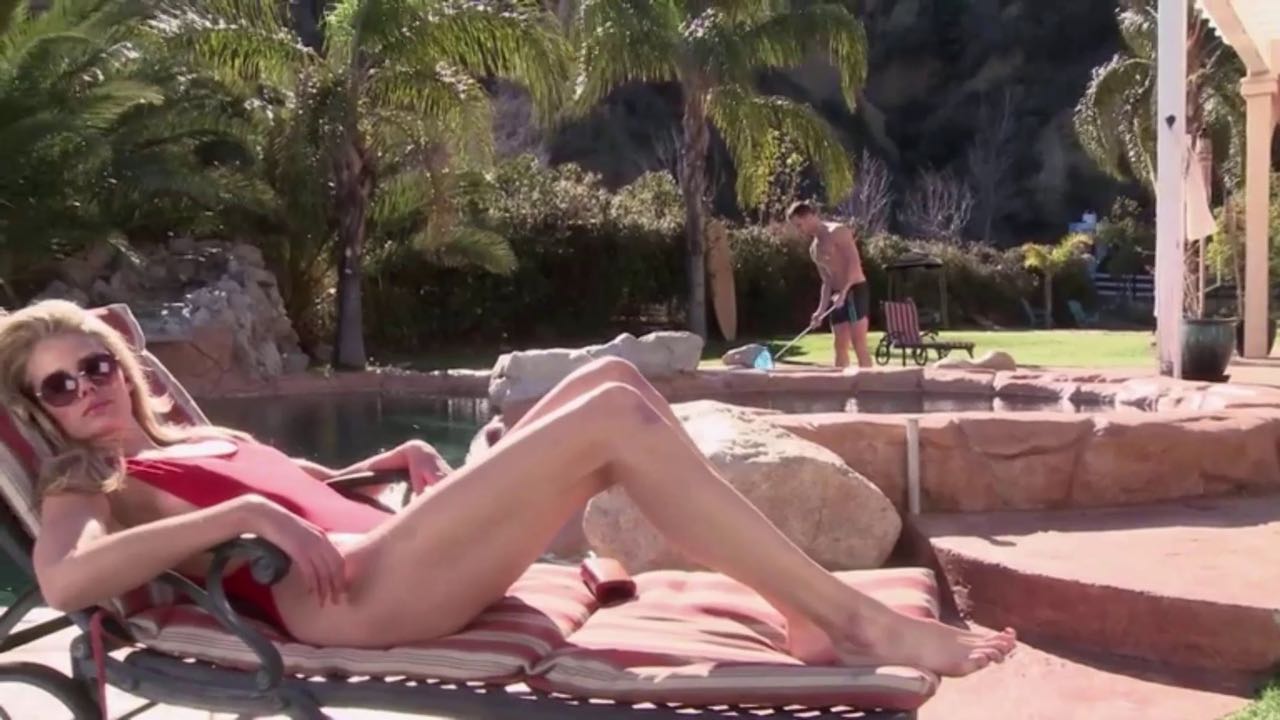
Of course she’s an ideal candidate to be zapped by that machine. The questions ultimately lead the doctor to asking Jane about her sexual fantasies. This time we don’t get stock footage. It’s just another reused set. She dreams of sunbathing on the set of the sexual encounter with a murder victim her husband told police about in Model For Murder.

Model For Murder (2016, dir. Dean McKendrick)

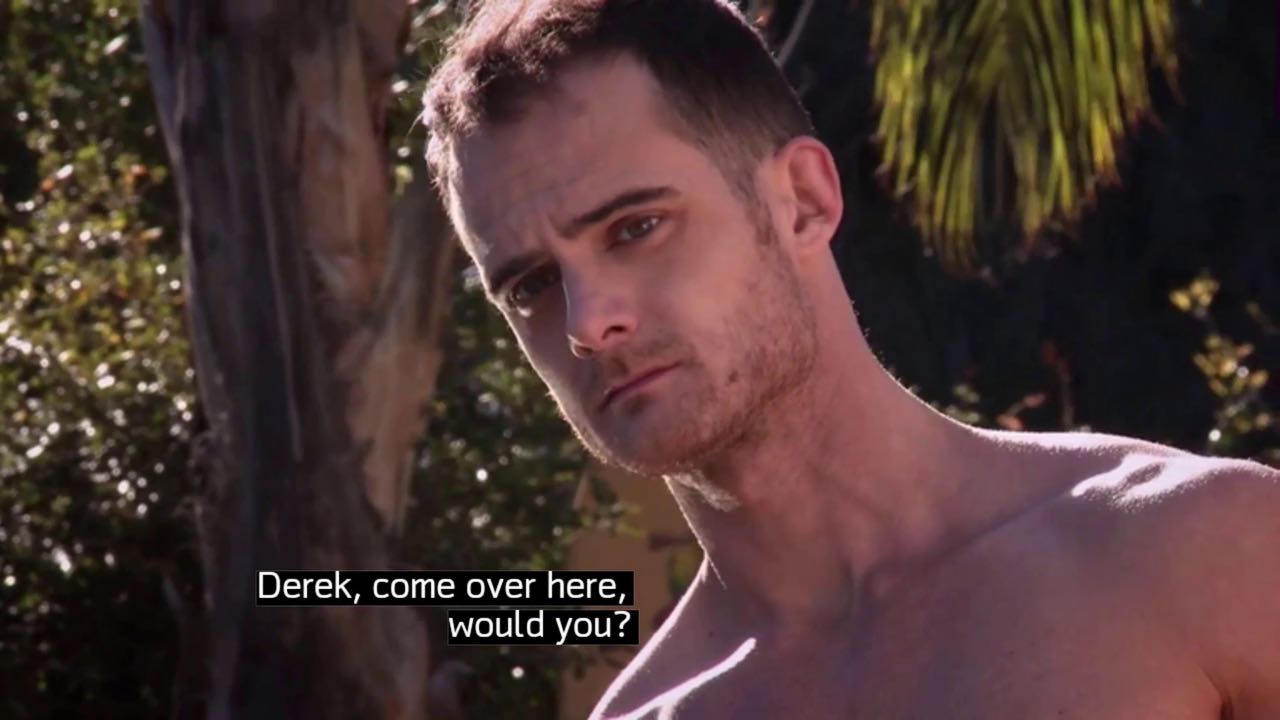
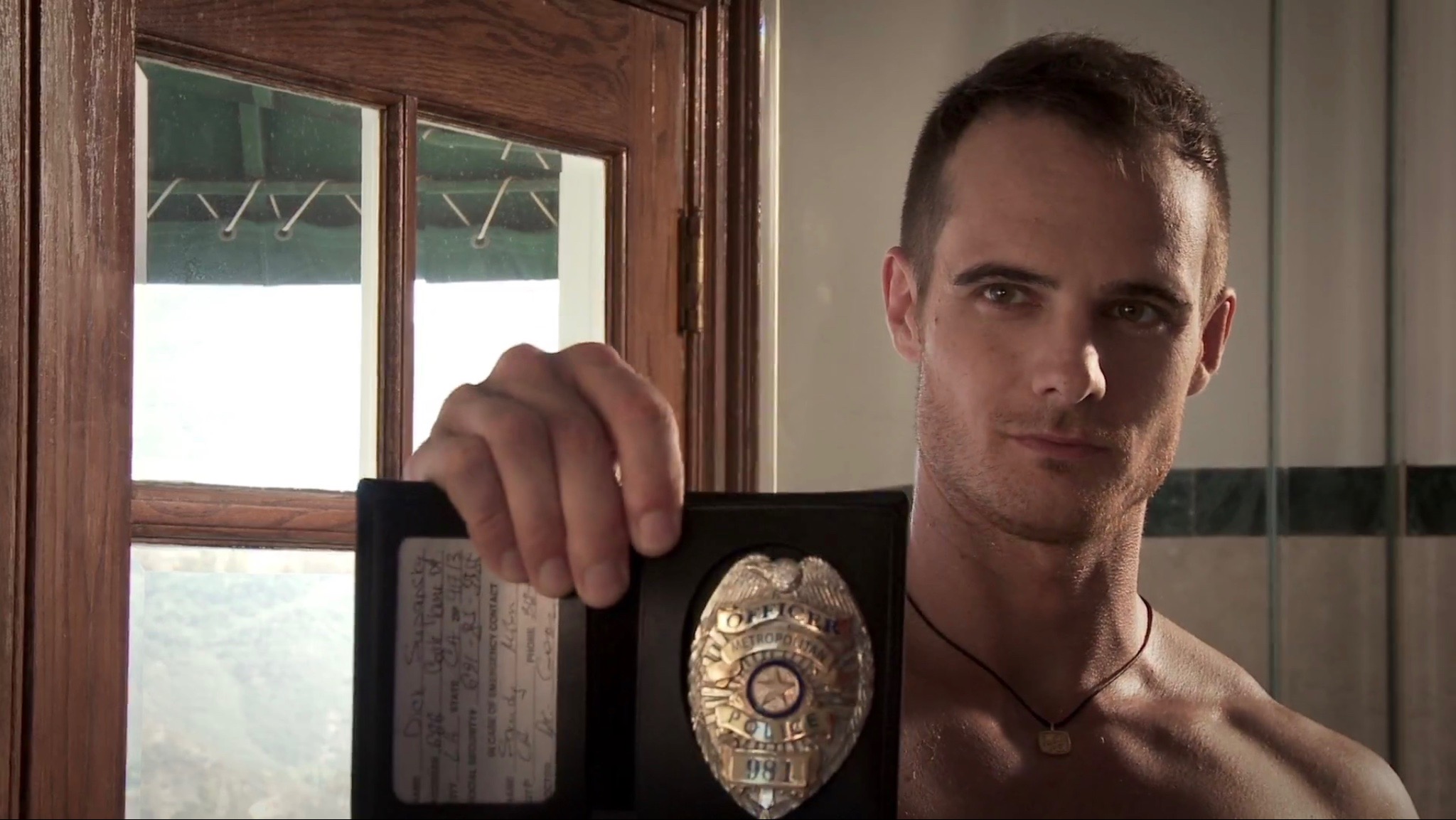
And of course there’s a pool boy (Robbie Caroll). You may remember him as the police officer who arrested Katie Morgan at the beginning of Vixens From Venus (2016).

Vixens From Venus (2016, dir. Sal V. Miers)

Much like Jordan, his career seems to be on the downswing. He was once a police officer, and now he’s been reduced to being a pool boy.

This is the first sex scene of the movie. I would love to have heard the conversation on the other end of this that Jane was having with the doctor.

While this scene happens, we are treated to a few minutes of a soundalike of Take Five by The Dave Brubeck Quartet.

The session went well, and a follow-up appointment is set.

Now we get to find out what the outcome of these treatments is when we get to meet John’s wife, Angie (Pepper XO).

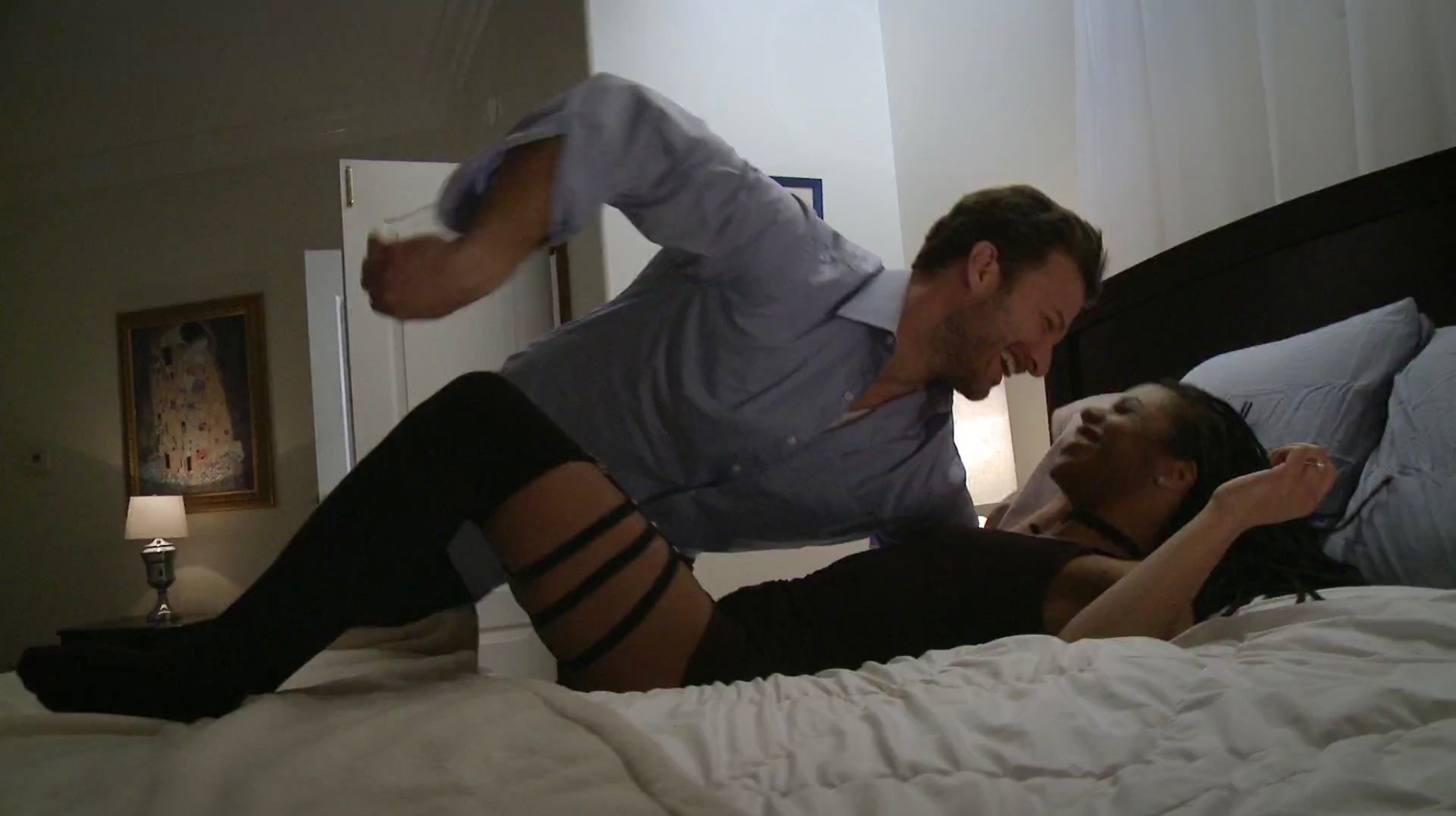
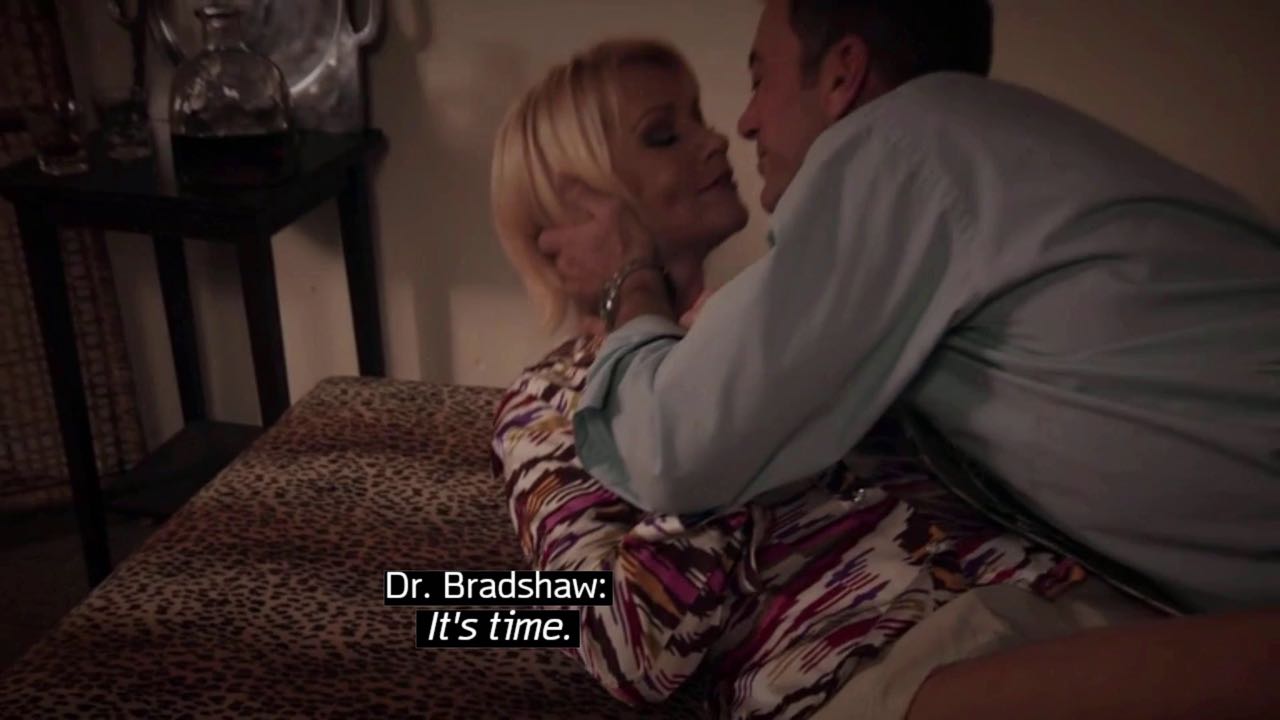
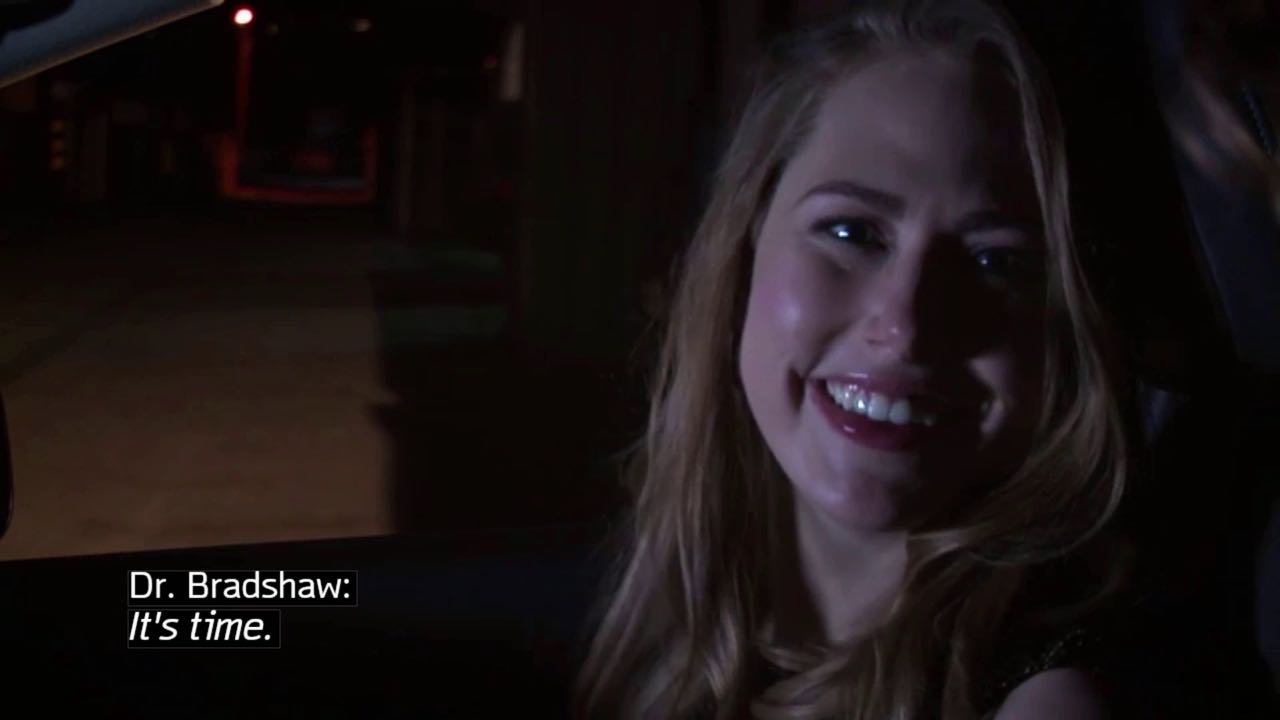
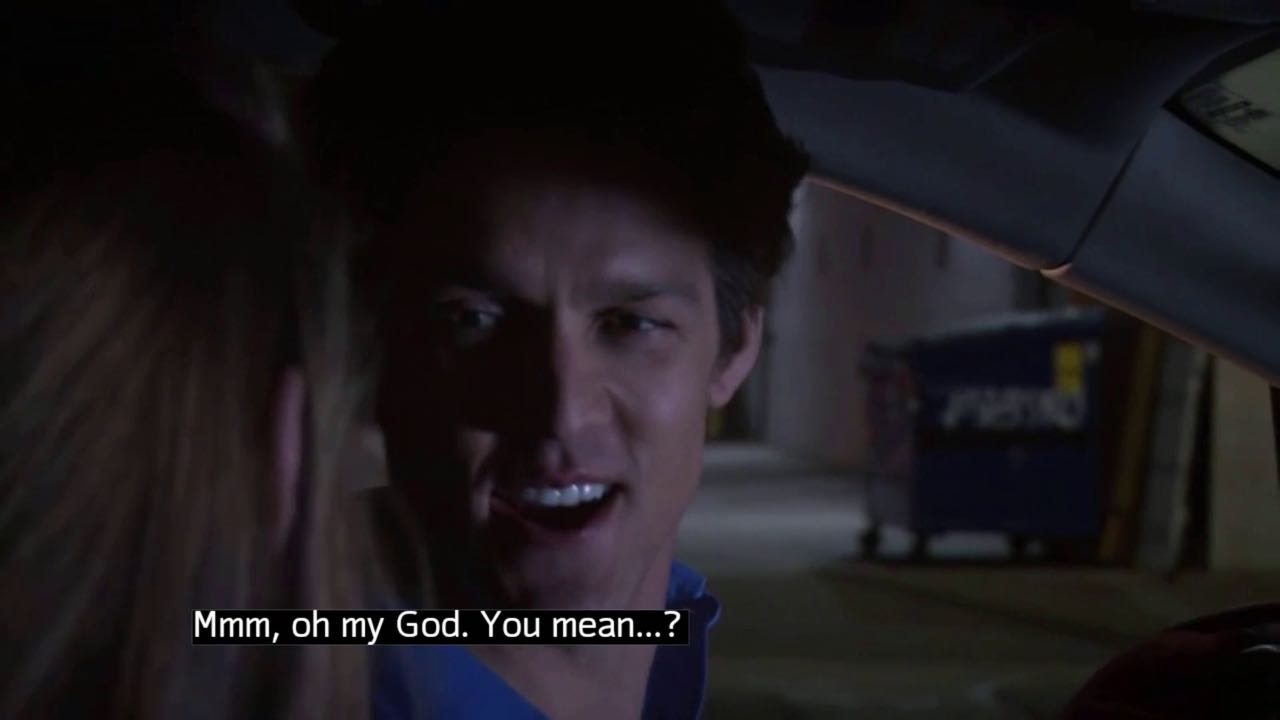
A call comes in from the therapist who tells Angie that “it’s time.” That means it’s time to have sex on Brian and Traci’s bed from The Deadly Pickup.

The Deadly Pickup (2016, dir. Dean McKendrick)

The Deadly Pickup (2016, dir. Dean McKendrick)

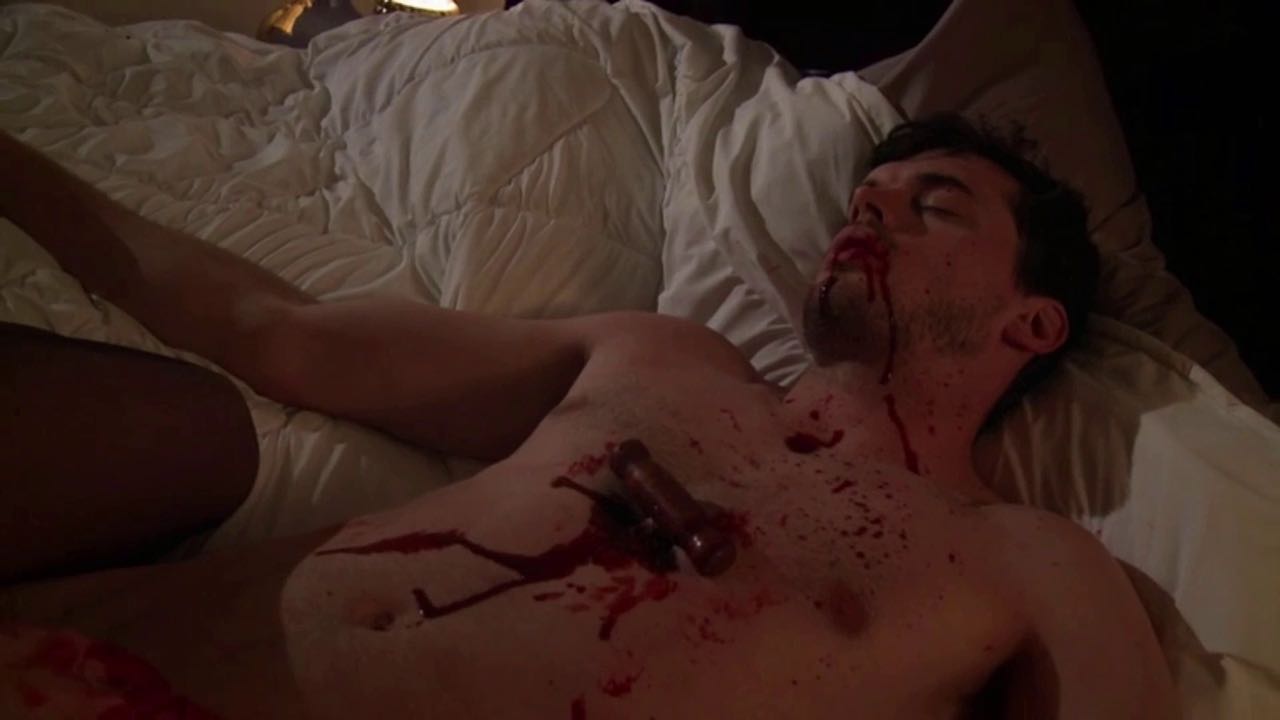
It also means that it’s time for John to die from a corkscrew to the chest.

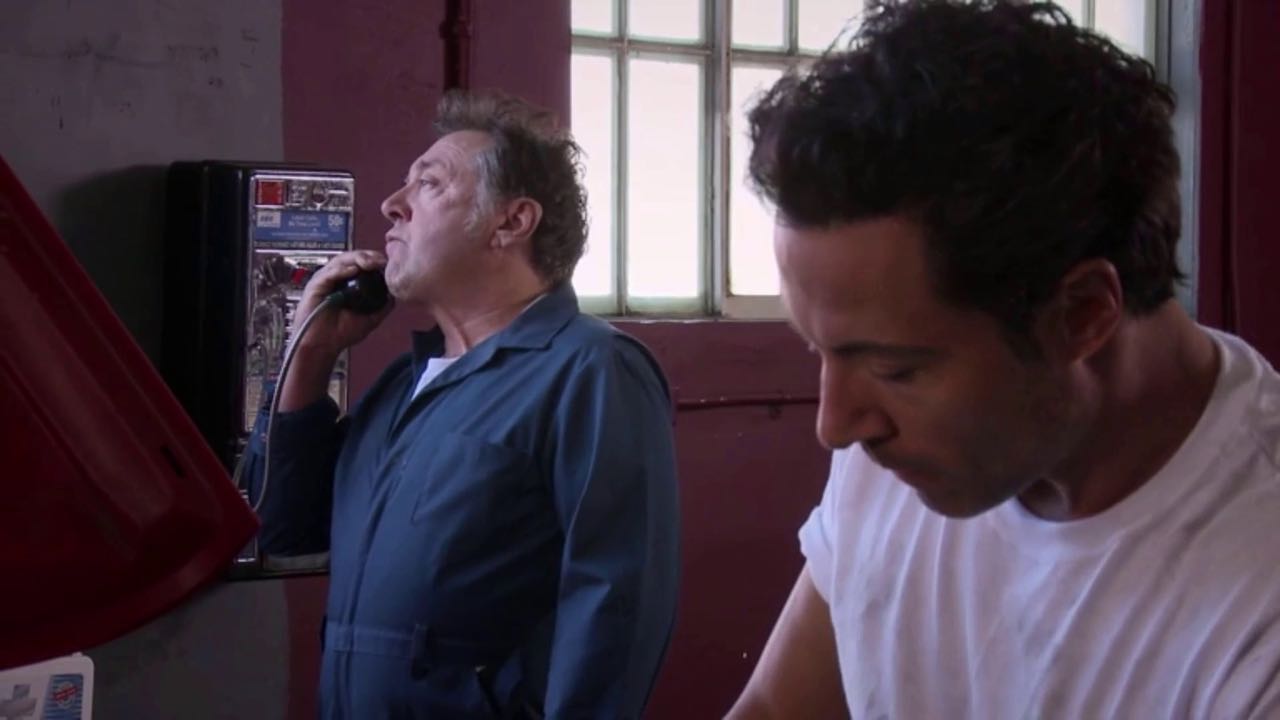
The next morning, Jane tells Don that she thinks the treatments are going well, and Don goes off to work to have the bad news broken to him about his friend being killed. But before Don receives the bad news, we get to see that the $20 Oil Change has an SBC payphone in 2016.

Gaglio breaks the news to Don, which leads the film to immediately cut to two people having sex on a leopard-print bed. I have no idea who they are.

She gets a call from the doctor, and he’s dead.

Now Jane meets Jeff (Billy Snow). If he looks worried here…

it’s because of who his wife is.

Jane goes in for another treatment. While she is under the control of the machine, the doctor forces herself upon Jane. No joke. They really could have left this scene out–no matter how short it is.

Don now breaks the news to Jane about John’s death so that we know the two of them have a reason to start being suspicious of the doctor. That’s not important though, because the scene that I was waiting for, finally happens.

Breezy finally gets her revenge on Deputy Randall. Does the rest of the film really matter now?

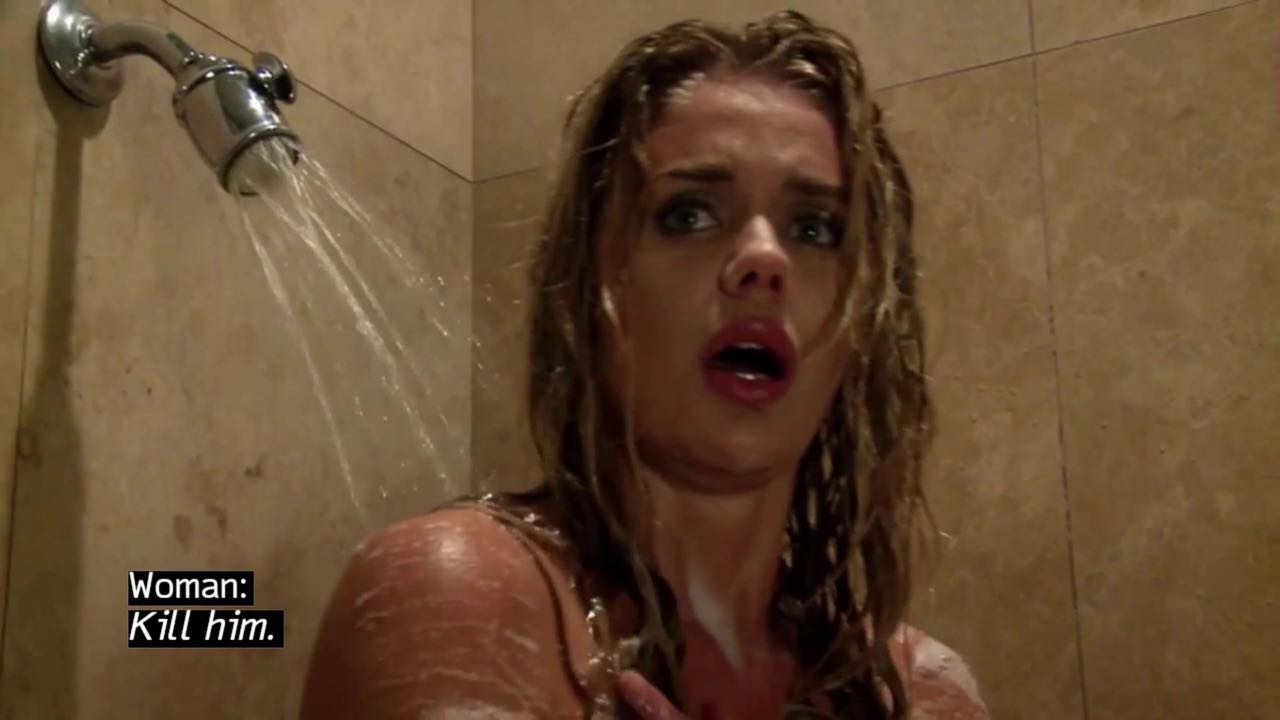
Okay, fine. Jane is lying in bed when she has a dream of Christine Nguyen doing a shower scene. I’m not kidding. They randomly inserted a shower scene by having Jane dream about one out of the blue for no apparent reason.

With the death of Billy Snow, Don is convinced things are fishy with the doctor, and he tries to talk Jane out of seeing her. It doesn’t work.

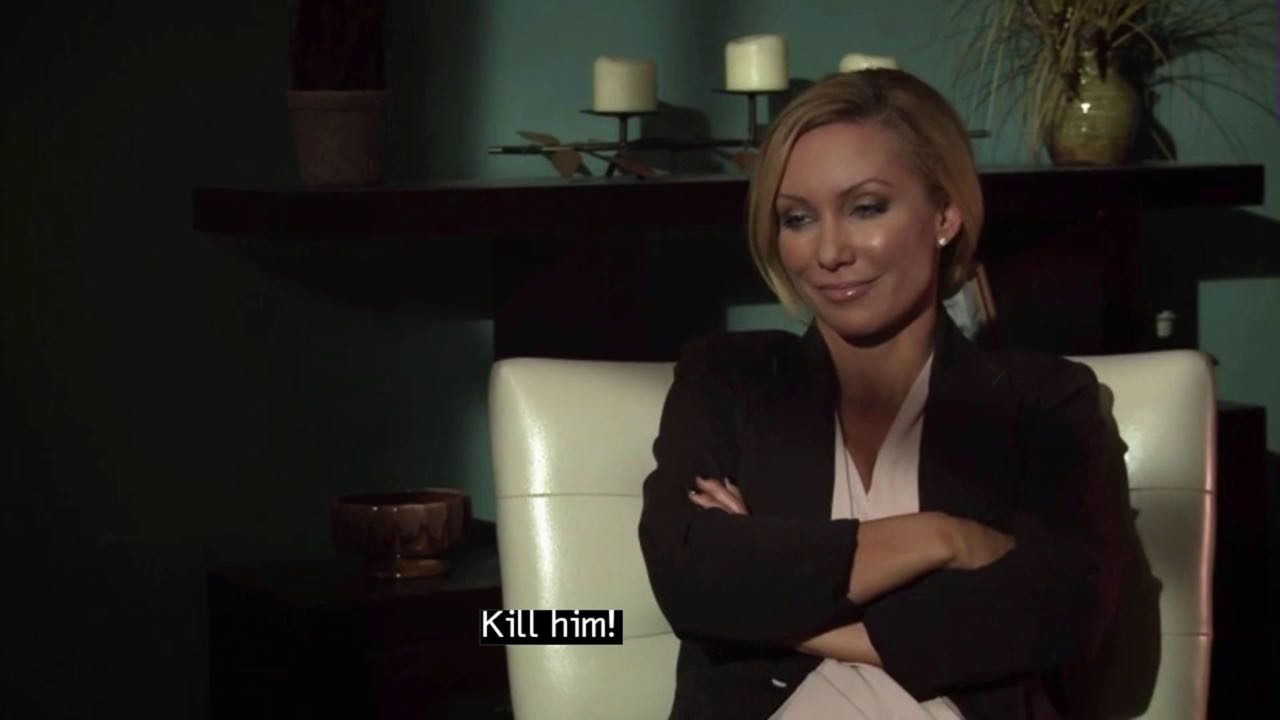
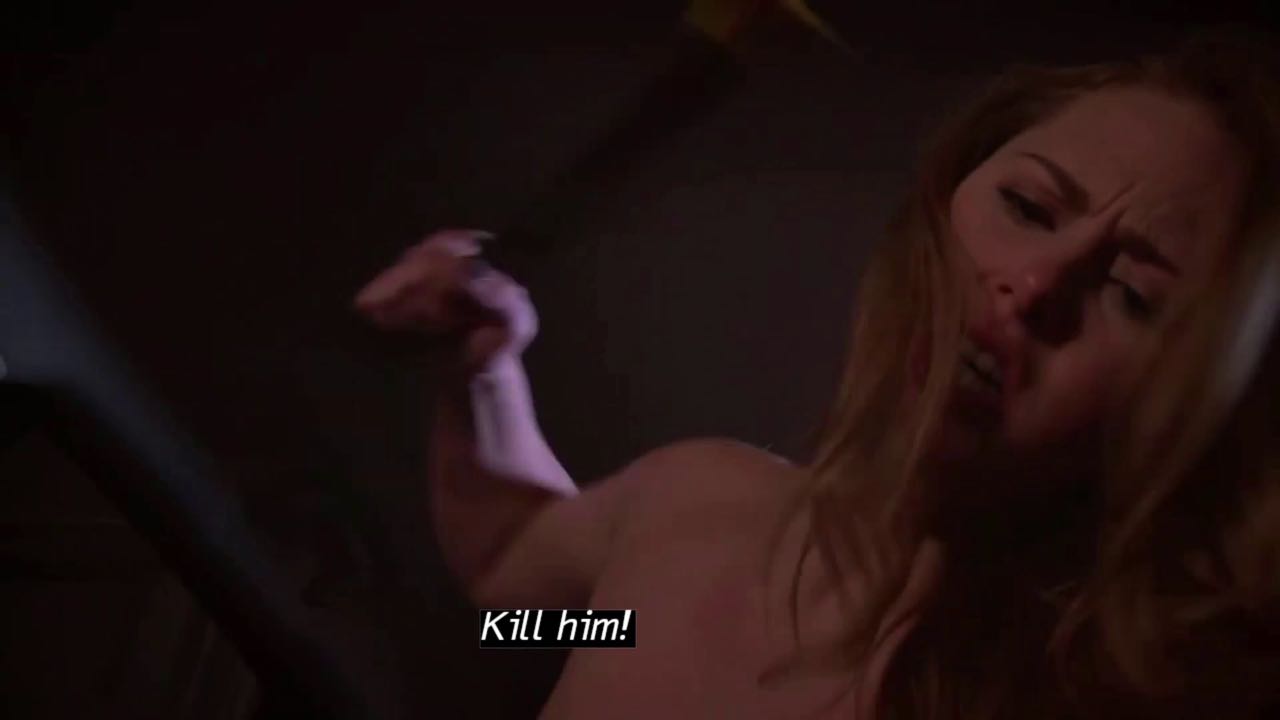
Then they have another shower scene. I have to give them some credit. They do end it with pertinent information to the plot. Jane remembers the doctor’s “Kill him” line.

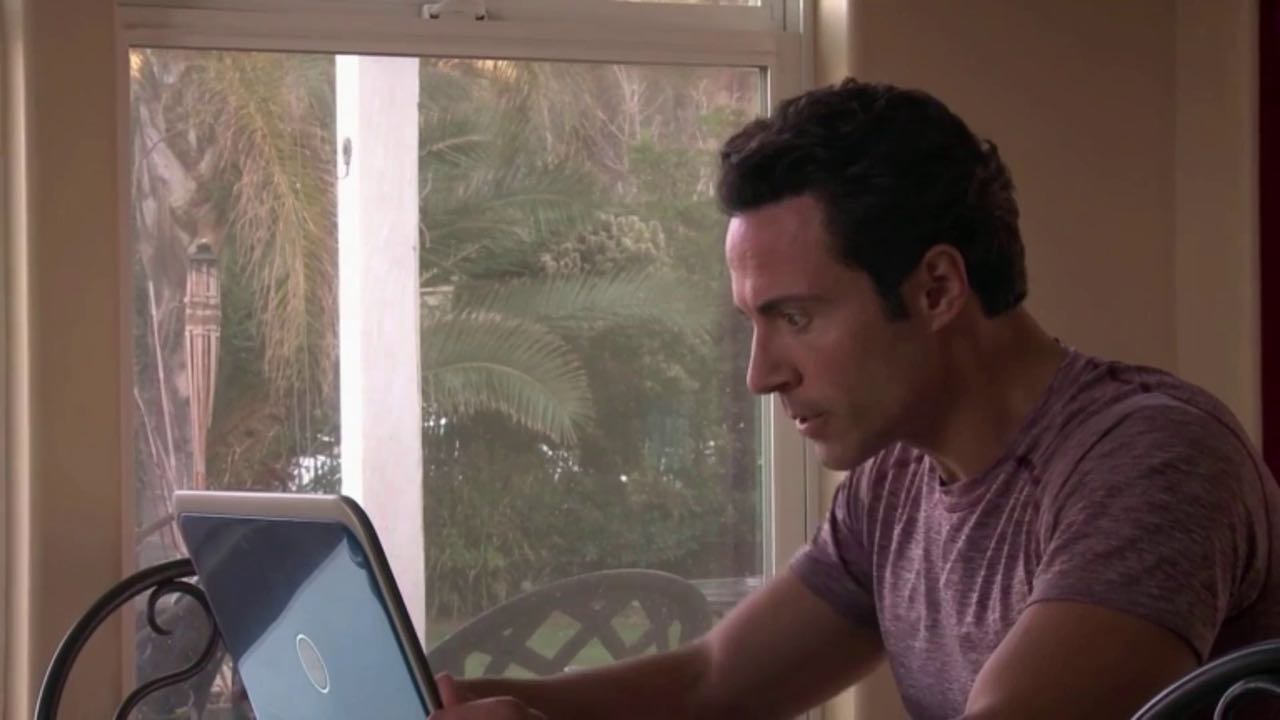
Don does some intense research online about the doctor.

Long story short, something bad happened to her, so she’s taking revenge on other people.

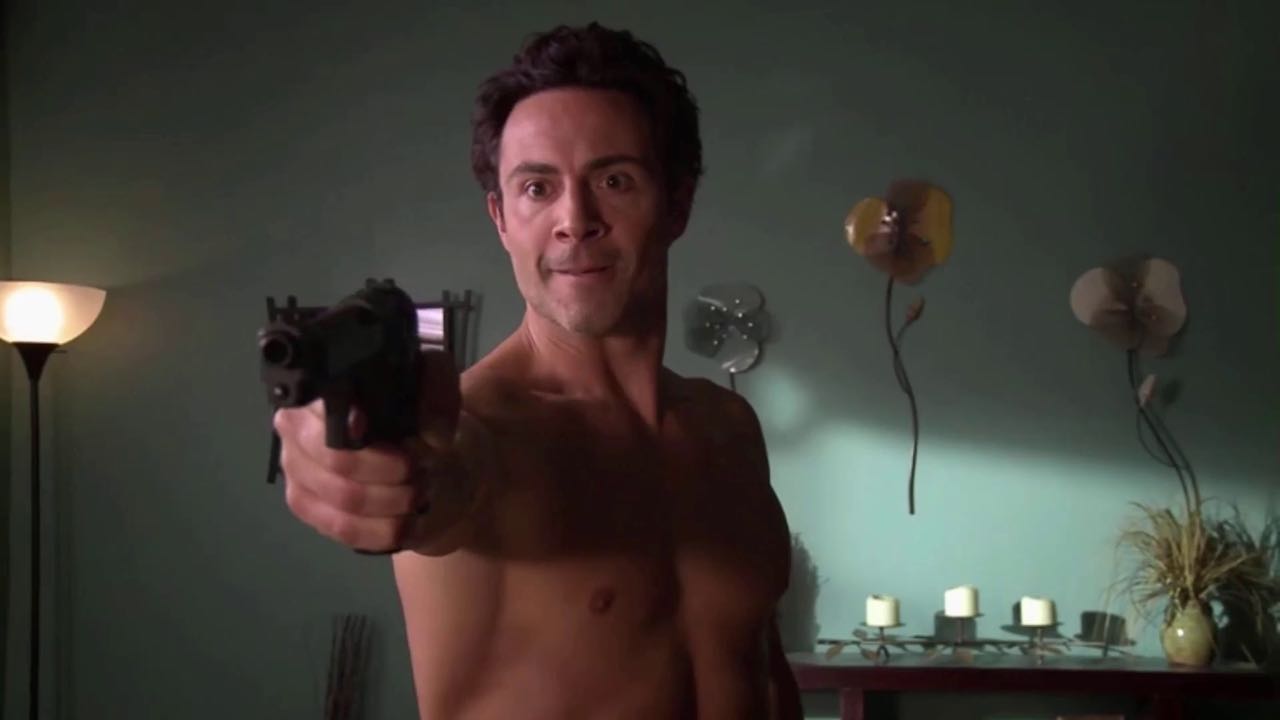
Don now races to save his wife from this monster. Unfortunately, Don’s an idiot, and Jane zaps him with the machine, leading to a sex scene. However, since we are at the end of the film, when Jane pulls a gun to shoot him, he takes it away from her.

The doctor comes in, and I kind of love Don because he doesn’t hesitate for second. She pulls a knife, and he shoots her.

A quick shot at the machine, and Jane is free from its power. A couple lines of dialog are exchanged, then the movie abruptly ends.

So, that’s The Love Machine.

For the people watching for entertainment value, it doesn’t have much to offer other than getting to see Carter Cruise do in Billy Snow.

For people watching for the sex, it doesn’t have much either. There are a couple of sex scenes, and two shower scenes shoehorned into the movie. The one scene of girl-on-girl is kind of disturbing seeing as the doctor does sexually assault her. Then the movie adds confusion since that encounter is what appears to trigger her to have a dream about a woman taking a shower. Yet, it’s never followed up on.

I almost would have preferred the doctor to win in the end by taking Jane away with her. Sure, it would have been dark, but it would have been something memorable about this movie.

I can’t recommend this one.

Film Review: Patty Hearst (dir by Paul Schrader)


The 1988 film, Patty Hearst, is based on a fascinating true story.

In 1974, newspaper heiress Patty Hearst was a 19 year-old student at Berkeley who was kidnapped from her apartment by a group of self-styled leftist revolutionaries known as the Symbionese Liberation Army (SLA).  The SLA was led by a charismatic escaped prisoner who called himself Field Marshal Cinque and who announced — via messages that Hearst read into a tape recorder — that Hearst was being held hostage in the name of social justice.  The police and FBI spent several months unsuccessfully searching for Hearst until one day, the SLA released an audio tape in which Hearst announced that she had now joined the SLA and would now be known as Tania.  Hearst was soon robbing banks and went from being a hostage to a wanted criminal.  When she was arrested in 1975, Hearst claimed to have been brainwashed by the SLA and people still debate whether she was a sincere revolutionary, a calculating criminal, or a victim.

(From what I’ve read about the Hearst kidnapping, I guess the modern day equivalent would be if Kendall Jenner disappeared and then resurfaced in Portland, setting cars on fire with Antifa.)

What can said for sure is that, after being arrested and convicted of bank robbery, Patty Hearst was sentenced to 7 years in prison.  Hearst served less than three years before her sentence was commuted by President Jimmy Carter.  Twenty years later, another President — Bill Clinton — gave her a full pardon.  Needless to say, the rest of the SLA did not receive a pardon or, for that matter, even a commutation.  The majority of them, including Field Marshal Cinque, died in a fiery explosion that came at the climax of a gun battle with police.  The rest were arrested, convicted, and ended up serving their full sentences.  Of course, while the majority of the SLA came from middle and upper middle class backgrounds, only one of them was the heir to a fortune.  When she was arrested, Patty may have given her career as being an “urban guerilla,” but ultimately, she was the granddaughter of William Randolph Hearst.

(Regardless of whether you believe Patty Hearst was brainwashed or not, it’s an undeniable fact that it’s easier to be a revolutionary when you know you won’t face any serious consequences if the revolution eventually fails.  If the members of the SLA were around today, they could just spend their time on twitter, retweeting John Fugelsang’s thoughts on Jesus.  But, in 1974, there was no twitter…)

Based on Every Secret Thing, Hearst’s own account of her kidnapping and subsequent life as a fugitive, Patty Hearst opens with the heiress (played by Natasha Richardson) being kidnapped and held prisoner by the SLA.  For the first fourth of the film, we see everything exclusively through Patty’s eyes.  She spends her days locked in a dark closet that’s so tiny that she can barely stand.  Whenever the door is opened, shafts a bright light flood both the closet and the screen, blinding not only Patty but the audience as well.  At first, Patty cannot even see the faces of the people who have kidnapped her.  All she knows are their voices.  Whenever that door opens, neither Patty nor the viewer knows whether she’s going to fed, berated, comforted, or raped.  All four of them happen to her, several times over the course of her time in that closet.  It’s harrowing to watch, all the more so because Natasha Richardson gives such an empathetic and bravely vulnerable performance as Patty.  When Patty is finally allowed to leave that closet, the audience is almost thankful as she is.  And, when Patty gets out of the closet, the look of the film changes as well.  It goes from being darkly lit to almost garishly colorful.  Patty’s entire world has changed.

The first part of the film is so powerful that it’s not surprising that the rest of Patty Hearst suffers by comparison.  Once Patty gets out of the closet and declares her allegiance to the revolution, she becomes a bit of a dead-eyed zombie and the focus naturally shifts to the rest of the SLA.  Ving Rhames gives a powerful performance as Cinque, the head of the SLA.  Cinque may be a passionate revolutionary but he also has a dangerous messianic streak.  Even worse, the film suggests, is Cinque’s lieutenant, Teko (William Forsythe).  Teko claims to be a revolutionary but ultimately reveals himself to be as much of a misogynist as those who he claims to oppose.  (Today, Teko would probably be one of those guys arguing that it’s okay for him to use the C word because he’s an “ally.”)  Whereas Cinque has no doubt about his revolutionary commitment, Teko always seem to be trying to prove something to everyone, especially himself.

Ultimately, Patty becomes almost a bystander to her own story.  For a time, she is the most famous bystander in the country.  Though the film is sympathetic to Patty, Natasha Richardson plays her with just a hint of ambiguity.  Ultimately, Patty comes across as someone desperately searching for an identity.  Since she is not sure who she ultimately is, it’s easy for Patty to become an “urban guerilla” and it’s just as easy for to her go back to being an heiress.  By the end of the film, it’s obvious that Patty is just as confused by her life as everyone else.

Patty Hearst was directed by Paul Schrader, who is best known for writing the scripts for such films as Taxi Driver and Rolling Thunder.  (Among Schrader’s other directorial credits: Blue Collar, Hardcore, American Gigolo, Cat People, and The Canyons.  Needless to say, he’s had an interesting career.)  In many ways, Patty Hearst is probably more relevant today than it was first released.  Considering that our culture is currently dominated by people pretending to be revolutionaries and celebrities famous solely for being famous, Patty Hearst feels rather prophetic.

Watching this film and experiencing Patty’s transformation from vapid heiress to brainwashed political activist to briefly notorious celebrity, I realized that we now live in a world of Patty Hearsts.

Film Review: Boot Camp (dir by Christian Duguay)


Occasionally, if you’re lucky, you come across a film that so totally and completely conforms to your own worldview that you’re forced to wonder if maybe you wrote the script and then somehow forgot about it.
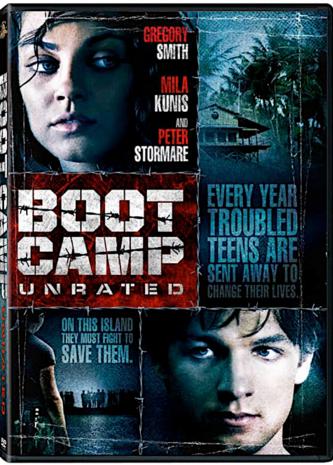
That was certainly the case, for me, when I recently watched 2008’s Boot Camp, a teen melodrama with an anti-authoritarian subtext.  Check out the trailer:

In Boot Camp, Mila Kunis plays Sophie.  Sophie is rich and, in the eyes of her parents, out of control.  She talks back.  She sneaks out of the house.  She hangs out at all the wrong clubs and with all the wrong people.  You know the story.  We’ve all seen the talk shows.  Sophie’s parents are convinced that the only way that they can get Sophie under control is to exile her to what the film calls a “tough love boot camp.”

The boot camp is located on an island, just a few miles away from a luxurious resort.  From the minute Sophie arrives, she is told that escape is impossible and she can only leave after the facility’s founder, Dr. Arthur Hall (Peter Stomare), says that she can.  Some people have been at the camp for years, waiting for Dr. Hall to announce that they’re rehabilitated.

The rest of the film follows Sophie and several other inmates as they try to survive boot camp without surrendering their free will.  It’s not easy.  Though he is more than happy to take their money, Dr. Hall resents the parents and his program is mostly designed to brainwash the inmates into thinking of him as being their new father figure.  The camp is staffed with brutes, sadists, and rapists.  When one inmate drowns, the staff tries to cover up his death.  Eventually, like the inhabitants of the Island of Dr. Moreau, Sophie and the other inmates have no choice but to rise up in rebellion against their masters.

“Tough love boot camps” are a real thing.  They used to be hugely popular with daytime talk show audiences and I know that Dr. Phil still has a ranch to which he sends “out of control” teens.  (I put “out of control” in quotes because, often times, it seems that “out of control” is code for “thinking for yourself.”)  The idea is that rebellious teenagers are sent to the camp, where they get yelled at until they agree to stop being so rebellious.  Over the years, there’s been a lot of debate over whether boot camps actually work.  If I had been sent to a boot camp, I think I would have just lied about my feelings and put on a repentant good girl act just to get the yelling to stop.  I’d be perfectly humble and contrite for three months and then, as soon as I got out of the camp, I’d go back to sneaking out of the house, skipping school, shoplifting, doing drugs, and whatever else got me sent to the camp in the first place.  From what I’ve seen of the whole boot camp experience, it seems to be more about brainwashing than anything else.  What’s the point of having well-behaved children if they can’t think for themselves?

But, then again, boot camps have never really been about  helping the teenagers sent to them.  Instead, they’ve always been about making lousy parents feel better about themselves.  Parents who have spent the last 14 years totally fucking up their children get to pat themselves on the back because they sent their kids to boot camp.  Other adults, bitter over having lost their youth, get to say, “It’s time to teach those ungrateful children to respect authority.”  As for the people who run the boot camps, it’s less about the inmates and more about power and money.

That’s certainly the message of Boot Camp.  In fact, I was taken by surprise to discover just how much Boot Camp conformed to my own thinking on … well, on just about everything.  Make no mistake, Boot Camp is a flawed film.  There’s nothing subtle about Christian Duguay’s direction and, with the exception of Mila Kunis, none of the performances are as memorable as you might hope that they would be.  Peter Stomare is way too obvious in his villainy, giving a performance that belongs in the Overacting Hall Of Fame.  (You’ll find Stomare’s Dr. Hall in the villain wing, right next to Christoph Waltz in SPECTRE.)

But, even with all that in mind, it was impossible for me not to get excited when Sophie and her fellow out-of-control teens finally made their move against their tormentors.  The final third of Boot Camp turns into a celebration of disobedience and rebellion and it was impossible for me not to be thrilled by it.  Considering the increasingly Orwellian nature of American culture, we need more movies that celebrate revolution and individual freedom.  At a time when we’re being told that we “have to do this” or “have to do that,” Boot Camp says, “Nobody has to do anything, beyond what they choose.”
It’s an important message and one that people need to start heeding.


Film Review: Cutter’s Way (dir by Ivan Passer)


Yesterday, after it was announced that actor John Heard had been found dead in a Palo Alto hotel room, I lost track of how many people declared that Cutter’s Way, a 1981 film in which Heard co-starred with Jeff Bridges, was one of their favorite movies of all time.  (That includes quite a few people who write for this very site.)  In fact, people were so enthusiastic about Cutter’s Way that I quickly decided that this was a film that I needed to watch for myself.  So, last night, after watching All About Eve on TCM and My Science Project with the Late Night Movie Gang, I curled up on the couch and I watched Cutter’s Way.

Technically, Cutter’s Way is a murder mystery but it’s actually a lot more.  In the grand noir tradition, the mystery is less important than the milieu in which it occurs.  Cutter’s Way takes place in Santa Barbara, California, which the film presents as being a microcosm of America.  It’s place where the rich are extremely rich and the poor are pushed to the side and expected not to complain.  The Santa Barbara of Cutter’s Way is controlled by new money and haunted by old sins.  It’s a world that is perfectly captured, by director Ivan Passer and cinematographer Jordan Cronenweth, in the film’s haunting opening scene:

John Heard plays Alex Cutter.  Years ago, Cutter served in Vietnam and returned with one less eye, one less arm, and one less leg.  An angry alcoholic, the type who always looks like he’s in desperate need of a shower and a shave, Cutter exists on the fringes of society.  Like many alcoholics, Cutter is a master manipulator.  When he has to, he can turn on the charm.  When the police are called after a drunken Cutter purposefully destroys his neighbor’s car, we suddenly see a totally different Alex Cutter.  He’s polite and apologetic, explaining that he was merely swerving to avoid something in the road and, by the way, he served his country in Vietnam.  As soon as the police leave, the real Cutter comes out.  He gets his bottle and starts to rant about how much the world owes him.  Watching the film, you find yourself understanding why some people might want to push this one-legged, one-armed, one-eyed veteran down a flight of stairs, that’s how obnoxious Alex Cutter can be.
And yet, there are people who love Alex Cutter.  There’s his long-suffering wife, Mo (Lisa Eichhorn).  Mo lives in squalor with Cutter, taking care of him and putting up with his bitterness.  There’s the local bar owner, who could probably put his kids through college on Cutter’s bar tab.  (He even drives Cutter home in the morning, after everyone else has deserted him.)  And finally, there’s Richard Bone (Jeff Bridges).

Bone is Cutter’s best friend.  Whereas Cutter is perpetually pissed off, Bone is almost always laid back.  Whereas Cutter feels that everything is his business, Bone prefers to remain detached from the world.  Mention is made of Bone being a graduate of the Ivy League but he spends most of his time giving tennis lessons and sleeping with wealthy women.  Bone takes care of Cutter, though their friendship is occasionally hard to figure out.  Why does Bone stick with Cutter despite all of Cutter’s abuse?  Perhaps Bone feels guilty because he avoided being drafted while Cutter lost half of his limbs in Vietnam.  Or maybe it’s because Bone is in love with Mo.

One night, when Bone is leaving a hotel, he sees a man in an alley.  The man appears to be hiding something in a dumpster.  Later, when the body of a woman is found in that same dumpster, Bone realizes that he probably saw the murderer.  Even more so, Bone thinks that the man resembled J.J. Cord (Stephen Elliott), one of the richest men in Santa Barbara.

Bone, however, isn’t sure that Cord’s the murderer.  Even more so, even if Cord was the murderer, Bone prefers to not get involved.  However, Cutter is sure that Cord’s the killer.  To Cutter, it makes perfect sense.  If men like Cord were willing to send boys to Vietnam and then refuse to take care of them when they returned both physically and mentally maimed by the experience, then why wouldn’t they also think that they could get away with murdering some hitchhiker?

Soon, Cutter has met the dead girl’s sister, Valerie (Ann Dusenberry).  Cutter says that his plan is to blackmail Cord.  He badgers the reluctant Bone into working with him.  It quickly becomes obvious, however, that Cutter is after more than money.  He is obsessed with proving that this rich and powerful man is a murderer.  And he’s not going to let anyone stand in his way.  Not even a stuffed animal:

As I said, Cutter’s Way is about much more than just a murder.  It’s a film about class differences, with even the otherwise slick Bone discovering how difficult it is to infiltrate Cord’s wealthy world.  It’s a film about disillusionment, cynicism, and the fleeting promise of happiness.  As angry as Cutter is, he still ultimately possesses the idealism that both Bone and Mo have lost.  He still believes in right and wrong.  While that angry idealism may make Cutter a pain in the ass, it’s also his redeeming feature.  As the youngest of them, Valerie is still an optimist but she is also the least prepared to deal with the sordid reality of the world around her.  Bone and Mo, meanwhile, both appear to have surrendered their belief that the world can be and should be a better place.  Ultimately, Cutter’s Way is a film that forces you to consider what you would do if you were in the same situation.  Cutter’s Way is not a great title, largely because it makes the film sound like a CW western, but it’s an appropriate one.  The entire film is about Cutter’s way of viewing the world and whether or not Bone will follow Cutter or if he’ll continue to refuse to get involved.

(The novel that the film’s based on was called Cutter and Bone.  According to Wikipedia, the title was changed because audiences thought the movie was a comedy about surgeons.)

I have to agree with those who have called Cutter’s Way a great film.  Not only is it gorgeous to look at but it’s one of the best acted films that I’ve ever seen, from the stars all the way down to the most minor of roles.  John Heard dominates the film, giving a performance of almost demonic energy but he’s perfectly matched by Jeff Bridges.  Bridges, back in his incredibly handsome younger days, gives a subtle and powerful performance as a man struggling with his conscience.  In the role of J.J. Cord, Stephen Elliott doesn’t get much screen time but he makes the most of it.  When he first see him, he’s riding a white horse and rather haughtily looking down on the world around him.  When he last see him, he delivers a line of such incredible arrogance that it literally left me stunned.  Though, when compared to Bridges and Heard, their roles are underwritten, both Lisa Eichhorn and Ann Dusenberry more than hold their own, providing able and poignant support.
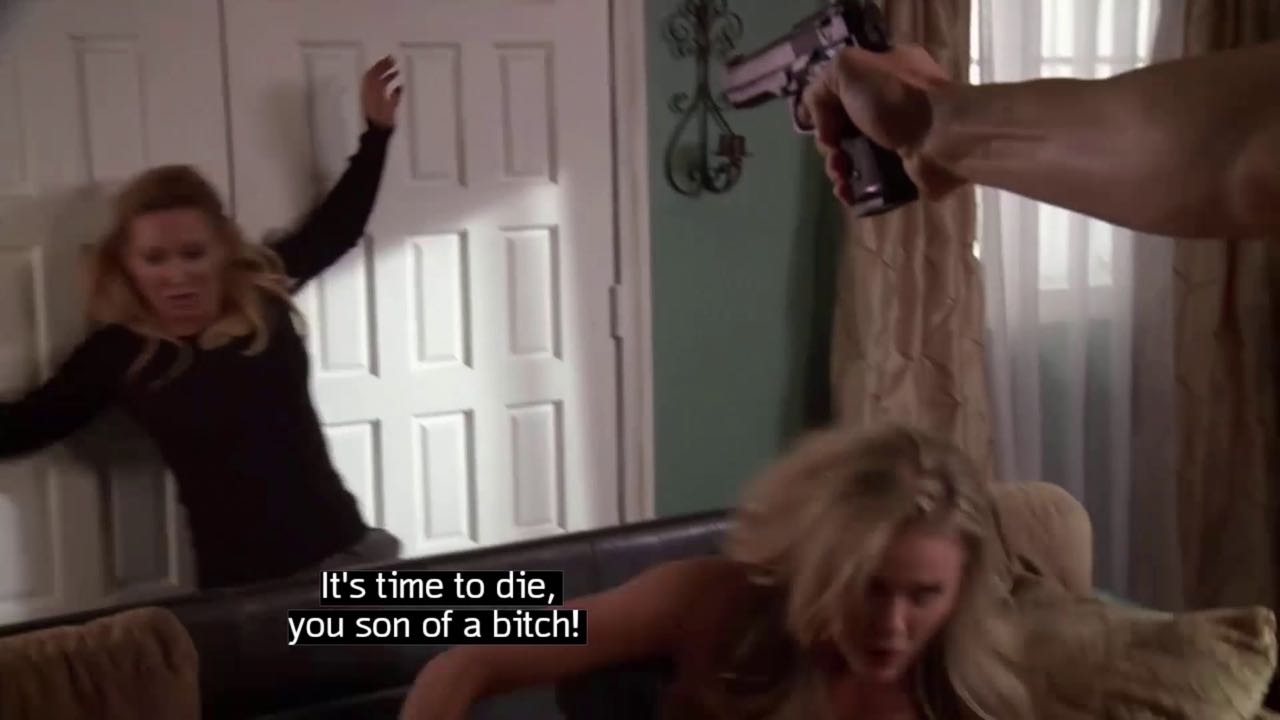
Cutter’s Way is a great film and one that everyone should watch if they haven’t.


Lisa’s Early Oscar Nominations for July


With each passing month, the Oscar race becomes just a little bit clearer.  We are still a few months away from the true Oscar season but a few contenders have emerged.

My predictions are below.  Previously, my predictions were all based on wishful thinking and instinct.  Well, there’s still a lot of wishful thinking to be found below but, at the same time, the festival season is providing a guide and there are some early reviews that have started to come in.  I’ve never been a 100% correct in my predictions and I doubt this year is going to be any different.  (For one thing, I always predict 10 best picture nominees, even though that’s close to being a mathematical impossibility under the current Academy rules.)

One final note: Some day, the Academy will get over their resistance to Netflix and streaming.  I don’t think that’s going to happen this year, though.  I kept that in mind while considering the chances of such heavily hyped (and, for that matter, less heavily hyped) contenders as Mudbound and The Meyerowitz Stories.

Anyway, here are my predictions for July!  Be sure to check out my predictions for January, February, March, April, May, and June as well!

Best Picture

Call Me By Your Name

Darkest Hour

Detroit

The Disaster Artist

Dunkirk

The Florida Project

Goodbye Christopher Robin

The Greatest Showman

Logan

Wonderstruck

Best Director

Sean Baker for The Florida Project

Kathryn Bigelow for Detroit

Michael Gracey for The Greatest Showman

Christopher Nolan for Dunkirk

Joe Wright for Darkest Hour

Best Actor

Chadwick Boseman in Marshall

Willem DaFoe in The Florida Project

Hugh Jackman in The Greatest Showman

Gary Oldman in Darkest Hour

Donald Sutherland in The Leisure Seeker

Best Actress

Judi Dench in Victoria and Abdul

Kirsten Dunst in Woodshock

Frances McDormand in Three Billboards Outside of Ebbing Missouri

Emma Stone in Battle of the Sexes

Meryl Streep in The Papers

Best Supporting Actor

Steve Carell in Battle of the Sexes

James Franco in The Disaster Artist

Armie Hammer in Call Me By Your Name

Will Poulter in Detroit

Patrick Stewart in Logan

Best Supporting Actress

Penelope Cruz in Murder on the Orient Express

Holly Hunter in The Big Sick

Melissa Leo in The Novitiate

Julianne Moore in Wonderstuck

Margot Robbie in Goodbye Christopher Robin


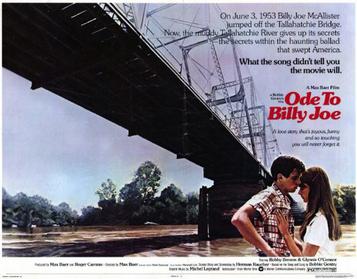
Film Review: Ode to Billy Joe (dir by Max Baer, Jr.)


Why, on June 3rd, did Billie Joe McAllister jump off of the Tallahatchie Bridge in Mississippi?

That was the question that was asked in Ode to Billie Joe, a 1967 country song by Bobbie Gentry.  In the song, the details were deliberately left inconclusive.  Why did Billie Joe commit suicide?  No one knows.  All they know is that he was a good worker at the sawmill and, the weekend before jumping, he was seen standing on the bridge with a teenage girl and apparently, they dropped something down into the river below.  The song suggests that the girl and the narrator are one in the same but even that is left somewhat vague.

Ode to Billie Joe was a hit when it was first released, largely because it’s story could be interpreted in so many different ways.  Why did Billie Joe kill himself?  Maybe it was because he didn’t want to be drafted.  Maybe it was because he and his girlfriend had killed their baby and tossed it off the bridge.  Maybe it was because he was hooked on Dexedrine and his doctor wasn’t available to renew his prescription.  It could be any reason that you wanted it to be.

However, in 1976, when Ode to Billie Joe was turned into a movie, ambiguity would not do.  As opposed to the song, Ode To Billy Joe had to answer the question as to why Billy Joe jumped into that river.  In the movie, 18 year-old Billy Joe (Robby Benson) works at the sawmill and spends his time courting 15 year-old Bobbie Lee Hartley (Glynnis O’Connor).  Bobbie Lee’s father (Sandy McPeak) says that she’s too young to have a “gentleman caller,” even though Bobbie Lee insists that she’s “15 going on 34 … B cup!”  Bobbie Lee warns Billy Joe that her father is liable to shoot his ears off but Billy Joe insists that he doesn’t need ears because he’s in love with her.  That’s kind of a sweet sentiment, even though I don’t think Billy Joe would look that good without ears.

(Whenever I complain about how Southerners in the movies always seem to have two first names, my sister Erin replies, “Yeah, that’s really annoying, Lisa Marie.”  So, I won’t make a big deal about it this time…)

One night, Billy Joe and his friends go out and Billy Joe ends up getting drunk.  He disappears for several days and when he shows up again, something has definitely changed.  After unsuccessfully trying to make love to Bobbie Lee, Billy Joe tells her what happened that night he got drunk.  Billy Joe had sex with a man, something that he has been raised to view as being the ultimate sin.  When Billy Joe is later pulled out of the river, the entire town wonders why he jumped off the bridge and how Bobbie Lee was involved…

Ode to Billy Joe, which aired last Tuesday on TCM, is a better-than-average film, one that I was surprised to have never come across in the past.  That doesn’t mean that it’s a perfect movie. Robby Benson, in the role of Billy Joe, gives an absolutely terrible performance.  You can tell that Benson was trying really hard to do a good job but, often, he goes totally overboard, making scenes that should be poignant feel melodramatic.  Though it probably has more to do with when the film was made than anything else, the film is also vague about Billy Joe’s sexuality.  Is Billy Joe in denial about his identity?  Is he deeply closeted or was he in such a drunken stupor that he was taken advantage of?  Ode to Billy Joe does not seem to be sure.  By committing suicide, Billy Joe joins the ranks of gay movie characters who would rather die than accept their sexuality.  Obviously, he had to jump off that bridge because that’s what the song said he did but there’s a part of me that wishes the movie had featured someone commenting that they never actually found Billy Joe’s body and then the final scene could have taken place 16 years later, with Bobbie Lee living as a hippie in San Francisco and just happening to spot Billy Joe walking down the street, hand-in-hand with his boyfriend.

Here’s what does work about the movie.  Glynnis O’Connor gives a great and empathetic performance as Bobbie Lee.  The scenes with her father and her mother (played by Joan Hotchkis) have a very poignant and wonderful realness to them.  Though I’ll always be a city girl at heart (well, okay — a suburb girl), I spent some time in the country when I was growing up.  And while I was never quite as isolated as Bobbie Lee (who lives in a house with no electricity or plumbing) and the film took place in the past, I could still relate to many of Bobbie Lee’s experiences.  The film may have been made in 1976 and set in 1952 but life in the country hasn’t changed that much.

For instance, there’s this great scene where Bobbie Lee’s father is trying to drive across the bridge.  The only problem is that there’s a bunch of drunk shitkickers on the bridge, sitting in their pickup truck and blocking his way.  It’s a very tense scene, one that I found difficult to watch because, when I was growing up in Arkansas, Oklahoma, Louisiana, and South Texas, I saw the exact same thing happen more times than I care to admit.  In the country, no one backs down.  Scenes like that elevated Ode To Billy Joe to being something more than just another movie based on a song.
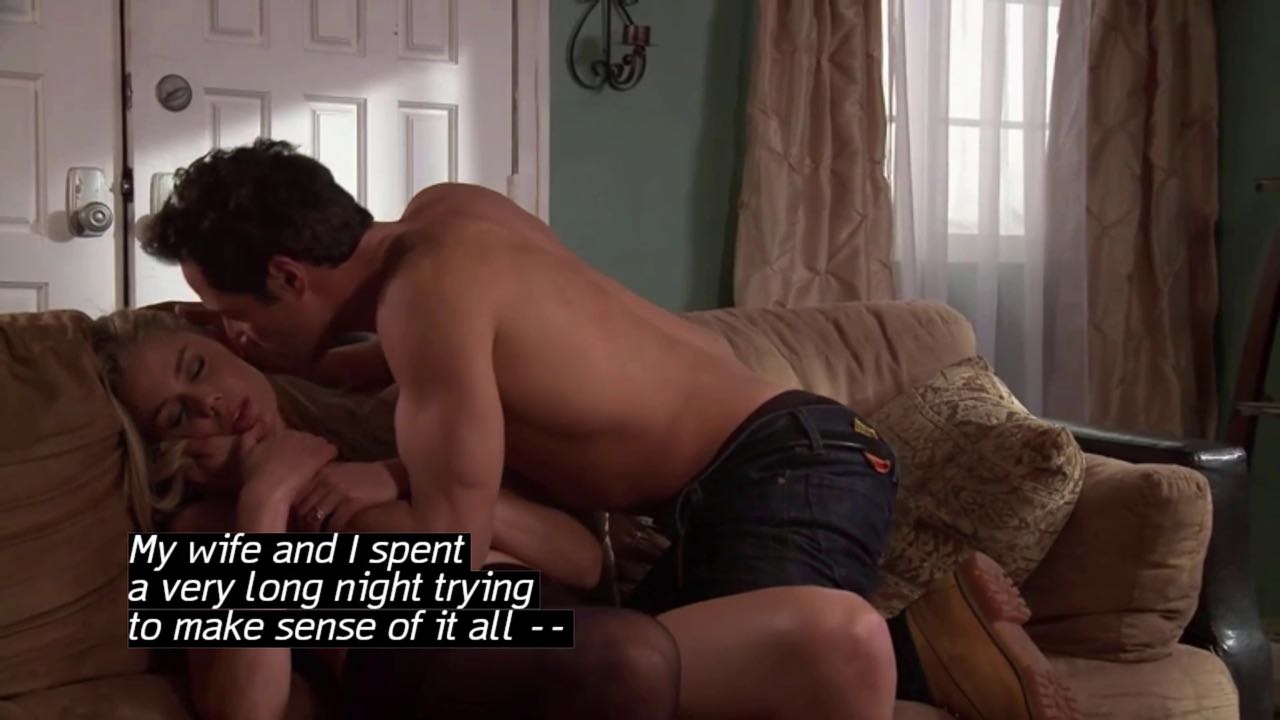
Finally, there’s a beautiful scene towards the end of the film, between Bobbie Lee and a character played by an actor named James Best.  I won’t spoil the scene but it’s a master class in great acting.  (Best also played one of the sadistic villains in Rolling Thunder, another good 70s film about life and death in the country.)
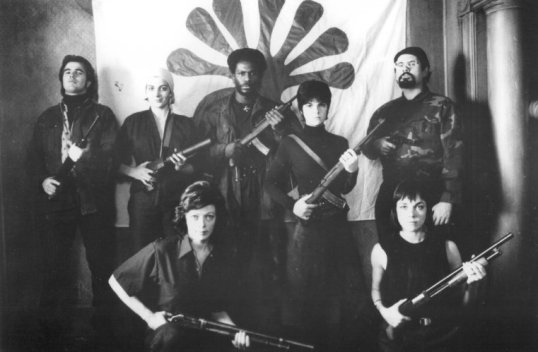
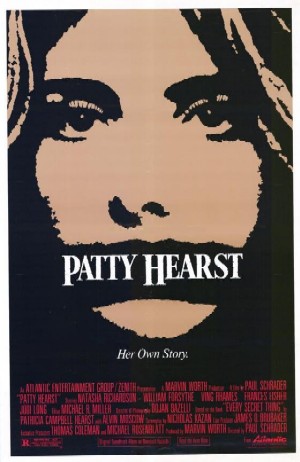
Though I wasn’t expecting much from it, Ode to Billy Joe was a pleasant surprise.  It’s not perfect but it’s still worth watching.