Growing in the small town of Lakeview, Amy Petersen (Meghan Markle, before she became a part of the Royal Family) helped her family run their fireworks store. She also fell in love with Hank (Christopher Jacot). But she left Hank and her family so that she could go to the big city and try to be a big time print journalist. Now, she’s dating Phil (Lochlyn Munro), who always wears a suit and likes to dine at exclusive French restaurants.
When her editor finds out that Amy is an expert in fireworks, he tells her to go back home for the 4th of July and to write a story about it. Amy’s family is struggling to keep the fireworks business going and when the town announces that it won’t be able to put on a fireworks show on the 4th, it looks like the business is going to close unless Amy can come up with a way to save the day. Amy has another reason for returning to Lakeview. Her best friend Sammie (Kristina Pesic) is getting married and Amy is going to the maid of honor! The only problem is that Sammie is marrying Hank and, as soon as she sees him, Amy starts to wonder if she made the right decision leaving home.
This is a Hallmark film so you already know everything that is going to happen. I watched this movie with my sisters and we spent the entire time wondering when they were finally going to get to the fireworks. It takes nearly the entire movie to reach the 4th and then it ends before the fireworks show even really got going. I was disappointed. I really wanted to watch the sky light up.
I know what you really want to know, though. How was the performance of the Duchess of Sussex? It’s hard to really Meghan Markle’s performance because Amy isn’t that likable of a character. It’s hard to really cheer for someone who would ruin their best friend’s wedding just because they dated the groom in high school. Everyone in the film is very forgiving of Amy, no matter how self-asborbed she is. Even Phil is strangely unbothered by her being in love with someone else. Almost the entire film is just Amy and Hank being the two most self-centered people in the world and no one holding it against them. As for Meghan Markle’s performance, the best description that I can come up with is boring.
I was disappointed with When Sparks Fly. At least I know that, later tonight, I’ll get to watch a full fireworks show.
“I wouldn’t play with that, Kelly,” Berke Landers (Ben Foster) says as Kelly Woods (Kirsten Dunst) playfully aims a crossbow at him.
Kelly laughs and tells him that it’s just a prop.
Berke suggests again that she should probably stop aiming it at him.
Kelly laughs and proceeds to fire an arrow straight into Berke’s arm.
The next scene, of course, is Berke in the back of an ambulance, groaning in terrible pain while Kelly apologizes and a paramedic repeatedly warns Berke not to look at his arm. In most movies, that would seem like a pretty dramatic plot development and, at the very least, you would expect that Berke would try to avoid Kelly and perhaps have his arm in a sling for the rest of the film. In the 2001 film, Get Over it, Berke recovers rather quickly, he and Kelly fall in love, and the film ends with Kelly making a joke about how she thought the crossbow was a prop.
That’s just the type of film that Get Over It is. This is a film from the age when all teen comedies were very loosely based on Shakespeare and they usually had a three word name like She’s All That or Drive Me Crazy or …. well, Get Over It. Ben Foster has the type of role that would usually go to Freddie Prinze, Jr. Sisqo has the Usher rule of the supercool sidekick who raps over the end credits. Shane West speaks with a British accent and steps into the Matthew Lillard role of the obnoxious teen celebrity. Melissa Sagemiller is the girl who the main guy thinks he’s in love with while Martin Short plays the eccentric and overdramatic theater teacher. And finally, Kirsten Dunst gets to play another version of her Bring It On role as the quirky and perky girl who wants to do the right thing. Meanwhile, Zoe Saldana, Mila Kunis, Colin Hanks, Swoosie Kurtz, and Ed Begley, Jr. all have small parts. It’s a good cast, if nothing else.
Get Over It centers around a high school production of a musical version of A Midsummer’s Night Dream. Basketball star Berke auditions for the play because he thinks that it will convince his ex-girlfriend, Alison (Sagemiller) to take him back. Instead, Alison ends up falling for the duplicitous Striker Scrumfeld (West), who has the exact type of personality that you would expect someone named Striker Scrumfeld to have. Meanwhile, Berke is falling in love with Kelly, who is the sister of his friend, Felix (Colin Hanks).
It’s all very predictable but, at the same time, the cast is absolutely charming and there’s enough quirky humor to make it memorable. I’ve watched Get Over It several times and, every time that I rewatch it, I’m always a little bit surprised to rediscover just how funny it actually is. For instance, as Berke leaves Alison’s house after being dumped by her, Vitamin C and a marching band suddenly appear behind him and start to perform Love Will Keep Us Together until Berke finally loses it and starts screaming. The musical production of A Midsummer’s Night Dream is the perfect parody of every pretentious high school play ever produced and Martin Short cheerfully throws himself into being the director for Hell. Ben Foster is a bit too intense to be a romantic or, for that matter, comedic leading man but the rest of the cast is enjoyably laid back and fully embrace their quirky roles.
Get Over It may not be a classic but it is a fun 90 minutes.
Occasionally, if you’re lucky, you come across a film that so totally and completely conforms to your own worldview that you’re forced to wonder if maybe you wrote the script and then somehow forgot about it.
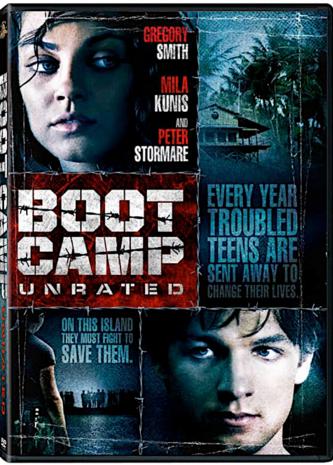
That was certainly the case, for me, when I recently watched 2008’s Boot Camp, a teen melodrama with an anti-authoritarian subtext. Check out the trailer:
In Boot Camp, Mila Kunis plays Sophie. Sophie is rich and, in the eyes of her parents, out of control. She talks back. She sneaks out of the house. She hangs out at all the wrong clubs and with all the wrong people. You know the story. We’ve all seen the talk shows. Sophie’s parents are convinced that the only way that they can get Sophie under control is to exile her to what the film calls a “tough love boot camp.”
The boot camp is located on an island, just a few miles away from a luxurious resort. From the minute Sophie arrives, she is told that escape is impossible and she can only leave after the facility’s founder, Dr. Arthur Hall (Peter Stomare), says that she can. Some people have been at the camp for years, waiting for Dr. Hall to announce that they’re rehabilitated.
The rest of the film follows Sophie and several other inmates as they try to survive boot camp without surrendering their free will. It’s not easy. Though he is more than happy to take their money, Dr. Hall resents the parents and his program is mostly designed to brainwash the inmates into thinking of him as being their new father figure. The camp is staffed with brutes, sadists, and rapists. When one inmate drowns, the staff tries to cover up his death. Eventually, like the inhabitants of the Island of Dr. Moreau, Sophie and the other inmates have no choice but to rise up in rebellion against their masters.
“Tough love boot camps” are a real thing. They used to be hugely popular with daytime talk show audiences and I know that Dr. Phil still has a ranch to which he sends “out of control” teens. (I put “out of control” in quotes because, often times, it seems that “out of control” is code for “thinking for yourself.”) The idea is that rebellious teenagers are sent to the camp, where they get yelled at until they agree to stop being so rebellious. Over the years, there’s been a lot of debate over whether boot camps actually work. If I had been sent to a boot camp, I think I would have just lied about my feelings and put on a repentant good girl act just to get the yelling to stop. I’d be perfectly humble and contrite for three months and then, as soon as I got out of the camp, I’d go back to sneaking out of the house, skipping school, shoplifting, doing drugs, and whatever else got me sent to the camp in the first place. From what I’ve seen of the whole boot camp experience, it seems to be more about brainwashing than anything else. What’s the point of having well-behaved children if they can’t think for themselves?
But, then again, boot camps have never really been about helping the teenagers sent to them. Instead, they’ve always been about making lousy parents feel better about themselves. Parents who have spent the last 14 years totally fucking up their children get to pat themselves on the back because they sent their kids to boot camp. Other adults, bitter over having lost their youth, get to say, “It’s time to teach those ungrateful children to respect authority.” As for the people who run the boot camps, it’s less about the inmates and more about power and money.
That’s certainly the message of Boot Camp. In fact, I was taken by surprise to discover just how much Boot Camp conformed to my own thinking on … well, on just about everything. Make no mistake, Boot Camp is a flawed film. There’s nothing subtle about Christian Duguay’s direction and, with the exception of Mila Kunis, none of the performances are as memorable as you might hope that they would be. Peter Stomare is way too obvious in his villainy, giving a performance that belongs in the Overacting Hall Of Fame. (You’ll find Stomare’s Dr. Hall in the villain wing, right next to Christoph Waltz in SPECTRE.)
But, even with all that in mind, it was impossible for me not to get excited when Sophie and her fellow out-of-control teens finally made their move against their tormentors. The final third of Boot Camp turns into a celebration of disobedience and rebellion and it was impossible for me not to be thrilled by it. Considering the increasingly Orwellian nature of American culture, we need more movies that celebrate revolution and individual freedom. At a time when we’re being told that we “have to do this” or “have to do that,” Boot Camp says, “Nobody has to do anything, beyond what they choose.”
It’s an important message and one that people need to start heeding.
Since including the music I was listening too while writing the review went over swimmingly last time *cough*, here’s a song that was a hit during the mini-Swing revival of the mid-to-late 1990s (Go Daddy-O by Big Bad Voodoo Daddy).
I think this is also a particularly perfect choice for this film as well because while there are three other characters in the film, this is really the father’s film. The father being Tanner Gray played by John Schneider.
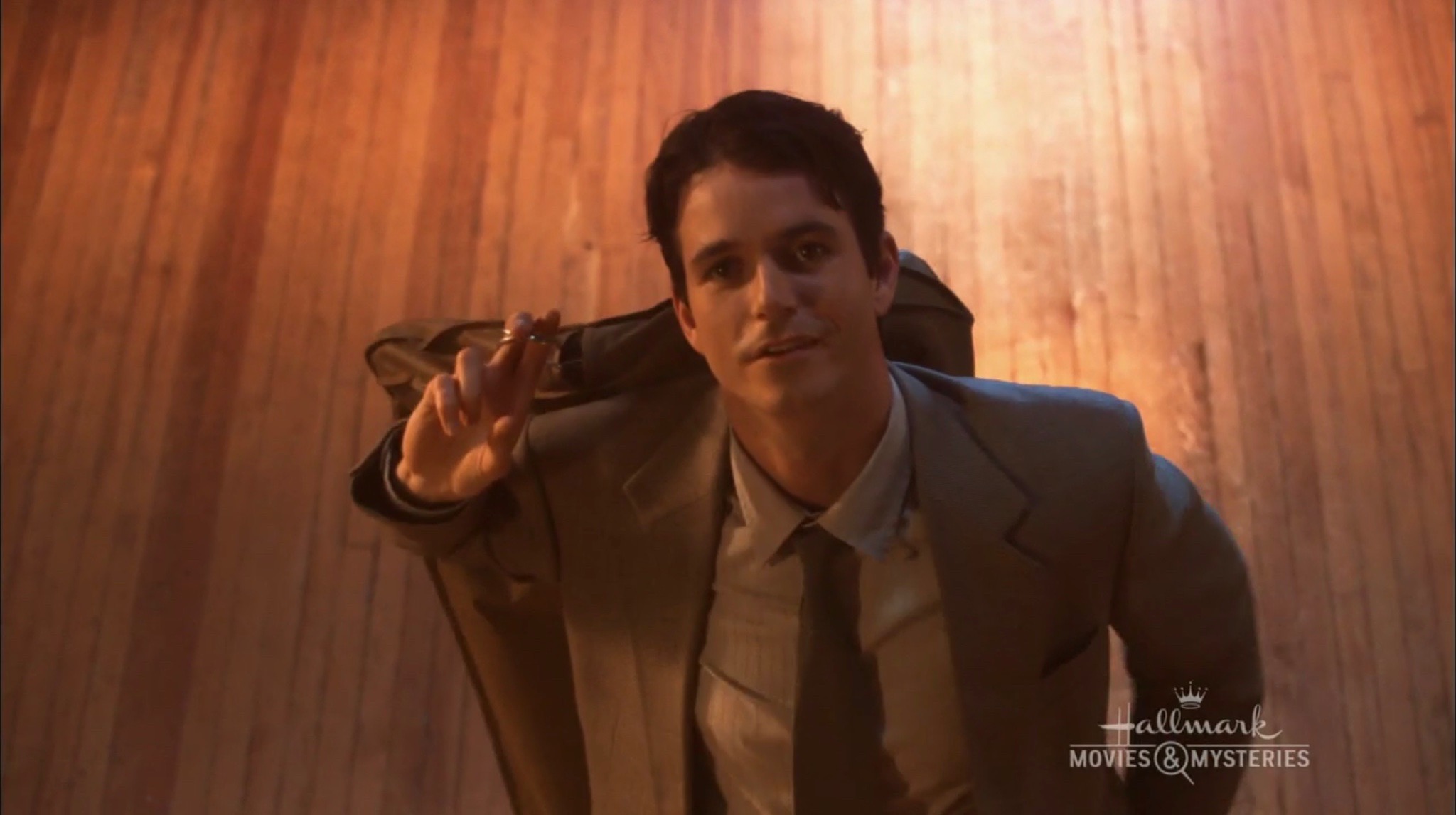
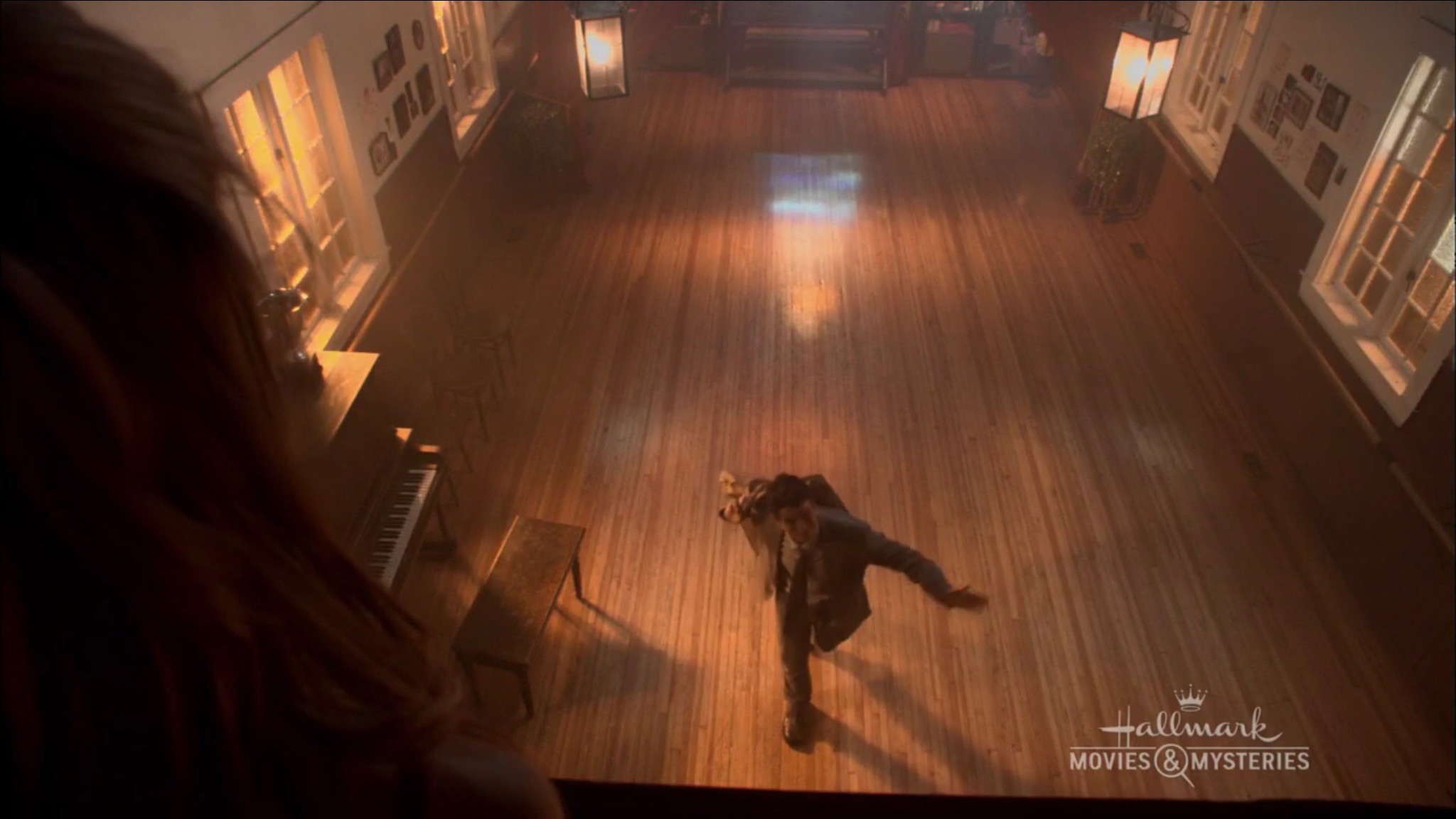
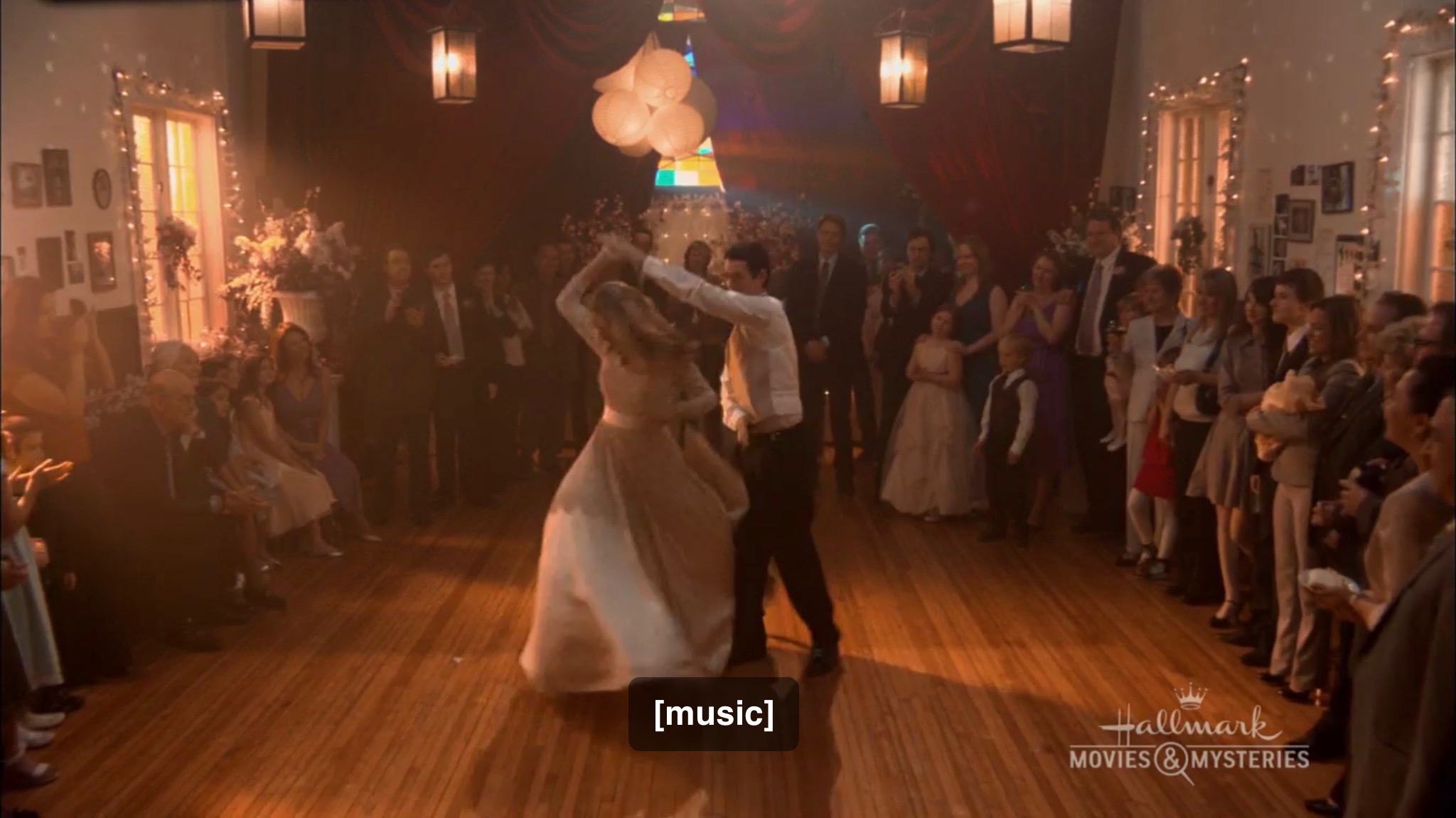
The film begins with some dancing in kind of a dance floor nowhere. It just exists. By that I mean something like the eternal dance floor where there is always a couple dancing. Every time the film would come back from a commercial break there would a couple dancing in the dark for a few seconds before returning to the characters.
Now we are introduced to our leading lady named Cyd Merriman (Brooke Nevin). Named after Cyd Charisse of course, but the film will have the father be ignorant of that just in case the audience didn’t know even though his character would absolutely know that fact.
She runs a dance studio in a small town. We also meet her fiancee in these opening scenes named Zach Callahan (Christopher Jacot).
Notice the lighting in these shots. They will keep that style of lighting throughout the film whenever they are in the studio. However, those scenes will stand in rather strong contrast to the rest of the way the movie is shot. It’s a neat way of visually making the place special to us in order to fit with the way the characters think of it.
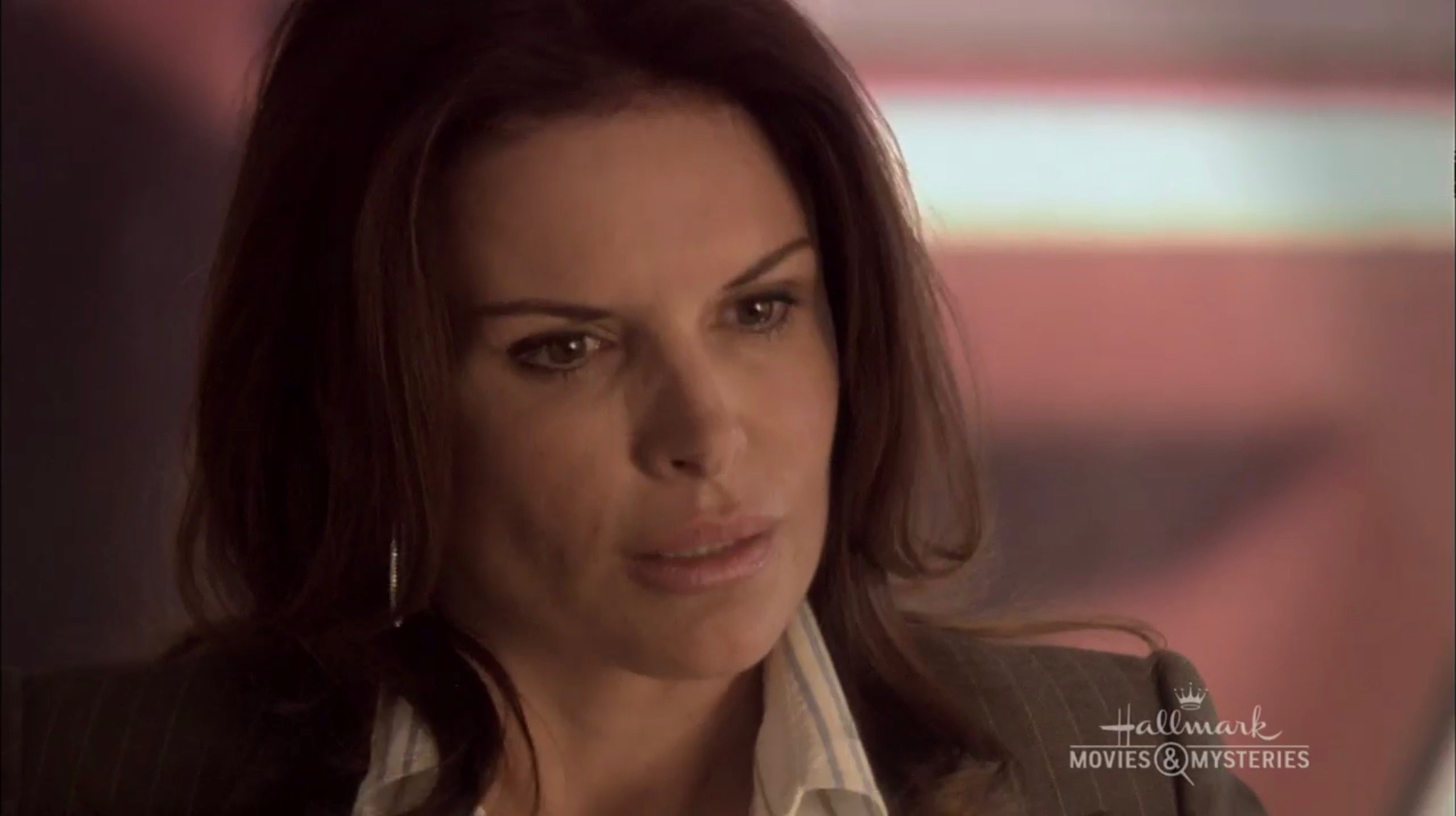
In short order, we are also introduced to Laura Williams (Roma Downey).
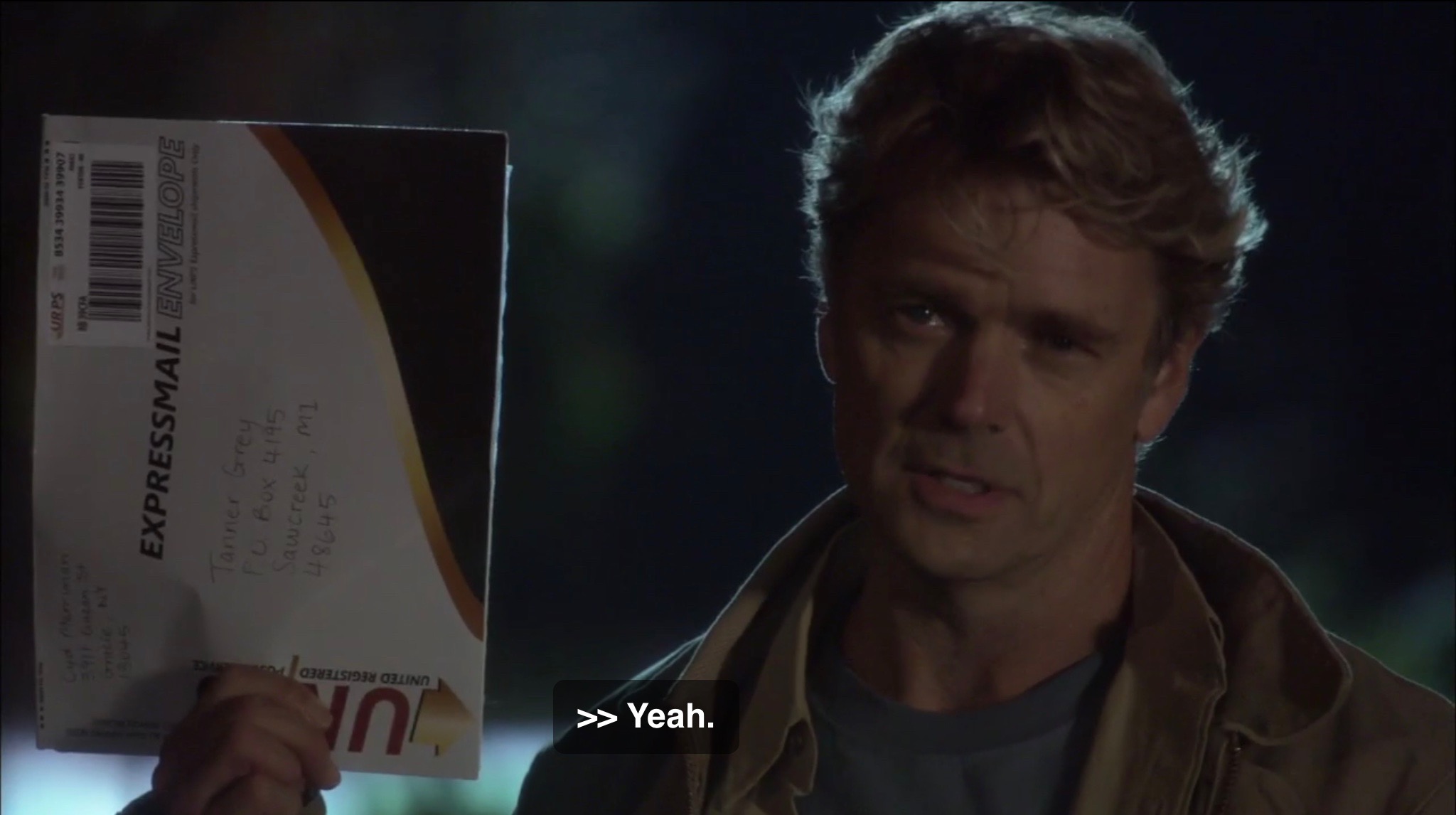
She’s here to plead with us to not let her next movie be Keeping Up with the Randalls. Actually she’s here because she’s a friend of the family who is also their lawyer. Cyd’s mother recently passed away and there is a stipulation in the will that the father she didn’t know she really had–he didn’t know he had a daughter either–now are co-owners of the dance studio. It also works out for him, unfortunately, because he is let go from his job at the same time he finds out.
In reality it’s plot convenience, but nevertheless. Meanwhile, we spend some more time at the studio, with Downey, and with the fiancee. Spoiler alert! The fiancee is not played like a bad guy as you might expect from a Hallmark movie. He’s a really good guy in this. Now the father shows up in town with the legal papers he received to talk with the daughter he didn’t know he had.
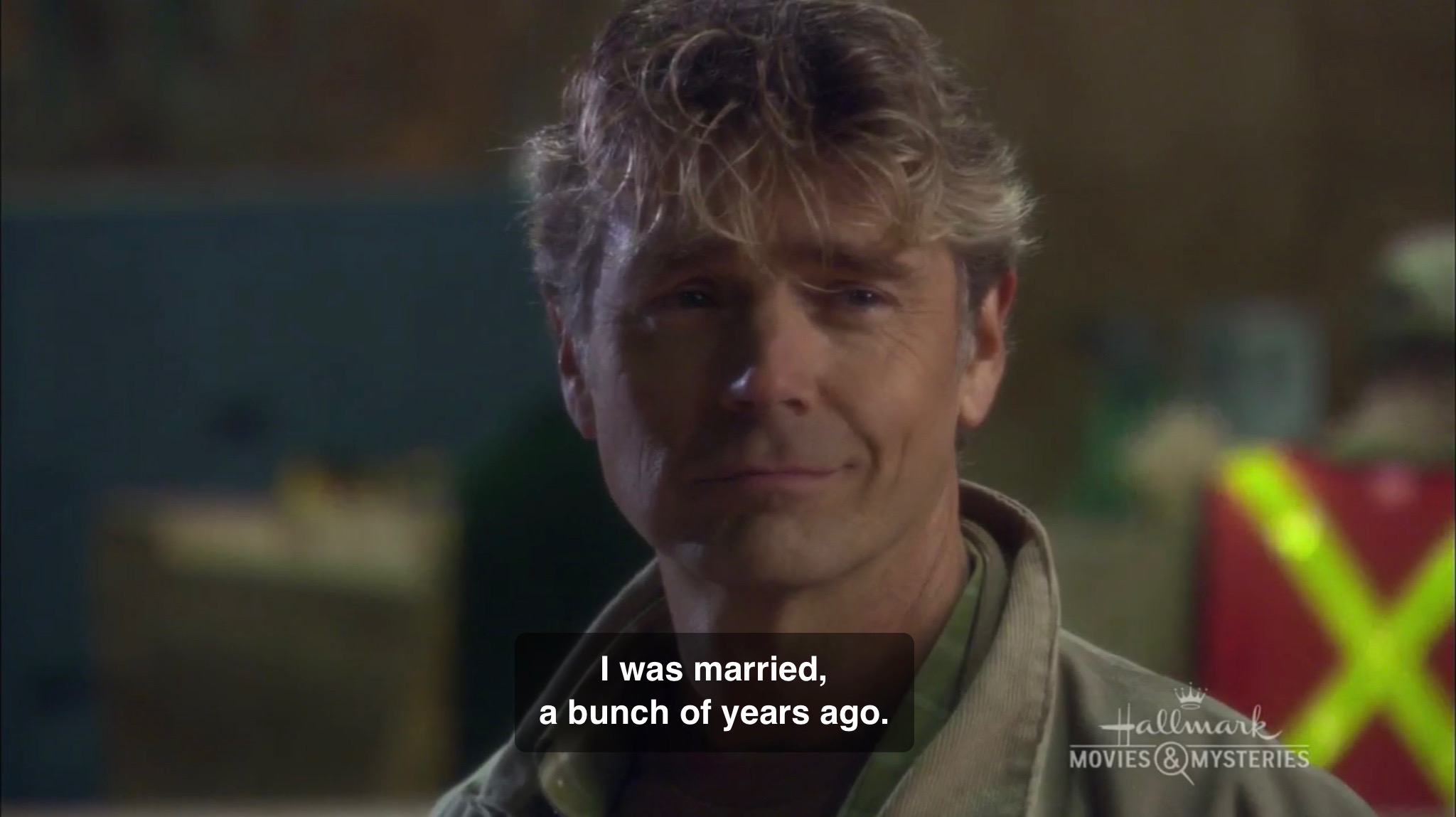
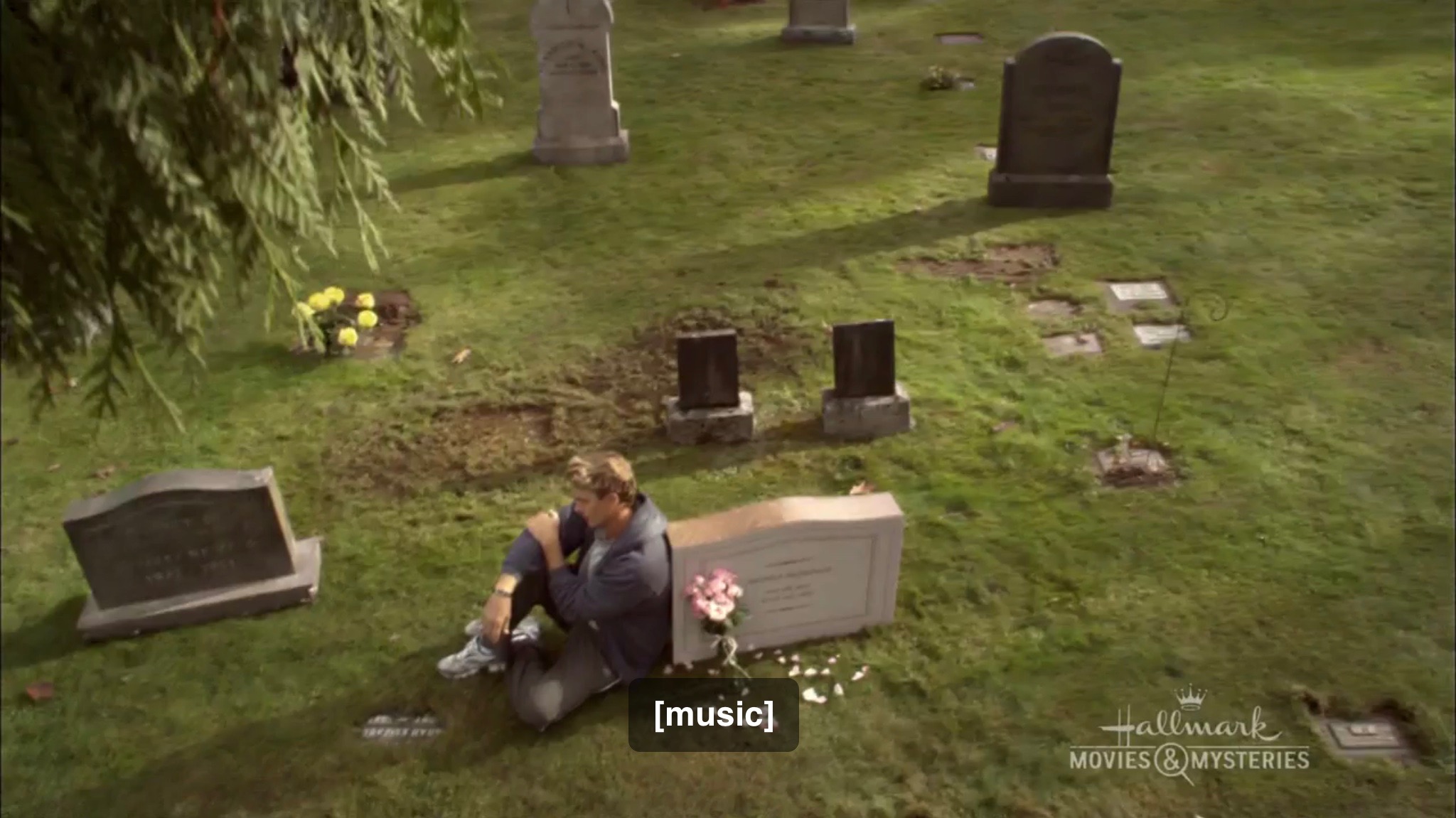
I mentioned it at the start, but I really want to drive home that while Cyd, Zach, and Laura have roles in the movie that are important, this really is the story of Tanner Grey. He sits down with his daughter to talk about who he is and what happened in the past. It basically comes down to that he wanted to see the world and he eventually did just that. He never really says he regrets going out and seeing the world or anything. It was a good thing for him and he appreciated what he was able to see as a young man, but you can tell that the loss of his wife over it is something that has always dragged on him.
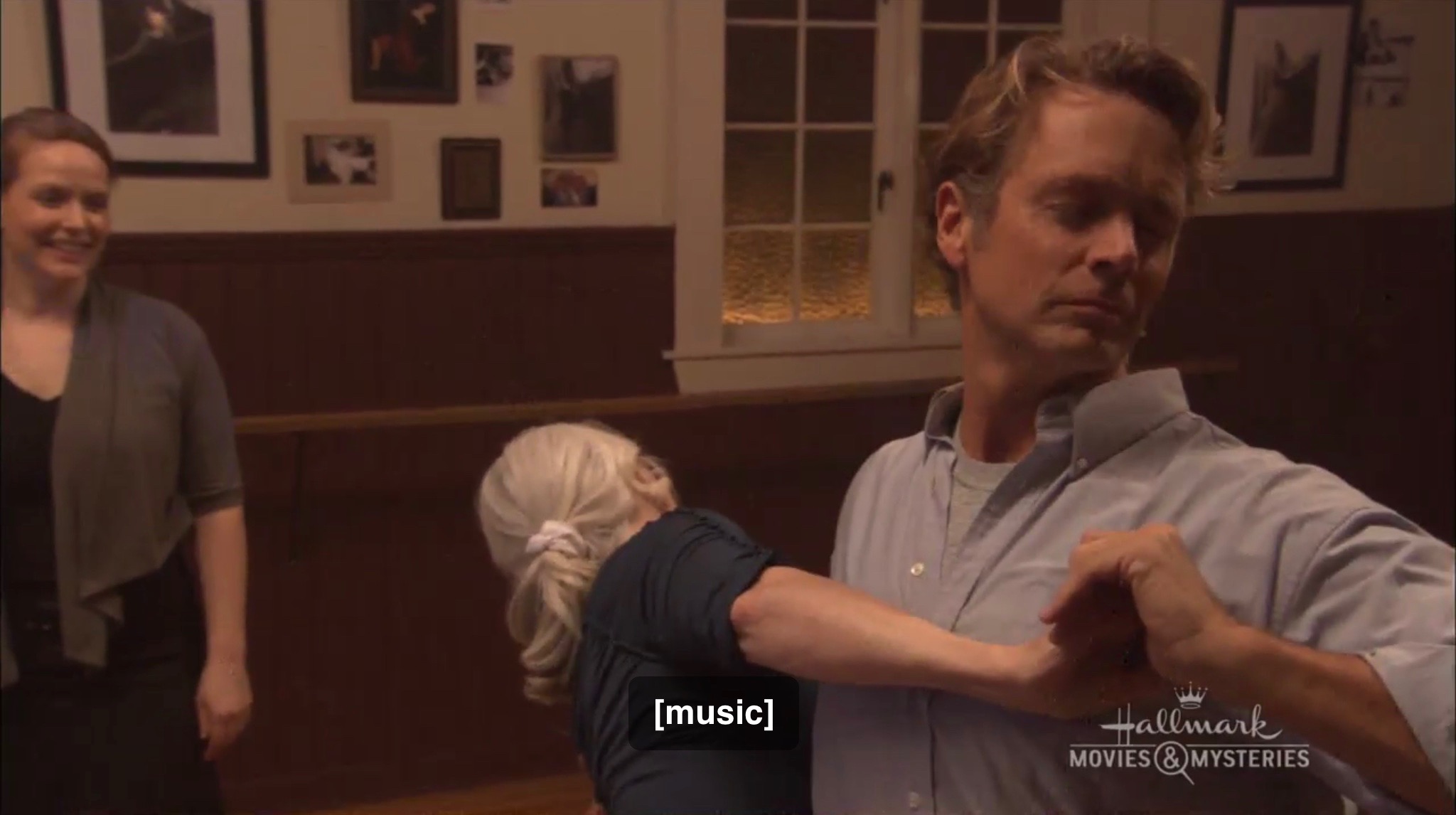
Cyd wants to sell the dance studio to some developers who want to revamp the town so she can take that money to work towards becoming a child psychologist. This film does have some of the standard big business evil/we need to defend our small towns nonsense that you see in other Hallmark movies, but here it’s really out of place. Especially when that isn’t the reason Tanner isn’t ready to just sign over his half of the studio. We find out two things as the film progresses. One, now that Cyd’s mother is gone and seeing as she appears to be on a similar trajectory to leaving town the way he did, he wants to take it slow to make sure they all have a real grasp on the situation. In particular, why the mother essentially grabbed him out of her past and forced him into the current situation via the will. He doesn’t take that lightly. We also find out that Tanner likes to dance.
And honestly, that really sums up the movie. There isn’t a whole lot to talk about with this film. Hallmark movies don’t really have the time and money to spend on having a plot driven story, but that doesn’t seem to stop them by trying to maximize plot and minimize the amount of character development needed to crank out a movie. This time they really did try to go the character driven route with this studio that almost exists outside time as a centerpiece of the film in a similar way that the film Love, Again did with the bridge.
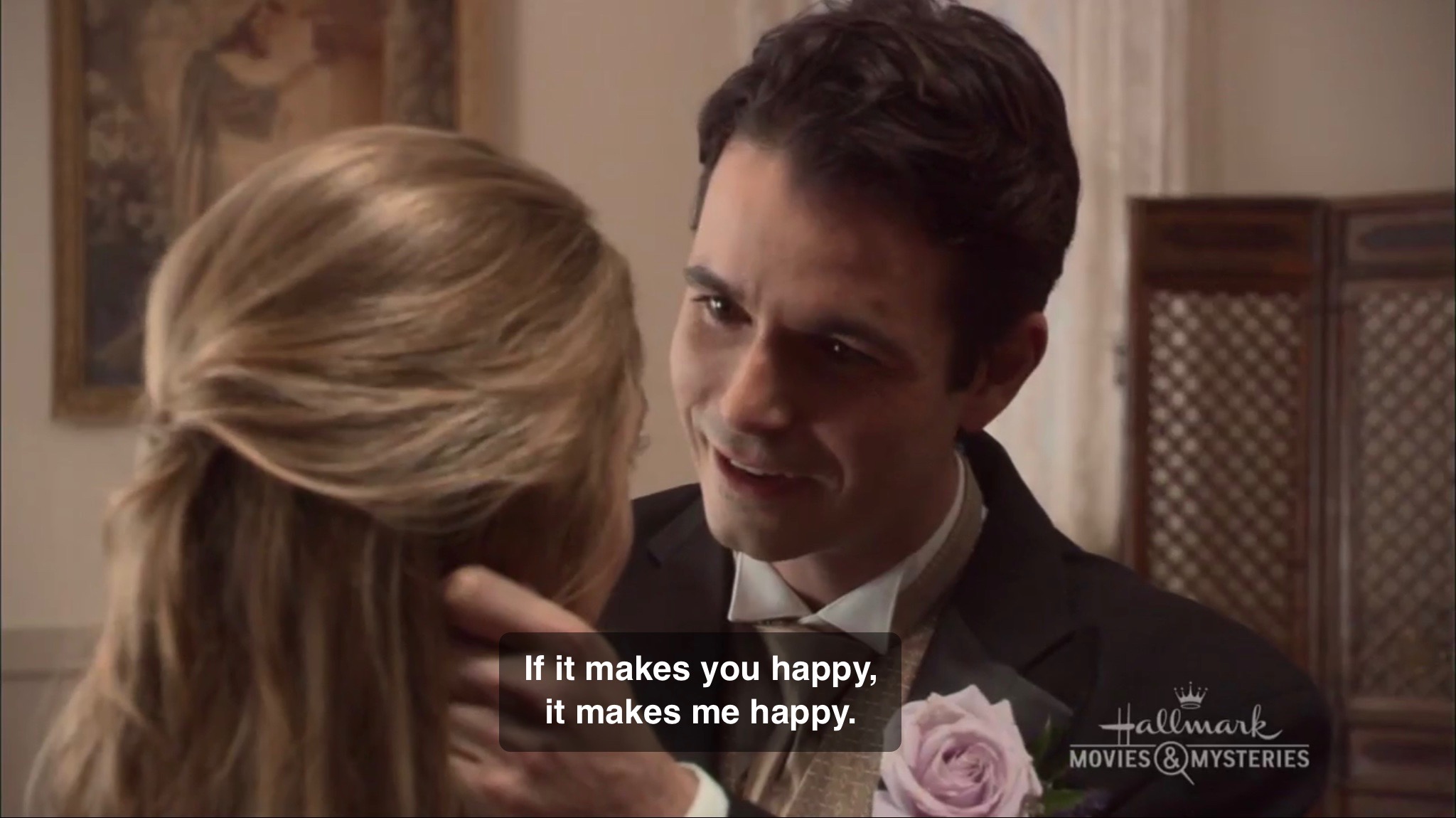
Throughout the film we get closer to Tanner as we see him teach more of the dance classes and in conversations with Downey. All the while, Cyd tries to come to grips with this turning point in her life while her fiancee is always on her side. He always stays on her side. I remember him having a scene at the end of the film that was similar to a scene the father had in the recent South Korean film Marriage Blue. In that film, an older man’s daughter is going to get married but she hides a much more wild side of herself from a lot of people, including her father. She shows up to tell him the truth. At first we think we’re going to get the response you often see in movies where someone comes out as being gay to their parents and in turns out they already knew, but not quite. He’s just happy for her, is a little surprised she bothered keeping it a secret, and is a little ticked off that his future son-in-law has known more about his daughter than him this whole time. Zach has a similar moment where he isn’t happier or sad for her when she decides to keep the studio. As long as she was being true to herself, then he’s happy to be right there with her.
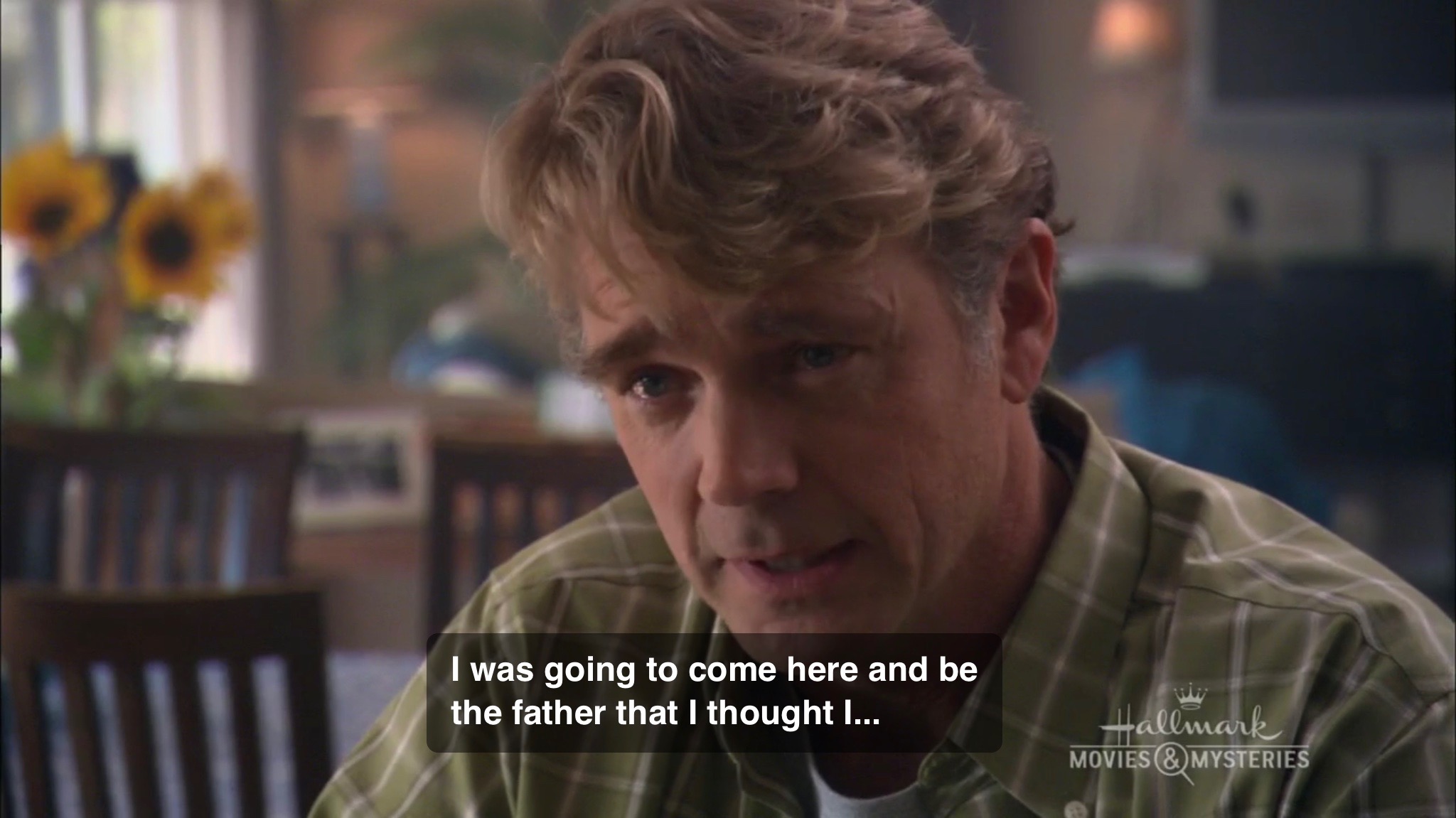
One other thing I want to mention is a scene actor John Schneider has near the end. It’s a sweet and understated conversation he has with Downey.
He basically pours his heart out here about everything he has been thinking about concerning the whole situation and why he is ready to walk away now if it is necessary. It’s a nice and well done piece of acting that you usually don’t see in these Hallmark movies.
My final verdict on this one is that I do recommend it. There are little things I would have tweaked like the big business threat thing which was just out of place, but it’s still one of the good ones as far as Hallmark goes.
Clearly though, the only thing missing from this movie was Billy Idol singing at their wedding.
And okay, I know you saw the title and I mentioned music so you all probably expected it. Here’s Ballroom Blitz by Sweet.