Today’s horror on the lens is a science fiction/horror film from 1977!
In The Incredible Melting Man, the first manned spaceflight to Saturn does not go well. Three astronauts went up but only one came down. And that one astronaut is both kinda crazy and melting! Seriously, it’s a big mess.
Apparently, one of the victims of the incredible melting man is played by director Jonathan Demme. See if you can spot him! It’ll be fun.
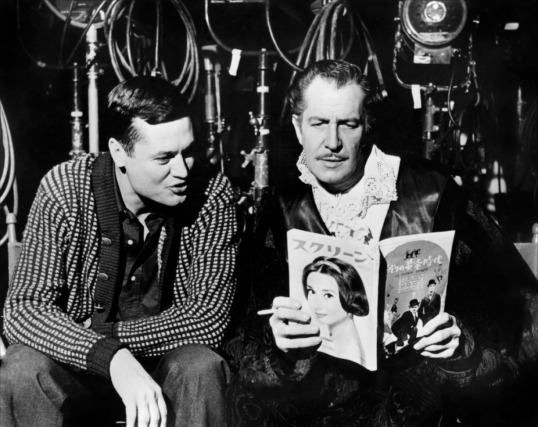
This scene, from 1964’s Masque of the Red Death, was directed by Roger Corman, performed by Vincent Price, and shot by Nicolas Roeg. It was based on a short story by Edgar Allan Poe. That’s a lot of talent on display.
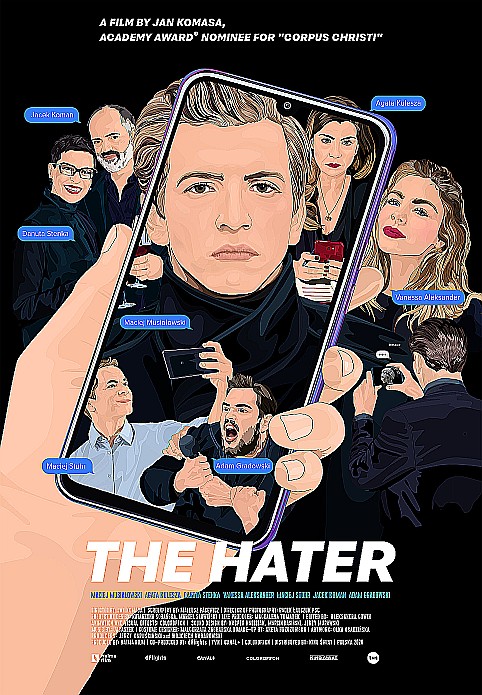
In this Polish film about the horrors of everyday life, Tomasz Giezma (Maciej Musiałowski) is a young sociopath who has just gotten kicked out of a law school for plagiarizing one of his papers. Unfortunately, this means that Tomasz not only needs to find a new place to live but he also needs to find a way to make money. Unlike many of his classmates, Tomasz does not come from a rich family. In fact, his way through law school was being paid for by Zofia (Danuta Stenka) and Robert Krasucki (Jacek Koman). The Krasuckis are a prominent and wealthy progressive family and they somewhat condescendingly viewed Tomasz as being a good deed. They’re happy to pay his law school tuition but they certainly don’t want him in their house or anywhere near the daughter, Gabi (Vanessa Aleksander).
Though a chance meeting at a club, Tomasz is able to convince Beata Santorska (Agata Kulesza) to give him a job at Best Buzz Public Relations. Despite the cheerful name, Best Buzz actually specializes in destroying online reputations. Everyone from health food corporations to politicians hires Best Buzz to bring down their enemies. Working at Best Buzz means access to hundreds of fake social media accounts, all of which can be used to wreck havoc. Many of Best Buzz’s employees can’t handle the ruthless negativity necessary for their job. Tomasz, however, thrives.
When the Krasuckis discover that Tomasz is no longer a student, they try to shut him out of their lives. Feeling betrayed by them and especially by Gabi, Tomasz takes his anger out on the progressive politician, Pawel Rudnicki (Maciej Stuhr), whom the family is supporting in the Warsaw mayoral election. Spending his days as a Rudnicki campaign aide and his nights spreading disinformation online, Tomasz schemes to destroy both Rudnicki and the Krasuckis. When he comes across a nationalist vlogger (Adam Gradowski), Tomasz feels that he has found the perfect vehicle for his revenge.
Before saying anything else, I’m going to go ahead and acknowledge the obvious. Yes, The Hater does have a similar feel and plot to Nightcrawler, right down to Tomasz eventually entering into a sexual relationship with his morally conflicted boss. Both films focus on a hollow-eyed, pathological liar who uses the media to not only fuel his own fantasies of success but to also take revenge on those whom he feels have slighted him. Whether that similarity is intentional or not, I don’t know. And, in the end, it really doesn’t matter. Similarities aside, both Nightcrawler and The Hater work as both horror and social commentary because they are very much rooted in the real world. Both films are about humanity’s thirst for blood. Nightcrawler was about the desire of audiences to watch people suffer. The Hater is about the online desire to be a part of the largely anonymous mob that does the destroying.
(To me, there is no more disturbing phrase than “Twitter, do you thing!” because that thing is almost inevitably linked to destroying a stranger. That destruction has become social media’s “thing” should scare the Hell out of anyone.)
The Hater is a powerful film. Interestingly enough, there are no easy heroes to be found in the film. The Krasuckis are the type of wealthy liberals who combine self-righteous indignation with a total lack of self-awareness. Claiming to be concerned with the underpriveleged while, at the same time, treating the ones that they actually meet with vapid condescension, the Krasuckis are difficult to sympathize with. Even the genuinely well-meaning mayoral candidate often seems to be almost impossibly naive. Interestingly enough, one of the few characters to show any genuine empathy for someone other than himself is the incel vlogger who Tomasz manipulates into doing his dirty work. Whatever other flaws the vlogger has, he genuinely cares about his grandmother. One of the more interesting scenes in the film finds Tomasz trying to get out of an awkward situation by mimicking the vlogger’s emotions. In the end, Tomasz is good at mimicking human behavior but the emptiness of his soul is readily apparent.
In the end, for all the talk about politics in the film, Tomasz has no idealogical motivations. Instead, he’s simply driven by a need to destroy. He’s a monster but he’s a realistic monster, which makes him the most frightening type of monster of all.
4 Shots From 4 Films is just what it says it is, 4 shots from 4 of our favorite films. As opposed to the reviews and recaps that we usually post, 4 Shots From 4 Films lets the visuals do the talking.
This month, we’re using 4 Shots From 4 Films to pay tribute to some of our favorite filmmakers! Today, we honor the life, career, and legacy of the great Roger Corman!
4 Shots From 4 Roger Corman Films
It Conquered The World (1956, dir by Roger Corman)
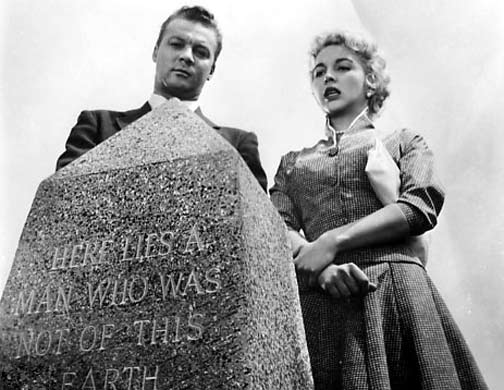
Not Of This Earth (1957, dir by Roger Corman)
The Masque of the Red Death (1964, dir by Roger Corman)
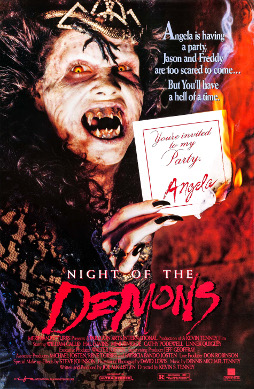
Sorry, Angela, the party kind of sucks. Beyond the strange guest list — like seriously, why would any of these people be hanging out together — and the weird decision to hold it in the deserted old funeral home, there’s the fact that people are getting possessed and people are dying. There’s a lot that I can tolerate from a party but once people start dying, it’s usually time to leave.
(Unless, of course, it’s a theme party. I went to a Halloween murder party last year and I had a lot of fun watching as each guest was “killed off” until the eventual killer was revealed. I drew a card telling me that I had been murdered in the master bathroom while stepping out of the shower so I ran upstairs, changed into a towel, and let out the loudest scream possible. Now, that was a party! That said, I can’t remember who the actual killer was so they’re still out there, probably breaking into your house at this very moment.)
As Jeff, Leonard, and I watched Night of the Demons last week as a part of the #ScarySocial live tweet, Jeff mentioned that this 1988 film had apparently been very popular on late night cable back in the day. I could certainly see why, what with it’s combination of boobs, blood, and Linnea Quigley. It’s about two outcasts — Angela (Amelia Kinkade) and Suzanne (Quigley) — who throw a Halloween party in a funeral parlor. It’s a pretty boring party but it’s also an 80s party so we get to see some silly dancing before the spirits end up possessing Suzanne and Angela. Angela does a wild dance. Suzanne sticks a tube of lipstick into her breast. I guess you can do that when you’re possessed by a demon. That said, that scene still made cringe just because it made me think about all of the lipstick that I shoplifted when I was in high school and how much it would have upset to me to have gone to all that trouble just to have some possessed girl waste it by shoving it inside her boob. One-by-one, the partiers die. Soon, only good girl Judy (Cathy Podewell) and good guy Rodger (Alvin Alexis) are left alive but will they be able to figure out a way to escape the funeral home? Not only do they have to climb a wall but they have to do it while dressed, respectively, like Alice in Wonderland and a pirate. Good luck, kids! You’re so fucking dead.
Anyway, Night of the Demons is pretty stupid but it’s a film that people have fun watching. There’s none of the nuance that one found in Kevin Tenney’s other classic horror film, Witchboard. Instead, this one is entertainingly over-the-top and enjoyably weird. This is a film that was made for people who enjoy making snarky comments while watching horror movies. As a result, it’s an ideal live tweet movie because it doesn’t require a lot of thought as much as it just requires a group of friends who are willing to validate your every comment by clicking the like button. It’s not a particularly scary film but both Amelia Kinkade and Linnea Quigley deserve a lot of credit for throwing themselves into their roles and, at the very least, it’s got some dancing. It’s a crowd pleaser and, I’ve recently been told, some people feel that’s the most important thing that a film can do. Personally, being a film snob, I don’t quite agree with the assessment that it’s the most important thing but, still, one should probably never discount the importance of keeping the audience entertained.
The point is, I had fun with Night of the Demons. Watch it with your friends.
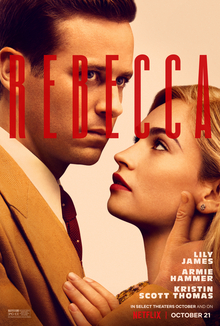
Ben Wheatley’s new film, Rebecca, is the second cinematic adaptation of Daphne du Maurier’s classic gothic romance. It was first adapted by David O. Selznick and Alfred Hitchcock in 1940. That Rebeccawas the only Hitchcock film to win the Oscar for Best Picture, though Hitchcock himself reportedly felt that Rebecca was more indicative of Selznick’s style than his own.
Ben Wheatley, as one might expect from the brilliant director of A Field in England, takes his own idiosyncratic approach to the material. From the start, he gets two things right when he casts Lily James as the second Mrs. de Winter and Armie Hammer as the enigmatic Maxim de Winter. James and Hammer are ideal for these roles because they’re both so achingly pretty that they seem like they belong on the cover of a gothic romance. That’s especially true of Armie Hammer, who has never been that interesting of an actor but who still has the type of chiseled screen presence that makes him ideally suited for roles like the one that he plays here. He’s tall, handsome, a bit dull, and undeniably upper class. He’s an appealing slab of beef and that makes him perfect for the role of Maxim de Winter.
Directing in vibrant color and taking advantage of the fact that the films stars two of the best-looking people working in the movies today, Wheatley brings an erotic charge to the story that was missing from Hitchcock’s more sedate (and Production code-restricted) version of the story. When Maxim and the woman who will became the second Mrs. de Winter embark on their whirlwind romance on the French Riviera, there might as well be a title card that announces, “Yeah, they’re fucking.” There’s nothing subtle about it but, at the same time, it provides a definite contrast to the second part of the film, in which Maxim and Mrs. de Winter return to the grand but chilly mansion of Manderley and Maxim goes from being charming and sensual to being cold and withdrawn.
It’s also at Manderley that we meet Mrs. Danvers (Kristin Scott Thomas), who is obsessed with preserving the memory of Maxim’s first wife, Rebecca. Scott Thomas is perfect casting for Mrs. Danvers. In fact, at first, she seems almost too perfect for the role. She’s so imperious and passive aggressively hostile when we first meet her that I was worried that Scott Thomas wouldn’t be able to bring much more to the role beyond what she had already shown. However, as the film progresses, Scott Thomas turns Danvers into a surprisingly vulnerable character, with the film suggesting that she’s as much of a victim of Rebecca’s toxic legacy as anyone else at Maderley.
Wheatley’s Rebecca is all about the journey of the second Mrs. de Winter and her transformation from being meek and somewhat mousey to being someone who refuses to be cast in anyone else’s shadow. When Maxim says that Mrs. de Winter is no longer the innocent girl that he meet on the Riviera, Maxim is disappointed but Mrs. de Winter is not. By the end of the film, the de Winters resemble none other than Henry and June Miller, searching the world for their place and casting seductive glances at the audience.
Visually, it’s a stunning film. The colors are vibrant. The sets are ornate. The costumes are to die for. That said, the film itself is never quite as engaging as it should be. Despite the strength of the cast, the film still leaves the viewer feelings somewhat detached. It’s all wonderfully produced by the film still feels more like an intellectual exercise than an emotional one. Wheatley is a brilliant filmmaker but, when the second Mrs. de Winter announces that everything she’s been through is worth it because she’s found love, you don’t believe her and you don’t get the feeling that, deep down, Wheatley believes her either. Instead, it’s hard not to feel that this version of Rebecca is a romance that doesn’t believe in love. It’s interesting but it’s not particularly satisfying.
(As some of you may have noticed, I shared this movie last year as well. I figured I might as well post it again this year. Plus, it’s Boris Karloff, Jack Nicholson, and Dick Miller! Why not post it again?)
Have you ever woken up and thought to yourself, “I’d love to see a movie where a youngish Jack Nicholson played a French soldier who, while searching for a mysterious woman, comes across a castle that’s inhabited by both Dick Miller and Boris Karloff?”
Of course you have! Who hasn’t?
Well, fortunately, it’s YouTube to the rescue. In Roger Corman’s 1963 film The Terror, Jack Nicholson is the least believable 19th century French soldier ever. However, it’s still interesting to watch him before he became a cinematic icon. (Judging from his performance here and in Cry Baby Killer, Jack was not a natural-born actor.) Boris Karloff is, as usual, great and familiar Corman actor Dick Miller gets a much larger role than usual. Pay attention to the actress playing the mysterious woman. That’s Sandra Knight who, at the time of filming, was married to Jack Nicholson.
Reportedly, The Terror was one of those films that Corman made because he still had the sets from his much more acclaimed film version of The Raven. The script was never finished, the story was made up as filming moved alone, and no less than five directors shot different parts of this 81 minute movie. Among the directors: Roger Corman, Jack Hill, Monte Hellman, Francis Ford Coppola, and even Jack Nicholson himself! Perhaps not surprisingly, the final film is a total mess but it does have some historical value.
(In typical Corman fashion, scenes from The Terror were later used in the 1968 film, Targets.)
“Oh my God!” I said as I looked at what was new on Netflix, “A Halloween movie starring the guy from Uncut Gems!? THIS IS GOING TO BE INTENSE!”
Of course, as I’m sure you already guessed, Hubie Halloween might as well be taking place in a totally different universe from Uncut Gems. Uncut Gems was an intense drama that starred Adam Sandler as a man so self-destructive that he literally seems to spend the entire movie just daring death to reach out and take him. Hubie Halloween, on the other hand, is fairly laid back comedy featuring Adam Sandler playing yet another well-meaning manchild. The film features supporting performances from all the usual Happy Madison suspects, like Kevin James, Rob Schneider, Steve Buscemi, Tim Meadows, Ben Stiller, Maya Rudolph, Keenan Thompson, and Colin Quinn. It’s sentimental and it’s about thirty minute too long and the humor is often juvenile but also frequently funny.
Adam Sandler plays Hubie, who lives in Salem, Massachusetts with his mother (June Squibb). Hubie is the town eccentric, the type of guy who thinks that he’s protecting the entire town but who mostly just gets on everyone’s nerves. A lot of people make fun of Hubie (who they call Pubie). Pete Landolfa (Ray Liotta) may be mourning the recent death of his father but he still finds time to toss Hubie into an open grave. Not even Father Dave (Michael Chiklis) has much sympathy for Hubie. Hubie is the type of guy who goes down to the local school to give a speech on Halloween safety, just for the students (and teachers) to respond by throwing all of their food at him.
One of the few people who is nice to Hubie is his new neighbor, Walter Lambert (Steve Buscemi). However, Hubie suspects that Walter might be a werewolf and when people start to disappear over the course of Halloween, Hubie suspects that Walter’s responsible. Meanwhile, the police (represented by a heavily bearded Kevin James) thinks that it might be Hubie, seeing as how everyone who has disappeared is also someone who has bullied him.
Then again, Richie Hartman (Rob Schneider) has just escaped from the local mental institution. Could he possibly have something to do with the mysterious happenings in Salem!?
When Adam Sandler won his Indie Spirit Award for Uncut Gems, he infamously announced that, if he didn’t get an Oscar nomination, he would get back at the Academy by making the worst film of all time. Well, Sandler was snubbed the Academy. (Though Sandler deserved that nomination — and probably nominations for The Meyerowtiz Stories, Funny People, and Punch-Drunk Love as well — it’s pretty obvious that the Academy is never going to nominate the star of That’s My Boy and Jack and Jill.) However, Hubie Halloween is certainly not the worst film ever made. It’s actually a rather likable and sweet-natured comedy, one in which the humor is definitely juvenile but, in contrast to some of the other Happy Madison comedies, never really mean-spirited. In many ways, it’s a perfect Netflix film. It’s good enough to keep you entertained while, at the same time, you don’t necessarily have to really pay attention to every minute of the film to get it. It’s the epitome of the type of film that you can watch while doing something else.
One of the main complaints that’s always lodged against Sandler is that he primarily just makes movies so that he can hang out with his friends and get paid for it. There’s a certain amount of truth to that statement and that, more than anything, explains why Sandler’s filmography tends to be so frustratingly uneven. The cast of Hubie Halloween looks like they had a lot of fun making it. Fortunately, in this case, that sense of fun actually translates onto the screen. Steve Buscemi, June Squibb, and particularly Ray Liotta all seem to be having a ball getting to parody their own dramatic images.
Admittedly, Hubie Halloween is not a film that sticks with you. It won’t make you laugh as much as Happy Gilmore and it won’t leave you stunned like Uncut Gems. But, for what it is, it’s just likable enough to be entertaining.
4 Shots From 4 Films is just what it says it is, 4 shots from 4 of our favorite films. As opposed to the reviews and recaps that we usually post, 4 Shots From 4 Films lets the visuals do the talking.
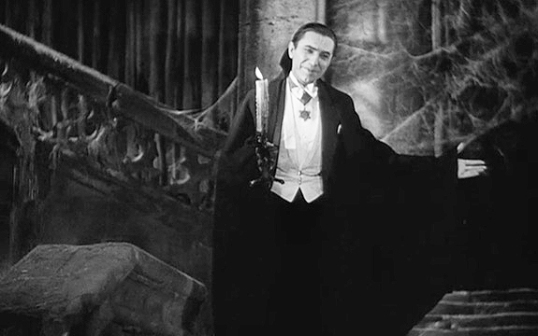
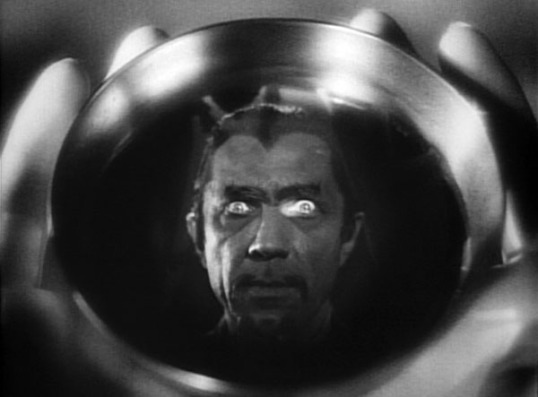
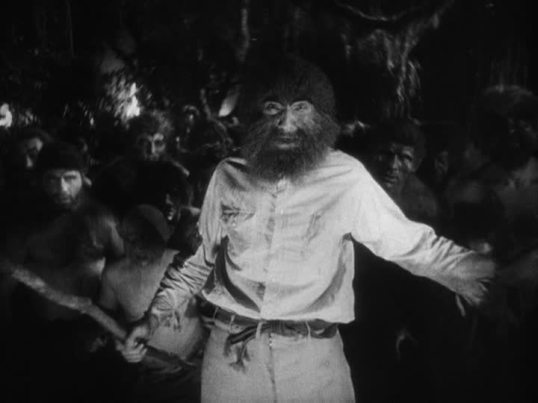
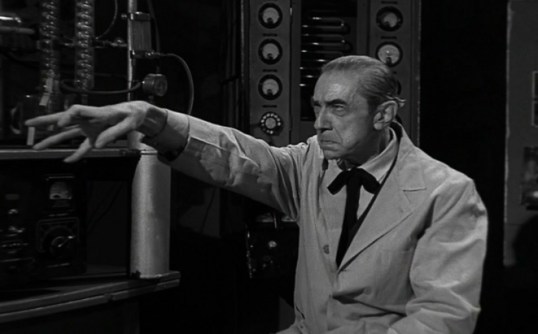
Today is the 138th anniversary of the birth of Bela Lugosi! In honor of his legacy, here are….
4 Shots From 4 Films
Dracula (1931, directed by Tod Browning)
White Zombie (1932, directed by Vincent Halperin)
Island of Lost Souls (1932, directed by Erle C. Kenton)
Bride of the Monster (1955, dir by Edward D. Wood, Jr.)





 Through the Shattered Lens