The TSL’s Grindhouse: Schizoid (dir by David Paulsen)


The 1980 film, Schizoid, is all about the things you can do with scissors.

For instance, in the days before email, text messages, and social media, scissors could be used to cut words out of a magazines.  Those words could then be carefully pasted onto construction paper and then sent to an advice columnist like Julie Caffret (Marianna Hill).  Julie is pretty upset when she starts getting the notes, largely because they promise an anonymous reign of terror and murder.  The police, however, say that the notes probably don’t meant anything.  They’re probably just a hoax.  I mean, it’s true that several members of Julie’s therapy group have recently been murdered but the letters all talk about committing murder with a gun.  Whereas the members of the therapy group are being murdered by someone wielding …. SCISSORS!  (Cue that dramatic music.)

Of course, Julie has other things to worry about.  For instance, her ex-husband, Doug (Craig Wasson), is still in her life.  He’s putting up wallpaper in her office.  Or, at least, that’s what he says he’s doing.  It’s hard not to notice that he doesn’t seem to be making much progress with the job.  Plus, he apparently sleeps in the office, which just seems odd.  Then, there’s the building’s creepy maintenance man, Gilbert (Christopher Lloyd), who specializes in making people uncomfortable on elevators.  And then there’s the fact that Julie’s therapist, is played by Klaus Kinski!

Seriously, if you were looking for a therapist, would you go to Klaus Kinski?

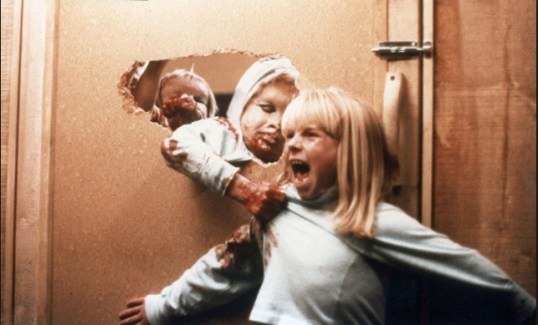
From the minute Klaus shows up, it’s pretty obvious that the film wants us to assume that he’s the killer and really, it’s hard not to make that assumption.  We’re so used to seeing Klaus Kinski play evil and villainous characters and, even 30 years after his death, there are so many stories out there about how difficult Klaus Kinski could be to work with in real life that our natural reaction is to believe any character he plays must have a sinister motivation.  In this film, Klaus’s character has an out-of-control teenage daughter (Donna Wilkes) who tries to commit suicide by locking herself in the garage with a running car.  When Klaus takes an axe to the garage door, we’re left to seriously wonder if he’s planning on killing her or if he’s actually trying to save her life.  That said, Schizoid actually makes good use of Kinski’s menacing persona and Kinski himself gives a performance that elevates the entire film.  Kinski actually does manage to keep you guessing as to whether or not the therapist is a monster or if he’s just kind of a jerk.

Schizoid is usually classified as a slasher film, though it actually has more in common with the classic Italian giallo films that it does with any of the Friday the 13th sequels.  The killer’s identity is masked through POV shots and, in typical giallo fashion, the killer wears black gloves while committing his crimes.  We spend a good deal of the film following the police investigation, which is a typical element of the giallo genre but which is usually treated as an afterthought in post-Friday the 13th slasher films.  Much like Fulci’s The New York Ripper, Schizoid is a violent journey into the heart of darkness, a look at a world with no morality and no safety.  Also like Fulci’s film, it’s so shamelessly sleazy that it’s easy to miss the fact that it’s actually rather well-directed and acted.

Schizoid turned out to be a better film that I was expecting.  That said, I still have to wonder why anyone would select Klaus Kinski to be their therapist.

4 Shots From 4 Films: Special David Cronenberg Edition


4 (or more) Shots From 4 (or more) Films is just what it says it is, 4 (or more) shots from 4 (or more) of our favorite films. As opposed to the reviews and recaps that we usually post, 4 (or more) Shots From 4 (or more) Films lets the visuals do the talking.

Today, the Shattered Lens wishes a happy birthday to one of the best and most influential directors of all time, Canada’s own David Cronenberg!  It’s time for….

4 Shots From 4 David Cronenberg Films

The Brood (1979, dir by David Cronenberg DP: Mark Irwin)

The Dead Zone (1983, dir. by David Cronenberg, DP: Mark Irwin)

The Fly (1986, dir. by David Cronenberg, DP: Mark Irwin)

Naked Lunch (1991, dir by David Cronenberg, DP:Peter Suschitzky)

Finally! Here Are The Oscar Nominations!


After a very, very long precursor season, here are the Oscar nominations!

I’ll have more to say about them later but, for now, I’d just like to point out that I was predicting Thomas Vinterberg would get a best director nomination back when most of the pundits were still insisting that Aaron Sorkin was a lock.

Best Picture
The Father
Judas And The Black Messiah
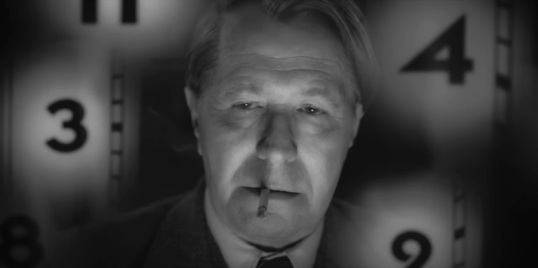
Mank
Minari
Nomadland
Promising Young Woman
Sound of Metal
The Trial Of The Chicago 7

Best Director
Thomas Vinterberg – ​Another Round
David Fincher – Mank
Lee Isaac Chung – Minari
Chloé Zhao – Nomadland
Emerald Fennell – Promising Young Woman

Best Actress
Viola Davis – Ma Rainey’s Black Bottom
Andra Day – The United States vs. Billie Holiday
Vanessa Kirby – Pieces Of A Woman
Frances McDormand – Nomadland
Carey Mulligan – Promising Young Woman

Best Actor
Riz Ahmed – Sound Of Metal
Chadwick Boseman – Ma Rainey’s Black Bottom
Anthony Hopkins – The Father
Gary Oldman – Mank
Steven Yeun – Minari

​Best Supporting Actress
Maria Bakalova – Borat Subsequent Moviefilm
Glenn Close – Hillbilly Elegy
Olivia Colman – The Father
Amanda Seyfried – Mank
Youn Yuh-jung – Minari

Best Supporting Actor
Sacha Baron Cohen – The Trial Of The Chicago 7
Daniel Kaluuya – Judas And The Black Messiah
Leslie Odom Jr. – One Night In Miami
Paul Raci – Sound of Metal
LaKeith Stanfield –  Judas And The Black Messiah

Best Original Screenplay
Judas And The Black Messiah
Minari
Promising Young Woman
Sound Of Metal
The Trial Of The Chicago 7

Best Adapted Screenplay
Borat Subsequent Moviefilm
The Father
Nomadland
One Night In Miami
The White Tiger

Best Animated Feature
Onward
Over the Moon
A Shaun the Sheep Movie: Farmageddon
​Soul
Wolfwalkers

Best Documentary Feature
Collective
Crip Camp
The Mole Agent
My Octopus Teacher
Time

Best International Feature
​Another Round
Better Days
Collective
The Man Who Sold His Skin
Quo Vadis, Aida?

Best Cinematography
Judas And The Black Messiah
Mank
News of the World
Nomadland
The Trial of the Chicago 7

Best Costume Design
Emma.
Mank
Ma Rainey’s Black Bottom
Mulan
Pinocchio

Best Film Editing
The Father
Nomadland
Promising Young Woman
Sound Of Metal
The Trial of the Chicago 7

Best Makeup & Hairstyling
Emma.
Hillbilly Elegy
Ma Rainey’s Black Bottom
Mank
Pinocchio

Best Production Design
The Father
Ma Rainey’s Black Bottom
Mank
News of the World
Tenet

Best Sound
Greyhound
Mank
News of the World
Soul
Sound of Metal

Best Visual Effects
Love And Monsters
Mulan
The Midnight Sky
The One And Only Ivan
Tenet

Best Original Score
Da 5 Bloods
Mank
Minari
News of the World
Soul

Best Original Song
Judas and the Black Messiah – “Fight for You”
The Trial of the Chicago 7 – “Hear My Voice”
Eurovision Song Contest: The Story of Fire Saga – “Husavik (My Hometown)”
The Life Ahead – “Seen”
​One Night in Miami – “Speak Now”

Best Animated Short
Burrow
Genius Loci
If Anything Happens I Love You
Opera
Yes People

Best Documentary Short
Colette
A Concerto Is a Conversation
Do Not Split
Hunger Ward
A Love Song for Latasha

Best Live-Action Short
Feeling Through
The Letter Room
The Present
Two Distant Strangers
White Eye

What If Lisa Picked The Oscar Nominees: 2020 Edition


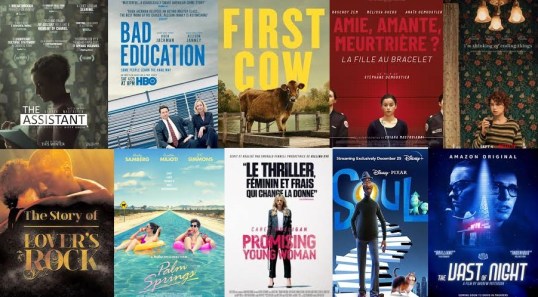
With the Oscar nominations due to be announced tomorrow, now is the time that the Shattered Lens indulges in a little something called, “What if Lisa had all the power.” Listed below are my personal Oscar nominations. Please note that these are not the films that I necessarily think will be nominated. The fact of the matter is that the many of them will not. Instead, these are the films that would be nominated if I was solely responsible for deciding the nominees this year. Winners are listed in bold.

I should also point out that I’ve only nominated films that were actually released in 2020.  Undoubtedly, Nomadland, Minari, Judas and the Black Messiah, and The Father will do very well with the Academy tomorrow but, as far as I’m concerned, they’re 2021 films and not eligible for my nominations.  They will be eligible next year, when I do my 2021 edition of What If Lisa Had All The Power.

It should also go without saying that I’ve nominated films that I’ve actually seen.

You’ll also note that I’ve added four categories, all of which I believe the Academy should adopt — Best Voice-Over Performance, Best Casting, Best Stunt Work, and Best Overall Use Of Music In A Film.

Click on the links to see my nominations for 2019, 20182017201620152014201320122011, and 2010!)

Best Picture

The Assistant
Bad Education
First Cow
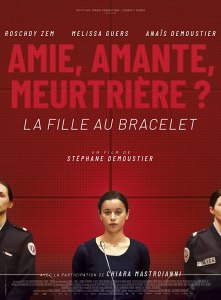
The Girl With A Bracelet
i’m thinking of ending things
Lovers Rock
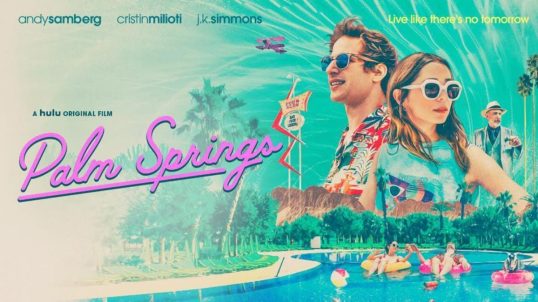
Palm Springs
Promising Young Woman
Soul
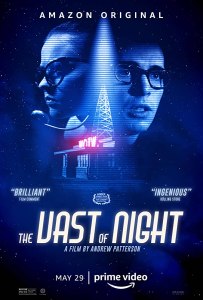
The Vast of Night
Best Director

Stéphane Demoustier for The Girl With A Bracelet
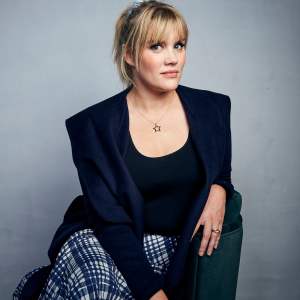
Emerald Fennell for Promising Young Woman
Charlie Kaufman for i’m thinking of ending things
Steve McQueen for Lovers Rock
Andrew Patterson for The Vast of Night
Kelly Reichardt for First Cow

Best Actor

Ben Affleck in The Way Back
Riz Ahmed in Sound of Metal
Chadwick Boseman in Ma Rainey’s Black Bottom
John Boyega in Red, White, and Blue
Hugh Jackman in Bad Education
Delroy Lindo in Da 5 Bloods

Best Actress

Alison Brie in Horse Girl
Sidney Flanigan in Never Rarely Sometimes Always
Julia Garner in The Assistant
Melissa Guers in The Girl With A Bracelet
Sophia Loren in The Life Ahead
Carey Mulligan in Promising Young Woman
Best Supporting Actor

Brian Dennehy in Driveways
Aldis Hodge in One Night In Miami
Orion Lee in First Cow
Clarke Peters in Da 5 Blood
Paul Raci in The Sound of Metal
J.K. Simmons in Palm Springs
Best Supporting Actress

Jane Adams in She Dies Tomorrow
Glenn Close in Hillbilly Elegy
Olivia Cooke in Sound of Metal
Allison Janney in Bad Education
Chiara Mastroianni in The Girl With A Bracelet
Talia Ryder in Never Rarely Sometimes Always

Best Voice Over Performance

Jack Cruz in What Did Jack Do?
Bruce Davis in The Vast of Night
Tina Fey in Soul
Jamie Foxx in Soul
Nick Offerman in Frances Ferguson
Chris Pratt in Onward

Best Original Screenplay

The Assistant
Palm Springs
Possessor
Promising Young Woman
Soul
The Vast of Night

Bad Education

Best Adapted Screenplay

Bad Education
Emma
First Cow
The Girl With A Bracelet
i’m thinking of ending things
The Outpost
Best Animated Feature Film

A Shaun The Sheep Movie: Farmageddon
Onward
Red Shoes and the Seven Dwarfs
Soul
Best Documentary Feature Film

Alabama Snake
Athlete A
The Mystery of D.B. Cooper
Natalie Wood: What Remains Behind
The Social Dilemma
Tread
Best International Feature Film

Figurant
The Girl With A Bracelet
Gunpowder Heart
The Hater
The Life Ahead
The Shock of the Future

Best Live Action Short Film

Basic
Figurant
Host
Run/On
Waffle
What Did Jack Do?

Best Documentary Short Film

Betye Saar: Taking Care of Business
John Was Trying To Contact Aliens
Lions in the Corner
Quilt Fever
Best Animated Short Film

Canvas

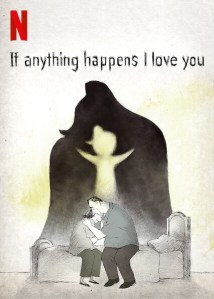
If Anything Happens I Love You

Best Original Score

Call of the Wild
First Cow
Mangrove
Possessor
She Dies Tomorrow
The Shock of The Future
Best Original Song

“Boss Bitch” from Birds of Prey
“Diamonds” from Birds of Prey
“Everybody Dies” from The Outpost
“Future Shock Work in Progress” from The Shock of the Future
“Gratia Plena” from Fatima
“Husavik” from Eurovision Song Contest: The Story of Fire Saga
“Jah Jah Ding Dong” from Eurovision Song Contest: The Story of Fire Saga
“Metamorph” from Gunpowder Heart
“The Spirit of Christmas” from The Christmas Chronicles 2
“True Love’s Flame” from What Did Jack Do?

Best Overall Use of Music

Bill & Ted Face The Music
Eurovision Song Contest: The Story of Fire Saga
Lovers Rock
Proising Young Woman
The Shock of the Future
Soul

Best Sound

Eurovision Song Contest: The Story of Fire Saga
Lovers Rock
The Outpost
Possessor
The Shock of the Future
Sound of Metal

Best Production Design

Eurovision Song Contest: The Story of Fire Saga
Emma
First Cow
i’m thinking of ending things
Possessor
The Shock of the Future

Best Casting

The Assistant
First Cow
Lovers Rock
Palm Springs
Promising Young Woman
The Vast of Night
Best Cinematography

First Cow
i’m thinking of ending things
Lovers Rock
Mank
She Dies Tomorrow
The Vast of Night

Best Makeup and Hairstyling

Bill & Ted Face The Music
i’m thinking of ending things
Eurovision Song Contest: The Story of Fire Saga
Hillbilly Elegy
Ma Rainey’s Black Bottom
Promising Young Woman
Best Costume Design

Emma
Eurovision Song Contest: The Story of Fire Saga
Fatima
First Cow
Ma Rainey’s Black Bottom
Tesla
Best Film Editing

Extraction
i’m thinking of ending things
The Outpost
Palm Springs
Promising Young Woman
The Way Back
Best Stuntwork

Bad Boys For Life
Birds of Prey
Bloodshot
Extraction
The Hunt
The Outpost

Best Visual Effects

The Christmas Chronicles 2
The Midnight Sky
The Outpost
Possessor
Radioactive
Tesla

Films By Number of Nominations

8 Nominations — First Cow, Promising Young Woman

7 Nominations — Eurovision Song Contest: The Story of Fire Saga, i’m thinking of ending things

6 Nominations — The Girl With A Bracelet, Lovers Rock, The Outpost, Shock of the Future, Soul, The Vast of Night

5 Nominations — Palm Springs, Possessor

4 Nominations — The Assistant, Bad Education, Sound of Metal

3 Nominations — Birds of Prey, Emma, Ma Rainey’s Black Bottom, She Dies Tomorrow, What Did Jack Do?

2 Nominations — Bill & Ted Face the Music, The Christmas Chronicles 2, Da 5 Bloods, Extraction, Fatima, Figurant, Gunpowder Heart, Hillbilly Elegy, The Life Ahead, Never Rarely Sometimes Always, Onward, Tesla, The Way Back

1 Nomination — Alabama Snake, Athlete A, Bad Boys For Life, Basic, Bettye Saar: Taking Care of Business, Bloodshot, Call of the Wild, Canvas, Driveways, Frances Ferguson, The Hater, Horse Girl, Host, The Hunt, If Anything Happens I Love You, John Was Trying To Contact Aliens, Lions in the Corner, Mangrove, Mank, Midnight Sky, The Mystery of D.B. Cooper, Natalie Wood: What Remains Behind, One Night in Miami, Quilt Fever, Radioactive, Red Shoes and the Seven Dwarfs, Red White and Blue, Run/On, A Shaun The Sheep Movie: Farmageddon, The Social Dilemma, Tread, Waffle

Films By Number of Oscars Won

3 Oscars — The Girl With A Bracelet, Promising Young Woman

1 Oscar — The Assistant, Bad Education, Driveways, Eurovision Song Contest: The Story of Fire Saga, Figurant, First Cow, Frances Ferguson, If Anything Happens I Love You, i’m thinking of ending things, John Was Trying To Contact Aliens, Lovers Rock, Ma Rainey’s Black Bottom, The Outpost, Palm Springs, Possessor, Shock of the Future, The Social Dilemma, Soul, Sound of Metal, The Vast of Night, What Did Jack Do?

Tomorrow, the Oscar nominations will be released and we’ll see if how much or, more likely, how little the Academy and I agree upon!
The Georgia Film Critics Association Honors Nomadland!


The Georgia Film Critics Association announced their picks for the best of 2020 today and it was another victory of Nomadland, what a shock.

Here are the winners:

Best Picture
“The Father”
“I’m Thinking of Ending Things”
“Mank”
“Minari”
“Nomadland”
“One Night in Miami”
“Promising Young Woman”
“Soul”
“Sound of Metal”
“Time”
“The Trial of the Chicago 7”

Best Director
“Mank” – David Fincher
“Nomadland” – Chloé Zhao
“One Night in Miami” – Regina King
“Promising Young Woman” – Emerald Fennell
“Sound of Metal” – Darius Marder

Best Actor
Riz Ahmed (“Sound of Metal”)
Chadwick Boseman (“Ma Rainey’s Black Bottom”)
Anthony Hopkins (“The Father”)
Dev Patel (“The Personal History of David Copperfield”)
Steven Yeun (“Minari”)

Best Actress
Viola Davis (“Ma Rainey’s Black Bottom”)
Sidney Flanigan (“Never Rarely Sometimes Always”)
Vanessa Kirby (“Pieces of a Woman”)
Frances McDormand (“Nomadland”)
Carey Mulligan (“Promising Young Woman”)

Best Supporting Actor
Sacha Baron Cohen (“The Trial of the Chicago 7”)
Daniel Kaluuya (“Judas and the Black Messiah”)
Orion Lee (“First Cow”)
Leslie Odom, Jr. (“One Night in Miami”)
Paul Raci (“Sound of Metal”)

Best Supporting Actress
Maria Bakalova (“Borat Subsequent Moviefilm: Delivery of Prodigious Bribe to American Regime for Make Benefit Once Glorious Nation of Kazakhstan”)
Toni Collette (“I’m Thinking of Ending Things”)
Olivia Colman (“The Father”)
Amanda Seyfried (“Mank”)
Youn Yuh-jung (“Minari”)

Best Original Screenplay
“Mank” – Jack Fincher
“Minari” – Lee Isaac Chung
“Promising Young Woman” – Emerald Fennell
“Sound of Metal” – Darius Marder, Abraham Marder
“The Trial of the Chicago 7” – Aaron Sorkin

Best Adapted Screenplay
“The Father” – Christopher Hampton, Florian Zeller
“I’m Thinking of Ending Things” – Charlie Kaufman
“Ma Rainey’s Black Bottom” – Ruben Santiago-Hudson
“Nomadland” – Chloé Zhao
“One Night in Miami” – Kemp Powers

Best Cinematography
“Da 5 Bloods” – Newton Thomas Sigel
“First Cow” – Christopher Blauvelt
“Mank” –  Erik Messerschmidt
“Nomadland” – Joshua James Richards
“Tenet” –  Hoyte Van Hoytema

Best Production Design
“Emma” – Kave Quinn, Mark Lavis, Andrea Matheson, Alice Sutton
“I’m Thinking of Ending Things” – Molly Hughes, Gonzalo Cordoba, Merissa Lombardo
“Mank” – Donald Graham Burt, Chris Craine, Dan Webster
“Promising Young Woman” – Michael Perry, Liz Kloczkowski
“Tenet” – Nathan Crowley,  Rory Bruen, Steve Christensen, Eggert Ketilsson, Jenne Lee,Justin O’Neal Miller, Benjamin Nowicki, Erik Osusky, Anthony D. Parrillo

Best Original Score
“Mank” – Trent Reznor, Atticus Ross
“Minari” –  Emile Mosseri
“News of the World” – James Newton Howard
“Soul” – Trent Reznor, Atticus Ross
“Tenet” – Ludwig Göransson

Best Original Song
“Green” – Abraham Marder (“Sound of Metal”)
“Husavik” – Savan Kotecha, Rickard Göransson & fat max Gsus (“Eurovision Song Contest: The Story of Fire Saga”)
“Io Sì (Seen)” – Diane Warren, Laura Pausini & Niccolò Agliardi (“The Life Ahead (La Vita Davanti a Se)”)
“Rain Song” – Emile Mosseri (“Minari”)
“Speak Now” – Leslie Odom, Jr. & Sam Ashworth (“One Night in Miami”)
“Wuhan Flu” – Sacha Baron Cohen, Anthony Hines & Erran Baron Cohen (“Borat Subsequent Moviefilm: Delivery of Prodigious Bribe to American Regime for Make Benefit Once Glorious Nation of Kazakhstan”)

Best Ensemble
“Ma Rainey’s Black Bottom”
“Minari”
“One Night in Miami”
“Promising Young Woman”
“The Trial of the Chicago 7”

Best Foreign Language Film
“Another Round”
“Bacurau”
“La Llorona”
“Martin Eden”
“Minari”
“Night of the Kings”

Breakthrough Award
Maria Bakalova (“Borat Subsequent Moviefilm: Delivery of Prodigious Bribe to American Regime for Make Benefit Once Glorious Nation of Kazakhstan”)
Kingsley Ben-Adir (“One Night in Miami”)
Emerald Fennell (“Promising Young Woman”)
Sidney Flanigan (“Never Rarely Sometimes Always”)
Helena Zengel (“News of the World”)

Best Animated Film
“The Croods: A New Age”
“Onward”
“Over the Moon”
“Soul”
“Wolfwalkers”

Best Documentary Film
“Collective”
“Dick Johnson is Dead”
“The Dissident”
“The Painter and the Thief”
“Time”

Oglethorpe Award for Excellence in Georgia Cinema
“The Banker” (George Nolfi, Niceole Levy, Davis Lewis Smith, Stan Younger)
“Freaky” (Christopher Landon, Michael Kennedy)
“The Glorias” (Julie Taymor, Sarah Ruhl)
“Greenland” (Ric Roman Waugh, Chris Sparling)
“In the Cold Dark Night” (Nick Hampson, Stephen Robert Morse, Miikka Leskinen, Max Peltz)
“Irresistible” (Jon Stewart)
“John Lewis: Good Trouble” (Dawn Porter)
“Love Bite” (short; Charles de Lauzirika, Carlee Baker)
“Petting Zoo” (short; Daniel Robin)
“Three Men Named Mantas” (short; James Mackenzie)

Here Are The Nominations of the Austin Film Critics Association!


Let’s all give it up for the Austin Film Critics Association!  They announced their nominees for the best of 2020 today and, while the nominations are a bit late all things considered, they still deserve some credit for going against the tide and NOT nominating The Trial of the Chicago 7 for best picture.  Instead, they honored two far more deserving films, First Cow and Never Rarely Sometimes Always.

The winners will be announced on March 19th.  Hare are the nominees:

Best Film
First Cow
Never Rarely Sometimes Always
Nomadland
Minari
Promising Young Woman

Best Director
Lee Isaac Chung, Minari
Emerald Fennell, Promising Young Woman
Eliza Hittman, Never Rarely Sometimes Always
Kelly Reichardt, First Cow
Chloé Zhao, Nomadland

Best Actress
Nicole Beharie, Miss Juneteenth
Viola Davis, Ma Rainey’s Black Bottom
Frances McDormand, Nomadland
Elisabeth Moss, The Invisible Man
Carey Mulligan, Promising Young Woman

Best Actor
Riz Ahmed, Sound of Metal
Chadwick Boseman, Ma Rainey’s Black Bottom
Anthony Hopkins, The Father
Delroy Lindo, Da 5 Bloods
Steven Yeun, Minari

Best Supporting Actress
Maria Bakalova, Borat Subsequent Moviefilm
Olivia Coleman, The Father
Amanda Seyfried, Mank
Youn Yuh-jung, Minari
Helena Zengel, News of the World

Best Supporting Actor
Daniel Kaluuya, Judas and the Black Messiah
Leslie Odom Jr, One Night in Miami
Paul Raci, Sound of Metal
David Strathairn, Nomadland
Glynn Turman, Ma Rainey’s Black Bottom

Best Original Screenplay
Minari
Palm Springs
Promising Young Woman
Sound of Metal
The Trial of the Chicago 7

Best Adapted Screenplay
The Father
The Invisible Man
Ma Rainey’s Black Bottom
Nomadland
One Night in Miami

Best Cinematography
Da 5 Bloods
Mank
Minari
Nomadland
Tenet

Best Original Score
Da 5 Bloods
Mank
Minari
Soul
Tenet

Best Foreign Language Film
Another Round
Bacurau
Beanpole
La Llorona
Minari

Best Documentary
Boys State
Collective
Crip Camp
Dick Johnson is Dead
Time

Best Animated Film
Over the Moon
Onward
A Shaun the Sheep Movie: Farmageddon
Soul
Wolfwalkers

Best Ensemble
Da 5 Bloods
Ma Rainey’s Black Bottom
Minari
One Night in Miami
The Trial of the Chicago 7

Best Editing
The Father
Mank
Nomadland
Tenet
Sound of Metal

Best Motion Capture/Special Effects Performance
Luke Davis, The Invisible Man
Andrew Jackson, Tenet
Oliver Jackson-Cohen, The Invisible Man
Matt Kasmir, The Midnight Sky
Elisabeth Moss, The Invisible Man
Terry Notary, Call of the Wild

Best Stunts
Birds of Prey
Extraction
The Invisible Man
The Old Guard
Tenet

Best First Film
Miss Juneteenth
One Night in Miami
Palm Springs
Promising Young Woman
The 40-Year-Old Version

The Robert R. “Bobby” McCurdy Memorial Breakthrough Artist Award
Radha Blank, The 40-Year-Old Version
Lee Isaac Chung, Minari
Sidney Flanigan, Never Rarely Sometimes Always
Alan Kim, Minari
Cathy Yan, Birds of Prey

As part of the organization’s annual voting, the Austin Film Critics Association awards titles with local ties — works made in Austin and/or directed by a filmmaker living in town during their film’s production. This award is distinct to our group of critics, recognizing the talent of Austin filmmakers as we celebrate the best films of the year.
In alphabetical order, the five nominees for Best Austin Film 2020 are:

Bull
Greenland
The Orange Years
Pahokee
We Can Be Heroes

Here Are The Eddie Nominations!


The America Cinema Editors (ACE) have announced the 2020 nominees for the Eddie awards, which honors the best in film and television editing!

For all of you still making out your Oscar predictions, here are the film nominees:

BEST EDITED FEATURE FILM (DRAMATIC)
“Mank,” Kirk Baxter, ACE
“Minari,” Harry Yoon, ACE
“Nomadland,” Chloé Zhao
“Sound of Metal,” Mikkel E. G. Nielsen
“The Trial of Chicago 7,” Alan Baumgarten, ACE

BEST EDITED FEATURE FILM (COMEDY)
“Borat Subsequent Moviefilm,” James Thomas, Craig Alpert, ACE, Mike Giambra
“I Care a Lot,” Mark Eckersley, ACE
“On The Rocks,” Sarah Flack, ACE
“Palm Springs,” Matthew Friedman, ACE and Andrew Dickler
“Promising Young Woman,” Frédéric Thoraval

BEST EDITED ANIMATED FEATURE FILM
“The Croods: A New Age,” James Ryan, ACE
“Onward,” Catherine Apple
“Over the Moon,” Edie Ichioka, ACE
“Soul,” Kevin Nolting, ACE
“Wolfwalkers,” Darragh Byrne, Richie Cody, Darren Holmes, ACE

BEST EDITED DOCUMENTARY (FEATURE)
“All In: The Fight for Democracy,” Nancy Novack
“Dick Johnson is Dead,” Nels Bangerter
“The Dissident,” Scott D. Hanson, James Leche, Wyatt Rogowski, Avner Shiloah
“My Octopus Teacher,” Pippa Ehrlich, Dan Schwalm
“The Social Dilemma,” Davis Coombe

Personally, I’m just happy to see Palm Springs nominated!

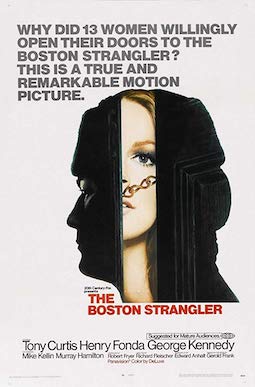
Film Review: The Boston Strangler (dir by Richard Fleischer)


Between June 14, 1962 and January 4, 1964, 13 women between the ages of 19 and 85 were murdered in the Boston area.  It was felt that they had all been killed by the same man, a monster known as The Boston Strangler.  Though the police investigated many suspects, they never made an arrest.  (One should remember that this was before the time of DNA testing or criminal profiling.  The term “serial killer” had not even been coined.  Today, sad to say, we take the existence of serial killers for granted.  In the 60s, it was still an exotic concept.)

In October of 1964, a man named Albert DeSalvo was arrested and charged with being “the Green Man,” a serial rapist who pretended to be a maintenance man in order to gain access to single women’s apartments.  After he was charged with rape, detectives were surprised when DeSalvo confessed to being the Boston Strangler.  When confessing to the murders, DeSalvo got a few minor details wrong but he also consistently included other details that the police hadn’t released to the general public.  Even when put under hypnosis, DeSalvo’s recalled those previously unreleased details.  Because DeSalvo was already going to get a life sentence on the rape charges and because there wasn’t any physical evidence that, in those pre-DNA, could have conclusively linked DeSalvo to the crimes, he was never actually charged with any of the murders.  Still, with his confessions, the cases were considered to be closed.

In 1966, before DeSalvo was even sentenced for the Green Man rapes, Gerold Frank wrote The Boston Strangler, a book about the murders, the investigations, and DeSalvo’s confessions.  It was one of the first true crime books and, in 1968, it was adapted into one of the first true crime films.

Directed by Richard Fleischer (whose filmography somehow includes not only this film but also Dr. Dolittle, Fantastic Voyage, 20,000 Leagues Under the Sea, Conan The Destroyer, and Red Sonja), The Boston Strangler is really two films in one.  The first half deals with the crimes and the police (represented by Henry Fonda, George Kennedy, Murray Hamilton, and James Brolin) investigation.  This half of the film is pulpy and crudely effective, full of scenes of the cops rounding up every sex offender who they can find.  There’s a scene where Henry Fonda talks to a prominent man in a gay bar that’s handled with about as much sensitivity as you could expect from a 1960s studio film.  (On the one hand, the man is portrayed with respect and dignity and he’s even allowed to call out the patron saint of 1960s mainstream liberal piety, Henry Fonda, for being close-minded.  On the other hand, everyone else in the bar is a stereotype and we’re meant to laugh at the idea that anyone could think that Henry Fonda could be gay.)  Director Richard Fleischer makes good use of split screens, creating an effective atmosphere of paranoia.  The scene where a woman tries to keep an obscene caller on the phone long enough for the police to trace his location made my skin crawl and served as a reminder that perverts predate social media.  Another scene where a flamboyant psychic tries to help the police goes on for a bit too long but, at the same time, you’re happy for a little relief from crime scenes and terrified, elderly women discovering that their neighbors have been murdered.

The second half of the film features Tony Curtis as Albert DeSalvo.  Curtis is effective as DeSalvo, playing him as being a self-loathing brute who is incapable of controlling his impulses.  (Before committing one of his crimes, DeSalvo watches the funeral of John Kennedy, his face wracked with pain.  Is the film suggesting that DeSalvo murdered to deal with the stress of life in America or is it suggesting that the hate that killed Kennedy was a symptom of the same sickness that drove DeSalvo?  Or is the film just tossing in a then-recent event to get an easy emotional reaction from the audience?)  As one might expect from a mainstream film made in 1968, The Boston Strangler takes something of a wishy washy approach to the question of whether DeSalvo’s crimes were due to sickness or evil.  Yes, the film says, DeSalvo was bad but it’s still society’s fault for not realizing that he was bad.  It’s the type of approach designed to keep both the law-and-order types and the criminal justice reformers happy but it ultimately feels a bit like a cop out.  Still, the shots of DeSalvo isolated in his padding cell have an undeniable power and Curtis is both pathetic and frightening in the role.  In its more effective moments, the second half of the film works as a profile of a man imprisoned both physically and mentally.

Watching the film today, it’s hard not to consider how different The Boston Strangler is from the serial killer films that would follow it.  DeSalvo is not portrayed as being some sort of charming or interesting Hannibal Lecter or Dexter-type of killer.  Instead, he’s a loser, a barely literate idiot who struggled to articulate even the simplest of thoughts.  The cops aren’t rule-breakers or renegades.  Instead, they’re doing their jobs the best that they can.  Though the film ends with a title card saying that it’s important for society to make more of an effort to spot people like DeSalvo before they kill, The Boston Strangler has a surprising amount of faith in both the police and the law and it assumes that you feel the same way.  It’s a film that takes it for granted the audience respects and trusts authority.  It’s portrayal of the police is quite a contrast to the rebel cops who dominate pop culture today.

After the film came out, DeSalvo recanted his confessions and said that he had never killed anyone.  He was subsequently murdered in prison in 1971, not due to his crimes but instead because he was independently selling drugs for prices cheaper than what had been agreed upon by the prison’s syndicate.  After his death, many books were written proclaiming that DeSalvo was innocent and that the real Boston Strangler was still on the streets.  Others theorized that the actual Strangler was DeSalvo’s cellmate and DeSalvo, knowing he was going to prison for life regardless, confessed in return for money being sent to his family.  That said, in 2013, DNA evidence did appear to conclusively link DeSalvo to the murder of 19 year-old Mary Sullivan.  Of course, that doesn’t mean that DeSalvo necessarily committed the other 12 murders.  In fact, from what we’ve since learned about the pathology of serial killers, it would actually make more sense for the murders to have been committed by multiple killers as opposed to just one man.

Regardless of whether DeSalvo was guilty or not, The Boston Strangler is an uneven but ultimately effective journey into the heart of darkness.

Here Are The 2020 American Society of Cinematographers Nominations


The American Society of Cinematographers have announced their nominations for the best cinematography of 2020!  The winners will be announced on April 18th!

Here are the nominees!  Probably the biggest — actually, the only — shock to be found below is that Newton Thomas Sigel was nominated for Cherry instead of Da 5 Bloods.

THEATRICAL RELEASE
Erik Messerschmidt – Mank
Phedon Papamichael – The Trial of the Chicago 7
Joshua James Richards – Nomadland
​Newton Thomas Sigel – Cherry
Dariusz Wolski – News of the World

SPOTLIGHT
Katelin Arizmendi – Swallow
Aurélien Marra – Two of Us
Andrey Naydenov – Dear Comrades!

DOCUMENTARY
Michael Dweck and Gregory Kershaw – The Truffle Hunters
Viktor Kosakovskiy and Egil Håskjold Larsen – Gunda
Gianfranco Rosi – NotturnoNotturno

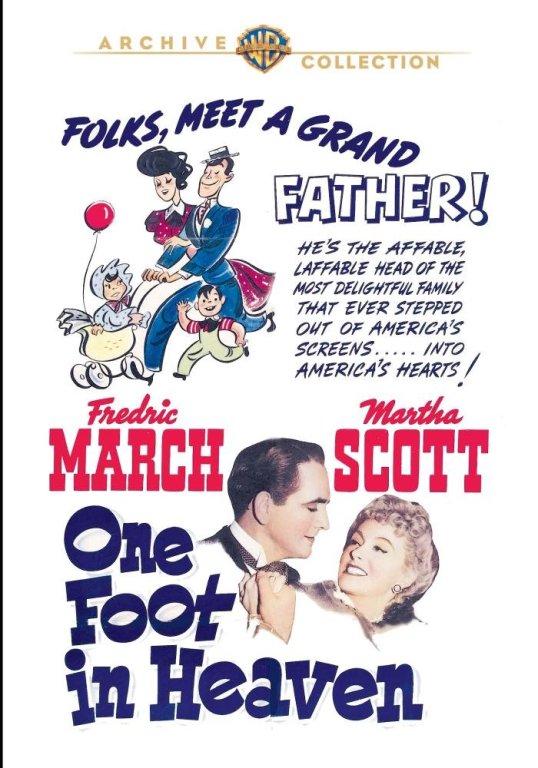
Lisa Reviews An Oscar Nominee: One Foot In Heaven (dir by Irving Rapper)


I have to admit that One Foot In Heaven is a film that I probably never would have watched if not for the fact that it received an Oscar nomination for Best Picture.

This film from 1941 tells what I presume to be a true — or, at the very least, a true-ish — story.  Fredric March plays William Spence.  The film opens in 1904 with Spence explaining to his future in-laws that he’s spontaneously decided to drop out of medical school because he feels that he’s been called to become a Methodist minister.  Though no one is happy or particularly encouraging about William’s decision to abandon the financial security of medicine to work as a minister, William feels that it’s what he was meant to do.

We follow William and his wife, Hope (Martha Scott), as they move from town to town, living in dingy parsonages and barely paying the bills by doing weddings.  Though Hope is frustrated by the constant moving and the less-than-ideal living conditions, she remains supportive of William.  They start a family and William goes from being a stern and somewhat judgmental man to becoming an inspiring minister.  He even changes his opinion about the sinfulness of going to the movies.  (All things considered, that’s probably for the best.)  Eventually, William, Hope, and the family end up ministering to a congregation in Colorado.  Determined to finally give his wife the home that she deserves, William tries to rebuild both the church and the parsonage.  It turns out to be more difficult than he was expecting.

That’s pretty much the film.  There’s not really much conflict to be found, until the final 30 minutes or so when William struggles to convince a bunch of snobs to help him achieve his dream of building a new church.  The film opens with a title card thanking the Methodists for their help in the production of the film, which should tell you everything you need to know about the film’s attitude towards Protestantism.  William does debate an agnostic at one point but it’s not much of a debate.  William, after all, is played by the authoritative Fredric March while the agnostic’s name isn’t even listed in the credits.  It’s a well-made film, in that sturdy way that many 1941 studio productions were, but — unless you’re just crazy about the history of Methodism — it’s not particularly interesting.

On the plus side, Fredric March gives a good performance as William Spence.  March was one of the best actors of Hollywood’s Golden Age and he gives a sympathetic performance as a stern but well-meaning man who respects tradition but who is still willing to admit that he has much to learn.  Probably the film’s most effective scene is when William reluctantly watches a movie with his son.  March captures William’s transformation from being a disapproving father to an entertained filmgoer.  It’s one of the few moments when the film really feels alive.

So, how did One Foot In Heaven receive a Best Picture nomination in the same year that saw nominations for films like Citizen Kane, The Little Foxes, Suspicion, and The Maltese Falcon?  One Foot In Heaven is well-made and totally uncontroversial.  It’s the type of film that, if it were made today, it would probably be directed by Ron Howard and it would star someone like James Marsden or Garrett Hedlund.  One Foot In Heaven is not particularly memorable but there’s nothing particularly terrible about it either and it probably felt like a “safe’ film to nominate.  Still, it’s probably significant that One Foot In Heaven didn’t receive any nominations other than one for Best Picture.  It lost that Oscar to another film about family, How Green Was My Valley.