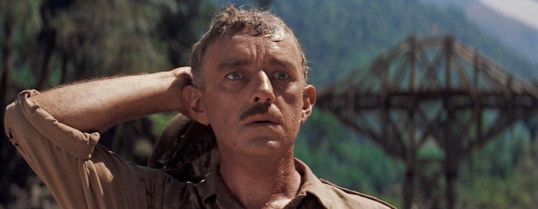
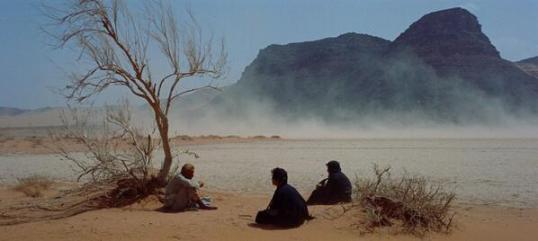
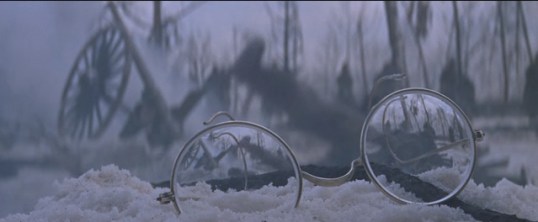
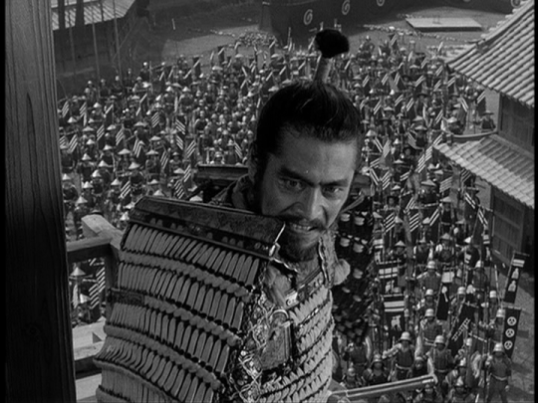
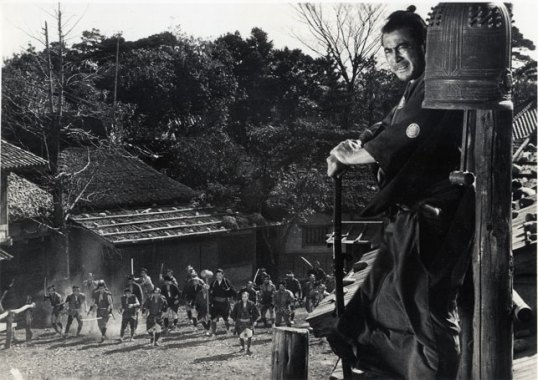
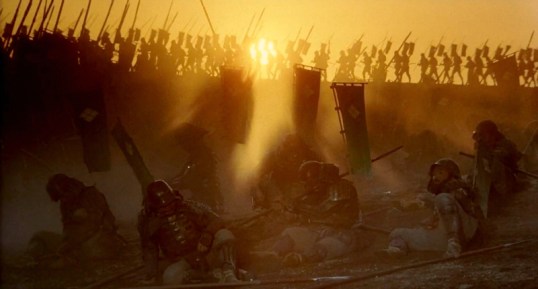
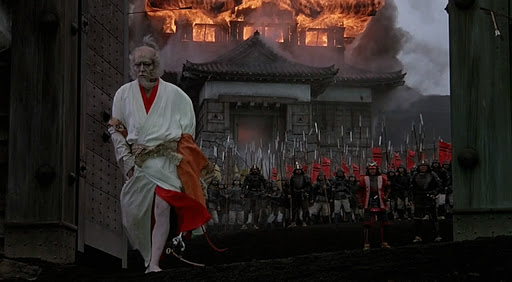
6 Times The Academy Got It Right: 1930s Edition


During the 1930s, American suffered through the Great Depression and the rest of the world first tried to prevent and then fearfully prepared for another world war.  It was a dark time and it’s not surprising that movies became an escape for many.  With so many people going the movies, it’s also not a surprise that the Oscars themselves became a far bigger deal than anyone had initially expected.  Today, it can be easy to forget that the awards were almost an afterthought, something that was added to the Academy’s original charter at the last minute.  In the 1930s, they went from being a quiet industry dinner to being a major cultural event.

Here are 6 times the Academy got it right in the 1930s.

  1. 1939

1939 was one of the first truly great years in American cinema and, for once, the Academy honored that greatness.  The slate of nominated films, which included everything from Gone With The Wind to Mr. Smith Goes to Washington to The Wizard of Oz to Stagecoach, and performances was the best that Academy had presented so far.  All of the nominees were impressive and deserved to be there.  One can perhaps disagree with some of the eventual winners but 1939 was one of the few years when no one can disagree with who and what the Academy chose to nominate.

2. It Happened One Night Win Best Picture

In 1934, the Academy honored It Happened One Night with the award for Best Picture.  Not only was it entirely deserved but it was also the first comedy to win the big prize.

3. The Thin Man Is Nominated For Best Picture

The same year that It’s Happened One Night won Best Picture, The Thin Man was nominated.  1934 was a great year for comedy.

4. Grand Illusion is Nominated For Best Picture

Jean Renior’s anti-war classic was nominated for Best Picture in 1937.  Not only was the nomination deserved but it also became the first film in a language other than English to receive a best picture nomination.

5. Fredric March Wins Best Actor for Dr. Jekyll and Mr. Hyde

At the 5th Academy Awards ceremony, March became the first actor to win an Oscar for a horror role and Dr. Jekyll and Mr. Hyde became the first horror film to win anything.  Of course, Wallace Beery also won Best Actor for The Champ.  This was one of the few years in which there was a tie.

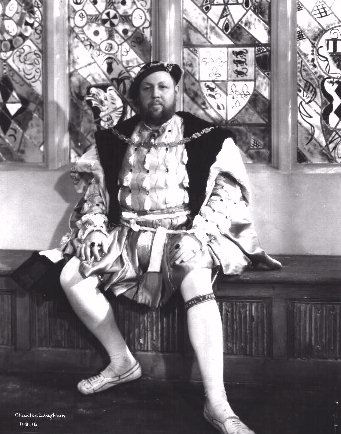
6. Charles Laughton Wins Best Actor For The Private Life of Henry VIII

At the 6th Academy Awards ceremony, Laughton won an award for his lusty performance as Henry VIII.  While one could argue that Paul Muni technically gave a better performance in I Am A Fugitive From A Chain Gang, no one can deny that Laughton’s lusty and comedic performance set the template by which all future Henry VIII’s would be judged.  Add to that, Laughton became the first of many actors to win for their performance in a British-made film.

Up next: the 1940s!

4 Times The Academy Got It Right: 1920s


In previous years, I’ve used Oscar Sunday as a chance to write about what the Academy has gotten wrong over the years, the snubbed classics and the unworthy winners.  This year, though, I want to do something a little different.

I want to take a look at the time that the Academy made the right decision, either by picking the best film for Best Picture or even just by giving a nomination to someone who actually deserved it.  Consider this to be my attempt to add some positivity to what has otherwise been a pretty negative awards season!  We all love to criticize the Academy and goodness knows that much of that criticism has been deserved over the years but occasionally, they do get it right!

Here are 4 times the Academy got it right during the 1920s!

(Before anyone thinks that I’m condemning the Academy with faint praise, the first Oscars were handed out in 1928 so, for this decades, there are really only a handful of winners and nominees to choose from.)

  1. All Quiet On The Western Front Wins Best Picture

All Quiet On The Western Front was the third film to win the Oscar for Best Picture and it was the first truly great film to win the award.  If Wings and Broadway Melody were rewarded largely because of internal politics, All Quiet On The Western Front won because it truly deserved it.

2. Sunrise Wins The Academy Award For Unique And Artistic Picture

At the first Oscar ceremony, two awards for Best Picture were given out.  Best Picture went to Wings, which is good but not great.  The award for Unique and Artistic Picture, however, went to F.W. Munrau’s sublime Sunrise.

3. The Racket Is Nominated For Best Picture

The Racket was one of the three films to be nominated for the very first Best Picture Oscar in 1928.  It’s nearly forgotten today but it still remains significant because it was the first gangster film to be nominated for Best Picture and it was also the first genre film.  The Racket started a long tradition of American movies about organized crime, one that includes The Godfather, Goodfellas, The Irishman, and so many other films.  As well, The Racket was long considered to be a lost film until someone stumbled across the last remaining copy in the 70s.  Never stop searching for those lost films!

4. Warner Baxter Win Best Actor For In Old Arizona

The 2nd Academy Awards ceremony was a strange one, largely because only the winners were announced and no one is quite sure how the Academy settled on those winners.  That said, Warner Baxter’s award for starring in In Old Arizona does feel historically significant.  He was the first actor to win for appearing in a western and he won for playing not a lawman but an outlaw.  In fact, his amoral character served as a template for many of the characters who would populate the Spaghetti westerns of the 60s and the 70s.

Up next: the 1930s!

Scenes That I Love: The Opening of Reservoir Dogs


In honor of Quentin Tarantino’s birthday, today’s scene of the day is the opening coffeeshop scene from Tarnatino’s directorial debut, 1992’s Reservoir Dogs. 

While Tarantino will always be better appreciated as a director than an actor, it does seem somewhat appropriate that the very first lines in the very first Tarantino film are spoken by Tarantino himself.  There’s also something undeniably likable about Tarantino laughing at the sound of his own dialogue.

From Reservoir Dogs:

My Oscar Predictions


Well, since the big show is tomorrow, I guess it’s time for me to try to predict what I think will win. Up until four weeks ago, I would thought Power of the Dog would be the obvious front runner but CODA seems to be the film that people are responding too. The same is true of Penelope Cruz, who went from being an also-ran to the new front runner in just a matter of days.

In short, this Oscar race is up in the air. Almost anything could happen. It should be exciting, though I think most people will be tuning in not to see who wins but to see how bad the show is.

Anyway, here are my predictions! We’ll see how right I am (or how wrong I am) tomorrow night!

Best Picture — CODA

Best Director — Jane Campion, The Power of the Dog

Best Actor — Will Smith, King Richard

Best Actress — Penelope Cruz, Parallel Mothers

Best Supporting Actor — Troy Kostur, CODA

Best Supporting Actress — Ariana DeBose, West Side Story

Best Original Screenplay — The Worst Person In The World

Best Adapted Screenplay — CODA

Best Animated Feature Film — Encanto

Best International Film — Drive My Car

Best Documentary Feature — Attica

Best Documentary Short Subject — Audible

Best Live Action Short Film — The Long Goodbye

Best Animated Short Film — Affairs of the Art

Best Original Score — Dune

Best Original Song — Dos Origuitas from Encanto

Best Sound — West Side Story

Best Production Design — Dune

Best Cinematography — The Power of the Dog

Best Costume Design — Nightmare Alley

Best Makeup and Hairstyling — The Eyes of Tammy Faye

Best Film Editing — Don’t Look Up

Best Visual Effects — Spider-Man: No Way Home


Scene I Love: Klaus Kinski in David Lean’s Doctor Zhivago


The 1965 film, Doctor Zhivago, is not only notable as one of the many David Lean-directed films to be nominated for Best Picture. It’s also remembered as being one of two Best Picture nominees to feature, albeit in a small role, the madman of European cinema, Klaus Kinski.

In this scene, set in the aftermath of Russia’s communist revolution, Kinski explains why he, despite being a prisoner, is the only free man on the train. Due to his German accent, Kinski was dubbed by actor Robert Rietty and he doesn’t have much screen time but he still manages to steal the movie.

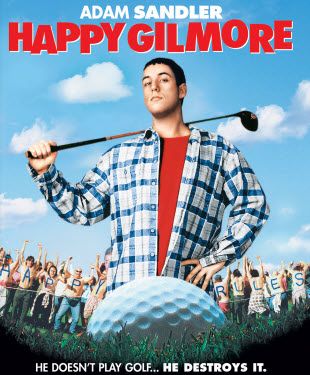
Guilty Pleasure No. 53: Happy Gilmore (dir by Dennis Dugan)


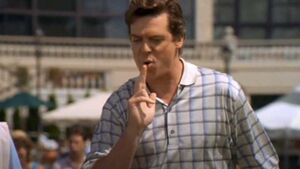
Poor Shooter McGavin!  As played by the great Christopher McDonald, Shooter McGavin is the often unacknowledged hero of the 1996 comedy classic, Happy Gilmore.

I know, I know.  Most people will tell you that Shooter is actually the bad guy.  He’s the snooty pro golfer who tries to keep aspiring hockey player-turned-golfer Happy Gilmore (Adam Sandler) from competing on the PGA tour.  And it is true that he does allow himself to get consumed with jealousy over Happy’s popularity.  And he does definitely cross the line when he buys and holds hostage the house where Happy’s grandmother has spent almost her entire life.  (“She’s so old!  Look at her!  She’d old!” Happy exclaims at one point.)  But try to look at it from Shooter’s point of view.

Shooter has spent years playing golf.  He’s practiced.  He’s paid his dues.  He’s done what he had to do to earn his spot as America’s best golfer.  And now, he finally has a chance to win his first championship.  And what happens?  A very loud hockey player shows up from out-of-nowhere and totally changes the sport.  What really has to be galling is that Happy’s not even a good player.  He can’t putt.  He has no strategy.  His only skill is the distance that he can hit the ball.  And yet, despite all that, Happy becomes a media superstar.  The only people willing to stand up to Happy and defend the honor of the game are Bob Barker and …. Shooter McGavin.

Really, Shooter doesn’t really start to go after Happy until Happy’s fans starts to purposefully antagonize him.  Remember Happy’s ex-boss showing up to heckle Shooter even though he still had that nail in his head?  Seriously that’s not right.  I mean, who shows up to support the dude who put a nail in your head?  Shooter McGavin had every reason to be concerned about that.

Despite the fact that Shooter was treated rather unfairly, Happy Gilmore is definitely a favorite of mine.  I pretty much love the entire film, from Carl Weathers’s enjoyably demented performance as Happy’s mentor to the famous scene of Bob Barker beating Happy to a pulp.  For those who only know Adam Sandler from his later, lazier comedies, Happy Gilmore will be a bit of a revelation because Sandler and the entire cast actually seem to be making an effort to make a good and funny comedy.  The staid world of golf turns out to be the perfect foil for Sandler’s manchild antics.  And for those who prefer Sandler when he’s playing serious roles, he actually does a pretty good job in Happy Gilmore’s few sincere moments.  His scenes with his grandmother are actually rather sweet.

Happy Gilmore remains Sandler’s best comedy and it’s a personal favorite of mine.  Every time I watch it, I laugh and that’s a good thing.  I also like to think that Shooter and Happy eventually set aside their differences and got their own talk show on ESPN.  They deserved it.

Previous Guilty Pleasures

  1. Half-Baked
  2. Save The Last Dance
  3. Every Rose Has Its Thorns
  4. The Jeremy Kyle Show
  5. Invasion USA
  6. The Golden Child
  7. Final Destination 2
  8. Paparazzi
  9. The Principal
  10. The Substitute
  11. Terror In The Family
  12. Pandorum
  13. Lambada
  14. Fear
  15. Cocktail
  16. Keep Off The Grass
  17. Girls, Girls, Girls
  18. Class
  19. Tart
  20. King Kong vs. Godzilla
  21. Hawk the Slayer
  22. Battle Beyond the Stars
  23. Meridian
  24. Walk of Shame
  25. From Justin To Kelly
  26. Project Greenlight
  27. Sex Decoy: Love Stings
  28. Swimfan
  29. On the Line
  30. Wolfen
  31. Hail Caesar!
  32. It’s So Cold In The D
  33. In the Mix
  34. Healed By Grace
  35. Valley of the Dolls
  36. The Legend of Billie Jean
  37. Death Wish
  38. Shipping Wars
  39. Ghost Whisperer
  40. Parking Wars
  41. The Dead Are After Me
  42. Harper’s Island
  43. The Resurrection of Gavin Stone
  44. Paranormal State
  45. Utopia
  46. Bar Rescue
  47. The Powers of Matthew Star
  48. Spiker
  49. Heavenly Bodies
  50. Maid in Manhattan
  51. Rage and Honor
  52. Saved By The Bell 3. 21 “No Hope With Dope”

Insomnia File #53: A Nightmare on Drug Street (dir by Traci Wald Donat)


What’s an Insomnia File? You know how some times you just can’t get any sleep and, at about three in the morning, you’ll find yourself watching whatever you can find on cable or Netflix? This feature is all about those insomnia-inspired discoveries!
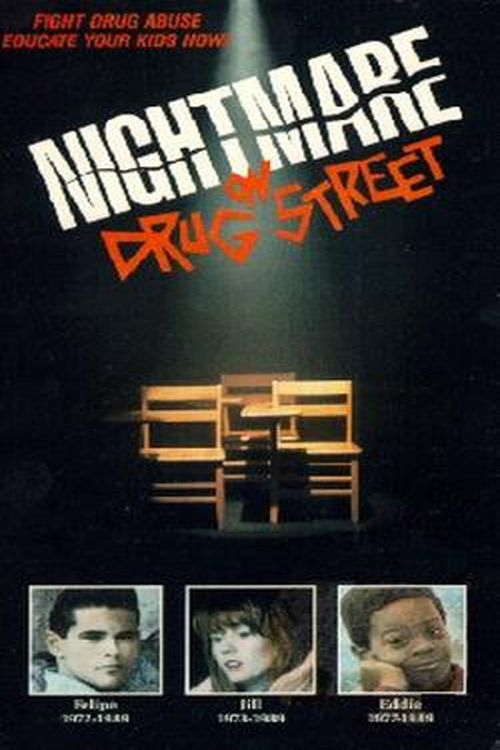
If you were having trouble getting to sleep last night, you could have gone over to YouTube and you could have done what I did when I was having trouble getting to sleep two nights ago.  You could have watched the 1989 educational film, A Nightmare on Drug Street.

Clocking in at 39 minutes, A Nightmare on Drug Street opens with three people sitting in a dark room.  Though the room seems ominous and the three people often appear to only be shadows, they turn out to to be friendly enough.  (And no, Freddy Krueger is not among them.  This is Drug Street, not Elm Street.)

“Hi, I’m Jill!” the one in the middle informs us.  “I’m dead!”

Filipe, who is is sitting to left of and is a bit less perky than Jill, mentions that they’re all dead.  Eddie, the youngest of the three, speaks up and mentions that he’s been dead for two days longer than Jill.  They all have a good laugh about that.  Jill says that she’s not sure where they are but she thinks that they’re supposed to think about their mistakes and to try to prevent other people their age from making the same mistakes.

“Jill,” I nearly shouted at the screen, “you’re in Purgatory!  It’s not that complicated!”

Eddie complains as he realizes that he’s going to have to relive his story again.  Jill laughs and says that Eddie is always complaining.  Filipe does not laugh because he’s not in a particularly good mood and I don’t blame him.  His Purgatory experience is obviously not turning out the way that he was hoping.  It would appear that Filipe has gotten trapped on the boring side of Purgatory.

Anyway, we then see how each of them ended up dead.  As you can probably guess from the title it all has to do with drugs.

For instance, after winning the big game, Filipe got both stoned and drunk and then decided that it would be a good idea to steal his brother’s car.   Needless to say, it doesn’t take long until Filipe’s more intelligent friend is demanding to be let out of the car.  It also doesn’t take long to hear the sound of an off-screen crash.  Apparently, there wasn’t enough money in the budget to film a real crash.

Jill met a guy at a party and basically allowed herself to be talked into trying cocaine.  As anyone who has ever seen a film like this can probably guess, Jill goes straight from doing that one line to stealing from her friends and selling a family heirloom so she can get more money for coke.  Her family is disappointed in her.  Her friends are angry with her.  And her drug dealer keeps hitting on her.  No wonder Jill eventually end up snorting too much.

And finally, Eddie, who is still in middle school, is handed a crack pipe by a friend.  Soon, Eddie is getting high in the bathroom while his parents try to understand why his grades have gone down.

Interestingly enough, each story is narrated by a dead teen but not the teen that actually dies in the story. So, Jill tells Filipe’s story and makes fun of him for being geeky whenever he gets high.  (Yeah, Jill, like you looked really cool with your bloodshot eyes and your red nose….)  Eddie tells Jill’s story and manages to get through it without ridiculing her.  Filipe tells Eddie’s story while wearing what appears to be a hospital gown.  There’s actually a scene in Purgatory where the three of them debate who will tell each story.  Do they automatically know the stories or is it just a case that they’re memorized them because there’s literally nothing else to talk about while in Purgatory?  The film leaves that question unanswered, which is a shame.

(Speaking of unanswered questions, why are we even in Purgatory in the first place?  The three narrators look directly at the viewer when they speak so I’m guess that I’m meant to have died as well.  But if I’m already dead, what’s the point of warning me about drugs?  Seriously, there’s a lot of unanswered questions in this film.)

Anyway, as for the film itself, it’s another well-intentioned but not quite successful attempt to make an anti-drug scare film.  Like many anti-drug short films, A Nightmare on Drug Street suffers due to the fact that the characters are more interesting when they’re high than when they’re sober.  The stories themselves often veer into melodrama though, to the film’s credit, it seems to at least be a bit self-aware when it comes to this.  When Filipe jumps in his car, Jill says that she knows that we know what’s going to happen but she asks us to keep watching anyways.  After being specifically asked to watch, you kind of feel like you have to.

For the most part, this film’s main worth is as a time capsule.  It’s all about 80s fashion and 80s lingo.  Breaking Bad fans will take note that Filipe is played by Raymond Cruz, who later played a fearsome drug dealer on the classic AMC series.  I guess Filipe found his way out of Purgatory after all.

Previous Insomnia Files:

  1. Story of Mankind
  2. Stag
  3. Love Is A Gun
  4. Nina Takes A Lover
  5. Black Ice
  6. Frogs For Snakes
  7. Fair Game
  8. From The Hip
  9. Born Killers
  10. Eye For An Eye
  11. Summer Catch
  12. Beyond the Law
  13. Spring Broke
  14. Promise
  15. George Wallace
  16. Kill The Messenger
  17. The Suburbans
  18. Only The Strong
  19. Great Expectations
  20. Casual Sex?
  21. Truth
  22. Insomina
  23. Death Do Us Part
  24. A Star is Born
  25. The Winning Season
  26. Rabbit Run
  27. Remember My Name
  28. The Arrangement
  29. Day of the Animals
  30. Still of The Night
  31. Arsenal
  32. Smooth Talk
  33. The Comedian
  34. The Minus Man
  35. Donnie Brasco
  36. Punchline
  37. Evita
  38. Six: The Mark Unleashed
  39. Disclosure
  40. The Spanish Prisoner
  41. Elektra
  42. Revenge
  43. Legend
  44. Cat Run
  45. The Pyramid
  46. Enter the Ninja
  47. Downhill
  48. Malice
  49. Mystery Date
  50. Zola
  51. Ira & Abby
  52. The Next Karate Kid

6 Classic Trailers For March 25th, 2022


Since it’s Oscar week, it seems like a good idea to devote the latest edition of Lisa Marie’s Favorite Grindhouse and Exploitation Film trailers to 6 classic films that received not a single Oscar nomination. That’s the way the Oscars are unfortunately. Sometimes, the best films are totally ignored.

For instance….

  1. Chappaqua (1967)

1967 was a great year for the movie so perhaps it’s understandable that the Academy somehow overlooked Chappaqua.  Still, this film was far more deserving a nomination than Doctor Doolittle.

2. Beyond the Valley of the Dolls (1971)

Valley of the Dolls received an Oscar nominations for its score.  However, it’s unofficial sequel didn’t even receive that.  Not a single nomination went to Beyond the Valley of the Dolls, not even Best Original Song.  In 1970, the Academy just wasn’t ready.

3. Coffy (1973)

Ellen Burstyn certainly deserved the Oscar for Alice Doesn’t Live Here Anymore but still, how could the Academy not nominate Pam Grier for her work in Coffy?

4. Dawn of the Dead (1978)

The Academy will probably never embrace the zombie genre.  They certainly weren’t prepared to do so in 1978.  That said, it’s way past time to give Tom Savini an honorary award.

5. The Warriors (1979)

The Warriors is another classic that went unnominated.  Not even the music got a nomination.  David Patrick Kelly was totally snubbed.  The Baseball Furies should have been sitting in front row on Oscar night.  It’s a true shame.

6. Death Wish 3 (1985)

Give the Giggler an Oscar!

4 Shots From 4 Films: Special David Lean Edition


4 Or More Shots From 4 Or More Films is just what it says it is, 4 shots from 4 of our favorite films. As opposed to the reviews and recaps that we usually post, 4 Shots From 4 Films lets the visuals do the talking!

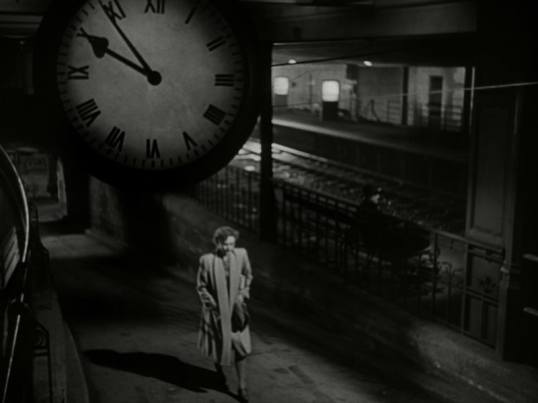
Today, we celebrate the birth and the legacy of the great British director, David Lean!  He was born 114 years ago today and went on to become one of the most important and influential directors of all time.  Lawrence of Arabia is still held up as one of the best adventure films ever made.  My personal favorite Lean film remains Brief Encounter.  Here are….

4 Shots from 4 David Lean Films

Brief Encounter (1945, dir by David Lean, DP: Robert Krasker)

The Bridge on the River Kwai (1957, dir by David Lean, DP: Jack Hildyard)

Lawrence of Arabia (1962, dir by David Lean, DP: Freddie A. Young)

Doctor Zhivago (1965, dir by David Lean, DP: Freddie A. Young)

4 Shots From 4 Films: Special Akira Kurosawa Edition


4 Or More Shots From 4 Or More Films is just what it says it is, 4 shots from 4 of our favorite films. As opposed to the reviews and recaps that we usually post, 4 Shots From 4 Films lets the visuals do the talking!

Today, the Shattered Lens honors both the birth and the legacy of the great filmmaker, Akira Kurosawa!  It’s time for….

4 Shots From 4 Akira Kurosawa Films

Throne of Blood (1957, dir by Akira Kurosawa, DP: Asakuza Nakai)

Yojimbo (1961, dir by Akira Kurosawa, DP: Kazuo Miyagawa)

Kagemusha (1980, dir by Akira Kurosawa, DP: Takao Saito and
Masaharu Ueda )

Ran (1985, dir by Akira Kurosawa, DPs: Takao Saito, Masharu Ueda, and Asakazu Nakai)